







When you're ready to upgrade from your TV's tinny built-in speakers, the home theater audio world can feel overwhelming. Do you need a simple soundbar that just makes dialogue clearer, or should you invest in a system that transforms your living room into a mini cinema? The choice between the Sony HT-A9M2 and Polk Signa S4 perfectly illustrates this dilemma—and shows how dramatically different approaches can both succeed in their own ways.
These two systems couldn't be more different in philosophy. The Sony HT-A9M2, released in 2024 as an evolution of Sony's groundbreaking wireless surround concept, costs roughly seven times more than the Polk Signa S4 from 2021. But this isn't just about expensive versus cheap—it's about fundamentally different solutions to the same problem: how to get great surround sound without the complexity of a traditional home theater setup.
Before diving into specifics, it helps to understand what we're actually trying to achieve. Modern movies and TV shows are mixed for surround sound systems, with audio engineers placing sounds all around you—helicopters overhead, cars racing past your sides, dialogue anchored to the center. Traditional home theaters use five, seven, or even more speakers placed around the room, but most people don't want wires running everywhere or speakers mounted on every wall.
Dolby Atmos, introduced in theaters around 2012 and brought to homes a few years later, adds a crucial third dimension: height. Instead of just left, right, and surround speakers, Atmos can place sounds above you too. The crack of thunder, the roar of a jet engine, or the subtle ambiance of rain can now come from overhead, creating a three-dimensional bubble of sound.
The challenge? Most living rooms aren't set up like movie theaters. That's where systems like these come in, each solving the problem in radically different ways.
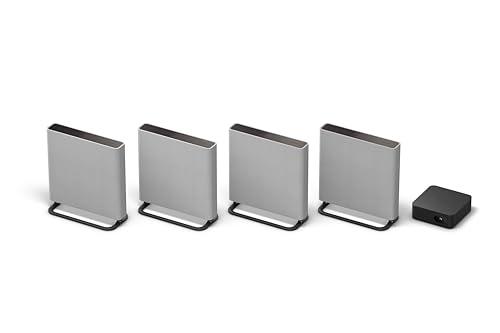
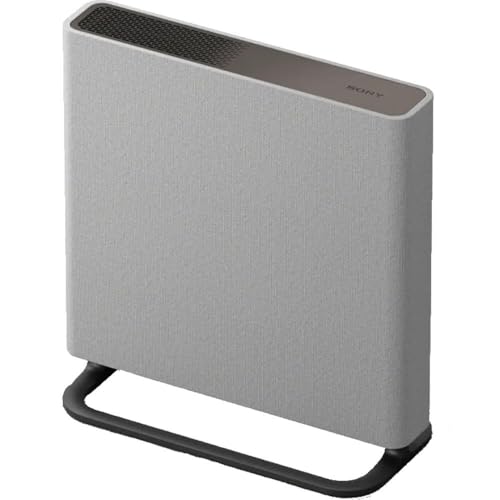
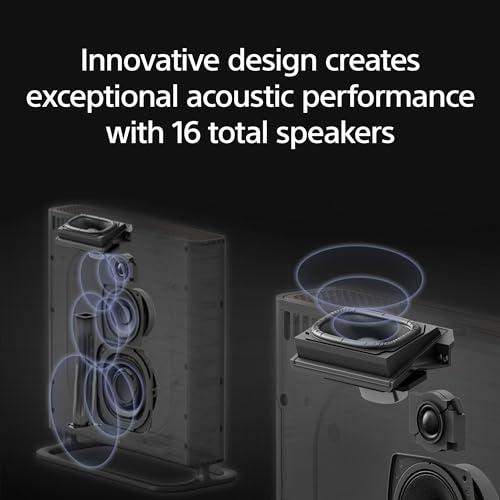
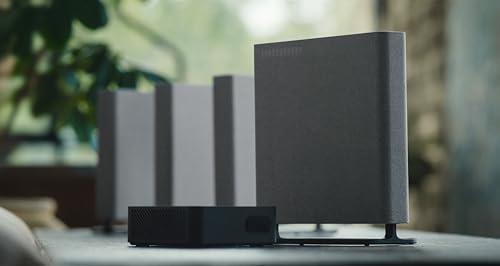
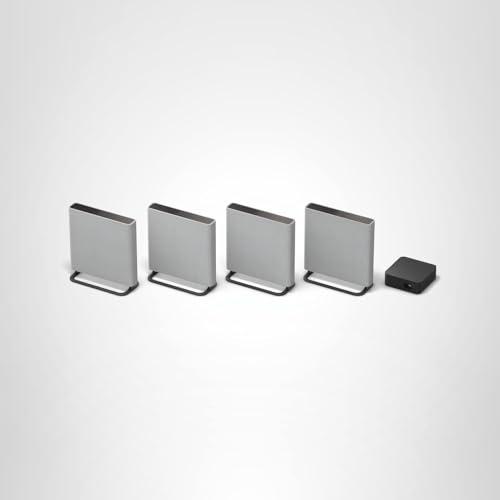
The Sony HT-A9M2 takes what I consider the most ambitious approach to home surround sound outside of a full traditional setup. Instead of cramming everything into a single soundbar, Sony gives you four separate wireless speakers that you place around your room. Each speaker is roughly the size of a large book and contains four individual drivers—that's 16 speakers total working together.
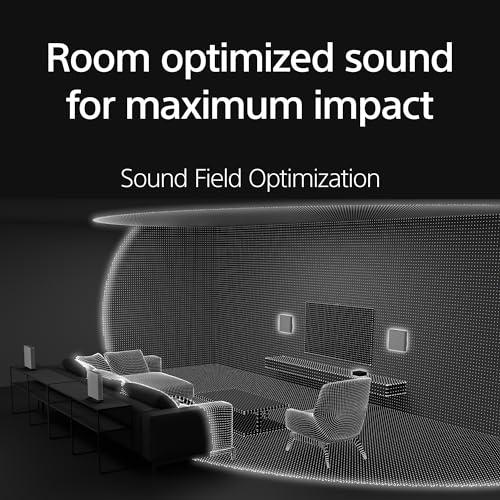
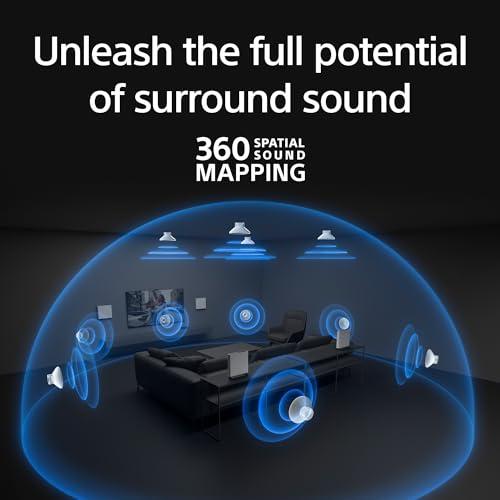
Here's where it gets interesting: Sony's 360 Spatial Sound Mapping technology measures your room using built-in microphones in each speaker, then creates what they call "phantom speakers"—virtual sound sources that seem to exist in empty space around you. It's like having 12 or more speakers when you only have four, achieved through precise timing and phase manipulation of the audio signals.
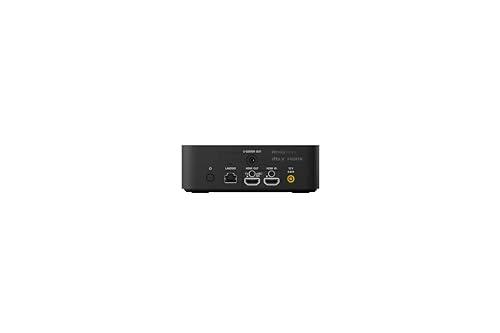
The system includes a small control box (about the size of an Apple TV) that handles all the video connections and wireless transmission to the speakers. Each speaker only needs to be plugged into power—no speaker wires required. Sony improved the wireless technology significantly from their first-generation system, boosting transmission power by 2.5 times and adding dual antennas to prevent the dropouts that plagued some early units.
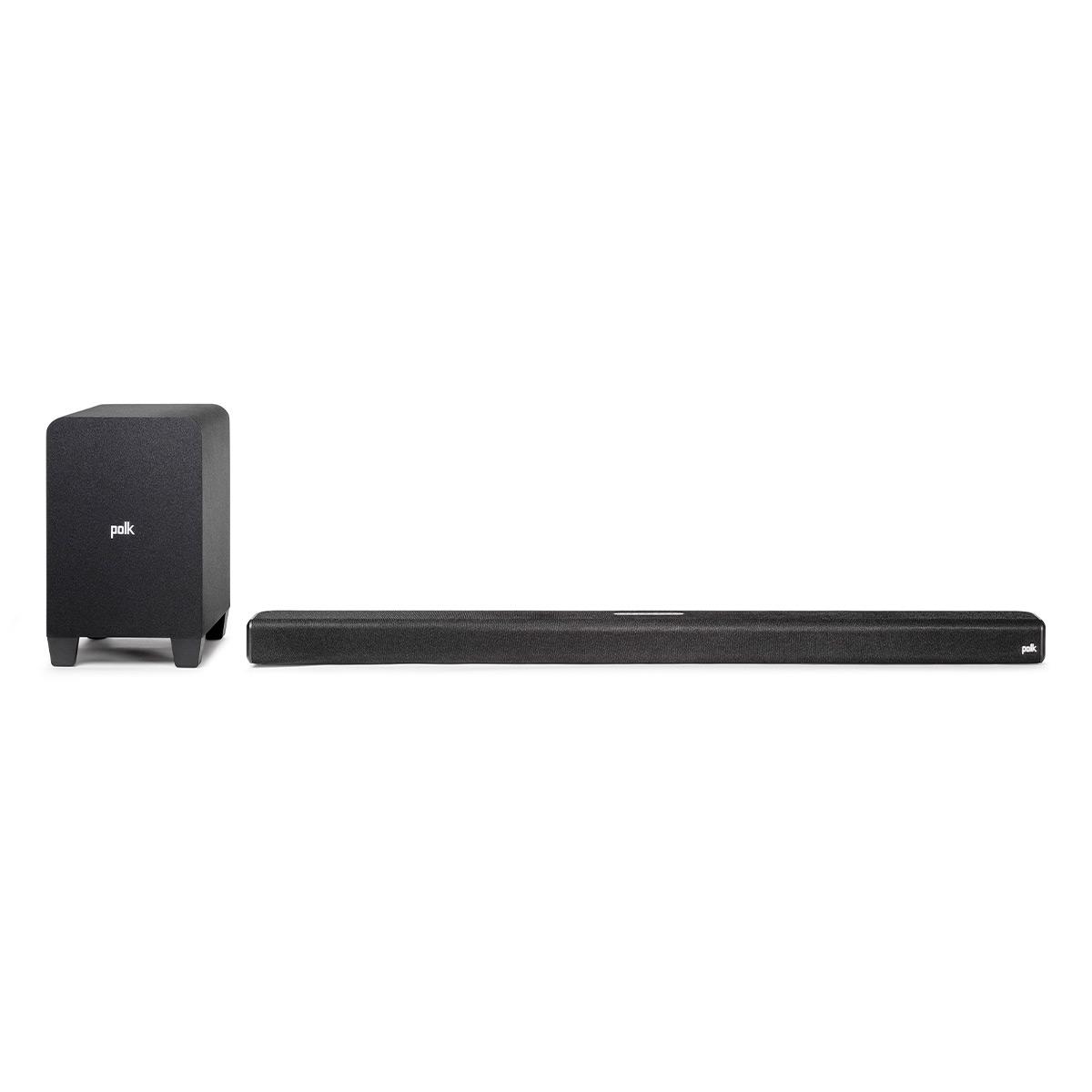
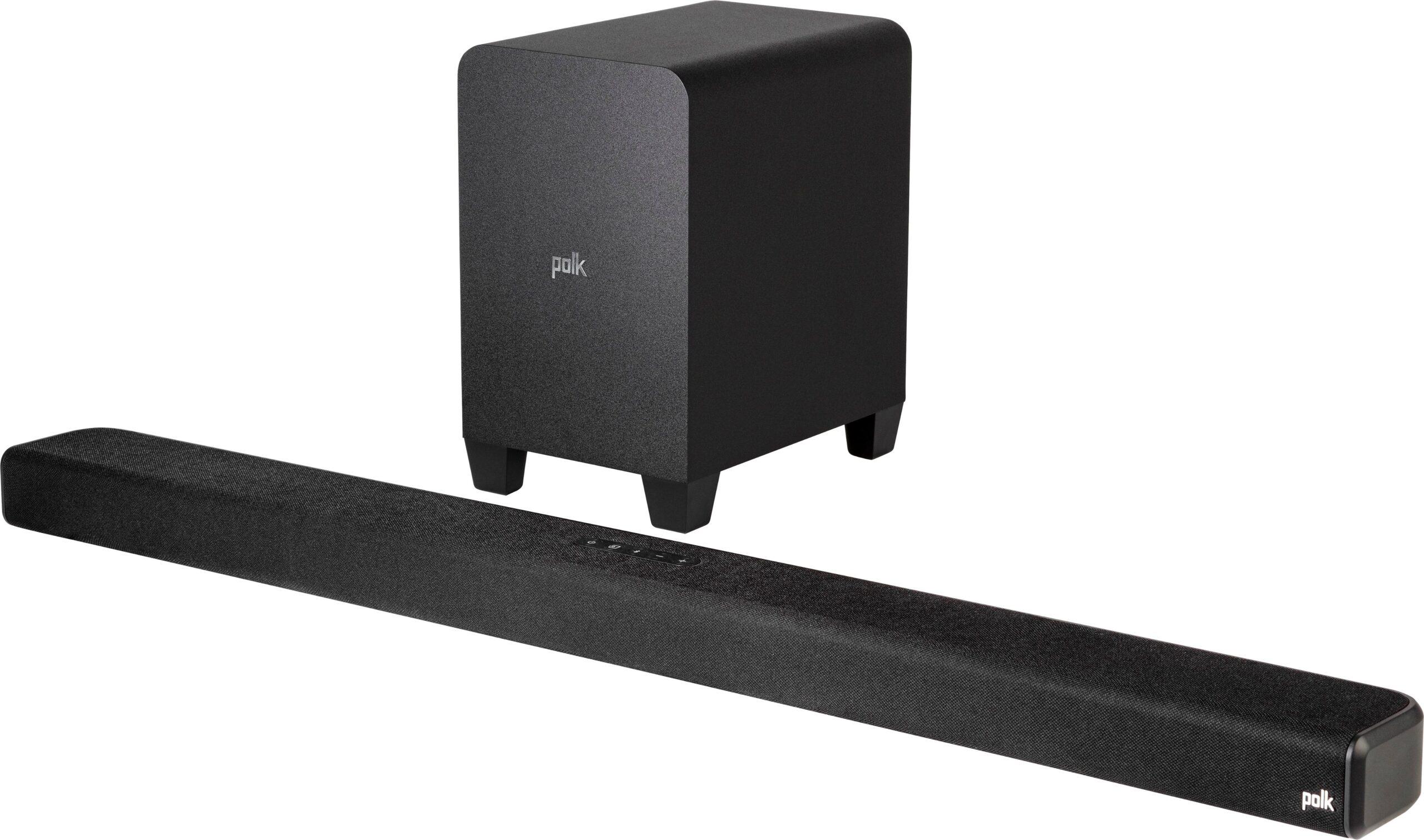
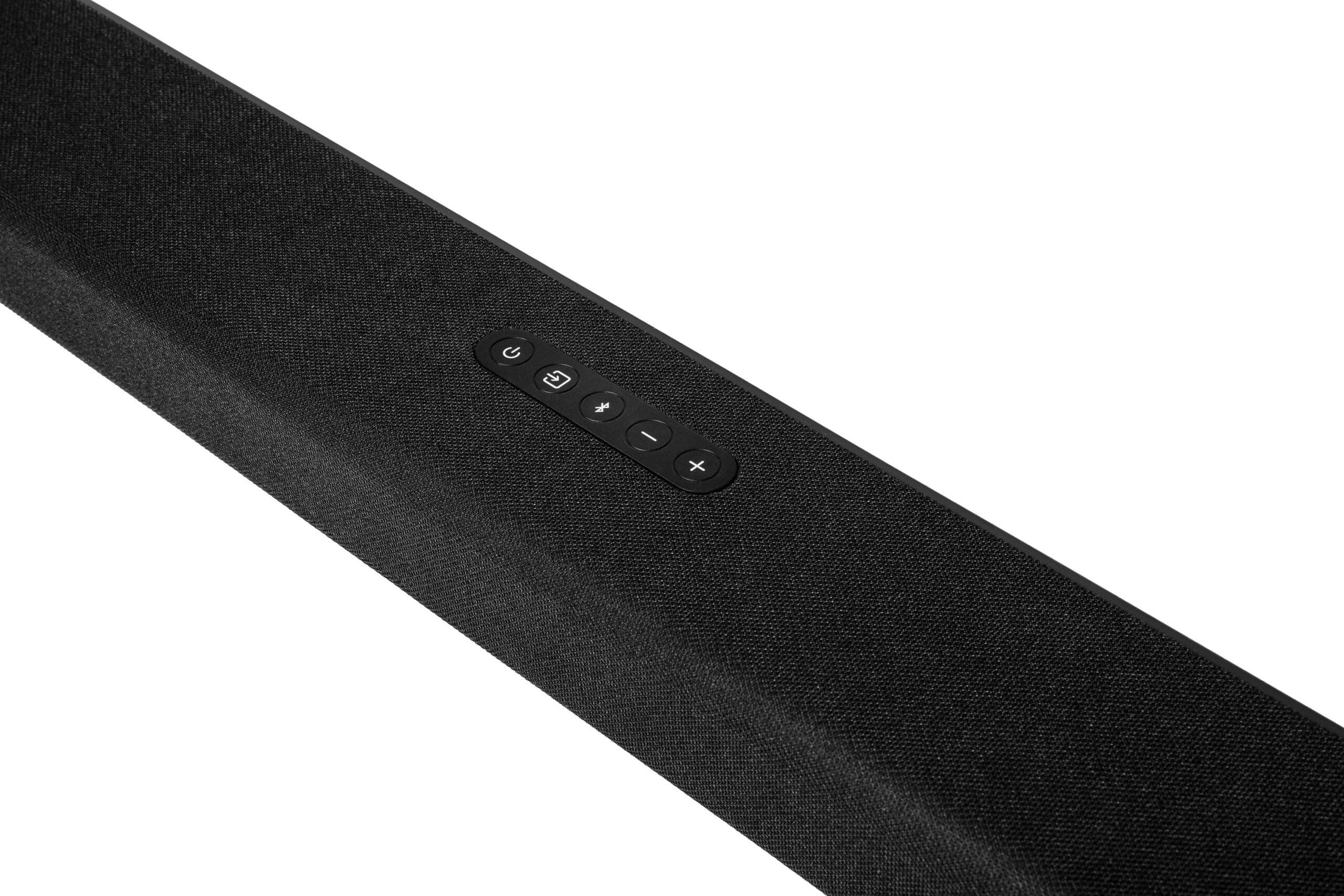
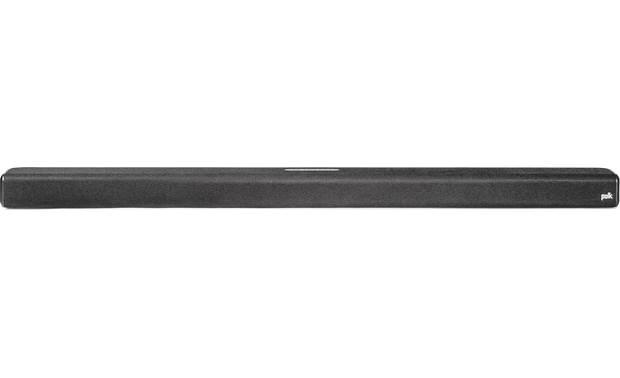
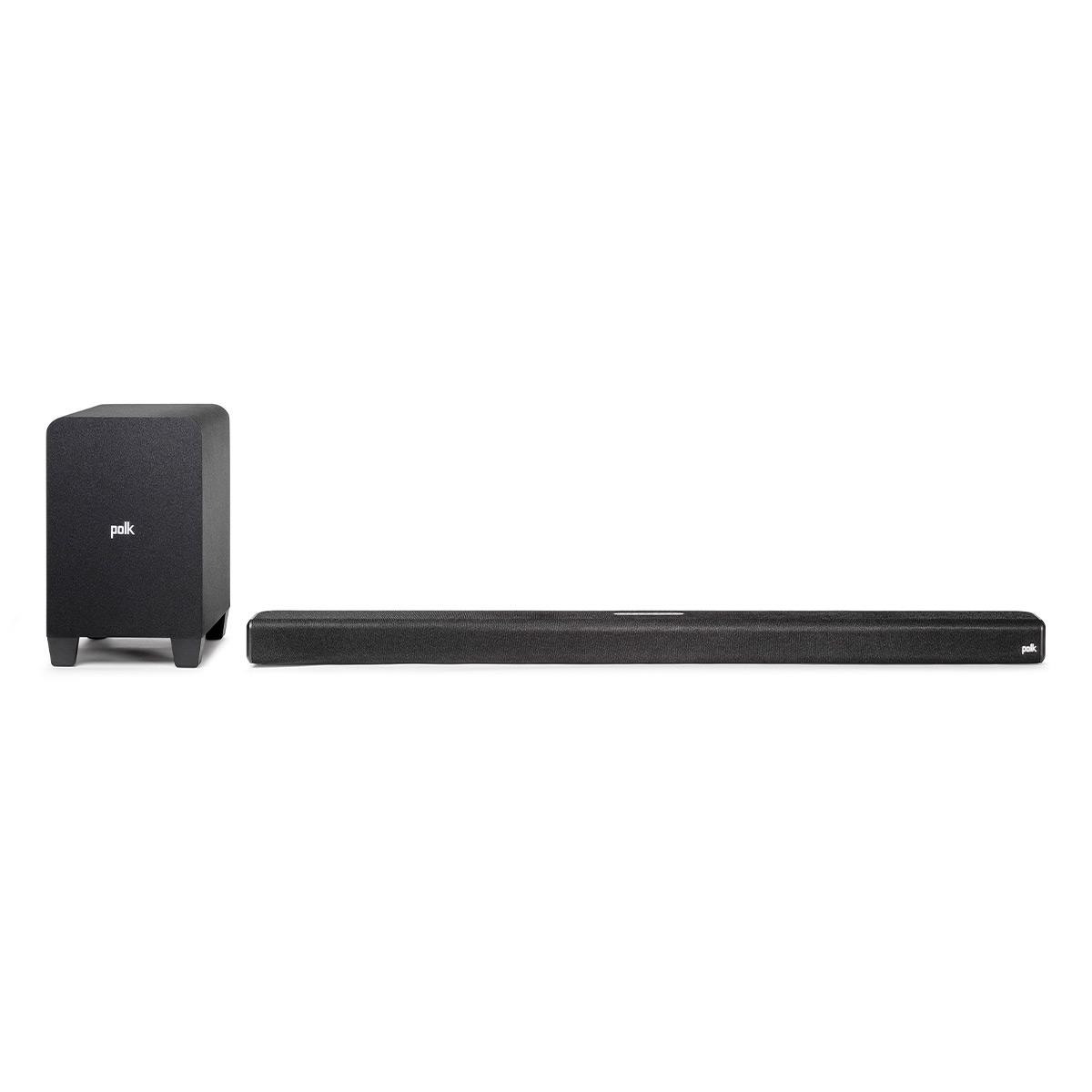
The Polk Signa S4, by contrast, follows the more familiar soundbar path but executes it exceptionally well. You get a single 41-inch soundbar that sits below your TV, plus a wireless subwoofer for bass. What makes this special is the engineering inside that relatively simple package.
Polk packed seven individual drivers into the soundbar: dedicated left and right channels, a center channel for dialogue, and two upward-firing speakers for Atmos height effects. The company's VoiceAdjust technology is particularly clever—it can boost dialogue clarity without making the music and sound effects louder, solving one of the most common complaints about modern movie soundtracks.
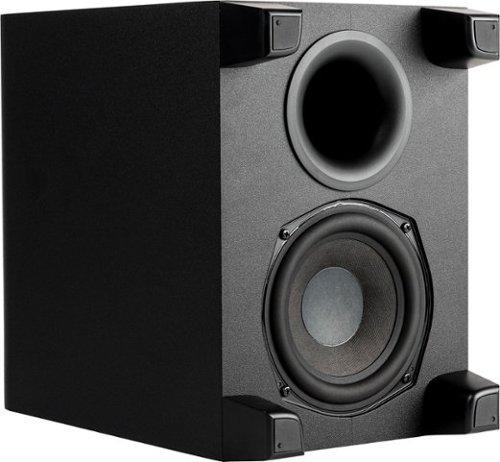
The wireless subwoofer uses a 5.9-inch driver and automatically pairs with the soundbar when you power everything on. Polk's BassAdjust technology lets you fine-tune how the subwoofer and soundbar work together, creating seamless bass response across the entire system.
This is where the fundamental design differences create vastly different experiences. The Sony HT-A9M2 delivers something that no soundbar can truly replicate: actual speakers placed around your listening position. When a car races across the screen in an action movie, you hear it move from your front-left speaker, past your seating position, to your rear-right speaker. It's not a psychoacoustic trick or clever processing—it's real spatial separation.
Our research into professional reviews consistently highlights this as the Sony's standout feature. What Hi-Fi noted that effects in complex scenes remain clearly positioned in space, while Digital Trends emphasized how the system maintains a coherent surround bubble even when speakers aren't ideally placed. The 360 Spatial Sound Mapping essentially gives you a larger sweet spot than traditional surround systems, where moving your head a foot to either side can collapse the illusion.
The Polk Signa S4 uses virtual surround processing, which relies on psychoacoustics—how your brain processes sound cues—to create the illusion of surround sound from just the soundbar. The two upward-firing drivers bounce sound off your ceiling to create height effects, while the left and right drivers use clever timing and phase tricks to make sounds seem to come from beside and behind you.
Virtual surround has improved dramatically in recent years, and the Polk Signa S4 does it well for the price point. But physics is physics: one soundbar, no matter how clever, can't create the same convincing spatial separation as actual speakers placed around the room.
Here's where things get interesting, and somewhat counterintuitive. The Sony HT-A9M2, despite costing significantly more, doesn't include a subwoofer in the base package. Each of the four speakers has bass drivers, but they're relatively small due to size constraints. Professional reviewers consistently noted this as the system's primary weakness—it sounds clean and precise but lacks the deep, room-shaking bass that makes action movies thrilling.
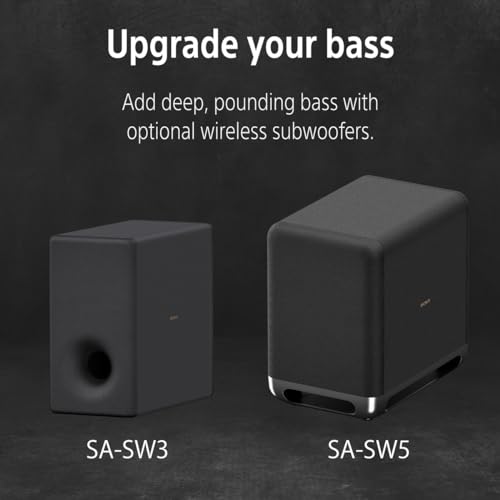
Sony offers wireless subwoofers as add-ons (the SA-SW3 and SA-SW5), but at the time of writing, you're looking at several hundred additional dollars to get the complete experience. What Hi-Fi's reviewers specifically mentioned that the Sony HT-A9M2 "really needs the optional subwoofer to flourish," while RTINGS noted that bass lacks the "thump and rumble" that home theater enthusiasts expect.
The Polk Signa S4, meanwhile, includes a capable wireless subwoofer right in the box. While it's not going to compete with dedicated high-end subwoofers, it provides solid bass foundation for most content and room sizes. The BassAdjust feature lets you tune how aggressively it works with the main soundbar, and most users find the out-of-box balance quite good.
This creates an odd value proposition: the budget system gives you complete low-frequency coverage, while the premium system requires additional investment to match that capability.
Both systems tackle dialogue clarity—arguably the most important aspect of TV and movie audio—but with different philosophies. Modern movie soundtracks often bury dialogue under music and effects, making voices hard to understand, especially at lower listening volumes.
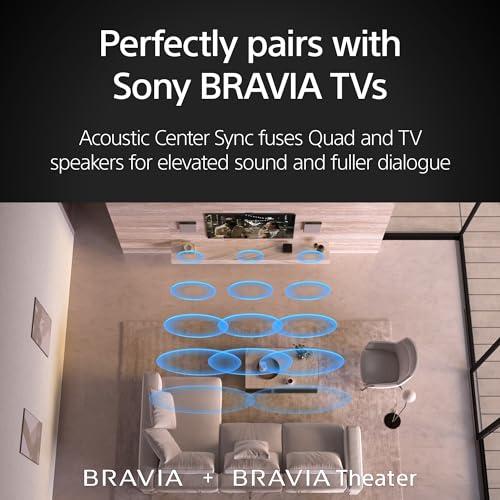
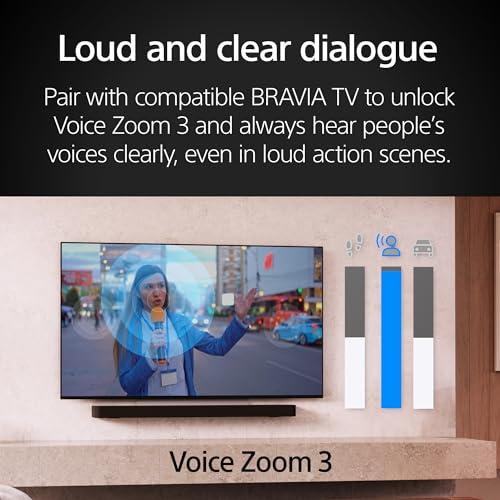
The Sony HT-A9M2 uses a phantom center channel, meaning it creates the illusion of a center speaker through the front left and right speakers. When paired with compatible Sony BRAVIA TVs, it can use Acoustic Center Sync to actually use the TV's speakers as a physical center channel, anchoring dialogue directly to the screen. The system also includes Voice Zoom 3 technology, which uses AI to identify and enhance dialogue in the mix.
However, several professional reviews noted that the phantom center can lack the focus and definition of a dedicated center speaker, especially if you're sitting off to the side or in a larger room.
The Polk Signa S4 takes the traditional approach with a dedicated center channel driver. VoiceAdjust technology offers three levels of dialogue enhancement, and crucially, it only boosts the voices without affecting music and sound effects. This creates remarkably clear dialogue, and user feedback consistently praises this as one of the Polk's standout features.
In my experience researching user comments, people with hearing difficulties or those who often watch content late at night (where high volume isn't possible) tend to prefer the Polk's more aggressive dialogue enhancement.
The Sony HT-A9M2 supports virtually every modern audio format: Dolby Atmos, DTS:X, IMAX Enhanced, 360 Reality Audio, and high-resolution audio up to 192kHz/24-bit. It also includes DSEE Ultimate, Sony's AI-powered technology that attempts to restore detail to compressed music from streaming services.
The Polk Signa S4 focuses primarily on Dolby formats and notably lacks DTS:X support. This matters because while most streaming services use Dolby Atmos, many Blu-ray discs use DTS:X for their surround soundtracks. If you're a serious movie collector, this limitation could be frustrating.
However, for the vast majority of users who primarily stream content from Netflix, Disney+, Apple TV+, and similar services, the Polk's format support is perfectly adequate.
Gaming performance reveals another significant difference between these approaches. The Sony HT-A9M2 includes full HDMI 2.1 implementation with support for 4K at 120Hz and even 8K at 60Hz. It supports Variable Refresh Rate (VRR) and Auto Low Latency Mode (ALLM)—features that gamers with PlayStation 5 or Xbox Series X consoles will appreciate. The system also includes PlayStation 5-specific optimizations for Auto HDR Tone Mapping.
For competitive gaming, the Sony HT-A9M2's spatial accuracy can provide actual advantages. In first-person shooters, being able to precisely locate enemy footsteps or gunfire can be the difference between winning and losing a match.
The Polk Signa S4 includes HDMI eARC support but doesn't specify advanced gaming features. For casual gaming, it's perfectly adequate, but serious gamers will notice the missing features.
This is where personal circumstances become crucial in choosing between these systems. The Sony HT-A9M2 requires you to position four speakers around your room. While they're wireless (no speaker cables needed), each speaker needs access to a power outlet. The system works best when you can place speakers to your left and right sides, not just in front of you.
The automatic room calibration is genuinely impressive—the system adapts to your specific room acoustics and speaker placement. But you need a room where this placement is practical. Small apartments, rooms with limited wall space, or situations where you can't have speakers near your seating position will limit the Sony's effectiveness.
The Polk Signa S4 follows the traditional soundbar setup: it sits below or above your TV, and the wireless subwoofer can go almost anywhere (though corner placement usually works best for bass). Setup takes minutes rather than the 30+ minutes needed for the Sony's calibration process.
The Polk also includes a Night Mode that compresses dynamic range—reducing the difference between quiet dialogue and loud explosions—making it ideal for apartment living or late-night viewing without disturbing others.
At the time of writing, the Sony HT-A9M2 costs roughly seven times more than the Polk Signa S4, but that price gap reflects fundamentally different products serving different needs. The Sony competes with high-end separates systems and traditional multi-speaker setups, while the Polk challenges other budget soundbars and basic home theater packages.
For the Sony HT-A9M2, you're paying for cutting-edge wireless technology, premium build quality, comprehensive format support, and most importantly, an audio experience that no soundbar can truly replicate. Add the recommended subwoofer, and you're approaching the cost of a quality traditional surround system—but without the complexity or permanent installation requirements.
The Polk Signa S4 represents exceptional value in the budget Dolby Atmos category. At its price point, finding genuine Dolby Atmos support with this level of dialogue clarity is remarkable. The complete package (soundbar plus subwoofer) costs less than many standalone soundbars without Atmos support.
The Sony HT-A9M2 makes sense if you're serious about home theater audio and have both the budget and space to implement it properly. It's ideal for movie enthusiasts who want theater-like immersion, gamers who benefit from precise spatial audio, and music lovers who appreciate the system's high-resolution audio capabilities and 360 Reality Audio support.
You'll get the most benefit if you have a dedicated media room or open living space where speaker placement won't be compromised by furniture or room constraints. The system particularly shines with content that takes advantage of object-based surround sound—modern blockbuster movies, high-end video games, and immersive music recordings.
The Polk Signa S4 excels for everyday TV watching, especially if dialogue clarity is your primary concern. It's perfect for smaller spaces, apartments where you can't place multiple speakers, or situations where simple setup and operation are priorities. The included subwoofer and Night Mode make it particularly well-suited for varied listening conditions and mixed-use living spaces.
If you primarily watch streaming content (which typically uses Dolby formats), don't need cutting-edge gaming features, and want immediate improvement over TV speakers without complexity, the Polk delivers remarkable performance for its price category.
These systems succeed in entirely different ways. The Sony HT-A9M2 pushes the boundaries of what's possible in wireless home theater audio, delivering an experience that approaches dedicated high-end systems while remaining relatively easy to set up and live with. It's a glimpse into the future of home audio—when the technology works properly, it's genuinely impressive.
The Polk Signa S4 perfects the traditional soundbar approach, focusing on the fundamentals that matter most to typical users: clear dialogue, adequate bass, and simple operation. It proves that you don't need to spend thousands to get a meaningful improvement in your home theater experience.
Your choice ultimately depends on your priorities, space, and budget. Both systems deliver on their promises, but those promises are quite different. The Sony aims to transform your room into a concert hall or theater, while the Polk focuses on making your daily TV watching significantly more enjoyable without any fuss.
In my view, both approaches have merit, and both companies have executed their visions well. The question isn't which is better—it's which better fits your specific situation and goals.
| Sony HT-A9M2 BRAVIA Theater Quad | Polk Audio Signa S4 Dolby Atmos Soundbar |
|---|---|
| Speaker Configuration - Determines how realistic surround sound feels | |
| 4.0.4 channel with four separate wireless speakers (16 total drivers) | 3.1.2 channel soundbar with wireless subwoofer (7 drivers + subwoofer) |
| Subwoofer Inclusion - Critical for bass impact in movies and music | |
| Not included (sold separately for several hundred dollars more) | 5.9" wireless subwoofer included in the box |
| Setup Complexity - How much effort required to get optimal performance | |
| Four speakers need placement around room + automatic calibration (30+ minutes) | Traditional soundbar below TV + wireless sub pairing (5 minutes) |
| Surround Sound Method - Key difference in how immersion is created | |
| True physical speaker separation with 360 Spatial Sound Mapping | Virtual surround processing with upward-firing drivers for height |
| Audio Format Support - Affects compatibility with your content library | |
| Dolby Atmos, DTS:X, IMAX Enhanced, 360 Reality Audio, Hi-Res up to 192kHz/24-bit | Dolby Atmos only (no DTS:X support) |
| HDMI Gaming Features - Important for PlayStation 5/Xbox Series X owners | |
| Full HDMI 2.1: 4K120, 8K60, VRR, ALLM, PS5 optimizations | Basic HDMI eARC (limited gaming features) |
| Dialogue Enhancement Technology - Crucial for understanding speech in movies | |
| Voice Zoom 3 with AI separation + optional Acoustic Center Sync with Sony TVs | VoiceAdjust with 3-level dialogue boost + dedicated center channel |
| Room Size Suitability - Where each system performs best | |
| Medium to large rooms where speakers can be properly spaced around seating | Small to medium rooms, ideal for apartments and compact spaces |
| Power Output - Affects maximum volume and dynamic range | |
| 504W total across 16-channel digital amplifier | Power output not specified (typically around 200W for this class) |
| Wireless Technology - Reliability of connection between components | |
| Dual-antenna frequency hopping, 2.5x stronger signal than previous generation | Standard wireless subwoofer pairing (Bluetooth for music streaming) |
| Price Category - Investment level and value proposition | |
| Premium tier (requires significant budget commitment) | Budget tier (exceptional value for Dolby Atmos entry point) |
The Sony HT-A9M2 delivers superior home theater performance with true 4.0.4 surround sound using four separate wireless speakers placed around your room. This creates authentic surround effects that the Polk Signa S4 can't match with its single soundbar design. However, the Polk Signa S4 offers excellent value for casual viewers and includes a subwoofer, while the Sony HT-A9M2 requires purchasing a separate subwoofer for complete bass performance.
No, the Sony HT-A9M2 does not include a subwoofer in the base package. You'll need to purchase Sony's wireless subwoofer separately for deep bass. In contrast, the Polk Signa S4 includes a 5.9-inch wireless subwoofer in the box, making it a complete system from day one.
The Polk Signa S4 excels at dialogue clarity with its dedicated center channel driver and VoiceAdjust technology that boosts speech without affecting other sounds. The Sony HT-A9M2 uses a phantom center channel approach, which can be less focused for dialogue, though it improves significantly when paired with compatible Sony BRAVIA TVs using Acoustic Center Sync.
The Polk Signa S4 offers simple setup—just place the soundbar below your TV and let the wireless subwoofer pair automatically (about 5 minutes). The Sony HT-A9M2 requires positioning four speakers around your room and running automatic calibration, taking 30+ minutes but providing much more flexible placement options once configured.
The Sony HT-A9M2 supports comprehensive audio formats including Dolby Atmos, DTS:X, IMAX Enhanced, and Hi-Res Audio up to 192kHz. The Polk Signa S4 focuses on Dolby formats only and notably lacks DTS:X support, which may limit compatibility with some Blu-ray discs but works fine with most streaming content.
The Sony HT-A9M2 creates true surround sound with physical speakers placed around your seating area, delivering authentic spatial separation. The Polk Signa S4 uses virtual surround processing from a single soundbar position, which creates a convincing effect but can't match the realism of actual speakers surrounding you.
The Sony HT-A9M2 offers superior gaming features with full HDMI 2.1 support, including 4K120, Variable Refresh Rate (VRR), and Auto Low Latency Mode (ALLM). It also includes PlayStation 5-specific optimizations. The Polk Signa S4 provides basic HDMI eARC connectivity but lacks advanced gaming features.
The Polk Signa S4 provides solid bass performance right out of the box with its included wireless subwoofer and BassAdjust technology. The Sony HT-A9M2 requires an additional subwoofer purchase to achieve comparable low-frequency performance, which professional reviewers consistently note as its main weakness when used alone.
The Polk Signa S4 is ideal for apartments with its compact soundbar design, Night Mode for late-night viewing, and simple setup that doesn't require multiple speakers around the room. The Sony HT-A9M2 needs space to position four speakers properly and works best in medium to large rooms where speaker placement won't be compromised.
Both systems work with any TV brand. The Polk Signa S4 connects via HDMI eARC or optical input to any compatible TV. The Sony HT-A9M2 also works universally, though it gains extra features like Acoustic Center Sync when paired with compatible Sony BRAVIA TVs.
The Polk Signa S4 delivers exceptional value in the budget Dolby Atmos category, providing a complete system with subwoofer at an accessible price point. The Sony HT-A9M2 costs significantly more but offers premium wireless technology and an immersive audio experience that no single soundbar can replicate—justifying the investment for serious home theater enthusiasts.
Both systems minimize wiring requirements. The Polk Signa S4 only needs power for the soundbar and wireless subwoofer, plus one HDMI cable to your TV. The Sony HT-A9M2 requires power outlets for each of its four wireless speakers but eliminates traditional speaker wire runs, making it much easier to install than conventional surround systems.
We've done our best to create useful and informative comparisons to help you decide what product to buy. Our research uses advanced automated methods to create this comparison and perfection is not possible - please contact us for corrections or questions. These are the sites we've researched in the creation of this article: bestbuy.com - whathifi.com - whathifi.com - youtube.com - rtings.com - audiosciencereview.com - bhphotovideo.com - skybygramophone.com - sony.com - manuals.plus - audioadvice.com - dell.com - valueelectronics.com - youtube.com - merlinstv.com - videoandaudiocenter.com - electronics.sony.com - sony.com - bestbuy.com - beachcamera.com - sony.com - win.consulting - sony.com - soundandvision.com - audioholics.com - crutchfield.com - cnet.com - richersounds.com - crutchfield.com - rtings.com - polkaudio.com - walmart.com - polkaudio.com - crutchfield.com - youtube.com - profx.com

Privacy Policy
Terms and Conditions - Affiliate Policy
Home Security
© Copyright 2008-2026.
11816 Inwood Rd #1211, Dallas, TX 75244