






Shopping for a premium home theater system can feel overwhelming, especially when you're comparing fundamentally different approaches to surround sound. The Sony HT-A9M2 BRAVIA Theater Quad and Samsung HW-Q990D both promise exceptional audio experiences, but they achieve this through completely different philosophies. After extensive research into expert reviews and user feedback, I'll help you understand which system makes more sense for your specific needs.
Before diving into specifics, let's establish what we're looking for in a premium home theater system. These aren't basic soundbars that simply make your TV louder—they're sophisticated audio processors designed to create convincing surround sound experiences without the complexity of traditional receiver-based setups.
The key technical specs that matter most are channel configuration (how many speakers and where they're positioned), spatial audio processing (how the system creates overhead and surround effects), bass performance, and connectivity features. When evaluating these systems, I focus on how well they handle dialogue clarity, create immersive soundstages, reproduce bass frequencies, and integrate with modern gaming consoles and streaming devices.
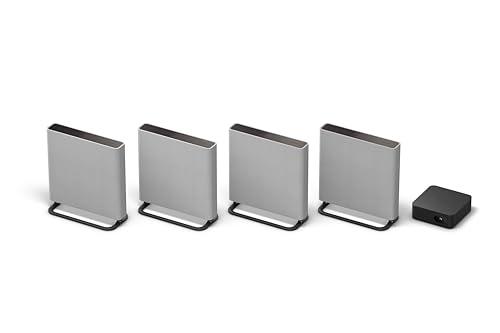
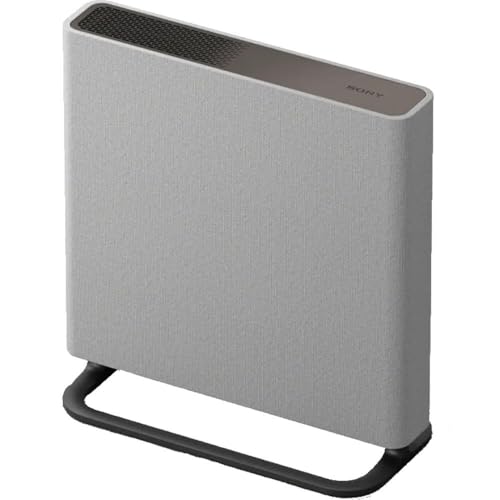
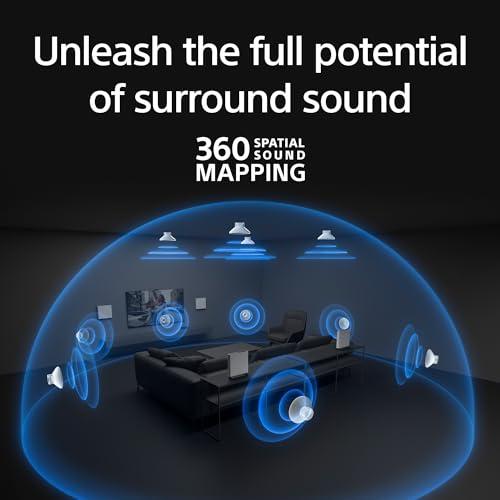
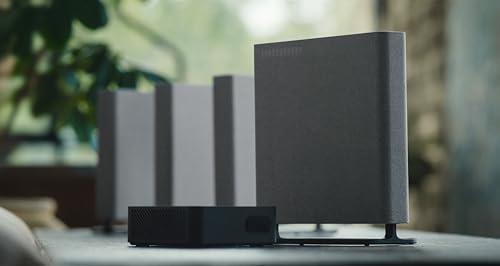
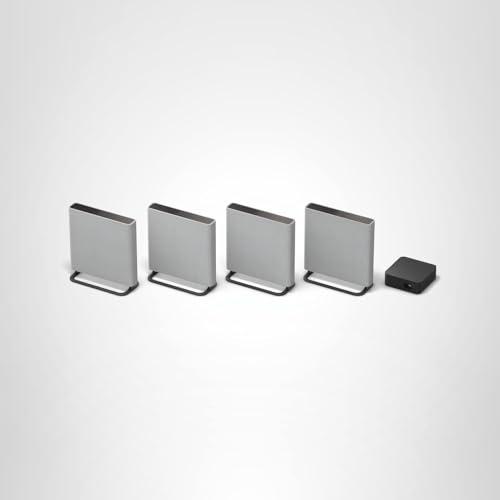
The Sony HT-A9M2, released in 2024 as the successor to Sony's innovative HT-A9, represents a radical departure from traditional home theater thinking. Instead of a large soundbar with separate components, Sony gives you four identical wireless satellite speakers that work together to create what they call "360 Spatial Sound Mapping."
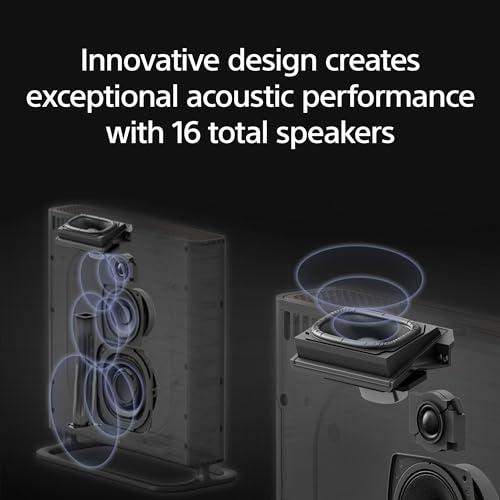
Each satellite contains four drivers—two full-range speakers, one tweeter, and one upfiring driver—for a total of 16 speakers across the system. These aren't just wireless speakers playing the same audio; they're individually controlled by a central hub that coordinates timing, phase, and frequency distribution to create virtual "phantom speakers" throughout your room. Think of it like audio holography, where sound appears to come from places where no physical speakers exist.
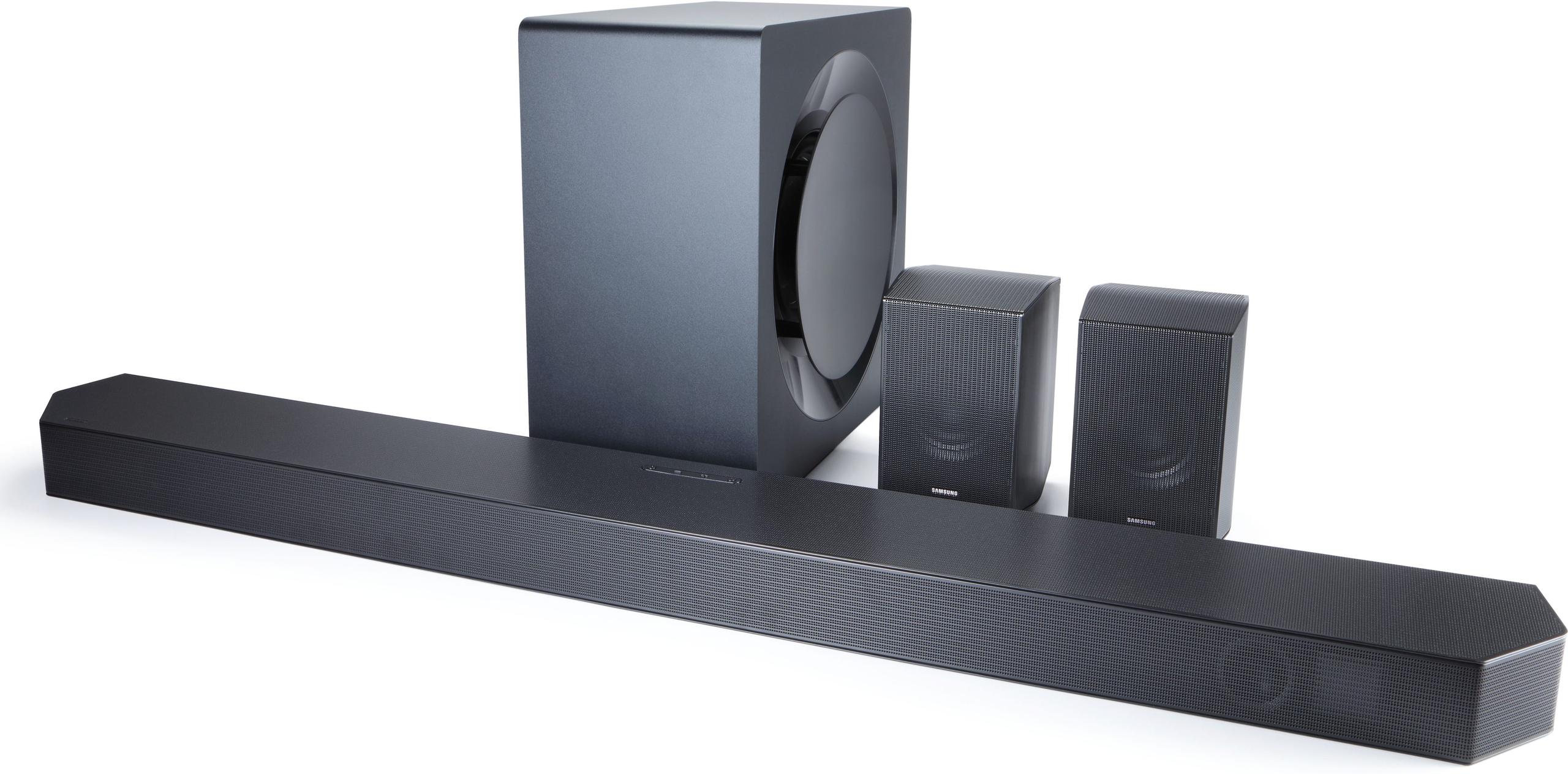
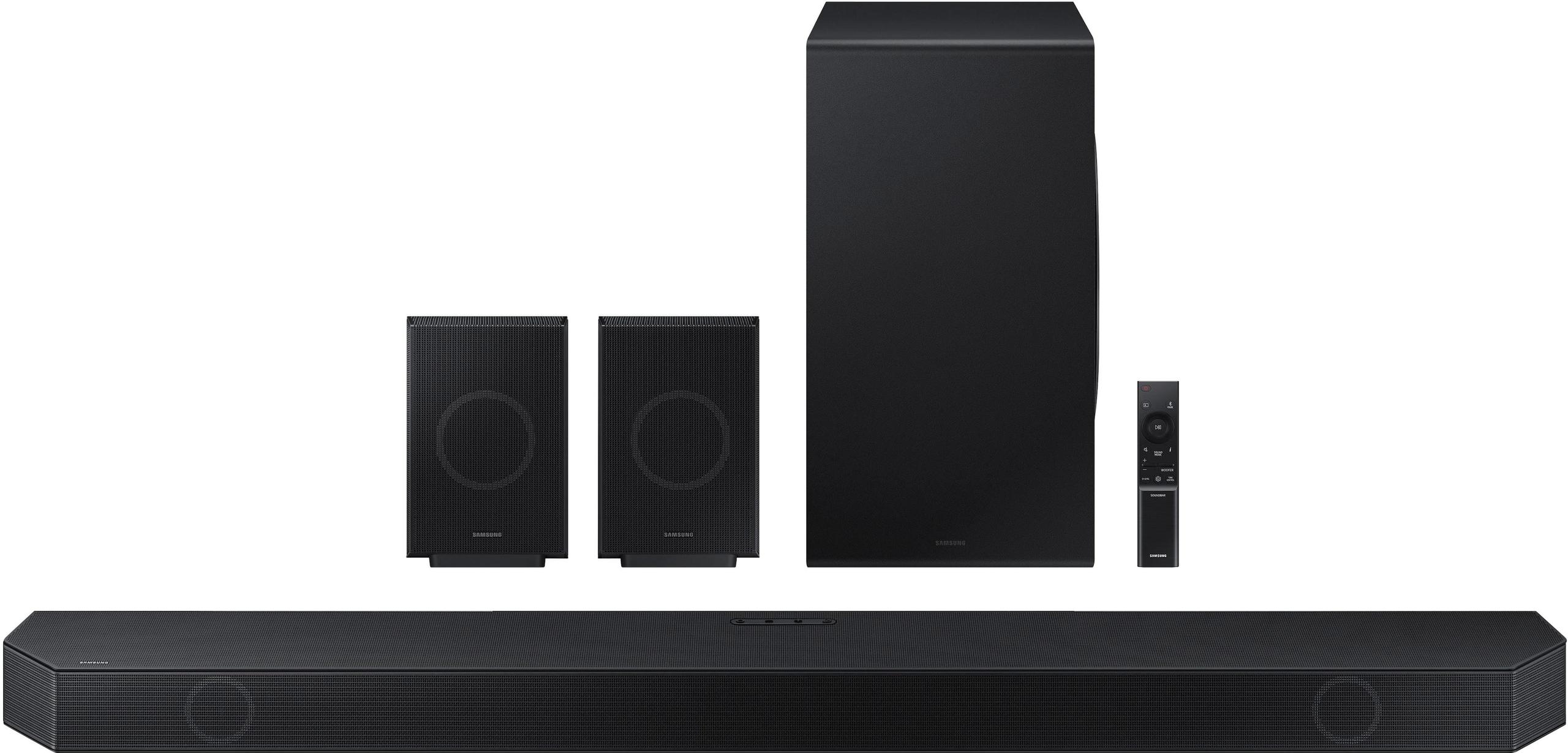
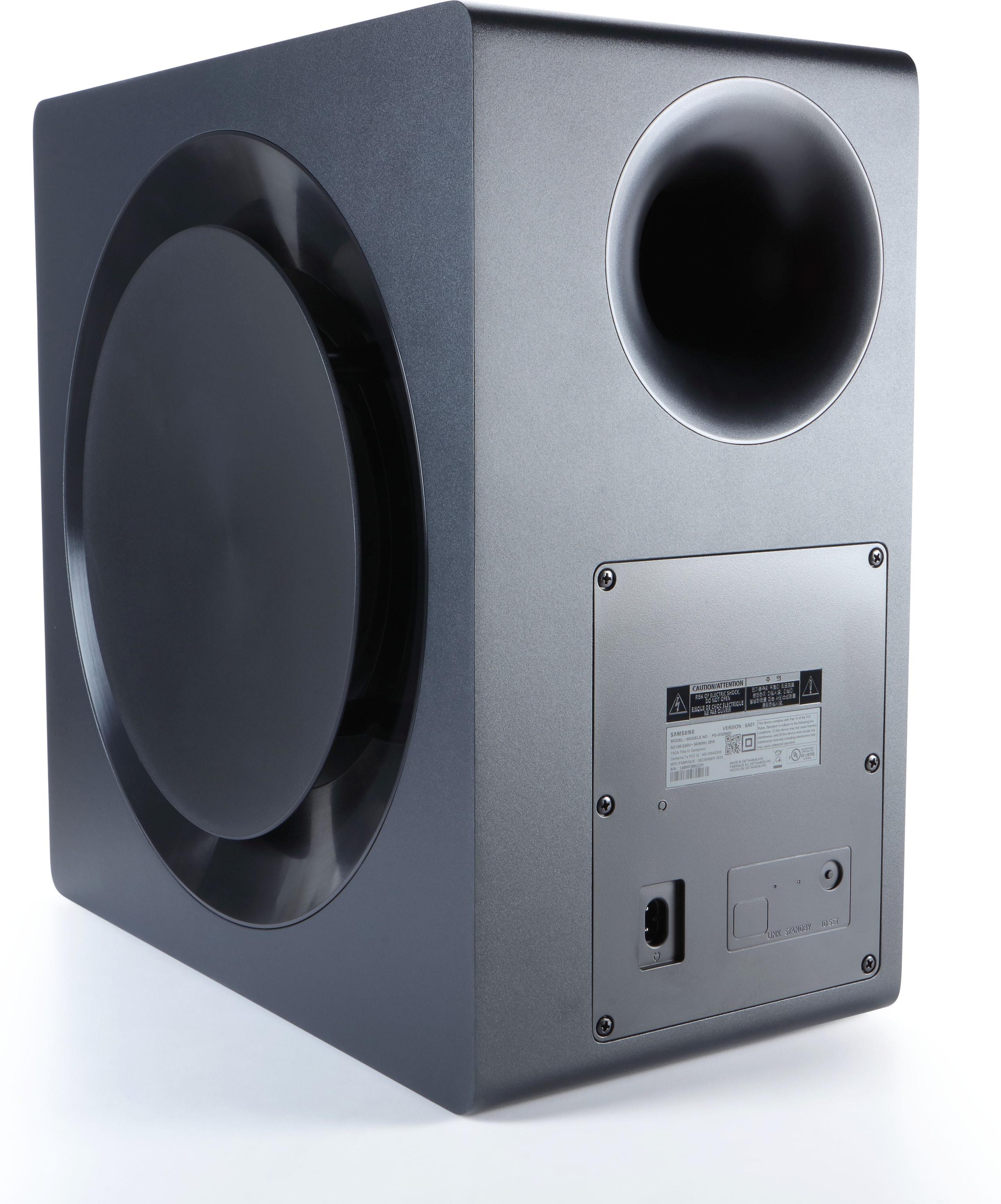
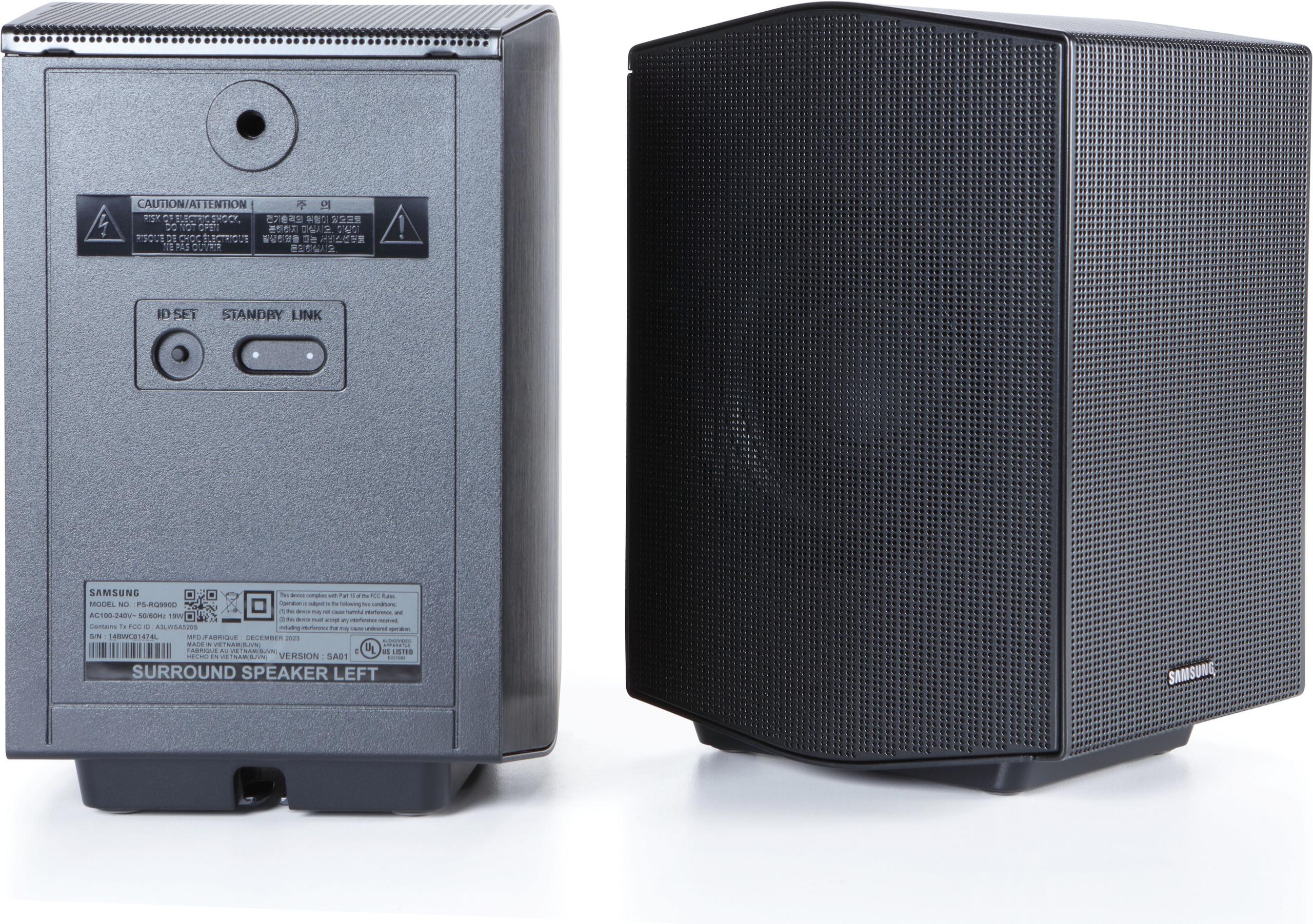
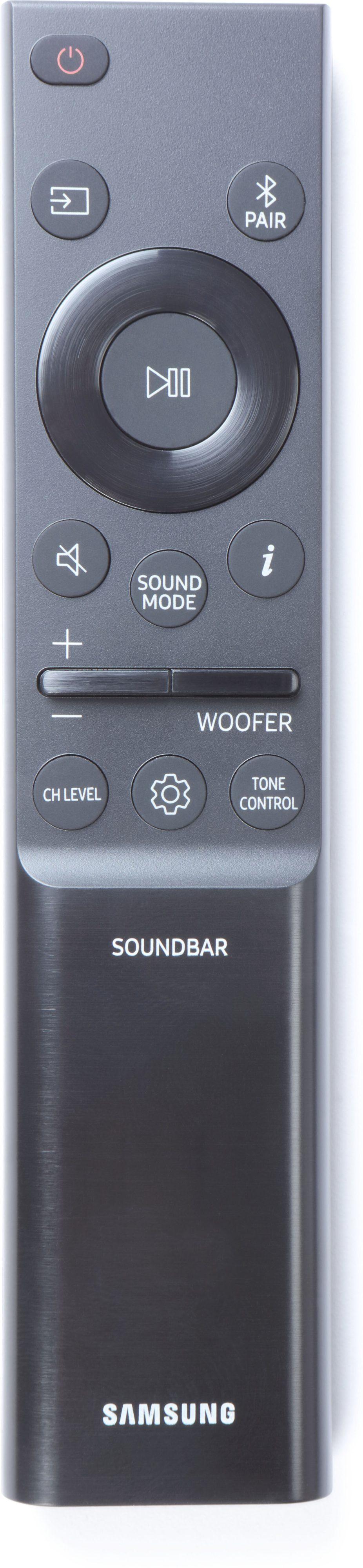
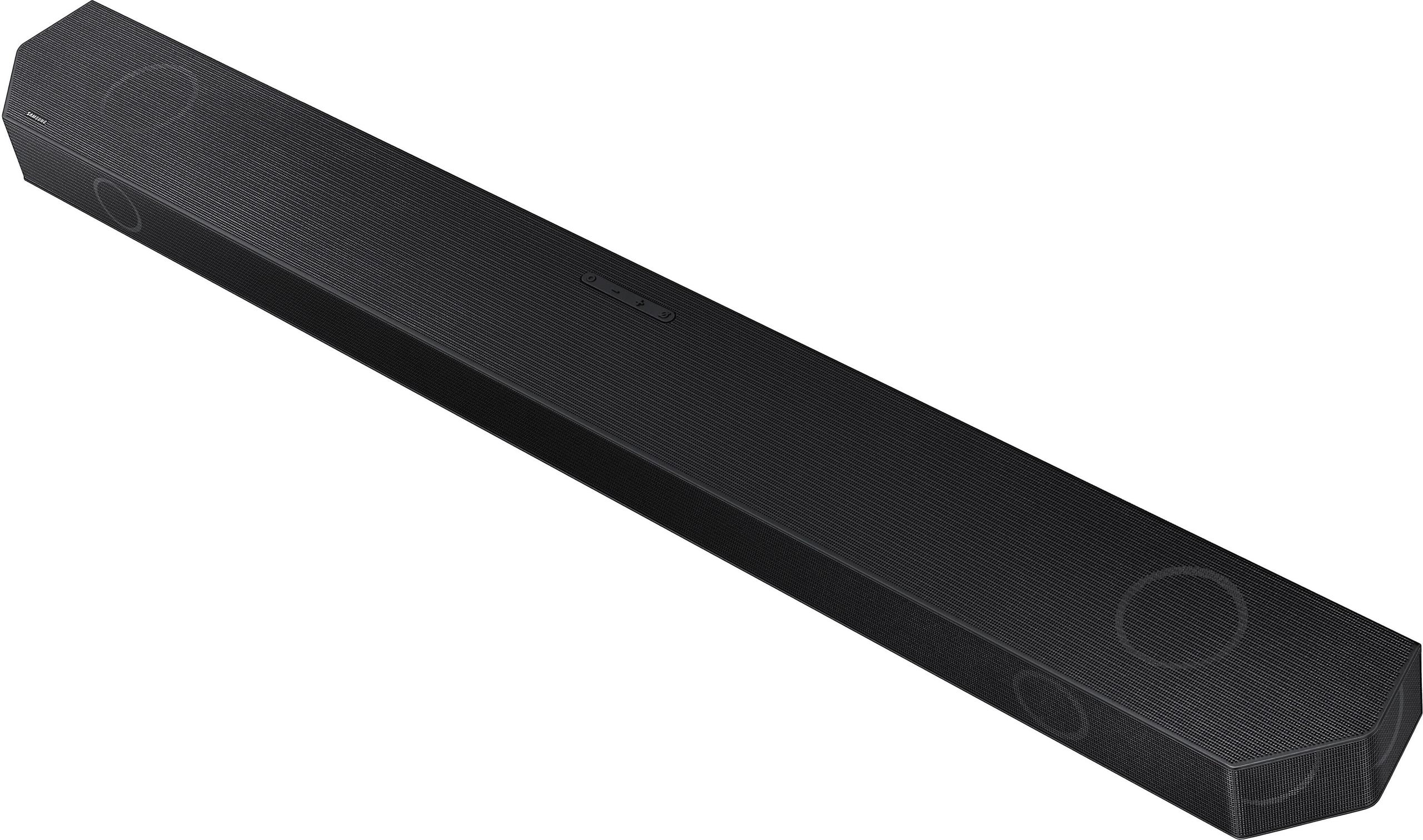
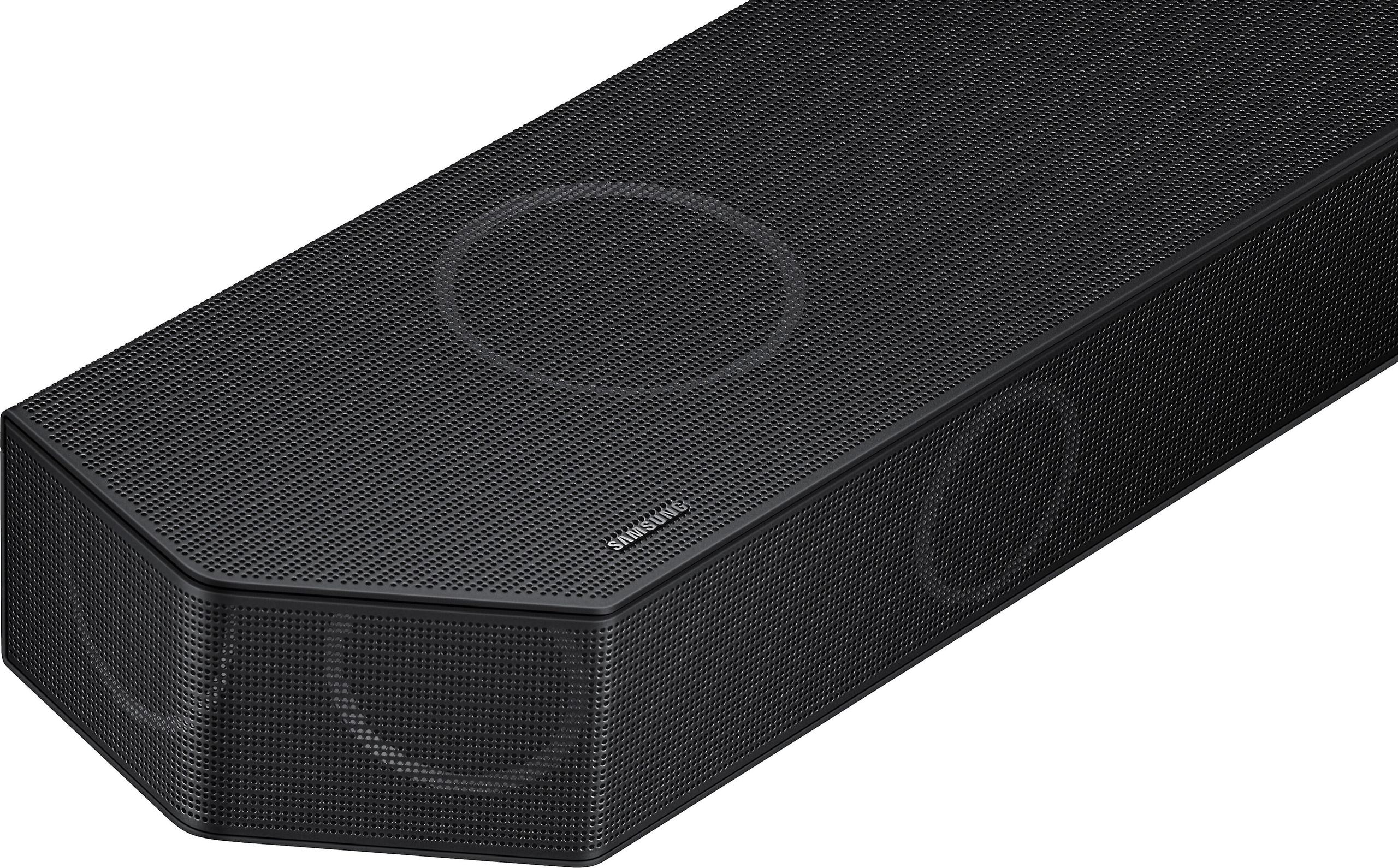
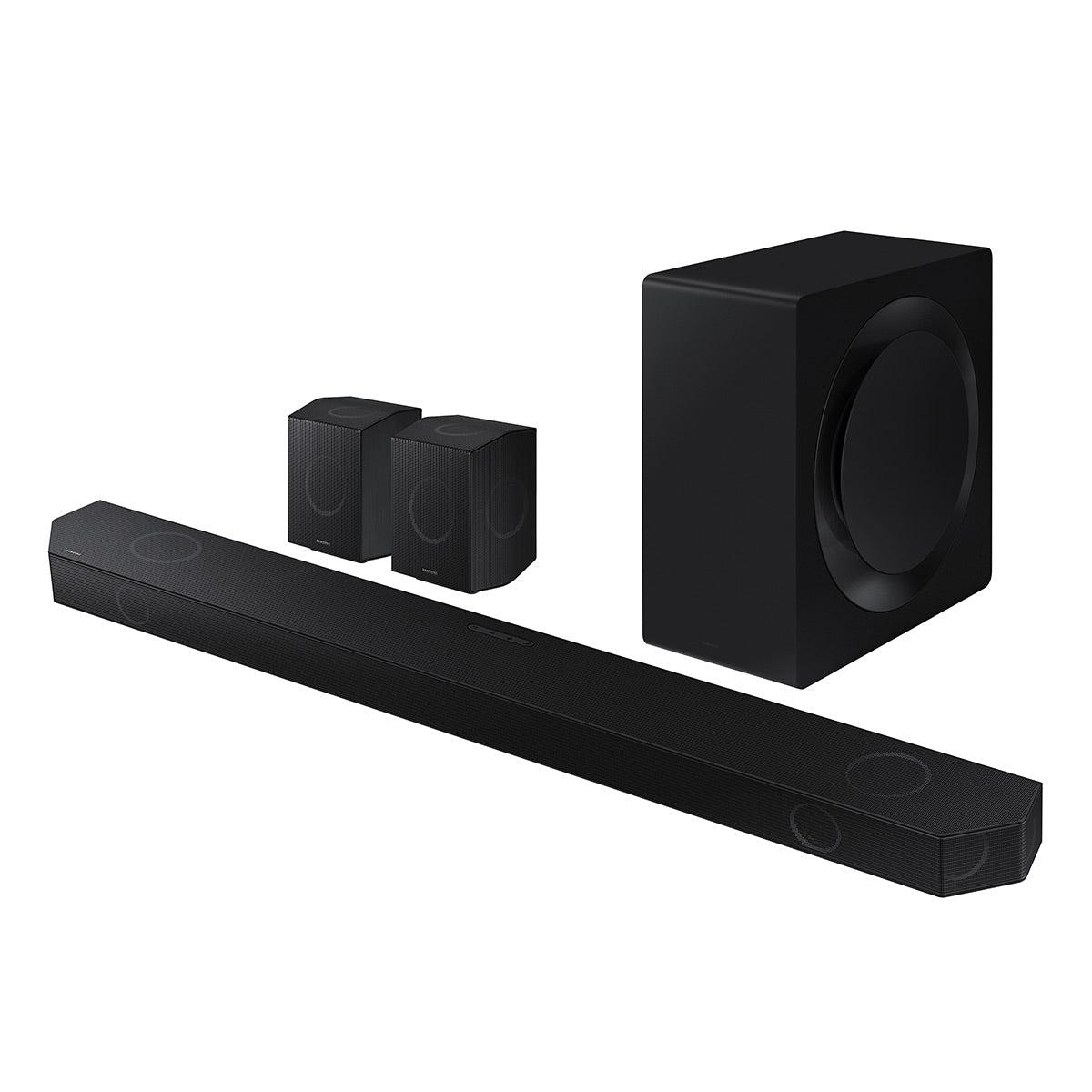
The Samsung HW-Q990D, released in 2023, takes the more conventional but refined approach. This 11.1.4 channel system includes everything you'd expect: a substantial main soundbar with 12 drivers, a wireless subwoofer with an 8-inch driver, and two discrete rear speakers. With 22 total drivers, it creates surround sound the traditional way—by placing speakers in specific locations around your room.
What makes the Samsung system special isn't revolutionary technology but rather the execution of proven surround sound principles with modern enhancements like SpaceFit Sound Pro room calibration and advanced gaming features.
Based on extensive review analysis, the Sony HT-A9M2 delivers something genuinely different in terms of spatial audio. Its 360 Spatial Sound Mapping technology uses those 16 drivers to bounce audio off your walls and ceiling, creating the perception that sounds are coming from all around you—even above your head.
Multiple professional reviews consistently highlight how the Sony system creates a "bubble" of sound that envelops listeners regardless of where they sit. This isn't just marketing speak; the technology actually analyzes your room's acoustics during setup and continuously adjusts how it directs sound to create phantom speakers in locations where no physical drivers exist.
For Dolby Atmos content, this approach shines. Each of the four satellites includes an upfiring driver specifically designed to bounce sound off your ceiling, creating overhead effects that many reviewers describe as more convincing than what you'd get from traditional height speakers. If you've ever watched a movie where helicopters seem to actually fly over your head, you'll appreciate how well the Sony system handles these moments.
The tradeoff is precision. While the Sony creates an incredibly immersive environment, sounds don't always appear to come from exact locations. It's more about creating an all-encompassing audio environment than pinpoint sound placement.
The Samsung HW-Q990D excels at what surround sound systems have traditionally done best: placing specific sounds in specific locations. With discrete left, right, center, surround, and height channels, you get the kind of precise sound localization that home theater enthusiasts have valued for decades.
The dedicated center channel speaker in the main soundbar makes a substantial difference for dialogue clarity. Instead of creating a "phantom center" by mixing left and right channels, you get a physical driver dedicated solely to reproducing voices. This results in more focused, intelligible dialogue, especially if you're not sitting perfectly centered in your room.
For action movies with lots of discrete sound effects—think car chases where vehicles pan from left to right, or explosions that rumble from specific directions—the Samsung's approach provides more accurate placement. You'll hear exactly where sounds are supposed to be coming from rather than experiencing them as part of a general immersive environment.
This category has a clear winner. The Samsung HW-Q990D includes a substantial wireless subwoofer right in the box, while the Sony HT-A9M2 ships as a 4.0.4 system with no dedicated bass driver at all.
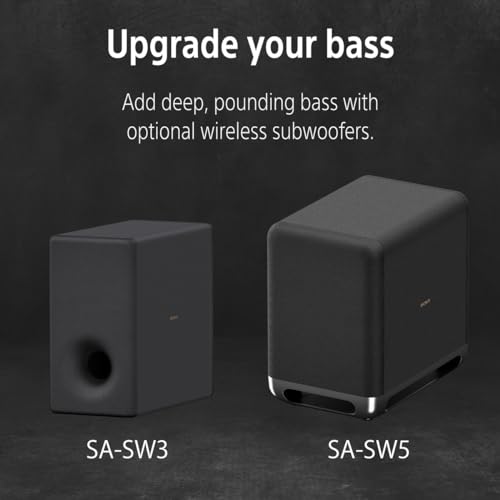
Multiple reviews emphasize that the Sony system, impressive as it is, really needs an optional subwoofer to reach its full potential. Without it, you're missing the low-frequency impact that makes action movies truly exciting. The Samsung, meanwhile, delivers deep, authoritative bass from day one.
The difference isn't just about volume—it's about creating the physical sensation of being in a movie theater. When a T-Rex roars in Jurassic Park or when the bass drops in Blade Runner 2049's soundtrack, you want to feel it in your chest. The Samsung delivers this experience immediately, while the Sony requires an additional purchase that significantly increases the total system cost.
For gaming, latency (the delay between when something happens on screen and when you hear it) is crucial. Based on measurements from multiple review sources, the Samsung HW-Q990D consistently shows lower latency across all connection types, making it better suited for fast-paced gaming.
The Samsung also includes Game Mode Pro, which automatically adjusts audio processing based on what type of game you're playing. Racing games get enhanced engine sounds, while first-person shooters emphasize directional audio cues that help you locate enemies. These aren't just EQ adjustments—the system actually changes how it processes surround information.
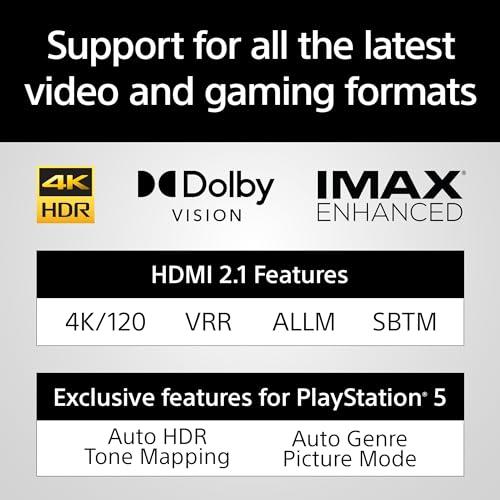
The Sony system does offer some interesting gaming features, particularly for PlayStation 5 owners. It supports Auto HDR Tone Mapping and Auto Genre Picture Mode, which coordinate audio and video processing for optimal gaming experiences. However, the higher latency makes it less ideal for competitive gaming where every millisecond matters.
Both systems support modern gaming features like 4K/120Hz video pass-through, Variable Refresh Rate (VRR), and Auto Low Latency Mode (ALLM), ensuring compatibility with current-generation consoles.
At the time of writing, these systems occupy very different price territories. The Samsung HW-Q990D represents exceptional value for a complete premium home theater system, including everything you need for full-range, immersive audio. The Sony HT-A9M2 commands a significant premium for its innovative technology, and that's before adding the subwoofer most users will want.
This price difference isn't just about features—it reflects fundamentally different development approaches. Samsung refined existing surround sound technology to create a more complete, user-friendly package. Sony invested heavily in developing entirely new spatial audio processing that requires sophisticated algorithms and precise driver coordination.
The question becomes whether Sony's innovation justifies the premium. For users who prioritize cutting-edge technology and have rooms where traditional speaker placement is challenging, the answer might be yes. For most people seeking the best possible home theater experience per dollar spent, the Samsung presents a more compelling value proposition.
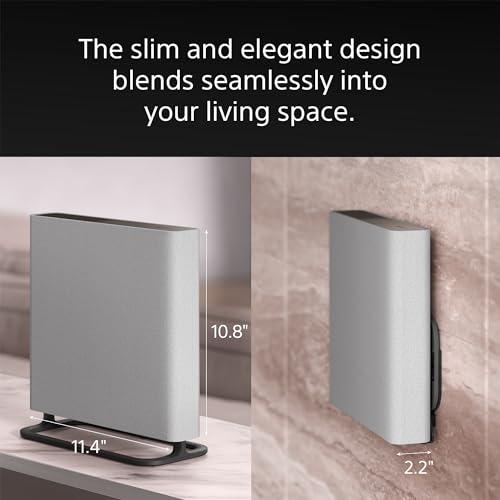
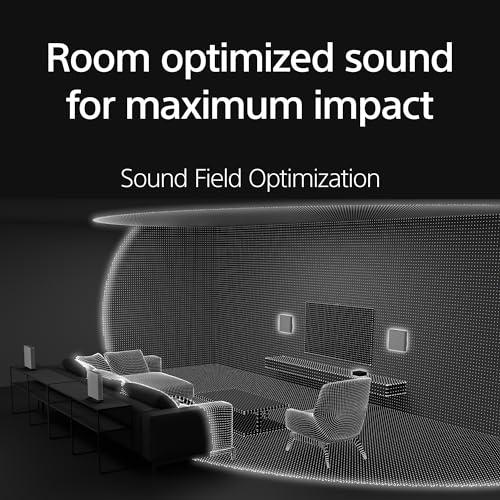
One area where the Sony HT-A9M2 genuinely excels is installation flexibility. Since each satellite only needs a power cable, you can place them almost anywhere in your room—on shelves, mounted to walls, or even positioned asymmetrically. The system's Sound Field Optimization technology measures your room during setup and adjusts the audio processing accordingly.
This flexibility is genuinely valuable in real-world homes where perfect speaker placement isn't always possible. If you rent your home, have limited wall-mounting options, or share living space where large components aren't welcome, the Sony's approach offers significant practical advantages.
The Samsung system, while more traditional, still offers good flexibility with its wireless subwoofer and rear speakers. However, optimal performance requires more careful placement of multiple components, and the main soundbar itself is quite substantial. You'll need adequate space in front of your TV and strategic positioning for the rear speakers to achieve the best surround effect.
For music listening, these systems reveal their different philosophies clearly. The Sony HT-A9M2 creates an incredibly spacious, concert-hall-like experience that can make acoustic music feel live and intimate. Its support for 360 Reality Audio and Hi-Res Audio formats (up to 192kHz/24-bit) shows Sony's commitment to high-quality music reproduction.
The DSEE Ultimate technology deserves special mention—it uses AI processing to enhance compressed music files by restoring high-frequency detail that gets lost in streaming compression. For Spotify or Apple Music listening, this can make a noticeable difference in perceived quality.
The Samsung system, meanwhile, provides more traditional stereo imaging with better bass response. For genres like electronic music, hip-hop, or rock where deep bass is crucial, the included subwoofer makes the Samsung more immediately satisfying. The frequency response is also more neutral out of the box, requiring less adjustment for different music types.
You're fascinated by innovative technology and want the most immersive audio experience possible. The Sony is perfect for movie enthusiasts who prioritize being enveloped in sound over precise audio placement. If your room layout makes traditional speaker placement difficult, or if you value the clean aesthetic of four small wireless speakers over multiple larger components, the Sony's approach makes sense.
Sony ecosystem users get additional benefits—if you own a BRAVIA TV or PlayStation 5, the integration features provide genuine value. The system's ability to work well with asymmetrical placement makes it ideal for irregularly shaped rooms or open-plan living spaces.
You want the best possible home theater performance per dollar spent, with complete functionality from day one. The Samsung is ideal for users who prefer traditional surround sound precision, need excellent bass response immediately, or prioritize gaming performance.
If you have adequate space for multiple components and can position them optimally, the Samsung delivers more accurate sound localization and superior dialogue clarity. For action movie fans who want to feel every explosion and car chase, the included subwoofer provides immediate gratification that the Sony can't match without additional investment.
After analyzing extensive expert and user feedback, the Samsung HW-Q990D emerges as the better choice for most home theater enthusiasts. It delivers complete, high-quality surround sound performance at a compelling price point, with particular strengths in bass response, dialogue clarity, and gaming performance.
The Sony HT-A9M2 represents genuine innovation in spatial audio processing and offers unique advantages for specific use cases—particularly challenging room layouts and Sony ecosystem integration. However, its premium pricing and dependence on an additional subwoofer for optimal performance make it a more specialized choice.
Both systems represent the current state of the art in premium home theater audio, just with different philosophies. Your choice should align with your priorities: traditional surround accuracy and immediate value with the Samsung, or innovative spatial processing and installation flexibility with the Sony. Either way, you'll get a dramatically better audio experience than any basic soundbar can provide.
The home theater audio landscape continues evolving rapidly, with both manufacturers pushing boundaries in their own ways. Whether you choose precision or innovation, both systems demonstrate how far premium audio technology has advanced in recent years.
| Sony HT-A9M2 BRAVIA Theater Quad | Samsung HW-Q990D |
|---|---|
| Channel Configuration - Determines surround sound capabilities and speaker placement | |
| 4.0.4 channels with 16 total drivers across 4 wireless satellites | 11.1.4 channels with 22 total drivers (soundbar + subwoofer + rear speakers) |
| Subwoofer Inclusion - Critical for bass impact and movie theater experience | |
| No subwoofer included (must purchase separately for optimal performance) | Wireless 8" subwoofer included for immediate full-range audio |
| Total Power Output - Affects maximum volume and dynamic range | |
| 504W total power with S-Master HX digital amplification | 656W total power with higher maximum volume capability |
| Spatial Audio Technology - Key differentiator for immersive sound experience | |
| 360 Spatial Sound Mapping creates virtual speakers using room reflections | Traditional discrete speaker placement with SpaceFit Sound Pro calibration |
| Speaker Design Philosophy - Impacts installation flexibility and sound accuracy | |
| Four identical wireless satellites for maximum placement flexibility | Traditional soundbar setup with dedicated center channel for dialogue clarity |
| Gaming Performance - Important for console users and low-latency needs | |
| Higher latency but includes PS5-specific features (Auto HDR Tone Mapping) | Lower latency with Game Mode Pro and better competitive gaming performance |
| HDMI Connectivity - Determines device connection flexibility | |
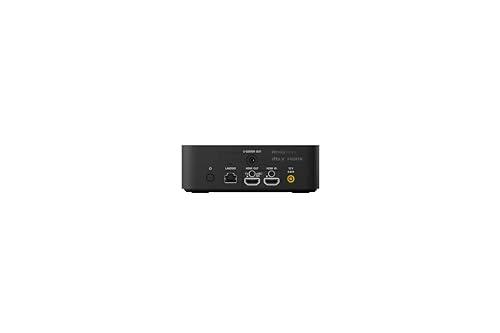
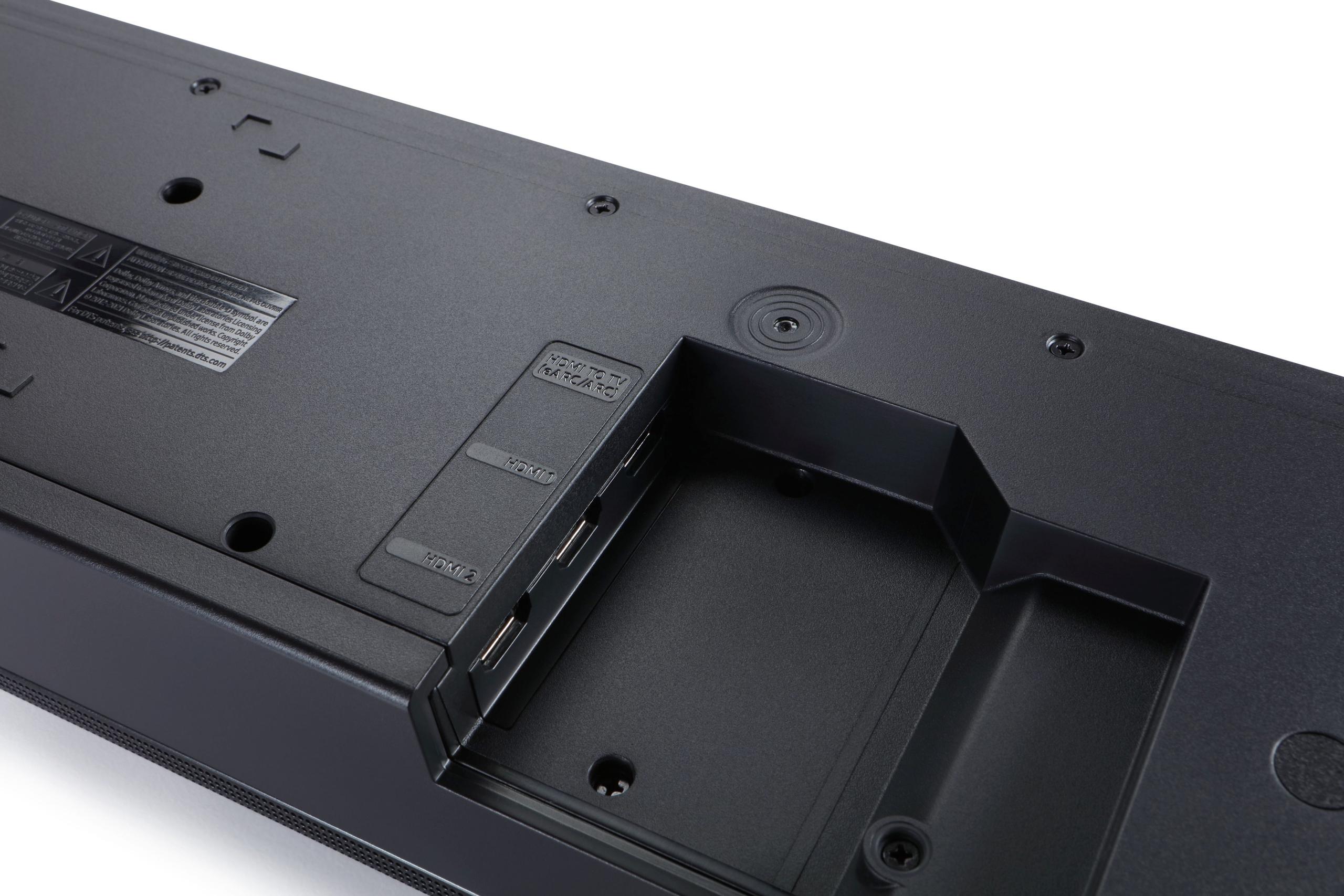
| 1 HDMI input + 1 eARC output with full HDMI 2.1 support | 2 HDMI inputs + 1 eARC output with HDMI 2.1 and VRR support |
| Room Calibration Technology - Ensures optimal sound regardless of room acoustics | |
| Sound Field Optimization analyzes room acoustics and adjusts phantom speaker placement | SpaceFit Sound Pro provides continuous room adaptation with built-in microphone |
| Installation Requirements - Affects ease of setup and living space integration | |
| Only power cables needed at each speaker location, minimal visual impact | Multiple components require strategic placement and more space |
| Voice/Dialogue Performance - Critical for TV shows and movie clarity | |
| Phantom center channel with Voice Zoom 3 AI enhancement | Dedicated physical center channel driver for superior vocal clarity |
| Music Listening Experience - Important for users who stream music frequently | |
| 360 Reality Audio support with Hi-Res Audio up to 192kHz/24-bit | More balanced frequency response with powerful bass for all music genres |
| Value Proposition - Complete system cost versus included features | |
| Premium pricing requires additional subwoofer purchase for optimal experience | Complete system with all components included at lower total investment |
For most home theater setups, the Samsung HW-Q990D offers better overall value with its complete 11.1.4 system including a wireless subwoofer and rear speakers. The Sony HT-A9M2 excels at creating immersive spatial audio experiences but requires an additional subwoofer purchase for optimal performance. The Samsung provides superior bass response and dialogue clarity out of the box.
The Samsung HW-Q990D includes a wireless subwoofer, providing deep bass immediately. The Sony HT-A9M2 ships as a 4.0.4 system without a subwoofer, and most users will want to add Sony's optional wireless subwoofer for full-range audio performance, especially for action movies and music with heavy bass.
The Sony HT-A9M2 is easier to install since each speaker only requires a power cable and can be placed flexibly around your room. The Samsung HW-Q990D requires positioning multiple components (soundbar, subwoofer, and rear speakers) but still offers wireless connectivity for the subwoofer and rear channels.
The Samsung HW-Q990D is better for gaming due to lower audio latency and Game Mode Pro features that optimize sound for different game types. The Sony HT-A9M2 offers special PlayStation 5 integration features but has higher latency that may affect competitive gaming performance.
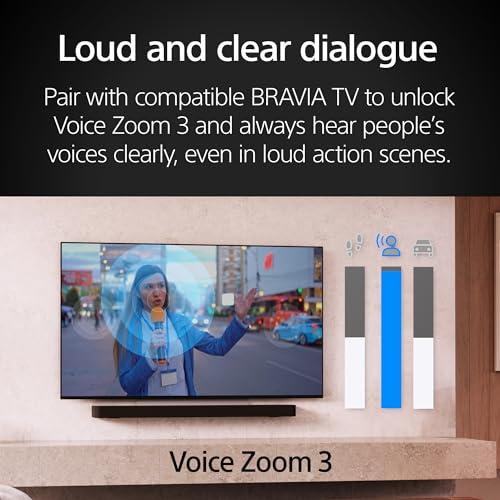
The Samsung HW-Q990D typically provides clearer dialogue thanks to its dedicated physical center channel speaker. The Sony HT-A9M2 uses a phantom center channel but includes Voice Zoom 3 AI technology to enhance dialogue clarity, and can integrate with Sony BRAVIA TVs for improved center channel performance.
The Sony HT-A9M2 creates a more immersive, room-filling audio bubble using spatial sound mapping technology. The Samsung HW-Q990D provides more traditional but precise surround sound with better bass response and higher maximum volume capabilities. Both excel at different aspects of audio reproduction.
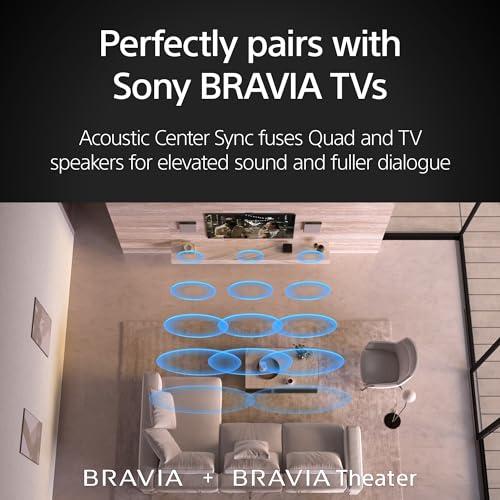
Both the Samsung HW-Q990D and Sony HT-A9M2 work with any TV brand through HDMI eARC or optical connections. However, the Sony system offers enhanced integration features when paired with Sony BRAVIA TVs, including Acoustic Center Sync and simplified control options.
The Samsung HW-Q990D generally offers better value as a complete system with all components included. The Sony HT-A9M2 commands a premium for its innovative spatial audio technology but requires additional investment in a subwoofer for optimal performance, increasing the total system cost.
The Sony HT-A9M2 supports 360 Reality Audio and Hi-Res Audio formats up to 192kHz/24-bit, with DSEE Ultimate for enhancing compressed music. The Samsung HW-Q990D provides more balanced frequency response for music and better bass response out of the box, making it immediately satisfying for all music genres.
The Sony HT-A9M2 adapts well to various room sizes through its flexible speaker placement and room calibration technology. The Samsung HW-Q990D can achieve higher volume levels and works well in larger spaces, though both systems include room calibration features to optimize performance for your specific environment.
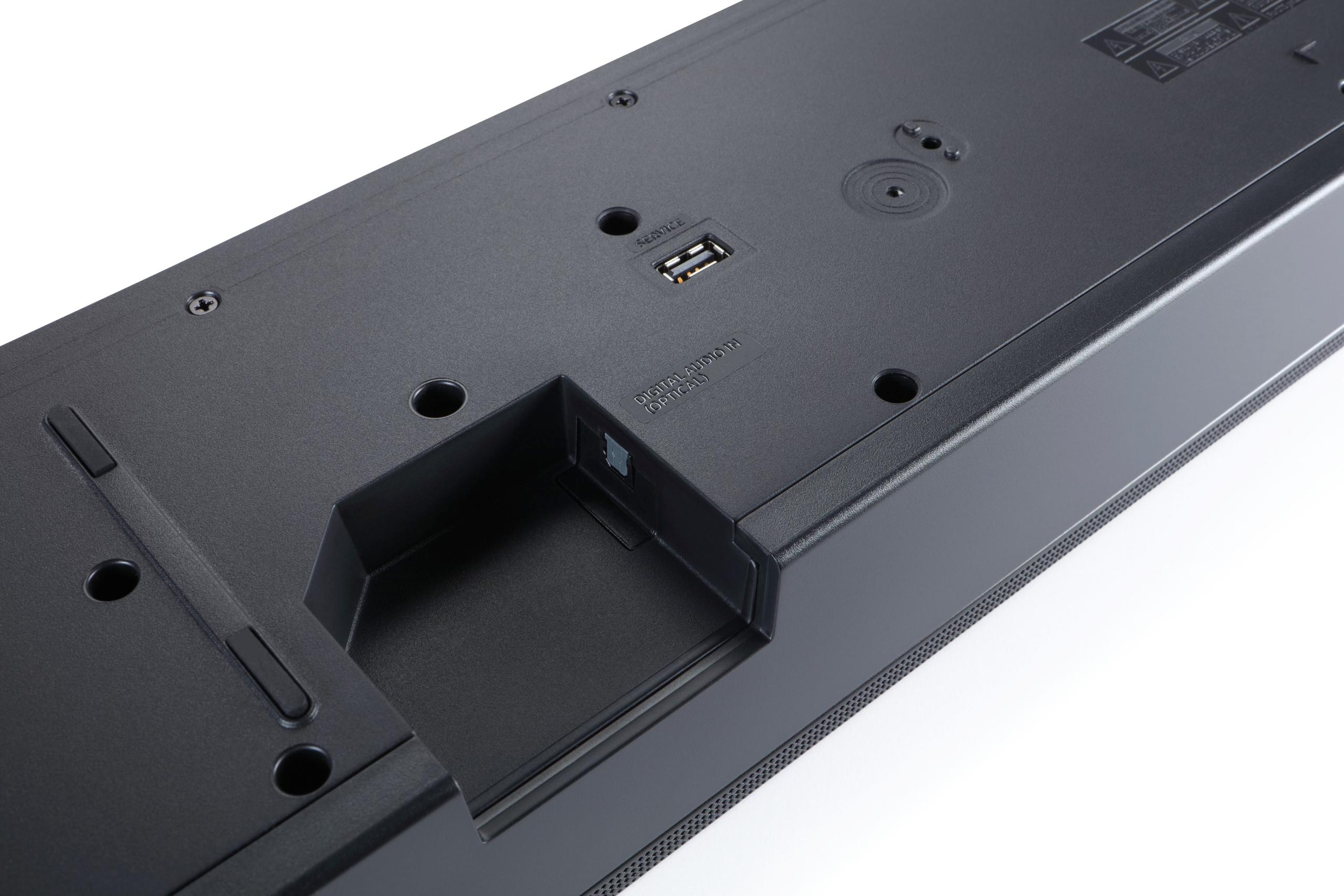
The Samsung HW-Q990D offers more HDMI inputs (2 vs 1) for connecting multiple devices directly. Both systems support HDMI 2.1 features including 4K/120Hz pass-through, eARC, and modern gaming features. The Sony HT-A9M2 includes Bluetooth with LDAC support and various streaming options like AirPlay 2.
Both Samsung and Sony are established audio manufacturers with good track records for firmware updates and customer support. The Sony system represents newer spatial audio technology, while the Samsung uses more proven traditional surround sound approaches. Both typically receive regular software updates to improve performance and add features.
We've done our best to create useful and informative comparisons to help you decide what product to buy. Our research uses advanced automated methods to create this comparison and perfection is not possible - please contact us for corrections or questions. These are the sites we've researched in the creation of this article: bestbuy.com - whathifi.com - whathifi.com - youtube.com - rtings.com - audiosciencereview.com - bhphotovideo.com - skybygramophone.com - sony.com - manuals.plus - audioadvice.com - dell.com - valueelectronics.com - youtube.com - merlinstv.com - videoandaudiocenter.com - electronics.sony.com - sony.com - bestbuy.com - beachcamera.com - sony.com - win.consulting - sony.com - techradar.com - avsforum.com - valueelectronics.com - samsung.com - rtings.com - samsung.com - avsforum.com - samsung.com - cdwg.com - youtube.com - whathifi.com

Privacy Policy
Terms and Conditions - Affiliate Policy
Home Security
© Copyright 2008-2026.
11816 Inwood Rd #1211, Dallas, TX 75244