






If you've ever watched a movie where the dialogue gets drowned out by explosions, or felt like your TV's built-in speakers make everything sound flat and lifeless, you're not alone. The quest for better TV audio has led to two very different solutions: traditional soundbars and the newer wireless theater systems. Today we're comparing the Sony HT-A9M2—a premium wireless theater system—against the Samsung HW-B550D, a budget-friendly soundbar that's proven popular with consumers.
At the time of writing, these products sit at opposite ends of the price spectrum. The Samsung HW-B550D represents excellent value in the budget category, while the Sony HT-A9M2 commands flagship pricing that puts it in competition with high-end traditional surround sound systems. Understanding which approach suits your needs, budget, and room setup is crucial before making a decision.
The fundamental difference between these products goes beyond price—they represent completely different philosophies for solving the "bad TV audio" problem.
Soundbars like the Samsung HW-B550D take the traditional approach: pack multiple speakers into a single horizontal cabinet that sits below your TV. They use digital signal processing (DSP)—essentially computer algorithms that manipulate audio signals—to create the illusion of surround sound from a limited number of physical speakers. Think of it like audio magic tricks: the soundbar bounces sound off your walls and uses timing delays to fool your brain into thinking sounds are coming from places where there aren't actually any speakers.
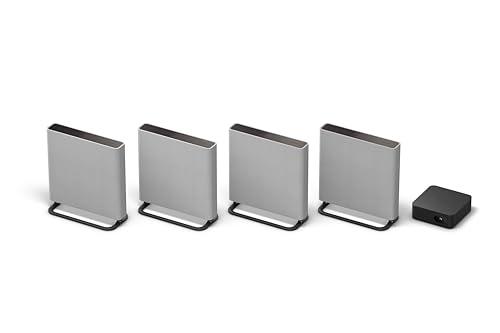
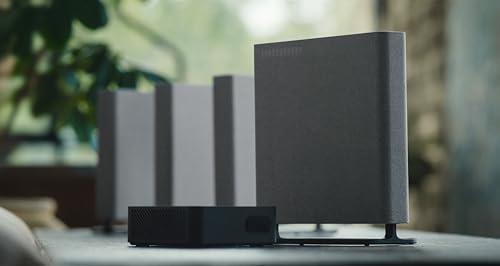
Wireless theater systems like the Sony HT-A9M2 take a radically different approach. Instead of cramming everything into one bar, they use multiple separate speakers placed around your room, but without the traditional speaker wires that made surround sound systems such a pain to install. Each speaker wirelessly receives its own unique audio channel, creating true discrete surround sound—meaning each speaker plays different, specific sounds rather than processed versions of the same signal.
The Sony HT-A9M2 launched in 2024 as the successor to Sony's groundbreaking original HT-A9. Since that original model's 2021 debut, Sony has refined the wireless technology, improved reliability, and enhanced the spatial audio processing. The Samsung HW-B550D also arrived in 2024 as part of Samsung's B-series refresh, incorporating lessons learned from previous generations while maintaining an aggressive price point.
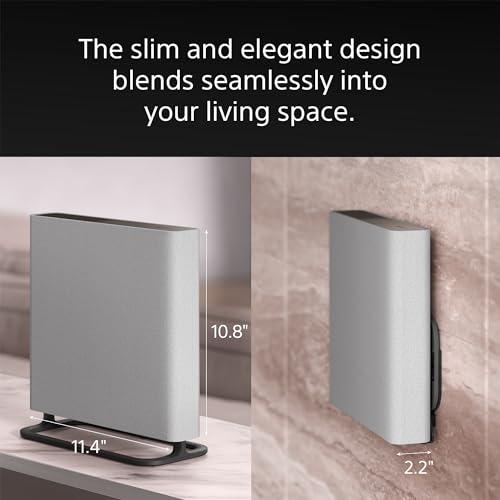
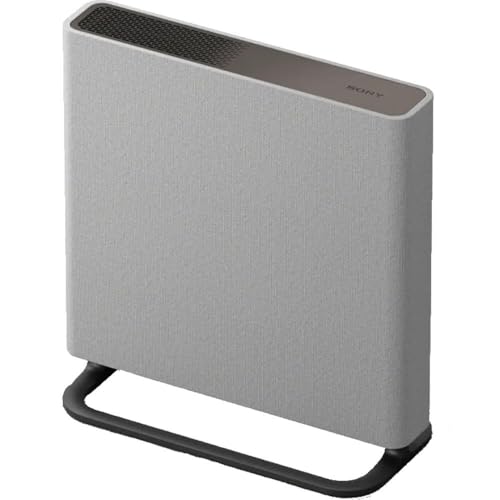
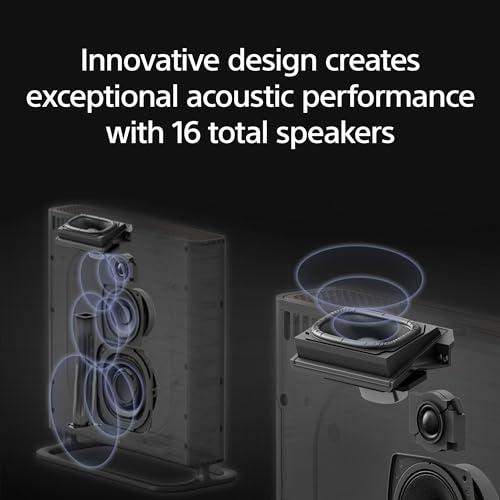
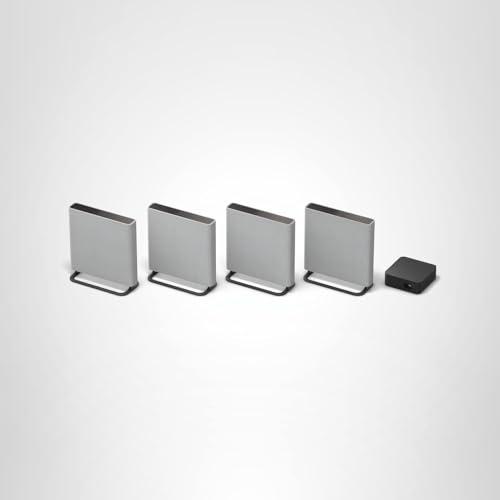
The Sony HT-A9M2 consists of four identical speakers, each roughly the size of a small bookshelf speaker. But here's where it gets interesting: each speaker contains four individual drivers (the actual speaker cones that produce sound).
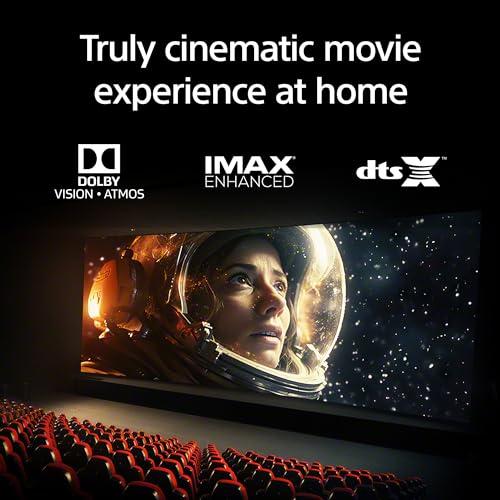
Each speaker houses a 3.375-inch woofer for bass, a 2.375-inch mid-bass driver for the crucial midrange frequencies where voices live, and a 0.75-inch tweeter for crisp highs. But the real magic happens with the fourth driver—a 3.125-inch "upward-firing" speaker on top of each cabinet. These point toward the ceiling and bounce sound down to create height effects for Dolby Atmos content. Atmos is an audio format that adds a "height" dimension to surround sound, making helicopters truly sound like they're flying overhead rather than just coming from speakers around your room.
This gives you 16 total drivers working together, each powered by its own dedicated amplifier channel. That's like having a separate amplifier for every single speaker cone—something you'd typically only find in very expensive professional audio systems.
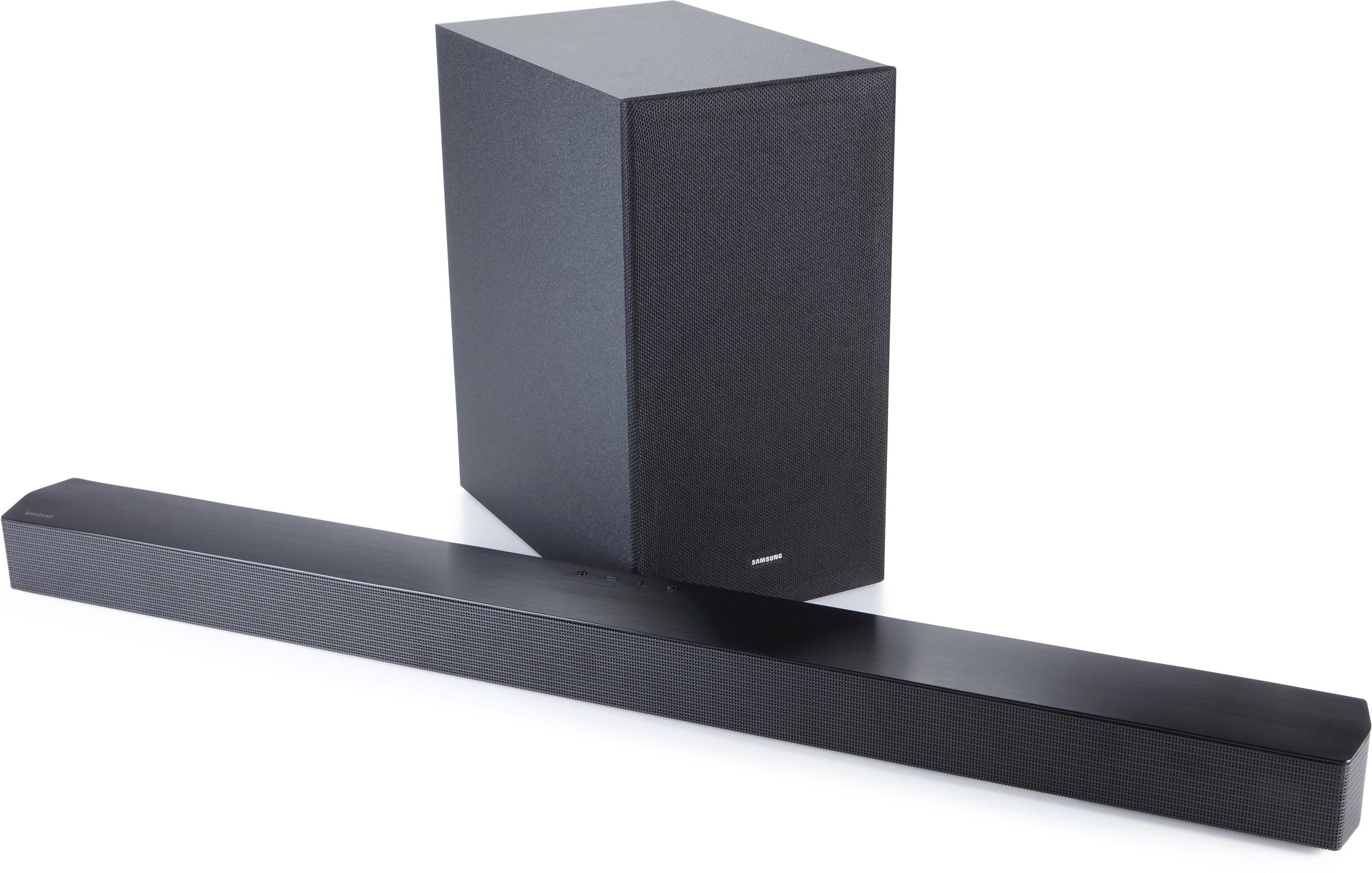
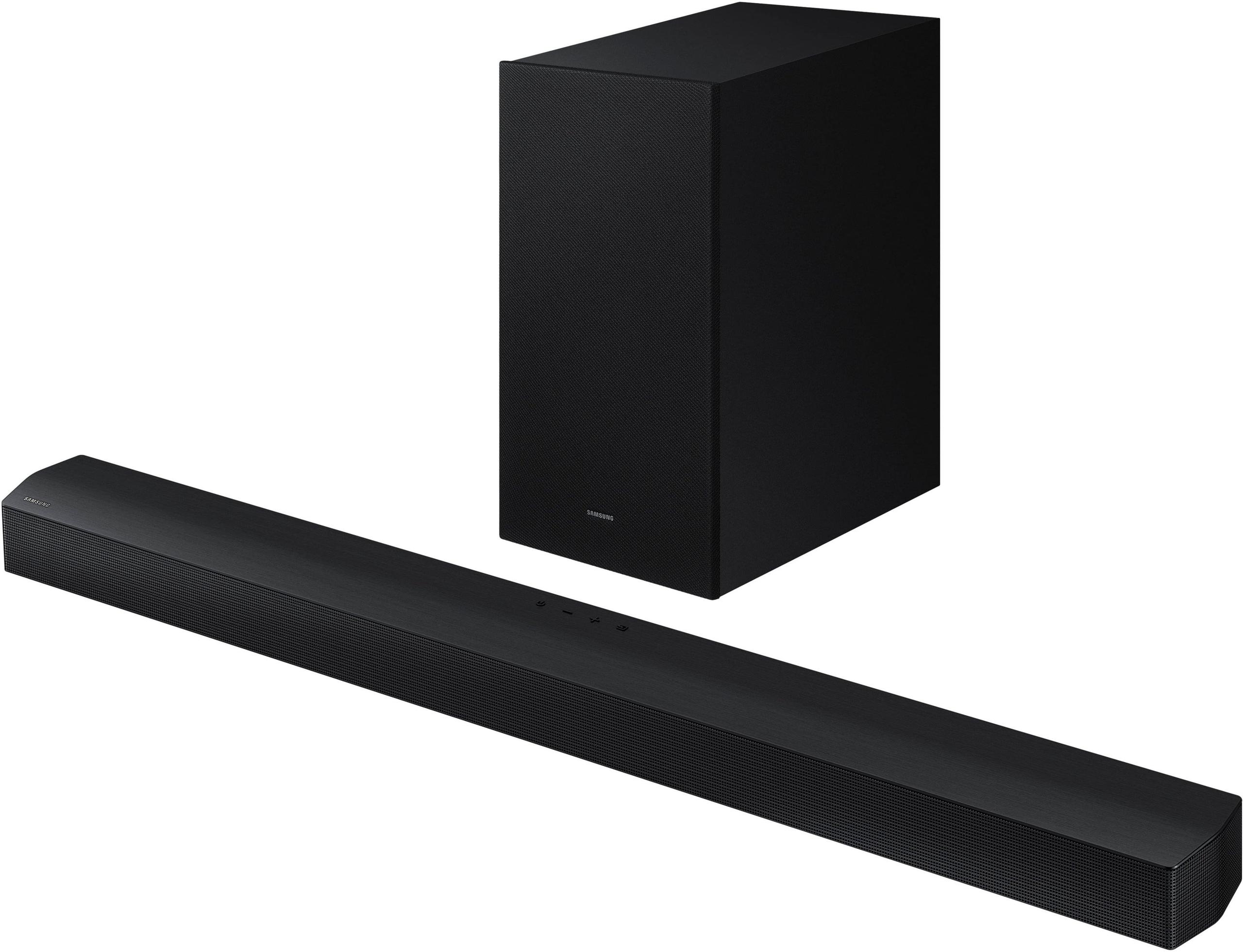
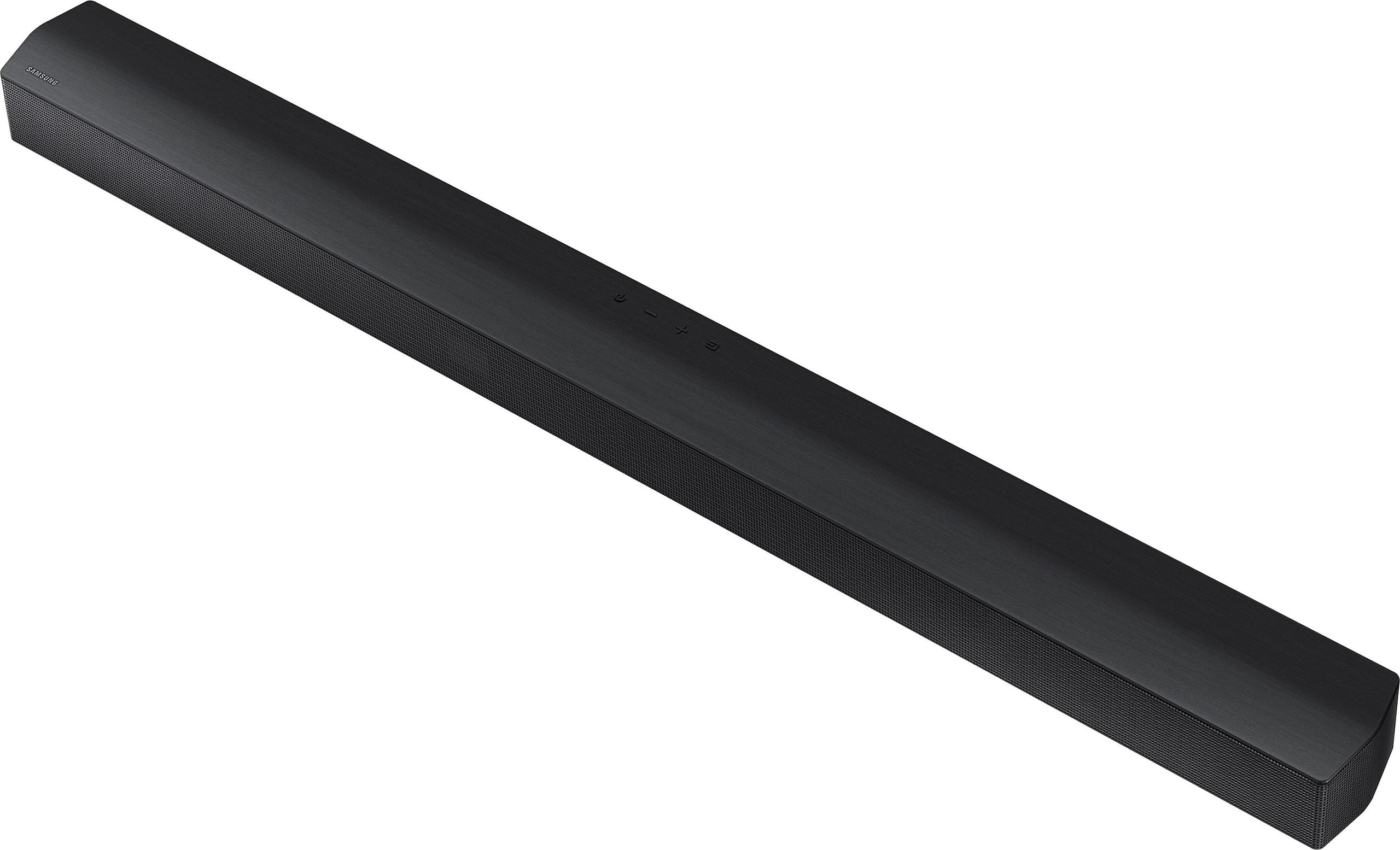
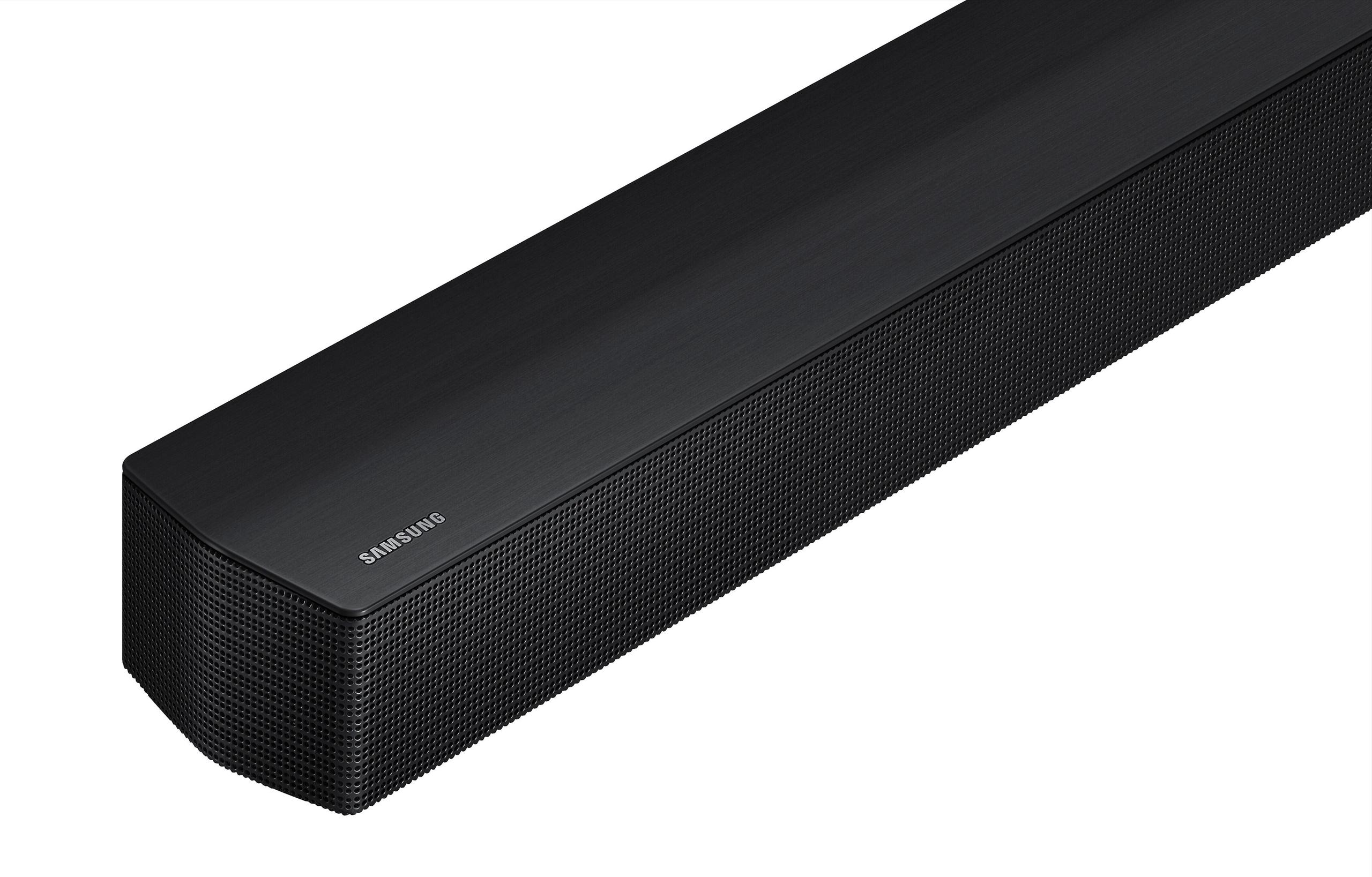
The Samsung HW-B550D follows the tried-and-true soundbar formula. The main bar contains six drivers arranged in a 3.1 configuration—that means left, center, and right channels across the front, with the ".1" referring to the separate wireless subwoofer that handles low frequencies (bass).
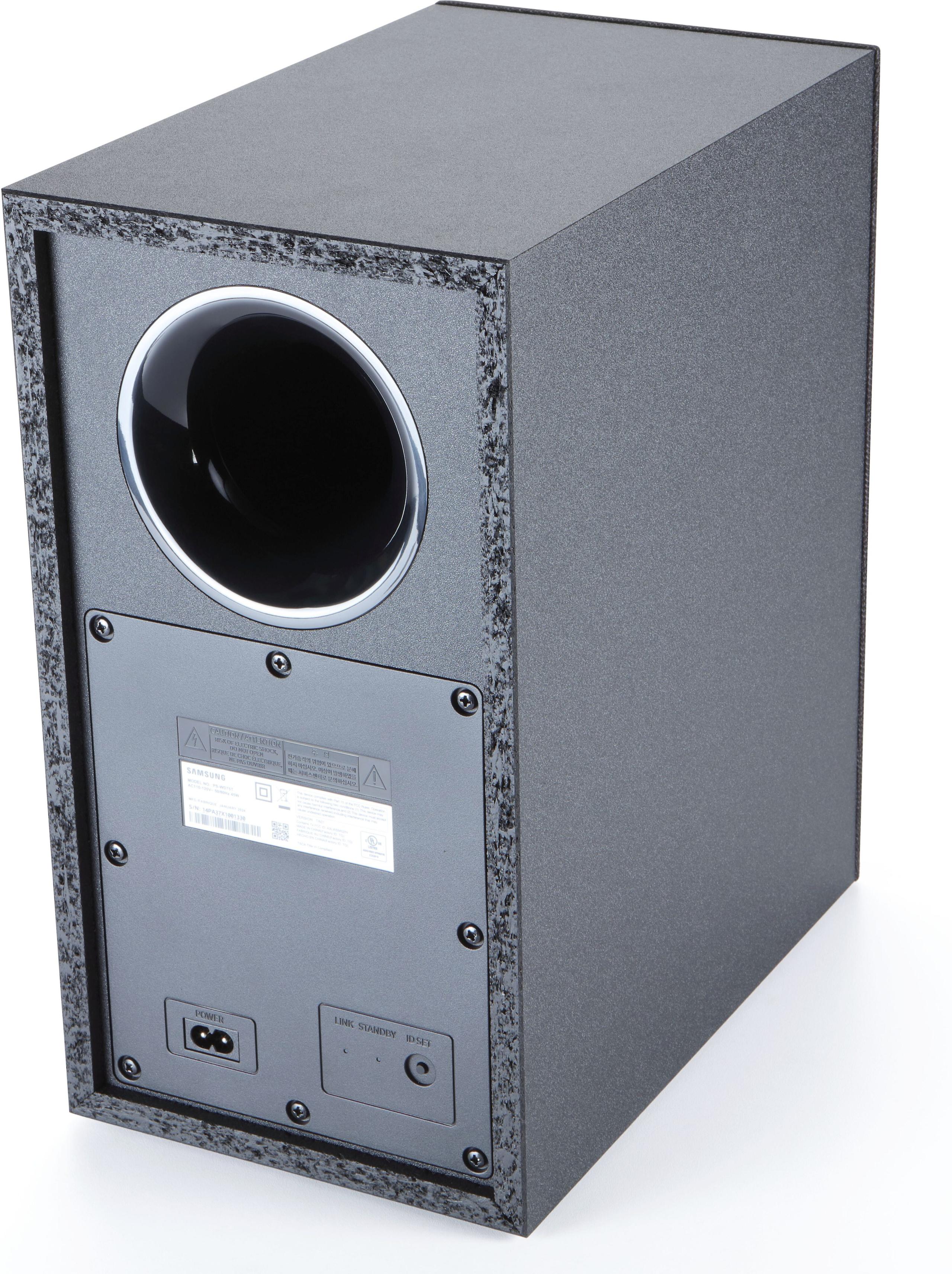
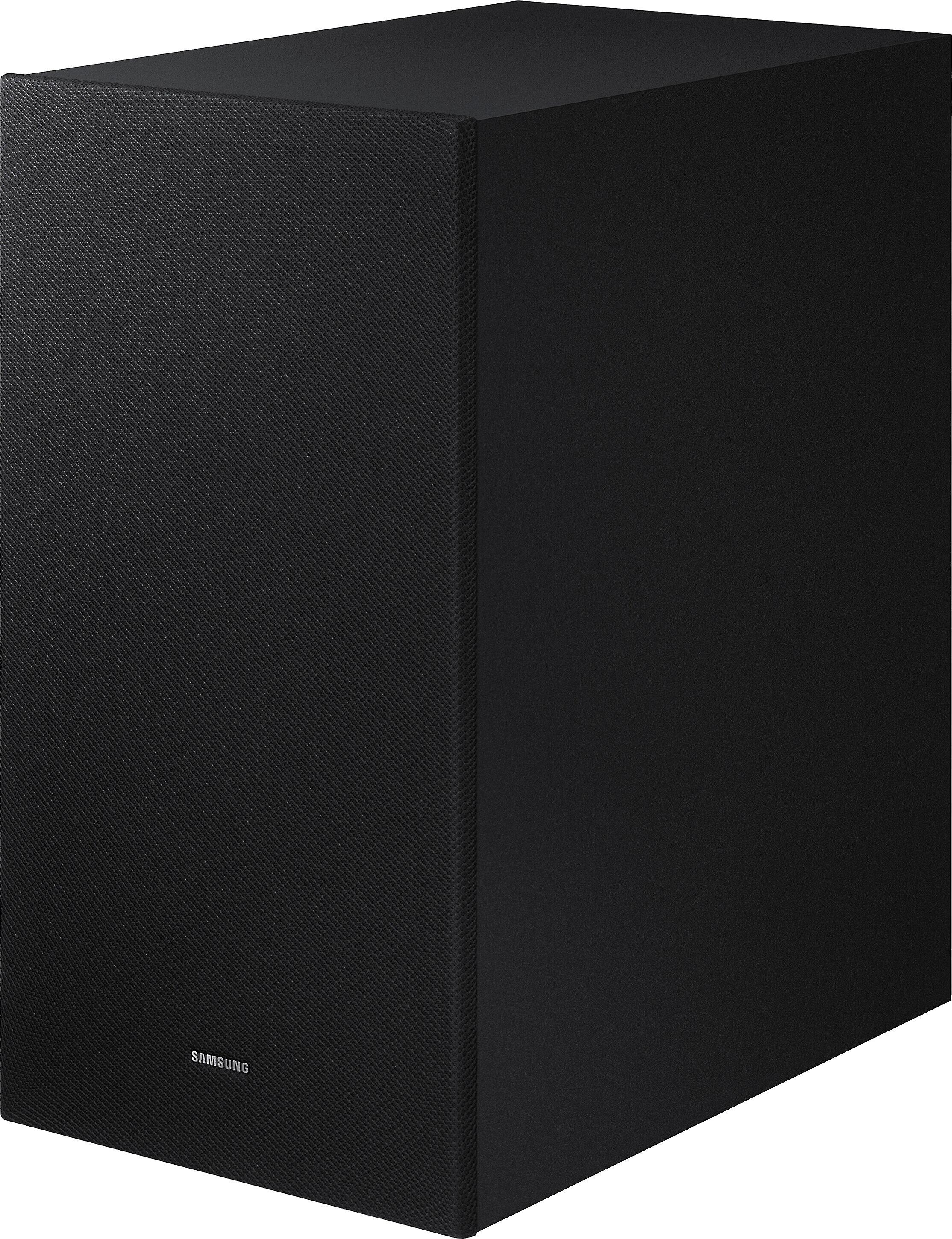
The center channel is crucial here because it's dedicated entirely to dialogue reproduction. In movie soundtracks, most dialogue is specifically mixed to the center channel, so having a dedicated speaker for this makes voices clearer and more intelligible. The wireless subwoofer uses a 5-inch bass-reflex design—"bass-reflex" means it has a port (a hole) that's tuned to enhance low-frequency output, kind of like how the sound hole in an acoustic guitar helps project the bass notes.
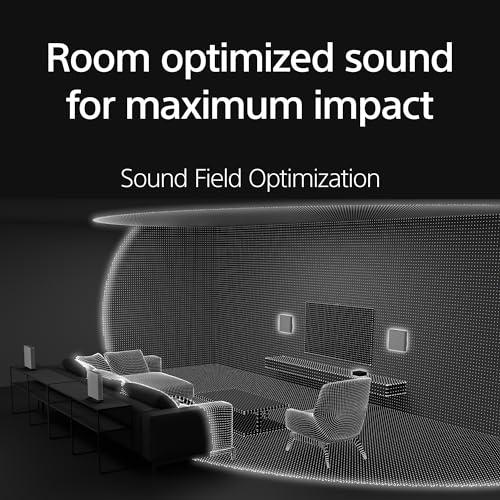
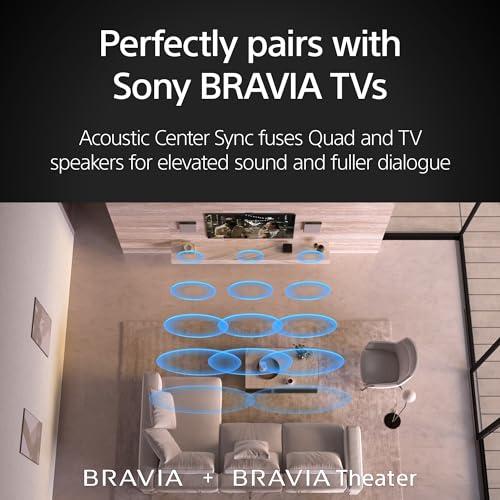
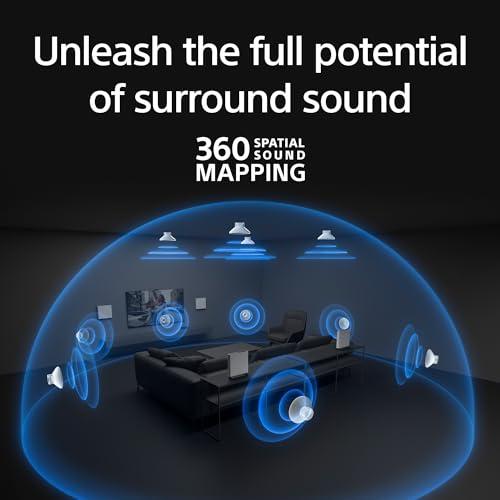
Based on extensive review analysis and user feedback, the Sony HT-A9M2 creates something that budget soundbars simply cannot: a truly three-dimensional sound bubble that fills your entire room. Sony's "360 Spatial Sound Mapping" technology analyzes your room's acoustics using microphones built into each speaker, then creates virtual "phantom speakers" at positions where no physical speakers exist.
Professional reviewers consistently describe this as transformative—you hear helicopters not just "somewhere over there," but specifically moving from the back-left corner, overhead, and down toward the front-right. It's the difference between watching a movie and feeling like you're inside it.
The Samsung HW-B550D, on the other hand, excels at what it's designed to do: make your TV sound significantly better without complexity. Its DTS Virtual:X processing creates a wider soundstage than your TV speakers, and the dedicated center channel ensures dialogue cuts through clearly. But it's still fundamentally limited by physics—you can't create true surround immersion from speakers that are all positioned in front of you.
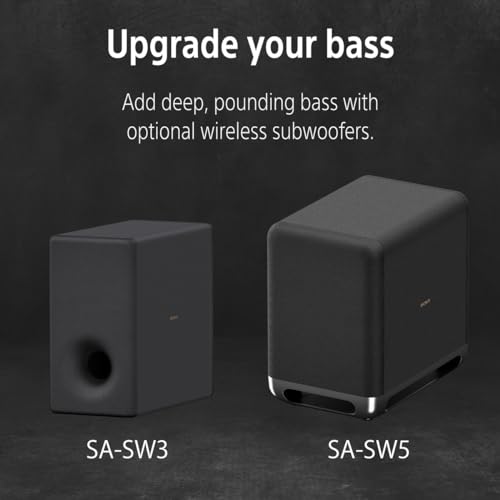
However, here's an important caveat about the Sony HT-A9M2: it ships as a 4.0.4 system with no included subwoofer. Professional reviews consistently note that while the spatial effects are stunning, the bass impact feels lightweight compared to systems that include dedicated subwoofers. Adding Sony's optional wireless subwoofer significantly increases the total investment but transforms the system into something that can compete with much more expensive traditional setups.
This is where things get interesting, and frankly, where the Samsung HW-B550D has a legitimate advantage. Its dedicated center channel speaker means dialogue is reproduced by a driver specifically optimized for the human voice frequency range. Combined with Samsung's Voice Enhancement mode, this creates noticeably clear speech reproduction—the kind of improvement that makes you realize how much you were straining to understand dialogue before.
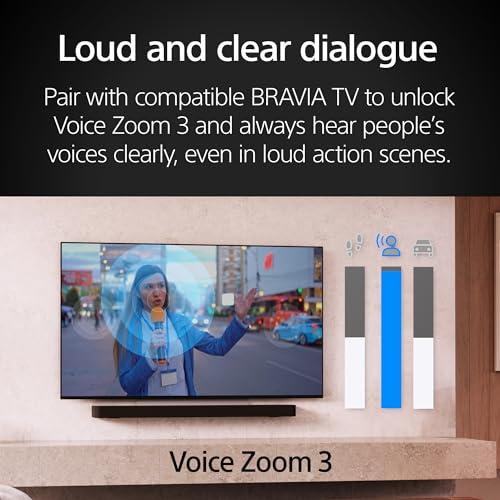
The Sony HT-A9M2 uses what's called a "phantom center"—it uses timing and phase manipulation between the front speakers to make dialogue appear to come from the center, even though there's no physical speaker there. While Sony's Voice Zoom 3 AI technology helps by identifying and enhancing speech frequencies, some users report that dialogue can lack the focused clarity of a dedicated center channel, especially if you're sitting off to the side.
The Samsung HW-B550D includes everything you need right out of the box. Its 5-inch wireless subwoofer provides solid bass impact for the price point, and the Bass Boost mode can add extra thump for action movies. It's not going to rattle your floorboards like a high-end system, but it delivers satisfying low-end that makes movies feel more impactful than TV speakers.
The Sony HT-A9M2 faces criticism here. Without an additional subwoofer purchase, many users and reviewers describe the bass as "polite" or "refined" but lacking the physical impact that makes action scenes exciting. This is simultaneously the system's biggest weakness and a reflection of its design philosophy—Sony focused on spatial accuracy and clarity over raw bass power.
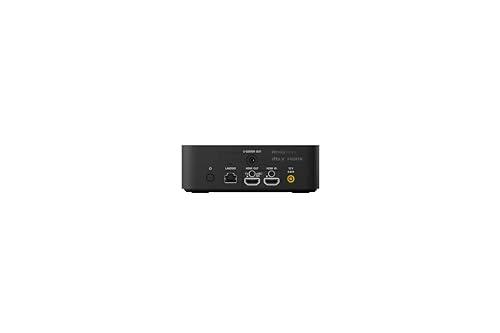
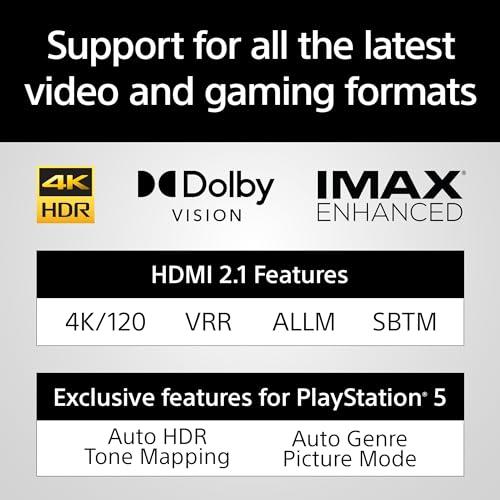
For gamers, the differences are stark. The Sony HT-A9M2 includes full HDMI 2.1 support, which means it can pass through 4K video at 120Hz refresh rates—crucial for PlayStation 5 and Xbox Series X gaming. It also supports Variable Refresh Rate (VRR) and Auto Low Latency Mode (ALLM), technologies that reduce input lag and screen tearing for competitive gaming.
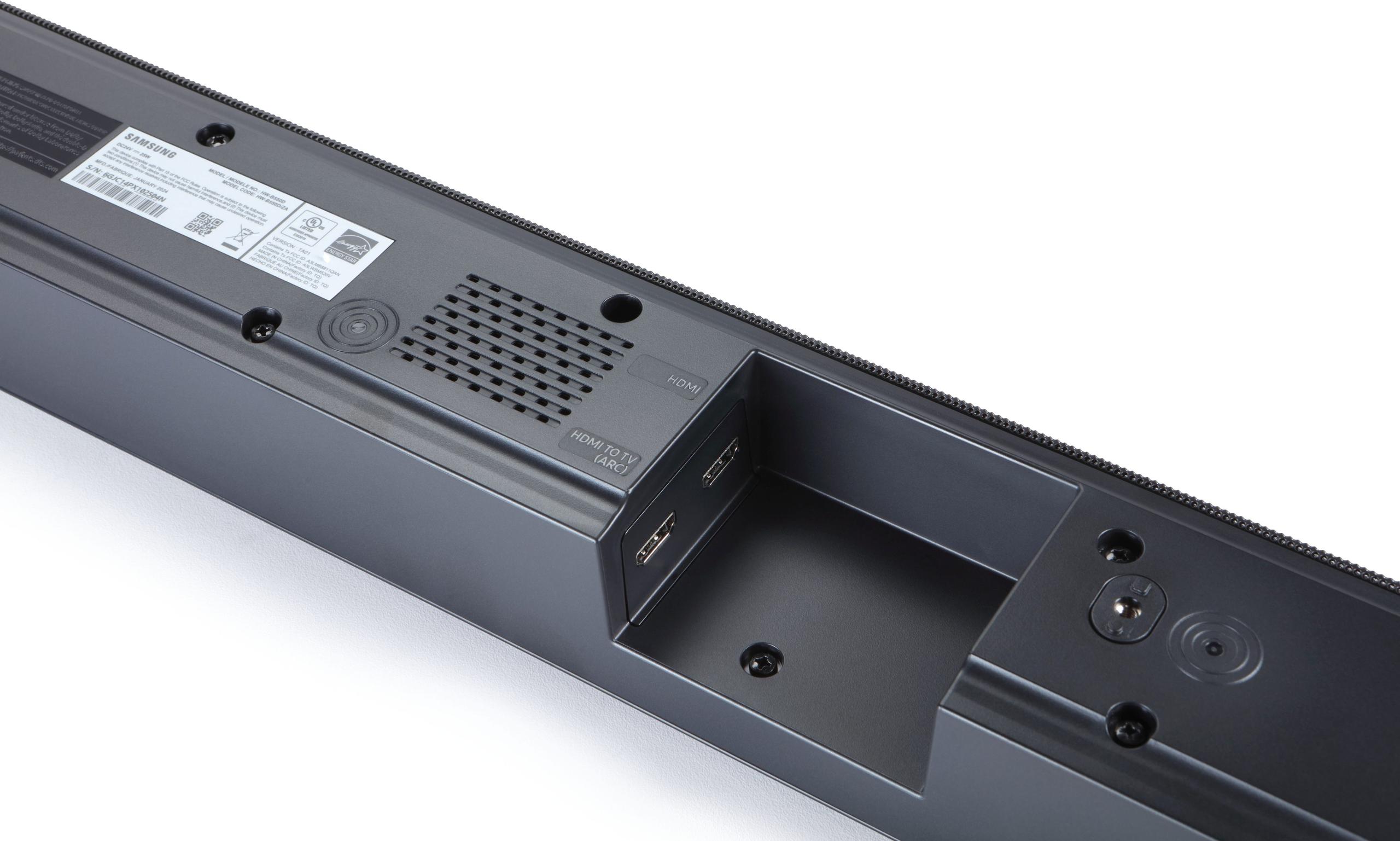
The Samsung HW-B550D is limited to HDMI 1.4, which caps video passthrough at 1080p resolution. For current-generation gaming, this means you'd need to connect your console directly to your TV and use the soundbar's ARC (Audio Return Channel) connection. It's not a deal-breaker, but it's a limitation that future-proofs the Sony system for next-generation gaming.
Setting up the Sony HT-A9M2 requires more thought than a traditional soundbar, but the payoff is significant flexibility. The four speakers can be placed almost anywhere—on shelves, mounted to walls at different heights, or even positioned asymmetrically around furniture. The system's Sound Field Optimization automatically calibrates for whatever placement you choose.
This flexibility is genuinely useful in real homes. Maybe your couch isn't centered in front of your TV, or you have an open floor plan where traditional surround speaker placement doesn't work. The Sony system adapts to your room rather than forcing you to adapt to it.
The wireless connection between speakers has been significantly improved since the original 2021 model. Sony increased the radio transmission power and added automatic frequency hopping to avoid interference from Wi-Fi networks and other wireless devices. Based on user reports, the reliability issues that occasionally plagued the original system have been largely resolved.
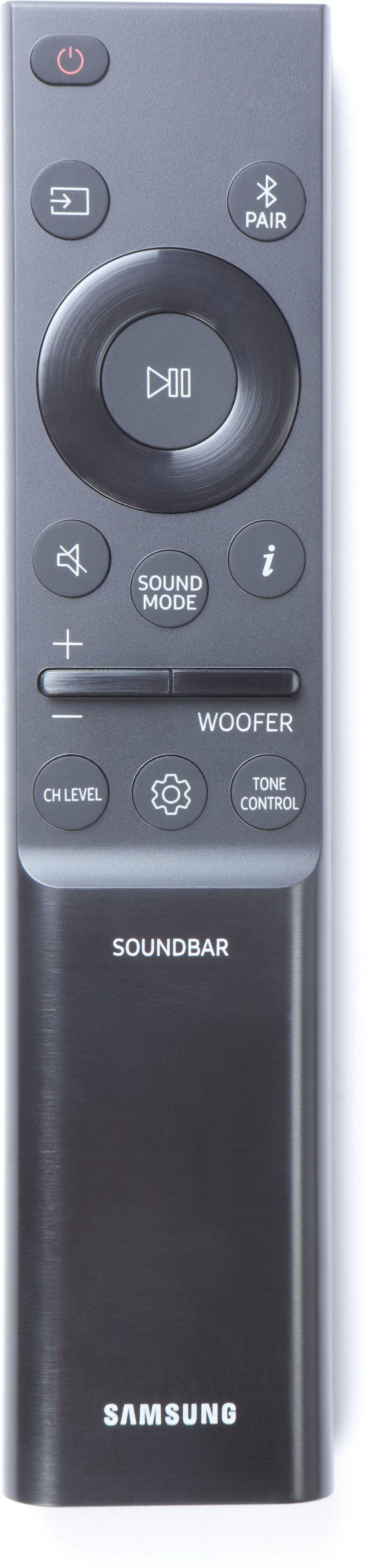
The Samsung HW-B550D represents plug-and-play simplicity at its best. User reviews consistently praise how the soundbar and subwoofer pair automatically via Bluetooth, and most people have the system working within minutes of unboxing. The soundbar sits below your TV, the subwoofer finds a spot somewhere in your room (wireless gives you flexibility here), and you're done.
Samsung's remote provides straightforward control over sound modes, and if you have a Samsung TV, the soundbar integrates with your TV remote through HDMI CEC (Consumer Electronics Control)—meaning you can control volume and basic settings without juggling multiple remotes.
You're serious about home theater and willing to invest significantly for a transformative audio experience. This system makes the most sense for dedicated movie watching, where the immersive spatial effects truly shine. If you have a room where you can place speakers around your seating area—even unconventionally—the Sony system will create an experience that no soundbar can match.
Gamers with current-generation consoles will appreciate the HDMI 2.1 features, and the system's wide soundstage coverage means everyone in the room gets a good experience, not just the person sitting in the "sweet spot."
However, budget for the optional subwoofer. The system feels incomplete without it, and the additional cost brings your total investment into serious home theater territory. You should also be comfortable with a more complex setup process and having four speakers visible in your room.
You want significantly better TV audio without complexity or premium pricing. This soundbar excels at its primary mission: making dialogue clearer and adding some spatial width and bass impact to your TV viewing experience.
It's ideal for people who primarily watch TV shows, news, and lighter entertainment rather than action-heavy movies. The dedicated center channel really shines with dialogue-heavy content, and the simple setup means you'll be enjoying better audio the same day you buy it.
The system works well in smaller to medium-sized rooms and apartments where the acoustic benefits of the Sony system might be limited anyway. If your viewing consists more of streaming shows than theatrical movie experiences, the Samsung delivers the improvements you'll actually notice most.
These products serve fundamentally different needs, and their price difference reflects that reality. The Sony HT-A9M2 is a premium home theater system that happens to be wireless, while the Samsung HW-B550D is an excellent TV audio upgrade that stays focused on simplicity and value.
For most people upgrading from TV speakers, the Samsung HW-B550D will provide a dramatic improvement in dialogue clarity and overall audio quality at a price that won't require serious budget consideration. It solves the "I can't hear the dialogue" problem effectively and adds enough bass and spatial enhancement to make movies more engaging.
The Sony HT-A9M2 is for enthusiasts who want to recreate something approaching a commercial theater experience at home. When properly set up with the optional subwoofer, it delivers spatial audio immersion that makes you reconsider what home entertainment can be. But it requires a significant financial commitment and the willingness to work with a more complex system.
Consider your priorities: if better TV audio is the goal, Samsung delivers excellent value. If transformative home theater experience is the goal and budget allows, Sony offers something genuinely special in the home audio landscape.
| Sony HT-A9M2 BRAVIA Theater Quad | Samsung HW-B550D |
|---|---|
| System Type - Fundamentally different approaches to surround sound | |
| 4.0.4 wireless theater system with four separate speakers | Traditional 3.1 soundbar with wireless subwoofer |
| Total Drivers - More drivers generally mean better sound separation and clarity | |
| 16 drivers (4 per speaker: woofer, mid-bass, tweeter, height driver) | 7 drivers (6 in soundbar + 1 subwoofer) |
| True Surround Sound - Critical for immersive movie experiences | |
| Physical speakers placed around room create discrete surround channels | Virtual surround processing from front-facing speakers only |
| Dolby Atmos Support - Essential for modern movie soundtracks | |
| True Atmos with dedicated upward-firing drivers in each speaker | DTS Virtual:X simulation (no true Atmos capability) |
| Subwoofer Included - Bass impact is crucial for action movies | |
| No subwoofer included (optional purchase required for full bass) | 5-inch wireless subwoofer included |
| Center Channel - Critical for clear dialogue reproduction | |
| Phantom center using processing between front speakers | Dedicated physical center speaker in soundbar |
| HDMI Video Support - Important for gaming and future-proofing | |
| HDMI 2.1 with 4K/120Hz, 8K/60Hz, VRR, ALLM for gaming | HDMI 1.4 limited to 1080p passthrough |
| Room Calibration - Optimizes sound for your specific room layout | |
| Automatic Sound Field Optimization measures and adjusts for room acoustics | No room calibration (manual adjustments only) |
| Setup Complexity - Consider your comfort with audio equipment | |
| Requires strategic placement of four speakers around room | Simple soundbar placement below TV |
| Price Category - Major factor in decision making | |
| Premium flagship pricing (flagship tier) | Budget-friendly (entry-level tier) |
| Best For - Who should consider each system | |
| Home theater enthusiasts wanting cinema-quality immersion | TV audio upgrade seekers prioritizing simplicity and value |
The Sony HT-A9M2 is significantly better for dedicated home theater use. It creates true 3D surround sound with four wireless speakers placed around your room, delivering cinema-quality immersion that the Samsung HW-B550D simply cannot match. While the Samsung soundbar improves TV audio considerably, it uses virtual processing that can't replicate the discrete channel separation of the Sony system.
The fundamental difference is system architecture: the Sony HT-A9M2 is a wireless theater system with four separate speakers that create true surround sound, while the Samsung HW-B550D is a traditional soundbar that uses digital processing to simulate surround effects from a single bar plus subwoofer.
The Samsung HW-B550D is much easier to set up. It's essentially plug-and-play: place the soundbar below your TV, position the wireless subwoofer anywhere in the room, and connect via HDMI. The Sony HT-A9M2 requires strategic placement of four speakers around your room and runs automatic calibration, making it more complex but offering greater flexibility.
The Samsung HW-B550D includes a wireless subwoofer, so you have everything needed for good bass right out of the box. The Sony HT-A9M2 ships without a subwoofer, and most reviewers recommend adding Sony's optional wireless subwoofer for full bass impact, which increases the total investment significantly.
The Samsung HW-B550D typically provides clearer dialogue thanks to its dedicated center channel speaker that's specifically designed for voice reproduction. The Sony HT-A9M2 uses a "phantom center" created by processing between speakers, which can be less focused for dialogue, though its Voice Zoom 3 technology helps enhance speech clarity.
The Sony HT-A9M2 is excellent for modern gaming with HDMI 2.1 support, 4K/120Hz passthrough, and features like VRR and Auto Low Latency Mode for PlayStation 5 and Xbox Series X. The Samsung HW-B550D is limited to HDMI 1.4 with 1080p passthrough, making it less suitable for current-generation gaming consoles.
The Samsung HW-B550D is more practical for small rooms and apartments where you may not have space to position four speakers optimally. The Sony HT-A9M2 benefits from larger spaces where its wireless speakers can be properly positioned around the seating area for maximum surround effect.
Both systems handle music well, but differently. The Sony HT-A9M2 excels with spatial music formats and Hi-Res Audio, creating an immersive listening experience across the room. The Samsung HW-B550D provides good stereo music reproduction with its wider soundstage compared to TV speakers, plus convenient Bluetooth connectivity for streaming from phones.
This depends on your priorities and budget. The Samsung HW-B550D offers exceptional value for basic TV audio improvement at an affordable price point. The Sony HT-A9M2 provides premium performance that justifies its higher cost for serious home theater enthusiasts, especially when compared to traditional high-end surround systems.
The Sony HT-A9M2 supports true Dolby Atmos with dedicated upward-firing drivers in each speaker for authentic height effects. The Samsung HW-B550D does not support true Atmos but uses DTS Virtual:X to simulate height effects through processing, which provides some vertical dimension but not true object-based audio.
The Samsung HW-B550D is simpler with fewer components and connection points, making it inherently more reliable. The Sony HT-A9M2 has improved wireless reliability significantly over previous generations, but its four-speaker wireless system is naturally more complex, though Sony has addressed most connectivity issues with enhanced transmission power and frequency hopping.
For your first upgrade from TV speakers, the Samsung HW-B550D is typically the better choice due to its simplicity, included subwoofer, clear dialogue improvement, and accessible pricing. The Sony HT-A9M2 is better suited for users who want a premium home theater experience and are willing to invest significantly more for transformative spatial audio capabilities.
We've done our best to create useful and informative comparisons to help you decide what product to buy. Our research uses advanced automated methods to create this comparison and perfection is not possible - please contact us for corrections or questions. These are the sites we've researched in the creation of this article: bestbuy.com - whathifi.com - whathifi.com - youtube.com - rtings.com - audiosciencereview.com - bhphotovideo.com - skybygramophone.com - sony.com - manuals.plus - audioadvice.com - dell.com - valueelectronics.com - youtube.com - merlinstv.com - videoandaudiocenter.com - electronics.sony.com - sony.com - bestbuy.com - beachcamera.com - sony.com - win.consulting - sony.com - bestbuy.com - crutchfield.com - avsforum.com - consumerreports.org - abt.com - pcrichard.com - samsung.com - samsung.com - rtings.com - samsung.com - jeffsappliance.com

Privacy Policy
Terms and Conditions - Affiliate Policy
Home Security
© Copyright 2008-2026.
11816 Inwood Rd #1211, Dallas, TX 75244