







If you're tired of squinting at subtitles or constantly adjusting your TV volume during action scenes, you're probably ready for a proper home theater audio system. But choosing between different approaches to surround sound can feel overwhelming, especially when you're comparing products that take fundamentally different paths to the same goal.
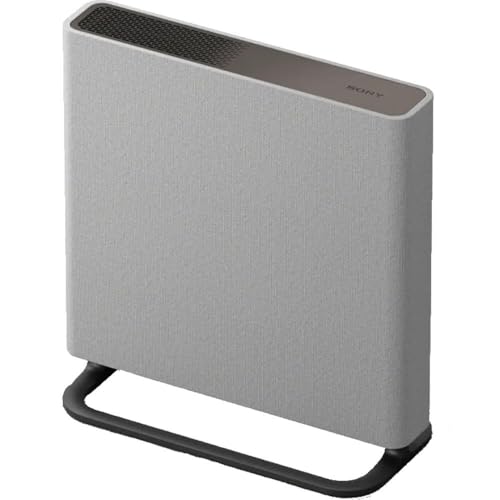
The Sony HT-A9M2 BRAVIA Theater Quad and Amazon Fire TV Soundbar Plus 5.1 represent two completely different philosophies in home theater audio. Sony's system, released in 2024, uses cutting-edge wireless technology and advanced signal processing to create an immersive bubble of sound around you. Amazon's offering, launched in 2023, sticks with the tried-and-true formula of dedicated speakers for each channel—left, right, center, surrounds, and bass.
At the time of writing, these systems sit in completely different price brackets, with the Sony system costing roughly four times more than the Amazon setup. But that price difference comes with some genuinely impressive technology that might justify the premium for the right buyer.
Before diving into specifics, it's worth understanding what makes modern home theater audio tick. Traditional surround sound systems use discrete channels—separate audio streams for left, right, center, left surround, right surround, and a subwoofer (hence "5.1" where the ".1" represents the bass channel). This approach has worked well for decades and creates a convincing surround effect when set up properly.
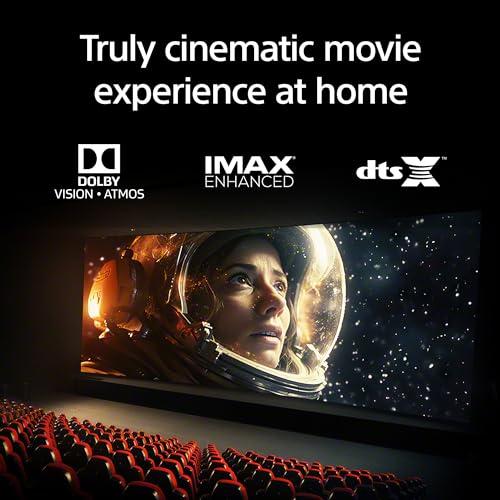
The newer approach involves object-based audio formats like Dolby Atmos, which treats sounds as three-dimensional objects that can be placed anywhere in space, including overhead. This is where things get interesting—some systems use physical speakers pointing upward to create height effects, while others use digital signal processing to simulate the same effects.
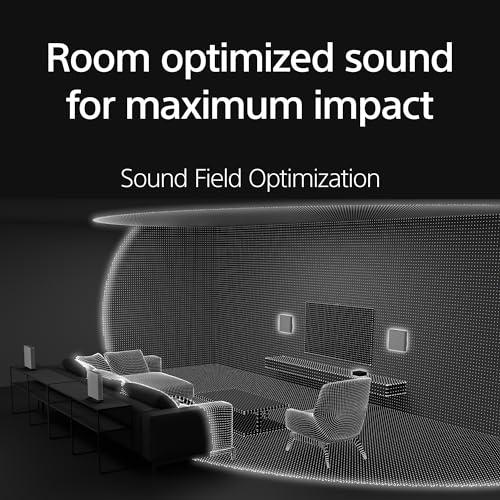
Room acoustics play a huge role in how any system sounds. Hard surfaces reflect sound waves, soft furnishings absorb them, and room dimensions affect how bass frequencies behave. The best systems include some form of room correction—technology that measures your specific space and adjusts the audio accordingly.
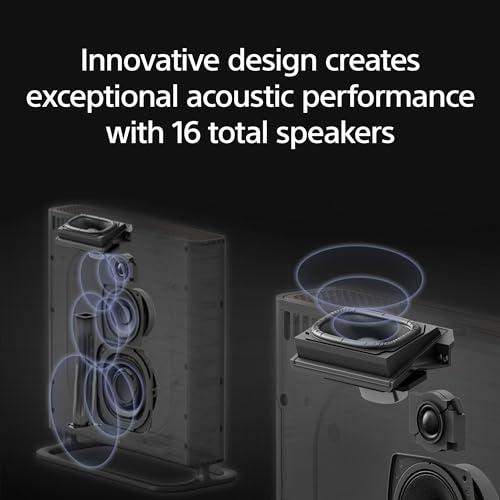
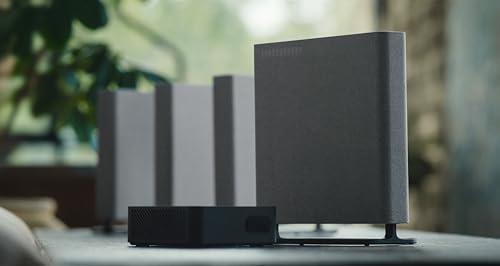
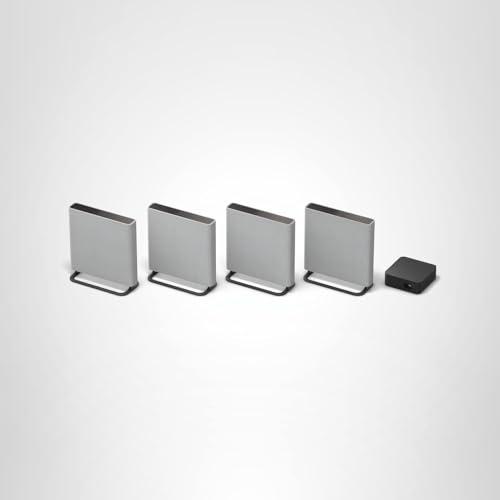
The Sony HT-A9M2 throws out the conventional rulebook entirely. Instead of a traditional soundbar, you get four identical wireless speakers that work together as a coordinated system. Each speaker is essentially a complete audio system in miniature, containing multiple drivers including dedicated upfiring speakers for height effects.
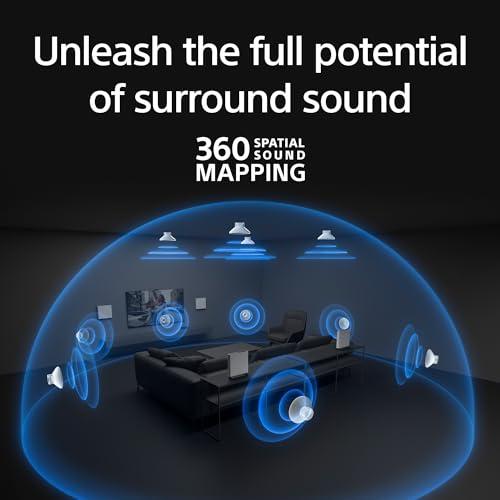
Sony calls their processing technology "360 Spatial Sound Mapping," which is more than just marketing speak. The system uses built-in microphones to measure your room's acoustics, then creates virtual "phantom speakers" around you using precise timing and phase relationships between the four physical speakers. Think of it like an audio hologram—the system tricks your brain into hearing sounds coming from positions where no speakers actually exist.
Each of the four speakers contains four separate drivers: a full-range speaker, a tweeter for high frequencies, a woofer for mid-bass, and an upfiring driver that bounces sound off your ceiling to create overhead effects. That's 16 total drivers working in concert, each powered by its own dedicated amplifier channel.
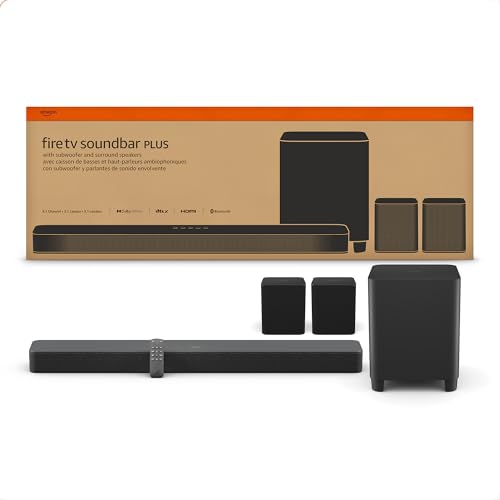
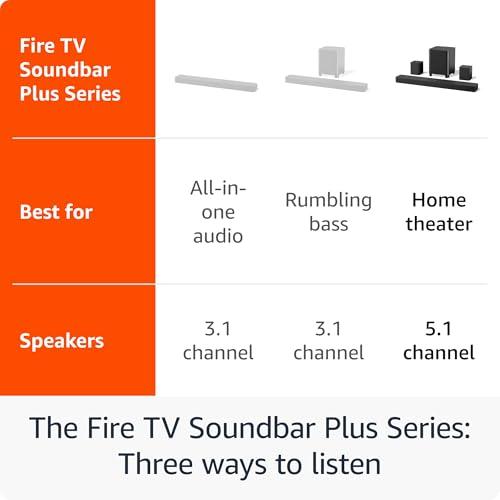
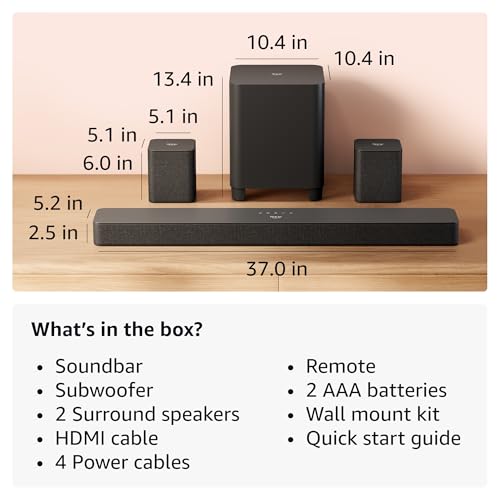
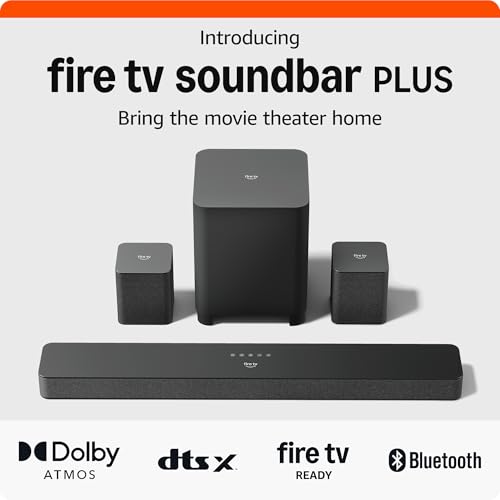
The Amazon Fire TV Soundbar Plus takes the more familiar approach of dedicated components for specific jobs. You get a traditional soundbar for your left, right, and center channels, a separate wireless subwoofer for deep bass, and two wireless satellite speakers for surround effects.
This system delivers what's called "true 5.1" surround sound because each channel has its own dedicated speaker. The soundbar handles dialogue and front effects, the subwoofer takes care of explosions and low-frequency rumble, and the rear satellites create that sense of being surrounded by action.
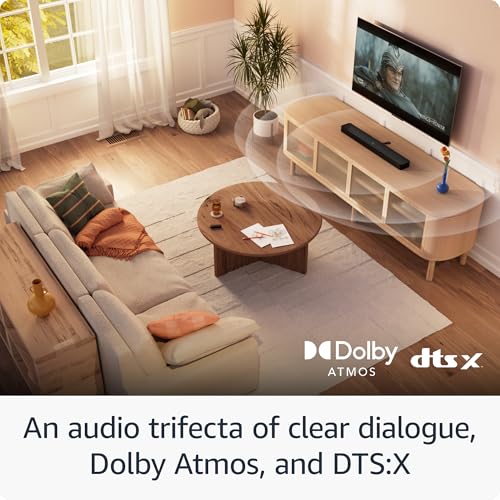
While the Amazon system supports Dolby Atmos, it does so through virtualization—digital processing that simulates overhead effects without dedicated height speakers. It's not as convincing as physical upfiring drivers, but it's still a noticeable improvement over standard stereo TV audio.
The Sony HT-A9M2 delivers something genuinely special in terms of spatial audio. Having researched extensive user and professional reviews, the consensus is clear: this system creates one of the most convincing three-dimensional soundstages available from any compact home theater setup.
The secret lies in Sony's implementation of physical height channels. Unlike systems that simply reflect sound off your ceiling and hope for the best, each speaker includes a properly engineered upfiring driver. Combined with the sophisticated room calibration, this creates overhead effects that feel natural rather than gimmicky. Helicopters genuinely seem to pass overhead, rain sounds like it's falling around you, and movie soundtracks gain an almost ethereal quality.
The system's ability to adapt to irregular room layouts is particularly impressive. Traditional surround systems require precise speaker placement to work properly—if your couch isn't in the exact sweet spot, the illusion falls apart. The Sony system uses its room optimization to maintain a coherent soundstage even when speakers are placed asymmetrically or at different heights.
Professional reviewers consistently praise how the 360 Spatial Sound Mapping creates what feels like a much larger speaker array than the four physical units would suggest. The phantom speakers aren't just a marketing claim—they're audible, locatable, and convincing enough to make you look around the room for speakers that aren't actually there.
The Amazon Fire TV Soundbar Plus might not break new technical ground, but it executes the traditional 5.1 formula extremely well, especially considering its accessible price point at the time of writing.
The dedicated center channel in the soundbar makes a significant difference for dialogue clarity. Unlike systems that create a phantom center channel through processing, having a physical driver dedicated to speech means voices stay anchored to the screen regardless of where you're sitting. The dialogue enhancement feature works particularly well according to user reports, making it easier to understand speech without drowning out background music or effects.
Bass performance is where the Amazon system really shines relative to its price bracket. The included 10.4-inch wireless subwoofer provides the kind of low-frequency impact that makes action movies genuinely thrilling. Explosions have weight, music has depth, and the overall experience feels substantially more cinematic than what you'd get from TV speakers or basic soundbars.
The rear satellite speakers, while compact, effectively create that wrap-around surround sensation that makes movies more immersive. They're particularly effective during scenes with ambient effects—rain, crowd noise, or environmental sounds that help sell the illusion of being inside the movie.
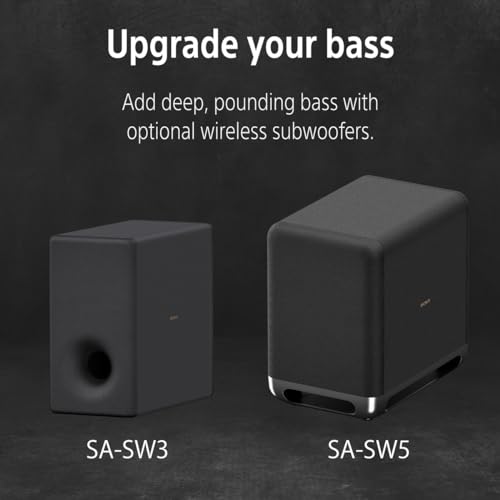
Here's where things get complicated for the Sony system. Despite its premium positioning and advanced technology, it ships without a subwoofer. The four speakers handle mid-bass reasonably well, but they simply can't move enough air to recreate the deep, room-shaking effects that modern movie soundtracks demand.
Multiple professional reviews identified this as the system's primary weakness. While the spatial effects and clarity are exceptional, action sequences lack the visceral impact that makes home theater exciting. Sony offers optional wireless subwoofers, but adding one significantly increases the total system cost.
The Amazon system, in contrast, includes everything needed for full-range audio reproduction right in the box. This represents a fundamentally different value proposition—you get immediate satisfaction and complete performance without additional purchases.
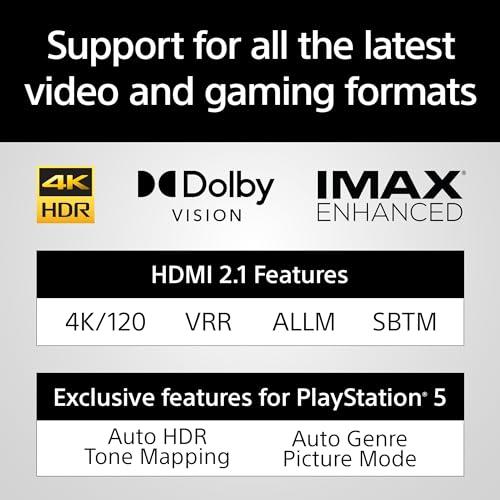
For gamers and tech enthusiasts, the Sony HT-A9M2 offers a significant advantage in future-proofing. The system supports the full HDMI 2.1 feature set, including 4K/120Hz passthrough, Variable Refresh Rate (VRR), and Auto Low Latency Mode (ALLM). These features matter for PlayStation 5, Xbox Series X, and high-end PC gaming, where every millisecond of latency counts.
VRR eliminates screen tearing by synchronizing the display refresh rate with the game's frame rate, while ALLM automatically switches to the lowest latency mode when gaming is detected. For competitive gaming or fast-paced action titles, these features can make a noticeable difference in responsiveness.
The Amazon system uses older HDMI ARC technology, which introduces more latency and doesn't support these advanced gaming features. For casual gaming, this might not matter, but serious gamers will notice the difference, particularly in rhythm games or competitive multiplayer titles where timing is critical.
Sony's system also includes more sophisticated wireless audio support, including LDAC—a high-quality Bluetooth codec that maintains better sound quality when streaming from phones or tablets. It's not something everyone will use, but it demonstrates the attention to detail in the premium system.
The Sony system requires more thoughtful placement but offers more flexibility in challenging rooms. The four speakers can be positioned to work around furniture, awkward layouts, or architectural features that would complicate traditional speaker placement. The wireless design eliminates the need for speaker wire runs, which is particularly valuable in finished rooms where running cables would be difficult.
However, the system demands more engagement from users. The room optimization process requires following specific steps, and getting the best performance means understanding how speaker placement affects the soundstage. Some users, particularly those in smaller rooms, report feeling overwhelmed by the system's complexity.
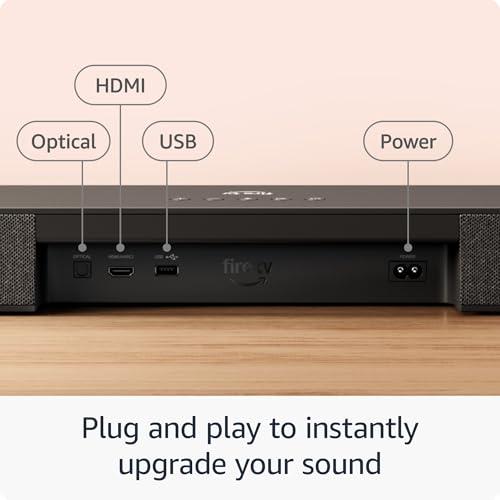
The Amazon system follows a more predictable setup pattern. The soundbar goes under your TV, the subwoofer finds a spot on the floor, and the satellites go behind your seating area. While this offers less flexibility, it's also more foolproof—most people can achieve good results without extensive experimentation.
When it comes to pure audio fidelity, the Sony system demonstrates its premium positioning. The S-Master HX digital amplifier provides clean, powerful amplification to all 16 drivers, while the X-Balanced Speaker Units use rectangular diaphragms to reduce distortion compared to traditional round drivers.
DSEE Ultimate, Sony's AI-powered upscaling technology, genuinely improves compressed audio sources. Streaming music from Spotify or watching Netflix shows benefits from this processing, which restores some of the high-frequency detail lost during compression. It's not magic, but it's a noticeable improvement, particularly with older or lower-quality source material.
The Amazon system takes a more straightforward approach to audio processing. While it lacks sophisticated upscaling or room correction, it delivers clean, honest sound reproduction. Some users prefer this approach, finding that heavily processed audio can sound unnatural or fatiguing during long listening sessions.
At the time of writing, these systems target completely different market segments. The Amazon Fire TV Soundbar Plus delivers exceptional value for buyers seeking a substantial upgrade over TV speakers without a substantial budget. For many users, it provides all the surround sound immersion they need at a price that won't require financial planning.
The Sony HT-A9M2 asks buyers to invest significantly more for genuinely advanced technology. The question becomes whether the superior spatial audio, future-proof connectivity, and premium build quality justify the substantial price premium. For audio enthusiasts or those building a long-term home theater system, the answer might be yes. For casual viewers seeking better TV audio, it's probably overkill.
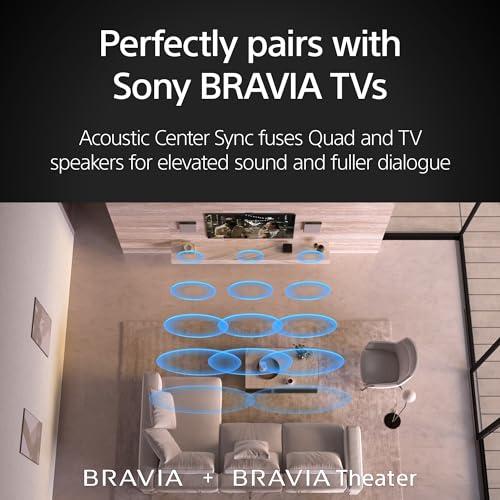
Both systems offer integration benefits with their respective ecosystems. The Sony system works particularly well with BRAVIA TVs and PlayStation consoles, offering features like Acoustic Center Sync (which uses the TV's speakers as a center channel) and optimized gaming modes.
The Amazon system integrates smoothly with Fire TV devices, allowing control through the Fire TV interface and remote. While it doesn't include built-in streaming or Alexa functionality despite the Fire TV branding, the integration that exists is well-implemented and useful for simplifying daily operation.
The Amazon Fire TV Soundbar Plus makes sense for most buyers. It provides genuine 5.1 surround sound with strong dialogue clarity and satisfying bass at an accessible price point. The setup is straightforward, the performance is reliable, and the complete package delivers what most people expect from a home theater system.
Choose the Amazon system if you want:
The Sony HT-A9M2 targets a specific type of buyer—someone who values cutting-edge audio technology and is willing to pay for it. The spatial audio capabilities are genuinely impressive, and the flexible placement options solve real-world problems for many living spaces.
Choose the Sony system if you:
Both systems succeed at their intended goals. The Amazon Fire TV Soundbar Plus proves that excellent surround sound doesn't require premium pricing, while the Sony HT-A9M2 demonstrates what's possible when engineering constraints are relaxed in favor of innovation.
For most buyers, the Amazon system provides the better balance of performance, convenience, and value. It delivers a complete, satisfying home theater experience that significantly improves on TV audio without complexity or premium pricing.
The Sony system appeals to a smaller group of buyers who prioritize advanced technology and are willing to invest accordingly. If you're building a serious home theater system and want technology that will remain impressive for years to come, the premium is justifiable. For everyone else, Amazon's proven approach delivers more immediate satisfaction at a fraction of the cost.
| Sony HT-A9M2 BRAVIA Theater Quad | Amazon Fire TV Soundbar Plus 5.1 |
|---|---|
| Speaker Configuration - Determines surround sound approach and immersion quality | |
| 4.0.4 channels with 16 total drivers across four wireless speakers | Traditional 5.1 with soundbar, subwoofer, and two rear satellites |
| Dolby Atmos Implementation - Critical for overhead effects and modern movie soundtracks | |
| Physical height drivers in each speaker for true 3D audio | Virtualized Atmos processing without dedicated height speakers |
| Bass Performance - Essential for movie impact and music enjoyment | |
| No subwoofer included; requires separate purchase for full low-end | 10.4-inch wireless subwoofer included for immediate bass impact |
| Gaming Connectivity - Important for next-gen consoles and PC gaming | |
| HDMI 2.1 with 4K/120Hz, VRR, ALLM for low-latency gaming | Basic HDMI ARC with higher latency, no advanced gaming features |
| Room Calibration - Affects how well system adapts to your specific space | |
| Advanced Sound Field Optimization with automatic phantom speaker placement | Basic EQ presets without sophisticated room correction |
| Setup Complexity - Determines how easily you'll achieve good performance | |
| Requires strategic placement of four speakers and calibration process | Simple plug-and-play with pre-paired components |
| Audio Processing - Impacts sound quality with streaming and compressed sources | |
| DSEE Ultimate AI upscaling and high-res audio support up to 192kHz/24-bit | Standard processing with basic EQ modes (Movie, Music, Sports, Night) |
| Dialogue Clarity - Crucial for TV shows and movie comprehension | |
| Phantom center channel through processing; optional TV speaker integration | Dedicated center channel in soundbar with dialogue enhancement |
| Wireless Technology - Affects reliability and placement flexibility | |
| Proprietary dual-antenna system with frequency hopping for stable connection | Standard wireless for subwoofer and satellites with basic pairing |
| Price Category - Helps determine value proposition and target buyer | |
| Premium pricing targeting audio enthusiasts and tech early adopters | Budget-friendly complete system accessible to mainstream buyers |
The Amazon Fire TV Soundbar Plus 5.1 delivers exceptional value by providing a complete 5.1 surround sound system with subwoofer at an entry-level price point. The Sony HT-A9M2 BRAVIA Theater Quad costs significantly more but offers cutting-edge spatial audio technology and premium features. For most buyers seeking good surround sound on a budget, the Amazon system provides better bang for your buck.
The Sony HT-A9M2 uses a 4.0.4 configuration, meaning four main speakers plus four height channels for true Dolby Atmos overhead effects. The Amazon Fire TV Soundbar Plus offers traditional 5.1 surround with five main channels (left, right, center, two surrounds) plus a subwoofer. The Sony system creates more immersive 3D audio, while Amazon's approach provides proven surround sound with dedicated bass.
The Amazon Fire TV Soundbar Plus 5.1 wins on simplicity with pre-paired components that work immediately out of the box. The Sony HT-A9M2 requires more thoughtful speaker placement around your room and a calibration process to optimize performance. If you want plug-and-play convenience, choose the Amazon system.
The Amazon Fire TV Soundbar Plus includes a 10.4-inch wireless subwoofer for immediate bass impact. The Sony HT-A9M2 BRAVIA Theater Quad ships without a subwoofer, and professional reviews consistently note that it needs one to reach its full potential. This makes the Amazon system more complete out of the box.
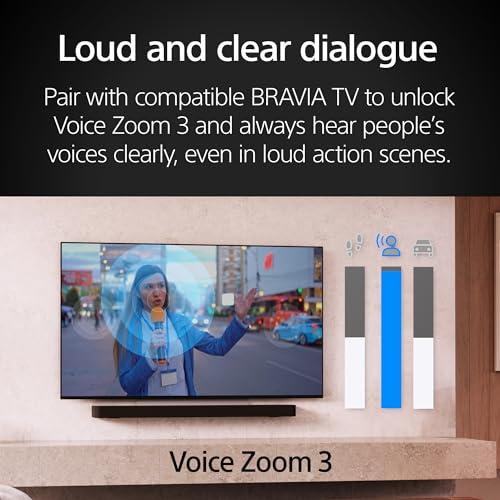
The Amazon Fire TV Soundbar Plus 5.1 has an advantage with its dedicated center channel speaker and dialogue enhancement feature, making speech consistently clear. The Sony HT-A9M2 uses a phantom center channel created through processing, which can be less focused but offers AI-powered Voice Zoom technology when paired with compatible Sony TVs.
The Sony HT-A9M2 BRAVIA Theater Quad excels for gaming with HDMI 2.1 support, including 4K/120Hz, Variable Refresh Rate, and Auto Low Latency Mode for next-gen consoles. The Amazon Fire TV Soundbar Plus uses basic HDMI ARC with higher latency, making it less ideal for competitive gaming but acceptable for casual play.
The Amazon Fire TV Soundbar Plus 5.1 is generally better suited for smaller spaces due to its simpler setup and more predictable performance. The Sony HT-A9M2 can be overwhelming in compact rooms and works best in medium to large spaces where its spatial audio technology has room to shine.
Both systems handle music well, but differently. The Sony HT-A9M2 BRAVIA Theater Quad offers superior audio processing with DSEE Ultimate upscaling and high-resolution audio support, making it excellent for serious music listening. The Amazon Fire TV Soundbar Plus provides good stereo imaging and strong bass but lacks advanced music-focused features.
The Sony HT-A9M2 features more advanced wireless technology with dual antennas, frequency hopping, and support for high-quality LDAC Bluetooth codec. It also includes Wi-Fi for streaming services like Spotify Connect and AirPlay 2. The Amazon Fire TV Soundbar Plus 5.1 offers basic Bluetooth 5.0 and works well with Fire TV devices but has fewer wireless options.
The Sony HT-A9M2 BRAVIA Theater Quad delivers true Dolby Atmos with physical upfiring speakers in each unit, creating convincing overhead effects. The Amazon Fire TV Soundbar Plus supports Dolby Atmos through virtualization, simulating height effects without dedicated upfiring drivers. Sony's approach provides more realistic spatial audio.
The Amazon Fire TV Soundbar Plus 5.1 is more straightforward with fewer components and simpler technology, resulting in fewer potential issues. The Sony HT-A9M2 has more complex wireless connectivity between four speakers and sophisticated processing that may occasionally require recalibration or troubleshooting.
Choose the Amazon Fire TV Soundbar Plus 5.1 if you want proven surround sound performance at an accessible price with simple setup. Pick the Sony HT-A9M2 BRAVIA Theater Quad if you're an audio enthusiast willing to invest in cutting-edge spatial audio technology and have a room that can accommodate its advanced features.
We've done our best to create useful and informative comparisons to help you decide what product to buy. Our research uses advanced automated methods to create this comparison and perfection is not possible - please contact us for corrections or questions. These are the sites we've researched in the creation of this article: bestbuy.com - whathifi.com - whathifi.com - youtube.com - rtings.com - audiosciencereview.com - bhphotovideo.com - skybygramophone.com - sony.com - manuals.plus - audioadvice.com - dell.com - valueelectronics.com - youtube.com - merlinstv.com - videoandaudiocenter.com - electronics.sony.com - sony.com - bestbuy.com - beachcamera.com - sony.com - win.consulting - sony.com - rtings.com - cordbusters.co.uk - techradar.com - developer.amazon.com - t3.com - hometechnologyreview.com - youtube.com - hometechnologyreview.com - whathifi.com - hometechnologyreview.com - hometechnologyreview.com - youm.design - hometechnologyreview.com - dolby.com

Privacy Policy
Terms and Conditions - Affiliate Policy
Home Security
© Copyright 2008-2026.
11816 Inwood Rd #1211, Dallas, TX 75244