




Shopping for a soundbar can feel overwhelming when you're staring at specs sheets filled with channel configurations, power ratings, and acronyms like eARC and DTS:X. The choice often comes down to a fundamental question: do you want a straightforward upgrade from your TV's speakers, or are you ready to transform your living room into a mini movie theater?
That's exactly the divide we see between the Yamaha SR-B40A and Hisense AX5140Q. Released in 2023, these soundbars represent two completely different philosophies for improving your home audio experience. At the time of writing, they're separated by roughly $100, but the performance gap between them tells a much more interesting story than price alone.
Before diving into these specific models, it's worth understanding what separates soundbar categories. Think of it like cars—you've got compact sedans that excel at efficiency and ease of use, and you've got SUVs that prioritize space and capability. Soundbars follow a similar pattern.
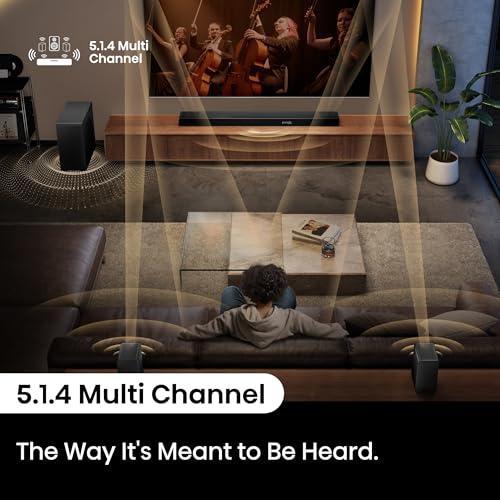
Channel configuration is the most important spec to understand. When you see "2.1," that means two main channels (left and right) plus one subwoofer channel (the ".1"). A "5.1.4" system like the Hisense AX5140Q has five main channels (left, center, right, and two surround), one subwoofer, and four height channels for overhead effects. More channels generally mean more immersive sound, but also more complexity and cost.
Virtual surround uses digital processing to simulate multi-directional audio from fewer speakers, while discrete surround uses actual speakers positioned around your room. It's the difference between a convincing illusion and the real thing—both have their place depending on your priorities.
The Yamaha SR-B40A focuses on perfecting the 2.1 formula with high-quality drivers and excellent processing, while the Hisense AX5140Q goes all-in on creating authentic surround sound with physical speakers placed throughout your room.
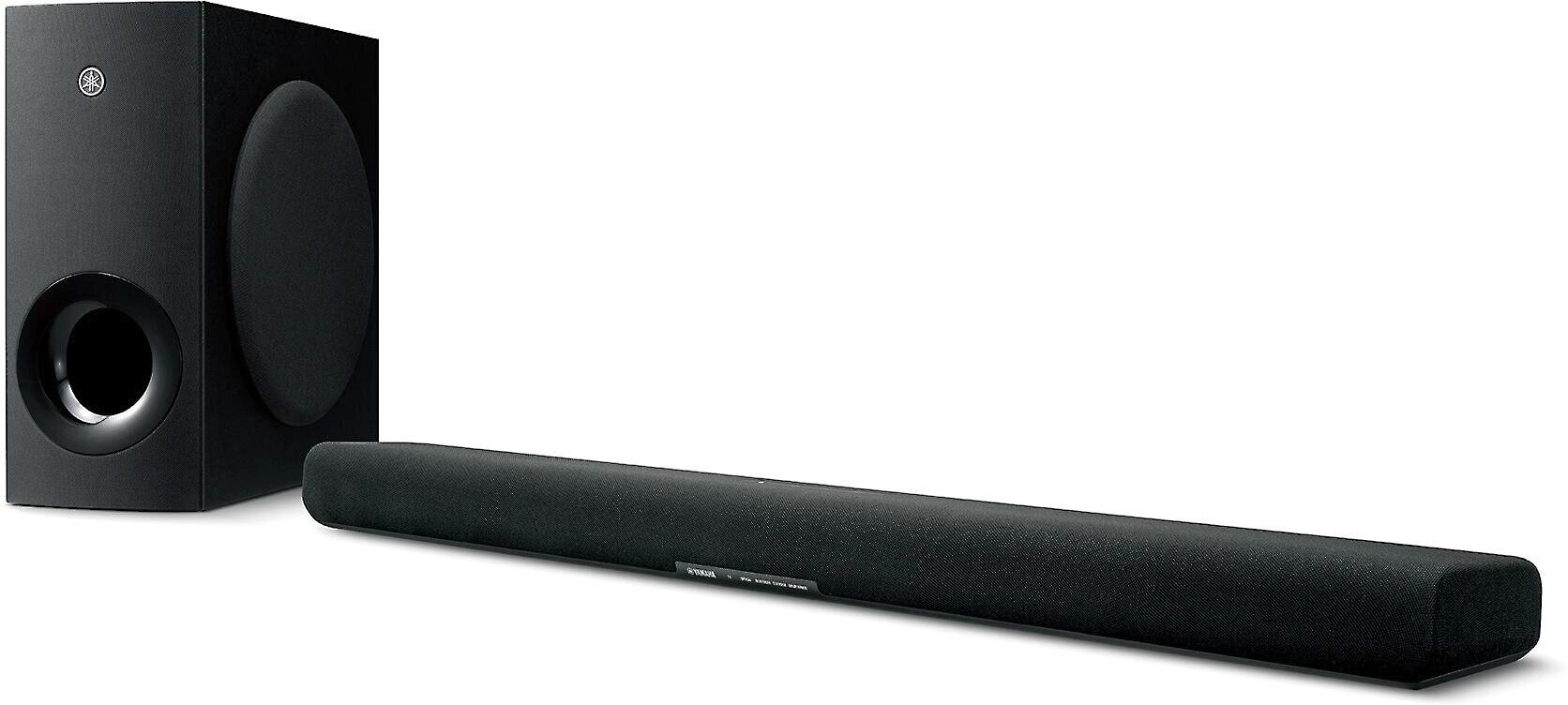
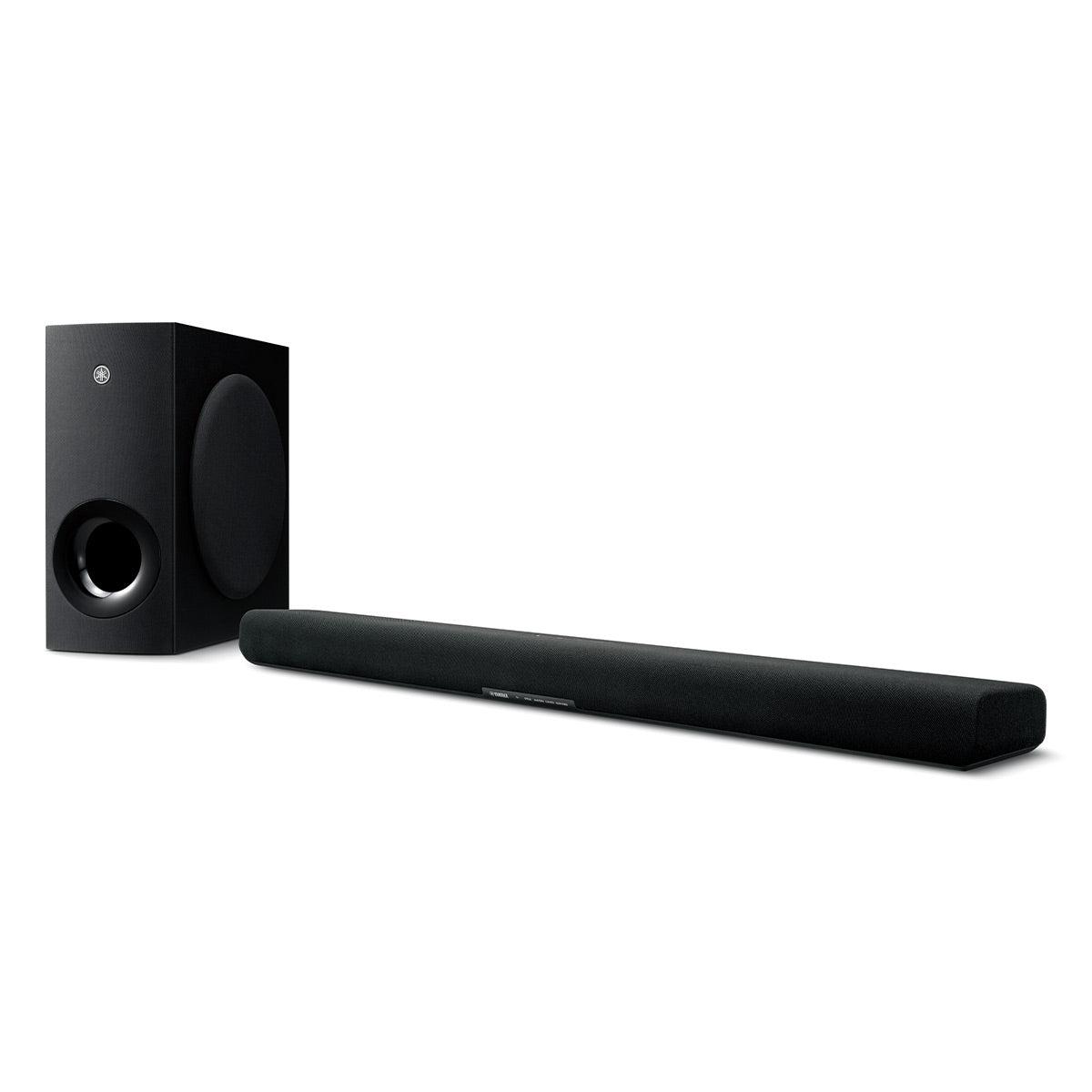
The Yamaha SR-B40A represents what happens when an audio company with decades of experience decides to perfect the basics. Rather than cramming in every possible feature, Yamaha focused on delivering exceptional stereo sound with meaningful bass enhancement.
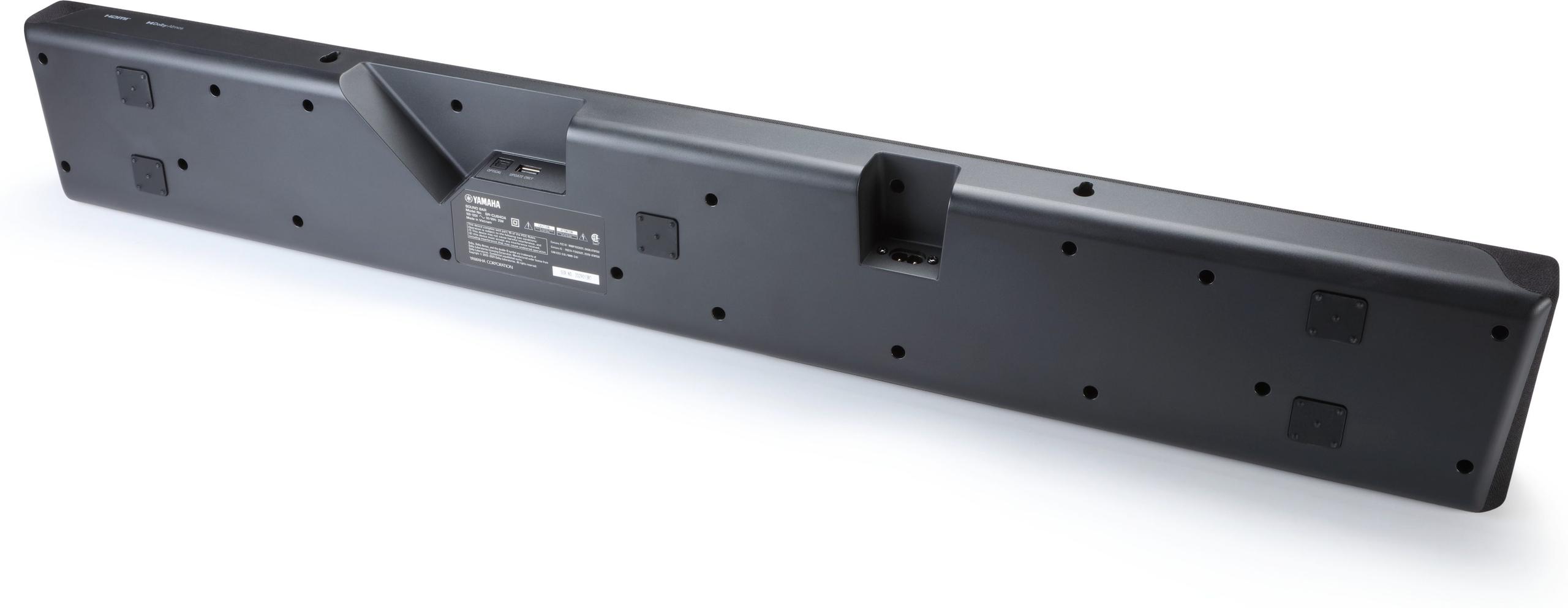
The soundbar uses four 1.8-inch full-range drivers paired with two 1-inch tweeters—that's audiophile-speak for having dedicated speakers handling different frequency ranges. The tweeters handle high frequencies (think cymbals and vocal clarity), while the larger drivers cover midrange and some bass. This separation is crucial because it prevents the muddy sound you get when one driver tries to do everything.
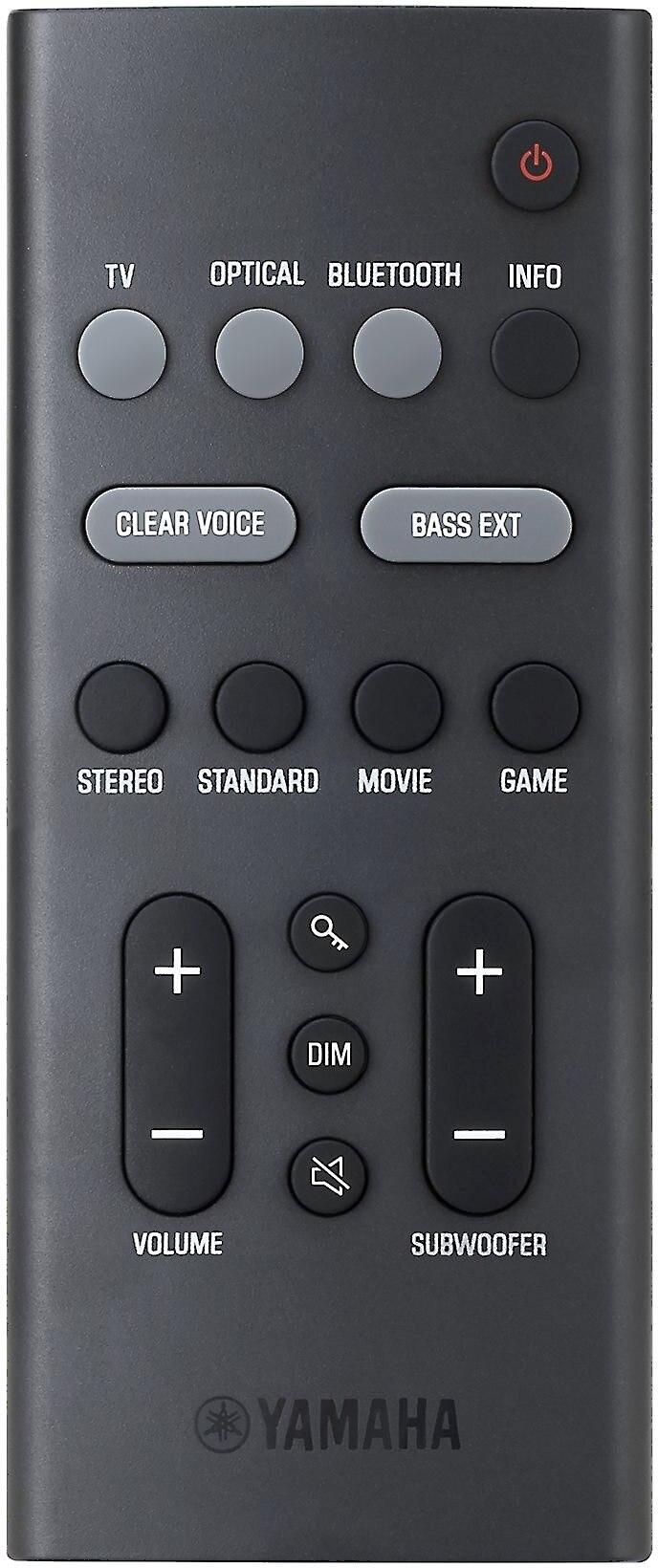
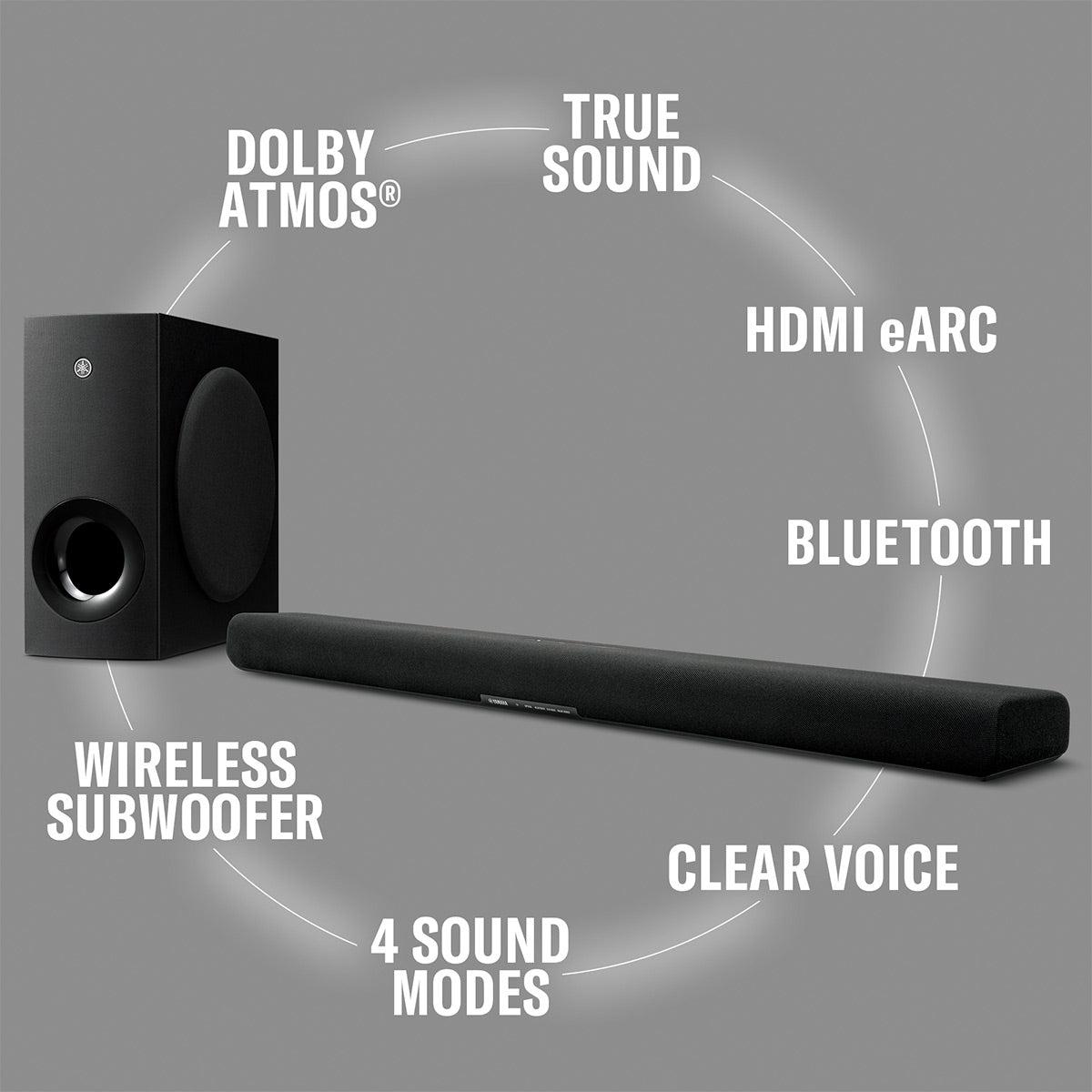
What makes the Yamaha SR-B40A special is its Clear Voice technology, which specifically enhances dialogue frequencies. If you've ever struggled to understand what characters are saying during action scenes, this feature addresses that exact problem by intelligently boosting the frequency range where human speech lives (roughly 300-3000 Hz) without making everything sound artificially bright.
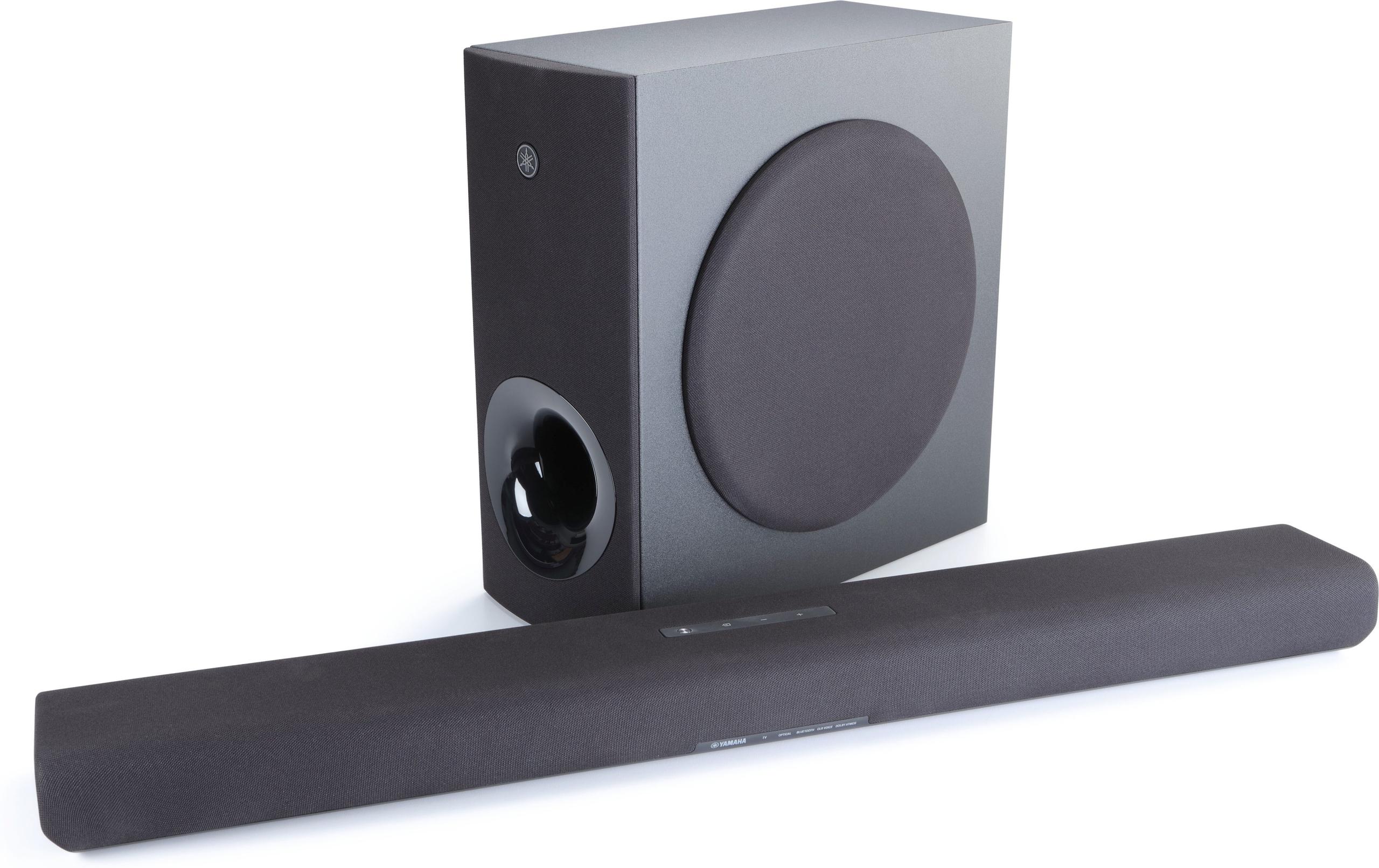
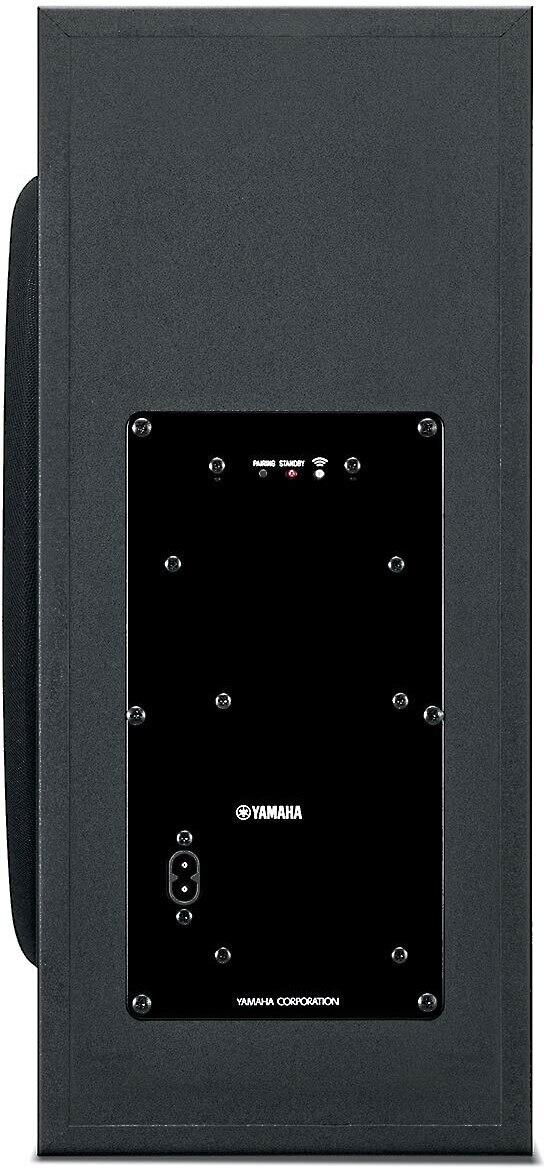
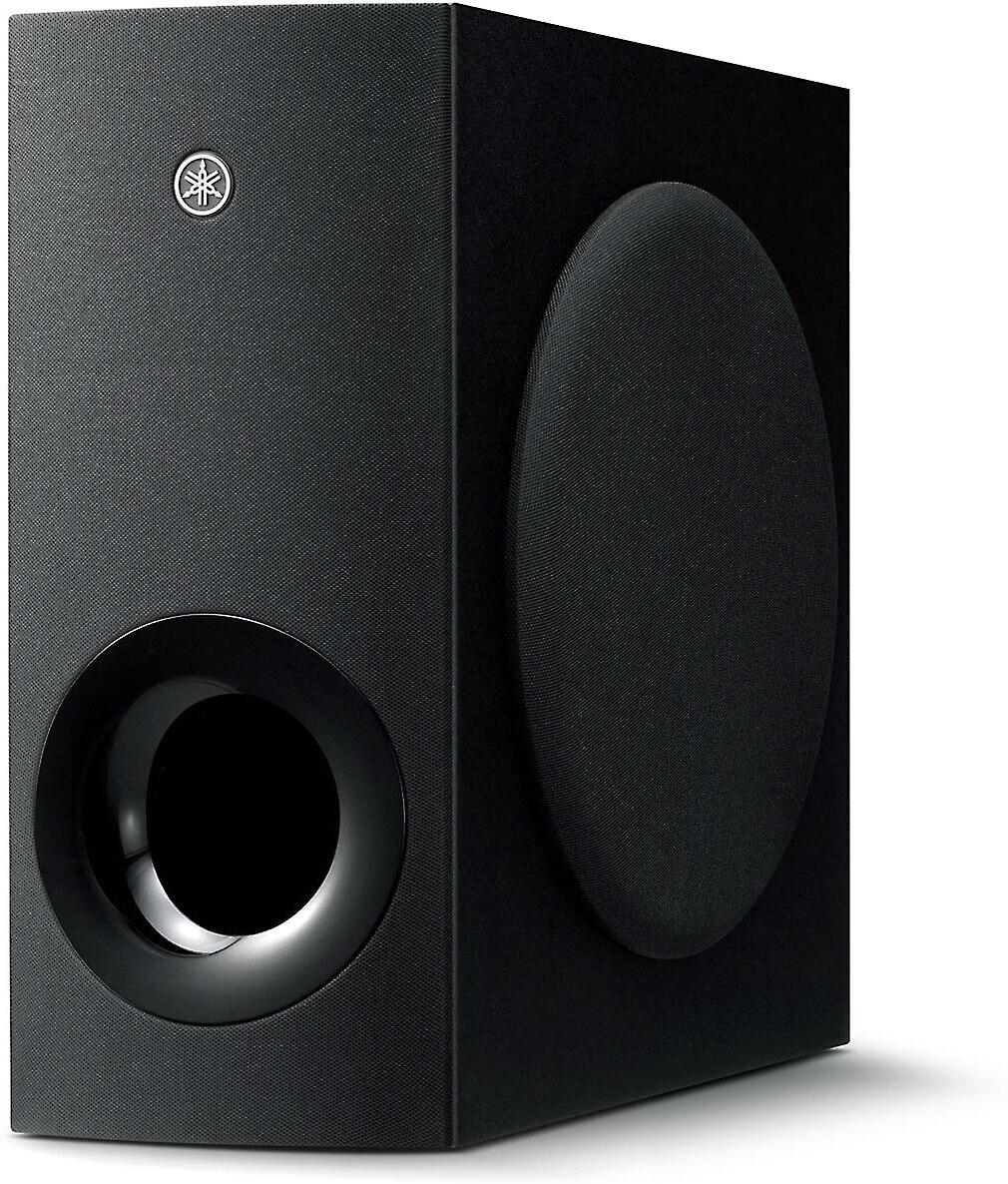
The wireless subwoofer uses Yamaha's YST II (Yamaha Active Servo Technology) to deliver tight, controlled bass. Unlike the boomy, one-note bass you might associate with budget systems, YST II uses feedback loops to ensure the subwoofer reproduces exactly what's in the source material—no more, no less.
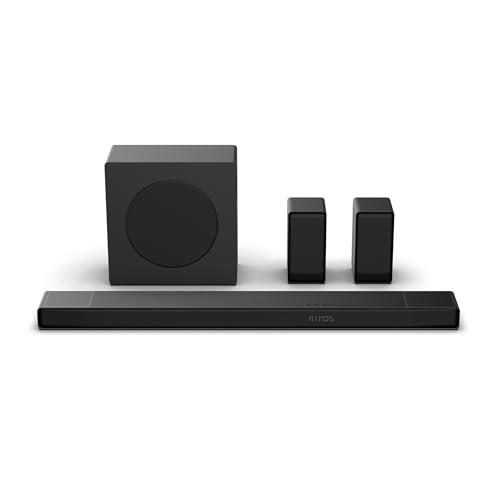
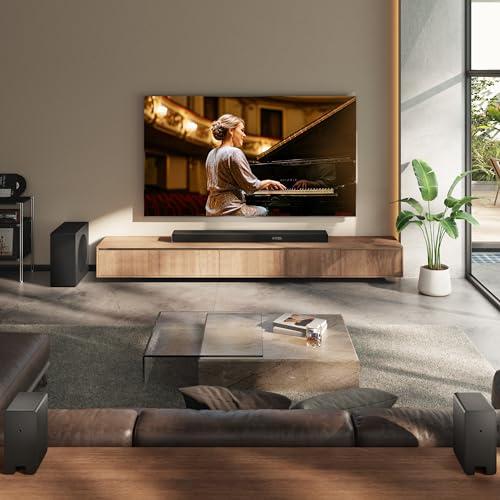
The Hisense AX5140Q takes a completely different approach. Instead of perfecting stereo, it recreates the spatial audio experience you'd get in a movie theater. This means surrounding you with sound from multiple directions, including overhead.
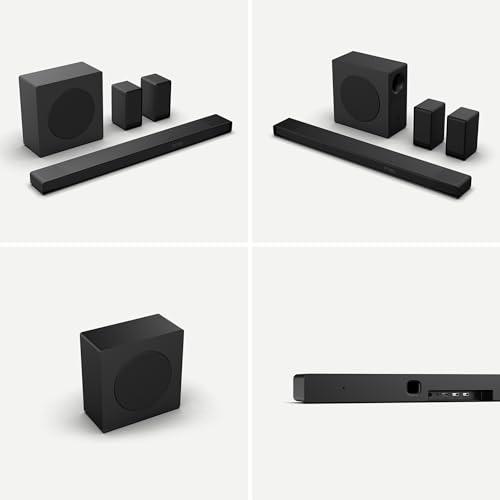
The "5.1.4" configuration breaks down like this: five ear-level speakers (front left, center, front right, rear left, rear right), one subwoofer, and four upfiring drivers that bounce sound off your ceiling to create height effects. Those upfiring drivers are key—they're angled speakers that shoot sound upward, relying on your ceiling to reflect audio back down and create the illusion of helicopters flying overhead or rain falling around you.
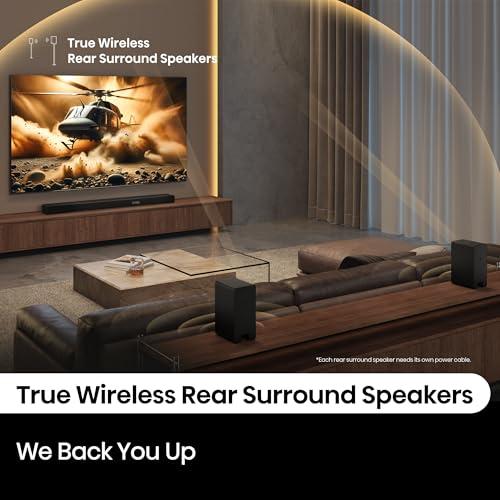
What's impressive about the Hisense AX5140Q is that it includes discrete wireless rear speakers. Most soundbars in this price range use virtual processing to simulate rear audio, but Hisense gives you actual speakers to place behind your seating area. This creates authentic surround panning—when a car races across the screen, you'll hear it move from your front-left speaker, through the center, to the front-right, and potentially to the rear speakers if the audio mix supports it.
The system supports both Dolby Atmos and DTS:X, which are object-based audio formats. Instead of just sending audio to specific channels, these formats contain metadata about where sounds should appear in 3D space. A helicopter might be coded to move from front-left at ear level to rear-right overhead, and the soundbar interprets that data to position the sound correctly using its multiple speakers.
Bass response reveals a lot about a soundbar's priorities and engineering. The Yamaha SR-B40A uses a 6.25-inch subwoofer with 100 watts of dedicated amplification, while the Hisense AX5140Q pairs a 6.5-inch subwoofer with approximately 600 watts of total system power.
Those numbers tell an important story. Yamaha's approach prioritizes bass quality over quantity. The smaller power allocation and YST II technology focus on accuracy and control. In our research of user reviews, this translates to bass that enhances dialogue and music without overwhelming other frequencies. You'll get satisfying rumble from explosions, but it won't shake your walls or annoy neighbors.
The Hisense AX5140Q has more raw power and a slightly larger driver, designed to fill bigger rooms and support the dramatic dynamics of movie soundtracks. User feedback suggests it can produce deeper, more room-filling bass, but some owners need to adjust placement or settings to prevent it from becoming boomy in smaller spaces.
For music listening, the Yamaha's controlled approach often wins. Bass lines in jazz or rock remain distinct rather than muddy. For movie watching, especially action films with lots of low-frequency effects, the Hisense provides more visceral impact that enhances the cinematic experience.
Poor dialogue clarity is probably the most common complaint about TV audio and soundbars alike. Both systems address this differently, reflecting their design philosophies.
The Yamaha SR-B40A makes dialogue clarity a primary focus through its Clear Voice technology and dedicated tweeters. Based on user reviews, voices consistently remain intelligible even during complex audio scenes. The system's four sound modes (Stereo, Standard, Game, Movie) each handle dialogue differently, but the processing seems tuned to keep speech prominent without sounding unnatural.
The Hisense AX5140Q uses a more sophisticated approach with its AI EQ mode that analyzes content in real-time and adjusts processing accordingly. When it detects dialogue-heavy content like news or talk shows, it automatically boosts speech frequencies. For action scenes, it might pull back dialogue enhancement to preserve the director's intended sound mix.
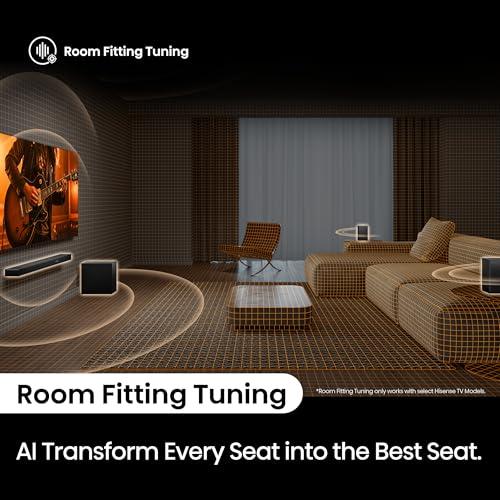
Interestingly, the Hisense's center channel processing through its soundbar array can provide excellent dialogue clarity, but it requires proper positioning and room calibration to work optimally. Users who take time to run the room-fitting tuning consistently report excellent voice clarity, while those who skip calibration sometimes struggle with inconsistent performance.
Gaming audio has specific requirements that differ from movie watching. Audio latency (delay between action and sound) becomes crucial for competitive gaming, while positional accuracy enhances immersive single-player experiences.
The Yamaha SR-B40A excels at low-latency gaming due to its simpler processing chain. With fewer speakers and less complex audio routing, there's minimal delay between controller input and audio output. The Game mode preset optimizes dynamics for gaming content, and the Bluetooth 5.1 connectivity provides stable wireless gaming audio when needed.
However, the Hisense AX5140Q transforms gaming into something more immersive with its Game Pro mode and 5.1.4 channel separation. In games that support surround sound, you can hear enemies approaching from behind through the actual rear speakers, not just simulated directional audio. The DTS:X support becomes relevant for newer games that include object-based audio—imagine hearing a dragon's roar move realistically overhead as it flies past.
Based on user feedback, competitive gamers often prefer the Yamaha for its consistency and low latency, while single-player enthusiasts gravitate toward the Hisense for its environmental immersion.
This is where the philosophical divide between these systems becomes most apparent. Movie watching reveals each soundbar's true character and intended audience.
The Yamaha SR-B40A transforms TV and movie audio through enhanced stereo imaging and controlled dynamics. Yamaha's True Sound processing creates a surprisingly wide soundstage from just the soundbar and subwoofer, making dialogue clear and music enjoyable. For romantic comedies, dramas, and TV series, this approach often provides everything you need without complexity.
But the Hisense AX5140Q reveals what you're missing with action films, sci-fi, and any content mixed for surround sound. Authentic surround panning means helicopters actually travel around your room, rain falls from above through the upfiring drivers, and ambient sounds emerge from appropriate directions. The four physical height channels create genuine Dolby Atmos experiences rather than virtual approximations.
User reviews consistently highlight this difference. Yamaha owners appreciate the immediate improvement in clarity and bass over TV speakers, while Hisense owners describe being "blown away" by the spatial audio experience, particularly with Dolby Atmos content on streaming services like Netflix and Disney+.
Room acoustics play a huge role in soundbar performance, and these systems are optimized for different spaces.
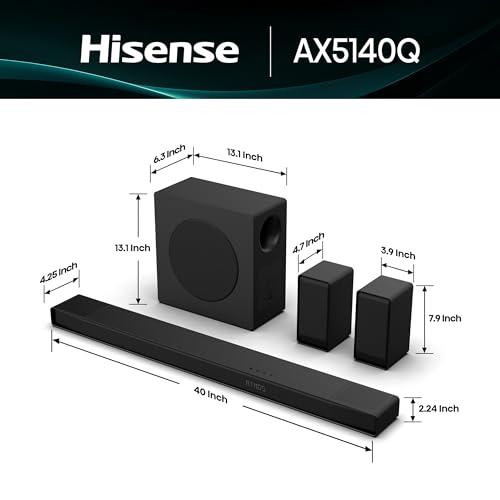
The Yamaha SR-B40A works well in small to medium rooms (roughly 10x12 to 15x18 feet) where surround effects would be less noticeable anyway. Its compact 36-inch width fits under most TVs without looking oversized, and the wireless subwoofer placement is forgiving—you can tuck it beside furniture without losing much performance.
The Hisense AX5140Q really shines in medium to large rooms where you can properly position the rear speakers behind your seating area. The upfiring Dolby Atmos effects work best with 8-10 foot ceilings that aren't heavily textured—the sound needs a decent surface to reflect off for height effects to work properly.
Setup complexity is another practical consideration. The Yamaha typically works well out of the box with minimal tweaking, while the Hisense benefits significantly from running its room calibration routine and experimenting with speaker placement.
At the time of writing, these soundbars are separated by roughly $100, but their value propositions extend beyond initial cost.
The Yamaha SR-B40A represents exceptional value for simplicity. You get Yamaha's audio engineering expertise, reliable performance, and meaningful improvement over TV speakers without complexity or ongoing tweaking. For many users, this represents the sweet spot of effort versus reward.
The Hisense AX5140Q provides remarkable value for comprehensive capability. A comparable surround sound system using separate components would typically cost significantly more, and you'd need to research amplifier compatibility, speaker placement, and calibration yourself. The Hisense gives you a complete theater-like experience at a moderate price premium.
Both soundbars include modern connectivity, but with different focuses.
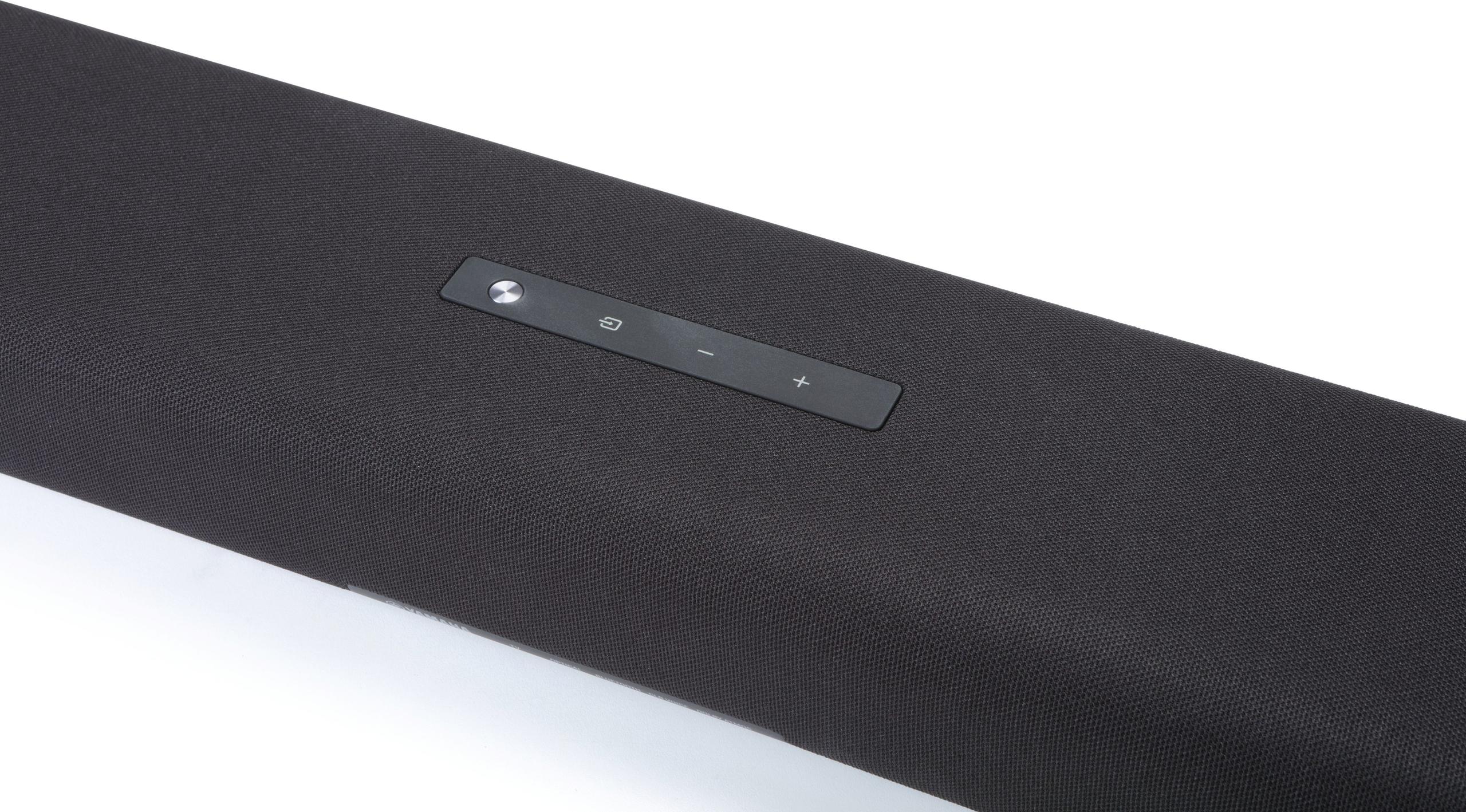
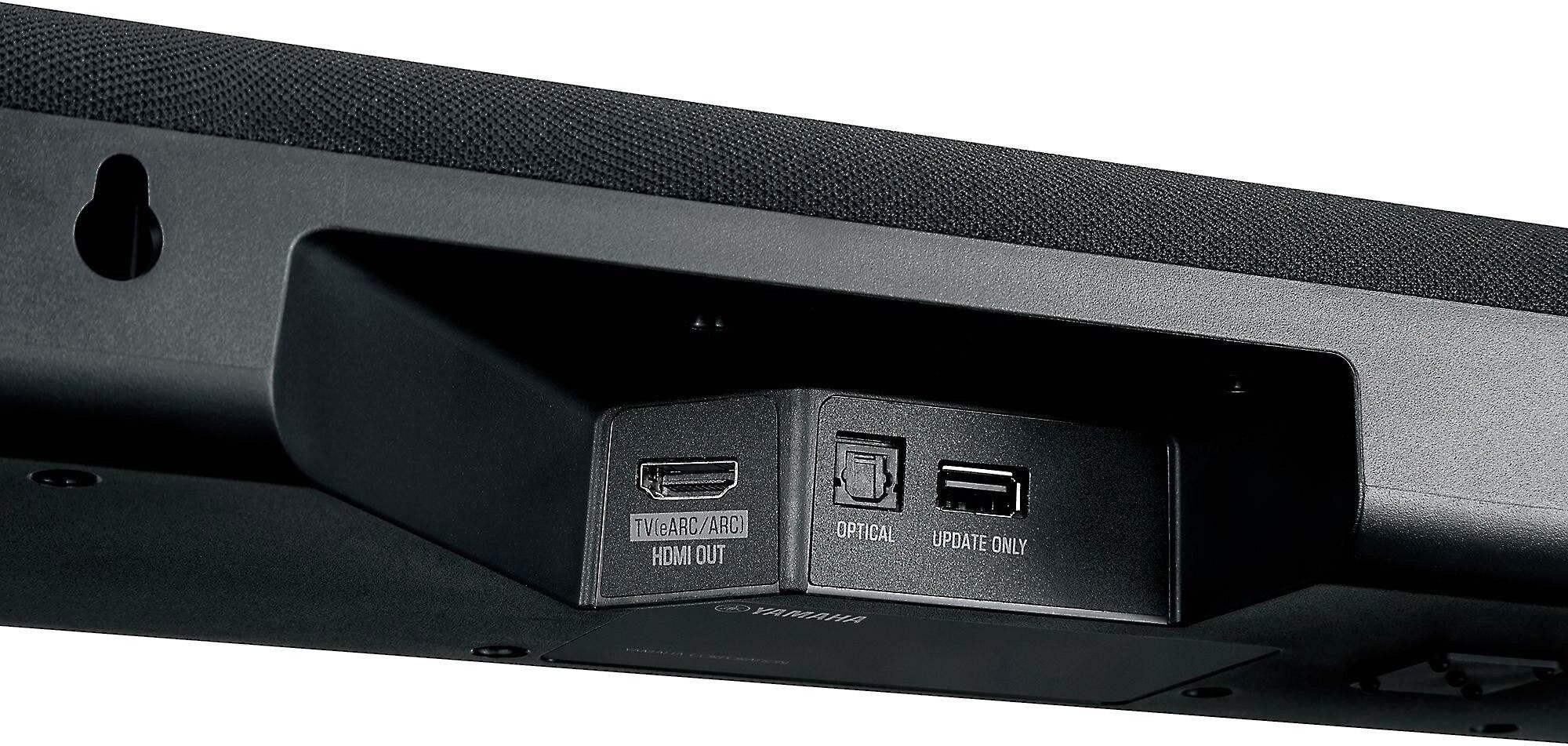
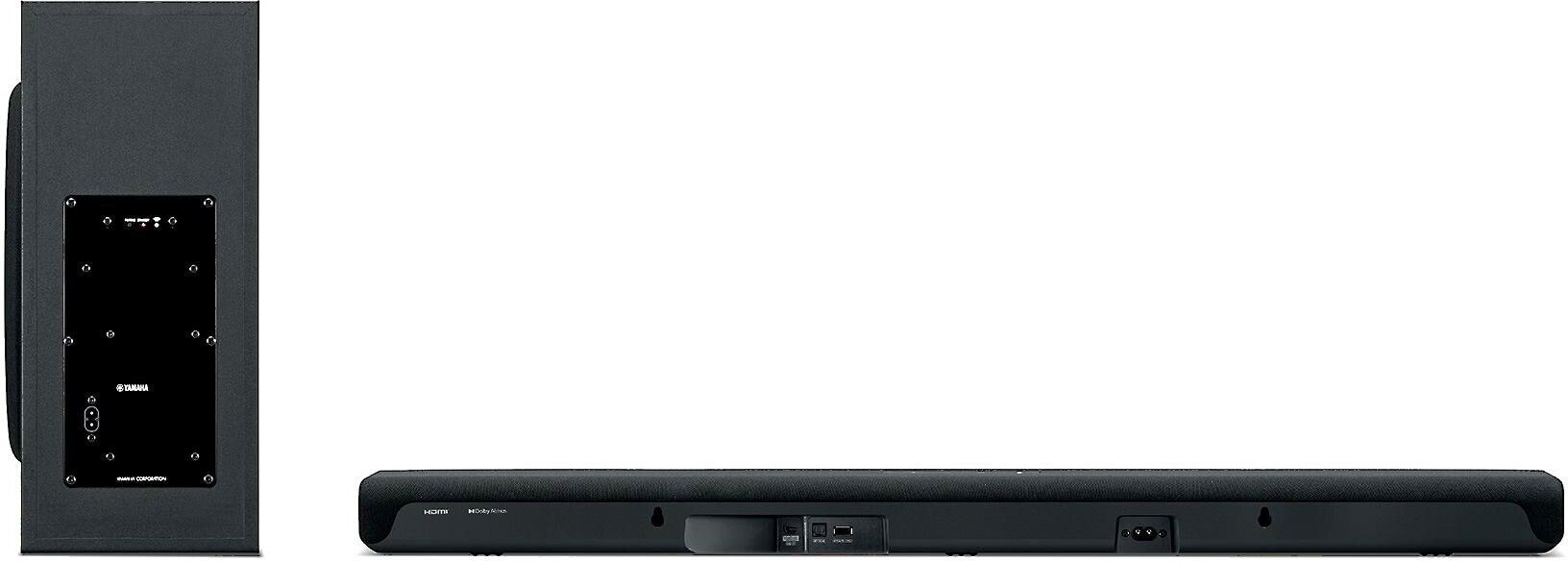
The Yamaha SR-B40A emphasizes universal compatibility. Its HDMI eARC works seamlessly with any TV brand, and the Sound Bar Remote app provides basic but useful tone control. The simplicity extends to smart features—everything just works without proprietary ecosystems or complex setup procedures.
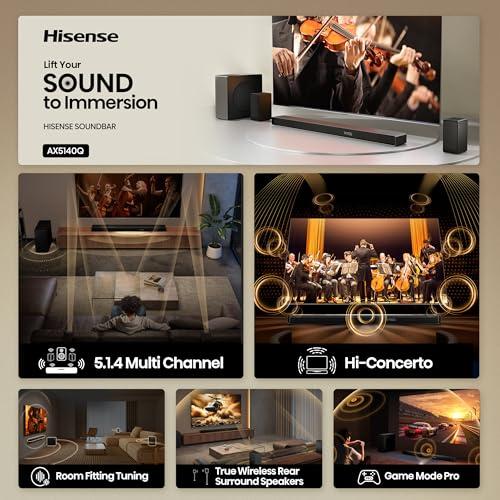
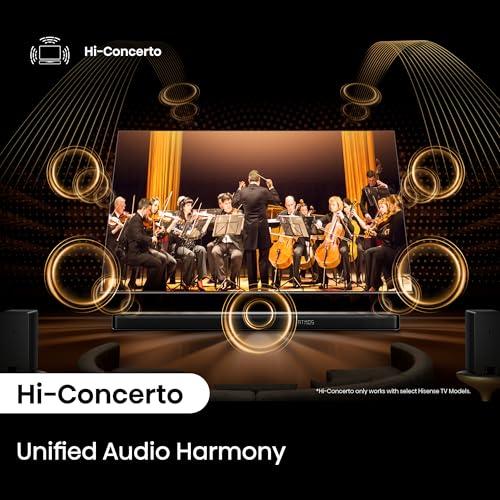
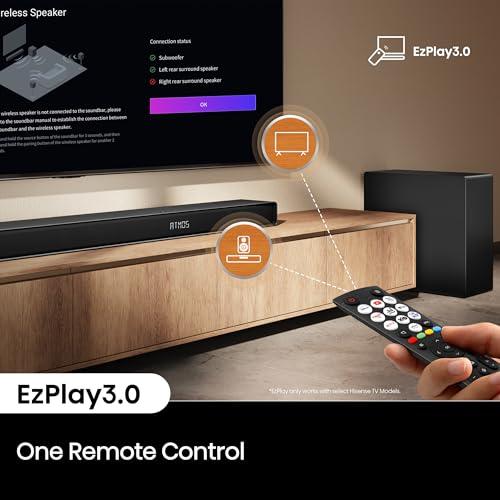
The Hisense AX5140Q includes more advanced features like Hi-Concerto integration with Hisense TVs, which enables unified control and optimized audio processing when paired with compatible models. The AI EQ mode automatically adjusts sound based on content analysis, and the room-fitting tuning adapts output to your specific space.
However, some users report compatibility issues with certain Hisense TV models, where Hi-Concerto integration can cause audio sync problems. The lesson here is that advanced features sometimes introduce complexity that universal standards like HDMI eARC avoid.
After researching extensive user feedback and expert opinions, clear patterns emerge about who should choose which system.
Choose the Yamaha SR-B40A if:
Choose the Hisense AX5140Q if:
The decision ultimately comes down to whether you want optimized stereo or authentic surround sound. Both approaches have merit, but they serve different users and use cases.
In my opinion, the Yamaha SR-B40A succeeds brilliantly at its mission—providing excellent stereo audio improvement with minimal fuss. It's the soundbar I'd recommend to relatives who want better TV audio without becoming audio enthusiasts.
The Hisense AX5140Q impresses with its comprehensive approach to home theater audio. It's the system I'd suggest to friends who love movies and want to experience what modern surround sound can do without the complexity of separate components.
Both represent smart purchasing decisions for their intended audiences. The key is honest assessment of your viewing habits, room constraints, and willingness to engage with setup complexity. Choose based on how you actually use your entertainment system, not theoretical features you might never utilize.
| Hisense AX5140Q | Yamaha SR-B40A |
|---|---|
| Channel Configuration - Determines surround sound capability and immersion level | |
| 5.1.4 channels with discrete rear speakers and height channels | 2.1 channels with virtual surround processing |
| Total System Power - Affects volume capability and dynamic range | |
| ~600W total system power | 200W total system power |
| Physical Speaker Count - More speakers enable better spatial audio | |
| Main bar + wireless subwoofer + 2 wireless rear speakers with upfiring drivers | Main bar + wireless subwoofer only |
| Dolby Atmos Implementation - Critical for overhead effects in movies | |
| True Dolby Atmos with 4 physical upfiring speakers | Virtual Dolby Atmos processing through stereo drivers |
| Subwoofer Size - Larger drivers typically produce deeper bass | |
| 6.5-inch wireless subwoofer | 6.25-inch wireless subwoofer with YST II technology |
| Setup Complexity - Affects ease of installation and daily use | |
| Multiple wireless components require positioning and room calibration | Simple soundbar + subwoofer pairing with minimal setup |
| Supported Audio Formats - Determines compatibility with streaming and disc content | |
| Dolby Atmos, DTS:X, Dolby TrueHD, DTS-HD Master Audio | Dolby Atmos, Dolby Digital Plus, Dolby TrueHD, DTS-HD Master Audio |
| Room Size Optimization - Important for matching system to space | |
| Medium to large rooms (200+ sq ft) for proper surround placement | Small to medium rooms (under 200 sq ft) where stereo excels |
| Gaming Features - Specialized modes for interactive content | |
| Game Pro mode with 5.1.4 positional audio and low latency | Game mode preset optimized for stereo gaming |
| Smart Integration - TV compatibility and ecosystem features | |
| Hi-Concerto integration with Hisense TVs, ConnectLife app | Universal HDMI eARC compatibility, Sound Bar Remote app |
| Connectivity Options - Available input methods for different devices | |
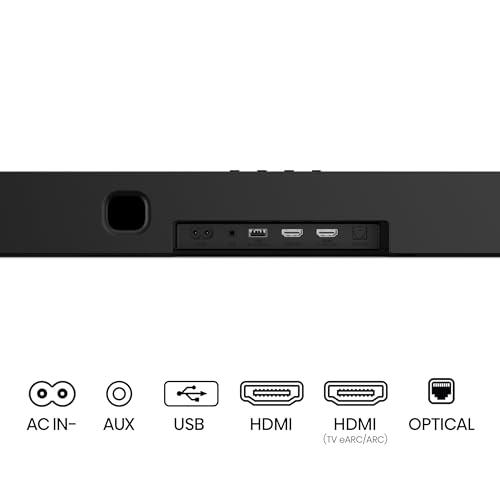
| HDMI eARC, Optical, USB, Bluetooth 5.3 | HDMI eARC, Optical, Bluetooth 5.1 |
| Dialogue Enhancement - Critical for clear speech during complex scenes | |
| AI EQ mode with automatic content analysis and center channel processing | Clear Voice technology with dedicated frequency optimization |
| Sound Modes - Preset options for different content types | |
| Movie, Music, News, Night, Sport, Game Pro, AI (7 modes) | Stereo, Standard, Game, Movie (4 modes) |
| Best Use Case - Primary scenarios where each system excels | |
| Movie enthusiasts wanting true surround sound and Hisense TV owners | Users prioritizing dialogue clarity, music quality, and setup simplicity |
The Hisense AX5140Q is a complete 5.1.4 surround sound system with wireless rear speakers and four upfiring drivers for true Dolby Atmos, while the Yamaha SR-B40A is a 2.1 stereo soundbar that focuses on excellent dialogue clarity and music quality. The Hisense provides authentic surround sound, while the Yamaha delivers refined stereo audio enhancement.
The Hisense AX5140Q is significantly better for movies and home theater use. It features discrete rear speakers, four physical upfiring drivers for overhead effects, and supports both Dolby Atmos and DTS:X formats. This creates an immersive cinematic experience that surrounds you with sound, while the Yamaha SR-B40A focuses on enhanced stereo audio that's great for TV shows but lacks true surround capabilities.
Yes, both the Hisense AX5140Q and Yamaha SR-B40A include wireless subwoofers. The Hisense has a 6.5-inch subwoofer as part of its complete surround system, while the Yamaha features a 6.25-inch subwoofer with YST II technology designed for controlled, accurate bass reproduction in smaller spaces.
The Yamaha SR-B40A is much easier to set up. It requires only connecting the soundbar and pairing the wireless subwoofer, with minimal positioning considerations. The Hisense AX5140Q involves positioning multiple wireless components including rear speakers, running room calibration, and optimizing placement for the best surround sound experience.
Only the Hisense AX5140Q delivers true Dolby Atmos with its four physical upfiring speakers that bounce sound off your ceiling for overhead effects. The Yamaha SR-B40A supports Dolby Atmos but uses virtual processing to simulate height effects through its stereo drivers, which is less immersive than discrete height channels.
For immersive gaming, the Hisense AX5140Q excels with its Game Pro mode and 5.1.4 channel separation that provides accurate positional audio. However, for competitive gaming where low latency matters most, the Yamaha SR-B40A may be preferable due to its simpler processing chain and dedicated game mode that minimizes audio delay.
The Yamaha SR-B40A works well in small to medium rooms (under 200 square feet) where its enhanced stereo imaging can fill the space effectively. The Hisense AX5140Q requires medium to large rooms (200+ square feet) where you can properly position the rear speakers behind your seating area for optimal surround sound.
Both soundbars excel at dialogue clarity but use different approaches. The Yamaha SR-B40A features dedicated Clear Voice technology and specialized tweeters designed specifically for speech enhancement. The Hisense AX5140Q uses AI EQ mode that automatically optimizes dialogue based on content analysis and center channel processing.
Yes, both the Hisense AX5140Q and Yamaha SR-B40A work with all TV brands through HDMI eARC/ARC connections. However, the Hisense offers additional Hi-Concerto integration features when paired with compatible Hisense TVs, providing unified control and optimized audio processing.
The Yamaha SR-B40A offers excellent value for users wanting significant audio improvement with minimal complexity, delivering Yamaha's renowned audio engineering at an accessible price point. The Hisense AX5140Q provides exceptional value for those wanting a complete home theater experience, as it includes multiple wireless speakers and advanced features typically found in much more expensive systems.
Yes, both soundbars support wireless music streaming via Bluetooth. The Hisense AX5140Q uses Bluetooth 5.3 for improved range and stability, while the Yamaha SR-B40A features Bluetooth 5.1. Both provide reliable wireless connectivity for streaming music from smartphones, tablets, and other devices.
If you want immediate improvement with minimal setup complexity, choose the Yamaha SR-B40A for its exceptional dialogue clarity and refined audio quality. If you're ready for a complete home theater transformation and have space for rear speakers, the Hisense AX5140Q provides an immersive surround sound experience that will dramatically enhance movie watching and gaming.
We've done our best to create useful and informative comparisons to help you decide what product to buy. Our research uses advanced automated methods to create this comparison and perfection is not possible - please contact us for corrections or questions. These are the sites we've researched in the creation of this article: shop.hisense-usa.com - manuals.plus - dolby.com - youtube.com - gzhls.at - rtings.com - youtube.com - bestbuy.com - manuals.plus - bestbuy.com - hisense-usa.com - youtube.com - device.report - manuals.plus - youtube.com - device.report - manuals.plus - youtube.com - crutchfield.com - visions.ca - shop.usa.yamaha.com - bestbuy.com - bestbuy.com - usa.yamaha.com - my.yamaha.com - europe.yamaha.com - adorama.com - usa.yamaha.com - digitalhomecreations.com - europe.yamaha.com - sundownone.com

Privacy Policy
Terms and Conditions - Affiliate Policy
Home Security
© Copyright 2008-2026.
11816 Inwood Rd #1211, Dallas, TX 75244