



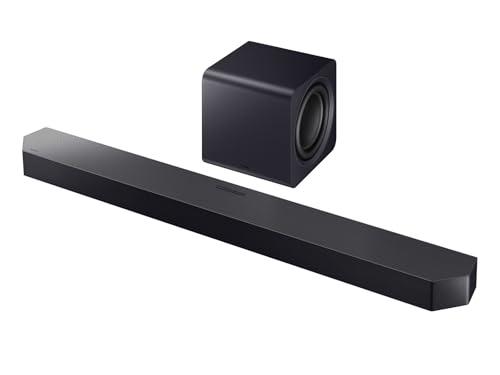
The world of TV audio has transformed dramatically over the past few years. Gone are the days when a simple soundbar could only make dialogue a bit clearer. Today's soundbars can create genuinely immersive experiences that rival expensive home theater setups, thanks to technologies like Dolby Atmos and DTS:X that bounce sound around your room to create a three-dimensional audio bubble.
But here's the challenge: soundbars now range from a few hundred dollars to well over a thousand, with wildly different capabilities. At the time of writing, you can get into the Dolby Atmos game for around $350, or you can spend three times that for flagship performance. The question is whether those extra features and channels are worth the significant price jump.
Today, we're comparing two soundbars that represent opposite ends of this spectrum: the Hisense AX5140Q, a budget-friendly 5.1.4 channel system, and the Samsung HW-Q990F, a premium 11.1.4 channel flagship. These aren't just different price points—they represent fundamentally different approaches to bringing movie theater sound to your living room.
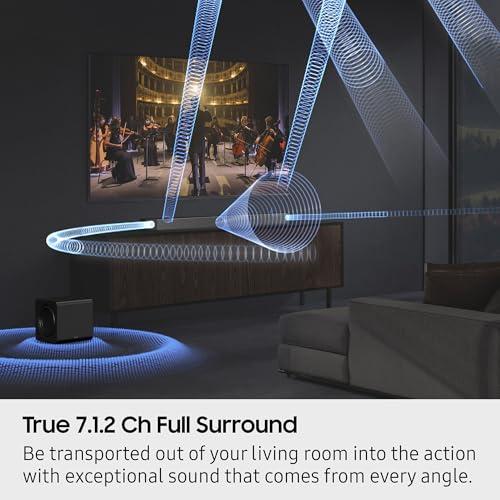
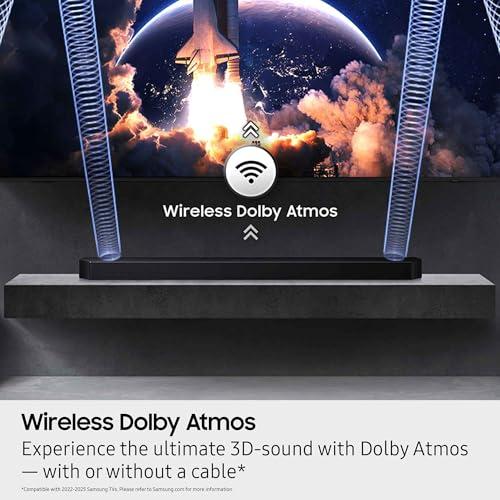
Before diving into the comparison, it's worth understanding what makes today's soundbars so much more capable than their predecessors. The game-changer has been object-based audio formats like Dolby Atmos and DTS:X. Instead of mixing sound into fixed channels (like traditional 5.1 surround), these formats treat sounds as "objects" that can be placed anywhere in three-dimensional space. A helicopter in a movie isn't just panned from left to right—it can move overhead, behind you, and all around you.
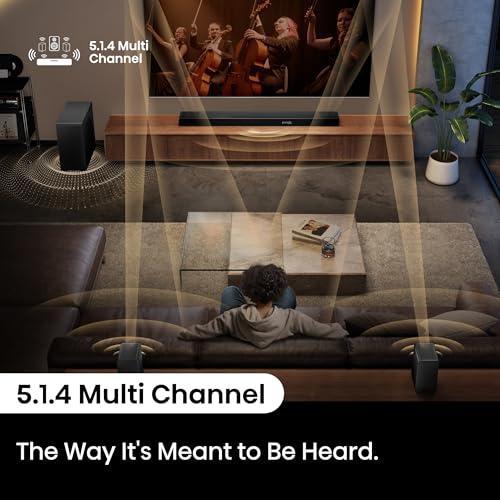
To achieve this magic trick, modern soundbars use upfiring speakers that bounce sound off your ceiling to create the illusion of overhead effects. The more channels a system has, the more precisely it can place these audio objects. This is why you'll see configurations like 5.1.4 (five main channels, one subwoofer, four height channels) or 11.1.4 (eleven main channels, one subwoofer, four height channels).
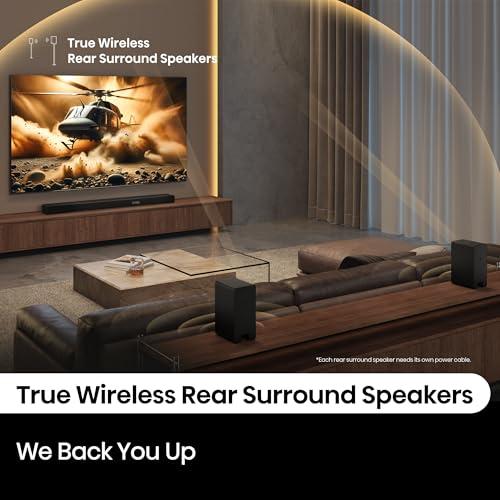
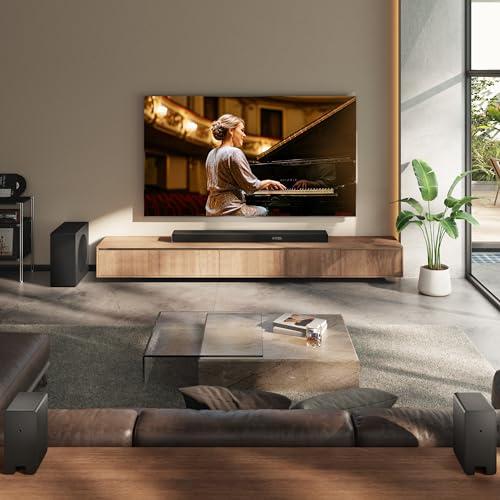
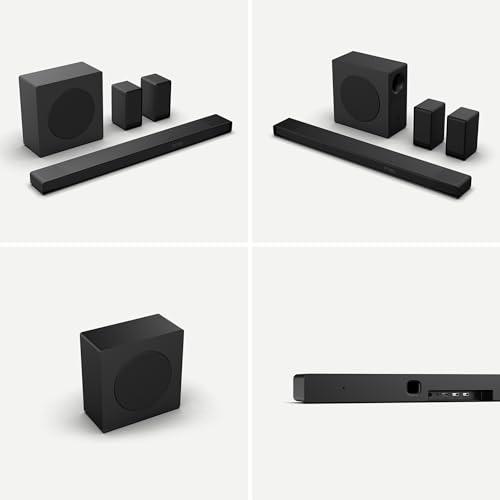
The other major advancement is wireless rear speakers. Early soundbars were limited to front-facing audio, but adding wireless surrounds creates a true bubble of sound around your seating position. This makes a massive difference for immersion—suddenly, you're not just hearing surround effects from the front, but from behind and beside you as well.
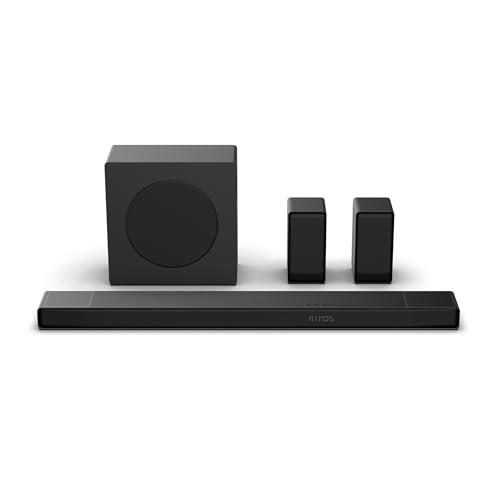
The Hisense AX5140Q represents something relatively new in the soundbar world: a genuinely capable Dolby Atmos system at a budget-friendly price point. Released in 2024, it arrived at a time when most affordable soundbars were still using virtual surround processing—basically software tricks to simulate what more expensive bars achieve with real speakers.
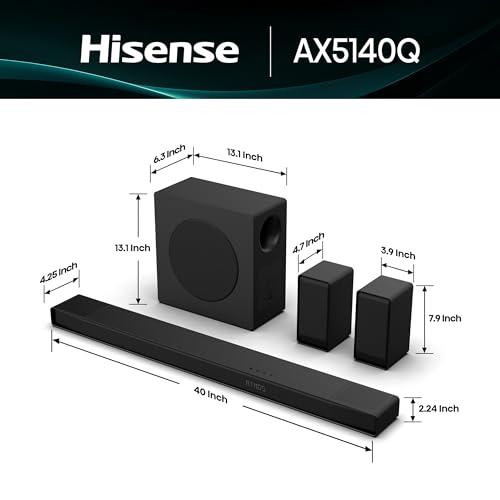
What makes the AX5140Q special is its 5.1.4 configuration with actual hardware to back it up. You get four real upfiring speakers (two in the main bar, two in the wireless rear speakers), a 6.5-inch wireless subwoofer, and dedicated surround speakers. This isn't virtual Atmos—it's the real deal, just with fewer channels than premium systems.
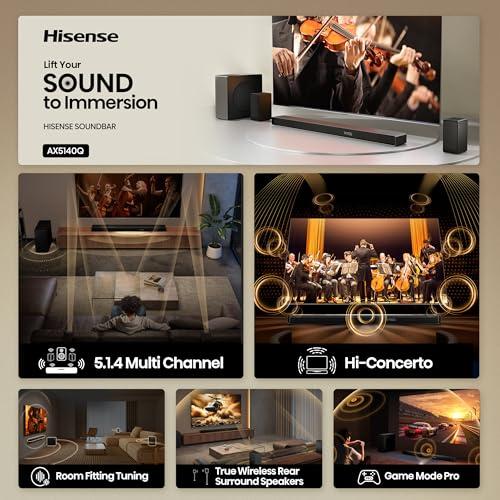
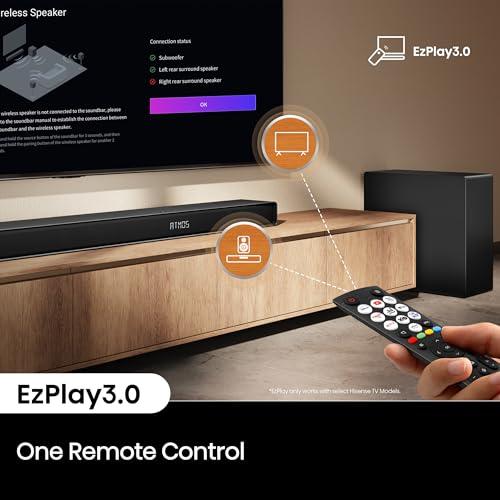
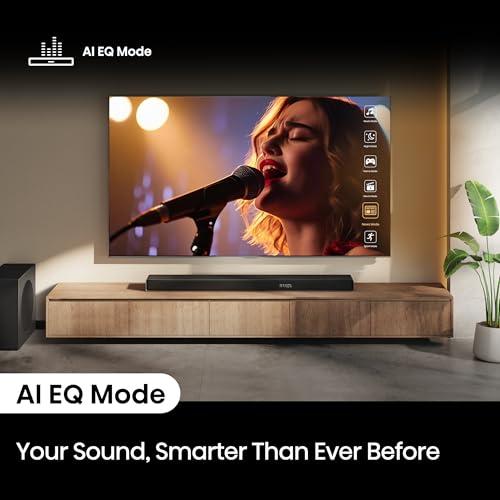
The system includes Hisense's Hi-Concerto platform, which creates deeper integration with Hisense TVs, and AI EQ Mode that automatically adjusts sound based on what you're watching. It's designed for people who want authentic immersive audio without the complexity or cost of high-end systems.
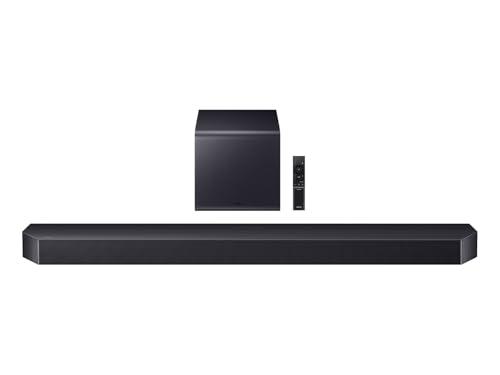
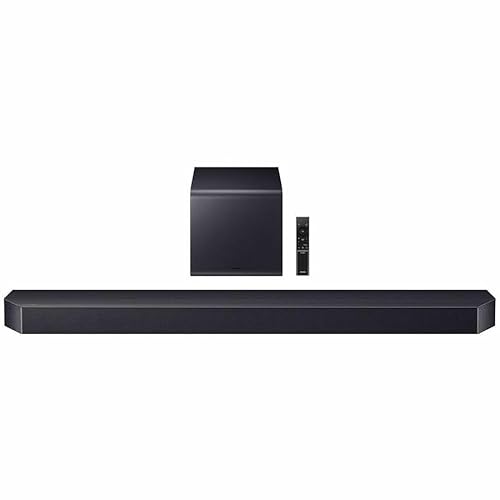
At the other end of the spectrum sits the Samsung HW-Q990F, released in 2025 as an evolution of Samsung's already impressive Q990D. This isn't just a soundbar—it's a complete audio ecosystem with 11.1.4 channels and 22-23 total drivers spread across four components.
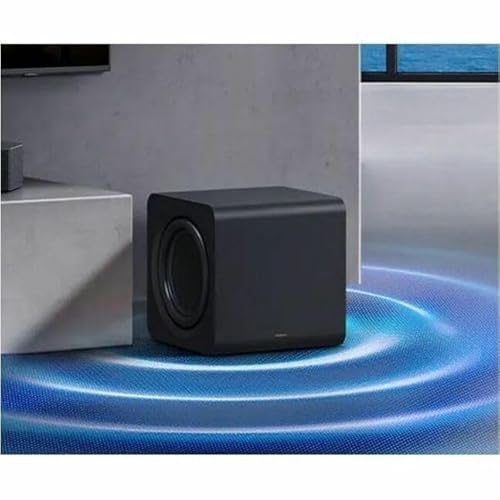
The Q990F represents the current pinnacle of soundbar technology. Its most significant improvement over the previous generation is a completely redesigned subwoofer with dual 8-inch force-canceling woofers in a sealed enclosure. This eliminates the "chuffing" and rattling issues that plagued earlier models while delivering cleaner, deeper bass.
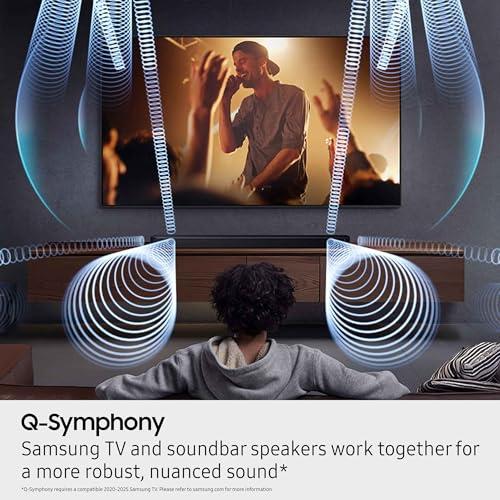
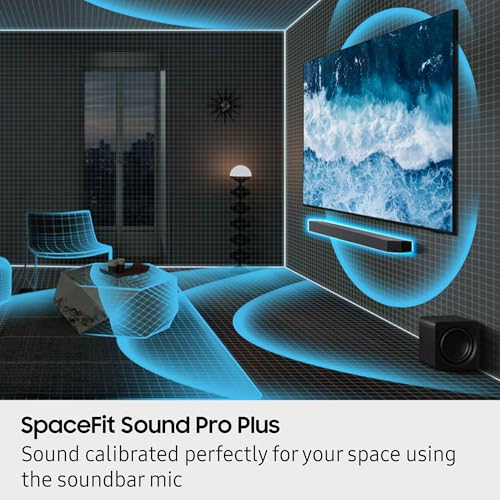
But the subwoofer is just one piece of the puzzle. The system includes SpaceFit Sound Pro room calibration, a 7-band graphic EQ, HDMI 2.1 support with 4K 120Hz passthrough, and integration with Samsung's Q-Symphony technology that coordinates the soundbar with compatible Samsung TV speakers for an even fuller soundstage.
This is where the channel count difference becomes most apparent. The Samsung Q990F with its 11.1.4 configuration creates a noticeably more enveloping soundstage than the Hisense AX5140Q's 5.1.4 setup. Think of it like the difference between being surrounded by a few strategically placed speakers versus being in the middle of a speaker array.
In our research of expert and user reviews, the consensus is clear: the Samsung delivers superior object placement and seamless channel transitions. When watching Dolby Atmos movie demos, sounds move around the room with surgical precision. A fighter jet doesn't just fly overhead—you can track its exact path from front to back and side to side. The additional channels fill in gaps that would otherwise create dead zones in the surround field.
The Hisense, while impressive for its price point, can't match this level of spatial accuracy. However, it still delivers genuine overhead effects and solid surround imaging that's dramatically better than virtual surround processing. For many viewers, especially in smaller rooms, the difference may not justify the significant price premium.
Bass reproduction is where premium engineering really shows. The Samsung Q990F's dual 8-inch subwoofer design represents a significant technological advancement. The force-canceling configuration means the two drivers work against each other to eliminate cabinet vibration while producing deeper, cleaner bass. This translates to movie explosions that you feel rather than just hear, without the rattling or distortion that plague lesser systems.
The sealed enclosure design also provides better control over the bass response. Instead of the sometimes boomy output of ported designs, the Samsung's subwoofer delivers tight, precise low-frequency effects that integrate seamlessly with the rest of the system. Reviews consistently note bass response down to 30Hz—low enough to reproduce the deepest movie effects and organ music.
The Hisense AX5140Q's 6.5-inch wireless subwoofer is adequate for its price class but can't compete in terms of depth or impact. While reviews describe it as "punchy" and better than expected for its size, it lacks the headroom and extension needed for truly cinematic bass reproduction. In smaller rooms or for casual viewing, it's perfectly serviceable. For dedicated movie nights or bass-heavy content, the limitations become apparent.
Clear dialogue is arguably the most important aspect of any home theater system—if you can't understand what characters are saying, all the surround effects in the world won't save the experience. This is an area where the Samsung Q990F demonstrates why premium engineering matters.
The Samsung uses a discrete center channel with advanced voice processing algorithms called Active Voice Amplifier Pro. This technology analyzes external noise in real-time and dynamically adjusts dialogue frequencies to cut through background sounds and complex mixes. Multiple voice enhancement modes provide different levels of processing depending on your needs.
The Hisense AX5140Q includes center channel processing and AI EQ mode for dialogue optimization, which reviews indicate works well for clear, centered speech. However, it lacks the sophisticated real-time processing of the Samsung system. For most content and viewing environments, the difference isn't dramatic, but challenging mixes or noisy rooms will favor the Samsung's approach.
Modern gaming has become increasingly important for soundbar manufacturers, especially with the rise of next-generation consoles that support advanced audio formats and high frame rates. This is where the Samsung Q990F pulls significantly ahead.
The Samsung's HDMI 2.1 support enables 4K 120Hz video passthrough with auto low-latency mode—critical features for Xbox Series X and PlayStation 5 gaming. The Game Pro mode optimizes directional audio cues while minimizing the audio-video delay that can hurt competitive gaming performance. For serious gamers, these features alone might justify the price premium.
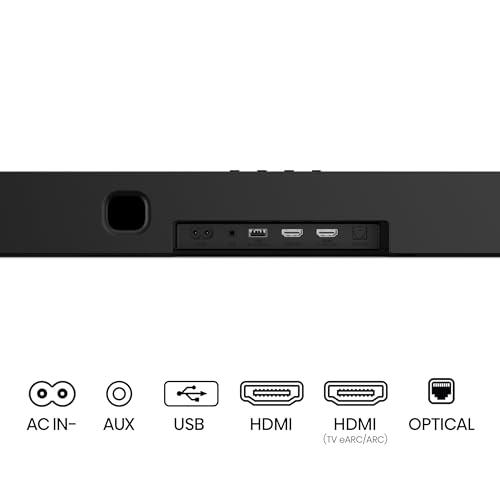
The Hisense AX5140Q includes its own Game Pro mode that enhances positional audio and impact, but it's limited to 4K 60Hz passthrough. While this covers most gaming scenarios, enthusiasts with high-refresh gaming setups will need to connect directly to their TV and rely on eARC for audio—a compromise that adds complexity and potential compatibility issues.
At the time of writing, the price difference between these systems is substantial—the Samsung Q990F costs roughly three times more than the Hisense AX5140Q. Understanding what drives this price gap is crucial for making the right decision.
The Hisense delivers remarkable value by focusing on core functionality. You get genuine 5.1.4 Dolby Atmos with real upfiring speakers, wireless rear surrounds, and a complete system for less than many premium soundbars cost without surrounds. It's proof that immersive audio doesn't have to break the bank.
However, that budget-friendly approach involves compromises. The driver count is lower, the subwoofer is smaller, room calibration is basic, and advanced features like comprehensive EQ controls are limited. For many users, these compromises are entirely acceptable—the core experience of Dolby Atmos immersion is still there.
The Samsung Q990F commands its premium through engineering sophistication and feature density. Nearly double the channel count, advanced room calibration that adapts continuously to your space, comprehensive connectivity including high-resolution music streaming protocols, and premium build quality throughout. It's not just about getting Dolby Atmos—it's about optimizing every aspect of the experience.
One area where the price difference becomes more justified is versatility. The Samsung Q990F functions as much more than just a TV audio upgrade. Its support for Spotify Connect, Apple AirPlay 2, Google Cast, and Roon Ready makes it a capable music streaming system. The 7-band EQ and balanced sound signature mean it can serve double duty for critical music listening—something most soundbars can't claim.
The Samsung's SpaceFit Sound Pro room calibration represents another level of sophistication. Instead of a one-time setup process, it continuously monitors your room's acoustics and adjusts accordingly. Move furniture, change seating arrangements, or add acoustic treatments, and the system adapts automatically. This level of intelligence simply isn't present in budget systems.
The Hisense AX5140Q takes a more focused approach. It's designed specifically for TV and movie enhancement without extensive customization options. For users who want great sound without complexity, this simplicity is actually an advantage. Setup is straightforward, operation is intuitive, and there's no overwhelming array of options to configure.
Your room size and layout play a crucial role in determining which system makes sense. In smaller rooms (under 200 square feet), the channel density advantage of the Samsung Q990F becomes less apparent. The Hisense AX5140Q can fill these spaces effectively, and the immersion difference may not justify the price premium.
Larger rooms tell a different story. The Samsung's additional channels and more powerful amplification become necessary to maintain even coverage and proper bass response throughout the space. The sealed subwoofer design also performs better in challenging acoustic environments where ported designs might become boomy or overwhelmed.
Ceiling height matters for any Atmos system since upfiring speakers rely on ceiling reflections. Both systems work best with standard 8-10 foot ceilings. Very high ceilings (12+ feet) or acoustically treated rooms will limit overhead effects regardless of which system you choose.
After extensive research into user experiences and expert evaluations, the choice between these systems comes down to your priorities and usage patterns.
Choose the Hisense AX5140Q if you're entering the world of immersive audio and want genuine Dolby Atmos capability without a massive investment. It's ideal for smaller-to-medium rooms, casual movie watching, and situations where simplicity trumps customization. The performance is legitimately impressive for the price point, delivering about 80% of the spatial audio experience at roughly 30% of the cost.
Choose the Samsung Q990F if you're building a dedicated home theater setup, have a larger room, or demand maximum performance. The superior channel density, advanced room correction, gaming features, and build quality create an experience that approaches dedicated component systems while maintaining soundbar convenience. It's particularly compelling for enthusiasts who want one system to handle movies, music, and gaming at reference quality levels.
The decision ultimately reflects how much you value audio performance in your entertainment setup. The Hisense proves that impressive immersive audio is now accessible to almost everyone, while the Samsung demonstrates just how sophisticated soundbar technology has become. Both represent excellent value in their respective market segments—the question is which segment matches your needs and expectations.
For most people stepping up from basic TV speakers, the Hisense AX5140Q will seem like a revelation. For dedicated home theater enthusiasts or those who view their audio system as a long-term investment, the Samsung Q990F's additional capabilities and refinement justify its premium positioning. Either way, you'll be getting genuinely immersive audio that would have been impossible from a soundbar just a few years ago.
| Hisense AX5140Q 5.1.4Ch Dolby Atmos DTS:X Sound Bar | Samsung Q-Series HW-Q990F Soundbar |
|---|---|
| Channel Configuration - More channels create better surround immersion and object placement | |
| 5.1.4 channels with discrete rear speakers | 11.1.4 channels with 22-23 total drivers |
| Audio Power Output - Higher power delivers better dynamics and room-filling sound | |
| 600W maximum audio power | 756W RMS power output |
| Subwoofer Design - Critical for movie bass impact and music foundation | |
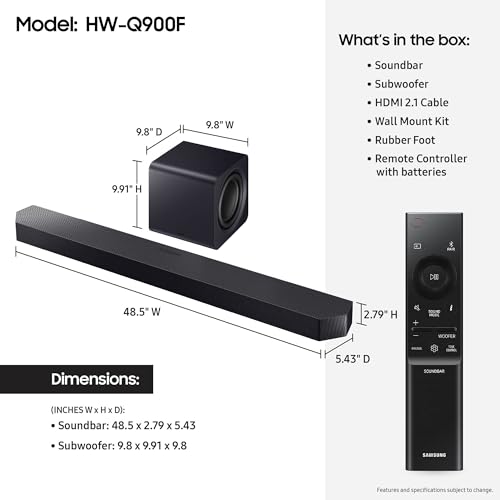
| Single 6.5" wireless subwoofer | Dual 8" force-canceling woofers, sealed design |
| Audio Format Support - Determines compatibility with streaming and disc content | |
| Dolby Atmos, DTS:X, Dolby Digital Plus, DTS-HD | Dolby Atmos, DTS:X, Eclipsa Audio, all major formats |
| Room Calibration - Automatic tuning optimizes sound for your specific space | |
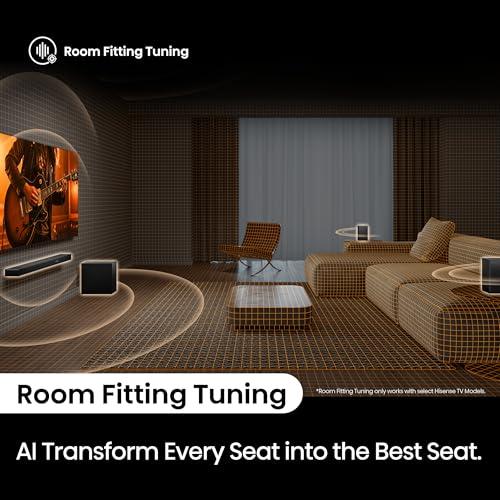
| Basic room fitting/tuning capability | SpaceFit Sound Pro Plus with continuous calibration |
| HDMI Connectivity - Essential for gaming and 4K video passthrough | |
| 1 HDMI input, eARC, 4K 60Hz passthrough | 3 HDMI 2.1 ports, eARC, 4K 120Hz/8K 60Hz passthrough |
| EQ Customization - Allows fine-tuning sound to personal preferences | |
| AI EQ mode with limited manual adjustment | 7-band graphic EQ with independent channel levels |
| Wireless Streaming - Convenience for music playback from devices | |
| Bluetooth 5.3 connectivity | Bluetooth 5.3, Wi-Fi, AirPlay 2, Spotify Connect, Google Cast |
| Voice Enhancement - Critical for dialogue clarity in movies and TV | |
| AI sound mode with voice optimization | Active Voice Amplifier Pro with multiple voice modes |
| Smart Features - Integration with TV and smart home ecosystems | |
| Hisense Hi-Concerto platform, ConnectLife app | Built-in Alexa, Q-Symphony with Samsung TVs, SmartThings |
| Gaming Features - Important for console gaming and low-latency audio | |
| Game Pro mode, basic gaming optimization | Game Pro mode, HDMI 2.1, auto low-latency mode |
| Build Quality and Design - Affects durability and aesthetic integration | |
| Solid construction, 40" width, basic remote | Premium build, sleek design, comprehensive remote |
The Samsung Q990F delivers superior Dolby Atmos performance with its 11.1.4 channel configuration and 22-23 total drivers, creating more precise object placement and seamless surround effects. The Hisense AX5140Q provides genuine Dolby Atmos with its 5.1.4 setup and four real upfiring speakers, offering authentic height effects at a much lower price point.
The primary difference is channel count and sophistication: the Samsung Q990F features 11.1.4 channels with advanced room calibration and premium build quality, while the Hisense AX5140Q offers 5.1.4 channels focused on delivering core Dolby Atmos functionality at a budget-friendly price.
The Samsung Q990F significantly outperforms in bass with its dual 8-inch force-canceling woofers in a sealed design, delivering deeper extension and cleaner output. The Hisense AX5140Q includes a 6.5-inch wireless subwoofer that's adequate for its price range but cannot match the Samsung's depth and impact.
The value depends on your priorities. The Samsung Q990F costs roughly three times more but delivers proportionally better performance with superior spatial accuracy, advanced features, and premium build quality. The Hisense AX5140Q provides about 80% of the immersive experience at 30% of the cost, making it excellent value for budget-conscious buyers.
The Samsung Q990F is substantially better for gaming with HDMI 2.1 support, 4K 120Hz passthrough, and auto low-latency mode designed for next-generation consoles. The Hisense AX5140Q offers Game Pro mode but is limited to 4K 60Hz passthrough, requiring workarounds for high-refresh gaming setups.
Yes, both the Hisense AX5140Q and Samsung Q990F include wireless rear speakers as part of their complete systems. The Samsung's rear speakers feature three drivers each (forward, side, up-firing) while the Hisense rears include upfiring drivers for height effects.
The Samsung Q990F excels in dialogue clarity with its discrete center channel and Active Voice Amplifier Pro technology that dynamically adjusts speech frequencies. The Hisense AX5140Q provides clear dialogue through its center channel processing and AI EQ mode, though it lacks the Samsung's advanced voice enhancement algorithms.
The Hisense AX5140Q works well in small to medium rooms where its 5.1.4 configuration can provide adequate coverage. The Samsung Q990F is better suited for larger spaces where its additional channels and higher power output are needed to maintain even sound distribution throughout the room.
The Samsung Q990F provides comprehensive music streaming with Spotify Connect, Apple AirPlay 2, Google Cast, and Roon Ready support, plus a 7-band EQ for music optimization. The Hisense AX5140Q offers basic Bluetooth 5.3 connectivity but lacks advanced streaming protocols and detailed music customization options.
The Samsung Q990F includes SpaceFit Sound Pro Plus with continuous room analysis and automatic adjustments, adapting to changes in furniture and acoustics over time. The Hisense AX5140Q offers basic room fitting tuning that helps optimize sound for your space but without the ongoing calibration sophistication of the Samsung system.
The Hisense AX5140Q is generally simpler to set up with straightforward wireless pairing and basic controls, making it ideal for users who want great sound without complexity. The Samsung Q990F offers more setup options and customization features, which provide better optimization but require more initial configuration time.
Choose the Hisense AX5140Q if you want genuine Dolby Atmos on a budget and have a smaller room or casual viewing habits. Select the Samsung Q990F if you're building a dedicated home theater, have a larger space, prioritize maximum performance, or want advanced features like gaming optimization and comprehensive streaming capabilities.
We've done our best to create useful and informative comparisons to help you decide what product to buy. Our research uses advanced automated methods to create this comparison and perfection is not possible - please contact us for corrections or questions. These are the sites we've researched in the creation of this article: shop.hisense-usa.com - manuals.plus - dolby.com - youtube.com - gzhls.at - rtings.com - youtube.com - bestbuy.com - manuals.plus - bestbuy.com - hisense-usa.com - youtube.com - device.report - manuals.plus - youtube.com - device.report - manuals.plus - youtube.com - rtings.com - crutchfield.com - sound-advice.online - samsung.com - soundandvision.com - samsung.com - whathifi.com - youtube.com - youtube.com - bestbuy.com - avsforum.com - content.syndigo.com - samsung.com - businessinsider.com - dolby.com - youtube.com - abcwarehouse.com

Privacy Policy
Terms and Conditions - Affiliate Policy
Home Security
© Copyright 2008-2026.
11816 Inwood Rd #1211, Dallas, TX 75244