






When your TV's built-in speakers sound like they're coming from the bottom of a tin can, it's time for a soundbar upgrade. But with options ranging from simple stereo bars to complex multi-channel systems, choosing the right one can feel overwhelming. Today, we're diving deep into two popular approaches: the Hisense AX5140Q's modular theater system versus the JBL Bar 300's streamlined all-in-one design.
These two soundbars represent fundamentally different philosophies in home audio. The Hisense AX5140Q, released in 2023, brings true multi-channel surround sound with discrete wireless speakers at an accessible price point. Meanwhile, the JBL Bar 300, also from 2023, focuses on delivering exceptional dialogue clarity and simplicity in a single elegant package. At the time of writing, both fall into the mid-range pricing category, making this comparison particularly relevant for most buyers.
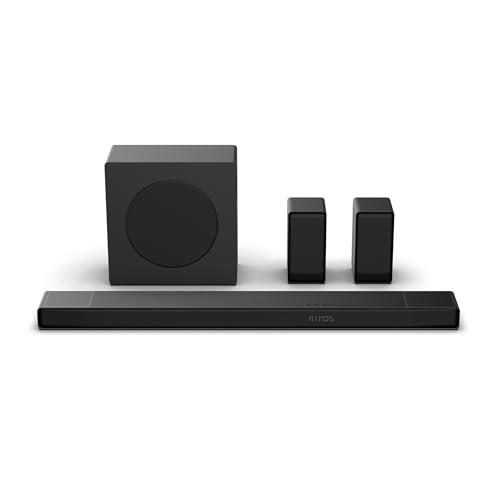
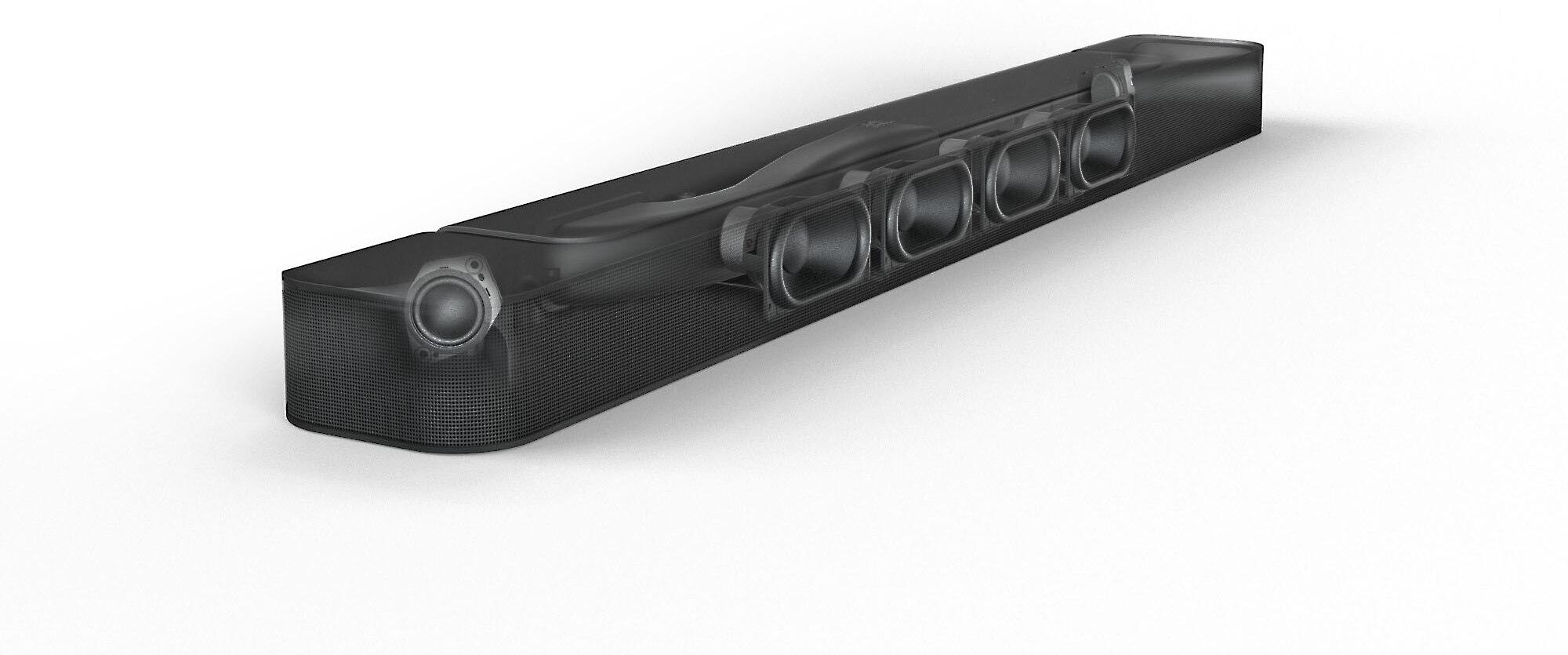
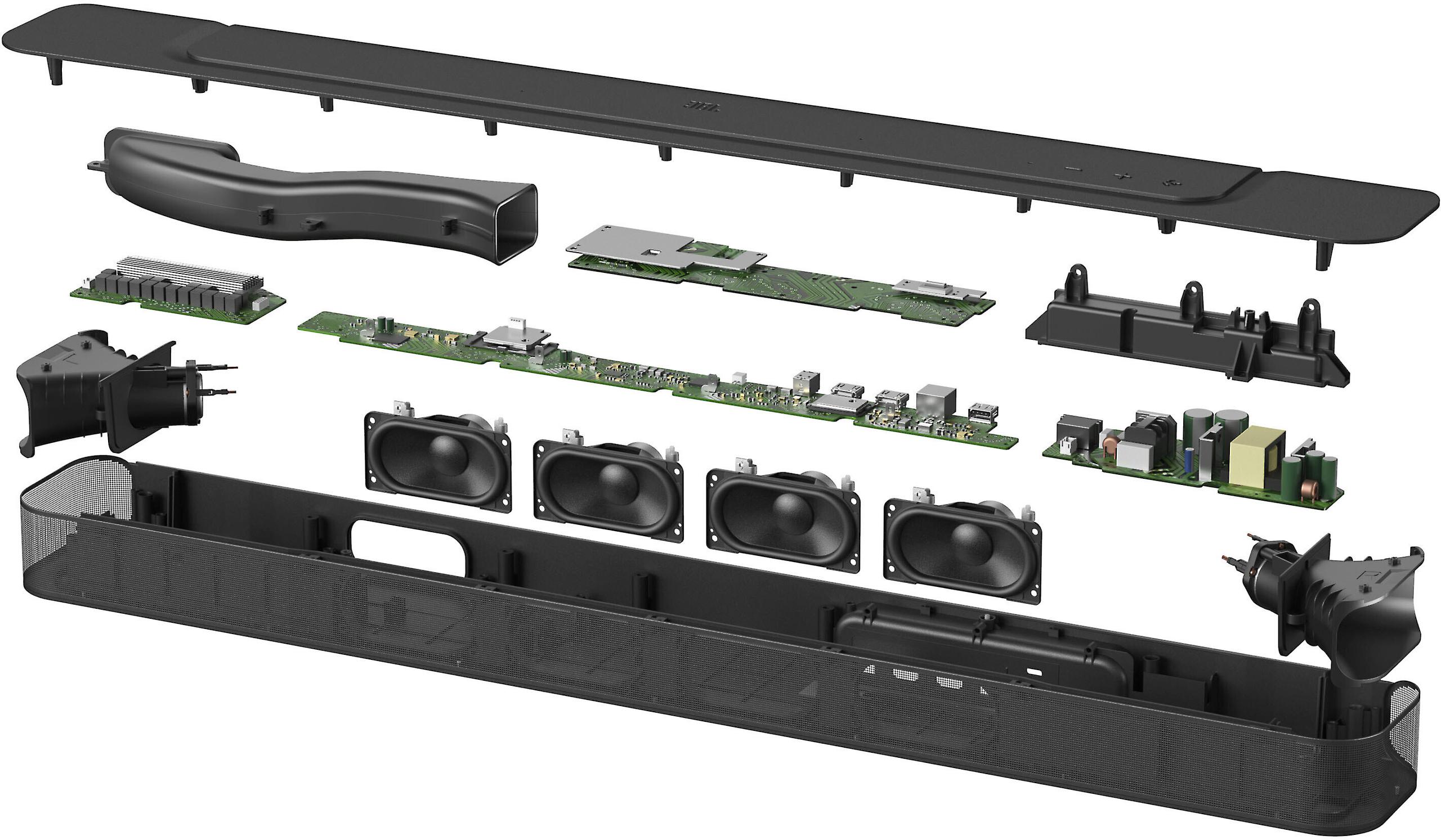
Before we dig into specifics, let's clarify what we're dealing with. The numbers after soundbar names aren't random—they tell you exactly how many audio channels you're getting. The Hisense AX5140Q's 5.1.4 configuration means five main speakers (left, center, right, and two surrounds), one subwoofer, and four height channels for overhead effects. The JBL Bar 300's 5.0 setup has five main channels but no separate subwoofer, with all drivers built into the main bar.
This difference is crucial because it determines whether you're getting true surround sound or simulated surround sound. True surround uses physical speakers placed around your room, while virtual surround relies on psychoacoustic processing—essentially audio tricks that fool your brain into hearing sounds from different directions using speakers all in one location.
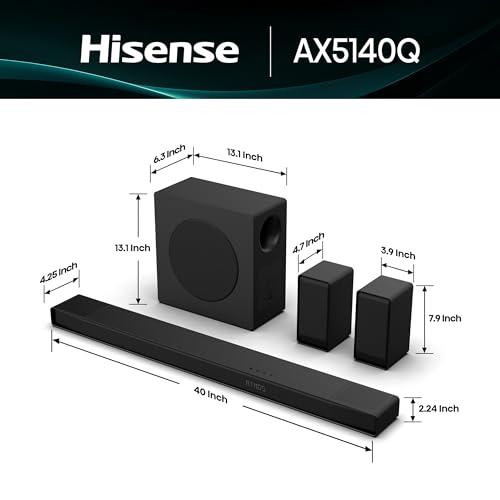
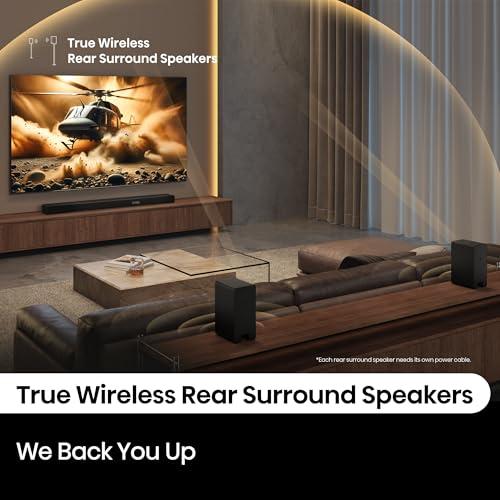
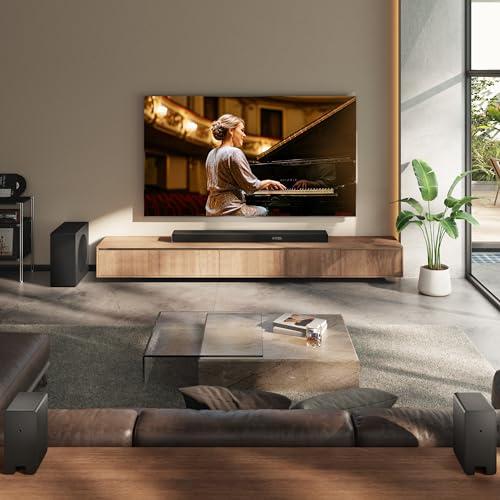
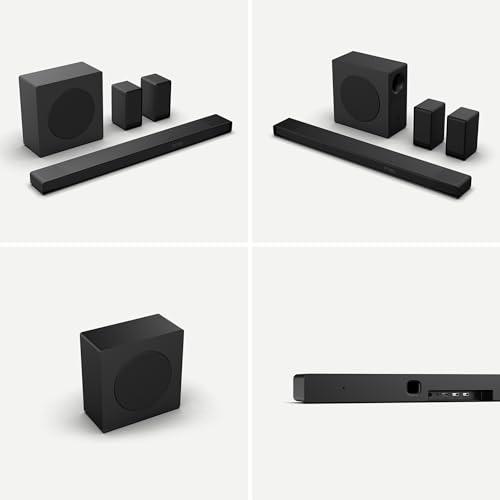
The Hisense AX5140Q takes the "more is better" approach, and for good reason. When you unbox this system, you're getting four separate components: the main soundbar, a wireless subwoofer, and two wireless surround speakers. This isn't just about having more boxes to place around your room—it's about creating a genuine three-dimensional sound field.
The standout feature here is true Dolby Atmos support with four physical up-firing speakers. Dolby Atmos is an audio format that treats sounds as objects moving through 3D space rather than just assigning them to specific channels. When a helicopter flies overhead in a movie, Atmos can precisely place that sound above and behind you, not just to your left or right.
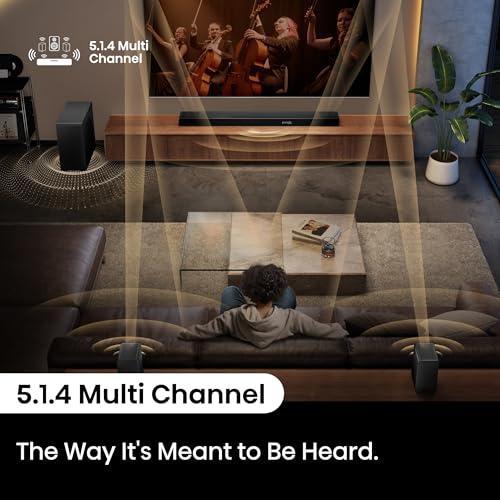
The Hisense AX5140Q achieves this through up-firing drivers—speakers that point toward your ceiling to bounce sound back down, creating the illusion of height. With two up-firing speakers in the main bar and two more in the wireless rear speakers, you get what's called a 5.1.4 configuration. This means you can actually hear rain falling from above or jets screaming overhead with convincing realism.
Based on extensive user feedback and professional reviews, this setup delivers what many describe as "theater-like" performance. The consensus is clear: when watching Dolby Atmos content on Netflix, Prime Video, or 4K Blu-rays, the difference between this system and a traditional soundbar is immediately obvious. The sound literally surrounds you rather than just coming from the front.
The 6.5-inch wireless subwoofer is another significant advantage. Bass isn't just about making explosions louder—it's the foundation that makes everything else sound more impactful and realistic. User reports consistently describe the Hisense AX5140Q's bass as "floor-shaking" and satisfying for both movies and music. This dedicated subwoofer can reproduce the low frequencies that smaller all-in-one systems simply cannot match physically.
What's particularly clever about Hisense's implementation is that all the wireless components pair automatically out of the box. You're not dealing with complicated setup procedures or sync issues that plagued earlier wireless systems. The subwoofer and rear speakers connect wirelessly to the main bar, so you only need to run power cables to each component.
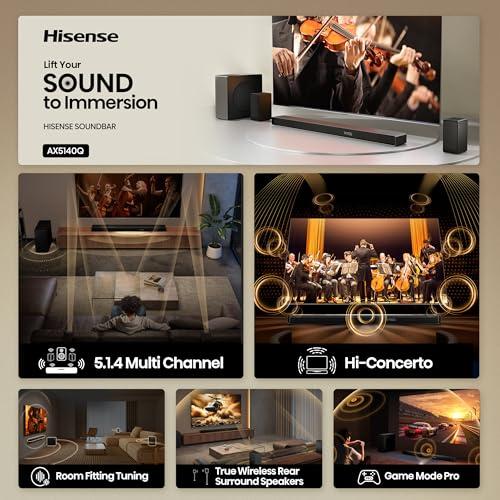
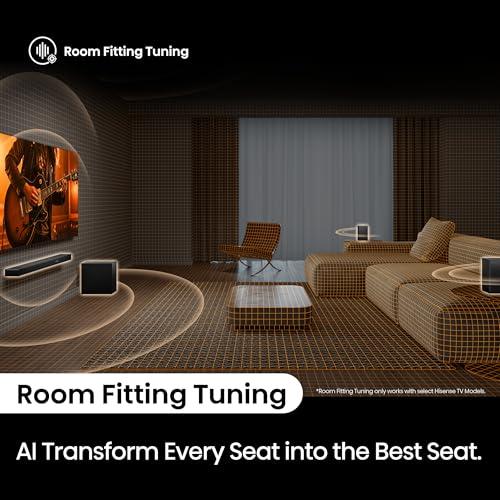
The Hisense AX5140Q includes AI Room Calibration technology, which uses test tones to analyze your room's acoustics and adjust the sound accordingly. This matters because every room sounds different—carpeted rooms absorb sound differently than hardwood floors, and high ceilings create different reflections than low ones.
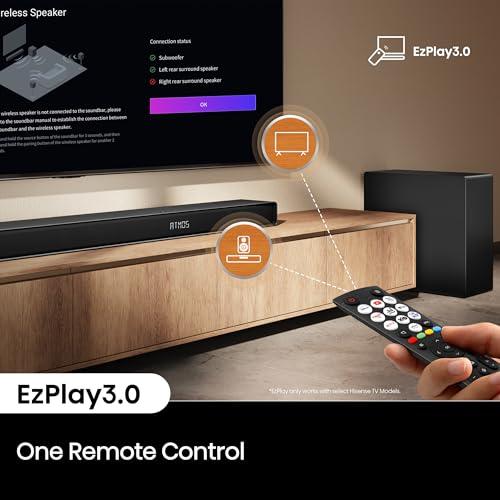
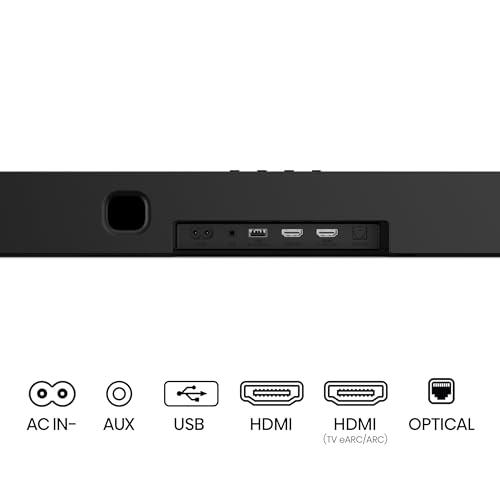
The system also features Hi-Concerto integration with Hisense TVs, creating a unified ecosystem where the TV and soundbar work together seamlessly. While this benefits Hisense TV owners most, the soundbar works excellently with any TV through its HDMI eARC connection.
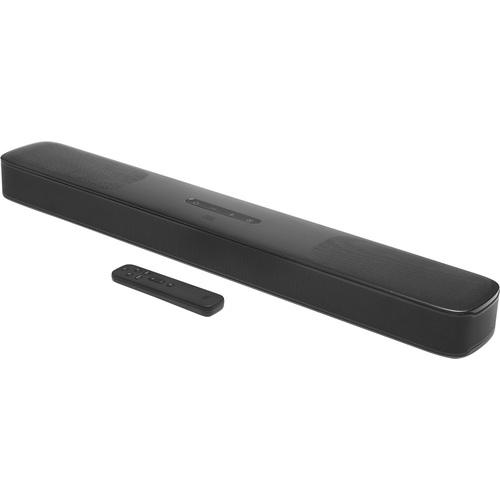
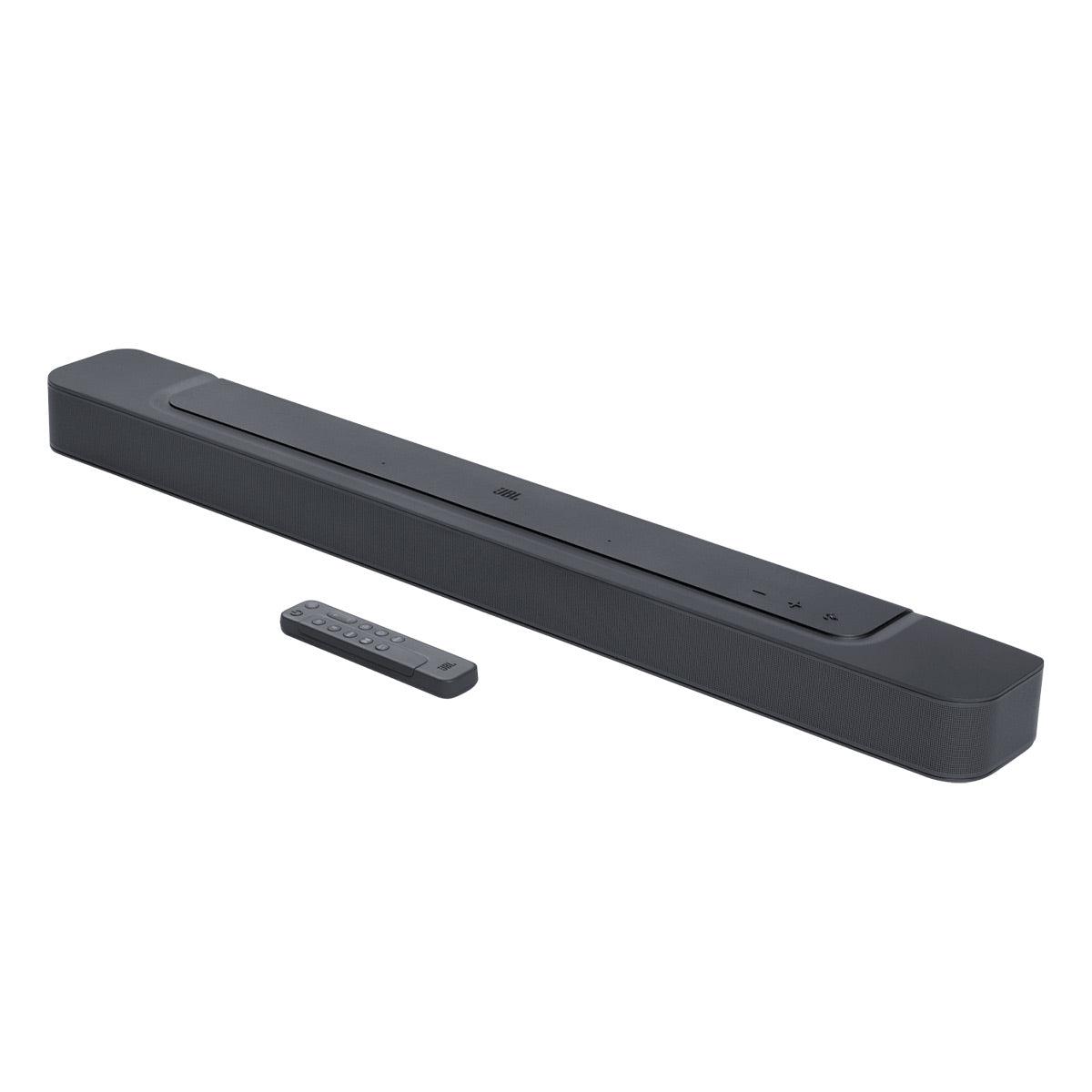
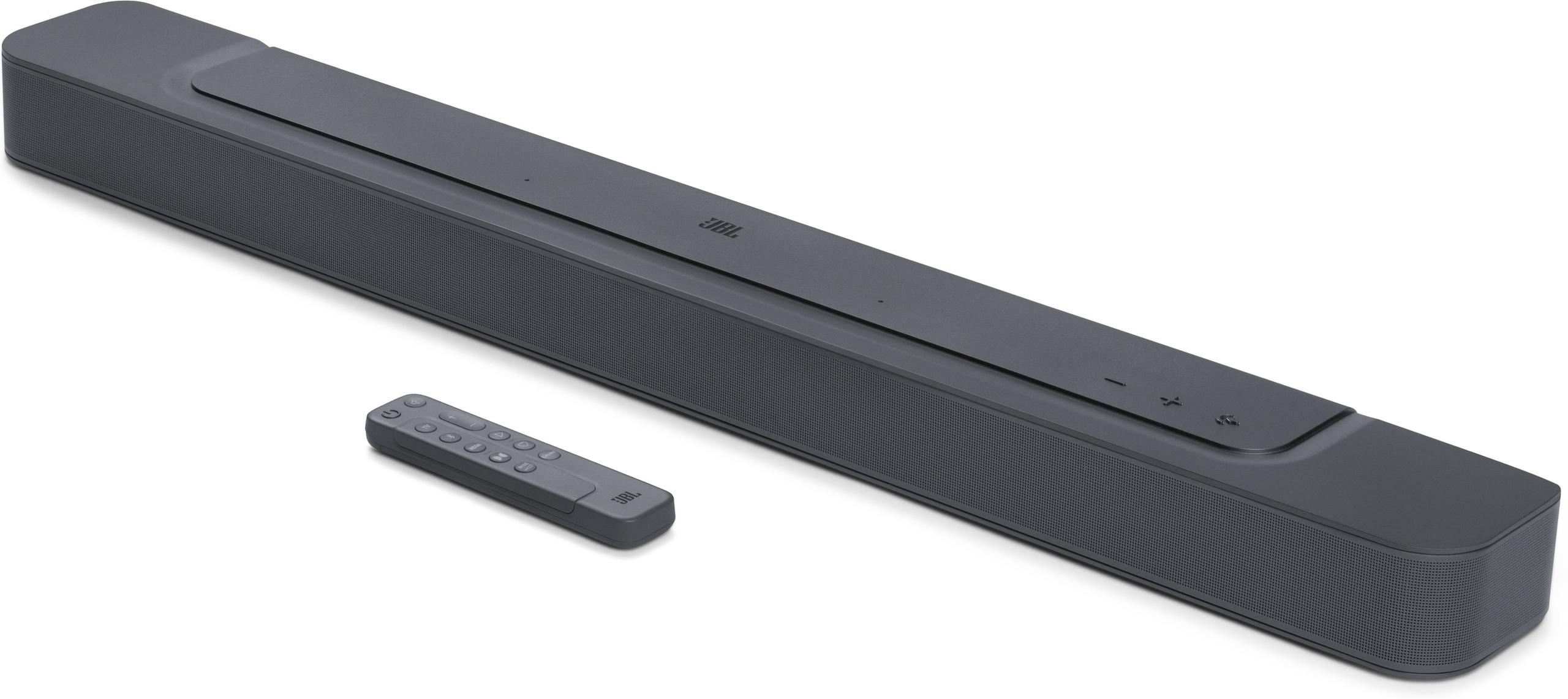
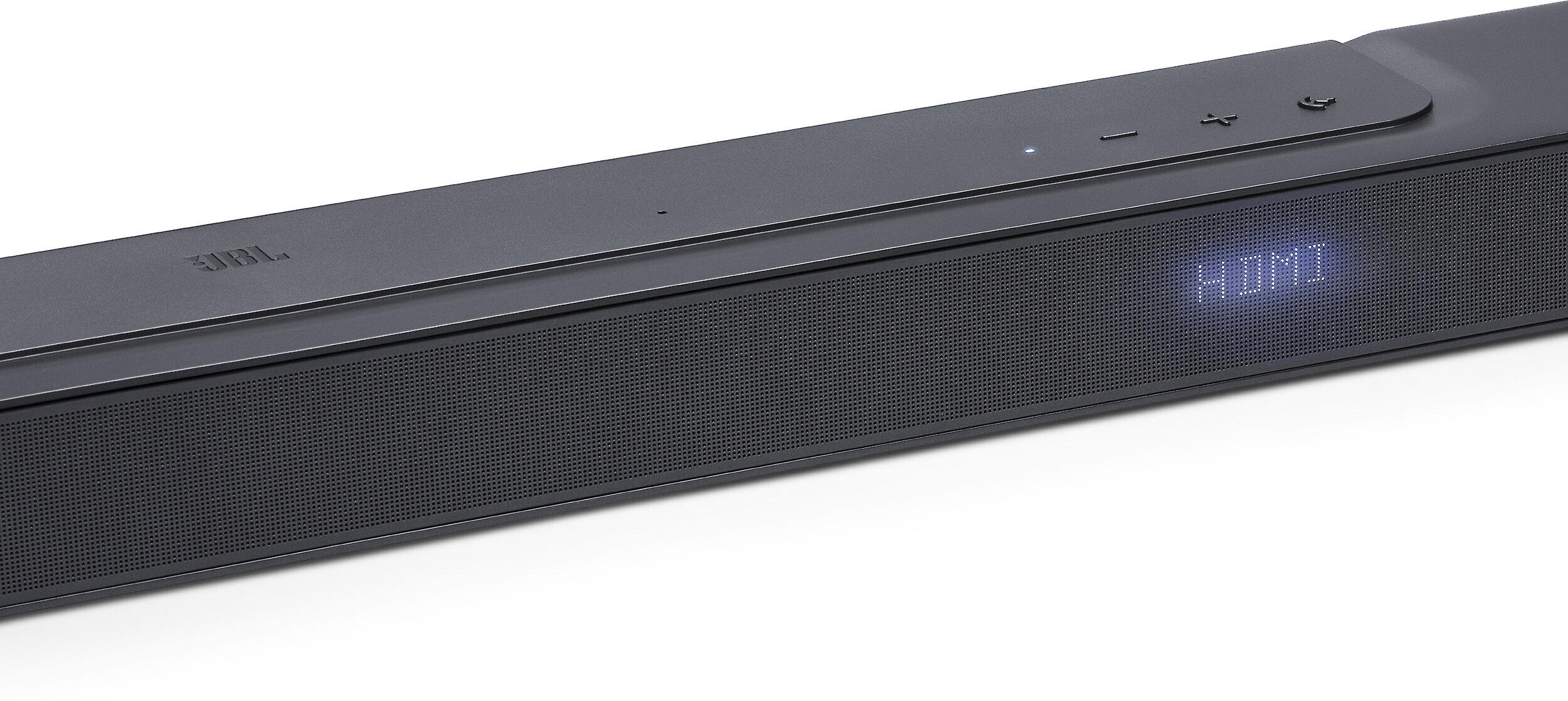
The JBL Bar 300 takes a completely different approach. Instead of multiple components, you get one beautifully engineered soundbar that does everything. This isn't a compromise—it's a focused design philosophy that prioritizes specific strengths.
Where the JBL Bar 300 truly excels is dialogue clarity. The consensus from both professional reviews and user feedback is unanimous: this soundbar makes voices sound exceptionally clear right out of the box. JBL's PureVoice technology uses algorithms specifically designed to enhance speech frequencies without making voices sound unnatural or artificially boosted.
This might not sound exciting, but dialogue clarity is actually the most important aspect of soundbar performance for daily use. If you're constantly reaching for the remote to adjust volume during movies because you can't hear what characters are saying over the background music and effects, you'll immediately appreciate what the JBL Bar 300 does differently.
Instead of physical surround speakers, the JBL Bar 300 uses MultiBeam technology to create virtual surround effects. This involves precisely positioned drivers and advanced signal processing to create the illusion of sound coming from different directions. While it can't match the immersion of discrete speakers, MultiBeam is surprisingly effective in smaller to medium-sized rooms.
The virtual Dolby Atmos processing attempts to create height effects without up-firing speakers. It's important to understand that this is simulation, not true Atmos, but in the right room conditions, it can create a more spacious soundstage than traditional stereo soundbars.
One area where the JBL Bar 300 particularly shines is low-volume performance. Based on user reports, this soundbar maintains excellent clarity and balance even at volume levels suitable for apartment living or late-night viewing. This is harder to achieve than you might think—many soundbars lose dialogue clarity or bass definition when played quietly.
JBL's audio heritage shows in the Bar 300's music performance. The company's signature sound emphasizes clarity and balance rather than artificial enhancement. Users consistently praise its performance for background music during cooking, cleaning, or entertaining guests. The neutral tuning means it doesn't color the sound with excessive bass or treble boost, making it suitable for critical music listening.
This is where the Hisense AX5140Q demonstrates its most significant advantage. True surround sound with discrete speakers simply cannot be matched by virtual processing. When watching action movies, playing games, or enjoying Atmos-enabled content, the difference is substantial and immediately noticeable.
The AX5140Q creates what reviewers describe as a "bubble of sound" around the listener. Effects move convincingly around the room, overhead sounds have genuine height, and the overall experience approaches what you'd get from a traditional multi-speaker home theater system.
In comparison, while the JBL Bar 300's MultiBeam processing is sophisticated, it cannot create true directional effects or overhead sounds. The simulation works best in smaller rooms with appropriate acoustics, but even then, it's more about creating a wider soundstage than genuine surround immersion.
The bass performance difference between these systems is dramatic. The Hisense AX5140Q's dedicated 6.5-inch wireless subwoofer delivers what users describe as powerful, room-filling bass that adds genuine impact to movies and music. This isn't just about volume—it's about reproducing the full frequency spectrum that makes audio feel realistic and engaging.
The JBL Bar 300's integrated bass port simply cannot compete physically. Multiple reviews describe the bass as "barely there" and identify it as the system's weakest point. For dialogue-focused content or casual music listening, this might be acceptable, but for movie watching or bass-heavy music, it's a significant limitation.
This is where the JBL Bar 300 takes the lead. The consensus from both expert and user reviews is that this soundbar excels at making dialogue clear and intelligible, even during complex audio scenes. The PureVoice technology and carefully tuned frequency response ensure that voices cut through background music and effects without sounding artificial.
The Hisense AX5140Q offers good dialogue through its dedicated center channel, but its tuning prioritizes overall cinematic impact over pure vocal clarity. While it's certainly capable of clear dialogue, users might need to adjust sound modes or settings to optimize speech intelligibility.
The Hisense AX5140Q's 600-watt peak power output and discrete speaker configuration make it much better suited for larger rooms and higher volume levels. The separate components can create a proper soundstage in spaces where the JBL Bar 300 would struggle to fill the room adequately.
However, for smaller spaces, the JBL Bar 300's compact design and excellent low-volume performance make it ideal for apartments or bedrooms where disturbing neighbors is a concern.
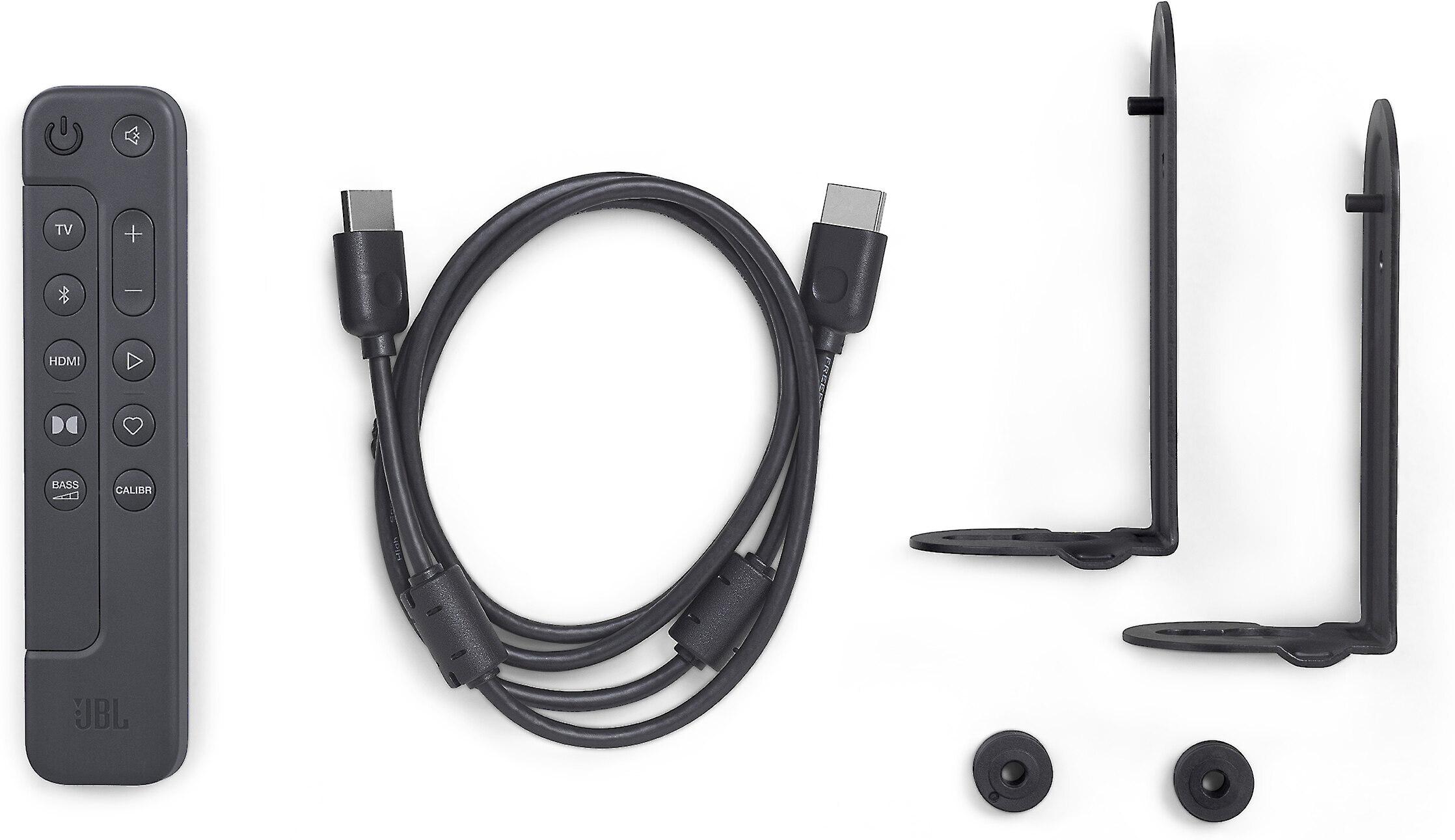
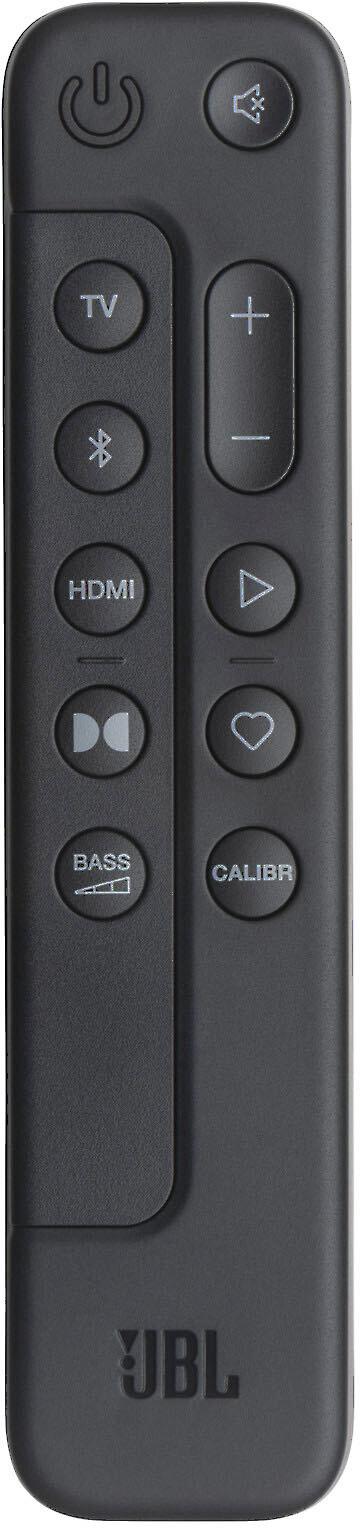
The JBL Bar 300 wins decisively in simplicity. You connect it to your TV, run a quick calibration routine via the remote, and you're done. The single-unit design means no additional components to position or power cables to run around your room.
The Hisense AX5140Q requires more thought and effort. You need to position the wireless subwoofer somewhere that provides good bass distribution (usually not right next to the TV), and the wireless surround speakers need to be placed behind or to the sides of your seating area. While the wireless connections eliminate running audio cables, you still need power outlets for each component.
That said, users consistently report that the AX5140Q setup process is straightforward, with automatic pairing between components working reliably. The extra effort pays off in significantly improved performance.
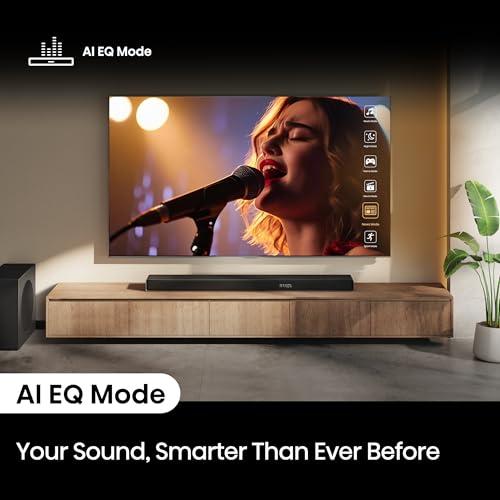
Both systems offer modern connectivity options, but they approach smart features differently. The Hisense AX5140Q focuses on integration with Hisense's TV ecosystem and includes features like AI sound mode selection and room-fitting tuning.
The JBL Bar 300 includes built-in Wi-Fi with support for AirPlay, Chromecast, and Alexa Multi-Room Music. This makes it more versatile as a standalone music streaming device, allowing direct streaming from services without needing to route audio through your TV.
You're primarily focused on movie and TV watching, especially content with Dolby Atmos or DTS:X soundtracks. The discrete speakers and powerful subwoofer create an immersive experience that transforms action movies, nature documentaries, and gaming into something approaching a theater experience.
You have a medium to large room (over 200 square feet) where the discrete speakers can create proper sound staging. Smaller rooms might not benefit as much from the surround speakers, and the powerful subwoofer might be overwhelming.
You don't mind managing multiple components and have suitable placement options for the wireless speakers. While setup isn't complicated, it does require more planning than a single soundbar.
You want the best audio value in the mid-range price category. At the time of writing, getting true 5.1.4 Atmos with discrete speakers at this price point represents exceptional value compared to competing systems.
Dialogue clarity is your top priority. If you frequently struggle to understand speech in movies and TV shows, the Bar 300's exceptional voice reproduction will immediately improve your viewing experience.
You live in an apartment or need excellent low-volume performance. The JBL Bar 300's ability to maintain clarity and balance at neighbor-friendly volume levels is particularly valuable for shared living spaces.
You want a simple, elegant solution with minimal setup and no additional components. The single-unit design fits seamlessly into most entertainment centers without requiring additional space planning.
You listen to music regularly and prefer neutral, uncolored sound reproduction. JBL's audio heritage shows in the balanced frequency response that doesn't artificially boost any particular frequency range.
You have a smaller room where virtual surround processing can be effective, and bass impact isn't a primary concern.
These two soundbars represent different approaches to the same problem: dramatically improving your TV's audio quality. The Hisense AX5140Q delivers genuine surround immersion and powerful bass at a remarkable price point, making it ideal for movie enthusiasts who want a truly cinematic experience. The JBL Bar 300 excels in dialogue clarity and simplicity, perfect for users who prioritize speech intelligibility and elegant design over surround effects.
Your choice ultimately depends on your priorities: do you want the most immersive audio experience possible, or do you value simplicity and exceptional dialogue clarity above all else? Both approaches have merit, and both systems deliver excellent performance within their design philosophies.
At the time of writing, the Hisense AX5140Q represents exceptional value for buyers seeking true surround sound, while the JBL Bar 300 offers premium dialogue performance and build quality in a streamlined package. Either choice will dramatically improve your TV watching experience compared to built-in TV speakers—the question is whether you want to be surrounded by sound or simply hear it more clearly.
| Hisense AX5140Q 5.1.4Ch Dolby Atmos DTS:X Sound Bar | JBL Bar 300 5.0 Soundbar |
|---|---|
| Channel Configuration - Determines immersion level and surround sound quality | |
| 5.1.4 with discrete wireless subwoofer and rear speakers | 5.0 all-in-one with no separate components |
| Dolby Atmos Implementation - Critical for overhead effects in movies | |
| True Atmos with 4 physical up-firing speakers | Virtual Atmos using psychoacoustic processing |
| Bass Performance - Essential for movie impact and music enjoyment | |
| Dedicated 6.5" wireless subwoofer with room-filling bass | Integrated bass port with minimal low-end extension |
| Total Power Output - Affects maximum volume and dynamic range | |
| 600W peak power for larger rooms and high volumes | 260W total output optimized for clarity |
| Setup Complexity - Important for ease of installation | |
| Multiple wireless components requiring placement planning | Single unit with plug-and-play simplicity |
| Dialogue Clarity - Most important for daily TV watching | |
| Good with dedicated center channel | Excellent with PureVoice technology optimization |
| Room Size Suitability - Determines optimal placement and performance | |
| Medium to large rooms (200+ sq ft) for proper surround staging | Small to medium rooms where virtual surround is effective |
| Smart Features - Convenience and streaming capabilities | |
| AI Room Calibration, Hi-Concerto TV integration, EzPlay 3.0 | Built-in Wi-Fi, AirPlay, Chromecast, Alexa Multi-Room |
| Best Use Case - Who should choose this soundbar | |
| Movie enthusiasts wanting cinematic surround immersion | Dialogue-focused users prioritizing clarity and simplicity |
The Hisense AX5140Q is a true 5.1.4 surround sound system with separate wireless subwoofer and rear speakers, while the JBL Bar 300 is an all-in-one 5.0 soundbar. The Hisense provides genuine surround sound with physical speakers around your room, whereas the JBL uses virtual processing to simulate surround effects from a single bar.
The Hisense AX5140Q has significantly better bass with its dedicated 6.5-inch wireless subwoofer that delivers room-filling low-end impact. The JBL Bar 300 relies on an integrated bass port that produces minimal bass response, which many users consider its weakest point.
The JBL Bar 300 excels in dialogue clarity with its PureVoice technology that makes speech exceptionally clear right out of the box. While the Hisense AX5140Q has good dialogue through its center channel, the JBL is specifically optimized for voice reproduction and performs better at low volumes.
Yes, but differently. The Hisense AX5140Q offers true Dolby Atmos with four physical up-firing speakers that create genuine overhead effects. The JBL Bar 300 supports virtual Dolby Atmos, which uses psychoacoustic processing to simulate height effects without actual up-firing speakers.
The JBL Bar 300 is much easier to set up as a single unit that connects directly to your TV with minimal configuration. The Hisense AX5140Q requires placing and powering the wireless subwoofer and rear speakers around your room, though the wireless pairing is automatic.
The JBL Bar 300 is better suited for small rooms and apartments due to its compact design, excellent low-volume performance, and virtual surround that works well in smaller spaces. The Hisense AX5140Q is optimized for medium to large rooms where discrete speakers can create proper surround staging.
The Hisense AX5140Q is excellent for gaming with its Game Pro mode, true surround sound for positional audio, and powerful subwoofer for impact effects. The JBL Bar 300 works well for gaming dialogue but lacks the immersive surround effects and bass impact that enhance the gaming experience.
The Hisense AX5140Q offers exceptional value by providing true 5.1.4 surround sound with discrete speakers at a competitive price point. The JBL Bar 300 provides good value for users prioritizing dialogue clarity and simplicity, but may require adding a separate subwoofer for full-range audio.
Both work for music, but serve different preferences. The JBL Bar 300 has a neutral, balanced sound signature that's excellent for music with clear vocals and natural reproduction. The Hisense AX5140Q is tuned more for cinematic content but provides fuller bass response for music that benefits from low-end impact.
The Hisense AX5140Q is significantly better for dedicated home theater use, offering true surround sound with discrete rear speakers, genuine Dolby Atmos height effects, and powerful bass that creates an immersive cinematic experience. The JBL Bar 300 is better for casual TV watching with superior dialogue clarity.
Yes, both the Hisense AX5140Q and JBL Bar 300 work with any TV that has HDMI ARC/eARC, optical, or other standard audio outputs. The Hisense offers additional integration features when paired with Hisense TVs, but functions fully with all TV brands.
The JBL Bar 300 is ideal for apartment living due to its exceptional low-volume performance, single-unit design that doesn't require additional speaker placement, and excellent dialogue clarity that lets you hear everything clearly without disturbing neighbors. The Hisense AX5140Q may be too powerful and bass-heavy for close living situations.
We've done our best to create useful and informative comparisons to help you decide what product to buy. Our research uses advanced automated methods to create this comparison and perfection is not possible - please contact us for corrections or questions. These are the sites we've researched in the creation of this article: shop.hisense-usa.com - manuals.plus - dolby.com - youtube.com - gzhls.at - rtings.com - youtube.com - bestbuy.com - manuals.plus - bestbuy.com - hisense-usa.com - youtube.com - device.report - manuals.plus - youtube.com - device.report - manuals.plus - youtube.com - whathifi.com - safeandsoundhq.com - youtube.com - cnet.com - mm.jbl.com - jbl.com - bestbuy.com - support.jbl.com - dell.com - walmart.com

Privacy Policy
Terms and Conditions - Affiliate Policy
Home Security
© Copyright 2008-2026.
11816 Inwood Rd #1211, Dallas, TX 75244