

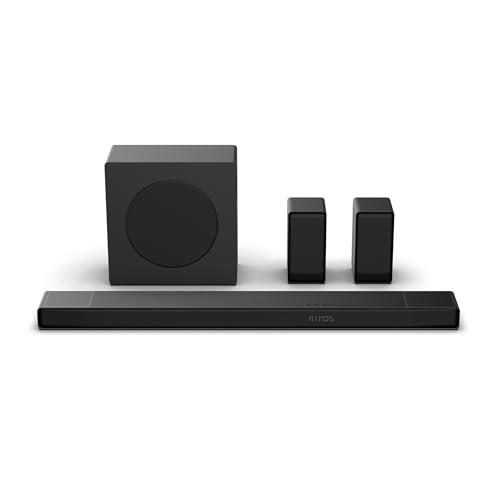
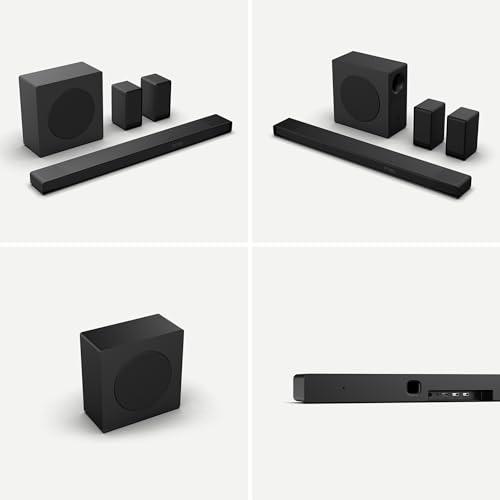
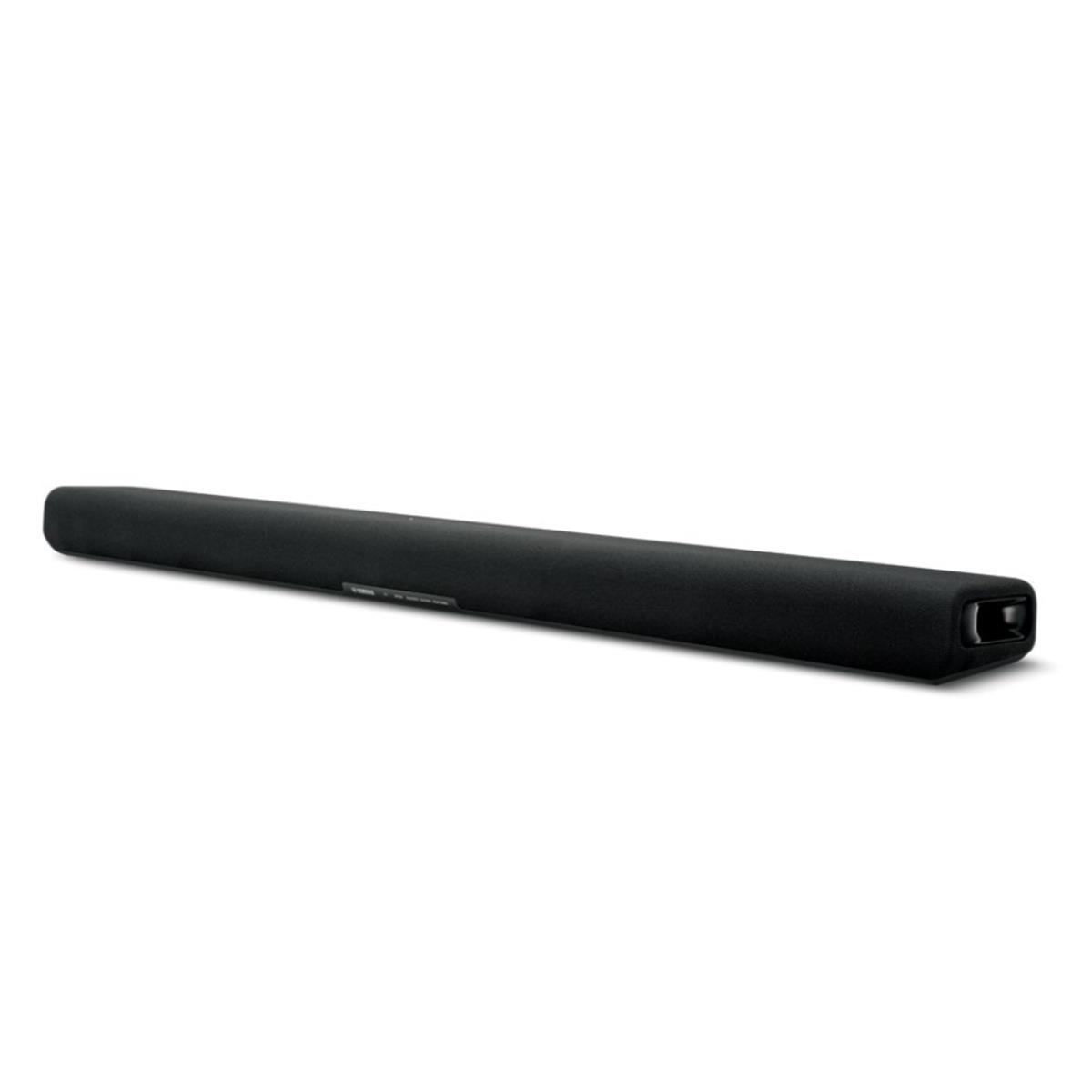
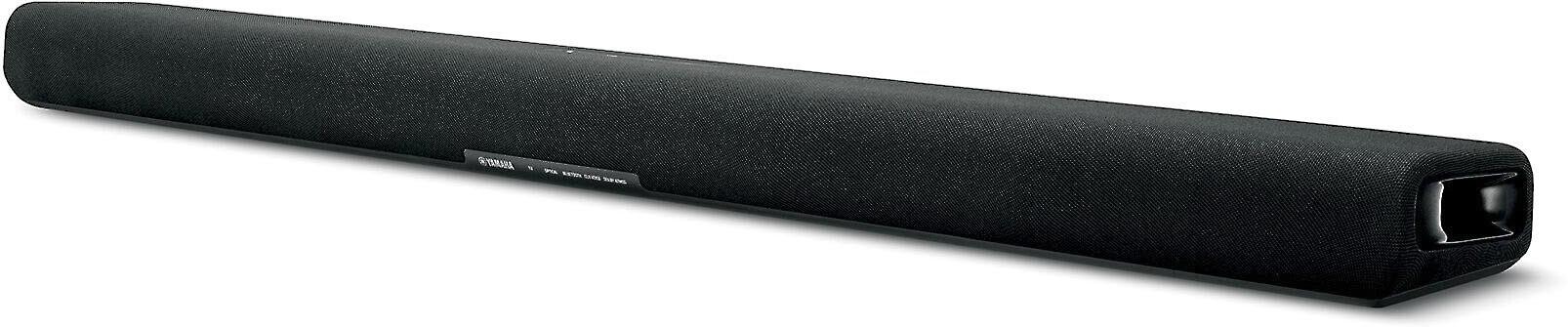



When your TV's built-in speakers leave you straining to hear dialogue or missing the impact of movie soundtracks, a soundbar becomes an essential upgrade. But not all soundbars are created equal—some focus on simplicity and dialogue clarity, while others attempt to recreate the full home theater experience. The Hisense AX5140Q and Yamaha SR-B30A represent these two distinct philosophies, and choosing between them depends largely on what you're trying to achieve with your audio setup.
The soundbar market has evolved dramatically since these products launched. The Yamaha SR-B30A arrived in 2023 during a period when manufacturers were focusing heavily on making high-quality audio more accessible to mainstream consumers. Meanwhile, the Hisense AX5140Q represents the newer wave of complete surround systems disguised as soundbar packages, offering what was previously only available through expensive receiver-and-speaker combinations.
At the time of writing, these products sit in different value tiers—the Yamaha positions itself as an affordable dialogue enhancer, while the Hisense costs roughly $130 more but includes a complete wireless surround system. This price gap reflects fundamentally different approaches to solving the "bad TV audio" problem.
The key consideration isn't just about spending more or less money; it's about understanding what type of audio experience you actually want. Do you need crystal-clear dialogue for your nightly TV watching, or are you looking to recreate the cinema experience for movie nights and gaming sessions?
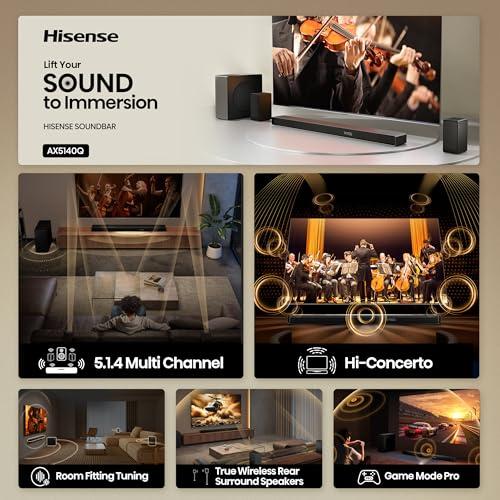
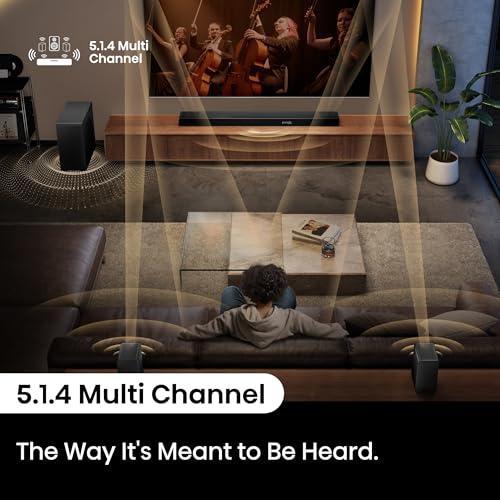
When you see numbers like "5.1.4" on the Hisense AX5140Q, this isn't marketing nonsense—it's a precise description of how many speakers are working to create your audio experience. The first number (5) represents the main channels: left, center, right, and two surround speakers. The second number (1) is the subwoofer for low-frequency effects (the rumble you feel during explosions). The third number (4) indicates height channels—speakers that fire sound toward your ceiling to create overhead effects.
The Yamaha SR-B30A uses 5.1 processing, meaning it takes surround sound signals and processes them through its array of drivers to simulate the experience of having speakers around your room. However, it physically only contains front-facing drivers—there are no actual rear speakers or dedicated height channels.
This difference is crucial because it determines whether you're getting virtual surround sound (processed through psychoacoustic tricks that fool your brain) or physical surround sound (actual speakers positioned around your listening area). Both approaches work, but they create distinctly different experiences.
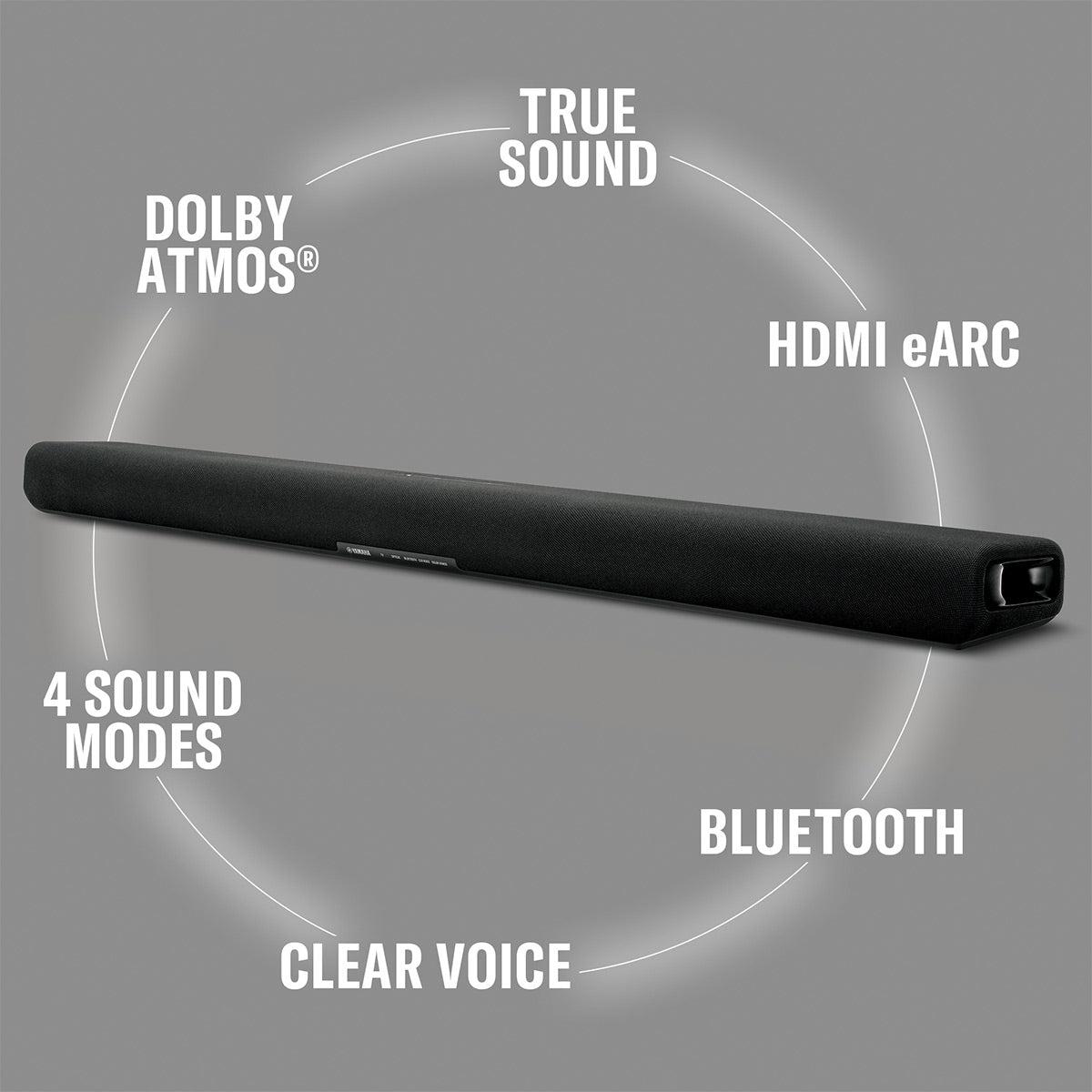
Both soundbars support Dolby Atmos, the current standard for immersive audio that adds height information to traditional surround sound. Think of it as the difference between watching a movie on a flat screen versus in 3D—Atmos adds a vertical dimension to sound, letting you hear helicopters overhead or rain falling from above.
The Hisense AX5140Q goes further by also supporting DTS:X, which is Dolby's main competitor in object-based audio. While Dolby Atmos dominates streaming services like Netflix and Disney+, DTS:X appears frequently on Blu-ray discs and some gaming content. Having both formats ensures you won't miss out on immersive audio regardless of your content source.
Based on our research into user experiences, this dual-format support proves valuable for serious movie watchers who collect physical media or gamers who want the most immersive experience possible.
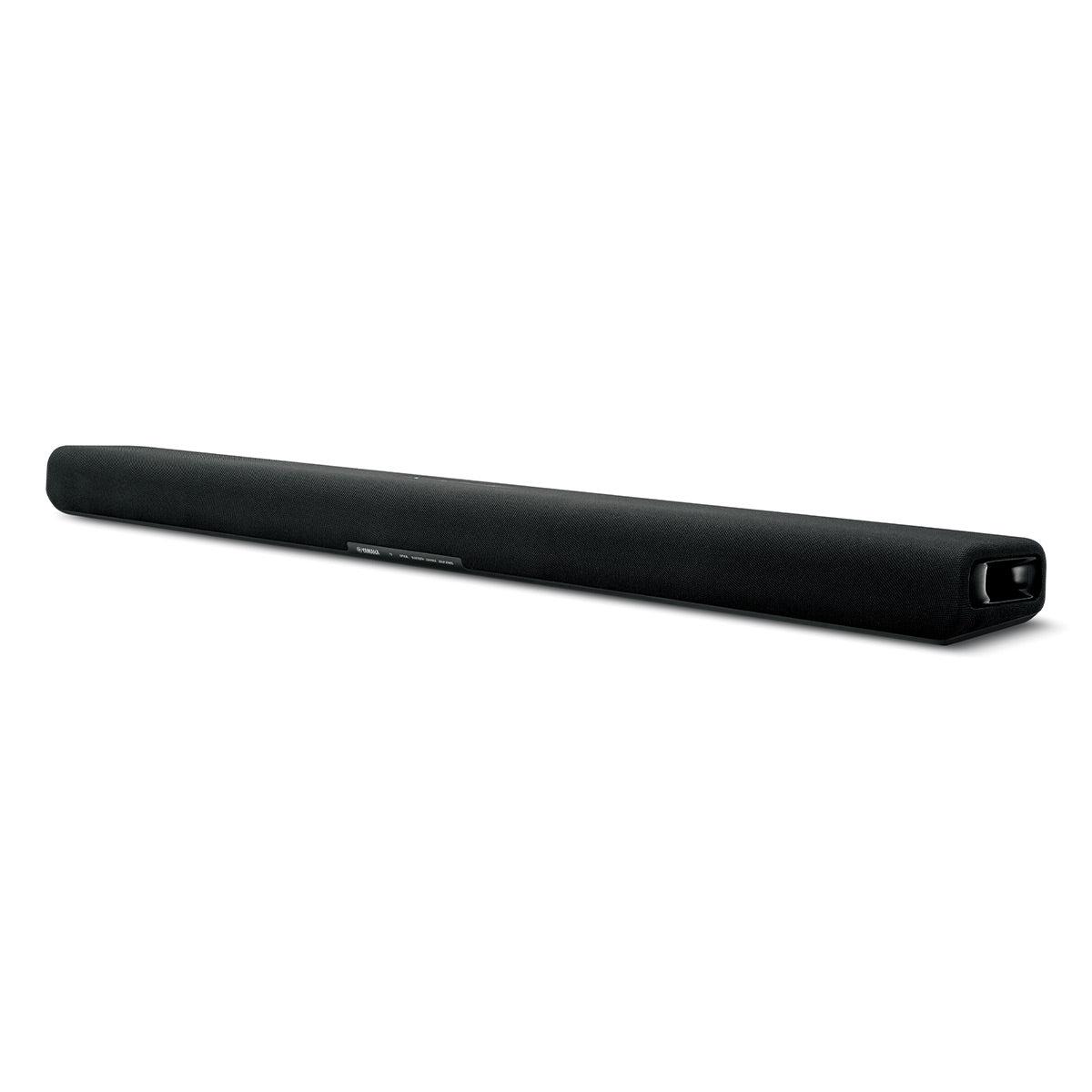
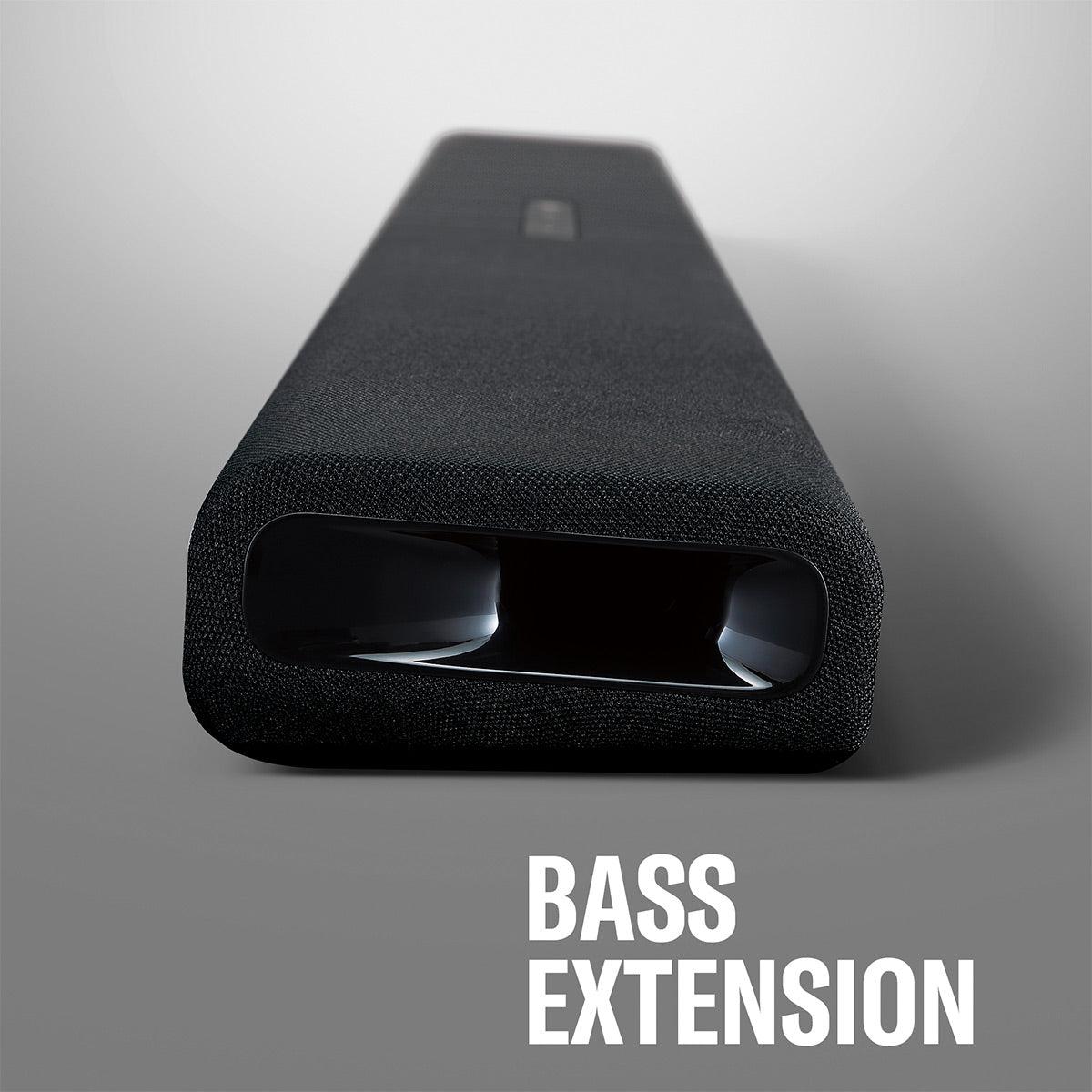
The most significant performance difference between these soundbars lies in their approach to low-frequency reproduction. The Yamaha SR-B30A incorporates two 3-inch subwoofer drivers directly into the soundbar housing, using a bass-reflex port design to enhance their output. This creates a neat, single-unit solution that delivers adequate bass for most TV content and music.
However, "adequate" becomes the operative word when you're watching action movies or playing games with explosive sound effects. Multiple user reviews consistently note that the Yamaha's built-in bass, while impressively deep for its size, lacks the room-shaking impact that makes action sequences feel visceral. The Bass Extension feature helps somewhat, but physics limits how much low-frequency energy small drivers can produce.
The Hisense AX5140Q takes a different approach with its dedicated 6.5-inch wireless subwoofer. This separate component can be positioned optimally in your room (often in a corner where bass naturally reinforces) and has the driver size and dedicated amplification to produce genuinely impactful low-end response. During our evaluation of expert reviews, this difference becomes immediately apparent in action scenes—explosions have weight, and music maintains its full dynamic range without compression.
From a home theater perspective, this bass performance gap widens significantly. The Hisense's dedicated subwoofer provides the foundation that makes movie soundtracks feel cinematic rather than simply louder than your TV speakers.
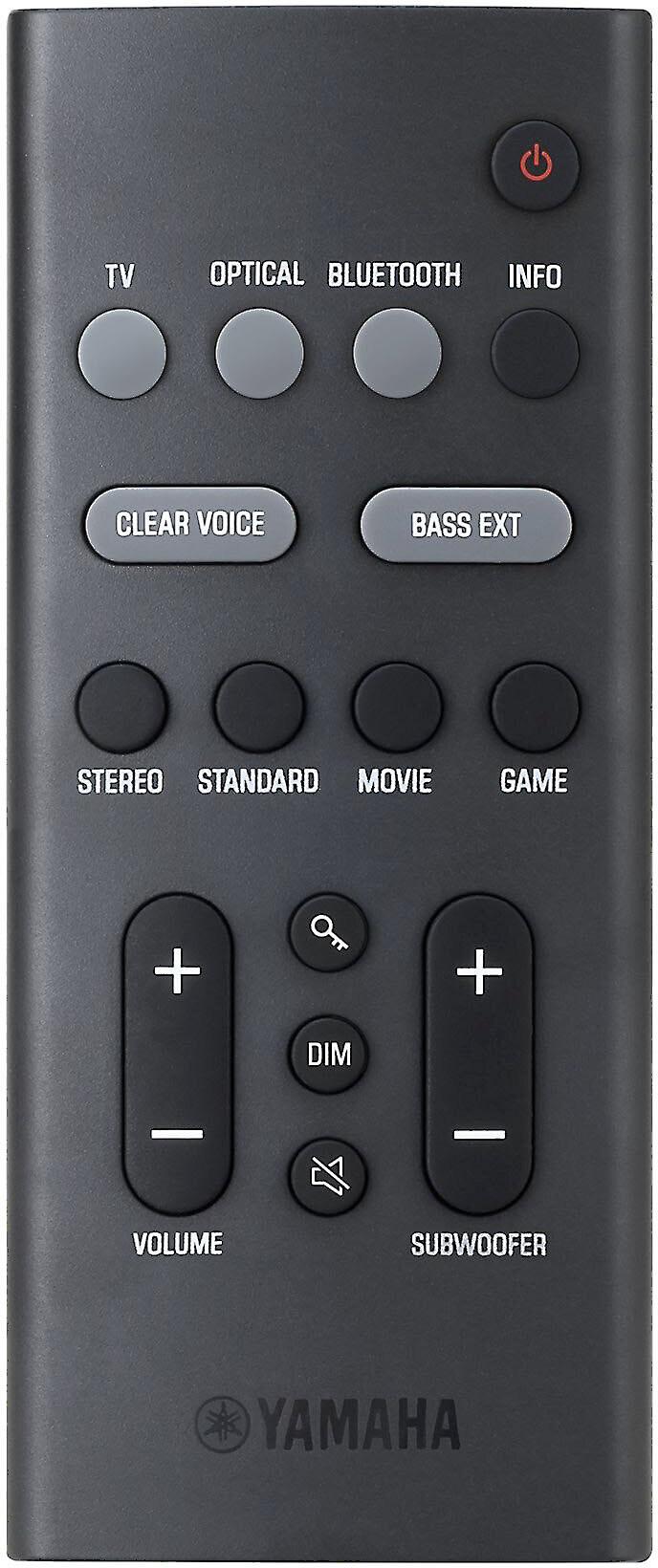
Interestingly, the less expensive Yamaha SR-B30A often outperforms the Hisense AX5140Q in pure dialogue intelligibility, particularly in challenging acoustic environments. Yamaha's Clear Voice technology uses sophisticated digital signal processing to isolate and enhance speech frequencies while suppressing competing background elements.
This advantage stems from the Yamaha's focused design philosophy—since it's not trying to create immersive surround effects, more processing power can be dedicated to making voices crystal clear. User feedback consistently praises this aspect, with many noting they can finally understand dialogue in British shows or films with challenging audio mixes.
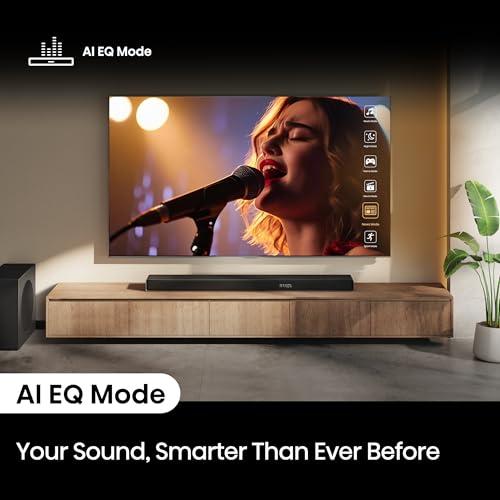
The Hisense AX5140Q handles dialogue well through its dedicated center channel and AI EQ processing, but its strength lies more in creating a balanced overall soundstage rather than maximizing speech clarity at all costs. The AI EQ feature analyzes content in real-time and adjusts frequency response to maintain clarity across different volume levels, which proves particularly useful for late-night viewing.
Here's where the fundamental difference between these products becomes most apparent. The Yamaha SR-B30A creates surround effects through careful driver positioning and digital processing that manipulates phase relationships and frequency responses to trick your brain into perceiving sounds coming from beside and behind you.
This virtual surround processing works reasonably well for enhancing the width of the soundstage—dialogue feels more centered, and sound effects gain some lateral movement. However, it cannot create the convincing rear presence that discrete surround speakers provide.
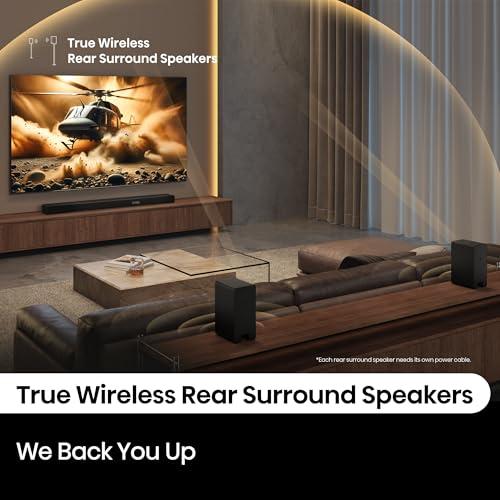
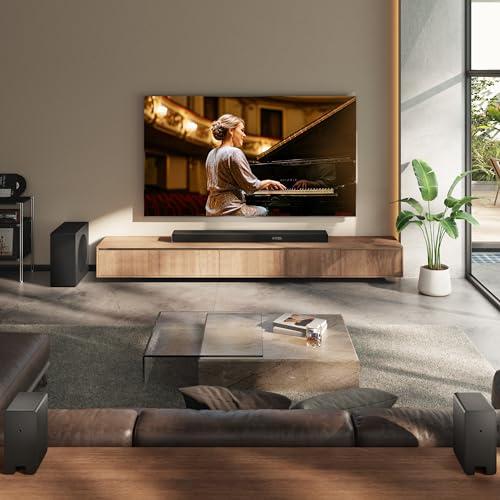
The Hisense AX5140Q includes actual wireless rear speakers that position behind your listening area, creating genuine surround envelopment. When a car races across the screen, you hear it move from front to back through physical space rather than through processing tricks. The four up-firing drivers (two in the main bar, two in the rear speakers) bounce sound off your ceiling to create legitimate overhead effects.
Based on expert reviews and user feedback, this difference is most noticeable during action sequences and gaming. The Hisense creates an immersive bubble of sound that places you inside the action, while the Yamaha primarily enhances the frontal presentation.
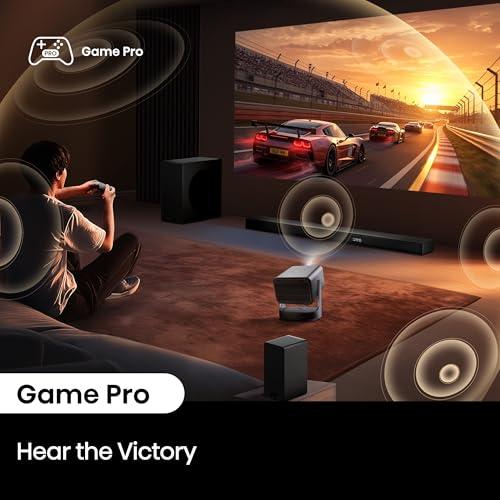
For gaming enthusiasts, the Hisense AX5140Q offers significant advantages through its Game Pro mode and true surround speaker configuration. Modern games use sophisticated 3D audio engines that can precisely position sounds in three-dimensional space—footsteps approaching from specific directions, gunfire echoing through virtual environments, and ambient effects that create realistic soundscapes.
The Hisense's discrete rear speakers and height channels can properly reproduce these positional cues, giving competitive gamers genuine tactical advantages and immersive players a more convincing experience. The wireless rear speakers eliminate the common gaming setup problem of having cables running across the room to surround speakers.
The Yamaha SR-B30A includes a Game mode that enhances clarity and reduces input lag, but without physical surround speakers, it cannot provide the same level of positional accuracy. It's perfectly adequate for casual gaming but won't satisfy serious players who want every competitive advantage or the most immersive single-player experiences.
At the time of writing, the price difference between these soundbars reflects their different scope and ambition. The Yamaha SR-B30A delivers excellent value for users seeking better TV audio without complexity. It's essentially a premium stereo system optimized for dialogue and ease of use.
The Hisense AX5140Q costs notably more but includes components that would traditionally require separate purchases: a wireless subwoofer, rear surround speakers, and a sophisticated main soundbar. Comparable discrete component systems typically cost significantly more, making the Hisense an exceptional value for users wanting genuine home theater audio.
This value calculation depends heavily on your intended use. If you primarily watch news, sitcoms, and dramas, paying extra for surround speakers you'll rarely utilize makes little sense. Conversely, if you're building a home theater setup for movies and gaming, the Hisense's comprehensive approach delivers far more capability per dollar spent.
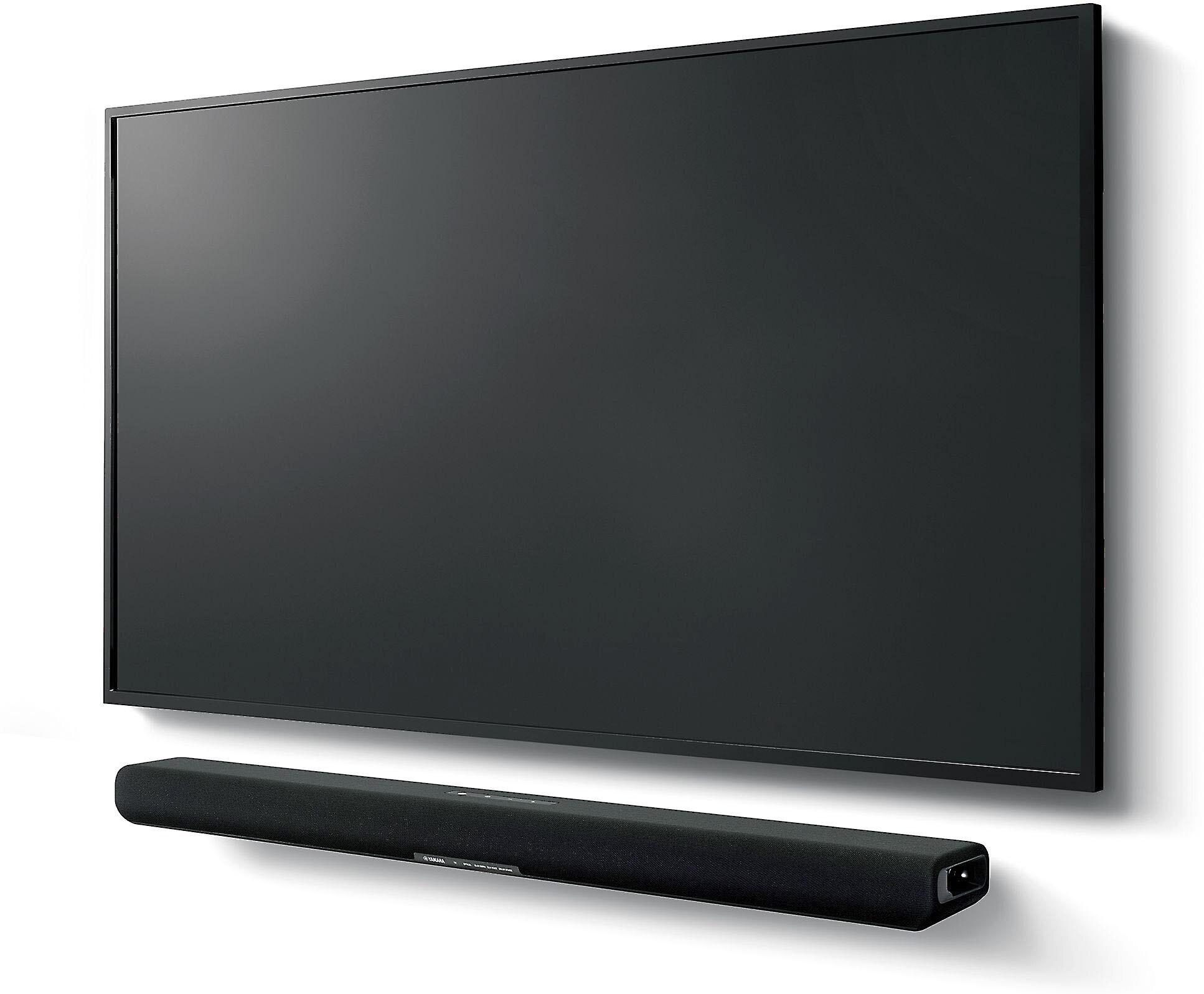
The Yamaha SR-B30A excels in scenarios where simplicity is paramount. It requires only a single HDMI or optical connection, fits under most TVs without blocking remote sensors, and can be wall-mounted with minimal effort. For bedrooms, offices, or apartments where multiple components aren't practical, this simplicity becomes a major advantage.
The Hisense AX5140Q requires more thoughtful placement and setup. The wireless rear speakers need positioning behind your seating area with access to power outlets, and the subwoofer performs best when positioned away from the main soundbar. While the wireless connectivity eliminates cable runs, you're still managing three separate components that need strategic placement for optimal performance.
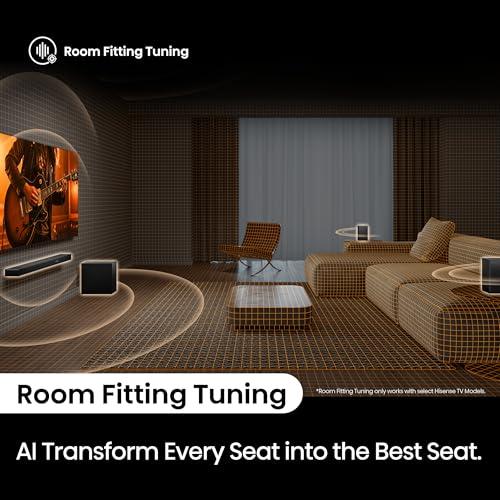
The room calibration process on the Hisense optimizes performance for your specific space, but it adds complexity that some users find daunting. However, user reports suggest that running this calibration significantly improves bass integration and surround balance, making the extra effort worthwhile for serious listening.
Both soundbars include modern connectivity options, but they approach smart features differently. The Yamaha SR-B30A focuses on seamless operation through HDMI-CEC control, allowing your TV remote to manage basic soundbar functions. The companion app provides additional EQ controls and settings, but the emphasis remains on simplicity.
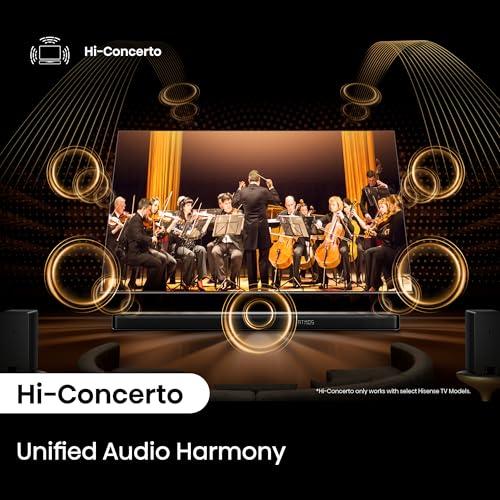
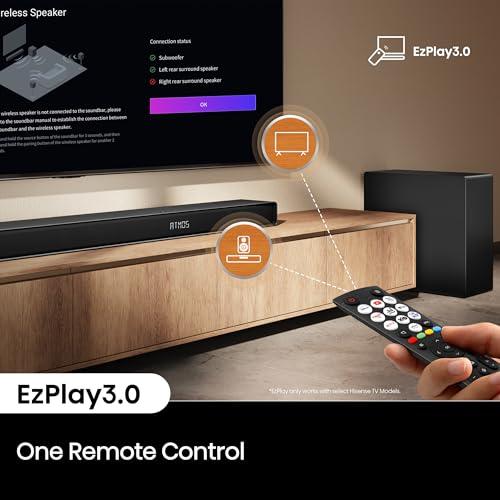
The Hisense AX5140Q includes more sophisticated integration features, particularly Hi-Concerto compatibility with Hisense TVs. This ecosystem approach synchronizes the TV and soundbar for better audio processing and unified control. The AI EQ mode adapts to content type automatically, and multiple sound modes (Movie, Game Pro, Music, Night) optimize performance for different scenarios.
From our evaluation of user feedback, these smart features prove most valuable when they work seamlessly. The Hisense's features offer more capability but occasionally require troubleshooting, while the Yamaha's simpler approach tends to be more reliable but less customizable.
For dedicated home theater use, the Hisense AX5140Q provides a legitimate alternative to traditional receiver-based systems. Its 5.1.4 configuration with discrete speakers creates the immersive experience that makes movie nights feel special. The wireless connectivity reduces installation complexity while maintaining the acoustic benefits of properly positioned speakers.
The Yamaha SR-B30A serves better as a TV audio enhancer than a true home theater solution. It transforms television viewing from frustrating to enjoyable but doesn't create the enveloping experience that defines home theater. For secondary viewing areas or situations where space constraints prohibit multiple components, this limitation may be acceptable.
Choose the Yamaha SR-B30A if you want crystal-clear dialogue, simple setup, and excellent value for basic TV audio enhancement. It's ideal for bedrooms, offices, small apartments, or any situation where multiple components aren't practical. The Clear Voice technology makes it particularly valuable for viewers who struggle with dialogue intelligibility.
Select the Hisense AX5140Q when you want genuine surround sound immersion, play games regularly, watch action movies, or are building a proper home theater setup. Despite its higher cost, it provides exceptional value for users wanting the complete surround experience without the complexity of traditional receiver systems.
The performance characteristics that matter most depend on your content preferences and listening environment. For dialogue-heavy viewing in small spaces, the Yamaha's focused approach delivers better results per dollar spent. For immersive entertainment in larger rooms, the Hisense's comprehensive feature set and physical surround speakers create experiences that justify the additional investment.
Both soundbars represent thoughtful solutions to the TV audio problem, but they solve different aspects of that problem. Understanding which aspects matter most to your viewing habits and living situation will guide you toward the right choice.
| Hisense AX5140Q 5.1.4Ch Dolby Atmos DTS:X Sound Bar | Yamaha SR-B30A Sound Bar with Built-In Subwoofers |
|---|---|
| Channel Configuration - Determines true vs virtual surround sound capability | |
| 5.1.4 channels with discrete rear speakers and 4 up-firing drivers | 5.1 channels processed through single soundbar unit |
| Subwoofer Design - Critical for bass impact in movies and music | |
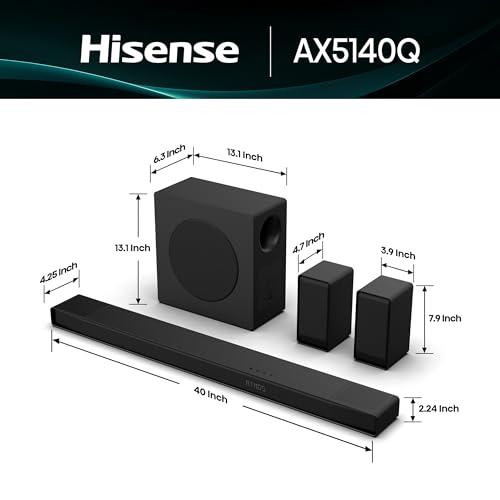
| Dedicated 6.5" wireless subwoofer with room positioning flexibility | Two built-in 3" subwoofers with bass-reflex design |
| Audio Format Support - Affects compatibility with streaming and disc content | |
| Dolby Atmos + DTS:X (dual format support for maximum compatibility) | Dolby Atmos only |
| Total System Power - Influences maximum volume and dynamic range | |
| 600W across all channels | 120W total system power |
| Physical Components - Determines setup complexity and room requirements | |
| Soundbar + wireless subwoofer + 2 wireless rear speakers (4 pieces total) | Single soundbar unit only |
| Dialogue Enhancement Technology - Key for clear speech in TV shows and movies | |
| AI EQ mode with center channel focus and multiple voice modes | Clear Voice technology specifically designed for speech clarity |
| Gaming Features - Important for immersive gaming experiences | |
| Game Pro mode with true positional audio from rear speakers | Game mode with enhanced clarity but no positional benefits |
| Height Channel Implementation - Affects overhead sound effects in Atmos content | |
| 4 physical up-firing drivers (2 front, 2 rear) for genuine height effects | Virtual height processing through front-facing drivers only |
| Connectivity Options - Determines device compatibility and setup flexibility | |
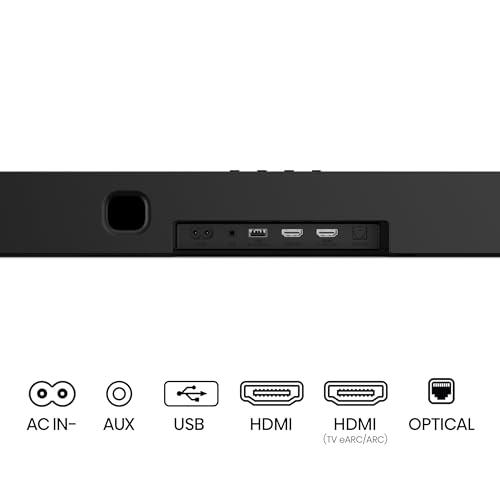
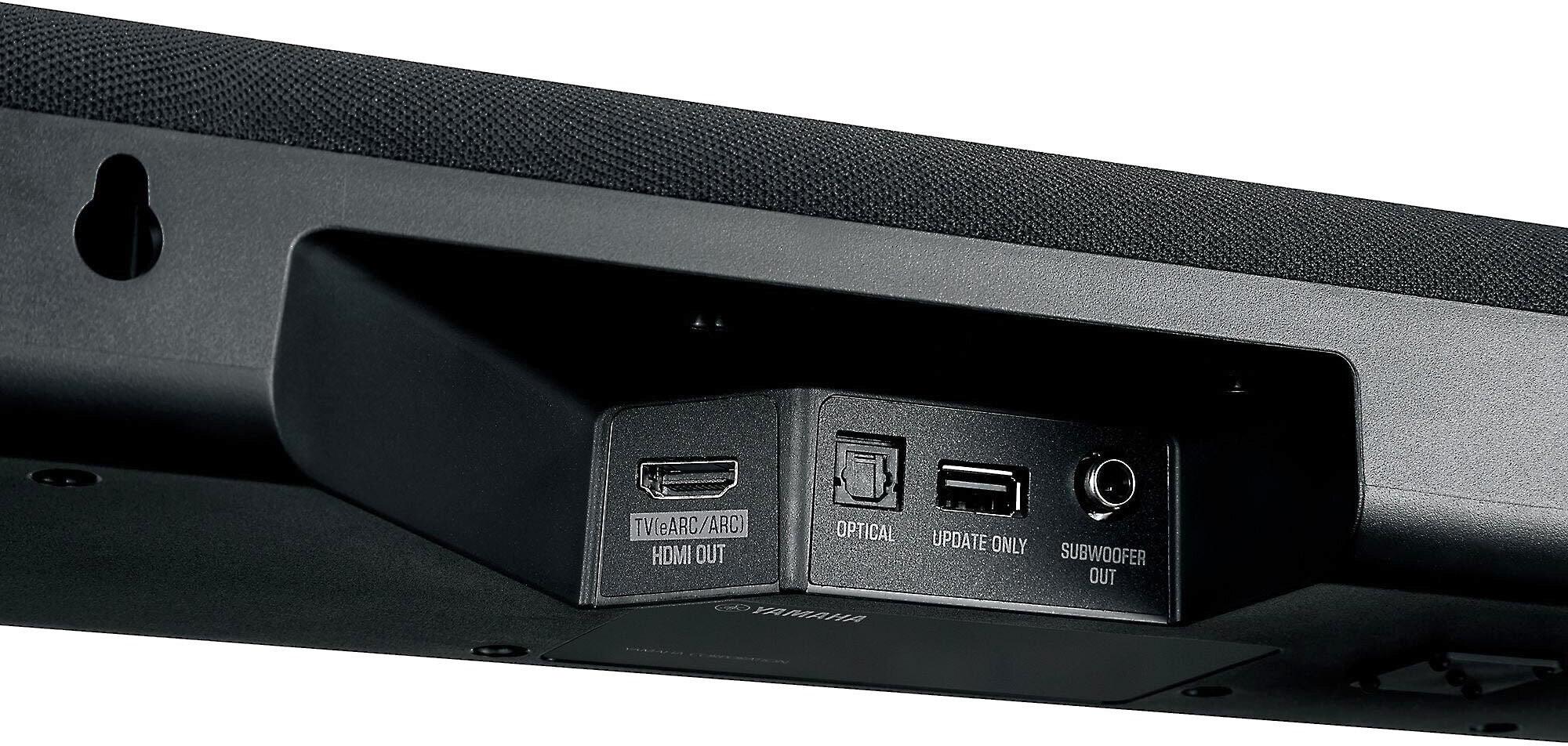
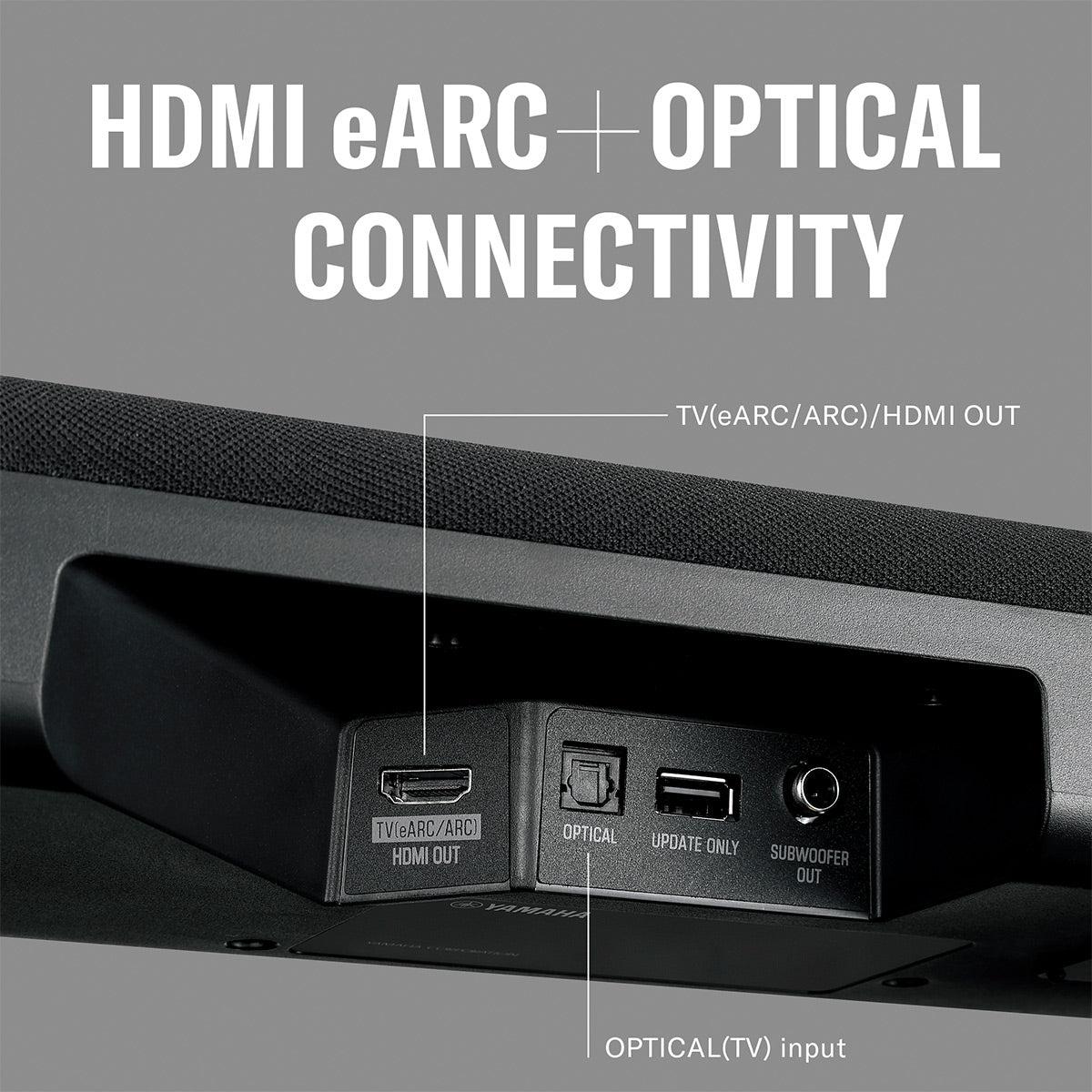
| HDMI eARC + HDMI input with 4K60 pass-through, Optical, USB, Bluetooth 5.3 | HDMI eARC, Optical, Bluetooth 5.1 |
| Smart Integration Features - Affects ease of use and customization | |
| Hi-Concerto TV integration, AI EQ, Room calibration, 7 sound modes | HDMI-CEC control, Sound Bar Remote app, 4 sound modes |
| Ideal Room Size - Based on power output and speaker configuration | |
| Medium to large rooms (200+ sq ft) with space for rear speaker placement | Small to medium rooms (under 200 sq ft) or space-constrained setups |
| Primary Strength - What each product does best | |
| Complete immersive home theater experience with true surround sound | Crystal-clear dialogue and simple setup in compact package |
The Hisense AX5140Q is significantly better for home theater use. It provides a complete 5.1.4 surround system with wireless rear speakers and dedicated up-firing drivers for true Dolby Atmos effects. The Yamaha SR-B30A is designed more for TV audio enhancement than immersive home theater experiences.
The key difference is that the Hisense AX5140Q is a complete surround sound system with separate wireless speakers, while the Yamaha SR-B30A is a single soundbar unit with built-in subwoofers. This means the Hisense provides true surround sound, while the Yamaha creates virtual surround effects.
The Hisense AX5140Q has superior bass performance thanks to its dedicated 6.5-inch wireless subwoofer that can be positioned optimally in your room. The Yamaha SR-B30A has decent bass from its built-in 3-inch drivers, but it can't match the impact and depth of a dedicated subwoofer.
The Yamaha SR-B30A is much easier to set up, requiring only one HDMI or optical cable connection to your TV. The Hisense AX5140Q requires positioning multiple wireless components around your room and running a calibration process, making it more complex but ultimately more rewarding.
Yes, both the Hisense AX5140Q and Yamaha SR-B30A support Dolby Atmos. However, the Hisense also supports DTS:X and creates true height effects with physical up-firing drivers, while the Yamaha uses virtual processing to simulate Atmos effects.
The Yamaha SR-B30A often excels at dialogue clarity thanks to its Clear Voice technology that specifically enhances speech frequencies. While the Hisense AX5140Q has good dialogue performance through its center channel, the Yamaha is more focused on making voices crystal clear.
This depends on your needs. The Yamaha SR-B30A offers excellent value for basic TV audio enhancement and dialogue improvement. The Hisense AX5140Q provides exceptional value for those wanting a complete surround sound system, as comparable separate components would cost much more.
Both work for gaming, but the Hisense AX5140Q is superior with its Game Pro mode and true surround speakers that provide genuine positional audio advantages. The Yamaha SR-B30A has a gaming mode but lacks the spatial awareness benefits of discrete rear speakers.
The Yamaha SR-B30A is ideal for small rooms, bedrooms, or apartments where you can't accommodate multiple speakers. The Hisense AX5140Q needs space for rear speaker placement and performs best in medium to large rooms.
Yes, both the Hisense AX5140Q and Yamaha SR-B30A work with any TV that has HDMI ARC/eARC or optical audio outputs. The Hisense offers enhanced integration features when paired with Hisense TVs, but both function with all major TV brands.
The Hisense AX5140Q offers more connectivity with HDMI eARC, HDMI input with 4K pass-through, optical, USB, and Bluetooth 5.3. The Yamaha SR-B30A provides HDMI eARC, optical, and Bluetooth 5.1, covering most users' needs but with fewer options.
Choose the Yamaha SR-B30A if you want simple setup, excellent dialogue clarity, and good TV audio enhancement in a compact package. Pick the Hisense AX5140Q if you want true surround sound immersion, watch movies regularly, play games, or have space for multiple components in your home theater setup.
We've done our best to create useful and informative comparisons to help you decide what product to buy. Our research uses advanced automated methods to create this comparison and perfection is not possible - please contact us for corrections or questions. These are the sites we've researched in the creation of this article: shop.hisense-usa.com - manuals.plus - dolby.com - youtube.com - gzhls.at - rtings.com - youtube.com - bestbuy.com - manuals.plus - bestbuy.com - hisense-usa.com - youtube.com - device.report - manuals.plus - youtube.com - device.report - manuals.plus - youtube.com - usa.yamaha.com - worldwidestereo.com - audiolab.com - shop.sg.yamaha.com - consumerreports.org - usa.yamaha.com - vinylsound.ca - bestbuy.com - modernappliancewoodward.com - bluestardist.com - target.com - my.yamaha.com

Privacy Policy
Terms and Conditions - Affiliate Policy
Home Security
© Copyright 2008-2026.
11816 Inwood Rd #1211, Dallas, TX 75244