



When your TV's built-in speakers sound like they're coming from a tin can, it's time to consider a soundbar upgrade. But with options ranging from basic audio improvements to full home theater replacements, the decision isn't always straightforward. Today we're comparing two very different approaches to solving your TV audio problems: the Hisense AX5140Q, a complete 5.1.4 surround system, and the Amazon Fire TV Soundbar Plus, a budget-friendly expandable option.
The soundbar market has evolved dramatically since these products launched in 2023 and 2024 respectively. What started as simple stereo bars designed to make dialogue clearer has grown into a sophisticated category that can rival traditional home theater setups. The key advancement has been the integration of wireless technology and object-based audio formats like Dolby Atmos—a system that places individual sounds in three-dimensional space rather than just sending them to specific speakers.
When shopping for a soundbar, you'll encounter several technical terms that significantly impact your experience. Channel configuration describes how many speakers handle different frequency ranges and directions. A 5.1.4 system means five main speakers (front left, center, right, and two surrounds), one subwoofer for bass, and four height speakers for overhead effects. eARC (enhanced Audio Return Channel) is a newer HDMI feature that sends high-quality audio from your TV to the soundbar, eliminating the need for multiple cables.
The most important consideration is whether you want true surround sound with physical speakers positioned around your room, or virtual surround that uses digital processing to simulate the effect. While virtual processing has improved significantly, it still can't match the precision of actual speakers placed behind and above you.
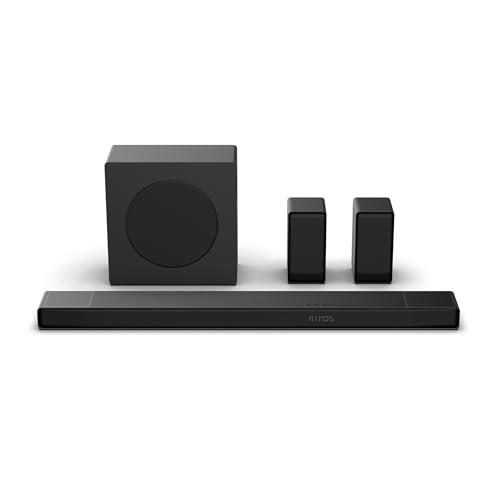
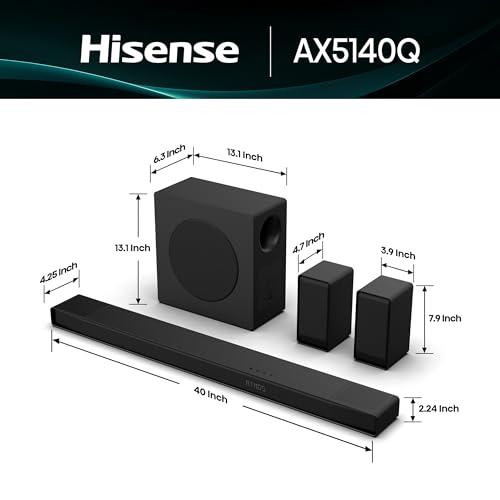
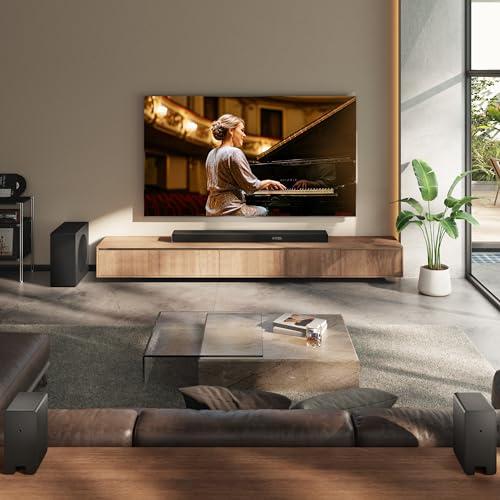
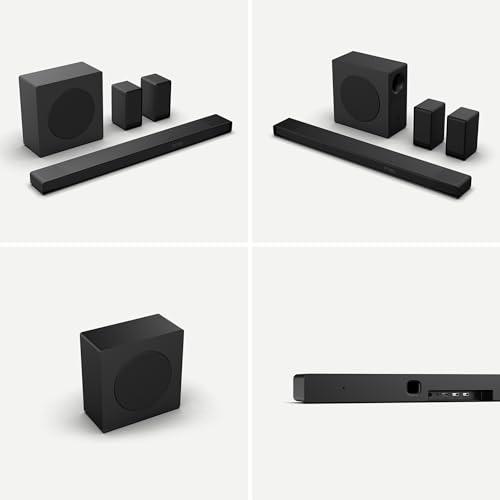
The Hisense AX5140Q represents what happens when a manufacturer decides to build a complete home theater system disguised as a soundbar package. Released in 2023, this system includes everything you need for true 5.1.4 surround sound right out of the box: a main soundbar, wireless subwoofer, and two wireless rear speakers that each contain upward-firing drivers for height effects.
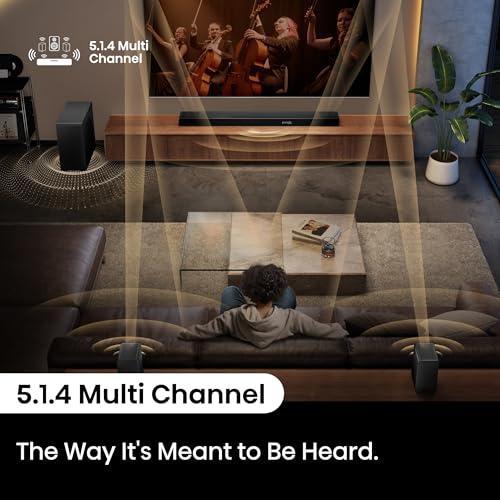
What sets the Hisense AX5140Q apart is its four dedicated up-firing speakers—two built into the main bar and two more in the rear speakers. These speakers fire sound toward your ceiling, which then reflects down to create the sensation of helicopters flying overhead or rain falling around you. This is true Dolby Atmos, not the virtual approximation many cheaper bars offer.
The difference is immediately noticeable when watching movies with Atmos soundtracks. In action scenes, you'll hear debris falling from above, aircraft moving from front to back overhead, and ambient sounds that truly surround you. Our research into user experiences consistently shows that people are surprised by how convincing these overhead effects can be, especially those upgrading from standard soundbars or TV speakers.
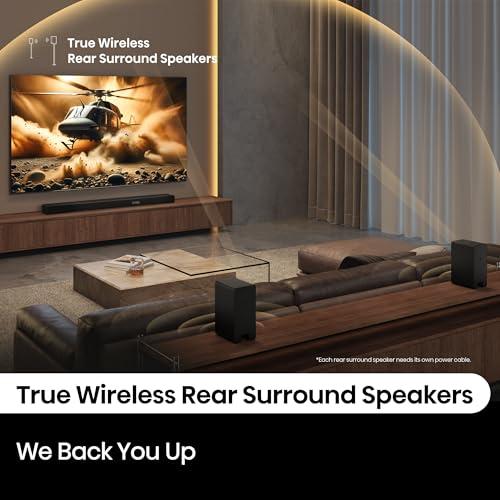
One of the most appealing aspects of the Hisense AX5140Q is its wireless architecture. The rear speakers and 6.5-inch subwoofer connect to the main bar without any audio cables—you just need to plug each component into power outlets. This eliminates the typical home theater headache of running speaker wires across your room or under carpets.
The wireless connection uses a proprietary protocol that maintains synchronization between all speakers without noticeable delay. Based on user feedback, the pairing process is remarkably simple—most components connect automatically when first powered on. However, you'll still need to consider speaker placement carefully. The rear speakers work best positioned behind or slightly to the side of your seating area, and the up-firing drivers need a relatively flat ceiling within 8-10 feet to reflect sound effectively.
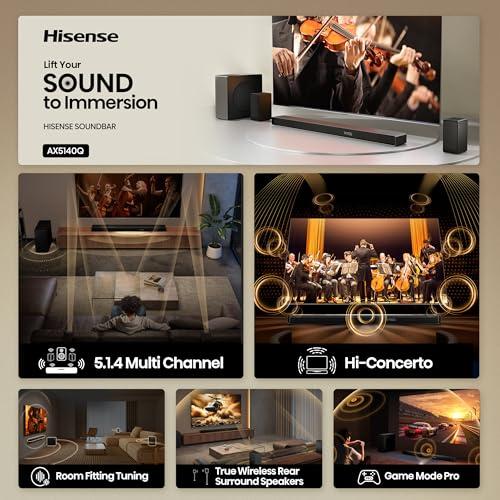
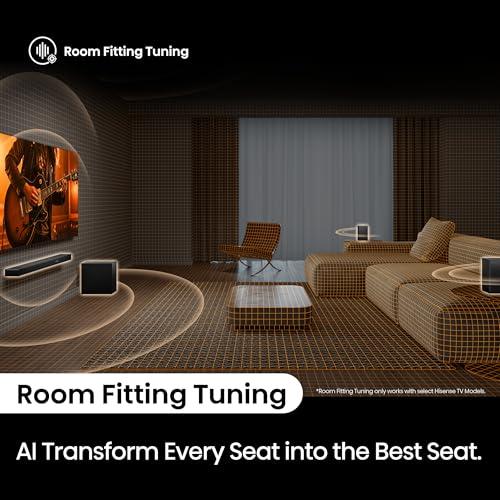
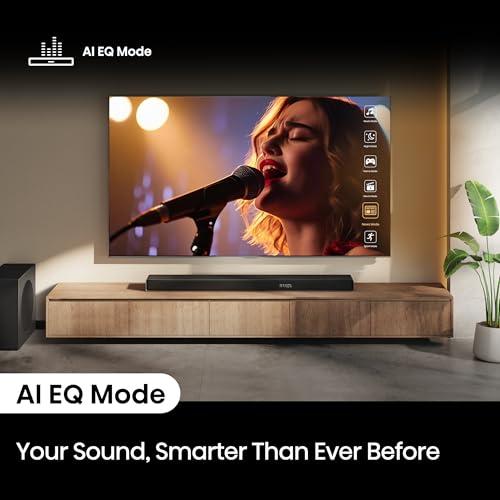
The Hisense AX5140Q includes two advanced features that help it adapt to your specific room: AI EQ Mode and Room Fitting Tuning. The AI EQ Mode continuously analyzes what you're watching and adjusts the sound signature accordingly—boosting dialogue during quiet scenes, managing dynamic range during action sequences, and optimizing frequency response for different content types.
Room Fitting Tuning goes a step further by using test tones to measure how sound bounces around your specific space, then adjusting the timing and levels of each speaker to compensate for your room's acoustics. This feature requires a compatible Hisense TV to work fully, but when available, it can significantly improve the coherence of the surround sound field.
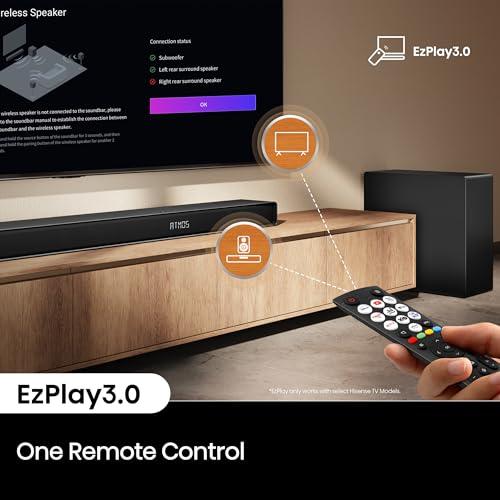
If you own a Hisense TV, the AX5140Q offers deeper integration through the Hi-Concerto platform. This system allows your TV and soundbar to work together more closely, sharing processing duties and enabling control through your TV's interface. You can adjust soundbar settings using your TV remote and see audio information displayed on screen.
However, our research reveals this integration can be inconsistent. While many users report seamless operation, some experience synchronization issues where the TV and soundbar audio become offset by several seconds, creating an echo effect. These problems often resolve with firmware updates or by switching to standard eARC mode, but they highlight the complexity of trying to perfectly coordinate two separate devices.
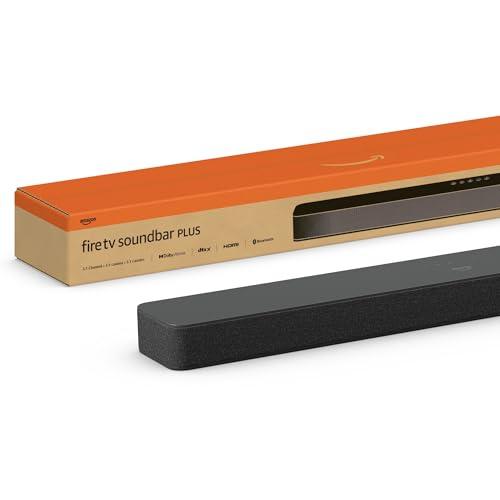
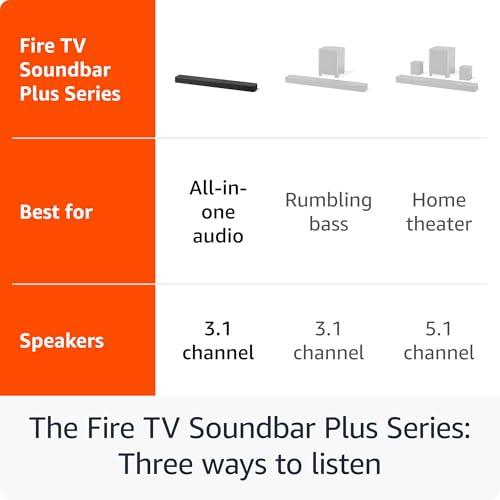
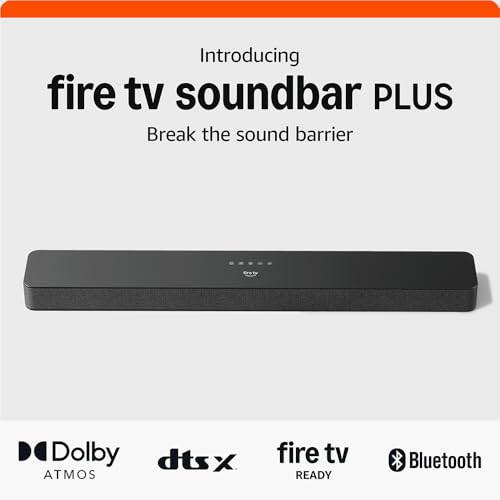
The Amazon Fire TV Soundbar Plus, released in 2024, takes a fundamentally different approach. Rather than overwhelming you with a complete surround system, it starts as a capable 3.1-channel soundbar that you can expand over time by purchasing additional components.
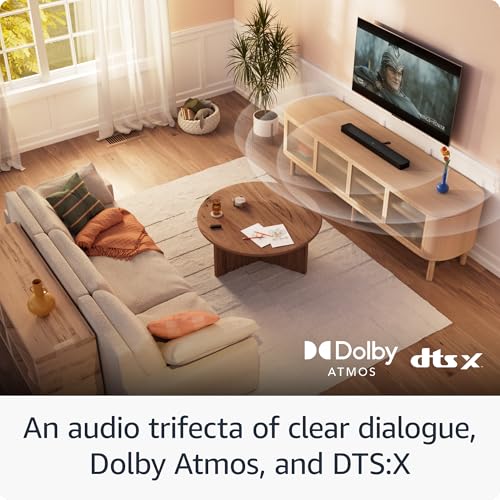
The most important thing to understand about the Amazon Fire TV Soundbar Plus is that while it supports Dolby Atmos, it does so only through virtual processing. With no up-firing speakers, it cannot create true overhead effects. Instead, it uses digital signal processing to simulate height by manipulating how sounds reach your ears from the forward-facing speakers.
Virtual Atmos has improved significantly in recent years, and the Fire TV Soundbar Plus does create a wider, more enveloping soundstage than basic stereo bars. However, you won't experience the convincing overhead effects that make Atmos content truly immersive. This is the fundamental trade-off of the budget approach—you get Atmos compatibility without Atmos performance.
The base configuration includes a built-in subwoofer integrated into the main bar. This design keeps costs down and eliminates the need for a separate component, but it comes with acoustic limitations. The built-in bass drivers simply cannot move as much air or reach as low in frequency as a dedicated subwoofer cabinet.
User feedback suggests the built-in bass is adequate for dialogue-heavy content like TV shows and news, but it struggles with movie soundtracks that demand deep, impactful low-frequency effects. During action scenes, the bass can sound strained or distorted, particularly at higher volumes. Amazon does offer an optional wireless subwoofer that addresses these limitations, but adding it brings the total system cost much closer to the Hisense AX5140Q while still lacking true height channels.
The Amazon Fire TV Soundbar Plus is designed around the idea that you can start simple and grow your system over time. The base 3.1 configuration provides immediate improvement over TV speakers, and you can later add a wireless subwoofer and rear speakers to create a 5.1 system.
This approach has both advantages and drawbacks. On the positive side, it allows you to spread the cost over time and lets you evaluate whether you actually want a full surround system before committing to all the components. However, the modular approach can result in a less cohesive system overall, as components purchased separately may not be perfectly tuned to work together.
Despite carrying the Fire TV name, the soundbar itself contains no streaming capabilities or Alexa voice control. The "Fire TV" aspect refers only to its ability to work seamlessly with Fire TV streaming devices for unified remote control and on-screen setup menus.
This limited integration has confused many buyers who expected built-in streaming features similar to Roku's Streambar. The Fire TV Soundbar Plus is purely an audio device that happens to integrate well with Amazon's streaming ecosystem, not a smart streaming soundbar in its own right.
Both soundbars significantly improve dialogue clarity compared to TV speakers, but they achieve this in different ways. The Hisense AX5140Q uses a dedicated center channel with specialized drivers optimized for vocal frequencies, combined with AI processing that can dynamically adjust the dialogue level based on the content and ambient noise.
The Amazon Fire TV Soundbar Plus also includes a center channel and dialogue enhancement features, but without the advanced processing capabilities. In our analysis of user experiences, both systems make speech more intelligible, but the Hisense maintains clarity even during complex action scenes where explosions and effects compete with dialogue.
The bass comparison reveals one of the biggest performance gaps between these systems. The Hisense AX5140Q's dedicated 6.5-inch wireless subwoofer can reproduce deep, controlled bass that adds weight to movie soundtracks without overwhelming other frequencies. The placement flexibility of a wireless sub also allows for optimal positioning to minimize room resonances.
The Amazon Fire TV Soundbar Plus's built-in bass drivers, while convenient, cannot match this performance. They provide adequate low-frequency support for casual viewing but lack the impact needed for convincing movie audio. The optional external subwoofer improves this significantly, but at additional cost.
This is where the fundamental difference between these approaches becomes most apparent. The Hisense AX5140Q creates a genuine surround sound field with discrete rear speakers that can reproduce sounds behind you with accurate positioning. Combined with the height channels, it creates what audio engineers call a "sphere of sound" around your listening position.
The Amazon Fire TV Soundbar Plus relies entirely on psychoacoustic processing to create the impression of surround sound. While modern virtual surround algorithms are sophisticated, they cannot overcome the physical limitation of having all speakers in front of you. The effect works best when sitting directly in front of the bar and degrades as you move off-axis.
Both systems handle volume changes reasonably well, but the Hisense AX5140Q has more headroom for loud playback without distortion. Its distributed speaker system means no single driver is handling too much of the frequency spectrum, reducing strain at high volumes.
The Amazon Fire TV Soundbar Plus can actually achieve higher peak volumes than its price suggests, but the sound becomes compressed and harsh when pushed hard. Its strength lies in moderate-volume listening where the virtual processing works most effectively.
The pricing landscape for these products, at the time of writing, creates an interesting value proposition. The Hisense AX5140Q costs roughly twice as much as the Amazon Fire TV Soundbar Plus base configuration, but includes everything needed for a complete surround system.
When you factor in the cost of expanding the Amazon system with optional components, the total price can approach or exceed the Hisense while still lacking true height channels. This makes the Amazon soundbar most compelling as a standalone 3.1 system for budget-conscious buyers who don't plan to expand.
The Hisense AX5140Q represents exceptional value in the complete surround system category. Comparable 5.1.4 systems from major brands typically cost significantly more, making the Hisense an attractive option for anyone wanting true Atmos performance without premium pricing.
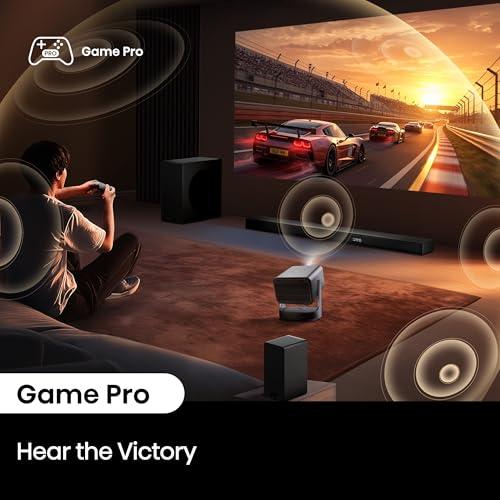
Both soundbars support gaming, but with different strengths. The Hisense AX5140Q includes a dedicated Game Pro mode that enhances positional audio cues—critical for competitive gaming where hearing enemy footsteps or gunfire direction provides tactical advantages. The true surround and height channels create much better spatial awareness than virtual processing.
The Amazon Fire TV Soundbar Plus works adequately for casual gaming but lacks specialized gaming modes or the positional accuracy that serious gamers appreciate. However, its lower latency and simpler setup might appeal to console gamers who prioritize convenience over competitive advantages.
For dedicated home theater spaces, the Hisense AX5140Q is clearly superior. Its true multichannel audio, room calibration capabilities, and comprehensive codec support make it suitable for serious movie watching. The wireless rear speakers eliminate the cable management headaches typical of traditional home theater setups while maintaining acoustic performance.
The Amazon Fire TV Soundbar Plus works better in casual living room environments where a single bar provides sufficient improvement without the complexity of multiple speakers. It's ideal for apartments or smaller spaces where rear speaker placement isn't practical.
Choose the Hisense AX5140Q if you:
Choose the Amazon Fire TV Soundbar Plus if you:
The choice between these soundbars ultimately comes down to your priorities and circumstances. The Hisense AX5140Q delivers genuinely impressive surround sound performance that rivals much more expensive systems, making it an excellent choice for anyone serious about improving their audio experience.
The Amazon Fire TV Soundbar Plus serves a different purpose—it's an affordable stepping stone that provides meaningful improvement over TV speakers without overwhelming complexity or cost. While it can't match the immersion of true surround sound, it accomplishes its goal of making dialogue clearer and adding some bass impact to your viewing experience.
Both products succeed in their intended roles, but the performance gap between virtual and true surround sound is significant enough that budget-conscious buyers might consider saving up for the Hisense system rather than settling for virtual processing. However, for users who primarily watch dialogue-heavy content or have space constraints that prevent proper surround speaker placement, the Amazon option provides genuine value and room to grow.
| Hisense AX5140Q 5.1.4Ch Dolby Atmos DTS:X Sound Bar | Amazon Fire TV Soundbar Plus |
|---|---|
| Channel Configuration - Determines surround sound authenticity and immersion quality | |
| True 5.1.4 with discrete wireless rear speakers and 4 up-firing drivers | 3.1 base (expandable to 5.1 with optional components) |
| Height Channel Implementation - Critical for authentic Dolby Atmos overhead effects | |
| Four physical up-firing speakers create genuine overhead sound placement | Virtual height processing only, no up-firing drivers |
| Complete System Inclusion - What you get out of the box affects total value | |
| Complete system: soundbar, wireless subwoofer, wireless rear speakers included | Base soundbar only; subwoofer and rear speakers sold separately |
| Subwoofer Configuration - Bass impact and room-filling capability | |
| Dedicated 6.5" wireless subwoofer with flexible placement options | Built-in subwoofer in main bar (optional external sub available) |
| Dolby Atmos Support - Object-based audio for movies and gaming | |
| True Dolby Atmos with physical height channels and DTS:X support | Virtual Dolby Atmos processing only, limited overhead effects |
| Advanced Audio Processing - Room optimization and intelligent sound adjustment | |
| AI EQ Mode, Room Fitting Tuning, Hi-Concerto TV integration | Basic sound modes, DTS TrueVolume, Fire TV integration |
| Wireless Architecture - Setup complexity and cable management | |
| All speakers wireless except power; auto-pairing between components | Single bar setup initially; wireless expansion components available |
| Gaming Features - Competitive gaming and immersive entertainment | |
| Dedicated Game Pro mode with enhanced positional audio | Standard sound modes without gaming-specific optimization |
| Sound Modes - Content optimization for different viewing scenarios | |
| 7 modes: Movie, Music, News, Night, Sport, Game Pro, AI | 4 modes: Movie, Music, Sport, Night |
| HDMI Connectivity - Modern TV integration and passthrough capability | |
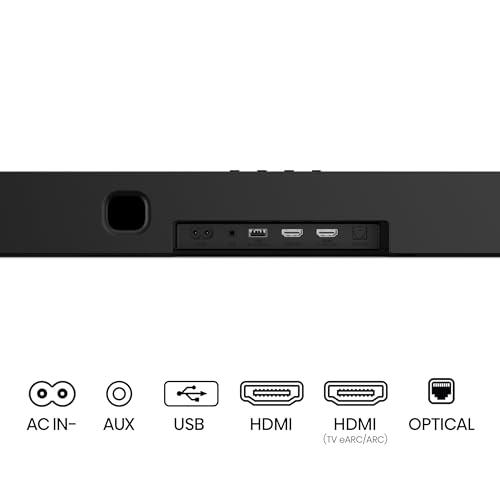
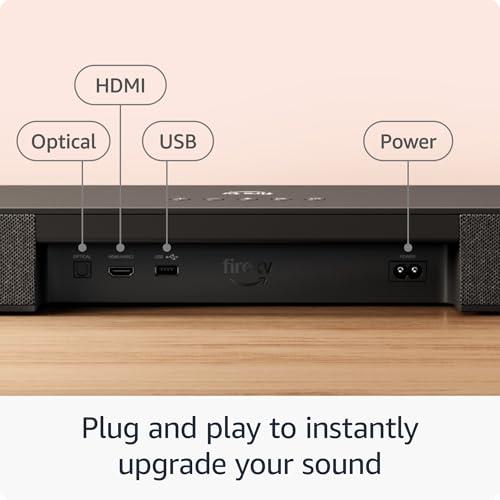
| HDMI eARC, HDMI input with 4K 60Hz passthrough, optical, USB | HDMI eARC, optical, USB (no HDMI input) |
| Smart Features - Voice control and streaming integration | |
| No built-in streaming; Hi-Concerto for Hisense TV optimization | No built-in streaming or Alexa; Fire TV device integration only |
| Physical Dimensions - TV compatibility and placement considerations | |
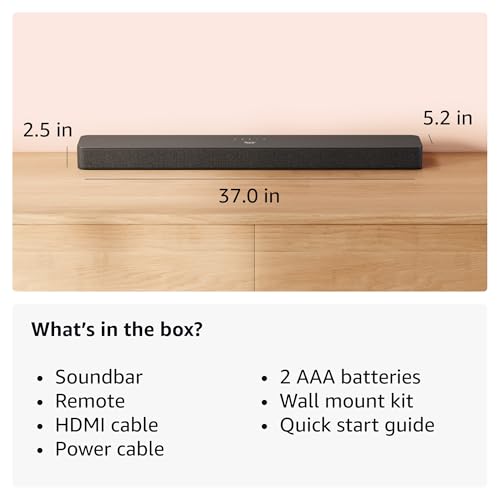
| 40" soundbar suitable for 55"+ TVs; multiple wireless components | 37" soundbar suitable for 50-65" TVs; single bar initially |
| Maximum Power Output - Volume capability and dynamic range handling | |
| 600W total system power with headroom for loud, clean playback | Lower total power; adequate volume but compression at high levels |
The Hisense AX5140Q is significantly better for movies due to its true 5.1.4 surround sound with physical rear speakers and four up-firing drivers that create genuine overhead effects. For TV shows focused on dialogue, both perform well, but the Amazon Fire TV Soundbar Plus offers adequate performance at a lower cost if you primarily watch streaming content and don't need immersive surround sound.
Yes, both the Hisense AX5140Q and Amazon Fire TV Soundbar Plus support Dolby Atmos, but in very different ways. The Hisense delivers true Dolby Atmos with four physical up-firing speakers that create authentic overhead effects, while the Amazon soundbar only offers virtual Atmos processing without the height dimension that makes Atmos content truly immersive.
The Hisense AX5140Q provides superior bass performance with its dedicated 6.5-inch wireless subwoofer that delivers deep, room-filling low frequencies. The Amazon Fire TV Soundbar Plus has a built-in subwoofer that's adequate for dialogue-heavy content but lacks the impact needed for movies and music. Amazon does offer an optional external subwoofer for improved bass performance.
The Hisense AX5140Q includes everything for a complete surround system: the main soundbar, wireless subwoofer, two wireless rear speakers, and all necessary cables. The Amazon Fire TV Soundbar Plus includes only the main 3.1 soundbar - the subwoofer and rear speakers are sold separately as optional upgrades.
The Amazon Fire TV Soundbar Plus is easier to set up initially since it's just one component that connects to your TV. However, the Hisense AX5140Q features automatic wireless pairing between all components, so while you're positioning more speakers, the actual connection process is surprisingly simple. Both systems support HDMI eARC for streamlined TV integration.
No, neither the Hisense AX5140Q nor Amazon Fire TV Soundbar Plus connects wirelessly to your TV. Both require a wired connection (HDMI eARC or optical cable) to receive audio from your TV. However, the Hisense system features wireless connections between the main bar, subwoofer, and rear speakers, eliminating speaker wire runs around your room.
The Hisense AX5140Q is superior for gaming with its dedicated Game Pro mode that enhances positional audio cues and true surround sound that helps with directional awareness in competitive games. The Amazon Fire TV Soundbar Plus works adequately for casual gaming but lacks specialized gaming features and the precise sound positioning that serious gamers appreciate.
Yes, both the Hisense AX5140Q and Amazon Fire TV Soundbar Plus work with any TV that has HDMI ARC/eARC or optical audio output. However, the Hisense offers enhanced integration features like Hi-Concerto when paired with Hisense TVs, and the Amazon soundbar provides simplified control when used with Fire TV streaming devices.
The Hisense AX5140Q offers better value for anyone wanting true surround sound, as it includes all components for a complete 5.1.4 system that would cost significantly more from other brands. The Amazon Fire TV Soundbar Plus provides better value for budget-conscious buyers who primarily want improved dialogue clarity and don't need full surround sound capabilities.
The Amazon Fire TV Soundbar Plus is designed for modular expansion - you can start with the base 3.1 system and add optional wireless subwoofer and rear speakers later. The Hisense AX5140Q comes as a complete system with no expansion options, but includes everything you need for true 5.1.4 surround sound from day one.
For small rooms or apartments where rear speaker placement isn't practical, the Amazon Fire TV Soundbar Plus single-bar design works well and provides meaningful improvement over TV speakers. For medium to large rooms where you want immersive surround sound, the Hisense AX5140Q excels with its wireless rear speakers and powerful subwoofer that can fill larger spaces effectively.
The main difference is approach: the Hisense AX5140Q is a complete true surround sound system with physical rear speakers and height channels that create authentic 3D audio, while the Amazon Fire TV Soundbar Plus is a budget-friendly single bar that uses virtual processing to simulate surround effects. Choose the Hisense for genuine home theater experience or the Amazon for basic audio improvement at lower cost.
We've done our best to create useful and informative comparisons to help you decide what product to buy. Our research uses advanced automated methods to create this comparison and perfection is not possible - please contact us for corrections or questions. These are the sites we've researched in the creation of this article: shop.hisense-usa.com - manuals.plus - dolby.com - youtube.com - gzhls.at - rtings.com - youtube.com - bestbuy.com - manuals.plus - bestbuy.com - hisense-usa.com - youtube.com - device.report - manuals.plus - youtube.com - device.report - manuals.plus - youtube.com - rtings.com - wirelessplace.com - techradar.com - cordbusters.co.uk - whathifi.com - developer.amazon.com - t3.com - dolby.com - youtube.com - youtube.com - youtube.com - dugoutnorthbrook.com - dolby.com - aboutamazon.com - youtube.com - developer.amazon.com

Privacy Policy
Terms and Conditions - Affiliate Policy
Home Security
© Copyright 2008-2026.
11816 Inwood Rd #1211, Dallas, TX 75244