







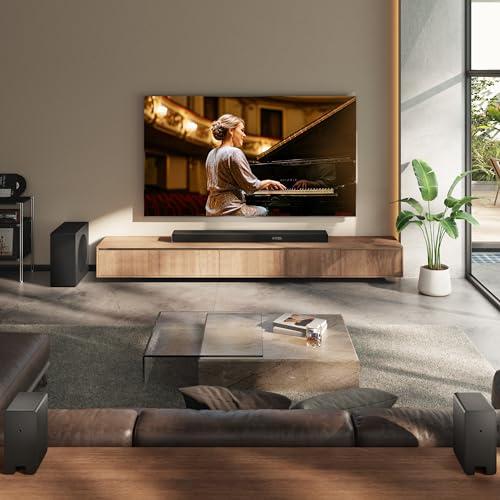














The home theater landscape has evolved dramatically over the past few years, with soundbars becoming increasingly sophisticated alternatives to traditional surround sound systems. Two compelling approaches have emerged: budget-focused multi-component systems that deliver genuine surround sound through discrete speakers, and premium all-in-one solutions that use advanced processing to create immersive audio from a single unit.
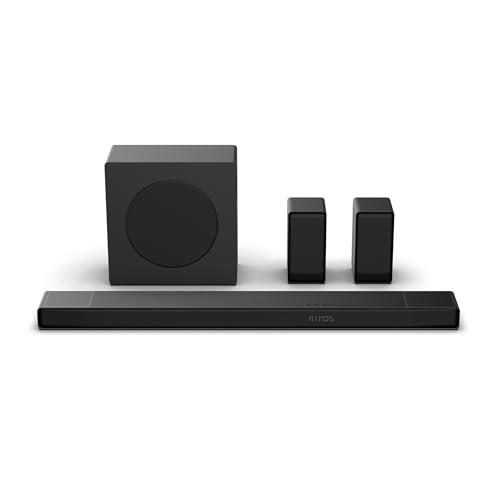
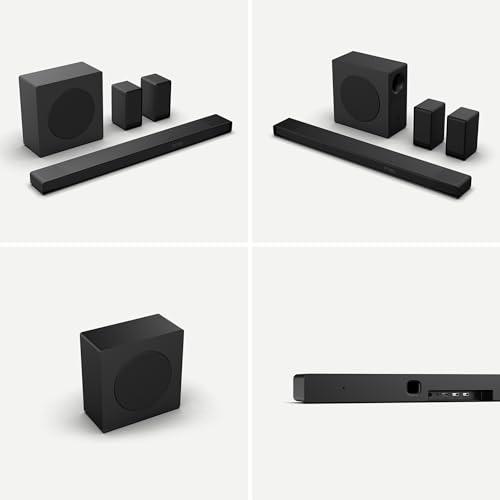
The Hisense AX5140Q, released in 2023, represents the former approach with its true 5.1.4 channel configuration including wireless rear speakers and subwoofer. The Sonos Arc, launched in 2020 but continuously refined through software updates, exemplifies the latter with its sophisticated single-bar design featuring 11 integrated drivers and premium ecosystem integration.
Understanding which approach suits your needs requires examining how each handles the fundamental challenge of modern soundbars: creating convincing three-dimensional audio that makes you feel like you're inside the movie or music rather than just listening to it from the front of the room.
Before diving into specifics, it's worth understanding what makes these premium soundbars different from basic models. Both systems support Dolby Atmos, a revolutionary audio format that treats sounds as objects that can be precisely placed anywhere in three-dimensional space rather than just assigned to specific channels. Instead of traditional 5.1 surround sound that places audio in front, behind, and to the sides, Atmos adds height information so helicopters can fly overhead, rain can fall from above, and ambient sounds can surround you completely.
The key technical difference between our two contenders lies in how they achieve this immersion. The Hisense AX5140Q uses what's called "discrete" speakers – separate physical units placed around the room that each handle specific audio channels. This mirrors how professional movie theaters work, where dozens of speakers are positioned throughout the space.
The Sonos Arc, by contrast, uses sophisticated digital signal processing (DSP) and precisely angled drivers to create virtual surround effects. It bounces sound off your walls and ceiling in calculated ways to trick your brain into perceiving audio coming from directions where no speakers actually exist.
Neither approach is inherently superior, but they excel in different scenarios and come with distinct trade-offs that affect everything from setup complexity to long-term value.
The Hisense AX5140Q takes a maximalist approach to surround sound that's unusual at its price point. At the time of writing, it costs significantly less than premium single-bar alternatives while including components that would typically require separate purchases: a wireless subwoofer and dedicated rear speakers.
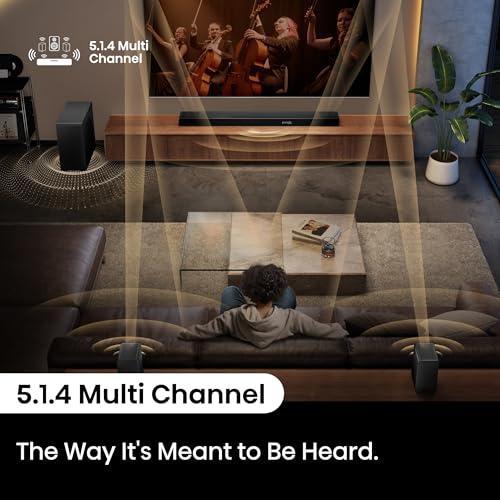
What makes this system particularly impressive is its true 5.1.4 configuration. The numbers tell the story: 5.1 refers to five main channels (front left, center, right, and two surrounds) plus a dedicated subwoofer channel, while the .4 indicates four additional height channels specifically for overhead Atmos effects. This means the system has discrete speakers handling nine distinct audio channels simultaneously.
The wireless rear speakers are the system's secret weapon. Unlike soundbars that simulate rear effects through reflection and processing, the Hisense system places actual speakers behind your listening position. When a car chase moves from screen left to behind your right shoulder, you hear that transition through physically separate drivers positioned in that exact location. This creates what audio engineers call "true localization" – your brain doesn't have to work to interpret where sounds are coming from because they're actually originating from those positions.
Each rear speaker also includes upfiring drivers for height effects. Combined with upfiring drivers in the main soundbar, this creates four discrete height channels that reflect off your ceiling to simulate overhead audio. In practice, this means when it rains in a movie, you hear distinct droplets falling from above rather than just a general "wetness" effect processed from front speakers.
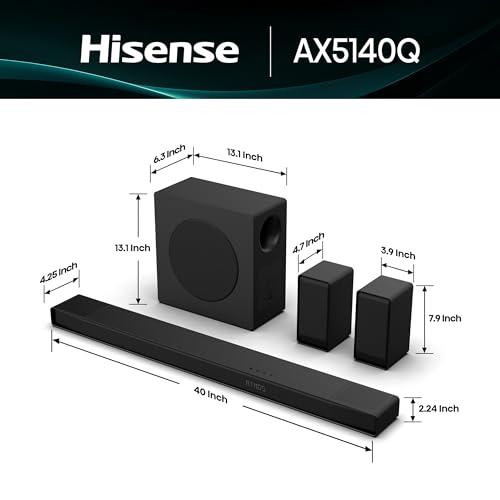
The 6.5-inch wireless subwoofer handles low-frequency effects (LFE) – the deep bass you feel in your chest during explosions or the rumble that makes action scenes visceral. Because it's a separate unit, you can position it optimally in your room for the best bass response, which often means placing it away from the main soundbar where acoustics work better.
The system's AI EQ mode represents modern smart audio processing. Rather than using static presets, it analyzes incoming audio in real-time and adjusts frequency response based on content type and volume level. This means dialogue scenes automatically get different treatment than action sequences, maintaining clarity without manual intervention.
From a performance standpoint, our research indicates the Hisense AX5140Q delivers genuinely impressive surround immersion that rivals much more expensive systems. The discrete speaker placement creates convincing 360-degree soundstages, and the inclusion of rear height channels provides overhead effects that single soundbars struggle to match. The wireless subwoofer adds substantial low-end impact that transforms movie watching into a more visceral experience.
However, this approach comes with compromises. The system requires careful placement of multiple components, and optimal performance depends on having adequate space behind your seating area for the rear speakers. Some users report occasional wireless connectivity hiccups between components, and the bass can sound boomy in certain room configurations without proper subwoofer positioning.
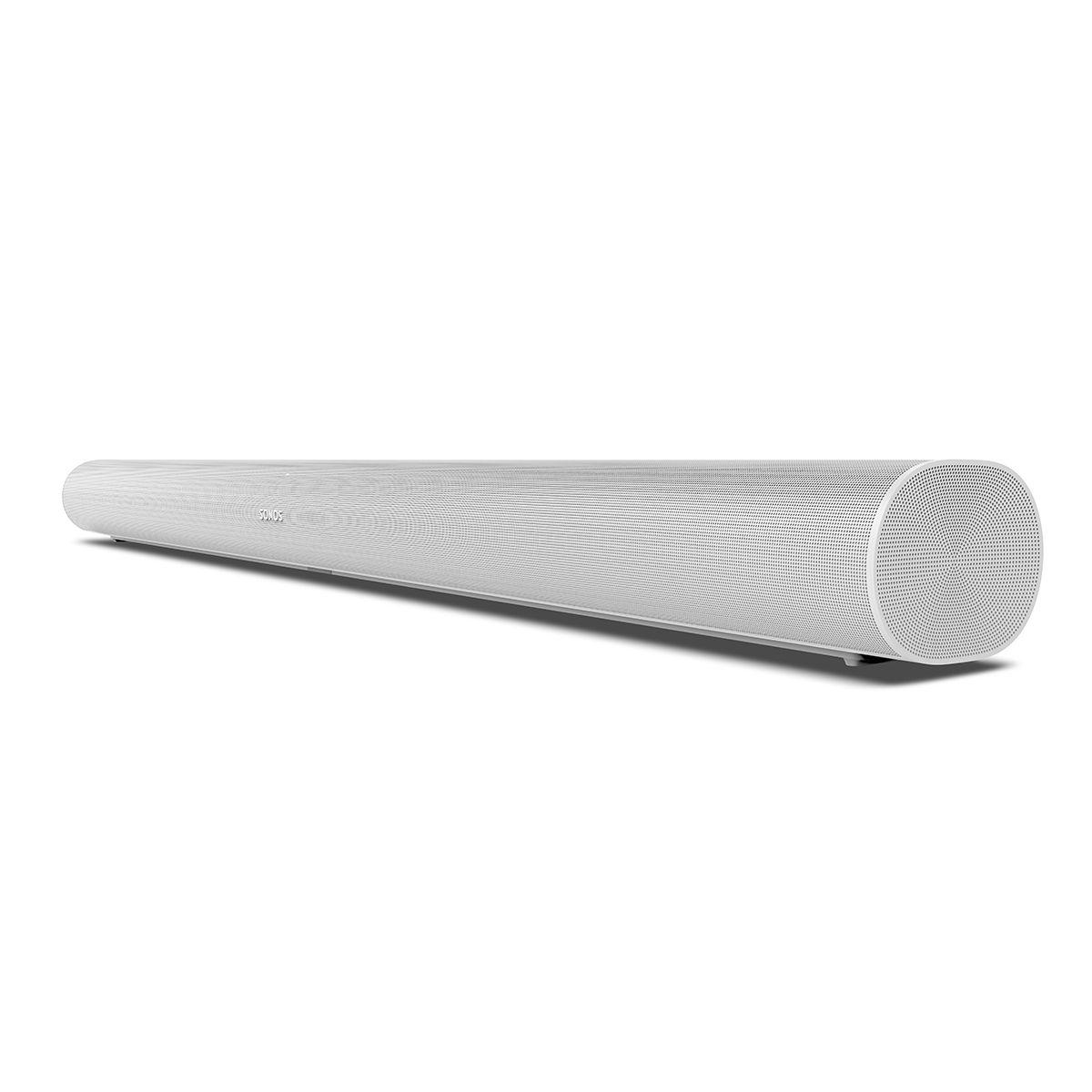
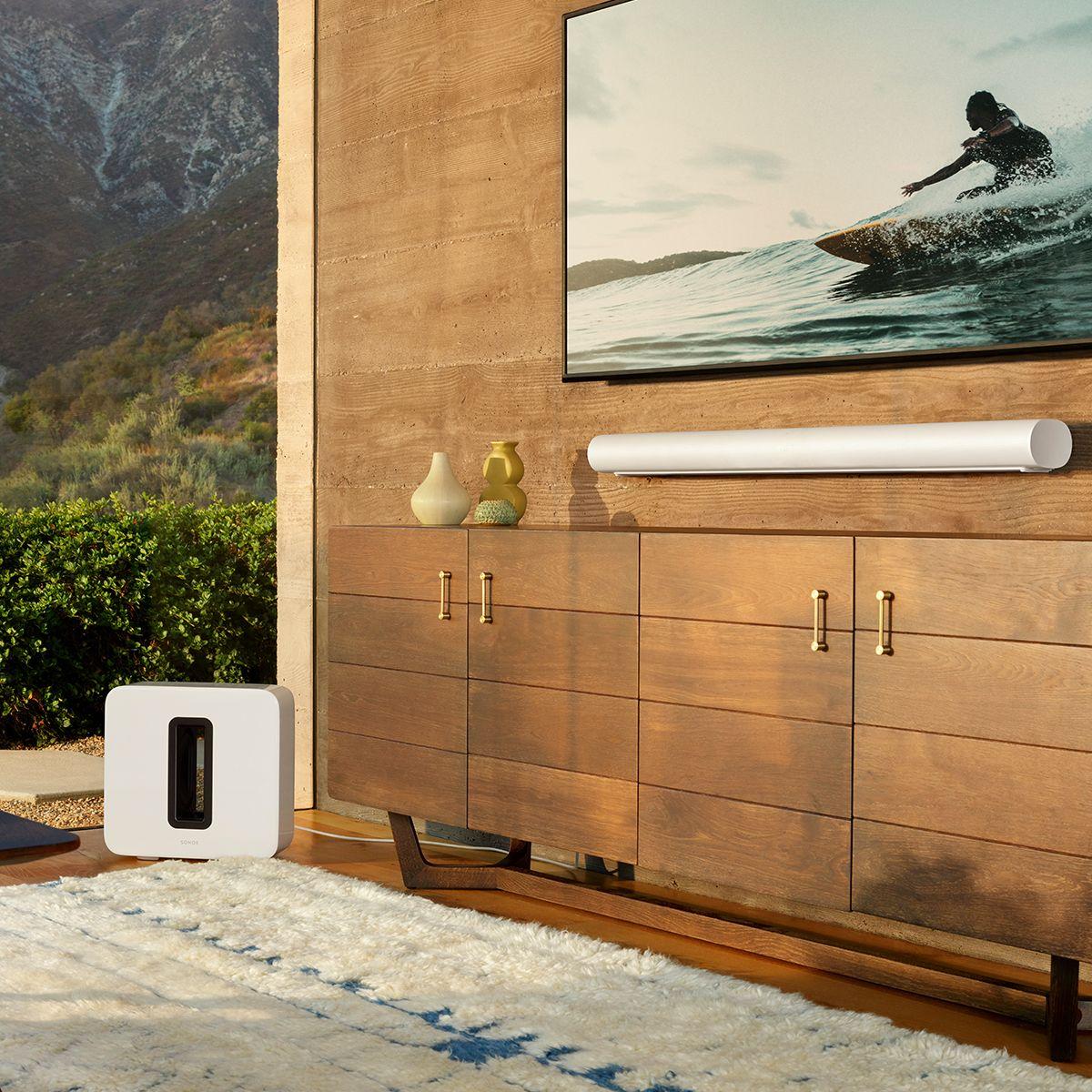
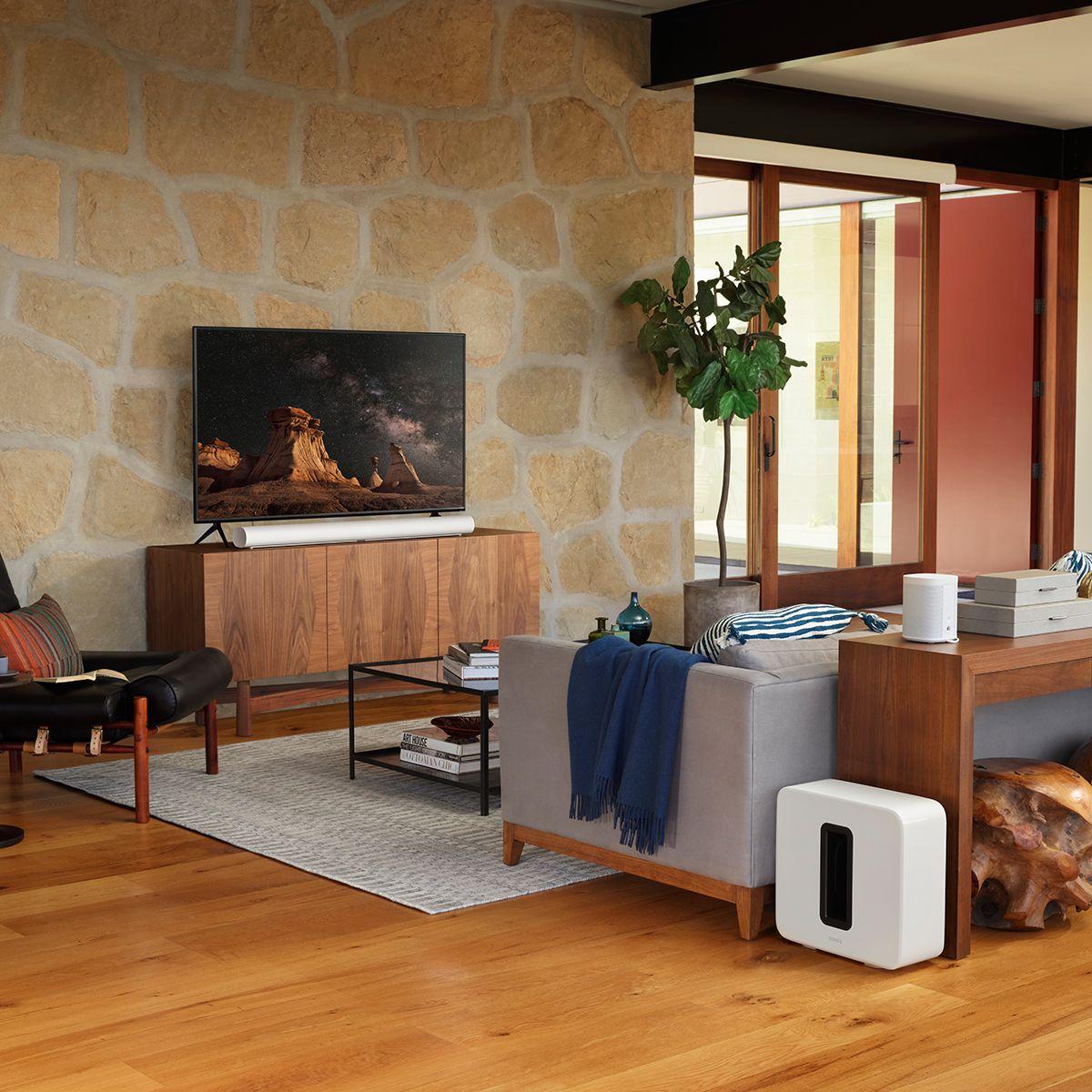
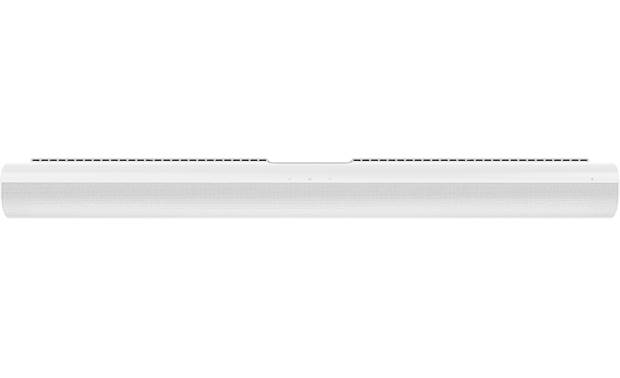
The Sonos Arc represents four years of refinement since its 2020 launch, with regular software updates adding features and improving performance. As a premium single-bar solution, it packs remarkable technology into its sleek 45-inch form factor.
The Arc's eleven drivers work in carefully orchestrated harmony. Three silk-dome tweeters handle high frequencies and dialogue with exceptional clarity, while eight elliptical woofers manage mid-range vocals and bass frequencies. The positioning and angling of these drivers isn't arbitrary – Sonos uses advanced acoustic modeling to ensure each driver contributes to a cohesive soundstage that extends well beyond the physical boundaries of the bar itself.
What sets the Sonos Arc apart is its sophisticated approach to virtual surround sound. The upfiring drivers use psychoacoustic principles – essentially understanding how your brain processes spatial audio cues – to create convincing overhead effects through ceiling reflections. The side-firing drivers project audio toward your room's walls at precisely calculated angles, creating the impression of sound emanating from locations where no speakers exist.
This virtual processing is complemented by Trueplay room calibration, though it requires an iOS device to function. The technology uses your iPhone or iPad's microphone to measure how sound behaves in your specific room, then adjusts the Arc's output to compensate for acoustic challenges like hard surfaces, furniture placement, or irregular room shapes. This personalization can dramatically improve performance, particularly for Atmos height effects that depend on ceiling reflections.
The Arc's integration capabilities extend far beyond basic TV connection. Built-in voice assistants (Amazon Alexa and Google Assistant) turn it into a smart home hub, while Apple AirPlay 2 support enables seamless music streaming from iOS devices. The Sonos ecosystem integration means you can wirelessly group the Arc with other Sonos speakers throughout your home for whole-house audio.
From our evaluation of expert and user reviews, the Sonos Arc excels at creating surprisingly wide and tall soundstages from its single-unit design. The virtual surround processing is sophisticated enough that many listeners report convincing rear and overhead effects, even without physical speakers in those positions. The bass response is notably tight and controlled, avoiding the boominess that plagues some soundbars, though it lacks the deep extension that a dedicated subwoofer provides.
The trade-offs are primarily about physical limitations. No amount of processing can completely replicate the directionality and immersion of actual rear speakers, and the integrated bass drivers, while well-tuned, can't match a dedicated subwoofer's impact. The premium pricing also means you're paying significantly more for the convenience and sophisticated engineering.
This is where the fundamental difference between approaches becomes most apparent. The Hisense AX5140Q creates what audio enthusiasts call "discrete channel separation" – each surround channel is handled by physically separate speakers positioned around the room. When audio pans from front to rear, you hear it moving through actual space rather than through processing trickery.
Our research suggests this translates into notably superior rear surround effects. Action movies with complex soundscapes – think of the pod racing sequence in Star Wars or the highway chase in The Matrix Reloaded – benefit enormously from having actual speakers behind the listening position. Environmental effects like crowd noise in sports venues or ambient sounds in outdoor scenes feel more natural and enveloping.
The Sonos Arc's virtual surround processing is impressive but works within physical constraints. The soundstage it creates is remarkably wide and can extend beyond the bar's physical boundaries, but rear effects remain fundamentally simulated. For front-heavy content like dialogue-driven films or music, this limitation is minimal. For action-heavy content with complex surround mixes, the difference becomes more noticeable.
Here, the approaches diverge significantly. The Hisense system's dedicated 6.5-inch subwoofer operates independently from the main soundbar, allowing it to focus entirely on low-frequency reproduction. This specialization enables deeper bass extension and more impactful low-end effects during explosions, vehicle chases, or music with substantial bass content.
The flexibility of subwoofer placement is equally important. Bass frequencies interact heavily with room acoustics, and optimal placement often means positioning the subwoofer away from the TV area. The wireless design allows experimentation to find the spot where bass response is smoothest and most impactful.
The Sonos Arc's integrated approach prioritizes control over raw impact. Its eight elliptical woofers work together to produce what reviewers consistently describe as "tight" and "musical" bass that avoids the one-note boominess common in soundbars. However, the physical constraints of housing bass drivers within the main unit limit how deep the low-end can extend.
For movie watching, this difference is particularly relevant during action sequences where low-frequency effects (LFE) channels carry explosion impacts, vehicle rumbles, and other visceral effects that make scenes feel more immersive.
Both systems prioritize dialogue clarity, but through different methods. The Hisense AX5140Q uses dedicated center channel drivers combined with AI-driven processing that can automatically detect dialogue content and adjust frequency response accordingly. The Voice mode specifically enhances speech frequencies while reducing competing sounds.
The Sonos Arc's three silk-dome tweeters are specifically positioned and tuned for dialogue reproduction. The Speech Enhancement feature in the Sonos app provides additional dialogue boosting when needed, while the overall driver configuration ensures voices remain anchored to the center of the soundstage.
From user feedback analysis, both systems deliver excellent dialogue performance under normal conditions. The difference becomes apparent in challenging scenarios – heavily mixed action scenes or content with poor original audio quality – where the Hisense system's dedicated center channel and AI processing may provide an edge.
This represents one of the most significant technical differences. The Hisense AX5140Q's four discrete upfiring speakers (two in the soundbar, two in the rear speakers) create what's essentially a four-corner height array. This configuration can produce more convincing overhead effects because sounds can originate from both front and rear positions before reflecting off the ceiling.
The Sonos Arc's front-mounted upfiring drivers rely entirely on forward ceiling reflections to create height effects. While the processing is sophisticated and can create convincing overhead imaging, the lack of rear height speakers limits the complexity of overhead soundscapes it can reproduce.
For content with complex Atmos mixes – think of the flying sequences in Top Gun: Maverick or the forest scenes in A Quiet Place – the additional height channels in the Hisense system provide more convincing three-dimensional audio placement.
At the time of writing, these systems occupy different value territories that reflect their distinct approaches. The Hisense AX5140Q offers remarkable value by including components that would typically require separate purchases. You get a complete 5.1.4 system with subwoofer and rear speakers at a price point where most competitors offer only the main soundbar.
The Sonos Arc commands premium pricing that reflects its sophisticated engineering and ecosystem integration. However, achieving comparable surround immersion requires additional purchases – the Sonos Sub and rear speakers – that significantly increase the total investment.
The long-term value equation differs substantially. The Hisense system provides immediate maximum capability but limited expansion options. You get everything upfront, but there's little room for future enhancement beyond what's included.
The Sonos Arc offers extensive expandability within the Sonos ecosystem. Starting with the Arc alone provides excellent performance, and you can add components over time as budget allows or needs evolve. The regular software updates also mean features and performance can improve post-purchase.
From a reliability standpoint, our research indicates both systems generally perform well, though the Hisense system's wireless connections between multiple components occasionally experience synchronization issues that single-unit designs avoid.
Installation complexity represents a major practical difference. The Hisense AX5140Q requires strategic placement of multiple wireless components. While the lack of audio cables simplifies installation compared to wired surround systems, you still need to position the rear speakers appropriately and find optimal subwoofer placement. This typically means having adequate space behind your seating area and the flexibility to experiment with component positions.
The Sonos Arc offers essentially plug-and-play installation. Mount it under your TV, connect the HDMI cable, and you're functionally complete. The Trueplay calibration adds optimization but isn't strictly necessary for good performance.
For apartments, smaller homes, or rooms where speaker placement is constrained, the Sonos Arc's single-unit approach offers significant practical advantages. For dedicated home theater spaces or larger rooms where component placement isn't problematic, the Hisense system's discrete speakers provide superior immersion.
The decision between these systems ultimately depends on your priorities and constraints. The Hisense AX5140Q makes sense if maximum surround immersion is your primary goal and you have the space for proper component placement. It's particularly compelling for dedicated home theater rooms or larger living spaces where the rear speakers can be positioned effectively.
The system also appeals to buyers who want a complete solution without future upgrade costs. At the time of writing, you get remarkable capability for the investment, making it an excellent choice for budget-conscious buyers who don't want to compromise on surround sound quality.
The Sonos Arc suits buyers who prioritize aesthetic integration, premium build quality, and ecosystem flexibility. It's ideal for smaller to medium-sized rooms where a single-unit solution is preferable, or for households already invested in the Sonos ecosystem.
The Arc also makes sense for buyers who prefer to start with a high-quality foundation and add components over time rather than committing to a complete system upfront.
From a home theater perspective, the Hisense AX5140Q provides more convincing surround immersion for movie watching, particularly action films with complex soundtracks. The Sonos Arc excels at music reproduction and offers superior convenience for mixed-use scenarios where the system serves multiple entertainment needs beyond just TV and movies.
Both systems deliver substantial improvements over TV speakers and basic soundbars, but they achieve this through fundamentally different approaches that suit different users and usage scenarios. Understanding these differences is key to choosing the system that will provide the most satisfaction in your specific situation.
| Hisense AX5140Q 5.1.4Ch Dolby Atmos DTS:X Sound Bar | Sonos Arc Wireless Sound Bar with Dolby Atmos |
|---|---|
| Channel Configuration - More channels typically mean better surround immersion | |
| True 5.1.4 with discrete rear speakers and subwoofer | Virtual 5.0.2 from single soundbar with 11 drivers |
| Included Components - Complete systems offer better immediate value | |
| Soundbar + wireless subwoofer + 2 wireless rear speakers | Soundbar only (Sub and rears sold separately) |
| Physical Surround Speakers - Real rears create more convincing surround effects | |
| Dedicated wireless rear speakers with upfiring drivers | Virtual rear effects through wall reflection processing |
| Subwoofer - Dedicated subs provide deeper bass and room-filling impact | |
| Included 6.5" wireless subwoofer | Integrated bass drivers (optional Sonos Sub available) |
| Total System Power - Higher wattage enables louder, more dynamic sound | |
| 600W maximum audio power | Not specified (estimated 400W+ based on driver count) |
| Audio Format Support - More formats mean compatibility with more content sources | |
| Dolby Atmos, DTS:X, DTS-HD Master Audio, Dolby TrueHD | Dolby Atmos variants, limited DTS support (no DTS:X) |
| Smart Features - Voice control and streaming add convenience beyond TV audio | |
| Hi-Concerto TV integration, AI EQ, Bluetooth 5.3 | Built-in Alexa/Google Assistant, Apple AirPlay 2, Trueplay |
| Room Calibration - Auto-tuning optimizes sound for your specific space | |
| AI-driven room fitting and EQ adjustment | Trueplay calibration (requires iOS device) |
| Ecosystem Integration - Seamless compatibility with other products adds long-term value | |
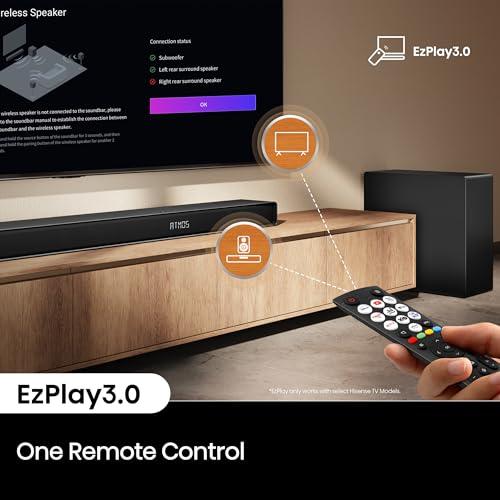
| Optimized for Hisense TVs with EzPlay 3.0 | Full Sonos ecosystem with multiroom capabilities |
| Setup Complexity - Simpler installation means faster enjoyment | |
| Multiple wireless components require strategic placement | Single unit with plug-and-play HDMI connection |
| Expandability - Future upgrade options extend product lifespan | |
| Limited expansion beyond included components | Extensive Sonos ecosystem for gradual system building |
| Physical Design - Size and aesthetics affect room integration | |
| Substantial multi-component footprint, 40" soundbar | Sleek 45" single unit with premium build quality |
The Hisense AX5140Q is better for dedicated home theater use because it includes discrete wireless rear speakers and a subwoofer, creating true 5.1.4 surround sound. This provides more convincing surround effects and deeper bass for movies compared to the Sonos Arc's virtual surround processing from a single unit.
The Hisense AX5140Q offers true 5.1.4 with five main channels, one subwoofer, and four height channels using physical speakers. The Sonos Arc provides virtual 5.0.2 with five main channels and two height channels, all from one soundbar unit without a separate subwoofer or rear speakers.
While not strictly necessary, rear speakers significantly improve Dolby Atmos immersion. The Hisense AX5140Q includes wireless rear speakers that create authentic behind-you effects, while the Sonos Arc uses advanced processing to simulate rear surround sound through wall reflections.
The Sonos Arc is much easier to install since it's a single unit requiring only an HDMI connection to your TV. The Hisense AX5140Q requires positioning multiple wireless components including rear speakers and a subwoofer around your room for optimal performance.
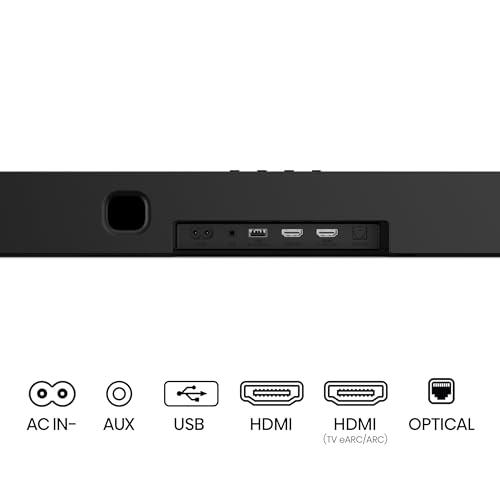
Both the Hisense AX5140Q and Sonos Arc work with any TV that has HDMI ARC/eARC or optical audio output. However, the Hisense system offers enhanced features when paired with Hisense TVs through its Hi-Concerto integration.
The Hisense AX5140Q provides stronger bass impact due to its included 6.5-inch wireless subwoofer that can be positioned optimally in your room. The Sonos Arc has well-controlled integrated bass but lacks the deep extension and room-filling impact of a dedicated subwoofer.
Both systems support music streaming, but differently. The Sonos Arc includes built-in Amazon Alexa and Google Assistant voice control plus Apple AirPlay 2 for seamless iPhone streaming. The Hisense AX5140Q offers Bluetooth 5.3 connectivity and works with the ConnectLife app for wireless streaming.
The Hisense AX5140Q offers exceptional value by including a complete 5.1.4 system with subwoofer and rear speakers at a competitive price. The Sonos Arc costs more but provides premium build quality, sophisticated processing, and ecosystem expandability for long-term investment.
The Sonos Arc offers extensive expansion options within the Sonos ecosystem, allowing you to add the Sub, rear speakers, or other Sonos products over time. The Hisense AX5140Q provides a complete system upfront but has limited expansion capabilities beyond the included components.
The Sonos Arc is ideal for smaller spaces since it's a single elegant unit that doesn't require rear speaker placement or subwoofer positioning. The Hisense AX5140Q works best in larger rooms where you have space to properly position all wireless components.
Both the Hisense AX5140Q and Sonos Arc support 4K HDR passthrough, allowing you to connect devices like game consoles or streaming boxes directly to the soundbar. However, the Hisense system includes an additional HDMI input for connecting multiple 4K sources.
The Hisense AX5140Q supports more audio formats including Dolby Atmos, DTS:X, DTS-HD Master Audio, and Dolby TrueHD. The Sonos Arc focuses primarily on Dolby formats with limited DTS support, making the Hisense soundbar more versatile for various content sources.
We've done our best to create useful and informative comparisons to help you decide what product to buy. Our research uses advanced automated methods to create this comparison and perfection is not possible - please contact us for corrections or questions. These are the sites we've researched in the creation of this article: shop.hisense-usa.com - manuals.plus - dolby.com - youtube.com - gzhls.at - rtings.com - youtube.com - bestbuy.com - manuals.plus - bestbuy.com - hisense-usa.com - youtube.com - device.report - manuals.plus - youtube.com - device.report - manuals.plus - youtube.com - whathifi.com - soundandvision.com - en.community.sonos.com - cnet.com - worldwidestereo.com - abt.com - creativeaudio.net - target.com - sonos.com - worldwidestereo.com - businessinsider.com - en.community.sonos.com - youtube.com

Privacy Policy
Terms and Conditions - Affiliate Policy
Home Security
© Copyright 2008-2026.
11816 Inwood Rd #1211, Dallas, TX 75244