



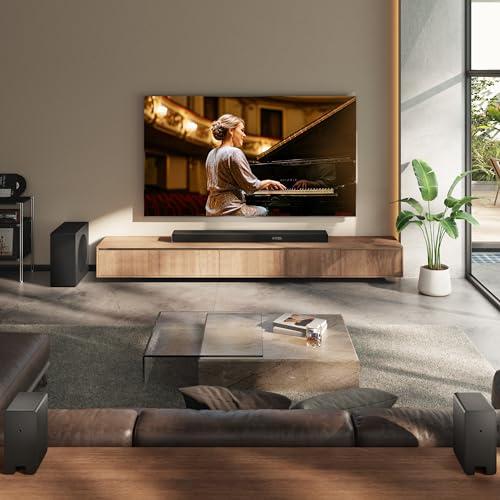
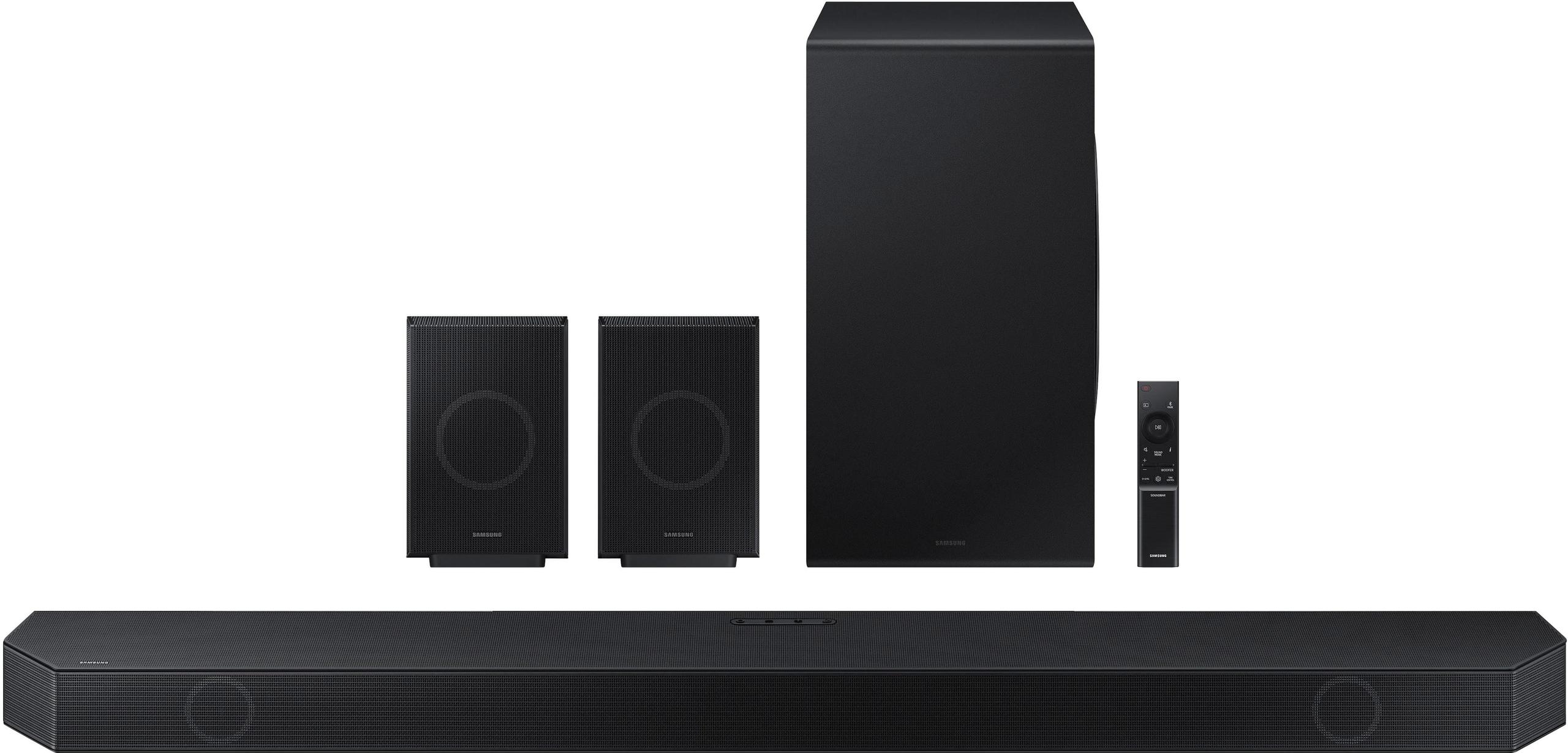
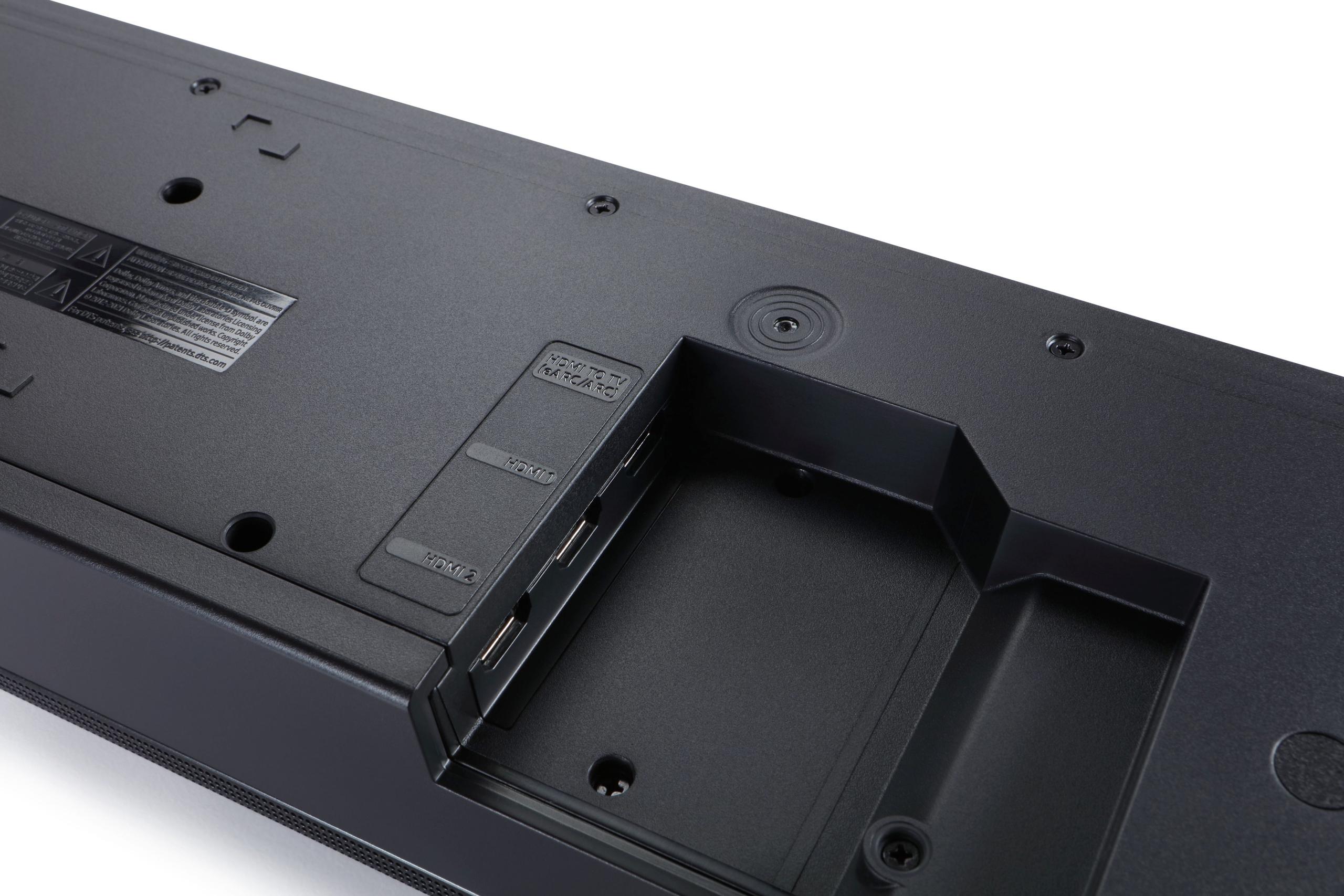
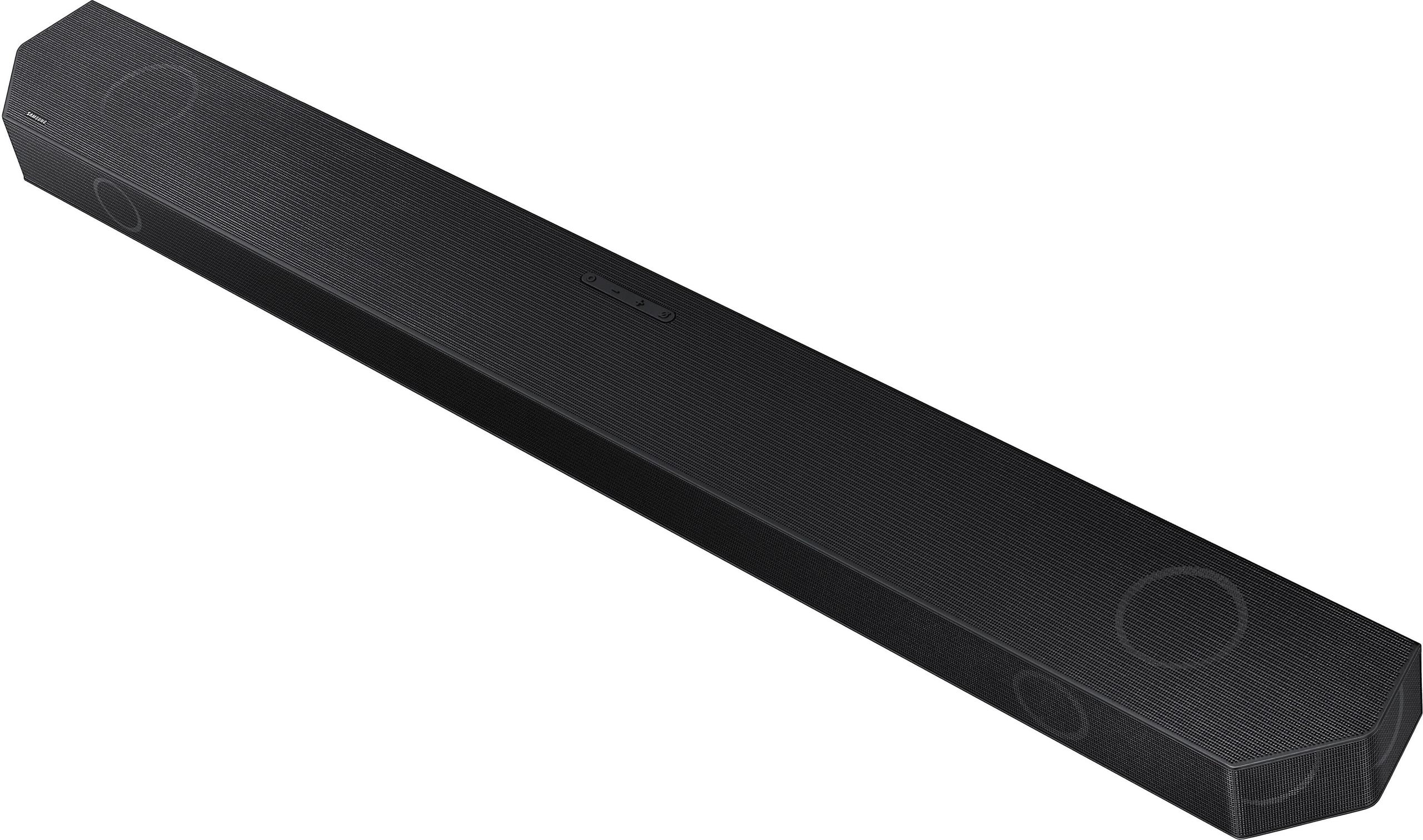
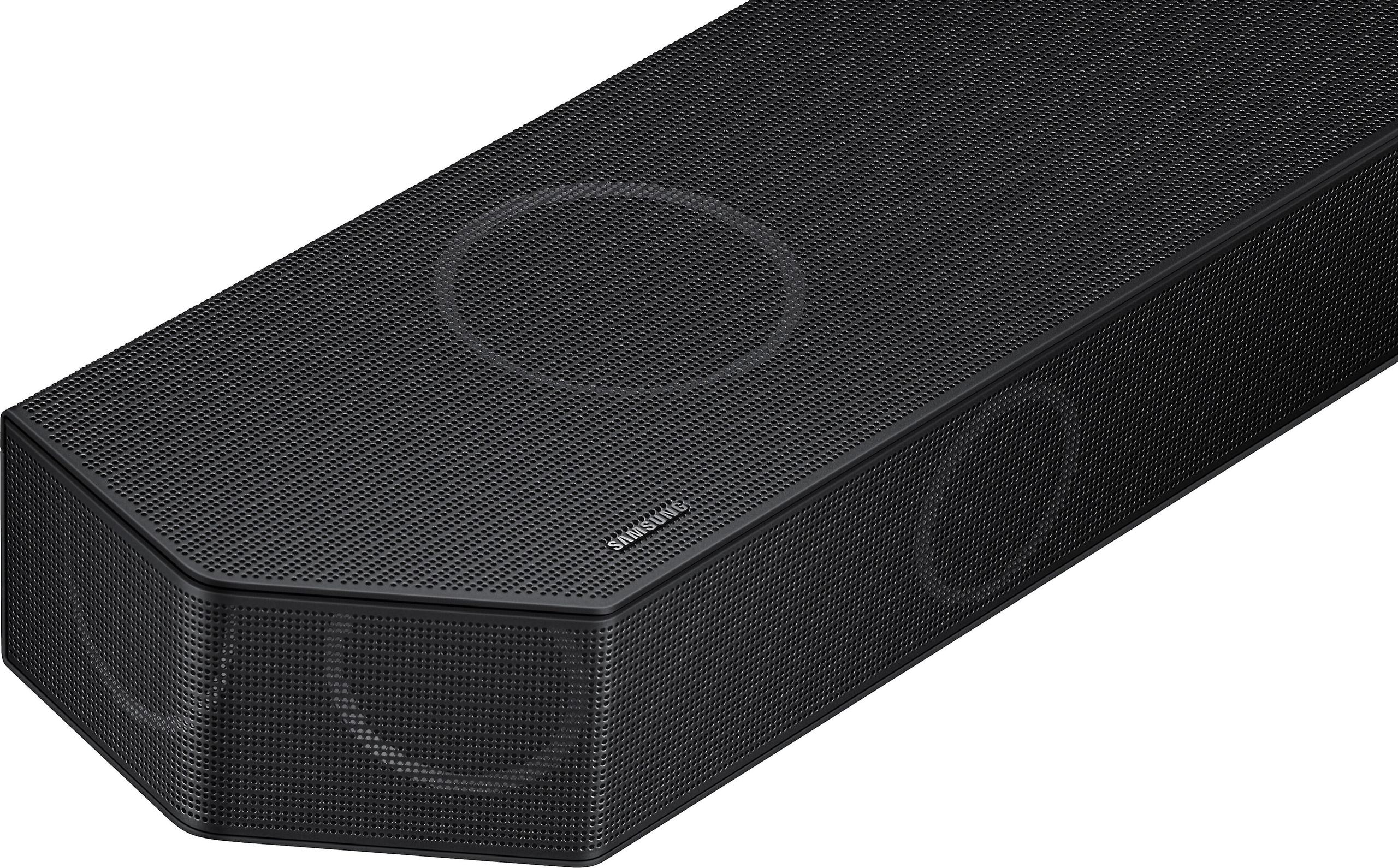


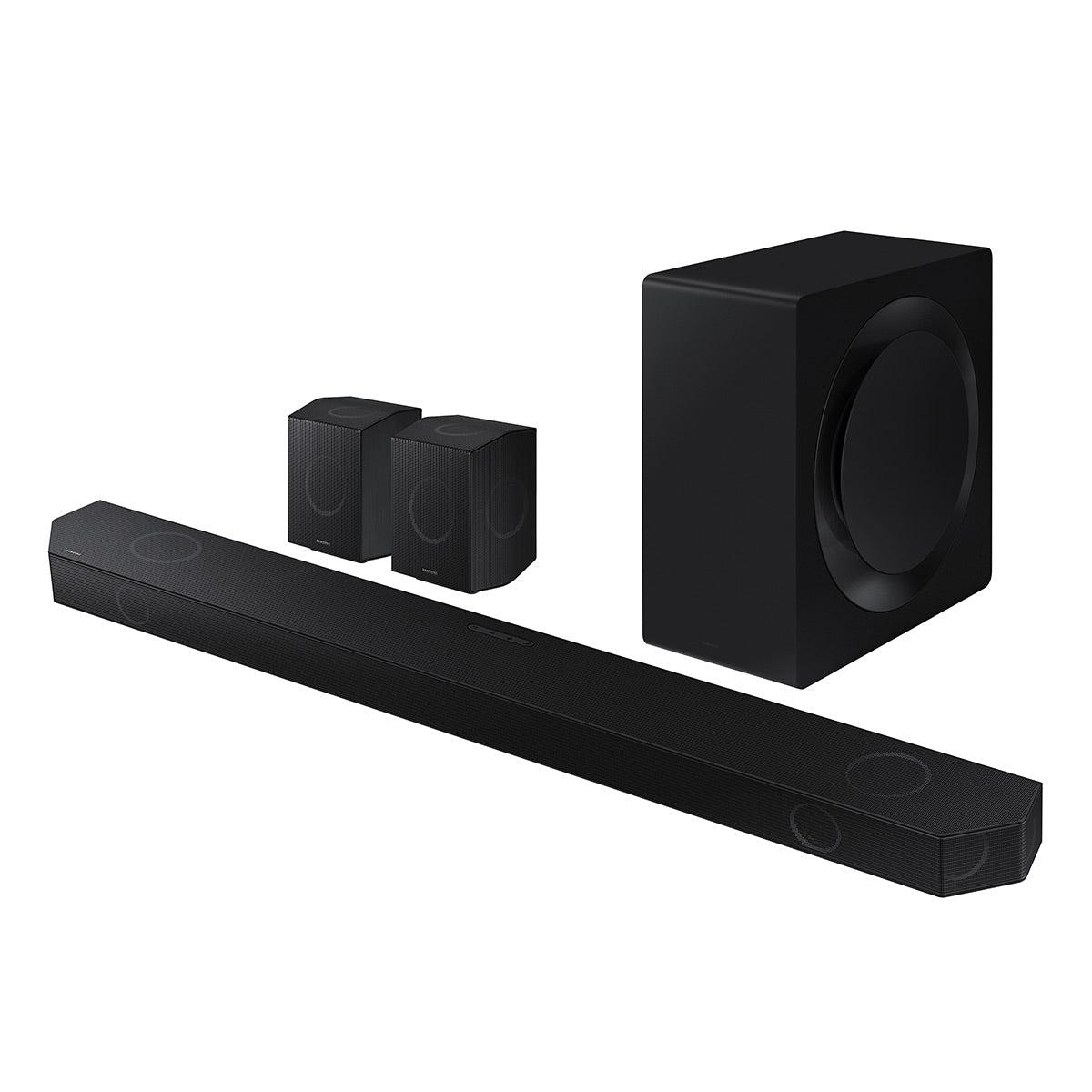
The soundbar market has exploded over the past few years, transforming from simple TV speaker replacements into sophisticated home theater systems. Two standout options that perfectly illustrate this evolution are the budget-friendly Hisense AX5140Q and the premium Samsung HW-Q990D. Released in 2024, both represent significant advances in soundbar technology, but they target completely different audiences and budgets.
Understanding which one suits your needs requires digging into what makes modern soundbars tick and how these two systems approach the challenge of delivering cinematic audio in your living room.
Today's soundbars aren't just about making TV dialogue louder—they're about creating immersive audio experiences that can rival dedicated home theater setups. The key considerations have evolved dramatically since the early days of basic 2.1 channel systems.
Channel configuration has become the primary differentiator. When you see numbers like "5.1.4" or "11.1.4," these refer to how many distinct audio channels the system can reproduce. The first number indicates main channels (front left, center, front right, plus surrounds), the second represents subwoofer channels for bass, and the third shows height channels that create overhead sound effects. More channels generally mean more immersive audio, but the implementation quality matters just as much as the raw numbers.
Room acoustics and size play a massive role in performance. A powerful system in a small room can overwhelm, while an underpowered setup in a large space will struggle to fill the area with convincing surround sound. The best soundbars now include automatic room calibration features that measure your space and adjust accordingly.
Content compatibility has become crucial as streaming services and gaming have evolved. Modern systems need to handle everything from basic stereo music to complex Dolby Atmos movie soundtracks to low-latency gaming audio. The processing power to decode these formats properly separates good soundbars from great ones.
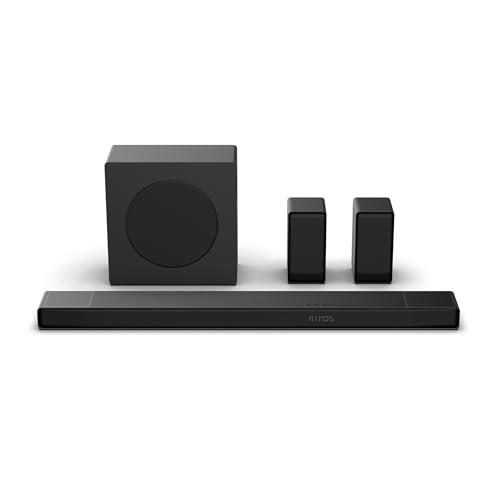
Released in 2024, the Hisense AX5140Q represents Hisense's aggressive push into the premium soundbar market while maintaining budget-friendly pricing. At the time of writing, it typically costs under $400, making it one of the most affordable true 5.1.4 channel systems available.
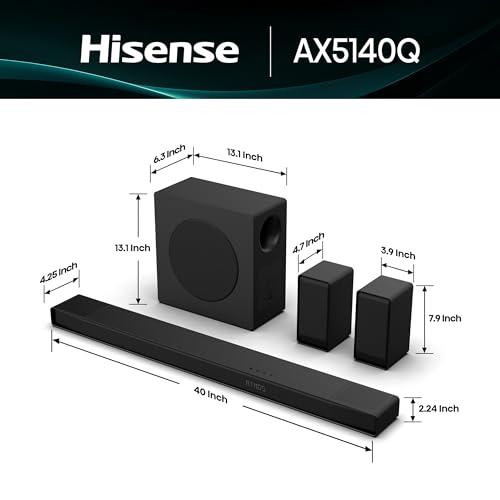
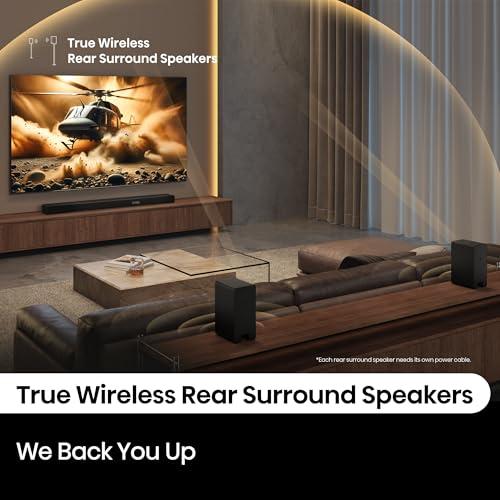
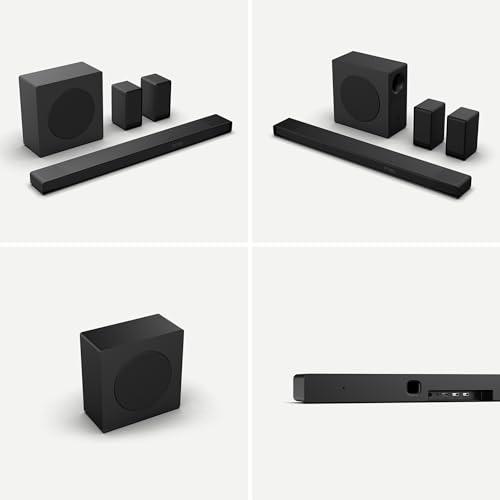
The system includes a main soundbar, a wireless 6.5-inch subwoofer, and two wireless rear speakers that each contain their own upfiring drivers for height effects. This gives you genuine surround sound with real height channels—not just virtual processing that tries to fake the effect. The total power output reaches 600 watts, which sounds impressive on paper but remember that peak power ratings don't always translate to real-world performance.
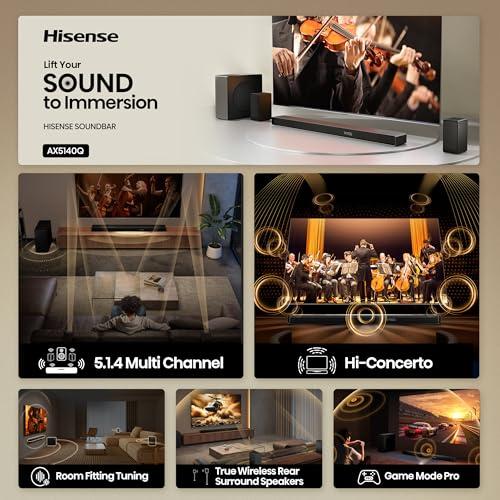
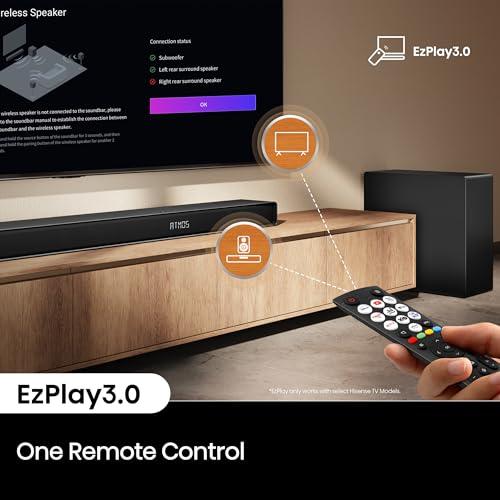
What makes the Hisense AX5140Q special is its Hi-Concerto technology, which allows deep integration with compatible Hisense TVs. When paired properly, the TV and soundbar work together as a unified audio system, sharing processing duties and providing seamless control through a single remote.
The Samsung HW-Q990D, also launched in 2024, represents Samsung's current flagship soundbar offering. Priced significantly higher—typically around $800-900 at the time of writing—it targets serious home theater enthusiasts who want the best possible soundbar experience.
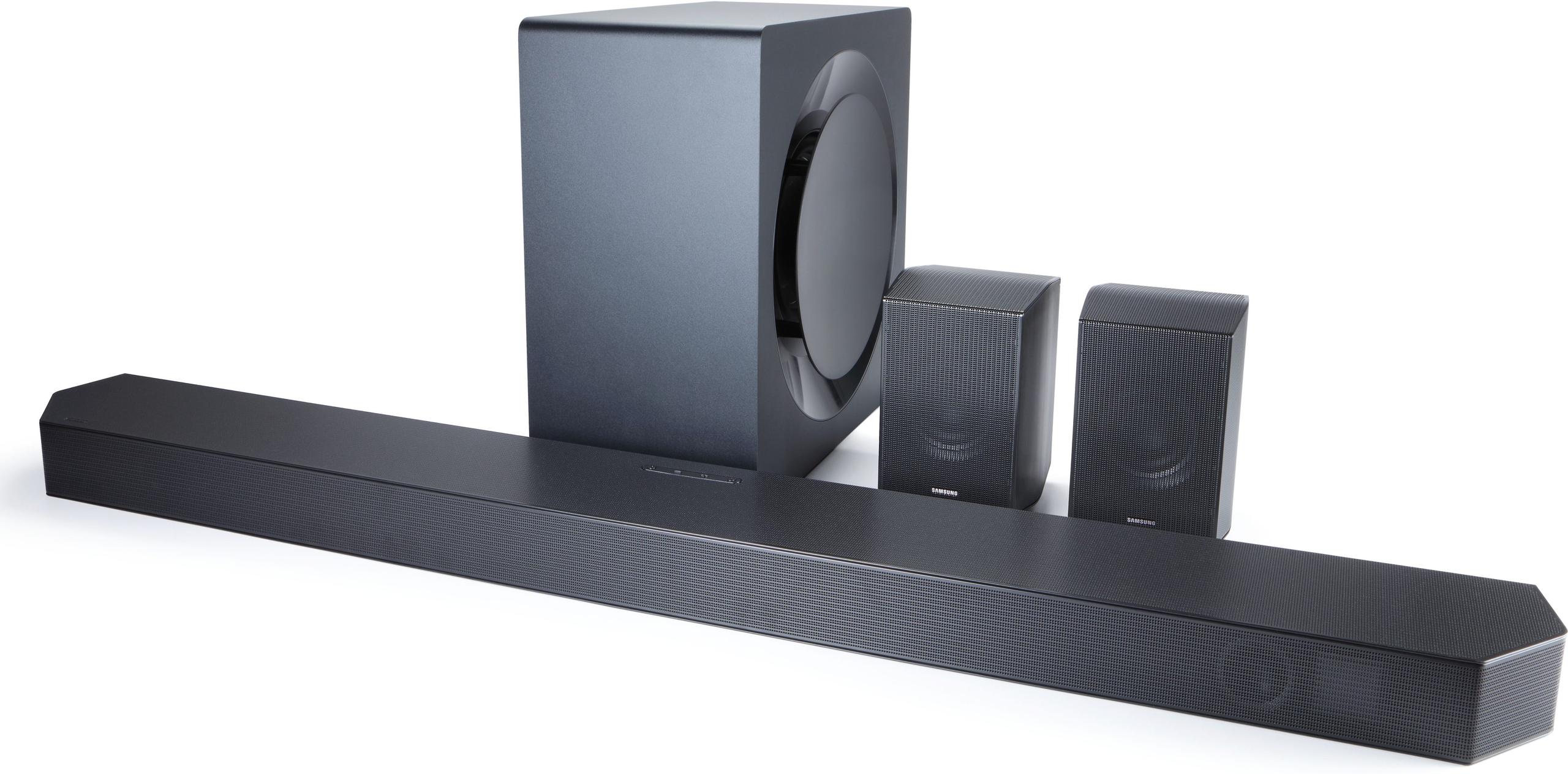
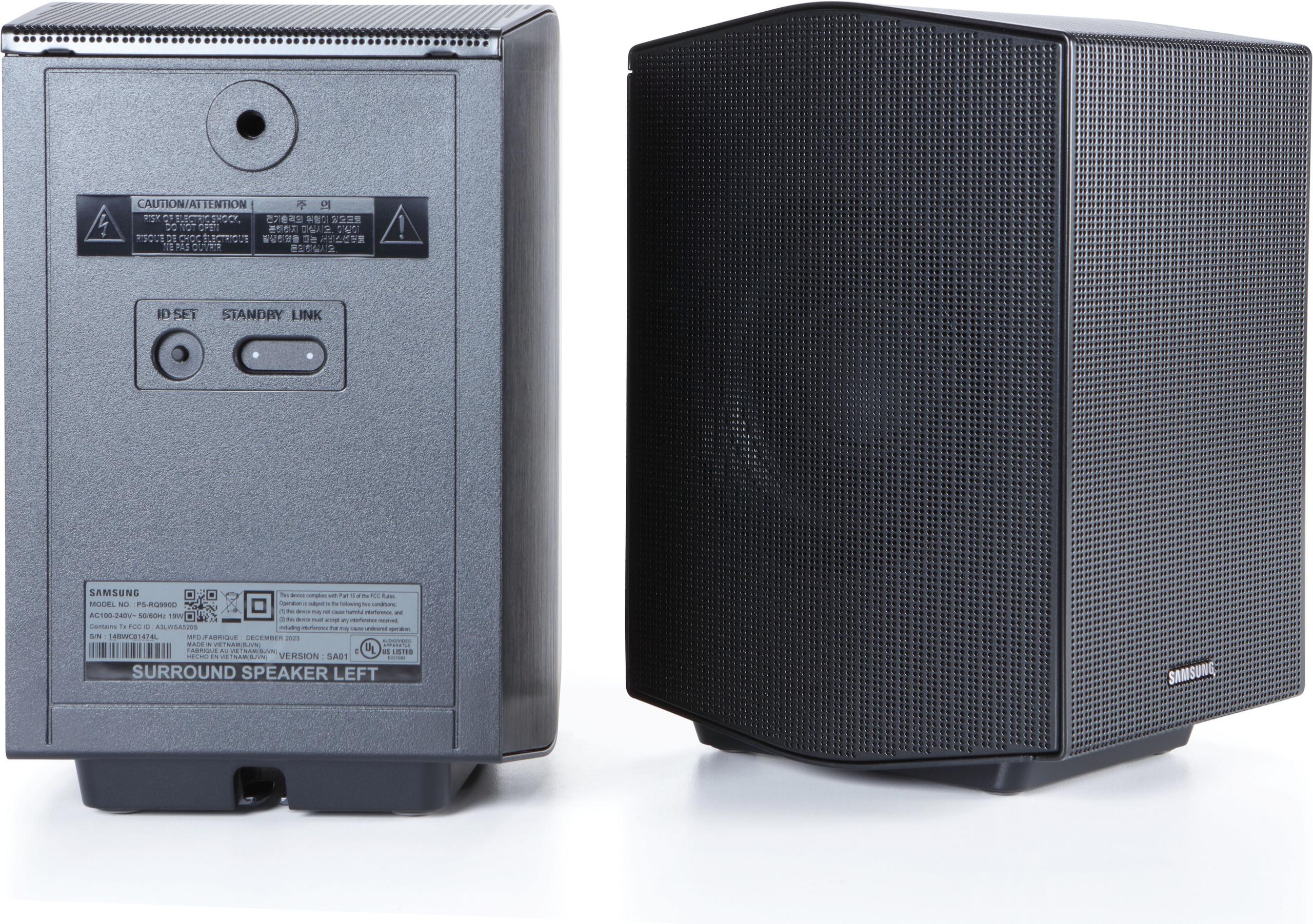
This system features an impressive 11.1.4 channel configuration with 22 total drivers spread across the main bar, subwoofer, and two satellite speakers. The main soundbar alone contains multiple driver types: forward-firing speakers for dialogue and main effects, side-firing drivers for wider soundstage, and upfiring speakers for height effects.
The Samsung HW-Q990D includes Samsung's latest processing innovations, including SpaceFit Sound Pro for automatic room calibration and Q-Symphony technology that coordinates with compatible Samsung TVs to create an even more expansive soundstage.
This is where the fundamental differences between these systems become most apparent. Surround sound immersion depends on how convincingly a system can place audio effects around and above you, creating the illusion that you're inside the movie or game rather than just watching it.
The Samsung HW-Q990D excels here through sheer brute force and sophisticated processing. With 11.1.4 channels and 22 drivers, it can create incredibly precise audio placement. When watching a Dolby Atmos movie, helicopters genuinely seem to fly overhead, rain appears to fall from above, and action sequences surround you with convincing directionality. The system's advanced processing analyzes incoming audio and distributes it across all those drivers with remarkable accuracy.
Expert reviews consistently praise the Samsung HW-Q990D for delivering what many describe as "jaw-dropping" Dolby Atmos performance that approaches the quality of dedicated component systems costing significantly more. The additional channels allow for more nuanced audio placement—instead of just "left surround," you might have "left side," "left rear," and "left height" all working together to create smooth, natural audio movement.
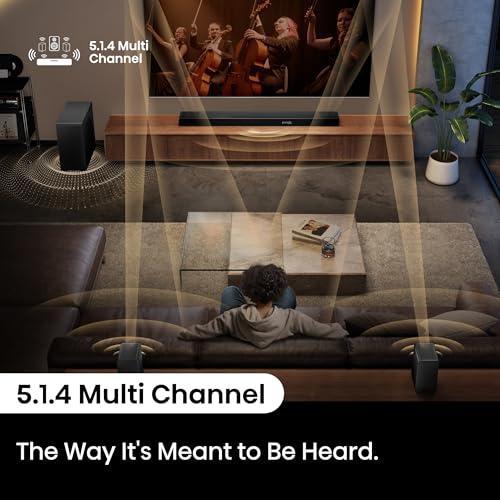
The Hisense AX5140Q takes a different approach, focusing on delivering authentic surround sound through fewer but well-implemented channels. Its 5.1.4 configuration includes four real upfiring speakers—two in the main bar and two in the rear speakers—rather than relying entirely on virtual processing like many budget competitors. This means you get genuine overhead effects, though not with the precision and density of the Samsung system.
In practical terms, the Hisense AX5140Q delivers convincing surround sound that will satisfy most users upgrading from TV speakers or basic soundbars. The height effects work well in typical living rooms with standard ceiling heights, creating that important sense of audio coming from above during Atmos content. However, the more limited channel count means less precise positioning and a smaller "sweet spot" where the surround effects work optimally.
Low-frequency performance often determines whether a soundbar sounds impressive or underwhelming during action sequences, music, and gaming. The subwoofer design and integration with the main system makes all the difference here.
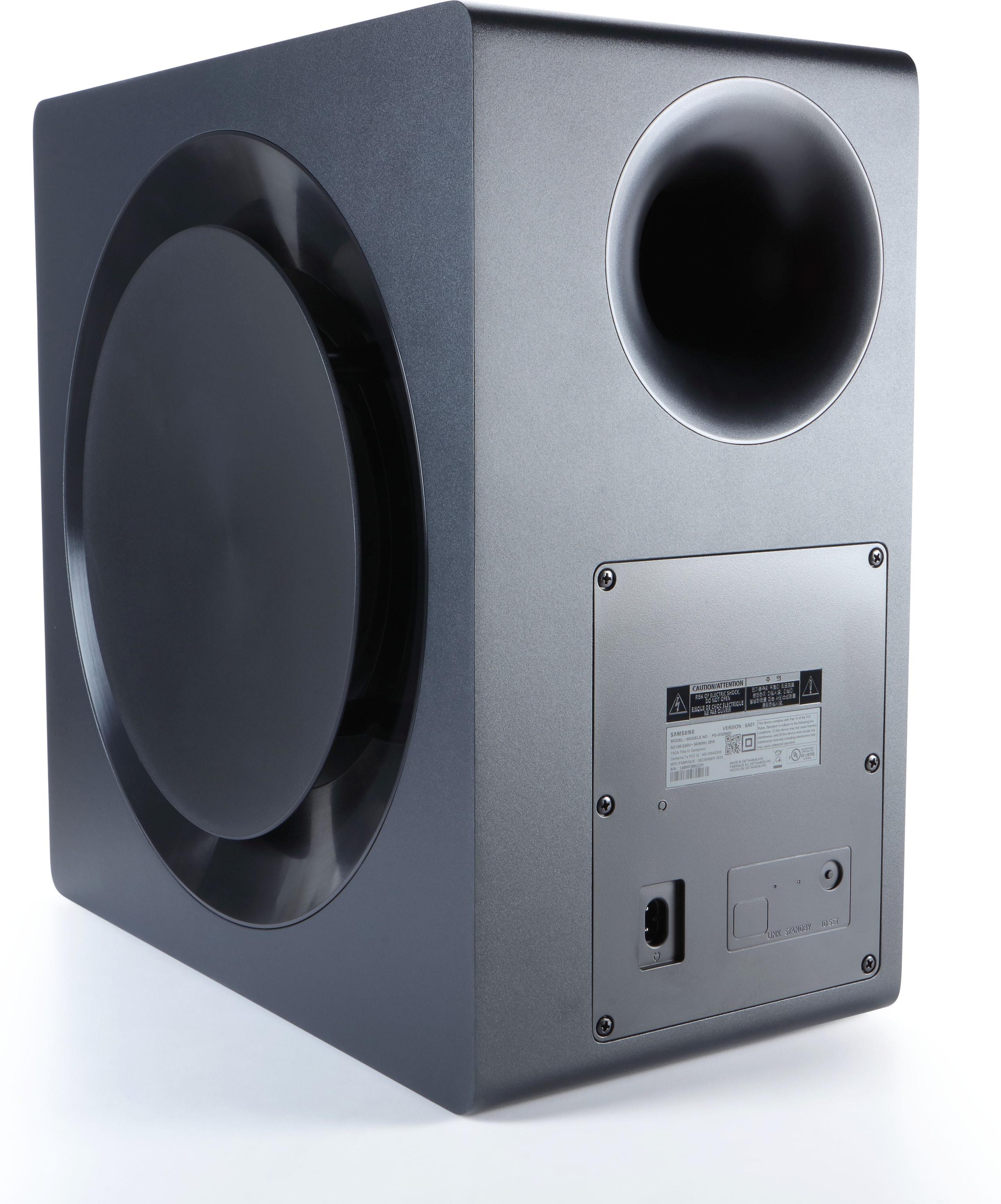
The Samsung HW-Q990D uses a larger 20cm (about 8-inch) subwoofer driver that delivers substantially more bass depth and control than typical budget systems. More importantly, Samsung's advanced processing ensures the bass integrates seamlessly with the main speakers rather than sounding disconnected or boomy. During our research into user feedback, the consistent theme was that the Samsung's bass remains controlled even at high volumes, with minimal distortion during demanding content like explosions or deep electronic music.
The Hisense AX5140Q includes a 6.5-inch wireless subwoofer that performs well above its size category but can't match the Samsung's depth and impact. Some users report occasional resonance or echo issues in certain rooms, suggesting the bass tuning isn't as refined as premium alternatives. However, for the price point, it delivers adequate low-frequency performance that enhances the overall experience without overwhelming smaller rooms.
The bass difference becomes most apparent during action movies and gaming. The Samsung HW-Q990D delivers those chest-thumping explosions and rumbling sound effects that make you feel like you're in the action, while the Hisense AX5140Q provides solid but less dramatic bass enhancement.
Vocal reproduction might be the most important performance characteristic for daily use. If you can't understand dialogue clearly, even the most impressive surround effects become irrelevant. Both systems handle this well, but through different approaches.
The Samsung HW-Q990D includes Samsung's Active Voice Amplifier technology, which analyzes ambient noise in real-time and automatically adjusts dialogue frequencies to maintain clarity. This means voices stay intelligible even when there's background noise in your room or during complex movie scenes with lots of simultaneous audio elements.
The Hisense AX5140Q uses dedicated voice enhancement modes and AI-powered content analysis to optimize dialogue reproduction. While not as sophisticated as Samsung's real-time processing, it still delivers clear, centered dialogue that represents a significant upgrade from most TV speakers.
Both systems place dialogue in a dedicated center channel, ensuring voices appear to come from the screen rather than floating around the room. This creates more natural, engaging viewing experiences compared to systems that try to handle dialogue through left and right speakers alone.
Gaming audio has become increasingly important as consoles and PCs deliver more sophisticated audio experiences. The differences between these systems become pronounced when considering modern gaming requirements.
The Samsung HW-Q990D includes HDMI 2.1 support with 4K/120Hz pass-through capability, making it ideal for PlayStation 5, Xbox Series X, and high-end PC gaming. This means you can connect your console directly to the soundbar and still maintain full gaming performance while getting low-latency audio processing. The system's Game Mode Pro automatically adjusts audio characteristics based on game types, emphasizing positional cues in shooters or enhancing ambient effects in adventure games.
The Hisense AX5140Q offers a Game Pro mode that sharpens positional audio and reduces latency, but it's limited to 4K/60Hz pass-through. For most gaming scenarios, this works fine, but serious gamers with the latest consoles won't get the full potential from their hardware.
The gaming performance gap matters most for competitive gaming and next-generation console owners who want to future-proof their setup. Casual gamers will find both systems provide enhanced audio compared to TV speakers.
Price-to-performance analysis reveals the fundamental trade-offs between these approaches. At the time of writing, the Hisense AX5140Q typically costs 60-70% less than the Samsung HW-Q990D, making the value calculation complex.
The Hisense AX5140Q delivers genuine 5.1.4 surround sound with real height channels at a price point where most competitors offer only virtual surround processing or basic channel configurations. This represents exceptional value for users primarily interested in a significant audio upgrade without premium pricing.
The Samsung HW-Q990D commands premium pricing but justifies it through flagship-level performance, advanced features, and future-proofing capabilities. The additional cost buys you substantially better immersion, more precise audio placement, superior bass performance, and compatibility with the latest gaming standards.
Feature set comparison shows where the price difference manifests. The Samsung includes advanced room calibration that automatically optimizes performance for your space, comprehensive app control with voice assistant integration, and sophisticated processing algorithms that continuously adapt to content and environment. The Hisense focuses on essential features executed well: reliable wireless connectivity, effective sound modes, and straightforward operation.
Long-term value considerations favor the Samsung for users who want to future-proof their investment. HDMI 2.1 support, advanced processing capabilities, and premium build quality suggest longer useful life as content standards evolve. The Hisense provides immediate satisfaction and excellent value but may require earlier replacement as user expectations increase.
Room size dramatically influences which system makes sense. In smaller spaces (under 200 square feet), the Hisense AX5140Q often provides sufficient immersion without overwhelming the room or neighbors. Its wireless rear speakers create convincing surround effects in typical living room setups, while the 6.5-inch subwoofer delivers adequate bass without excessive room pressurization.
Larger living spaces benefit significantly from the Samsung HW-Q990D's higher power output and more sophisticated driver configuration. The additional channels help fill larger rooms with convincing surround sound, while the larger subwoofer maintains bass impact at the volumes needed for bigger spaces.
Content preferences also influence the choice. Movie enthusiasts who prioritize the most immersive possible experience will appreciate the Samsung's precision and dynamics during complex Dolby Atmos sequences. Music listeners might find both systems capable, though neither approaches dedicated stereo systems for pure music reproduction.
Gaming priorities create a clear division. Casual gamers will find both systems enhance the experience compared to TV speakers, but serious gamers with current-generation consoles need the Samsung's HDMI 2.1 capabilities to avoid limiting their hardware.
The 2024 releases of both the Hisense AX5140Q and Samsung HW-Q990D represent significant advances over previous generations. Earlier soundbars often relied heavily on virtual surround processing, which could sound convincing but lacked the precision of discrete channels. These modern systems both include real height speakers and wireless rear channels, delivering authentic three-dimensional audio.
The integration features have evolved substantially as well. Previous generations required complex setup procedures and multiple remotes. Both current systems offer simplified pairing processes and integrated control schemes that make them feel like extensions of the TV rather than separate components requiring constant management.
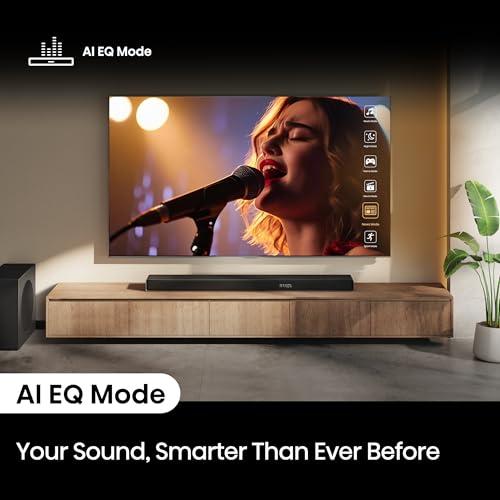
Processing power improvements enable real-time audio analysis and optimization that wasn't possible in earlier generations. The Samsung's SpaceFit Sound Pro and the Hisense's AI EQ modes continuously adjust performance based on content and environment, reducing the need for manual tweaking.
Choose the Hisense AX5140Q if you want a significant audio upgrade without premium pricing, have a small to medium-sized room, prioritize simple setup and operation, or are upgrading from basic TV speakers or entry-level soundbars. This system delivers authentic Dolby Atmos performance at a price point that makes premium audio accessible to budget-conscious buyers.
Choose the Samsung HW-Q990D if you can invest in premium performance, have a large room requiring powerful audio, prioritize gaming with next-generation consoles, want the most advanced features and room calibration available, or plan to integrate with Samsung TV ecosystem features. This system justifies its premium pricing through flagship performance that approaches dedicated component systems.
The fundamental question isn't whether the Samsung HW-Q990D sounds better—it clearly does. The question is whether the performance difference justifies the substantial price premium for your specific situation and priorities.
For most users upgrading from TV speakers, either system will provide a transformative audio experience. The Hisense AX5140Q represents outstanding value and delivers genuine surround sound immersion that will satisfy the majority of home theater enthusiasts. The Samsung HW-Q990D pushes into territory where soundbars can genuinely compete with traditional component systems, but at a price that demands careful consideration of your audio priorities and budget constraints.
Both systems represent the current state of soundbar technology done well, just targeting different points on the price and performance spectrum. Your choice should align with your room requirements, content preferences, gaming needs, and budget realities rather than simply choosing the "better" system on paper.
| Hisense AX5140Q | Samsung HW-Q990D |
|---|---|
| Channel Configuration - Determines surround sound immersion and overhead effects | |
| 5.1.4 channels with 4 real height speakers | 11.1.4 channels with 22 total drivers |
| System Components - More components typically mean better surround coverage | |
| Soundbar + wireless 6.5" subwoofer + 2 wireless rear speakers | Soundbar + wireless 8" subwoofer + 2 wireless satellite speakers |
| HDMI Gaming Support - Critical for next-gen console owners (PS5/Xbox Series X) | |
| HDMI with 4K/60Hz passthrough | 2x HDMI 2.1 with 4K/120Hz passthrough |
| Room Calibration - Automatically optimizes sound for your specific space | |
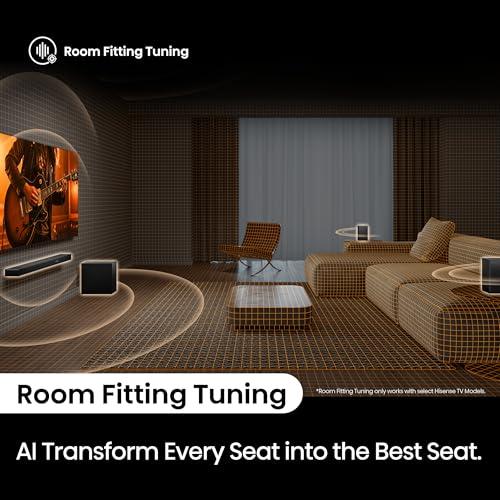
| Basic room fitting tuning | Advanced SpaceFit Sound Pro with continuous adaptation |
| Audio Format Support - Ensures compatibility with streaming and disc content | |
| Dolby Atmos, DTS:X, Dolby Digital Plus, PCM | Dolby Atmos, DTS:X, Dolby TrueHD, all major formats |
| Smart Features - Controls convenience and integration options | |
| Hi-Concerto integration with Hisense TVs, basic remote control | Q-Symphony with Samsung TVs, voice assistants, mobile app control |
| Power Output - Affects maximum volume and dynamic range | |
| 600W total system power | Higher total power with 22-driver configuration |
| Connectivity Options - Determines how many devices you can connect | |
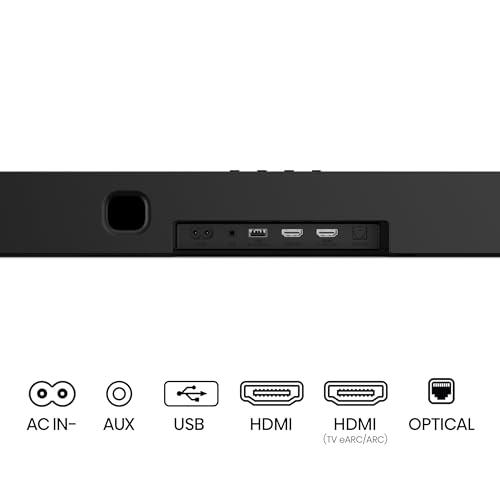
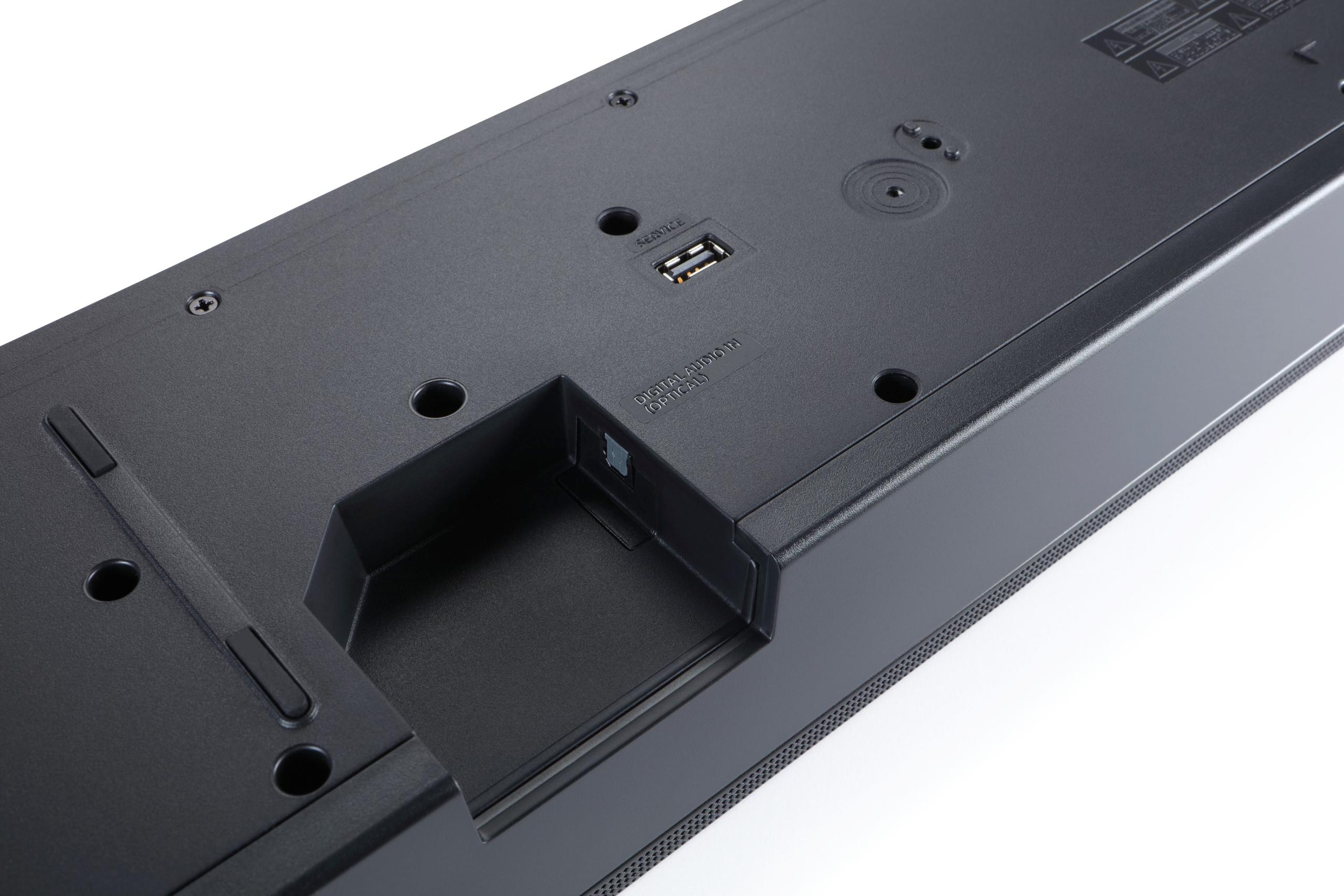
| HDMI eARC, HDMI input, optical, USB, Bluetooth 5.3 | 2x HDMI 2.1, HDMI eARC, optical, WiFi, Bluetooth 5.2, AirPlay 2 |
| Sound Customization - Ability to fine-tune audio to your preferences | |
| 7 preset sound modes including Game Pro and AI mode | Adaptive Sound, graphic EQ, multiple modes including Private Rear Sound |
| Best For - Target user and room scenarios | |
| Budget-conscious buyers, small-medium rooms, simple setup priority | Premium performance seekers, large rooms, serious gamers, Samsung TV owners |
The Hisense AX5140Q delivers exceptional value by offering genuine 5.1.4 channel Dolby Atmos with wireless rear speakers at a budget-friendly price point. The Samsung HW-Q990D costs significantly more but justifies the premium with flagship performance, 11.1.4 channels, and advanced features like HDMI 2.1 gaming support. For most users seeking a major audio upgrade, the Hisense AX5140Q provides outstanding value, while the Samsung HW-Q990D is worth the investment for serious home theater enthusiasts.
The Hisense AX5140Q uses a 5.1.4 configuration (5 main channels, 1 subwoofer, 4 height channels) while the Samsung HW-Q990D features 11.1.4 channels with 22 total drivers. The Samsung system can create more precise audio placement and immersive surround effects due to its additional channels. However, the Hisense AX5140Q still delivers authentic Dolby Atmos with real height speakers rather than virtual processing, making it effective for most home theater setups.
The Samsung HW-Q990D is superior for gaming, especially with next-generation consoles like PS5 and Xbox Series X. It features HDMI 2.1 with 4K/120Hz passthrough and Game Mode Pro that optimizes audio based on game genres. The Hisense AX5140Q includes a Game Pro mode but is limited to 4K/60Hz passthrough. Casual gamers will find both systems enhance their experience, but serious gamers should choose the Samsung HW-Q990D for full console compatibility.
Yes, both the Hisense AX5140Q and Samsung HW-Q990D fully support Dolby Atmos and DTS:X formats. Both systems use real upfiring speakers to create overhead sound effects rather than relying solely on virtual processing. The Samsung HW-Q990D provides more precise object placement due to its additional channels, while the Hisense AX5140Q delivers convincing height effects that work well in typical living rooms.
The Hisense AX5140Q is generally easier to set up with automatic wireless pairing of all components and straightforward remote control operation. The Samsung HW-Q990D offers more setup options including advanced room calibration and app-based controls, but this can add complexity. Both systems feature wireless subwoofers and rear speakers to minimize cable clutter. For users prioritizing simplicity, the Hisense AX5140Q provides a more plug-and-play experience.
The Samsung HW-Q990D includes a larger 8-inch subwoofer that delivers deeper, more controlled bass compared to the Hisense AX5140Q's 6.5-inch driver. The Samsung's subwoofer maintains clarity even at high volumes and integrates seamlessly with the main system. The Hisense AX5140Q provides adequate bass for its price range but may show some resonance in certain room configurations. For bass-heavy content like action movies, the Samsung HW-Q990D offers superior low-frequency performance.
The Samsung HW-Q990D is better suited for large living spaces due to its higher power output and 22-driver configuration that can fill bigger rooms with immersive sound. The Hisense AX5140Q performs well in small to medium-sized rooms but may struggle to maintain impact in very large spaces. The Samsung's advanced processing and additional channels help maintain surround effects across wider seating areas, making it the better choice for open floor plans or dedicated home theater rooms.
Both systems offer TV integration features. The Hisense AX5140Q includes Hi-Concerto technology for deep integration with compatible Hisense TVs, allowing unified control and optimized audio processing. The Samsung HW-Q990D features Q-Symphony that coordinates with Samsung TVs to create an expanded soundstage using both TV and soundbar speakers. Both support HDMI eARC for simplified connectivity, but each works best when paired with their respective brand's televisions.
Both the Hisense AX5140Q and Samsung HW-Q990D excel at dialogue reproduction with dedicated center channels and voice enhancement modes. The Samsung HW-Q990D includes Active Voice Amplifier technology that automatically adjusts dialogue based on ambient noise, while the Hisense AX5140Q offers AI-powered voice modes. Both represent significant improvements over TV speakers for speech intelligibility, with the Samsung providing slightly more advanced processing capabilities.
The Samsung HW-Q990D offers more comprehensive connectivity with two HDMI 2.1 inputs, HDMI eARC, optical, WiFi, Bluetooth 5.2, and AirPlay 2 support. The Hisense AX5140Q includes HDMI eARC, one HDMI input, optical, USB, and Bluetooth 5.3. Both support wireless streaming and can serve as audio hubs for multiple devices. The Samsung's additional HDMI 2.1 ports and wireless options provide more flexibility for complex home theater setups.
Both soundbars handle music well but with different strengths. The Samsung HW-Q990D offers more precise stereo imaging and a graphic equalizer for customization, making it better for critical music listening. The Hisense AX5140Q includes dedicated music modes and provides good stereo performance for casual listening. Neither system matches dedicated stereo speakers for pure music reproduction, but both significantly enhance the music experience compared to TV speakers, with the Samsung HW-Q990D offering superior refinement.
Choose the Hisense AX5140Q if you want excellent value, have a smaller room, prioritize simple operation, or are upgrading from basic TV audio. Select the Samsung HW-Q990D if you have a larger space, are serious about home theater performance, need gaming features for next-gen consoles, or want the most advanced soundbar experience available. Both deliver authentic surround sound, but the Samsung HW-Q990D provides flagship performance while the Hisense AX5140Q offers the best value in its category.
We've done our best to create useful and informative comparisons to help you decide what product to buy. Our research uses advanced automated methods to create this comparison and perfection is not possible - please contact us for corrections or questions. These are the sites we've researched in the creation of this article: shop.hisense-usa.com - manuals.plus - dolby.com - youtube.com - gzhls.at - rtings.com - youtube.com - bestbuy.com - manuals.plus - bestbuy.com - hisense-usa.com - youtube.com - device.report - manuals.plus - youtube.com - device.report - manuals.plus - youtube.com - techradar.com - avsforum.com - valueelectronics.com - samsung.com - rtings.com - samsung.com - avsforum.com - samsung.com - cdwg.com - youtube.com - whathifi.com

Privacy Policy
Terms and Conditions - Affiliate Policy
Home Security
© Copyright 2008-2026.
11816 Inwood Rd #1211, Dallas, TX 75244