







When you're ready to upgrade from your TV's built-in speakers, the world of soundbars can feel overwhelming. Do you need a simple solution that just makes dialogue clearer, or are you looking for that full theater experience that makes action movies genuinely exciting? The Hisense AX5140Q and Sonos Beam Gen 2 represent two completely different philosophies for solving the same problem—and understanding which approach fits your situation will save you both money and frustration.
Before diving into these specific models, it's worth understanding what separates a good soundbar from a great one. The most important factors are surround sound capability (how well it creates the illusion of sound coming from all directions), dialogue clarity (can you actually understand what actors are saying), bass response (does it have enough low-end punch for explosions and music), and ease of use (will it actually improve your daily TV watching without constant tweaking).
Modern soundbars fall into two camps: virtual surround systems that use clever audio processing to trick your brain into hearing surround effects from a single bar, and discrete multi-speaker systems that physically place speakers around your room for authentic surround sound. Each approach has real advantages, and your choice depends heavily on your room, budget, and how much complexity you're willing to accept.
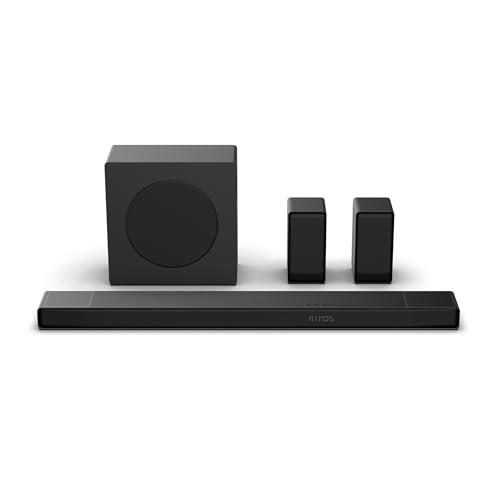
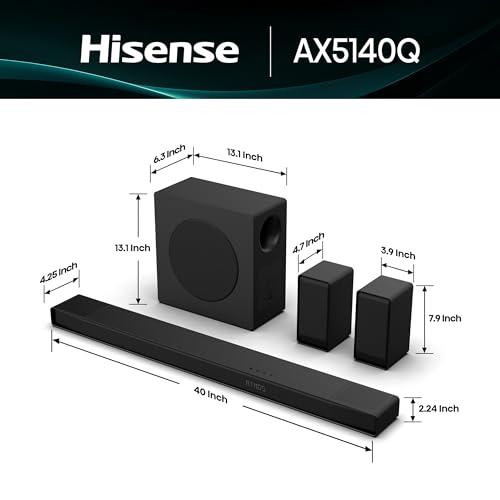
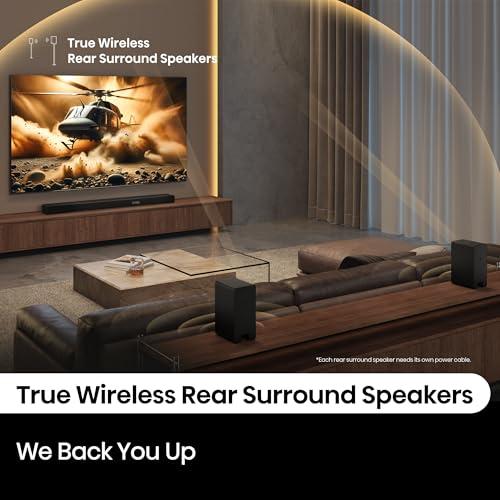
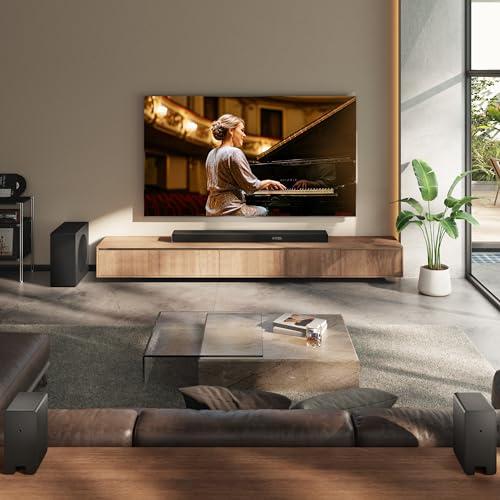
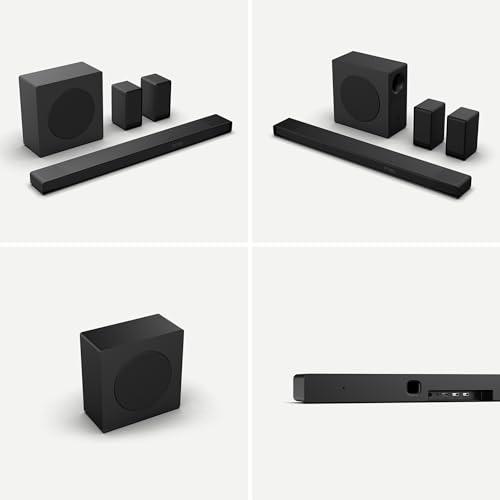
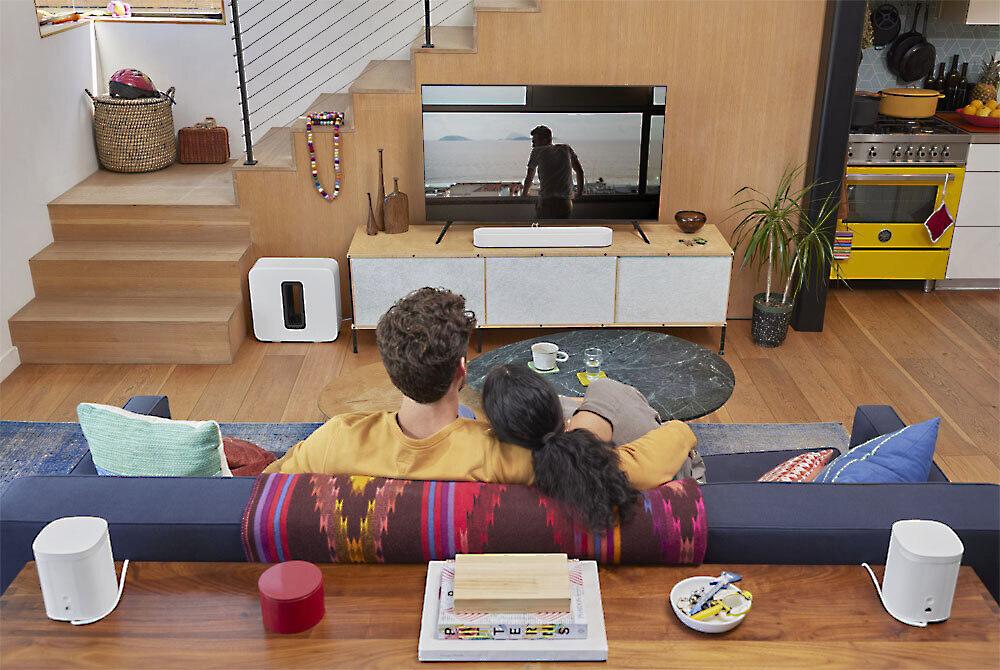
Released in 2024, the Hisense AX5140Q takes the "more is better" approach to home audio. This isn't just a soundbar—it's a complete 5.1.4-channel surround system that includes four separate components: the main soundbar, a wireless subwoofer, and two wireless rear speakers. The "5.1.4" designation tells you exactly what you're getting: five main speakers (left, center, right, plus two surrounds), one subwoofer for bass, and four additional height speakers that bounce sound off your ceiling to create overhead effects.
What makes this system special is that each audio channel gets its own dedicated speaker. When a helicopter flies overhead in a movie, the Hisense AX5140Q uses actual upfiring drivers—speakers that point toward the ceiling—to reflect sound down from above. When dialogue happens on screen, it comes from a dedicated center channel. When explosions occur, they're handled by a real 6.5-inch subwoofer, not tiny drivers trying to do everything at once.
The 600-watt power rating might sound like marketing fluff, but it's distributed across multiple dedicated drivers, meaning each speaker can focus on its specific job without compromising the others. This is fundamentally different from cramming everything into one box and hoping software can sort it out.
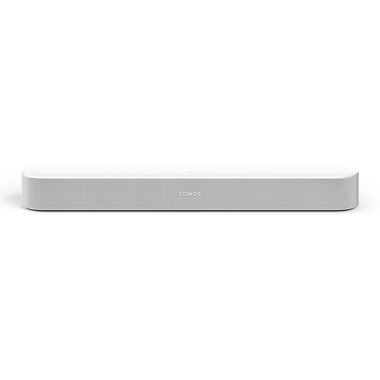
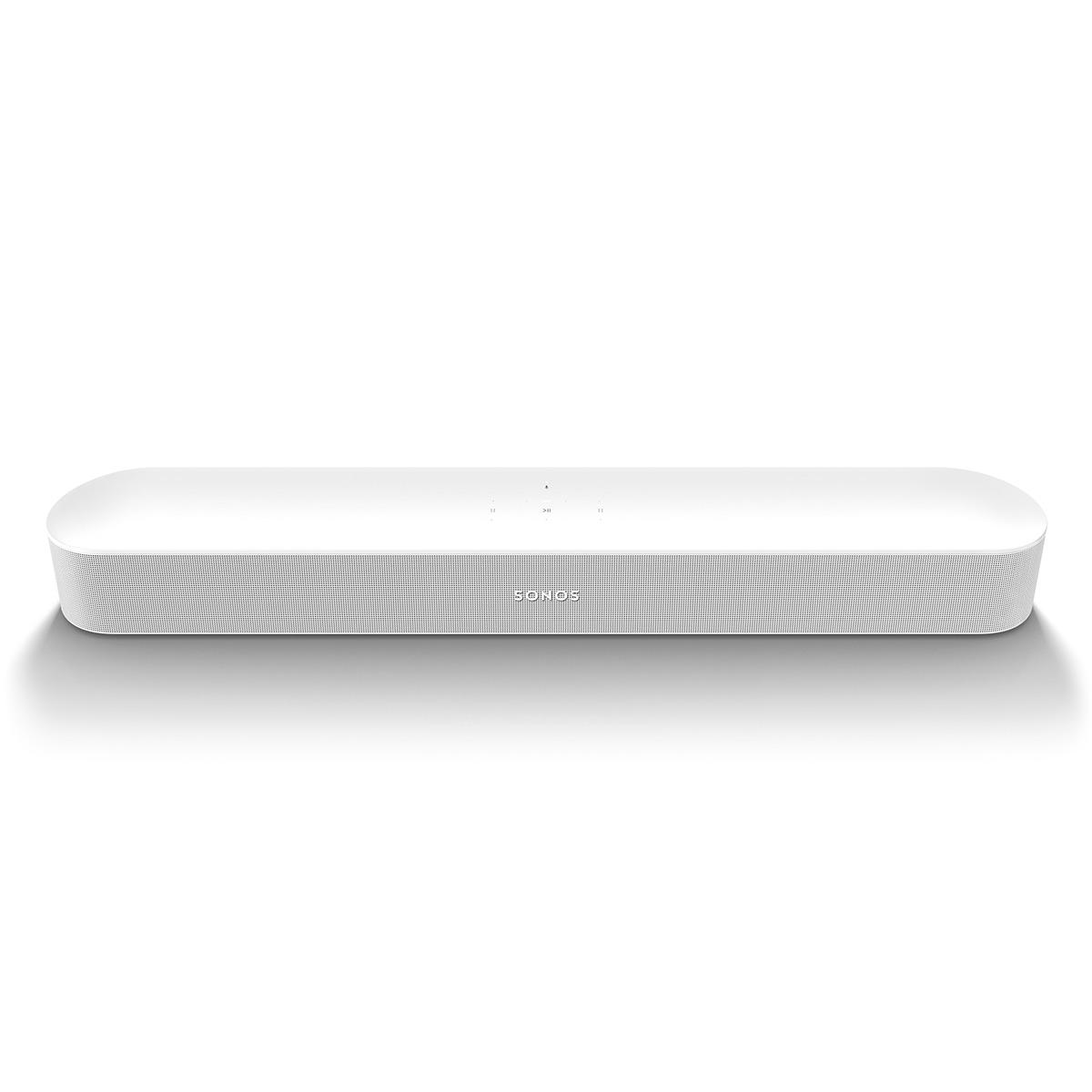
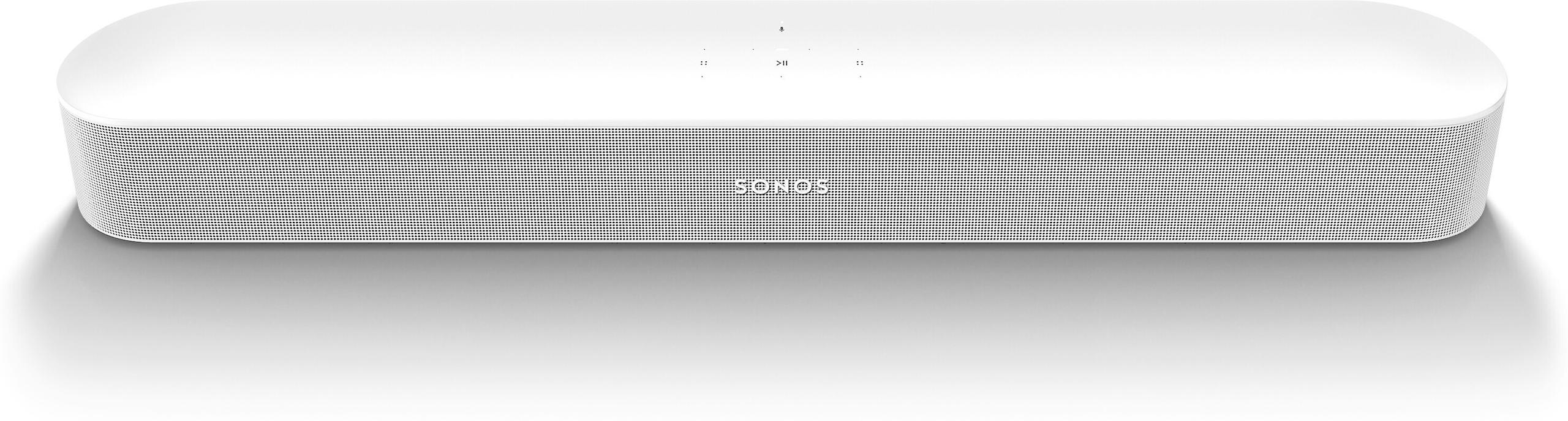
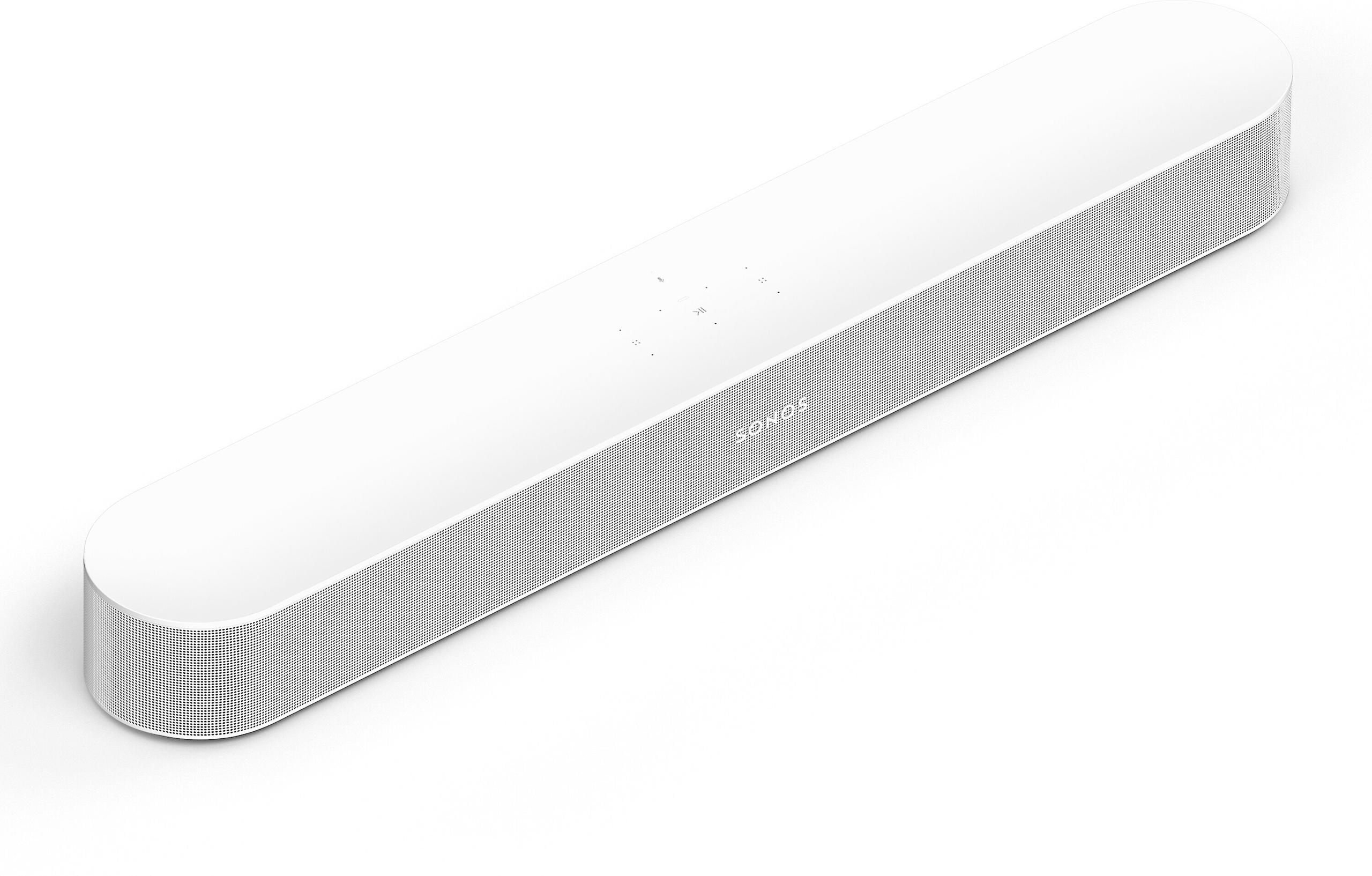
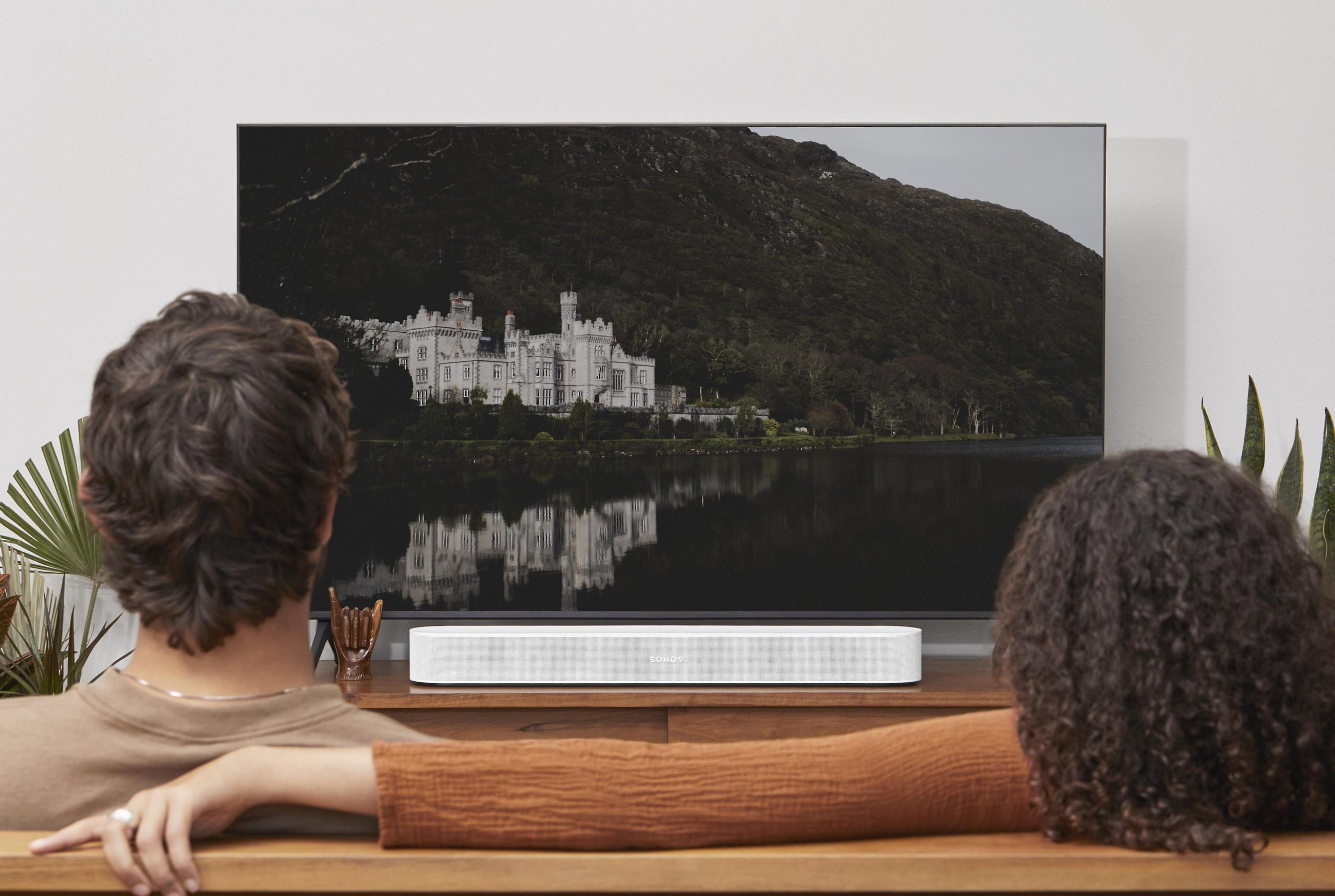
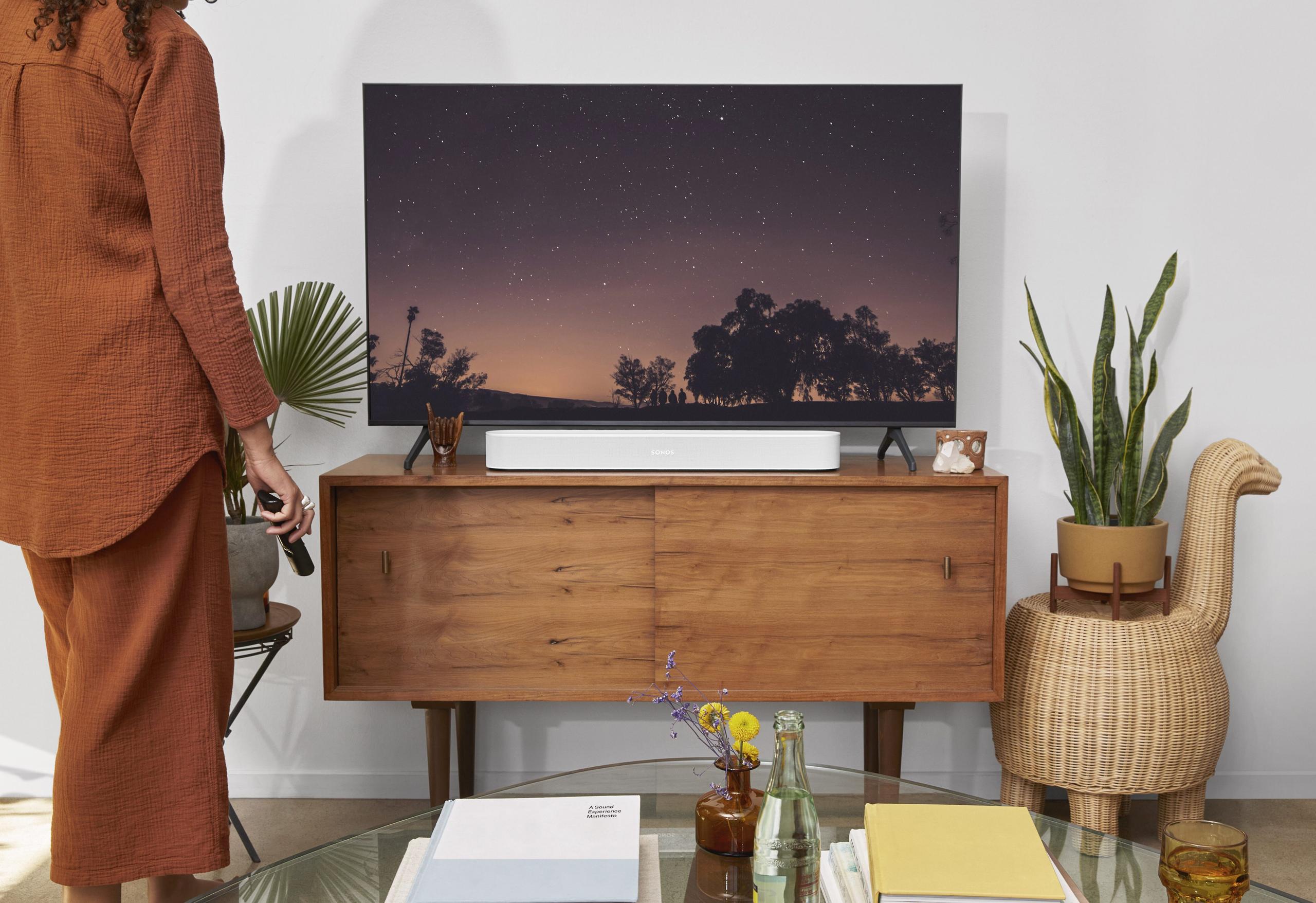
The Sonos Beam Gen 2, updated in 2021 with Dolby Atmos support, takes the opposite approach. Instead of placing speakers around your room, it uses psychoacoustic processing—essentially advanced mathematical algorithms that understand how your brain interprets sound—to create virtual surround effects from a single compact bar.
This might sound like a compromise, but Sonos has spent years perfecting this technology. The Beam Gen 2 uses HRTF (head-related transfer function) processing, which analyzes how sound waves naturally interact with your head and ears, then manipulates audio signals to trick your brain into perceiving sound coming from locations where no speakers exist.
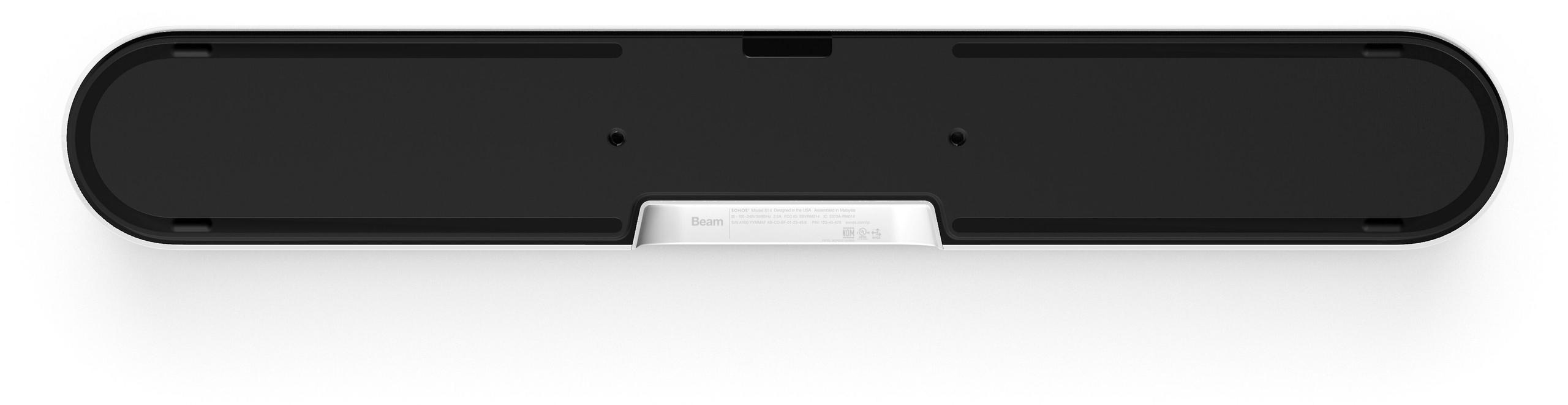
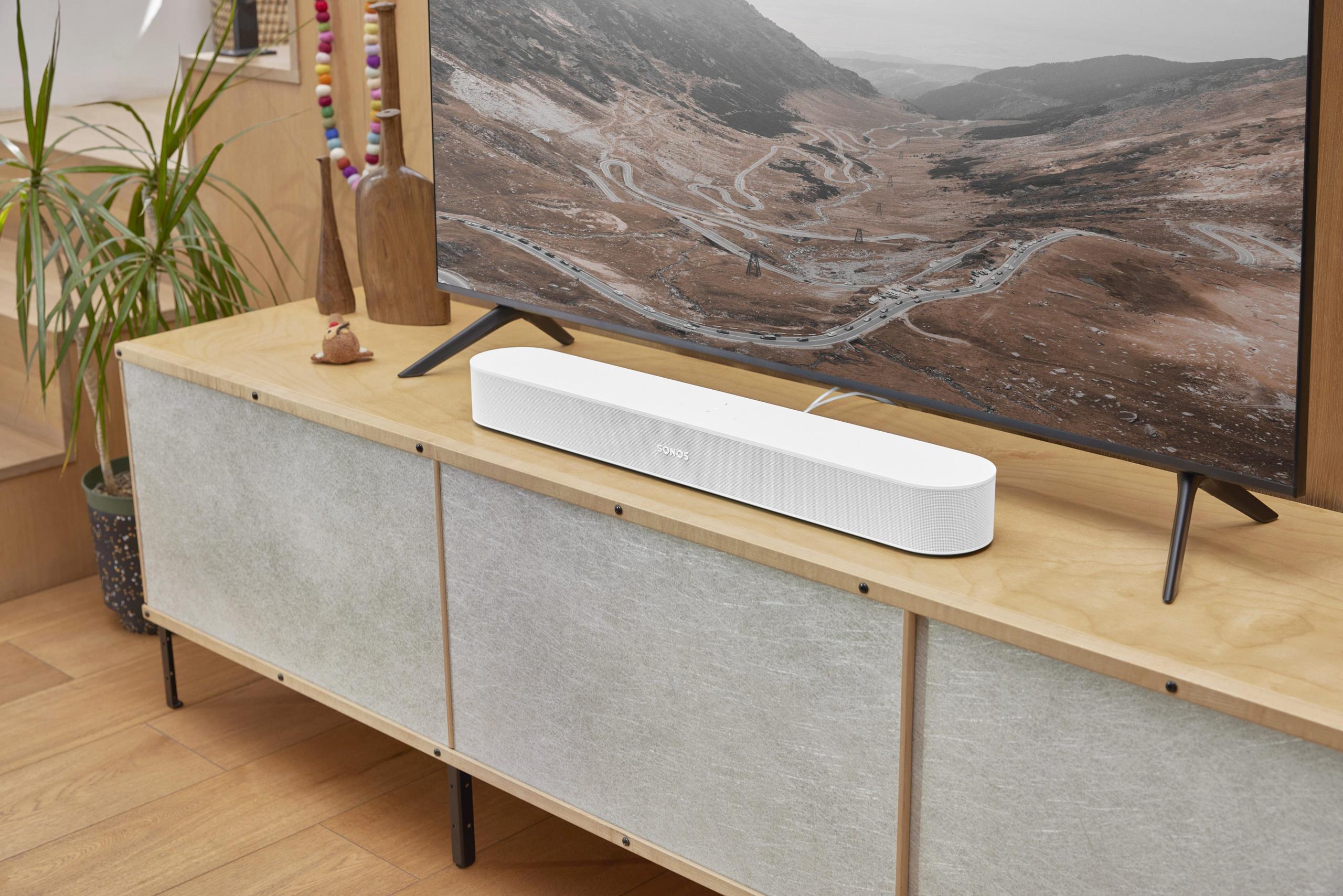
The result is a 25.6-inch soundbar that weighs just 6.35 pounds but creates a surprisingly convincing surround experience. Five internal drivers (four woofers and one tweeter) work together with three passive radiators—essentially speakers without magnets that vibrate in response to air pressure from the active drivers—to create both directional effects and bass response.
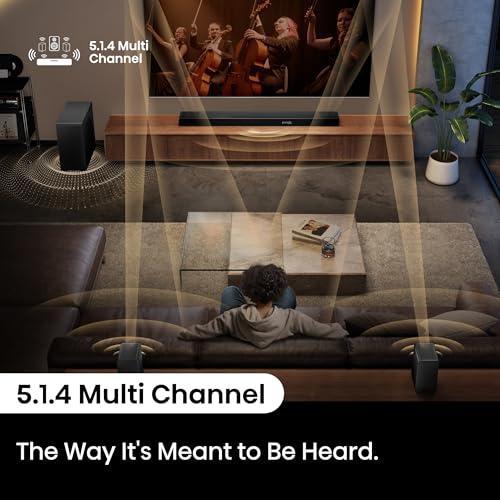
Based on extensive user feedback and professional reviews, the difference in surround immersion between these systems is dramatic but context-dependent. The Hisense AX5140Q delivers what audio experts consistently describe as "true" surround sound because it physically places audio sources around your listening position. When rear speakers are positioned correctly behind or beside your seating area, effects genuinely move around the room rather than just seeming to.
The four upfiring drivers create what reviewers call a "dome of sound" above the listening area. In Dolby Atmos movie scenes with rain or aircraft, the AX5140Q produces overhead effects that are noticeably more convincing than virtual processing. Professional reviews consistently note that discrete rear speakers provide better spatial separation—the ability to distinguish where different sounds are coming from—especially during complex action sequences.
However, the Sonos Beam Gen 2 isn't simply inferior; it's optimized for different circumstances. In smaller rooms (under 12 feet from the soundbar), the virtual surround processing can be remarkably effective. The psychoacoustic algorithms work best when you're within the designed listening area, and many users report being genuinely surprised by how well the Beam Gen 2 creates the illusion of surround sound from a single point source.
The key difference is consistency. The Hisense system's performance varies dramatically based on room acoustics, ceiling height, and speaker placement, while the Sonos provides more predictable results regardless of room layout.
Bass performance represents perhaps the most significant technical difference between these approaches. The Hisense AX5140Q includes a dedicated 6.5-inch wireless subwoofer that can be positioned optimally within your room. Subwoofer placement is crucial because bass frequencies interact heavily with room dimensions—placing a sub in the wrong location can create nulls (dead spots where bass disappears) or peaks (areas where bass becomes overwhelming).
User reviews consistently praise the AX5140Q's bass impact, particularly in Game Pro mode where low-frequency effects are tuned for maximum impact. The dedicated subwoofer handles frequencies down to 40Hz, providing the kind of chest-thumping bass that makes action movies genuinely exciting. Because the subwoofer only handles bass frequencies, it can use all its power and driver excursion for low-end reproduction without compromising midrange clarity.
The Sonos Beam Gen 2 takes a more sophisticated approach to bass within its size constraints. Three passive radiators work with the active drivers to extend low-frequency response beyond what the compact cabinet would normally allow. Passive radiators act like subwoofers without motors—they vibrate in response to air pressure changes created by the active drivers, effectively turning the entire soundbar cabinet into a larger acoustic enclosure.
While this design is clever and produces respectable bass for the size, physics still matters. The Beam Gen 2 simply cannot move as much air or reach as low in frequency as a dedicated 6.5-inch subwoofer. Users upgrading from TV speakers often find the bass perfectly adequate for dialogue and casual viewing, but those seeking home theater impact will notice the difference during action sequences.
Both systems excel at dialogue reproduction, but through different technical approaches. The Hisense AX5140Q uses a dedicated center channel—the most important speaker for dialogue reproduction—combined with AI EQ processing that analyzes content in real-time to optimize vocal frequencies. The AI EQ feature automatically adjusts frequency response based on what's playing, reducing background noise and enhancing vocal clarity without user intervention.
Professional reviews consistently highlight the AX5140Q's dialogue performance in complex scenes where multiple characters speak simultaneously or during action sequences with heavy background effects. The dedicated center channel ensures voices remain anchored to the screen rather than getting lost in the surround mix.
The Sonos Beam Gen 2 achieves excellent dialogue clarity through different means. Its Speech Enhancement feature uses advanced DSP (digital signal processing) to analyze incoming audio and selectively boost vocal frequencies while reducing competing elements. The compact design actually helps here—with all drivers close together, there's no phase interference between separated speakers that can muddy vocal reproduction.
Trueplay room calibration, available through the Sonos app on iOS devices, measures how sound reflects in your specific room and adjusts frequency response accordingly. This ensures dialogue clarity remains consistent regardless of room acoustics, addressing one of the biggest variables in audio reproduction.
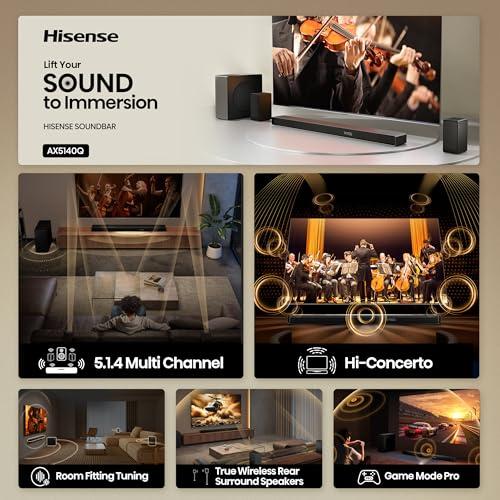
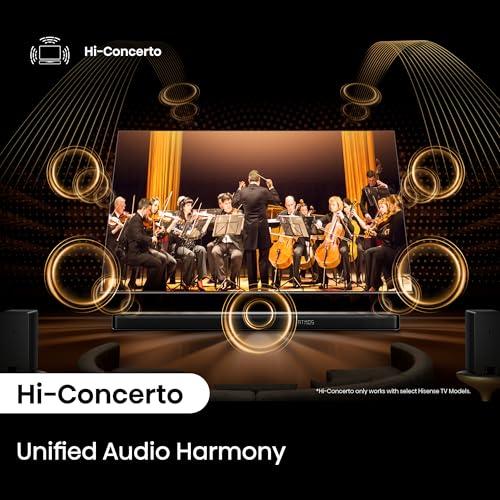
The Hisense AX5140Q represents the latest generation of smart soundbar technology. The Hi-Concerto ecosystem integration is particularly impressive for Hisense TV owners—the TV and soundbar communicate directly to optimize audio processing, coordinate power management, and simplify control. This level of integration means the system can automatically switch sound modes based on content type and maintain synchronization between video and multi-channel audio.
The AI EQ mode goes beyond simple presets by continuously analyzing content and adjusting processing in real-time. During quiet dialogue scenes, it enhances vocal clarity and reduces background noise. During action sequences, it maintains dynamic range while preventing distortion at higher volumes. This adaptive processing means the system automatically optimizes itself without requiring constant manual adjustment.
Seven distinct sound modes provide optimization for different content types. Movie mode emphasizes surround effects and bass impact. Game Pro mode reduces latency and enhances positional audio cues for competitive gaming. Night mode compresses dynamic range to prevent disturbing others while maintaining dialogue intelligibility.
The Sonos Beam Gen 2 excels in smart home integration and streaming capabilities. Built-in voice assistants (Amazon Alexa and Google Assistant) enable hands-free control not just of the soundbar, but of connected smart home devices. The integration is sophisticated enough to distinguish voice commands from TV audio, preventing false activations during movies or shows.
Streaming platform support is comprehensive, with native compatibility for major services including Spotify, Apple Music, Amazon Music, and Tidal. AirPlay 2 support enables seamless streaming from iOS devices with automatic audio quality optimization. The Beam Gen 2 can also function as part of a larger Sonos ecosystem, enabling whole-home audio where different speakers play synchronized music throughout your house.
Trueplay tuning represents some of the most advanced automatic room calibration available in this price segment. Using an iOS device's microphone, the system plays test tones and measures how they reflect in your room, then adjusts frequency response to optimize performance for your specific space. This process accounts for furniture, wall materials, and room dimensions that significantly affect audio reproduction.
Setting up the Hisense AX5140Q requires genuine commitment to proper installation. Four separate components need power connections, and optimal performance depends heavily on correct placement. The rear speakers should be positioned behind or beside the primary seating area, ideally at ear level or slightly above. The subwoofer benefits from corner placement or along walls to leverage boundary reinforcement—a acoustic phenomenon where walls amplify bass output.
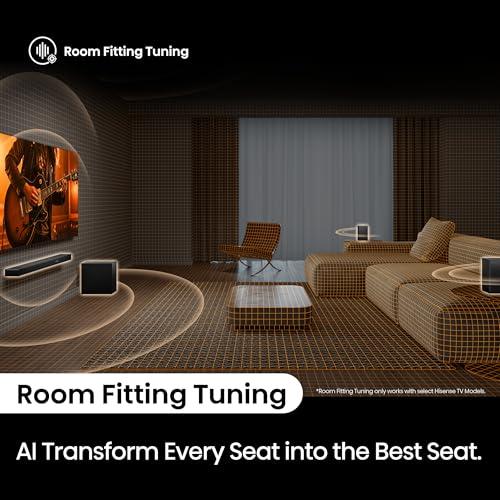
The room calibration process, while not mandatory, significantly improves performance. The system plays test tones through each speaker while measuring how sound reflects in your room, then adjusts timing, levels, and frequency response to create optimal integration. Professional reviews consistently recommend completing this process, as it can transform a good-sounding system into an excellent one.
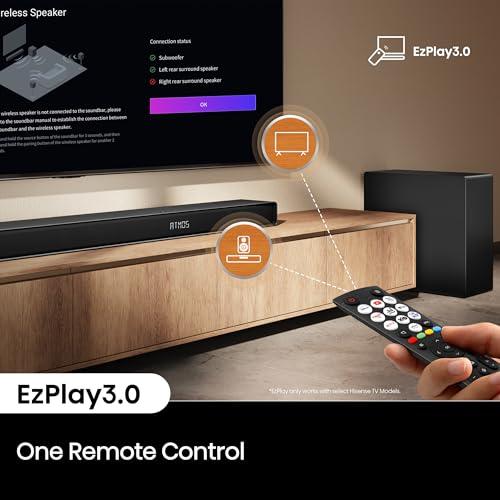
Wireless connectivity between components generally works reliably, but setup requires patience. Each speaker must pair with the main soundbar, and optimal placement sometimes conflicts with furniture arrangements or power outlet locations. The payoff is substantial—users consistently report that properly installed systems deliver home theater experiences that rival much more expensive setups.
The Sonos Beam Gen 2 offers perhaps the simplest setup process in the soundbar category. A single HDMI eARC connection carries both audio from the TV and control signals for power and volume synchronization. The compact design fits under most TVs without blocking infrared sensors or overwhelming smaller entertainment centers.
Initial setup through the Sonos app takes minutes and includes automatic detection of your TV model for optimal compatibility settings. Trueplay calibration, while optional, takes less than five minutes and dramatically improves performance in most rooms. The process involves walking around your listening area while playing test tones—the app uses your phone's microphone to map room acoustics and adjust frequency response accordingly.
Wall mounting requires minimal effort with the included hardware, and the compact size means it won't dominate your wall space. Cable management is simple with just power and HDMI connections required.
The Hisense AX5140Q provides significant advantages for serious gaming, particularly in competitive titles where positional audio matters. The Game Pro mode reduces processing latency while enhancing directional audio cues. With discrete rear speakers, footsteps, gunshots, and environmental sounds provide genuine positional information that can improve competitive performance.
The 4K 60Hz HDMI passthrough handles modern gaming consoles without compromising video quality, though it lacks support for higher refresh rates that some PC gamers prefer. The discrete surround speakers create an immersive experience in story-driven games that rivals dedicated gaming headsets while allowing normal conversation in the room.
The Sonos Beam Gen 2 offers excellent performance for casual gaming and streaming content. HDMI eARC connection ensures minimal latency, and the compact design doesn't interfere with gaming setups or TV mounting. While virtual surround effects aren't as precise as discrete speakers for competitive gaming, they provide satisfying immersion for story-driven games and streaming content.
The superior streaming integration makes the Beam Gen 2 ideal for households that consume more music and streaming content than dedicated movie watching. Seamless transitions between TV audio and music streaming, combined with voice control, create a more integrated entertainment experience.
At the time of writing, these systems occupy different value segments that reflect their different approaches. The Hisense AX5140Q provides exceptional value for buyers seeking maximum immersion and channel count at a moderate price point. The combination of discrete speakers, true height channels, and substantial power output would traditionally require separate purchases of an AV receiver and multiple speakers, making this an economical path to authentic surround sound.
The Sonos Beam Gen 2 represents premium value in convenience and ecosystem integration. While the initial cost is higher relative to the physical hardware (fewer speakers, less power), the value includes sophisticated software, automatic room calibration, comprehensive streaming support, and long-term software updates that continuously improve functionality.
After reviewing extensive user feedback and professional evaluations, the choice between these systems depends heavily on your specific situation and priorities.
Choose the Hisense AX5140Q if you:
Choose the Sonos Beam Gen 2 if you:
The fundamental difference comes down to physics versus processing. The Hisense uses physical speaker placement to create authentic surround effects but requires commitment to proper installation and room optimization. The Sonos uses advanced algorithms to simulate surround effects from a compact package but with inherent limitations that physics cannot overcome.
In my evaluation of user experiences and expert opinions, both systems excel within their intended use cases. The Hisense AX5140Q delivers on its promise of true surround immersion when properly installed, while the Sonos Beam Gen 2 provides remarkable performance and convenience in a compact package that fits modern living situations.
Your decision should prioritize which limitations you can accept: the complexity and space requirements of discrete speakers, or the physical constraints of single-bar virtual processing. Both represent excellent value within their categories, but they're solving different problems for different types of users.
| Hisense AX5140Q | Sonos Beam Gen 2 |
|---|---|
| System Configuration - Determines surround sound authenticity and setup complexity | |
| True 5.1.4 discrete speakers (bar + wireless sub + 2 wireless rears) | Single 3.1 bar with virtual surround processing |
| Total Power Output - Affects volume capability and dynamic range | |
| 600W across multiple dedicated drivers | 250W from integrated drivers and passive radiators |
| Physical Channels - Real speakers vs virtual processing for surround effects | |
| 9 discrete speakers: 5 main + 1 sub + 4 height channels | 5 integrated drivers with psychoacoustic virtual surround |
| Bass Performance - Low-end impact for movies and music | |
| Dedicated wireless 6.5" subwoofer (40Hz-20kHz response) | Integrated bass with 3 passive radiators (compact but limited depth) |
| Height Effects - Overhead sound for Dolby Atmos content | |
| 4 physical upfiring drivers (2 front, 2 rear) reflect off ceiling | Virtual height processing using HRTF algorithms |
| Setup Complexity - Installation time and technical requirements | |
| 4 power outlets, rear speaker placement, room calibration recommended | Single HDMI connection, automatic setup, optional Trueplay tuning |
| Room Size Optimization - Best performance scenarios | |
| Medium to large rooms (15+ ft), 8-10 ft ceilings ideal for upfiring | Small to medium rooms, consistent performance regardless of layout |
| Smart Features - Voice control and ecosystem integration | |
| AI EQ, Hi-Concerto TV integration, 7 sound modes including Game Pro | Built-in Alexa/Google Assistant, AirPlay 2, Sonos ecosystem compatibility |
| Connectivity Options - Input flexibility and modern device support | |
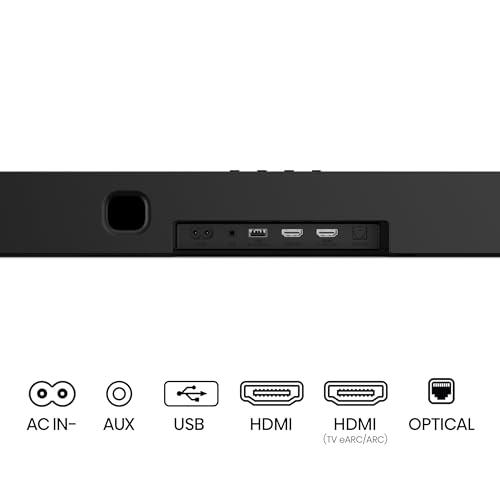
| HDMI eARC, HDMI In (4K 60Hz passthrough), Optical, USB, Bluetooth 5.3 | HDMI eARC, Ethernet, Wi-Fi, Bluetooth, comprehensive streaming platform support |
| Dimensions and Placement - Space requirements and aesthetic impact | |
| Main bar: 40" wide, plus separate sub and rear speakers | Compact: 25.6" x 2.7" x 3.9", single unit weighing 6.35 lbs |
| Best Use Cases - Ideal scenarios for each system | |
| Dedicated home theater, gaming rooms, maximum immersion priority | Apartments, simple setups, streaming-focused households, aesthetic minimalism |
The Hisense AX5140Q is a complete 5.1.4 surround sound system with separate wireless rear speakers and subwoofer, while the Sonos Beam Gen 2 is a compact single-bar solution that uses virtual processing to simulate surround effects. The Hisense provides true multi-channel audio with physical speakers positioned around your room, whereas the Sonos creates surround effects through advanced algorithms from one location.
The Sonos Beam Gen 2 is significantly better for small spaces. It's a compact 25.6-inch single unit that requires only one power outlet and one HDMI connection. The Hisense AX5140Q requires four separate power outlets and strategic placement of rear speakers, making it impractical for most apartment setups or rooms with limited space.
It depends on your room size and preferences. The Hisense AX5140Q includes physical rear speakers that create authentic surround effects by actually placing sound sources behind you. The Sonos Beam Gen 2 uses virtual surround technology that can be surprisingly effective in smaller rooms but won't match the immersion of real rear speakers in larger spaces.
The Hisense AX5140Q has significantly better bass performance thanks to its dedicated wireless 6.5-inch subwoofer that can be positioned optimally in your room. The Sonos Beam Gen 2 uses integrated passive radiators that provide decent bass for its compact size but cannot match the depth and impact of a dedicated subwoofer.
The Sonos Beam Gen 2 offers much simpler setup with just one HDMI cable and automatic configuration through the Sonos app. The Hisense AX5140Q requires more effort, including positioning four separate components, connecting multiple power outlets, and running room calibration for optimal performance. However, many users find the Hisense setup manageable with proper planning.
The Hisense AX5140Q is better for serious gaming, especially competitive titles where positional audio matters. Its discrete rear speakers and Game Pro mode provide genuine directional sound cues. The Sonos Beam Gen 2 works well for casual gaming but lacks the precise positional audio that dedicated rear speakers provide.
Yes, both the Hisense AX5140Q and Sonos Beam Gen 2 work with any TV that has HDMI ARC or eARC ports. However, the Hisense offers enhanced integration features when paired with Hisense TVs through its Hi-Concerto ecosystem, while Sonos provides universal compatibility with excellent performance across all TV brands.
The Sonos Beam Gen 2 excels at music streaming with native support for major platforms, AirPlay 2 compatibility, and the ability to integrate with the broader Sonos ecosystem for whole-home audio. The Hisense AX5140Q can stream music via Bluetooth but lacks the comprehensive streaming integration and ecosystem features of Sonos.
The Hisense AX5140Q performs best in medium to large rooms (15+ feet from TV to seating) with 8-10 foot ceilings for optimal upfiring speaker performance. In smaller rooms, the Sonos Beam Gen 2 often provides better value and more appropriate sound levels without overwhelming the space.
Both excel at dialogue clarity but through different approaches. The Hisense AX5140Q uses a dedicated center channel and AI EQ processing for clear vocals, while the Sonos Beam Gen 2 employs Speech Enhancement and Trueplay room calibration. In practice, both provide excellent dialogue reproduction that's far superior to TV speakers.
For dedicated home theater rooms, the Hisense AX5140Q provides superior immersion with true 5.1.4 surround sound, four upfiring speakers for overhead effects, and impactful bass from its dedicated subwoofer. The Sonos Beam Gen 2 works well for casual home theater viewing but cannot match the cinematic experience of discrete multi-channel audio in larger spaces.
This depends on your priorities. The Hisense AX5140Q offers exceptional value for buyers wanting maximum audio channels and immersion at a moderate cost. The Sonos Beam Gen 2 provides premium value through sophisticated software, regular updates, comprehensive streaming support, and integration with the Sonos ecosystem for future expansion.
We've done our best to create useful and informative comparisons to help you decide what product to buy. Our research uses advanced automated methods to create this comparison and perfection is not possible - please contact us for corrections or questions. These are the sites we've researched in the creation of this article: shop.hisense-usa.com - manuals.plus - dolby.com - youtube.com - gzhls.at - rtings.com - youtube.com - bestbuy.com - manuals.plus - bestbuy.com - hisense-usa.com - youtube.com - device.report - manuals.plus - youtube.com - device.report - manuals.plus - youtube.com - whathifi.com - en.community.sonos.com - techradar.com - youtube.com - consumerreports.org - bestbuy.com - youtube.com - sonos.com - wave-electronics.com - en.community.sonos.com - epicsystems.tech - tomsguide.com - bestbuy.com

Privacy Policy
Terms and Conditions - Affiliate Policy
Home Security
© Copyright 2008-2026.
11816 Inwood Rd #1211, Dallas, TX 75244