

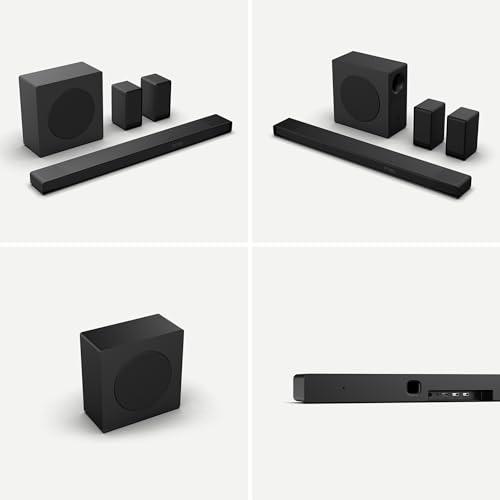
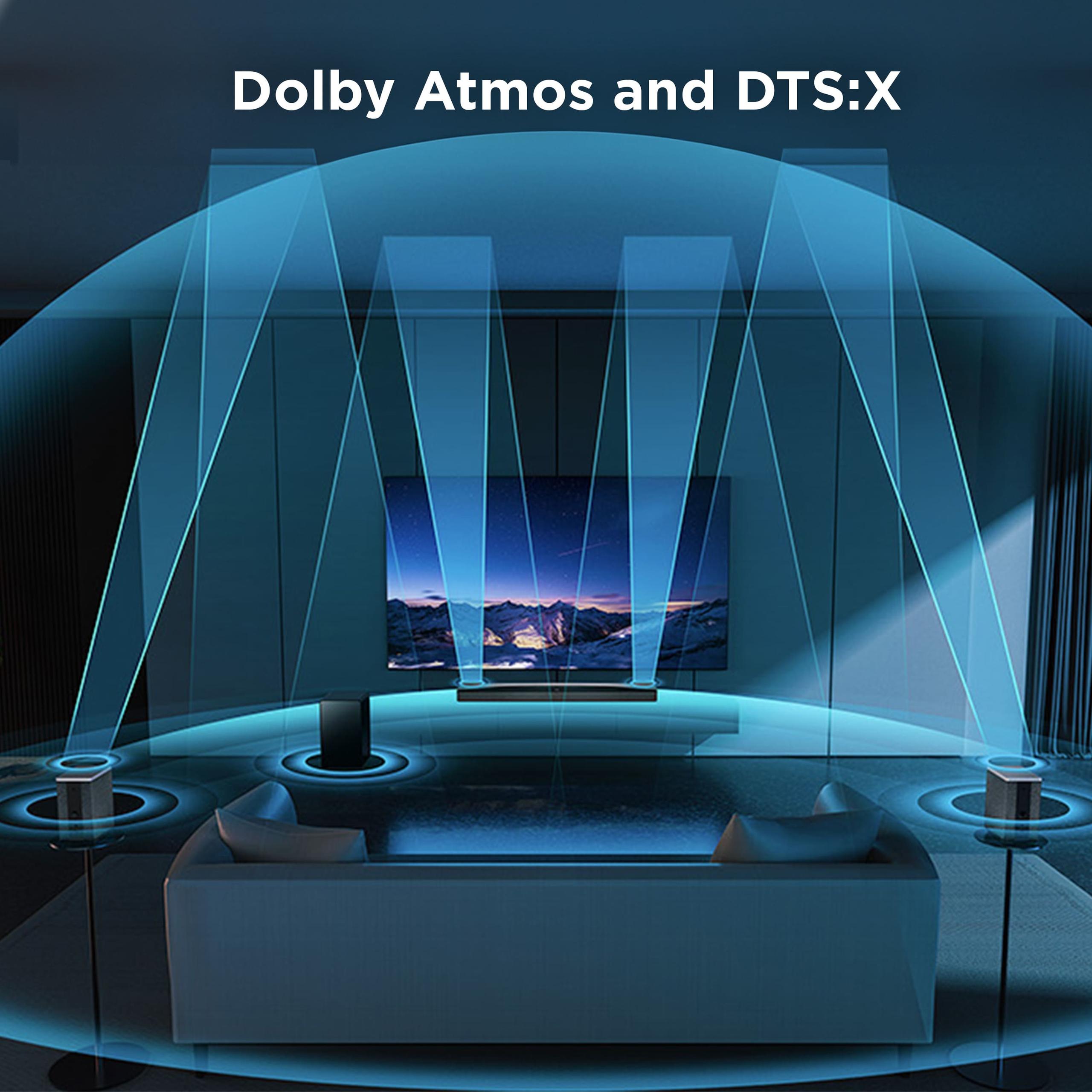

If you've ever felt like your TV's built-in speakers sound like they're coming from inside a tin can, you're not alone. That's where premium soundbars come in—specifically, systems that support Dolby Atmos and DTS:X, the latest audio technologies that make sound appear to come from above and all around you, not just from the front.
Today we're comparing two standout options that launched in 2024: the Hisense AX5140Q and the TCL Q85H. Both promise cinema-quality audio without the complexity of traditional home theater systems, but they take notably different approaches to getting there.
Before diving into the comparison, let's clarify what we're dealing with. Both the Hisense AX5140Q and TCL Q85H belong to the premium multi-channel soundbar category—these aren't your basic TV upgrade bars. They're sophisticated audio systems designed to recreate the experience of a movie theater in your living room.
The key innovation here is something called "object-based audio." Traditional surround sound assigns specific sounds to specific speaker channels, like putting dialogue in the center channel and explosions in the subwoofer. Object-based audio formats like Dolby Atmos and DTS:X instead treat each sound as a three-dimensional object that can be placed anywhere in space, including above your head. This creates incredibly realistic effects, like hearing rain falling from the ceiling or a helicopter circling overhead.
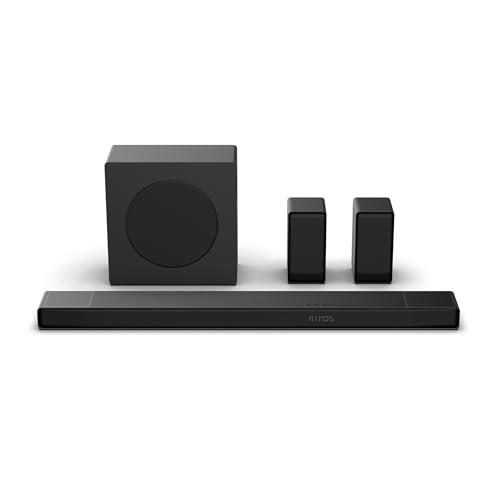
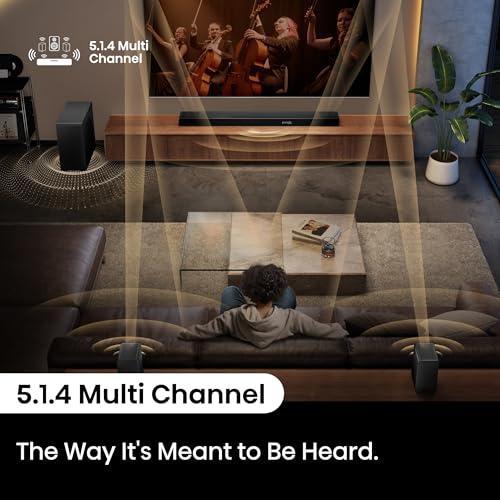
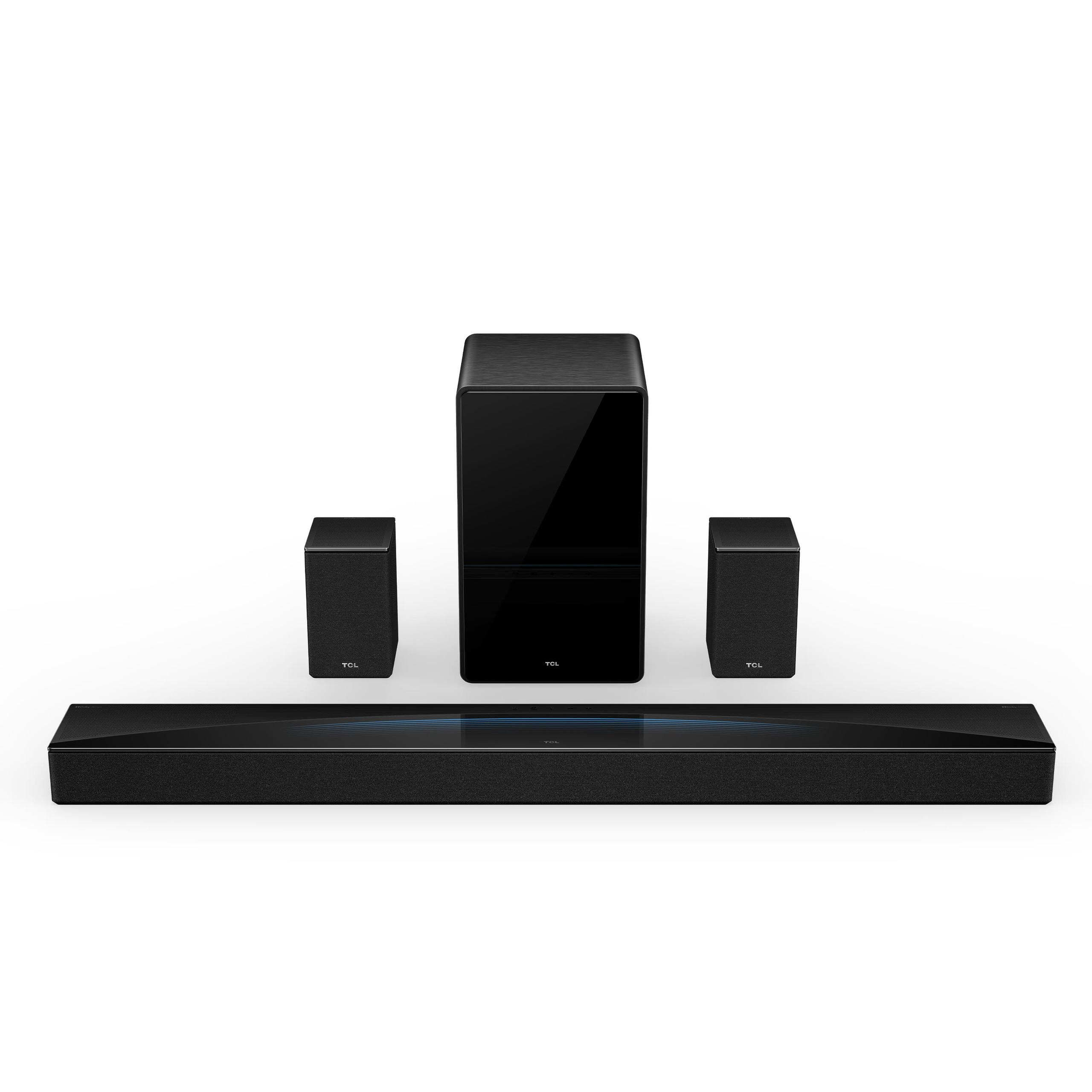
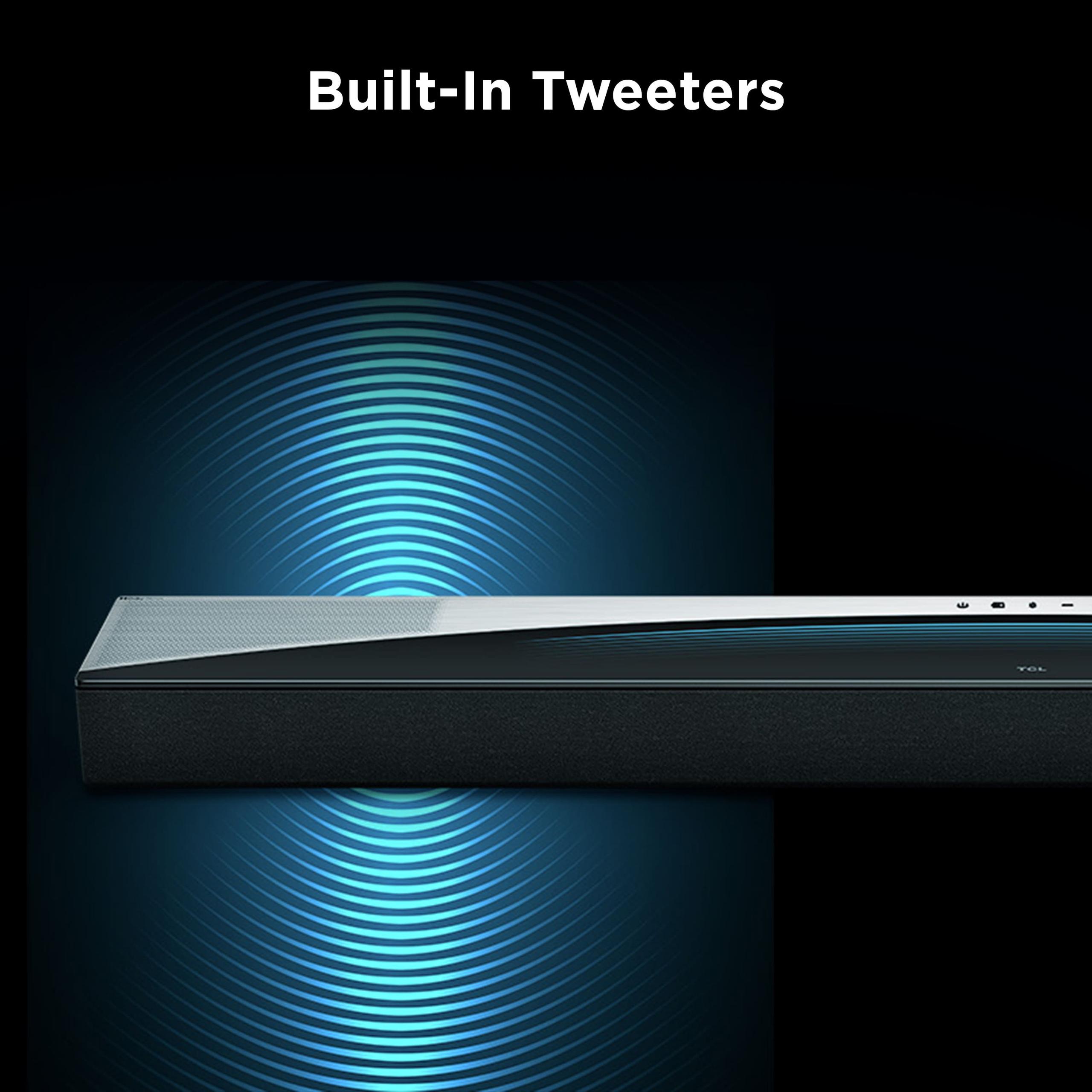
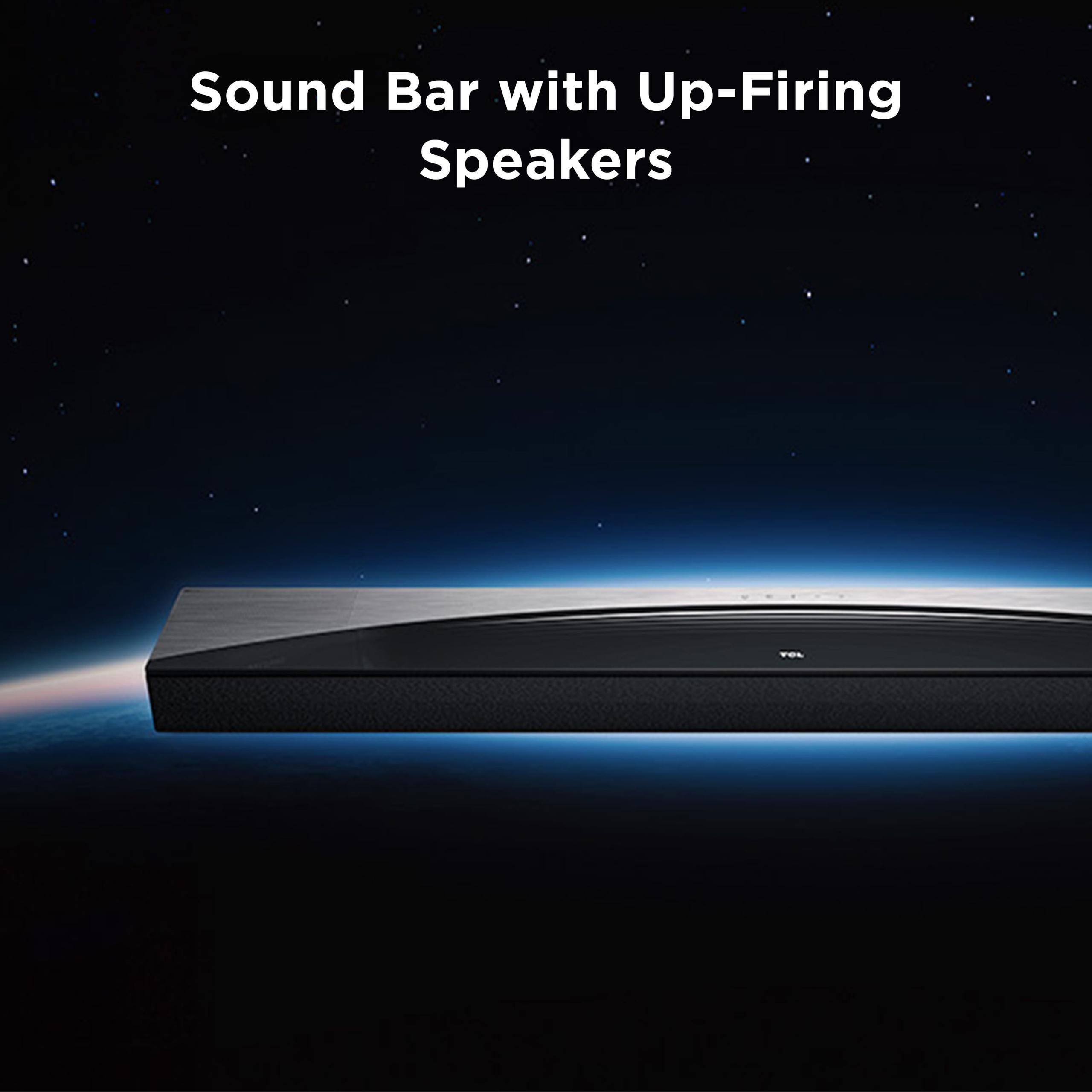
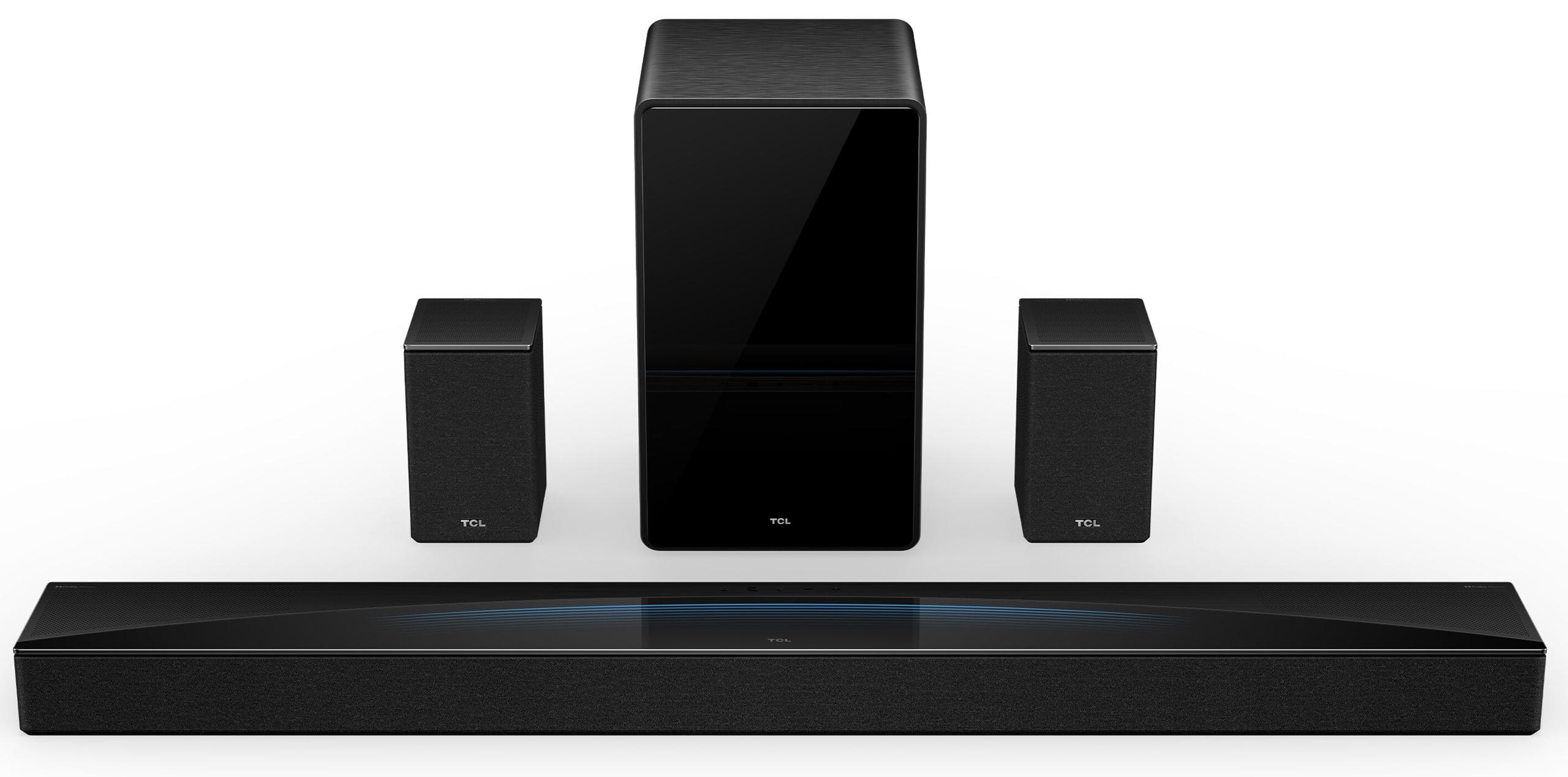
What makes both systems particularly interesting is their approach to creating this immersive experience. They use "up-firing speakers"—drivers that point toward your ceiling to bounce sound back down, creating the illusion of overhead audio. Combined with wireless surround speakers and powerful subwoofers, they aim to deliver true surround sound without running speaker wires throughout your room.
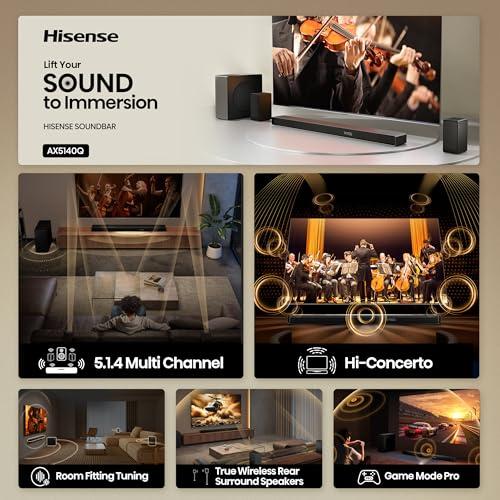
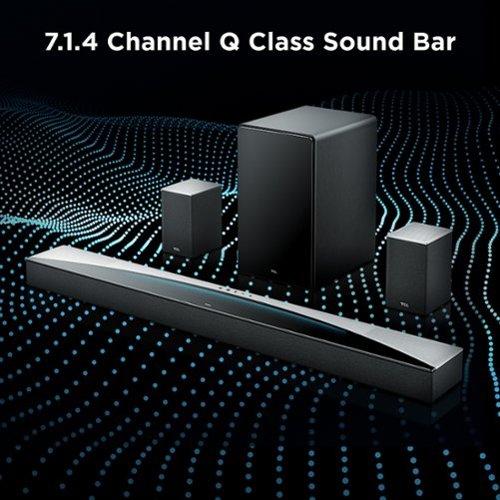
The most obvious difference between these systems lies in their channel configurations. The Hisense AX5140Q offers 5.1.4 channels, while the TCL Q85H steps up to 7.1.4. Let me break down what those numbers actually mean.
The first number (5 or 7) represents the main surround channels at ear level. The Hisense AX5140Q's "5" includes left, center, right, and two surround channels. The TCL Q85H's "7" adds two side channels between the front and rear speakers. The ".1" in both refers to the subwoofer channel for bass. The final "4" indicates four height channels that create overhead effects.
In practical terms, those extra two side channels in the TCL Q85H should provide smoother audio transitions as sounds move around you. If you're sitting in a wide room or not perfectly centered in front of the TV, those additional channels help maintain the immersive bubble of sound. However, the benefits are somewhat subtle—you're talking about incremental improvements rather than night-and-day differences.
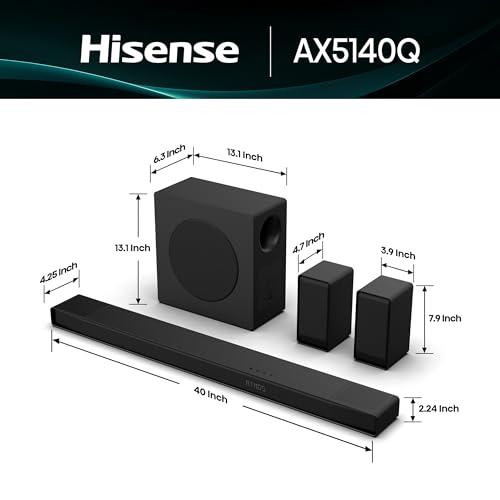
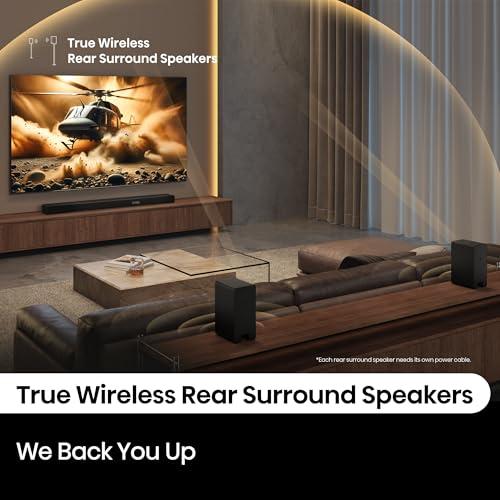
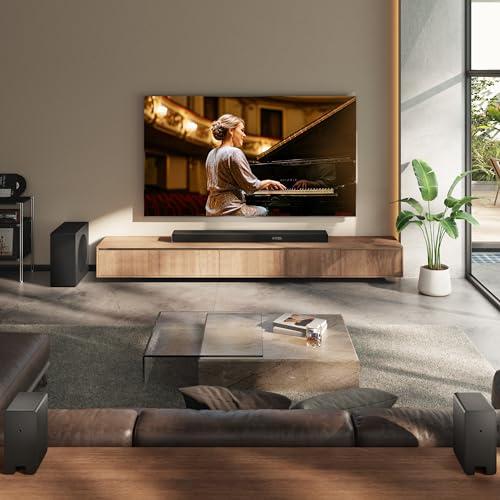
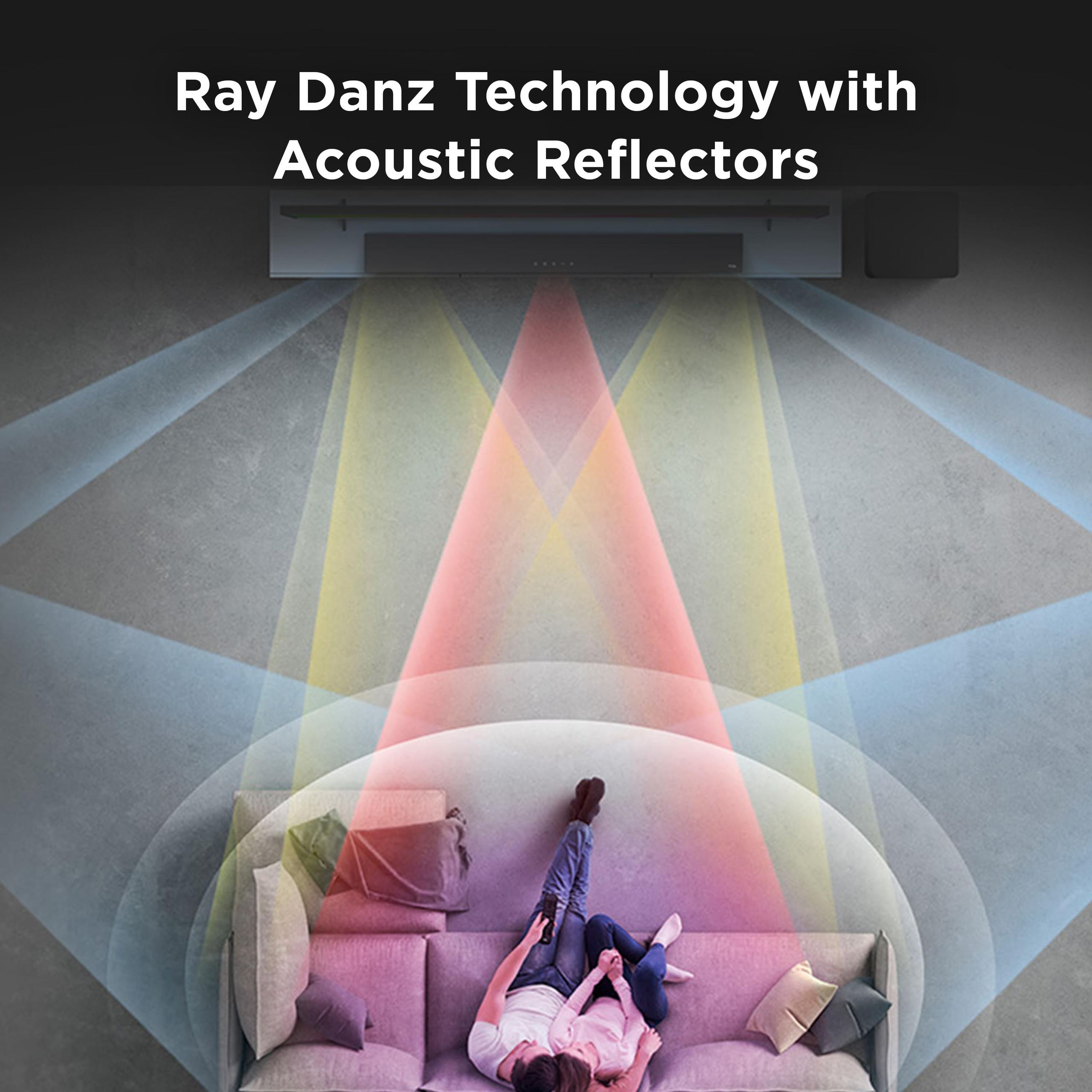
More interesting is how each system achieves its channel count. The Hisense AX5140Q uses completely separate wireless rear speakers that include their own up-firing drivers. This means you get genuine surround sound from behind your listening position, not just processed audio that tries to simulate rear effects. The TCL Q85H also includes wireless surrounds, but combines them with what TCL calls "RayDanz Technology"—acoustic reflectors that widen the soundstage beyond the physical speaker placement.
This brings us to a fundamental difference in design philosophy between these two systems. The Hisense AX5140Q takes what I'd call a "purist" approach, emphasizing discrete physical speakers for each channel. Every surround effect you hear comes from an actual speaker placed in that location, rather than clever audio processing trying to trick your ears.
The TCL Q85H, meanwhile, combines physical speakers with sophisticated audio processing. Its RayDanz technology uses acoustic reflectors to bounce sound around your room in ways that create a wider, more enveloping soundstage. This hybrid approach can be particularly effective in larger rooms where purely physical speakers might struggle to fill the space.
Both approaches have merit. The Hisense's discrete speaker setup tends to produce more precise localization—when a sound effect pans from left to right, you can pinpoint exactly where it is. The TCL's processing-enhanced approach often creates a more diffuse, room-filling experience that can be impressive even if it's less precisely positioned.
From our research into user experiences, the Hisense AX5140Q seems to excel in smaller to medium-sized rooms where its discrete speakers can create a convincing surround bubble. The TCL Q85H appears to have an advantage in larger spaces where its acoustic processing and additional channels help overcome the challenges of filling more cubic feet with immersive audio.
One of the most important aspects of any home theater system is dialogue clarity. Nothing ruins a movie experience quite like constantly reaching for the remote to turn up the volume during quiet dialogue scenes, only to be blasted by the next action sequence.
The Hisense AX5140Q has earned consistent praise for its dialogue performance. Its dedicated center channel uses specialized tweeters (high-frequency drivers) that emphasize the vocal range where human speech lives. Multiple user reports indicate that voices remain clear and intelligible even during complex scenes with lots of background effects.
The TCL Q85H also includes a dedicated center speaker and offers a specific "Voice" mode designed to enhance dialogue clarity. However, some users report that the surround speakers can occasionally overpower dialogue, requiring manual adjustment of levels through the app to achieve optimal balance.
This difference likely comes down to tuning philosophy. The Hisense AX5140Q appears to prioritize vocal clarity in its default settings, while the TCL Q85H leans more toward immersive surround effects that may need fine-tuning for speech-heavy content.
Both systems support Dolby Atmos and DTS:X, but they implement these formats differently. The Hisense AX5140Q includes four dedicated up-firing speakers—two in the main soundbar and two in the wireless rear speakers. This creates what many users describe as a convincing "dome" of overhead sound.
The TCL Q85H also features up-firing speakers, but combines them with its RayDanz processing to create what the company claims is a wider, more enveloping soundstage. Users frequently comment on the system's ability to make sounds appear to come from well beyond the physical boundaries of the speaker placement.
For movies with extensive Dolby Atmos soundtracks—think Marvel films, nature documentaries, or action blockbusters—both systems deliver noticeably more immersive experiences than standard soundbars. However, the effectiveness depends heavily on your room's acoustics. Rooms with high ceilings, heavy carpeting, or lots of soft furnishings can diminish the effectiveness of ceiling-bounce effects.
Both systems include wireless 6.5-inch subwoofers, which represents a good middle ground between compact convenience and meaningful bass output. Neither will match the room-shaking impact of larger dedicated subwoofers, but both provide sufficient low-end for most home theater applications.
User feedback suggests the Hisense AX5140Q's subwoofer integrates more seamlessly with the main speakers, creating a cohesive sound where bass effects feel naturally connected to on-screen action. The TCL Q85H offers more granular bass adjustment through its app, allowing users to fine-tune the subwoofer's output to their room and preferences.
For music listening, both subwoofers handle the low end adequately without the boomy, overwhelming bass that plagues some budget systems. However, serious music enthusiasts might find the bass somewhat limited compared to dedicated stereo systems.
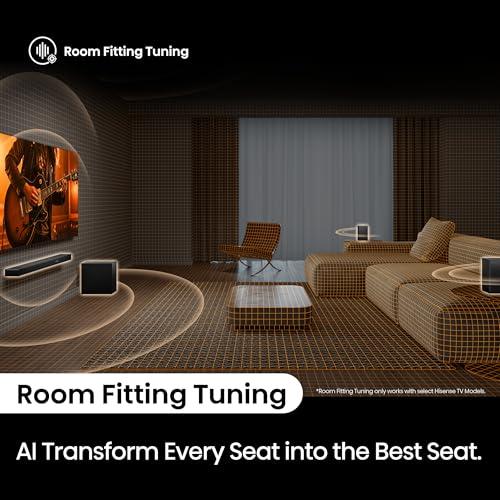
One area where the TCL Q85H shows a clear advantage is in automatic room calibration. Its "SonicAI" feature uses your smartphone's microphone to analyze your room's acoustics and adjust the system's output accordingly. This process helps compensate for room size, furniture placement, and acoustic challenges that can interfere with surround sound effectiveness.
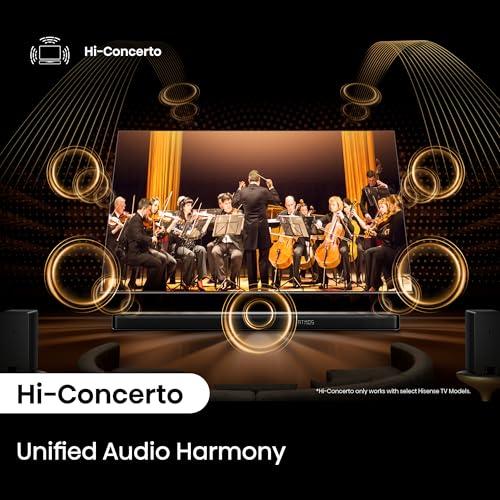
The Hisense AX5140Q offers room calibration, but only when paired with compatible Hisense TVs through their "Hi-Concerto" platform. If you don't own a Hisense TV, you're limited to manual adjustment through the included sound modes.
This difference is significant for users with challenging room acoustics or those who frequently rearrange their furniture. Automatic calibration can make the difference between a system that sounds good and one that sounds optimized for your specific space.
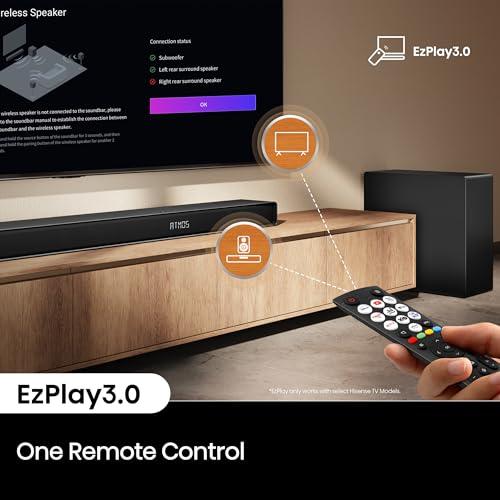
Both systems take different approaches to smart home integration. The Hisense AX5140Q works best within the Hisense ecosystem, offering deep integration with Hisense TVs through features like unified remote control and automatic audio optimization. If you own or plan to buy a Hisense TV, these integration features add considerable value.
The TCL Q85H takes a more universal approach, offering compatibility with multiple TV brands through "Roku TV Ready" certification and broader app-based control. It supports AirPlay 2 for wireless streaming from Apple devices and includes Wi-Fi connectivity for software updates and enhanced streaming capabilities.
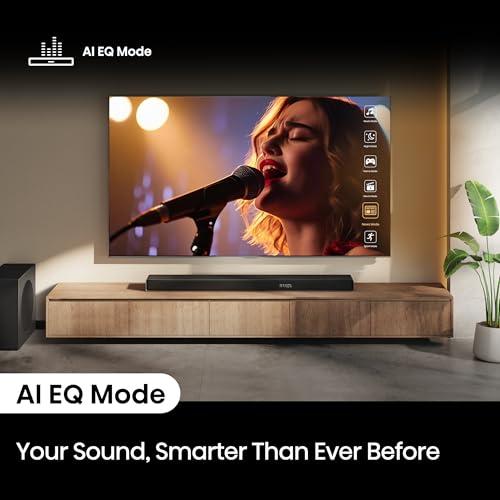
The control experience differs significantly between these systems. The Hisense AX5140Q relies primarily on its included remote control, offering various sound modes (Movie, Music, News, Night, Sport, Game Pro, and AI) but limited fine-tuning options. This approach prioritizes simplicity—you can switch between optimized presets without diving into complex menus.
The TCL Q85H includes comprehensive app-based control through the TCL Home Connect app. This provides detailed equalizer adjustments, individual speaker level controls, and multiple streaming options. However, user reports indicate the app has some stability issues and limitations, particularly around independent surround speaker volume adjustment.
From a practical standpoint, the Hisense's simpler approach often proves more reliable for daily use, while the TCL's advanced controls appeal to users who enjoy fine-tuning their audio experience.
At the time of writing, these systems occupy different price points, with the Hisense AX5140Q positioned as a premium value option and the TCL Q85H commanding a significantly higher price for its additional features and channels.
The Hisense AX5140Q delivers exceptional performance per dollar, offering genuine 5.1.4 surround sound with discrete rear speakers at a price point that was unthinkable just a few years ago. For most users, it provides 85-90% of the performance of much more expensive systems.
The TCL Q85H justifies its premium pricing through additional channels, more sophisticated processing, and broader ecosystem compatibility. However, the performance improvements are often incremental rather than transformational, making the value proposition more questionable for budget-conscious buyers.
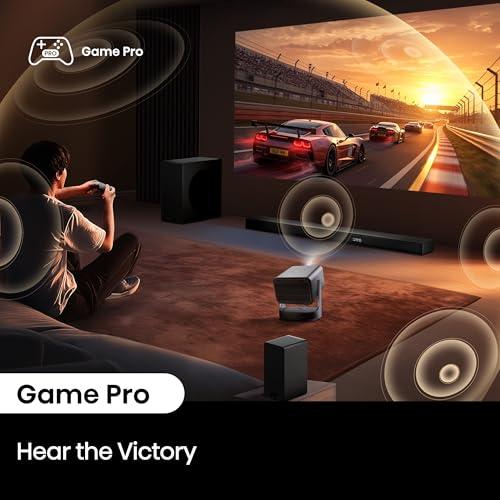
Both systems cater to gamers, but with different strengths. The Hisense AX5140Q includes a dedicated "Game Pro" mode that sharpens positional audio cues and reduces processing latency. Its discrete rear speakers provide excellent spatial awareness for competitive gaming, helping you pinpoint enemy locations in first-person shooters.
The TCL Q85H supports variable refresh rate (VRR) and automatic low latency mode (ALLM) through its HDMI connections, making it well-suited for modern gaming consoles. However, some users report that the surround speakers can be too quiet in default settings, requiring app adjustments to achieve optimal gaming immersion.
Both systems earn praise for relatively straightforward setup, but with different challenges. The Hisense AX5140Q consistently receives compliments for its plug-and-play experience—wireless speakers typically pair automatically out of the box, and the system works well with minimal configuration.
The TCL Q85H offers similar ease of physical setup, but the app-based configuration adds complexity that some users find unnecessary. The room calibration process, while beneficial, requires additional setup steps that may intimidate less technical users.
Based on our research and analysis of user experiences, here's how I'd recommend choosing between these systems:
Choose the Hisense AX5140Q if:
Choose the TCL Q85H if:
Both the Hisense AX5140Q and TCL Q85H represent significant upgrades over basic TV audio and entry-level soundbars. The choice between them ultimately comes down to your priorities, room size, and budget.
The Hisense AX5140Q delivers remarkable performance for its price point, making genuine surround sound accessible to a broader audience. It's the system I'd recommend for most people looking to dramatically improve their home theater experience without breaking the bank.
The TCL Q85H offers measurably better performance in larger rooms and provides more sophisticated control options, but the premium pricing makes it a harder recommendation unless you specifically need its advanced features or have a challenging room setup.
Either way, you'll be getting a substantial upgrade over basic TV audio and a taste of what modern object-based surround sound can offer. The technology has matured significantly since these formats were introduced, and 2024 represents a sweet spot where performance has improved while prices have become more accessible to mainstream consumers.
| Hisense AX5140Q | TCL Q85H |
|---|---|
| Channel Configuration - More channels create better spatial separation and immersion | |
| 5.1.4 channels (excellent surround sound) | 7.1.4 channels (superior spatial audio with side channels) |
| Total Power Output - Higher wattage provides more dynamic range and room-filling capability | |
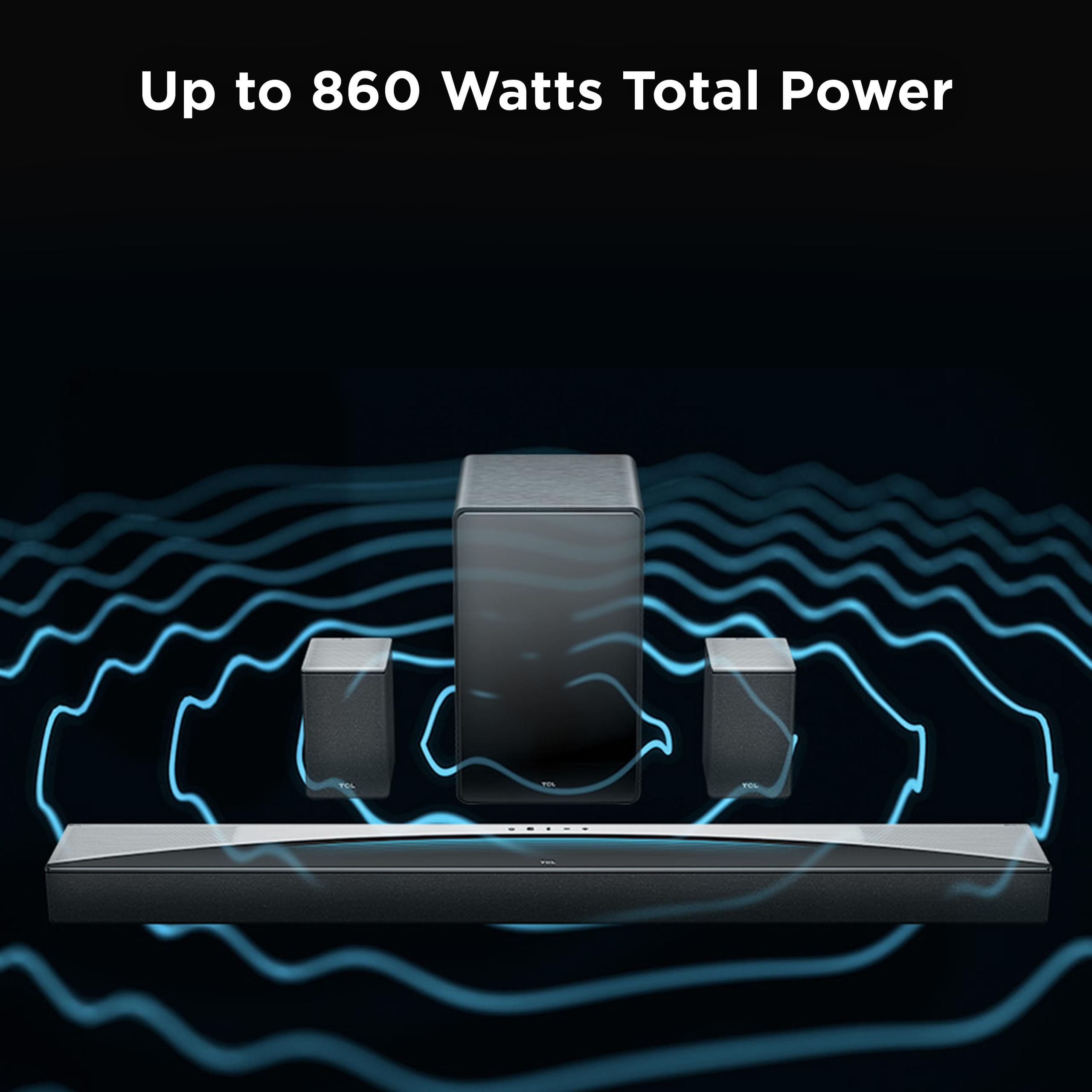
| 600W (sufficient for most rooms) | 860W (better for large spaces) |
| Audio Format Support - Determines compatibility with premium streaming and disc content | |
| Dolby Atmos, DTS:X, DTS Virtual:X | Dolby Atmos, DTS:X, DTS Virtual:X |
| Physical Speaker Configuration - Real speakers vs processing affects authenticity of surround effects | |
| Discrete wireless rear speakers with up-firing drivers | Wireless surrounds plus RayDanz acoustic processing |
| Room Calibration - Automatic tuning optimizes sound for your specific space | |
| Hi-Concerto room fitting (requires compatible Hisense TV) | SonicAI automatic calibration (works with any smartphone) |
| Control Interface - Affects daily usability and customization options | |
| Remote control only with preset sound modes | TCL Home Connect app with detailed EQ and controls |
| Wireless Connectivity - More options provide greater streaming flexibility | |
| Bluetooth 5.3 | Bluetooth 5.1, Wi-Fi 5, AirPlay 2 |
| TV Brand Integration - Deep integration simplifies setup and daily use | |
| Best with Hisense TVs (Hi-Concerto ecosystem) | Universal compatibility (TCL TV Ready, Roku TV Ready) |
| Subwoofer Configuration - Bass quality and room placement flexibility | |
| Wireless 6.5" subwoofer (tight integration) | Wireless 6.5" subwoofer with app-adjustable levels |
| HDMI Capabilities - Video passthrough quality and gaming features | |
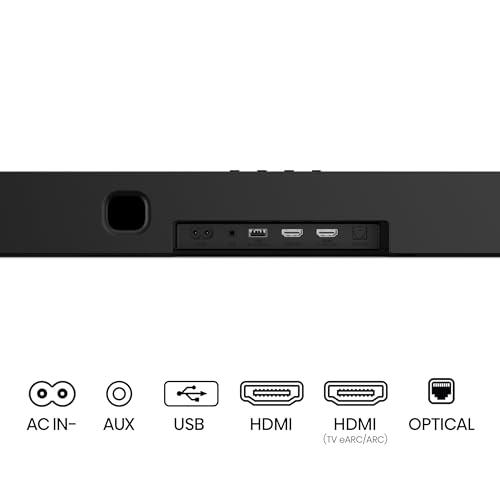
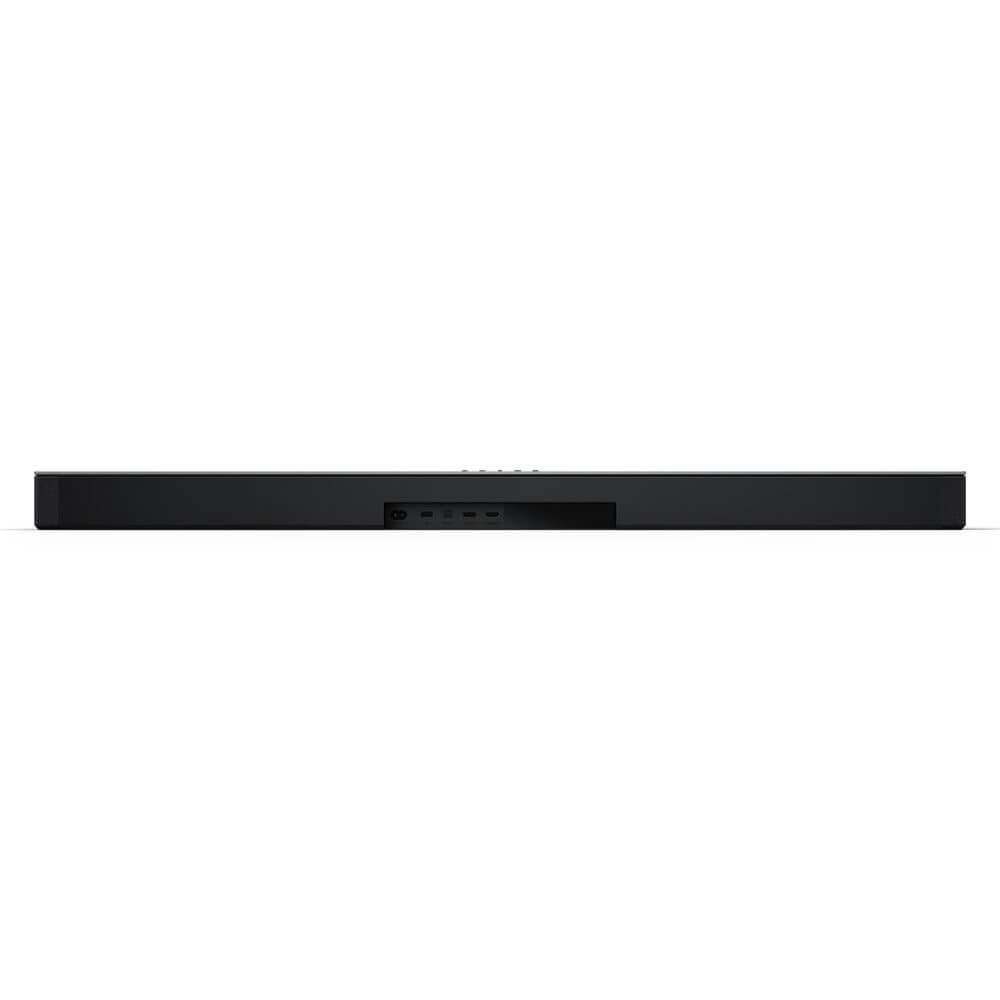
| HDMI eARC, 4K 60Hz passthrough | HDMI eARC, supports VRR and ALLM for gaming |
| Ease of Setup - Out-of-box experience and complexity | |
| Excellent plug-and-play experience | Good setup but requires app configuration for optimization |
| Value Positioning - Performance relative to cost | |
| Exceptional value with genuine 5.1.4 surround | Premium pricing for incremental improvements over Hisense AX5140Q |
The TCL Q85H offers superior surround sound with its 7.1.4 channel configuration compared to the Hisense AX5140Q's 5.1.4 setup. The additional side channels in the TCL Q85H create smoother audio transitions and better spatial separation, especially in larger rooms. However, the Hisense AX5140Q uses discrete wireless rear speakers that provide more authentic behind-the-listener effects than many competing systems.
Yes, both the Hisense AX5140Q and TCL Q85H fully support Dolby Atmos and DTS:X object-based audio formats. Both systems include up-firing speakers that bounce sound off your ceiling to create overhead effects. The Hisense AX5140Q features four dedicated up-firing drivers, while the TCL Q85H combines up-firing speakers with RayDanz acoustic processing for enhanced spatial audio.
The TCL Q85H is better suited for large rooms due to its 7.1.4 channel configuration, higher 860W power output, and RayDanz technology that widens the soundstage. The additional side channels help fill larger spaces more effectively. The Hisense AX5140Q works well in small to medium rooms but may struggle to provide consistent coverage in spaces over 200 square feet.
The Hisense AX5140Q offers excellent plug-and-play setup with wireless speakers that auto-pair out of the box. The TCL Q85H also provides straightforward physical installation but requires app-based configuration for optimal performance. Both include wireless subwoofers and rear speakers to eliminate cable runs, but the Hisense AX5140Q typically requires less initial configuration.
The Hisense AX5140Q delivers exceptional value, providing genuine 5.1.4 surround sound with discrete rear speakers at a significantly lower cost than the TCL Q85H. While the TCL Q85H offers additional channels and features, the performance improvements are often incremental rather than transformational, making the Hisense AX5140Q the better value choice for most buyers.
The TCL Q85H offers broader TV compatibility with TCL TV Ready and Roku TV Ready certification, plus universal room calibration that works with any smartphone. The Hisense AX5140Q works with all TVs through HDMI eARC but provides optimal integration only with Hisense TVs through the Hi-Concerto ecosystem. For non-Hisense TV owners, the TCL Q85H may offer better integration features.
The Hisense AX5140Q excels for gaming with its dedicated Game Pro mode that enhances positional audio cues and reduces latency. Its discrete rear speakers provide excellent spatial awareness for competitive gaming. The TCL Q85H supports modern gaming features like VRR and ALLM but may require app adjustments to optimize surround speaker levels for gaming immersion.
The TCL Q85H offers more comprehensive wireless connectivity with Bluetooth 5.1, Wi-Fi 5, and AirPlay 2 support for multiple streaming options. The Hisense AX5140Q includes Bluetooth 5.3 for device pairing but lacks Wi-Fi and AirPlay capabilities. For users who frequently stream music wirelessly from various devices, the TCL Q85H provides greater flexibility.
The Hisense AX5140Q consistently receives praise for superior dialogue clarity thanks to its dedicated center channel with specialized tweeters and optimized tuning for vocal frequencies. The TCL Q85H also includes a center speaker and Voice mode but may require manual adjustment to prevent surround effects from overpowering dialogue during complex scenes.
The TCL Q85H includes SonicAI automatic room calibration that uses your smartphone microphone to analyze room acoustics and optimize audio output. The Hisense AX5140Q offers room calibration only when paired with compatible Hisense TVs through the Hi-Concerto platform. For non-Hisense TV owners, the TCL Q85H provides the only automatic calibration option.
The TCL Q85H provides comprehensive app-based control through the TCL Home Connect app with detailed EQ adjustments and individual speaker level controls. The Hisense AX5140Q relies on remote control with preset sound modes but limited fine-tuning options. However, users report that the TCL Q85H app has some stability issues, while the Hisense AX5140Q's simpler approach proves more reliable for daily use.
Both the Hisense AX5140Q and TCL Q85H include the main soundbar, wireless subwoofer, wireless rear speakers, remote control, and necessary power cables. The TCL Q85H also includes a wall mount kit and HDMI cable as standard accessories. Both systems come with quick start guides and user manuals to help with setup and optimization.
We've done our best to create useful and informative comparisons to help you decide what product to buy. Our research uses advanced automated methods to create this comparison and perfection is not possible - please contact us for corrections or questions. These are the sites we've researched in the creation of this article: shop.hisense-usa.com - manuals.plus - dolby.com - youtube.com - gzhls.at - rtings.com - youtube.com - bestbuy.com - manuals.plus - bestbuy.com - hisense-usa.com - youtube.com - device.report - manuals.plus - youtube.com - device.report - manuals.plus - youtube.com - gamerant.com - bestbuy.com - tcl.com - bestbuy.com - tcl.com - tcl.com - nfm.com - tcl.com - electronicexpress.com - tcl.com - tcl.com - digitaltrends.com

Privacy Policy
Terms and Conditions - Affiliate Policy
Home Security
© Copyright 2008-2026.
11816 Inwood Rd #1211, Dallas, TX 75244