




When your TV's built-in speakers just aren't cutting it anymore, you're probably looking at soundbars to transform your living room into something closer to a real theater experience. But not all soundbars are created equal, and the difference between a basic model and a premium one can be night and day. Today we're diving deep into two excellent options that take very different approaches to solving the same problem: creating immersive, cinema-quality sound in your home.
The Hisense AX5140Q and Polk Audio MagniFi Max AX both launched in recent years as premium soundbar solutions, but they represent fundamentally different philosophies. At the time of writing, both systems fall into the mid-to-upper premium category price-wise, typically ranging from around $600 to $800 depending on sales and retailer. That puts them well above basic soundbars but below the flagship models that can cost $1,500 or more.
Before we get into the specifics, it's worth understanding what separates premium soundbars from their cheaper cousins. The key differences come down to channel count (how many separate audio streams the system can handle), driver quality (the actual speakers inside), processing power, and connectivity options.
Most basic soundbars are 2.1 systems—left, right, and a subwoofer for bass. Premium models like these two are 3.1.2 and 5.1.4 systems respectively. That number system tells you exactly what you're getting: the first number is main channels (left, center, right), the second is subwoofers, and the third is height channels for overhead effects. More channels generally mean more realistic sound placement and immersion.
The other major consideration is physical speakers versus virtual processing. Some soundbars try to create surround sound effects using clever audio processing and psychoacoustics (basically tricking your brain into hearing sounds where they aren't). Others, like the Hisense AX5140Q, use actual speakers placed around your room. Both approaches have merits, which we'll explore.
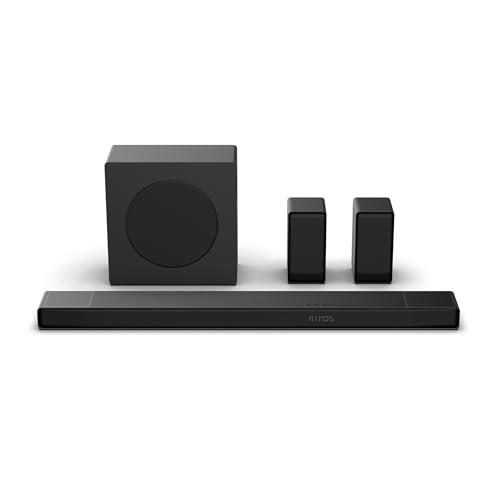
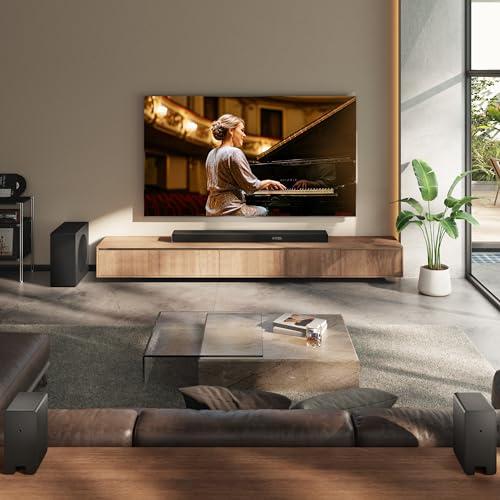
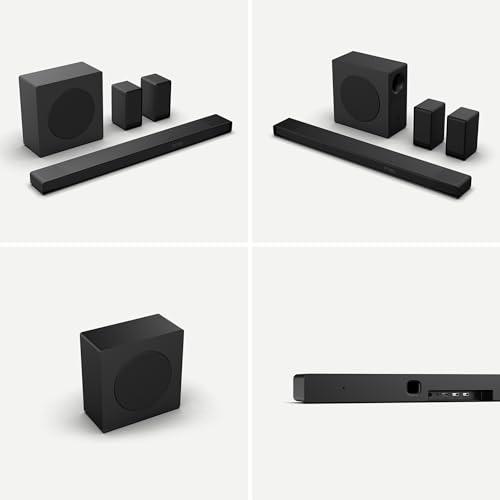
Released in 2024, the Hisense AX5140Q takes the "more is more" approach to home theater audio. This is a true 5.1.4 discrete surround system, meaning it includes separate physical speakers that you place around your room, just like a traditional home theater setup but without the complexity of running speaker wires everywhere.
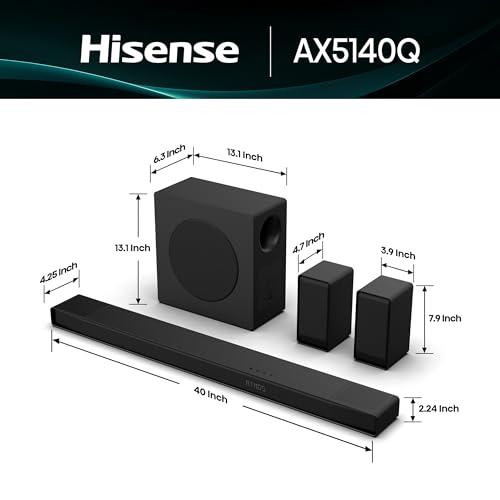
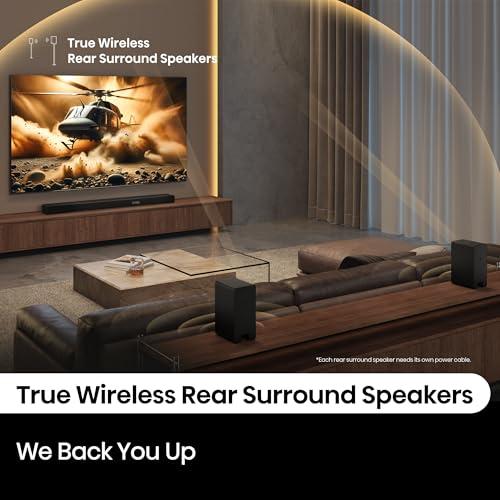
The system includes a main soundbar, a wireless 6.5-inch subwoofer, and two wireless rear speakers. What makes this particularly impressive is that both the main bar and the rear speakers include up-firing drivers—speakers that point toward your ceiling to create overhead sound effects. That gives you four dedicated height channels, which is exceptional at this price point.
The wireless connectivity between all these components is handled automatically, so you don't need to run cables around your room. You just plug each component into wall power, and they communicate with each other wirelessly to stay perfectly synchronized.
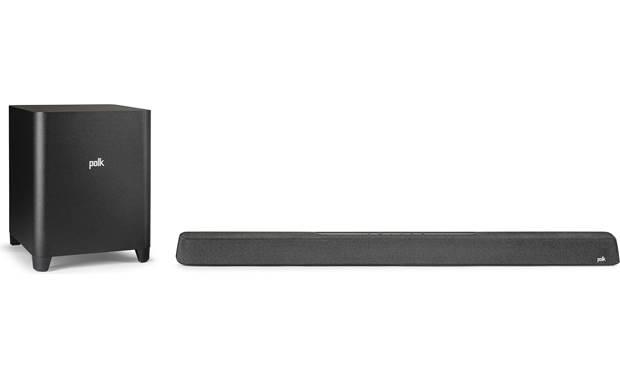
The Polk Audio MagniFi Max AX, also from around the 2024 timeframe, represents Polk's premium entry into the Dolby Atmos soundbar market. Polk Audio has been making speakers since the 1970s, so they bring decades of acoustic engineering experience to this product.
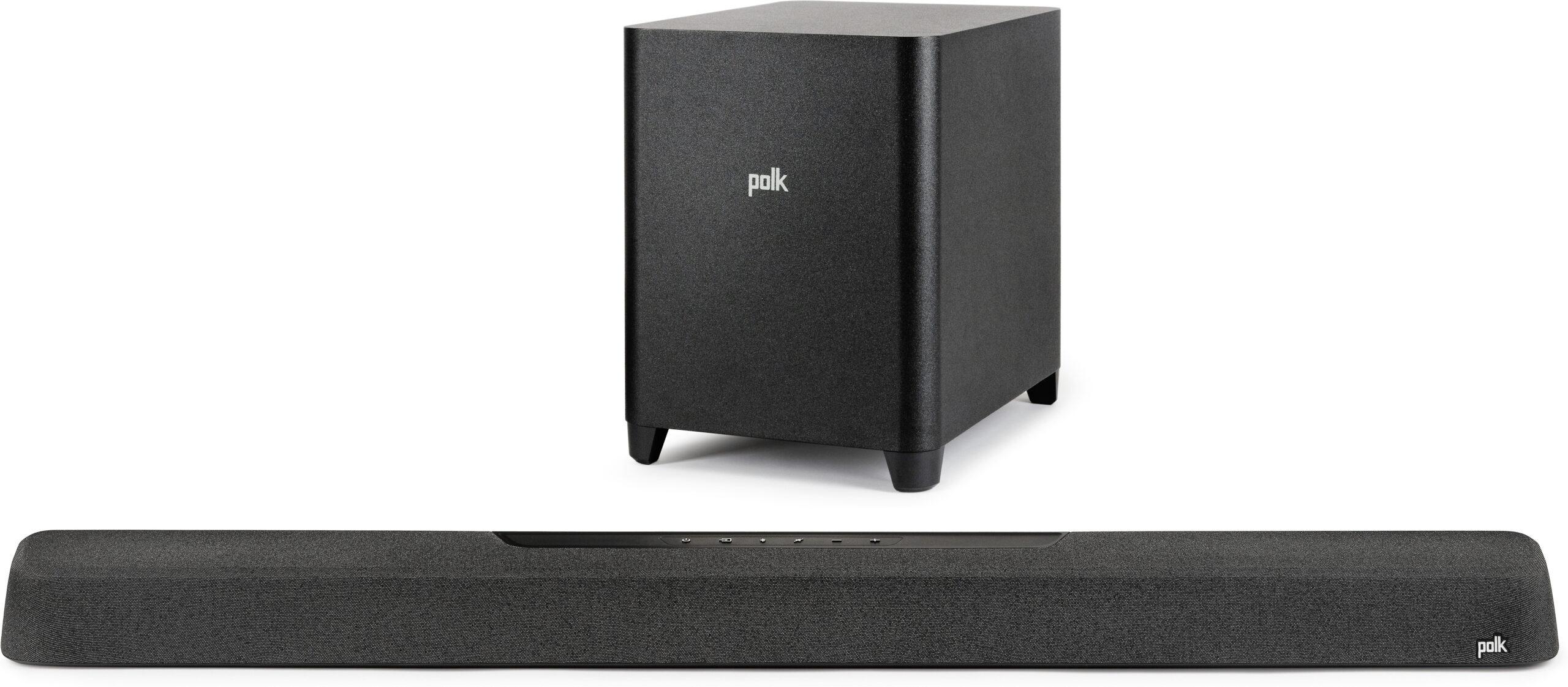
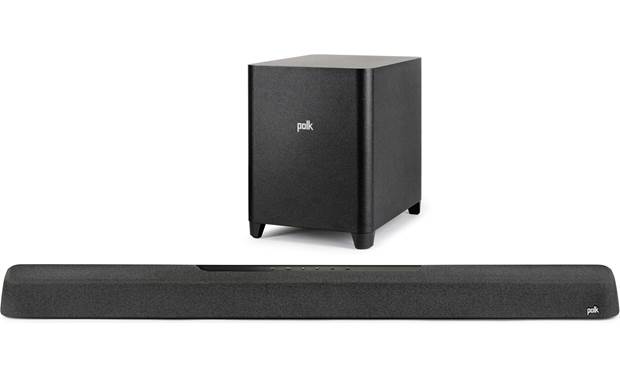
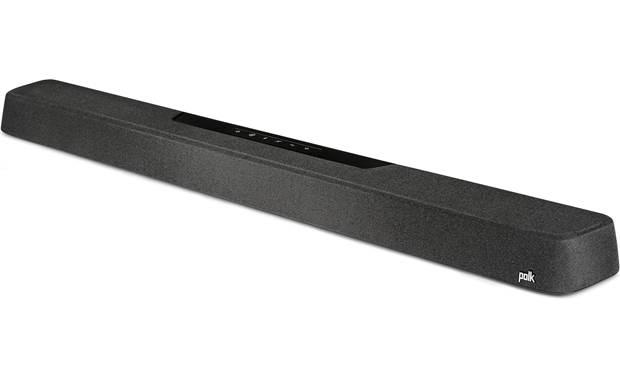
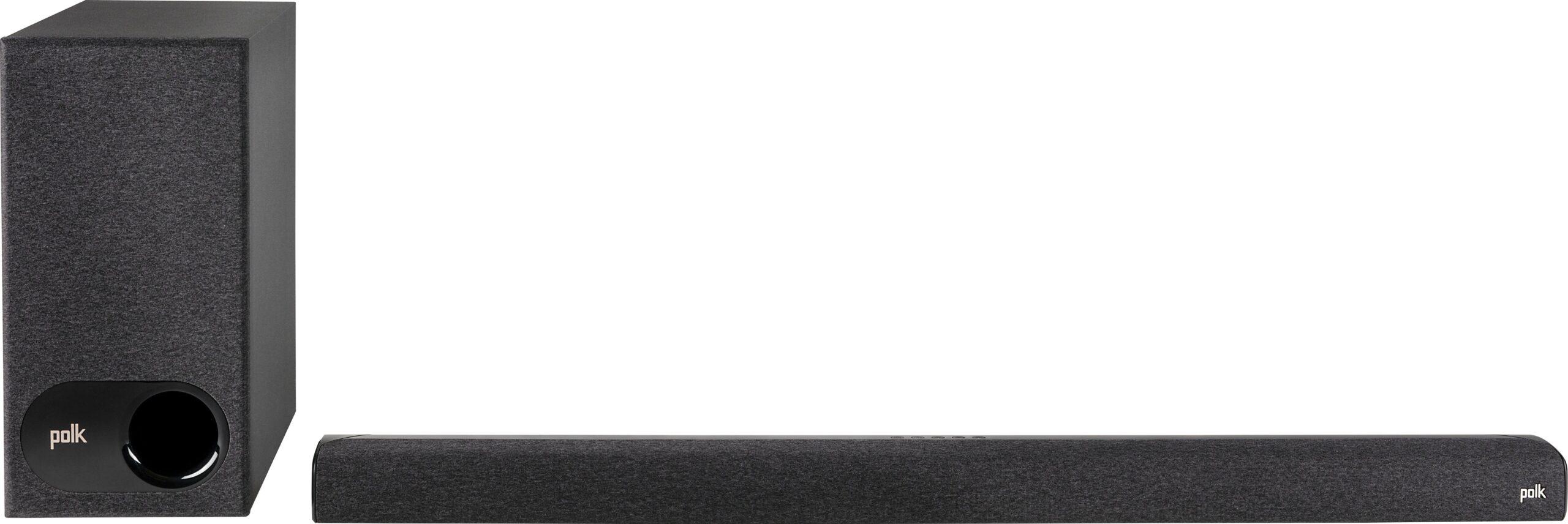
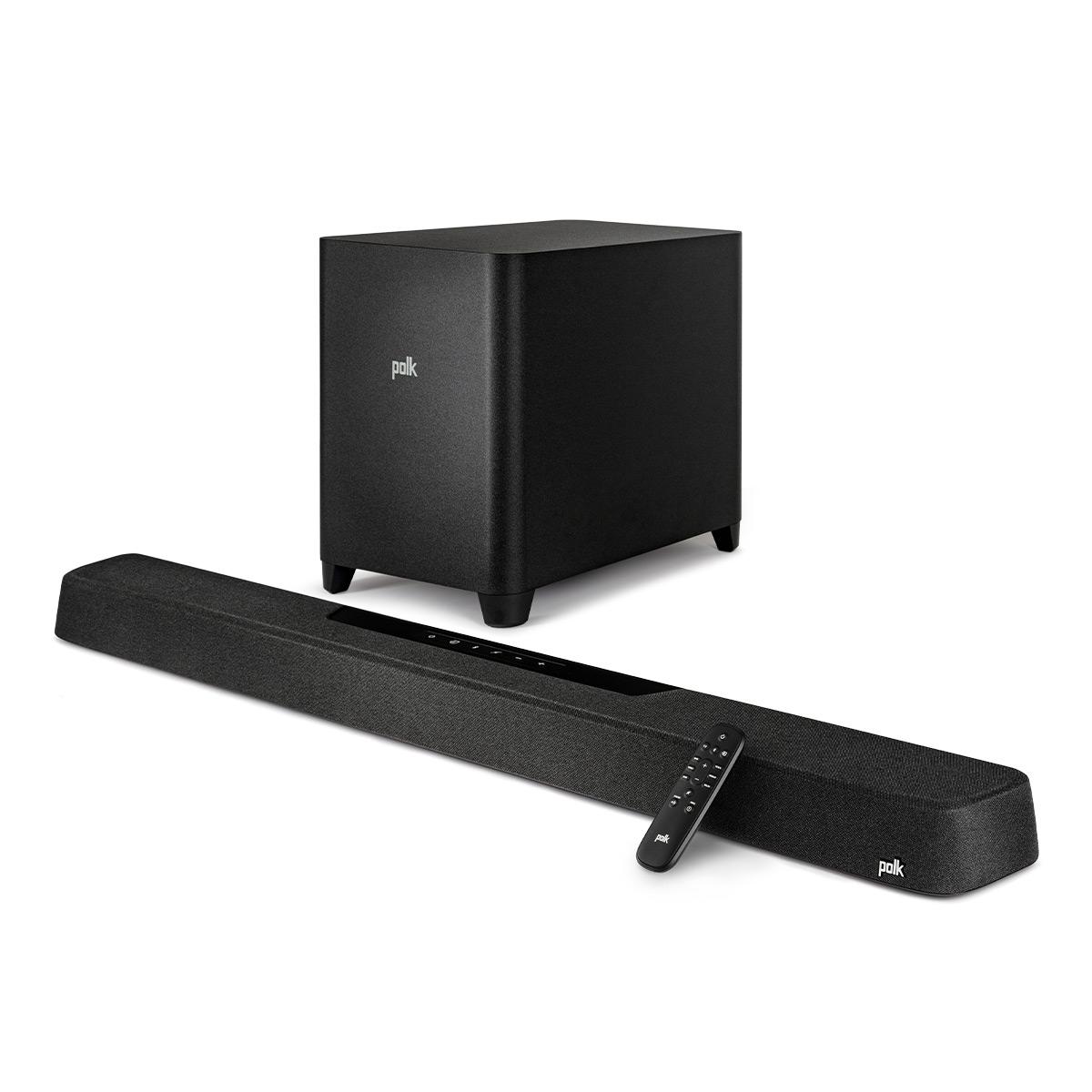
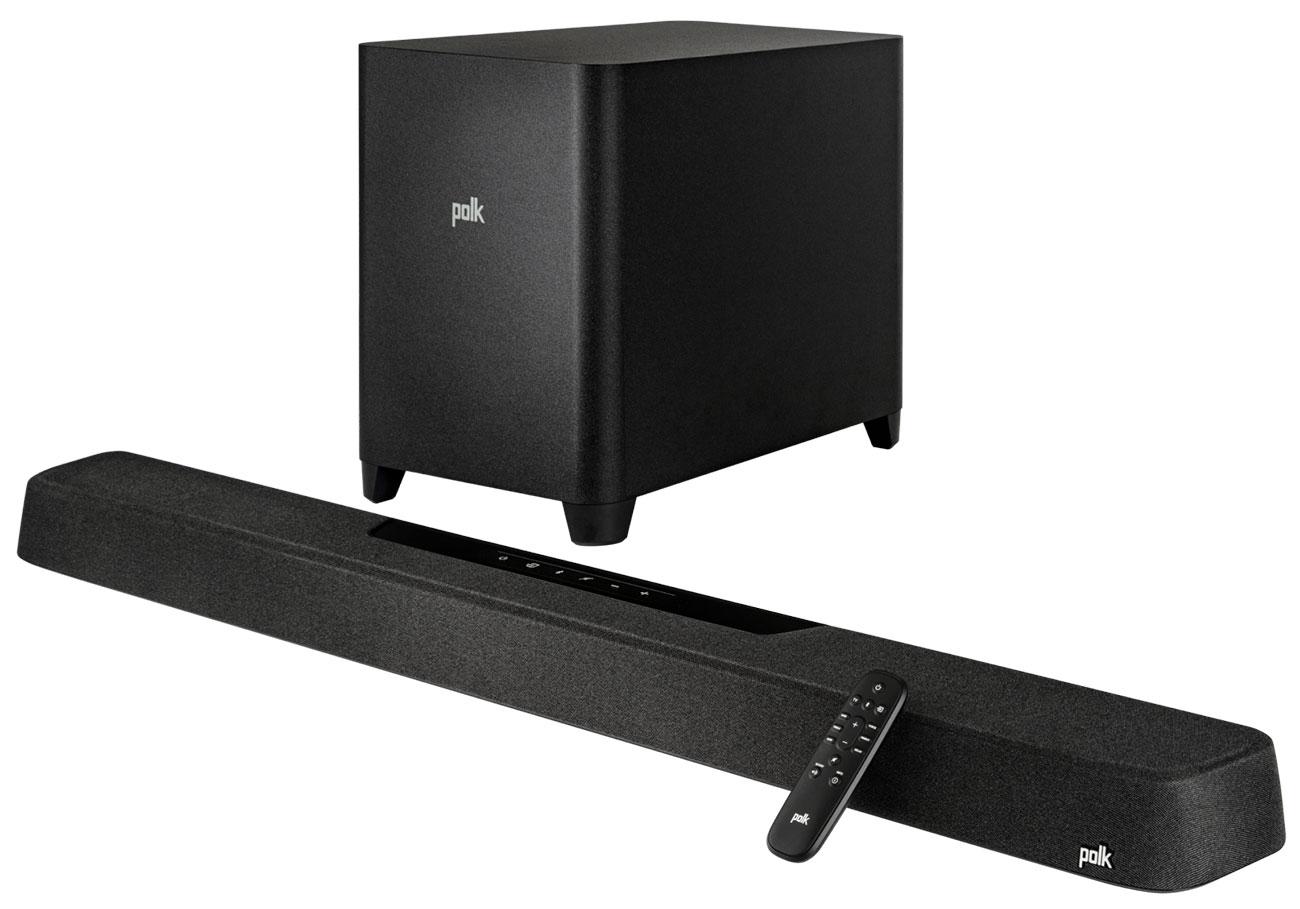
This system takes a 3.1.2 approach—three main channels across the front, a subwoofer, and two height channels. Instead of physical rear speakers, it relies on advanced audio processing and Polk's proprietary Stereo Dimensional Array (SDA) technology to create a wide, immersive soundstage from the front of your room.
The key innovation here is SDA technology, which Polk has been refining for decades. It works by carefully controlling how sound reaches each of your ears, eliminating something called "interaural crosstalk"—basically preventing your left ear from hearing what's meant for your right ear and vice versa. This creates a much wider and more precise stereo image than typical soundbars can achieve.
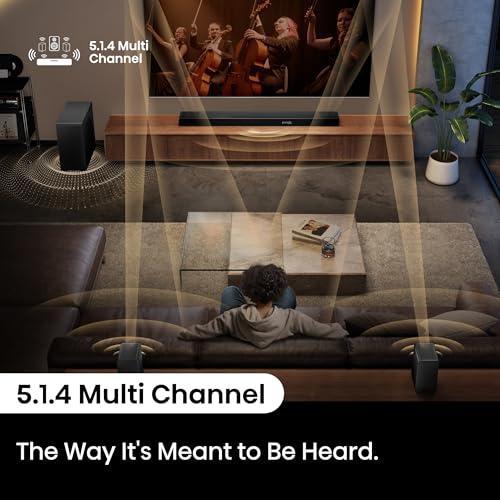
This is where the fundamental difference between these systems becomes most apparent. The Hisense AX5140Q delivers what I'd call "honest" surround sound. When a helicopter flies from front to back in a movie, you actually hear it travel through speakers positioned around your room. The rear wireless speakers handle ambient effects, crowd noise, and directional sounds that would normally get lost or misplaced with a front-only system.
Our research into user experiences consistently shows that people notice an immediate difference when upgrading from any front-only soundbar to a system with physical rear speakers. It's not subtle—the sense of being "inside" the movie rather than watching it from the outside is dramatic.
The Polk MagniFi Max AX, meanwhile, creates its surround effects through processing and clever speaker placement. The SDA technology does work—users regularly comment on how much wider the soundstage feels compared to basic soundbars. But it's still fundamentally limited by physics. Sounds that should come from behind you are being recreated by speakers in front of you, relying on room acoustics and your brain's processing to fill in the gaps.
That said, the Polk's approach has advantages too. You don't need to worry about rear speaker placement, which can be tricky in some living rooms. Some people prefer the cleaner aesthetic of a single-bar solution, and the Polk's processing is sophisticated enough that many listeners find it satisfying, especially for dialogue-heavy content like TV shows and news.
Both systems support Dolby Atmos and DTS:X, which are object-based audio formats that can place sounds anywhere in a three-dimensional space around you, including overhead. How well they recreate those overhead effects is where things get interesting.
The Hisense AX5140Q has four up-firing speakers total—two in the main soundbar and two in the rear speakers. These fire sound toward your ceiling, which then reflects back down to create the illusion of overhead sound sources. With four height channels, you get more realistic effects for things like rain, aircraft flyovers, or ambient ceiling effects in movies.
The Polk MagniFi Max AX uses two up-firing drivers in the main bar. This can still create convincing height effects, but the coverage isn't as complete. The overhead effects tend to be concentrated toward the front of your seating area rather than creating a full "dome" of sound above you.
Both systems depend on your room having a decent ceiling for reflection—very high ceilings or heavily textured surfaces can diminish the height effects. But with typical 8-10 foot flat or slightly textured ceilings, both work well, with the Hisense providing more enveloping overhead coverage.
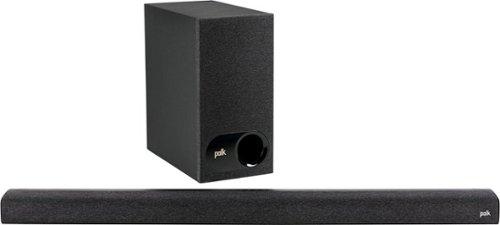
Here's where the Polk MagniFi Max AX shows its premium engineering. The system includes a 10-inch downward-firing subwoofer that can reach down to 35Hz—that's proper deep bass territory that you'll feel in your chest during action sequences. The subwoofer is also more powerful at 160 watts, versus the Hisense's 6.5-inch driver.
The Hisense AX5140Q includes a 6.5-inch wireless subwoofer that extends to 40Hz. That's still quite good and sufficient for most content, but there's a noticeable difference in deep bass impact during big action sequences or bass-heavy music. The Polk's larger driver and more powerful amplification give it a clear advantage for bass lovers.
However, the Hisense's smaller subwoofer has some practical advantages. It's more compact and easier to place discretely in smaller rooms. The bass it produces is tight and well-integrated with the rest of the system, even if it doesn't dig as deep as the Polk's.
This is where the Polk MagniFi Max AX really shines. Polk's VoiceAdjust technology is genuinely impressive—it can isolate dialogue from the rest of a soundtrack and boost it independently. This means you can hear conversations clearly even during loud action sequences without having to turn up the entire system.
The system also includes a Night Mode that's particularly clever. It reduces bass levels and optimizes the frequency response for late-night viewing, keeping dialogue clear while preventing the kind of dynamic swings that wake up family members or neighbors.
The Hisense AX5140Q handles dialogue well with its dedicated center channel and various voice-focused sound modes, but it doesn't have the same level of sophisticated voice processing. The AI EQ mode does automatically adjust for different content types, which helps maintain clarity across different sources.
For anyone who watches a lot of dialogue-heavy content—TV dramas, news, documentaries—the Polk's voice processing is a significant advantage.
The Polk MagniFi Max AX wins decisively in this category. It supports Wi-Fi streaming through AirPlay 2, Chromecast, and Spotify Connect, plus Bluetooth 5.0. This means you can stream music directly from your phone, tablet, or streaming service without needing to go through your TV. The system also includes three spare HDMI inputs, so you can connect multiple devices directly to the soundbar.
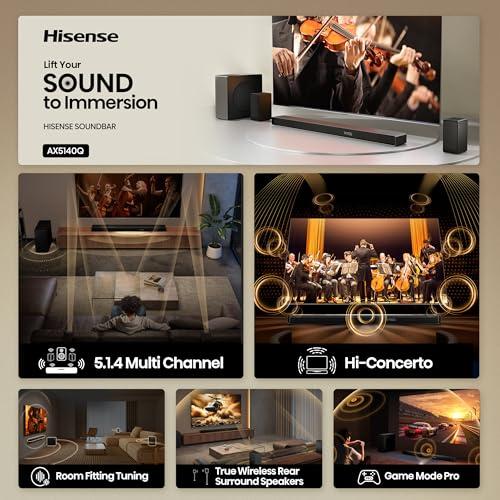
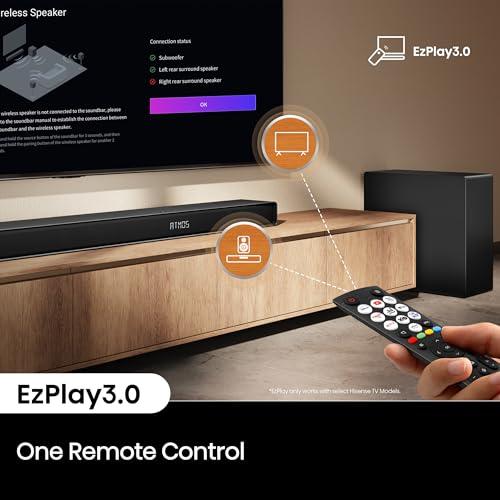
The Hisense AX5140Q focuses more on TV integration than streaming versatility. It supports Bluetooth 5.3 for wireless audio, but lacks the comprehensive streaming options of the Polk. However, it excels at integrating with Hisense TVs through the Hi-Concerto ecosystem, which allows the TV and soundbar to work together as a unified system.
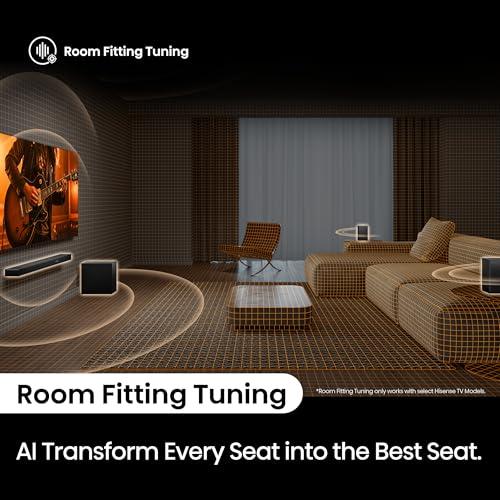
This is where the Hisense AX5140Q shows some impressive technology. The system includes Room Fitting Tuning, which uses test tones and AI processing to adapt the sound output to your specific room's acoustics. It also has an AI EQ mode that automatically adjusts the sound based on what type of content you're watching.
The wireless setup is remarkably simple—the rear speakers and subwoofer pair automatically with the main bar, and the whole system is usually up and running within minutes of unboxing.
The Polk MagniFi Max AX takes a more manual approach to optimization, with various EQ presets and a BassAdjust feature to fine-tune the subwoofer integration. The setup is still straightforward, but you might need to spend more time tweaking settings to get everything dialed in perfectly.
Gaming audio has become increasingly important as modern consoles support advanced surround sound formats. The Hisense AX5140Q includes a dedicated Game Pro mode that's specifically tuned for gaming, with tighter bass response and enhanced positional cues. The rear speakers provide a genuine advantage for competitive gaming, helping you hear footsteps and directional audio cues that could give you an edge.
The Polk MagniFi Max AX handles gaming well, but lacks the directional advantage that physical rear speakers provide. For casual gaming it's perfectly adequate, but serious gamers might appreciate the Hisense's more immersive positioning.
While both systems are optimized primarily for movies and TV, they handle music differently. The Polk MagniFi Max AX benefits from Polk's decades of music speaker experience and the superior bass response of its larger subwoofer. The SDA technology creates an impressively wide stereo image for music listening, and the system's overall tonal balance is more neutral and music-friendly.
The Hisense AX5140Q can play music well, but it's clearly optimized more for surround content. The multiple speakers can create an interesting ambient effect for some types of music, but purist music listeners might prefer the Polk's more traditional approach.
At the time of writing, both systems offer compelling value propositions in different ways. The Hisense AX5140Q gives you an exceptional number of physical speakers and channels for the price. When you consider that wireless rear speakers often cost $200-300 as add-ons to other systems, getting them included with four height channels represents outstanding value for channel count.
The Polk MagniFi Max AX justifies its cost through superior build quality, more sophisticated processing, better connectivity options, and that excellent 10-inch subwoofer. You're paying for Polk's decades of acoustic engineering experience and more premium components throughout.
Your room layout will heavily influence which system works better for you. The Hisense AX5140Q needs adequate space behind your seating area for the rear speakers—typically at least 6-8 feet from your seating to the back wall. The rear speakers also need to be positioned reasonably close to ear level, which can be challenging in some furniture arrangements.
If your TV is wall-mounted above a fireplace or your seating is against the back wall of your room, the physical rear speakers might not be practical. In these situations, the Polk MagniFi Max AX makes more sense.
The Polk also works better in open-concept spaces where traditional surround speaker placement is impossible. Its front-focused design and advanced processing can still create an engaging experience when physical surround speakers aren't feasible.
Choose the Hisense AX5140Q if:
You have a traditional living room layout where rear speakers can be properly positioned. You prioritize maximum immersion and that "theater-like" experience above all else. You watch a lot of action movies, play games regularly, or just want the most authentic surround sound possible in this price range. If you own a Hisense TV, the ecosystem integration is an additional bonus.
The Hisense is also ideal for anyone upgrading from a basic soundbar who wants to experience what real surround sound feels like. The difference is dramatic and immediately noticeable.
Choose the Polk Audio MagniFi Max AX if:
Your room layout doesn't accommodate rear speakers well, or you prefer a cleaner, single-bar aesthetic. You prioritize dialogue clarity, superior bass performance, and extensive connectivity options. You stream a lot of music and want a system that excels at both movies and music playback.
The Polk is also the better choice if you value build quality and brand heritage, or if you need the extensive streaming capabilities for a modern connected home setup.
Both of these systems represent significant upgrades over basic TV audio, but they achieve their goals through different means. The Hisense AX5140Q delivers the most authentic surround sound experience you can get in this price range, with genuine 360-degree immersion that rivals much more expensive systems. The Polk Audio MagniFi Max AX offers superior refinement, processing sophistication, and versatility, all wrapped in premium build quality.
Your choice ultimately comes down to room layout and priorities. If you can accommodate rear speakers and want maximum immersion, the Hisense delivers exceptional value and performance. If you need a front-only solution or prioritize features like voice processing and streaming versatility, the Polk is the more sophisticated choice.
Either way, you're getting a substantial upgrade over basic TV audio and entry-level soundbars. Both systems support the latest audio formats, offer impressive build quality, and will transform your home entertainment experience in meaningful ways. The question is whether you want to maximize channel count and authentic surround positioning, or focus on processing sophistication and front-focused refinement.
| Hisense AX5140Q 5.1.4Ch Dolby Atmos DTS:X Sound Bar | Polk Audio MagniFi Max AX 3.1.2 Soundbar |
|---|---|
| Channel Configuration - More channels typically mean better surround immersion | |
| 5.1.4 channels with discrete rear speakers | 3.1.2 channels, front-focused design |
| Physical vs Virtual Surround - Real speakers provide authentic positioning | |
| True discrete surround with wireless rear speakers | Virtual surround using advanced processing |
| Total Speaker Count - More drivers can mean fuller sound coverage | |
| 12+ drivers across bar, sub, and rear speakers | 11-driver array in main bar plus subwoofer |
| Height Channels - Critical for Dolby Atmos overhead effects | |
| 4 up-firing drivers (2 in bar, 2 in rear speakers) | 2 up-firing drivers in main bar |
| Subwoofer Size - Larger drivers typically produce deeper bass | |
| 6.5" wireless subwoofer (40Hz response) | 10" wireless subwoofer (35Hz response) |
| Total System Power - Higher wattage allows louder volumes without distortion | |
| 600W maximum output | 340W total (180W bar + 160W sub) |
| Smart Connectivity - Important for streaming music and modern usage | |
| Bluetooth 5.3, limited streaming options | Wi-Fi, AirPlay 2, Chromecast, Spotify Connect, Bluetooth 5.0 |
| HDMI Inputs - More inputs reduce need for switching devices | |
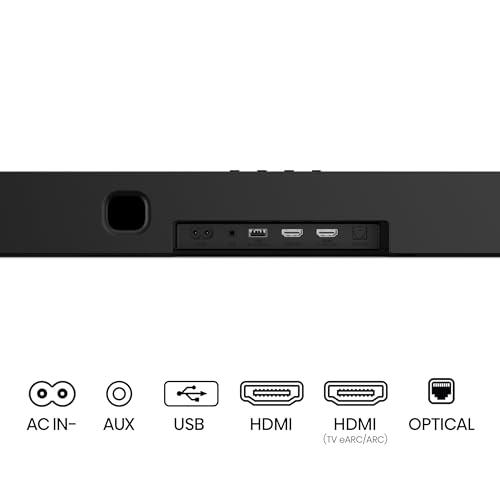
| 1 HDMI input + eARC | 3 HDMI inputs + eARC |
| Room Calibration - Auto-tuning helps optimize sound for your space | |
| AI EQ and Room Fitting Tuning included | Manual EQ presets, no auto calibration |
| Voice Enhancement - Critical for clear dialogue in movies and TV | |
| Basic voice modes and AI processing | Advanced VoiceAdjust technology with Night Mode |
| TV Integration - Seamless operation with compatible TVs | |
| Hi-Concerto ecosystem for Hisense TVs | Universal compatibility, Roku TV Ready |
| Setup Complexity - Affects how quickly you can enjoy your new system | |
| Requires rear speaker placement, fully wireless audio | Single bar setup, no speaker positioning needed |
| Expandability - Future upgrade options | |
| Complete system as shipped | Optional wireless surrounds available (SR2 speakers) |
| Brand Audio Heritage - Experience in speaker engineering | |
| Consumer electronics company, newer to premium audio | 50+ years of speaker design expertise |
The Hisense AX5140Q delivers superior surround sound with its true 5.1.4 configuration that includes physical wireless rear speakers. This creates authentic 360-degree audio where sounds actually come from behind you. The Polk Audio MagniFi Max AX uses virtual surround processing from a front-facing 3.1.2 setup, which is impressive but can't match the immersion of real rear speakers positioned around your room.
While both the Hisense AX5140Q and Polk Audio MagniFi Max AX support Dolby Atmos, the Hisense's physical rear speakers with up-firing drivers create more convincing overhead effects. The Hisense has four height channels compared to the Polk's two, resulting in better coverage for aircraft flyovers, rain effects, and ambient ceiling sounds in movies.
The Polk Audio MagniFi Max AX has significantly better bass with its 10-inch downward-firing subwoofer that reaches 35Hz. The Hisense AX5140Q uses a smaller 6.5-inch subwoofer with 40Hz extension. For action movies and bass-heavy music, the Polk delivers deeper, more impactful low-end performance.
The Polk Audio MagniFi Max AX is easier to install since it's essentially a single soundbar with a wireless subwoofer. The Hisense AX5140Q requires positioning wireless rear speakers behind your seating area, which needs adequate room space and proper placement for optimal performance, though the wireless connection makes it simpler than traditional wired surround systems.
The Polk Audio MagniFi Max AX excels at dialogue with its advanced VoiceAdjust technology that can isolate and enhance speech independently from other soundtrack elements. It also includes a Night Mode for clear conversations at low volumes. The Hisense AX5140Q has good voice clarity but lacks the sophisticated dialogue processing of the Polk.
The Polk Audio MagniFi Max AX offers extensive streaming options including Wi-Fi, AirPlay 2, Chromecast, and Spotify Connect. The Hisense AX5140Q is more limited with Bluetooth 5.3 connectivity but lacks the comprehensive wireless streaming capabilities of the Polk system.
The Polk Audio MagniFi Max AX is better suited for apartments since it doesn't require rear speaker placement and works well in front-only configurations. The Hisense AX5140Q needs adequate space behind seating for rear speakers, making it less practical in compact living spaces or rooms where furniture is against walls.
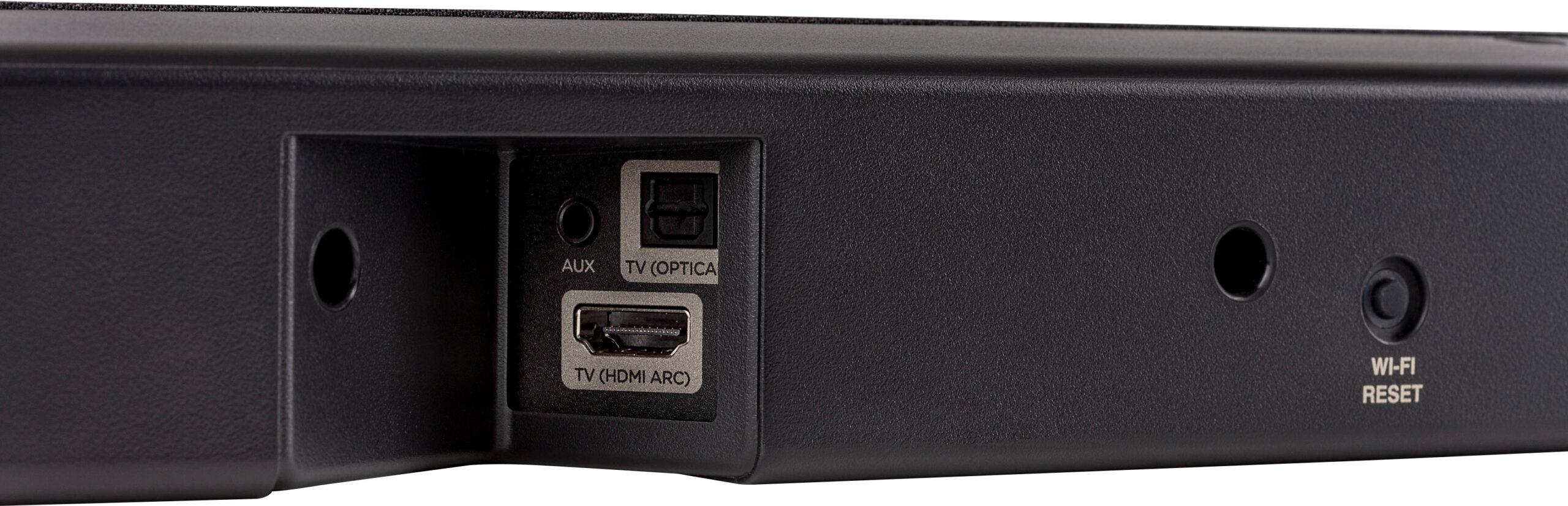
Both the Hisense AX5140Q and Polk Audio MagniFi Max AX work with any TV through HDMI eARC or optical connections. However, the Hisense offers enhanced integration with Hisense TVs through its Hi-Concerto ecosystem, while the Polk provides universal compatibility with features like Roku TV Ready certification.
The Hisense AX5140Q has advantages for gaming with its Game Pro mode and physical rear speakers that provide authentic directional audio cues. This helps with competitive gaming where hearing footsteps and environmental sounds from behind is important. The Polk Audio MagniFi Max AX handles gaming well but lacks the positional accuracy of discrete rear channels.
The Polk Audio MagniFi Max AX includes three spare HDMI inputs plus eARC, allowing you to connect multiple devices directly to the soundbar. The Hisense AX5140Q has one HDMI input plus eARC. If you need to connect multiple gaming consoles or streaming devices, the Polk offers more flexibility.
The Polk Audio MagniFi Max AX benefits from Polk's 50+ years of speaker engineering experience and generally superior build materials and construction. The Hisense AX5140Q offers solid construction and more speakers overall, but the Polk represents more premium manufacturing and component quality throughout the system.
The Polk Audio MagniFi Max AX can be expanded with optional SR2 wireless surround speakers to create a true 5.1.2 system. The Hisense AX5140Q comes complete as a 5.1.4 system with rear speakers included, so no expansion is needed or available. If you want to start simple and upgrade later, the Polk offers that flexibility.
We've done our best to create useful and informative comparisons to help you decide what product to buy. Our research uses advanced automated methods to create this comparison and perfection is not possible - please contact us for corrections or questions. These are the sites we've researched in the creation of this article: shop.hisense-usa.com - manuals.plus - dolby.com - youtube.com - gzhls.at - rtings.com - youtube.com - bestbuy.com - manuals.plus - bestbuy.com - hisense-usa.com - youtube.com - device.report - manuals.plus - youtube.com - device.report - manuals.plus - youtube.com - youtube.com - avsforum.com - rtings.com - rtings.com - bestbuy.com - walts.com - hometechnologyreview.com - polkaudio.com - pcrichard.com

Privacy Policy
Terms and Conditions - Affiliate Policy
Home Security
© Copyright 2008-2026.
11816 Inwood Rd #1211, Dallas, TX 75244