



When your TV's built-in speakers sound like they're trapped in a tin can, it's time for a soundbar upgrade. But the soundbar market has evolved dramatically since these devices first appeared in the early 2000s. What started as simple speaker arrays designed to replace tinny TV audio has exploded into a category spanning everything from basic dialogue enhancers to full-blown home theater replacements.
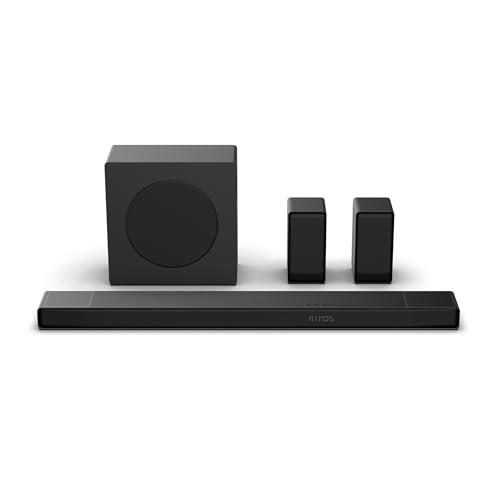
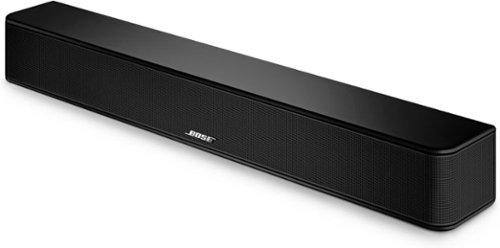
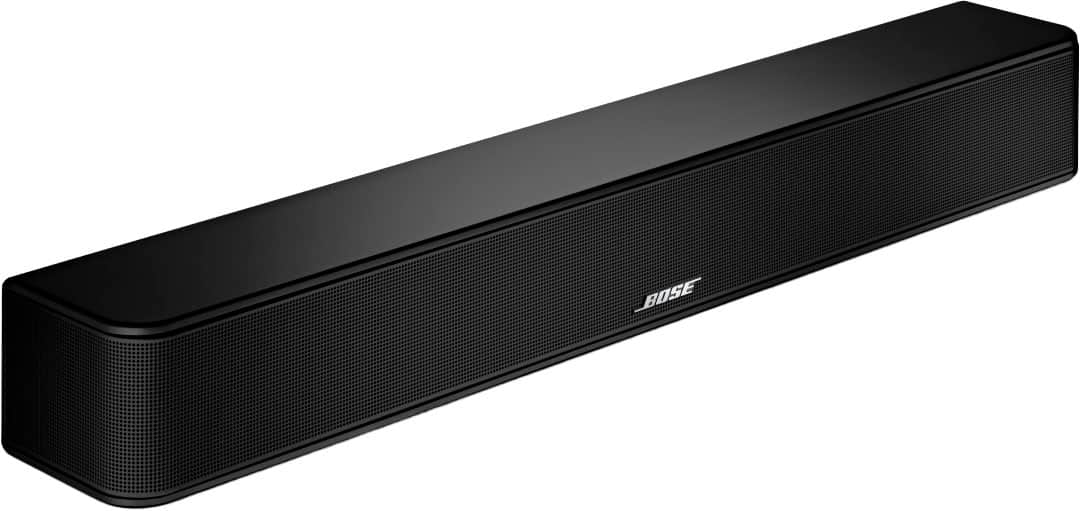
Today we're comparing two soundbars that represent completely different philosophies: the Bose Solo Soundbar Series 2 and the Hisense AX5140Q 5.1.4Ch Dolby Atmos system. Released in 2024, these products showcase how far apart soundbar approaches have grown. The Bose Solo Series 2 focuses on doing one thing exceptionally well—making dialogue crystal clear in a compact package. Meanwhile, the Hisense AX5140Q aims to recreate a complete movie theater experience with surround sound, height channels, and immersive audio processing.
At the time of writing, these products sit roughly $150 apart in price, but that gap represents far more than incremental improvements. We're talking about fundamentally different product categories that happen to both sit under your TV.
Before diving into specifics, let's establish what separates today's soundbars from the basic models of a decade ago. The most significant advancement has been the adoption of object-based audio formats like Dolby Atmos and DTS:X. These technologies treat sounds as individual objects that can be placed anywhere in 3D space, rather than just sending audio to specific speakers. When a helicopter flies overhead in a movie, Atmos can make it sound like it's actually above you, not just coming from your left and right speakers.
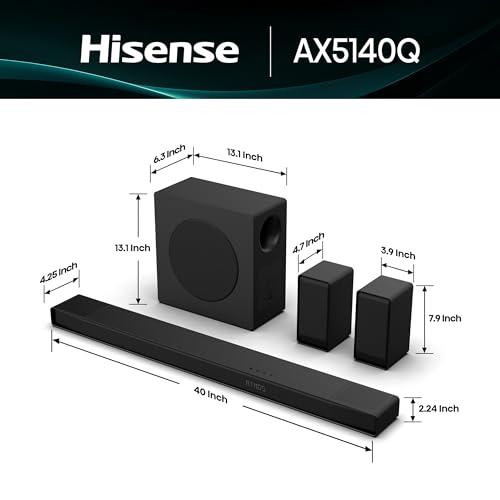
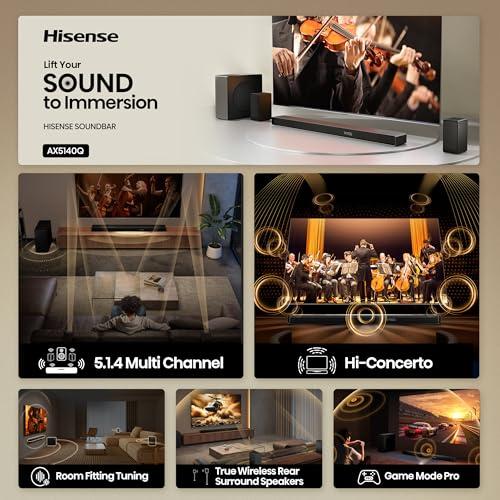
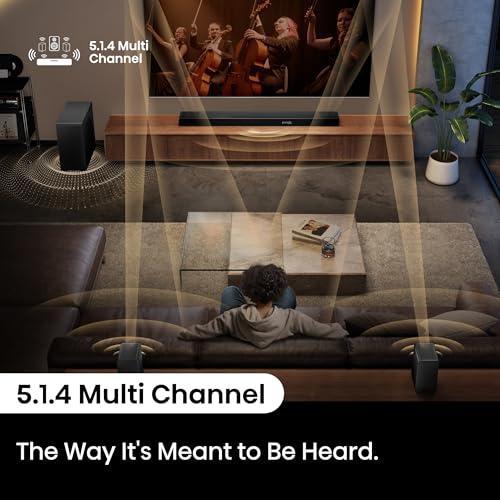
The term "5.1.4" in the Hisense AX5140Q's name tells us exactly what we're getting. The first number (5) represents the main horizontal speakers: left, center, right, and two surrounds. The second number (1) indicates one subwoofer for bass. The third number (4) shows four height channels—speakers that fire upward to create overhead effects. Compare this to the Bose Solo Series 2's 2.0 configuration, which simply means two speakers (left and right) with no dedicated subwoofer or height channels.
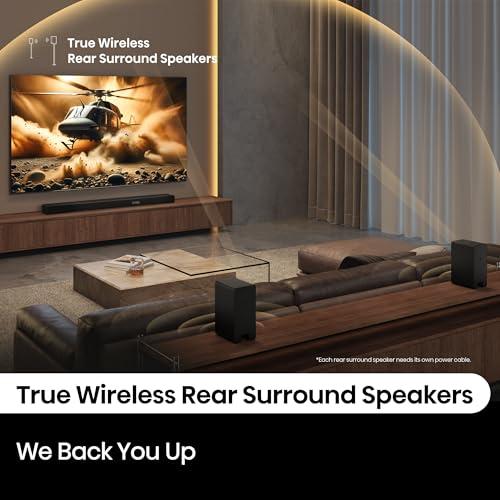
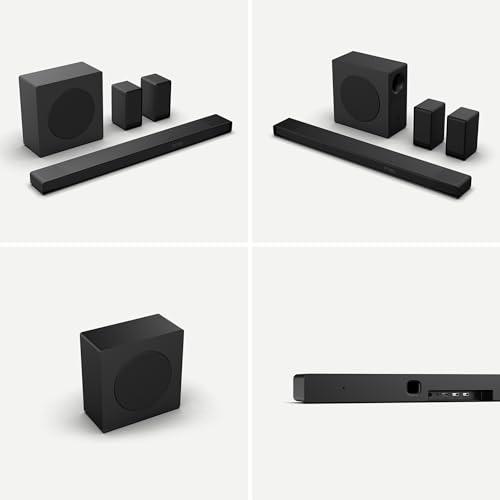
Another major evolution has been wireless connectivity between components. The Hisense system includes wireless rear speakers and subwoofer, eliminating the cable runs that once made surround sound installations a nightmare. This wireless approach, combined with automatic speaker pairing, has made complex audio setups accessible to anyone who can plug in a power cord.
When researching user feedback and professional reviews, dialogue performance emerges as the most critical factor for daily TV watching. The Bose Solo Series 2 was specifically engineered around this priority. Its Dialogue Mode doesn't just boost volume—it uses sophisticated frequency shaping to lift human voices above background noise, music, and sound effects. Think of it as a smart equalizer that understands speech patterns.
Based on user reviews and technical analysis, the Bose consistently delivers exceptional speech clarity even in challenging content like action movies where explosions and music typically drown out conversations. The two full-range drivers are angled to create a wide soundstage, ensuring clear dialogue reaches listeners across different seating positions.
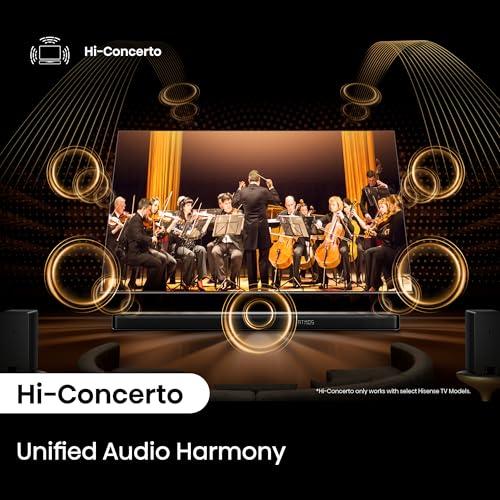
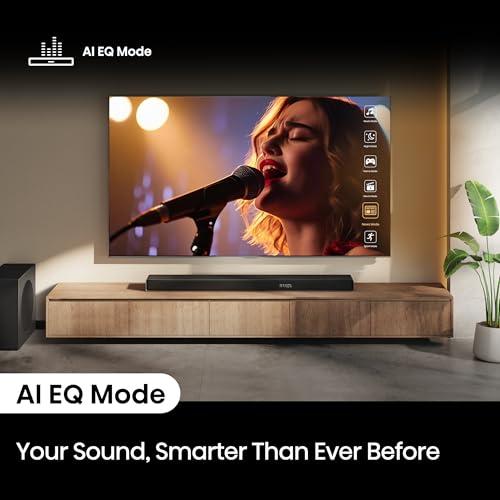
The Hisense AX5140Q, while more complex, approaches dialogue differently. Its dedicated center channel processing and Hi-Concerto AI system automatically adjust settings based on content type. User feedback suggests this works well, but some find the system occasionally over-emphasizes background effects when watching simple TV shows. The AI features include content detection that switches between optimized settings for news, movies, and sports—impressive technology that works well when it recognizes content correctly.
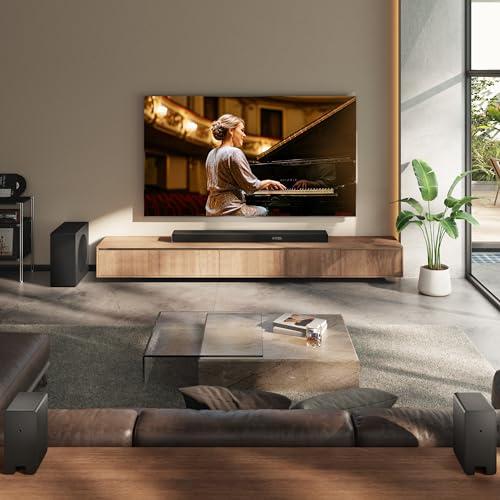
For cinematic experiences, the difference between these systems becomes dramatic. The Hisense AX5140Q's true 5.1.4 configuration creates what reviewers consistently describe as genuine surround immersion. The four upfiring speakers bounce audio off your ceiling to create height effects, while the wireless rear speakers handle ambient sounds and directional effects that simply cannot be reproduced by a front-facing bar.
Professional reviews and user experiences indicate that Dolby Atmos content—available on Netflix, Disney+, and Ultra HD Blu-rays—transforms on the Hisense system. Rain sounds like it's falling around you, aircraft pass convincingly overhead, and action sequences gain spatial depth that makes you feel part of the scene. The 6.5-inch wireless subwoofer provides the low-frequency foundation that gives weight to explosions, musical scores, and ambient effects.
The Bose Solo Series 2, by contrast, processes all content as stereo. Dolby Atmos tracks get downmixed to two channels, losing their spatial information entirely. While the audio remains clear and pleasant, you're missing the three-dimensional soundscape that modern movies are designed around. User reviews consistently note that while the Bose makes dialogue perfectly audible, action scenes lack the impact and immersion that draws you into the story.
Gaming has become a crucial soundbar consideration as consoles have embraced spatial audio. The Hisense AX5140Q includes a dedicated Game Pro mode that enhances positional audio cues—crucial for competitive gaming where hearing enemy footsteps or gunfire direction provides tactical advantages. Reviews from gaming enthusiasts highlight how the surround speakers create genuine directional awareness in first-person shooters and racing games.
The system's low-latency HDMI connection ensures audio stays synchronized with visual action, preventing the delay that can throw off timing in fast-paced games. User feedback particularly praises how the height channels add atmosphere in adventure and RPG titles, making environments feel more realistic and engaging.
Gaming on the Bose Solo Series 2 provides clear audio but lacks any spatial information. The optical connection may introduce slight latency, and without directional audio cues, competitive gaming becomes more challenging. However, for casual gaming focused on story rather than competition, the clear dialogue proves beneficial for narrative-driven titles.
Music performance reveals interesting contrasts between these approaches. User reviews consistently rate the Hisense system as competent across musical genres, with the subwoofer providing full-range bass response that makes electronic music, hip-hop, and rock sound appropriately powerful. The Music mode flattens the frequency response for more natural reproduction, though it's not optimized for critical listening.
The Bose Solo Series 2 struggles with music, particularly over Bluetooth. Reviews describe a "boxed-in" sound with weak bass response that makes music feel constrained and lifeless. The system was clearly optimized for dialogue rather than musical reproduction, and this shows in side-by-side comparisons.
Bass response represents perhaps the starkest difference between these systems. The Hisense AX5140Q's dedicated 6.5-inch wireless subwoofer delivers room-filling low frequencies that user reviews consistently describe as impressive for the price point. The subwoofer can be positioned anywhere in the room for optimal bass distribution, and its wireless connection eliminates placement constraints.
The Bose Solo Series 2 relies on small drivers in the main bar for all frequencies, resulting in what reviews characterize as thin, limited bass response. This works fine for dialogue and casual TV viewing but becomes noticeable during action content or music playback.
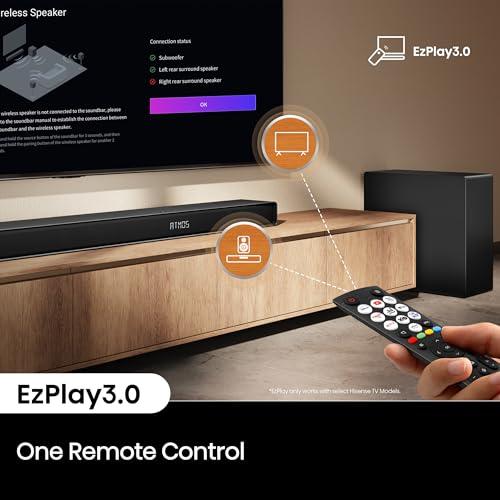
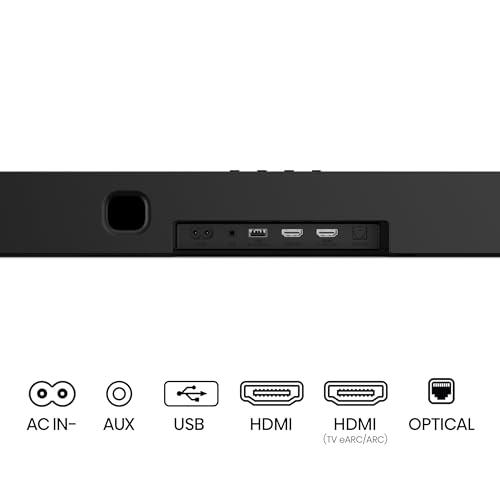
The connectivity difference between these systems reflects their different target audiences and release timeframes. The Hisense AX5140Q embraces modern HDMI standards with eARC (enhanced Audio Return Channel) support, allowing a single HDMI cable to carry high-quality audio from your TV while enabling unified control through your TV remote. This system also supports 4K 60Hz passthrough, meaning you can connect gaming consoles or streaming devices directly to the soundbar without compromising video quality.
The Bose Solo Series 2 deliberately keeps connectivity simple with optical and coaxial inputs—no HDMI at all. While this limits flexibility, it ensures compatibility with older TVs and eliminates potential handshake issues that sometimes plague HDMI connections. The trade-off is missing access to higher-quality audio formats that require HDMI bandwidth.
Both systems support Bluetooth, but here the age difference shows. The Hisense uses Bluetooth 5.3 with improved range and stability, while the Bose uses the older 4.0 standard with more limited range and occasional connection drops reported in user reviews.
Room size and layout significantly impact soundbar performance, and these systems serve different environments optimally. The Bose Solo Series 2 excels in smaller spaces—bedrooms, apartments, kitchens—where its compact 21.6-inch width fits under most TVs without overwhelming the room. Its focused audio delivery works well when listening positions are directly in front of the TV.
The Hisense AX5140Q requires more space and planning. The wireless rear speakers need placement behind or beside seating areas, and the subwoofer requires floor space somewhere in the room. User reviews indicate the system truly shines in medium to large living rooms where the surround effects have space to develop properly. In very small rooms, some users report the multiple speakers can sound overwhelming or create unwanted reflections.
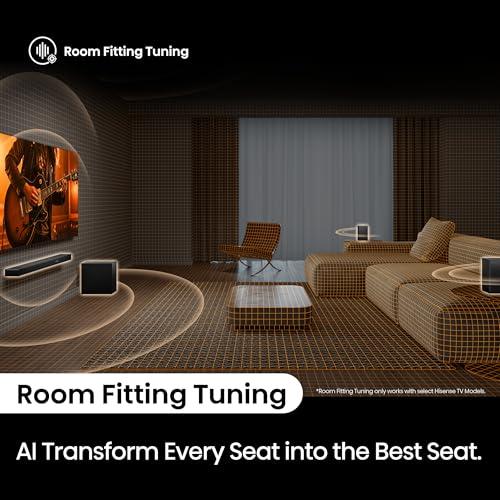
The Hisense system's room calibration feature attempts to optimize performance for different spaces using test tones and AI processing. User experiences suggest this works reasonably well, though it's not as sophisticated as the room correction found in high-end AV receivers.
At the time of writing, the price difference between these systems represents one of the most interesting value equations in consumer electronics. The Bose Solo Series 2 delivers focused performance in its target area—dialogue clarity and simplicity—at a price point that makes it accessible for casual TV viewers.
The Hisense AX5140Q provides dramatically more capability for a moderate price increase: true surround sound, height channels, wireless subwoofer, modern connectivity, and gaming optimization. When you break down the cost per speaker and feature, it represents exceptional value in the home theater category.
However, value isn't just about specifications—it's about matching capabilities to actual needs. If you primarily watch news and talk shows in a small room, the Bose's focused approach might provide better value despite having fewer features. If you're a movie enthusiast or gamer who wants immersive audio, the Hisense delivers far more entertainment value per dollar spent.
Choose the Bose Solo Series 2 when your primary goal is solving dialogue problems with minimal complexity. It's ideal for users who watch primarily TV shows, news, and dialogue-driven content in smaller spaces. The system particularly suits seniors or others who struggle with speech clarity, as its Dialogue Mode provides immediate, noticeable improvement over TV speakers. Its compact design and simple setup make it perfect for bedrooms, kitchens, or apartment living rooms where space is limited.
The Hisense AX5140Q makes sense when you want a comprehensive audio upgrade that handles all content types well. Movie enthusiasts, gamers, and music listeners will appreciate the full-range performance and spatial audio capabilities. The system particularly shines for families with varied entertainment preferences—kids gaming, parents watching movies, everyone streaming music.
Consider your viewing habits honestly. If you rarely watch action movies or play games with spatial audio, the Bose's focused approach might serve you better. If you find yourself turning up TV volume constantly or missing dialogue during complex scenes, either system will help, but the Bose addresses this specific issue more directly.
Based on extensive research into user experiences and professional reviews, both systems succeed at their intended missions. The Bose Solo Series 2 proves that sometimes doing one thing exceptionally well beats trying to do everything adequately. Its dialogue clarity and foolproof setup make it the right choice for straightforward TV audio improvement.
The Hisense AX5140Q demonstrates how far soundbar technology has advanced, delivering genuine surround sound experience that was impossible at this price point just a few years ago. For users ready to embrace modern audio formats and willing to accommodate multiple speakers, it provides remarkable value and performance.
The choice ultimately depends on whether you're solving a specific problem or seeking a comprehensive entertainment upgrade. Both products deliver on their promises—you just need to decide which promise matches your priorities and space.
| Hisense AX5140Q 5.1.4Ch Dolby Atmos DTS:X Sound Bar | Bose Solo Soundbar Series 2 |
|---|---|
| Channel Configuration - Determines surround sound capability and immersion level | |
| 5.1.4 channels with discrete speakers (true surround sound) | 2.0 channels (stereo only, no surround effects) |
| Included Components - What's in the box affects setup complexity and performance | |
| Soundbar + wireless subwoofer + 2 wireless rear speakers | Single soundbar only |
| Dolby Atmos Support - Essential for modern movie and gaming immersion | |
| Full Dolby Atmos and DTS:X with real height channels | No Atmos support (downmixes to stereo) |
| Bass Performance - Critical for movies, music, and gaming impact | |
| Dedicated 6.5" wireless subwoofer with room-filling bass | Minimal bass from small built-in drivers |
| HDMI Connectivity - Affects compatibility with modern TVs and devices | |
| HDMI eARC with 4K 60Hz passthrough and CEC control | No HDMI (optical and coaxial only) |
| Dialogue Enhancement - Key feature for TV shows and speech clarity | |
| Hi-Concerto AI with multiple speech modes | Dedicated Dialogue Mode (primary focus) |
| Physical Size - Important for room fit and aesthetic impact | |
| Large system requiring multiple speaker placements | Compact 21.6" bar fits under most TVs |
| Setup Complexity - Affects how quickly you'll be enjoying better audio | |
| Wireless pairing with room calibration options | Single cable connection, immediate operation |
| Gaming Optimization - Matters for console and PC gaming performance | |
| Game Pro mode with spatial audio and low latency | No gaming-specific features or spatial audio |
| Music Performance - Important if you stream music through the system | |
| Good across genres with full-range subwoofer support | Poor Bluetooth music quality with weak bass |
| Room Size Optimization - Determines which spaces work best | |
| Medium to large rooms (needs space for rear speakers) | Small to medium rooms (compact single-unit design) |
| Bluetooth Version - Affects wireless connection stability and range | |
| Bluetooth 5.3 (modern standard with better range/stability) | Bluetooth 4.0 (older standard with limited range) |
| Target Use Case - Who each product serves best | |
| Movie enthusiasts, gamers, full home theater experience | TV dialogue clarity, simple setup, space-conscious users |
The Hisense AX5140Q is significantly better for movies and home theater use. It features true 5.1.4 surround sound with wireless rear speakers, a dedicated subwoofer, and full Dolby Atmos support that creates genuine overhead effects. The Bose Solo Series 2 is a basic 2.0 stereo soundbar without surround sound capabilities or Atmos support.
The main difference is that the Hisense AX5140Q is a complete surround sound system with multiple speakers, while the Bose Solo Series 2 is a single compact soundbar focused on dialogue clarity. The Hisense includes wireless rear speakers and a subwoofer for immersive audio, whereas the Bose prioritizes simplicity and speech enhancement.
The Bose Solo Series 2 is better for small rooms and apartments due to its compact 21.6-inch design and single-unit setup. The Hisense AX5140Q requires space for rear speakers and a subwoofer, making it more suitable for medium to large living rooms where the surround effects can properly develop.
No, only the Hisense AX5140Q supports Dolby Atmos and DTS:X with real height channels. The Bose Solo Series 2 does not support Atmos and will downmix any Atmos content to basic stereo, losing the three-dimensional audio effects entirely.
Both excel at dialogue but in different ways. The Bose Solo Series 2 was specifically designed for speech clarity with a dedicated Dialogue Mode that enhances voices above background noise. The Hisense AX5140Q also provides clear dialogue through its center channel and AI processing, but some users find it occasionally over-emphasizes effects during simple TV viewing.
The Hisense AX5140Q offers modern connectivity with HDMI eARC, optical, USB, coaxial, AUX, and Bluetooth 5.3. The Bose Solo Series 2 keeps it simple with optical, coaxial, AUX inputs, and Bluetooth 4.0, but notably lacks any HDMI connectivity.
The Bose Solo Series 2 is easier to set up with just one optical cable connection and immediate operation. The Hisense AX5140Q requires positioning multiple wireless speakers around the room, though the wireless pairing is automatic and room calibration helps optimize performance.
Only the Hisense AX5140Q includes a dedicated 6.5-inch wireless subwoofer for deep bass. The Bose Solo Series 2 relies on small built-in drivers and has minimal bass response, making it less suitable for bass-heavy content like action movies or music.
The Hisense AX5140Q is much better for gaming with its Game Pro mode that enhances positional audio cues and spatial awareness. The surround speakers provide directional information crucial for competitive gaming. The Bose Solo Series 2 offers clear audio but no spatial effects or gaming-specific features.
The Hisense AX5140Q handles music well across genres with its full-range subwoofer and Music mode optimization. The Bose Solo Series 2 struggles with music, particularly over Bluetooth, delivering what users describe as "boxed-in" sound with weak bass response.
The Hisense AX5140Q offers exceptional value by including a complete 5.1.4 surround system with wireless subwoofer and rear speakers. The Bose Solo Series 2 provides focused value for users who only need dialogue enhancement and simple setup, but the Hisense delivers dramatically more capability for the price difference.
Choose the Bose Solo Series 2 if you primarily watch TV shows and news, have limited space, want the simplest possible setup, or are focused specifically on dialogue clarity. Choose the Hisense AX5140Q if you watch movies regularly, play games, listen to music, have a medium to large room, or want a comprehensive home theater upgrade that handles all content types well.
We've done our best to create useful and informative comparisons to help you decide what product to buy. Our research uses advanced automated methods to create this comparison and perfection is not possible - please contact us for corrections or questions. These are the sites we've researched in the creation of this article: shop.hisense-usa.com - manuals.plus - dolby.com - youtube.com - gzhls.at - rtings.com - youtube.com - bestbuy.com - manuals.plus - bestbuy.com - hisense-usa.com - youtube.com - device.report - manuals.plus - youtube.com - device.report - manuals.plus - youtube.com - rtings.com - bose.com - bose.com - assets.bose.com - bestbuy.com - youtube.com - pistonheads.com - costco.com - googlenestcommunity.com - youtube.com - discussions.apple.com

Privacy Policy
Terms and Conditions - Affiliate Policy
Home Security
© Copyright 2008-2026.
11816 Inwood Rd #1211, Dallas, TX 75244