

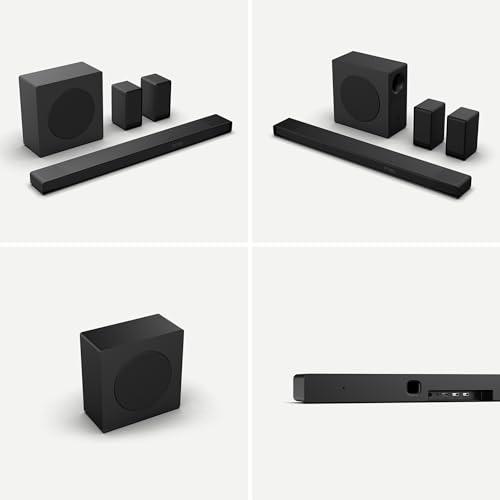
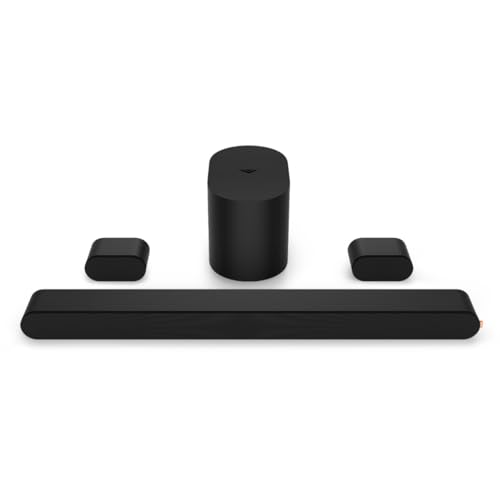


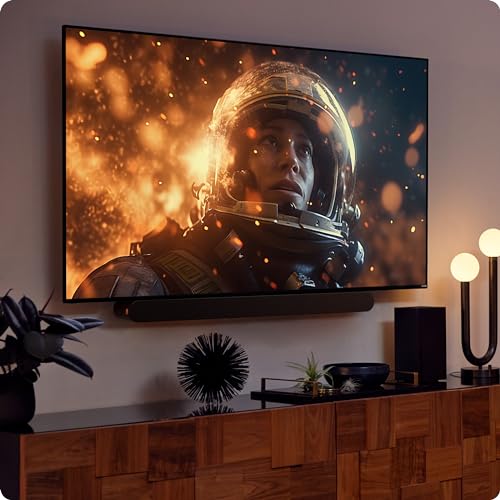
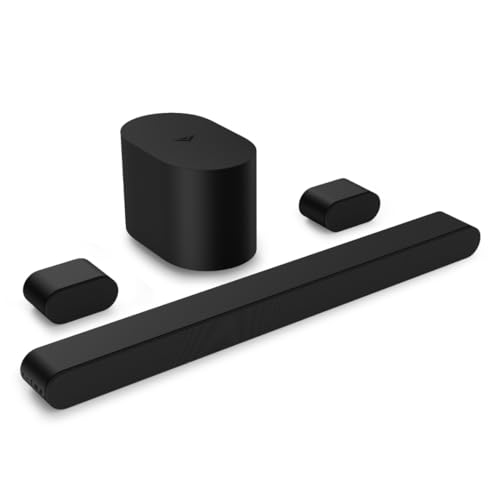
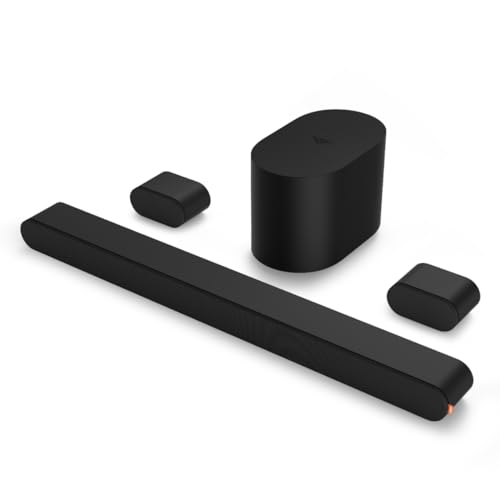
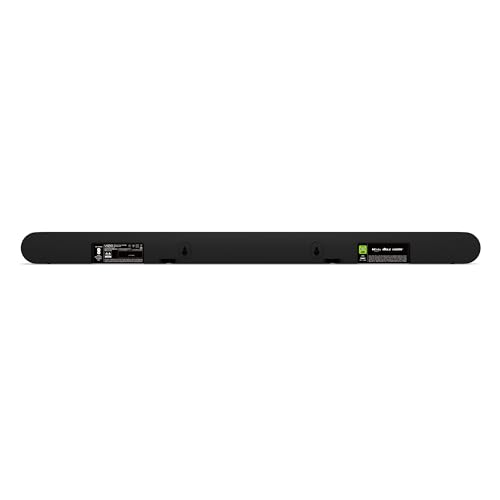
When you're watching an action movie and a helicopter swoops overhead, the difference between hearing it "above" the TV versus truly feeling it pass over your head comes down to how your soundbar handles height channels. This fundamental distinction separates the Hisense AX5140Q and VIZIO 5.1 SE in ways that go far beyond their price difference.
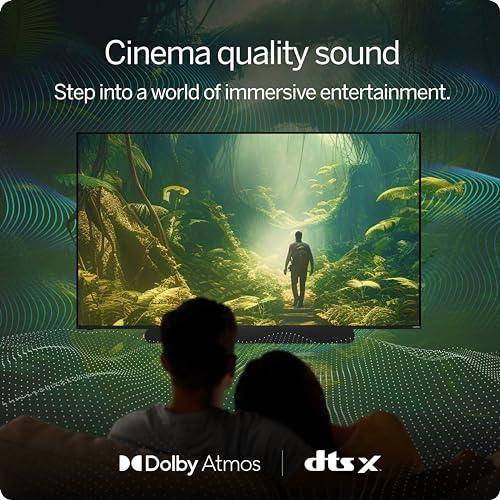
Both soundbars promise Dolby Atmos immersion—a technology that adds a vertical dimension to surround sound by positioning audio objects in three-dimensional space rather than fixed channels. But they achieve this goal through completely different approaches, making your choice largely about whether you want genuine overhead effects or are satisfied with clever audio processing that simulates them.
The soundbar market has evolved dramatically since these systems launched in recent years. The Hisense AX5140Q represents the newer generation of true multi-channel systems, while the VIZIO 5.1 SE follows the more traditional approach of using psychoacoustic processing—essentially tricking your brain into perceiving height that isn't physically there.
When evaluating any soundbar system, the most important performance characteristics are:
Soundstage width and depth: How well the system creates the illusion of sound coming from beyond the physical speakers Dynamic range: The difference between the quietest whispers and loudest explosions the system can reproduce without distortion Bass extension and integration: How low the subwoofer reaches and how seamlessly it blends with the main speakers Dialogue intelligibility: Whether you can understand speech clearly during complex action sequences Height effect authenticity: How convincingly the system places sounds above your listening position
The technical specifications that matter most are channel configuration (how many discrete audio streams), driver count and placement, subwoofer size, total power handling, and the sophistication of the digital signal processing.
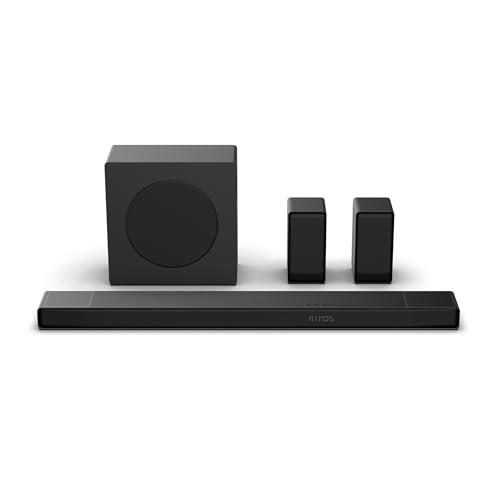
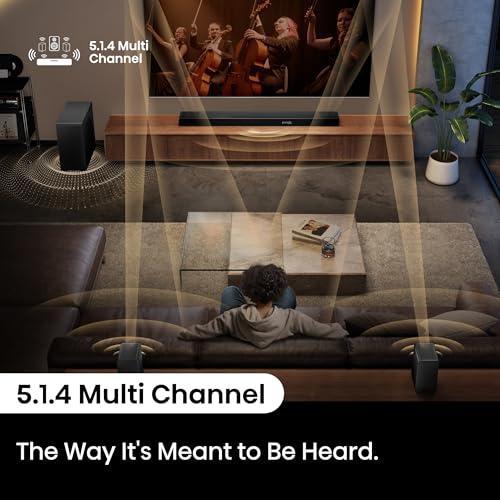
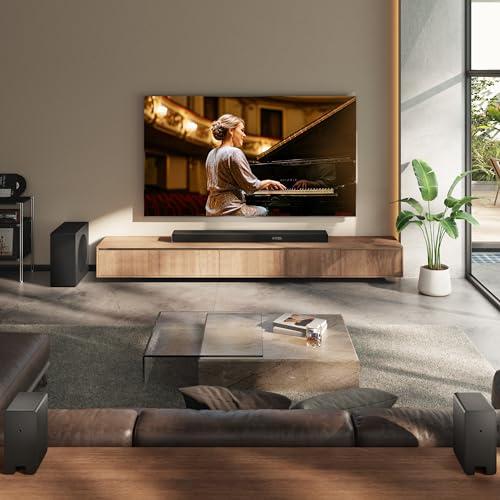
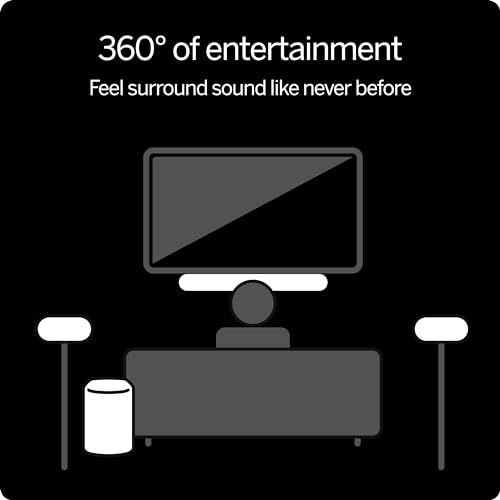
The Hisense AX5140Q takes what audio engineers call a "discrete channel" approach. Its 5.1.4 configuration means five traditional surround channels (front left, center, right, rear left, rear right) plus one subwoofer, with four additional height channels handled by dedicated up-firing speakers. These up-firing drivers—two mounted on top of the main soundbar and two more in the wireless rear speakers—physically project sound toward your ceiling, where it reflects down to create authentic overhead effects.
This reflection-based approach works remarkably well in rooms with 8-10 foot ceilings and reasonably reflective surfaces. The physics are straightforward: sound waves travel upward, bounce off the ceiling, and arrive at your ears from above. When implemented properly, you genuinely hear rain droplets falling from overhead or aircraft moving across the ceiling plane rather than just "elevated" sound from the front of the room.
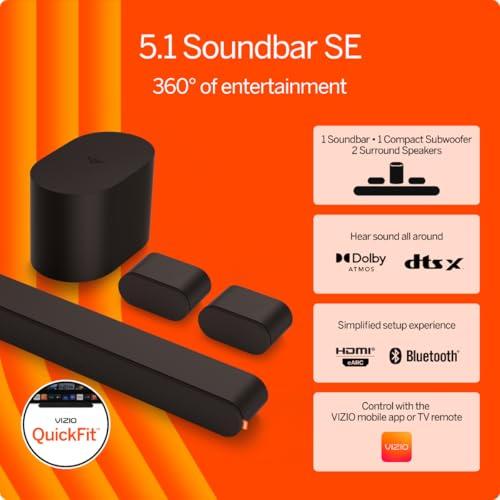
The VIZIO 5.1 SE, by contrast, uses a traditional 5.1 setup with sophisticated digital processing to create virtual height effects. The soundbar contains up-firing drivers, but without dedicated height channels in the rear speakers, it relies on psychoacoustic algorithms—complex mathematical models of how your brain processes directional audio cues—to simulate overhead placement. This virtual processing analyzes the audio signal and applies carefully calibrated delays, phase shifts, and frequency adjustments to fool your auditory system into perceiving height.
Both approaches have merit, but the practical difference becomes obvious with complex Atmos content. The Hisense AX5140Q consistently places specific effects—like a helicopter's rotor wash or rain on a metal roof—in convincing overhead positions that track naturally as objects move through the scene. The VIZIO 5.1 SE creates a sense of elevation and spaciousness, but effects tend to feel more like they're coming from "above the TV" rather than genuinely overhead.
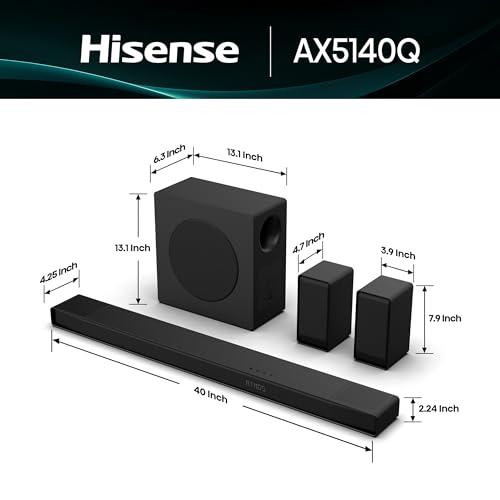
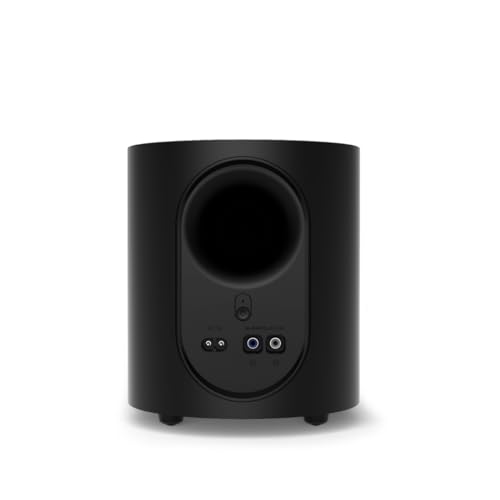
The subwoofer specifications tell an important story about each system's capabilities. The Hisense AX5140Q's 6.5-inch wireless subwoofer can reproduce frequencies down to 40Hz, which covers the fundamental frequencies of movie explosions, thunder, and the lowest notes of pipe organs. That extra half-inch of driver diameter and the lower frequency extension translate to noticeably more impactful bass that can pressurize a medium-sized room effectively.
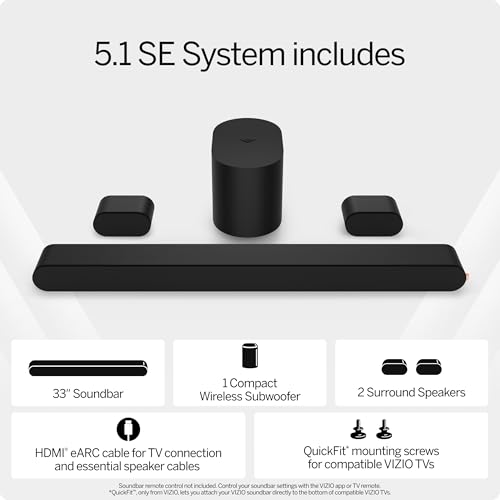
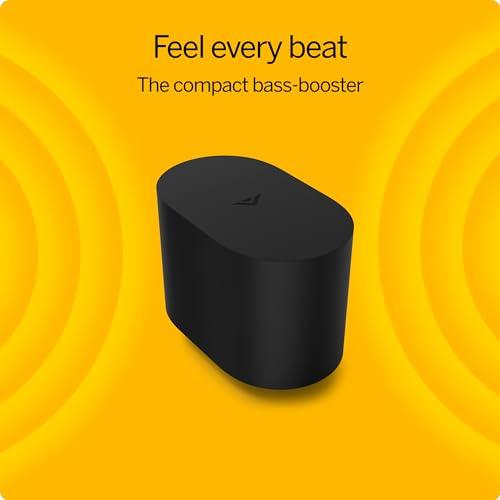
The VIZIO 5.1 SE's compact 6-inch subwoofer reaches 50Hz, which handles most movie content adequately but lacks the deep foundation that makes action sequences truly visceral. The 10Hz difference might seem small, but it's logarithmic—50Hz to 40Hz represents a significant increase in low-frequency capability. In practice, this means the Hisense system delivers more satisfying rumble for explosions and earthquake scenes, while the VIZIO provides adequate but less impactful bass.
Both systems use wireless subwoofer connections, eliminating the cable run that many users struggle with in traditional home theater setups. The wireless implementation in both cases proves reliable based on user feedback, with minimal latency or connection issues once properly positioned.
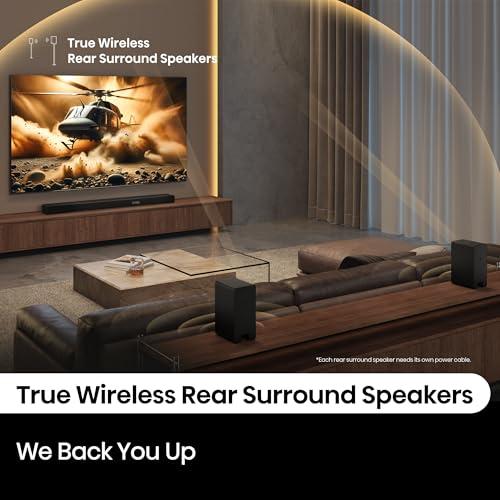
The Hisense AX5140Q's dedicated wireless rear speakers create what audio enthusiasts call a true "360-degree soundfield." When a car chase pans from screen left to screen right and continues behind you, the discrete rear channels handle that transition with precise localization. The rear speakers each contain both horizontal drivers for traditional surround effects and up-firing drivers that contribute to the overhead ambience, creating a more cohesive three-dimensional sound bubble around your seating area.
User reviews consistently highlight this rear presence as transformative. One common observation is that dialogue scenes with crowd noise or restaurant ambience suddenly feel like you're sitting in the middle of the space rather than watching it on screen. Action sequences benefit even more dramatically, with explosions, gunfire, and vehicle movement tracking convincingly around the listening position.
The VIZIO 5.1 SE provides solid traditional surround effects through its wireless rear speakers, but the single full-range driver in each satellite limits their precision and impact. These speakers handle basic rear panning and ambient effects effectively, creating good left-right movement and basic front-to-back transitions. However, they lack the multi-driver complexity of the Hisense rears and don't contribute to height effects, making the overall surround experience more conventional.
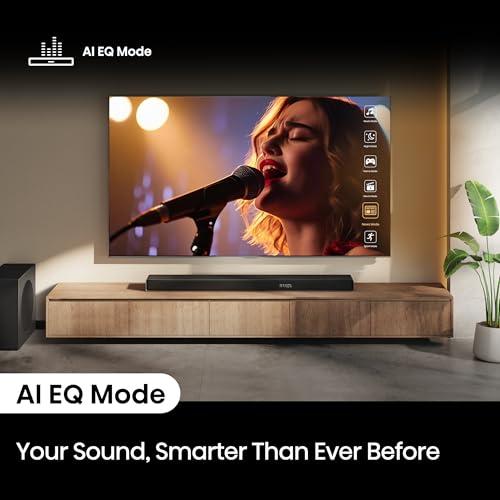
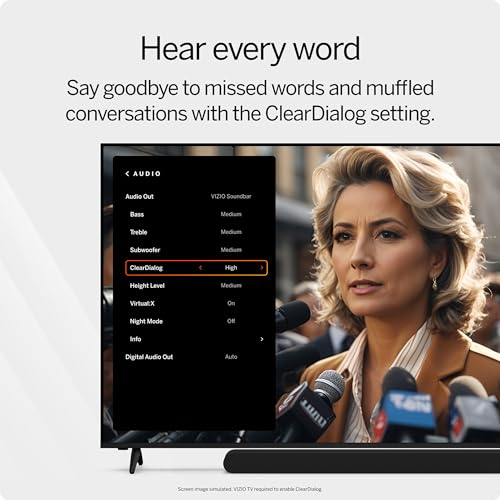
Both systems prioritize dialogue intelligibility, but their approaches differ significantly. The Hisense AX5140Q includes dedicated center channel drivers and tweeters specifically optimized for vocal frequencies, plus AI EQ processing that automatically adjusts the frequency response to maintain speech clarity as volume levels change. This AI EQ feature—which analyzes content in real-time and reduces distortion while preserving intelligibility—represents newer signal processing technology that wasn't common in earlier soundbar generations.
The VIZIO 5.1 SE handles dialogue through its center driver with competent but less sophisticated processing. While voices remain clear in most content, the system may struggle slightly during complex action sequences where multiple sound elements compete for the same frequency ranges.
The practical difference becomes apparent with dense action films where dialogue overlaps with explosions, gunfire, and background music. The Hisense's AI processing and dedicated vocal drivers maintain speech intelligibility more consistently, while the VIZIO may require occasional volume adjustments or sound mode changes to keep dialogue prominent.
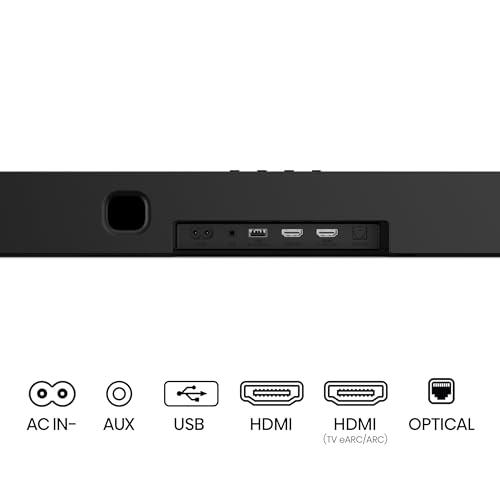
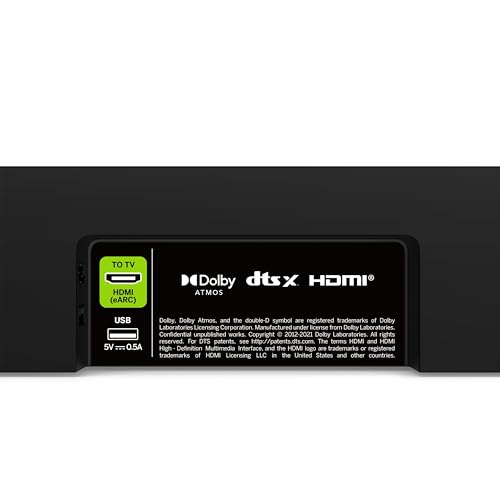
Modern soundbars increasingly function as home theater hubs, and their connectivity options determine long-term flexibility. The Hisense AX5140Q includes both HDMI eARC and an additional HDMI input with 4K 60Hz passthrough. This dual HDMI capability means you can connect one high-bandwidth device (like a gaming console or streaming box) directly to the soundbar while using eARC for TV audio, reducing HDMI port pressure on your television.
The 4K 60Hz passthrough specification is significant for gaming and high-quality streaming content. While not quite matching the 4K 120Hz capability that latest-generation gaming consoles can output, it handles the vast majority of current content without quality degradation. The additional HDMI input provides valuable flexibility that becomes more important as you add devices to your entertainment setup.
The VIZIO 5.1 SE relies exclusively on HDMI eARC, requiring all source devices to connect directly to your TV. This simplifies initial setup but limits flexibility if your TV runs short on HDMI ports or if you prefer centralized audio processing through the soundbar.
Both systems support Bluetooth streaming for music playback, but the Hisense AX5140Q includes Bluetooth 5.3—a newer standard that provides better range, lower latency, and more stable connections compared to earlier Bluetooth versions.
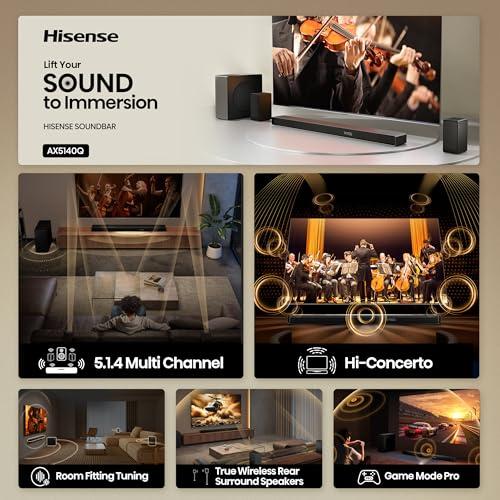
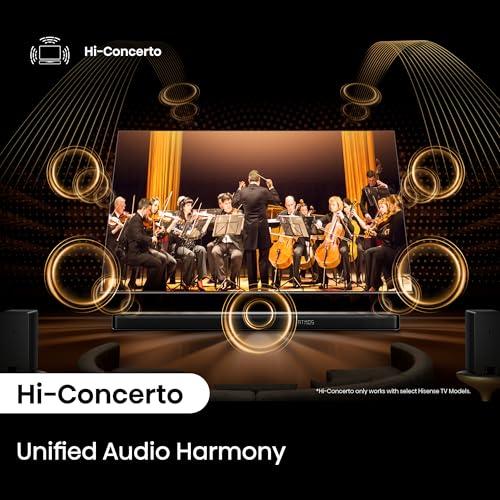
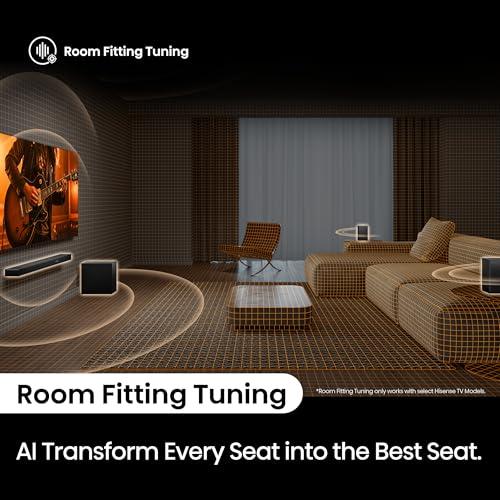
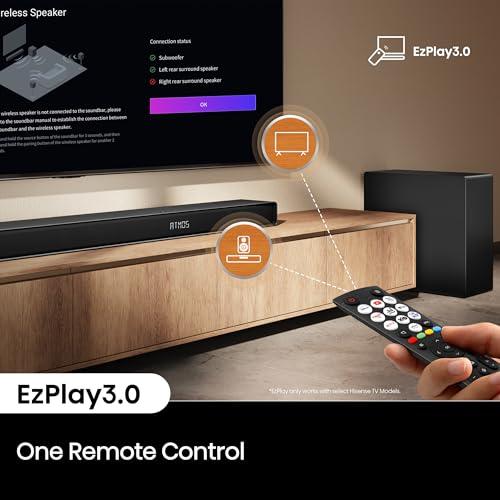
The control philosophies diverge significantly between these systems. The Hisense AX5140Q includes Hi-Concerto technology and EzPlay integration, which creates seamless cooperation between compatible Hisense TVs and the soundbar. When properly integrated, the TV and soundbar coordinate their processing to improve lip-sync, optimize surround imaging, and enable unified control through the TV's interface. The system also includes room calibration capabilities that use test tones and processing algorithms to adapt the sound to your specific room's acoustics.
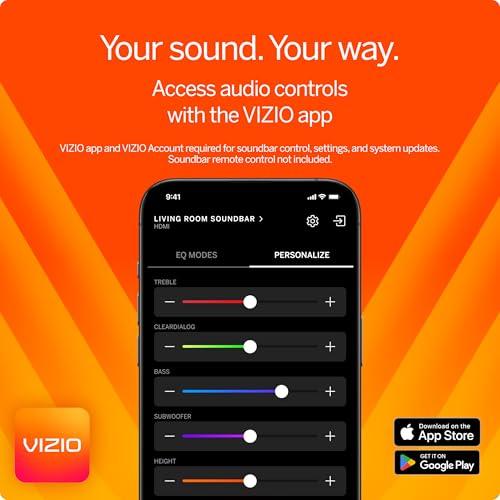
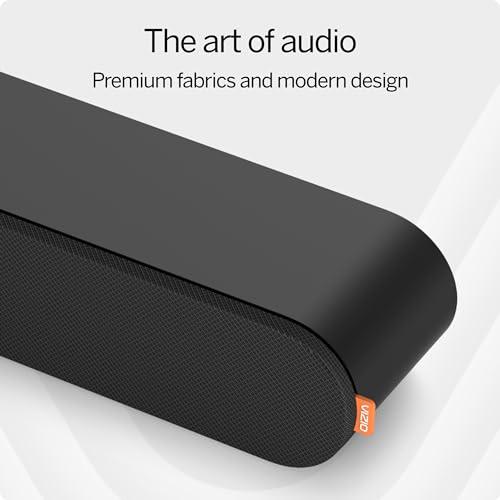
The VIZIO 5.1 SE takes an app-centric approach, using the VIZIO mobile app as the primary control interface rather than including a dedicated physical remote. This modern approach appeals to users comfortable with smartphone control and provides a clean, visual interface for adjusting settings. However, it may frustrate users who prefer traditional remote controls or who experience smartphone connectivity issues.
For serious home theater use, the differences between these systems become most apparent with demanding content. Dolby Atmos movie soundtracks like "Mad Max: Fury Road," "Blade Runner 2049," or "Top Gun: Maverick" showcase the Hisense AX5140Q's advantages clearly. The discrete height channels place aircraft movement, environmental ambience, and atmospheric effects with convincing three-dimensional accuracy that draws you into the scene.
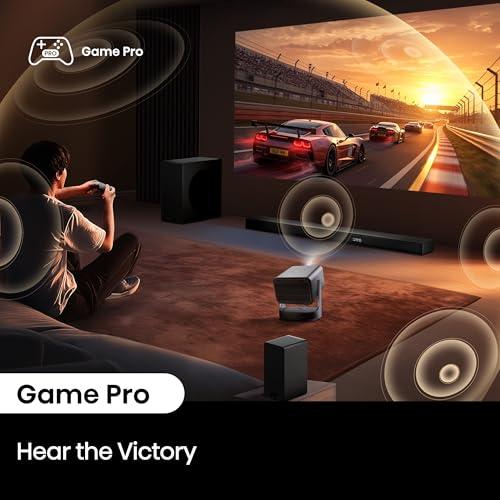
Gaming represents another area where the channel count matters significantly. Modern games increasingly include sophisticated spatial audio that takes advantage of height channels for environmental immersion and tactical advantage. The Hisense AX5140Q's Game Pro mode optimizes processing for low latency and enhanced positional accuracy, making footsteps, gunfire direction, and ambient environmental cues more precise and useful for competitive gaming.
The VIZIO 5.1 SE handles these same applications competently but with less dimensional accuracy. Movies provide good immersion with solid bass and clear dialogue, while gaming benefits from the surround speakers' directional cues, though without the overhead precision that height channels enable.
At the time of writing, these systems occupy different value segments that reflect their technological approaches. The VIZIO 5.1 SE positions itself as an accessible entry point into multichannel surround sound with Atmos compatibility, making immersive audio available to budget-conscious buyers who want a significant upgrade over TV speakers without premium pricing.
The Hisense AX5140Q commands a higher price but delivers substantially more sophisticated technology. When compared to other true 5.1.4 systems from major brands, it typically offers competitive or superior feature sets at lower prices, representing strong value for buyers prioritizing authentic height effects and extensive connectivity options.
The price difference between these systems—roughly 75% higher for the Hisense at current market rates—represents a meaningful decision point. That premium buys you four discrete height channels, more powerful bass extension, additional HDMI connectivity, advanced AI processing, and room calibration capabilities. Whether these features justify the additional cost depends largely on your room size, content preferences, and long-term upgrade plans.
The VIZIO 5.1 SE makes sense for specific scenarios and user profiles. If you're upgrading from basic TV speakers or a simple 2.1 soundbar, it provides dramatic improvement in surround immersion and dialogue clarity at a relatively modest investment. The compact form factor works well in smaller rooms where the virtual height processing can be more convincing, and the app-based control appeals to users who prefer smartphone interfaces.
Budget-conscious buyers who primarily consume streaming content—which often uses less complex Atmos mixes than theatrical releases—may find the virtual processing entirely satisfactory. The system also suits renters or users who move frequently, as the simpler setup and more compact components transfer between rooms more easily.
The Hisense AX5140Q targets users building more serious home theater setups who prioritize authentic immersion over initial cost savings. If you regularly watch action movies, play modern games, or plan to upgrade to larger TVs that can better showcase surround sound capabilities, the genuine height channels and additional features provide lasting value that justifies the higher upfront investment.
The system particularly excels in medium to large rooms where the discrete rear speakers can be positioned effectively and where the additional bass output can pressurize the space adequately. Users with compatible Hisense TVs gain additional integration benefits, though the system works well with any TV brand through its comprehensive connectivity options.
Based on extensive research into user feedback and professional evaluations, the choice between these systems largely comes down to whether you value authentic height effects enough to pay significantly more for them. The VIZIO 5.1 SE delivers solid value for users seeking good surround sound with virtual Atmos at an accessible price point. Its performance represents a meaningful upgrade from TV speakers while maintaining simplicity and affordability.
However, the Hisense AX5140Q offers substantially better long-term value for most home theater applications. The genuine 5.1.4 channel configuration, superior connectivity options, and advanced processing features provide a more complete and future-proof solution that grows with your entertainment system rather than limiting it.
For buyers who can accommodate the higher initial investment, the Hisense system delivers the kind of immersive audio experience that transforms movie watching from casual viewing into engaging home theater entertainment. The authentic overhead effects, powerful bass extension, and comprehensive feature set justify the premium for users serious about audio quality and long-term flexibility.
| Hisense AX5140Q 5.1.4Ch Dolby Atmos DTS:X Sound Bar | VIZIO 5.1 Soundbar SE Dolby Atmos Surround System |
|---|---|
| Channel Configuration - Determines authenticity of overhead effects | |
| 5.1.4 with four dedicated up-firing speakers (true height channels) | 5.1 with virtual height processing (simulated overhead effects) |
| Audio Format Support - More formats mean better compatibility | |
| Dolby Atmos, DTS:X, Dolby TrueHD, DTS-HD Master Audio, PCM | Dolby Atmos, DTS:X support |
| Subwoofer Size & Bass Extension - Impacts movie explosion impact | |
| 6.5" wireless subwoofer, 40Hz-20kHz frequency response | 6" wireless subwoofer, 50Hz frequency response |
| Maximum Power Output - Determines room-filling capability | |
| 600W maximum audio power | 96dB maximum sound pressure level |
| Rear Speaker Design - Critical for surround immersion | |
| Wireless rears with both horizontal and up-firing drivers | Wireless rears with single full-range driver each |
| HDMI Connectivity - Affects device routing flexibility | |
| HDMI eARC + 1 HDMI input with 4K 60Hz passthrough | HDMI eARC only (all devices connect to TV) |
| Smart Features & Processing - Enhances daily usability | |
| AI EQ mode, room calibration, Hi-Concerto TV integration, 7 sound modes | VIZIO mobile app control, customizable EQ settings |
| Physical Remote Control - Important for some users | |
| Included physical remote with battery | No remote included (app and TV remote only) |
| Soundbar Dimensions - Consider TV compatibility | |
| 40" wide (fits 55"+ TVs best) | 33" wide (fits smaller TVs better) |
| Bluetooth Version - Affects wireless streaming quality | |
| Bluetooth 5.3 (latest standard, better range/stability) | Bluetooth version not specified |
| Additional Inputs - Legacy device compatibility | |
| Optical, AUX (3.5mm), USB | Optical input |
| Room Calibration - Optimizes sound for your space | |
| Automatic room fitting tuning with compatible Hisense TVs | Manual EQ adjustment via app |
The Hisense AX5140Q features true 5.1.4 channel audio with four dedicated up-firing speakers that physically project sound to your ceiling for authentic overhead effects. The VIZIO 5.1 SE uses traditional 5.1 channels with virtual processing to simulate height effects. This means the Hisense AX5140Q delivers more convincing Dolby Atmos immersion, while the VIZIO 5.1 SE provides good surround sound at a lower cost.
The Hisense AX5140Q has superior bass with its 6.5-inch wireless subwoofer that reaches down to 40Hz, providing deeper impact for movie explosions and music. The VIZIO 5.1 SE uses a 6-inch subwoofer with 50Hz extension, which handles most content adequately but lacks the deep foundation of the Hisense AX5140Q. The difference is noticeable during action movies and bass-heavy music.
Yes, both the Hisense AX5140Q and VIZIO 5.1 SE support Dolby Atmos, but they achieve it differently. The Hisense AX5140Q uses four physical up-firing speakers for true height channels, while the VIZIO 5.1 SE relies on virtual processing to simulate overhead effects from its traditional speaker arrangement.
The Hisense AX5140Q is better for gaming due to its dedicated Game Pro mode, true height channels for positional audio, and HDMI input with 4K 60Hz passthrough. The discrete height and surround channels help with directional cues in competitive gaming. While the VIZIO 5.1 SE provides good surround sound for gaming, it lacks the precise overhead positioning that modern games can utilize.
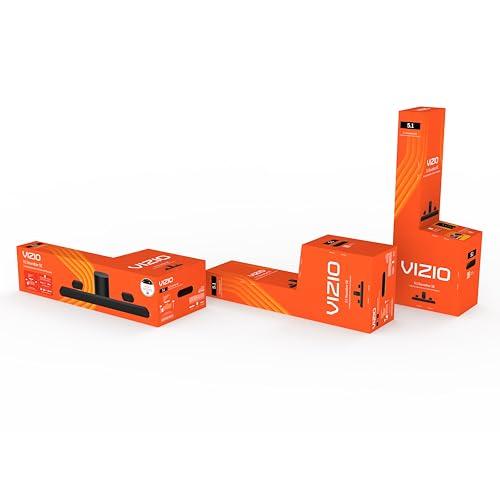
The Hisense AX5140Q includes a wireless subwoofer and two wireless rear speakers that each contain both horizontal and up-firing drivers. The VIZIO 5.1 SE also includes a wireless subwoofer and two wireless surround speakers, but these rear speakers only have single full-range drivers without height capabilities.
The VIZIO 5.1 SE may be better for smaller rooms due to its more compact 33-inch soundbar width and virtual height processing that doesn't rely as heavily on ceiling reflections. The Hisense AX5140Q with its 40-inch width and up-firing speakers works best in medium to large rooms with adequate ceiling height for proper sound reflection.
The Hisense AX5140Q includes a dedicated remote control in the box. The VIZIO 5.1 SE does not include a physical remote and relies on the VIZIO mobile app for control, though basic functions can be controlled through your TV remote via HDMI eARC.
The Hisense AX5140Q offers more flexibility with HDMI eARC plus one additional HDMI input that supports 4K 60Hz passthrough. The VIZIO 5.1 SE only has HDMI eARC, requiring all devices to connect directly to your TV. This makes the Hisense AX5140Q better if you have multiple devices or limited TV HDMI ports.
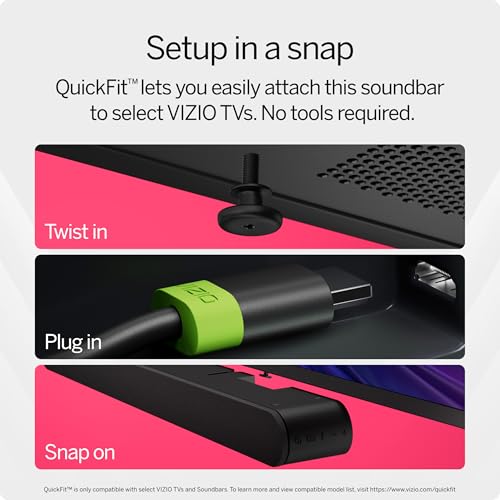
Yes, both the Hisense AX5140Q and VIZIO 5.1 SE work with any TV brand through HDMI eARC or optical connections. However, the Hisense AX5140Q offers additional integration features when paired with Hisense TVs, and the VIZIO 5.1 SE has QuickFit mounting for compatible VIZIO TVs.
Both systems offer relatively easy setup with wireless subwoofers and rear speakers. The VIZIO 5.1 SE may have a slight edge in simplicity due to its smaller soundbar and app-based setup process. The Hisense AX5140Q requires positioning more components but includes room calibration features that automatically optimize the sound for your space.
Yes, both the Hisense AX5140Q and VIZIO 5.1 SE support Bluetooth music streaming from smartphones and tablets. The Hisense AX5140Q uses the newer Bluetooth 5.3 standard for better range and stability, while also supporting additional file formats through its USB port.
For serious home theater use, the Hisense AX5140Q offers better long-term value despite its higher upfront cost. The true 5.1.4 channels, genuine height effects, superior bass extension, and additional connectivity options provide a more complete and future-proof home theater solution. The VIZIO 5.1 SE offers good value for casual viewing and budget-conscious buyers seeking basic surround sound improvement over TV speakers.
We've done our best to create useful and informative comparisons to help you decide what product to buy. Our research uses advanced automated methods to create this comparison and perfection is not possible - please contact us for corrections or questions. These are the sites we've researched in the creation of this article: shop.hisense-usa.com - manuals.plus - dolby.com - youtube.com - gzhls.at - rtings.com - youtube.com - bestbuy.com - manuals.plus - bestbuy.com - hisense-usa.com - youtube.com - device.report - manuals.plus - youtube.com - device.report - manuals.plus - youtube.com - bestbuy.com - vizio.com - rtings.com - vizio.com - vizio.com - vizio.com - youtube.com - vizio.com - vizio.com - cnet.com - samsclub.com - walmart.com - nfm.com - finelinesdesignstudio.com - dugoutnorthbrook.com - bestbuy.com

Privacy Policy
Terms and Conditions - Affiliate Policy
Home Security
© Copyright 2008-2026.
11816 Inwood Rd #1211, Dallas, TX 75244