






If you've been living with your TV's built-in speakers, you probably know the struggle. Dialogue that gets buried under action sequences, explosions that sound like distant firecrackers, and music that feels flat and lifeless. That's where soundbars come in—they're designed to solve these exact problems without turning your living room into a tangle of wires and speakers.
But not all soundbars are created equal. Today we're comparing two very different approaches to home audio: the Hisense AX5140Q and the Samsung HW-Q800D. These represent two distinct philosophies in soundbar design, and understanding their differences will help you make the right choice for your space and budget.
Before diving into specifics, let's talk about what makes a great soundbar in 2024. The most important consideration is channel configuration—those numbers like 5.1.4 or 5.1.2 that manufacturers love to throw around. The first number represents main channels (front left, center, front right, and surround channels), the second is the subwoofer, and the third indicates height channels for that overhead Dolby Atmos effect.
But here's the crucial distinction: there's a massive difference between virtual channels created through digital processing and physical channels with actual dedicated speakers. A soundbar might claim 7.1.2 channels, but if all those channels are virtualized from just a few drivers, you're not getting the same experience as a system with discrete speakers for each channel.
Room size matters enormously too. A soundbar that sounds incredible in a showroom might struggle to fill a large living room, while an overpowered system could overwhelm a smaller space. Think about your room's acoustics as well—high ceilings, lots of soft furniture, or odd layouts all affect how sound travels and reflects.
Finally, consider ecosystem integration. Modern soundbars aren't just speakers; they're smart devices that can integrate with your TV, smart home setup, and streaming services. This integration can dramatically improve your daily experience, but it varies wildly between brands.
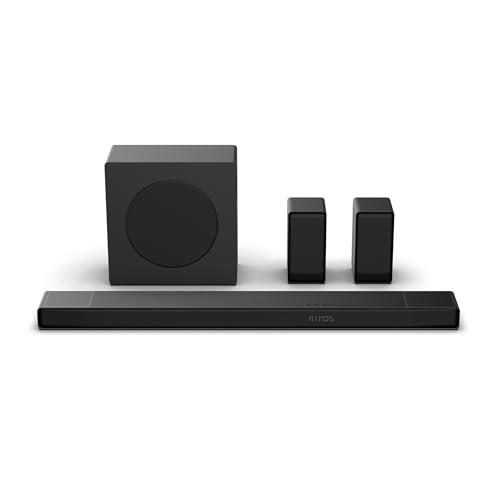
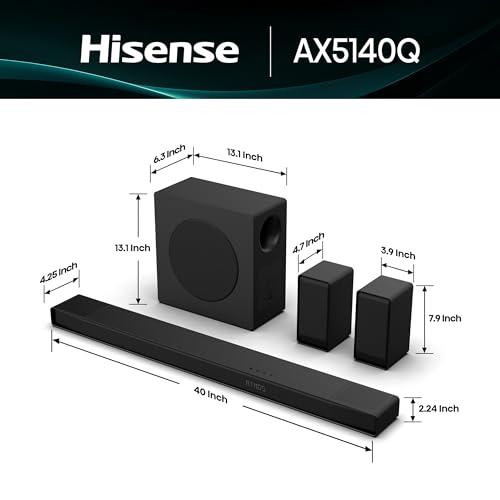
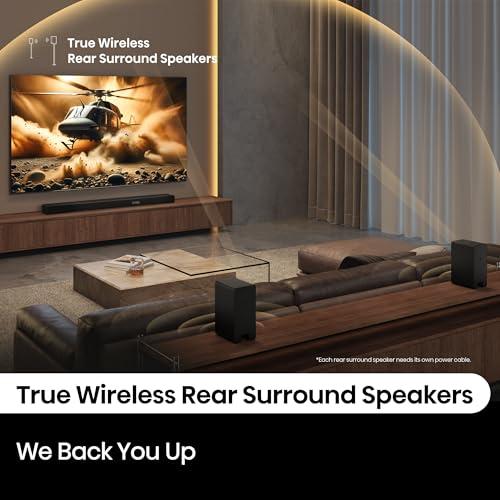
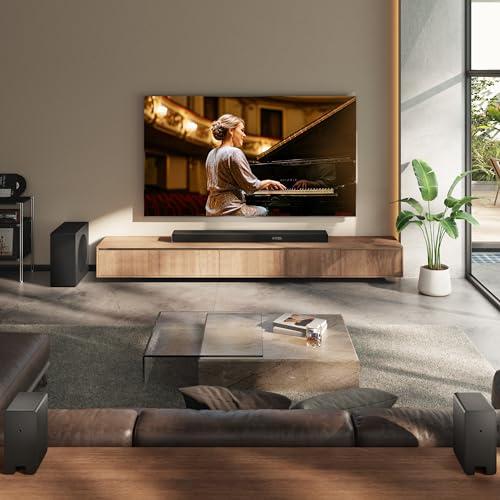
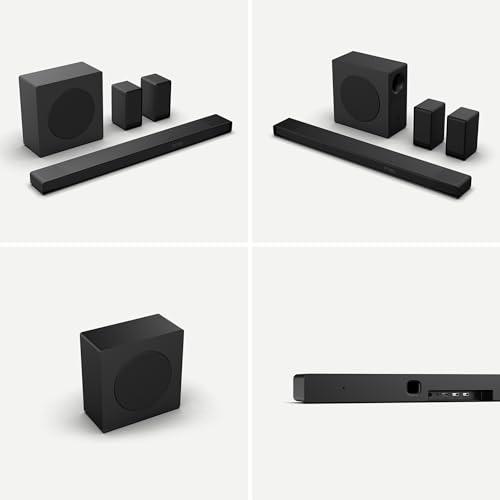
Released in 2024, the Hisense AX5140Q takes the "more is more" approach. It's a true 5.1.4 channel system that includes not just the main soundbar and wireless subwoofer, but also two separate wireless rear speakers, each with their own upfiring drivers for height effects. With 600W of total power and nine physical speakers plus a subwoofer, this system prioritizes maximum immersion through sheer hardware.
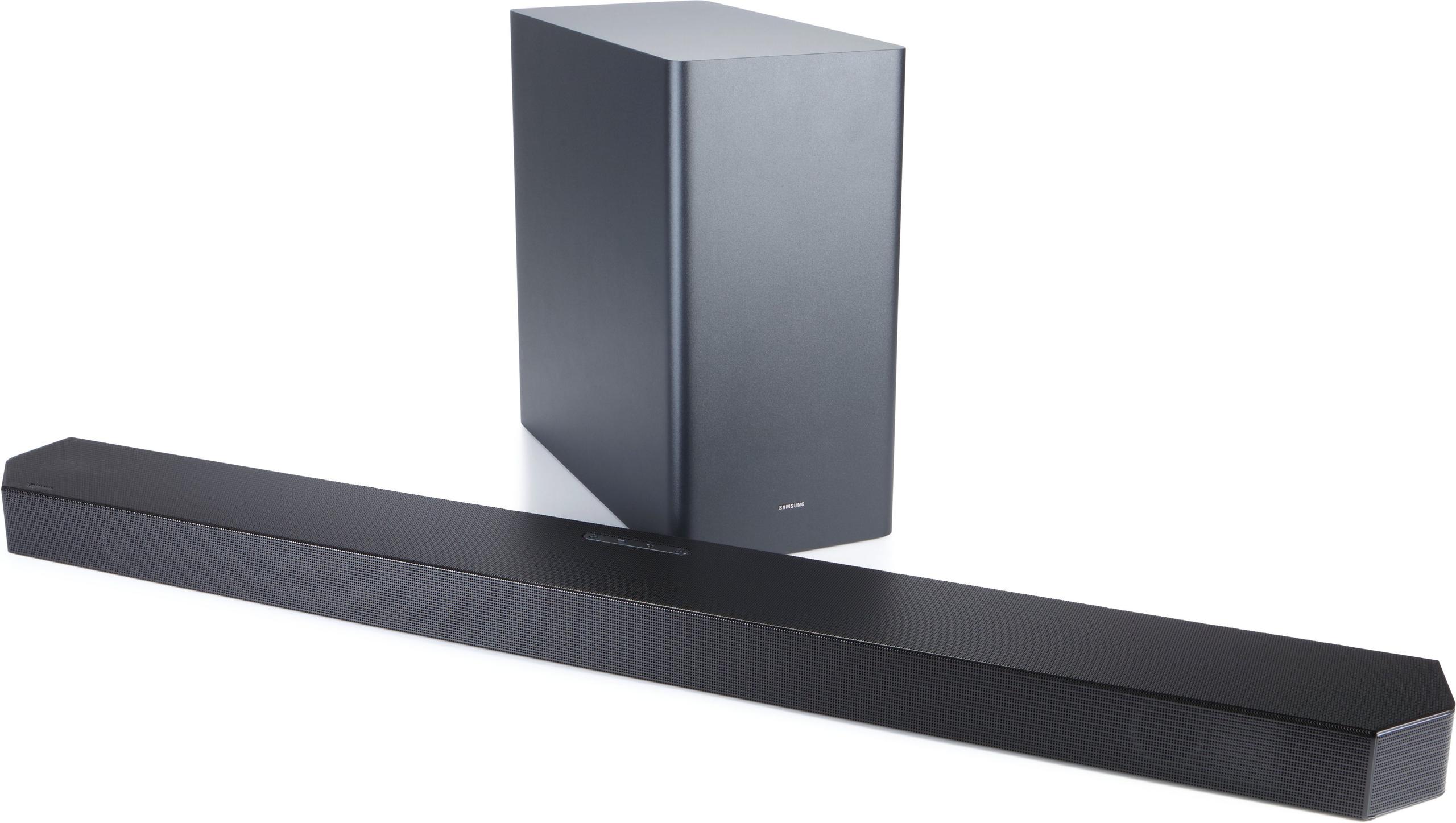
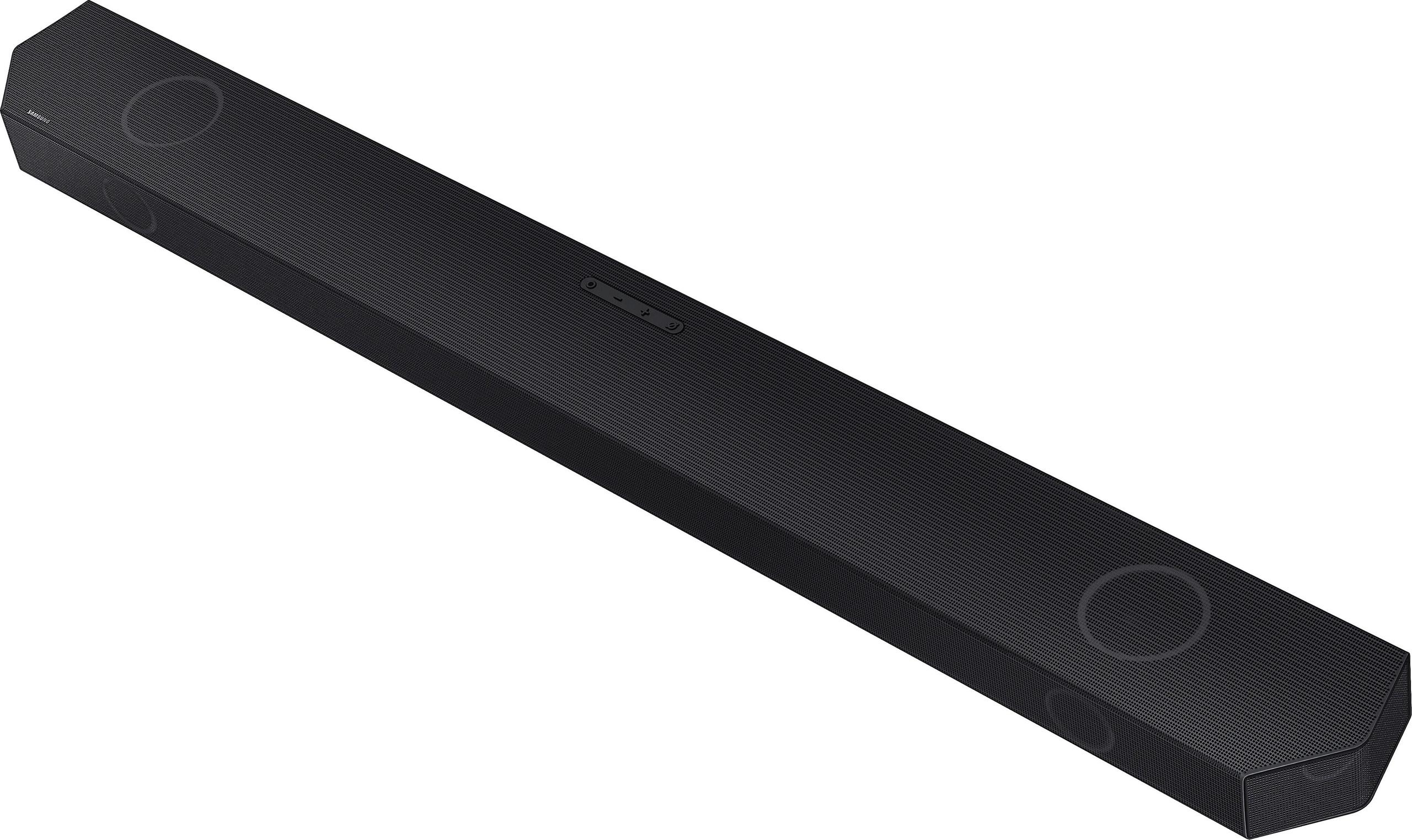
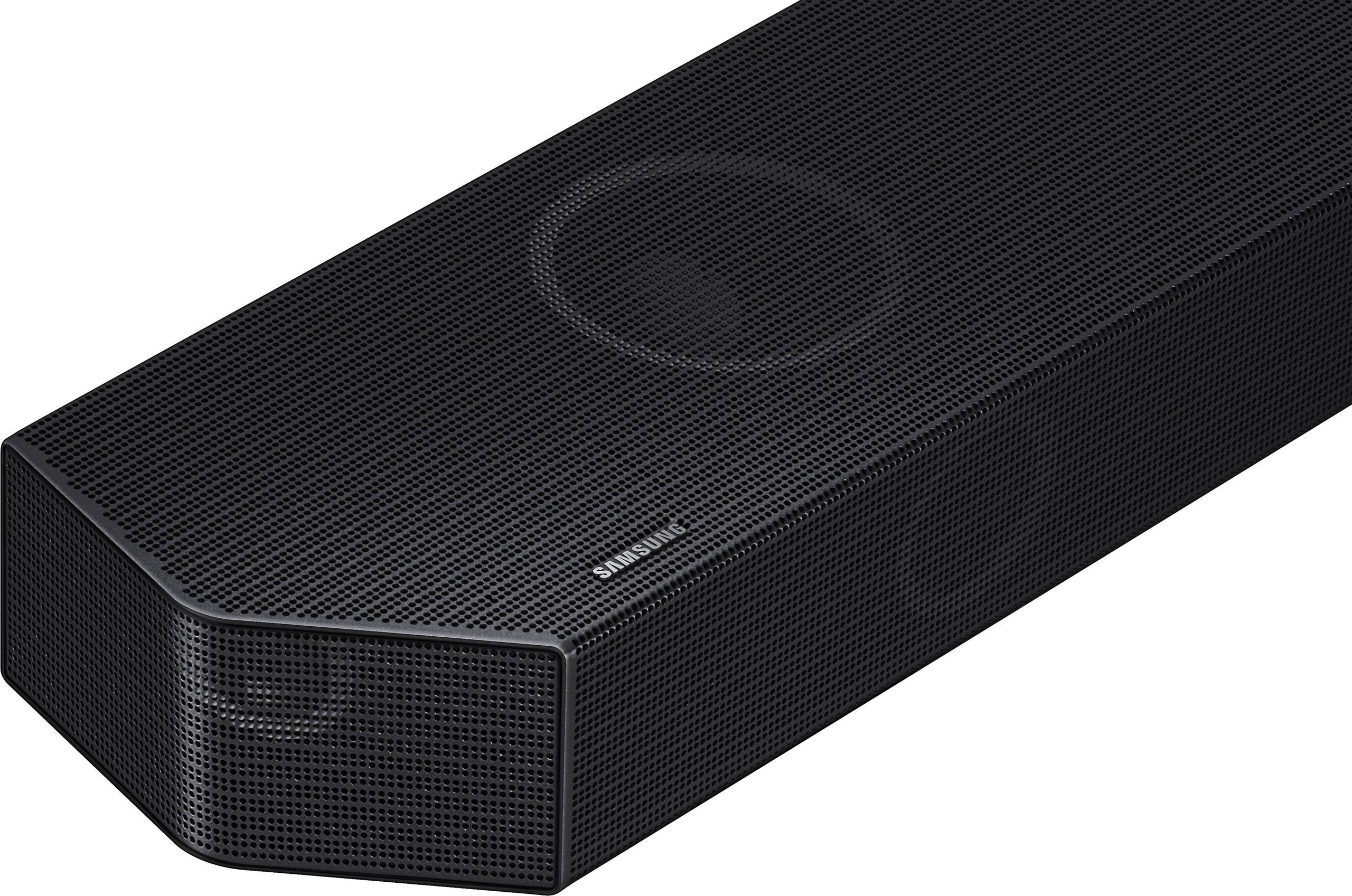
The Samsung HW-Q800D, also from 2024, represents a more refined approach. This 5.1.2 system combines 11 carefully engineered drivers with Samsung's latest processing technologies, delivering 360W through sophisticated acoustic engineering rather than brute force. It's designed to integrate seamlessly with Samsung's ecosystem while providing premium audio quality from a more streamlined setup.
At the time of writing, these systems sit in different price tiers, with the Hisense AX5140Q offering significantly more hardware for less money, while the Samsung HW-Q800D commands a premium for its brand reputation and advanced features.
This is where these two soundbars diverge most dramatically, and it's probably the most important factor in your decision.
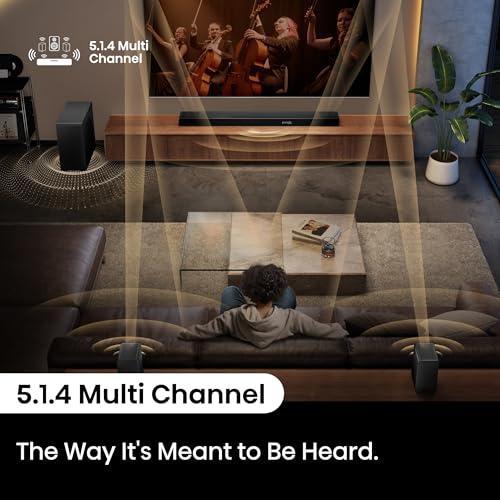
The Hisense AX5140Q delivers true surround sound through discrete physical speakers. Those wireless rear speakers aren't just for show—they create an actual rear soundstage that wraps around your seating area. When a helicopter flies overhead in a movie, you'll hear it travel from front to back through real speakers, not just digital processing that tries to trick your brain.
Here's what makes this special: most soundbars, even expensive ones, rely on psychoacoustic processing—essentially audio tricks that bounce sound off your walls to simulate surround effects. This can work well in ideal rooms, but real speakers behind you are always more convincing. The Hisense system places you inside the action rather than just in front of it.
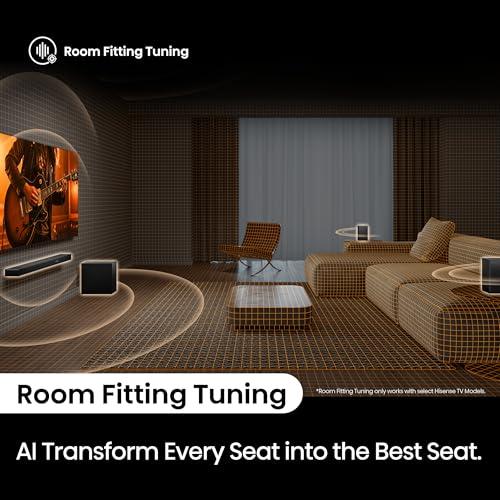
The Samsung HW-Q800D takes a different approach, using advanced signal processing and carefully positioned drivers to create virtual surround effects. Samsung's SpaceFit Sound Pro technology actually analyzes your room using built-in microphones, then adjusts the output to optimize for your specific space. This is genuinely sophisticated stuff—the soundbar essentially maps your room's acoustics and compensates for its limitations.
For most content, Samsung's approach works remarkably well. Their processing is among the best in the industry, and the virtualization can create a convincing sense of space and movement. But physics is physics—virtual surround can't completely replicate the experience of actual speakers surrounding you.
Dolby Atmos represents the cutting edge of home audio, adding a vertical dimension to create a "bubble" of sound around you. Both systems support Atmos, but their implementations differ significantly.
The Hisense AX5140Q includes four physical upfiring speakers—two on the main soundbar and two more on those wireless rear speakers. These fire sound toward your ceiling, which then reflects down to create overhead effects. Having four height speakers instead of two means more precise object placement and better coverage of your seating area.
Samsung's approach puts two highly engineered upfiring speakers on the main bar, combined with sophisticated processing to maximize their effectiveness. While fewer in number, these drivers benefit from Samsung's advanced digital signal processing and room calibration. When paired with a compatible Samsung TV, the Q-Symphony feature can even use your TV's built-in speakers as additional height channels, effectively expanding the system's capabilities.
In practice, the Hisense system creates more dramatic overhead effects, especially in larger rooms. That fourth dimension of sound—rain falling from above, aircraft passing overhead, ambient sounds floating around you—feels more realistic with dedicated rear height speakers. The Samsung HW-Q800D produces excellent height effects too, but they're more focused toward the front of the room.
Raw power numbers don't tell the whole story, but they matter for how loud and dynamic your system can get without distortion.
The Hisense AX5140Q pumps out 600W across its nine drivers and subwoofer, providing serious headroom for large rooms and demanding content. That power is distributed across many speakers, so each driver works less hard to fill your space. The 6.5-inch wireless subwoofer handles low frequencies exclusively, letting the other speakers focus on their strengths.
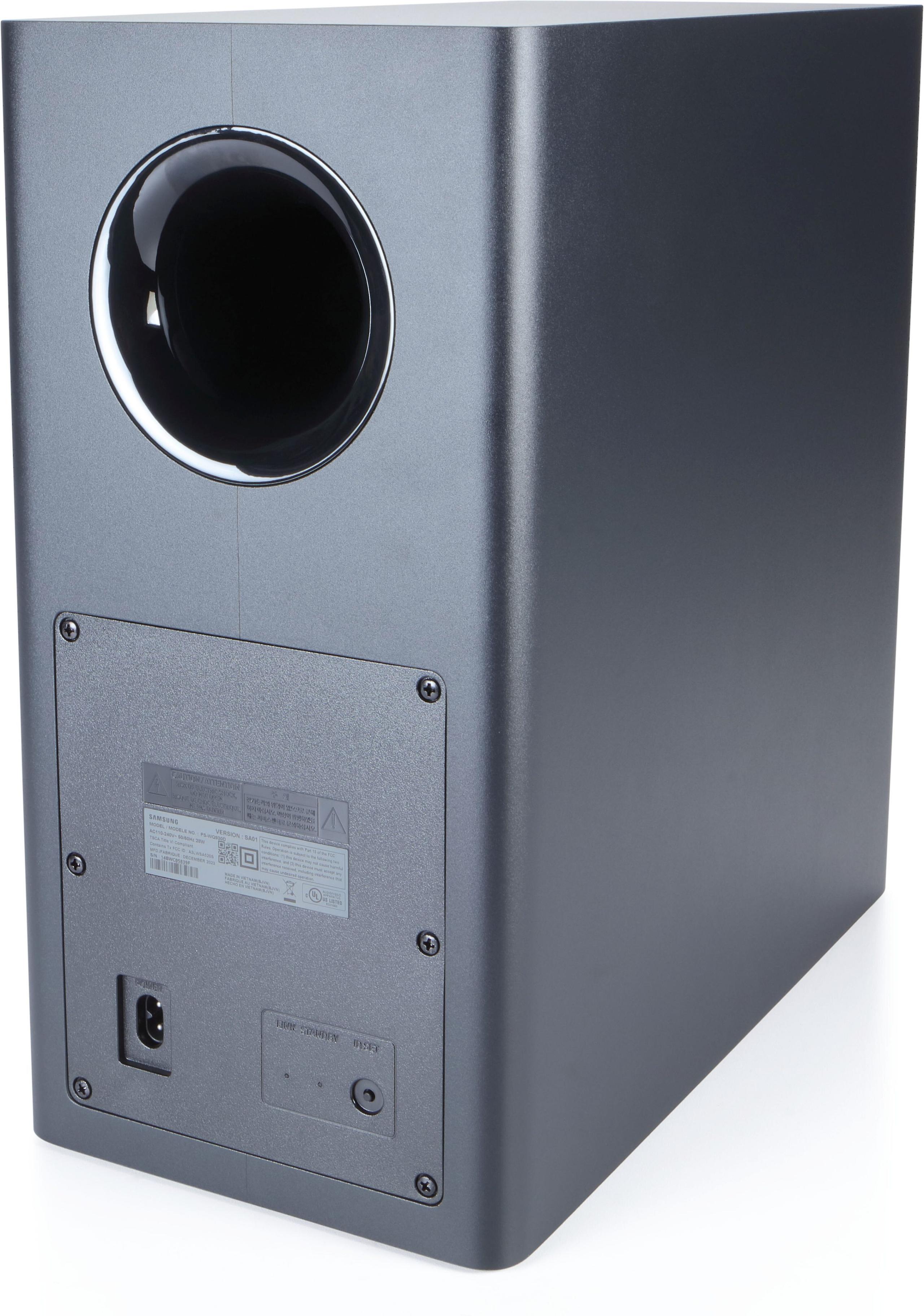
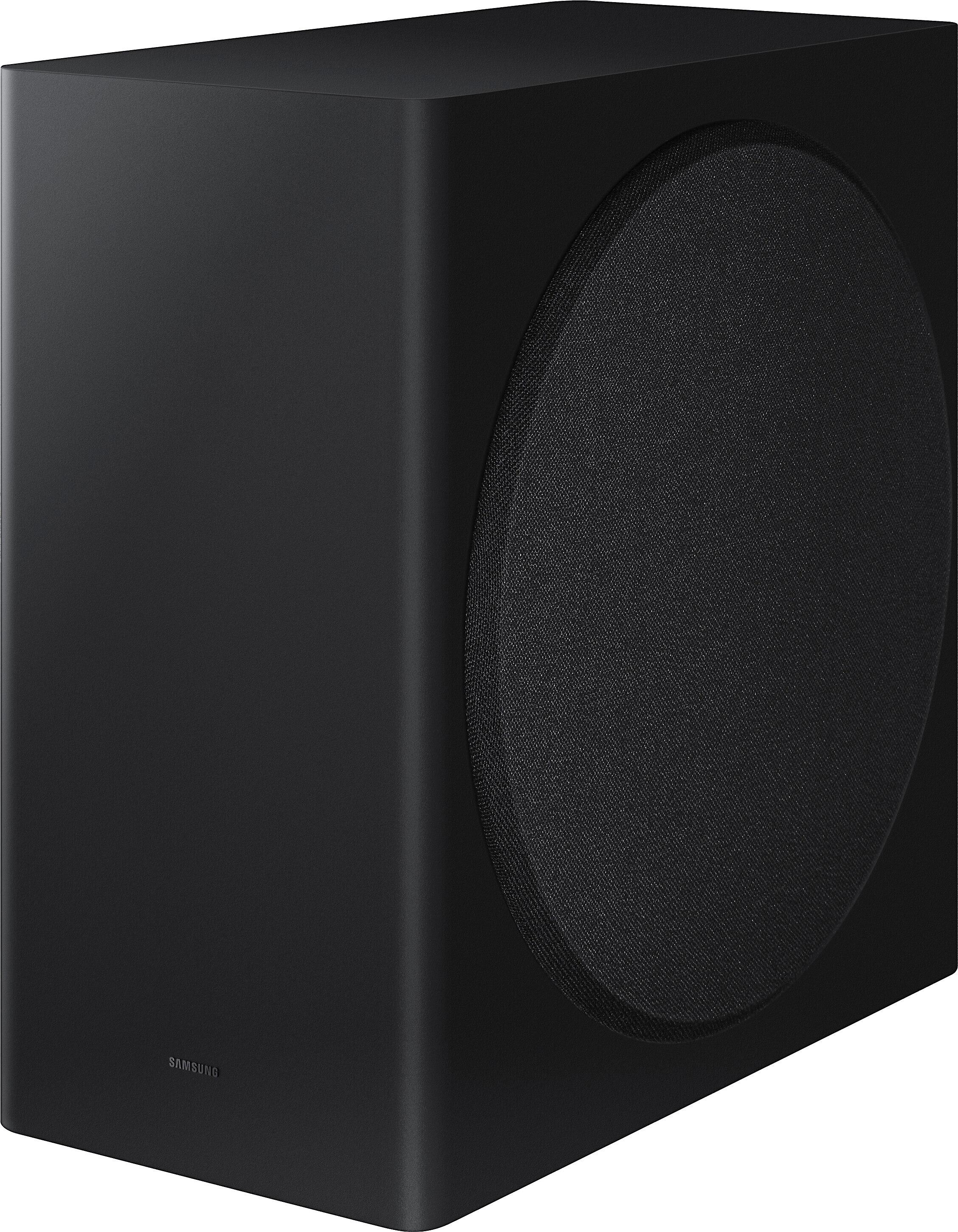
Samsung's 360W might seem modest by comparison, but remember that power efficiency and driver quality matter as much as raw watts. The Samsung HW-Q800D includes an 8-inch side-firing subwoofer with a bass-reflex design (a port that enhances low-frequency output), which can actually produce deeper bass than smaller drivers despite the lower overall power rating.
For typical living rooms, both systems provide more than enough volume and dynamics. But if you have a large, open floor plan or you're the type who likes to feel movie explosions in your chest, the Hisense system's extra power and speakers give it an edge.
Beyond the spectacle of surround sound, day-to-day audio quality determines how much you'll enjoy your system.
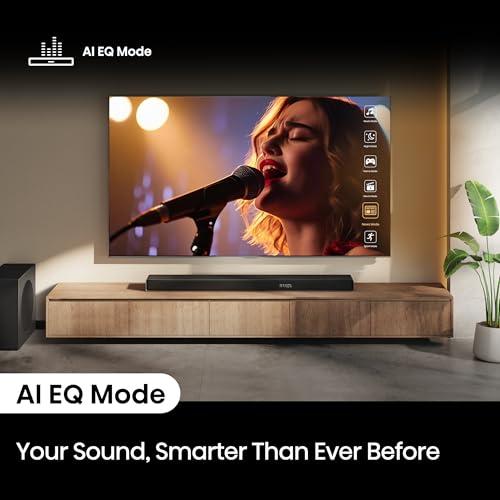
Dialogue clarity is crucial since most of your listening will be TV shows and movies with speech. Both systems include dedicated center channels—the speaker that handles most dialogue—but they approach vocal clarity differently. The Hisense AX5140Q uses AI EQ processing that analyzes content in real-time, automatically adjusting frequencies to keep voices clear even when action scenes get busy.
Samsung's Active Voice Amplifier (AVA) technology takes a more sophisticated approach, actually analyzing each scene to identify and emphasize voices dynamically. This means dialogue doesn't just get uniformly boosted—it gets intelligently enhanced based on what's happening on screen.
For music listening, the Samsung HW-Q800D shows its premium positioning. The 11 drivers are carefully tuned for frequency response, and Samsung's processing maintains better tonal balance across different volume levels. Music sounds more natural and refined, with better instrument separation and smoother frequency response.
The Hisense system handles music well too, especially with its dedicated Music mode, but it's clearly optimized for the excitement of movie soundtracks rather than the subtleties of audiophile listening. Its strength lies in creating that "wow factor" for action content.
Modern soundbars aren't just speakers—they're smart home devices with their own apps, voice control, and integration features.
The Samsung HW-Q800D integrates deeply with Samsung's ecosystem. If you own a Samsung TV, the Q-Symphony feature synchronizes the soundbar with your TV's built-in speakers, effectively expanding your channel count. The SmartThings app provides comprehensive control, and the system updates regularly with new features and optimizations.
Samsung's SpaceFit Sound Pro deserves special mention—it's genuinely useful technology that measures your room's acoustics and adjusts output accordingly. This isn't just marketing fluff; it makes a real difference in how the soundbar sounds in your specific space.
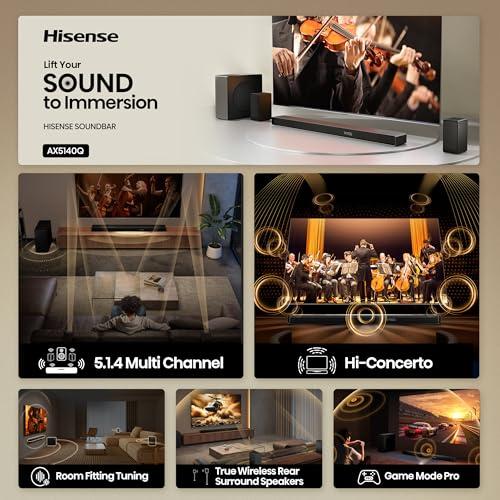
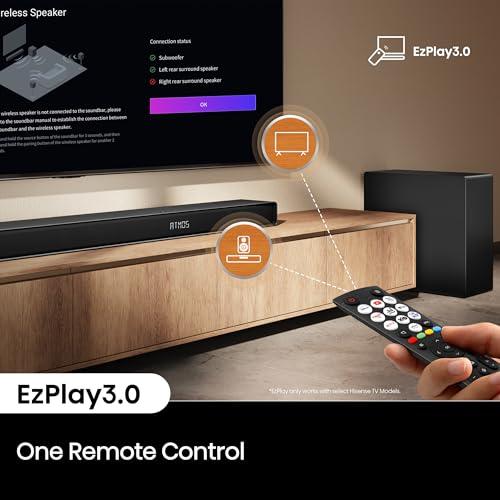
The Hisense AX5140Q features Hi-Concerto integration, which works similarly with Hisense TVs but isn't as mature as Samsung's ecosystem. However, it includes EzPlay 3.0, which simplifies setup and provides unified control through your TV remote. The ConnectLife app offers basic control, though it's not as feature-rich as Samsung's offering.
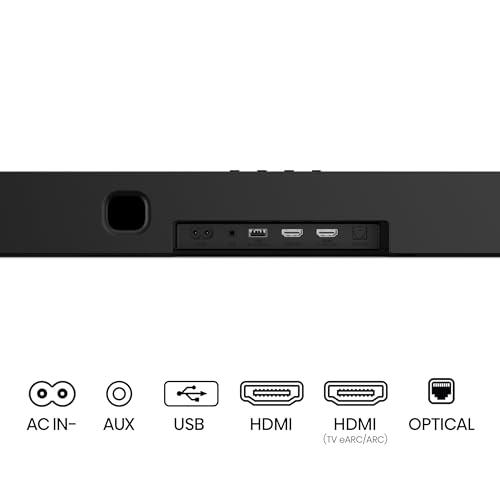
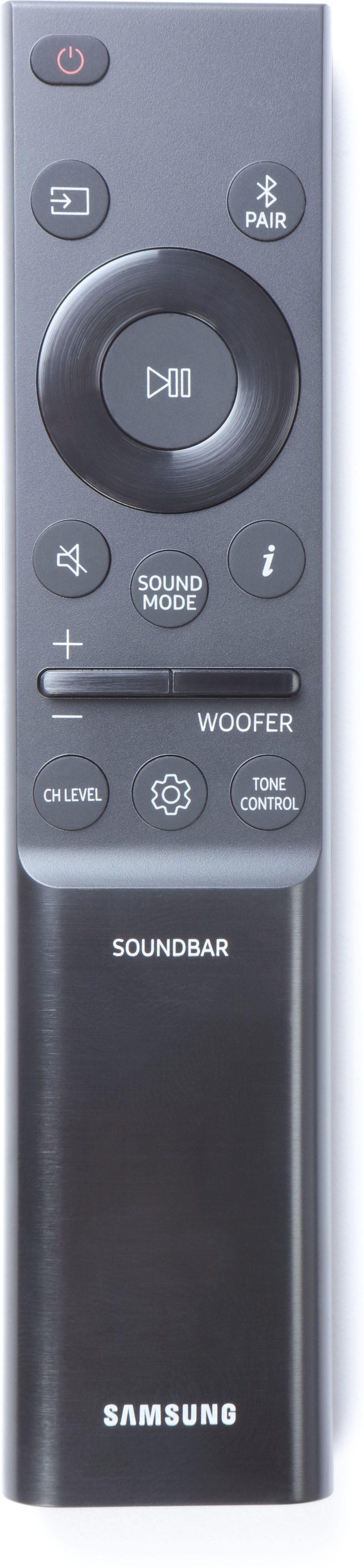
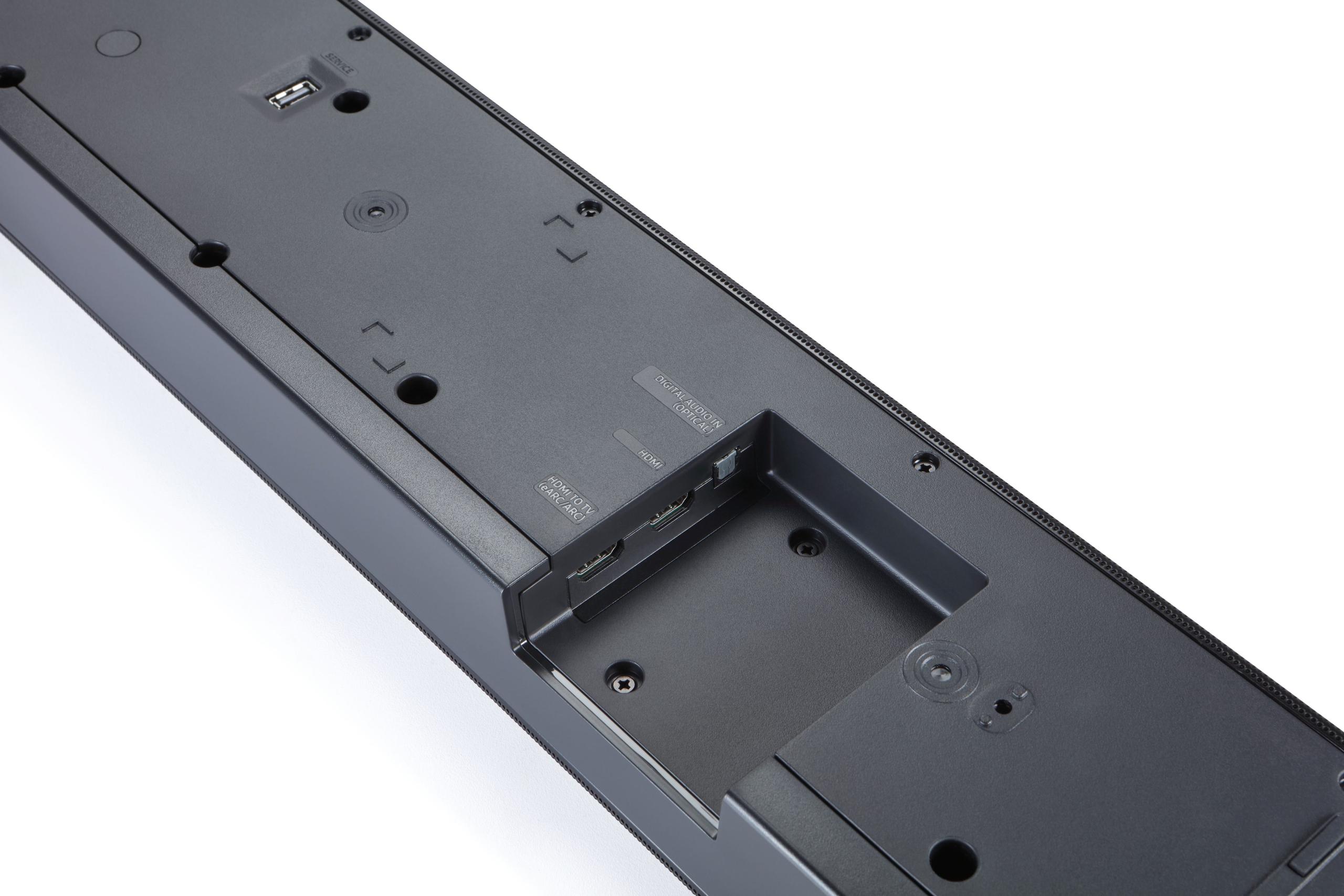
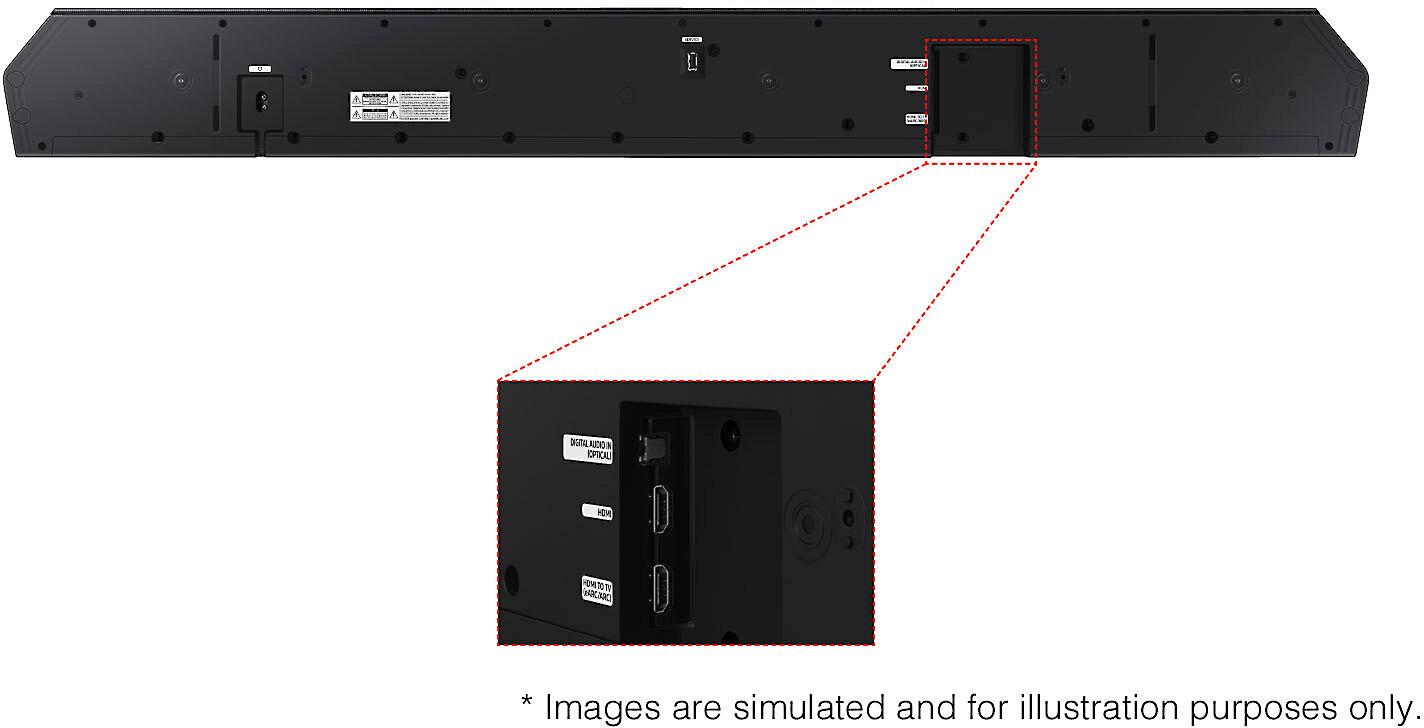
Both systems support the essentials: HDMI eARC for high-quality audio from your TV, optical connections for older devices, Bluetooth for music streaming, and automatic power management that turns the soundbar on and off with your TV.
Gaming has become a major consideration for soundbar buyers, especially with the rise of immersive single-player games and competitive online gaming.
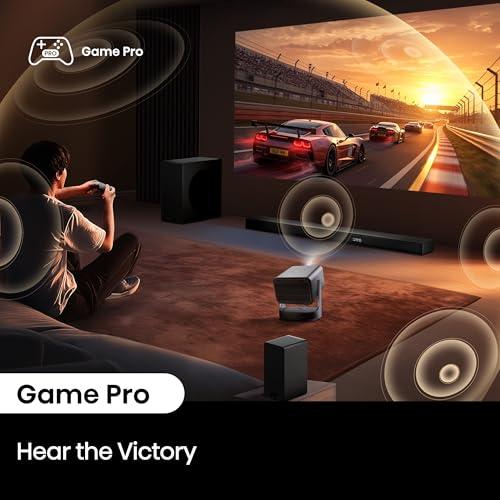
The Hisense AX5140Q includes a dedicated Game Pro mode that optimizes for positional audio—crucial for hearing enemy footsteps or determining which direction gunfire is coming from. Those physical rear speakers provide genuine directional cues that can give you a competitive advantage in multiplayer games.
Samsung's Game Pro mode focuses more on clarity and reduced latency, using AI processing to enhance important audio cues while minimizing delay between controller input and audio response. The virtualized surround can still provide good directional information, though it's not quite as precise as discrete rear speakers.
Both systems handle HDMI passthrough well, supporting 4K 60Hz gaming from consoles like PlayStation 5 and Xbox Series X. While neither supports 4K 120Hz passthrough (a limitation that mostly affects PC gamers), you can always connect your gaming device directly to your TV and send audio back through eARC.
The Hisense AX5140Q requires more planning during setup. You'll need to position four separate components—the main bar, subwoofer, and two rear speakers—which means thinking about power outlets and optimal placement. The wireless connection between components generally works reliably, but having more pieces means more potential points of failure.
Once set up, though, the system is straightforward to use. The included remote controls all functions, and the room calibration feature helps optimize performance for your space. The various sound modes (Movie, Music, Game Pro, etc.) provide meaningful differences in audio character.
The Samsung HW-Q800D offers a more streamlined experience with just the soundbar and subwoofer to position. The SpaceFit Sound Pro calibration is more sophisticated than Hisense's room tuning, actually measuring your room's response and adjusting accordingly. Day-to-day operation feels more polished, with smooth integration between the soundbar and Samsung TVs.
Choose the Hisense AX5140Q if you prioritize maximum immersion and don't mind a more complex setup. This system delivers the most convincing surround sound experience at its price point, with genuine rear channels and four-speaker height effects that create a true audio bubble around your seating area. It's ideal for movie enthusiasts, gamers who value positional audio, and anyone with a larger room that can accommodate the wireless rear speakers.
The Hisense system also represents exceptional value—you're getting hardware that would typically cost significantly more from premium brands. If you own or plan to buy a Hisense TV, the ecosystem integration sweetens the deal further.
Go with the Samsung HW-Q800D if you value refinement, ecosystem integration, and a more streamlined setup. This soundbar excels at music reproduction, offers sophisticated room calibration, and integrates seamlessly with Samsung TVs and smart home systems. It's the better choice for apartments or smaller rooms where rear speakers might be impractical, and for users who prioritize build quality and brand support.
The Samsung also makes sense if you're primarily upgrading from TV speakers and want a significant improvement without the complexity of a multi-component system. Its processing is genuinely impressive, and the overall experience feels more premium.
At the time of writing, these soundbars target different priorities at different price points. The Hisense AX5140Q maximizes hardware and immersion for the money, while the Samsung HW-Q800D focuses on refinement and integration at a premium price.
For most buyers seeking the biggest upgrade from TV speakers, the Hisense system delivers more dramatic improvement through its true surround sound setup. The physical rear speakers and four height channels create an experience that feels genuinely cinematic, especially for action movies and immersive games.
However, if you value simplicity, premium build quality, and seamless integration with your existing tech ecosystem, the Samsung HW-Q800D justifies its higher cost through superior processing, better music performance, and more polished daily operation.
Both represent significant steps forward from basic TV audio, but they achieve that improvement through fundamentally different approaches. Your choice should depend on your room layout, content preferences, and whether you prioritize maximum impact or maximum refinement.
| Hisense AX5140Q | Samsung HW-Q800D |
|---|---|
| Channel Configuration - Determines surround sound immersion quality | |
| True 5.1.4 with discrete rear speakers and 4 height channels | 5.1.2 with virtualized surround and 2 height channels |
| Physical Components - More components = better surround but complex setup | |
| 4 components: soundbar + subwoofer + 2 wireless rear speakers | 2 components: soundbar + wireless subwoofer |
| Total Power Output - Higher power fills larger rooms better | |
| 600W across 9 drivers + subwoofer | 360W across 11 drivers + subwoofer |
| Subwoofer Size - Larger drivers typically produce deeper bass | |
| 6.5" wireless subwoofer | 8" side-firing bass-reflex subwoofer |
| Height Speakers - More upfiring drivers create better overhead effects | |
| 4 upfiring speakers (2 front + 2 rear) for true dome coverage | 2 upfiring speakers with advanced processing |
| Room Calibration Technology - Auto-tunes sound to your specific space | |
| Room Fitting Tuning with AI EQ mode | SpaceFit Sound Pro with microphone room analysis |
| TV Ecosystem Integration - Deep integration improves daily usability | |
| Hi-Concerto and EzPlay 3.0 (optimized for Hisense TVs) | Q-Symphony and SmartThings (seamless with Samsung TVs) |
| Connectivity Options - More inputs handle diverse device setups | |
| HDMI eARC, HDMI In, Optical, AUX, USB, Bluetooth 5.3 | HDMI eARC, HDMI In, Optical, Bluetooth 5.2, SmartThings app |
| Gaming Features - Specialized modes enhance competitive and immersive gaming | |
| Game Pro mode with true rear positioning for directional audio | Game Pro mode with AI optimization and low-latency processing |
| Music Performance - Important for daily streaming and background listening | |
| Optimized for movie impact with dedicated Music mode | Premium tuning with refined frequency response for audiophile listening |
| Setup Complexity - Consider your space and technical comfort level | |
| Requires positioning 4 wireless components around room | Simple 2-component setup with sophisticated auto-calibration |
| Value Proposition - Compare features per dollar at time of purchase | |
| Maximum hardware and channels for the price point | Premium processing and ecosystem integration justify higher cost |
The Hisense AX5140Q delivers superior surround sound immersion with its true 5.1.4 channel setup that includes physical wireless rear speakers. Unlike the Samsung HW-Q800D, which relies on virtualized surround effects, the Hisense AX5140Q places actual speakers behind your seating area for genuine 360-degree sound. This makes the Hisense the clear winner for home theater enthusiasts who want the most convincing surround sound experience.
While not strictly necessary, rear speakers significantly enhance Dolby Atmos performance. The Hisense AX5140Q includes wireless rear speakers with upfiring drivers, creating four total height channels versus the Samsung HW-Q800D's two front height channels. This gives the Hisense system better overhead coverage and more precise object placement in Atmos content. The Samsung HW-Q800D can still produce excellent Atmos effects through advanced processing, but the Hisense AX5140Q offers more authentic three-dimensional audio.
The Samsung HW-Q800D is significantly easier to set up with just two components (soundbar and subwoofer) versus the Hisense AX5140Q's four-piece system. The Samsung also features more sophisticated room calibration that automatically optimizes sound for your space. However, the Hisense AX5140Q wireless speakers typically pair automatically, and the improved surround sound may be worth the extra setup complexity for many users.
Both soundbars offer dedicated gaming modes, but they excel in different areas. The Hisense AX5140Q provides superior positional audio through its physical rear speakers, making it easier to hear enemy footsteps and determine sound direction in competitive games. The Samsung HW-Q800D focuses on low latency and AI-enhanced audio clarity. For immersive single-player games, the Hisense AX5140Q delivers more dramatic effects, while the Samsung may have a slight edge for competitive gaming due to its processing optimization.
The Samsung HW-Q800D features a larger 8-inch side-firing subwoofer with bass-reflex design, potentially delivering deeper bass extension than the Hisense AX5140Q's 6.5-inch wireless subwoofer. However, the Hisense system provides 600W total power versus Samsung's 360W, offering more overall impact and headroom. Both deliver satisfying bass for movies and music, but the Samsung may have a slight edge in bass quality while the Hisense offers more raw power.
Both soundbars work excellently with any TV brand through HDMI eARC or optical connections. However, you'll get enhanced features when pairing with matching brands. The Samsung HW-Q800D offers Q-Symphony technology with Samsung TVs, using the TV's speakers as additional channels. The Hisense AX5140Q provides Hi-Concerto integration with Hisense TVs for unified control and room tuning. If you don't own a matching TV brand, the Hisense AX5140Q still delivers more physical surround channels regardless of your TV.
The Samsung HW-Q800D is better optimized for music with its refined 11-driver array and premium acoustic tuning. Samsung's processing maintains better tonal balance and frequency response for musical content. The Hisense AX5140Q includes a dedicated Music mode and handles music well, but it's clearly optimized for the excitement of movie soundtracks rather than audiophile listening. Music enthusiasts will likely prefer the Samsung HW-Q800D's more natural and detailed sound reproduction.
The Samsung HW-Q800D requires minimal space with just the main soundbar and subwoofer placement. The Hisense AX5140Q needs significantly more room planning since you must position four separate components including wireless rear speakers behind your seating area. If you have a smaller living room or prefer a cleaner setup, the Samsung is more practical. The Hisense AX5140Q is ideal for larger rooms where you can properly position all speakers for maximum surround impact.
The Hisense AX5140Q typically offers exceptional value by providing true 5.1.4 surround sound with physical rear speakers at a lower price point than comparable systems. You get significantly more hardware and channels for your money. The Samsung HW-Q800D commands a premium price but justifies it through superior build quality, advanced processing, and ecosystem integration. The Hisense wins on pure features per dollar, while the Samsung offers premium refinement and brand reliability.
Yes, both the Hisense AX5140Q and Samsung HW-Q800D can be wall-mounted and include mounting hardware. The Samsung HW-Q800D is simpler to mount since it's just one component, while the Hisense AX5140Q main bar can be wall-mounted but you'll still need to position the wireless rear speakers and subwoofer around your room. Consider your wall space and whether you can accommodate the Hisense system's additional wireless components when planning your installation.
Both soundbars excel at dialogue clarity but use different approaches. The Samsung HW-Q800D features Active Voice Amplifier technology that intelligently emphasizes voices based on each scene's content. The Hisense AX5140Q uses AI EQ processing and a dedicated center channel to maintain vocal clarity. Both systems include Night modes for late-night viewing. In practice, both deliver excellent dialogue performance, with the Samsung offering slightly more sophisticated voice processing while the Hisense provides clear center channel separation.
The Samsung HW-Q800D offers more comprehensive smart features through the SmartThings app, regular software updates, and deeper ecosystem integration. The Hisense AX5140Q provides ConnectLife app support and EzPlay 3.0 integration, but Samsung's smart platform is more mature and feature-rich. Both support Bluetooth music streaming and automatic TV integration via HDMI eARC. If smart home integration and advanced app control are priorities, the Samsung HW-Q800D has the advantage, while the Hisense AX5140Q focuses more on core audio performance.
We've done our best to create useful and informative comparisons to help you decide what product to buy. Our research uses advanced automated methods to create this comparison and perfection is not possible - please contact us for corrections or questions. These are the sites we've researched in the creation of this article: shop.hisense-usa.com - manuals.plus - dolby.com - youtube.com - gzhls.at - rtings.com - youtube.com - bestbuy.com - manuals.plus - bestbuy.com - hisense-usa.com - youtube.com - device.report - manuals.plus - youtube.com - device.report - manuals.plus - youtube.com - techradar.com - valueelectronics.com - samsung.com - rtings.com - samsung.com - crutchfield.com - samsung.com - samsung.com - samsung.com - shidirect.com

Privacy Policy
Terms and Conditions - Affiliate Policy
Home Security
© Copyright 2008-2026.
11816 Inwood Rd #1211, Dallas, TX 75244