





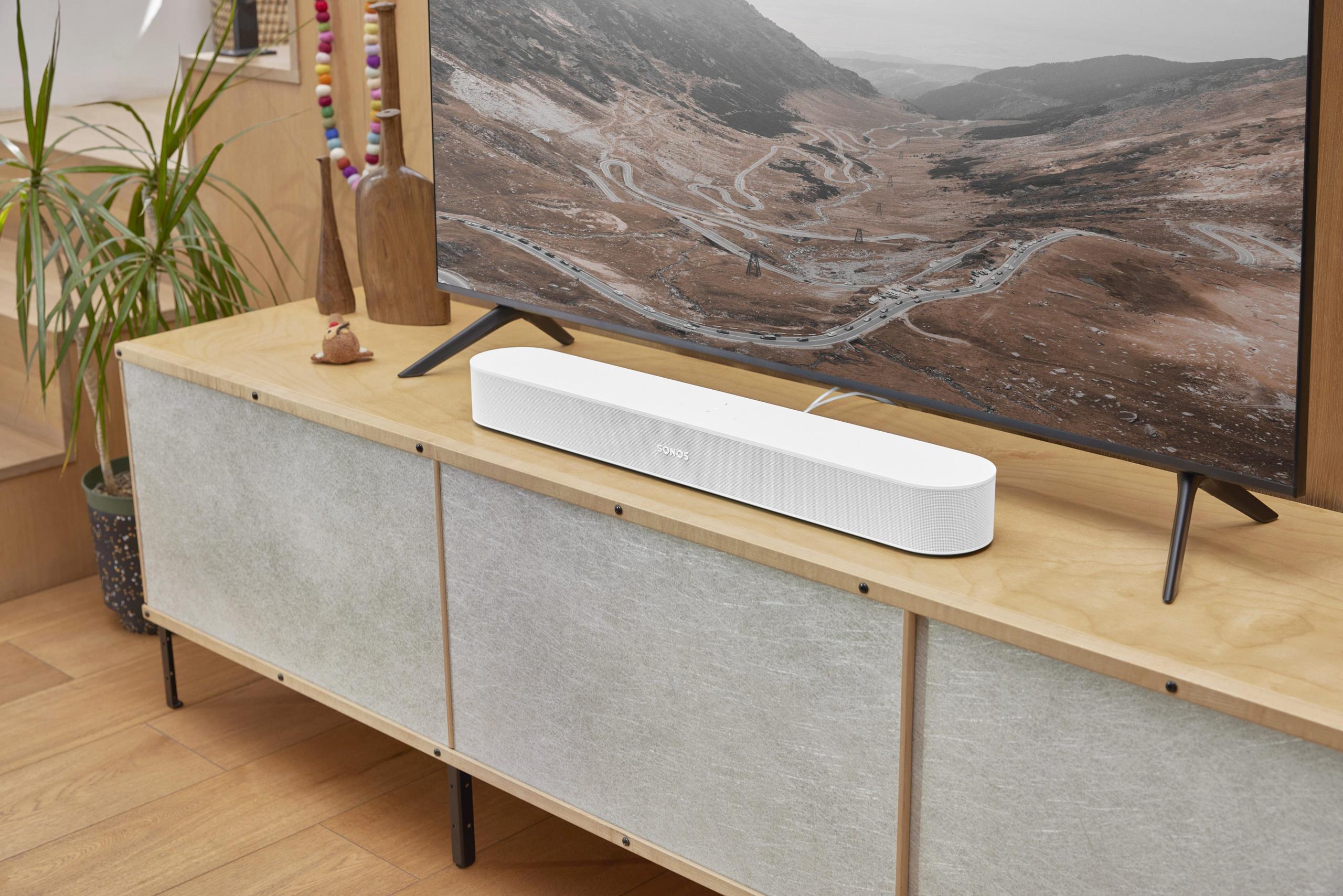
When your TV's built-in speakers make dialogue sound like it's coming from inside a tin can, it's time to upgrade. Compact soundbars have become the go-to solution for most people, offering a dramatic audio improvement without the complexity or space requirements of a full surround sound system.
The soundbar market has two distinct camps: budget-focused options that get the job done, and premium models packed with smart features and advanced audio processing. The Amazon Fire TV Soundbar and Sonos Beam Gen 2 perfectly represent these opposing philosophies, creating an interesting comparison for anyone looking to upgrade their TV audio experience.
Before diving into specifics, it helps to understand what you're actually buying when you purchase a soundbar. At its core, a soundbar is simply a collection of speakers arranged horizontally to sit under or near your TV. The magic happens in how those speakers are configured and what kind of processing power backs them up.
The most important performance characteristics to consider are dialogue clarity, soundstage width (how spread out the audio feels), bass response, and spatial imaging (your brain's ability to pinpoint where sounds are coming from). Modern soundbars use digital signal processing – essentially computer algorithms – to manipulate audio signals and create effects that wouldn't be possible with the physical speakers alone.
For home theater use, the ability to handle different audio formats becomes crucial. When you stream a movie or play a Blu-ray disc, the audio comes encoded in various formats like Dolby Digital, DTS, or the newer Dolby Atmos. Think of these as different languages for audio – your soundbar needs to "speak" these languages to deliver the intended experience.
The Amazon Fire TV Soundbar launched as part of Amazon's broader push into home entertainment hardware. At the time of writing, it represents Amazon's entry-level approach to TV audio improvement, prioritizing affordability and simplicity above all else. This soundbar costs roughly what many people spend on a nice dinner out, making it accessible to virtually anyone looking for better TV sound.
The Sonos Beam Gen 2, released in 2021, took a completely different approach. Sonos built their reputation on premium wireless speakers, and the second-generation Beam brought that expertise to the soundbar market. The company's focus has always been on superior audio quality and seamless integration with modern smart homes, reflected in the Beam's significantly higher price point.
These release timelines matter because audio technology moves quickly. The Sonos Beam Gen 2 benefited from more recent advances in digital signal processing and smart home integration, while the Amazon Fire TV Soundbar focused on proven, cost-effective technologies that keep the price low.
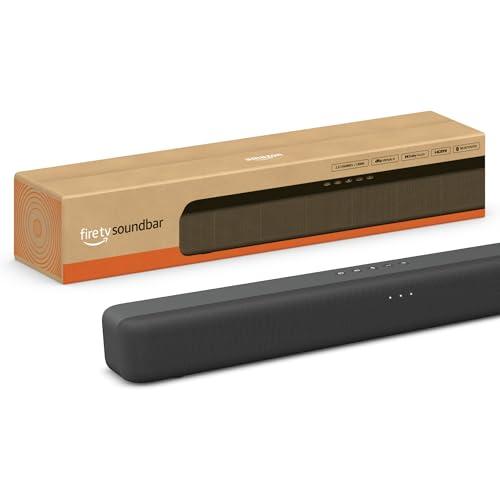
The Amazon Fire TV Soundbar uses what Amazon calls "Racetrack" drivers – these are oval-shaped speakers that fit more membrane surface area into a compact space. With two 20-watt drivers in a 2.0 configuration (meaning two channels with no dedicated subwoofer), it creates a stereo soundstage that's considerably wider than what most TV speakers can manage.
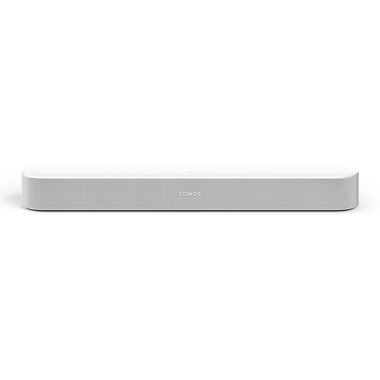
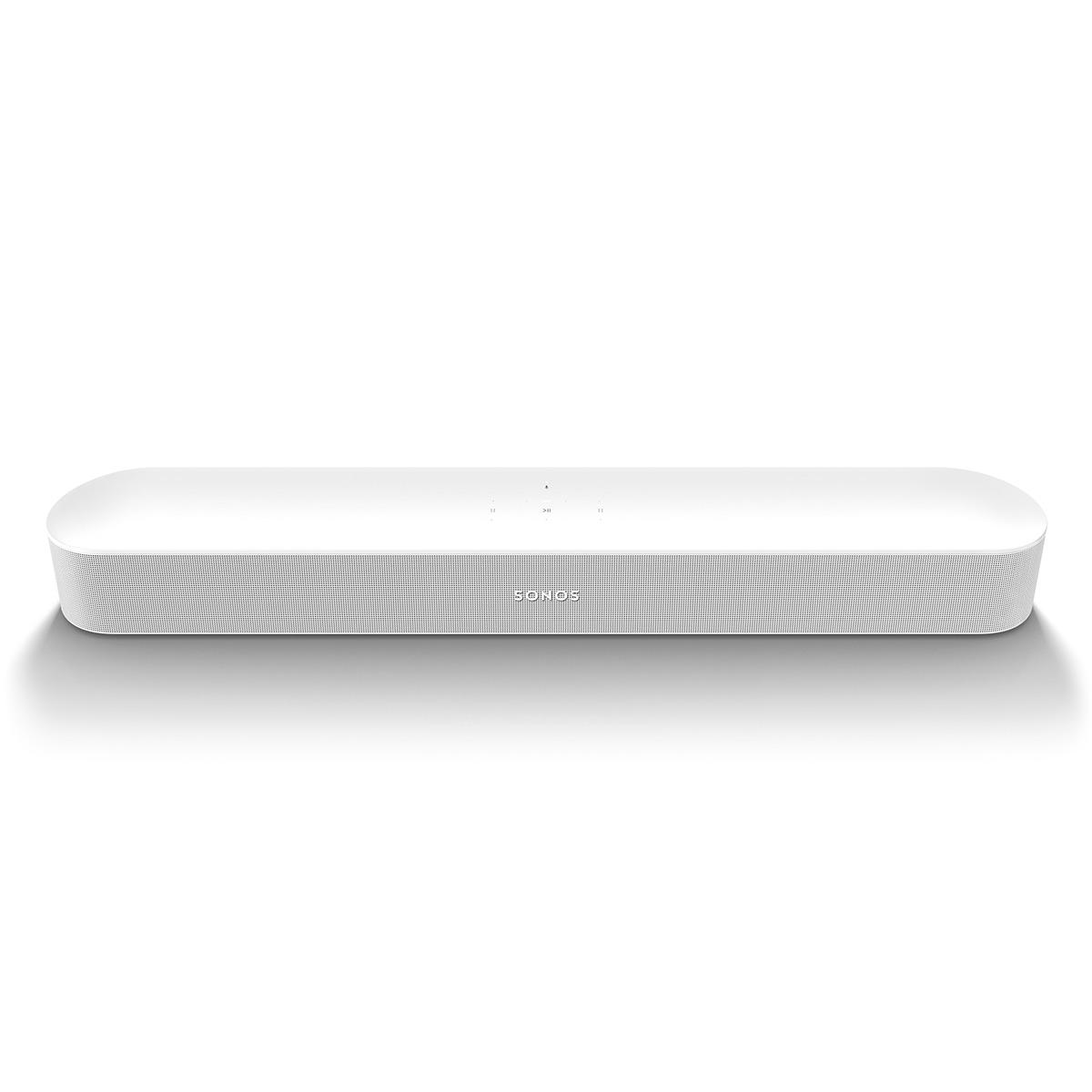
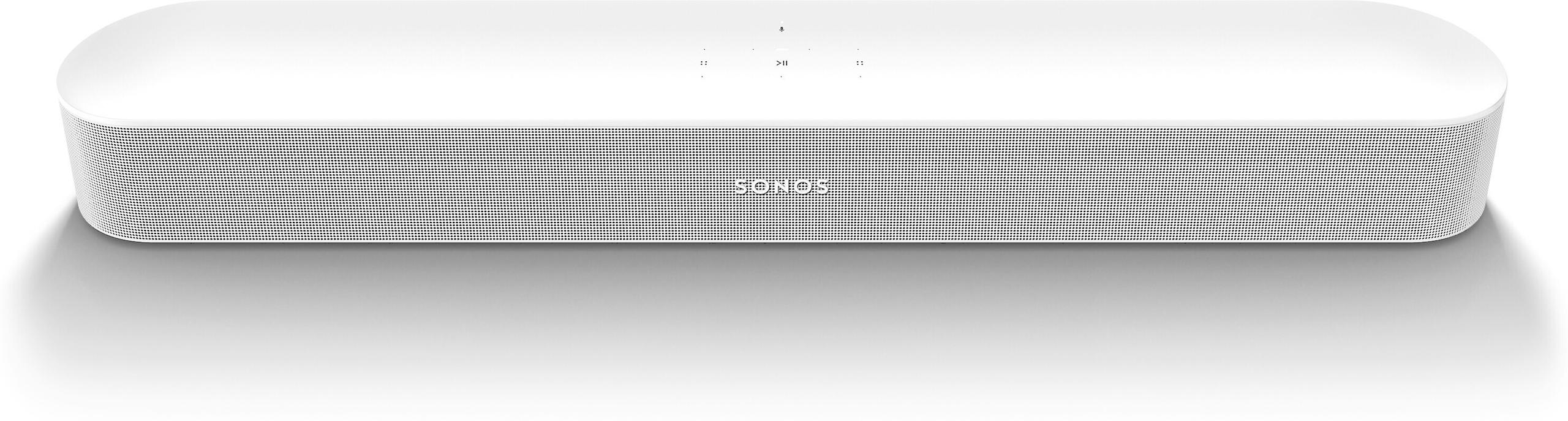
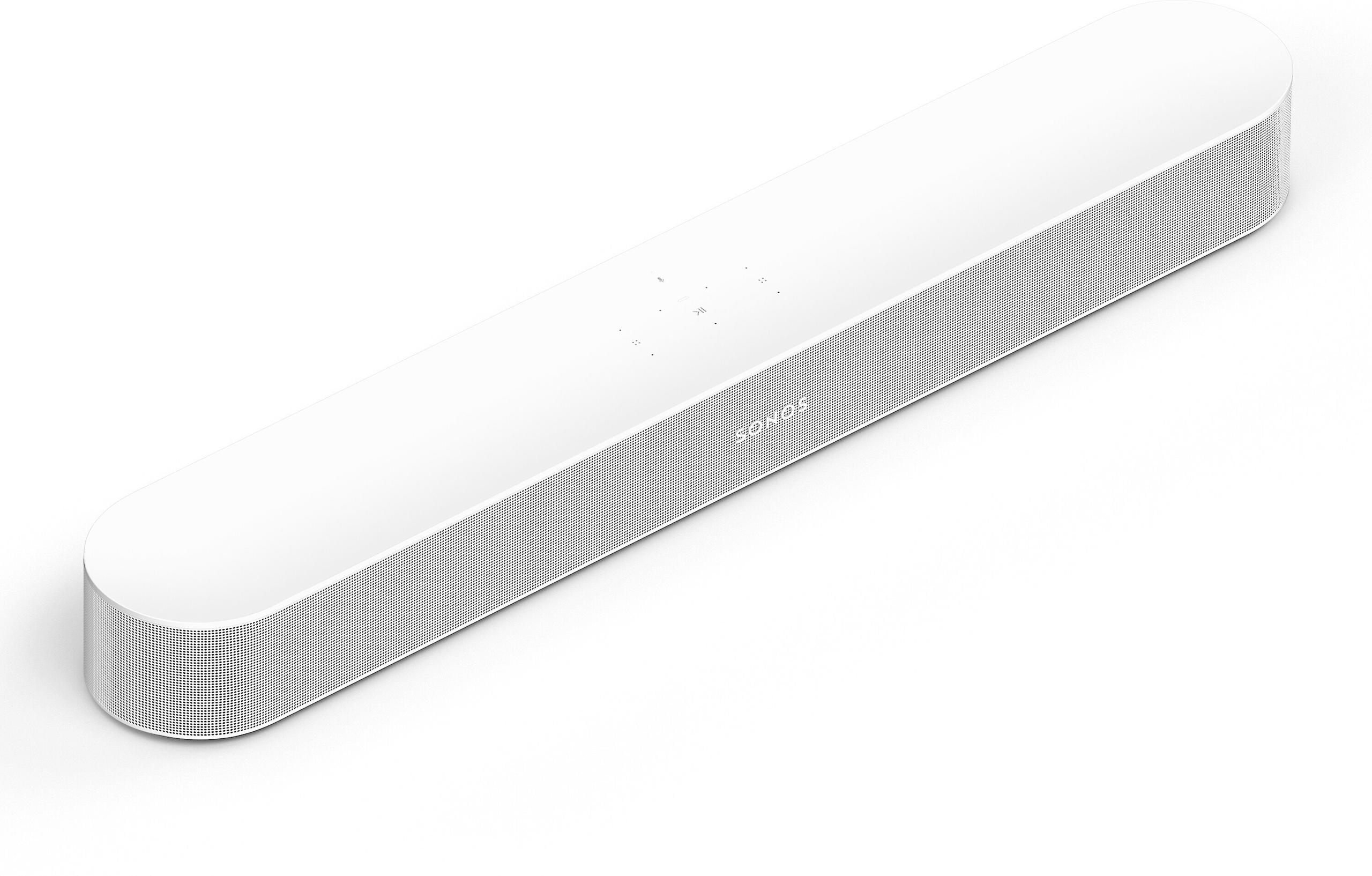
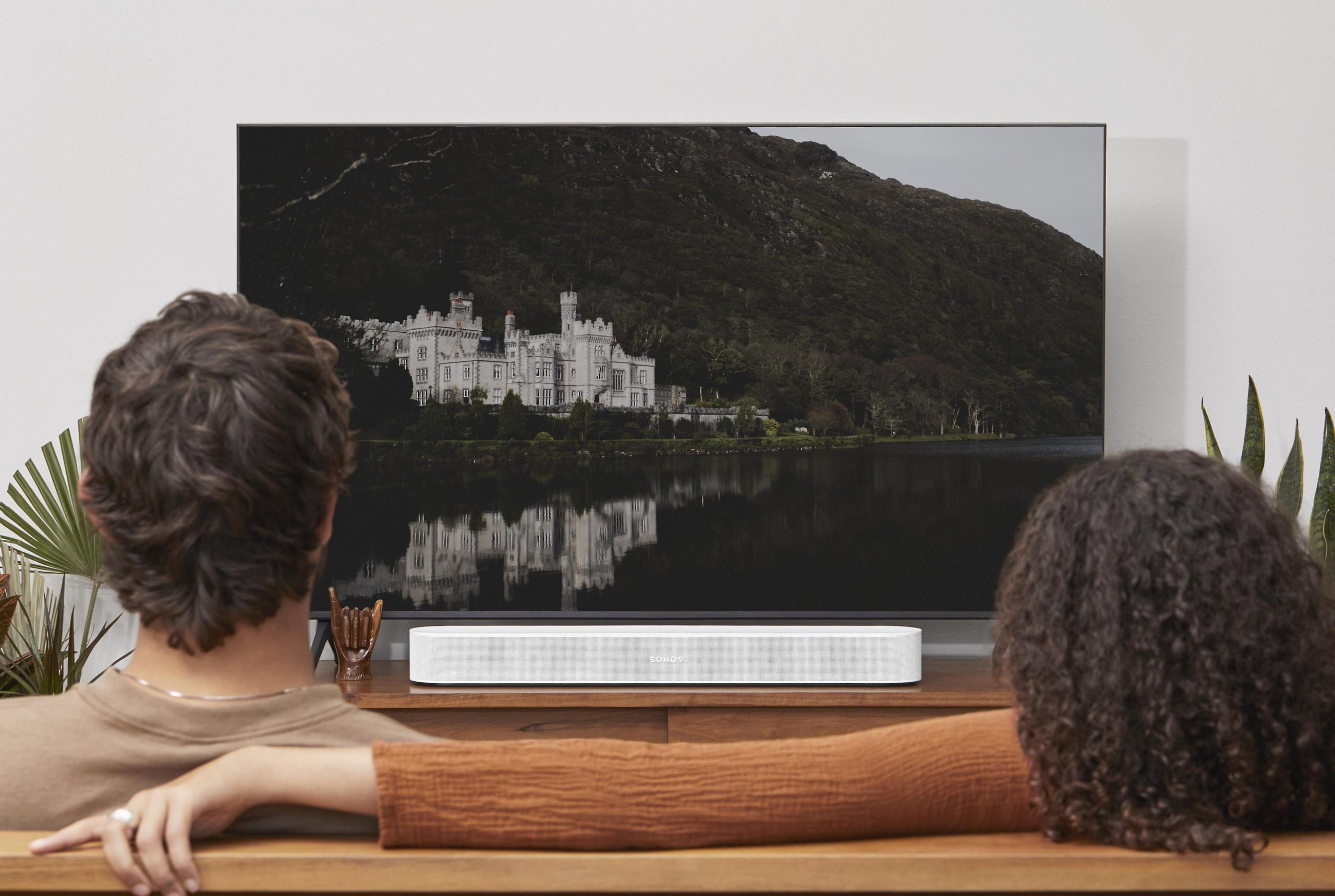
The Sonos Beam Gen 2 takes a more sophisticated approach with five drivers total: four elliptical mid-woofers handle the bulk of the audio spectrum, while a dedicated center tweeter focuses specifically on dialogue reproduction. This 5.0 configuration (five channels, no subwoofer) allows for much more precise control over where different sounds appear to come from.
In practical terms, this difference is immediately noticeable. The Amazon soundbar delivers solid, balanced audio that makes TV shows and movies more enjoyable than TV speakers alone. However, the Sonos Beam Gen 2 creates what audio enthusiasts call "imaging" – you can actually point to where specific sounds seem to be coming from in the room.
Neither soundbar includes a physical subwoofer, but they handle low-frequency reproduction very differently. The Amazon Fire TV Soundbar uses bass reflex construction – essentially a tuned port that helps extend low-frequency response without requiring additional power or space. This works reasonably well for dialogue and most TV content, though action movies and music with deep bass will expose its limitations.
The Sonos Beam Gen 2 employs three passive radiators alongside its active drivers. These passive radiators move in response to the active drivers' output, effectively increasing the soundbar's ability to move air and produce bass. The result is noticeably fuller low-end response, though still not matching what a dedicated subwoofer would provide.
Based on expert reviews and user feedback we've analyzed, the bass difference becomes most apparent with music and action content. The Sonos delivers punch and weight that makes explosions feel impactful, while the Amazon option tends to sound thin during bass-heavy scenes.
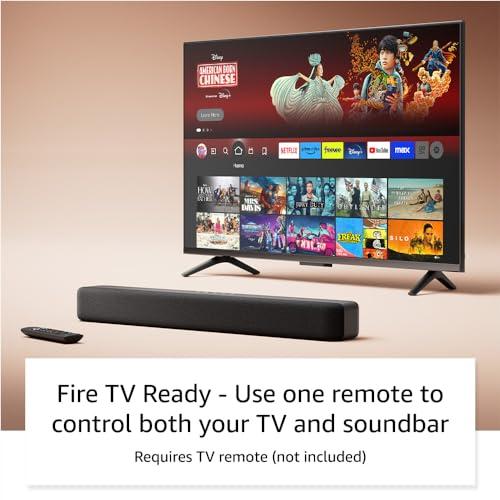
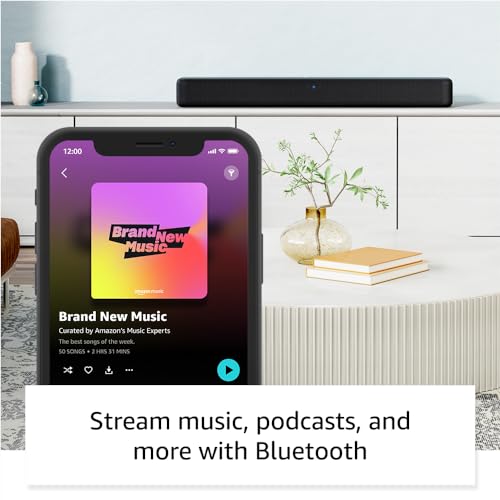
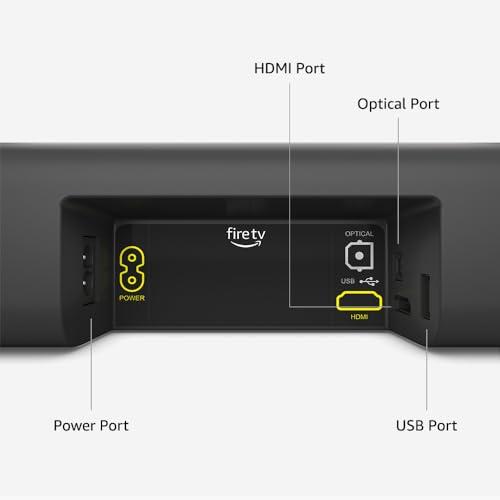
The Amazon Fire TV Soundbar approaches connectivity with admirable simplicity. It includes HDMI ARC/eARC (these are connection standards that let your TV remote control the soundbar's volume), optical input for older TVs, and Bluetooth for wireless music streaming. Physical touch controls on the unit handle power, volume, and input switching without requiring a smartphone app.
This straightforward approach has real advantages. Setup takes minutes, there's no Wi-Fi configuration to worry about, and the soundbar works with virtually any TV manufactured in the last decade. For many users, this simplicity is actually preferable to more complex alternatives.
The Sonos Beam Gen 2 transforms your soundbar into a smart home hub. Wi-Fi connectivity enables streaming from dozens of music services, while built-in Amazon Alexa and Google Assistant support turns it into a voice-controlled smart speaker. The Sonos S2 app provides detailed control over audio settings, room calibration, and multiroom audio functionality.
AirPlay 2 support means iPhone and iPad users can effortlessly stream audio, while the extensive streaming service integration includes high-resolution audio formats that audiophiles appreciate. However, this complexity comes with trade-offs – setup takes longer, Wi-Fi issues can affect performance, and the abundance of features can overwhelm users who just want better TV sound.
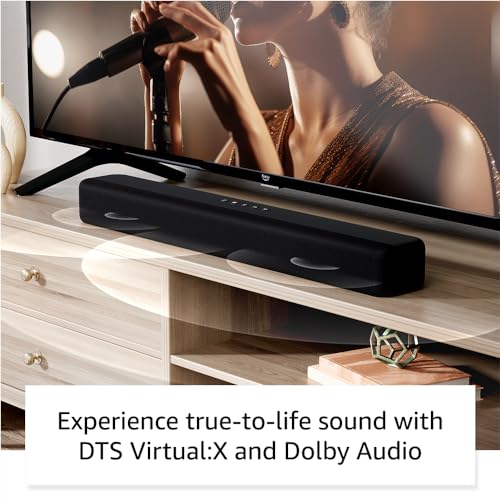
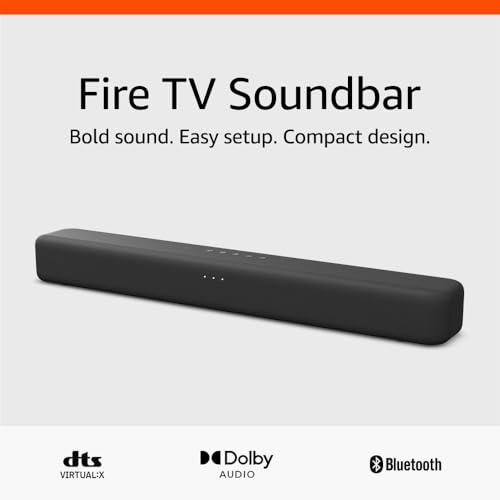
The processing power difference between these soundbars becomes evident when handling modern audio formats. The Amazon Fire TV Soundbar supports DTS Virtual:X, which uses psychoacoustic tricks to create the impression of surround sound from just two speakers. While effective to a degree, it's essentially an audio illusion that works better for some content than others.
The Sonos Beam Gen 2 includes full Dolby Atmos processing – a significantly more advanced technology. Dolby Atmos creates three-dimensional audio by adding height information to traditional surround sound. Even without upward-firing speakers, the Beam Gen 2 uses sophisticated algorithms to convince your brain that sounds are coming from above and around you.
In practice, this difference is substantial. The Amazon soundbar provides pleasant, balanced audio that's clearly better than TV speakers. The Sonos creates an immersive bubble of sound that can make you forget you're listening to a single soundbar rather than a full surround system.
One of the Sonos Beam Gen 2's standout features is Trueplay room calibration. This technology uses your iPhone's microphone to analyze your room's acoustics, then adjusts the soundbar's output to compensate for reflections, absorption, and other acoustic properties unique to your space.
Every room sounds different – hardwood floors reflect sound differently than carpet, while wall placement affects bass response. Trueplay addresses these variables automatically, ensuring optimal performance regardless of your room's characteristics. The Amazon Fire TV Soundbar lacks any room calibration technology, relying instead on its three preset sound modes for different content types.
The Amazon Fire TV Soundbar is essentially a complete product as purchased. There's no option to add a subwoofer or rear speakers, and no ecosystem of related products to integrate with. This simplicity appeals to users who want a straightforward upgrade without future upgrade pressure.
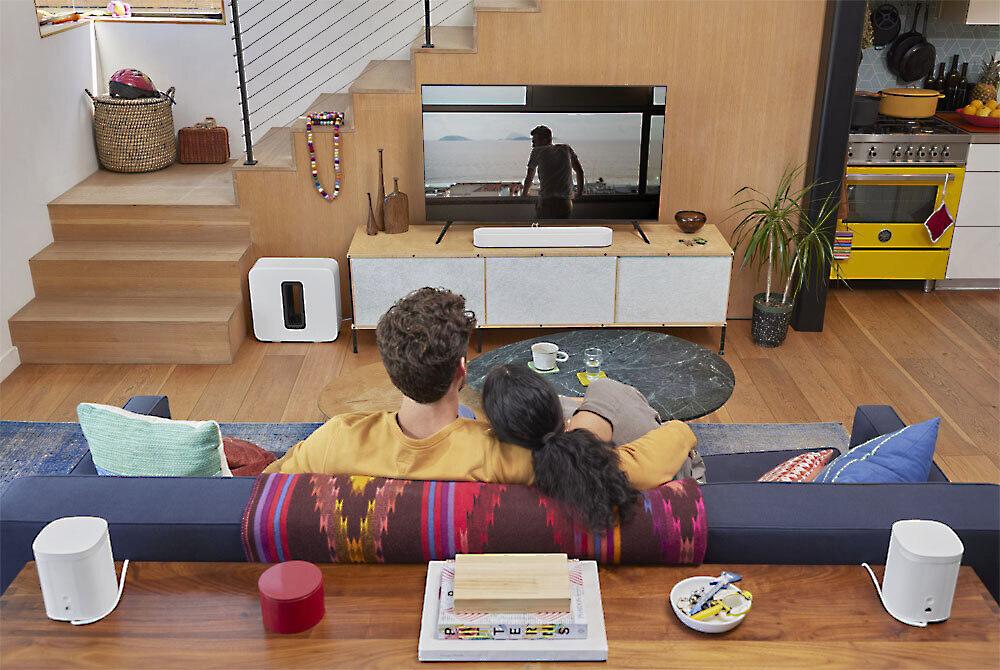
The Sonos Beam Gen 2 serves as an entry point into Sonos's comprehensive multiroom audio ecosystem. You can add the Sub Mini subwoofer for deeper bass, Era 100 speakers as wireless surrounds, or integrate with other Sonos speakers throughout your home. This expandability means your initial investment can grow into a whole-home audio system over time.
Modern soundbars are essentially computers with speakers attached, making software support crucial for long-term value. The Amazon Fire TV Soundbar receives basic firmware updates but lacks the comprehensive software platform that enables new features over time.
Sonos has built their business model around long-term software support. The Beam Gen 2 regularly receives updates that add new streaming services, improve existing features, and sometimes introduce entirely new capabilities. This ongoing development means the soundbar you buy today will likely be more capable in a year than it is now.
For dialogue-heavy content like dramas and news, both soundbars deliver clear improvements over TV speakers. However, the Sonos Beam Gen 2's dedicated center channel processing makes voices noticeably clearer and more natural. Many users report no longer needing subtitles after upgrading to the Beam Gen 2.
Action movies reveal the more significant performance gaps. The Amazon Fire TV Soundbar handles explosions and car chases competently but can't match the spatial positioning and bass impact of the Sonos option. Dolby Atmos content particularly showcases the Beam Gen 2's processing advantages, creating overhead effects that genuinely enhance the viewing experience.
As a music speaker, the differences become even more pronounced. The Amazon soundbar delivers pleasant stereo sound suitable for background listening, though the lack of deep bass and limited dynamic range becomes apparent with demanding musical content.
The Sonos Beam Gen 2 was designed with music reproduction as a primary consideration. The wider frequency response, better driver integration, and room calibration technology combine to create a genuinely impressive music listening experience. High-resolution audio support through various streaming services provides additional fidelity for listeners who care about such details.
The Amazon Fire TV Soundbar excels in scenarios where budget constraints are paramount, but audio improvement is still desired. At the time of writing, it costs roughly one-quarter the price of the Sonos Beam Gen 2, making it accessible to users who might otherwise stick with TV speakers.
This soundbar makes sense for rental properties, secondary rooms like bedrooms, or situations where the TV viewing experience is casual rather than dedicated home theater use. College students, first apartment dwellers, and anyone seeking immediate gratification without long-term investment planning will find it appealing.
The Sonos Beam Gen 2 targets users who view audio quality as an important part of their entertainment experience. While significantly more expensive, the performance improvements justify the cost for listeners who can appreciate the differences.
Smart home enthusiasts particularly benefit from the Beam Gen 2's integration capabilities. If you're already invested in voice assistants, streaming services, and connected home devices, the soundbar becomes a natural hub that ties these systems together.
For dedicated home theater use, the choice becomes clearer. The Amazon Fire TV Soundbar provides solid improvement over TV audio but lacks the processing power and spatial audio capabilities that make movie watching truly immersive.
The Sonos Beam Gen 2 approaches home theater more seriously, with Dolby Atmos support and superior driver configuration creating a more convincing surround sound experience. While not matching a true 5.1 or 7.1 speaker system, it delivers remarkably effective spatial audio for its compact form factor.
The expandability factor becomes crucial for home theater applications. Starting with the Beam Gen 2 and later adding a subwoofer and rear speakers creates a legitimate surround sound system, while the Amazon option remains forever limited to stereo reproduction.
Your decision ultimately hinges on priorities and budget. The Amazon Fire TV Soundbar delivers excellent value for users seeking immediate TV audio improvement without complexity or high cost. It's honest about its limitations while exceeding expectations within its price category.
The Sonos Beam Gen 2 justifies its premium pricing through superior audio performance, advanced features, and long-term expandability. Users who prioritize sound quality, smart home integration, or future upgrade potential will find the additional investment worthwhile.
Consider the Amazon option if you want simple, effective TV audio improvement on a tight budget. Choose the Sonos if you're willing to invest more for significantly better performance and comprehensive smart features. Both deliver on their respective promises – the question is which promise aligns better with your needs and budget at the time of purchase.
| Amazon Fire TV Soundbar | Sonos Beam Gen 2 |
|---|---|
| Channel Configuration - Determines spatial audio capabilities | |
| 2.0 stereo (two front-facing drivers only) | 5.0 setup (four mid-woofers, one tweeter, three passive radiators) |
| Dolby Atmos Support - Creates immersive overhead audio effects | |
| Not supported (DTS Virtual:X only for basic surround simulation) | Full Dolby Atmos with psychoacoustic processing for 3D audio |
| Smart Features - Voice control and streaming integration | |
| None (physical controls only, no Wi-Fi) | Amazon Alexa, Google Assistant, extensive streaming service support |
| Room Calibration - Optimizes sound for your specific space | |
| Three basic preset modes only | Trueplay technology using iPhone microphone for acoustic analysis |
| Connectivity Options - How you connect and control the soundbar | |
| HDMI ARC/eARC, optical input, Bluetooth music streaming | HDMI eARC, Wi-Fi, Ethernet, AirPlay 2, app control via Sonos S2 |
| Expandability - Future upgrade options | |
| No expansion possible (standalone unit only) | Add Sub Mini, Era 100 surrounds, integrate with Sonos ecosystem |
| Physical Dimensions - Important for TV stand and wall mounting | |
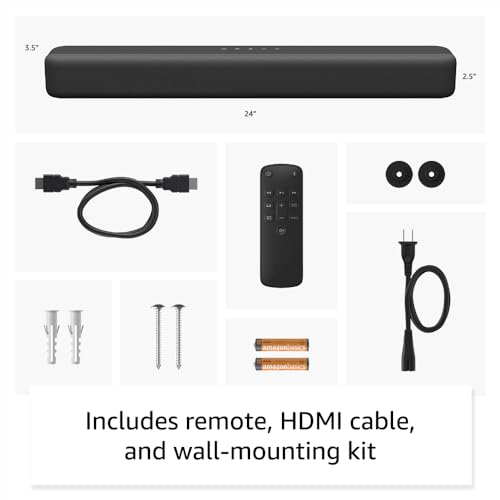
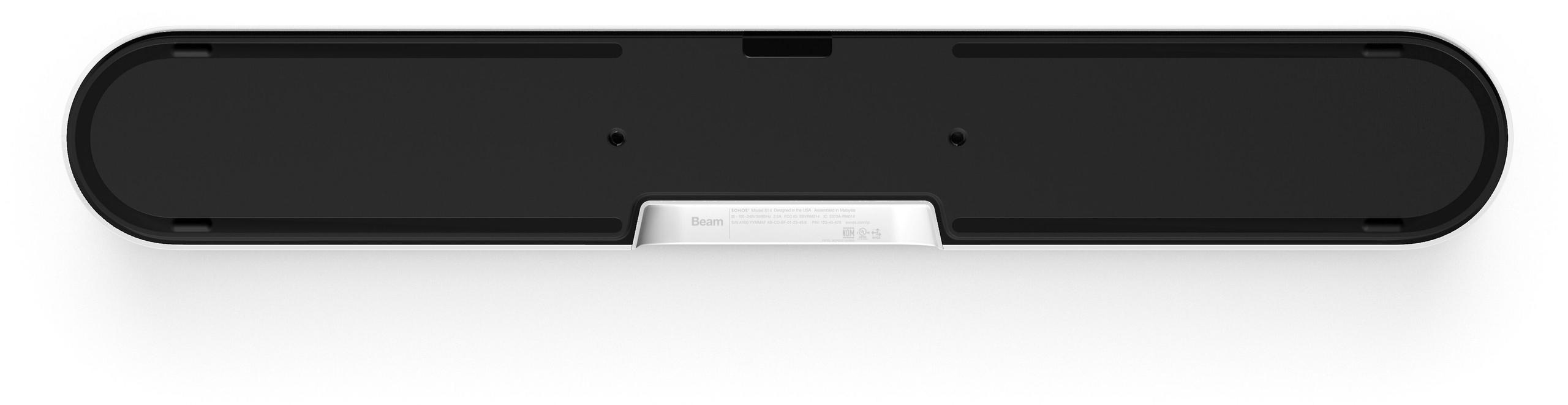
| 61 x 9 x 6.5 cm, lightweight at 1.8 kg | 65.1 x 10 x 6.9 cm, heavier build quality at 2.8 kg |
| Audio Format Support - Compatibility with streaming and disc content | |
| Dolby Audio, DTS Virtual:X, basic stereo formats | Dolby Atmos, Dolby TrueHD, multichannel PCM, high-res audio |
| Setup Complexity - Time and technical knowledge required | |
| Plug-and-play with any TV (minutes to set up) | Requires Wi-Fi setup, app configuration, calibration process |
| Software Updates - Long-term feature additions | |
| Basic firmware updates only | Regular feature updates, new streaming services, ongoing improvements |
| Best Use Cases - Who should choose each option | |
| Budget-focused users, rentals, secondary rooms, simple TV upgrade | Home theater enthusiasts, smart home users, music lovers, expandable systems |
The Amazon Fire TV Soundbar offers exceptional value for budget-conscious buyers, delivering a significant upgrade over TV speakers at an entry-level price point. The Sonos Beam Gen 2 provides premium performance with advanced features like Dolby Atmos and smart home integration, justifying its higher cost for users who prioritize audio quality and expandability.
The Amazon Fire TV Soundbar produces clear, balanced stereo sound with decent dialogue clarity and a wider soundstage than TV speakers. The Sonos Beam Gen 2 delivers superior audio performance with five dedicated drivers, Dolby Atmos processing, and room calibration technology that creates a more immersive and detailed listening experience.
No, only the Sonos Beam Gen 2 supports full Dolby Atmos processing, which creates three-dimensional audio effects for enhanced movie experiences. The Amazon Fire TV Soundbar uses DTS Virtual:X for basic surround sound simulation but cannot process true Dolby Atmos content.
The Amazon Fire TV Soundbar offers plug-and-play simplicity with just HDMI or optical cable connection required. The Sonos Beam Gen 2 requires Wi-Fi setup, app configuration, and optional room calibration, making it more complex but offering greater customization options.
The Amazon Fire TV Soundbar only offers physical touch controls and works with your TV remote - no smartphone app is available. The Sonos Beam Gen 2 includes comprehensive app control through the Sonos S2 mobile app, allowing detailed audio adjustments and streaming service integration.
The Sonos Beam Gen 2 is significantly better for home theater use, offering Dolby Atmos support, superior spatial audio processing, and the ability to expand with wireless subwoofers and rear speakers. The Amazon Fire TV Soundbar provides basic TV audio improvement but lacks the advanced processing needed for immersive home theater experiences.
The Amazon Fire TV Soundbar has no voice control capabilities. The Sonos Beam Gen 2 includes built-in Amazon Alexa and Google Assistant support, allowing hands-free control of the soundbar, smart home devices, and music playback.
The Amazon Fire TV Soundbar cannot be expanded with additional speakers or subwoofers. The Sonos Beam Gen 2 can be enhanced with the Sonos Sub Mini subwoofer and Era 100 rear speakers to create a full surround sound system.
The Sonos Beam Gen 2 excels at music streaming with Wi-Fi connectivity, support for multiple streaming services, high-resolution audio formats, and superior driver configuration. The Amazon Fire TV Soundbar offers basic Bluetooth music streaming but lacks the audio quality and streaming integration of the Sonos option.
Both soundbars support HDMI ARC/eARC and optical connections. The Amazon Fire TV Soundbar focuses on these basic connections plus Bluetooth. The Sonos Beam Gen 2 adds Wi-Fi, Ethernet, and AirPlay 2 connectivity for broader integration options.
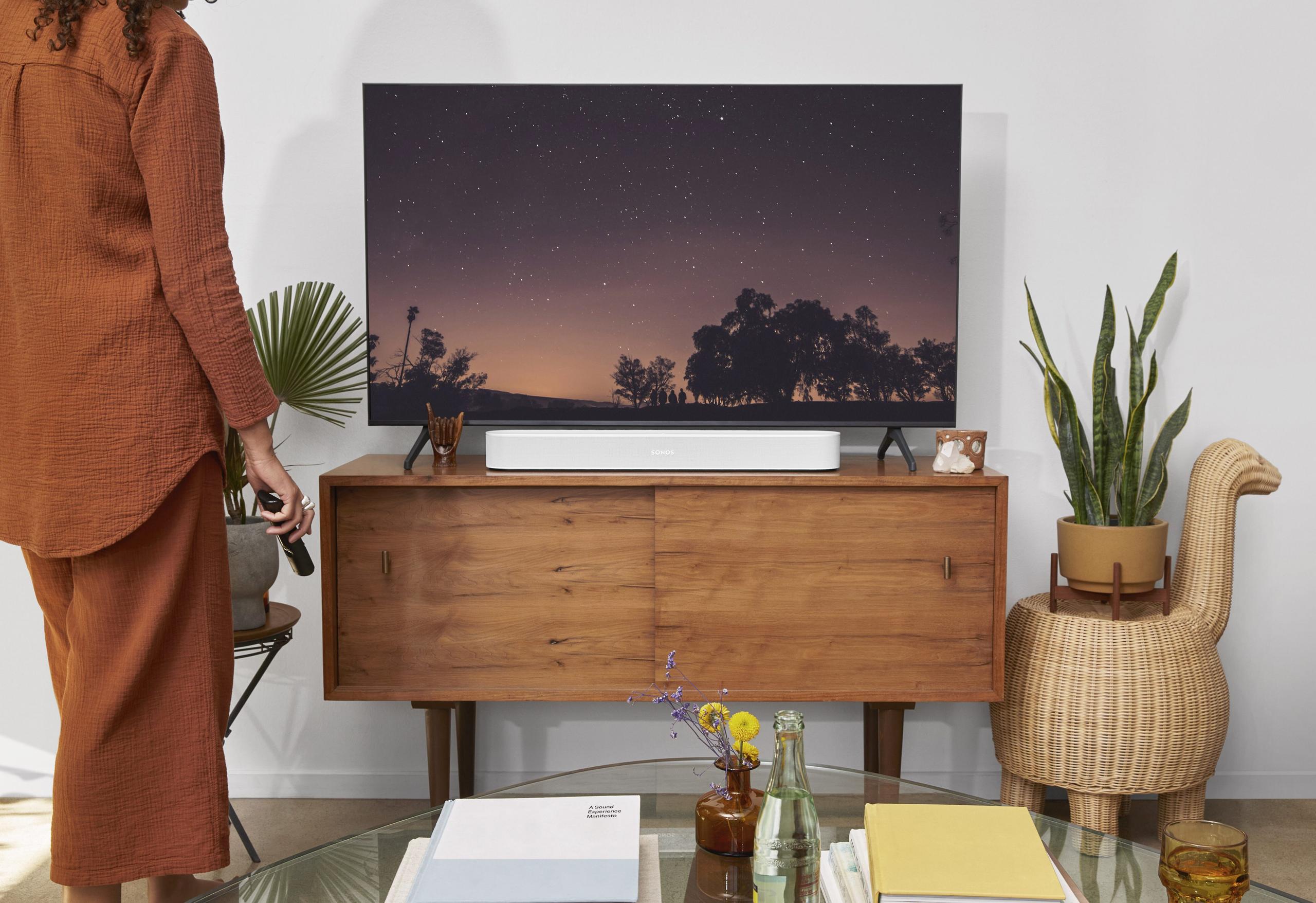
Both soundbars have similar compact dimensions suitable for most TV stands. The Amazon Fire TV Soundbar is slightly lighter and simpler in design, while the Sonos Beam Gen 2 has a more premium build quality with marginally larger dimensions to accommodate its additional drivers.
Choose the Amazon Fire TV Soundbar if you want immediate TV audio improvement on a tight budget with minimal complexity. Select the Sonos Beam Gen 2 if you're willing to invest more for superior sound quality, smart features, and the ability to build a complete surround sound system over time.
We've done our best to create useful and informative comparisons to help you decide what product to buy. Our research uses advanced automated methods to create this comparison and perfection is not possible - please contact us for corrections or questions. These are the sites we've researched in the creation of this article: rtings.com - developer.amazon.com - stereoguide.com - developer.amazon.com - techradar.com - hometechnologyreview.com - whathifi.com - youtube.com - whathifi.com - wirelessplace.com - hometechnologyreview.com - dolby.com - aboutamazon.com - developer.amazon.com - community.anker.com - youtube.com - cordbusters.co.uk - whathifi.com - en.community.sonos.com - techradar.com - youtube.com - consumerreports.org - bestbuy.com - youtube.com - sonos.com - wave-electronics.com - en.community.sonos.com - epicsystems.tech - tomsguide.com - bestbuy.com

Privacy Policy
Terms and Conditions - Affiliate Policy
Home Security
© Copyright 2008-2026.
11816 Inwood Rd #1211, Dallas, TX 75244