

If you've ever cranked up your TV volume only to have dialogue become inaudible while explosions blast your eardrums, you've experienced the fundamental problem that soundbars solve. TV manufacturers have been shrinking their speakers for years to achieve those impossibly thin profiles we all love, but physics hasn't been kind to audio quality. This is where soundbars step in, and the market offers everything from simple stereo upgrades to full-blown home theater replacements.
Today we're comparing two products that couldn't be more different: the Samsung HW-Q990F, a flagship 2025 release that pushes soundbar technology to its limits, and the Amazon Fire TV Soundbar, a budget-friendly option that prioritizes simplicity and value. At the time of writing, these products sit at opposite ends of the price spectrum—the Samsung commands premium pricing in the four-figure range, while the Amazon option costs less than a decent dinner for two.
Before diving into specifics, it helps to understand what separates good soundbars from great ones. The most important factor is channel configuration, which determines how many separate audio streams the system can handle. A 2.0 system has left and right stereo channels, while something like an 11.1.4 system has 11 main channels, 1 subwoofer channel, and 4 height channels for overhead effects.
The magic happens when you combine more channels with immersive audio formats like Dolby Atmos and DTS:X. These technologies treat sound as objects that can move freely through three-dimensional space rather than being locked to specific channels. When a helicopter flies overhead in a movie, Dolby Atmos can make it sound like it's actually above your head rather than just coming from speakers in front of you.
Physical design matters enormously too. A soundbar with separate components—a wireless subwoofer for deep bass and rear speakers for surround effects—will almost always outperform a single-unit design, though it requires more space and setup complexity.
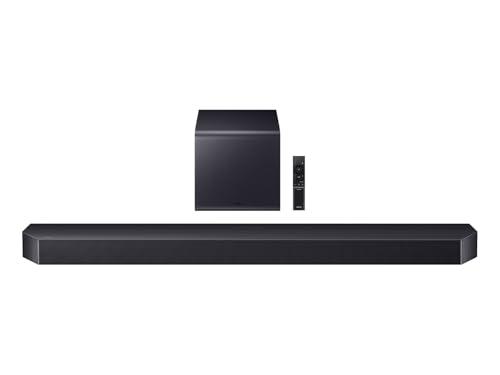
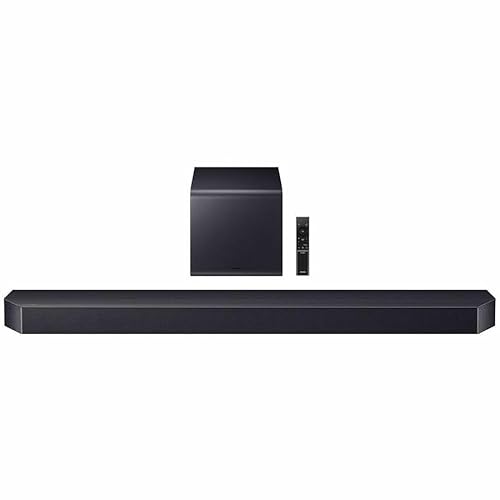
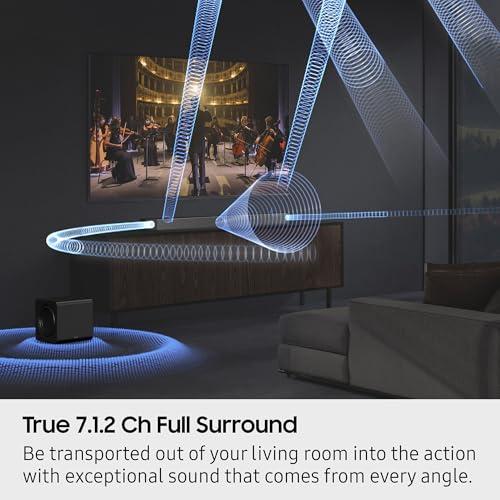
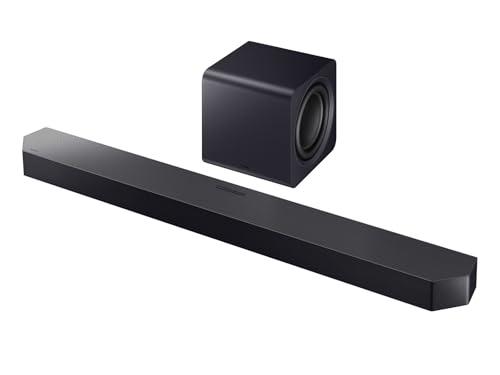
The Samsung HW-Q990F represents everything Samsung learned from years of soundbar development, packed into their 2025 flagship release. This is an 11.1.4-channel beast featuring 23 individual speakers spread across the main soundbar, a wireless subwoofer, and two wireless rear speakers. When we talk about "true surround sound," this is what we mean—discrete speakers physically positioned around your listening area.
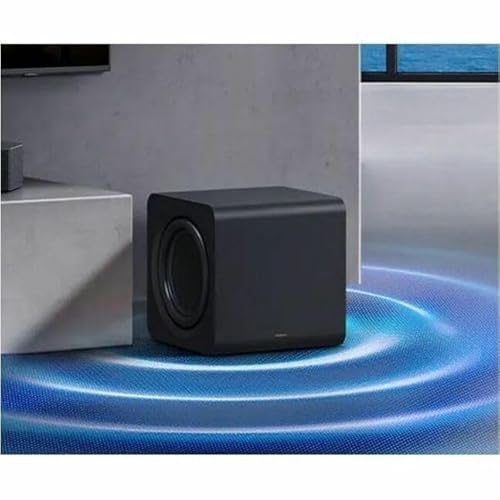
The technical specifications tell an impressive story. The main soundbar houses 15 speakers including dedicated up-firing drivers for height effects. The wireless subwoofer features dual 8-inch force-canceling woofers (a design that reduces vibration and distortion), while each rear speaker contains three drivers: one firing forward, one to the side, and one angled upward. This creates what Samsung calls a "hemisphere of sound" that genuinely surrounds you.
What makes the Samsung HW-Q990F special goes beyond raw speaker count. The 2025 model introduced several technological improvements over previous generations. The redesigned subwoofer now uses a sealed enclosure with AI-powered Dynamic Bass Control, which analyzes audio in real-time to minimize distortion. While some reviewers noted this design trades a bit of bass punch for cleaner, more controlled low frequencies, the overall result is more refined than earlier models.
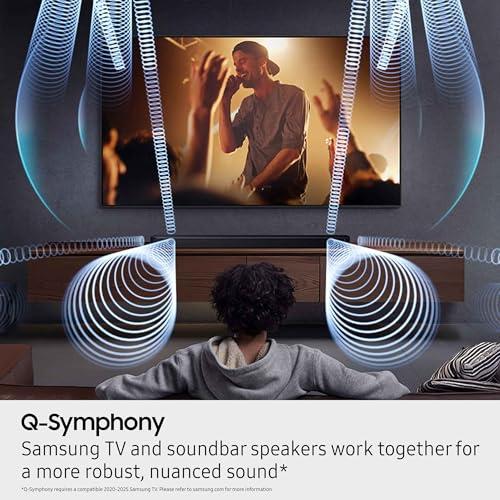
The system also debuts Samsung's Eclipsa Audio technology, developed with Google as a competitor to Dolby Atmos. Though content remains limited at the time of writing, it represents Samsung's push toward proprietary spatial audio formats. More immediately useful is the enhanced Q-Symphony feature, which synchronizes the soundbar with compatible Samsung TV speakers to create an even fuller soundstage.
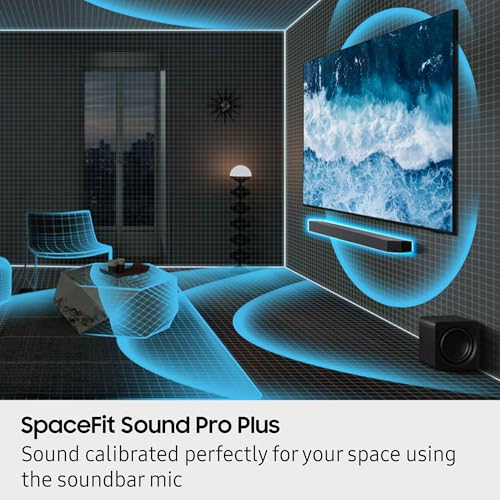
Room calibration happens automatically through SpaceFit Sound Pro Plus, using built-in microphones to analyze your space's acoustics and adjust the sound accordingly. This addresses one of the biggest challenges in home audio—every room sounds different, and what works perfectly in a demo might sound terrible in your living room.
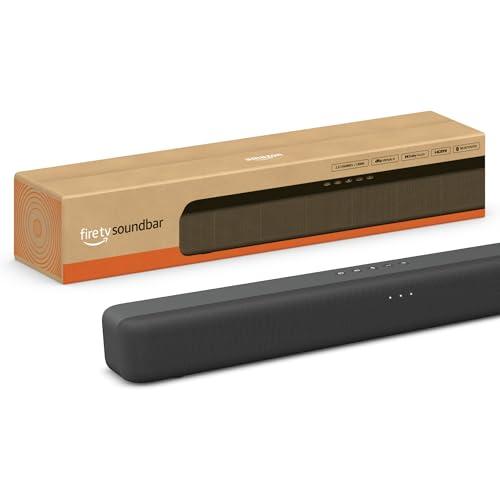
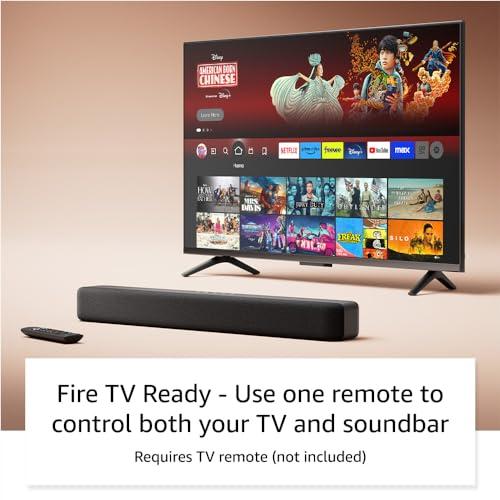
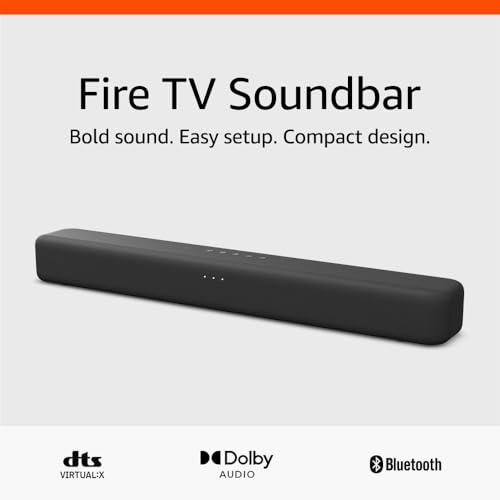
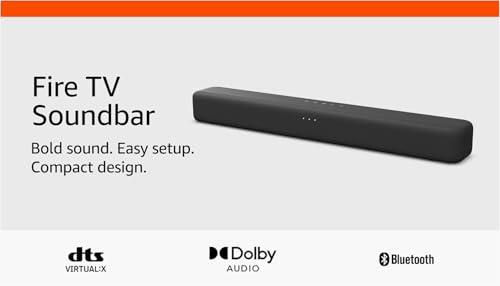
At the other extreme sits the Amazon Fire TV Soundbar, a compact 2.0-channel system that launched as Amazon's entry into the soundbar market. Despite the "Fire TV" branding, this soundbar works with any television and doesn't actually include streaming capabilities or voice control—it's purely focused on improving TV audio at an accessible price point.
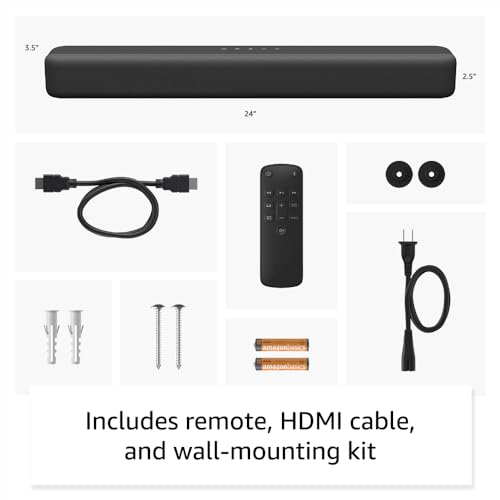
The design philosophy here is "less is more." The Amazon Fire TV Soundbar measures just 61 centimeters wide and weighs under 2 kilograms, making it suitable for smaller TVs and tight spaces. Inside are two full-range "Racetrack" drivers—oval-shaped speakers that provide more membrane surface area than traditional round drivers while maintaining a slim profile.
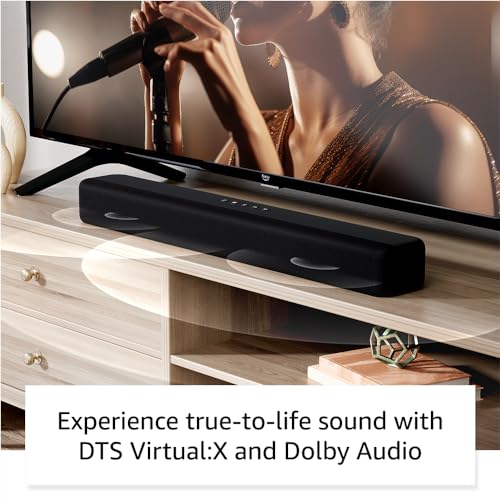
Where this soundbar gets clever is in its virtual processing. DTS Virtual:X technology analyzes stereo content and creates the illusion of surround sound using psychoacoustic tricks—essentially fooling your brain into perceiving sound coming from directions where no speakers exist. It's not as convincing as physical surround speakers, but it's remarkable what can be achieved through software processing.
The Amazon Fire TV Soundbar includes Dolby Audio support (not to be confused with Dolby Atmos) and offers three sound modes: Movie, Music, and Dialog/Voice. The bass reflex design incorporates a front-facing port that allows placement directly against walls without acoustic compromise—a practical consideration for many living rooms.
The gap between these products is widest when it comes to creating an immersive listening experience. The Samsung HW-Q990F delivers genuine surround sound with discrete speakers positioned around your seating area. When a car chase moves from left to right in a movie, you hear it travel through space in a convincing arc. Height effects from Dolby Atmos content create overhead sensations that can make you duck during low-flying aircraft scenes.
Our research into professional and user reviews consistently highlights how the Samsung system creates what many describe as a "bubble of sound" that envelops the listener. The rear speakers are particularly effective, with their tri-directional driver arrays ensuring smooth panning effects without dead spots as sounds move through the surround field.
The Amazon Fire TV Soundbar, by contrast, relies entirely on virtual processing to create spatial effects. DTS Virtual:X does expand the apparent soundstage beyond the physical speaker locations, creating a wider and somewhat deeper sound field than basic stereo. However, the effects are subtle and work better with some content than others. Action movies with discrete surround effects sound more spacious but lack the pinpoint positioning and overhead sensations that physical surround speakers provide.
For home theater use, this difference is fundamental. If movie immersion is important to you, no amount of virtual processing can replace the physical sensation of sounds coming from behind and above your listening position.
Both soundbars significantly improve dialogue clarity over typical TV speakers, but they achieve it differently. The Samsung HW-Q990F includes a dedicated center channel speaker optimized specifically for voice reproduction. This ensures dialogue stays anchored to the screen even during complex surround mixes. The Active Voice Amplifier Pro feature uses AI processing to analyze content in real-time, automatically boosting dialogue frequencies when it detects background noise or competing sounds.
The Amazon Fire TV Soundbar creates a "phantom center" using its two stereo speakers, which works well for listeners positioned directly in front of the soundbar. The Dialog/Voice mode adjusts frequency response to emphasize speech frequencies, and the results are quite good for a budget product. Voices sound clearer and more intelligible than most TV speakers can manage.
However, the Samsung's approach proves more robust across different seating positions and content types. The discrete center channel maintains dialogue clarity even when you're sitting off to the side, while the phantom center approach works best from the sweet spot directly in front.
This category reveals perhaps the starkest difference between the products. The Samsung HW-Q990F includes a substantial wireless subwoofer with dual 8-inch drivers capable of extending down to 32Hz—well into the territory where you feel bass rather than just hear it. Movie explosions, thunder, and musical bass lines have genuine impact and weight. The sealed enclosure design introduced in 2025 provides tighter, more controlled bass compared to previous ported designs, though some audiophiles prefer the slightly punchier character of the older approach.
The Amazon Fire TV Soundbar incorporates a bass reflex design that maximizes low-frequency output from its compact drivers, but physics ultimately limits what's possible. The bass is present and helps fill out the sound compared to TV speakers, but it lacks the extension and impact needed for movie soundtracks. Explosions sound like loud noises rather than room-shaking events, and musical bass lines often get lost in the mix.
For apartment dwellers or those who primarily watch dialogue-heavy content, the Amazon's bass response might be perfectly adequate. But if you enjoy action movies, concert footage, or bass-heavy music, the difference is immediately apparent and impossible to ignore.
The Samsung HW-Q990F excels at music reproduction, creating a wide stereo image with excellent instrument separation and detail retrieval. The seven-band graphic EQ allows fine-tuning for different musical genres, while the multiple listening modes optimize the sound signature for various content types. High-resolution audio streaming through services like TIDAL and Qobuz reveals nuances that budget soundbars simply can't resolve.
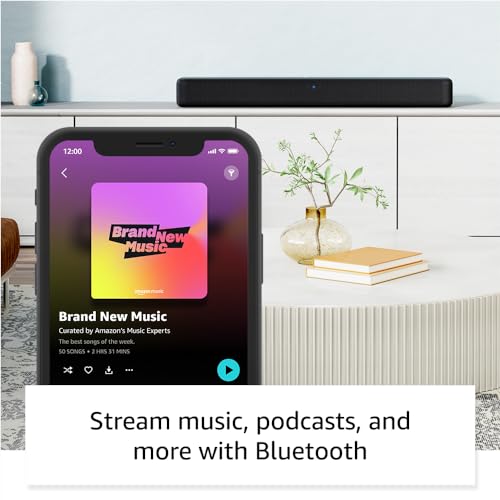
The Amazon Fire TV Soundbar delivers competent music performance for casual listening. The stereo imaging is reasonably wide for such a compact unit, and the overall tonal balance is pleasant if not particularly detailed. Bluetooth streaming works well for background music or podcasts, though audiophiles will notice compression and limited dynamic range compared to higher-end options.
The Samsung's advantage in music becomes most apparent with complex recordings featuring multiple instruments and layers. Classical music, jazz, and well-produced rock albums reveal spatial information and subtle details that remain buried when played through the Amazon system.
The Samsung HW-Q990F embraces the connected home with Wi-Fi streaming support for major services, built-in voice assistants (Bixby and Alexa), and smartphone app control. The SpaceFit Sound Pro Plus room correction happens automatically, but users can also manually adjust EQ settings, channel levels, and various sound modes through the SmartThings app.
HDMI connectivity is comprehensive, with three HDMI 2.1 ports supporting 4K at 120Hz and 8K at 60Hz passthrough—crucial for modern gaming consoles and high-end media players. The eARC (enhanced Audio Return Channel) support ensures lossless audio transmission from compatible TVs.
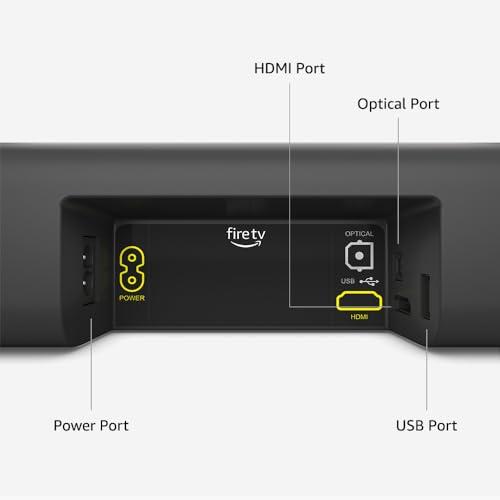
The Amazon Fire TV Soundbar takes a deliberately simplified approach. Despite the Fire TV branding, there's no built-in streaming, no voice control, and no app. Connectivity is limited to HDMI ARC/eARC, optical input, and Bluetooth. The approach reduces complexity and cost but means users miss out on modern conveniences like voice control and streaming integration.
For users who prefer simplicity and already have streaming devices, the Amazon's approach makes sense. But those who appreciate modern smart home integration and advanced features will find the Samsung more compelling, despite its higher learning curve.
The decision between these soundbars ultimately depends on your priorities, budget, and listening environment. The Samsung HW-Q990F justifies its premium pricing for users who want the best possible soundbar experience. If you have a medium to large room, enjoy movies and gaming, and appreciate high-quality audio, the Samsung delivers performance that rivals traditional AV receiver setups while maintaining soundbar convenience.
The Amazon Fire TV Soundbar makes sense for budget-conscious buyers who primarily need better dialogue clarity and don't require surround sound immersion. It's particularly well-suited for smaller rooms, apartments, or secondary TV locations where a full surround system would be overkill.
Consider your content preferences carefully. If you primarily watch news, sitcoms, and streaming shows, the Amazon provides meaningful improvement over TV speakers at a fraction of the cost. But if action movies, gaming, and music are important to your entertainment experience, the Samsung's superior immersion and audio quality become worth the investment.
Room size also plays a crucial role. The Samsung HW-Q990F needs space to breathe—both physical space for the multiple components and acoustic space to create its surround effects. In a small apartment or bedroom, its capabilities might be wasted. Conversely, the Amazon Fire TV Soundbar lacks the power and scale needed to fill larger rooms effectively.
At the time of writing, the soundbar market continues evolving rapidly. Both products represent solid choices within their respective categories, though the Samsung clearly targets enthusiasts willing to pay for premium performance while the Amazon focuses on delivering maximum value at an entry-level price point. Your choice should align with both your audio expectations and your budget reality—there's no point stretching financially for features you won't use, but there's also little satisfaction in saving money only to be disappointed with the performance.
The good news is that either option will dramatically improve your TV viewing experience compared to built-in speakers. The question is simply how much improvement you want and what you're willing to pay for it.
| Samsung Q-Series HW-Q990F Soundbar | Amazon Fire TV Soundbar |
|---|---|
| Channel Configuration - Determines surround sound capability and immersion level | |
| 11.1.4 channels with 23 total speakers across multiple components | 2.0 stereo channels with 2 speakers in single unit |
| Dolby Atmos Support - Essential for overhead sound effects in movies | |
| Full Dolby Atmos and DTS:X with physical height speakers | DTS Virtual:X only (simulated surround, no true Atmos) |
| Physical Components - More components mean better sound placement | |
| Main soundbar + wireless subwoofer + wireless rear speakers | Single compact soundbar unit only |
| Subwoofer - Critical for movie bass and music fullness | |
| Dual 8" wireless subwoofer with AI bass control | No subwoofer (bass reflex design in main unit) |
| Total Power Output - Determines maximum volume and room-filling capability | |
| 756W RMS (suitable for large rooms) | 40W total (best for small to medium rooms) |
| Smart Features - Modern convenience and streaming integration | |
| Wi-Fi streaming, voice control, smartphone app, room calibration | Basic Bluetooth only, no smart features or app |
| HDMI Connectivity - Important for gaming and high-quality video | |
| 3x HDMI 2.1 with 4K/120Hz and 8K/60Hz passthrough | 1x HDMI ARC/eARC, basic video passthrough |
| Setup Complexity - Consider your comfort with technology | |
| Multi-component wireless setup with room calibration | Simple plug-and-play single unit |
| Size and Weight - Important for placement flexibility | |
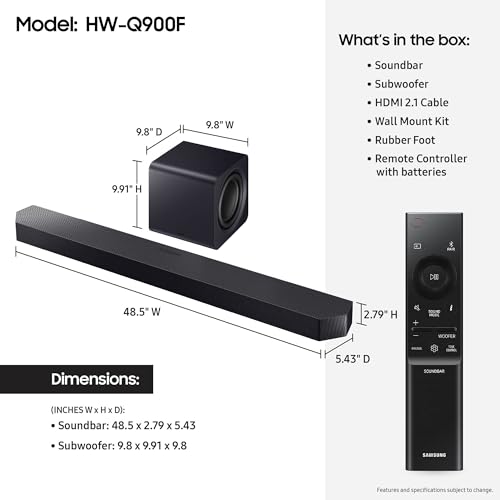
| Large: 48.5"W soundbar + separate sub and rear speakers | Compact: 24"W x 3.5"H, lightweight at 4 lbs |
| Room Calibration - Automatically optimizes sound for your space | |
| SpaceFit Sound Pro Plus with automatic room analysis | No room correction (manual EQ presets only) |
| Voice Enhancement - Critical for clear dialogue | |
| Dedicated center channel + AI voice amplifier | Phantom center with dialog enhancement mode |
| Music Streaming - Built-in music service support | |
| Samsung HW-Q990F: Spotify Connect, TIDAL, AirPlay 2, Google Cast | Amazon Fire TV Soundbar: Bluetooth streaming only |
The Samsung Q-Series HW-Q990F Soundbar is significantly better for home theater use. It features true 11.1.4-channel Dolby Atmos with physical rear speakers and height channels that create genuine overhead effects. The Amazon Fire TV Soundbar only offers virtual surround sound through DTS Virtual:X processing, which can't match the immersive experience of discrete speakers positioned around your room.
The primary difference is scale and capability. The Samsung Q-Series HW-Q990F Soundbar is a complete multi-component surround sound system with wireless subwoofer and rear speakers, while the Amazon Fire TV Soundbar is a simple 2-channel stereo soundbar designed as a basic TV speaker upgrade. They target completely different needs and budgets.
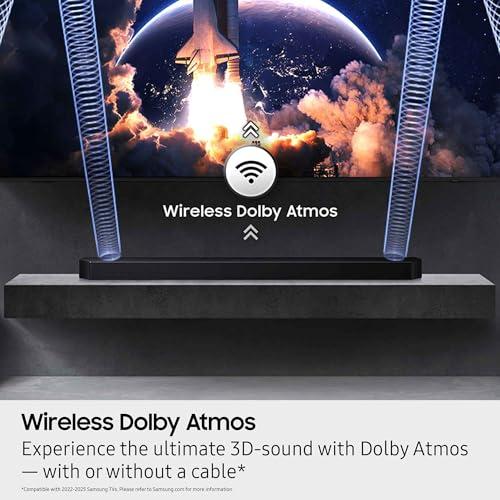
Yes, both the Samsung Q-Series HW-Q990F Soundbar and Amazon Fire TV Soundbar work with any TV that has HDMI ARC or optical outputs. However, the Samsung offers additional features like Q-Symphony and wireless Dolby Atmos when paired with compatible Samsung TVs, while the Amazon soundbar provides the same basic functionality regardless of TV brand.
The Amazon Fire TV Soundbar is better suited for small apartments due to its compact single-unit design and lower power output. The Samsung Q-Series HW-Q990F Soundbar requires significant space for its multiple components and produces much more sound output, which could be excessive in small spaces or cause neighbor complaints.
No, the Amazon Fire TV Soundbar has no subwoofer output or expansion capabilities. It's a complete system as-is with built-in bass enhancement through its bass reflex design. The Samsung Q-Series HW-Q990F Soundbar comes with a powerful wireless subwoofer included as part of the complete package.
Both soundbars improve dialogue clarity over TV speakers, but the Samsung Q-Series HW-Q990F Soundbar has an advantage with its dedicated center channel speaker and AI-powered voice enhancement. The Amazon Fire TV Soundbar uses a phantom center approach that works well for viewers sitting directly in front, making it adequate for most TV viewing situations.
Only the Samsung Q-Series HW-Q990F Soundbar supports true Dolby Atmos with physical height speakers for overhead effects. The Amazon Fire TV Soundbar does not support Dolby Atmos but includes DTS Virtual:X for simulated surround sound effects using its two stereo speakers.
The Amazon Fire TV Soundbar is much easier to set up - just connect one HDMI cable and you're done. The Samsung Q-Series HW-Q990F Soundbar requires positioning multiple wireless components around your room and includes automatic room calibration, making setup more complex but ultimately more customizable.
The Samsung Q-Series HW-Q990F Soundbar offers comprehensive music streaming with Wi-Fi support for Spotify Connect, Apple AirPlay 2, and other services. The Amazon Fire TV Soundbar only supports basic Bluetooth streaming from your phone or other devices, with no built-in streaming service integration.
This depends on your needs. The Amazon Fire TV Soundbar offers exceptional value for basic TV audio improvement at a budget-friendly price point. The Samsung Q-Series HW-Q990F Soundbar provides premium performance that justifies its higher cost for users who want the best possible soundbar experience and have the budget for it.
The Amazon Fire TV Soundbar is compact at 24 inches wide and can sit directly in front of most TVs. The Samsung Q-Series HW-Q990F Soundbar requires much more space with a 48.5-inch main bar plus separate placement areas for the wireless subwoofer and rear speakers around your seating area.
The Samsung Q-Series HW-Q990F Soundbar is superior for gaming with its HDMI 2.1 support for 4K/120Hz passthrough, Game Pro mode for enhanced directional audio cues, and immersive surround sound that helps with positional awareness. The Amazon Fire TV Soundbar provides basic audio improvement but lacks gaming-specific features and the surround sound positioning that enhances competitive gaming.
We've done our best to create useful and informative comparisons to help you decide what product to buy. Our research uses advanced automated methods to create this comparison and perfection is not possible - please contact us for corrections or questions. These are the sites we've researched in the creation of this article: rtings.com - crutchfield.com - sound-advice.online - samsung.com - soundandvision.com - samsung.com - whathifi.com - youtube.com - youtube.com - bestbuy.com - avsforum.com - content.syndigo.com - samsung.com - businessinsider.com - dolby.com - youtube.com - abcwarehouse.com - rtings.com - developer.amazon.com - stereoguide.com - developer.amazon.com - techradar.com - hometechnologyreview.com - whathifi.com - youtube.com - whathifi.com - wirelessplace.com - hometechnologyreview.com - dolby.com - aboutamazon.com - developer.amazon.com - community.anker.com - youtube.com - cordbusters.co.uk

Privacy Policy
Terms and Conditions - Affiliate Policy
Home Security
© Copyright 2008-2026.
11816 Inwood Rd #1211, Dallas, TX 75244