


When your TV's built-in speakers sound like they're coming from inside a tin can, upgrading to a soundbar becomes a priority. But with budget options flooding the market, choosing between products like the Amazon Fire TV Soundbar and Bose Solo Soundbar Series 2 can feel overwhelming. Both promise better sound than your TV speakers, but they take dramatically different approaches to achieving that goal.
Budget soundbars under $200 serve one primary purpose: making dialogue clearer while adding some stereo width to your TV audio. Think of them as a bridge between terrible TV speakers and full home theater systems. They're not going to shake your walls with bass or create convincing surround sound, but they should make watching Netflix significantly more enjoyable.
The key considerations in this category boil down to connectivity (how they connect to your TV), audio processing (what they do to improve sound), and overall value. Since these are entry-level products, every feature and connection option matters more than it would on expensive models where you get everything included.
Modern TVs have largely moved to HDMI ARC (Audio Return Channel) connections, which send audio back from your TV to your soundbar through the same cable carrying video. This simplifies setup and lets you control soundbar volume with your TV remote. Optical connections, the older standard, require separate cables and remotes but still work fine for basic audio.
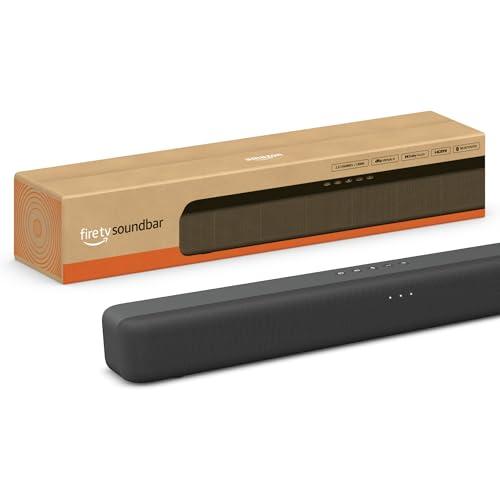
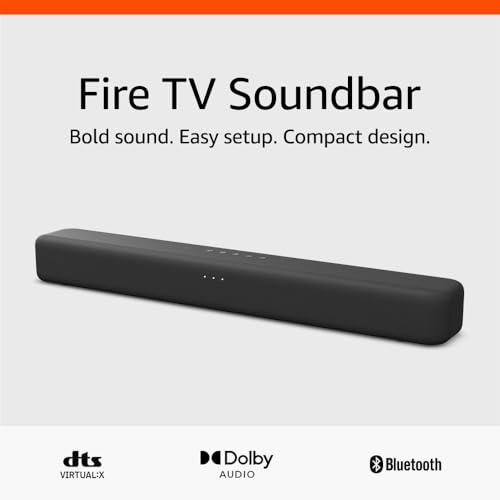
The Amazon Fire TV Soundbar, released in 2024, represents Amazon's aggressive push into affordable home audio. At roughly half the price of competing options at the time of writing, it packs modern connectivity and virtual surround processing into an ultra-compact package. Amazon's strategy focuses on ecosystem integration and future-proofing rather than raw audio power.
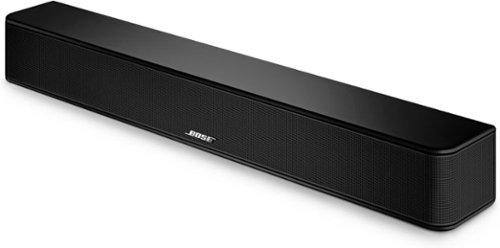
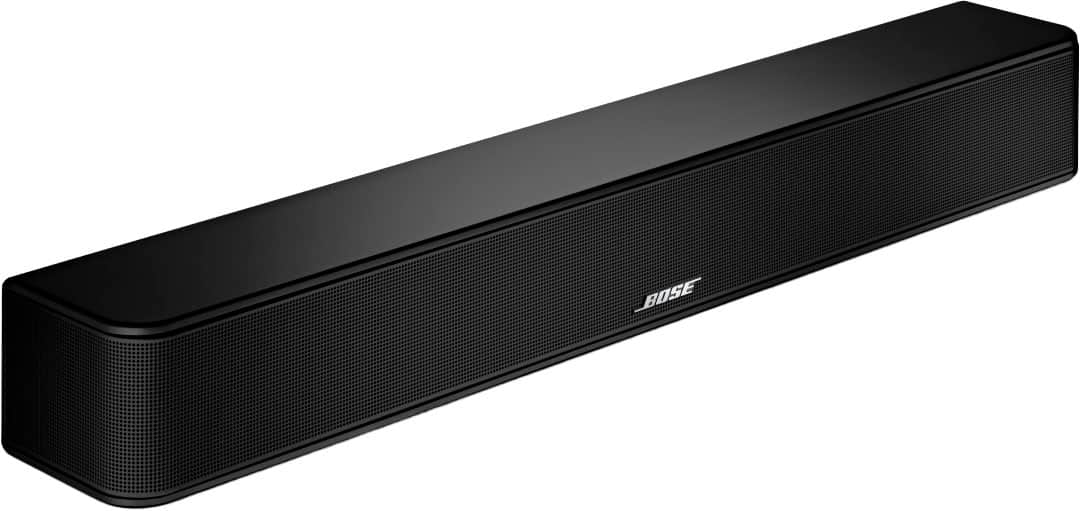
The Bose Solo Soundbar Series 2, launched in 2021, takes the traditional approach of an established audio company. Bose built their reputation on clear dialogue and reliable performance, and this soundbar continues that legacy with higher power output and refined audio tuning. However, it carries the premium associated with the Bose name while lacking some modern conveniences.
Since 2021, soundbar technology has shifted significantly toward HDMI connectivity and virtual surround processing. What was acceptable connectivity three years ago now feels dated, especially as TV manufacturers have standardized on HDMI ARC/eARC implementation.
The Bose Solo Soundbar Series 2 dominates in pure power output, delivering 100 watts compared to the Amazon Fire TV Soundbar's 40 watts (2 x 20W). This difference becomes noticeable in larger rooms or when you want higher volume levels without distortion.
Bose uses two full-range drivers angled outward to create a wider soundstage. This driver arrangement, combined with their audio tuning expertise, produces exceptionally clear dialogue that cuts through background noise. The soundbar includes a dedicated dialogue enhancement mode that further boosts vocal frequencies, making it excellent for news programs, talk shows, and dialogue-heavy movies.
The Amazon Fire TV Soundbar takes a different approach with its innovative "Racetrack" drivers - oval-shaped speakers that provide larger membrane surface area within the compact form factor. These drivers sit behind a fabric grille and are powered by more modest amplifiers. Despite lower power output, the bass reflex design with a front-facing resonator tube helps extend low-frequency response beyond what you'd expect from such a small enclosure.
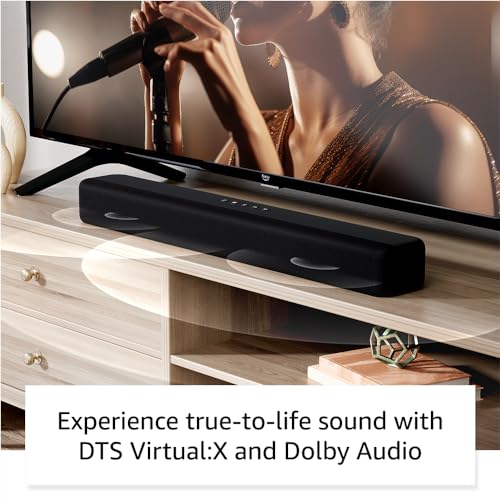
Here's where the Amazon Fire TV Soundbar pulls ahead significantly. Its DTS Virtual:X processing creates a convincing sense of height and surround sound from just two front-facing drivers. Virtual:X uses psychoacoustic principles - basically tricks your brain uses to locate sounds - to simulate audio coming from above and beside you.
This technology works by introducing subtle phase shifts and frequency filtering that your brain interprets as directional audio cues. While it can't match dedicated surround speakers, DTS Virtual:X creates a noticeably more immersive experience than standard stereo playback. The effect works best with movie soundtracks that include specific mixing for surround formats.
The Amazon soundbar also supports Dolby Audio processing, which optimizes dynamic range and ensures consistent volume levels between different types of content. This prevents the jarring experience of dialogue being too quiet while action sequences blow out your ears.
The Bose Solo Soundbar Series 2 offers no virtual surround processing whatsoever. It's strictly a stereo soundbar, which isn't necessarily bad but feels limiting given current technology standards. For users who primarily watch dialogue-heavy content, this might not matter. For movie enthusiasts, it's a significant limitation.
Neither soundbar will deliver the deep, rumbling bass you'd get from a dedicated subwoofer, but their approaches differ substantially. The Amazon Fire TV Soundbar's bass reflex design creates surprising low-end extension for its size. The front-facing port allows flexible placement against walls without affecting bass output, which is practical for most TV setups.
The Bose Solo Series 2 includes bass adjustment controls, letting you tailor low-frequency output to your preference or room acoustics. However, multiple user reviews and expert evaluations consistently note that it "struggles with deep bass" and isn't optimized for music playback with heavy bass content.
This category reveals the most significant difference between these soundbars, and it's a deal-breaker for many users.
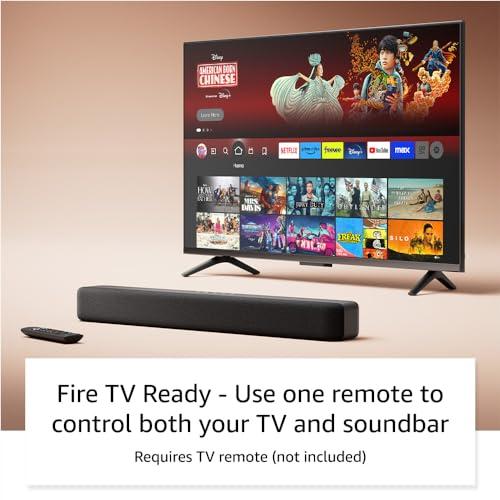
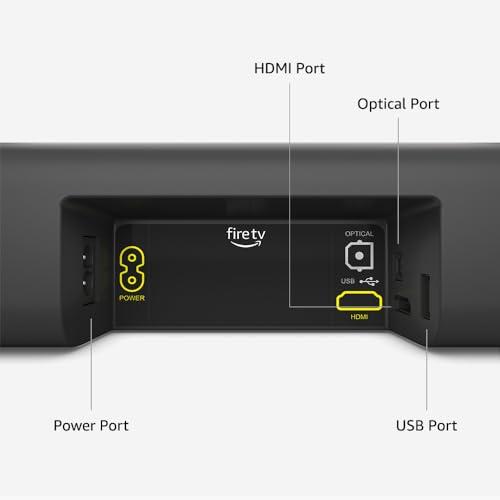
The Amazon Fire TV Soundbar includes HDMI ARC/eARC connectivity, which has become the standard for modern TV audio. This single cable connection sends audio from your TV to the soundbar and allows your TV remote to control soundbar volume and power. HDMI eARC (enhanced Audio Return Channel) supports higher-quality audio formats and faster data transmission than the original ARC standard.
More importantly, HDMI ARC enables features like automatic power on/off synchronization between your TV and soundbar. When you turn on your TV, the soundbar powers up automatically. When you adjust volume on your TV remote, it changes the soundbar volume directly. This seamless integration eliminates the need for multiple remotes in daily use.
The Bose Solo Soundbar Series 2 completely lacks HDMI connectivity. In 2024, this feels like a significant oversight, especially considering the soundbar's premium pricing at the time of writing. Instead, it relies on optical (also called TOSLINK), coaxial, and analog AUX connections.
Optical connections work fine for basic stereo audio but require separate cables and don't support the convenience features of HDMI ARC. You'll need to use the included Bose remote for all volume and power controls, and the soundbar won't automatically turn on with your TV unless you enable the auto-wake feature that responds to incoming audio signals.
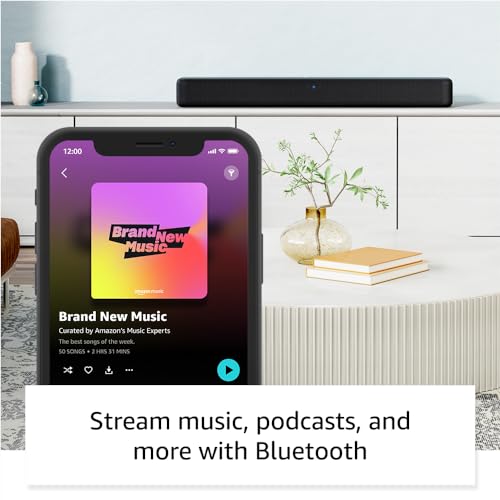
Both soundbars include Bluetooth for wireless music streaming from phones and tablets, but with different capabilities. The Amazon Fire TV Soundbar uses current Bluetooth standards for reliable connection and good audio quality, though specific codec support isn't detailed in available specifications.
The Bose Solo Series 2 uses Bluetooth 4.0, which is functional but represents older technology compared to current Bluetooth 5.0+ implementations found in newer devices. The 33-foot range specification is adequate for most home use scenarios.
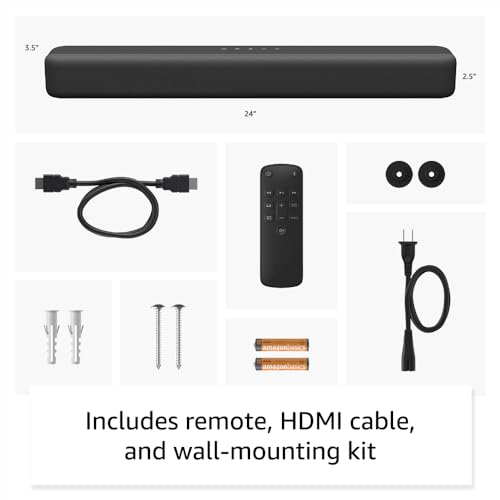
The Amazon Fire TV Soundbar wins decisively in space efficiency. At just 6.5cm tall and weighing 1.8kg, it's one of the most compact soundbars available. This ultra-slim profile works perfectly under wall-mounted TVs or in entertainment centers with limited vertical clearance. The lightweight construction makes it easy to reposition or wall-mount using the included hardware.
The bass reflex design deserves special mention because it allows placement directly against walls without acoustic penalties. Many soundbars require several inches of clearance behind them for proper bass response, but the Amazon model's front-firing port eliminates this constraint.
The Bose Solo Series 2 has a more traditional soundbar profile and higher build quality in terms of materials and finish. However, it requires remote control for all functions since there are no physical buttons on the unit itself. This could be problematic if the remote is lost or damaged.
The Amazon Fire TV Soundbar includes tactile touch controls directly on the unit for power, volume, input selection, and Bluetooth pairing. These raised buttons work well in low-light conditions and provide backup control if the remote isn't available.
Three sound modes (Movie, Music, Dialog/Voice) and three-stage bass EQ presets give users meaningful customization options without overwhelming complexity. The soundbar remembers your settings between power cycles.
The Bose Solo Series 2 relies entirely on its remote control, which includes bass adjustment and dialogue enhancement mode controls. The auto-wake feature can be convenient but may be unwanted in some situations where the soundbar turns on from ambient noise.
At the time of writing, the Amazon Fire TV Soundbar costs roughly half as much as the Bose Solo Soundbar Series 2, making the value comparison particularly stark. The Amazon model includes modern connectivity that's essential for current TV setups, virtual surround processing that genuinely enhances the viewing experience, and a feature set that doesn't feel compromised despite the aggressive pricing.
The Bose soundbar asks premium pricing for what is essentially a high-quality stereo soundbar with dated connectivity. While the dialogue clarity and build quality justify some price premium, the lack of HDMI connectivity and virtual surround processing makes it difficult to recommend unless you specifically need its strengths and can work around its limitations.
For users building or upgrading home theater setups, the Amazon Fire TV Soundbar offers better future-proofing. Its HDMI eARC support means it will work seamlessly with current and future TV purchases, streaming devices, and audio formats. The DTS Virtual:X processing provides a convincing surround experience that works well with movie soundtracks.
The Bose Solo Series 2 feels more like a dialogue enhancement device than a true home theater component. Its strengths lie in making spoken content clearer rather than creating immersive movie experiences.
Neither soundbar supports subwoofer connections, which limits their expansion potential compared to soundbar systems that allow adding bass modules or surround speakers later.
You want the best overall value and modern connectivity features. The Amazon Fire TV Soundbar makes sense for users with TVs manufactured after 2018 that include HDMI ARC ports, which represents the vast majority of current TV owners. Its virtual surround processing and space-efficient design work well for most viewing scenarios, from Netflix binges to movie nights.
The ultra-compact form factor particularly benefits users with wall-mounted TVs or limited entertainment center space. If you occasionally stream music via Bluetooth and want the convenience of single-remote control, the Amazon model delivers everything you need without compromises.
You prioritize dialogue clarity above all other considerations and your TV lacks HDMI ARC connectivity. The Bose Solo Series 2 excels specifically at making voices clearer, which benefits news watchers, talk show viewers, and anyone who struggles with dialogue intelligibility.
Users with older TVs that only offer optical or coaxial audio outputs will find the Bose's multiple input options more compatible. The higher power output also suits larger rooms where the Amazon soundbar might struggle to reach adequate volume levels.
Based on our research and evaluation of user feedback, the Amazon Fire TV Soundbar represents superior value for most users in 2024. Its combination of modern connectivity, virtual surround processing, and aggressive pricing creates a compelling package that addresses the primary needs of budget soundbar buyers.
The Bose Solo Soundbar Series 2, despite its audio engineering pedigree and superior dialogue clarity, feels handicapped by dated connectivity options that limit its practical utility. Unless you specifically need its dialogue enhancement capabilities and can work with optical connections, the Amazon model provides better future-proofing and overall functionality.
For users seeking the best entry point into better TV audio, the Amazon Fire TV Soundbar delivers modern features without the premium pricing traditionally associated with name-brand audio equipment. It's not perfect - no budget soundbar is - but it hits the sweet spot of performance, features, and value that makes upgrading from TV speakers feel worthwhile.
| Amazon Fire TV Soundbar | Bose Solo Soundbar Series 2 |
|---|---|
| HDMI Connectivity - Essential for modern TV integration and single-remote control | |
| HDMI ARC/eARC included (future-proof standard) | No HDMI ports (major limitation in 2024) |
| Power Output - Determines maximum volume and room coverage | |
| 40W total (2 x 20W amplifiers) | 100W maximum output (significantly louder) |
| Virtual Surround Processing - Creates immersive movie experience from stereo speakers | |
| DTS Virtual:X with height simulation | None (stereo only) |
| Dimensions - Critical for TV placement and space constraints | |
| Ultra-slim 6.5cm height, weighs 1.8kg | Traditional 7.1cm height, heavier build |
| Sound Modes - Customization options for different content types | |
| Movie, Music, Dialog modes + 3-stage bass EQ | Dialogue enhancement mode + bass adjustment |
| Legacy Audio Connections - Compatibility with older TVs and devices | |
| Optical input only | Optical, coaxial, and AUX inputs |
| Physical Controls - Backup operation without remote | |
| Touch controls on device for all functions | Remote-only operation (no device buttons) |
| Audio Processing - Sound enhancement technologies | |
| Dolby Audio + DTS Virtual:X + bass reflex design | Built-in Dolby Digital decoding only |
| Bluetooth Version - Wireless streaming capability and connection reliability | |
| Current Bluetooth standard (unspecified version) | Bluetooth 4.0 (older but functional) |
| Value Proposition - Performance per dollar at time of writing | |
| Excellent value with modern features at budget price | Premium pricing with connectivity limitations |
The Bose Solo Soundbar Series 2 excels at dialogue clarity with its dedicated dialogue enhancement mode and higher power output. However, the Amazon Fire TV Soundbar also delivers clear vocals through its Dolby Audio processing and dedicated Dialog sound mode. For users who primarily watch news or talk shows, the Bose Solo Series 2 has a slight edge in vocal clarity.
Only the Amazon Fire TV Soundbar supports HDMI ARC/eARC connectivity, which is the modern standard for TV audio connections. The Bose Solo Soundbar Series 2 lacks HDMI ports entirely, relying instead on optical, coaxial, and AUX connections. This makes the Amazon Fire TV Soundbar much easier to set up with modern TVs.
The Amazon Fire TV Soundbar is better suited for home theater use thanks to its DTS Virtual:X surround processing, which creates an immersive movie experience from stereo speakers. The Bose Solo Soundbar Series 2 is strictly stereo without any virtual surround capabilities. For movie nights, the Amazon Fire TV Soundbar provides a more cinematic experience.
Yes for the Amazon Fire TV Soundbar when connected via HDMI ARC - you can control volume and power with your TV remote. The Bose Solo Soundbar Series 2 requires its own remote for all functions since it lacks HDMI connectivity. The Amazon soundbar offers much more convenient daily operation.
The Bose Solo Soundbar Series 2 delivers significantly more power at 100W maximum output compared to the Amazon Fire TV Soundbar's 40W total power. For larger rooms or higher volume levels, the Bose Solo Series 2 can get much louder without distortion.
Both soundbars support Bluetooth for wireless music streaming. The Amazon Fire TV Soundbar uses current Bluetooth standards, while the Bose Solo Soundbar Series 2 uses Bluetooth 4.0. Both will connect reliably to phones and tablets, though the Amazon Fire TV Soundbar may offer better connection quality with newer devices.
The Amazon Fire TV Soundbar is significantly more compact at just 6.5cm tall and weighing 1.8kg, making it ideal for wall-mounted TVs or tight spaces. The Bose Solo Soundbar Series 2 has a more traditional size but still fits under most TVs. For space-constrained setups, the Amazon Fire TV Soundbar is the clear winner.
Neither the Amazon Fire TV Soundbar nor the Bose Solo Soundbar Series 2 supports subwoofer connections. Both are standalone stereo soundbars without expansion options. If you need deeper bass, you'll need to consider soundbar systems that include subwoofer connectivity.
The Amazon Fire TV Soundbar provides superior value with modern HDMI connectivity, virtual surround processing, and competitive audio quality at a lower price point. The Bose Solo Soundbar Series 2 costs significantly more while lacking essential modern features like HDMI ARC. For most buyers, the Amazon Fire TV Soundbar delivers better performance per dollar.
The Bose Solo Soundbar Series 2 offers better compatibility with older TVs through its optical, coaxial, and AUX inputs. The Amazon Fire TV Soundbar includes optical input but focuses primarily on HDMI ARC for modern TVs. If you have a TV from before 2018, the Bose Solo Series 2 may offer more connection options.
The Amazon Fire TV Soundbar is much easier to set up with modern TVs thanks to HDMI ARC connectivity - just plug in one cable and you're ready to go. The Bose Solo Soundbar Series 2 requires optical or coaxial cables plus separate remote setup. The Amazon soundbar also enables single-remote control for daily use.
For most first-time soundbar buyers, the Amazon Fire TV Soundbar is the better choice. It offers modern connectivity that works seamlessly with current TVs, virtual surround processing for movies, and excellent value. The Bose Solo Soundbar Series 2 is mainly worth considering if you specifically need maximum dialogue clarity and don't mind the connectivity limitations.
We've done our best to create useful and informative comparisons to help you decide what product to buy. Our research uses advanced automated methods to create this comparison and perfection is not possible - please contact us for corrections or questions. These are the sites we've researched in the creation of this article: rtings.com - developer.amazon.com - stereoguide.com - developer.amazon.com - techradar.com - hometechnologyreview.com - whathifi.com - youtube.com - whathifi.com - wirelessplace.com - hometechnologyreview.com - dolby.com - aboutamazon.com - developer.amazon.com - community.anker.com - youtube.com - cordbusters.co.uk - rtings.com - bose.com - bose.com - assets.bose.com - bestbuy.com - youtube.com - pistonheads.com - costco.com - googlenestcommunity.com - youtube.com - discussions.apple.com

Privacy Policy
Terms and Conditions - Affiliate Policy
Home Security
© Copyright 2008-2026.
11816 Inwood Rd #1211, Dallas, TX 75244