




When your TV's built-in speakers sound like they're coming from inside a cereal box, it's time for an upgrade. But with soundbars ranging from basic audio improvements to full home theater replacements, the decision can feel overwhelming. Today we're comparing two products that couldn't be more different: the budget-friendly Amazon Fire TV Soundbar and the premium Sony HT-A5000. Understanding their differences will help you figure out which approach makes sense for your setup and wallet.
Before diving into specifics, let's talk about what soundbars are really trying to solve. Most TVs today are incredibly thin, which means there's barely any space for decent speakers. The result? Dialogue that sounds muffled, music that lacks punch, and action scenes that feel flat. A soundbar's job is to fix these problems by providing dedicated drivers (the technical term for individual speakers) positioned to deliver clearer, more dynamic sound.
The key things that separate different soundbars are their channel configuration, audio processing capabilities, and expandability options. Channel configuration tells you how many discrete audio channels the soundbar can handle - a 2.0 system has left and right channels, while a 5.1.2 system has five main channels, one subwoofer channel, and two height channels for overhead sound effects. Audio processing determines how well the soundbar can handle different surround sound formats like Dolby Atmos, which creates three-dimensional audio by bouncing sound off your ceiling. Expandability refers to whether you can add extra speakers later to create a full surround sound setup.
At the time of writing, these considerations matter more than ever because streaming services are increasingly offering content with advanced audio formats that can make your viewing experience dramatically more immersive - if you have the right equipment to handle them.
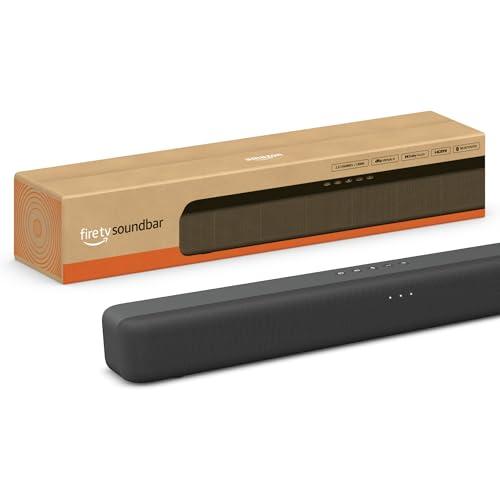
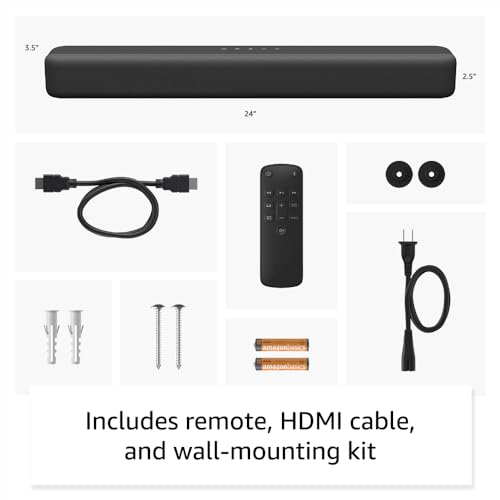
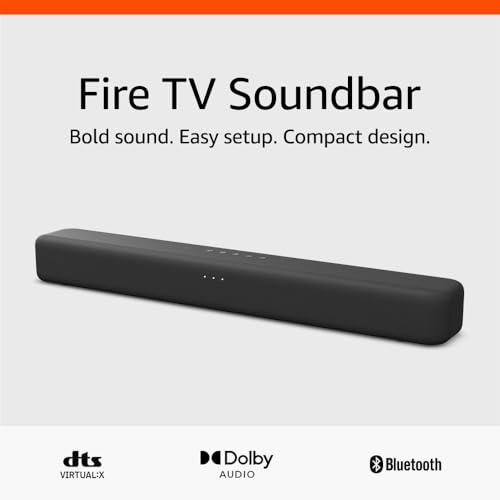
The Amazon Fire TV Soundbar, released in 2019, represents the "keep it simple" philosophy. It's a compact 2.0 channel system that focuses purely on improving your TV's dialogue clarity and overall sound quality without taking up much space or requiring complex setup. Think of it as the reliable Honda Civic of soundbars - it does one job well without unnecessary complexity.
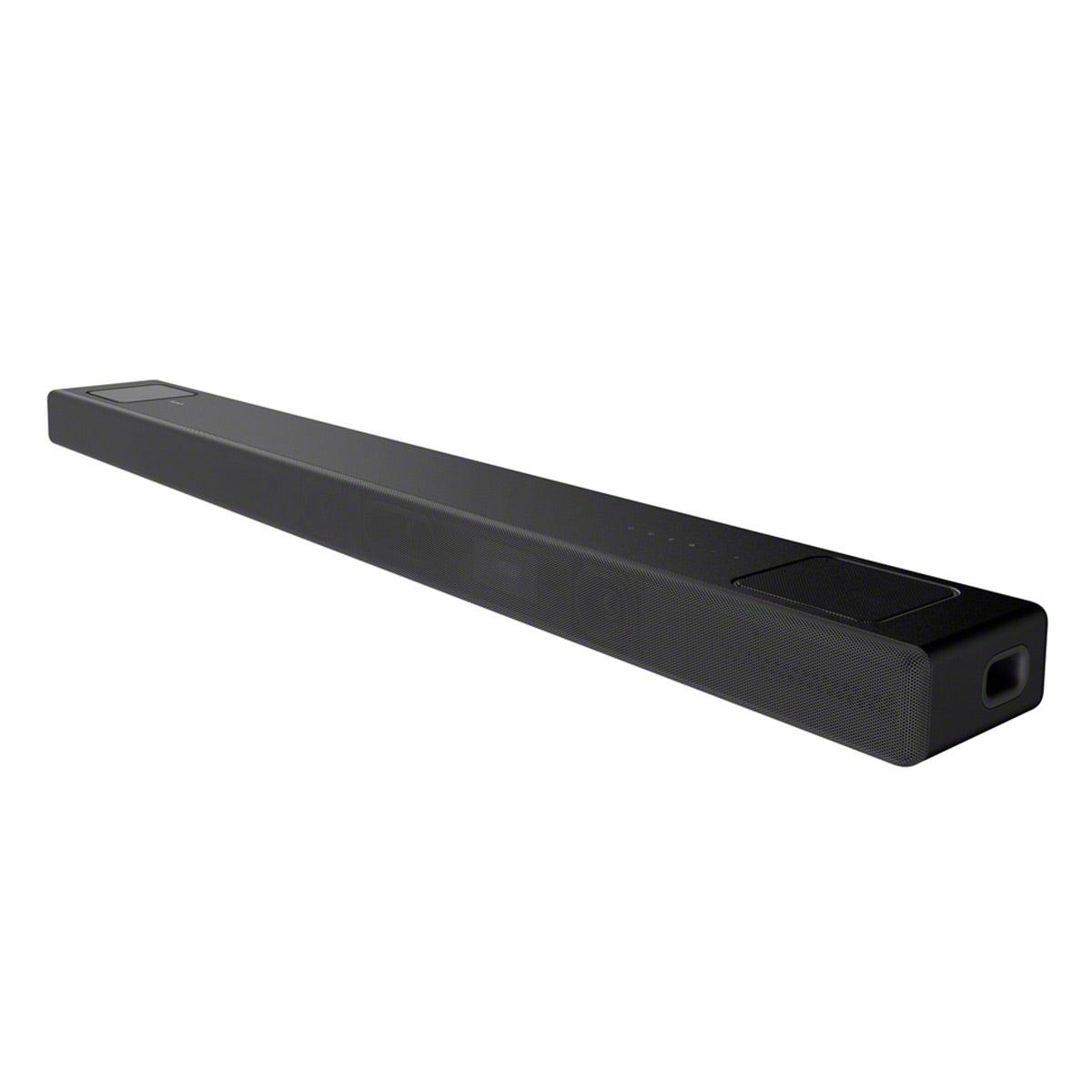
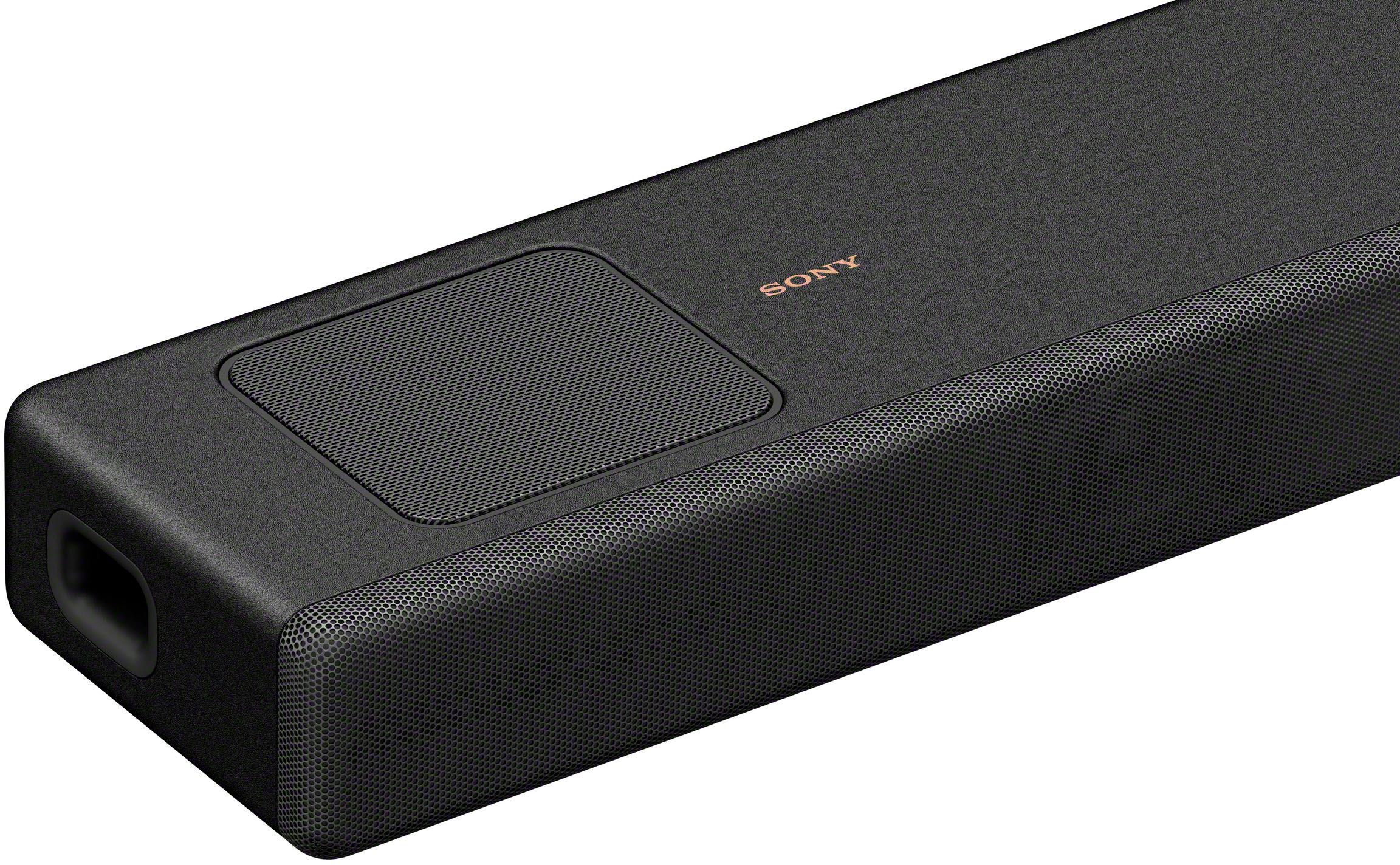
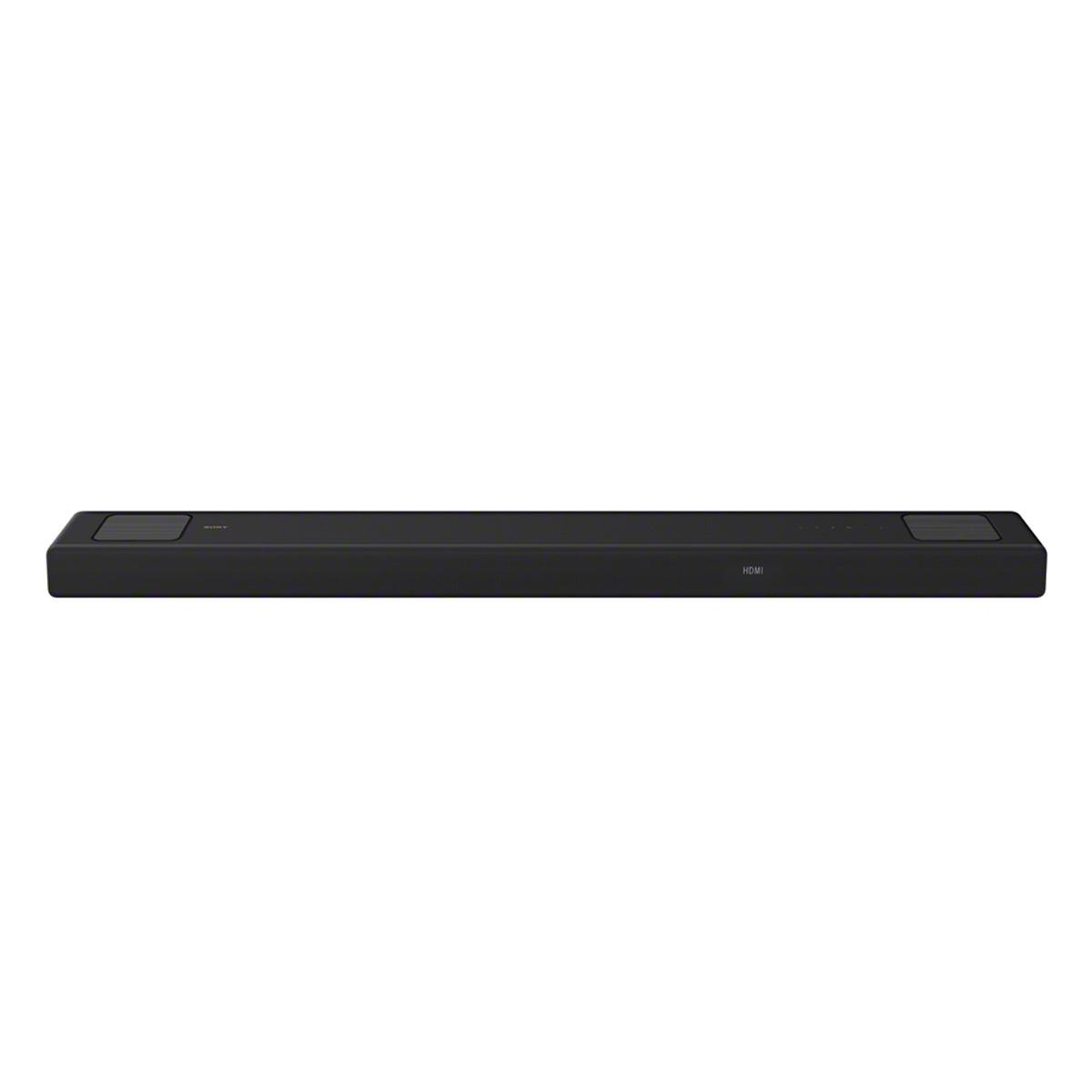
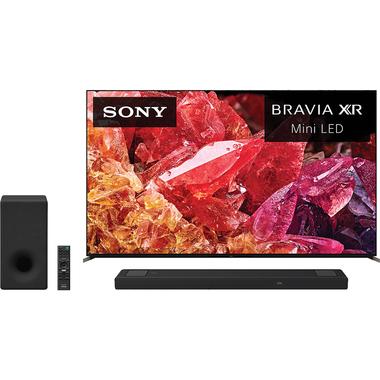
The Sony HT-A5000, launched in 2021, takes the opposite approach. It's a full 5.1.2 channel system designed to create an immersive home theater experience that can rival dedicated surround sound setups. This soundbar includes multiple types of drivers positioned to fire sound in different directions, creating the illusion that audio is coming from all around you, including from above.
Since 2019, the soundbar market has seen significant advances in virtual surround processing and wireless connectivity. The Amazon Fire TV Soundbar represents the pre-Atmos era of budget soundbars, while the Sony HT-A5000 showcases modern spatial audio technologies that have become standard in premium models.
The performance gap between these two soundbars becomes immediately apparent when you consider their fundamental audio architecture. The Amazon Fire TV Soundbar uses two "Racetrack" drivers - oval-shaped speakers that maximize membrane surface area in a compact space. Each driver is powered by a 20-watt amplifier, giving you 40 watts total. While this might sound modest, our research into user and expert opinions consistently shows that this setup delivers surprisingly balanced sound for its size class.
What makes the Amazon soundbar punch above its weight is its bass reflex design. This engineering approach uses a carefully tuned port (essentially a hole) that allows air to move in and out of the speaker enclosure, enhancing low-frequency response. The front-facing port means you can place the soundbar directly against a wall without compromising sound quality - a practical advantage in real-world setups.
However, physics ultimately limits what you can achieve with two small drivers. The Amazon Fire TV Soundbar handles dialogue and mid-range frequencies well, but it struggles with the deep bass needed for action movie explosions or the subtle spatial cues that make surround sound convincing.
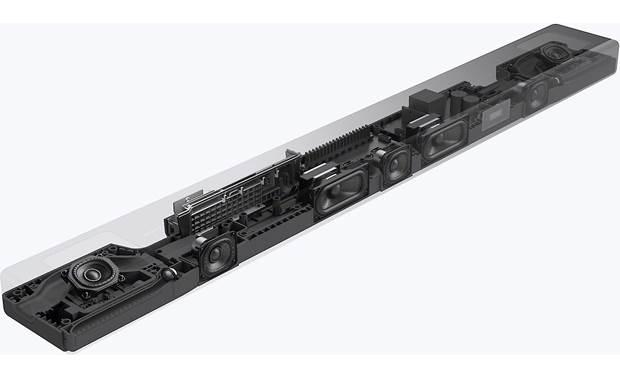
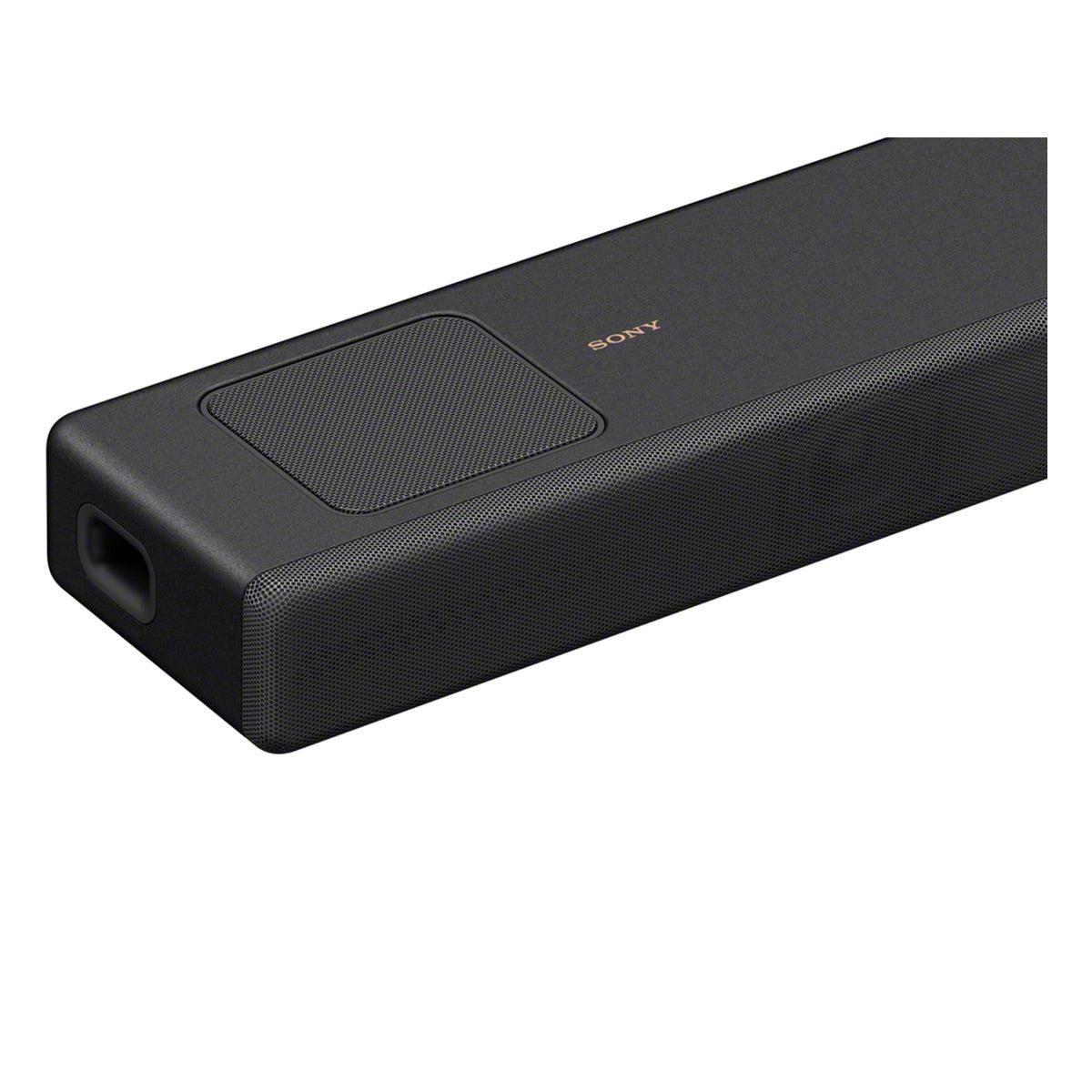
The Sony HT-A5000 operates in a completely different league with 450 watts of total power distributed across nine amplifier channels. This isn't just about being louder - it's about having dedicated power for different frequency ranges and spatial positions. The soundbar includes multiple driver types: traditional forward-firing speakers for main audio, up-firing drivers that bounce sound off your ceiling to create height effects, and side beam tweeters that widen the soundstage.
Sony's X-Balanced Driver design deserves special mention here. These speakers use a rectangular shape instead of the traditional circular design, which maximizes the diaphragm area (the part that actually moves air) within the available space. The result is cleaner bass response and reduced distortion at higher volumes - technical improvements you can actually hear during dynamic movie scenes.
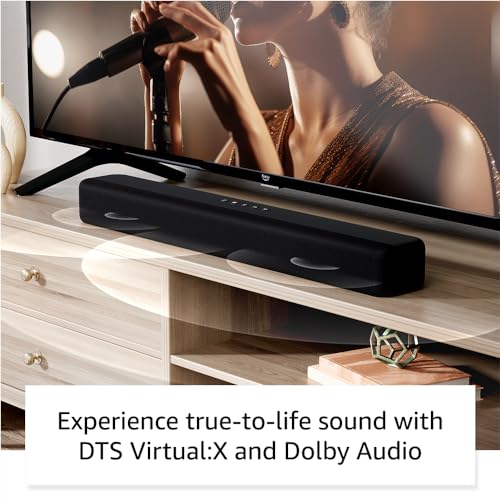
Here's where the philosophical difference between these products becomes most apparent. The Amazon Fire TV Soundbar relies on DTS Virtual:X processing to create the illusion of surround sound from just two speakers. This technology uses psychoacoustic tricks - basically exploiting how your brain processes sound - to make audio seem like it's coming from different directions.
Virtual surround processing has improved dramatically since the early days, and DTS Virtual:X represents some of the best work in this field. It analyzes the audio signal and applies precise delays, phase adjustments, and frequency modifications to create spatial imaging. For dialogue-heavy content like TV shows and news, this approach works surprisingly well. You'll notice voices seem more centered and separate from background music or sound effects.
However, virtual surround has inherent limitations. It can't truly replicate the sensation of hearing a helicopter fly overhead or the subtle environmental cues that make a movie soundtrack feel three-dimensional. The effect also depends heavily on your seating position - move too far off-axis and the illusion breaks down.
The Sony HT-A5000 takes a fundamentally different approach with its 5.1.2 channel architecture. Those numbers tell the whole story: five main channels (left, center, right, and two surrounds), one dedicated subwoofer channel, and two height channels. This means discrete audio information can be sent to speakers physically positioned to create accurate spatial effects.
The up-firing drivers deserve particular attention because they enable true Dolby Atmos playback. These speakers fire sound toward your ceiling, which reflects back down to create the perception of overhead audio. When properly calibrated, this creates genuinely convincing three-dimensional soundfields where you can pinpoint the location of specific sound effects.
Sony's Vertical Surround Engine technology enhances this effect by using advanced signal processing to optimize how the reflected sound interacts with your room's acoustics. The system can even adapt to different ceiling heights and room shapes, though like all ceiling-bounce technologies, it works best in rooms with relatively flat, reflective ceilings around 8-10 feet high.
Bass performance represents one of the clearest differentiators between budget and premium soundbars. The Amazon Fire TV Soundbar uses its bass reflex port to extend low-frequency response, but physics imposes real limits on what's possible from such a compact enclosure. Our research shows that while this soundbar provides adequate bass for dialogue and music, it lacks the impact needed for action movies or bass-heavy music genres.
The three-stage bass EQ built into the Amazon soundbar helps optimize performance for different content types, but it's essentially working with limited raw capability. This isn't necessarily a dealbreaker - if you primarily watch news, sitcoms, and dramas, the bass response is perfectly adequate and far superior to TV speakers.
The Sony HT-A5000 includes multiple built-in subwoofers that provide substantially more bass impact and extension. These aren't just larger drivers - they're dedicated low-frequency transducers designed specifically to handle bass content without compromising the performance of the main speakers. The larger enclosure volume allows for deeper bass extension, while the higher power handling means cleaner reproduction at higher volume levels.
What's particularly impressive about the Sony's bass response is how it integrates with the overall sound signature. Rather than simply adding more low-end thump, the dedicated subwoofer channels allow for precise bass management where different frequency ranges can be optimized independently. This results in bass that supports the overall audio experience rather than overwhelming it.
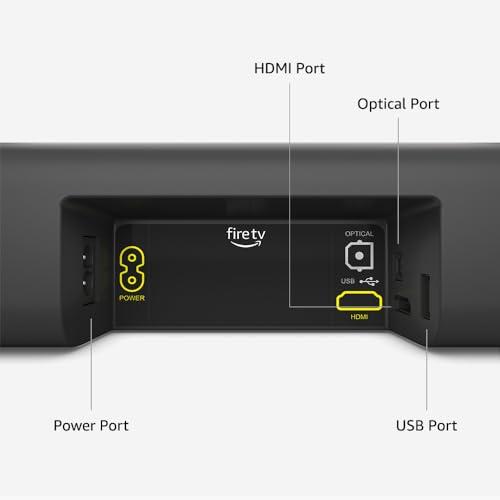
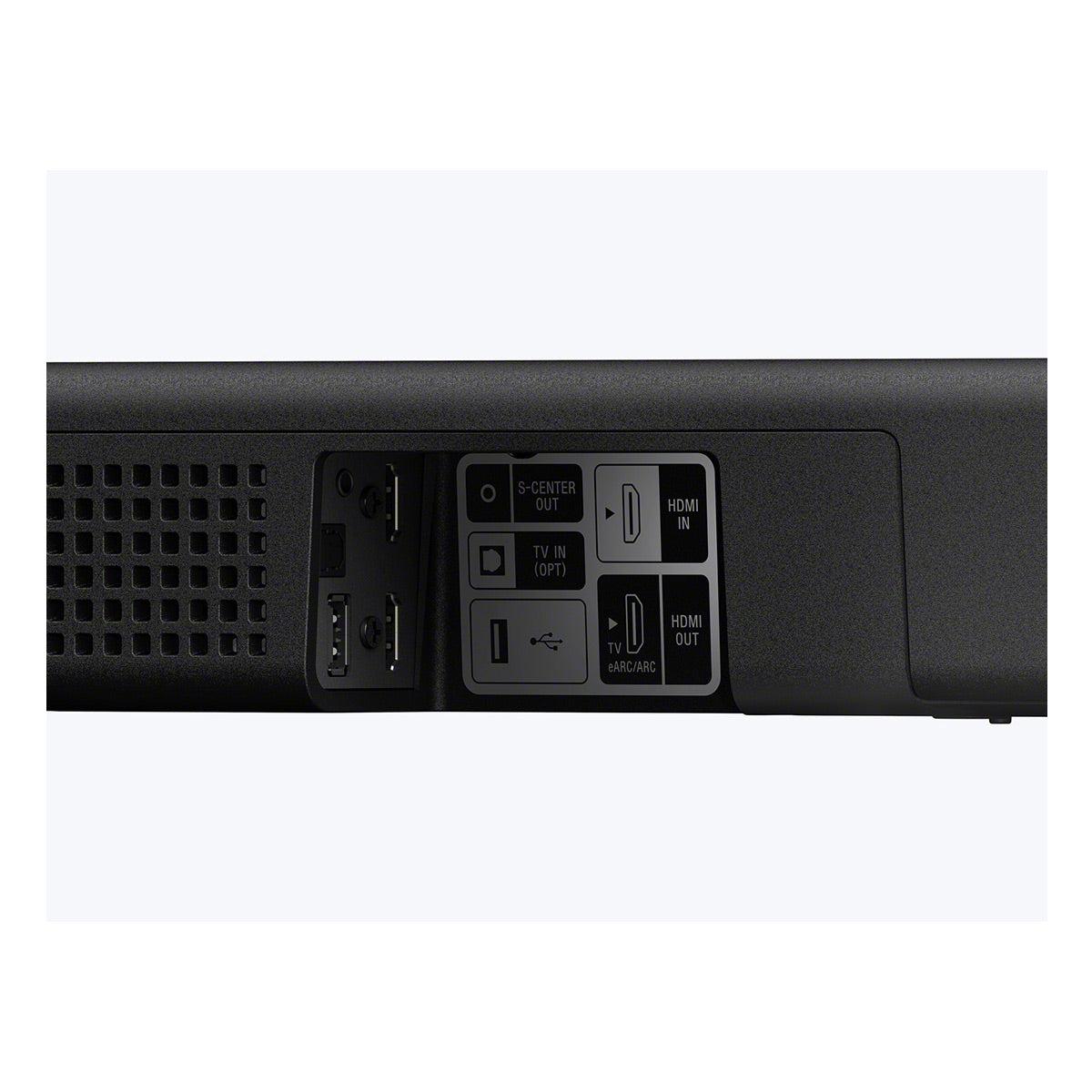
The connectivity story reveals another fundamental difference in philosophy between these products. The Amazon Fire TV Soundbar focuses on essential connections: HDMI ARC/eARC for modern TVs, optical input for older models, and Bluetooth for wireless music streaming. The USB port, while present, serves primarily for power rather than audio playback.
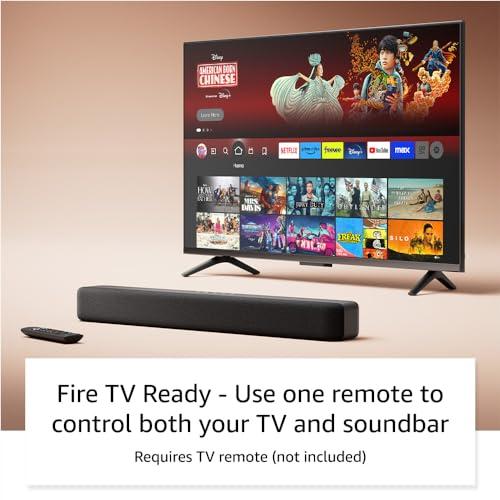
This simplified approach has real advantages. Setup is straightforward - connect one cable to your TV, and you're done. The tactile touch controls on the soundbar itself provide volume, input selection, and Bluetooth pairing without requiring a separate remote. For users who want better TV sound without additional complexity, this streamlined approach is genuinely appealing.
The Sony HT-A5000 embraces modern smart home integration with extensive connectivity options. Beyond HDMI 2.1 with eARC support, it includes Chromecast built-in, Apple AirPlay 2, Spotify Connect, and compatibility with both Amazon Alexa and Google Assistant. The HDMI implementation supports 8K and 4K/120Hz passthrough, ensuring compatibility with the latest gaming consoles and streaming devices.
Sony's Sound Field Optimization feature uses built-in microphones to automatically calibrate the soundbar's output to your room's acoustics. This technology measures factors like speaker placement, room size, and surface reflectivity to optimize the sound field. While similar room correction exists in high-end AV receivers, having it built into a soundbar represents a significant convenience advantage.
The USB input on the Sony model supports high-resolution audio formats including DSD, FLAC, and other audiophile-grade file types. This opens up possibilities for serious music listening beyond just TV audio enhancement.
Physical construction reflects each product's target market and price point. The Amazon Fire TV Soundbar uses practical materials - primarily plastic construction with a fabric grille - that prioritize functionality over premium aesthetics. At 1.8kg, it's genuinely portable and won't stress TV stands or wall mounts designed for lighter loads.
The compact dimensions (61 x 9 x 6.5 cm) represent both an advantage and limitation. The small footprint means it works with smaller TVs and tighter spaces, but the limited internal volume constrains acoustic performance. The fabric grille provides acoustic transparency while protecting the drivers, and the overall design is unobtrusive enough to blend into most living room setups.
The Sony HT-A5000 uses premium materials and construction techniques that reflect its higher positioning in the market. The larger dimensions (47.75" x 2.75" x 5.62") provide more internal volume for better acoustic performance, while the increased weight suggests more substantial internal components and better vibration damping.
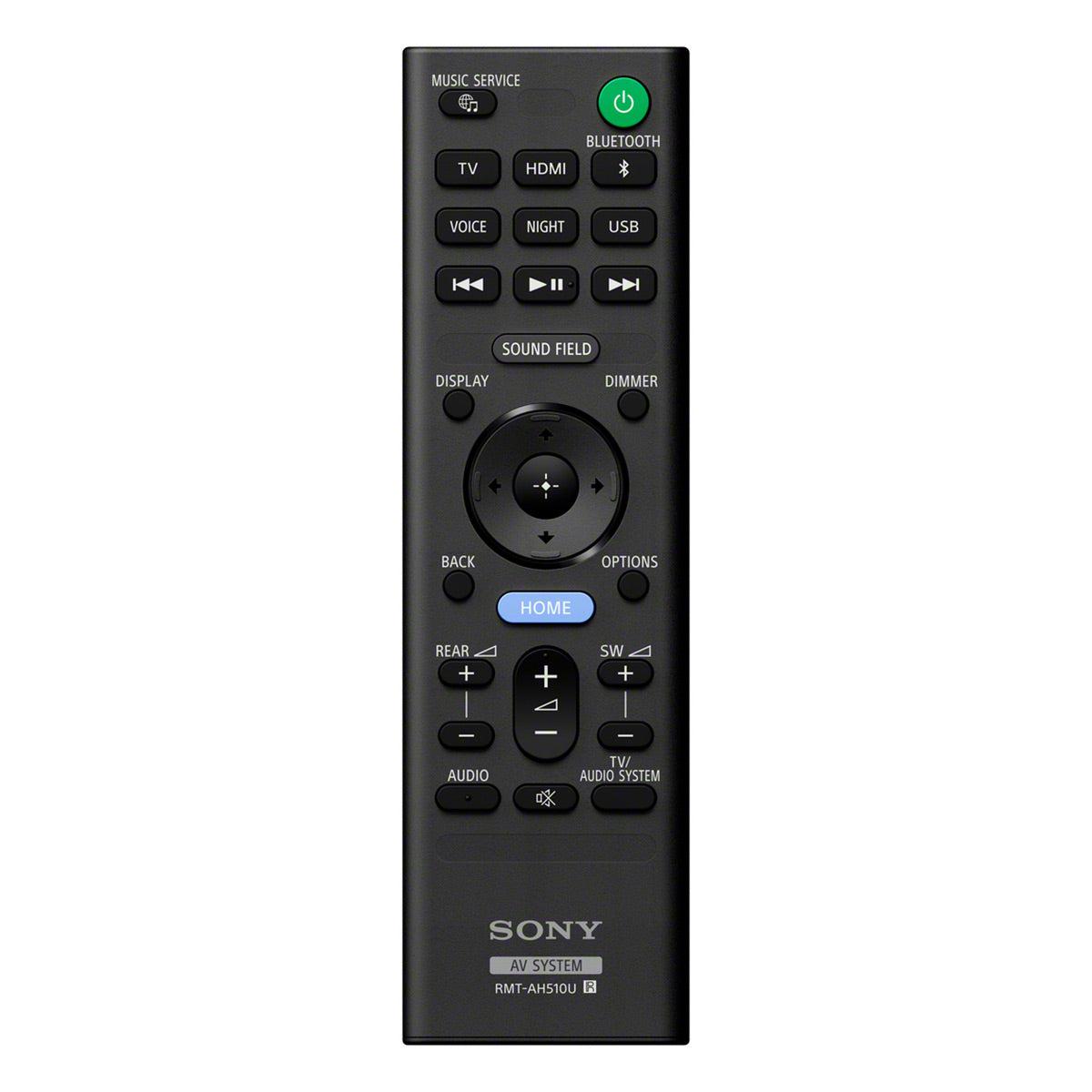
Sony's design philosophy emphasizes both performance and aesthetics. The soundbar is designed to complement premium TV installations while providing the internal space needed for multiple driver types and substantial amplification. The build quality extends to details like the remote control and wall-mounting hardware, reflecting the higher expectations of buyers in this price segment.
When evaluating soundbar performance, certain characteristics matter more than others for real-world use. Dialogue clarity ranks highest for most users since unclear voices are the primary complaint about TV speakers. Both soundbars address this issue, but through different approaches. The Amazon Fire TV Soundbar uses dedicated voice enhancement processing and driver positioning to center dialogue, while the Sony HT-A5000 employs a dedicated center channel for more precise voice reproduction.
Soundstage width - how spread out the audio appears - represents another crucial metric. The Amazon soundbar creates a surprisingly wide presentation for its size through careful driver design and processing, while the Sony achieves superior width through side beam tweeters and additional drivers.
Dynamic range, or the difference between the quietest and loudest sounds the system can reproduce, heavily favors the Sony thanks to its higher power output and dedicated subwoofers. This advantage becomes most apparent during movie soundtracks with both subtle ambient sounds and explosive action sequences.
Bass extension and impact, while not the only consideration, significantly affects overall satisfaction with movie and music playback. The physics of driver size and enclosure volume give the Sony a substantial advantage here that no amount of digital processing can overcome in the Amazon model.
For users considering these soundbars as part of a larger home theater setup, expandability becomes a crucial factor. The Amazon Fire TV Soundbar represents a complete, self-contained solution with no expansion options. What you purchase is your final configuration - there's no path to add a separate subwoofer or rear speakers.
This limitation isn't necessarily negative if you're looking for a simple, one-box solution that improves TV audio without the complexity of multiple components. For smaller rooms or secondary viewing areas, the all-in-one approach can be ideal.
The Sony HT-A5000 serves as the foundation for a scalable system. Sony offers compatible wireless rear speakers and subwoofers that integrate seamlessly to create a true surround sound experience. The 360 Spatial Sound Mapping technology becomes particularly impressive when combined with rear speakers, creating convincing spatial audio throughout your listening room.
This expandability means you can start with just the soundbar and add components over time as your budget and needs evolve. For many buyers, this upgrade path justifies the higher initial investment since you're building toward a premium home theater system rather than replacing it entirely later.
The Amazon Fire TV Soundbar makes perfect sense for specific use cases and user types. If you're primarily watching news, sitcoms, or dialogue-heavy content, its clear voice reproduction and compact form factor provide excellent value. The simple setup appeals to users who want better sound without learning new technology or dealing with multiple remotes.
Secondary TV locations like bedrooms, kitchens, or smaller living spaces represent ideal scenarios for the Amazon soundbar. The compact size and adequate performance work well in these environments without overwhelming the space or requiring significant investment.
Budget-conscious buyers who want the biggest improvement per dollar will find the Amazon soundbar delivers substantial benefits over TV speakers at a reasonable price point. While it doesn't approach premium performance, the upgrade from typical TV audio is dramatic enough to satisfy many users.
The Sony HT-A5000 targets users with different priorities and higher expectations. Home theater enthusiasts who value spatial audio, deep bass, and premium build quality will appreciate what this soundbar offers. The advanced processing and multiple driver configuration create genuinely immersive experiences during movie watching and music listening.
Larger rooms benefit significantly from the Sony's higher power output and superior bass response. The soundbar can fill bigger spaces with compelling audio where the Amazon model might sound strained or inadequate.
Users planning to build a complete surround sound system over time should seriously consider the Sony's expandability options. Starting with the soundbar and adding rear speakers later provides a clear upgrade path without replacing the main component.
Gaming enthusiasts with modern consoles will appreciate the HDMI 2.1 support and low-latency audio processing, while music lovers benefit from high-resolution audio support and sophisticated acoustic processing.
At the time of writing, these products occupy completely different price segments, with the Amazon Fire TV Soundbar costing roughly one-fifth the price of the Sony HT-A5000. This price difference reflects genuine performance and feature gaps rather than just brand positioning.
If your primary goal is improving TV dialogue clarity and overall sound quality without major investment or complexity, the Amazon soundbar delivers excellent value. Its limitations in bass response and spatial effects won't matter if you primarily watch dialogue-heavy content in smaller rooms.
However, if you're building a home theater setup, watch action movies regularly, or value high-quality music reproduction, the Sony justifies its premium positioning through superior performance across multiple metrics. The expandability options and advanced features provide long-term value that can eliminate the need for future upgrades.
Consider your room size, viewing habits, and long-term plans before deciding. A premium soundbar won't transform a small bedroom setup, while a basic soundbar will leave larger rooms and demanding content underserved. Match your choice to your actual needs rather than aspirational ones, and either product can provide years of improved audio enjoyment.
The soundbar market continues evolving rapidly, with new technologies and value propositions emerging regularly. But the fundamental choice between simple, affordable improvement and comprehensive home theater performance remains constant. Understanding which philosophy aligns with your priorities will guide you toward the right decision for your specific situation.
| Amazon Fire TV Soundbar | Sony HT-A5000 5.1.2 Channel Home Theater Soundbar |
|---|---|
| Channel Configuration - Determines surround sound capability | |
| 2.0 stereo (left/right only) | 5.1.2 true surround (includes height channels) |
| Total Power Output - Affects volume and dynamic range | |
| 40W (2 x 20W amplifiers) | 450W (9-channel digital amplification) |
| Dolby Atmos Support - Essential for modern 3D audio | |
| No (DTS Virtual:X only) | Yes (true overhead sound effects) |
| Physical Size - Important for TV stand compatibility | |
| Compact: 61 x 9 x 6.5 cm, 1.8kg | Large: 121 x 7 x 14.3 cm, 6.1kg |
| Built-in Subwoofer - Crucial for bass response | |
| Bass reflex ports only | Multiple dedicated subwoofer drivers |
| Expandability - Future upgrade options | |
| None (complete system as-is) | Optional wireless rear speakers and subwoofer |
| Smart Features - Streaming and voice control | |
| Basic Bluetooth only | Chromecast, AirPlay 2, Alexa/Google Assistant |
| HDMI Support - Gaming and 4K/8K compatibility | |
| HDMI ARC/eARC standard | HDMI 2.1 with 8K/4K 120Hz passthrough |
| Room Calibration - Automatic sound optimization | |
| Manual 3-stage bass adjustment | Built-in microphones with Sound Field Optimization |
| Target Use Case - Best suited for | |
| Basic TV audio improvement, small rooms | Full home theater replacement, larger spaces |
The Amazon Fire TV Soundbar is ideal for small rooms due to its compact 61cm width and efficient design. It provides excellent dialogue clarity and balanced sound without overwhelming smaller spaces. The Sony HT-A5000 may be overkill for small rooms and could produce too much bass or power for intimate viewing areas.
Yes, if you want true Dolby Atmos with overhead sound effects, you need the Sony HT-A5000. The Amazon Fire TV Soundbar only offers DTS Virtual:X, which simulates surround sound but cannot deliver the genuine three-dimensional audio experience that modern streaming services and Blu-rays provide with Dolby Atmos content.
The Amazon Fire TV Soundbar delivers exceptional value for basic TV audio improvement, offering a significant upgrade over TV speakers at an entry-level price. The Sony HT-A5000 provides premium value if you want home theater-quality sound with room for future expansion, but costs significantly more.
No, the Amazon Fire TV Soundbar has no subwoofer connection options - it's a complete system as purchased. The Sony HT-A5000 can be expanded with Sony's optional wireless subwoofers and rear speakers, making it a better choice if you plan to build a full surround system over time.
The Amazon Fire TV Soundbar offers simpler setup with just HDMI ARC or optical connection and basic touch controls. The Sony HT-A5000 includes more complex features like automatic room calibration and multiple streaming options, but requires more initial configuration to optimize performance.
The Sony HT-A5000 excels at music with its wider frequency range, higher power output, and support for high-resolution audio formats through USB and streaming. The Amazon Fire TV Soundbar handles music adequately but lacks the bass depth and detail that music enthusiasts typically prefer.
The Sony HT-A5000 is superior for gaming with HDMI 2.1 support for 4K/120Hz passthrough and low-latency audio processing. It also provides immersive spatial audio for games that support Dolby Atmos. The Amazon Fire TV Soundbar offers basic audio improvement but lacks gaming-specific features.
The Sony HT-A5000 is designed for larger spaces with 450W of power and room-filling sound capabilities. The Amazon Fire TV Soundbar may struggle in large rooms, as its 40W output and compact drivers are better suited for smaller to medium-sized spaces.
Both soundbars improve dialogue significantly over TV speakers, but they use different approaches. The Amazon Fire TV Soundbar focuses specifically on voice enhancement with dedicated processing. The Sony HT-A5000 uses a dedicated center channel for more precise dialogue reproduction in complex soundtracks.
The Sony HT-A5000 integrates with smart home ecosystems through Alexa and Google Assistant compatibility, plus supports AirPlay 2 and Chromecast. The Amazon Fire TV Soundbar only offers basic Bluetooth connectivity without smart home integration or voice control features.
The Amazon Fire TV Soundbar suits apartments better with its compact size, moderate power output, and night mode for volume control. The Sony HT-A5000 might be too powerful for thin walls and close neighbors, though it does include sophisticated volume management features.
For TVs under 50 inches, the Amazon Fire TV Soundbar provides proportional improvement without overpowering the setup. For larger TVs (55+ inches), the Sony HT-A5000 matches the scale better and can fill the larger rooms typically needed for big-screen viewing with appropriate sound quality.
We've done our best to create useful and informative comparisons to help you decide what product to buy. Our research uses advanced automated methods to create this comparison and perfection is not possible - please contact us for corrections or questions. These are the sites we've researched in the creation of this article: rtings.com - developer.amazon.com - stereoguide.com - developer.amazon.com - techradar.com - hometechnologyreview.com - whathifi.com - youtube.com - whathifi.com - wirelessplace.com - hometechnologyreview.com - dolby.com - aboutamazon.com - developer.amazon.com - community.anker.com - youtube.com - cordbusters.co.uk - whathifi.com - electronics.sony.com - costco.com - sony.com - expertreviews.co.uk - crutchfield.com - audioadvice.com - sony.com - sony.com - bestbuy.com - videoandaudiocenter.com - community.sony.co.uk

Privacy Policy
Terms and Conditions - Affiliate Policy
Home Security
© Copyright 2008-2026.
11816 Inwood Rd #1211, Dallas, TX 75244