






When your TV's built-in speakers make dialogue sound like it's coming from a tin can, it's time to consider a soundbar upgrade. But the soundbar market presents a confusing landscape, with options ranging from simple stereo units to complex multi-speaker systems that promise cinema-like experiences at home.
Today we're comparing two products that represent completely different philosophies in soundbar design: the budget-friendly Amazon Fire TV Soundbar and the feature-packed JBL Bar 700. At the time of writing, these products sit at opposite ends of the price spectrum, with the Amazon option typically costing around one-sixth the price of the JBL system. This isn't just a question of "good vs better" – these are fundamentally different approaches to solving your TV audio problems.
Before diving into specifics, it's worth understanding why soundbars exist and what makes one better than another. Modern TVs have become incredibly thin, leaving virtually no space for decent speakers. The result is audio that lacks clarity, has zero bass response, and often makes it difficult to understand dialogue during action scenes or when background music swells.
Soundbars address these problems by housing larger drivers (the components that actually produce sound) in a dedicated enclosure that can be placed below or mounted near your TV. The key performance metrics that separate good soundbars from mediocre ones include:
Frequency response refers to the range of sound frequencies a speaker can reproduce, measured in Hertz (Hz). Human hearing spans roughly 20Hz to 20,000Hz, with lower numbers representing deeper bass sounds and higher numbers representing treble.
Power output measures how loud a system can play without distortion, typically expressed in watts (W). More power generally means the ability to fill larger rooms with clear sound.
Channel configuration describes how many separate audio streams a system can handle. A 2.0 system has left and right channels (stereo), while 5.1 adds a center channel, two surround channels, and a dedicated subwoofer channel for bass.
Dynamic range represents the difference between the quietest and loudest sounds a system can reproduce cleanly – crucial for movie soundtracks that transition from whispered dialogue to explosive action sequences.
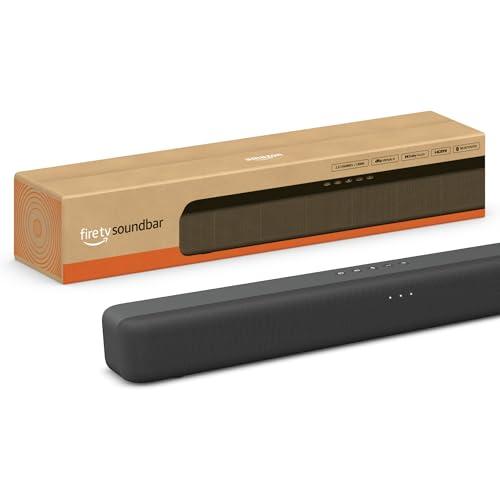
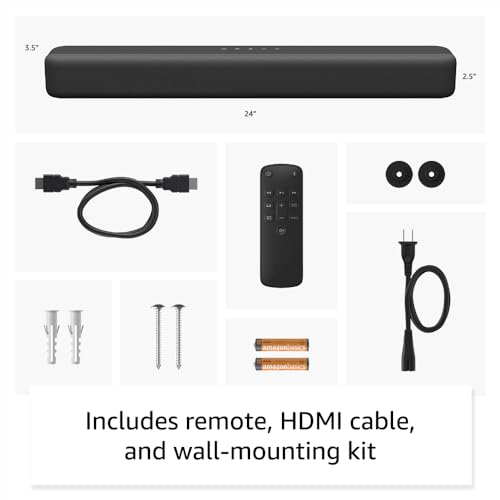
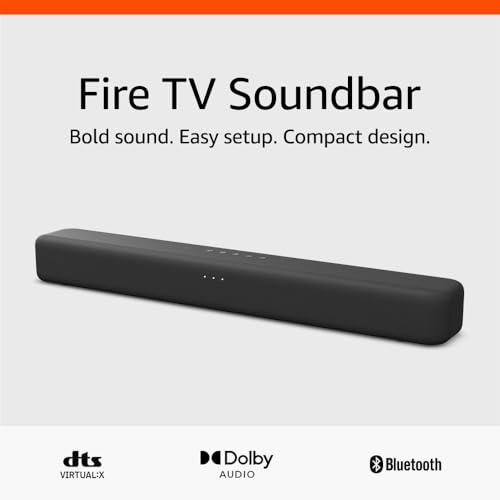
The Amazon Fire TV Soundbar, released in 2024, exemplifies the "keep it simple" philosophy. This compact 2.0-channel unit measures just over two feet wide and weighs under four pounds, making it one of the most unobtrusive soundbar options available.
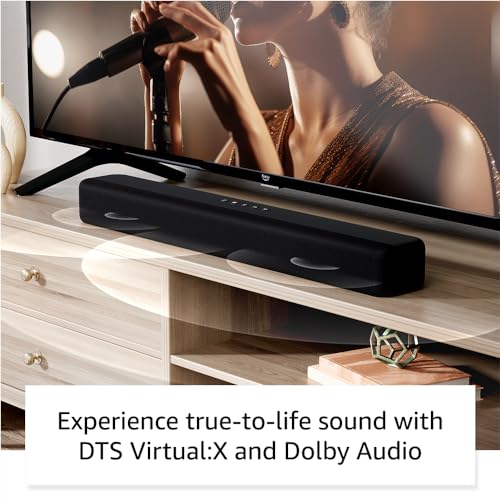
Amazon equipped this soundbar with two 20-watt amplifiers powering specially designed "racetrack" drivers – oval-shaped speakers that maximize membrane surface area within the soundbar's slim profile. This design choice allows for better sound dispersion than traditional round drivers while maintaining the sleek form factor that modern consumers expect.
The frequency response extends from 50Hz to 20kHz, which tells us important information about its capabilities. That 50Hz lower limit means it can reproduce some bass frequencies, but won't deliver the deep, room-shaking lows that start around 35Hz and below. For reference, a typical male speaking voice fundamental frequency ranges from 85-180Hz, so dialogue reproduction should be well within this soundbar's wheelhouse.
Amazon included DTS Virtual:X processing, which uses digital signal processing (DSP) algorithms to create a simulated surround sound effect from just two front-facing speakers. This technology analyzes stereo audio and creates timing and phase differences that trick your brain into perceiving sounds coming from directions beyond the physical speaker locations. While it can't match true surround sound systems, Virtual:X can noticeably widen the soundstage compared to standard stereo playback.
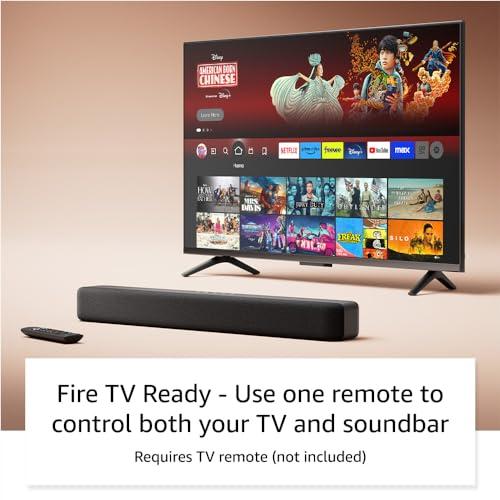
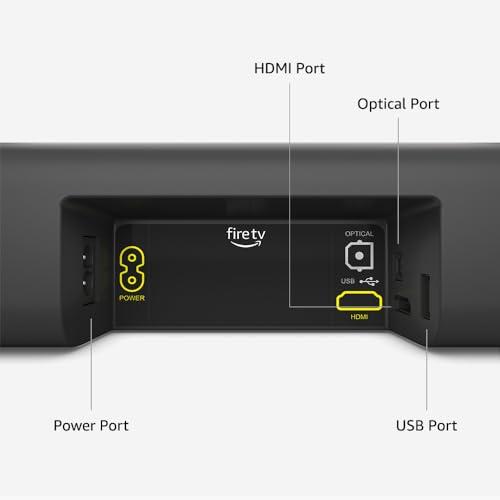
The Amazon Fire TV Soundbar keeps connectivity simple with HDMI ARC (Audio Return Channel) and optical inputs. HDMI ARC allows the soundbar to receive audio from your TV through the same HDMI cable that might be carrying video to the TV from other sources, and enables you to control the soundbar's volume using your TV remote – a convenience feature that many users appreciate.
One notable limitation is the lack of HDMI eARC (enhanced Audio Return Channel) support, which means it can't receive lossless audio formats like Dolby TrueHD or DTS-HD Master Audio that are found on Blu-ray discs. For streaming content, which is typically compressed anyway, this limitation won't matter much.
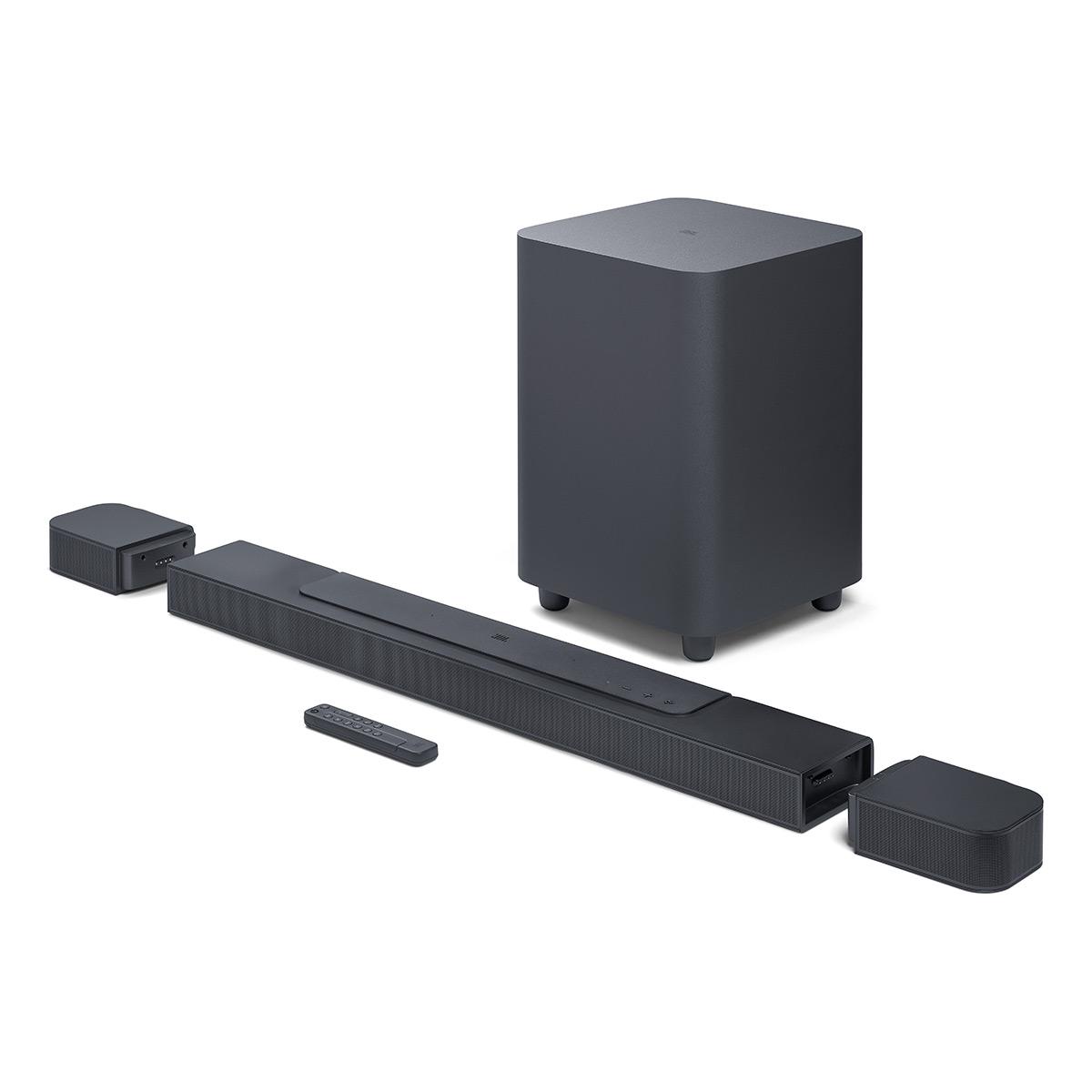
Released in 2023, the JBL Bar 700 represents a completely different philosophy. Instead of minimal intervention, JBL designed this system to replicate a full home theater audio setup while maintaining the convenience of a soundbar-based system.
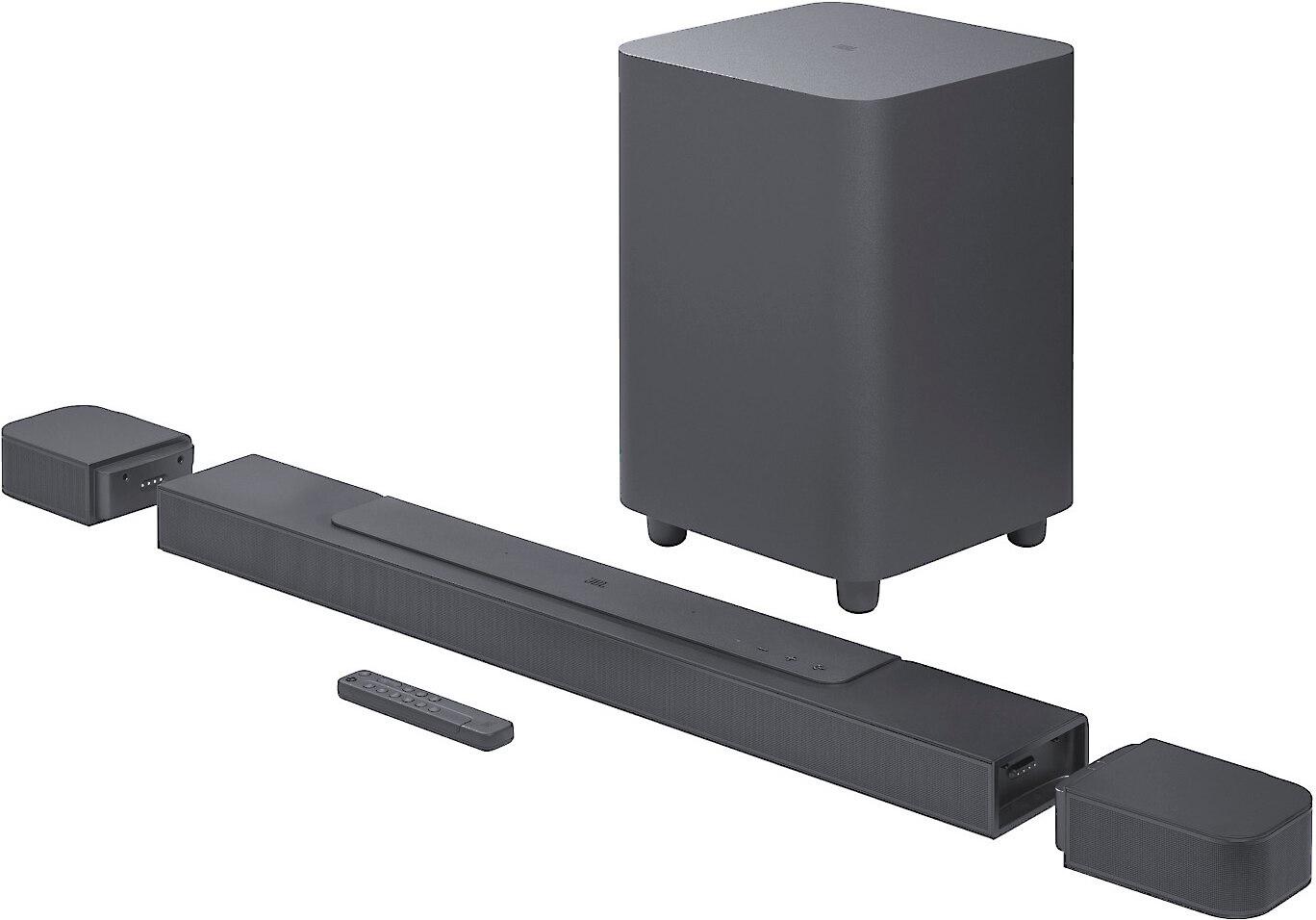
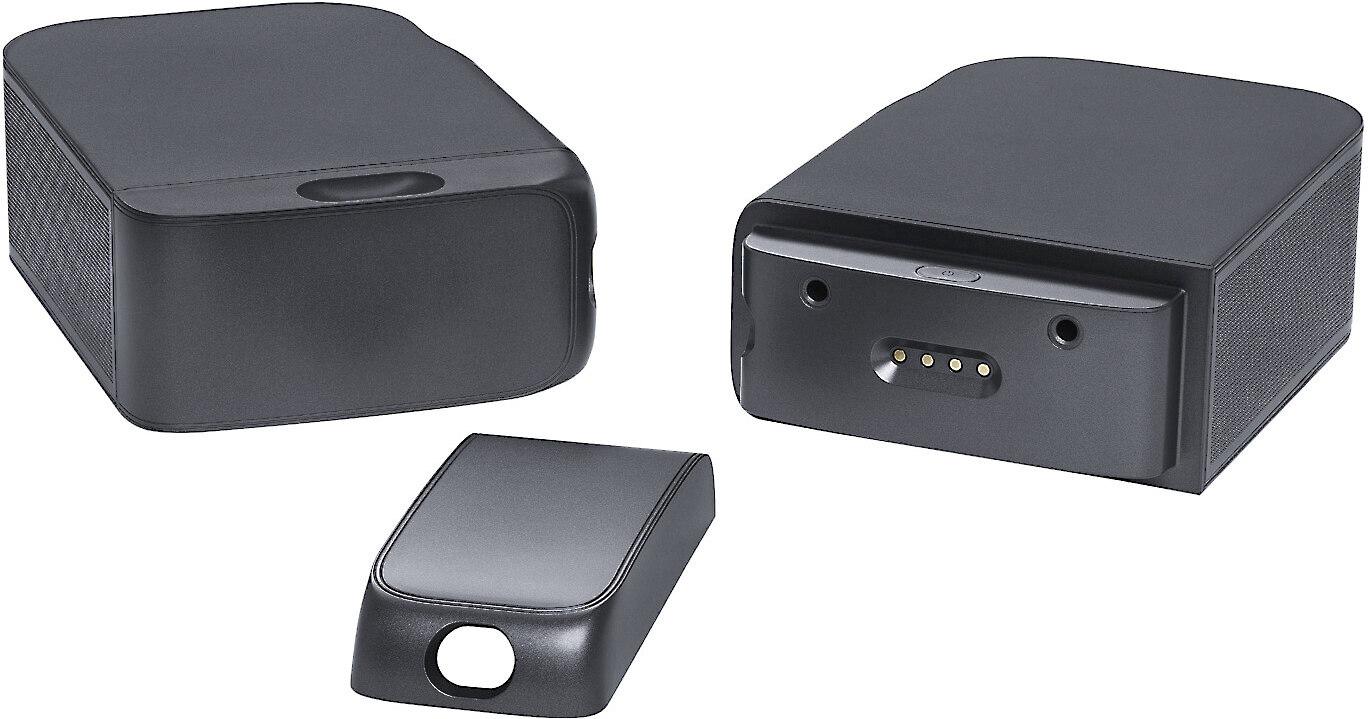
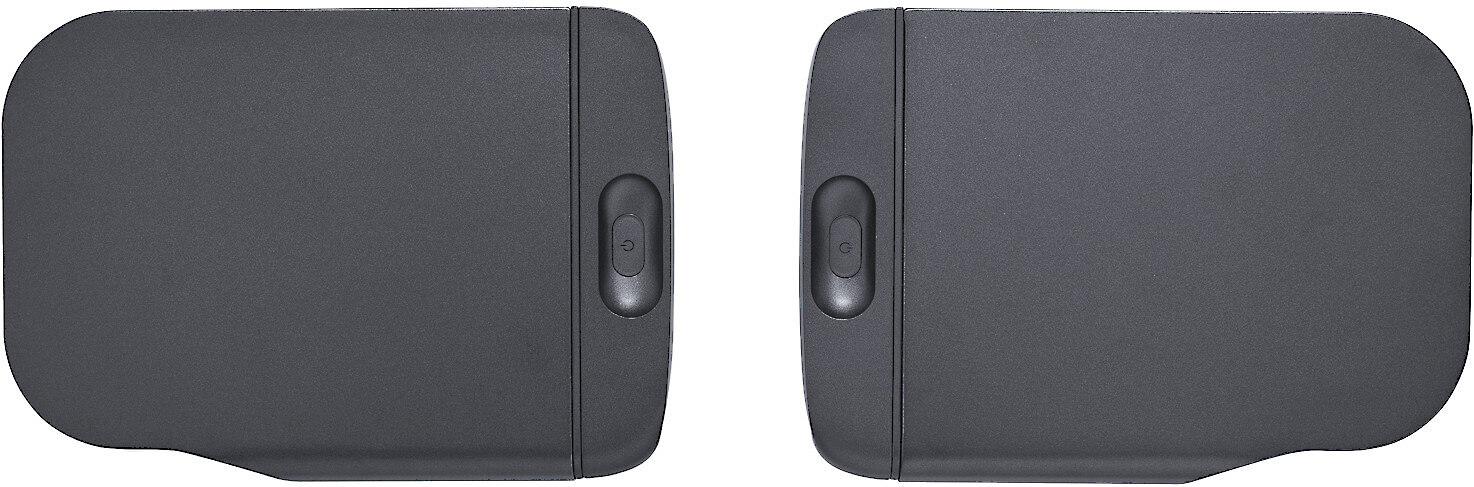
The most distinctive feature is the detachable wireless surround speakers. These small satellite speakers normally attach to the ends of the main soundbar unit, but can be removed and placed behind your seating area to create genuine 5.1-channel surround sound. Each surround speaker contains its own battery (rated for up to 10 hours of playback) and connects wirelessly to the main unit, eliminating the need to run speaker wires across your room.
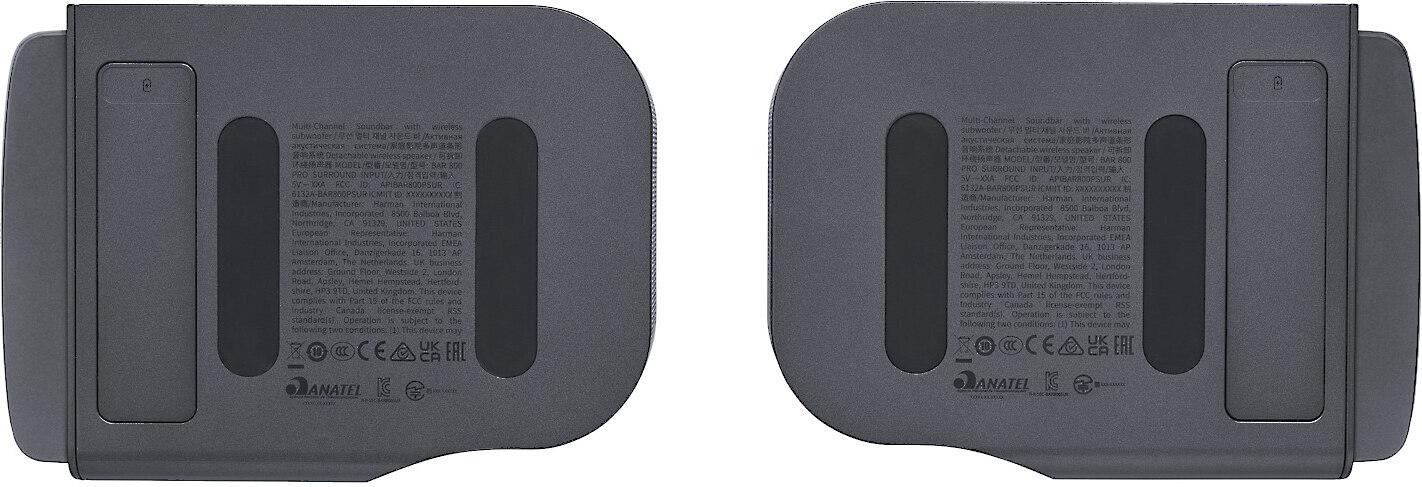
This approach solves one of the biggest barriers to surround sound adoption: installation complexity. Traditional 5.1 systems require running wires to rear speakers, which often means either unsightly cables across the floor or expensive in-wall installation. The JBL Bar 700's detachable speakers charge automatically when connected to the main soundbar, so they're always ready when you want to deploy them for movie night.
The main soundbar houses three racetrack drivers and three 0.75-inch tweeters, powered by a total of 240 watts. Tweeters are specialized drivers designed to reproduce high-frequency sounds with greater clarity and detail than full-range drivers can achieve. The inclusion of dedicated tweeters suggests JBL prioritized audio quality over cost savings.
Complementing the main unit is a 10-inch wireless subwoofer with 300 watts of dedicated amplification. Subwoofers handle frequencies typically below 80-120Hz, reproducing everything from the rumble of movie explosions to the fundamental tones of bass guitars and kick drums. The wireless connection means you can place this subwoofer wherever it sounds best in your room, rather than being constrained by cable length.
The system's frequency response extends down to 35Hz, providing significantly deeper bass extension than the Amazon Fire TV Soundbar. This 15Hz difference might not sound like much, but it represents a substantial improvement in reproducing the low-frequency effects that make action movies exciting and music more emotionally engaging.
JBL included Dolby Atmos support through their MultiBeam technology. Traditional Dolby Atmos implementations use upward-firing speakers to bounce sound off your ceiling, creating the illusion of overhead audio. MultiBeam achieves similar results using advanced signal processing to create virtual height effects without physical upward-firing drivers. While not as convincing as systems with actual height speakers, MultiBeam can add a sense of three-dimensional space to compatible content.
The JBL Bar 700 also features PureVoice dialogue enhancement technology. This system uses sophisticated algorithms to identify and emphasize speech frequencies while reducing competing background sounds. It's particularly useful during action scenes where explosions and music might otherwise drown out important dialogue.
The power output difference between these systems is dramatic. The Amazon Fire TV Soundbar's 40 watts total output is adequate for small to medium rooms, but will struggle to maintain clarity at higher volumes needed for larger spaces. Our research suggests it performs best in rooms up to about 200 square feet.
The JBL Bar 700's 620 watts of total amplification can easily fill much larger rooms while maintaining clean, undistorted sound. The dedicated 300-watt subwoofer amplifier alone provides more power than the entire Amazon system, enabling it to reproduce bass frequencies with authority rather than just hinting at them.
Bass response differences between these systems fundamentally change the listening experience. The Amazon Fire TV Soundbar's 50Hz lower limit means it can provide some low-end warmth and help male voices sound more natural, but it won't reproduce the deep bass that makes movie soundtracks exciting or gives music its emotional impact.
The JBL Bar 700's dedicated subwoofer extends response to 35Hz and can likely reproduce usable output even lower. This enables it to handle the low-frequency effects (LFE) channel in movie soundtracks – the dedicated bass channel that carries everything from explosion rumbles to the deep tones that build tension in horror films.
The surround sound comparison reveals perhaps the starkest difference between these approaches. The Amazon Fire TV Soundbar's DTS Virtual:X processing can create an impressively wide soundstage for a stereo system, making dialogue seem to come from the center of your TV screen rather than from the soundbar itself, and adding some sense of spaciousness to music and movie soundtracks.
However, virtual surround processing has inherent limitations. It works by manipulating timing, phase relationships, and frequency response to trick your auditory system, but the effect varies significantly based on your seating position, room acoustics, and individual hearing characteristics. Some listeners find virtual surround convincing, while others barely notice the effect.
The JBL Bar 700 provides actual surround sound with discrete rear channels. When properly positioned, the detachable speakers can create convincing directional effects – helicopters panning from front to back, ambient sounds placing you in a movie's environment, and music that surrounds rather than merely facing you. This isn't processing trickery; it's genuine multichannel audio reproduction.
Both systems prioritize dialogue clarity, but use different approaches. The Amazon Fire TV Soundbar includes a dedicated voice mode that adjusts frequency response to emphasize speech ranges and reduces competing frequencies. This is effective for news, talk shows, and dialogue-heavy dramas.
The JBL Bar 700's PureVoice technology is more sophisticated, using real-time analysis to identify and enhance speech while maintaining the overall audio balance. This means dialogue remains clear even during complex movie soundtracks with simultaneous music, sound effects, and multiple speakers.
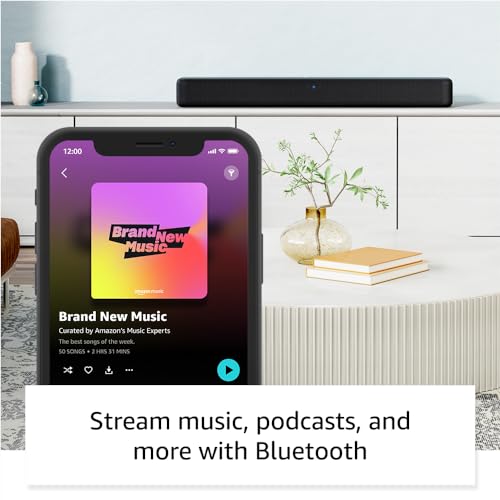
The connectivity differences reflect each product's target market. The Amazon Fire TV Soundbar focuses on essential connections: HDMI ARC for TV integration, optical input for older devices, and Bluetooth for streaming music from phones and tablets. This covers the basic use cases without complexity.
The JBL Bar 700 embraces the smart home ecosystem with Wi-Fi 6 connectivity, enabling features like AirPlay 2 for Apple devices, Chromecast built-in for Google integration, and Alexa Multi-Room Music compatibility. These features allow the soundbar to function as part of a whole-home audio system, streaming music even when the TV is off and coordinating with other compatible speakers throughout your house.
The JBL Bar 700 also includes HDMI eARC support, which can handle lossless audio formats and higher bandwidth audio streams. While most streaming content won't take advantage of this capability, it ensures compatibility with high-quality Blu-ray audio and next-generation gaming console audio formats.
The Amazon Fire TV Soundbar epitomizes plug-and-play convenience. Connect the HDMI cable, plug in the power adapter, and you're done. There's no calibration process, no speaker positioning considerations, and no complex menus to navigate.
The JBL Bar 700 requires more initial setup but includes automated calibration to optimize performance. The system uses built-in microphones to analyze your room's acoustic characteristics and adjust the audio processing accordingly. This room correction can significantly improve performance by compensating for problematic reflections, standing waves, and frequency response anomalies that all rooms create.
The calibration process typically takes a few minutes and should be repeated if you rearrange furniture or move the speakers. While this adds complexity, the performance benefits are substantial, especially in challenging room environments.
At the time of writing, these products occupy very different value propositions. The Amazon Fire TV Soundbar represents exceptional value for users seeking basic TV audio improvement on a limited budget. It delivers meaningfully better performance than TV speakers without significant cost or complexity.
The JBL Bar 700 justifies its significantly higher price through comprehensive features and substantially better performance. When compared to equivalent separate component systems, it actually represents good value by eliminating installation complexity while providing authentic surround sound.
For dedicated home theater use, the performance gap between these systems becomes even more pronounced. Movie soundtracks are mixed with the assumption that you have full-range speakers capable of reproducing deep bass and discrete surround channels. The Amazon Fire TV Soundbar can make movies more enjoyable than TV speakers, but you'll miss much of the audio design that filmmakers intended.
The JBL Bar 700 can reproduce most of what movie sound designers intended, from the subtle ambient details that create atmosphere to the visceral bass effects that add excitement to action sequences. The Dolby Atmos support, while not as convincing as dedicated height speakers, adds another layer of immersion for compatible content.
While both systems can play music via Bluetooth, their musical performance differs significantly. The Amazon Fire TV Soundbar's limited bass response and stereo-only configuration restrict it to background music and casual listening applications.
The JBL Bar 700's dedicated subwoofer and superior frequency response make it genuinely capable of music reproduction. The wireless connectivity options also enable integration with streaming services and whole-home audio systems, making it useful even when the TV is off.
The decision between these products should be based on your specific needs, budget, and expectations rather than just audio quality comparisons.
Choose the Amazon Fire TV Soundbar if you primarily watch TV shows, news, and casual content; live in a small space; have budget constraints; want the simplest possible setup; or if you're elderly or less comfortable with technology complexity. It's also ideal for apartments where noise restrictions limit the usefulness of powerful bass reproduction.
Choose the JBL Bar 700 if you regularly watch movies; want immersive gaming audio; listen to music through your TV setup; have a medium to large room; can accommodate the higher price point; or want features like wireless streaming and smart home integration. It's particularly appealing if you want true surround sound but aren't willing to deal with traditional home theater installation complexity.
The fundamental question isn't which sounds better – the JBL Bar 700 clearly wins that comparison. Instead, consider whether the additional performance and features justify the substantial price premium for your specific situation. Both products succeed at their intended purposes, but they're solving different problems for different types of users.
For most people upgrading from TV speakers, either option will provide a meaningful improvement. The choice comes down to whether you want basic enhancement or comprehensive home theater capabilities, and whether your budget and room can accommodate the more ambitious system.
| Amazon Fire TV Soundbar | JBL Bar 700 |
|---|---|
| Channel Configuration - Determines surround sound capabilities | |
| 2.0 stereo (left/right only) | 5.1 surround (includes rear speakers + subwoofer) |
| Total Power Output - Affects maximum volume and room size | |
| 40W (2 × 20W channels) | 620W across all channels |
| Frequency Response - Shows bass depth and treble extension | |
| 50Hz - 20kHz (limited bass) | 35Hz - 20kHz (deep bass capability) |
| Subwoofer - Essential for movie bass and music impact | |
| None included | 10" wireless subwoofer with 300W amplifier |
| Surround Speakers - Creates true wraparound sound | |
| Virtual surround via DTS Virtual:X processing | Detachable battery-powered wireless rear speakers |
| Dolby Atmos Support - Adds height dimension to movie audio | |
| No Dolby Atmos support | Yes, with MultiBeam virtual height technology |
| Smart Connectivity - Streaming and voice control features | |
| Bluetooth only | Wi-Fi 6, AirPlay 2, Chromecast, Alexa Multi-Room |
| HDMI Support - Determines audio format compatibility | |
| HDMI ARC (basic audio formats) | HDMI eARC (lossless audio formats) |
| Room Calibration - Optimizes sound for your space | |
| No automatic calibration | Built-in microphone with automatic room tuning |
| Dialogue Enhancement - Improves speech clarity | |
| Basic voice mode preset | PureVoice technology with real-time processing |
| Physical Size - Affects placement options | |
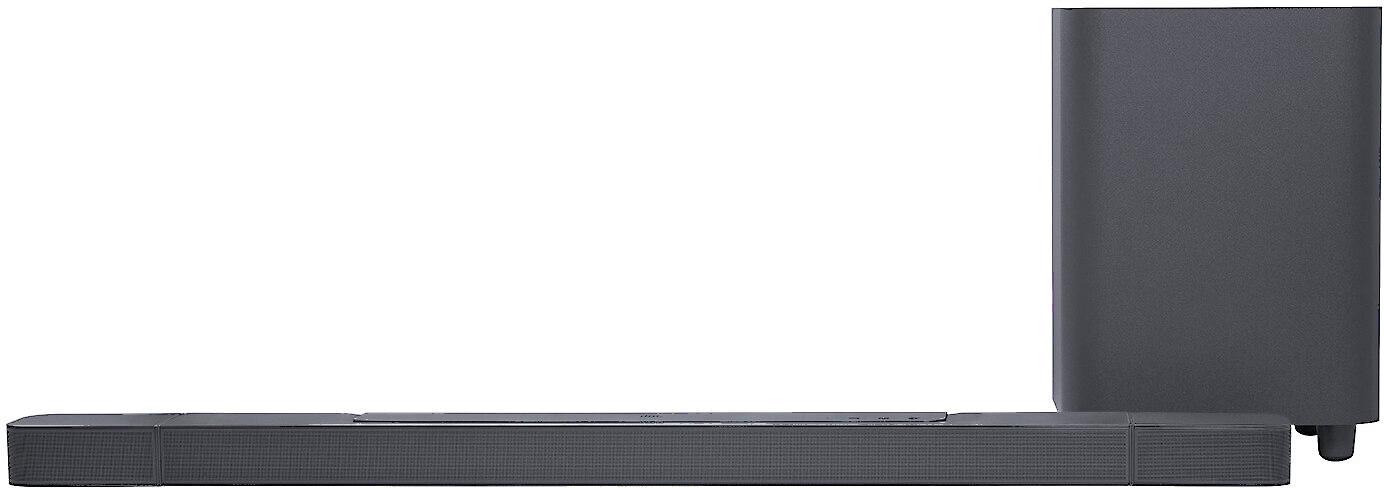
| Compact: 61cm wide, ultra-slim profile | Larger: 88cm main bar plus separate subwoofer |
| Setup Complexity - Time and effort required | |
| Plug-and-play (under 5 minutes) | Multi-component setup with calibration (15-30 minutes) |
The Amazon Fire TV Soundbar is ideal for small apartments due to its compact size and lower power output that won't disturb neighbors. Its 40W total power is sufficient for smaller spaces, while the JBL Bar 700 might be overkill and could cause noise complaints with its 620W system and powerful subwoofer.
For TV shows and news, the Amazon Fire TV Soundbar works well without a subwoofer since dialogue is the priority. However, if you watch movies or action content, the JBL Bar 700's 10-inch wireless subwoofer provides the bass impact that makes entertainment more engaging and immersive.
Both soundbars improve dialogue clarity significantly over TV speakers. The Amazon Fire TV Soundbar uses basic voice enhancement modes, while the JBL Bar 700 features advanced PureVoice technology that maintains speech clarity even during loud action scenes with competing sound effects.
Yes, both support Bluetooth music streaming. The Amazon Fire TV Soundbar offers basic Bluetooth connectivity for casual music listening. The JBL Bar 700 provides superior music quality with Wi-Fi streaming, AirPlay 2, Chromecast built-in, and much better frequency response for serious music enjoyment.
The Amazon Fire TV Soundbar wins for simplicity with plug-and-play setup taking under 5 minutes. The JBL Bar 700 requires more time for positioning the subwoofer, placing surround speakers, and running automatic room calibration, typically taking 15-30 minutes for optimal setup.
The Amazon Fire TV Soundbar creates virtual surround sound using DTS Virtual:X processing from two front speakers. The JBL Bar 700 delivers true 5.1 surround sound with physical rear speakers that detach from the main bar and place behind your seating area wirelessly.
For movies and gaming, the JBL Bar 700 is significantly better with Dolby Atmos support, true surround sound, deep bass extension to 35Hz, and 620W of power. The Amazon Fire TV Soundbar improves over TV speakers but lacks the dynamic range and immersion for cinematic experiences.
The Amazon Fire TV Soundbar is very compact at 61cm wide with no additional components. The JBL Bar 700 requires more space with an 88cm main bar, plus room for a separate wireless subwoofer and the option to place detachable surround speakers around your seating area.
Both soundbars support HDMI ARC, allowing control with your TV remote. The Amazon Fire TV Soundbar uses basic HDMI ARC, while the JBL Bar 700 supports enhanced HDMI eARC for better audio format compatibility and more seamless integration with your TV's controls.
The Amazon Fire TV Soundbar offers exceptional value for basic TV audio improvement at a budget-friendly price point. The JBL Bar 700 provides better overall value for serious home theater enthusiasts who want comprehensive surround sound features and significantly superior audio performance.
Both soundbars work with older TVs through optical connections. The Amazon Fire TV Soundbar includes optical input for compatibility with TVs lacking HDMI ARC. The JBL Bar 700 also provides optical connectivity, ensuring both systems work with virtually any TV from the past 15 years.
The JBL Bar 700 is much better for large rooms with its 620W total power output and room-filling capabilities. The Amazon Fire TV Soundbar's 40W output may struggle to provide adequate volume and clarity in spaces larger than 200 square feet, making the JBL system the clear choice for bigger living areas.
We've done our best to create useful and informative comparisons to help you decide what product to buy. Our research uses advanced automated methods to create this comparison and perfection is not possible - please contact us for corrections or questions. These are the sites we've researched in the creation of this article: rtings.com - developer.amazon.com - stereoguide.com - developer.amazon.com - techradar.com - hometechnologyreview.com - whathifi.com - youtube.com - whathifi.com - wirelessplace.com - hometechnologyreview.com - dolby.com - aboutamazon.com - developer.amazon.com - community.anker.com - youtube.com - cordbusters.co.uk - crutchfield.com - harmanaudio.com - target.com - jbl.com - walmart.com - dell.com - jbl.com

Privacy Policy
Terms and Conditions - Affiliate Policy
Home Security
© Copyright 2008-2026.
11816 Inwood Rd #1211, Dallas, TX 75244