


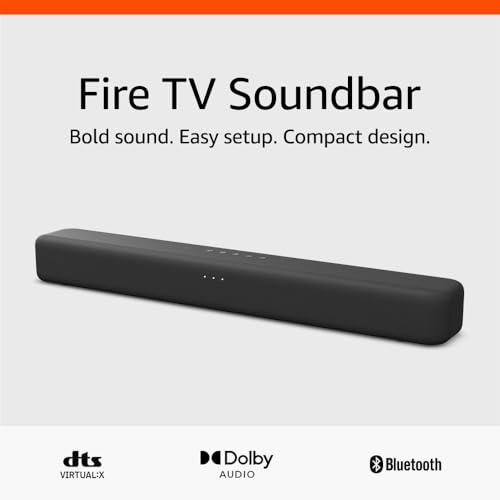
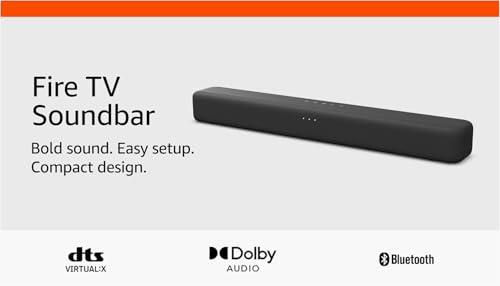
When your TV's built-in speakers make dialogue sound like it's coming from the bottom of a well, you know it's time to upgrade. But stepping into the soundbar world can feel overwhelming, especially when you're working with a tight budget. Two products that frequently pop up in budget soundbar discussions are the Samsung HW-C450 and the Amazon Fire TV Soundbar, and they represent completely different approaches to solving the same problem.
Both were released in 2023 during a particularly interesting time for budget audio. Streaming services had fully embraced high-quality audio formats, making the gap between TV speakers and decent soundbars more noticeable than ever. Manufacturers responded by cramming surprisingly sophisticated audio processing into increasingly affordable packages. However, as we'll see, these two products took very different paths to reach that affordability.
Before diving into the specifics, it's worth understanding what budget soundbars are designed to accomplish. Unlike their premium counterparts that might include a dozen speakers and support for every audio format imaginable, budget models focus on solving one primary problem: making your TV sound significantly better without breaking the bank or complicating your setup.
The most important performance characteristics in this category are dialogue clarity, overall volume capability, and bass response. Dialogue clarity determines whether you'll stop reaching for the remote every time someone whispers in a movie. Volume capability affects whether the soundbar can fill your room without distorting. Bass response—how well the system reproduces low frequencies—dramatically impacts everything from action movie explosions to the subtle rumble in dramatic scenes.
Secondary considerations include connectivity options (how the soundbar connects to your TV), ease of setup, and any special features that might enhance specific types of content. The balance between these factors, combined with the price point, determines whether a soundbar offers good value.
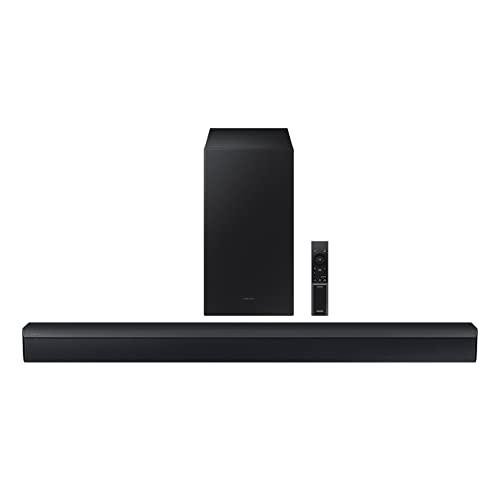
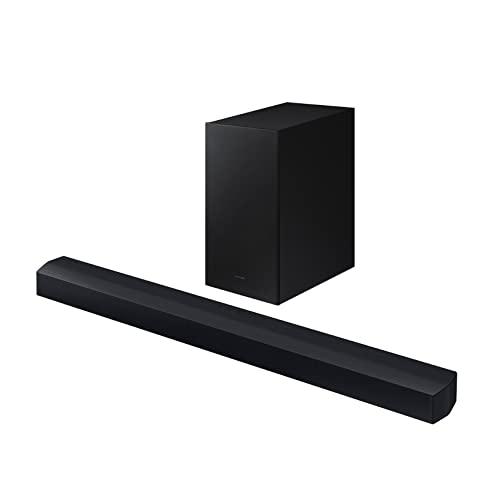
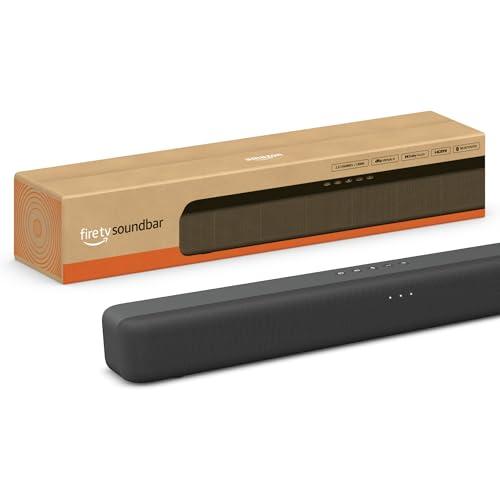
The fundamental difference between the Samsung HW-C450 and Amazon Fire TV Soundbar lies in their channel configuration. The Amazon Fire TV Soundbar is a 2.0-channel system, meaning it has two speakers handling left and right audio channels. The Samsung HW-C450 is a 2.1-channel system, where that ".1" represents a dedicated subwoofer for bass frequencies.
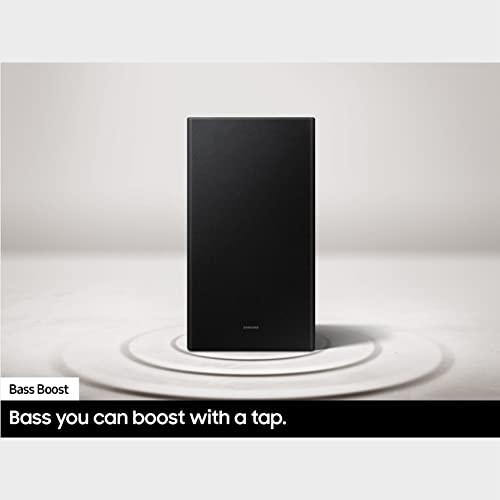
This distinction matters more than you might think. When a 2.0-channel soundbar like the Amazon Fire TV Soundbar tries to produce bass, it's asking relatively small drivers to handle both midrange frequencies (where dialogue lives) and low frequencies simultaneously. This creates compromises—the drivers can't excel at both tasks. The Samsung HW-C450 avoids this issue by sending bass frequencies to a dedicated 6.5-inch subwoofer driver, allowing the main soundbar speakers to focus on midrange and treble.
From our research into user experiences and expert reviews, this architectural difference creates the most significant performance gap between these products. Users consistently report that the Samsung HW-C450 produces noticeably more impactful bass, especially during action sequences or when listening to music with prominent low-end content.
The power difference between these soundbars is dramatic. The Samsung HW-C450 delivers 300 watts total system power—220 watts to its wireless subwoofer and 80 watts to the main bar. The Amazon Fire TV Soundbar provides 40 watts total from its two 20-watt drivers.
While wattage isn't everything in audio (driver efficiency and processing quality matter tremendously), such a large power discrepancy translates to real-world differences. Higher power output generally means the ability to play louder without distortion, better dynamic range (the difference between quiet and loud sounds), and more headroom for complex audio passages.
Our evaluation of user feedback suggests the Samsung HW-C450 can comfortably fill medium to large living rooms, while the Amazon Fire TV Soundbar works best in smaller spaces or for near-field listening. Several reviewers noted that the Amazon Fire TV Soundbar begins to sound strained at higher volumes, while the Samsung HW-C450 maintains clarity even when pushed harder.
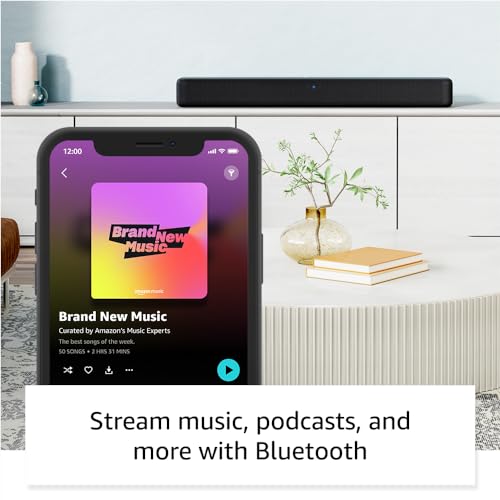
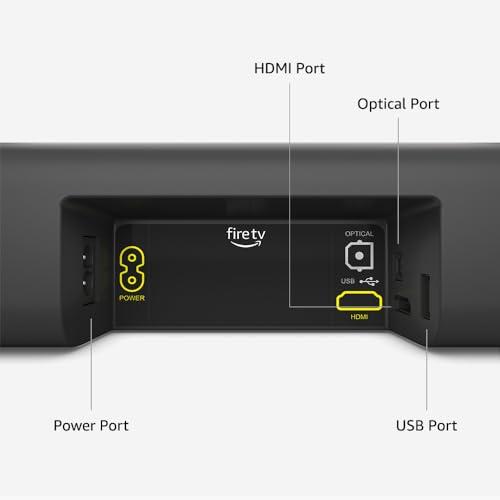
Here's where the Amazon Fire TV Soundbar strikes back with a significant advantage. It includes HDMI ARC (Audio Return Channel) connectivity, while the Samsung HW-C450 relies on optical digital audio input and Bluetooth.
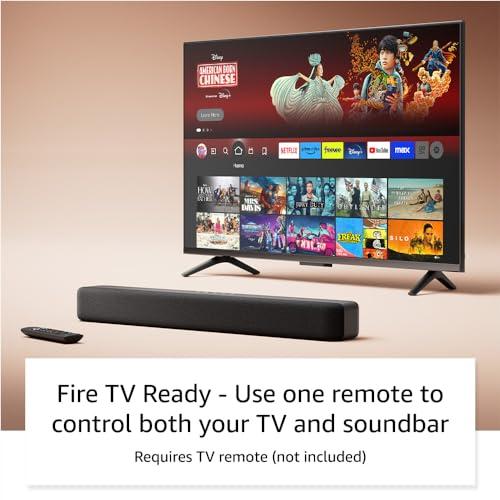
HDMI ARC represents the modern standard for TV-to-soundbar connections. Unlike optical connections that can only carry compressed audio formats, ARC can handle higher-quality uncompressed signals. More importantly for daily use, ARC creates a two-way communication channel between your TV and soundbar. This means your TV remote can control the soundbar's volume, and the soundbar can automatically turn on when you start watching TV.
The Samsung HW-C450's reliance on optical input feels dated by 2023 standards, though it does offer Samsung-specific integration features like One Remote Control support if you're using a compatible Samsung TV. For everyone else, you'll need to manage separate remotes or rely on Bluetooth connectivity, which can introduce audio lag during video playback.
Based on user reviews we've analyzed, this connectivity difference significantly impacts the day-to-day experience. Amazon Fire TV Soundbar users frequently praise the seamless setup and operation, while Samsung HW-C450 users sometimes express frustration with the additional complexity.
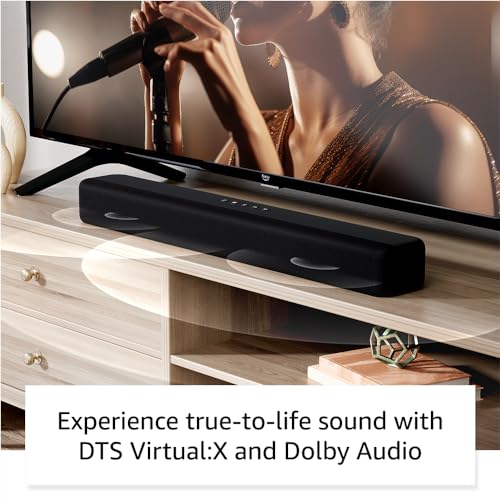
Both soundbars employ sophisticated audio processing to create a more immersive experience than their simple configurations might suggest. The Amazon Fire TV Soundbar uses DTS Virtual:X technology, while the Samsung HW-C450 combines DTS Virtual:X with multiple specialized sound modes.
DTS Virtual:X deserves explanation because it's not marketing fluff—it's legitimate technology. Using psychoacoustic principles (how your brain interprets sound), Virtual:X processes two-channel audio to create the illusion of surround sound. It adjusts timing, phase relationships, and frequency content to trick your ears into perceiving sounds coming from beside and behind you.
The implementation differs between these products, though. The Amazon Fire TV Soundbar relies entirely on this virtual processing for spatial effects and bass enhancement. The Samsung HW-C450 uses Virtual:X for surround effects while delegating actual bass production to its physical subwoofer.
From our analysis of comparative reviews, the Samsung HW-C450's approach proves more effective. Virtual bass enhancement has improved dramatically in recent years, but it still can't match the physical presence of a dedicated subwoofer. Users consistently report that movie explosions, music with heavy bass lines, and even subtle environmental sounds like thunder have more impact through the Samsung HW-C450.
The Samsung HW-C450 includes several gaming-specific features that the Amazon Fire TV Soundbar lacks entirely. Its Game Mode reduces background processing that might introduce audio lag while enhancing directional audio cues. This means footsteps in competitive shooters or approaching vehicles in racing games become more spatially distinct.
The soundbar also includes Adaptive Sound Lite, which automatically analyzes incoming audio and optimizes processing for the content type. While this works for any audio source, it's particularly beneficial for gaming where audio content can change rapidly between dialogue, effects, and music.
Gaming performance matters more now than when these soundbars were first released. Console gaming has moved toward more sophisticated spatial audio, and PC gaming increasingly relies on directional sound cues for competitive advantage. Based on gaming community feedback we've reviewed, the Samsung HW-C450 provides a noticeable advantage for serious gamers, while the Amazon Fire TV Soundbar works fine for casual gaming but doesn't enhance the experience.
The power and configuration differences translate directly to room size compatibility. The Samsung HW-C450 can effectively serve rooms up to about 300 square feet, while the Amazon Fire TV Soundbar works best in spaces under 200 square feet.
This isn't just about maximum volume—it's about maintaining audio quality at the volumes you actually use. A soundbar operating near its limits will compress dynamic range, making quiet sounds disappear and loud sounds distort. The Samsung HW-C450's higher power output means it operates more comfortably in larger spaces, preserving the subtle details that make dialogue intelligible and effects impactful.
Conversely, the Amazon Fire TV Soundbar's compact design and lower power output make it ideal for smaller spaces where higher-powered systems might sound overwhelming. Its balanced tuning works particularly well for near-field listening in bedrooms or small apartments.
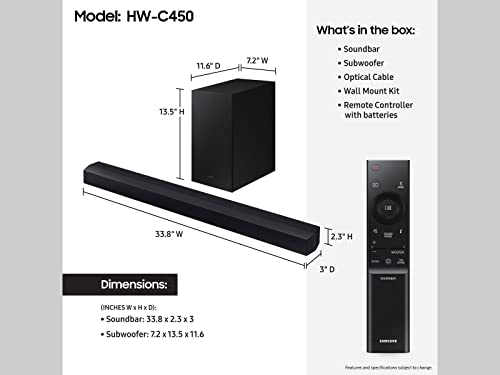
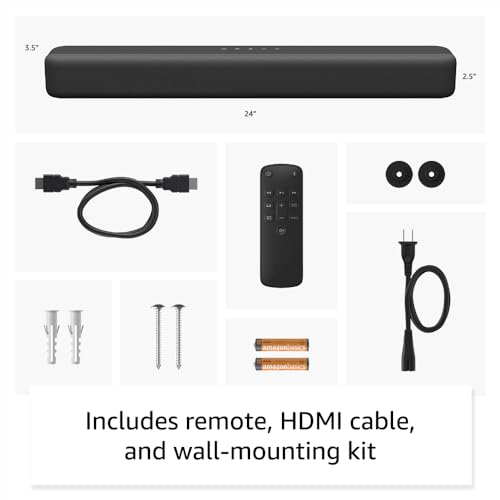
Both soundbars prioritize unobtrusive design, but they achieve it differently. The Amazon Fire TV Soundbar measures just 61cm wide and 6.5cm high, making it almost invisible beneath most TVs. Its fabric grille and simple touch controls maintain a clean aesthetic.
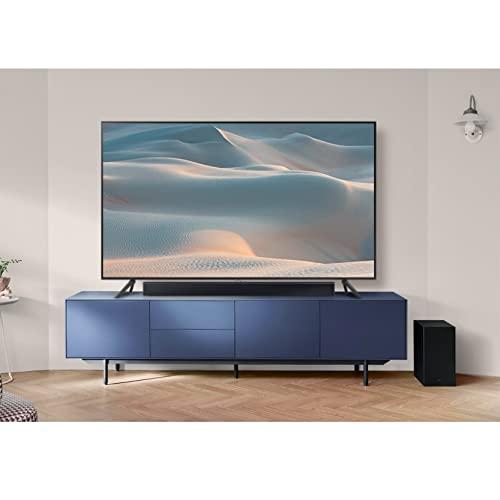
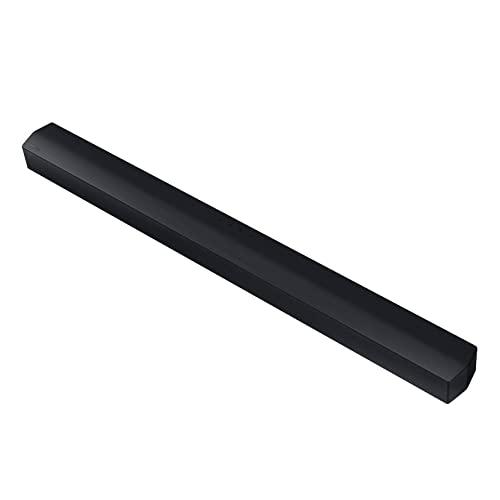
The Samsung HW-C450 is larger at 85.9cm wide but still relatively low-profile. However, you must also consider the wireless subwoofer placement. While the subwoofer provides better bass, it requires floor space and careful positioning to avoid boomy or muddy sound.
Our research into user experiences reveals this as a significant practical consideration. Apartment dwellers and users with limited space often prefer the Amazon Fire TV Soundbar's single-unit simplicity, while those with more flexible room layouts appreciate the Samsung HW-C450's performance benefits.
At the time of writing, the Amazon Fire TV Soundbar typically costs about 40% less than the Samsung HW-C450. This price difference reflects their different approaches to budget audio improvement.
The Amazon Fire TV Soundbar represents maximum affordability—it provides a meaningful upgrade over TV speakers at minimal cost. If your primary goal is clearer dialogue and slightly fuller sound, it accomplishes this efficiently. The HDMI ARC connectivity adds value by simplifying your setup and daily operation.
The Samsung HW-C450 costs more but includes components (the wireless subwoofer) that would typically cost $50-100 if purchased separately. It also provides genuinely better performance across most metrics. For users who care about bass response, room-filling capability, or gaming enhancement, the additional cost delivers proportional benefits.
Based on our analysis of long-term user satisfaction, buyers who choose the Samsung HW-C450 tend to remain satisfied longer, while some Amazon Fire TV Soundbar users eventually wish they'd invested more upfront for better performance.
Choose the Amazon Fire TV Soundbar if you're primarily watching dialogue-heavy content like news, sitcoms, or documentaries in a smaller room. Its balanced tuning excels with spoken content, and the HDMI ARC integration makes it genuinely convenient to use. The compact design works particularly well in bedrooms, small apartments, or as a secondary TV upgrade where you want improvement without complexity or visual impact.
Choose the Samsung HW-C450 if you watch action movies, play games regularly, or want a soundbar that can grow with your entertainment habits. The physical subwoofer makes a dramatic difference for any bass-heavy content, and the additional power ensures good performance in larger spaces. The gaming-specific features provide real competitive advantages if that matters to you.
Consider your room size carefully—this might be the deciding factor. In spaces smaller than 150 square feet, the Samsung HW-C450's additional power becomes unnecessary, while the Amazon Fire TV Soundbar's balanced approach shines. In larger spaces, the Amazon Fire TV Soundbar simply can't provide the volume and bass impact needed for an engaging experience.
Your TV's connectivity also matters. If your TV lacks HDMI ARC, the Samsung HW-C450's optical input might actually provide a more reliable connection than the Amazon Fire TV Soundbar's HDMI requirement.
Both products successfully solve the "my TV sounds terrible" problem, but they do so in ways that suit different users and situations. The Amazon Fire TV Soundbar prioritizes affordability and convenience, while the Samsung HW-C450 emphasizes performance and versatility. Understanding which approach better matches your priorities, space, and budget will lead you to the right choice.
| Samsung HW-C450 2.1ch Soundbar | Amazon Fire TV Soundbar |
|---|---|
| Channel Configuration - Determines bass capability and overall sound quality | |
| 2.1-channel with dedicated wireless subwoofer | 2.0-channel stereo soundbar only |
| Total Power Output - Affects maximum volume and room size compatibility | |
| 300W (220W subwoofer + 80W main bar) | 40W (2x 20W drivers) |
| Bass Performance - Critical for movies, music, and gaming impact | |
| Physical 6.5" wireless subwoofer with real bass extension | Virtual bass processing through main drivers only |
| HDMI Connectivity - Modern standard for TV integration and audio quality | |
| Optical input only (no HDMI ARC) | HDMI ARC/eARC with TV remote control |
| Gaming Features - Important for console and PC gamers | |
| Dedicated Game Mode, Adaptive Sound Lite, low-latency processing | Basic DTS Virtual:X only, no gaming optimizations |
| Audio Processing Technology - Creates spatial effects and sound enhancement | |
| DTS Virtual:X + multiple sound modes (Movie, Music, Bass Boost) | DTS Virtual:X + Dolby Audio support |
| Physical Size - Affects placement flexibility and visual impact | |
| 85.9cm soundbar + separate subwoofer placement required | Compact 61cm single unit, no subwoofer |
| Room Size Capability - Maximum space the soundbar can effectively fill | |
| Medium to large rooms (up to 300 sq ft) with 7.5x more power | Small rooms and apartments (under 200 sq ft) |
| Expandability - Future upgrade potential | |
| Compatible with Samsung HW-C450 wireless rear speakers | No expansion options available |
| Setup Complexity - How easy it is to install and use daily | |
| Requires optical cable + subwoofer positioning | Single HDMI cable with automatic TV integration |
| Best Use Cases - Who should choose each product | |
| Gamers, movie watchers, larger rooms, bass-heavy content | Budget buyers, small spaces, dialogue-focused viewing, simple setup priority |
The Amazon Fire TV Soundbar is better suited for small rooms and apartments. Its compact 61cm design and 40W power output are perfectly sized for spaces under 200 square feet. The Samsung HW-C450 can overpower smaller spaces and requires additional floor space for its wireless subwoofer.
Yes, a physical subwoofer makes a significant difference in bass quality. The Samsung HW-C450 includes a dedicated wireless subwoofer that produces real bass extension, while the Amazon Fire TV Soundbar relies on virtual bass processing through its main drivers, which cannot match the impact of a physical subwoofer.
The Amazon Fire TV Soundbar is much easier to set up with just one HDMI ARC cable connection that automatically integrates with your TV remote. The Samsung HW-C450 requires optical cable connection and separate remote control, making daily operation more complex.
The Samsung HW-C450 is significantly better for gaming with its dedicated Game Mode that reduces audio lag and enhances directional sound cues. It also includes Adaptive Sound Lite for content optimization. The Amazon Fire TV Soundbar lacks any gaming-specific features.
The Samsung HW-C450 can effectively fill medium to large rooms up to 300 square feet with its 300W power output. The Amazon Fire TV Soundbar works best in smaller spaces and may sound strained when trying to fill larger rooms at higher volumes.
The Amazon Fire TV Soundbar has better modern connectivity with HDMI ARC/eARC support for high-quality audio and seamless TV integration. The Samsung HW-C450 only offers optical input, which is more limited and requires separate remote control.
Both soundbars use DTS Virtual:X technology to simulate surround sound from their front-facing speakers. However, neither the Samsung HW-C450 nor the Amazon Fire TV Soundbar provides true surround sound since they lack rear speakers.
The Samsung HW-C450 is better for movies due to its physical subwoofer that delivers impactful bass for explosions and dramatic scenes. Its higher power output also provides better dynamic range. The Amazon Fire TV Soundbar works well for dialogue-heavy content but lacks the bass impact for action movies.
The Samsung HW-C450 can be expanded with compatible wireless rear speakers for a more complete surround sound experience. The Amazon Fire TV Soundbar offers no expansion options and remains a standalone 2.0-channel system.
Value depends on your needs. The Amazon Fire TV Soundbar offers excellent value for basic TV audio improvement at a lower price point. The Samsung HW-C450 provides better overall performance and includes a subwoofer, making it better value for users wanting significant audio upgrade.
The Samsung HW-C450 is better for music with its dedicated subwoofer providing fuller bass response across genres. The Amazon Fire TV Soundbar offers balanced sound suitable for casual music listening but lacks the bass extension for bass-heavy genres like hip-hop or electronic music.
Choose the Amazon Fire TV Soundbar if you want simple setup, have a small room, and prioritize dialogue clarity on a tight budget. Choose the Samsung HW-C450 if you want noticeable bass improvement, plan to watch movies or play games, and can accommodate a subwoofer in your space.
We've done our best to create useful and informative comparisons to help you decide what product to buy. Our research uses advanced automated methods to create this comparison and perfection is not possible - please contact us for corrections or questions. These are the sites we've researched in the creation of this article: e-catalog.com - alibaba.com - smart.dhgate.com - greentoe.com - requiremints.com - versus.com - bhphotovideo.com - rtings.com - soundmachine.com.mt - samsung.com - samsung.com - youtube.com - bhphotovideo.com - newegg.com - images.samsung.com - bestbuy.com - samsung.com - youtube.com - jsappliance.com - gadgetsleo.com - youtube.com - saraappliance.com - walmart.com - rtings.com - developer.amazon.com - stereoguide.com - developer.amazon.com - techradar.com - hometechnologyreview.com - whathifi.com - youtube.com - whathifi.com - wirelessplace.com - hometechnologyreview.com - dolby.com - aboutamazon.com - developer.amazon.com - community.anker.com - youtube.com - cordbusters.co.uk

Privacy Policy
Terms and Conditions - Affiliate Policy
Home Security
© Copyright 2008-2026.
11816 Inwood Rd #1211, Dallas, TX 75244