

Shopping for a soundbar can feel overwhelming, especially when you're comparing products that seem to live in completely different universes. The Amazon Fire TV Soundbar and Polk Audio MagniFi Max AX 3.1.2 represent two fundamentally different philosophies in home audio—one prioritizes simplicity and budget-friendliness, while the other delivers genuine home theater performance. Let's break down what makes each unique and help you figure out which one actually makes sense for your setup.
Before diving into specifics, it's worth understanding what soundbars are trying to solve. Most TV speakers are terrible—they're tiny, face backward, and struggle to produce anything resembling quality audio. Soundbars fix this by placing better speakers in front of your TV, but they come in wildly different configurations that affect what they can actually do.
The key numbers you'll see describe the channel configuration. A "2.0" system means two channels (left and right) with no subwoofer. A "3.1.2" system has three main channels (left, center, right), one subwoofer channel, and two height channels for overhead effects. These aren't just marketing terms—they represent fundamental differences in what kind of audio experience you'll get.
Audio formats matter too. Dolby Atmos and DTS:X are immersive formats that place sounds in three-dimensional space around you, but they require specific hardware to work properly. Virtual processing like DTS Virtual:X tries to fake this effect using regular speakers, with mixed results.
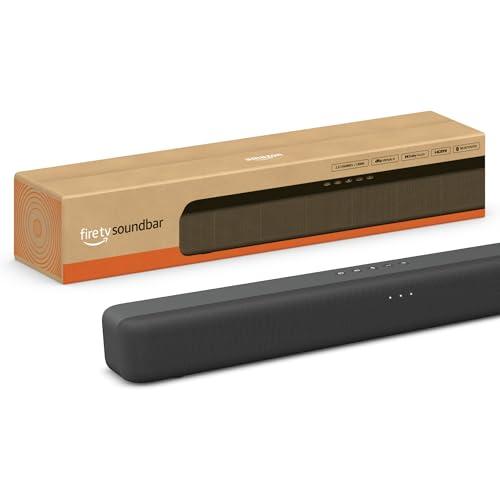
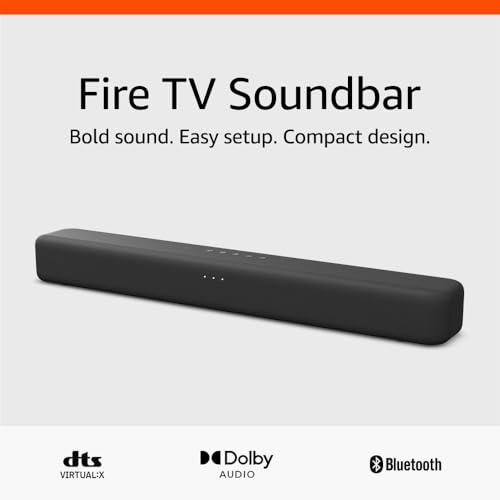
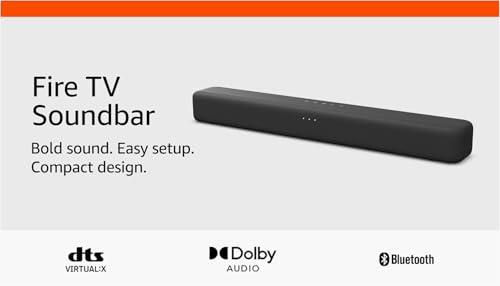
The Amazon Fire TV Soundbar, released in 2022, represents Amazon's entry into the budget soundbar market. Despite the "Fire TV" name, it's actually just a simple 2.0-channel soundbar that works with any TV—the branding is more about Amazon's ecosystem than any special Fire TV integration.
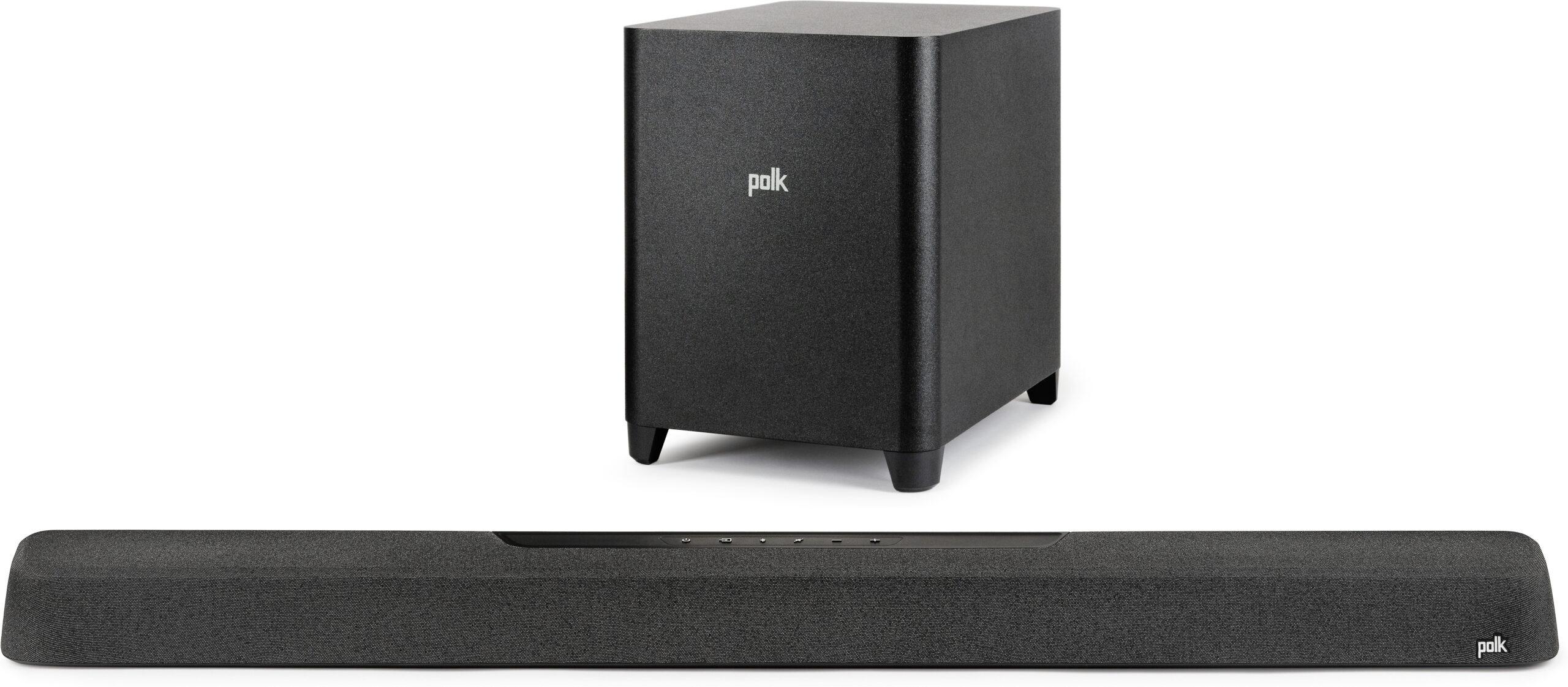
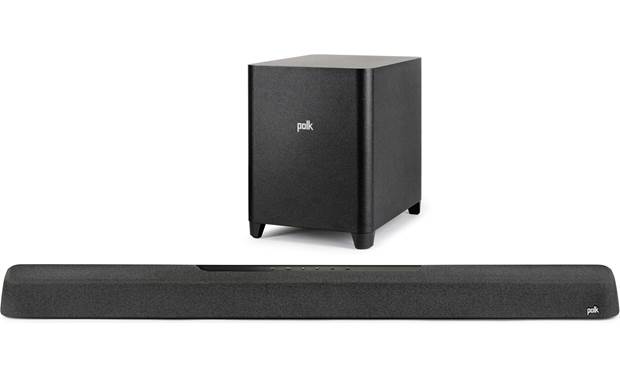
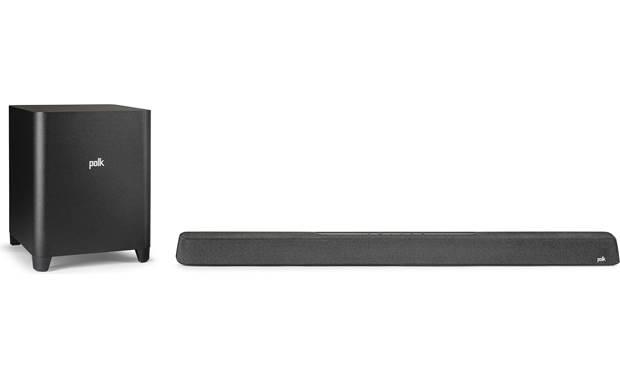
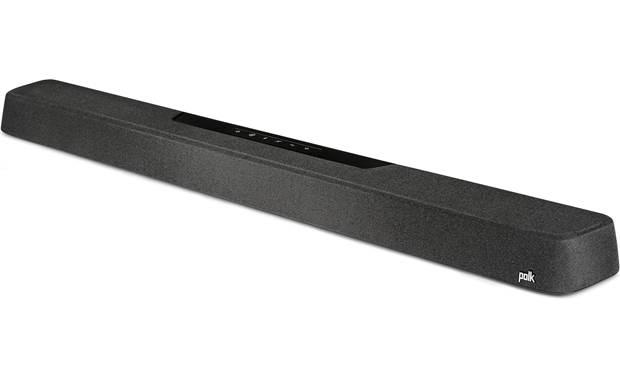
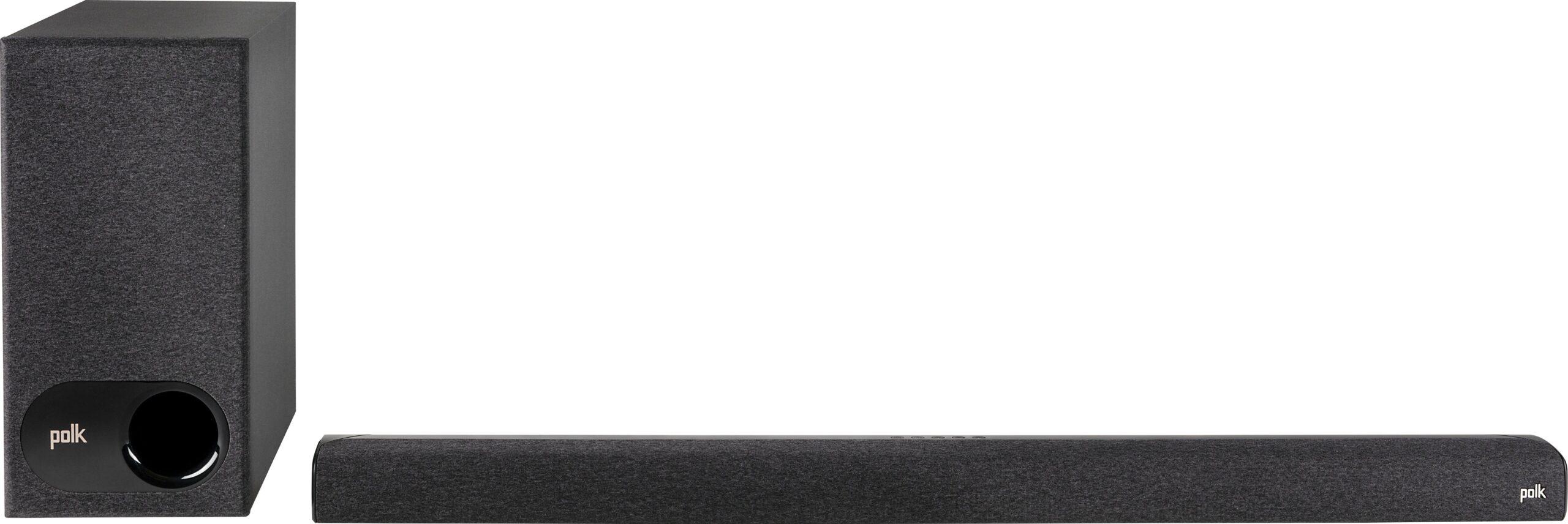
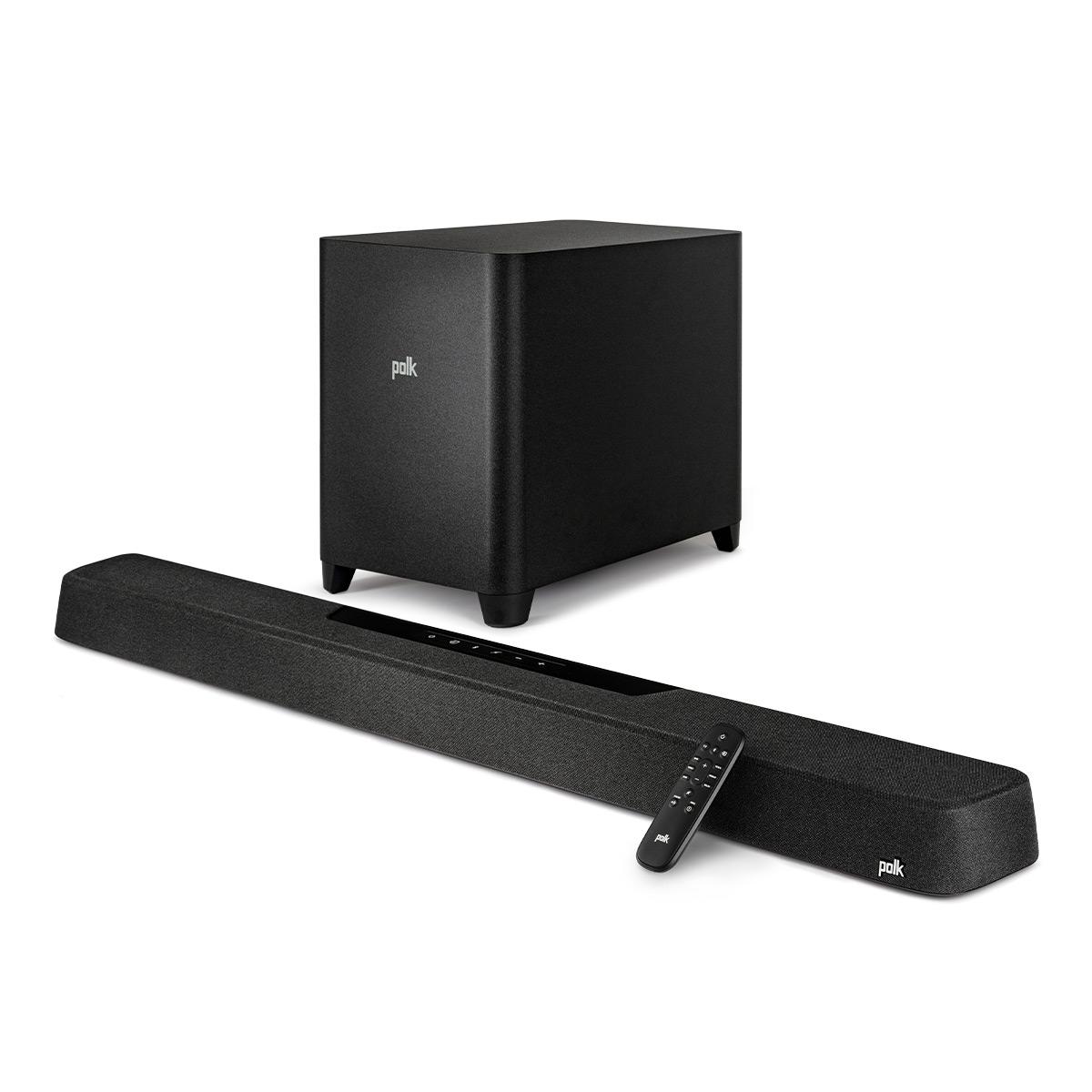
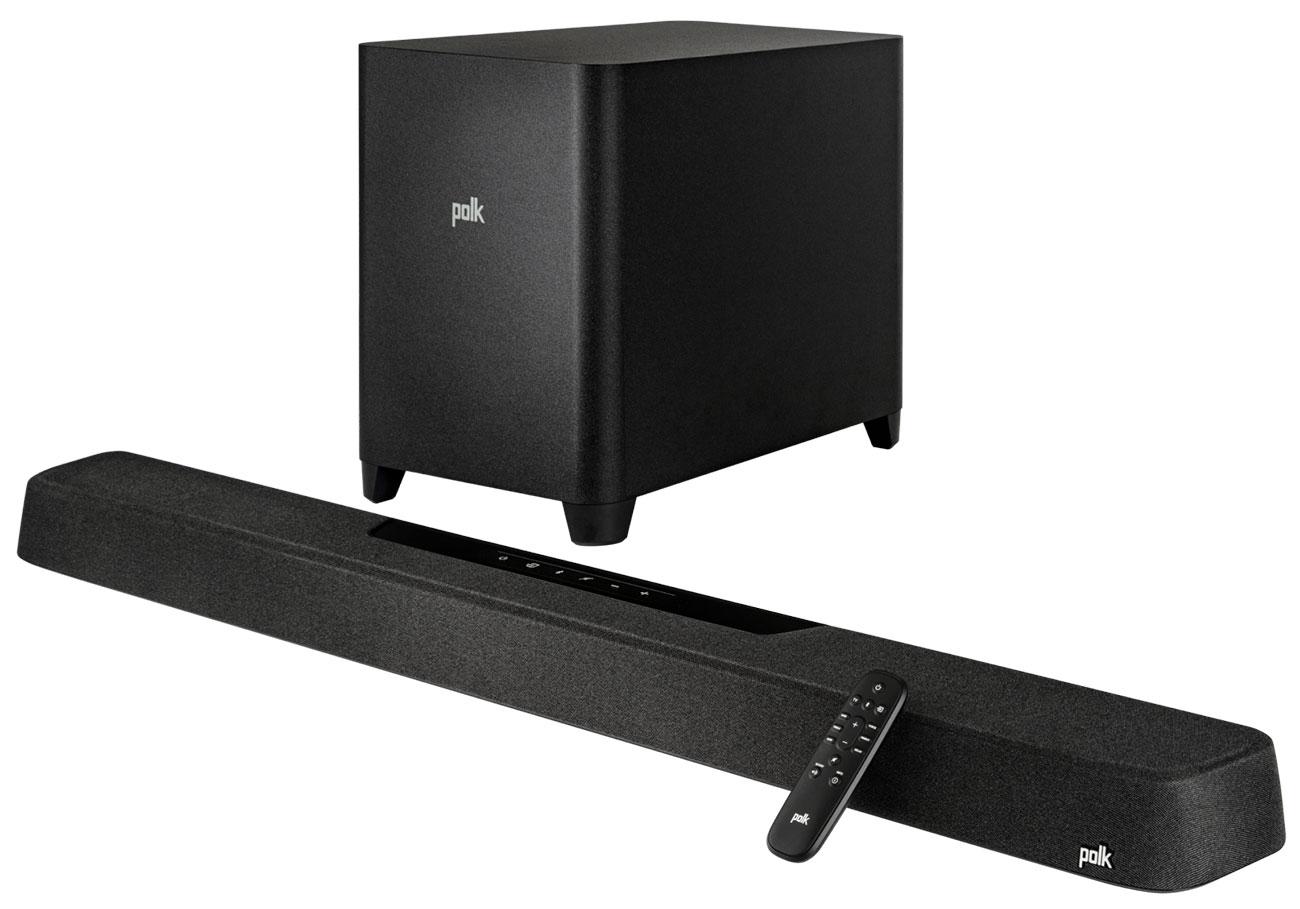
On the other end of the spectrum, the Polk Audio MagniFi Max AX, also from 2022, is a full home theater system disguised as a soundbar. Polk has been making speakers since 1972, and this system represents their attempt to bring serious audio performance to the soundbar format.
The timing is interesting—both launched during a period when streaming services were pushing higher-quality audio formats, and TV manufacturers were finally including eARC (enhanced Audio Return Channel) connections that could handle uncompressed surround sound. This technological backdrop explains why these products took such different approaches to the same market opportunity.
The Amazon Fire TV Soundbar uses two "Racetrack" drivers—oval-shaped speakers that fit more membrane area into a compact form factor. Each driver gets 20 watts of power, and they're tuned for a balanced sound signature that prioritizes dialogue clarity. The bass reflex design (a tuned port that enhances low frequencies) helps extend bass response despite the lack of a dedicated subwoofer.
In practice, this creates sound that's noticeably better than TV speakers, with a surprisingly wide soundstage for such a compact unit. The stereo separation is decent, and dialogue comes through clearly thanks to a dedicated voice mode. However, there's only so much two small drivers can do—bass is limited, and dynamic range (the difference between quiet and loud sounds) is compressed compared to larger systems.
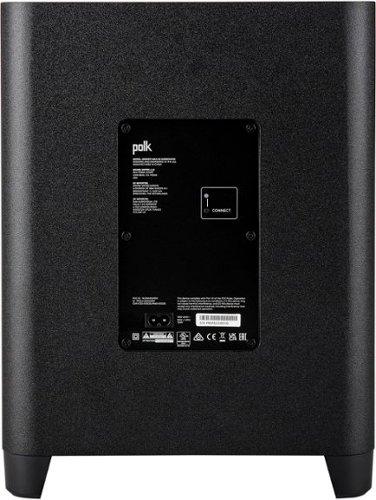
The Polk Audio MagniFi Max AX takes a completely different approach with its 11-speaker array. This includes dedicated tweeters (high-frequency drivers) and woofers (low-frequency drivers) for left and right channels, a center channel specifically for dialogue, and up-firing drivers that bounce sound off your ceiling to create height effects. The wireless subwoofer adds a 10-inch downward-firing driver that can produce the deep bass frequencies the main bar simply cannot.
This configuration creates dramatically different performance. The dedicated center channel means dialogue has its own speaker optimized for voice frequencies. The left and right channels can focus on music and effects without compromising speech clarity. The height channels add genuine overhead effects when playing Dolby Atmos content, while the subwoofer handles everything from movie explosions to music bass lines.
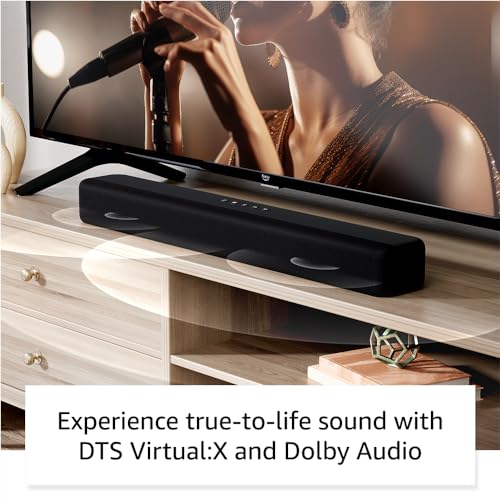
This is where the philosophical differences become most apparent. The Amazon Fire TV Soundbar relies on DTS Virtual:X processing, which analyzes regular stereo or surround sound and uses psychoacoustic tricks to create the illusion of a wider soundfield. It's clever technology, but it's working with just two speakers and no dedicated height drivers.
The results are mixed. You'll get a sense of sounds coming from slightly beyond the physical boundaries of the soundbar, and there's some illusion of height, but it's nothing like true surround sound. It's more like enhanced stereo—better than regular TV audio, but not transformative.
The Polk Audio system supports true Dolby Atmos and DTS:X processing. When you're watching compatible content (which includes most modern movies and many streaming shows), sounds can be precisely positioned in three-dimensional space. Helicopters fly overhead, rain falls from above, and ambient sounds surround you naturally.
The up-firing drivers are key here. They project sound upward at an angle, where it bounces off your ceiling and down to your listening position. When combined with proper room acoustics (reasonably flat ceilings work best), this creates convincing height effects that the Amazon bar simply cannot achieve.
Bass is where budget soundbars typically struggle most, and the Amazon Fire TV Soundbar is no exception. The bass reflex design helps, and there are three bass EQ settings to tune the response, but physics imposes limits. Small drivers in a small enclosure can only move so much air, which directly translates to how much bass you'll hear.
For dialogue-heavy content like news or sitcoms, this isn't a major limitation. For action movies or music, it becomes more noticeable. The soundbar will reproduce bass frequencies, but without the impact and extension that makes movie soundtracks engaging.
The Polk Audio system's 10-inch subwoofer changes the entire experience. Subwoofers specialize in low frequencies, using larger drivers and bigger enclosures to move the air volume needed for impactful bass. This isn't just about loudness—it's about reproducing the full frequency range of the audio content.
The dynamic range difference is equally significant. The Amazon soundbar compresses dynamics to prevent distortion and maintain reasonable bass response from small drivers. The Polk system can handle wide dynamic swings without strain, letting quiet dialogue remain clear while explosive effects hit with full impact.
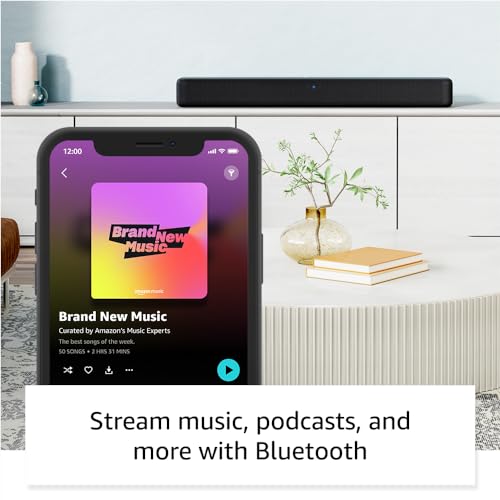
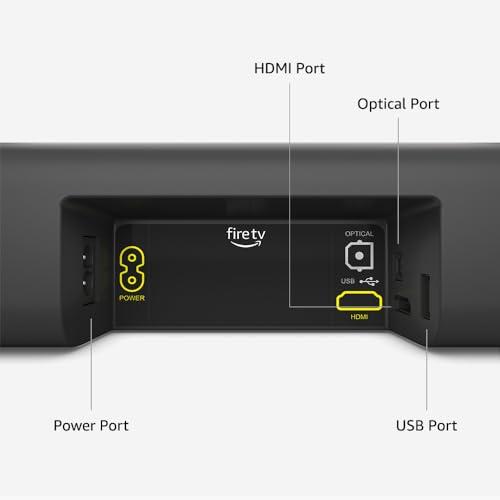
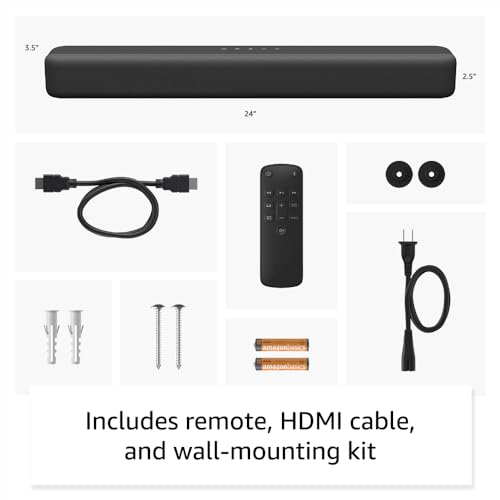
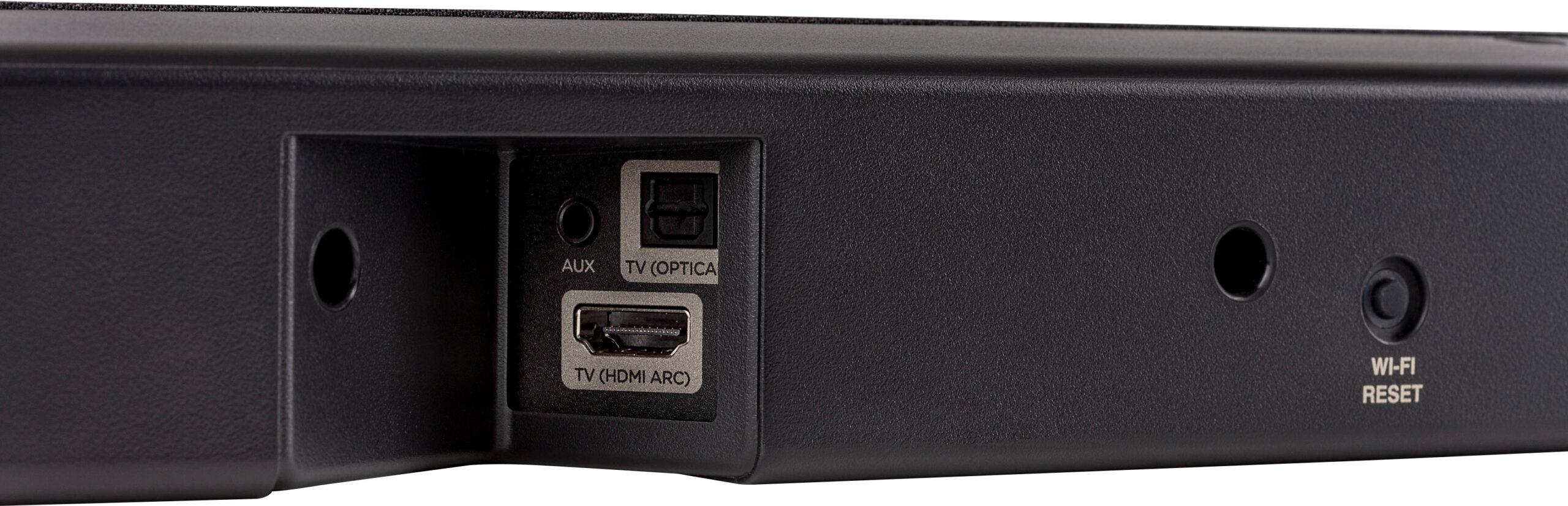
The Amazon Fire TV Soundbar keeps connectivity simple: HDMI ARC/eARC, optical input, and Bluetooth for wireless music streaming. Setup involves connecting one cable to your TV and you're done. The touch controls on the soundbar handle basic functions, though there's no remote included in most markets.
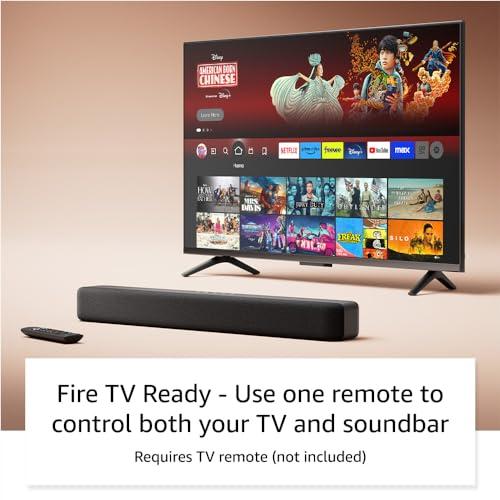
This simplicity is intentional. The target user wants better TV sound without complexity. The HDMI ARC connection means your TV remote can control soundbar volume, maintaining the single-remote experience most people prefer.
The Polk Audio MagniFi Max AX offers significantly more connectivity options, reflecting its positioning as a complete home theater hub. Beyond HDMI eARC, it includes three additional HDMI inputs with 4K/HDR passthrough, meaning you can connect multiple devices directly to the soundbar rather than using up TV inputs.
The wireless capabilities are more extensive too: Wi-Fi enables streaming services integration, AirPlay 2 works with Apple devices, Chromecast handles Android streaming, and Spotify Connect allows direct streaming from the app. Bluetooth 5.0 provides better range and stability than older Bluetooth versions.
The Polk system also includes multiple EQ presets (Movie, Music, Sports, Night Mode) and VoiceAdjust technology that lets you independently control dialogue levels—useful when background music or effects overwhelm speech in movies.
The Amazon Fire TV Soundbar makes sense in smaller living spaces where a full surround system would be overwhelming. Its compact 61cm width works well with smaller TVs, and the moderate bass output won't disturb neighbors in apartments or condos.
The three sound modes (Movie, Music, Dialog) help optimize performance for different content types, though the differences are subtle given the hardware limitations. Night Mode functionality would be useful here, but the Amazon soundbar lacks this feature—something that puts it at a disadvantage for apartment living.
The Polk Audio MagniFi Max AX shines in dedicated entertainment spaces where you can take advantage of its full capabilities. The system works best in medium to large rooms where the subwoofer can properly fill the space and the height channels have adequate ceiling clearance to create effective reflections.
The ability to expand to a 7.1.2 system by adding wireless rear speakers makes this particularly attractive for serious home theater enthusiasts. You can start with the basic system and add components as budget allows, creating a genuine surround sound experience.
The Amazon Fire TV Soundbar's bass reflex design allows placement directly against a wall without acoustic penalties—a practical advantage in many living rooms. The compact design also means it won't visually dominate smaller entertainment centers.
However, the DTS Virtual:X processing works best when you're positioned directly in front of the soundbar at an appropriate distance. Off-axis listening (sitting to the side) reduces the virtual surround effects significantly.
The Polk Audio system has more placement considerations. The up-firing drivers require adequate ceiling clearance and relatively flat ceilings for optimal performance. Vaulted or textured ceilings can interfere with the height effect reflections. The wireless subwoofer offers placement flexibility, letting you position it where bass response is best in your room.
The Amazon soundbar's two 20-watt amplifiers provide adequate power for its drivers and intended use case. The amplification is matched to the drivers' capabilities, though maximum volume is limited before distortion becomes noticeable.
The Polk system has significantly more total amplification spread across its 11 speakers, plus the powered subwoofer. This distributed power approach means each driver operates within its optimal range, reducing distortion and increasing overall headroom.
At the time of writing, the Amazon Fire TV Soundbar represents solid value for budget-conscious buyers seeking basic improvement over TV speakers. It delivers on its core promise—clearer dialogue and wider soundstage—without additional complexity or components.
However, the value equation becomes more complex when considering upgrade paths. The Amazon soundbar is essentially a dead end—there's no way to expand or improve the system beyond its inherent limitations. For users who might want better performance later, this lack of expandability reduces long-term value.
The Polk Audio MagniFi Max AX costs significantly more initially but includes a complete surround sound system with genuine expansion capabilities. When you factor in the included subwoofer and the option to add rear speakers later, the per-component value becomes more reasonable.
The price difference also reflects fundamental performance gaps rather than just brand premium. You're not paying extra for the same technology in fancier packaging—you're getting objectively superior audio capabilities.
Your primary goal is upgrading terrible TV speakers on a strict budget. The Amazon soundbar excels in this specific role, providing noticeably better dialogue clarity and a wider soundstage without requiring additional components or complex setup.
This makes sense for secondary rooms, smaller living spaces, or situations where simplicity trumps performance. If you primarily watch news, sitcoms, or other dialogue-heavy content, the performance limitations are less noticeable.
The compact form factor also works well with smaller TVs (32-43 inches) where a larger soundbar system would look disproportionate.
You want genuine home theater performance and are willing to invest accordingly. The Polk system delivers transformative audio quality that makes movies, games, and music substantially more engaging.
This system makes sense for larger TVs (55+ inches), dedicated entertainment rooms, and users who regularly consume high-quality content. If you watch movies frequently, play video games, or listen to music through your TV system, the performance advantages justify the higher cost.
The expandability factor also matters for users who might want to upgrade incrementally rather than replacing the entire system later.
These two soundbars serve fundamentally different purposes, and trying to compromise between them often leads to disappointment. The Amazon Fire TV Soundbar is an honest budget product that improves TV audio without pretending to be something it's not. The Polk Audio MagniFi Max AX is a legitimate home theater system that happens to be packaged as a soundbar.
Your choice should align with your performance expectations, room characteristics, and long-term audio goals. If you're just trying to make TV dialogue clearer and don't care about movie soundtracks or music playback, the Amazon option provides good value. If you want audio that enhances your entertainment experience rather than just making it acceptable, the Polk system justifies its higher cost through genuinely superior performance.
The technology improvements since 2022 have been incremental rather than revolutionary, making both products still relevant choices in their respective categories. However, the fundamental performance differences between 2.0 and 3.1.2 configurations remain as significant today as when these products launched.
| Amazon Fire TV Soundbar | Polk Audio MagniFi Max AX 3.1.2 |
|---|---|
| Channel Configuration - Determines surround sound capabilities | |
| 2.0 stereo (no height channels or subwoofer) | 3.1.2 (left/center/right + subwoofer + 2 height channels) |
| Dolby Atmos Support - Essential for immersive movie audio | |
| No true Atmos (DTS Virtual:X simulation only) | Full Dolby Atmos and DTS:X with dedicated height drivers |
| Subwoofer - Critical for bass impact in movies and music | |
| None included (limited bass from main drivers) | 10" wireless subwoofer included |
| Total Speakers - More drivers typically mean better sound quality | |
| 2 drivers (20W each) | 11-speaker array plus separate subwoofer |
| HDMI Connectivity - Important for 4K/HDR passthrough | |
| HDMI ARC/eARC only | HDMI eARC + 3 additional 4K/HDR inputs |
| Smart Features - Convenience for streaming and control | |
| Basic (Bluetooth only) | Wi-Fi, AirPlay 2, Chromecast, Spotify Connect, Alexa compatible |
| Expandability - Future upgrade potential | |
| None (fixed 2.0 system) | Can expand to 7.1.2 with optional wireless rear speakers |
| Size and Weight - Impacts placement flexibility | |
| Compact: 61cm wide, 1.8kg | Larger: Soundbar + separate subwoofer |
| Best Use Case - Who should consider each option | |
| Budget TV audio upgrade, small rooms, simple setup | Home theater enthusiasts, large rooms, movie/gaming focus |
| Voice Control - Hands-free operation convenience | |
| None | Amazon Alexa compatibility |
| Night Mode - Important for apartment living | |
| Not available | Yes, with bass reduction and dialogue enhancement |
The Polk Audio MagniFi Max AX is significantly better for movies and TV shows due to its true Dolby Atmos support, dedicated center channel for dialogue clarity, and 10-inch subwoofer for impactful sound effects. The Amazon Fire TV Soundbar only offers basic stereo sound with simulated surround effects, making it suitable for casual TV viewing but not immersive movie experiences.
The Amazon Fire TV Soundbar uses a 2.0 configuration with just left and right channels, while the Polk Audio MagniFi Max AX features a 3.1.2 setup with left/center/right channels, one subwoofer, and two height channels. This means the Polk system can produce true surround sound with overhead effects, whereas the Amazon soundbar is limited to enhanced stereo.
Yes, for impactful bass in movies and music, a dedicated subwoofer makes a huge difference. The Polk Audio MagniFi Max AX includes a wireless 10-inch subwoofer that delivers deep, room-filling bass. The Amazon Fire TV Soundbar has no subwoofer, so bass is limited to what its small drivers can produce, which is adequate for dialogue but weak for action scenes.
The Amazon Fire TV Soundbar is much simpler to set up - just connect one HDMI cable to your TV and you're done. The Polk Audio MagniFi Max AX requires positioning both the soundbar and wireless subwoofer, plus configuring multiple connection options and audio settings, though it offers more flexibility once set up.
Both the Amazon Fire TV Soundbar and Polk Audio MagniFi Max AX work with virtually any TV that has HDMI ARC or optical audio outputs. Despite the "Fire TV" name, the Amazon soundbar isn't limited to Fire TV devices and connects to Samsung, LG, Sony, and other TV brands.
The Amazon Fire TV Soundbar is better suited for small apartments due to its compact size, moderate volume output that won't disturb neighbors, and simple setup. However, it lacks a night mode feature. The Polk Audio MagniFi Max AX has better night mode functionality but may be too powerful for very small spaces.
Only the Polk Audio MagniFi Max AX supports true Dolby Atmos with dedicated up-firing speakers that create genuine height effects. The Amazon Fire TV Soundbar uses DTS Virtual:X processing to simulate surround sound but cannot produce real Atmos effects due to its 2-channel limitation.
This depends on your needs. The Amazon Fire TV Soundbar offers excellent value for basic TV audio improvement at a budget-friendly price. The Polk Audio MagniFi Max AX costs significantly more but includes a complete surround sound system with subwoofer, making it better value for serious home theater use.
The Amazon Fire TV Soundbar cannot be expanded - it's a fixed 2.0 system with no upgrade options. The Polk Audio MagniFi Max AX can be expanded to a full 7.1.2 surround system by adding optional wireless rear speakers, making it more future-proof for growing audio needs.
The Polk Audio MagniFi Max AX is far superior for music with its wider frequency response, dedicated subwoofer for bass extension, and multiple streaming options including Wi-Fi, AirPlay 2, and Spotify Connect. The Amazon Fire TV Soundbar only offers basic Bluetooth streaming and limited bass response for music.
The Amazon Fire TV Soundbar is very compact at 61cm wide and can sit directly against a wall. The Polk Audio MagniFi Max AX requires more space for both the main soundbar and separate subwoofer placement, plus adequate ceiling height for the up-firing speakers to work effectively.
For large living rooms, the Polk Audio MagniFi Max AX is the clear choice with its powerful 11-speaker array, wireless subwoofer, and ability to fill bigger spaces with immersive sound. The Amazon Fire TV Soundbar may struggle to provide adequate volume and bass impact in larger rooms due to its compact size and limited power.
We've done our best to create useful and informative comparisons to help you decide what product to buy. Our research uses advanced automated methods to create this comparison and perfection is not possible - please contact us for corrections or questions. These are the sites we've researched in the creation of this article: rtings.com - developer.amazon.com - stereoguide.com - developer.amazon.com - techradar.com - hometechnologyreview.com - whathifi.com - youtube.com - whathifi.com - wirelessplace.com - hometechnologyreview.com - dolby.com - aboutamazon.com - developer.amazon.com - community.anker.com - youtube.com - cordbusters.co.uk - youtube.com - avsforum.com - rtings.com - rtings.com - bestbuy.com - walts.com - hometechnologyreview.com - polkaudio.com - pcrichard.com

Privacy Policy
Terms and Conditions - Affiliate Policy
Home Security
© Copyright 2008-2026.
11816 Inwood Rd #1211, Dallas, TX 75244