




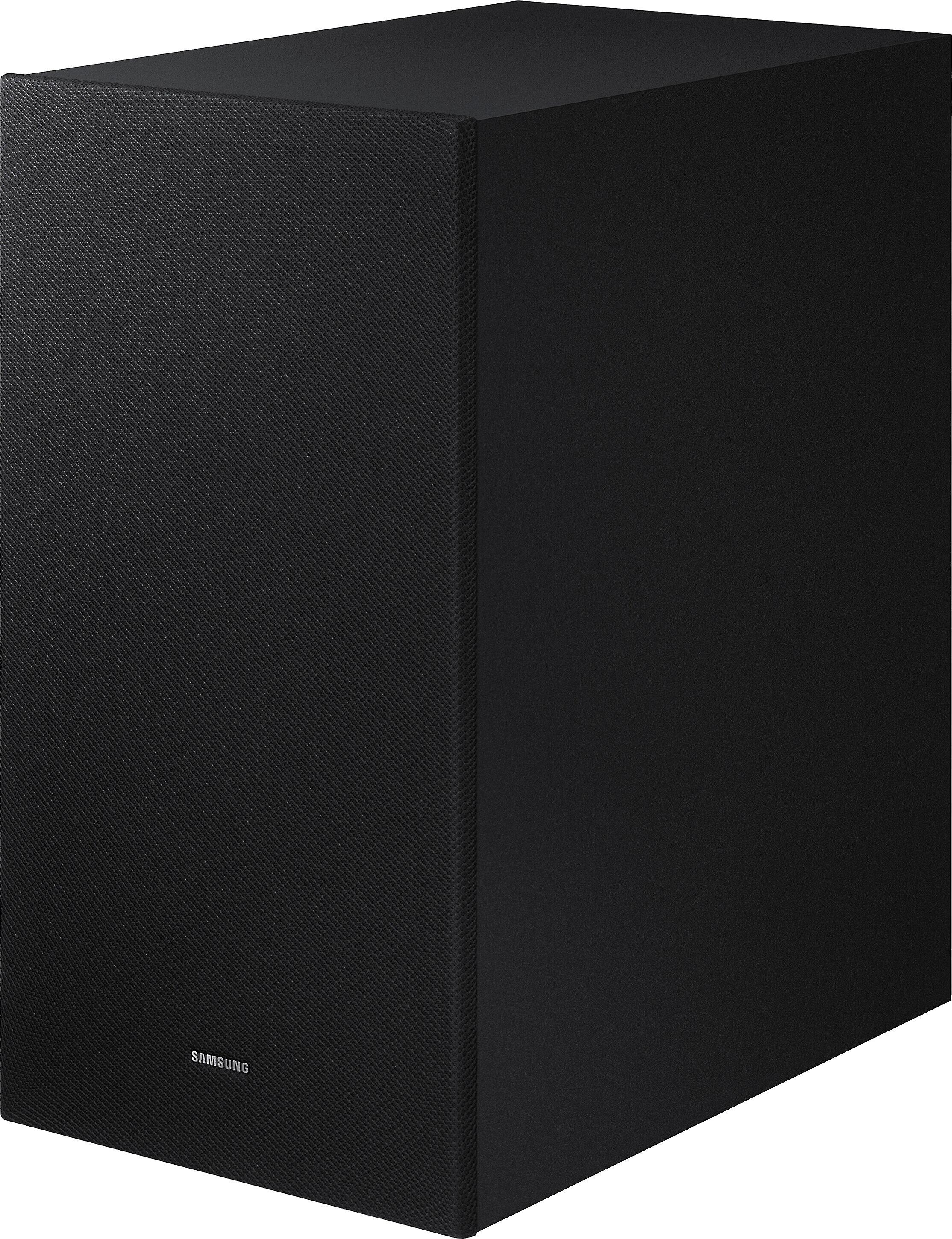
If you've ever struggled to hear dialogue over your TV's built-in speakers or felt like explosions in movies sound more like gentle pops, you're not alone. Most TV manufacturers prioritize thin designs over audio quality, cramming tiny speakers into impossibly slim panels. That's where soundbars come in—they're designed to sit below your TV and dramatically improve your audio experience without the complexity of a full surround sound system.
Today we're comparing two popular entry-level options: the Amazon Fire TV Soundbar and the Samsung HW-B550D. While both aim to solve the same problem, they take fundamentally different approaches. Understanding these differences will help you choose the right one for your setup and budget.
Before diving into specifics, let's clarify what those numbers like "2.0" and "3.1" actually mean—it's simpler than it looks. The first number represents the main channels (left, right, and center), while the second number indicates dedicated subwoofers. So a 2.0 system has left and right channels with no separate subwoofer, while a 3.1 system adds a center channel for dialogue plus a dedicated subwoofer for bass.
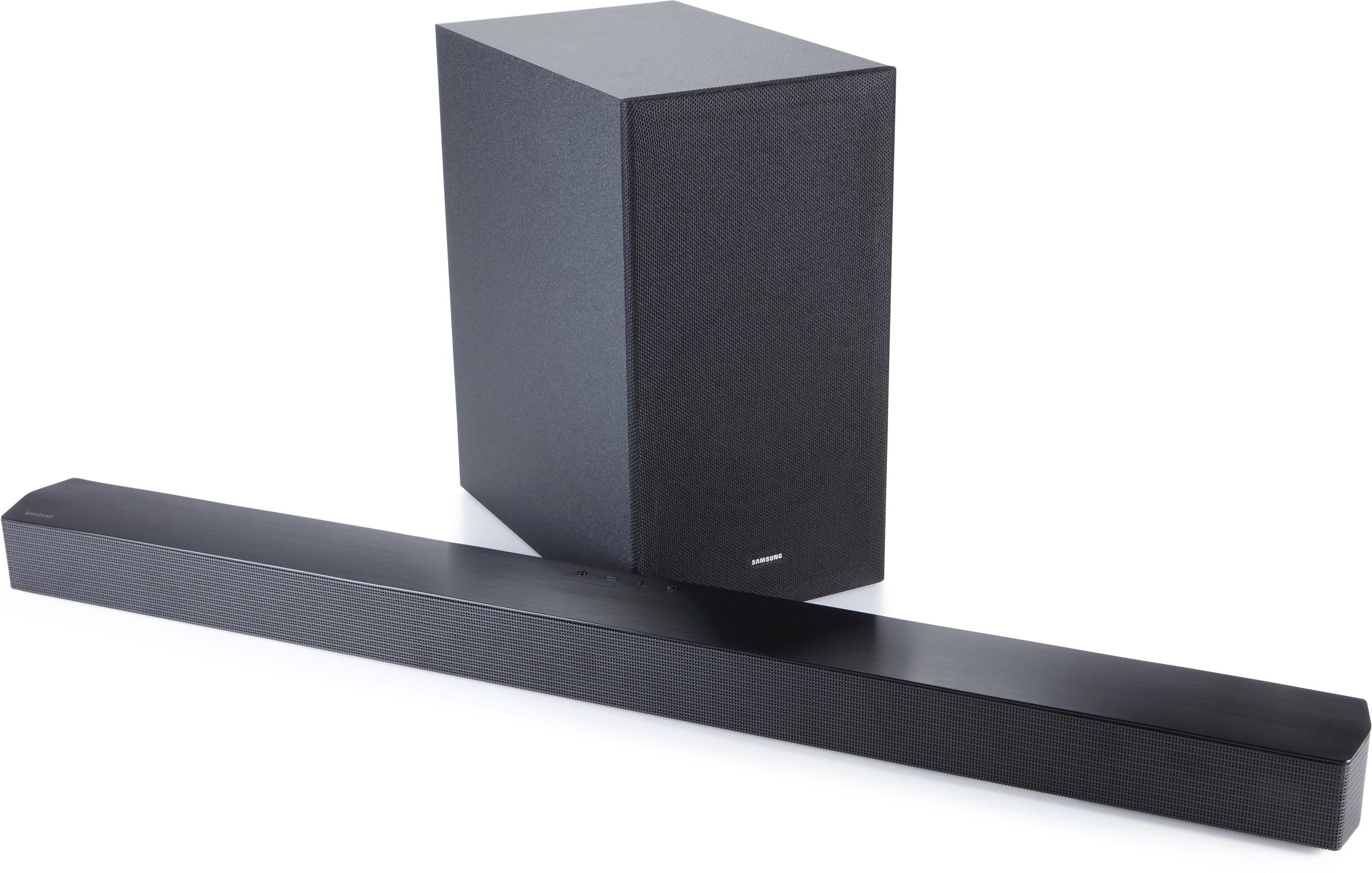
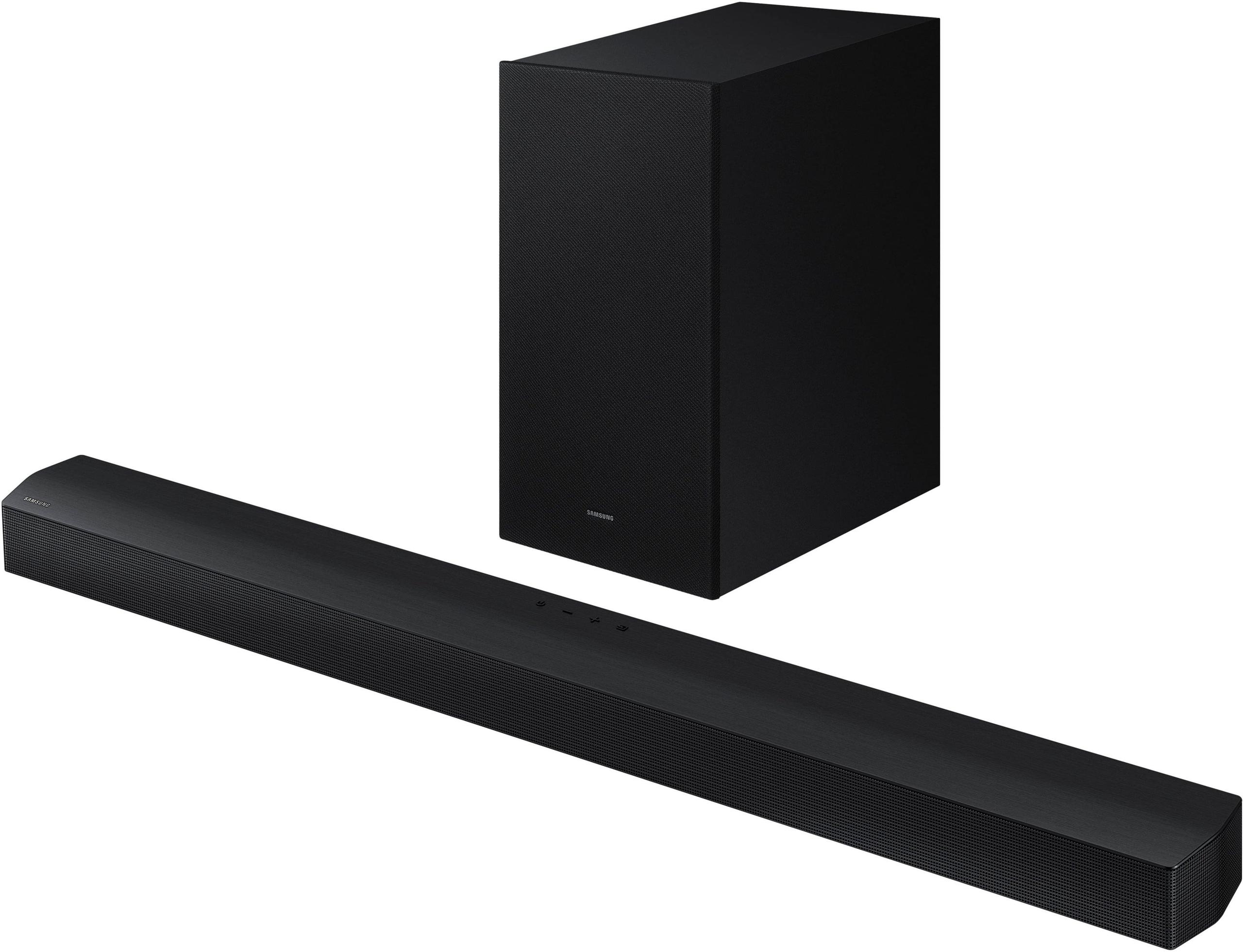
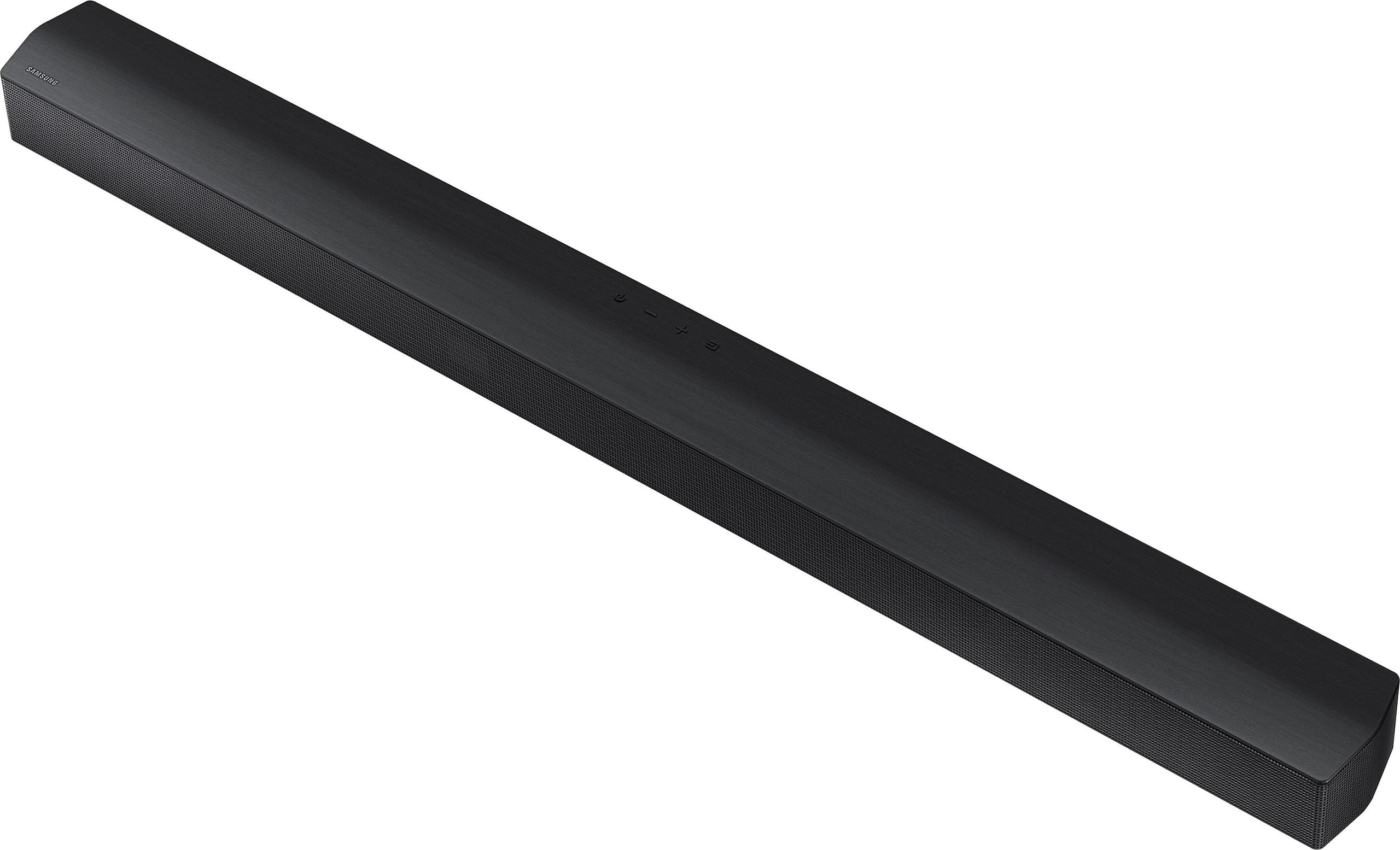
This distinction matters enormously for performance. The Amazon Fire TV Soundbar uses a 2.0 configuration, meaning it relies entirely on its two built-in drivers to handle everything from whispered dialogue to thunderous explosions. The Samsung HW-B550D, with its 3.1 setup, can dedicate specific drivers to different tasks—the center channel focuses on dialogue clarity while the wireless subwoofer handles all the low-frequency effects.
The center channel deserves special attention because it's where most movie dialogue comes from. When you have a dedicated center speaker positioned directly below your TV, voices appear to come from the actors' mouths on screen rather than floating somewhere off to the side. It's a subtle but important improvement that becomes more noticeable the more you watch.
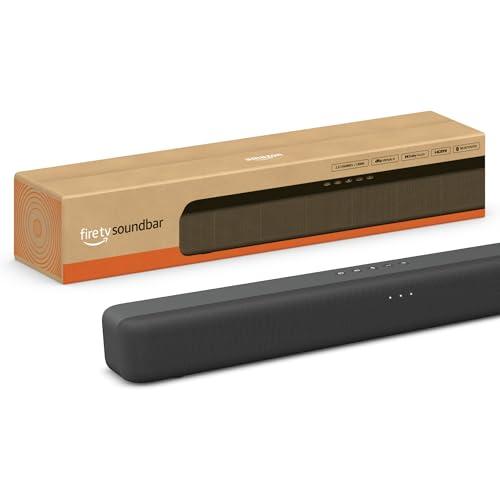
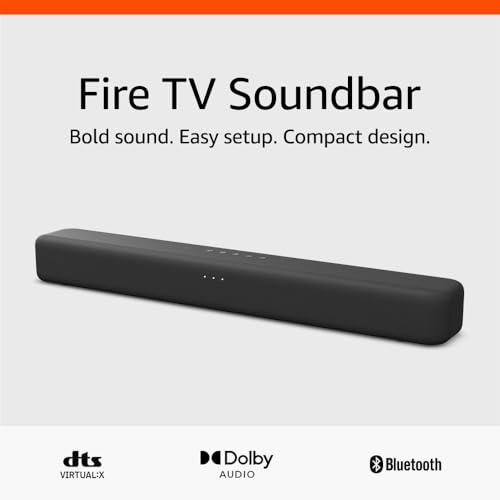
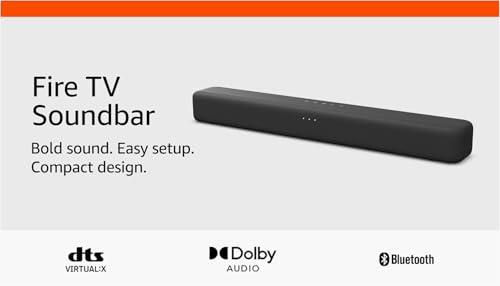
The Amazon Fire TV Soundbar, released in 2024, represents Amazon's first serious attempt at audio hardware beyond their Echo speakers. It's part of Amazon's broader strategy to create an integrated ecosystem around their Fire TV streaming devices, though ironically it works with any TV via standard connections.
The Samsung HW-B550D launched in 2021 as part of Samsung's B-series lineup, which positioned itself as the company's budget-friendly offering below their premium Q-series models. Since 2021, the soundbar market has seen significant improvements in virtual surround processing and connectivity options, but the fundamental audio architecture of both products remains relevant today.
What's particularly interesting is how these products reflect different philosophies about audio improvement. Amazon focused on creating the smallest possible device that still delivers meaningfully better sound than TV speakers. Samsung took a more traditional approach, building what amounts to a scaled-down version of higher-end soundbar systems.
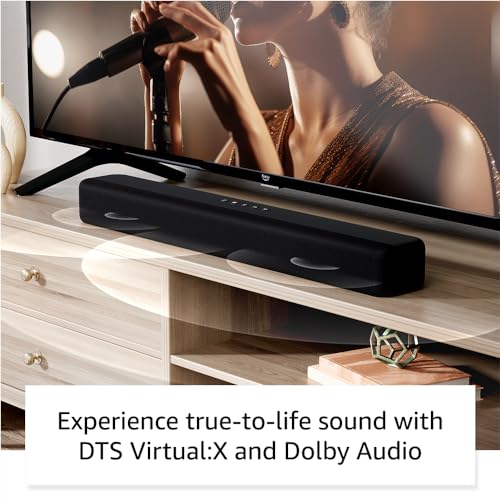
The Amazon Fire TV Soundbar surprises with how much sound it extracts from such a compact design. Its two "Racetrack" drivers—oval-shaped speakers that pack more membrane area into a smaller space—create a surprisingly wide soundstage. When watching dialogue-heavy content like dramas or news programs, voices sound clear and well-positioned. The built-in bass reflex system, which uses a front-facing port to enhance low frequencies, helps the soundbar produce fuller sound than you'd expect from something so small.
However, the laws of physics eventually catch up. Without a dedicated subwoofer, the Amazon Fire TV Soundbar simply cannot reproduce the deep bass that makes action sequences feel impactful. Explosions lack weight, music loses its rhythmic foundation, and you'll find yourself missing the visceral impact that proper bass provides. It's like watching a fireworks display in black and white—technically accurate but missing a crucial dimension.
The Samsung HW-B550D addresses this limitation head-on with its wireless subwoofer. That dedicated bass driver transforms the entire listening experience, adding the low-frequency impact that makes movies feel cinematic. The difference becomes apparent immediately when switching between the two systems—suddenly, car engines have rumble, movie scores have depth, and action sequences carry the weight they're supposed to.
But the Samsung's advantages extend beyond just bass. Its dedicated center channel, positioned in the middle of the soundbar, creates what audio engineers call "phantom center imaging"—dialogue appears to come directly from the TV screen rather than floating somewhere between the left and right speakers. This isn't just a technical nicety; it makes following conversations more natural, especially in scenes with multiple speakers or background noise.
Both soundbars use DTS Virtual:X technology, which attempts to create a surround sound experience from front-facing speakers. Think of it as audio software that manipulates timing and phase relationships to trick your ears into perceiving sounds coming from beside or behind you. It's impressive technology, though it can't match the precision of actual surround speakers placed around your room.
The Amazon Fire TV Soundbar's implementation of DTS Virtual:X works better than expected given its two-driver limitation. The system creates a sense of width and some height effects, making movie soundtracks feel more spacious than traditional stereo. However, the processing has more raw material to work with on the Samsung HW-B550D, where multiple drivers can create more convincing directional effects.
The Samsung also includes Adaptive Sound Lite, which automatically analyzes incoming audio and adjusts the soundbar's processing accordingly. When watching a quiet drama, it emphasizes dialogue clarity. During action sequences, it opens up the soundstage and enhances surround effects. While not revolutionary, these automatic adjustments reduce the need to manually switch between sound modes.
This is where the fundamental architectural differences between these soundbars become most apparent. The Amazon Fire TV Soundbar uses clever engineering to maximize bass from its compact enclosure. The bass reflex design with its front-facing port helps extend low-frequency response, and the integrated construction allows for wall placement without acoustic compromises.
Yet there's only so much a 2.0 system can do. Physics dictates that deep bass requires either large drivers or dedicated enclosures designed specifically for low frequencies. The Amazon soundbar manages respectable mid-bass—you'll hear the thump of kick drums and the rumble of vehicles—but it cannot reproduce the truly deep frequencies that make your chest vibrate during explosive scenes.
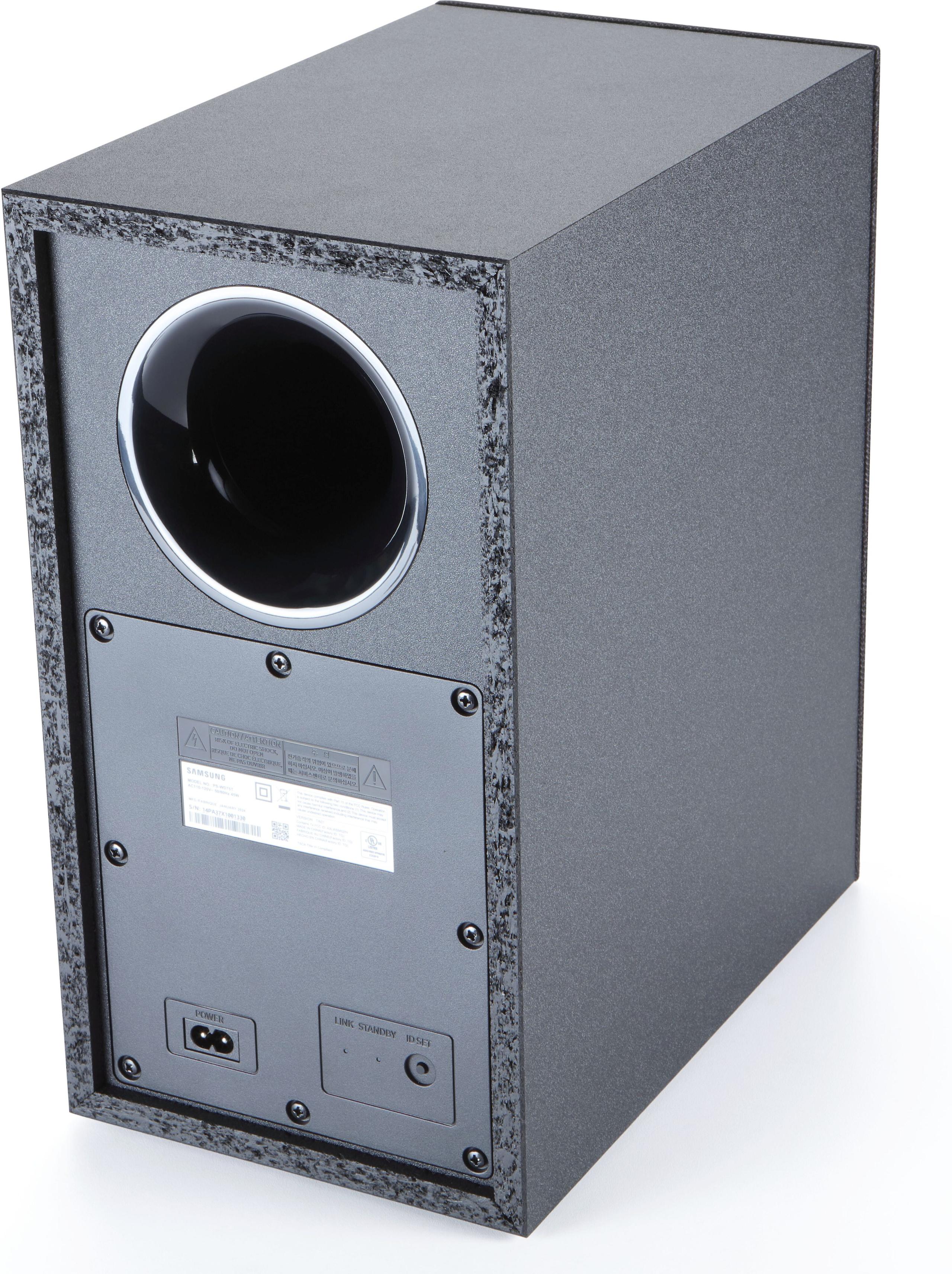
The Samsung HW-B550D's 5-inch wireless subwoofer operates in an entirely different league. Dedicated subwoofers can be optimized purely for bass reproduction, with larger drivers and enclosures designed to move the air volume necessary for deep frequencies. The result is bass that doesn't just sound different—it feels different. Movie soundtracks gain the foundation they need to create genuine impact.
The Samsung's Bass Boost mode pushes this advantage further, allowing users to emphasize low frequencies when content demands it. This isn't just about volume; proper bass adds emotional weight to scenes and helps integrate the entire frequency spectrum into a cohesive whole.
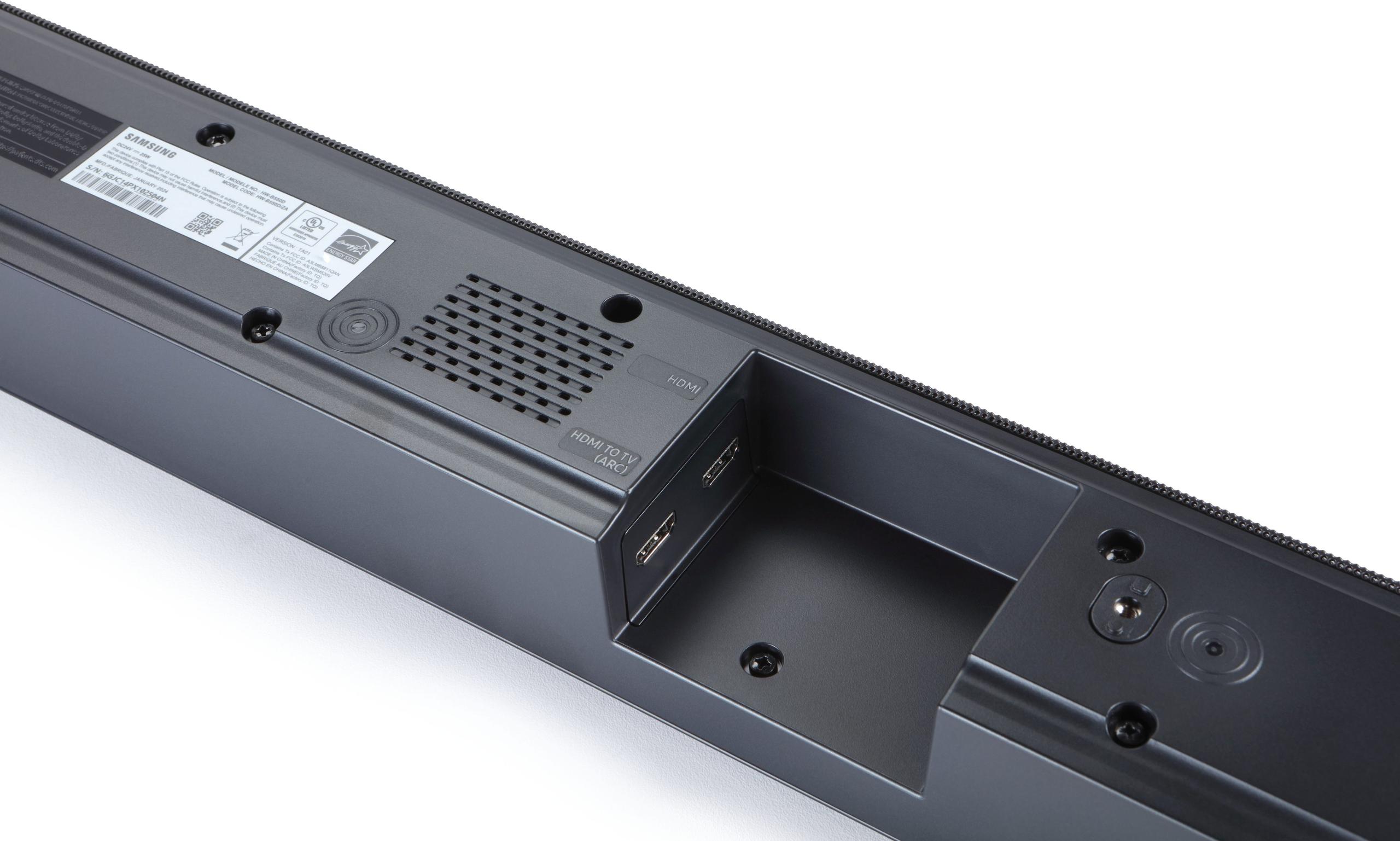
The Amazon Fire TV Soundbar actually holds an advantage in future-proofing with its HDMI eARC support. eARC (enhanced Audio Return Channel) represents the latest HDMI audio standard, capable of handling high-resolution audio formats that regular ARC cannot. While this might seem academic for budget soundbars, it means the Amazon model can handle whatever audio formats your TV throws at it, now and in the future.
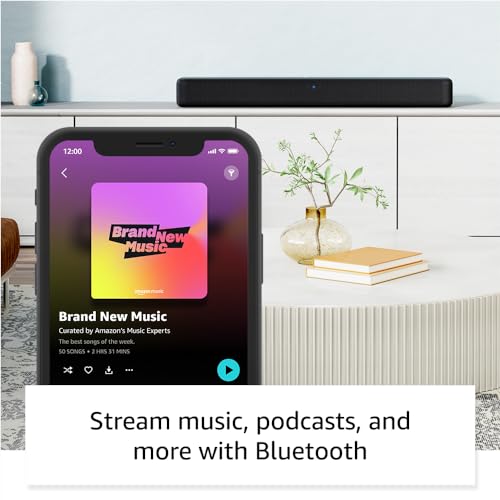
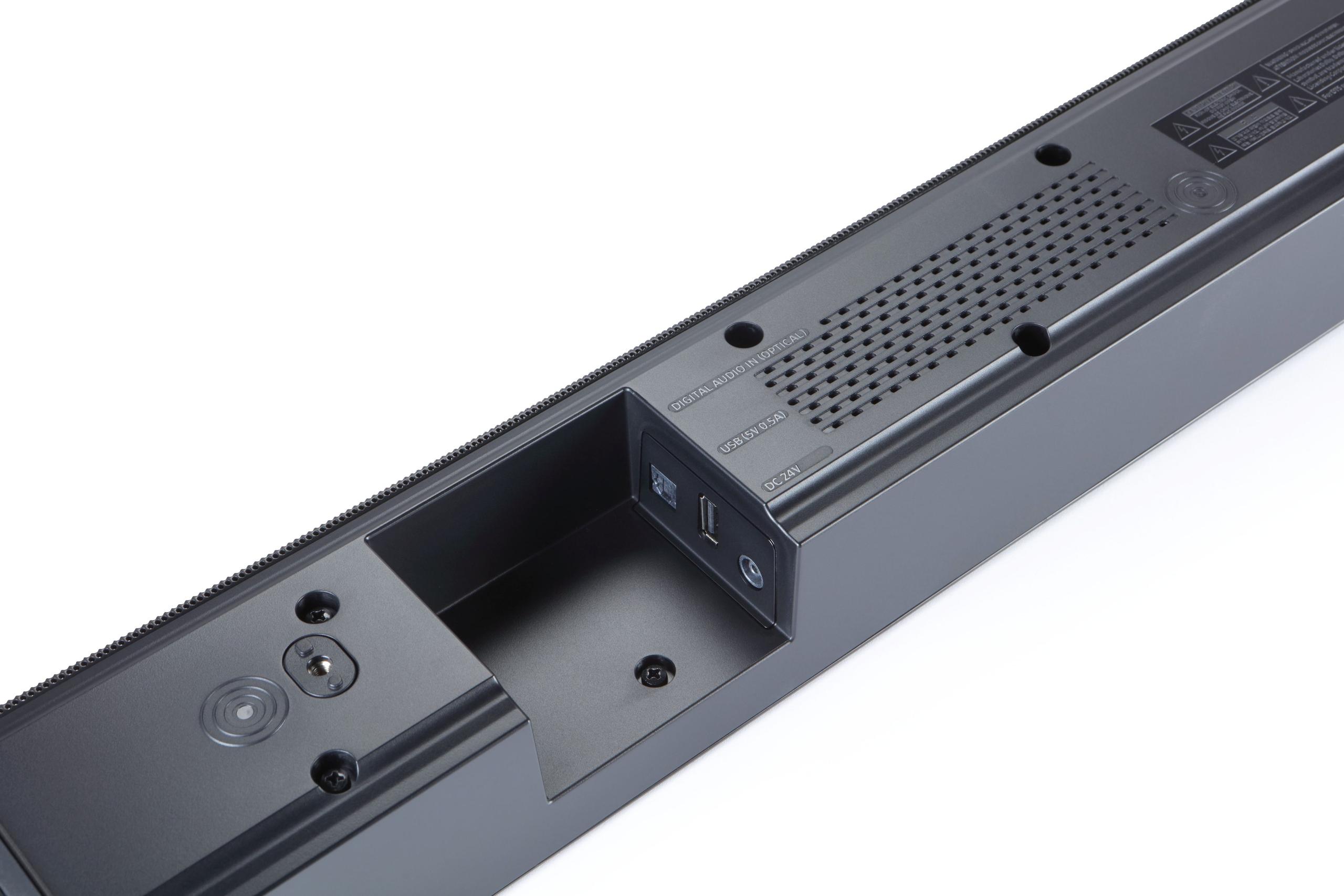
The Samsung HW-B550D uses the older HDMI ARC standard, which handles current content fine but may become limiting as streaming services adopt higher-quality audio formats. However, Samsung compensates with more diverse connectivity options, including USB ports for direct audio playback and more sophisticated Bluetooth implementation that can pair with multiple devices simultaneously.
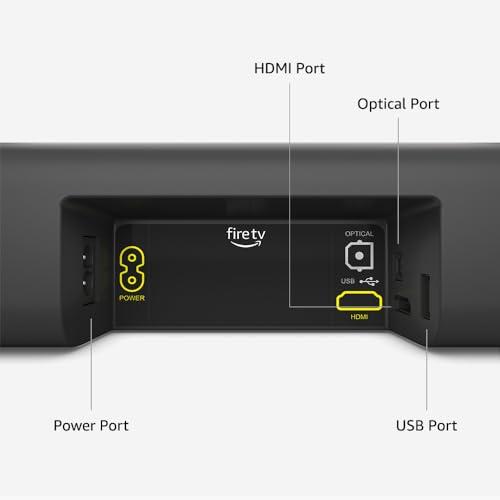
Both soundbars include optical connections for compatibility with older TVs, ensuring they'll work regardless of your television's age or feature set. The setup process for both is refreshingly simple—connect one cable, and you're usually done.
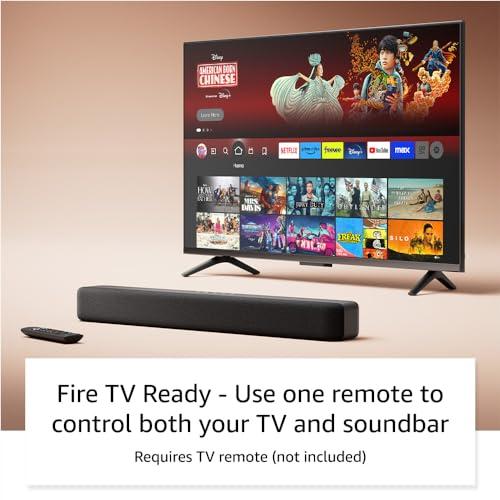
Here's where expectations might diverge from reality. Despite carrying the "Fire TV" name, the Amazon soundbar doesn't actually integrate with Fire TV devices in any special way, nor does it include Alexa voice control. It's simply a soundbar that happens to be made by Amazon. The naming seems designed more for brand recognition than functional integration.
The Samsung HW-B550D includes several convenience features that enhance daily use. Its Game Mode uses cross-talk cancellation to reduce distracting audio artifacts during gaming, creating a cleaner soundstage for competitive play. The Voice Enhancement feature specifically boosts dialogue frequencies, helpful when watching content with heavy accents or poor audio mixing. Night Mode compresses dynamic range, preventing loud explosions from waking the household while keeping dialogue audible.
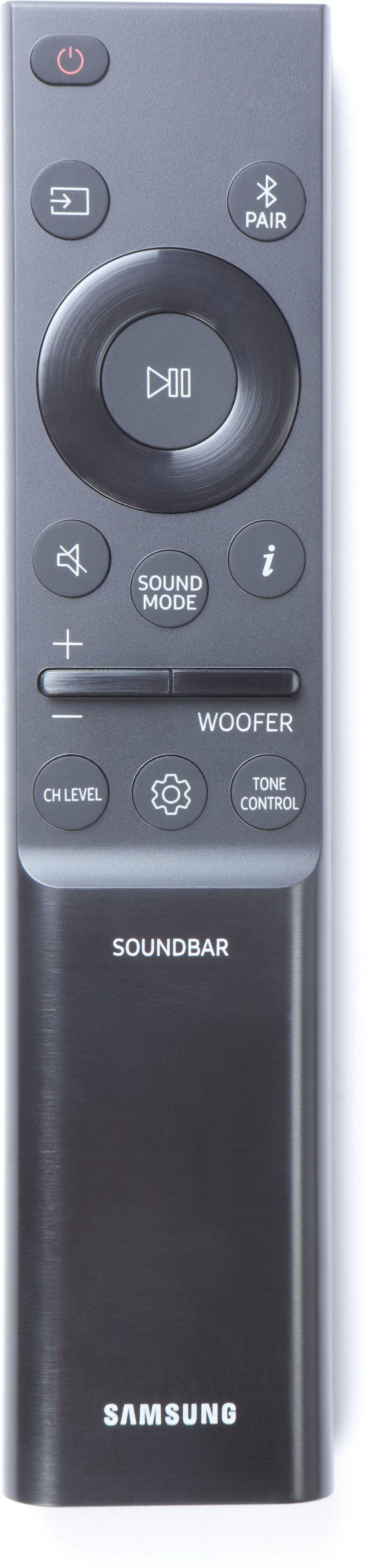
Both soundbars can be controlled via your TV remote through HDMI CEC, eliminating the need for additional remotes in most cases. This might seem minor, but it significantly improves the daily user experience.
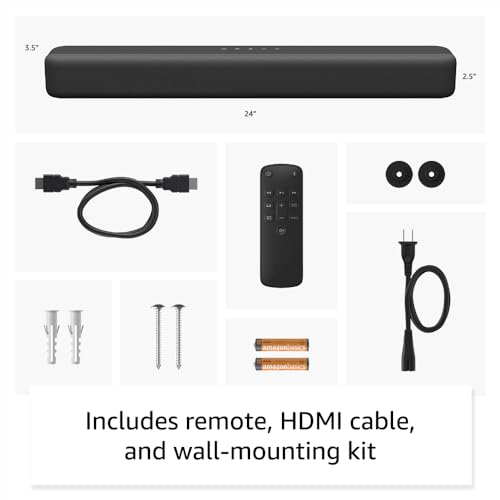
The Amazon Fire TV Soundbar wins decisively on footprint. At just 61cm wide and remarkably slim, it practically disappears below most TVs. This makes it ideal for smaller spaces, bedroom setups, or situations where aesthetic minimalism matters. The compact design also simplifies installation—there's no subwoofer to position or additional cables to hide.
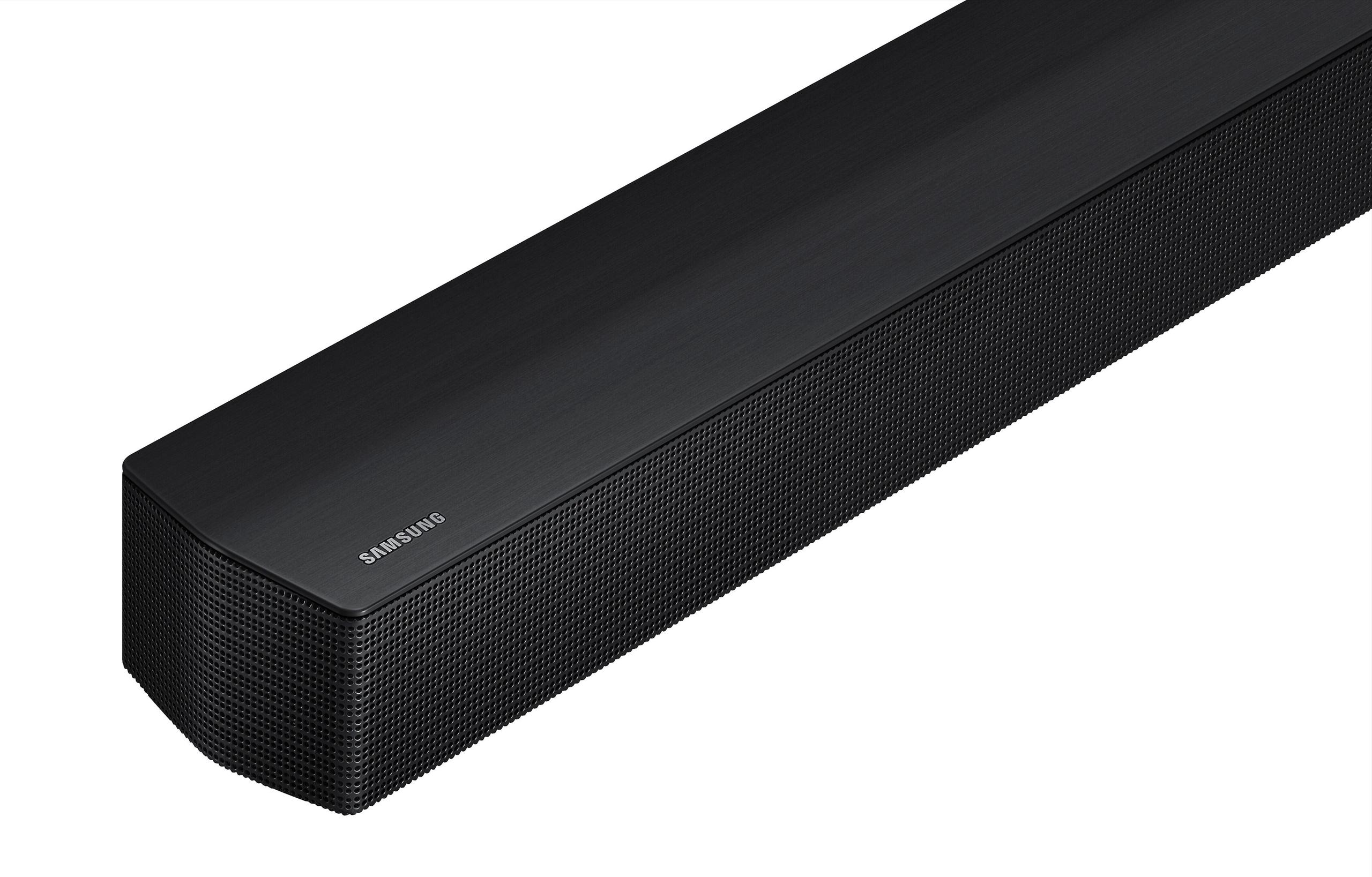
The Samsung HW-B550D demands more real estate. The main soundbar stretches 86cm wide, appropriate for medium to large TVs, while the wireless subwoofer requires floor space somewhere in your room. This flexibility in subwoofer placement can actually be advantageous—you can position it where it sounds best rather than where it looks best—but it does add complexity to room planning.
For apartment dwellers or those with space constraints, the Amazon's all-in-one design removes variables from the equation. For homeowners with dedicated entertainment spaces, the Samsung's larger scale and separate components often integrate better with the room's acoustics.
At the time of writing, the Amazon Fire TV Soundbar costs roughly half what you'd pay for the Samsung HW-B550D. This price difference fundamentally shapes how we should evaluate each product's merits.
The Amazon represents exceptional value for what it delivers. Users coming from TV speakers will notice immediate improvements in clarity, soundstage width, and overall audio quality. For casual viewing—news, talk shows, streaming series—it provides most of the benefits of a soundbar at minimum cost and complexity.
However, this value equation changes as your audio expectations grow. The Amazon soundbar has no upgrade path; you cannot add a subwoofer later or expand the system. What you buy is what you get, and users who develop more sophisticated audio tastes may find themselves wanting more within months.
The Samsung HW-B550D costs significantly more upfront but delivers a more complete audio experience from day one. Its 3.1 configuration with dedicated subwoofer provides the foundation for genuine home theater enjoyment. More importantly, it's less likely to leave users feeling like they need an upgrade as their appreciation for good audio develops.
For dedicated home theater use, the performance gap between these soundbars becomes more pronounced. The Samsung HW-B550D handles the dynamic range of movie soundtracks more effectively, with its subwoofer providing the foundation necessary for cinematic impact. Action sequences, musical scores, and sound effects gain the weight and presence that directors intended.
The Amazon Fire TV Soundbar can certainly improve your movie-watching experience over TV speakers, but it's better suited for casual viewing than dedicated home theater sessions. If your primary entertainment involves streaming shows and lighter content, its limitations become less apparent.
Neither soundbar includes Dolby Atmos support, which has become increasingly common in streaming content and Blu-ray releases. Atmos creates height effects by bouncing sound off your ceiling, adding a vertical dimension to movie soundtracks. While both soundbars use virtual processing to simulate some height effects, they cannot match true Atmos systems. Users serious about home theater might want to consider spending more for Atmos-capable models.
The decision between these soundbars ultimately comes down to your priorities, space constraints, and audio expectations. The Amazon Fire TV Soundbar excels as a simple, space-efficient upgrade that delivers meaningful improvement over TV speakers without complexity or major investment. It's perfect for bedrooms, small apartments, or as a testing ground to see if soundbar benefits justify future upgrades.
The Samsung HW-B550D provides a more complete audio solution that addresses the fundamental limitations of TV audio more thoroughly. Its subwoofer and dedicated center channel create a foundation for genuine enjoyment of movies, music, and games. While it costs more and requires additional space, it's less likely to leave users wanting more performance.
Consider the Amazon if you prioritize simplicity, have space constraints, or primarily watch dialogue-heavy content. Choose the Samsung if you want a more dramatic improvement over TV speakers, regularly watch movies or play games, and have the space for a subwoofer.
Both soundbars represent solid value in their respective price categories, but they serve different needs and expectations. Understanding which category matches your situation will ensure you get the audio improvement you're looking for without overspending or under-buying for your specific requirements.
| Amazon Fire TV Soundbar | Samsung HW-B550D 3.1 Channel Sound Bar |
|---|---|
| Channel Configuration - Determines dialogue clarity and bass capability | |
| 2.0 stereo (no subwoofer or center channel) | 3.1 with dedicated center channel and wireless subwoofer |
| Subwoofer - Essential for movie impact and music depth | |
| None (bass handled by main drivers) | 5-inch wireless subwoofer with Bass Boost mode |
| Audio Processing - Creates virtual surround effects | |
| DTS Virtual:X, Dolby Audio, 3 sound modes | DTS Virtual:X, Dolby Digital/DTS, Adaptive Sound Lite |
| HDMI Connectivity - Future-proofing and audio quality | |
| HDMI ARC/eARC support | HDMI ARC only (older standard) |
| Physical Size - Space requirements and room compatibility | |
| Compact: 61cm wide, 1.8kg total | Larger: 86cm soundbar + separate subwoofer placement |
| Smart Features - Convenience and automation | |
| Basic controls, no voice assistant | Game Mode, Voice Enhancement, Night Mode, Multi-device Bluetooth |
| Setup Complexity - Installation effort required | |
| Single unit, wall-mountable, minimal setup | Two-piece system requires subwoofer positioning |
| Upgrade Path - Long-term expansion possibilities | |
| No expansion options (sealed system) | Complete 3.1 system, no further expansion needed |
| Best Use Cases - Where each excels | |
| Small rooms, casual viewing, space-constrained setups | Home theater, movie watching, gaming, music listening |
| Value Proposition - Performance per dollar spent | |
| Exceptional for basic TV audio improvement | More complete audio solution justifies higher cost |
The Samsung HW-B550D is significantly better for home theater applications. Its 3.1 channel configuration with a dedicated wireless subwoofer provides the bass impact and dialogue clarity that movies demand. The dedicated center channel ensures voices come directly from the screen, while the subwoofer adds the low-frequency effects that make action scenes feel cinematic. The Amazon Fire TV Soundbar works for casual viewing but lacks the bass extension needed for true home theater enjoyment.
If you watch movies, listen to music, or play games regularly, a subwoofer makes a dramatic difference. The Samsung HW-B550D includes a wireless subwoofer that handles deep bass frequencies, creating more impactful and immersive audio. The Amazon Fire TV Soundbar relies only on its built-in drivers for bass, which limits its ability to reproduce the full frequency range of movie soundtracks and music.
The Amazon Fire TV Soundbar is simpler to install since it's a single unit that connects with one cable. There's no subwoofer to position or additional wireless pairing required. The Samsung HW-B550D requires placing both the main soundbar and positioning the wireless subwoofer somewhere in your room, though the subwoofer pairs automatically with the main unit.
A 2.0 soundbar like the Amazon Fire TV Soundbar has left and right channels only, with no dedicated center speaker or subwoofer. A 3.1 system like the Samsung HW-B550D adds a center channel for clearer dialogue and a separate subwoofer for bass. The 3.1 configuration provides better dialogue clarity and significantly more bass impact.
The Amazon Fire TV Soundbar is ideal for small spaces, measuring just 61cm wide with no additional components. It fits easily under most TVs without requiring floor space for a subwoofer. The Samsung HW-B550D has a larger main unit and requires room for the wireless subwoofer, making it better suited for medium to large rooms.
Both the Amazon Fire TV Soundbar and Samsung HW-B550D include optical inputs for compatibility with older TVs that lack HDMI ARC connections. This ensures either soundbar will work with virtually any TV made in the last 15 years, regardless of its smart features or HDMI capabilities.
Both soundbars use DTS Virtual:X technology to create surround effects, but the Samsung HW-B550D has more drivers to work with, creating more convincing directional audio. Its additional processing features like Adaptive Sound Lite also automatically optimize the surround effects based on content type. The Amazon Fire TV Soundbar provides decent virtual surround but with more limited spatial effects.
Neither the Amazon Fire TV Soundbar nor the Samsung HW-B550D supports Dolby Atmos, which creates height effects by bouncing sound off your ceiling. Both use virtual processing to simulate some height effects through DTS Virtual:X, but true Atmos requires dedicated upward-firing speakers that these budget models don't include.
The Samsung HW-B550D provides superior music reproduction thanks to its wireless subwoofer, which adds the bass foundation that most music genres require. The dedicated center channel also helps with vocal clarity in songs. While the Amazon Fire TV Soundbar handles music adequately for casual listening, it cannot match the full-range sound of a system with a proper subwoofer.
Both soundbars work for gaming, but the Samsung HW-B550D includes a dedicated Game Mode that uses cross-talk cancellation to reduce audio distractions and provide cleaner sound positioning. Its subwoofer also adds impact to game sound effects. The Amazon Fire TV Soundbar will improve gaming audio over TV speakers but lacks specialized gaming features.
The Amazon Fire TV Soundbar offers exceptional value for basic TV audio improvement, providing clear dialogue and wider soundstage at a budget-friendly price point. The Samsung HW-B550D costs significantly more but delivers a complete audio solution with proper bass and dialogue separation. The Samsung represents better long-term value if you want a more dramatic audio upgrade.
Both the Amazon Fire TV Soundbar and Samsung HW-B550D work with all streaming services through your TV's connection. They process whatever audio your TV sends them, whether from Netflix, Disney+, or any other platform. The Amazon Fire TV Soundbar doesn't have special Fire TV integration despite its name, while the Samsung HW-B550D includes automatic content optimization for different types of streaming content.
We've done our best to create useful and informative comparisons to help you decide what product to buy. Our research uses advanced automated methods to create this comparison and perfection is not possible - please contact us for corrections or questions. These are the sites we've researched in the creation of this article: rtings.com - developer.amazon.com - stereoguide.com - developer.amazon.com - techradar.com - hometechnologyreview.com - whathifi.com - youtube.com - whathifi.com - wirelessplace.com - hometechnologyreview.com - dolby.com - aboutamazon.com - developer.amazon.com - community.anker.com - youtube.com - cordbusters.co.uk - bestbuy.com - crutchfield.com - avsforum.com - consumerreports.org - abt.com - pcrichard.com - samsung.com - samsung.com - rtings.com - samsung.com - jeffsappliance.com

Privacy Policy
Terms and Conditions - Affiliate Policy
Home Security
© Copyright 2008-2026.
11816 Inwood Rd #1211, Dallas, TX 75244