



If you've been suffering through your TV's built-in speakers, you're not alone. Most flat-screen TVs sound terrible because their ultra-thin designs leave no room for decent audio hardware. That's where soundbars come in—they're designed to dramatically upgrade your audio experience without the complexity of a full surround sound system.
But choosing the right soundbar can be overwhelming. Today, we're comparing two very different approaches: the Samsung Q-Series HW-Q990F, a flagship multi-component system released in 2025, and the JBL Bar 300 MK2, a compact all-in-one unit that launched the same year. At the time of writing, these products sit at opposite ends of the price spectrum, with the Samsung costing nearly four times more than the JBL.
Before diving into specifics, it's worth understanding how modern soundbars work. The basic concept is simple: place better speakers in front of your TV to replace the terrible ones built into it. But the execution varies dramatically.
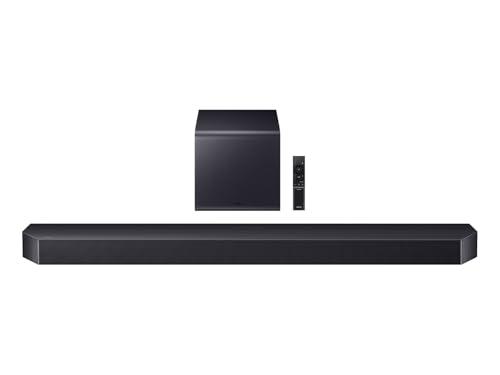
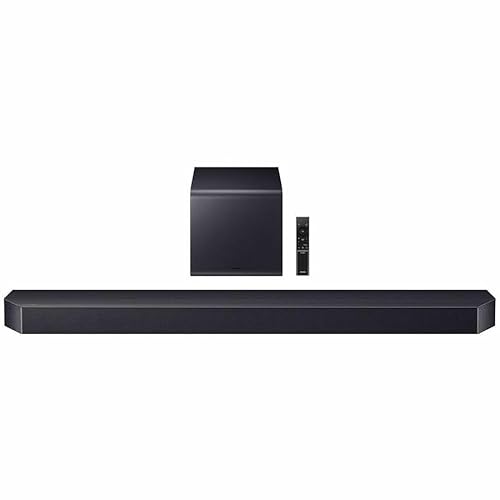
Some soundbars, like the JBL Bar 300 MK2, pack everything into a single sleek unit. Others, like the Samsung HW-Q990F, split the work between multiple components—a main soundbar, a separate subwoofer for deep bass, and additional speakers placed around your room.
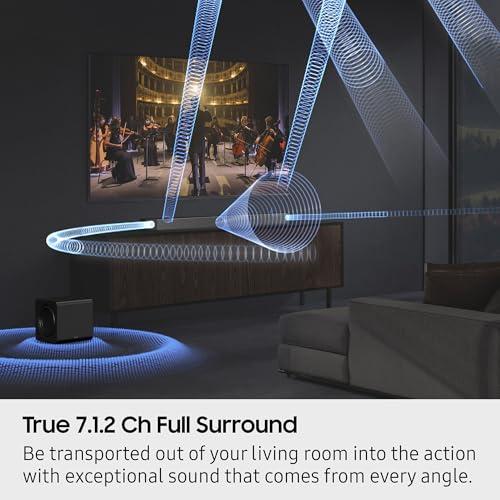
The number of "channels" tells you how many distinct audio streams a soundbar can handle. A 5.1 system has five main speakers (front left, center, front right, rear left, rear right) plus one subwoofer channel (the ".1"). The Samsung HW-Q990F goes much further with 11.1.4 channels—that's 11 main speakers, one subwoofer, and four height channels that create overhead sound effects.
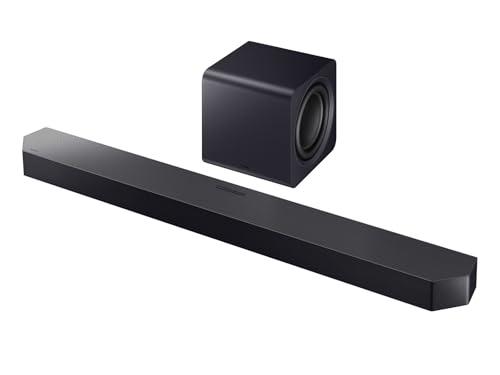
The Samsung HW-Q990F and JBL Bar 300 MK2 represent fundamentally opposite approaches to solving the same problem. Samsung's strategy is to recreate a genuine home theater experience with multiple speakers physically positioned around your room. The main soundbar houses 15 individual drivers (the technical term for individual speaker units), while a wireless subwoofer with dual 8-inch woofers handles deep bass, and two compact rear speakers complete the surround bubble.
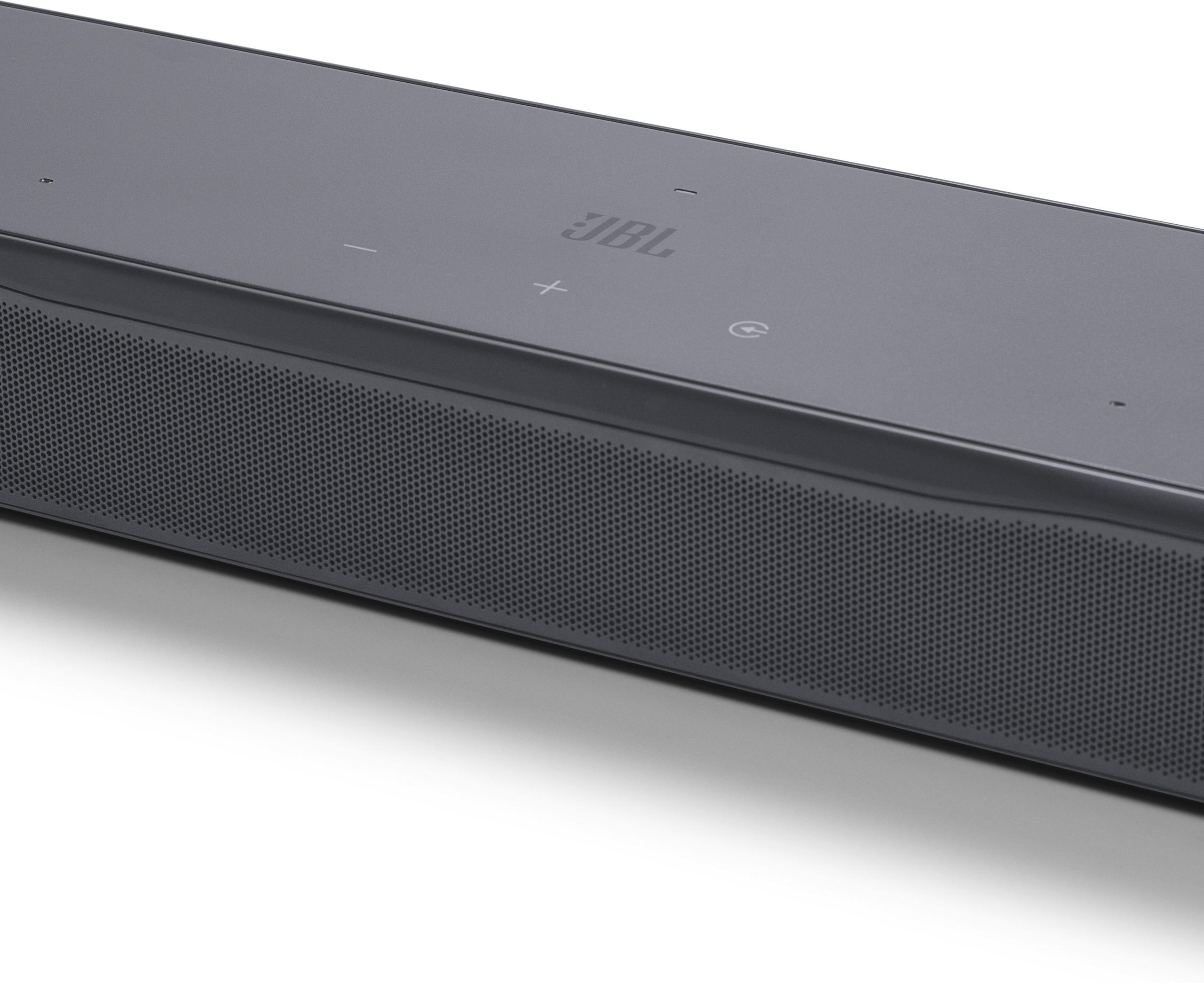
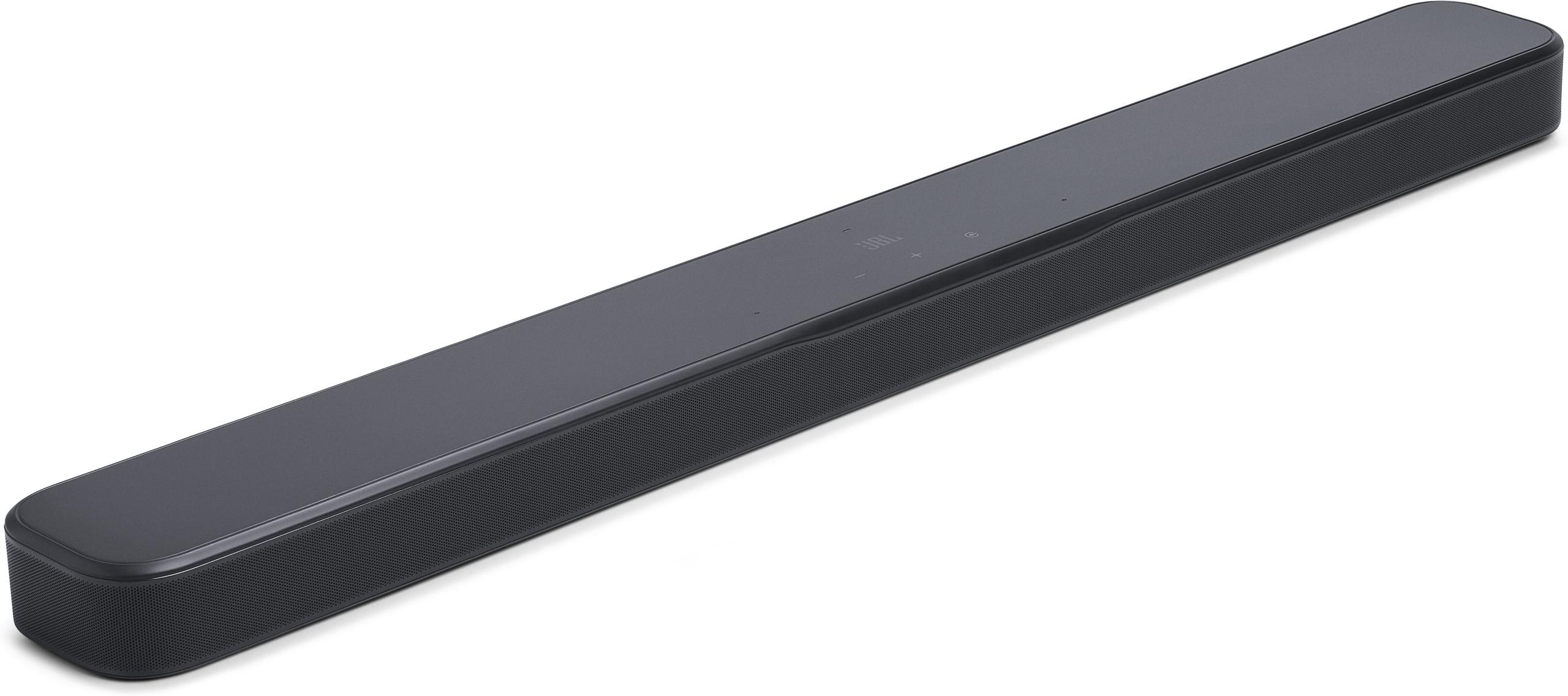
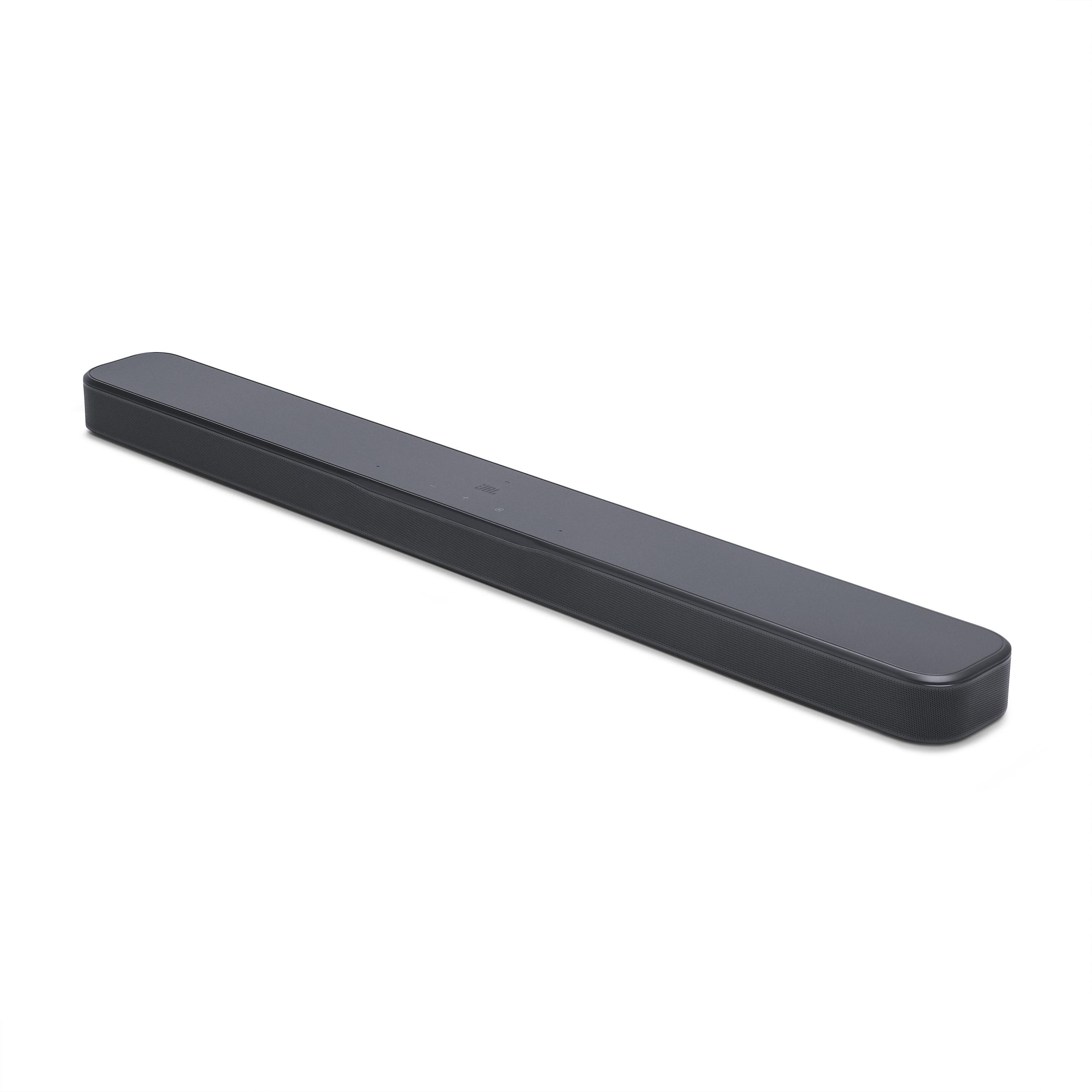
JBL takes the opposite approach with the Bar 300 MK2. Everything happens in one 32-inch soundbar that weighs just 5.5 pounds. Instead of physically placing speakers around your room, it uses sophisticated digital processing to trick your brain into hearing sounds from directions where no speakers actually exist. This is called "virtualization," and modern algorithms have gotten surprisingly good at it.
The trade-offs are obvious but worth stating: Samsung's approach delivers authentic surround sound but requires multiple components, power outlets, and careful positioning. JBL's method provides remarkable convenience but can't quite match the immersion of actual speakers placed behind and above you.
When evaluating soundbar performance, the most important factor is how convincingly it can create a soundstage that extends beyond the physical boundaries of your TV. This is where the philosophical differences between our two contenders become most apparent.
The Samsung HW-Q990F doesn't need to fake anything. With speakers physically positioned in front, to the sides, behind, and above your listening position, sounds genuinely originate from those locations. When a helicopter flies overhead in a movie, you hear it moving from dedicated up-firing drivers that bounce sound off your ceiling. The rear speakers each contain three drivers—one firing forward, one to the side, and one angled upward—creating seamless surround effects as sounds move through the space around you.
Our research into user experiences reveals that this authentic surround placement creates what reviewers consistently describe as a "bubble of sound" or "dome of audio" that genuinely envelops the listener. The effect is particularly striking with Dolby Atmos content (more on that technology shortly), where sounds can be precisely placed not just around you, but above you as well.
The JBL Bar 300 MK2 achieves its surround effects through MultiBeam 3.0 technology and virtual Dolby Atmos processing. These systems analyze incoming audio and use psychoacoustic principles—basically understanding how your brain interprets sound—to create the illusion of multi-directional audio. The soundbar fires different frequency ranges at different angles, using the natural reflective properties of your room to create apparent sound sources where none actually exist.
According to expert evaluations, the JBL's virtual approach works surprisingly well, especially in smaller rooms where you're sitting relatively close to the soundbar. Users consistently report a noticeably wider soundstage compared to TV speakers, with reasonable surround effects during movie watching. However, the consensus is clear: virtual processing cannot fully replicate the immersion of actual speakers positioned around the room.
Bass response might be the most immediately noticeable difference between these systems. Deep bass requires moving a lot of air, which typically means larger drivers and more internal volume—something that's physically impossible in a compact soundbar.
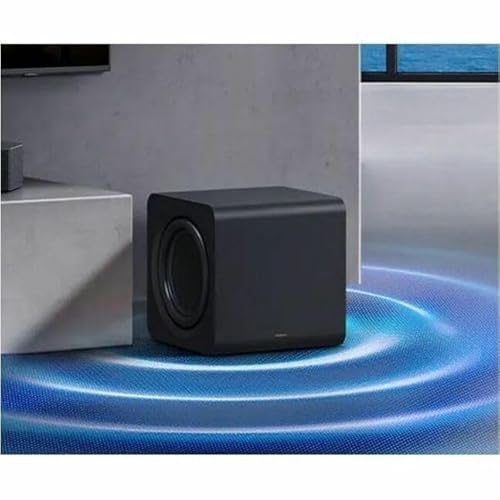
The Samsung HW-Q990F includes a dedicated wireless subwoofer with dual 8-inch drivers in a ported enclosure. These opposing drivers create what's called "force-canceling" design, where the drivers work against each other to minimize cabinet vibration while maximizing bass output. The subwoofer can reproduce frequencies down to 32Hz, which is deep enough to feel movie explosions in your chest and capture the rumbling undertones in electronic music.
Samsung has also implemented AI Dynamic Bass Control technology in 2025, which uses machine learning algorithms to analyze incoming audio and minimize distortion in real-time. This means the bass stays clean and tight even at high volumes, avoiding the muddy or boomy sound that plagues many subwoofers.
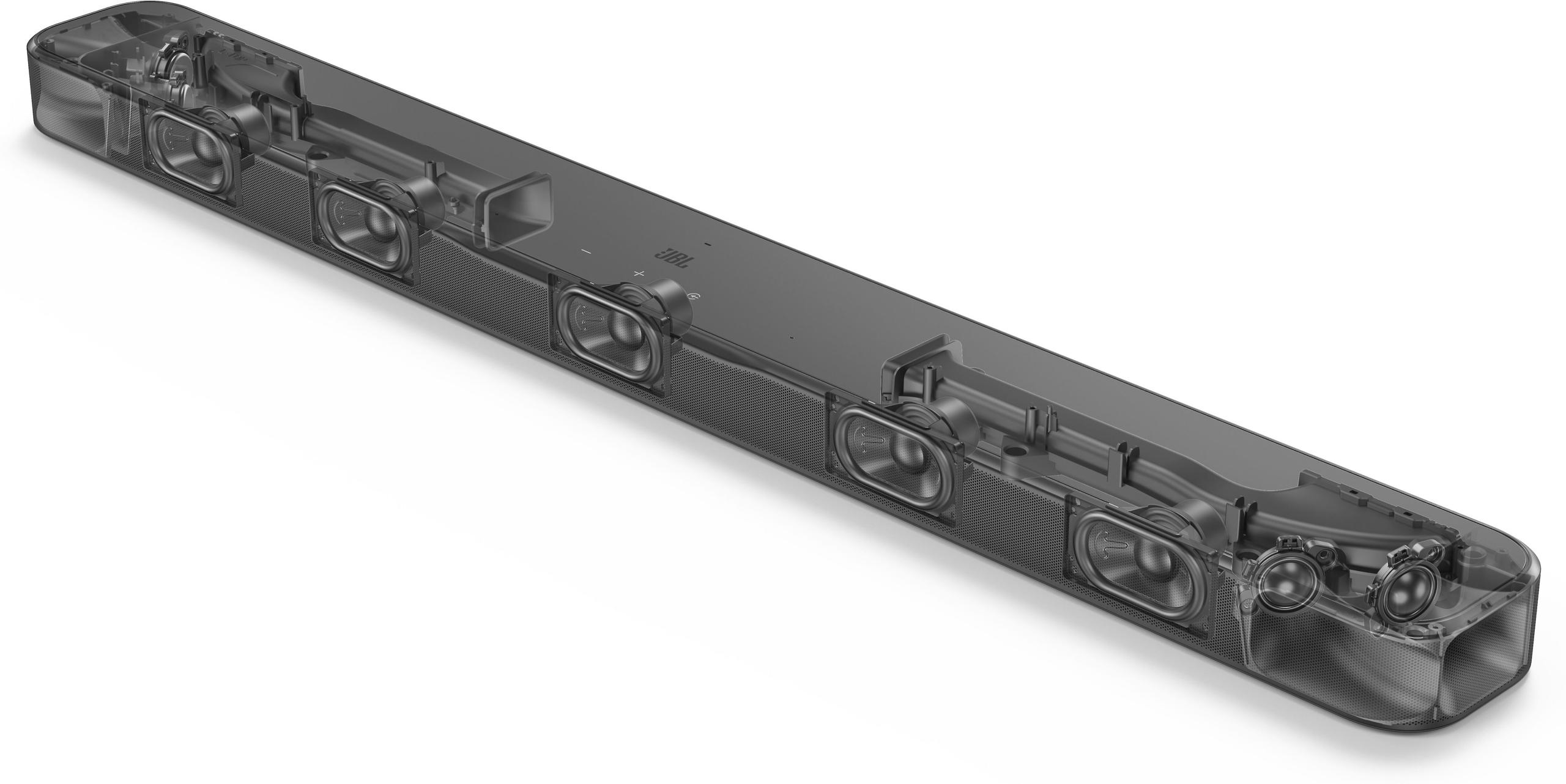
The JBL Bar 300 MK2 integrates its bass drivers directly into the main housing, using racetrack-shaped woofers and a rear-firing port to enhance low-end output. While reviews consistently praise the bass as "surprisingly punchy" for a single-unit design, physics imposes clear limitations. The built-in approach simply cannot match the air-moving capacity of a dedicated large-driver subwoofer.
Based on our analysis of user feedback, the JBL handles most TV content, casual music listening, and moderate movie watching admirably. But when explosive action sequences or bass-heavy music push the limits, the difference becomes clear. The Samsung delivers the visceral impact that makes you feel like you're in a movie theater, while the JBL provides respectably strong but ultimately limited bass response.
Clear dialogue reproduction is arguably the most important soundbar performance metric, since muffled or hard-to-understand speech ruins any viewing experience. Both systems take different approaches to solving this crucial challenge.
The Samsung HW-Q990F includes a dedicated center channel—a specialized speaker designed specifically for dialogue reproduction. This driver is positioned directly below your TV screen, creating the natural impression that voices are coming from the actors' mouths. Samsung's Active Voice Amplifier Pro technology continuously monitors the audio mix and automatically boosts dialogue frequencies when background sound threatens to overwhelm speech.
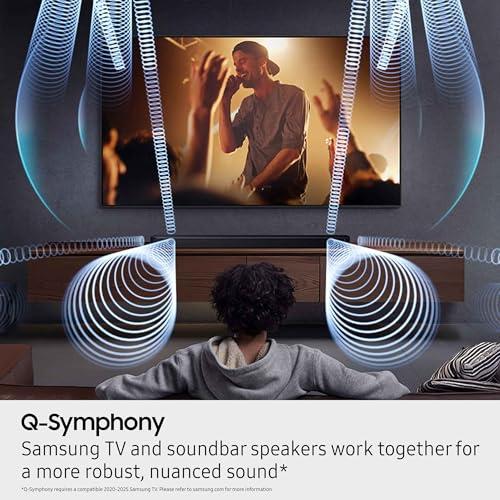
The system also features Voice Enhance mode and Adaptive Sound processing, which use AI to analyze content in real-time and optimize dialogue clarity based on what you're watching. When paired with compatible Samsung TVs, Q-Symphony technology even uses the TV's built-in speakers alongside the soundbar to create an even wider, more focused center channel.
The JBL Bar 300 MK2 uses PureVoice 2.0 technology, which represents a significant advancement in JBL's 2025 generation products. This system uses advanced algorithms to identify and enhance speech frequencies while suppressing competing background noise. Since all audio originates from the front-facing soundbar, voices naturally appear to come from your TV screen, creating cohesive dialogue presentation.
User reviews consistently highlight both systems' dialogue performance as excellent, though they achieve clarity through different methods. The Samsung's dedicated center channel provides more natural voice reproduction, especially in complex audio mixes, while the JBL's processing-based approach works remarkably well for the vast majority of content.
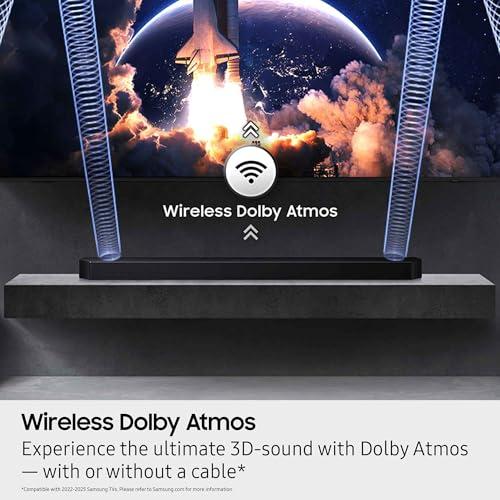
Dolby Atmos represents one of the most significant advances in home audio over the past decade. Traditional surround sound places audio in a horizontal plane around you, but Atmos adds a height dimension, allowing sounds to be precisely placed above your head. Think of rain falling from the sky, aircraft flying overhead, or ambient forest sounds in nature documentaries.
The Samsung HW-Q990F implements true Dolby Atmos with four dedicated up-firing drivers—two in the main soundbar and one in each rear speaker. These drivers fire sound upward toward your ceiling, which then reflects back down to your ears, creating the perception of overhead audio. Combined with the system's 11 other channels, this creates genuine three-dimensional sound placement that matches the director's intended audio experience.
The JBL Bar 300 MK2 offers virtual Dolby Atmos processing, using sophisticated algorithms to simulate height effects without physical up-firing speakers. The system analyzes incoming Atmos signals and processes them through the soundbar's existing drivers to create the illusion of overhead sound.
Based on expert evaluations and user experiences, the Samsung delivers noticeably more convincing Atmos effects. The physical height speakers create authentic ceiling reflections that genuinely place sounds above your head, while the JBL's virtual processing provides a wider soundstage with some height perception but cannot fully replicate the immersion of actual overhead audio.
That said, the JBL's virtual Atmos is surprisingly effective for casual viewing, especially in smaller rooms. Many users report satisfying height effects with movie content, though the experience isn't quite as enveloping as true Atmos implementation.
Both soundbars embrace the connected home philosophy, but they take different approaches to smart functionality and device integration.
The Samsung HW-Q990F includes built-in Amazon Alexa voice control, allowing you to adjust volume, change settings, and control smart home devices without reaching for a remote. The system supports comprehensive streaming services including AirPlay 2, Google Cast, Spotify Connect, and TIDAL Connect. Samsung's Q-Symphony technology represents a unique advantage for Samsung TV owners, synchronizing the soundbar with compatible TV speakers to create an even wider, more immersive soundstage.
For connectivity, Samsung provides two HDMI inputs plus an HDMI eARC output, supporting 4K/120Hz pass-through with Variable Refresh Rate (VRR) for next-generation gaming consoles. The system also handles HDR10+ video pass-through, ensuring compatibility with the latest high-end displays.
The JBL Bar 300 MK2 takes a more platform-agnostic approach, working seamlessly with Alexa, Google Assistant, and Siri through external smart speakers. The system supports the same major streaming services as Samsung, with the addition of Roon Ready certification for high-resolution audio streaming. JBL's approach ensures excellent performance regardless of your TV brand or smart home ecosystem.
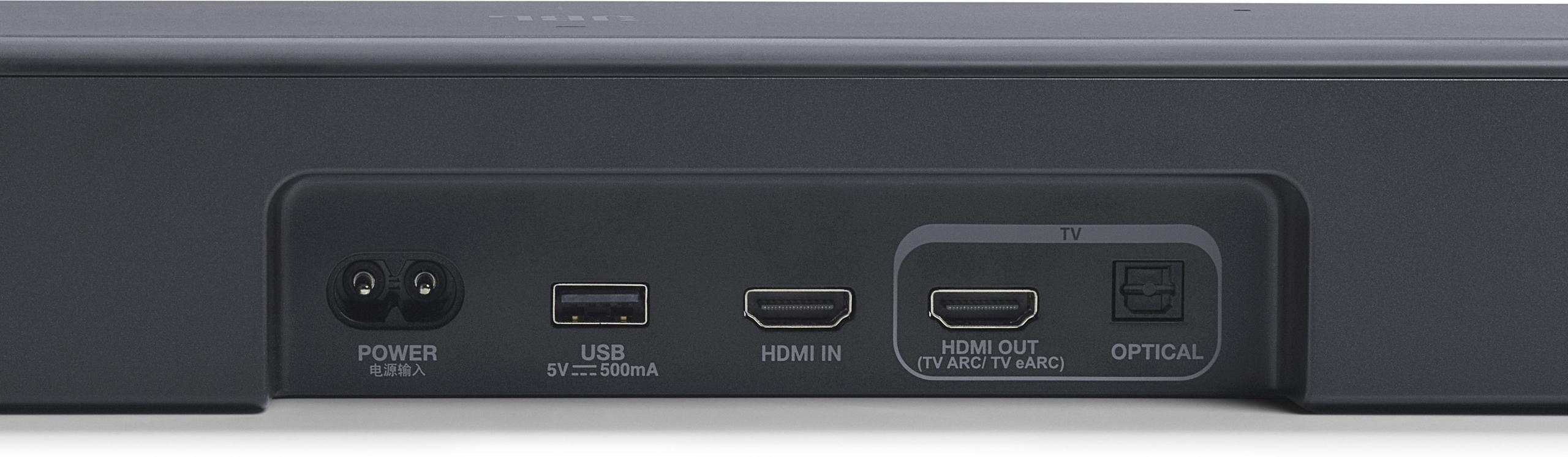
The JBL includes a single HDMI eARC connection, which handles most users' needs but may require additional switching for multiple source devices. However, the simplicity also means fewer cables and less complexity during setup.
For gaming enthusiasts, the differences between these systems become particularly relevant. Modern gaming consoles like the PlayStation 5 and Xbox Series X can output high-resolution audio and video that demands sophisticated processing and connectivity.
The Samsung HW-Q990F clearly targets serious gamers with its Game Pro mode, which optimizes audio characteristics for competitive gaming. The multiple HDMI 2.1 inputs allow direct connection of gaming consoles, Blu-ray players, and other sources without requiring external switching. The 4K/120Hz pass-through with Variable Refresh Rate support ensures compatibility with the latest gaming features, while the authentic surround positioning enhances spatial awareness in competitive games.
The JBL Bar 300 MK2 handles gaming adequately but lacks specialized gaming features. The single HDMI connection means you'll likely need to use your TV's inputs for multiple gaming devices, and there are no gaming-specific audio modes. For casual gaming, the performance is perfectly acceptable, but competitive gamers will appreciate Samsung's more comprehensive approach.
The practical aspects of living with these soundbars differ dramatically and may influence your decision as much as audio performance.
The Samsung HW-Q990F requires positioning four separate components around your room. The main soundbar sits below your TV, the subwoofer can be placed anywhere (though corner placement often works best for bass response), and the rear speakers need positioning behind or to the sides of your primary seating area. Each component requires a power outlet, which may limit placement options in some rooms.
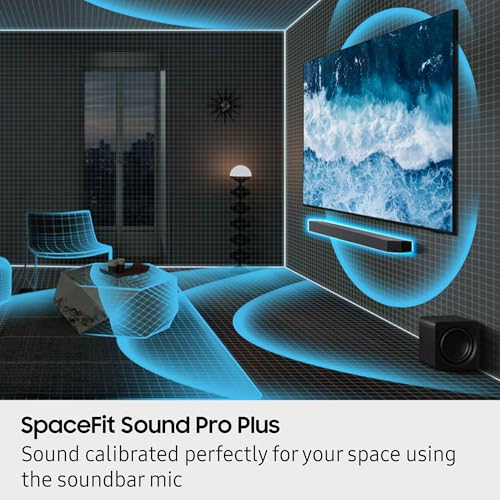
The wireless connectivity between components generally works reliably, though some users report occasional synchronization issues that require restarting the system. The setup process involves pairing all components and running Samsung's SpaceFit Sound calibration, which uses built-in microphones to optimize the system for your specific room acoustics.
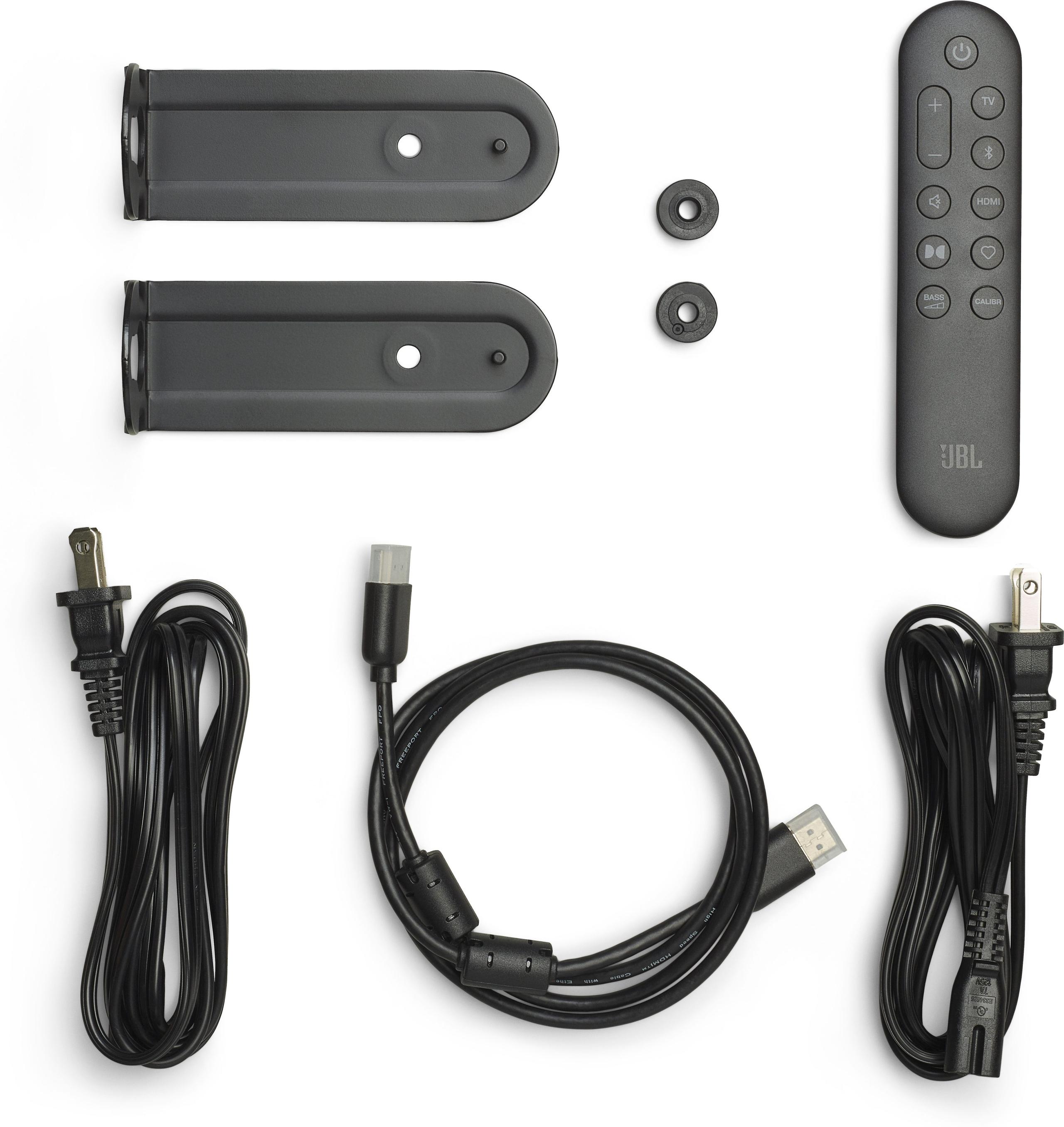
The JBL Bar 300 MK2 offers plug-and-play simplicity that's hard to overstate. Setup involves connecting one HDMI cable to your TV and plugging in the power cord. The entire process takes minutes rather than hours, and the compact design fits easily on most TV stands without dominating your living space.
For apartment dwellers or renters, the JBL's single-unit design offers significant advantages. There are no placement restrictions, no multiple power requirements, and the system is easily portable if you move. The integrated bass also means you're less likely to disturb neighbors compared to a powerful separate subwoofer.
At the time of writing, the price difference between these systems is substantial—the Samsung HW-Q990F costs nearly four times more than the JBL Bar 300 MK2. This raises the crucial question: is the performance difference worth the price premium?
Based on our analysis of expert reviews and user feedback, the JBL delivers approximately 80% of premium soundbar performance at roughly 25% of flagship cost. For most users watching typical TV content, streaming services, and casual movie viewing, the JBL provides the most impactful audio upgrade per dollar spent. The difference between TV speakers and the JBL is dramatic and immediately noticeable.
The Samsung targets that final 20% of performance that separates good audio from exceptional cinema-quality sound. You're paying for genuine surround immersion, powerful dedicated bass, advanced gaming features, and automatic room optimization. For dedicated home theater enthusiasts with appropriate rooms and budgets, this premium delivers a transformative audio experience that justifies the investment.
The value equation also depends heavily on your content consumption habits. If you primarily watch TV shows, news, and streaming content, the JBL's excellent dialogue clarity and respectable surround effects provide tremendous value. If you regularly watch blockbuster movies, play immersive games, or listen to complex music, the Samsung's superior performance becomes more compelling.
After extensive research into user experiences and expert evaluations, clear usage patterns emerge for each system.
Choose the Samsung Q-Series HW-Q990F if you have a dedicated home theater room or large living space where you can properly position multiple components. The system shines for users who regularly watch action movies, play competitive games, or want the closest approximation to a commercial cinema experience at home. Samsung TV owners get additional benefits through Q-Symphony integration, and the advanced connectivity future-proofs your investment for next-generation devices.
The Samsung also makes sense for audio enthusiasts who appreciate technical excellence and want the bragging rights of owning flagship technology. If you're upgrading from a basic soundbar and want a dramatic step up in performance, the investment may be worthwhile.
Choose the JBL Bar 300 MK2 if you want dramatic audio improvement without system complexity or significant financial investment. The single-unit design works perfectly in apartments, smaller living spaces, or situations where multiple components aren't practical. The system excels for users who primarily watch TV shows, streaming content, and casual movies where dialogue clarity matters more than ultimate surround immersion.
The JBL also appeals to users who value simplicity and may need to relocate their audio setup frequently. The plug-and-play nature means you can have significantly better audio in minutes rather than hours.
Both the Samsung HW-Q990F and JBL Bar 300 MK2 successfully solve the fundamental problem of terrible TV audio, but they target different users with different priorities and budgets.
The Samsung represents the pinnacle of current soundbar technology, delivering authentic surround sound that rivals traditional home theater systems while maintaining relative simplicity. At the time of writing, it's expensive but offers flagship performance that justifies the premium for serious home theater enthusiasts.
The JBL hits the sweet spot for most users, delivering impressive audio improvement that makes TV watching dramatically more enjoyable without breaking the budget or cluttering your living space. It proves that you don't need to spend flagship money to get significantly better sound than what comes built into your TV.
For most people reading this comparison, the JBL Bar 300 MK2 represents better value—unless you have specific needs for ultimate surround immersion, serious gaming features, or a large room that can accommodate multiple components. The difference between TV speakers and either soundbar is huge; the difference between the JBL and Samsung is substantial but incremental for typical viewing.
Ultimately, both systems will dramatically improve your TV audio experience. Your choice should depend on your budget, living space, and how much you value authentic surround sound versus convenience and simplicity.
| Samsung Q-Series HW-Q990F | JBL Bar 300 MK2 |
|---|---|
| System Design - Determines setup complexity and room requirements | |
| 11.1.4 channel multi-component system (soundbar + wireless subwoofer + 2 rear speakers) | 5.0 channel all-in-one soundbar (no separate components) |
| Total Speakers - More speakers typically mean better surround immersion | |
| 23 speakers across 4 components | 6 drivers in single unit |
| Audio Power - Higher wattage generally means louder, fuller sound | |
| 756W RMS (distributed across all components) | 450W peak (260W RMS) |
| Dolby Atmos Implementation - Critical for overhead movie effects | |
| True Dolby Atmos with 4 physical up-firing speakers | Virtual Dolby Atmos processing (no up-firing drivers) |
| Bass Performance - Determines impact for movies and music | |
| Dedicated wireless subwoofer with dual 8" drivers, 32Hz extension | Built-in bass drivers with rear port, limited by compact size |
| HDMI Connectivity - Important for gaming and multiple devices | |
| 3 HDMI 2.1 ports (2 in, 1 eARC out), 4K/120Hz pass-through | 1 HDMI eARC port only |
| Room Calibration - Automatically optimizes sound for your space | |
| SpaceFit Sound Pro Plus with built-in microphones | Basic calibration via JBL One app |
| Smart Features - Voice control and streaming capabilities | |
| Built-in Alexa, Q-Symphony with Samsung TVs, comprehensive streaming | Works with external voice assistants, platform-agnostic streaming |
| Installation Requirements - Affects placement flexibility | |
| 4 power outlets needed, rear speakers require positioning | Single power connection, fits most TV stands |
| Dimensions - Main soundbar size for TV compatibility | |
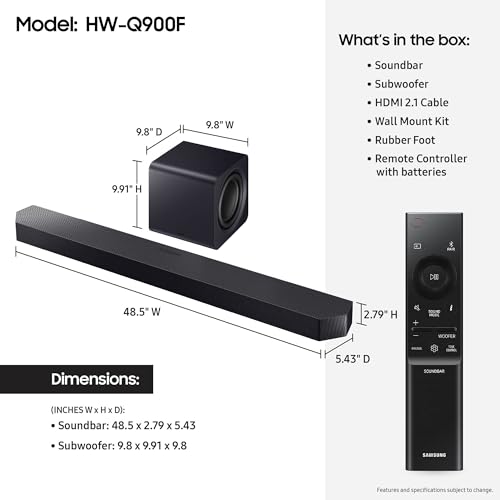
| 48.5" W x 2.8" H x 5.4" D, 16.1 lbs | 32.3" W x 2.2" H x 4.1" D, 5.5 lbs |
| Ideal Room Size - Performance scales with space | |
| Large rooms (200+ sq ft) for optimal surround effect | Small to medium rooms, apartment-friendly |
| Gaming Features - Important for console players | |
| Game Pro mode, multiple HDMI inputs, VRR support | Basic gaming support, single HDMI connection |
| Price Tier - Value proposition at time of writing | |
| Premium flagship pricing (~4x more expensive) | Mid-range pricing with premium features |
The JBL Bar 300 MK2 is better suited for small rooms and apartments. Its compact 32-inch design fits easily on most TV stands, and the all-in-one configuration means you won't need space for multiple components. The virtual surround sound works effectively in smaller spaces where you sit closer to the soundbar, and the integrated bass won't overwhelm or disturb neighbors like a separate subwoofer might.
Yes, the Samsung Q-Series HW-Q990F delivers superior sound quality with its true 11.1.4 surround system featuring 23 speakers across multiple components. The dedicated subwoofer provides deeper bass, while physical rear and height speakers create genuine surround immersion that the JBL Bar 300 MK2 cannot match with virtual processing alone. However, the JBL still offers excellent sound improvement over TV speakers at a much lower cost.
The JBL Bar 300 MK2 is significantly easier to install, requiring only one HDMI cable and a power connection. Setup takes minutes. The Samsung HW-Q990F requires positioning four separate components around your room, connecting multiple power outlets, and running room calibration, which can take an hour or more to complete properly.
Both soundbars work for gaming, but the Samsung Q-Series HW-Q990F is better for serious gamers. It offers Game Pro mode for optimized audio, multiple HDMI 2.1 inputs for connecting consoles directly, and 4K/120Hz pass-through with Variable Refresh Rate support. The JBL Bar 300 MK2 handles casual gaming well but lacks specialized gaming features and has only one HDMI connection.
Both soundbars excel at dialogue clarity through different approaches. The Samsung HW-Q990F uses a dedicated center channel speaker and Active Voice Amplifier Pro technology for natural speech reproduction. The JBL Bar 300 MK2 employs PureVoice 2.0 processing to enhance dialogue frequencies. Most users find both systems provide clear, intelligible speech that's dramatically better than TV speakers.
The Samsung Q-Series HW-Q990F includes a wireless subwoofer with dual 8-inch drivers, so no additional subwoofer is needed. The JBL Bar 300 MK2 has built-in bass drivers and cannot be expanded with an external subwoofer. While the JBL's integrated bass is impressive for its size, it cannot match the deep, powerful bass of Samsung's dedicated subwoofer.
The JBL Bar 300 MK2 is designed to work excellently with any TV brand and offers platform-agnostic streaming and voice assistant compatibility. While the Samsung HW-Q990F works with all TVs via HDMI, Samsung TV owners get additional benefits like Q-Symphony technology that synchronizes the soundbar with the TV's built-in speakers for enhanced performance.
The Samsung Q-Series HW-Q990F delivers true Dolby Atmos with four physical up-firing speakers that bounce sound off your ceiling for authentic overhead effects. The JBL Bar 300 MK2 uses virtual Dolby Atmos processing to simulate height effects without dedicated up-firing drivers. The Samsung provides more convincing and immersive Atmos experiences, especially in larger rooms.
The JBL Bar 300 MK2 offers exceptional value, delivering approximately 80% of premium soundbar performance at a fraction of flagship cost. It provides dramatic improvement over TV speakers with minimal investment. The Samsung HW-Q990F costs significantly more but delivers flagship performance that justifies the premium for users wanting ultimate sound quality and features.
Both soundbars support comprehensive wireless music streaming. The Samsung Q-Series HW-Q990F includes AirPlay 2, Google Cast, Spotify Connect, TIDAL Connect, and built-in Alexa voice control. The JBL Bar 300 MK2 offers similar streaming services plus Roon Ready certification, with compatibility for external voice assistants like Alexa, Google Assistant, and Siri.
For dedicated home theater use, the Samsung HW-Q990F is clearly superior. Its multi-component design with rear speakers creates authentic surround immersion, the powerful subwoofer delivers cinematic bass impact, and true Dolby Atmos provides overhead effects that enhance movie watching. The JBL Bar 300 MK2 works well for casual movie viewing but cannot match the theater-like experience of the Samsung system.
The JBL Bar 300 MK2 requires minimal space—just room for the 32-inch soundbar on your TV stand. The Samsung Q-Series HW-Q990F needs significantly more space and planning, requiring placement for the main soundbar, subwoofer positioning anywhere in the room, and rear speakers behind or beside your seating area. You'll also need four available power outlets for all components.
We've done our best to create useful and informative comparisons to help you decide what product to buy. Our research uses advanced automated methods to create this comparison and perfection is not possible - please contact us for corrections or questions. These are the sites we've researched in the creation of this article: rtings.com - crutchfield.com - sound-advice.online - samsung.com - soundandvision.com - samsung.com - whathifi.com - youtube.com - youtube.com - bestbuy.com - avsforum.com - content.syndigo.com - samsung.com - businessinsider.com - dolby.com - youtube.com - abcwarehouse.com - homecinemachoice.com - retailspecs.com - hometechnologyreview.com - whathifi.com - news.jbl.com - engadget.com - crutchfield.com - harmanaudio.com - techradar.com - bestbuy.com - jbl.com - sweech.co.ke - jbl.com - jbl.com.sg - mm.jbl.com - abcwarehouse.com - harmanaudio.com - sweetwater.com - ro.harmanaudio.com - dell.com - jbl.co.nz

Privacy Policy
Terms and Conditions - Affiliate Policy
Home Security
© Copyright 2008-2026.
11816 Inwood Rd #1211, Dallas, TX 75244