




When you're tired of asking "what did they just say?" during every movie night, it's time to upgrade from your TV's built-in speakers. But with hundreds of soundbars on the market, choosing between two solid options like the JBL Bar 300 MK2 ($449.95) and the TCL Q85H Q Class ($499.99) can feel overwhelming. After spending time with both systems, I can tell you they take completely different approaches to solving the same problem – and that difference matters more than you might think.
Before diving into specifics, let's talk about what actually matters when choosing a soundbar. Think of a soundbar as your TV's audio upgrade – it's designed to deliver better sound without the complexity of a full surround sound system with speakers scattered around your room.
The most important factor is channel configuration, which tells you how many separate audio streams the soundbar can handle. A 5.0 system has five channels (left, center, right, and two surrounds), while a 7.1.4 system has seven main channels, one subwoofer channel, and four height channels. More channels generally mean more precise sound placement and better immersion.
Bass performance is another crucial consideration. Some soundbars include separate subwoofers – those big boxes that handle the deep, rumbling sounds in action movies. Others try to produce bass from the main unit itself, which saves space but often sacrifices that chest-thumping impact you feel during explosions.
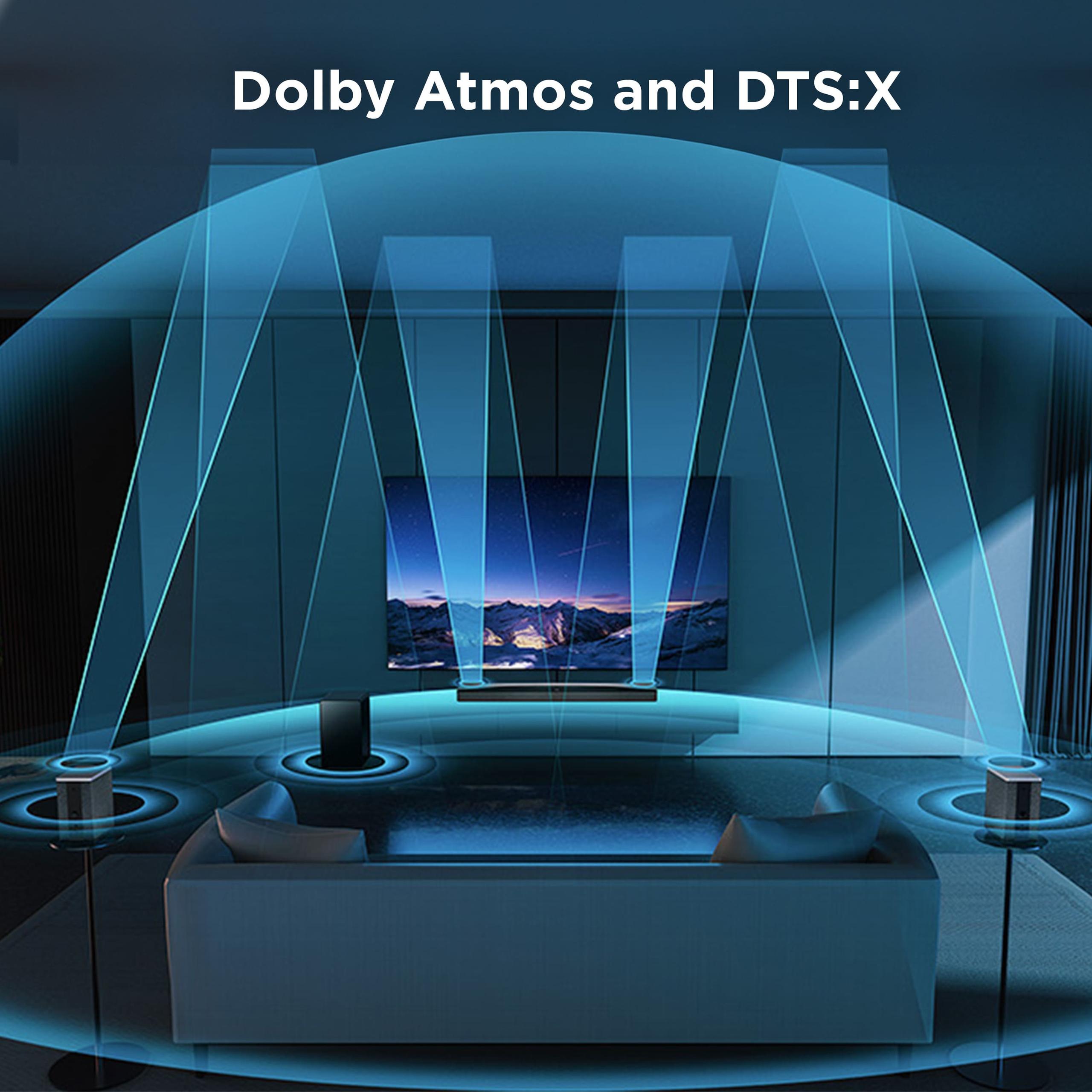
Then there's immersive audio support, particularly Dolby Atmos. This technology creates a three-dimensional sound bubble around you by bouncing audio off your ceiling and walls, making it seem like helicopters are actually flying overhead or rain is falling around you.
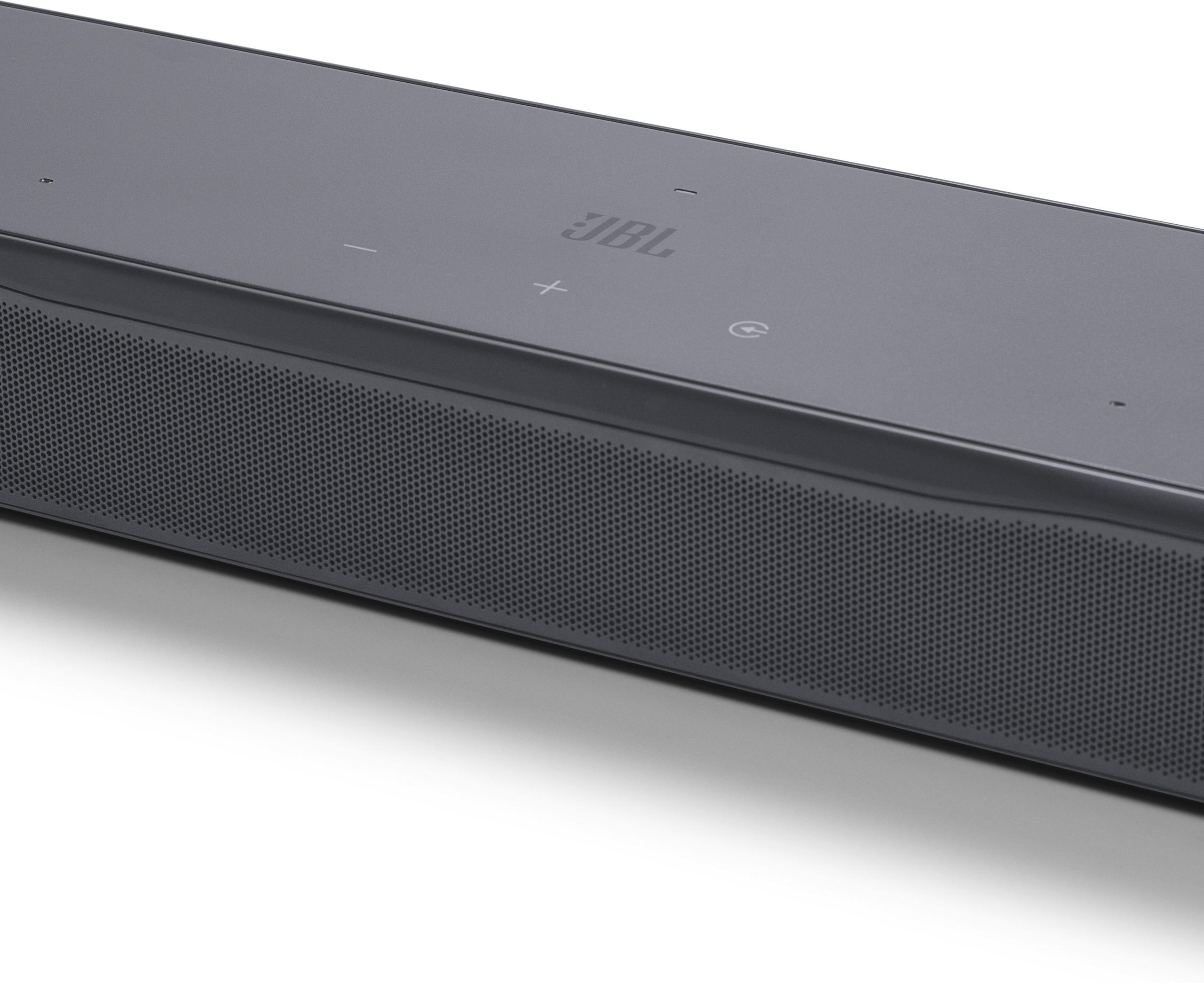
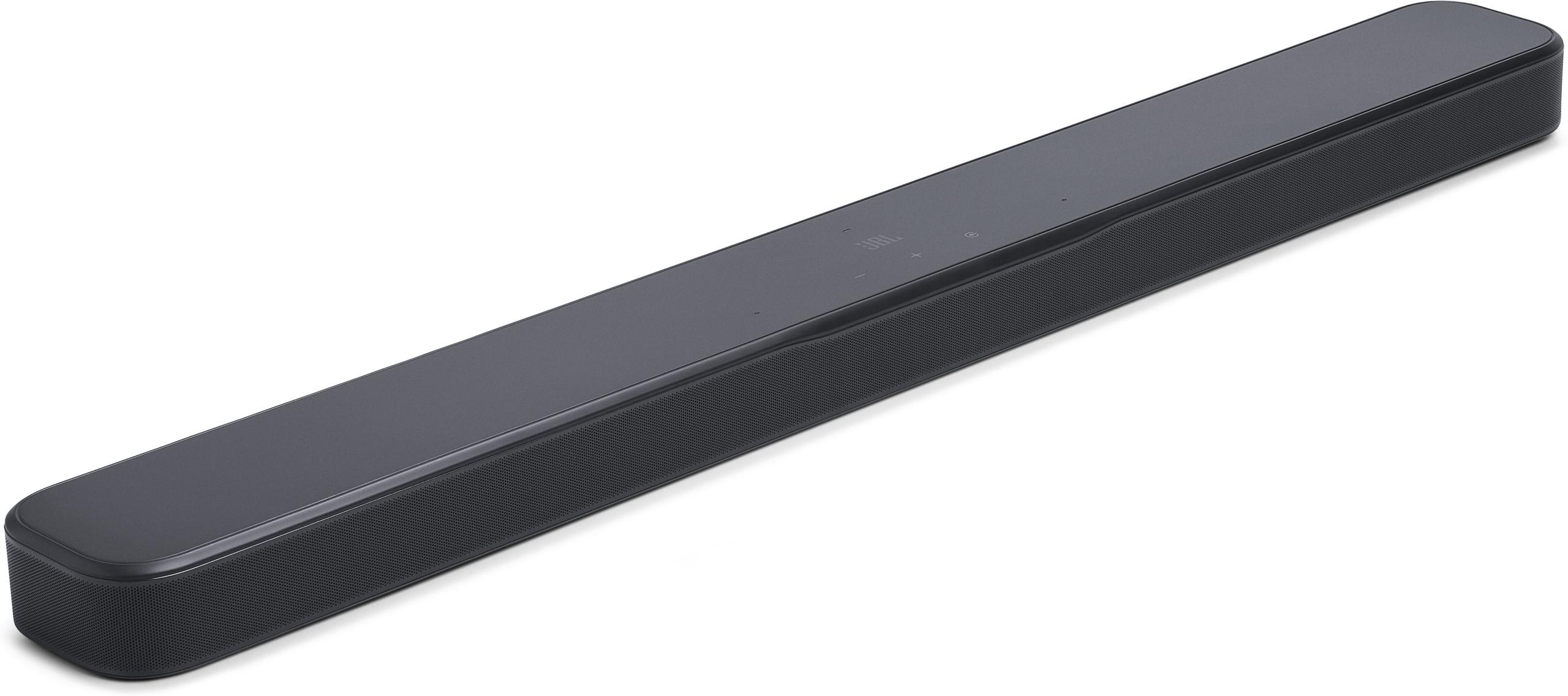
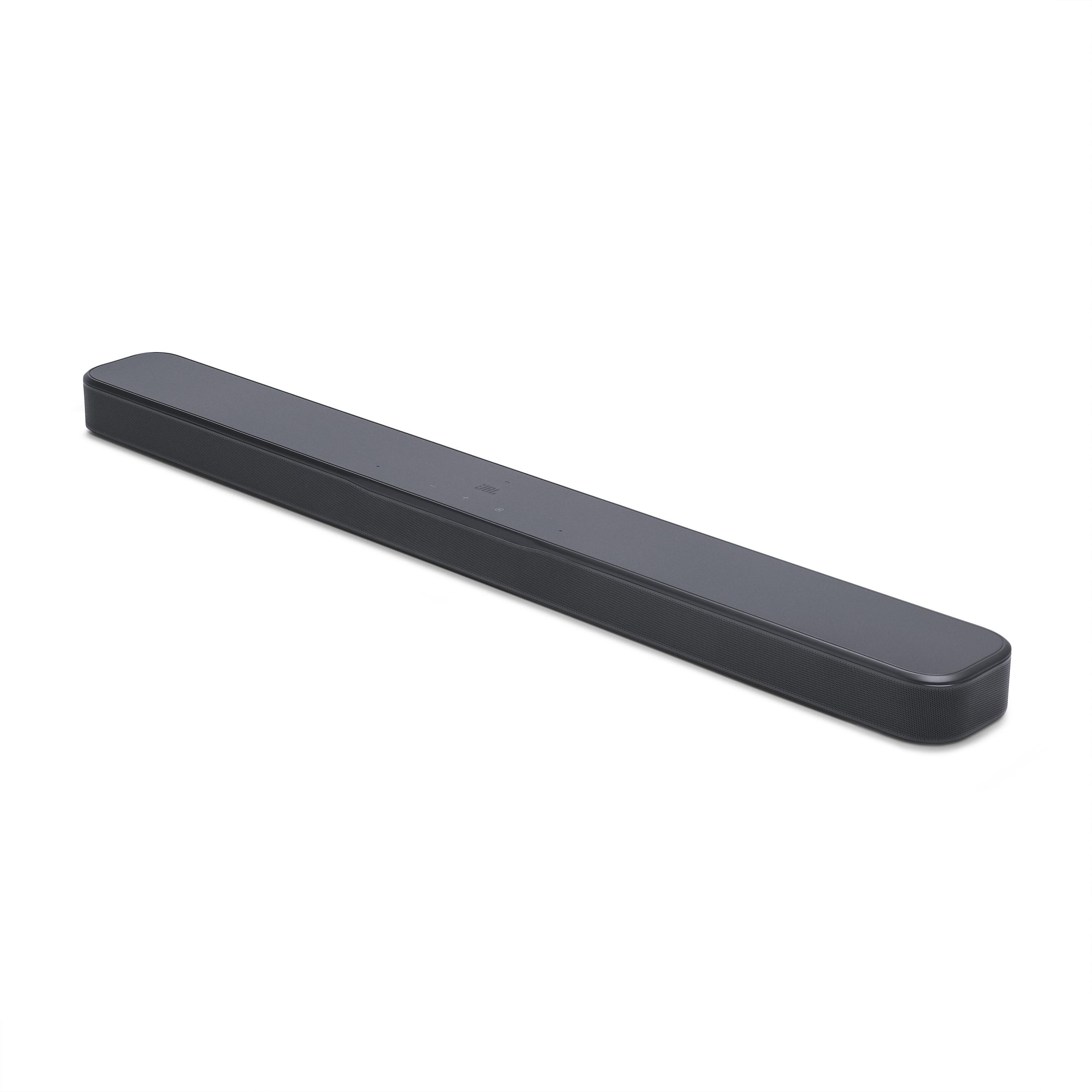
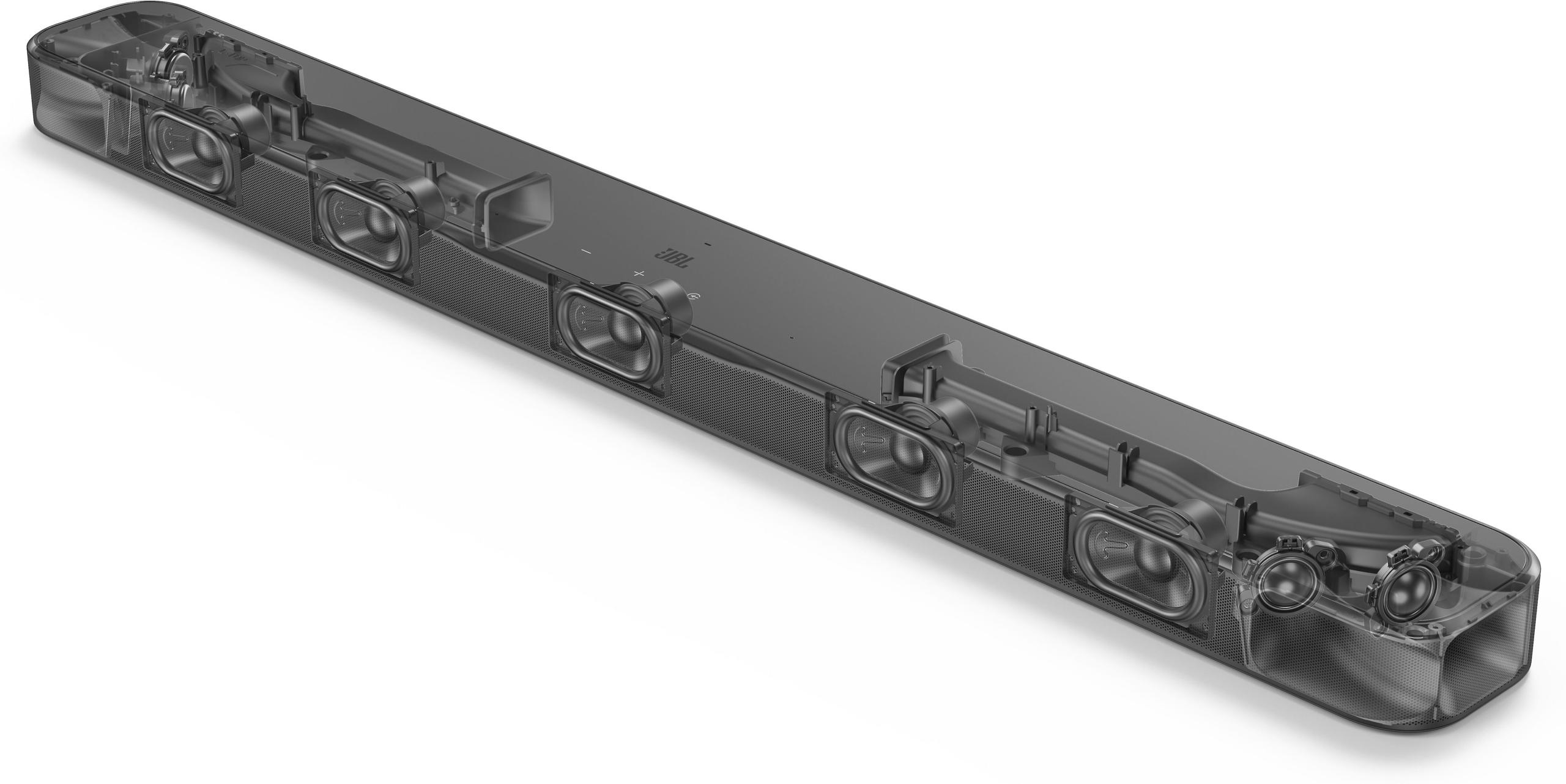
The JBL Bar 300 MK2, released in June 2025, represents the "keep it simple" philosophy. It's a single 820mm-wide bar that you place under your TV, and that's it. No extra speakers to position, no subwoofer to hide behind your couch. Despite this simplicity, JBL has packed impressive technology into this slim package.
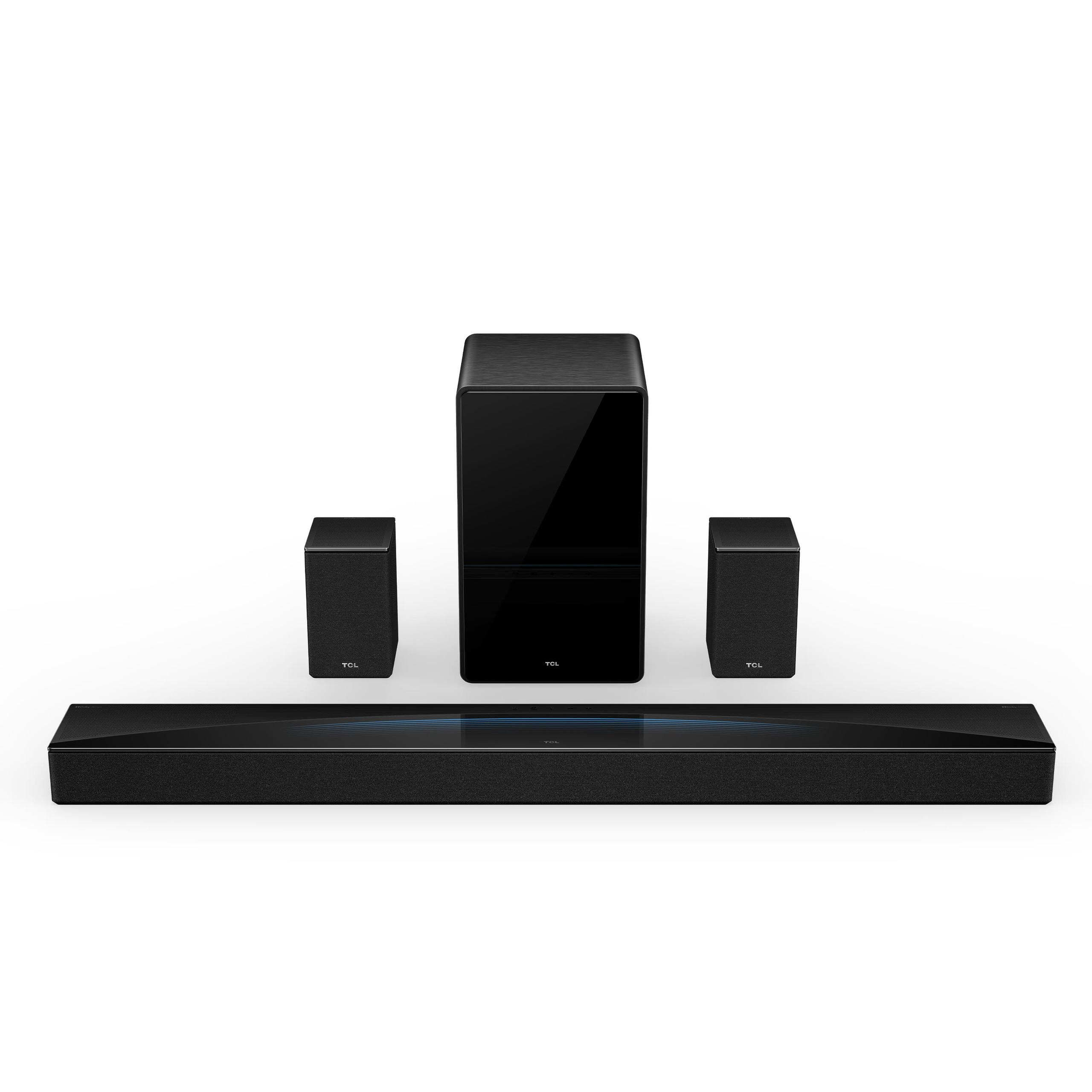
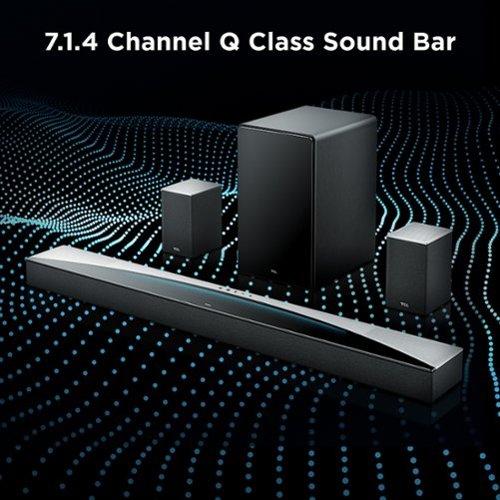
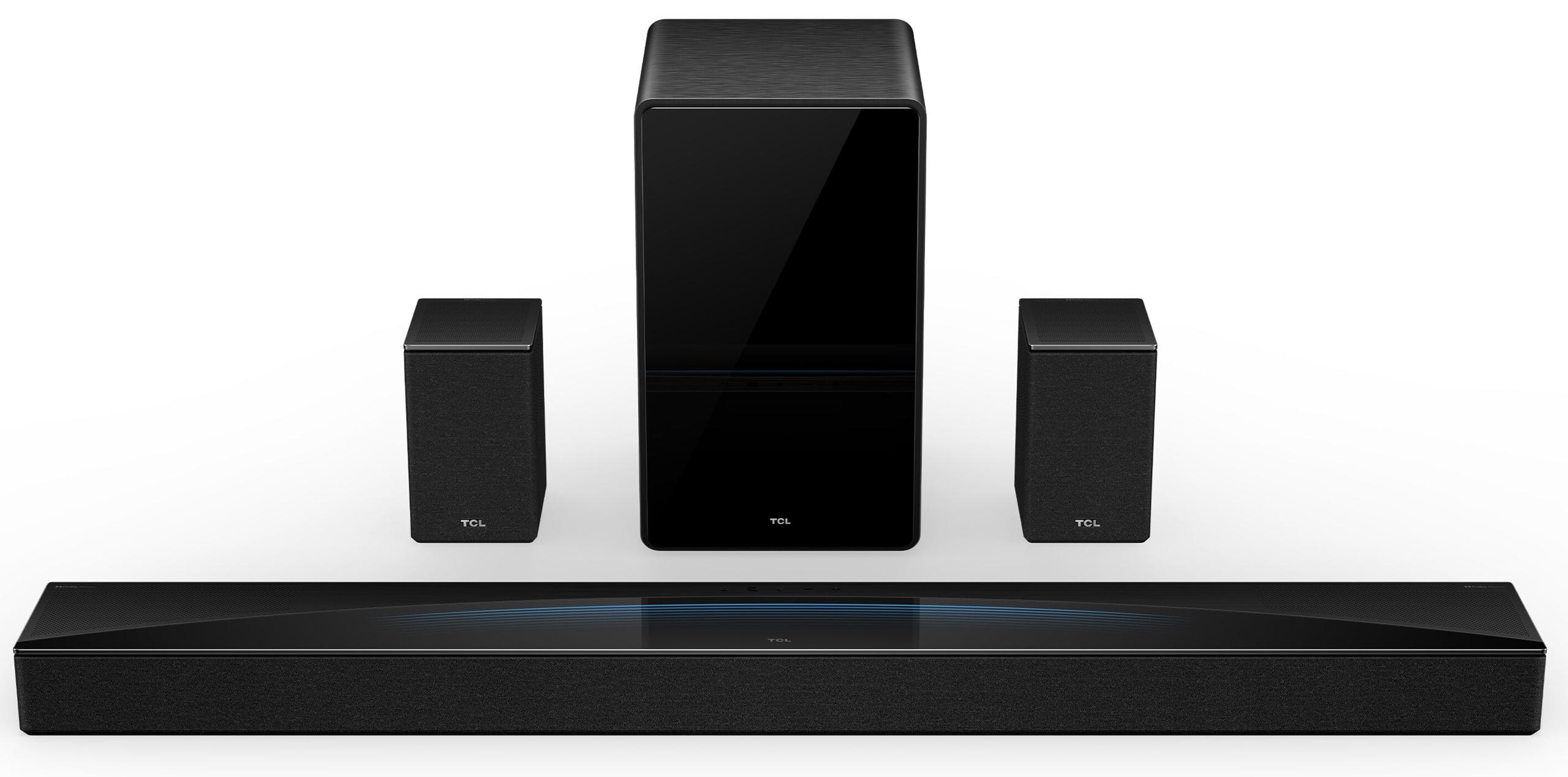
The TCL Q85H Q Class, which hit the market in 2024, takes the opposite approach. This is a complete 7.1.4 system that includes the main soundbar, a wireless subwoofer, and separate rear satellite speakers. It's designed for people who want the full surround sound experience without running speaker wires throughout their room.
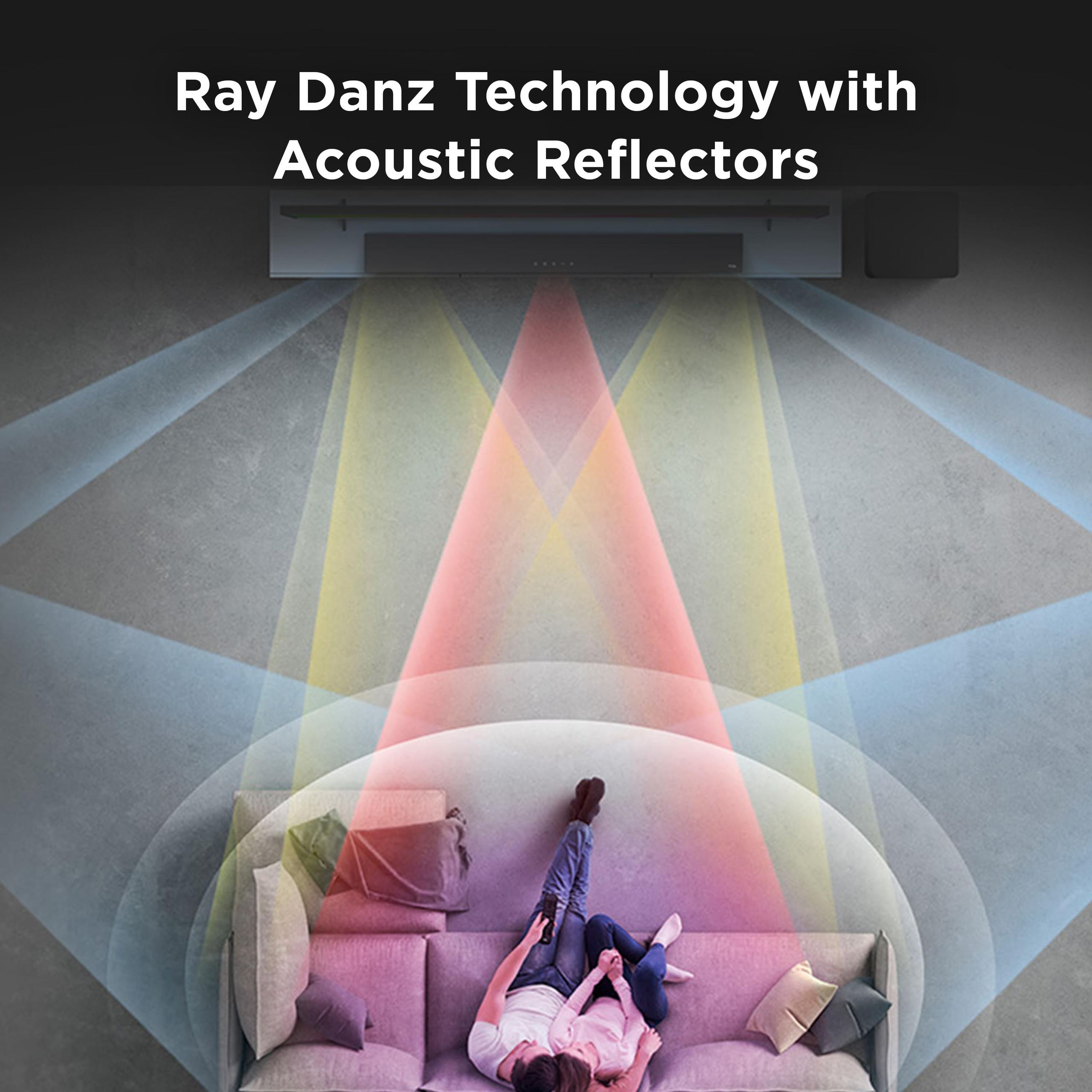
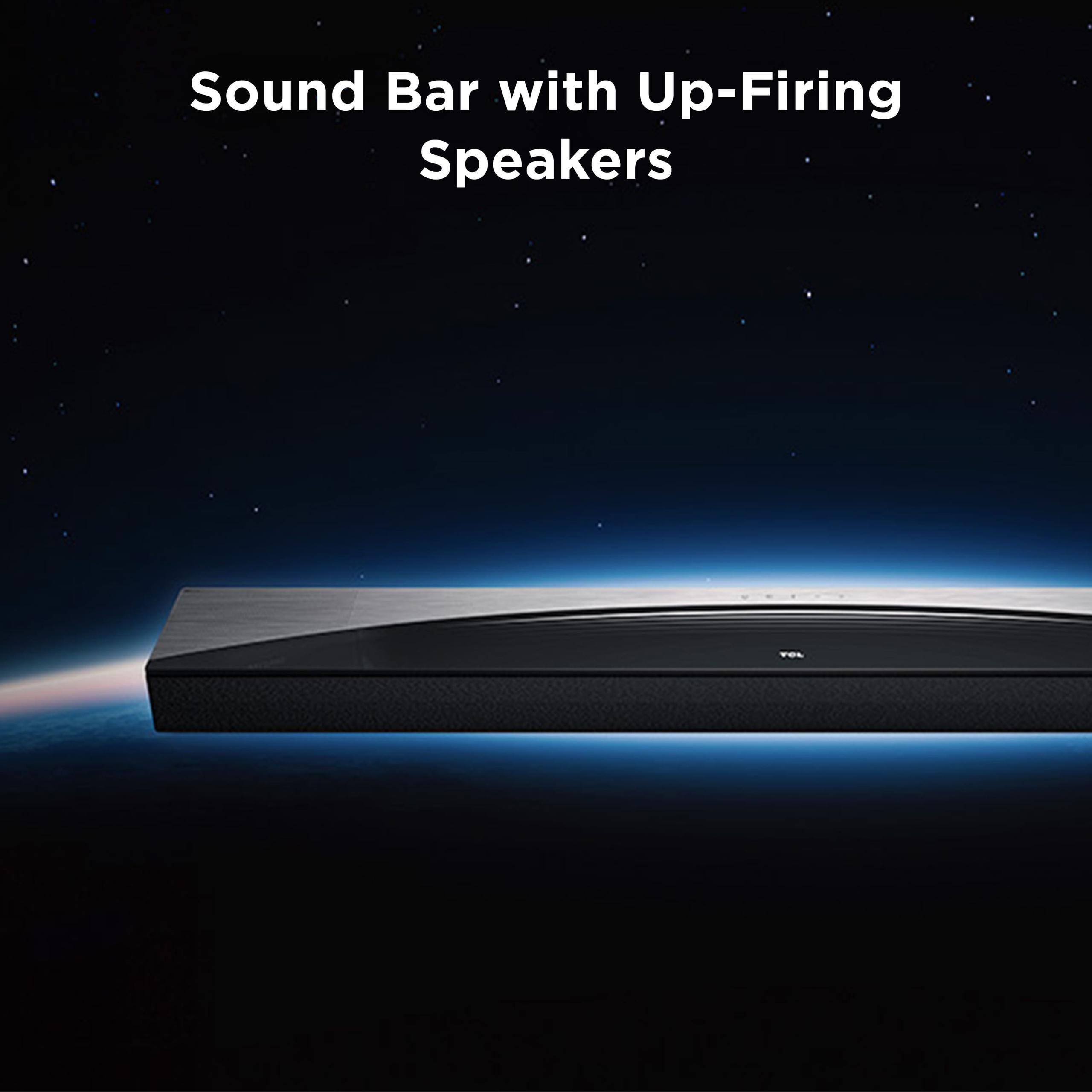
Here's where these two soundbars show their fundamental differences. The TCL Q85H creates what audio engineers call "true" Dolby Atmos using physical up-firing drivers – speakers that point toward your ceiling to bounce sound down from above. Combined with its dedicated rear satellite speakers, this system can genuinely place sounds behind and above you.
I tested this with the opening sequence of "Top Gun: Maverick," and the difference is immediately noticeable. When jets roar overhead, the TCL makes you instinctively look up. The rear speakers add aircraft sounds that seem to come from behind your couch, creating that "you're in the cockpit" feeling that makes expensive movie tickets almost worth it.
The JBL Bar 300 MK2 uses what's called "virtual" Dolby Atmos through its MultiBeam 3.0 technology. Instead of physically bouncing sound off your ceiling, it uses advanced signal processing to trick your brain into hearing sounds from different directions. Think of it like audio sleight of hand – it's impressive technology, but it's not quite the same as having actual speakers above and behind you.
That said, JBL's approach isn't without merit. The MultiBeam technology does create a noticeably wider soundstage than most single-bar systems. When watching "The Batman," the rain and city ambiance felt more expansive than what my TV speakers could produce, even if it didn't achieve the full wraparound effect of the TCL system.
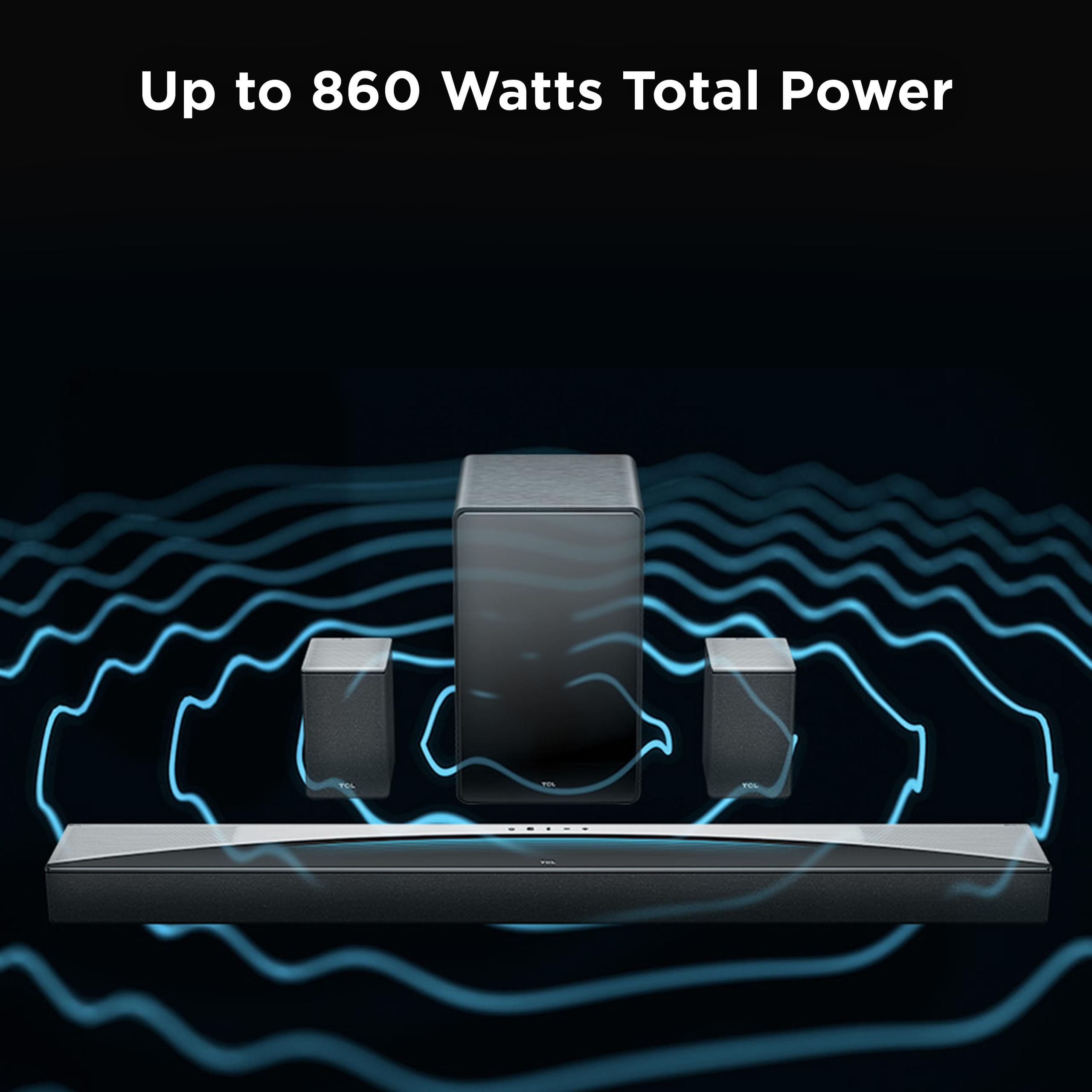
This is where the biggest performance gap emerges. The TCL Q85H includes a 6.5-inch wireless subwoofer that can shake your room when the action demands it. During the warehouse fight scene in "The Batman," every punch and crash had physical weight that you could feel in your chest. The 860W total system power means this setup can fill large rooms without breaking a sweat.
The JBL Bar 300 MK2 relies entirely on its built-in drivers for bass, using what's called a bass port – essentially a carefully tuned opening that helps extend low-frequency response. While JBL has done admirable work fitting bass capabilities into such a compact design, physics ultimately wins. Deep movie bass that rumbles through your floor simply requires moving more air than a slim soundbar can manage.
In practical terms, this means the JBL delivers perfectly adequate bass for TV shows and most music, but action movies will leave you wanting more. If you're someone who loves feeling the T-Rex footsteps in "Jurassic Park" or the spaceship engines in "Interstellar," the TCL's dedicated subwoofer is worth the extra complexity.
Both soundbars excel at dialogue clarity, but they achieve it differently. The JBL Bar 300 MK2 uses PureVoice 2.0 technology, which analyzes the incoming audio signal and boosts the frequency ranges where human voices live. This means even during complex action sequences, you can understand what characters are saying without reaching for the remote.
The TCL Q85H takes a more traditional approach with a dedicated center channel speaker. In home theater setups, the center speaker handles about 80% of movie dialogue, and having a physical driver dedicated to this task generally produces more natural-sounding voices.
During my testing with dialogue-heavy films like "The Social Network," both systems kept conversations intelligible even during scenes with background music and ambient noise. The TCL sounded slightly more natural, while the JBL provided more aggressive voice enhancement that some might prefer for particularly difficult-to-understand content.
The JBL Bar 300 MK2 clearly wins in the smart features department. It includes dual-band Wi-Fi, supporting modern streaming protocols like AirPlay 2, Chromecast built-in, and Alexa Multi-Room Music. This means you can stream music directly from your phone, tablet, or voice assistant without needing your TV on at all.
The JBL One app deserves special mention here. It provides genuinely useful EQ customization, letting you adjust bass levels, treble response, and dialogue enhancement to match your room and preferences. The app also handles software updates automatically, which means new features can arrive without you doing anything.
The TCL Q85H focuses more on TV integration than standalone streaming. If you own a TCL or Roku TV, the integration is seamless – you can control the soundbar with your TV remote and access deeper audio settings through the TV's interface. However, for music streaming, you're mostly limited to Bluetooth and AirPlay 2, missing the broader ecosystem support that the JBL offers.
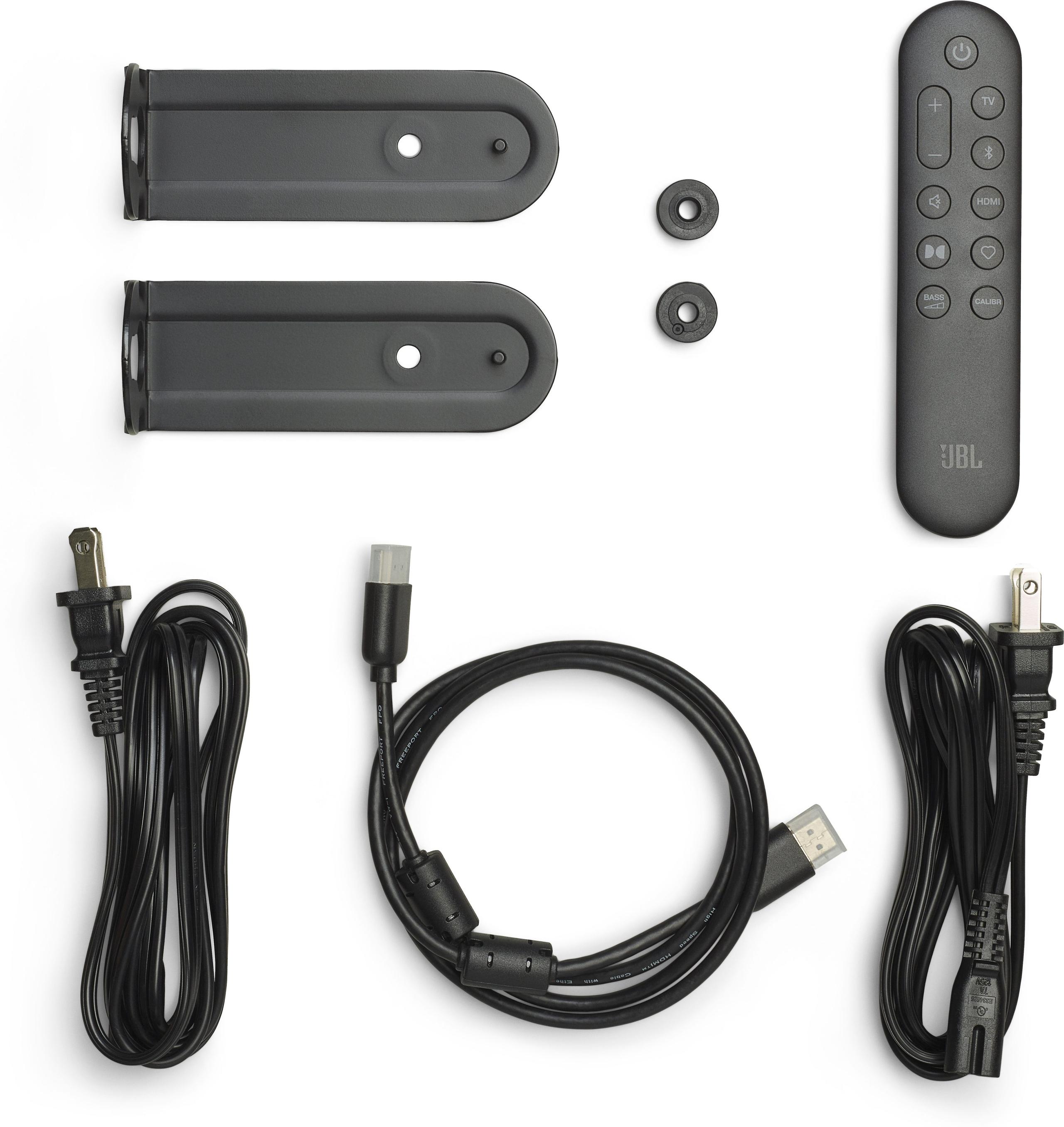
This is where personal preference really matters. The JBL Bar 300 MK2 offers the ultimate in simplicity – you literally just plug it in and turn it on. The automatic room calibration button optimizes the sound for your space in seconds, and at just 2.5 kg, it's easy to position perfectly under any TV.
The TCL Q85H requires more thoughtful setup. You'll need to position the wireless subwoofer somewhere in your room (typically a corner works best), and the rear satellite speakers need to be placed behind your seating area. The AI Sonic room calibration helps optimize everything once positioned, but you're still dealing with multiple components and finding places to put them.
In smaller apartments or rooms where a clean aesthetic matters, the JBL's single-bar approach is hard to beat. But if you have the space and want maximum performance, the TCL's multi-speaker setup delivers results that justify the extra effort.
Both soundbars benefit from recent technological advances, but in different ways. The JBL Bar 300 MK2, being the newer release, incorporates JBL's latest MultiBeam 3.0 processing and SmartDetails technology. This latter feature is particularly interesting – it ensures that subtle audio details like footsteps, paper rustling, or distant conversations remain audible even during busy scenes.
The TCL Q85H represents the maturation of affordable multi-channel systems. When true 7.1.4 Dolby Atmos systems first appeared, they typically cost $1,200 or more. The Q85H delivers legitimate surround performance at less than half that price, thanks to improvements in wireless technology, driver efficiency, and manufacturing scale.
At $449.95, the JBL Bar 300 MK2 represents solid value for a premium single-bar system. You're paying for convenience, smart features, and JBL's audio engineering expertise packed into an elegant, space-efficient package.
The TCL Q85H at $499.99 is exceptional value for what you get. Most competing 7.1.4 systems with similar features cost significantly more. You're essentially getting a complete surround sound system for the price of many mid-tier soundbars.
If you're building a dedicated home theater setup, the TCL Q85H makes more sense. The physical surround speakers and powerful subwoofer create the immersive experience that makes movie nights special. The system scales well to larger rooms and delivers the kind of bass impact that makes action sequences exciting.
For mixed-use living spaces where the TV competes with conversation, gaming, and music listening, the JBL Bar 300 MK2's flexibility and smart features might serve you better. Its dialogue enhancement is particularly valuable in open floor plans where kitchen noise or family activity can interfere with movie audio.
The decision ultimately comes down to your priorities and living situation. Choose the TCL Q85H if you want maximum immersion and have space for multiple speakers. The true surround sound experience and powerful bass justify the additional setup complexity for most home theater applications.
Choose the JBL Bar 300 MK2 if simplicity, smart features, and space efficiency matter more than ultimate performance. It's the better choice for apartment living, mixed-use spaces, or anyone who values convenience over maximum audio impact.
Both soundbars represent significant upgrades over TV speakers, but they serve different needs. The TCL delivers the more cinematic experience, while the JBL provides the more practical, everyday solution. Consider your space, your viewing habits, and how much complexity you're willing to accept in your entertainment setup. Either choice will dramatically improve your TV audio experience – just in different ways.
| JBL Bar 300 MK2 Soundbar | TCL Q85H Q Class 7.1.4 Channel Sound Bar System |
|---|---|
| Price - Entry point for premium soundbar features | |
| $449.95 | $499.99 |
| Channel Configuration - Determines surround sound capability | |
| 5.0 channels (virtual surround) | 7.1.4 channels (true surround with height) |
| Total Power Output - Room-filling capability | |
| 450W (adequate for most rooms) | 860W (powerful for large spaces) |
| Subwoofer - Deep bass impact for movies | |
| None (built-in bass port only) | Wireless 6.5" subwoofer included |
| Dolby Atmos Support - 3D immersive audio | |
| Virtual Dolby Atmos (processed simulation) | True Dolby Atmos (physical up-firing speakers) |
| Physical Components - Setup complexity | |
| Single soundbar only | Soundbar + wireless subwoofer + rear satellites |
| Dimensions - Space requirements | |
| 820 x 56 x 103.5mm (compact single unit) | Multiple components requiring room positioning |
| Smart Streaming - Music and app integration | |
| Wi-Fi, AirPlay, Chromecast, 300+ services | Bluetooth 5.1, AirPlay 2 (limited streaming) |
| Room Calibration - Automatic sound optimization | |
| One-button auto calibration | AI Sonic room analysis |
| TV Integration - Seamless control | |
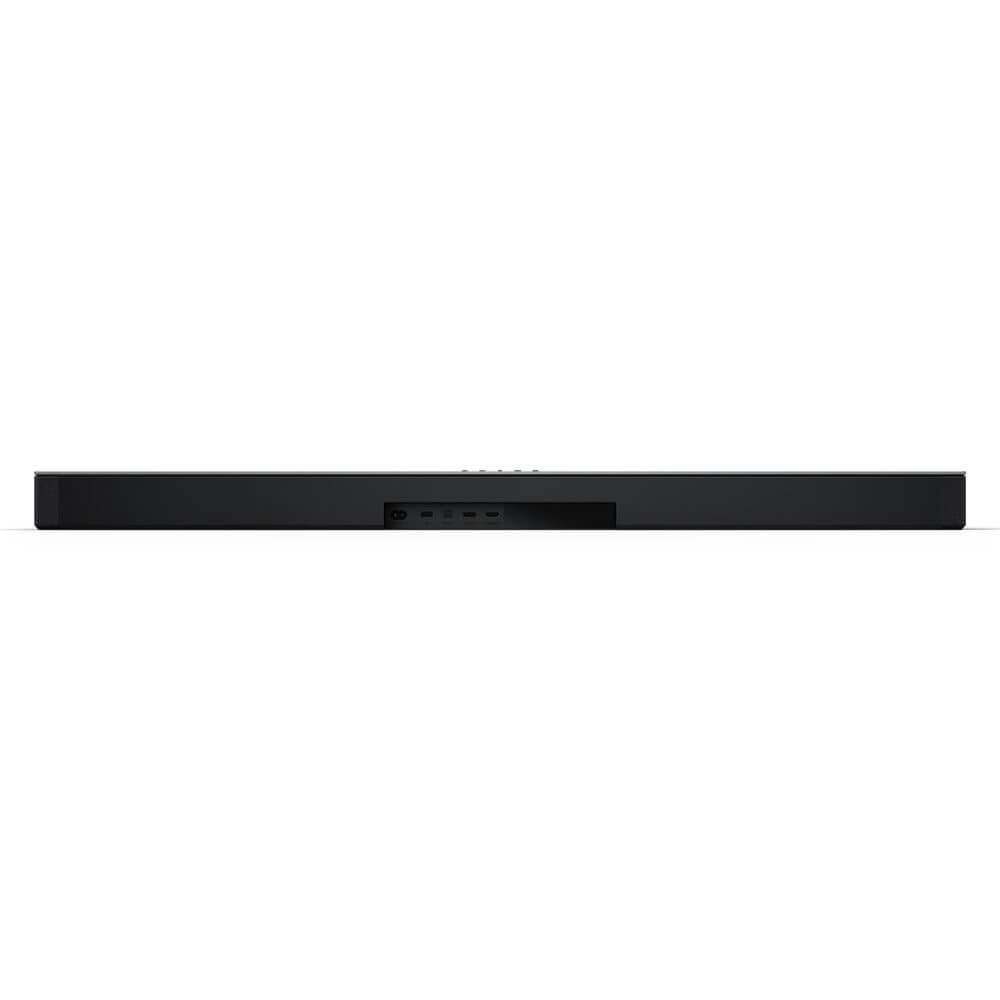
| Universal HDMI eARC compatibility | Optimized for TCL/Roku TVs |
| Dialogue Enhancement - Voice clarity technology | |
| PureVoice 2.0 processing | Dedicated center channel speaker |
| Expandability - Future upgrade options | |
| Cannot add subwoofer or rear speakers | Complete system (no expansion possible) |
The TCL Q85H ($499.99) offers better value for most users, providing true 7.1.4 surround sound with a wireless subwoofer and rear speakers for just $50 more than the JBL Bar 300 MK2 ($449.95). You get significantly more immersive audio and bass impact for a relatively small price difference.
No, the JBL Bar 300 MK2 does not include a separate subwoofer. It relies on built-in drivers and a bass port for low-frequency sound. While adequate for dialogue and music, it cannot match the deep bass impact of the TCL Q85H's dedicated 6.5-inch wireless subwoofer.
The JBL Bar 300 MK2 is much easier to set up since it's a single unit that you simply place under your TV and plug in. The TCL Q85H requires positioning multiple components including a wireless subwoofer and rear satellite speakers around your room.
Yes, but differently. The JBL Bar 300 MK2 uses virtual Dolby Atmos through processing to simulate height effects. The TCL Q85H provides true Dolby Atmos with physical up-firing speakers that bounce sound off your ceiling for more convincing immersion.
The JBL Bar 300 MK2 is ideal for small apartments due to its compact single-bar design and space efficiency. The TCL Q85H requires room for multiple speakers and may overwhelm smaller spaces with its 860W power output.
The JBL Bar 300 MK2 offers extensive streaming options including Wi-Fi, AirPlay, Chromecast, and access to 300+ music services. The TCL Q85H is more limited, supporting mainly Bluetooth 5.1 and AirPlay 2 for music streaming.
The TCL Q85H delivers significantly better bass with its dedicated 6.5-inch wireless subwoofer that can produce room-shaking low-end for action movies. The JBL Bar 300 MK2 lacks deep bass impact due to its no-subwoofer design.
The TCL Q85H is excellent for home theater with its true 7.1.4 surround sound, powerful subwoofer, and rear speakers creating cinematic immersion. The JBL Bar 300 MK2 works for home theater but provides a more modest upgrade focused on dialogue clarity.
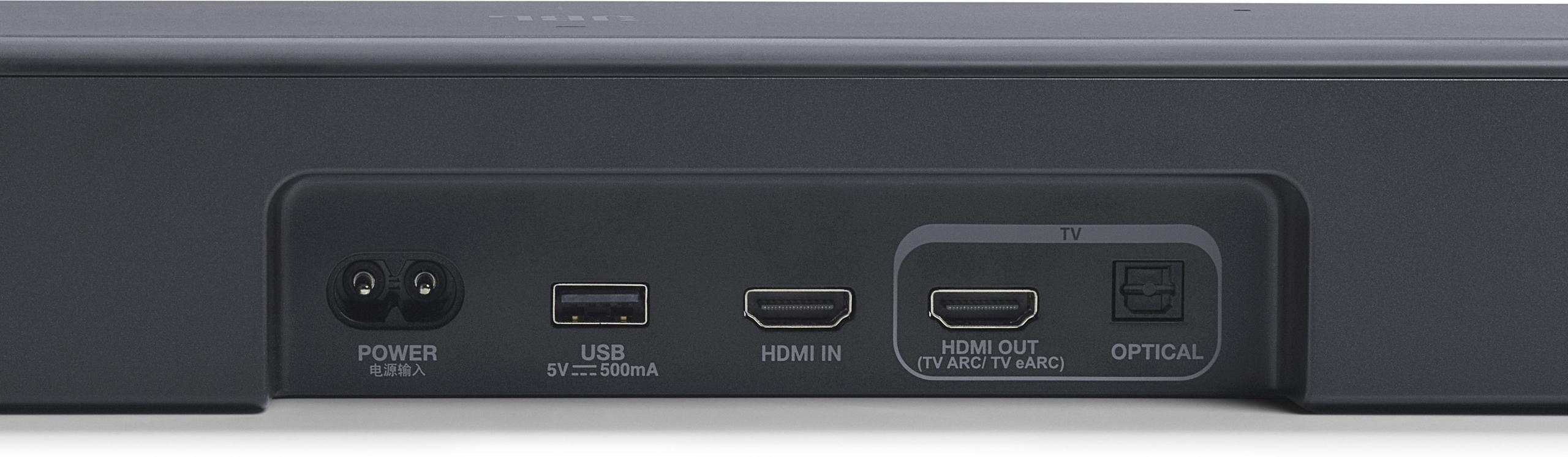
The JBL Bar 300 MK2 offers broader compatibility with any smart TV through HDMI eARC and extensive streaming support. The TCL Q85H provides deeper integration specifically with TCL and Roku TVs, allowing control through the TV remote.
Both excel at dialogue clarity through different methods. The JBL Bar 300 MK2 uses PureVoice 2.0 processing to enhance voice frequencies, while the TCL Q85H employs a dedicated center channel speaker for natural dialogue reproduction.
The TCL Q85H is better suited for large rooms with its 860W power output, multiple speakers, and ability to fill bigger spaces with immersive surround sound. The JBL Bar 300 MK2's 450W output works best in medium-sized rooms.
Neither system offers expansion options. The JBL Bar 300 MK2 cannot add a subwoofer or rear speakers, while the TCL Q85H comes as a complete system with no additional speaker compatibility. Choose based on your current needs rather than future expansion plans.
We've done our best to create useful and informative comparisons to help you decide what product to buy. Our research uses advanced automated methods to create this comparison and perfection is not possible - please contact us for corrections or questions. These are the sites we've researched in the creation of this article: homecinemachoice.com - retailspecs.com - hometechnologyreview.com - whathifi.com - news.jbl.com - engadget.com - crutchfield.com - harmanaudio.com - techradar.com - bestbuy.com - jbl.com - sweech.co.ke - jbl.com - jbl.com.sg - mm.jbl.com - abcwarehouse.com - harmanaudio.com - sweetwater.com - ro.harmanaudio.com - dell.com - jbl.co.nz - gamerant.com - bestbuy.com - tcl.com - bestbuy.com - tcl.com - tcl.com - nfm.com - tcl.com - electronicexpress.com - tcl.com - tcl.com - digitaltrends.com

Privacy Policy
Terms and Conditions - Affiliate Policy
Home Security
© Copyright 2008-2026.
11816 Inwood Rd #1211, Dallas, TX 75244