



Shopping for a soundbar can feel overwhelming with dozens of options promising theater-quality audio. Two standouts that caught our attention represent completely different approaches to improving your TV's sound: Amazon's Fire TV Soundbar Plus 5.1 Channel System and JBL's Bar 300 MK2. After researching extensive user feedback and expert reviews, we've found these products tackle the same problem—terrible TV speakers—in fundamentally different ways.
Before diving into specifics, it helps to understand what separates good soundbars from mediocre ones. The most important factor is channel configuration—essentially how many separate audio streams the system can handle. A 2.1 system has left, right, and bass channels, while 5.1 adds center dialogue and rear surround channels. More channels generally mean better sound placement and immersion.
Audio processing has become equally crucial. Modern content uses advanced formats like Dolby Atmos, which places sounds in three-dimensional space rather than just left-to-right stereo. Think of it like the difference between a flat painting and a sculpture—Atmos adds height and depth to create a bubble of sound around you.
Physical design philosophy creates the biggest split in the soundbar market. Some manufacturers build multi-component systems with separate subwoofers (bass speakers) and satellite speakers, while others pack everything into a single bar using digital processing to simulate surround effects. Each approach has trade-offs we'll explore.
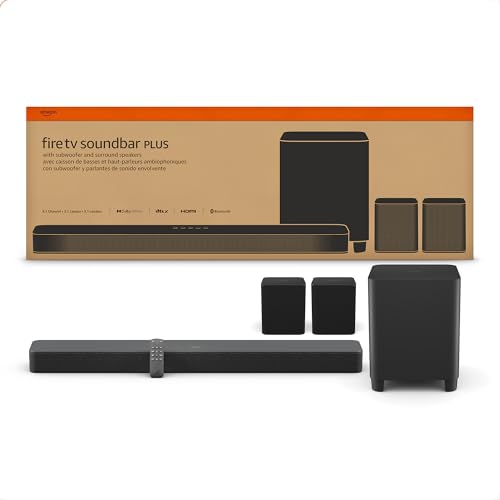
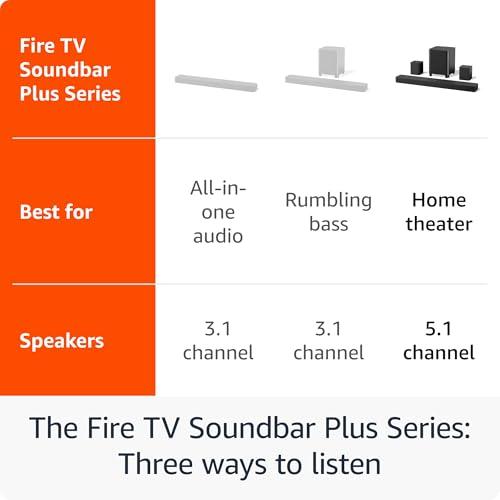
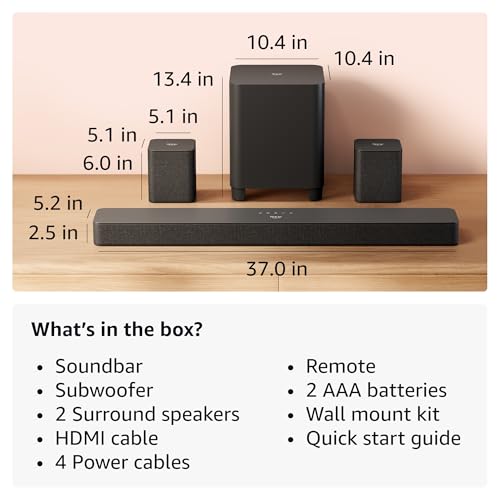
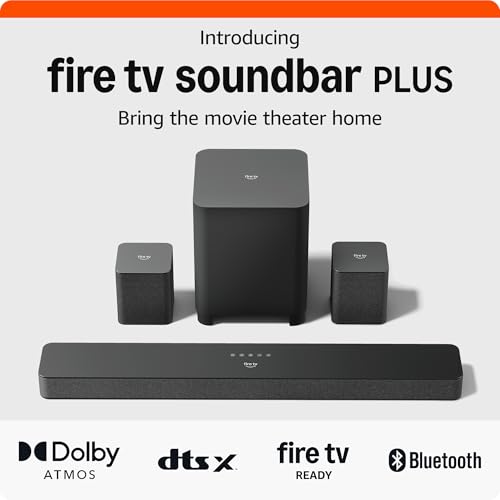
The Amazon Fire TV Soundbar Plus, released in late 2024, takes the traditional home theater approach. You get a main soundbar, a wireless subwoofer that handles deep bass, and two small satellite speakers that sit behind your seating area. This creates what audio enthusiasts call "true surround sound"—actual speakers positioned around the room firing sound from different directions.
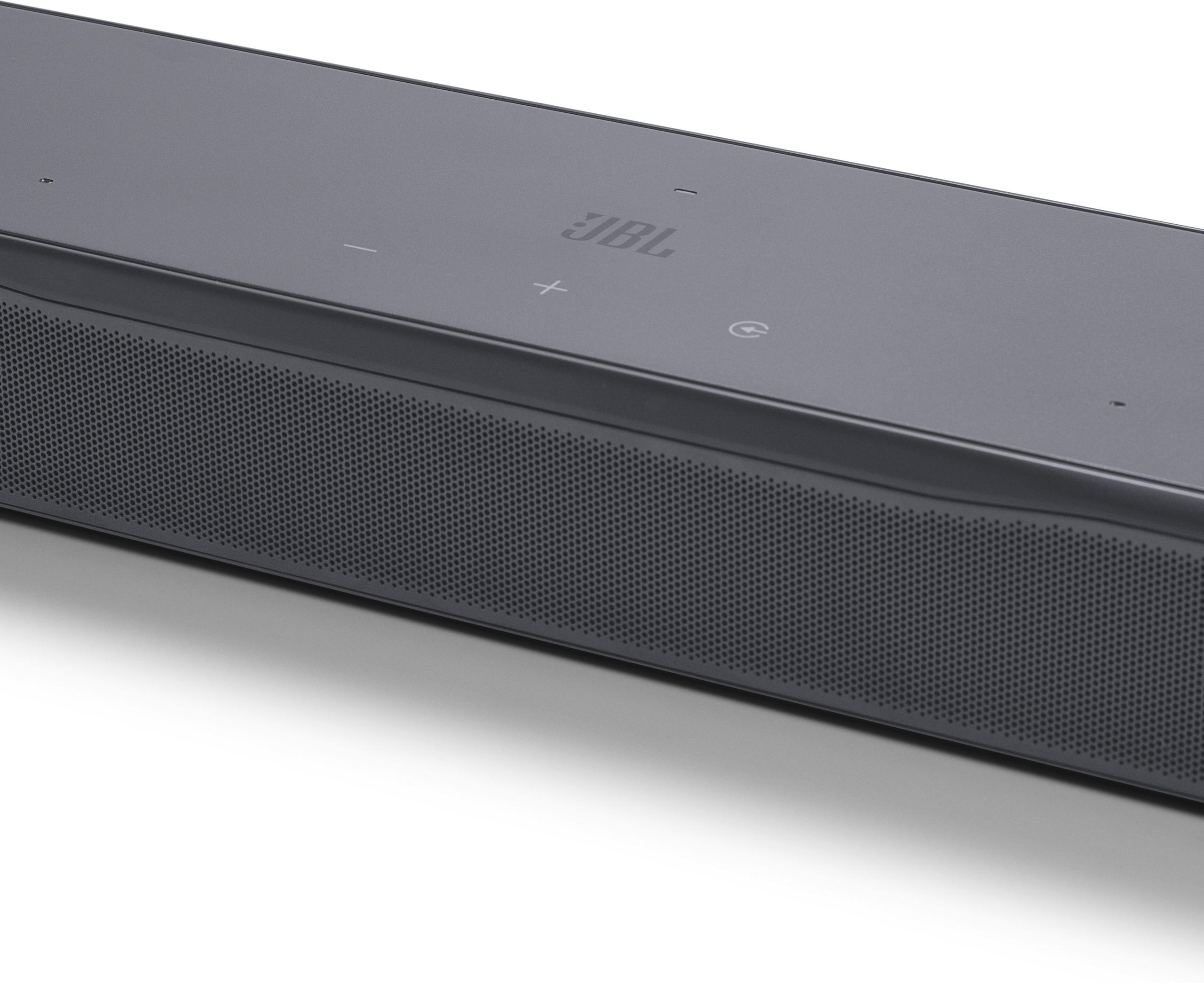
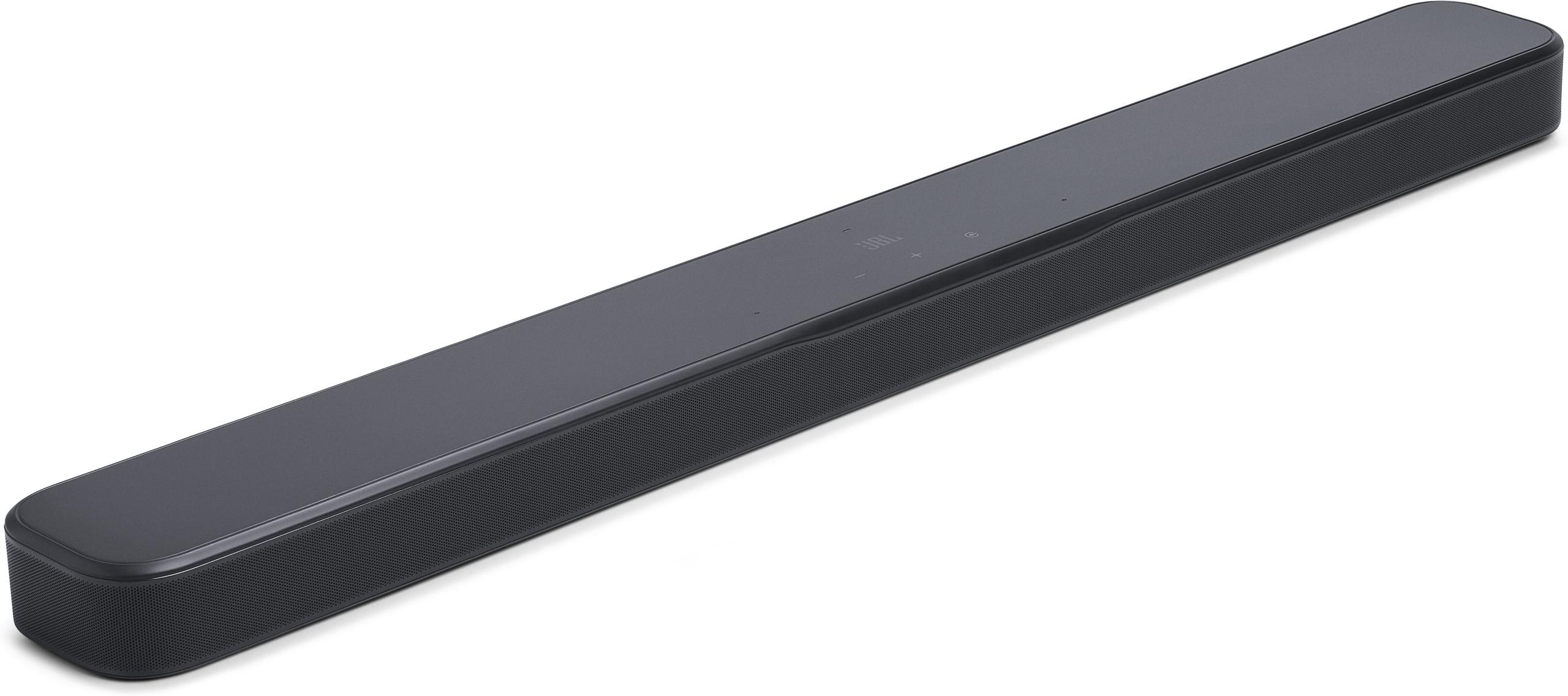
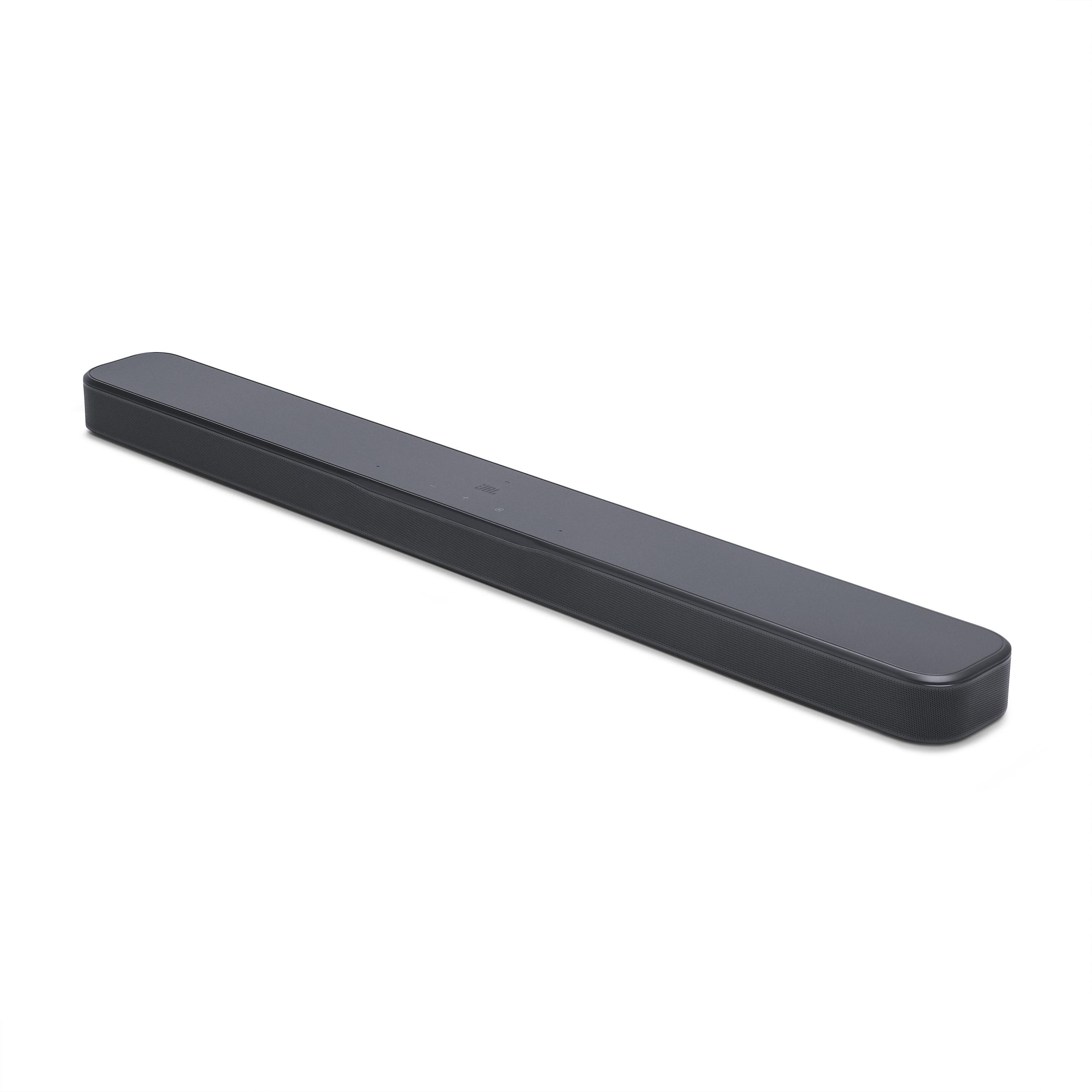
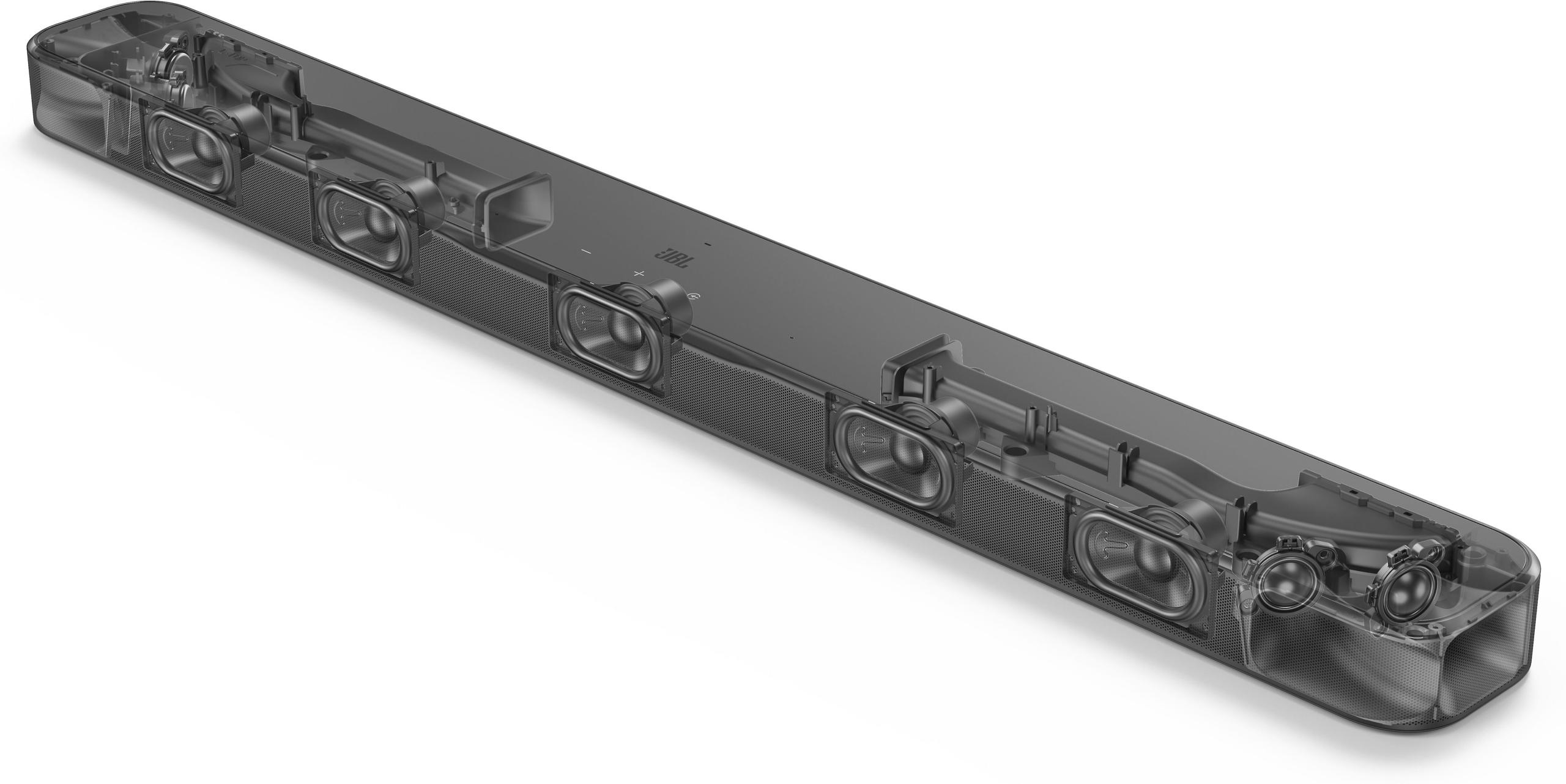
The JBL Bar 300 MK2, part of JBL's refreshed 2025 lineup, represents the space-conscious alternative. Everything fits in one sleek bar that uses sophisticated digital processing to create virtual surround effects. JBL's MultiBeam 3.0 technology bounces sound off your walls to simulate speakers you don't actually have.
At the time of writing, both systems fall in the mid-range soundbar category, with the Fire TV system commanding a slight premium for its multi-component approach. The pricing reflects their different strategies: you pay more for physical speakers versus clever software.
This difference in approach creates the most significant performance gap between these systems. The Amazon Fire TV Soundbar Plus delivers genuine surround sound because it actually places speakers behind you. When a helicopter flies overhead in a movie, you hear it move from the front soundbar to the rear satellites—a convincing illusion that your brain interprets as real spatial movement.
Our research into user experiences reveals this advantage is most noticeable during action movies and gaming. Users consistently report more convincing directional audio with physical rear speakers. The effect works because your ears naturally expect sounds from behind to have different characteristics than sounds bounced off walls.
The JBL Bar 300 MK2 compensates with impressive digital processing. MultiBeam technology analyzes your room acoustics and adjusts how it fires sound to create the widest possible soundstage from a single location. Reviews suggest this works surprisingly well for most content, creating a sense of spaciousness that rivals some multi-speaker systems.
However, physics imposes limits on what virtual processing can achieve. The JBL system excels at creating a wide left-to-right soundstage but struggles with convincing rear effects. Sounds meant to come from behind often feel like they're coming from beside you instead—close, but not quite authentic.
Most of your soundbar usage involves regular TV shows and movies where clear dialogue matters more than explosive action sequences. This is where both systems show distinct personalities based on their engineering choices.
The Fire TV Soundbar Plus includes a dedicated center channel—a speaker specifically tuned for human voices. This should theoretically provide excellent dialogue clarity, and it often does. However, our analysis of user feedback reveals a quirk: the system has a dip in lower-midrange frequencies that can make deeper voices sound thin or hollow. Male actors and narrators sometimes lack the warmth and richness they should have.
JBL addressed dialogue specifically with their PureVoice 2.0 technology in the Bar 300 MK2. This feature uses advanced algorithms to identify and enhance speech frequencies while reducing background interference. Users consistently praise its ability to maintain dialogue clarity even during loud action scenes—something many soundbars struggle with.
The practical difference is significant. If you frequently watch dialogue-heavy content like dramas, comedies, or documentaries, the JBL system provides more consistent vocal reproduction. For content mixing speech with complex soundtracks, PureVoice technology proves its worth by keeping conversations intelligible without requiring constant volume adjustments.
Bass response represents perhaps the starkest difference between these approaches. The Amazon system's dedicated wireless subwoofer can move significantly more air than drivers built into a slim soundbar. This translates to deeper, more impactful bass that you feel as much as hear.
User reports consistently highlight the subwoofer's ability to deliver genuine room-shaking bass for movies and music. However, this power comes with integration challenges. Several reviewers noted the bass can overpower dialogue during action sequences, requiring adjustment of the subwoofer level or dialogue enhancement features.
The JBL Bar 300 MK2 takes a different approach with integrated bass ports and specialized racetrack drivers—oval-shaped speakers that fit more surface area into the slim soundbar design. While it cannot match a dedicated subwoofer's depth, reviews suggest surprisingly robust bass for a single-unit design.
The trade-off becomes apparent in different content types. For music listening, the JBL system often provides better integration between bass and midrange frequencies, creating a more cohesive sound. For movies with explosive action sequences, the Fire TV system delivers more visceral impact that enhances the cinematic experience.
Modern soundbars increasingly function as smart home devices, not just TV accessories. Here, the JBL Bar 300 MK2 demonstrates clear superiority with comprehensive streaming capabilities and smart home integration.
The JBL system includes built-in Wi-Fi, supporting AirPlay, Google Cast, Spotify Connect, and numerous other streaming protocols. This means you can play music directly from streaming services without involving your TV—a significant convenience factor. The JBL One app provides EQ customization, multi-room audio coordination, and easy access to streaming services.
Voice assistant compatibility extends the JBL system's usefulness. While it doesn't have built-in microphones, it works seamlessly with existing Alexa, Google Assistant, and Siri devices in your home, allowing voice control of playback and settings.
The Fire TV Soundbar Plus takes a more focused approach, emphasizing integration with Amazon's Fire TV ecosystem rather than broad smart features. When connected to Fire TV devices, you can control the soundbar through your TV's interface—a clean, unified experience for Fire TV users. However, it lacks Wi-Fi connectivity and app support, limiting its smart capabilities.
This difference matters most for music listening and smart home integration. If you frequently stream music or want your soundbar to participate in a connected home setup, the JBL system provides significantly more functionality.
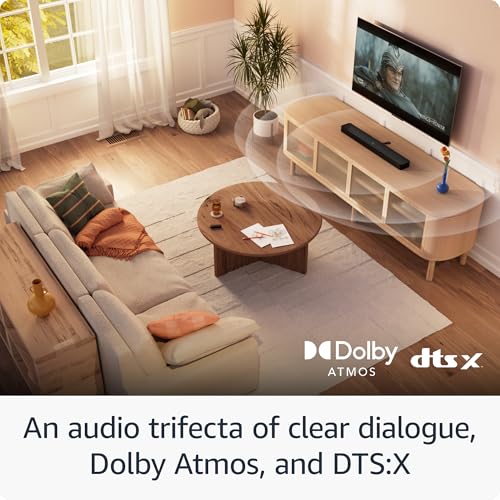
Both systems support Dolby Atmos, the surround sound format that adds height information to create three-dimensional audio. However, neither implements true Atmos with upward-firing speakers, instead relying on virtualization techniques.
Dolby Atmos virtualization uses psychoacoustic processing to simulate overhead sounds through regular speakers. The technology analyzes Atmos content and adjusts timing, phase, and frequency response to trick your brain into perceiving height effects.
Reviews suggest both systems provide competent Atmos virtualization, but with limitations. The effect works best in smaller rooms with appropriate seating positions. Neither system can match dedicated Atmos soundbars with physical up-firing drivers, but they provide a taste of dimensional audio that surpasses standard surround sound.
The JBL Bar 300 MK2 appears to have slightly more sophisticated Atmos processing, possibly due to more recent algorithm development. However, the differences are subtle, and both systems face the same fundamental limitation of virtual height effects.
Room size significantly influences which system works better. The Amazon Fire TV Soundbar Plus scales better to larger spaces because physical speakers maintain their effectiveness regardless of room size. The discrete subwoofer can pressurize larger rooms more effectively, and rear satellites create convincing surround effects even at greater listening distances.
Smaller rooms often favor the JBL Bar 300 MK2. Virtual surround processing works better when wall reflections are closer, and the integrated design eliminates concerns about rear speaker placement. Urban dwellers and apartment residents particularly appreciate not needing to position additional components.
Acoustic considerations also matter. Rooms with irregular layouts, high ceilings, or excessive soft furnishings can interfere with virtual surround processing. The Fire TV system's physical speakers prove more predictable in challenging acoustic environments.
Gaming audio demands have evolved significantly, with competitive games requiring precise directional audio cues. The Amazon Fire TV Soundbar Plus generally provides better gaming performance due to its authentic surround sound positioning.
However, our research uncovered a significant limitation: the Fire TV system exhibits notable audio latency that can cause lip-sync issues and delayed audio feedback during gaming. This latency proves particularly problematic for rhythm games and competitive multiplayer where audio timing matters.
The JBL Bar 300 MK2 demonstrates lower latency in most configurations, making it potentially better for gaming despite its virtual surround limitations. The trade-off becomes personal preference: authentic directional audio with some delay versus faster response times with simulated positioning.
Neither system offers expansion capabilities—a significant consideration for future upgrades. The Fire TV Soundbar Plus cannot add additional speakers or upgrade components, while the JBL Bar 300 MK2 cannot accommodate a separate subwoofer.
However, the JBL system provides better long-term value through software updates and streaming service additions. JBL has committed to ongoing firmware updates that can add features and improve performance over time. The Amazon system lacks this upgrade path due to its limited connectivity.
For dedicated home theater setups, the Amazon system provides more authentic surround sound that enhances movie watching. For flexible entertainment systems that handle movies, music, and streaming equally, the JBL system offers greater versatility.
Your decision should primarily depend on your priorities and constraints. Choose the Amazon Fire TV Soundbar Plus if you have adequate space for rear speakers, prioritize authentic surround sound for movies and gaming, and don't need extensive smart features. It excels in dedicated home theater setups where audio immersion matters most.
Select the JBL Bar 300 MK2 if you prefer a clean, single-unit installation, frequently stream music, want smart home integration, or live in a space where rear speakers aren't practical. It provides better value for everyday use and offers more features for the investment.
At the time of writing, the price difference isn't substantial enough to be the primary deciding factor. Instead, focus on which approach better matches your listening habits and room constraints. Both systems significantly outperform TV speakers and provide satisfying audio upgrades—they just achieve this goal through different philosophies that suit different users and situations.
The soundbar market continues evolving rapidly, but these fundamental approaches—multi-component authenticity versus single-unit sophistication—represent the core choice facing most buyers. Understanding which philosophy aligns with your needs will serve you better than focusing solely on specifications or brand loyalty.
| Amazon Fire TV Soundbar Plus 5.1 Channel System | JBL Bar 300 MK2 Soundbar |
|---|---|
| Channel Configuration - Determines surround sound authenticity | |
| True 5.1 channels with physical rear speakers | Virtual 5.0 channels (no separate subwoofer) |
| Total Power Output - Affects room filling capability | |
| 260W across all components | 450W from single unit |
| Physical Setup - Space and placement requirements | |
| Main bar + wireless subwoofer + 2 rear satellites | Single soundbar only |
| Dolby Atmos Support - Creates overhead sound effects | |
| Virtual Atmos (no up-firing drivers) | Virtual Atmos with MultiBeam 3.0 processing |
| Smart Features - Streaming and voice control capabilities | |
| Fire TV integration only (no Wi-Fi/app) | Full streaming suite with AirPlay, Chromecast, app control |
| Bass Solution - Deep frequency reproduction | |
| Dedicated wireless subwoofer | Integrated bass ports and racetrack drivers |
| Connectivity Options - How you connect devices | |
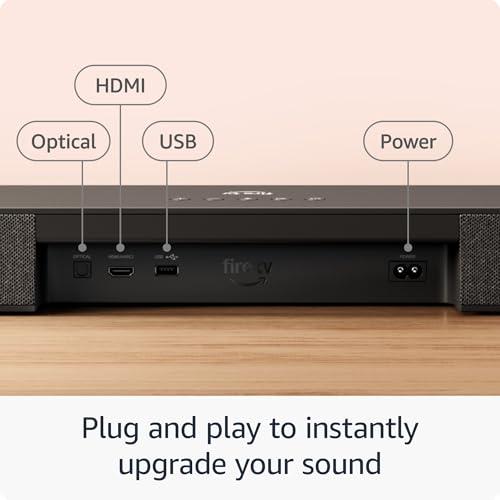
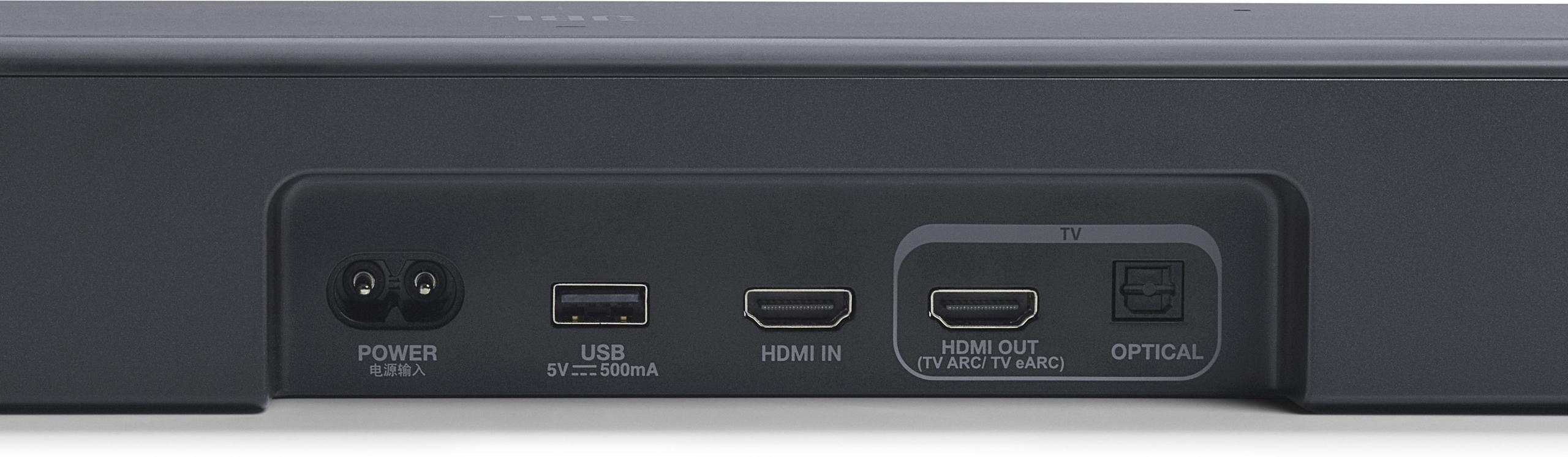
| HDMI eARC, optical, USB-A, Bluetooth 5.0 | HDMI eARC, optical, Wi-Fi, Bluetooth 5.0, USB-A |
| Dialogue Enhancement - Speech clarity technology | |
| Dedicated center channel + dialogue button | PureVoice 2.0 with advanced speech processing |
| Expandability - Future upgrade potential | |
| Cannot add components (complete system) | Cannot add subwoofer or rear speakers |
| Room Size Suitability - Optimal listening space | |
| Medium to large rooms (physical speakers scale well) | Small to medium rooms (virtual effects work best) |
| Gaming Performance - Audio latency and directional cues | |
| High latency but authentic directional audio | Lower latency with virtual positioning |
| Music Streaming - Direct audio playback without TV | |
| Requires TV or Bluetooth device | Built-in Wi-Fi streaming from 300+ services |
The Amazon Fire TV Soundbar Plus 5.1 Channel System is better for movies due to its true surround sound with physical rear speakers that create authentic directional audio. However, the JBL Bar 300 MK2 Soundbar excels at dialogue clarity with its PureVoice 2.0 technology, making it ideal for TV shows and dialogue-heavy content.
Not necessarily. The Amazon Fire TV Soundbar Plus uses physical rear speakers for authentic surround sound, while the JBL Bar 300 MK2 creates impressive virtual surround using MultiBeam 3.0 technology from a single bar. Physical speakers provide more convincing directional effects, but virtual surround works well for most users.
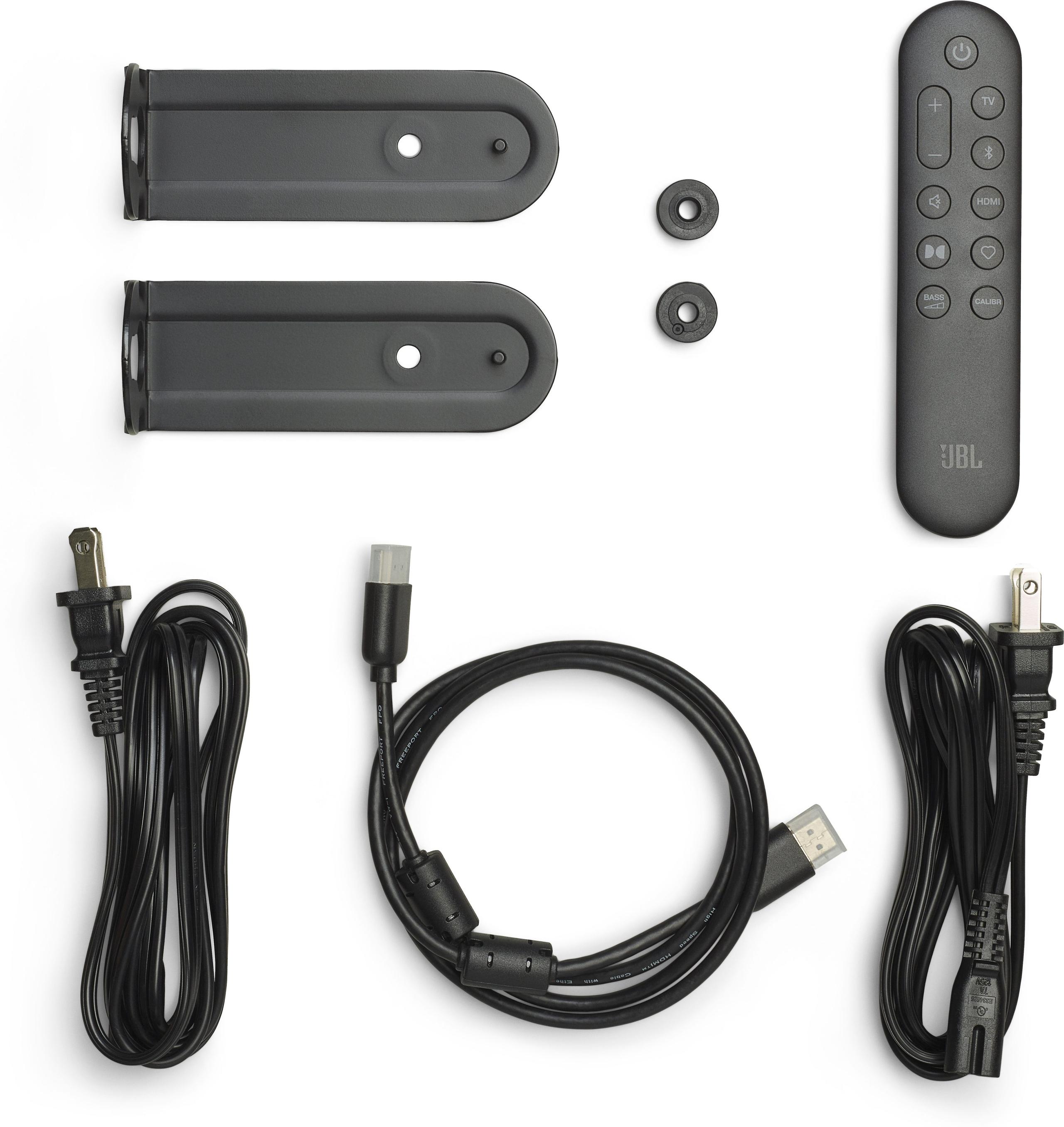
The JBL Bar 300 MK2 Soundbar is much easier to set up since it's a single unit that just needs power and one cable to your TV. The Amazon Fire TV Soundbar Plus requires positioning a subwoofer and two rear speakers around your room, though they connect wirelessly.
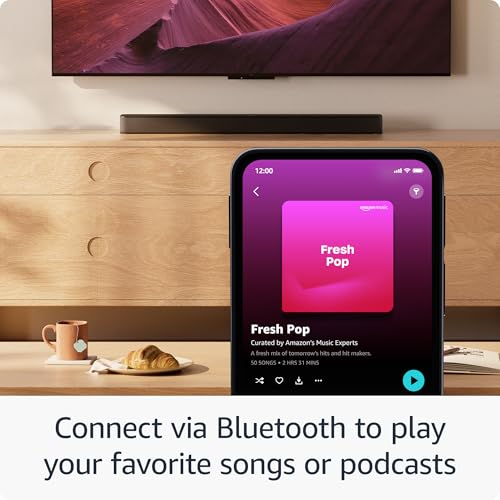
Yes, but with different capabilities. The JBL Bar 300 MK2 has built-in Wi-Fi and supports AirPlay, Chromecast, and Spotify Connect for direct streaming. The Amazon Fire TV Soundbar Plus only supports Bluetooth streaming and requires your TV or phone as the source.
The Amazon Fire TV Soundbar Plus 5.1 Channel System has stronger, deeper bass thanks to its dedicated wireless subwoofer. The JBL Bar 300 MK2 produces surprisingly good bass from its integrated design, but cannot match the depth and impact of a separate subwoofer.
The JBL Bar 300 MK2 Soundbar is better for gaming due to lower audio latency, preventing lip-sync issues. While the Amazon Fire TV Soundbar Plus provides more authentic directional audio for games, its higher latency can be problematic for competitive gaming and rhythm games.
The JBL Bar 300 MK2 is ideal for small rooms since virtual surround processing works better with closer wall reflections, and you don't need space for rear speakers. The Amazon Fire TV Soundbar Plus is better suited for medium to large rooms where physical speakers can be properly positioned.
Both soundbars support Dolby Atmos, but through virtual processing rather than dedicated up-firing speakers. The JBL Bar 300 MK2 uses more advanced algorithms for height effects, while the Amazon Fire TV Soundbar Plus relies on basic Atmos virtualization. Neither provides true overhead sound placement.
The Amazon Fire TV Soundbar Plus integrates seamlessly with Fire TV devices for unified remote control. The JBL Bar 300 MK2 Soundbar works with most TV remotes through HDMI-CEC and can be controlled via the JBL One app on your phone.
The JBL Bar 300 MK2 generally offers better value with more smart features, streaming capabilities, and easier setup for a lower price. The Amazon Fire TV Soundbar Plus provides better value if you prioritize authentic surround sound and have the space for multiple components.
Neither system allows expansion. The Amazon Fire TV Soundbar Plus 5.1 Channel System is a complete system that cannot add more speakers, while the JBL Bar 300 MK2 cannot accommodate a separate subwoofer or rear speakers. Consider your long-term needs before purchasing.
The JBL Bar 300 MK2 Soundbar is more apartment-friendly due to its single-unit design, integrated bass that's less likely to disturb neighbors, and no need for rear speaker placement. The Amazon Fire TV Soundbar Plus may be too complex for smaller spaces and its subwoofer could cause neighbor complaints.
We've done our best to create useful and informative comparisons to help you decide what product to buy. Our research uses advanced automated methods to create this comparison and perfection is not possible - please contact us for corrections or questions. These are the sites we've researched in the creation of this article: rtings.com - cordbusters.co.uk - techradar.com - developer.amazon.com - t3.com - hometechnologyreview.com - youtube.com - hometechnologyreview.com - whathifi.com - hometechnologyreview.com - hometechnologyreview.com - youm.design - hometechnologyreview.com - dolby.com - homecinemachoice.com - retailspecs.com - hometechnologyreview.com - whathifi.com - news.jbl.com - engadget.com - crutchfield.com - harmanaudio.com - techradar.com - bestbuy.com - jbl.com - sweech.co.ke - jbl.com - jbl.com.sg - mm.jbl.com - abcwarehouse.com - harmanaudio.com - sweetwater.com - ro.harmanaudio.com - dell.com - jbl.co.nz

Privacy Policy
Terms and Conditions - Affiliate Policy
Home Security
© Copyright 2008-2026.
11816 Inwood Rd #1211, Dallas, TX 75244