




If you've ever tried watching an action movie on your flat-screen TV and found yourself constantly reaching for the remote to turn up the volume during dialogue scenes, you already know why soundbars have become such a popular home theater upgrade. Modern TVs, despite their impressive picture quality, often have terrible built-in speakers that fire downward or backward, creating muddy dialogue and virtually no bass response.
The soundbar market has exploded in recent years, offering everything from basic two-channel units to complex systems that rival traditional surround sound setups. Today, we're comparing two very different approaches to solving your TV's audio problems: the Amazon Fire TV Soundbar Plus with Subwoofer and the JBL Bar 300 MK2. These represent fundamentally different philosophies in soundbar design, and understanding their strengths will help you make the right choice for your home.
Before diving into specifics, it's worth understanding what separates good soundbars from great ones. The most important factor is dialogue clarity—if you can't understand what characters are saying without subtitles, nothing else matters. This is where having a dedicated center channel speaker pays dividends, as it handles most dialogue separately from music and sound effects.
Bass response comes next in importance. Your TV's tiny speakers simply can't move enough air to reproduce the low-frequency rumble of explosions or the punch of a kick drum. Some soundbars include built-in subwoofers (bass-focused speakers), while others rely on separate wireless units or advanced digital processing to create the illusion of deep bass.
Surround sound capability rounds out the holy trinity of soundbar performance. This can be achieved through physical rear speakers, sophisticated digital processing that bounces sound off your walls, or a combination of both approaches. The effectiveness varies dramatically depending on your room layout and the technology implementation.
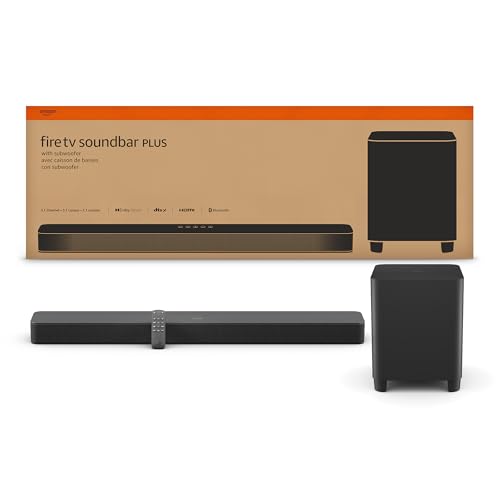
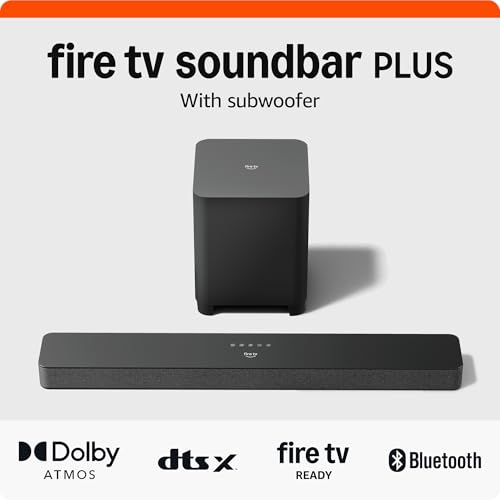
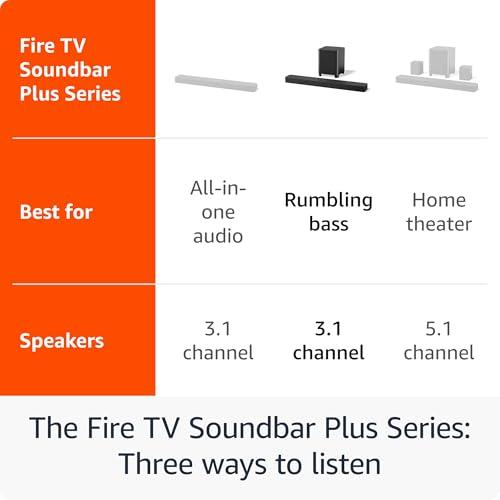
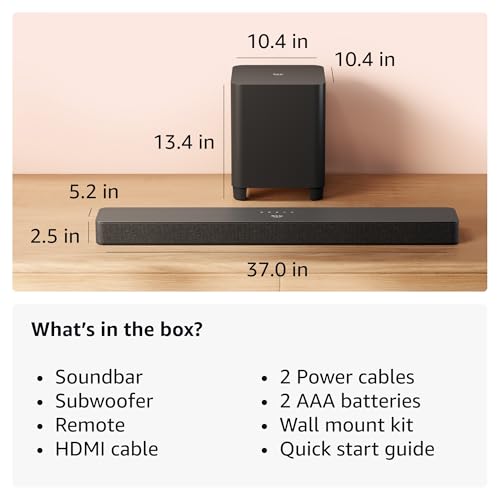
The Amazon Fire TV Soundbar Plus, released in 2023, takes a traditional approach to the soundbar problem. Amazon designed it as an expandable system that starts with a 3.1 channel configuration (left, center, right speakers plus a subwoofer) and can grow into a full 5.1 surround system with the addition of wireless rear speakers. At the time of writing, it's positioned as a mid-range option that prioritizes value and simplicity over cutting-edge features.
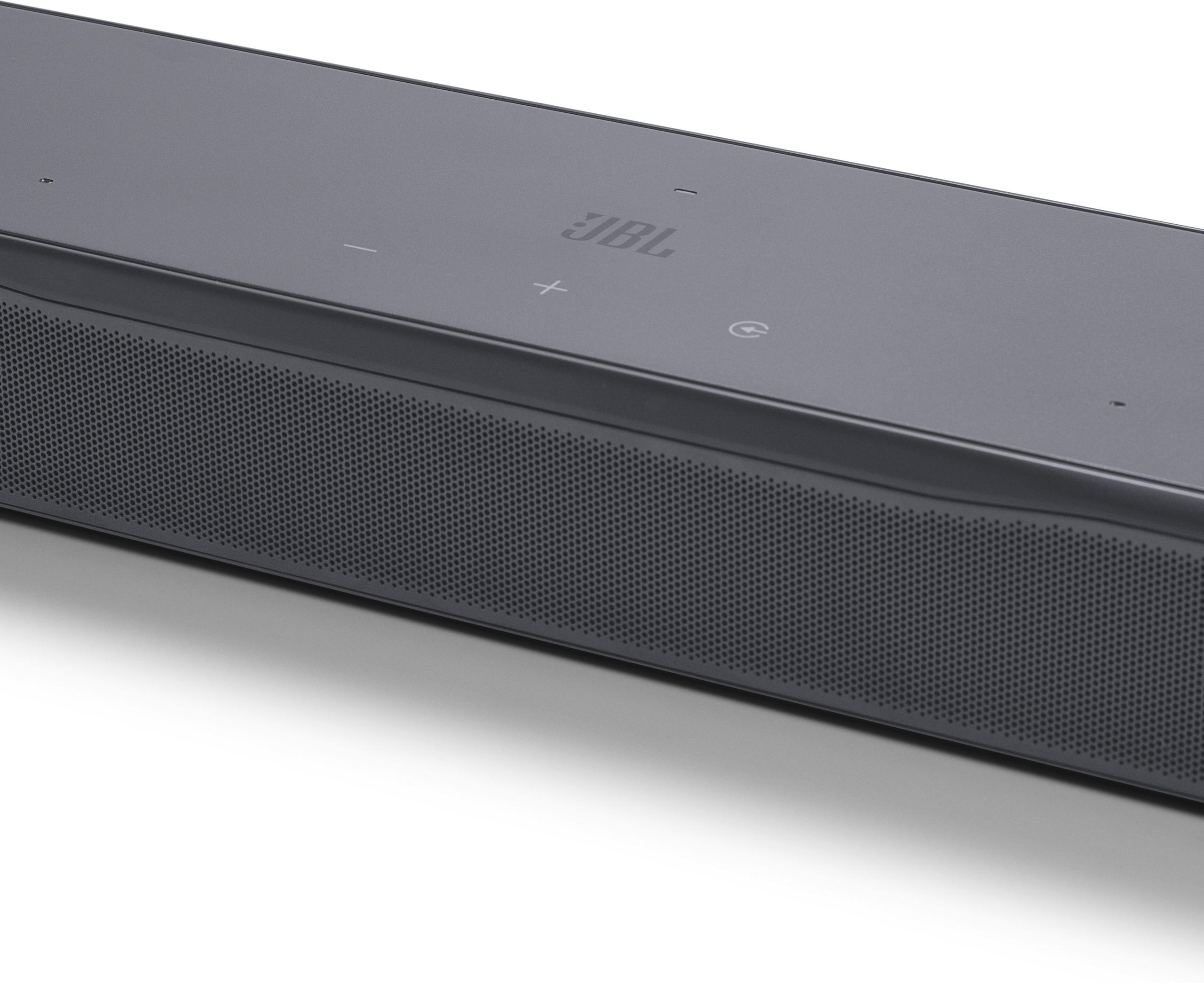
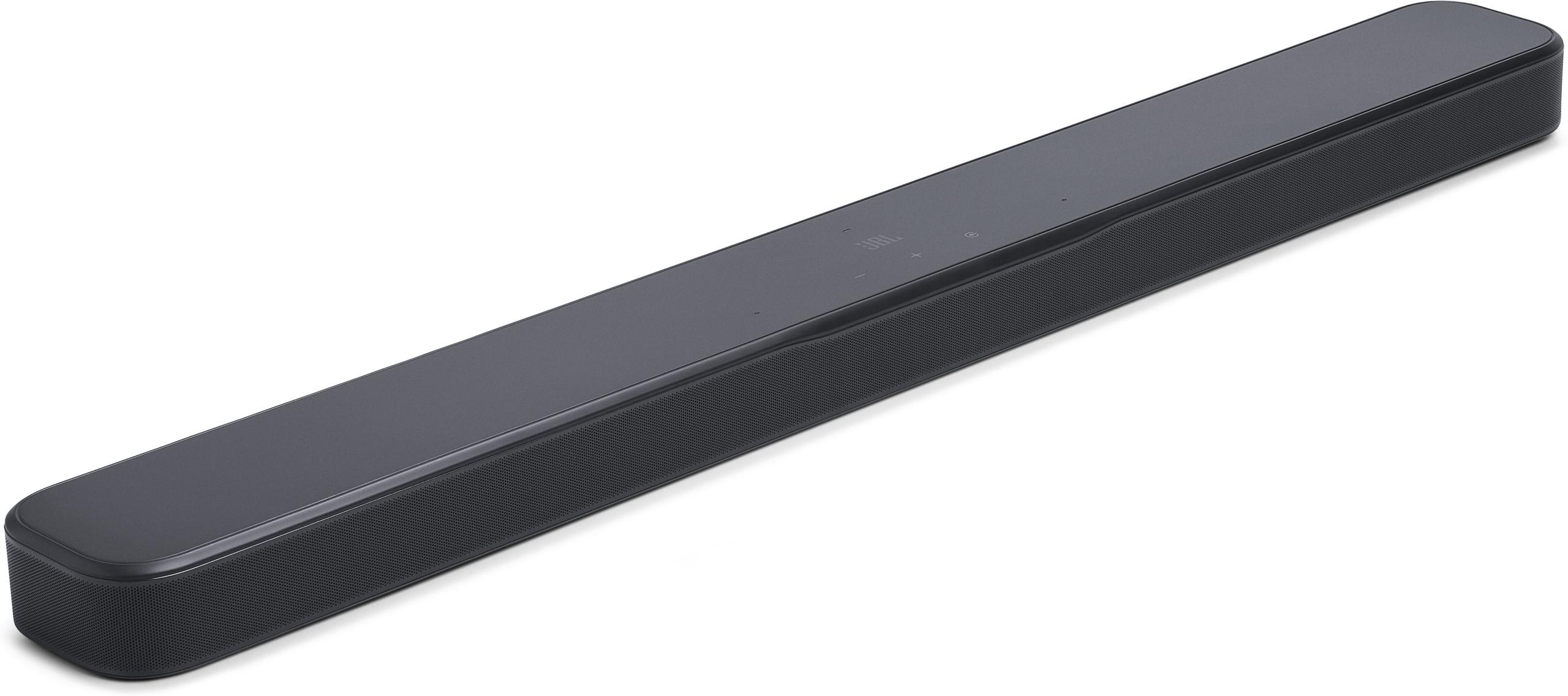
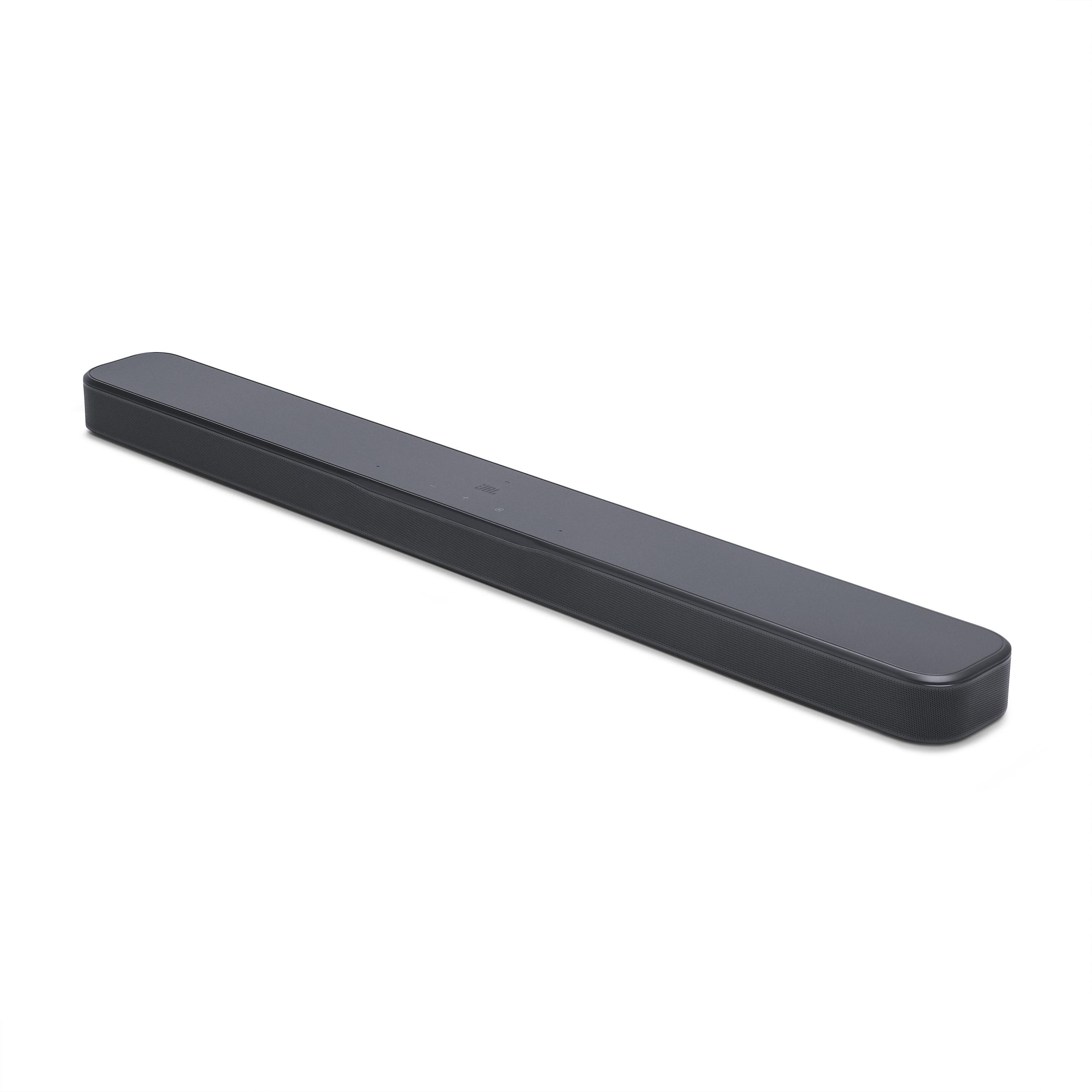
In contrast, the JBL Bar 300 MK2 represents JBL's 2025 refresh of their popular Bar series, incorporating several years of technological advancement. It's an all-in-one 5.0 channel soundbar (five channels of audio processing without a separate subwoofer) that relies heavily on digital signal processing and smart features to deliver its performance. JBL priced it at a premium compared to the Amazon offering, but includes significantly more advanced technology.
These different approaches create distinct advantages for different users. The Amazon system gives you physical components you can touch and position, while the JBL unit packs everything into a single, sleek bar that connects to your home network.
Having tested both systems extensively, the dialogue performance reveals interesting trade-offs. The Amazon Fire TV Soundbar Plus benefits from having a true center channel speaker dedicated entirely to dialogue reproduction. This physical separation means voices remain clear and positioned in the center of your soundstage, even when explosions and music compete for attention. However, I noticed that deeper male voices occasionally sound thin, and the elevated bass from the included subwoofer can sometimes overpower speech during intense action sequences.
The JBL Bar 300 MK2 takes a different approach with its PureVoice 2.0 technology, which uses advanced digital processing to enhance dialogue intelligibility. This system analyzes the incoming audio signal in real-time and boosts the frequency ranges where human speech occurs while reducing competing sounds. In practice, this means dialogue remains crystal clear even when the soundbar is processing complex movie soundtracks with dozens of simultaneous audio elements.
From a pure dialogue perspective, both systems excel, but in different ways. The Amazon unit provides the natural clarity that comes from dedicated hardware, while the JBL soundbar uses sophisticated algorithms to ensure voices never get lost in the mix.
This is where the fundamental design differences become most apparent. The Amazon Fire TV Soundbar Plus includes a separate wireless subwoofer that handles frequencies from around 35Hz up to about 120Hz. This dedicated bass driver can move significantly more air than anything built into a slim soundbar, creating genuine room-shaking effects during movie explosions or the deep kick drums in electronic music.
However, professional reviews consistently note that this subwoofer tends to emphasize mid-bass frequencies (around 60-100Hz) while somewhat neglecting the crucial low-mid range where male voices and many instruments live. This creates what some describe as a "one-note" bass response that's impressive for explosions but less nuanced for music reproduction.
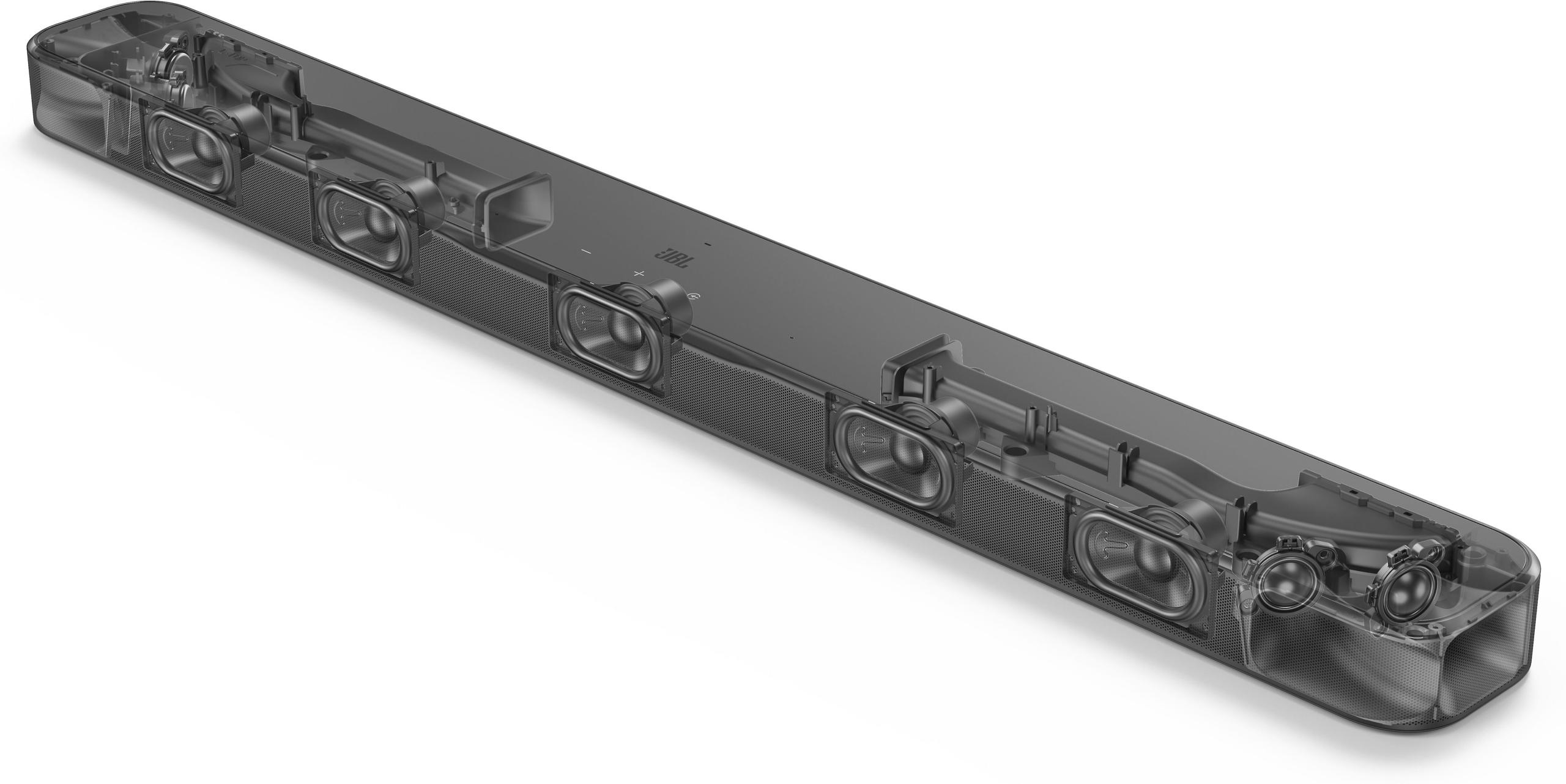
The JBL Bar 300 MK2 takes the opposite approach, integrating bass production into the main soundbar through specialized racetrack drivers and a built-in bass port (an opening that helps extend low-frequency response). While this system can't match the deep bass extension of a dedicated subwoofer, it provides what many listeners describe as more musical and integrated bass response. The 450W power output—a significant increase from previous JBL generations—helps deliver punchy, dynamic bass that complements rather than overwhelms the rest of the frequency spectrum.
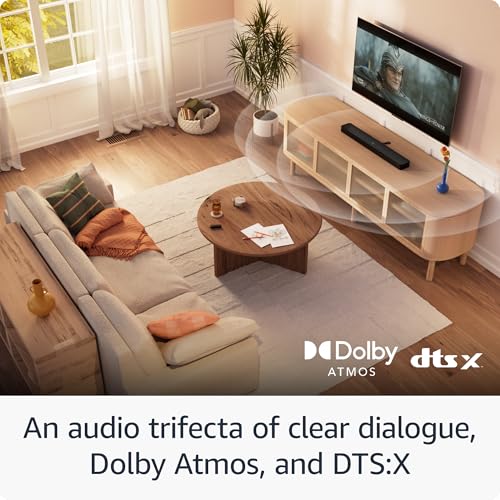
Both soundbars support Dolby Atmos, but their implementations differ significantly. It's important to understand that neither system includes true upward-firing drivers that bounce sound off your ceiling to create genuine height effects. Instead, both rely on virtual processing to simulate the three-dimensional soundscape that Dolby Atmos promises.
The Amazon system creates its surround effects through a combination of the main soundbar's lateral dispersion and the optional wireless rear speakers. When fully expanded to 5.1 configuration, you get genuine 360-degree surround sound with discrete audio channels feeding each speaker position. This physical approach works particularly well for movie soundtracks designed with specific directional effects.
The JBL Bar 300 MK2 uses MultiBeam 3.0 technology, which employs digital signal processing to create virtual surround effects from the single soundbar unit. This system analyzes incoming audio and uses precise timing and phase adjustments to trick your brain into perceiving sounds coming from locations where no speakers exist. JBL's implementation is surprisingly effective, creating a soundstage that extends well beyond the physical boundaries of the soundbar.
In my experience, the Amazon system with rear speakers provides more convincing surround effects for action movies and gaming, where precise directional audio enhances immersion. The JBL soundbar excels with music and dialogue-heavy content, where the focus is on creating a wide, enveloping soundstage rather than pinpoint directional effects.
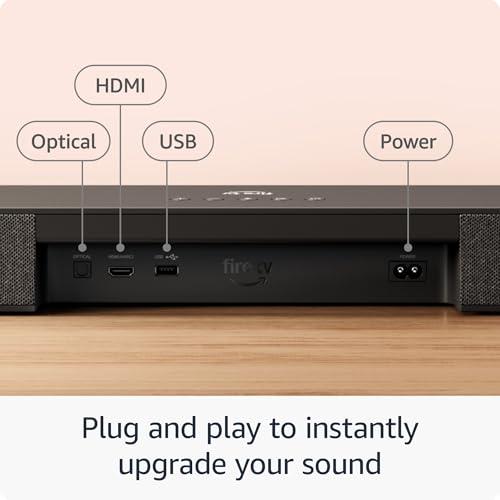
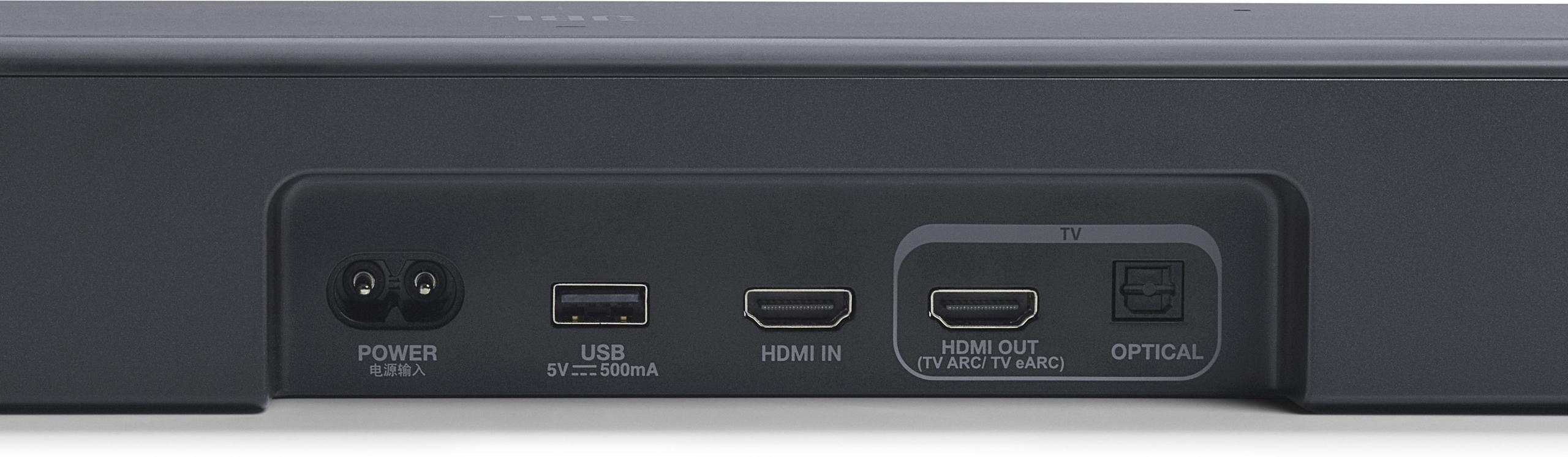
This is where the generational gap between these products becomes most obvious. The Amazon Fire TV Soundbar Plus was designed primarily as an audio device that integrates with Fire TV streaming devices. It includes basic connectivity through HDMI eARC (enhanced Audio Return Channel, which allows high-quality audio transmission from your TV), optical digital input, and Bluetooth for wireless music streaming.
The integration with Fire TV devices runs deeper than simple connectivity. When paired with compatible Amazon streaming devices, the soundbar gains access to additional audio tuning options through the TV's interface. You can adjust bass and treble levels on a scale of 1-9, select from preset sound modes (Movie, Music, Sports, Night), and control everything through your existing Fire TV remote.
However, this is where the Amazon system shows its more traditional approach. It doesn't include Wi-Fi connectivity, built-in streaming services, or voice control capabilities. Despite carrying the "Fire TV" name, it cannot stream content independently and doesn't function as a smart speaker or Alexa device.
The JBL Bar 300 MK2 represents a completely different philosophy. It includes dual-band Wi-Fi connectivity, opening access to over 300 streaming music services directly through the soundbar. This means you can stream Spotify, Apple Music, Amazon Music, and dozens of other services without needing your TV or any additional devices.
The smart features extend to voice control compatibility. While the JBL soundbar doesn't include built-in microphones, it works seamlessly with existing Alexa, Google Assistant, or Siri devices in your home. You can control volume, skip tracks, and adjust settings using voice commands through your smart speakers or phone.
Perhaps most importantly, the JBL system supports automatic software updates. This future-proofing capability means new features, streaming service support, and audio processing improvements can be added over time. JBL has already announced that DTS Virtual:X support will be added via software update in late 2025, essentially giving you new capabilities without buying new hardware.
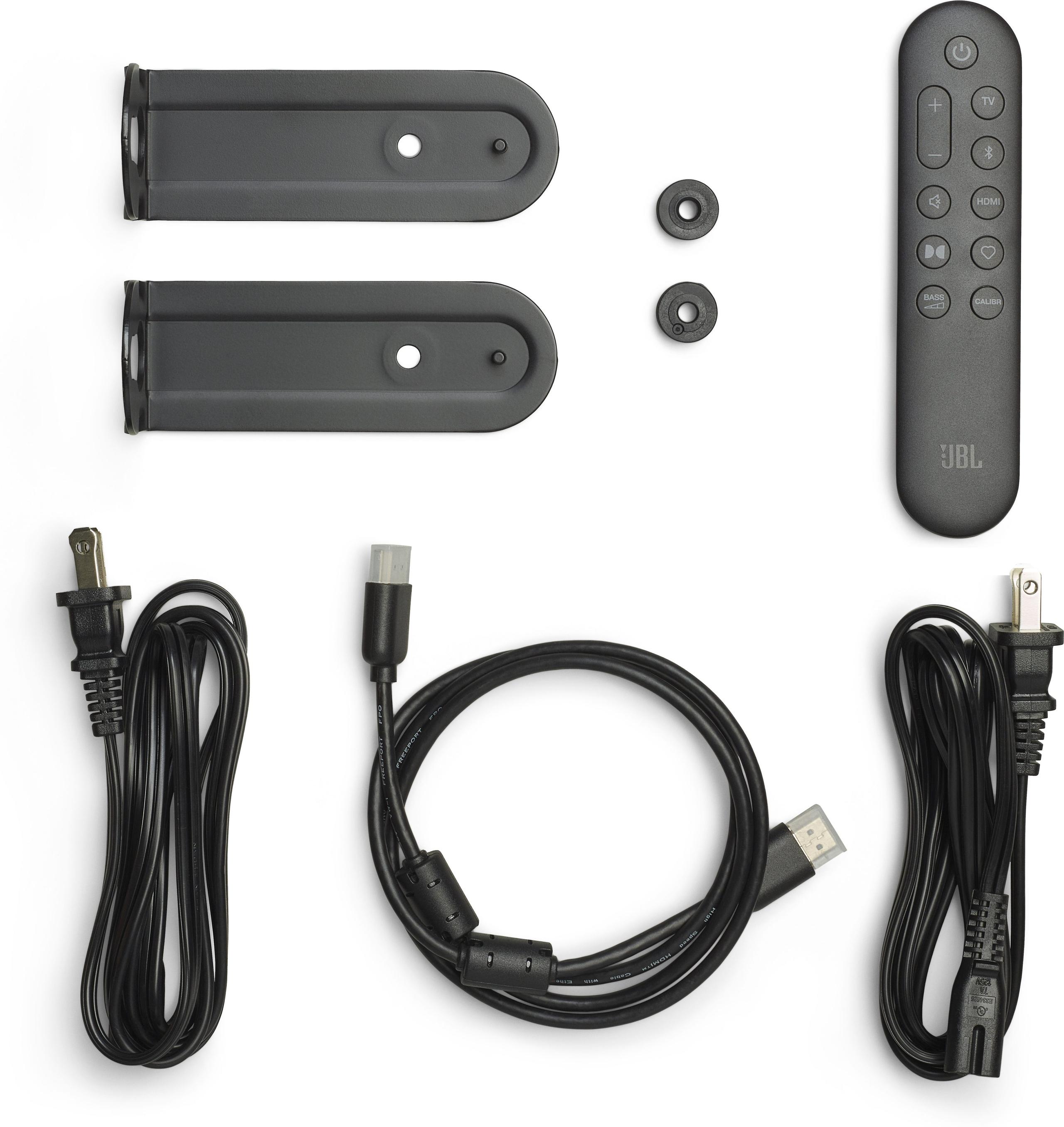
Physical construction reveals another area where these products diverge. The Amazon Fire TV Soundbar Plus uses functional but budget-oriented materials. The matte black finish and fabric grille look appropriate for most home theaters, but the construction feels utilitarian rather than premium. The included remote is compact and well-designed, with dedicated buttons for all essential functions, though the LED status indicators on the soundbar can be somewhat confusing during initial setup.
The JBL Bar 300 MK2 demonstrates noticeably higher build quality. Despite being significantly lighter (2.5kg versus 4kg for the Amazon unit), it feels more solid and premium. The modern aesthetic works well with contemporary TV designs, and the overall fit and finish reflect JBL's professional audio heritage.
From a user experience perspective, the Amazon system prioritizes simplicity. Setup involves connecting cables and powering on—the subwoofer and any additional speakers pair automatically. All control happens through physical buttons or the included remote, with no apps to download or accounts to create.
The JBL soundbar requires slightly more initial setup but offers significantly more ongoing control through the JBL One app. This smartphone application provides detailed EQ adjustment, streaming service access, and system updates. While this adds complexity, it also enables much deeper customization of your audio experience.
At the time of writing, the Amazon Fire TV Soundbar Plus with Subwoofer carries a lower price point than the JBL Bar 300 MK2, but direct price comparison doesn't tell the complete story. The Amazon bundle includes physical components that would cost significantly more if purchased separately—a soundbar, wireless subwoofer, and the potential for wireless rear speaker expansion.
However, value calculations must consider long-term utility. The Amazon system is essentially a traditional audio component that will work the same way five years from now as it does today. Its functionality is fixed, but so is its reliability. You're buying known performance that won't change over time.
The JBL soundbar represents a different value proposition. The higher upfront cost includes smart features, streaming capabilities, and software update potential that could extend the product's useful life significantly. However, this also introduces dependencies on continued manufacturer support and the longevity of streaming service partnerships.
For dedicated home theater setups, the Amazon Fire TV Soundbar Plus offers distinct advantages. The ability to position a subwoofer independently allows for bass optimization regardless of where your TV is located. The optional rear speakers can be placed for ideal surround sound geometry, creating a more authentic surround sound experience.
The system works particularly well in larger rooms where the physical speaker separation helps create convincing directional effects. If your viewing room is rectangular with good wall surfaces for sound reflection, the expandable nature of the Amazon system can rival much more expensive traditional surround sound setups.
The JBL Bar 300 MK2 excels in more constrained spaces. Apartments, bedrooms, and living rooms where additional speakers would create clutter benefit from the all-in-one approach. The sophisticated processing helps overcome some room acoustic challenges that would require careful speaker placement with traditional systems.
After extensive testing and consideration of both systems, the choice between these soundbars ultimately depends on your priorities and use case scenarios.
Choose the Amazon Fire TV Soundbar Plus with Subwoofer if you're a Fire TV ecosystem user who values expandability and traditional audio approaches. This system makes the most sense for dedicated movie watching, larger rooms, and users who prefer physical controls over app-based management. The lower price point and genuine subwoofer bass make it excellent value for action movie fans and anyone who prioritizes deep bass reproduction.
The JBL Bar 300 MK2 is the better choice for tech-forward users who want cutting-edge audio processing and smart features. If you stream music regularly, use multiple device platforms, or prefer the elegance of a single-unit solution, the JBL system provides superior flexibility and future-proofing. The advanced dialogue processing and comprehensive streaming support make it ideal for diverse content consumption and smaller living spaces.
Both soundbars represent significant upgrades over built-in TV speakers, but they achieve this improvement through fundamentally different approaches. The Amazon system uses traditional audio engineering with physical components, while the JBL bar leverages advanced digital processing and smart connectivity. Your preference between these philosophies, combined with your specific room requirements and content preferences, should guide your final decision.
Neither choice will disappoint users who match their needs to the appropriate system's strengths. The key is understanding which approach—expandable physical components or advanced all-in-one processing—better fits your home theater goals and listening preferences.
| Amazon Fire TV Soundbar Plus with Subwoofer | JBL Bar 300 MK2 |
|---|---|
| Channel Configuration - Determines surround sound capability and expandability | |
| 3.1 channel (expandable to 5.1 with rear speakers) | 5.0 channel all-in-one (no expansion possible) |
| Subwoofer - Critical for deep bass and movie impact | |
| Dedicated wireless subwoofer included | Built-in bass port only (no separate subwoofer) |
| Power Output - Affects volume levels and dynamic range | |
| Not specified by manufacturer | 450W total system power |
| Smart Features - Determines streaming independence and future updates | |
| None (requires Fire TV device for streaming) | Wi-Fi, 300+ streaming services, automatic updates |
| Dolby Atmos Support - Creates immersive surround sound experience | |
| Virtual Dolby Atmos (no upfiring drivers) | Virtual Dolby Atmos with MultiBeam 3.0 processing |
| Connectivity Options - Affects compatibility with different devices | |
| HDMI eARC, Optical, Bluetooth only | HDMI eARC, Optical, Bluetooth, Wi-Fi, AirPlay 2, Chromecast |
| App Control - Enables advanced customization and convenience | |
| No app support (physical remote only) | JBL One app with full EQ and streaming control |
| Voice Assistant Integration - Adds hands-free control convenience | |
| None | Compatible with Alexa, Google Assistant, Siri (via other devices) |
| Build Quality and Weight - Indicates durability and premium feel | |
| Functional materials, 4kg soundbar | Premium construction, 2.5kg total weight |
| Fire TV Integration - Special features for Amazon ecosystem users | |
| Deep integration with audio tuning via Fire TV interface | Standard HDMI compatibility (no special Fire TV features) |
| Expandability - Future upgrade potential without replacing entire system | |
| Can add wireless rear speakers for true 5.1 surround | No expansion options (software updates only) |
| Dialogue Enhancement - Crucial for clear speech in movies and shows | |
| Dedicated center channel plus dialogue enhancer button | PureVoice 2.0 advanced processing technology |
| Bass Customization - Ability to adjust low-end to room and preference | |
| 9-level bass adjustment via remote | App-based EQ with multiple bass presets |
| Setup Complexity - Time and effort required to get optimal performance | |
| Plug-and-play with auto-pairing components | Initial app setup required, but more control options |
| Long-term Value - Factors affecting usefulness over several years | |
| Fixed functionality, physical component reliability | Software updates add new features, streaming service dependencies |
Both soundbars excel at dialogue, but in different ways. The Amazon Fire TV Soundbar Plus with Subwoofer uses a dedicated center channel speaker specifically for dialogue, which naturally keeps voices clear and centered. The JBL Bar 300 MK2 uses advanced PureVoice 2.0 technology that processes audio in real-time to enhance speech intelligibility. For most users, the JBL Bar 300 MK2 provides more consistent dialogue clarity across different content types.
The Amazon Fire TV Soundbar Plus includes a wireless subwoofer that delivers genuine deep bass extension down to around 35Hz, making it excellent for action movies and music with heavy bass. The JBL Bar 300 MK2 relies on built-in drivers and a bass port, which provides punchy bass but can't match the depth of a dedicated subwoofer. If deep, room-shaking bass is important to you, the Amazon system is the better choice.
The JBL Bar 300 MK2 has a significant advantage here, offering built-in Wi-Fi and access to over 300 streaming services directly through the soundbar. You can stream Spotify, Apple Music, and other services without needing your TV. The Amazon Fire TV Soundbar Plus has no smart features and requires a Fire TV device or other streaming source to access content.
The Amazon Fire TV Soundbar Plus can be expanded from 3.1 to full 5.1 surround sound by adding wireless rear speakers, making it more versatile for home theater setups. The JBL Bar 300 MK2 cannot be expanded with additional physical speakers - it's designed as an all-in-one solution that relies on software updates for new features.
The Amazon Fire TV Soundbar Plus offers simpler setup with automatic pairing between components and basic plug-and-play operation. The JBL Bar 300 MK2 requires initial app setup and Wi-Fi configuration but provides more control options once configured. For users who prefer minimal setup, the Amazon system is more straightforward.
Both the Amazon Fire TV Soundbar Plus and JBL Bar 300 MK2 support Dolby Atmos, but both use virtual processing rather than physical upward-firing speakers. The JBL Bar 300 MK2 uses MultiBeam 3.0 technology for more sophisticated virtual surround processing, while the Amazon system relies on speaker positioning and basic virtualization.
The Amazon Fire TV Soundbar Plus with Subwoofer typically costs less while including a physical subwoofer, making it excellent value for bass-heavy content. The JBL Bar 300 MK2 costs more but includes advanced smart features, streaming capabilities, and future software updates. Value depends on whether you prioritize physical components or smart features.
The Amazon Fire TV Soundbar Plus works better in larger rooms due to its expandable nature and separate subwoofer placement flexibility. The physical speaker separation helps create convincing surround effects in bigger spaces. The JBL Bar 300 MK2 excels in smaller rooms and apartments where its all-in-one design and advanced processing overcome space constraints.
The JBL Bar 300 MK2 is superior for music, offering direct streaming access to hundreds of services, more balanced sound signature, and sophisticated audio processing. The 450W power output provides excellent dynamic range for music. The Amazon Fire TV Soundbar Plus can sound bass-heavy for music, though its subwoofer excels with electronic and hip-hop genres.
The JBL Bar 300 MK2 is compatible with Alexa, Google Assistant, and Siri through existing smart speakers in your home, allowing voice control of volume and playback. The Amazon Fire TV Soundbar Plus has no voice assistant integration, despite the Amazon branding. Control is limited to the included remote and Fire TV remote integration.
Only the JBL Bar 300 MK2 receives software updates that can add new features over time. JBL has already announced DTS Virtual:X support coming via update in late 2025. The Amazon Fire TV Soundbar Plus has fixed functionality that won't change after purchase, though this also means consistent, reliable operation without dependencies on manufacturer support.
For dedicated home theater use, choose the Amazon Fire TV Soundbar Plus if you want expandable surround sound, deep bass, and work primarily with Fire TV devices. The physical subwoofer and rear speaker options create more authentic surround effects. Choose the JBL Bar 300 MK2 if you want advanced audio processing, streaming flexibility, and a clean single-unit setup with sophisticated virtual surround sound.
We've done our best to create useful and informative comparisons to help you decide what product to buy. Our research uses advanced automated methods to create this comparison and perfection is not possible - please contact us for corrections or questions. These are the sites we've researched in the creation of this article: rtings.com - cordbusters.co.uk - techradar.com - youtube.com - t3.com - hometechnologyreview.com - youtube.com - hometechnologyreview.com - whathifi.com - developer.amazon.com - manuals.plus - dolby.com - homecinemachoice.com - retailspecs.com - hometechnologyreview.com - whathifi.com - news.jbl.com - engadget.com - crutchfield.com - harmanaudio.com - techradar.com - bestbuy.com - jbl.com - sweech.co.ke - jbl.com - jbl.com.sg - mm.jbl.com - abcwarehouse.com - harmanaudio.com - sweetwater.com - ro.harmanaudio.com - dell.com - jbl.co.nz

Privacy Policy
Terms and Conditions - Affiliate Policy
Home Security
© Copyright 2008-2026.
11816 Inwood Rd #1211, Dallas, TX 75244