



If you're tired of squinting at the TV and constantly asking "what did they say?" during your favorite shows, you're definitely not alone. Built-in TV speakers have gotten thinner along with the TVs themselves, leaving most of us with audio that's about as impressive as a smartphone speaker. That's where budget soundbars come in—they promise to transform your living room audio without requiring a second mortgage or a degree in audio engineering.
Today we're comparing two soundbars that take completely different approaches to solving the same problem: the Samsung HW-C450 2.1-channel system and the JBL Bar 300 MK2. Both sit in that sweet spot where you can significantly upgrade your TV's sound without breaking the bank, but they represent two very different philosophies about how to get there.
Before we dive into the nitty-gritty, let's talk about what you should expect from a budget soundbar. At the time of writing, quality budget soundbars typically range from around $200 to $400, and they all aim to solve the same basic problems: muddy dialogue, weak bass, and that flat, lifeless sound that makes action movies feel like radio dramas.
The main considerations when shopping in this price range include dialogue clarity (because what good is a soundbar if you still can't understand what people are saying?), bass performance (you want to feel those explosions, right?), connectivity options, and whether the soundbar fits well with your room and lifestyle. Some people want the simplest possible setup, while others are willing to deal with a bit more complexity for better features.
What's interesting is how different manufacturers approach these challenges. The traditional route involves a separate subwoofer—a dedicated box that handles the low-frequency rumbles and thumps that make movies exciting. The newer approach tries to pack everything into one sleek unit that sits under your TV without any additional boxes to hide or place around the room.
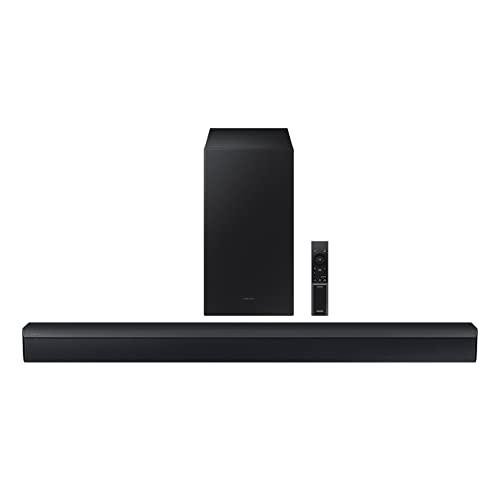
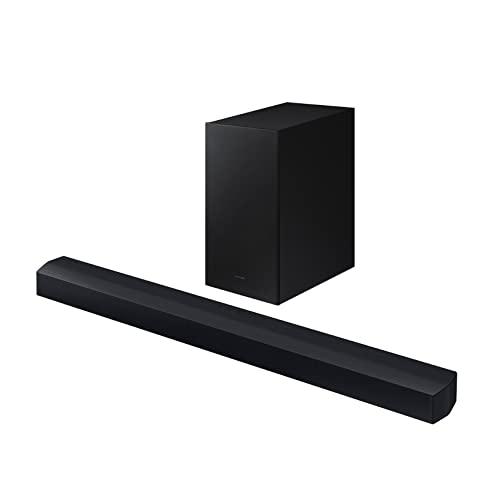
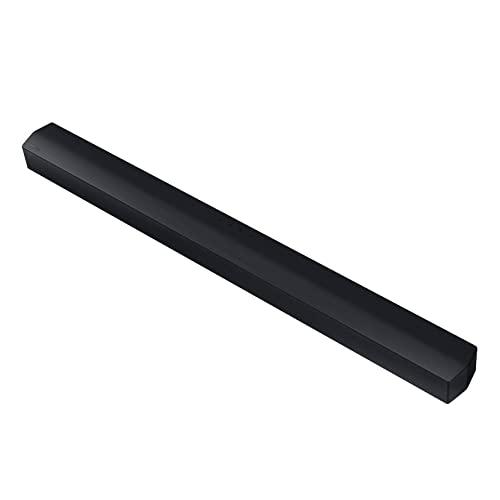
The Samsung HW-C450, released in 2023, represents the classic approach to budget soundbar design. It's a 2.1-channel system, which means you get left and right channels from the main soundbar plus a separate wireless subwoofer (that's the ".1" in 2.1—it handles just the bass frequencies). Samsung has positioned this as an entry-level option that focuses on gaming features and integration with their TV ecosystem.
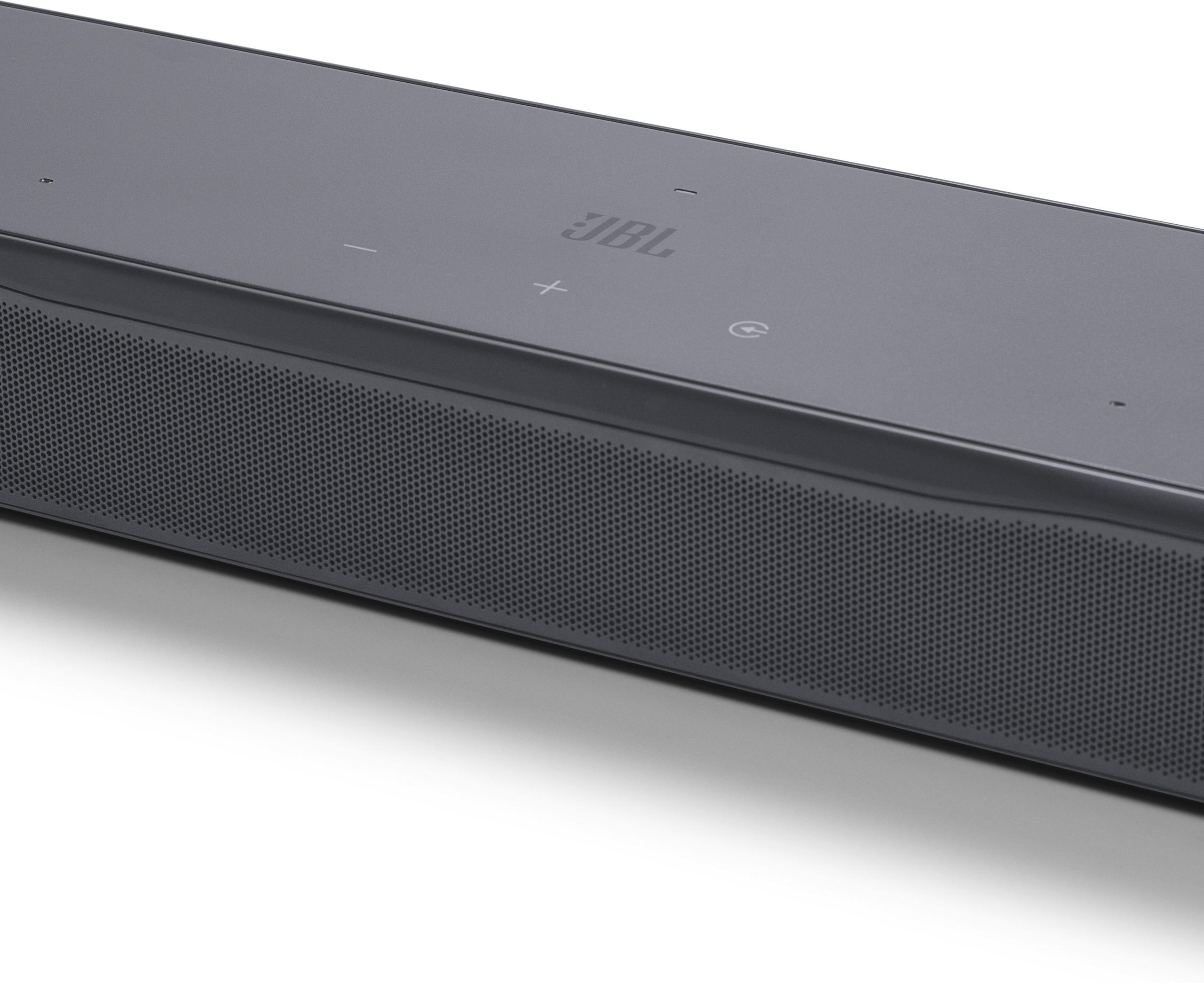
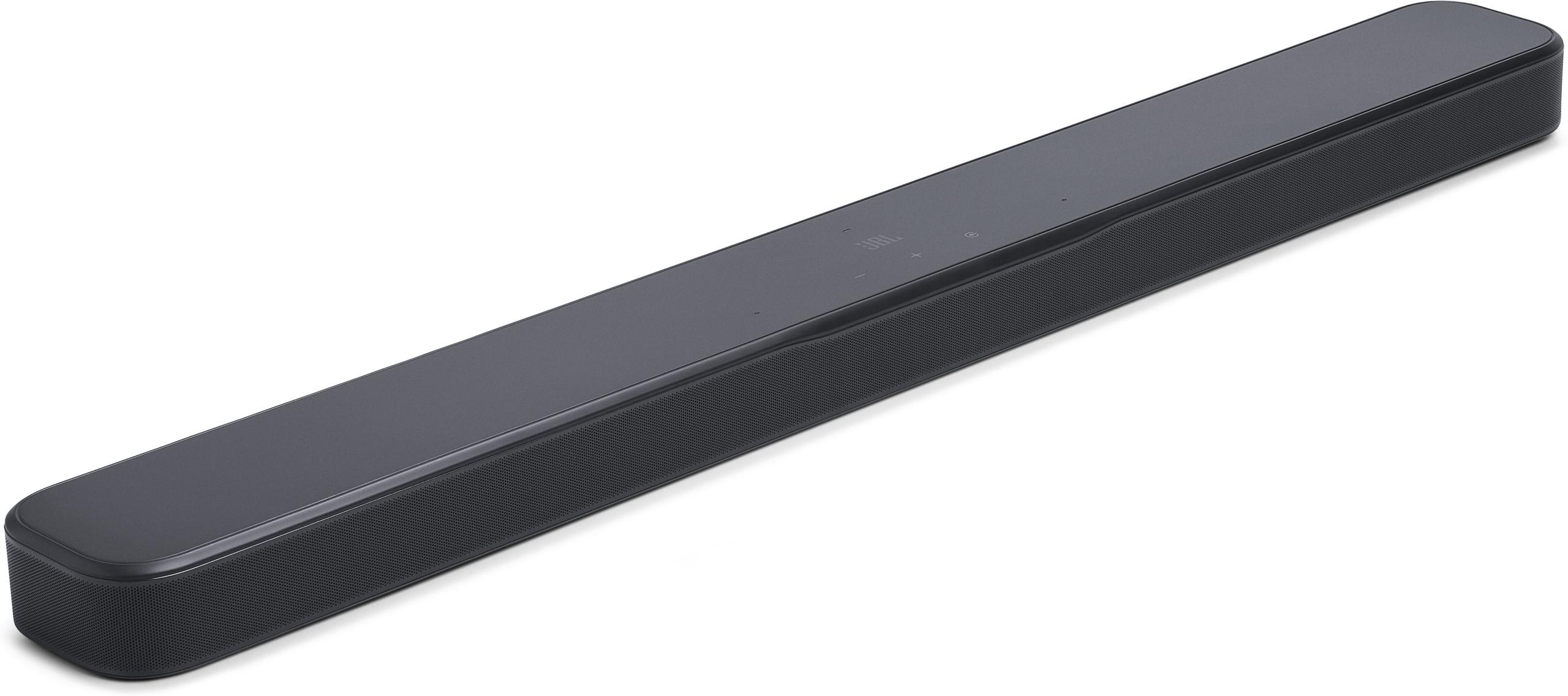
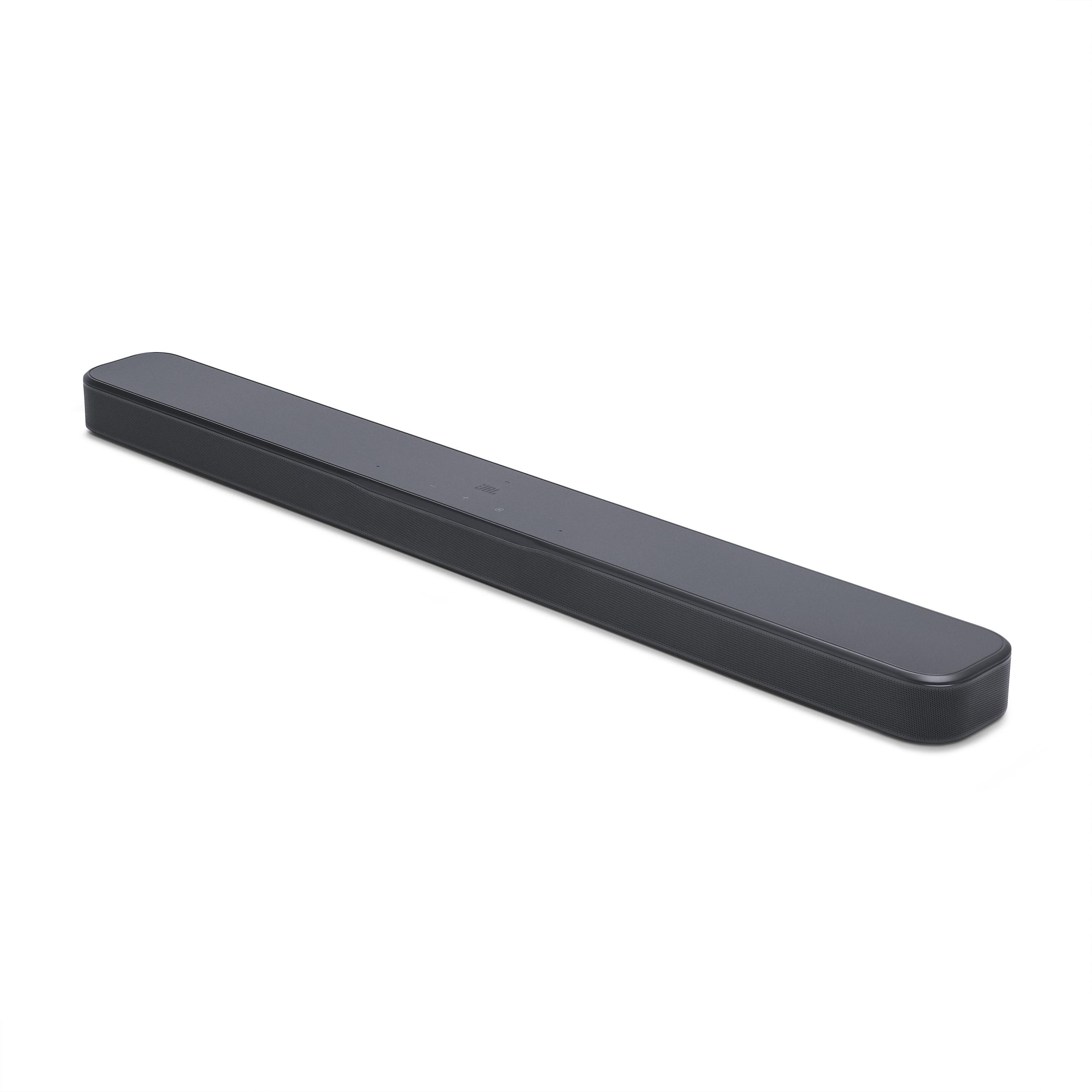
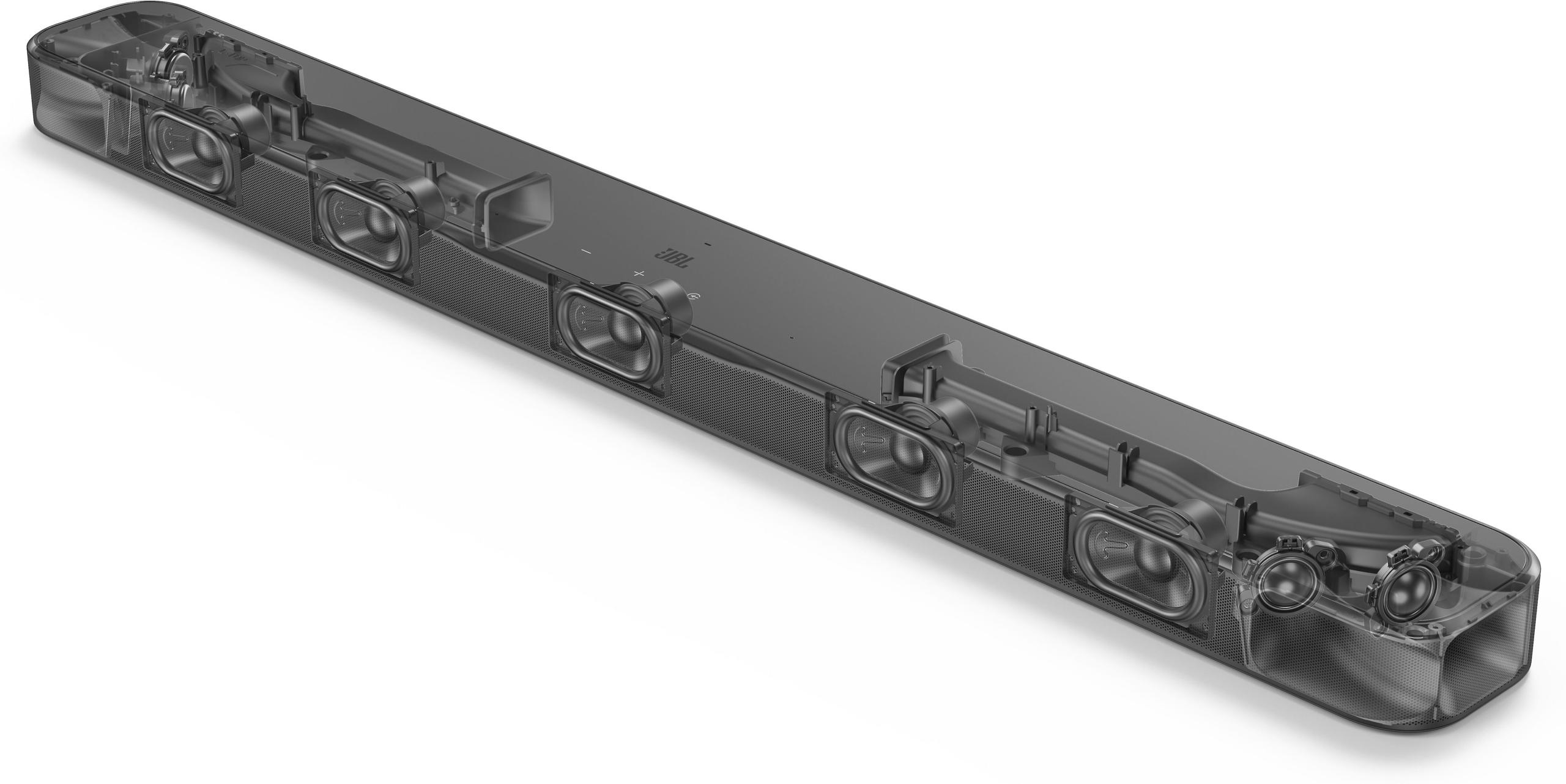
Meanwhile, the JBL Bar 300 MK2, launched as part of JBL's refreshed 2025 lineup, takes the all-in-one approach. It's a 5.0-channel soundbar that packs multiple drivers into a single unit, attempting to create surround sound without any separate speakers. JBL has loaded it with modern streaming features and smart home integration, making it feel more like a piece of connected tech than a simple audio upgrade.
The generational difference matters here. Since the Samsung HW-C450 launched, we've seen rapid improvements in digital signal processing (the computer chips that manipulate audio to create surround effects), streaming integration, and voice assistant compatibility. The JBL Bar 300 MK2 benefits from these advances, while Samsung's offering feels more focused on core audio performance rather than smart features.
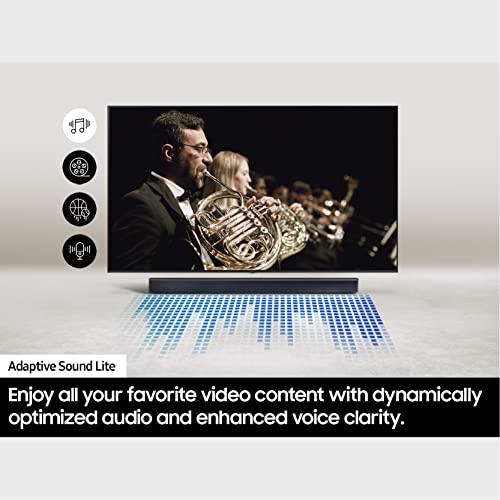
When it comes to dialogue clarity—probably the most important factor for most people—both soundbars take different but effective approaches. The Samsung HW-C450 uses a feature called Voice Enhance that specifically boosts the frequency range where human voices live (roughly 1-4 kHz, if you're curious about the technical details). This means voices sit forward in the mix, making it easier to understand dialogue even when there's background music or sound effects happening.
The JBL Bar 300 MK2 counters with something called PureVoice 2.0 technology, which uses more sophisticated digital processing to isolate and clarify speech. Instead of just boosting certain frequencies, it actually analyzes the incoming audio signal and dynamically adjusts how voices are presented. In our research of user experiences, this tends to sound more natural than simple frequency boosting, especially when watching content with varying audio mixes.
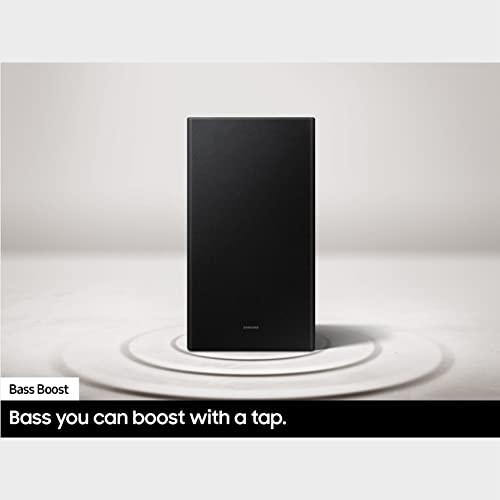
For bass performance, this is where the philosophical differences really show. The Samsung HW-C450's dedicated subwoofer gives it a clear advantage in raw bass impact. That separate 6-inch driver in its own ported enclosure can move a lot more air than any driver built into a slim soundbar. When you're watching action movies or playing bass-heavy games, you'll feel those explosions and gunshots in your chest. However, placement matters enormously with subwoofers—put it too close to a wall and it can sound boomy, while poor positioning can create dead spots in your room where the bass seems to disappear.
The JBL Bar 300 MK2 takes a more integrated approach with what JBL calls racetrack drivers—oval-shaped speakers that can fit more surface area into a thin soundbar than traditional round drivers. It also includes a built-in bass port (essentially a carefully tuned opening that helps extend low-frequency response). The result is surprisingly deep bass for an all-in-one unit, though it can't match the sheer impact of a dedicated subwoofer. What it lacks in raw power, it makes up for in precision—the bass tends to sound tighter and more controlled, which is especially noticeable when listening to music.
Both soundbars attempt to create surround sound from a front-facing setup, but they use different technologies to get there. The Samsung HW-C450 relies on DTS Virtual:X, which is essentially fancy digital signal processing that tries to trick your brain into hearing sounds coming from all around you. It takes a standard stereo or 5.1 surround signal and processes it to create the illusion of height and width beyond the physical speakers.
The catch is that Virtual:X is limited by the Samsung HW-C450's 2.1-channel hardware. You're still only getting audio from two main speakers plus the subwoofer, so all the surround magic has to happen through digital manipulation. In practice, this can add a sense of spaciousness to movies and games, but don't expect discrete sounds to seem like they're coming from behind you or above.
The JBL Bar 300 MK2 has a significant advantage here with its 5.0-channel configuration and MultiBeam 3.0 technology. Instead of two main speakers, it packs multiple drivers across its width, allowing for much more convincing directional effects. When combined with Dolby Atmos processing (a more advanced surround format than DTS Virtual:X), it can create a genuinely immersive soundfield that makes you forget you're listening to a single soundbar.
Dolby Atmos deserves a brief explanation because it's become a major buzzword in home theater. Unlike traditional surround sound that just moves audio left, right, front, and back, Atmos adds height information—sounds can seem to come from above you. In a proper Atmos setup, you'd have speakers in your ceiling or special up-firing speakers that bounce sound off the ceiling. The JBL Bar 300 MK2 creates virtual Atmos through digital processing, but because it has more physical drivers to work with, the effect is more convincing than what the Samsung HW-C450 can achieve.
Both soundbars include gaming-specific features, but they approach the challenge differently. The Samsung HW-C450 includes a dedicated Game Mode that adjusts the EQ (equalization—basically the balance of bass, mids, and treble) to emphasize audio cues that matter in competitive gaming. Footsteps become more prominent, directional audio gets enhanced, and bass is tuned to make explosions and gunfire more impactful without overwhelming dialogue or important sound effects.
The Samsung HW-C450 also benefits from its optical digital connection, which typically has very low latency (the delay between when audio is sent and when you hear it). This matters in fast-paced games where audio and visual cues need to be perfectly synchronized.
The JBL Bar 300 MK2 counters with its HDMI eARC connection, which can actually provide even lower latency than optical, plus it supports higher-quality audio formats. Its 5.0-channel setup also provides more convincing directional audio, which can give you a competitive edge in games where sound positioning matters. When you hear footsteps in a first-person shooter, the JBL Bar 300 MK2 does a better job of accurately placing those sounds in 3D space around you.
Here's where the generational difference between these soundbars becomes most apparent. The Samsung HW-C450 keeps things simple with optical digital input (the most common way to connect a soundbar to a TV), USB for playing music files directly, and Bluetooth for wireless streaming from phones and tablets. It's straightforward and works with virtually any TV made in the last decade, but it's definitely not cutting-edge.
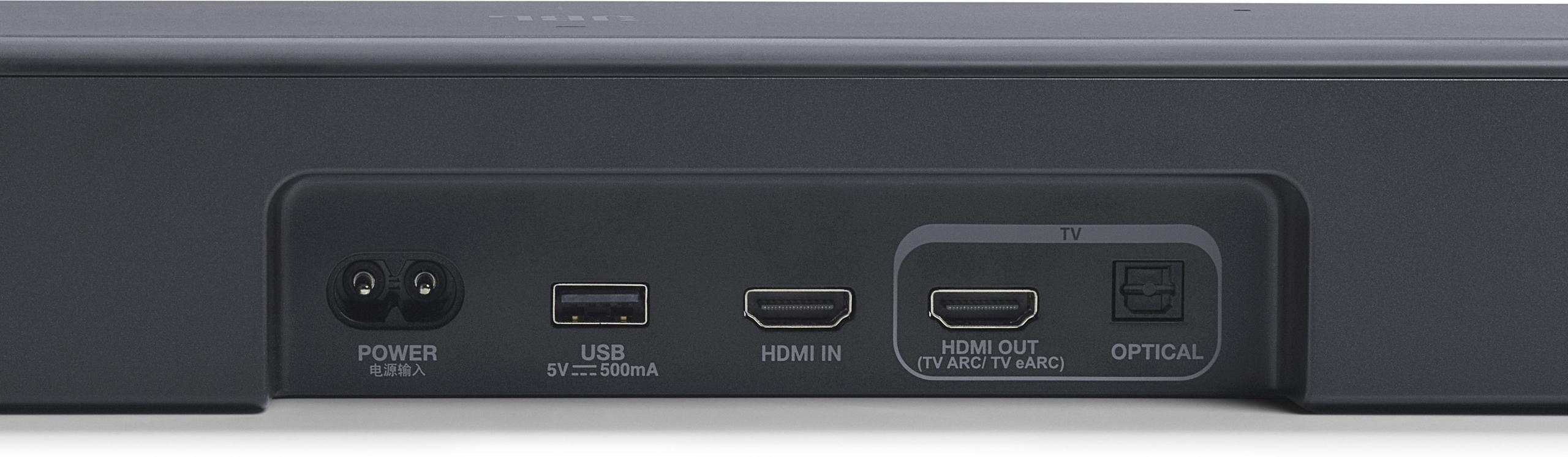
The JBL Bar 300 MK2 is packed with modern connectivity options. HDMI eARC (enhanced Audio Return Channel) is quickly becoming the gold standard for soundbar connections because it can carry higher-quality audio formats and allows for better integration with your TV's remote control. The soundbar can actually process the audio and send video signals through to your TV, acting as a hub for multiple devices.
But where the JBL Bar 300 MK2 really shines is in wireless streaming. It supports AirPlay (for iPhone and iPad users), Chromecast built-in (for Android users), and direct integration with popular streaming services like Spotify. This means you can stream music directly to the soundbar without even turning on your TV. It also supports voice assistant integration, so if you have an Alexa or Google Assistant device, you can control the soundbar with voice commands.
The difference in Bluetooth versions matters too. The Samsung HW-C450's Bluetooth 4.2 is reliable but older, while the JBL Bar 300 MK2's Bluetooth 5.0 offers better range, more stable connections, and improved audio quality for wireless streaming.
The Samsung HW-C450 takes a minimalist approach to smart features. If you own a Samsung TV, you can control the soundbar with your TV remote through One Remote Control integration, and it supports Auto Power Link (the soundbar turns on and off with your TV). These features work well within Samsung's ecosystem but don't extend much beyond that.
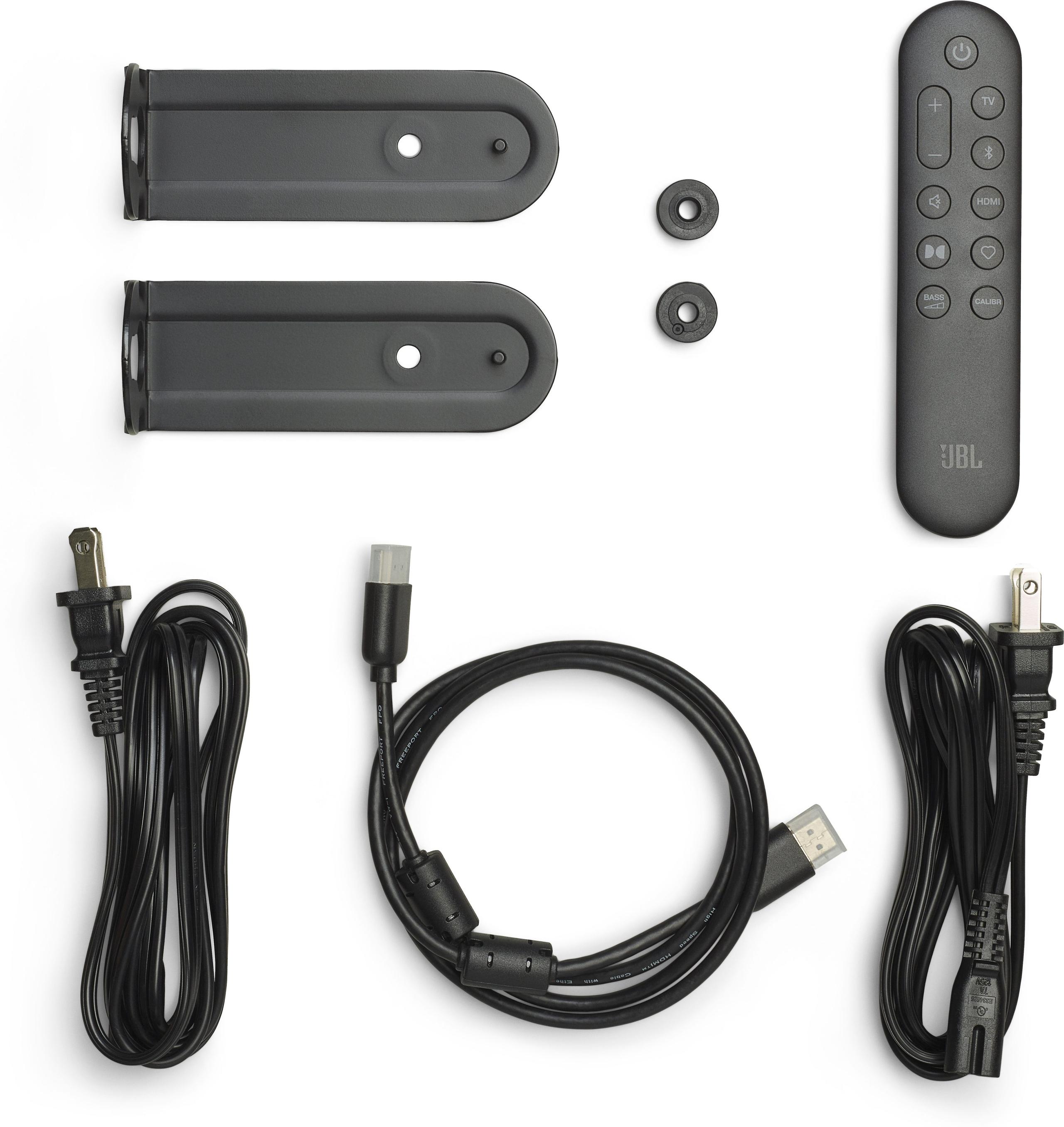
The JBL Bar 300 MK2 is essentially a connected audio device that happens to work great with TVs. The JBL One app lets you customize EQ settings, control streaming services, manage multi-room audio if you have other JBL speakers, and even update the soundbar's software automatically. This kind of app integration means the soundbar can actually improve over time as JBL releases software updates with new features or bug fixes.
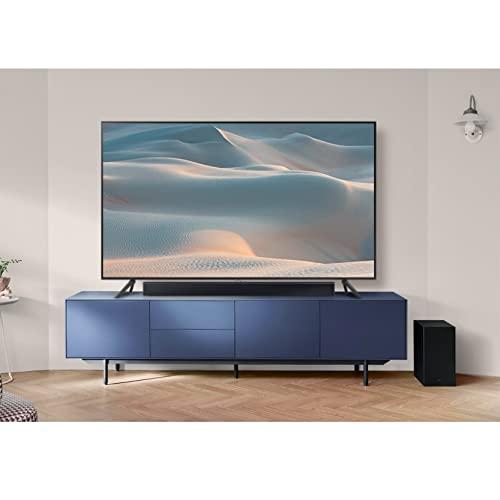
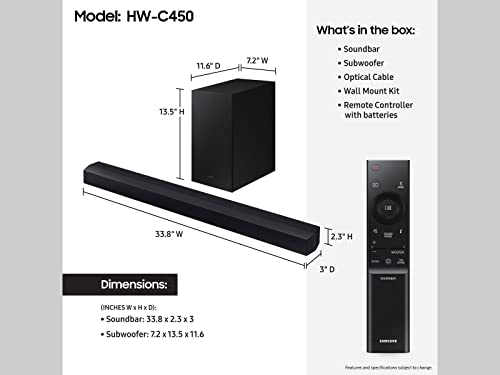
Both soundbars aim for a clean, modern aesthetic, but they solve the placement challenge differently. The Samsung HW-C450 is compact at about 34 inches wide, making it suitable for smaller TVs, but you also need to find a place for the wireless subwoofer. The sub is reasonably sized but still needs floor space, and its placement significantly affects how the bass sounds in your room.
The JBL Bar 300 MK2 eliminates the subwoofer placement puzzle entirely. At about 32 inches wide, it's similarly sized to the Samsung soundbar but contains everything in one unit. This is particularly appealing if you live in an apartment, have limited space, or simply want the cleanest possible setup.
At the time of writing, the Samsung HW-C450 typically costs significantly less than the JBL Bar 300 MK2, making it an attractive option for budget-conscious buyers. You're getting solid audio performance, excellent bass impact, and gaming-focused features at a price point that represents genuine value.
The Samsung HW-C450 makes the most sense for people who primarily watch TV and movies, play console games, and want the biggest audio upgrade possible for their money. If you have a Samsung TV, the integration features add extra value. It's also ideal if you don't need streaming features beyond basic Bluetooth—maybe you already have a streaming device you're happy with, or you prefer to use your TV's built-in apps.
The JBL Bar 300 MK2 costs more but offers significantly more sophisticated features and future-proofing. The all-in-one design appeals to people who want excellent audio without the complexity or space requirements of multiple components. The advanced streaming integration makes it particularly attractive for households that listen to a lot of music through streaming services.
Based on our research into user experiences and expert reviews, the JBL Bar 300 MK2 tends to excel in homes where the soundbar needs to do double-duty as both a TV audio upgrade and a music streaming system. The voice control integration and app-based customization also make it more appealing to tech-savvy users who want their audio system to integrate with smart home setups.
For dedicated home theater use, both soundbars have limitations that potential buyers should understand. Neither can expand into a true surround system with rear speakers, so you're committed to a front-facing audio experience. The Samsung HW-C450's dedicated subwoofer gives it an edge for movie watching—those low-frequency effects in action films and thrillers benefit from the extra bass impact.
However, the JBL Bar 300 MK2's more sophisticated surround processing and Dolby Atmos support create a more immersive experience for movies, even without rear speakers. The wider soundstage and better directional effects can make up for some of the bass impact difference, especially in smaller rooms where a powerful subwoofer might be overwhelming anyway.
After researching user experiences, expert reviews, and analyzing the technical specifications, here's how we see it: The Samsung HW-C450 is the better choice if you want maximum audio impact for your money, especially if you watch a lot of action movies or play bass-heavy games. Its straightforward setup and Samsung ecosystem integration make it particularly appealing for users who want better sound without complexity.
The JBL Bar 300 MK2 is worth the extra investment if you value convenience, streaming features, and future-proofing. It's the better choice for music lovers, smart home enthusiasts, and anyone who wants their soundbar to evolve with their needs over time.
Neither soundbar is perfect—the Samsung HW-C450 feels dated in terms of connectivity and smart features, while the JBL Bar 300 MK2 can't match the pure bass impact of a dedicated subwoofer. But both represent solid value in their respective approaches to budget soundbar design.
Your decision ultimately comes down to priorities: raw performance and value versus features and flexibility. Both will dramatically improve your TV's audio, but they'll take you down different paths to get there.
| Samsung HW-C450 2.1ch Soundbar | JBL Bar 300 MK2 Soundbar |
|---|---|
| Channel Configuration - Determines surround sound capability and bass handling | |
| 2.1 channels with separate wireless subwoofer | 5.0 channels all-in-one (no separate subwoofer) |
| Total Power Output - Affects volume levels and dynamic range | |
| 300W (80W soundbar + 220W subwoofer) | 450W (all from integrated drivers) |
| Surround Sound Technology - Creates immersive audio experience | |
| DTS Virtual:X (basic virtual surround) | Dolby Atmos with MultiBeam 3.0 (advanced 3D audio) |
| HDMI Connectivity - Essential for modern TV integration and high-quality audio | |
| None (optical input only) | HDMI eARC with 4K Dolby Vision passthrough |
| Streaming Features - Determines music playback flexibility | |
| Basic Bluetooth 4.2 only | AirPlay, Chromecast, Spotify Connect, Wi-Fi streaming |
| Voice Assistant Support - Enables smart home integration | |
| None | Works with Alexa, Google Assistant, and Siri |
| Bass Performance - Critical for movie impact and music enjoyment | |
| Dedicated 6" wireless subwoofer (deeper, more impactful) | Integrated racetrack drivers with bass port (tighter, more controlled) |
| Gaming Features - Optimizes audio for competitive and casual gaming | |
| Dedicated Game Mode with enhanced directional cues | Lower latency HDMI connection with spatial audio |
| Mobile App Control - Allows customization and remote management | |
| No dedicated app | JBL One app with EQ customization and streaming control |
| Physical Design - Impacts room aesthetics and placement flexibility | |
| Compact bar + separate subwoofer to place | All-in-one unit (no additional components to hide) |
| Smart TV Integration - Simplifies daily use and control | |
| Samsung HW-C450: One Remote with Samsung TVs only | JBL Bar 300 MK2: Universal compatibility with automatic calibration |
| Dialogue Enhancement - Critical for clear speech in movies and TV | |
| Voice Enhance mode (frequency boosting) | PureVoice 2.0 technology (dynamic speech processing) |
| Release Year - Indicates how current the technology is | |
| 2023 (basic connectivity, established tech) | 2025 (latest streaming standards, advanced processing) |
The JBL Bar 300 MK2 has a slight edge for dialogue clarity thanks to its PureVoice 2.0 technology, which uses advanced digital processing to dynamically enhance speech. The Samsung HW-C450 also performs well with its Voice Enhance mode that boosts vocal frequencies, making both soundbars significantly better than TV speakers for understanding dialogue in movies and shows.
It depends on your priorities. The Samsung HW-C450 includes a dedicated wireless subwoofer that delivers deeper, more impactful bass for action movies and gaming. The JBL Bar 300 MK2 uses integrated drivers that produce surprisingly good bass for an all-in-one unit, though it can't match the raw power of a separate subwoofer. Choose the Samsung if bass impact is your priority.
The JBL Bar 300 MK2 is easier to set up physically since it's one unit with no subwoofer to place, but it has more connectivity options that might seem complex. The Samsung HW-C450 requires placing a subwoofer but uses simple optical cable connection. Both offer straightforward setup, with the JBL being cleaner and the Samsung being more traditional.
The JBL Bar 300 MK2 offers multiple wireless options including Chromecast, AirPlay, and Bluetooth 5.0 for streaming. The Samsung HW-C450 only supports Bluetooth 4.2 for wireless connections. However, both soundbars work best when connected via cable—optical for the Samsung and HDMI eARC for the JBL.
Both soundbars offer gaming benefits, but in different ways. The Samsung HW-C450 has a dedicated Game Mode that enhances directional audio cues and delivers impactful bass for explosions. The JBL Bar 300 MK2 provides better spatial audio positioning with its 5.0-channel setup and lower latency through HDMI eARC connection. Choose based on whether you prefer bass impact or positional accuracy.
Only the JBL Bar 300 MK2 supports Dolby Atmos, using virtual processing to create 3D surround effects from its multiple drivers. The Samsung HW-C450 uses DTS Virtual:X instead, which provides basic surround sound expansion but isn't as advanced as Atmos. For the most immersive movie experience, the JBL has the advantage.
The JBL Bar 300 MK2 is ideal for small rooms since it's all-in-one with no subwoofer to place, and its controlled bass won't overwhelm tight spaces. The Samsung HW-C450 can work well in small rooms too, but you'll need to carefully position the subwoofer to avoid boomy bass. For apartments or compact spaces, the JBL is typically the better choice.
The Samsung HW-C450 works with Samsung TV remotes through One Remote Control integration, but only with Samsung TVs. The JBL Bar 300 MK2 supports universal HDMI CEC control with most modern TVs, plus you can use the JBL One smartphone app for advanced control. The JBL offers broader compatibility across TV brands.
The JBL Bar 300 MK2 is significantly better for music with built-in Wi-Fi, AirPlay, Chromecast, Spotify Connect, and direct streaming service access. The Samsung HW-C450 only offers basic Bluetooth streaming from your phone or tablet. If you listen to music frequently through streaming services, the JBL is the clear winner.
The Samsung HW-C450 requires space for both the 34-inch soundbar and a separate subwoofer (about 7x14x12 inches) that needs floor placement. The JBL Bar 300 MK2 only needs space for the 32-inch soundbar itself with no additional components. Consider your available space when choosing between these options.
Value depends on your needs. The Samsung HW-C450 typically costs less and delivers excellent bass impact and gaming features for the price. The JBL Bar 300 MK2 costs more but includes advanced streaming, better surround processing, and modern connectivity that may justify the higher price. Consider whether you need the extra features the JBL provides.
Neither the Samsung HW-C450 nor the JBL Bar 300 MK2 can be expanded with additional rear speakers or extra subwoofers. Both are complete systems designed to work as-is. If you think you might want to build a larger surround system later, you should consider other soundbar models that support wireless rear speaker expansion.
We've done our best to create useful and informative comparisons to help you decide what product to buy. Our research uses advanced automated methods to create this comparison and perfection is not possible - please contact us for corrections or questions. These are the sites we've researched in the creation of this article: e-catalog.com - alibaba.com - smart.dhgate.com - greentoe.com - requiremints.com - versus.com - bhphotovideo.com - rtings.com - soundmachine.com.mt - samsung.com - samsung.com - youtube.com - bhphotovideo.com - newegg.com - images.samsung.com - bestbuy.com - samsung.com - youtube.com - jsappliance.com - gadgetsleo.com - youtube.com - saraappliance.com - walmart.com - homecinemachoice.com - retailspecs.com - hometechnologyreview.com - whathifi.com - news.jbl.com - engadget.com - crutchfield.com - harmanaudio.com - techradar.com - bestbuy.com - jbl.com - sweech.co.ke - jbl.com - jbl.com.sg - mm.jbl.com - abcwarehouse.com - harmanaudio.com - sweetwater.com - ro.harmanaudio.com - dell.com - jbl.co.nz

Privacy Policy
Terms and Conditions - Affiliate Policy
Home Security
© Copyright 2008-2026.
11816 Inwood Rd #1211, Dallas, TX 75244