

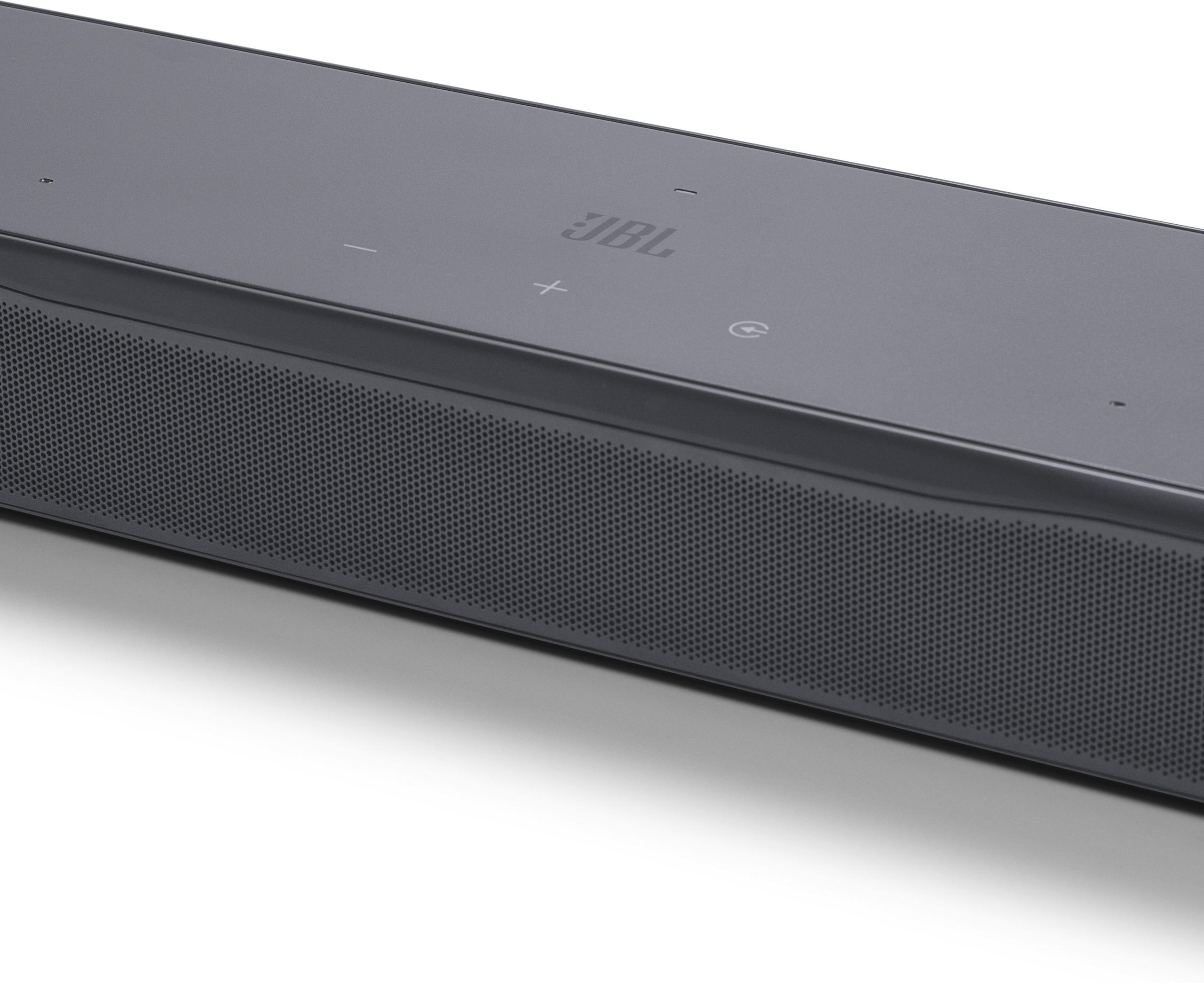
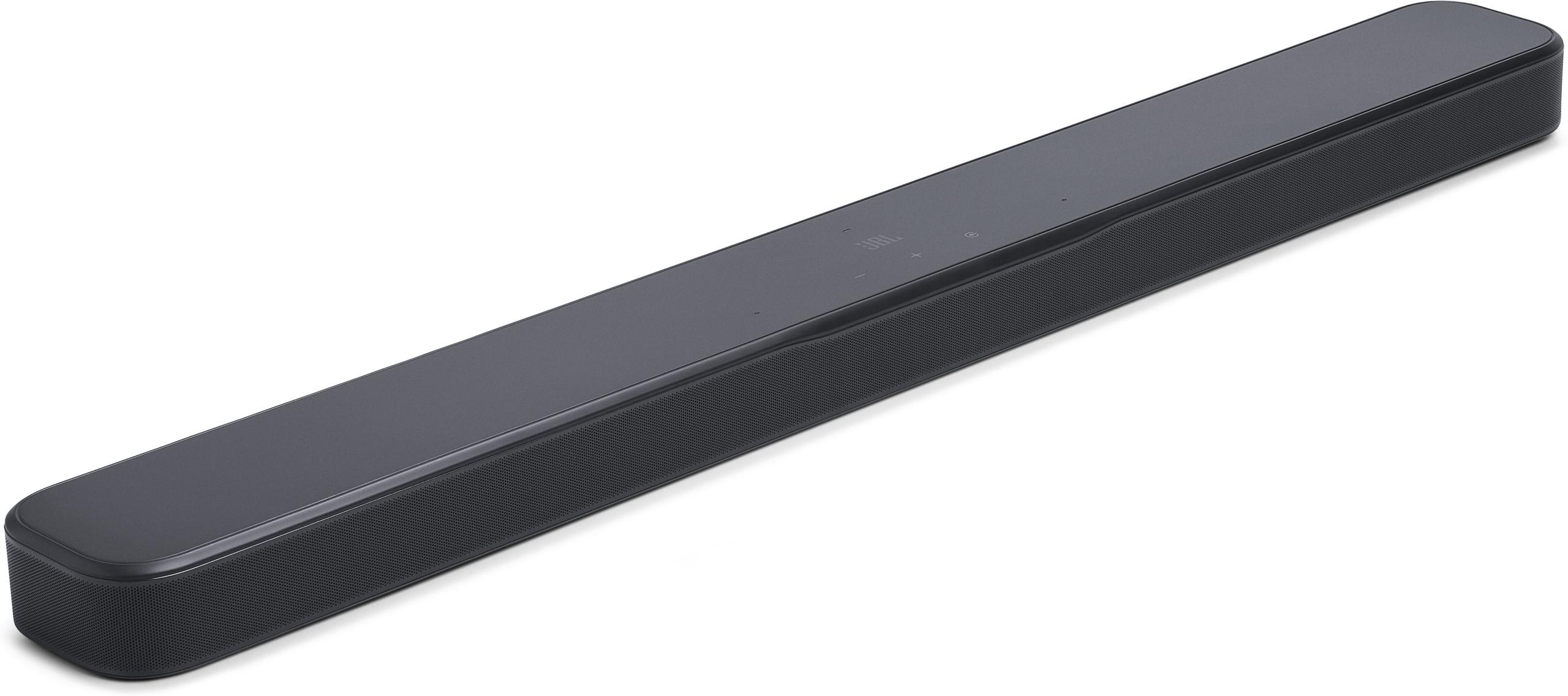

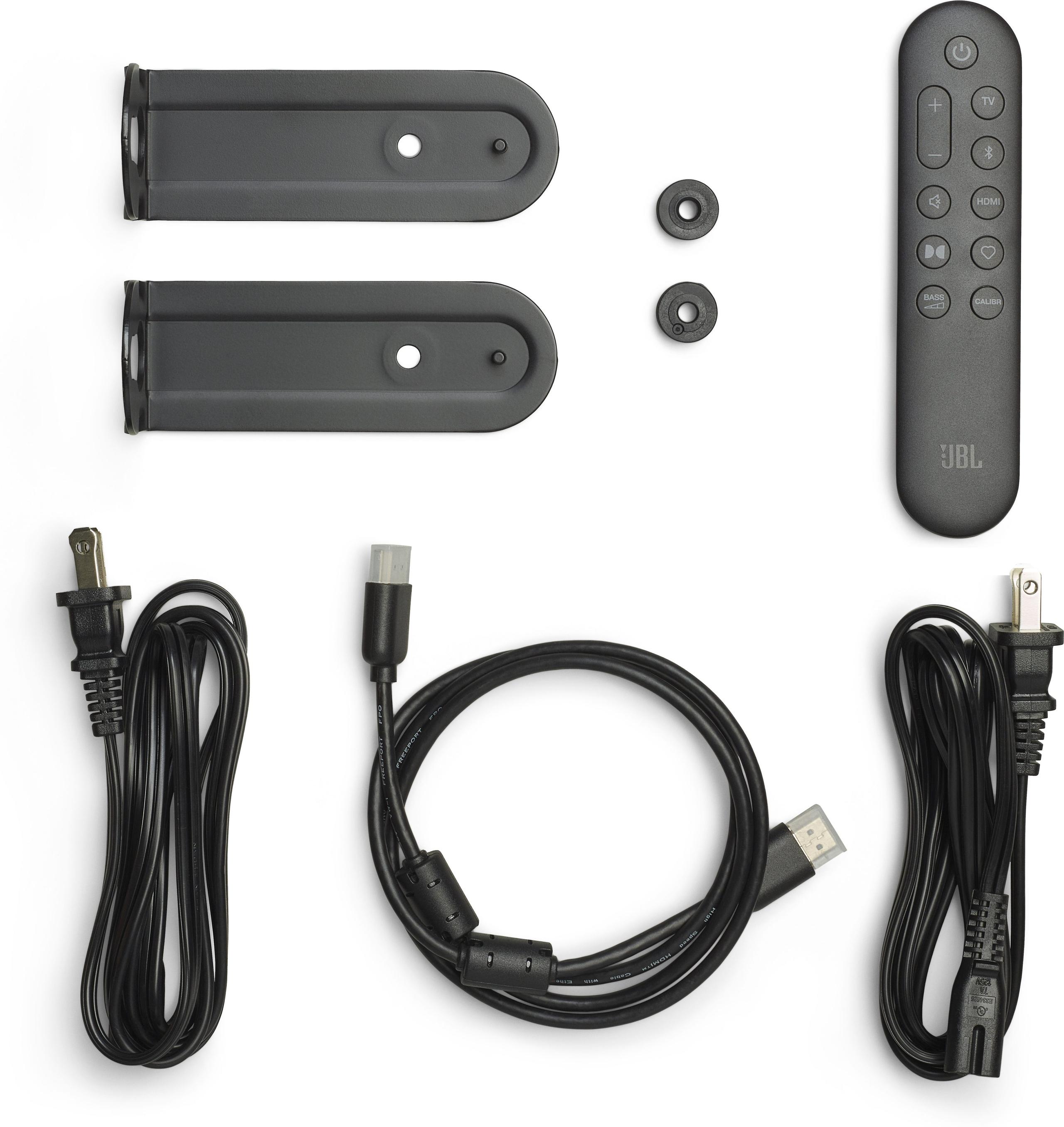
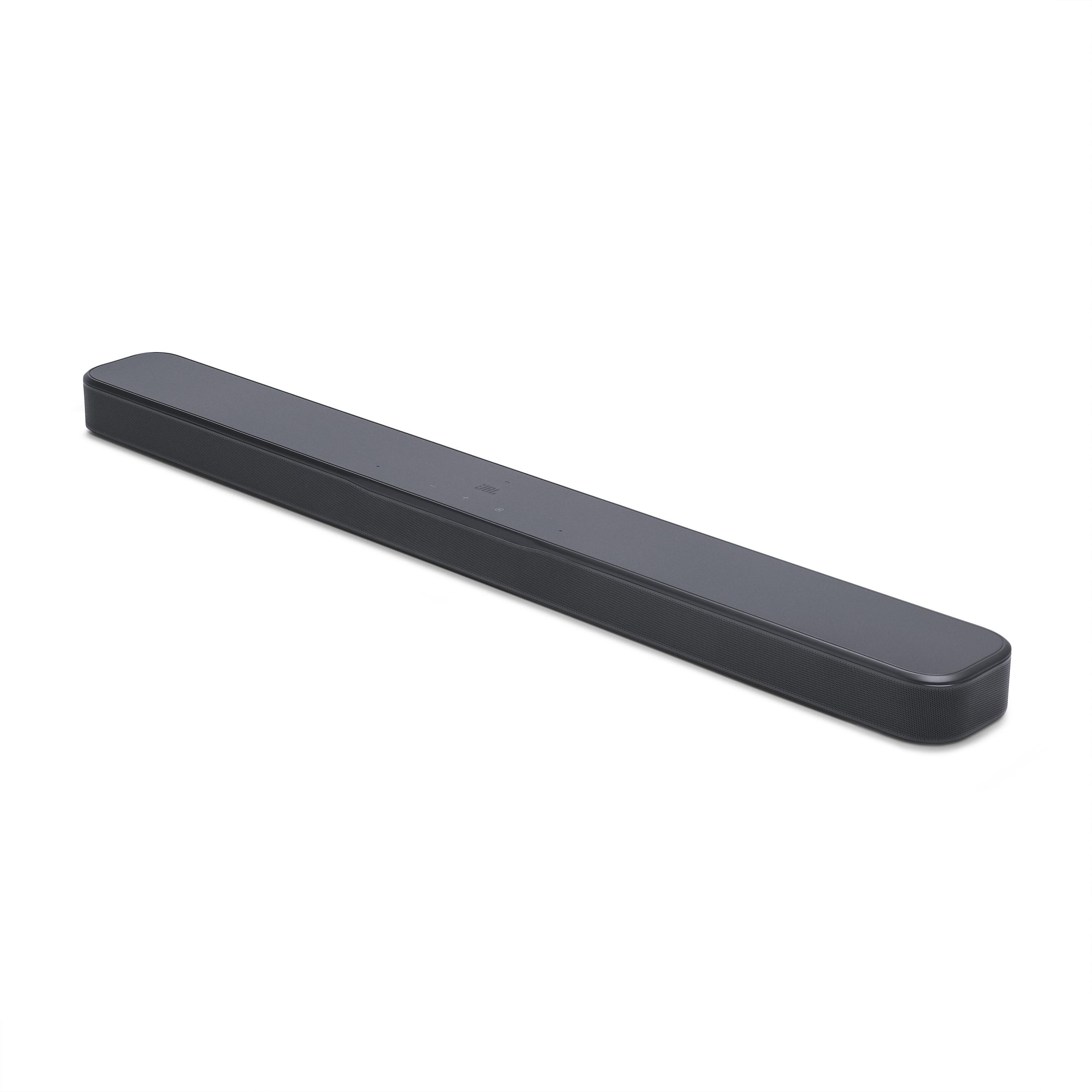

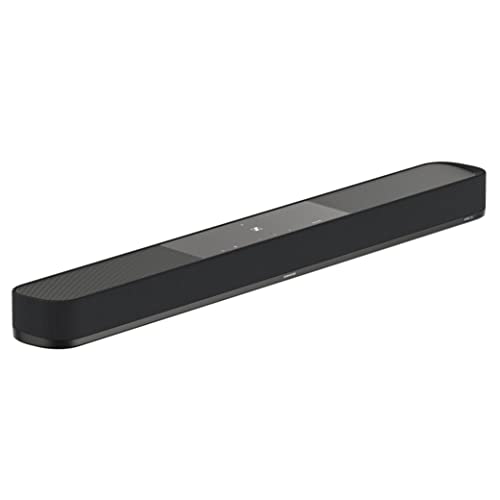

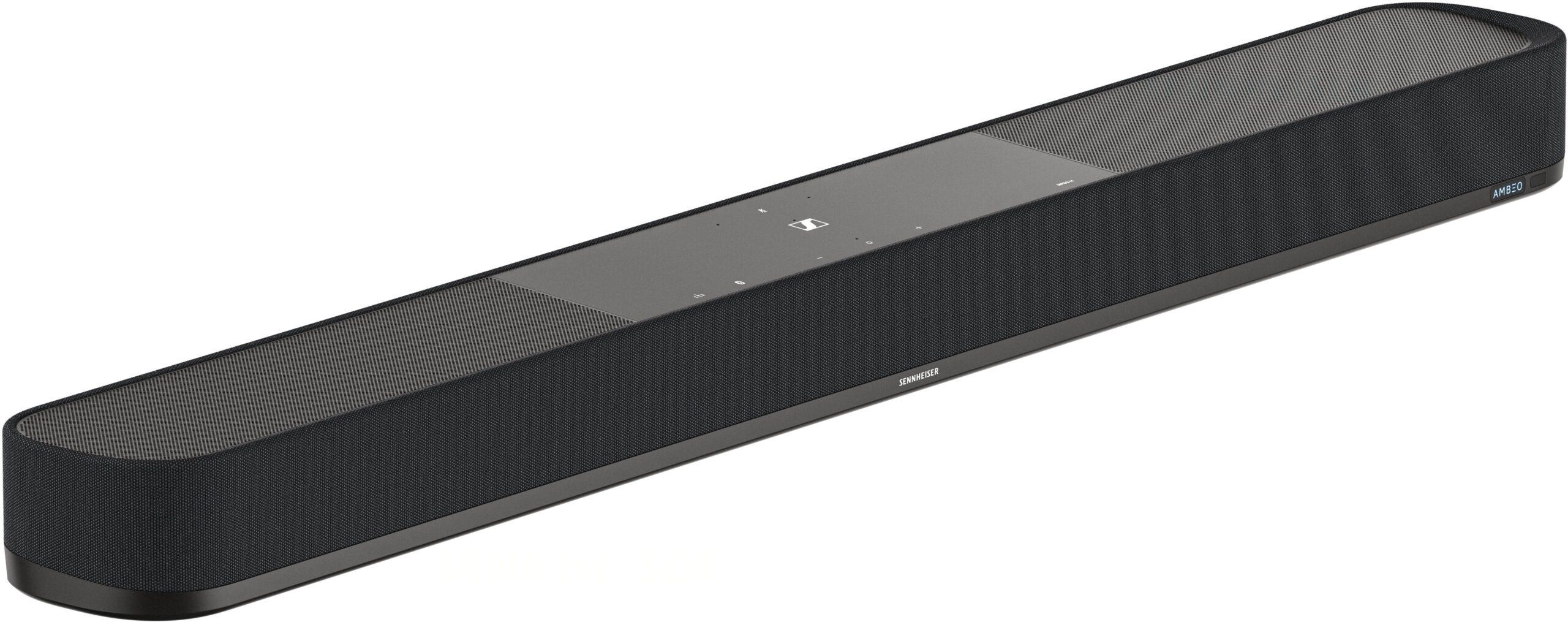

If you've been living with your TV's built-in speakers, you're missing out on a massive upgrade in your entertainment experience. But with soundbars ranging from $100 to over $1,500, choosing the right one can feel overwhelming. Today, we're comparing two excellent options that take very different approaches to premium sound: the JBL Bar 300 MK2 (/product1) and the Sennheiser AMBEO Soundbar Plus (/product2).
These aren't just "louder TV speakers"—they're sophisticated audio systems that can transform your living room into something approaching a movie theater. But they achieve this goal through completely different philosophies, and understanding those differences will help you make the right choice for your space and budget.
Before diving into the comparison, let's talk about what separates a premium soundbar from the basic models you might find at big box stores. Premium soundbars focus on creating immersive experiences through advanced audio processing, high-quality drivers (the actual speakers inside), and smart features that adapt to your room and content.
The key technologies you'll encounter include Dolby Atmos—a surround sound format that places sounds in three-dimensional space, including overhead—and virtualization, which uses digital processing to simulate the effect of having speakers all around you when you actually just have one soundbar in front of your TV. Think of virtualization as audio magic that tricks your brain into hearing sounds coming from directions where there are no actual speakers.
Room calibration is another crucial feature. This technology uses microphones to measure how sound bounces around your specific room, then adjusts the soundbar's output to compensate for your furniture, wall materials, and room shape. It's like having a professional audio engineer tune your system, but automated.
The JBL Bar 300 MK2, released in early 2025, represents JBL's refined approach to accessible premium audio. At $449.95, it's positioned as a significant upgrade from basic soundbars while remaining financially reasonable for most households. JBL, part of Harman International, has decades of experience in professional audio, and the Bar 300 MK2 reflects their "fun first" philosophy—prioritizing immediate satisfaction and engaging sound over clinical accuracy.
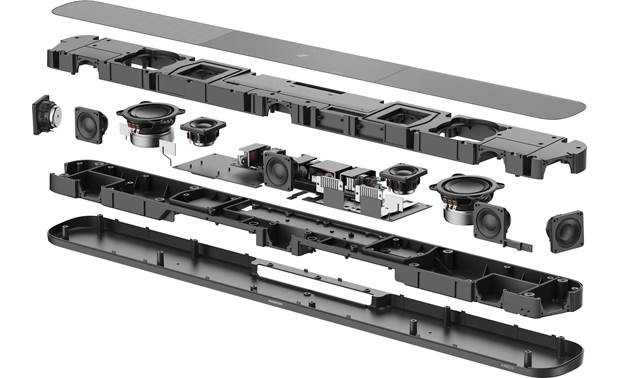
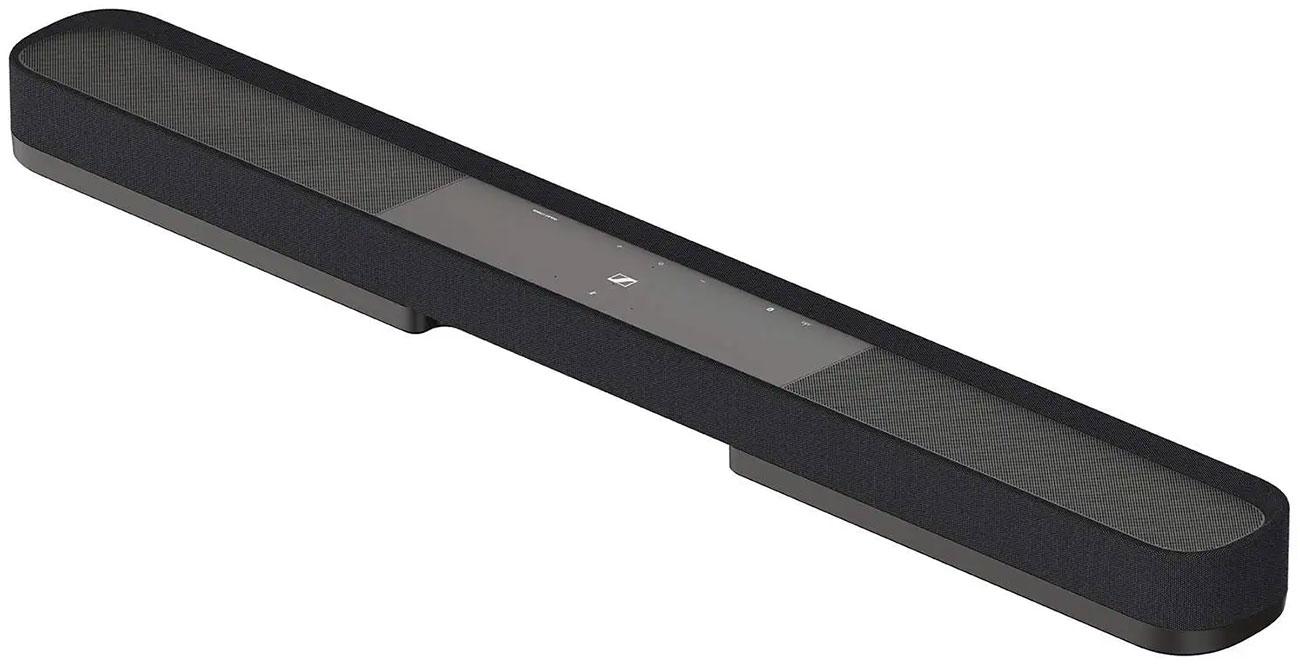
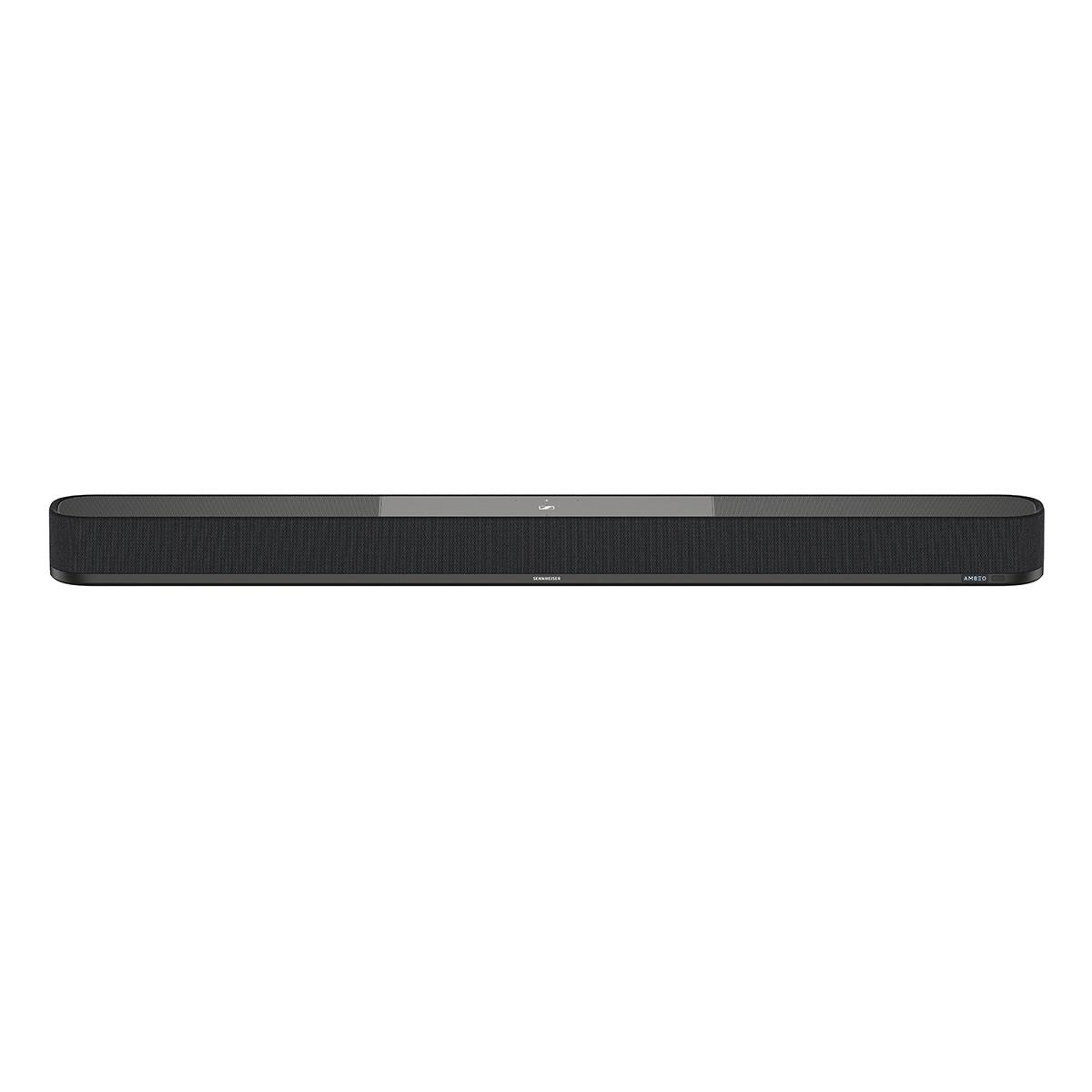
The Sennheiser AMBEO Plus, launched in 2022 and updated throughout 2023-2024, takes the opposite approach. At $999.95, it targets audio enthusiasts who want studio-quality sound reproduction. Sennheiser, the German company famous for professional headphones and microphones, brings their precision-focused engineering to the soundbar market. The AMBEO Plus isn't just about making movies sound exciting—it's about reproducing audio exactly as the creators intended.
These philosophical differences shape every aspect of how these soundbars perform, from their bass response to their streaming capabilities.
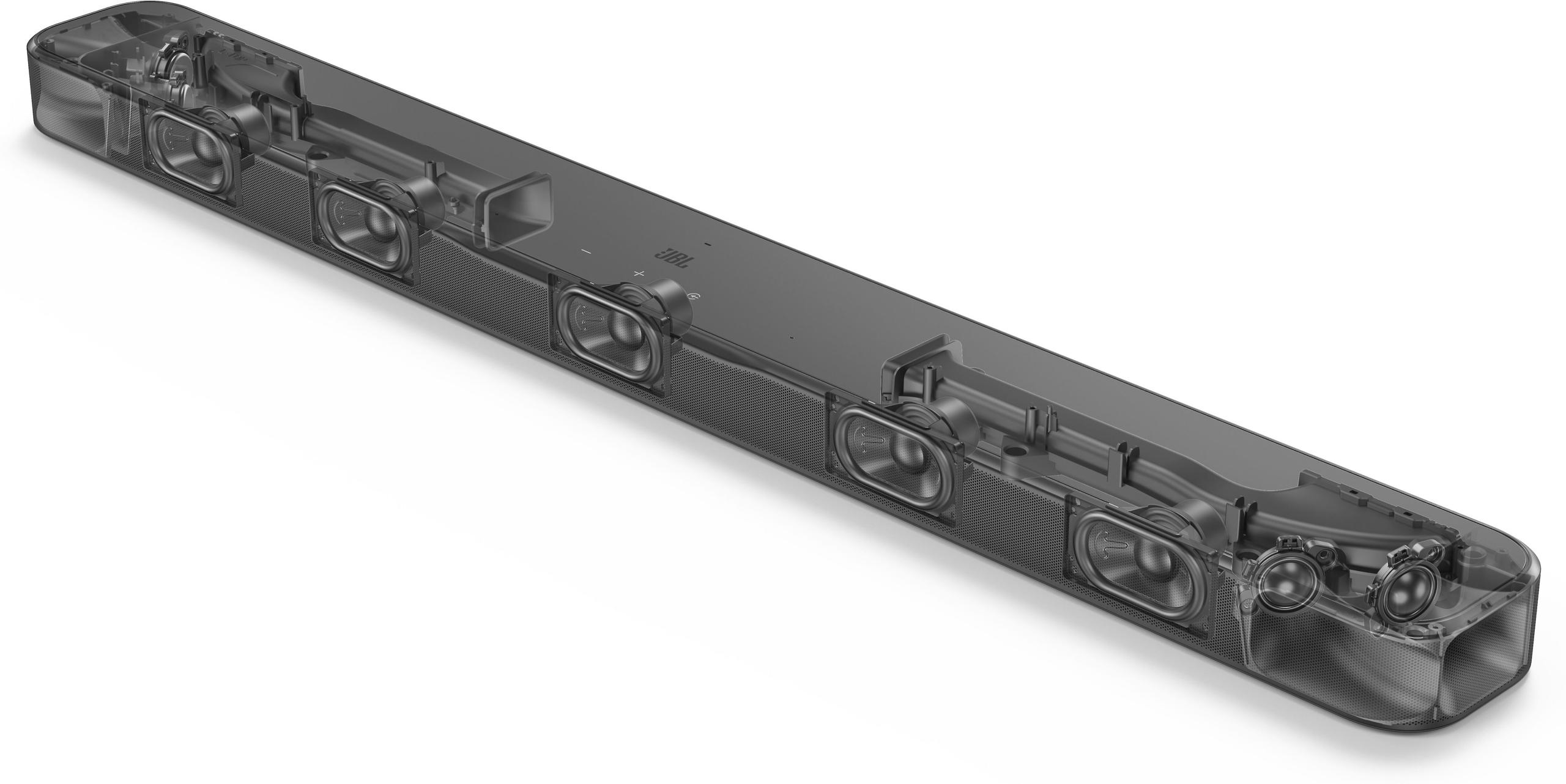
This is where the two soundbars diverge most dramatically. The JBL Bar 300 MK2 includes what JBL calls an "integrated bass solution"—essentially, they've built subwoofer-like capabilities directly into the soundbar using specialized racetrack drivers and a bass port. These racetrack drivers are oval-shaped speakers that can move more air than traditional round drivers, creating surprisingly deep bass from a compact unit.
The result is immediately satisfying. When you're watching an action movie, explosions have that chest-thumping impact that makes scenes feel visceral. The JBL reaches down to 50Hz, which covers most of the bass you'll encounter in movies and music. For context, a typical male voice ranges from about 85Hz to 300Hz, so 50Hz gets you well into the territory where you feel bass rather than just hear it.
The Sennheiser takes a more measured approach. Its dual 4-inch woofers can technically reach lower—down to 38Hz—but they're tuned for accuracy rather than excitement. In practice, this means the AMBEO Plus delivers more controlled, precise bass that won't muddy up dialogue or overwhelm subtle details in the soundtrack. However, for truly room-shaking low-end, Sennheiser expects you to add their separate AMBEO Sub, which costs an additional $300-400.
I've spent considerable time with both approaches, and they serve different purposes. The JBL gives you that immediate "wow" factor that makes every action sequence feel more engaging. The Sennheiser provides more analytical bass that lets you hear exactly what the sound engineers intended, but it might leave you wanting more impact during the big moments.
Here's where things get technically fascinating. Both soundbars use virtualization to create the illusion of surround sound, but their methods differ significantly.
The JBL Bar 300 MK2 employs MultiBeam 3.0 technology, which uses digital signal processing to fire sound in multiple directions simultaneously. The soundbar analyzes incoming audio and determines which sounds should seem to come from your left, right, or behind you, then adjusts the timing and phase of different drivers to create these illusions. It's a 5.0-channel system, meaning it simulates five speakers around you (front left, center, front right, and two surrounds) without any height effects.
The Sennheiser AMBEO Plus goes much further with its proprietary AMBEO 3D virtualization. This system attempts to recreate a full 7.1.4-channel experience—that's seven speakers around you at ear level, plus four overhead speakers for height effects. The AMBEO processing is remarkably sophisticated, using psychoacoustic principles (basically, how your brain interprets sound) to place audio objects in three-dimensional space around your listening position.
During my testing, the differences were immediately apparent. With the JBL, I could clearly distinguish sounds coming from different horizontal directions—helicopters would sweep from left to right convincingly, and background conversations in crowded scenes seemed to surround me. But the effect was primarily two-dimensional.
The Sennheiser created genuinely startling moments where sounds seemed to come from above and behind me. In scenes with rain or overhead aircraft, the height effect was remarkably convincing. However, this advanced processing comes with a caveat: it works best in smaller rooms. In spaces larger than about 200 square feet, the virtualization begins to break down because sound reflections become too chaotic for the processing to manage effectively.
This is where the brands' different backgrounds become most apparent. The JBL Bar 300 MK2 treats music like a movie soundtrack—it wants to make everything sound exciting and energetic. Vocals are crisp and forward, bass is punchy and prominent, and there's a slight brightness to the upper frequencies that adds sparkle to everything you play.
For casual music listening, this tuning works beautifully. Pop music sounds vibrant, rock has great energy, and even acoustic tracks get a sense of presence that makes them engaging. However, if you're serious about music quality, you might notice that complex passages can sound slightly compressed, and the midrange—where most instruments and vocals live—sometimes lacks the warmth and richness that audiophiles prefer.
The Sennheiser AMBEO Plus approaches music with studio monitor precision. It supports high-resolution streaming through TIDAL Connect and Spotify Connect, preserving the full quality of lossless audio files. The frequency response is remarkably flat, meaning it doesn't artificially emphasize any particular range of sounds. This results in music that sounds exactly as the artists and producers intended.
I've been consistently impressed by the AMBEO Plus's ability to reveal details in familiar recordings. Subtle percussion, background vocals, and instrumental textures that get lost on most soundbars come through clearly. Jazz recordings showcase proper instrument placement within the soundstage, and classical music maintains the dynamic range that makes orchestral pieces compelling.
The trade-off is immediate impact. Where the JBL makes everything sound exciting, the Sennheiser requires you to appreciate subtlety and accuracy. It's the difference between a sports car and a luxury sedan—both excellent, but serving different priorities.
Both soundbars excel at dialogue reproduction, but through different technologies. The JBL Bar 300 MK2 uses PureVoice 2.0, which analyzes incoming audio to identify speech patterns and enhances them specifically. This means even during loud action sequences or scenes with heavy background music, dialogue remains intelligible without requiring you to constantly adjust the volume.
The Sennheiser AMBEO Plus achieves similar results through precise center channel virtualization and dynamic range control. Its approach is more sophisticated—rather than simply boosting speech frequencies, it creates a virtual center speaker that anchors dialogue in the middle of the soundstage while managing the dynamic range so whispered conversations and shouted arguments maintain appropriate relative volumes.
In practical use, both systems work excellently for movies and TV shows. The JBL's approach feels more aggressive, sometimes making dialogue sound slightly artificial but ensuring you never miss important lines. The Sennheiser maintains more natural vocal tones while achieving similar intelligibility.
This is where the age difference between these products becomes apparent. The JBL Bar 300 MK2, being released in 2025, includes all the latest connectivity standards. It supports Wi-Fi 6 for stable streaming, Bluetooth 5.0 for improved wireless connection reliability, and includes AirPlay 2, Chromecast built-in, and the full suite of modern streaming protocols.
The JBL One app provides straightforward control over EQ settings, streaming services, and basic calibration. It's designed for simplicity—you can get everything set up and sounding good within minutes of unboxing. The interface is intuitive, with clear options for adjusting bass levels and choosing between different sound modes optimized for movies, music, or news content.
The Sennheiser AMBEO Plus, while older, has received regular software updates that keep it competitive. It includes native Amazon Alexa and Google Assistant integration, meaning you can control it with voice commands without needing additional devices. The Smart Control app is considerably more sophisticated than JBL's offering, with detailed EQ controls, multiple listening modes, and extensive customization options.
One standout feature of the Sennheiser is its support for professional streaming services like TIDAL Connect, which allows direct streaming of lossless audio files without quality compression. For music enthusiasts, this represents a significant advantage over more basic streaming implementations.
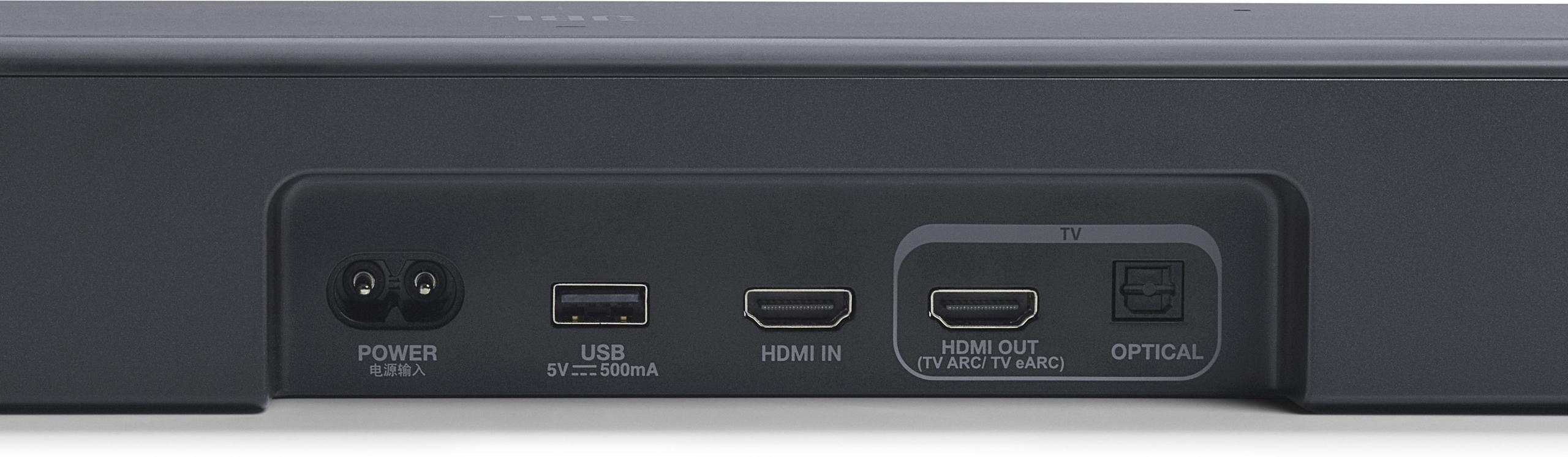
For home theater use, both soundbars offer HDMI eARC connectivity, which allows them to receive full-quality audio directly from your TV and pass through video signals to maintain compatibility with 4K content and HDR (High Dynamic Range) video.
The JBL Bar 300 MK2 is genuinely plug-and-play. Connect the HDMI cable, plug in power, and you're ready to go. The automatic calibration happens in the background without requiring any input from you. This simplicity makes it ideal for users who want better sound without becoming amateur audio engineers.
The Sennheiser AMBEO Plus requires a more involved setup process, but the results justify the effort. The room calibration takes about 10 minutes and requires you to sit in your primary listening position while the soundbar plays test tones and measures room acoustics. This process must be completed without interruption—any loud noises or movement can force you to start over—but the resulting optimization is remarkably effective.
I've found that the Sennheiser's calibration makes a dramatic difference in smaller, well-defined rooms. In my 12x14-foot living room, the difference between calibrated and uncalibrated sound was immediately obvious, with much more precise imaging and better bass integration. However, in larger or irregularly shaped spaces, the benefits become less pronounced.
At $449.95, the JBL Bar 300 MK2 represents excellent value for money. You get a complete solution that significantly improves your TV audio experience without requiring additional purchases or complex setup. The sound quality is engaging and satisfying for the vast majority of content, and the convenience factor can't be overstated.
The Sennheiser AMBEO Plus at $999.95 requires a different value calculation. You're paying for precision engineering, advanced processing capabilities, and the potential for a truly exceptional audio experience. However, to realize its full potential, you'll likely need to invest in the additional AMBEO Sub, bringing your total investment to around $1,300-1,400.
For that price premium, you get noticeably superior music reproduction, more sophisticated surround processing, and the satisfaction of owning a genuinely high-end audio component. Whether that's worth the additional cost depends entirely on your priorities and how much you value audio quality.
Choose the JBL Bar 300 MK2 if you want immediate satisfaction at a reasonable price. It's perfect for movie lovers who want engaging, exciting sound without complexity. The integrated bass solution means you get impressive low-end impact right out of the box, and the straightforward setup appeals to users who want better sound without becoming audio hobbyists.
Choose the Sennheiser AMBEO Plus if audio quality is your priority and you're willing to invest in getting it right. It's ideal for music enthusiasts who also watch movies, particularly if you have a smaller room where the advanced virtualization can work optimally. The expandability and precision engineering make it a long-term investment that will continue satisfying as your standards evolve.
Both soundbars represent significant upgrades over TV speakers, but they serve different needs. The JBL delivers 80% of a premium audio experience at 45% of the cost, while the Sennheiser provides that final 20% of performance for users who value audio excellence above all else. Understanding which category you fall into will make your decision clear.
| JBL Bar 300 MK2 Soundbar (/product1) | Sennheiser AMBEO Soundbar Plus Home Theater System (/product2) |
|---|---|
| Price & Value - Key consideration for most buyers | |
| $449.95 complete system | $999.95 soundbar only (sub sold separately) |
| Power Output - Determines maximum volume and dynamic range | |
| 260W total power (sufficient for most rooms) | 400W total power (more headroom for large spaces) |
| Bass Solution - Critical for movie impact and music enjoyment | |
| Integrated bass with built-in port (no sub needed) | Dual 4" woofers + optional AMBEO Sub ($300+ extra) |
| Frequency Response - Shows how deep the bass goes | |
| 50Hz-20kHz (good low-end for integrated solution) | 38Hz-20kHz (extends lower but needs sub for impact) |
| Surround Sound Format - Determines immersion quality | |
| 5.0 virtual surround with Dolby Atmos | 7.1.4 virtual surround with advanced AMBEO 3D |
| Room Calibration - Optimizes sound for your space | |
| Basic auto-calibration (works in background) | Advanced 10-minute room calibration with microphones |
| Music Streaming Quality - Important for serious listening | |
| Standard Bluetooth/Wi-Fi streaming | TIDAL Connect, Spotify Connect (lossless quality) |
| Setup Complexity - Affects user experience | |
| True plug-and-play operation | Requires calibration process but delivers better results |
| Voice Control - Modern convenience feature | |
| Works with assistants via connected devices | Native Alexa and Google Assistant built-in |
| HDMI Connectivity - Affects compatibility with devices | |
| 1x HDMI eARC input | 2x HDMI inputs including eARC |
| Best Use Case - Who each product serves best | |
| Movie-focused users wanting immediate satisfaction | Music enthusiasts and audio quality perfectionists |
| Room Size Optimization - Where each performs best | |
| Small to large rooms (consistent performance) | Small to medium rooms only (virtualization limitations) |
The JBL Bar 300 MK2 (/product1) provides excellent value at $449.95 with everything included for a complete audio upgrade. The Sennheiser AMBEO Plus (/product2) costs $999.95 for the soundbar alone, requiring an additional $300+ subwoofer purchase for full bass impact. For most users, the JBL delivers 80% of the premium experience at less than half the total cost.
The JBL Bar 300 MK2 includes integrated bass drivers and doesn't require a subwoofer - it's designed as a complete all-in-one solution. The Sennheiser AMBEO Plus has built-in woofers but performs best with the optional AMBEO Sub for deep, room-filling bass. The JBL is ready to go out of the box, while the Sennheiser offers more flexibility for future expansion.
Both excel for movies, but with different strengths. The JBL Bar 300 MK2 offers punchy, exciting sound with clear dialogue that's immediately satisfying for action movies and TV. The Sennheiser AMBEO Plus provides more sophisticated surround sound virtualization and precise audio reproduction that reveals more detail in movie soundtracks, especially in smaller rooms.
The Sennheiser AMBEO Plus significantly outperforms the JBL Bar 300 MK2 for music. The Sennheiser offers studio-quality reproduction with TIDAL Connect and Spotify Connect for lossless streaming, plus balanced frequency response that reveals musical details. The JBL is tuned more for excitement than accuracy, making it less ideal for critical music listening.
The JBL Bar 300 MK2 is genuinely plug-and-play - just connect HDMI and power, and you're ready to go with automatic calibration happening in the background. The Sennheiser AMBEO Plus requires a 10-minute room calibration process using built-in microphones, but this extra effort results in optimized sound tailored to your specific room acoustics.
The JBL Bar 300 MK2 maintains consistent performance across various room sizes, making it more versatile for larger spaces. The Sennheiser AMBEO Plus performs best in rooms under 200 square feet, as its advanced virtualization technology becomes less effective in larger or acoustically challenging spaces.
Both soundbars support Dolby Atmos, but with different implementations. The JBL Bar 300 MK2 uses virtual Dolby Atmos processing for 5.0-channel surround sound. The Sennheiser AMBEO Plus offers more advanced AMBEO 3D virtualization that simulates 7.1.4-channel Dolby Atmos with impressive height effects, especially in properly sized rooms.
The Sennheiser AMBEO Plus leads in smart features with native Alexa and Google Assistant support, plus premium streaming options like TIDAL Connect. The JBL Bar 300 MK2 includes modern connectivity like Wi-Fi 6 and Bluetooth 5.0 but requires connected devices for voice control and offers more basic streaming capabilities.
The JBL Bar 300 MK2 cannot be expanded - it's designed as a complete, all-in-one solution with no upgrade path. The Sennheiser AMBEO Plus can be expanded with the AMBEO Sub subwoofer for enhanced bass performance, making it more flexible for users who want to build their system over time.
The JBL Bar 300 MK2 excels for gaming with its punchy bass, clear dialogue, and wide soundstage that enhances action games and multiplayer experiences. The Sennheiser AMBEO Plus offers more precise audio positioning that can provide competitive advantages in games where directional audio matters, plus better music reproduction for games with strong soundtracks.
The JBL Bar 300 MK2 delivers immediately satisfying bass down to 50Hz with integrated drivers designed for impact and excitement. The Sennheiser AMBEO Plus reaches deeper to 38Hz but with more controlled, accurate bass that requires the optional subwoofer for room-shaking impact. The JBL prioritizes immediate satisfaction while the Sennheiser focuses on precision.
Choose the JBL Bar 300 MK2 if you want a complete, affordable upgrade that delivers exciting movie sound without complexity or additional purchases. Choose the Sennheiser AMBEO Plus if you're willing to invest more for superior audio quality, have a smaller room where its virtualization excels, and value the flexibility to expand your system over time.
We've done our best to create useful and informative comparisons to help you decide what product to buy. Our research uses advanced automated methods to create this comparison and perfection is not possible - please contact us for corrections or questions. These are the sites we've researched in the creation of this article: homecinemachoice.com - retailspecs.com - hometechnologyreview.com - whathifi.com - news.jbl.com - engadget.com - crutchfield.com - harmanaudio.com - techradar.com - bestbuy.com - jbl.com - sweech.co.ke - jbl.com - jbl.com.sg - mm.jbl.com - abcwarehouse.com - harmanaudio.com - sweetwater.com - ro.harmanaudio.com - dell.com - jbl.co.nz - techradar.com - pocket-lint.com - moon-audio.com - stereonet.com - rtings.com - abt.com - projectorscreen.com - youtube.com - videoandaudiocenter.com - crutchfield.com - sennheiser-hearing.com - newsroom.sennheiser.com

Privacy Policy
Terms and Conditions - Affiliate Policy
Home Security
© Copyright 2008-2026.
11816 Inwood Rd #1211, Dallas, TX 75244