



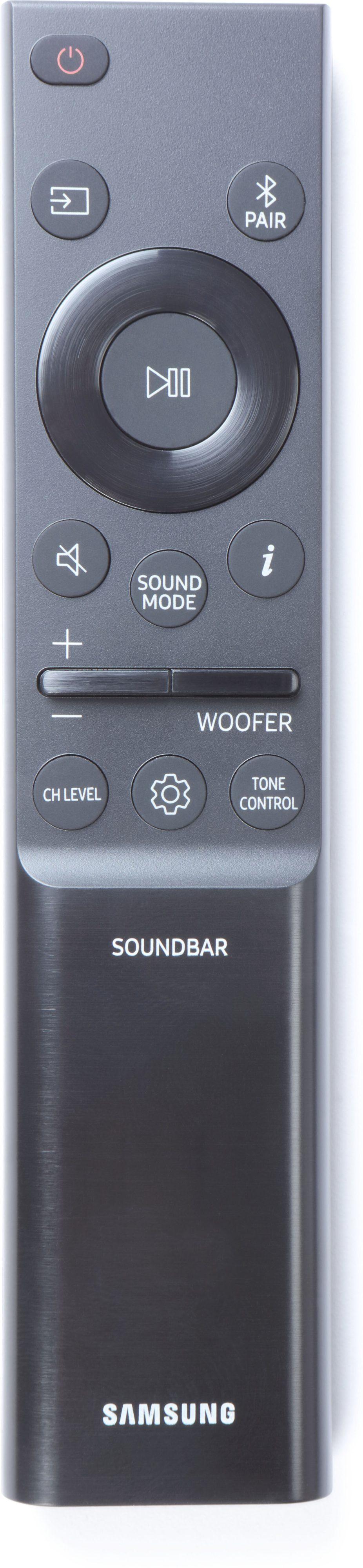


If you've been frustrated by your TV's tinny, barely-there speakers, you're definitely not alone. Most modern TVs prioritize sleek designs over audio quality, leaving viewers straining to hear dialogue or missing the impact of movie soundtracks. That's where soundbars come in – they're designed to dramatically upgrade your audio experience without the complexity of traditional surround sound systems.
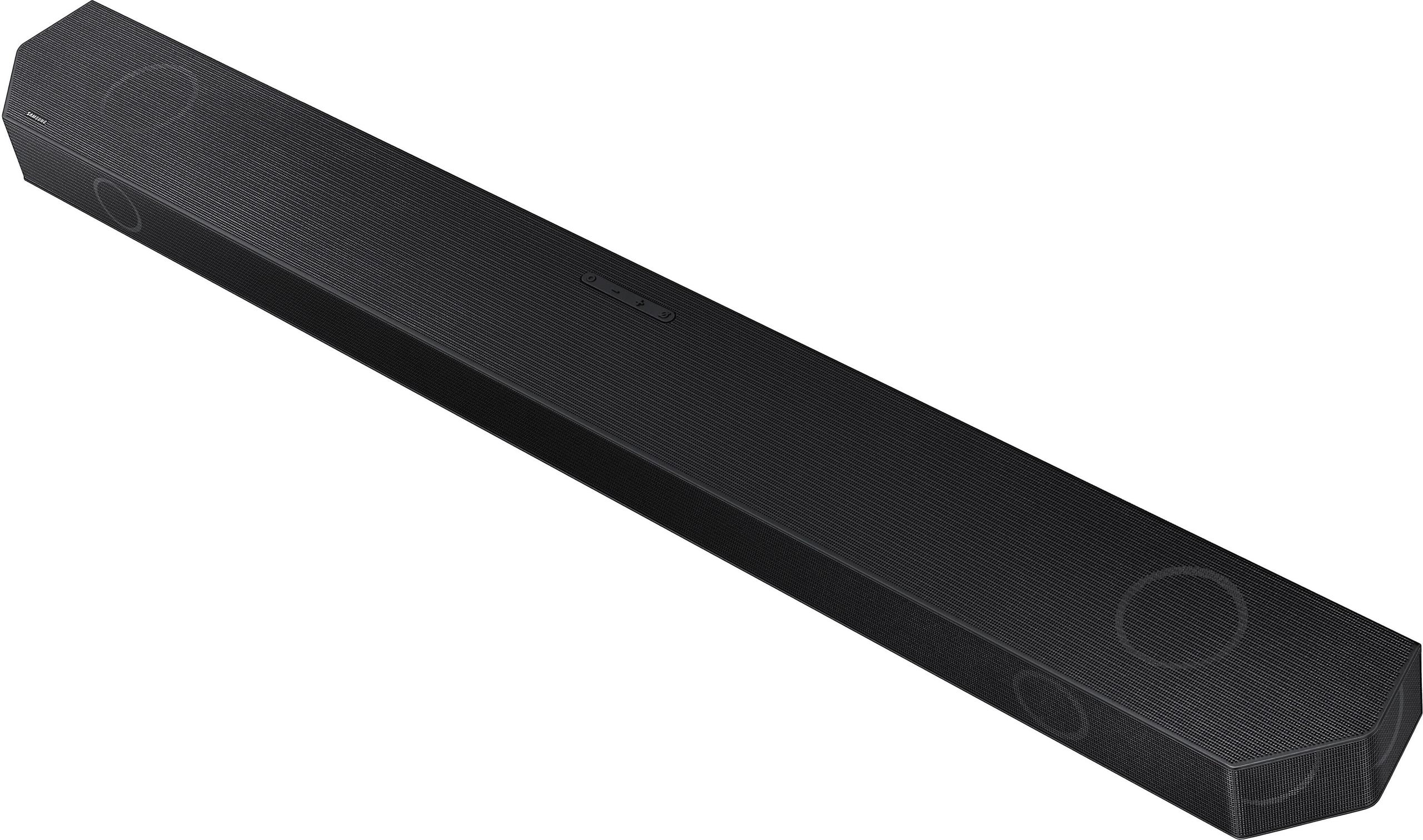
Today, we're comparing two very different approaches to better TV audio: the JBL Bar 300 MK2 ($449.95) and the Samsung HW-Q990D ($740.00). These products represent opposite ends of the soundbar spectrum, and understanding their differences will help you make the right choice for your space and budget.
Before diving into our comparison, let's talk about what makes soundbars tick. At their core, soundbars use multiple speakers arranged in a single housing to create a wider, more immersive soundstage than your TV can manage. The magic happens through digital signal processing (DSP) – think of it as sophisticated computer algorithms that manipulate audio signals to create the illusion of sounds coming from different directions.
The soundbar market has evolved into distinct categories. All-in-one units prioritize convenience and space-saving, while multi-component systems with separate subwoofers and rear speakers aim for true surround sound. Channel configurations like "5.0" or "11.1.4" tell you how many speakers and directions the system can handle – more channels generally mean more precise sound placement and better immersion.
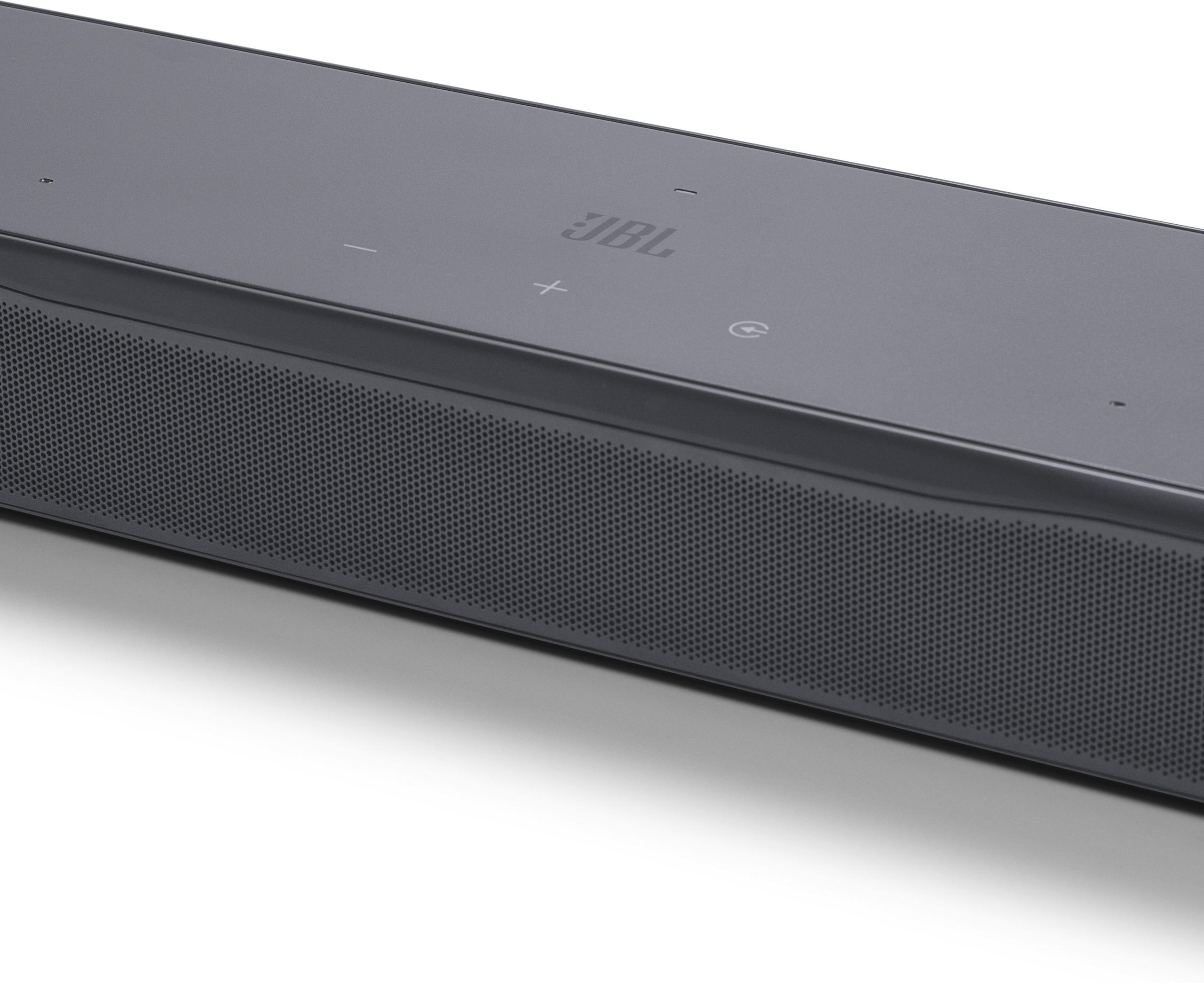
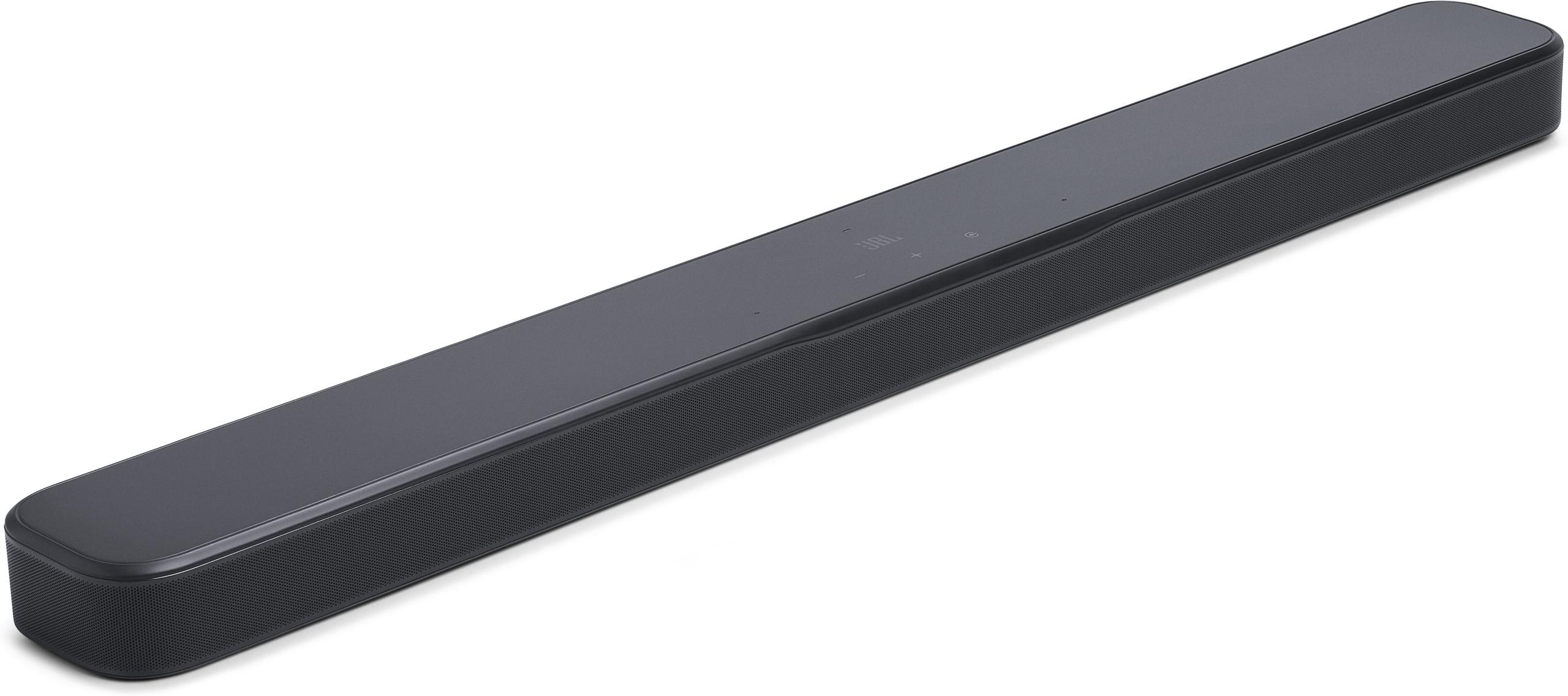
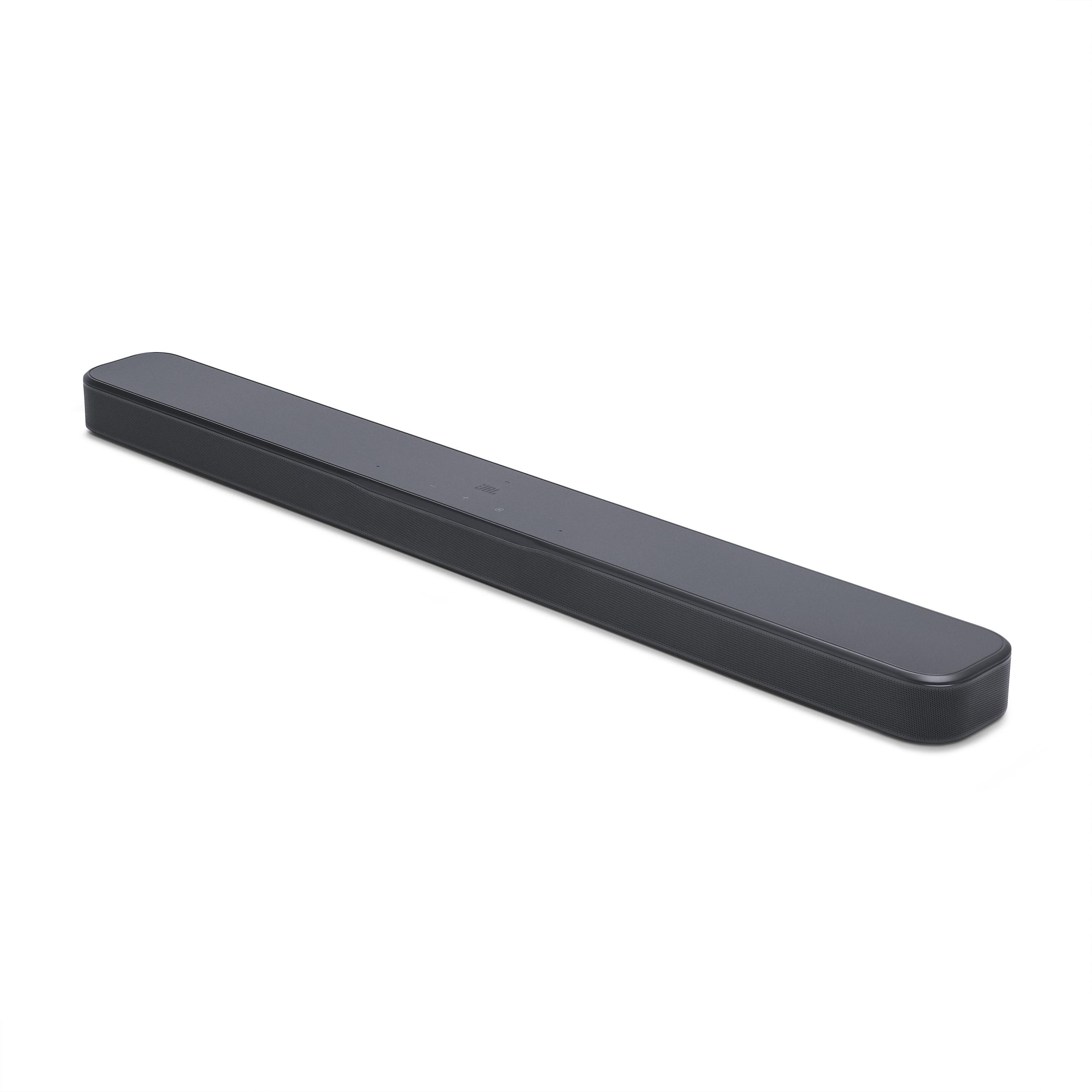
Released in June 2025 as part of JBL's refreshed MK2 lineup, the JBL Bar 300 MK2 represents the company's vision of simplified high-quality audio. This single-unit soundbar measures just over 32 inches wide and weighs only 5.5 pounds, making it incredibly easy to place under most TVs without dominating your entertainment setup.
What sets the MK2 generation apart from its predecessors is the integration of SmartDetails technology – a HARMAN innovation that focuses on reproducing subtle audio nuances that often get lost in the mix. Think of those barely audible footsteps in a thriller or the gentle rustle of leaves that adds atmosphere to a scene. The Bar 300 MK2 also bumps up the maximum power output significantly compared to earlier models, now delivering 450W of peak power from its compact frame.
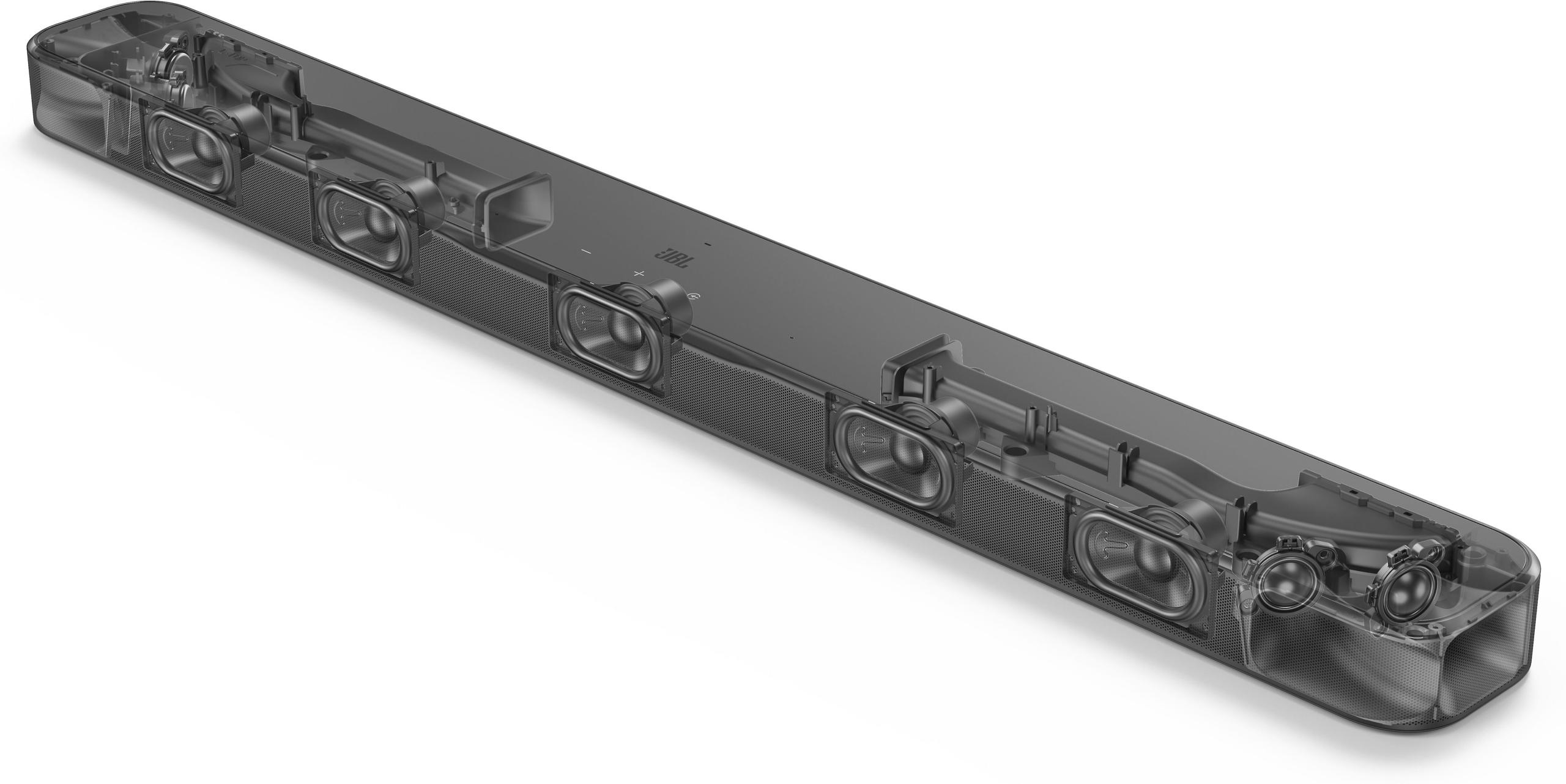
The "5.0" designation means it creates five distinct audio channels (left, center, right, and two surround channels) using just the drivers in the main bar. There's no separate subwoofer – instead, JBL uses specially designed racetrack drivers and a built-in bass port to generate surprisingly substantial low-end response for such a compact unit.
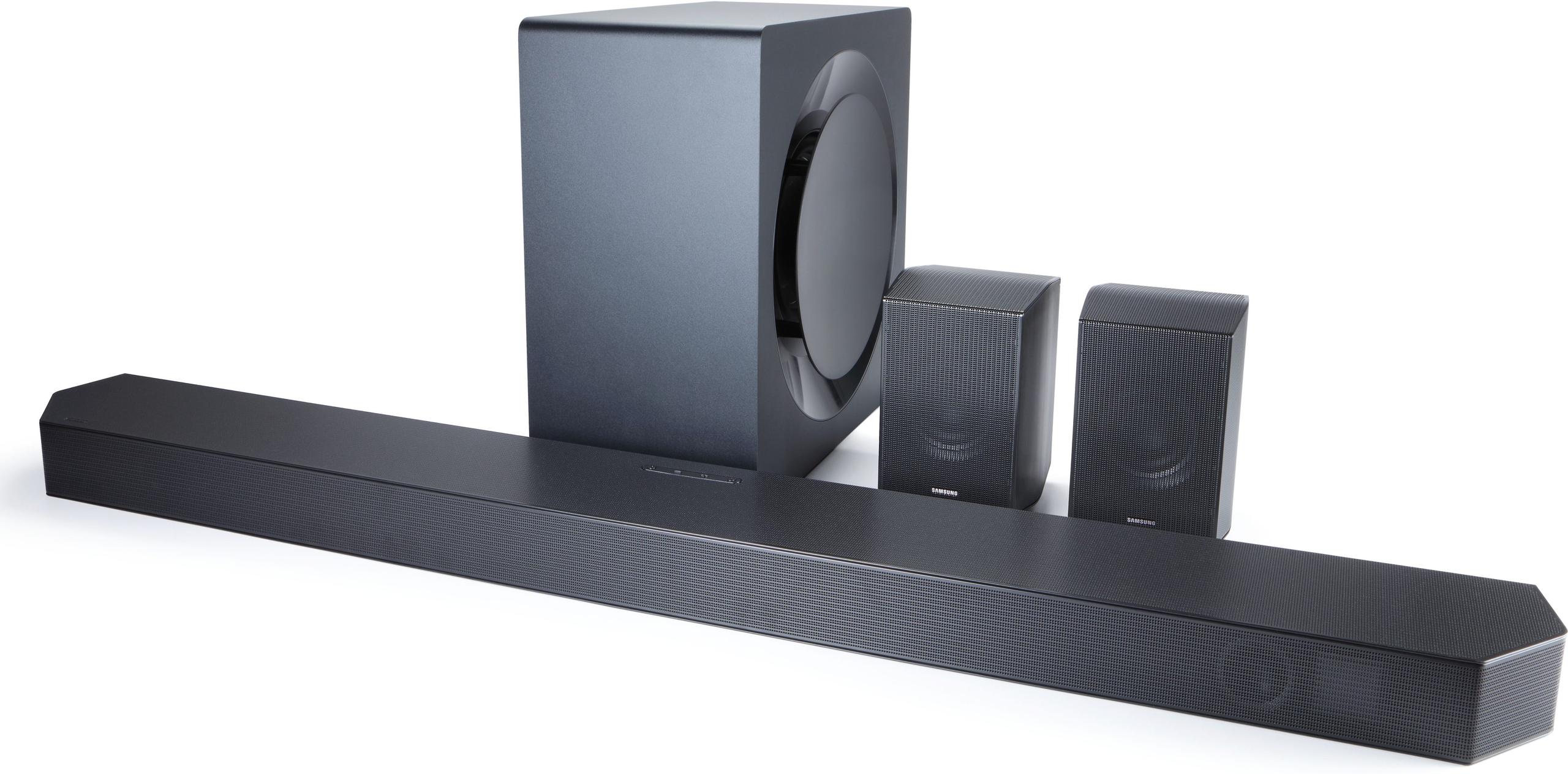
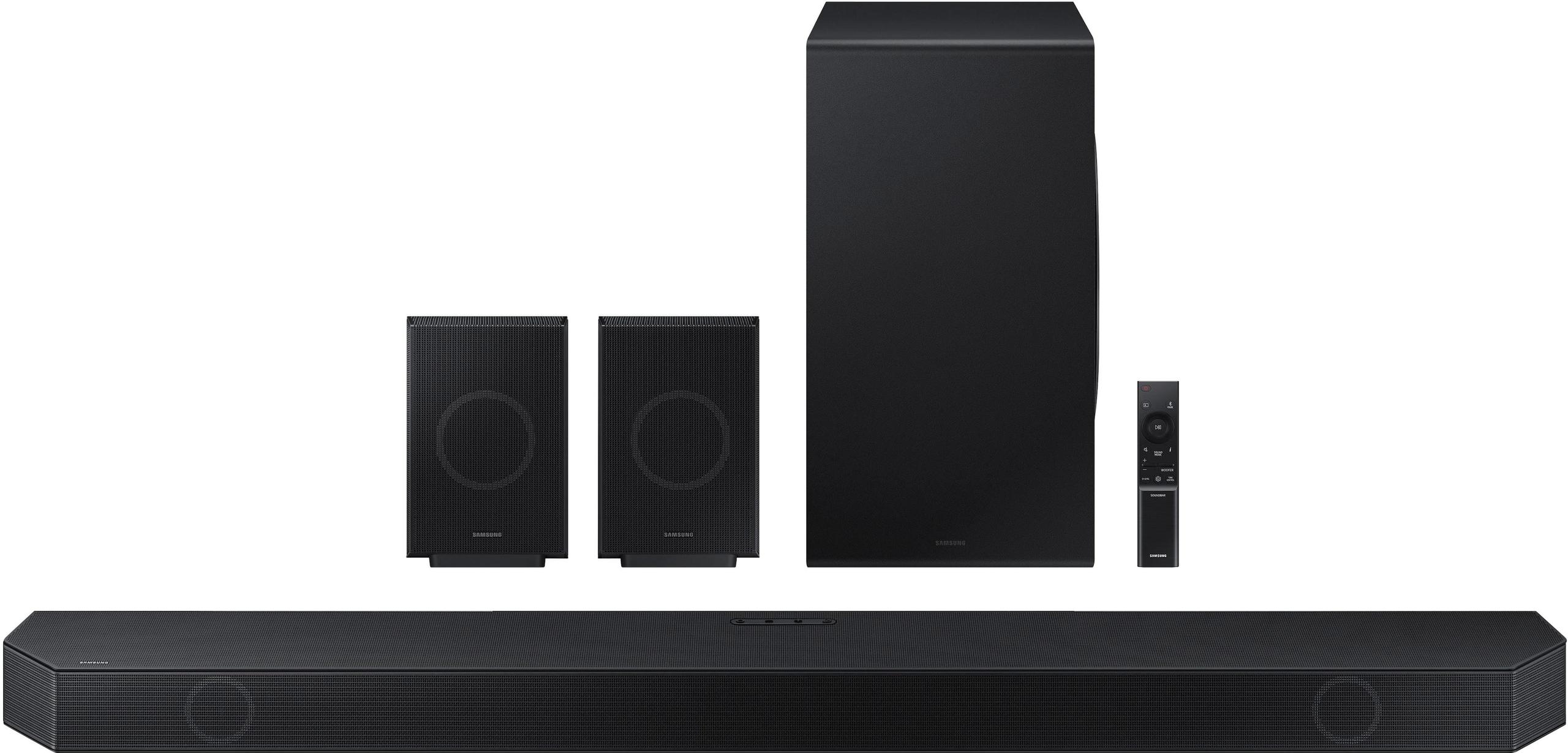
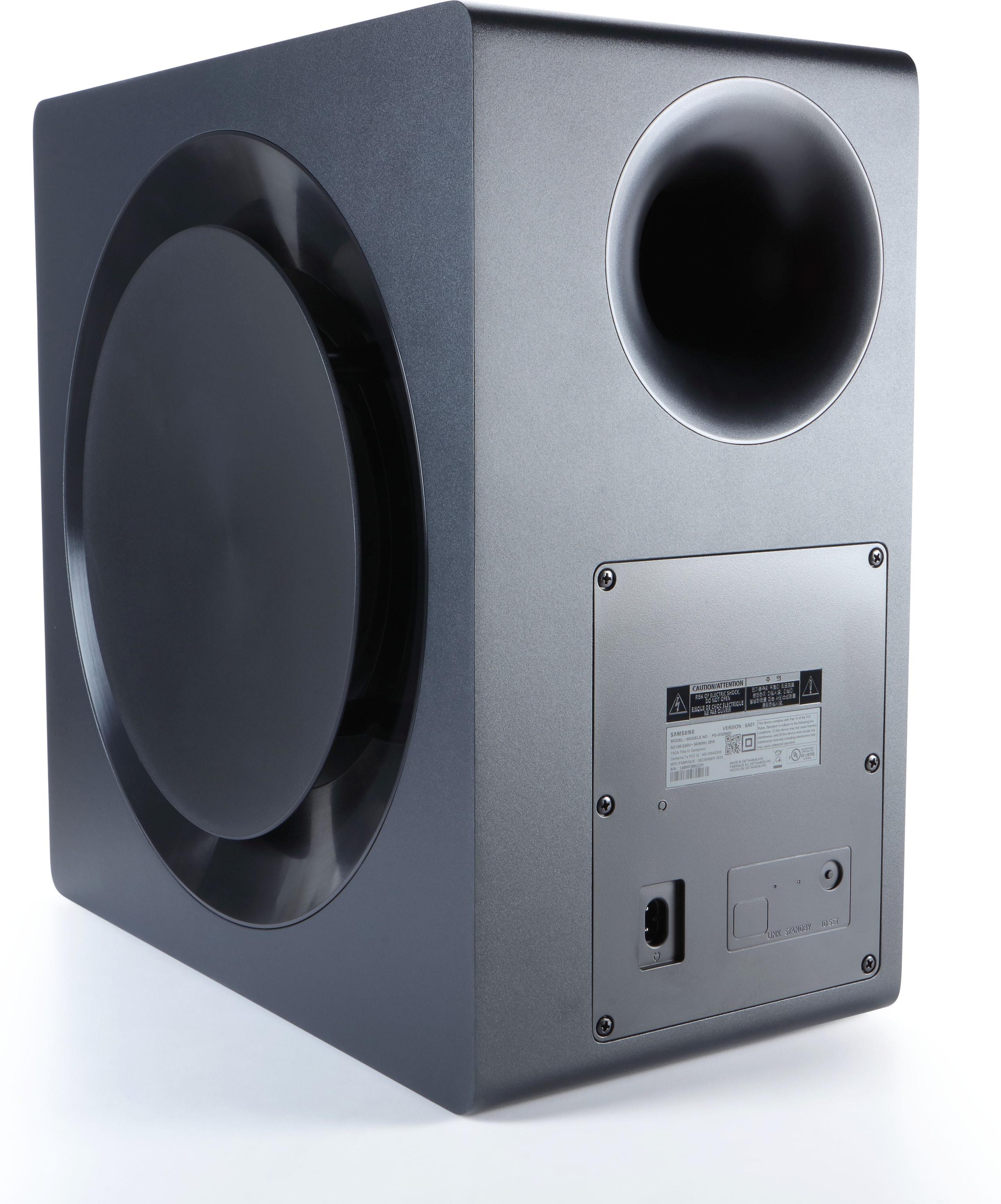
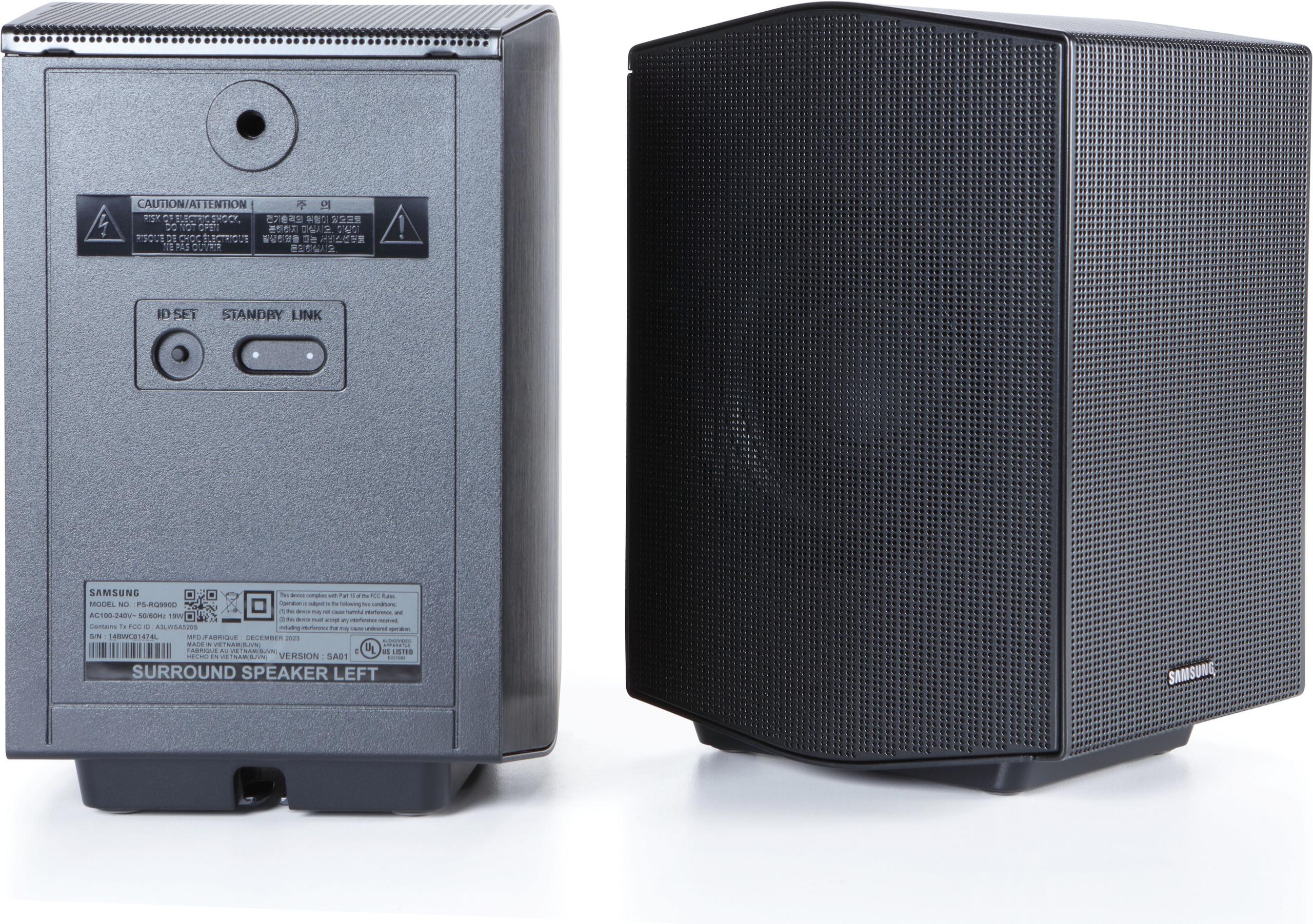
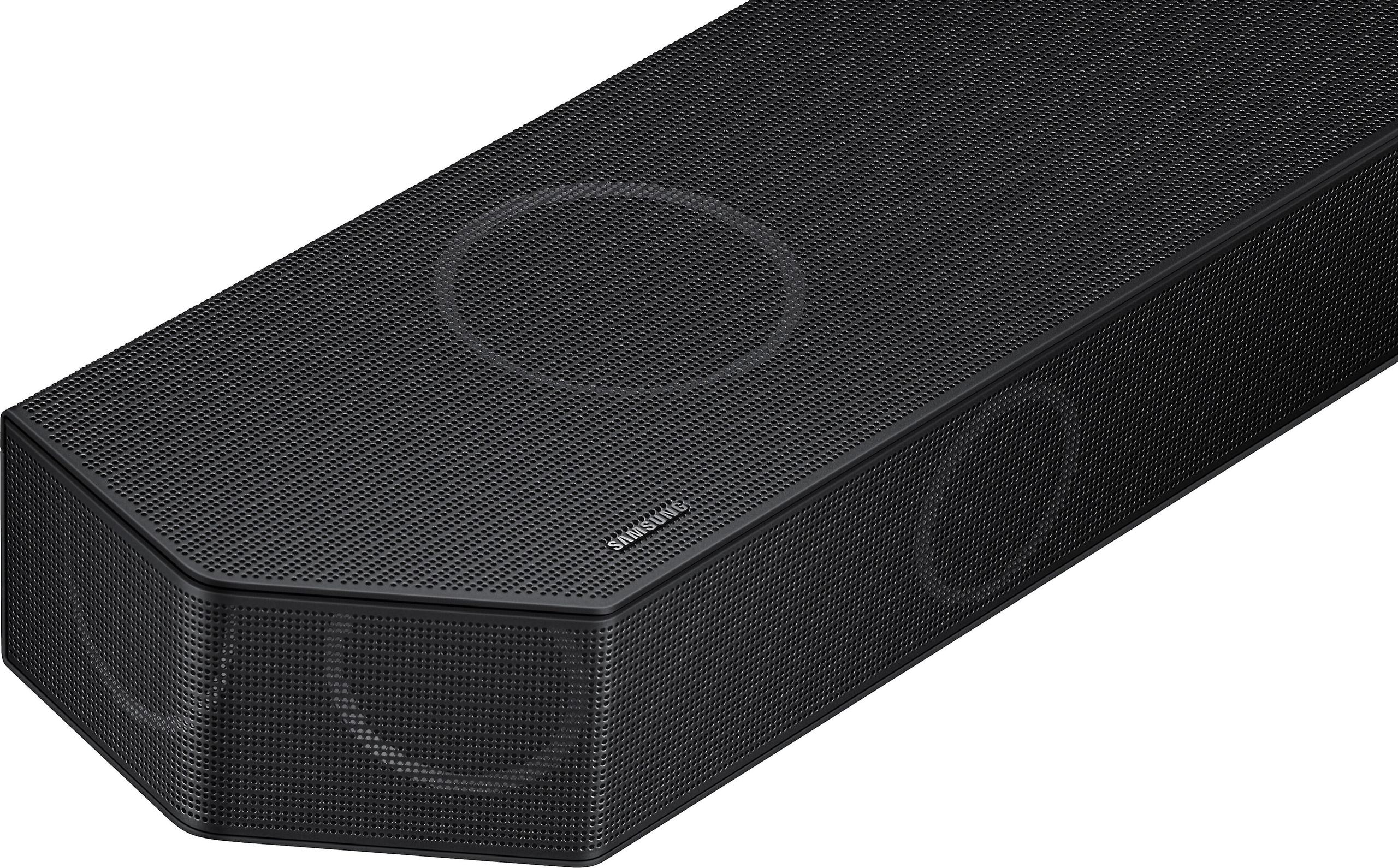
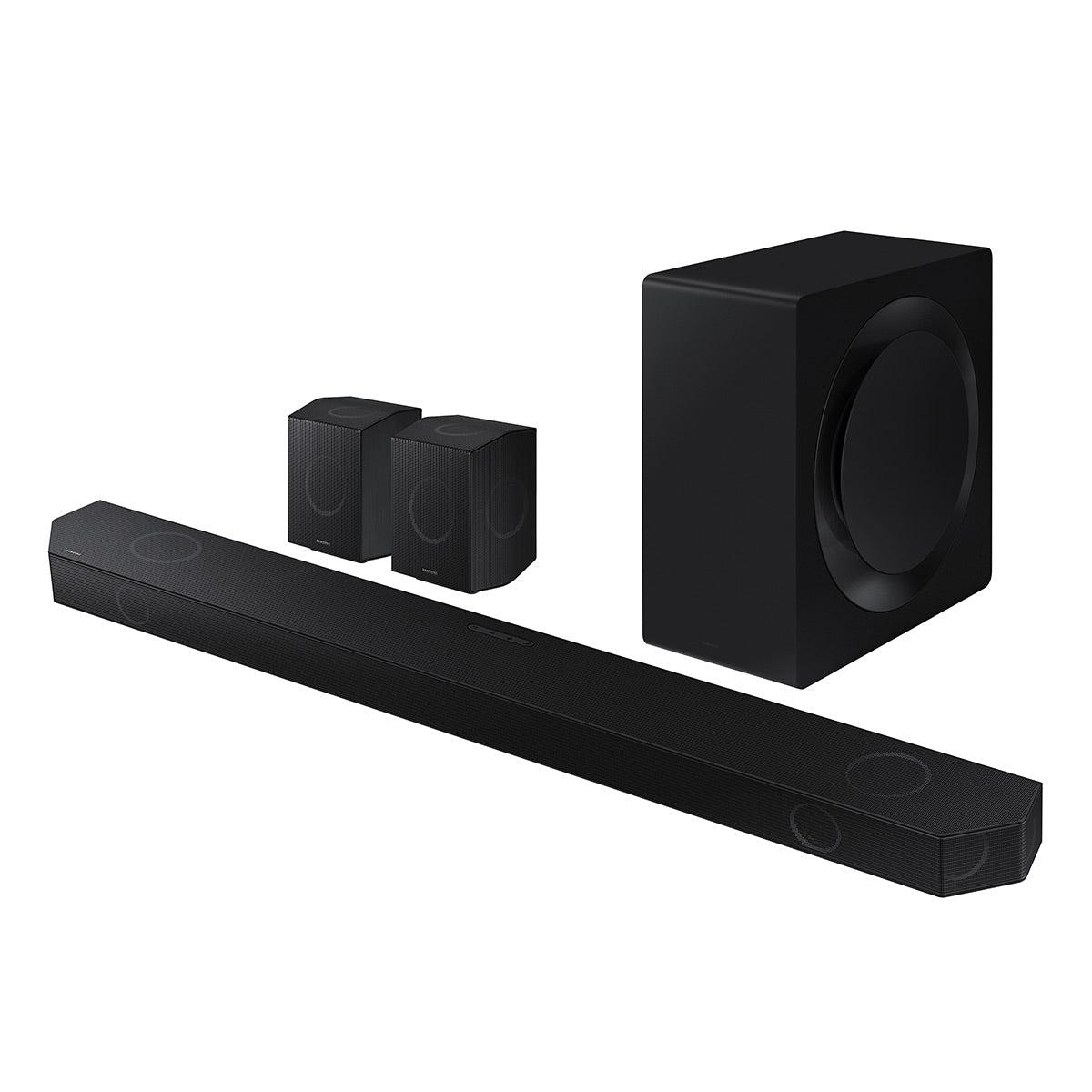
The Samsung HW-Q990D took a completely different path when it launched in late 2024. This is a full 11.1.4 channel system, which means it has 11 main channels, one dedicated subwoofer channel, and four height channels for Dolby Atmos effects. In practical terms, you're getting 22 individual speakers spread across four separate units: the main soundbar, a wireless subwoofer, and two wireless rear speakers.
Samsung's 2024 updates focused heavily on AI-enhanced processing and gaming features. The SpaceFit Sound Pro technology uses built-in microphones to constantly analyze your room's acoustics and adjust the sound accordingly – no test tones or manual calibration required. For gamers, the addition of Game Mode Pro automatically optimizes audio based on what type of game you're playing, whether it's a dialogue-heavy RPG or a competitive shooter where directional audio cues are crucial.
Here's where the fundamental differences between these systems become crystal clear. The JBL Bar 300 MK2 creates its surround effect through virtualization – sophisticated processing that tricks your brain into perceiving sounds coming from directions where there are no actual speakers. It's surprisingly effective, especially in smaller rooms where you're sitting relatively close to the soundbar.
However, physics still matters. When the Samsung HW-Q990D places actual speakers behind you, those rear effects genuinely originate from behind your listening position. The difference is immediately noticeable in scenes with helicopters flying overhead, rain falling around you, or crowd noise in sports broadcasts. The Samsung's four up-firing speakers bounce sound off your ceiling to create height effects, while the JBL relies entirely on digital processing to simulate that overhead dimension.
I've spent considerable time with both systems, and the Samsung's physical speaker placement creates a more convincing and immersive experience. However, the JBL punches well above its weight class – its virtual surround is genuinely impressive for a single-bar solution, and many users will find it perfectly satisfying.
Bass performance reveals another fundamental difference in approach. The JBL Bar 300 MK2 integrates bass drivers and a rear-firing port directly into its main housing. This design choice means no separate subwoofer to place and no additional cables or wireless connections to manage. The trade-off is physics – you simply can't move as much air or reach as deep into the bass frequencies without a larger, dedicated driver.
In my testing, the JBL produces surprisingly punchy bass for its size. It handles most TV content admirably and provides satisfying thump for music listening. However, when you crank up an action movie with explosive sound effects or play electronic music with deep synthetic bass, the limitations become apparent.
The Samsung's approach is entirely different. Its wireless subwoofer houses an 8-inch driver that can reproduce frequencies down to around 27Hz – that's deep enough to feel the rumble of distant thunder or the impact of a movie explosion in your chest. The subwoofer's wireless connection means you can place it optimally in your room for the best bass response, rather than being stuck with whatever location works for the main soundbar.
Both systems excel at dialogue reproduction, but they achieve it differently. The JBL's PureVoice 2.0 technology uses advanced algorithms to identify and enhance speech frequencies, ensuring voices remain clear even when surrounded by complex soundtrack elements. Since all the audio comes from the front-facing soundbar, dialogue naturally seems to originate from your TV screen, creating a cohesive viewing experience.
The Samsung takes advantage of its dedicated center channel speaker – one of the most important components in any surround sound system. This speaker handles dialogue exclusively, while other channels handle music and effects. The Active Voice Amplifier Pro technology analyzes incoming audio in real-time and can boost dialogue levels when it detects you might be having trouble hearing conversations over background noise.
In practical use, both systems keep dialogue intelligible at reasonable volumes. The Samsung has a slight edge in complex scenes where dialogue competes with intense musical scores or sound effects, but the difference is more noticeable to audio enthusiasts than casual viewers.
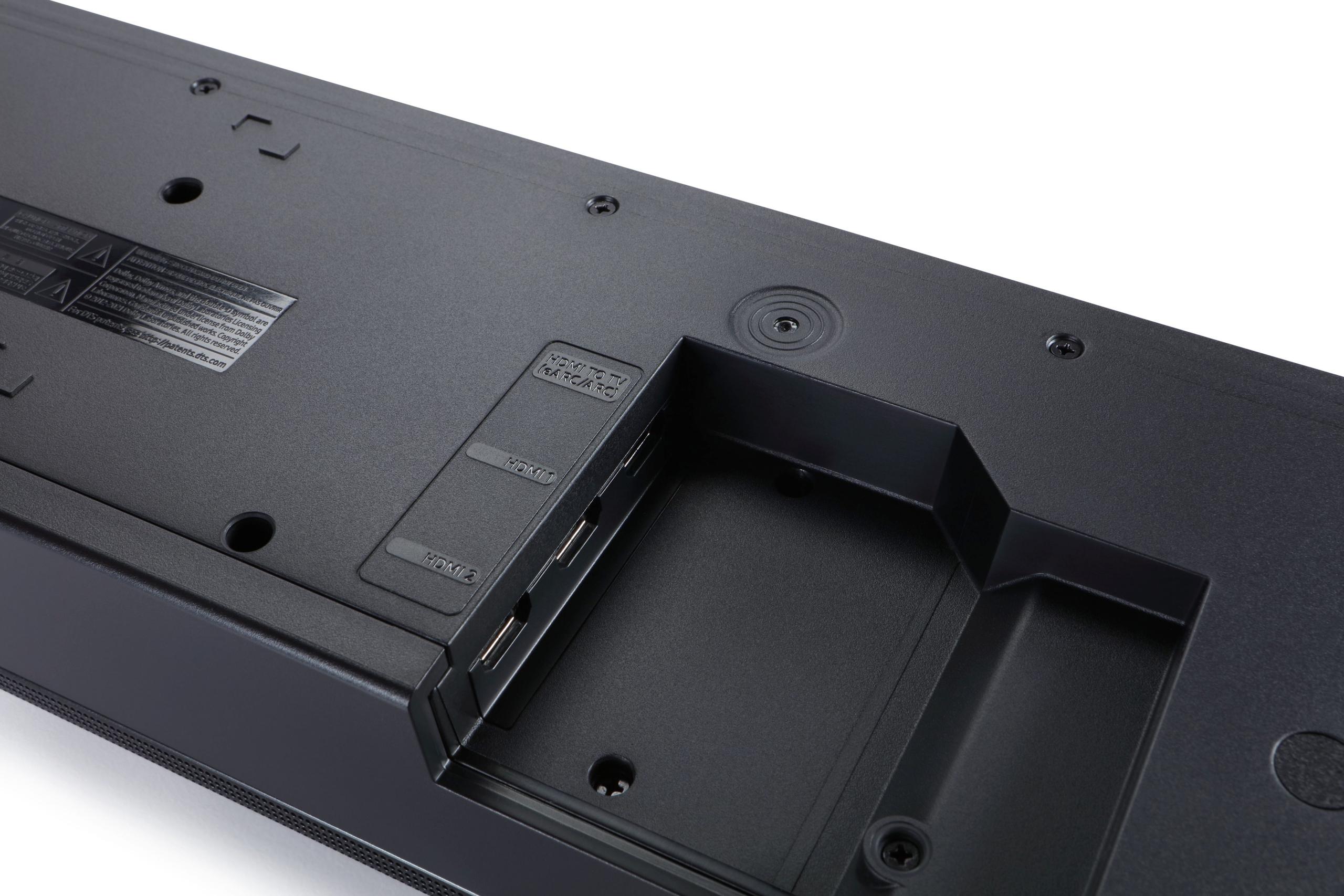
Modern gaming demands have pushed soundbar manufacturers to think beyond traditional movie and TV audio. The Samsung HW-Q990D clearly targets gamers with its comprehensive HDMI 2.1 feature set. It supports 4K resolution at 120Hz refresh rates – crucial for next-generation gaming consoles like the PlayStation 5 and Xbox Series X. Variable Refresh Rate (VRR) ensures smooth gameplay by synchronizing the display's refresh rate with the game's frame rate, while Auto Low Latency Mode (ALLM) automatically reduces input lag when gaming content is detected.
The Game Mode Pro feature goes beyond basic gaming support by analyzing what type of game you're playing and adjusting the audio profile accordingly. Racing games get enhanced engine and tire sounds, while first-person shooters emphasize directional audio cues that help you locate enemies. The true surround sound setup means you can actually hear enemies approaching from behind or pinpoint the direction of gunfire.
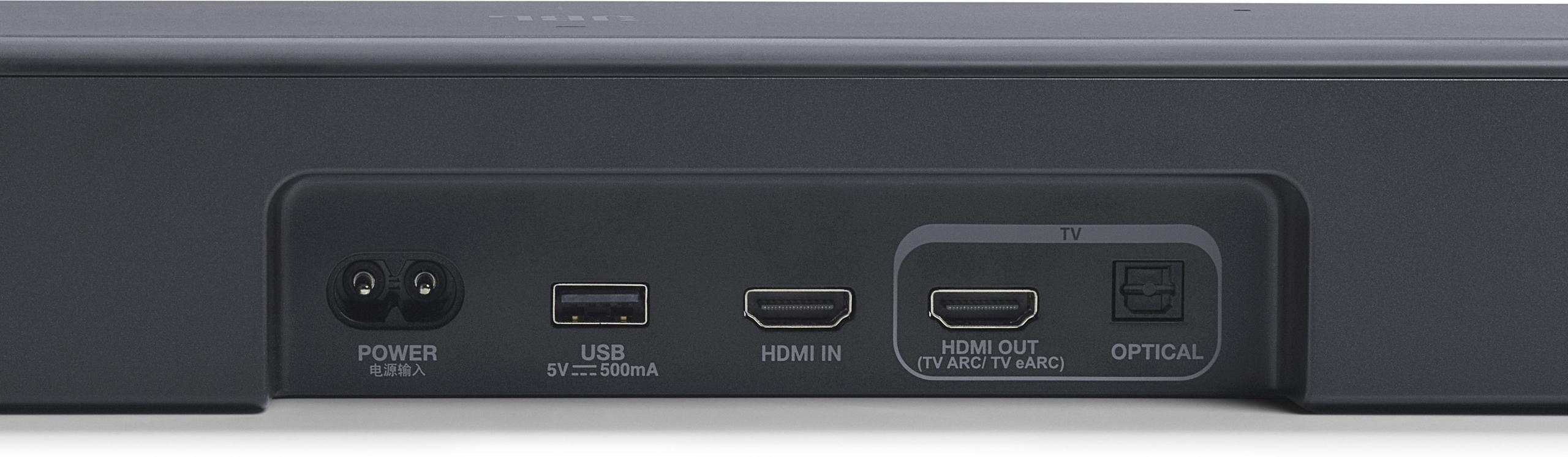
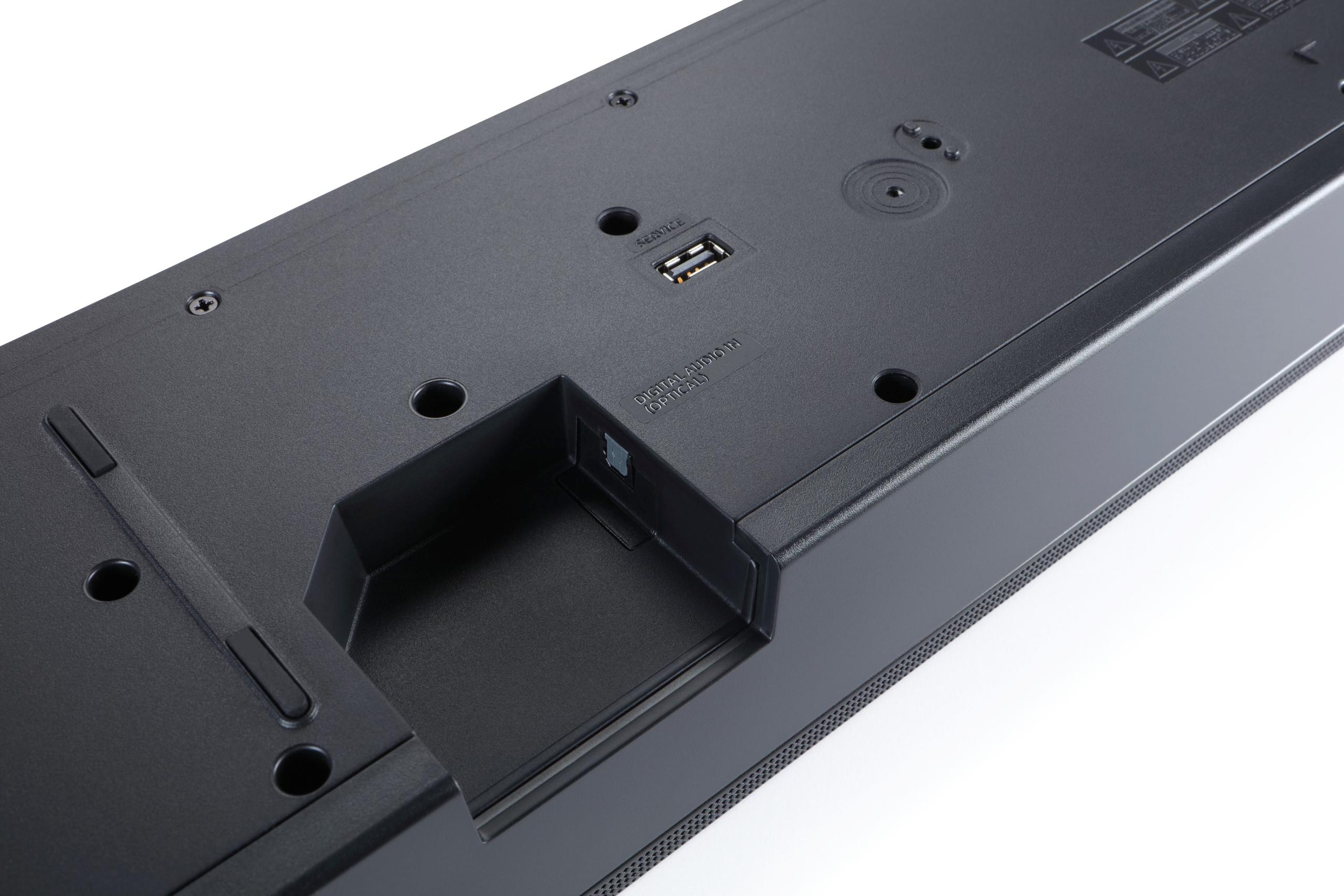
The JBL Bar 300 MK2 supports basic gaming audio through its HDMI eARC connection, but it lacks the advanced gaming features and multiple HDMI inputs that serious gamers might need. Its single HDMI connection also means you'll need to rely on your TV's HDMI switching for multiple devices, which could introduce additional latency.
Both soundbars embrace the streaming era with comprehensive wireless connectivity. Wi-Fi support enables access to streaming services like Spotify, Amazon Music, and Apple Music directly through the soundbars, without needing your TV or another device. AirPlay 2 lets iPhone and iPad users stream audio seamlessly, while Chromecast built-in serves Android users and Chrome browser streaming.
The JBL One app provides centralized control over all compatible JBL speakers in your home, creating a multi-room audio ecosystem if you have other JBL products. The app also offers EQ customization, letting you adjust bass, treble, and other audio characteristics to match your preferences or room acoustics.
Samsung's SmartThings integration opens up broader smart home possibilities, and the built-in voice assistants (Alexa, Bixby, and Google Assistant) let you control playback and smart home devices using voice commands. The Q-Symphony feature is particularly interesting for Samsung TV owners – it synchronizes the soundbar with your TV's built-in speakers to create an even wider front soundstage, essentially using every available speaker to enhance your audio experience.
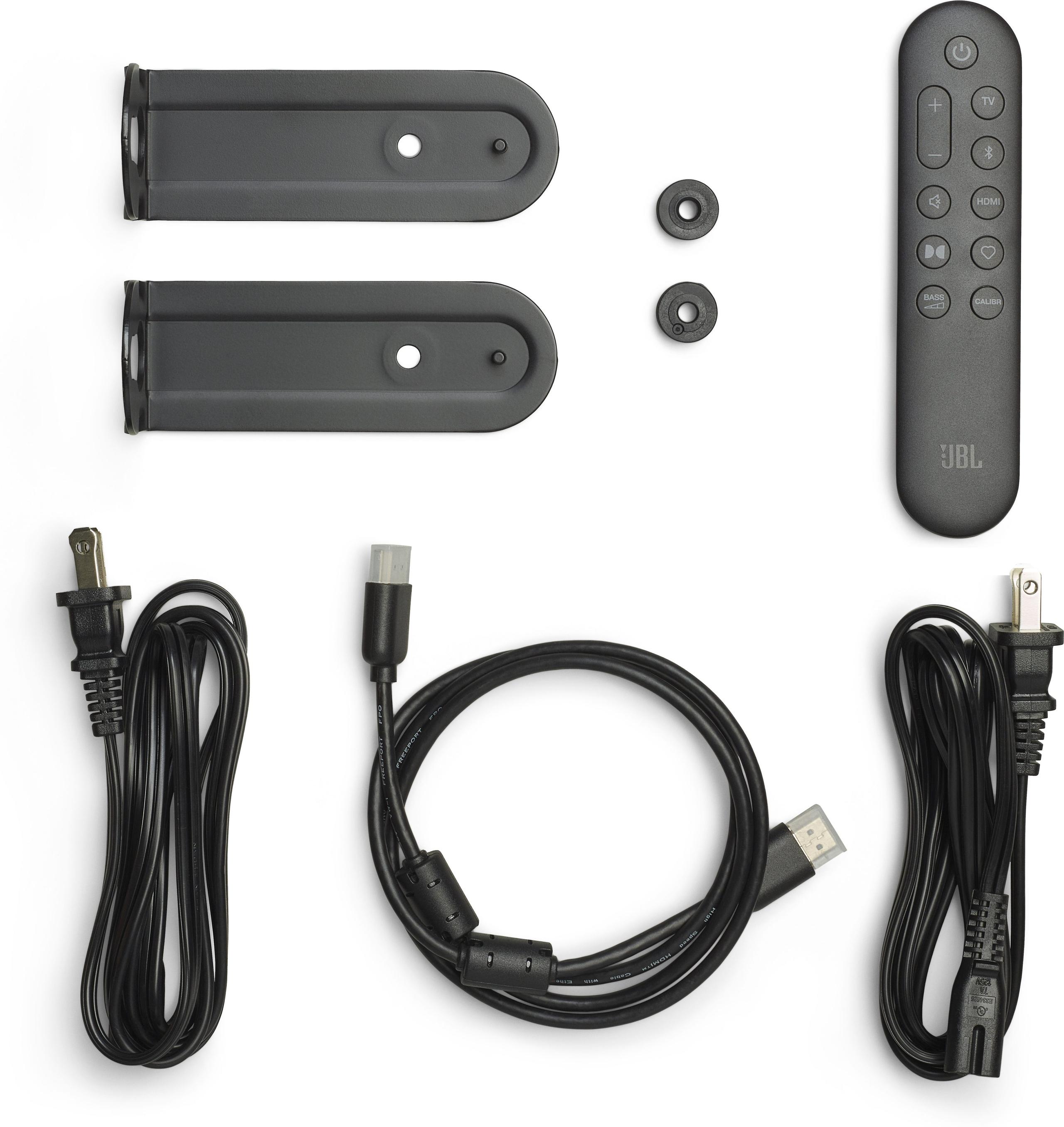
Here's where practical considerations become crucial. The JBL Bar 300 MK2 is genuinely plug-and-play. You connect one HDMI cable, plug in the power cord, and you're done. The entire setup takes minutes, and the compact size means it fits under virtually any TV without blocking remote sensors or looking disproportionate.
The Samsung system demands more planning and space. You need to position the wireless subwoofer somewhere in your room where it won't be intrusive but can still provide good bass response – usually against a wall but not in a corner where it might sound boomy. The rear speakers need placement behind or to the sides of your seating area, with clear wireless signals back to the main soundbar.
Room size plays a significant role in which system makes sense. In a typical apartment living room or bedroom, the JBL's virtual surround can fill the space effectively, and the lack of rear speakers means no furniture rearrangement or wire management. Larger rooms benefit enormously from the Samsung's physical speaker placement and more powerful amplification – the difference becomes more pronounced as room size increases.
At $449.95, the JBL Bar 300 MK2 delivers exceptional value for users who want significant audio improvement without complexity or high cost. You're getting advanced streaming features, clear dialogue enhancement, and surprisingly good bass response in a package that costs less than many mid-range headphones.
The Samsung HW-Q990D's $740.00 price tag positions it firmly in premium territory, but the feature set justifies the cost for users who want a true home theater experience. Consider that you're getting 22 individual speakers, advanced room calibration, wireless connectivity across four units, and future-proofed gaming features. Compared to building a traditional surround sound system with separate receivers and speakers, the Samsung actually represents good value.
For dedicated home theater enthusiasts, the choice is clear. The Samsung HW-Q990D provides the immersive experience that makes movies come alive. Dolby Atmos content – available on most streaming services and Ultra HD Blu-rays – truly shines with physical height speakers bouncing sound effects off your ceiling. The dedicated subwoofer adds visceral impact to action sequences, while the rear speakers create convincing ambient effects.
The JBL can certainly enhance your movie watching experience, but it's more about improving clarity and adding some width to the soundstage rather than creating full immersion. For casual movie watchers or those primarily interested in TV shows and news, this might be perfectly adequate.
Choose the JBL Bar 300 MK2 if you live in a smaller space, want immediate improvement without complexity, or have a limited budget but still desire quality audio. It's perfect for apartments, bedrooms, or any situation where simplicity and space-saving are priorities. The sound quality genuinely impresses for the size and price, and the extensive streaming features mean you'll get years of use from this investment.
Opt for the Samsung HW-Q990D if you have a larger room, want true cinematic immersion, are serious about gaming, or simply want the best possible sound quality within this price range. The multi-component setup requires more planning and space, but the payoff in terms of audio quality and features is substantial.
Both products represent their categories well, but they serve different needs and preferences. The beauty of today's soundbar market is that you can get genuinely good audio enhancement at either price point – it's just a matter of choosing the approach that best fits your space, budget, and audio priorities.
Your TV's built-in speakers don't stand a chance against either of these options. The question isn't whether you should upgrade your audio – it's which upgrade path makes the most sense for your specific situation.
| JBL Bar 300 MK2 Soundbar | Samsung HW-Q990D 11.1.4 Channel Sound Bar |
|---|---|
| Price - The budget difference is significant | |
| $449.95 | $740.00 |
| Channel Configuration - Determines surround sound authenticity | |
| 5.0 virtual surround (no rear speakers) | 11.1.4 true surround with rear speakers and height channels |
| Total Power Output - More power means louder, clearer sound | |
| 450W maximum (260W RMS) | 656W total system power |
| Subwoofer - Critical for deep bass in movies and music | |
| Built-in bass drivers with port (no separate sub) | Dedicated 8" wireless subwoofer |
| Physical Components - More components = better sound separation | |
| Single soundbar unit only | 4-piece system (soundbar + subwoofer + 2 rear speakers) |
| Dolby Atmos Support - Creates overhead sound effects | |
| Virtual Atmos processing only | True Atmos with 4 up-firing speakers |
| Room Size Suitability - Bigger rooms need more power and speakers | |
| Small to medium rooms (up to 200 sq ft) | Medium to large rooms (200-500+ sq ft) |
| HDMI Connectivity - More ports = less device switching | |
| 1x HDMI eARC only | 2x HDMI 2.1 inputs + 1x eARC output |
| Gaming Features - Important for console gamers | |
| Basic HDMI audio support | 4K/120Hz, VRR, ALLM, Game Mode Pro |
| Setup Complexity - Consider your patience and space | |
| Plug-and-play single unit | Multi-component wireless setup with placement planning |
| Smart Features - Both offer comprehensive streaming | |
| JBL One app, Wi-Fi, Bluetooth, AirPlay, Chromecast | SmartThings, built-in voice assistants, Q-Symphony TV sync |
| Room Calibration - Automatically optimizes sound for your space | |
| Basic manual calibration | SpaceFit Sound Pro with automatic room analysis |
The JBL Bar 300 MK2 ($449.95) is ideal for small apartments because it's a single compact unit that doesn't require additional speakers or a subwoofer. It delivers impressive virtual surround sound without taking up extra floor space or requiring complex placement planning.
The JBL Bar 300 MK2 is an all-in-one soundbar with virtual surround sound, while the Samsung HW-Q990D ($740.00) is a complete 4-piece surround sound system with a wireless subwoofer and rear speakers. The Samsung provides true surround sound with physical speakers placed around your room.
The Samsung HW-Q990D has significantly better bass thanks to its dedicated 8-inch wireless subwoofer. The JBL Bar 300 MK2 has surprising bass for its size using built-in drivers, but it can't match the deep, room-filling bass of a dedicated subwoofer.
The Samsung HW-Q990D is much better for gaming with 4K/120Hz support, Variable Refresh Rate (VRR), and Game Mode Pro that optimizes audio for different game types. The JBL Bar 300 MK2 works for basic gaming but lacks advanced gaming features and multiple HDMI inputs.
The JBL Bar 300 MK2 is much easier to set up - it's literally plug-and-play with just one HDMI cable and power cord. The Samsung HW-Q990D requires positioning four separate components around your room, though the wireless connections simplify cable management.
Yes, but differently. The JBL Bar 300 MK2 uses virtual Dolby Atmos processing to simulate overhead effects. The Samsung HW-Q990D has true Dolby Atmos with four up-firing speakers that bounce sound off your ceiling for authentic overhead effects.
The JBL Bar 300 MK2 ($449.95) offers excellent value for its price, providing significant audio improvement over TV speakers with premium streaming features. The Samsung HW-Q990D ($740.00) justifies its higher cost with true surround sound, powerful bass, and advanced features for serious home theater enthusiasts.
Both soundbars excel at music streaming with Wi-Fi, Bluetooth, AirPlay, and Chromecast support. The JBL Bar 300 MK2 offers great stereo music playback, while the Samsung HW-Q990D provides more immersive music experiences with its surround speakers and powerful subwoofer.
The Samsung HW-Q990D is designed for medium to large rooms with its 656W total power output and physical speaker placement around the room. The JBL Bar 300 MK2 works best in smaller to medium-sized rooms where its virtual surround can effectively fill the space.
No, the Samsung HW-Q990D works with any TV that has HDMI or optical connections. However, Samsung TV owners get additional benefits like Q-Symphony, which synchronizes the soundbar with the TV's built-in speakers for enhanced audio.
Both soundbars excel at dialogue clarity. The JBL Bar 300 MK2 uses PureVoice 2.0 technology to enhance speech, while the Samsung HW-Q990D features a dedicated center channel and Active Voice Amplifier Pro for crystal-clear dialogue even during complex audio scenes.
Choose the JBL Bar 300 MK2 ($449.95) if you want simple setup, space-saving design, and solid audio improvement for smaller rooms. Choose the Samsung HW-Q990D ($740.00) if you have a larger room, want true surround sound immersion, or are serious about gaming and home theater experiences.
We've done our best to create useful and informative comparisons to help you decide what product to buy. Our research uses advanced automated methods to create this comparison and perfection is not possible - please contact us for corrections or questions. These are the sites we've researched in the creation of this article: homecinemachoice.com - retailspecs.com - hometechnologyreview.com - whathifi.com - news.jbl.com - engadget.com - crutchfield.com - harmanaudio.com - techradar.com - bestbuy.com - jbl.com - sweech.co.ke - jbl.com - jbl.com.sg - mm.jbl.com - abcwarehouse.com - harmanaudio.com - sweetwater.com - ro.harmanaudio.com - dell.com - jbl.co.nz - techradar.com - avsforum.com - valueelectronics.com - samsung.com - rtings.com - samsung.com - avsforum.com - samsung.com - cdwg.com - youtube.com - whathifi.com

Privacy Policy
Terms and Conditions - Affiliate Policy
Home Security
© Copyright 2008-2026.
11816 Inwood Rd #1211, Dallas, TX 75244