

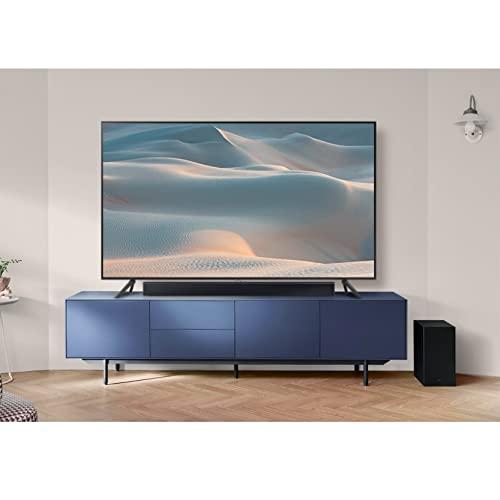


If you're tired of constantly asking "what did they just say?" during your favorite shows, you're not alone. Modern TVs have gotten impressively thin, but that sleek design comes at a cost—there's simply no room for decent speakers inside those razor-thin panels. This is where soundbars step in, and Samsung offers two compelling options that take very different approaches to solving your TV's audio problems.
Before diving into specifics, let's establish what really matters when choosing a soundbar. The most critical factor is dialogue clarity—you need to hear conversations without cranking the volume so high that explosions wake the neighbors. Bass response matters too, but it's not just about loudness; good bass should be tight and controlled, adding weight to action scenes without drowning out everything else.
Surround sound capability separates basic soundbars from impressive ones. Some use clever processing tricks to simulate surround effects, while others employ more advanced technologies that create genuine three-dimensional audio. Connectivity options might seem boring, but they determine how well your soundbar integrates with your TV and other devices, affecting both convenience and audio quality.
The Samsung HW-C450 and Samsung HW-S700D represent two distinct philosophies in soundbar design, and understanding their approaches helps identify which matches your specific needs and room setup.
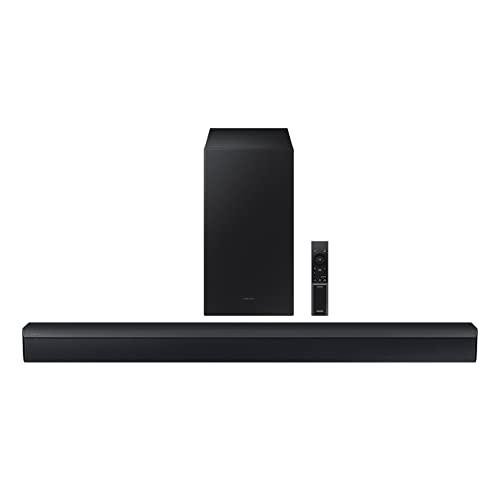
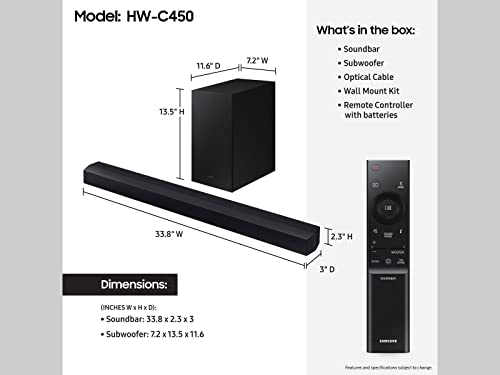
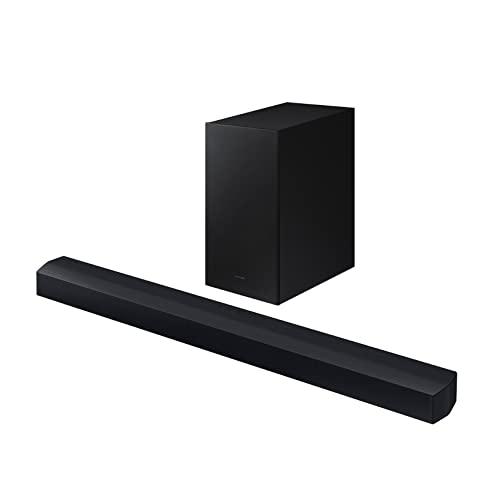
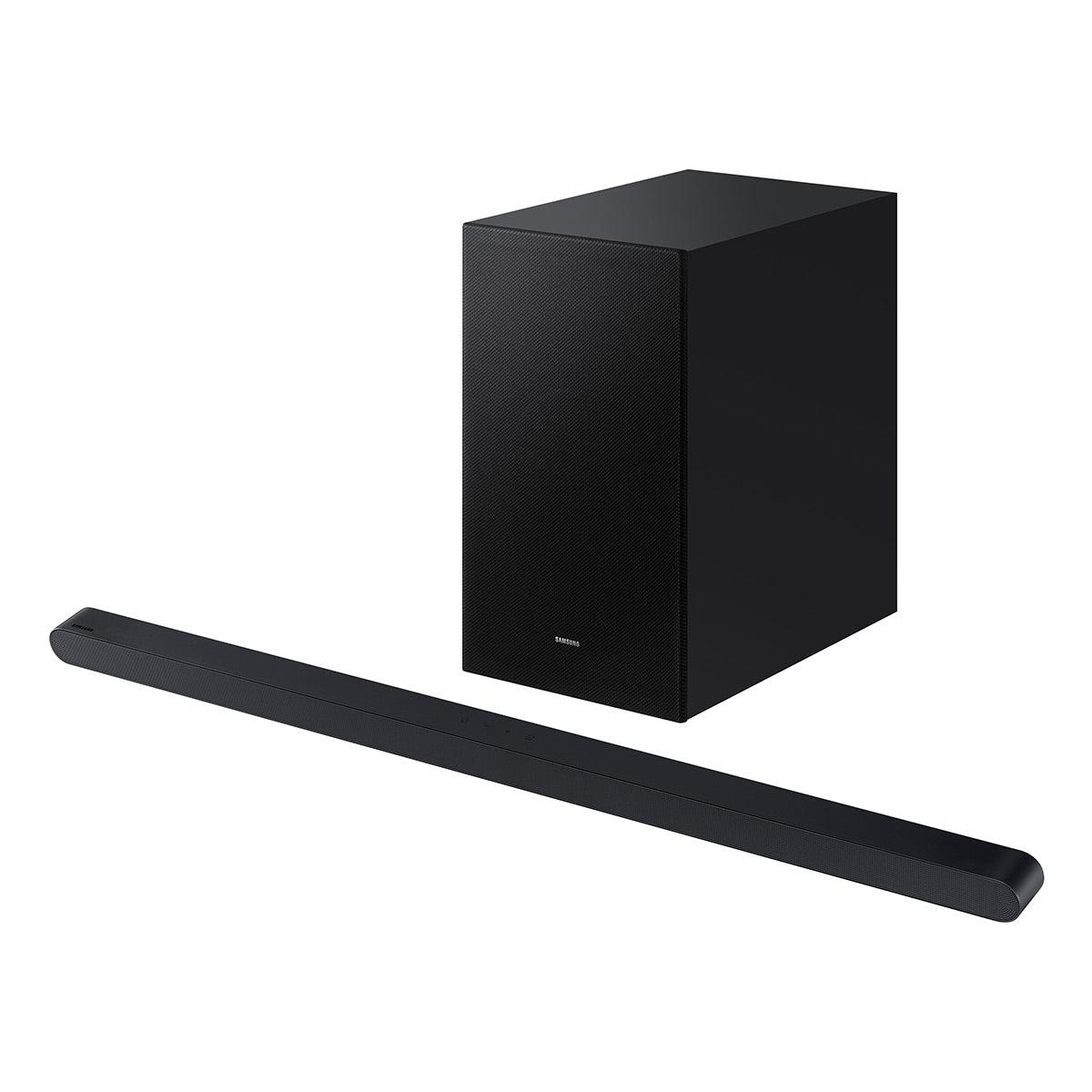
Released in 2023, the Samsung HW-C450 represents Samsung's commitment to making decent audio accessible. At the time of writing, it sits in the budget-friendly category, typically costing less than half of premium alternatives. This 2.1-channel system includes a wireless subwoofer and focuses on delivering the fundamentals well rather than chasing every advanced feature.
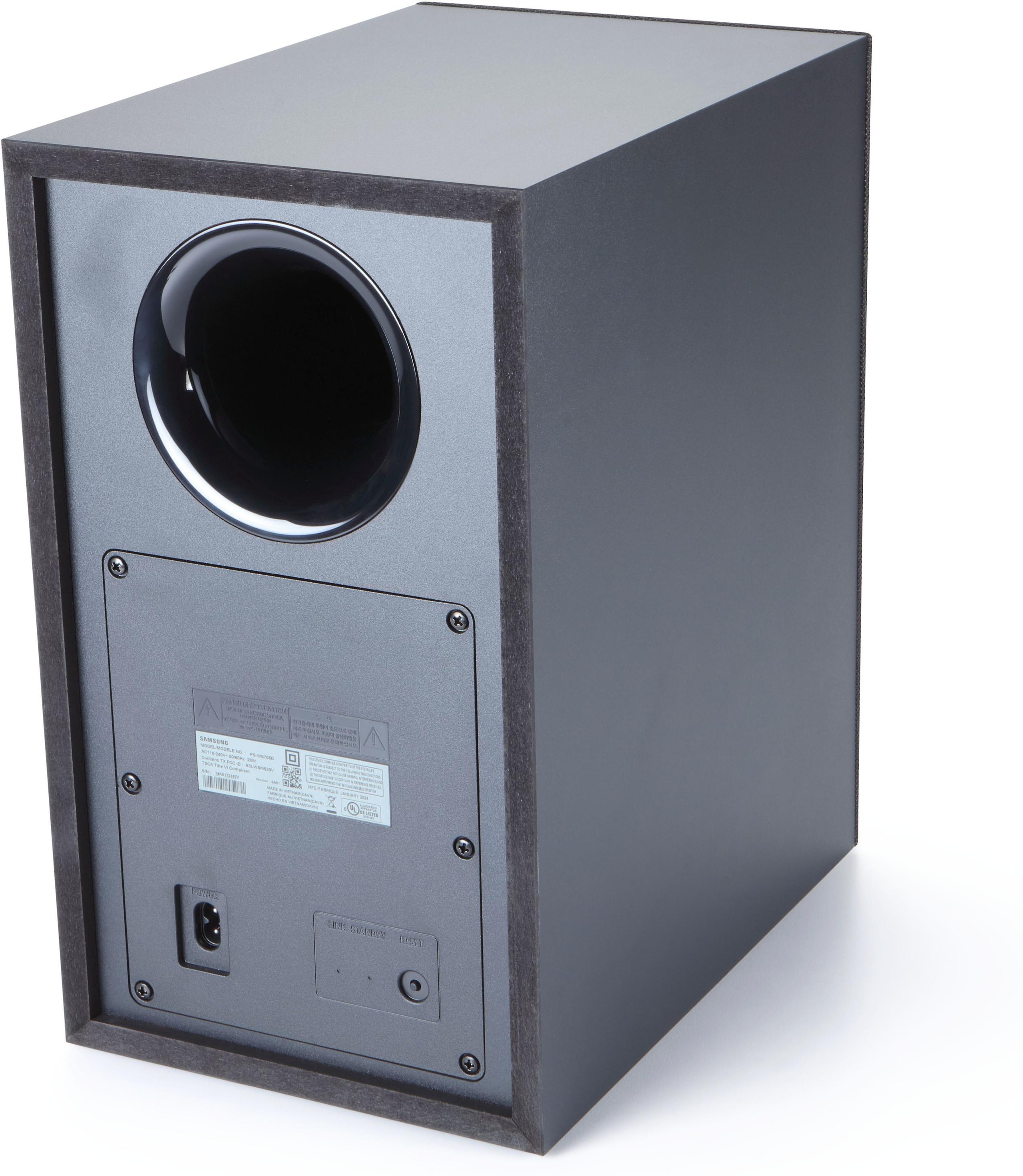
The "2.1" designation means you get two main channels (left and right) in the soundbar itself, plus one dedicated subwoofer channel. This configuration has powered most home audio systems for decades because it works—you get stereo imaging for music and clear dialogue, while the subwoofer handles the low-frequency effects that make action movies exciting.
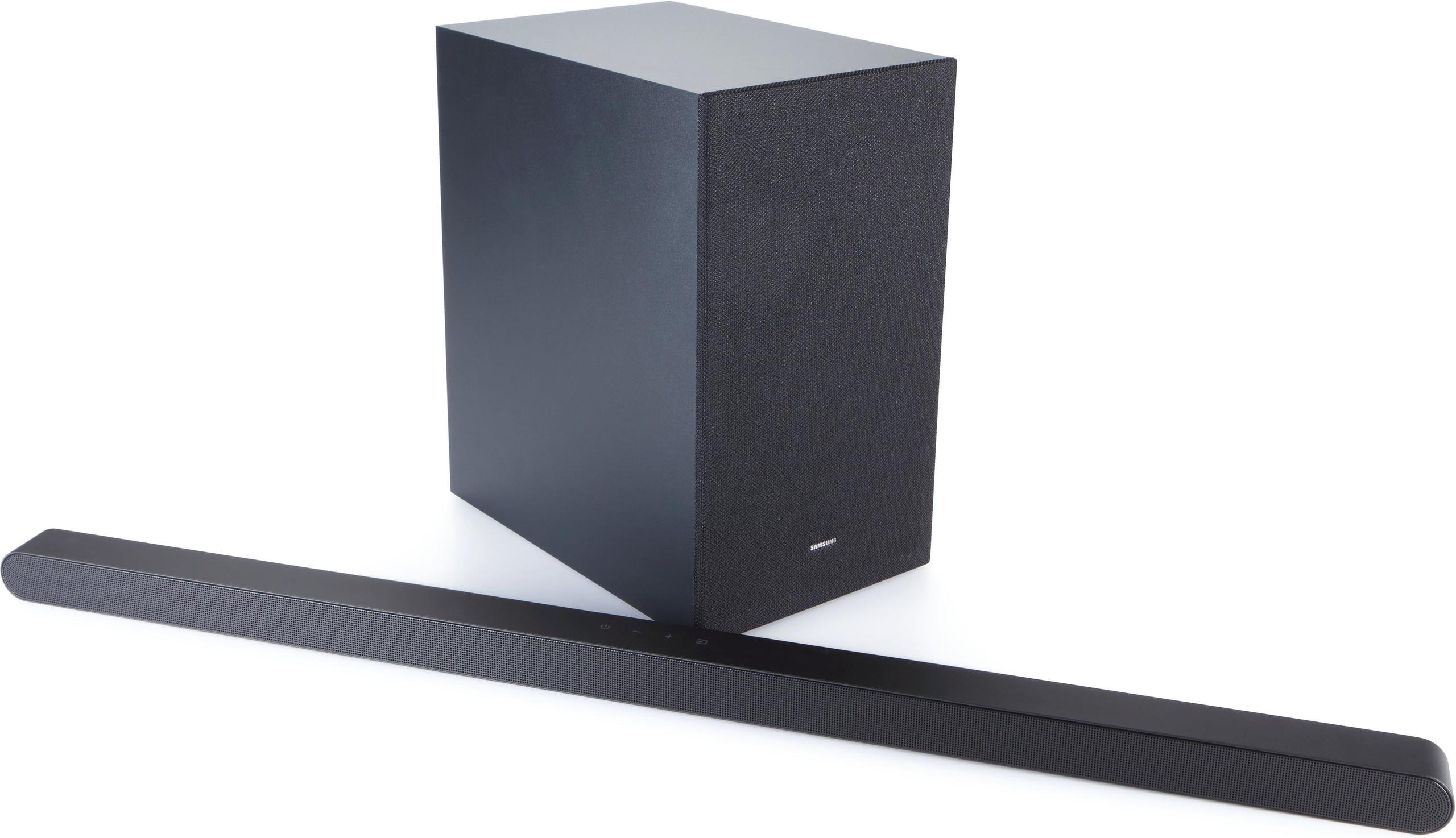
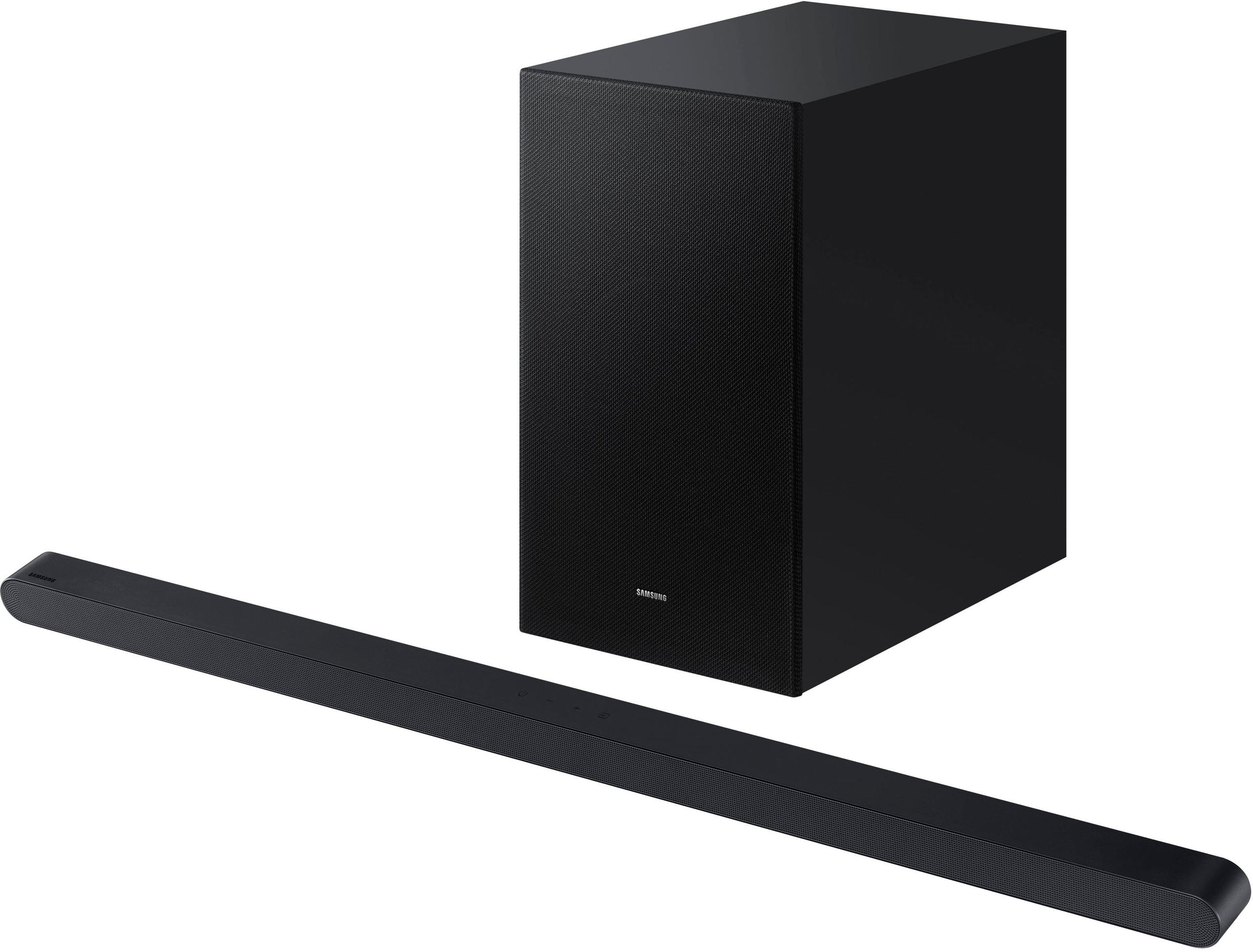
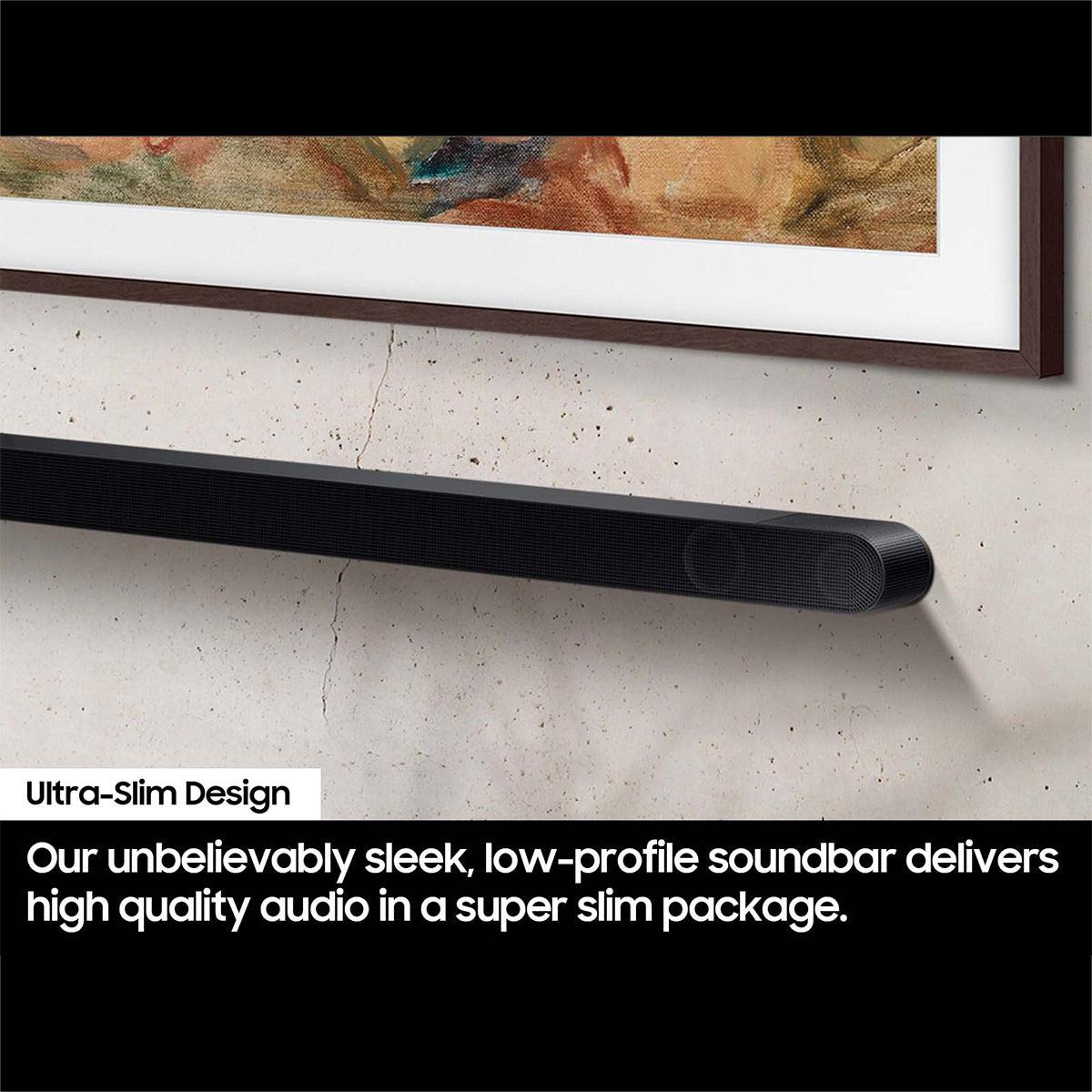
Launched in 2024, the Samsung HW-S700D costs significantly more but brings substantial technological advancement. This 3.1-channel system adds a dedicated center speaker specifically for dialogue, which makes a bigger difference than you might expect. The "ultra-slim" design philosophy reflects how TVs have evolved—when your TV is barely thicker than a smartphone, your audio solution needs to match that aesthetic.
Since 2023, Samsung has refined their soundbar technologies considerably. The integration with Samsung TVs has become more sophisticated, and the processing power for virtual surround effects has improved markedly. These improvements particularly benefit the HW-S700D, which showcases Samsung's latest audio innovations.
In our evaluation of user reviews and expert assessments, dialogue performance shows the clearest difference between these models. The HW-S700D's dedicated center channel creates a focused "voice zone" that keeps dialogue anchored and clear, even during complex action sequences. Users consistently report being able to follow conversations without constantly adjusting volume levels.
The HW-C450 handles dialogue reasonably well for its price point, but relies on processing tricks rather than dedicated hardware. When background music swells or effects get intense, voices can get lost in the mix. This becomes more noticeable in larger rooms where you need higher volume levels to fill the space.
From a technical standpoint, human speech occupies specific frequency ranges (roughly 85-255 Hz for fundamentals, with harmonics extending much higher). A dedicated center channel can be tuned specifically for these frequencies, while a 2.1 system must balance speech clarity against music and effects reproduction in the same drivers.
Here's where specifications can mislead you. The HW-C450 boasts 300 watts of total power compared to the HW-S700D's 250 watts, suggesting the cheaper model might deliver more impactful bass. Real-world performance tells a different story.
Power ratings in soundbars often reflect peak capabilities rather than sustained, clean output. The HW-S700D's subwoofer, despite lower peak wattage, delivers more controlled and precise bass according to user feedback. It integrates better with the main speakers, creating a cohesive sound rather than just adding boom to the bottom end.
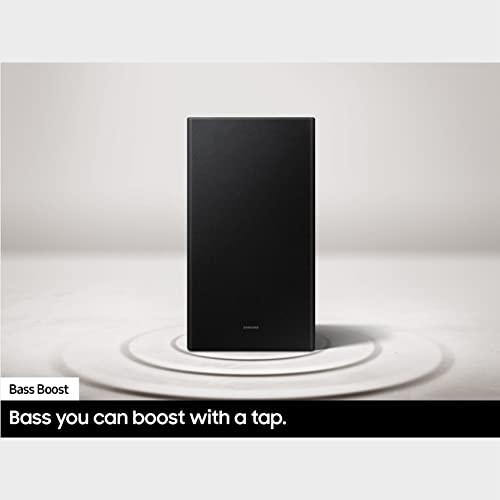
The HW-C450's subwoofer can produce impressive volume, but reviews suggest it tends toward the "boomy" side—lots of low-frequency energy that can overwhelm smaller rooms or sound muddy during complex passages. This isn't necessarily bad if you prefer forceful bass, but it's less accurate to the original audio mix.
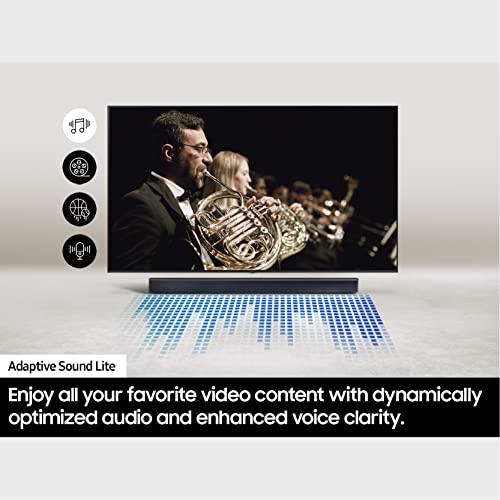
This represents the most significant technological difference between these models. The HW-C450 uses DTS Virtual:X processing, which analyzes stereo or surround audio and creates the impression of sounds coming from different directions using psychoacoustic principles—essentially tricking your brain into hearing spatial effects.
DTS Virtual:X works by manipulating phase relationships and frequency content to create the perception of wider soundstage and even some height effects. It's clever technology that can make movies more engaging than basic stereo, but the effects vary significantly depending on room acoustics and seating position.
The HW-S700D supports Dolby Atmos, a fundamentally different approach to surround sound. Instead of simulating surround effects, Dolby Atmos treats sounds as individual "objects" that can be placed precisely in three-dimensional space. When you hear a helicopter in a movie, Dolby Atmos can position that sound above your head and move it smoothly across the room.
For this to work properly, you need content specifically mixed for Dolby Atmos—fortunately, most major streaming services now offer substantial catalogs of Atmos content. The difference is genuinely noticeable with supported material, creating a much more immersive experience than virtual processing can achieve.
In complex audio passages—think of a battle scene with dialogue, music, explosions, and ambient effects all happening simultaneously—the differences between these soundbars become most apparent. The HW-S700D maintains better separation between different audio elements, allowing you to follow dialogue even when chaos erupts around it.
This comes down to both hardware capabilities and processing sophistication. The HW-S700D has more drivers working independently, so it can handle multiple audio elements without compromise. The HW-C450 must squeeze everything through its two main drivers, which can lead to congestion during demanding passages.
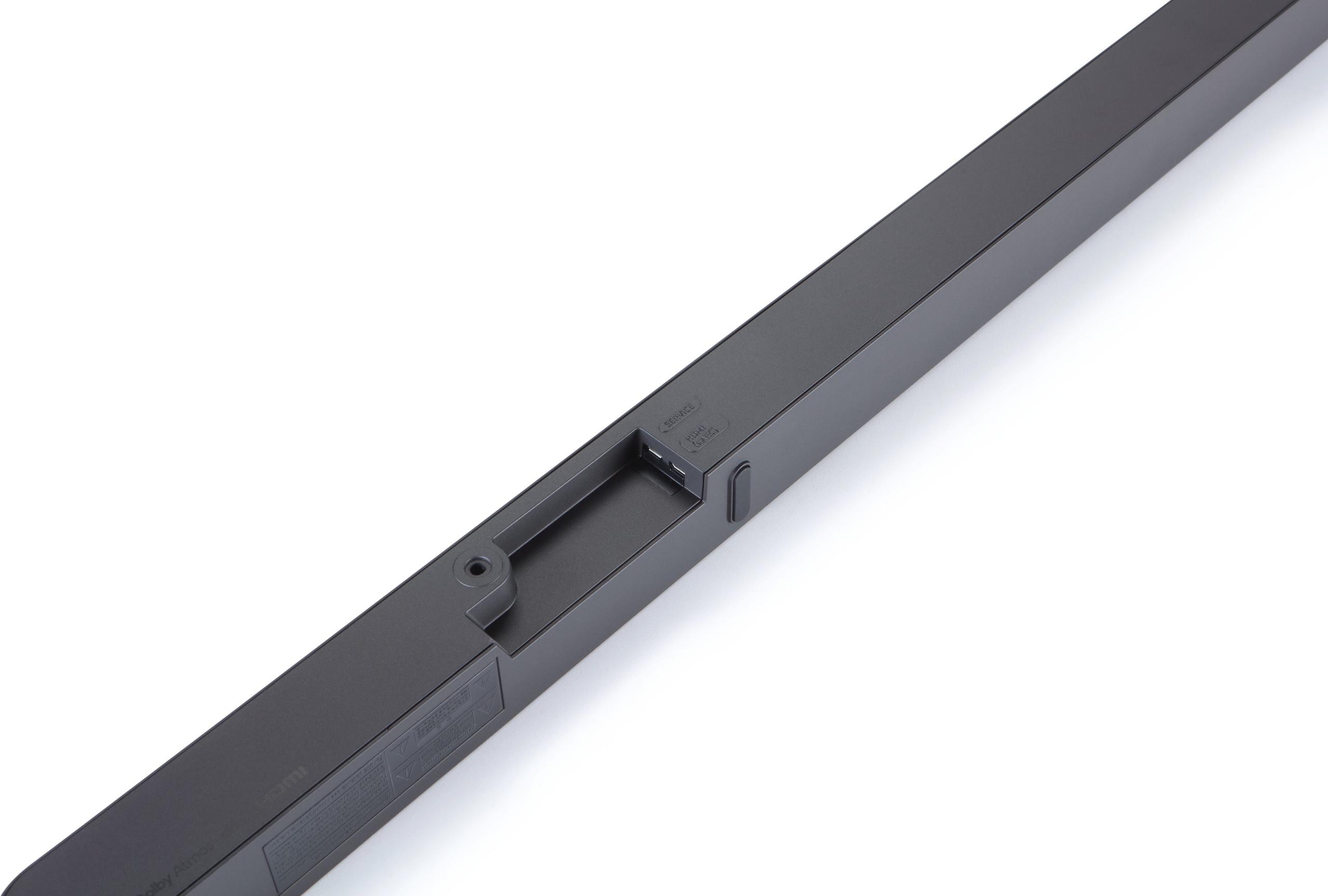
Here's where the HW-S700D shows its premium positioning most clearly. HDMI eARC (enhanced Audio Return Channel) support means you can connect the soundbar to your TV with a single cable that handles both high-quality audio transmission and control integration. You can use your TV remote to adjust soundbar volume, and the system automatically syncs power on/off states.
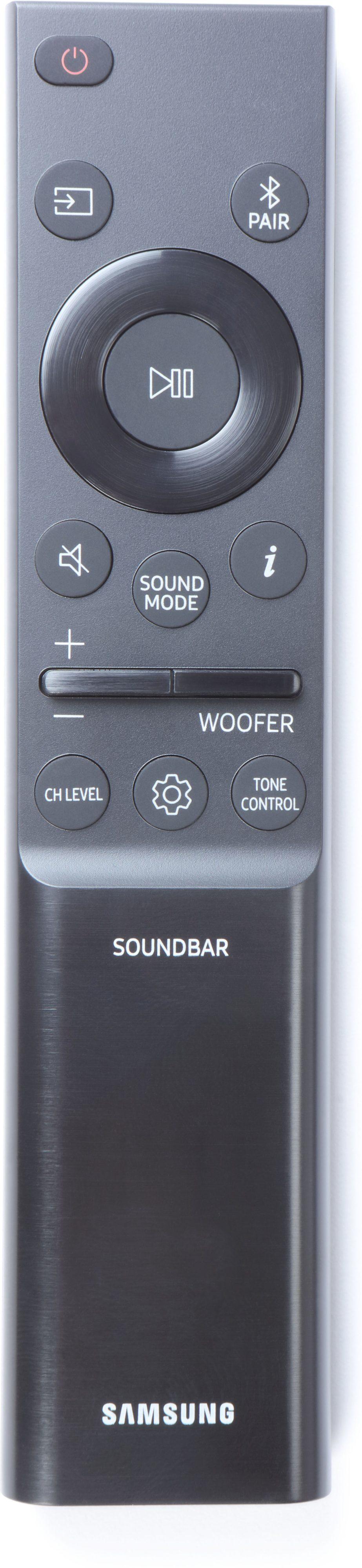
The HW-C450 relies primarily on optical digital connection, which works perfectly well for most content but limits audio format support. Optical connections can't carry the highest-quality audio formats, and you'll need to manage the soundbar with its own remote rather than your TV's.
This might seem like a minor convenience issue, but in daily use, the integration difference is substantial. The simpler your entertainment system is to operate, the more likely everyone in your household will actually use it properly.
Samsung's Q-Symphony technology, exclusive to models like the HW-S700D, represents an interesting approach to audio enhancement. Instead of replacing your TV's speakers entirely, Q-Symphony allows compatible Samsung TVs to work in harmony with the soundbar, using both sets of speakers simultaneously for a wider, more enveloping sound.
This only works with Samsung TVs, but for those who have them, users report a noticeably wider soundstage without needing additional rear speakers. The effect varies by TV model and room setup, but it's a genuine value-add that you can't get with third-party soundbars.
The HW-S700D also integrates with Samsung's SmartThings ecosystem, supporting voice assistants and offering more comprehensive streaming options including AirPlay and Chromecast. The HW-C450 keeps things simpler with basic Bluetooth connectivity.
TV design has evolved dramatically in recent years, with many flagship models now measuring less than an inch thick. This creates new challenges for audio solutions—traditional soundbars can look chunky and awkward beneath these sleek displays.
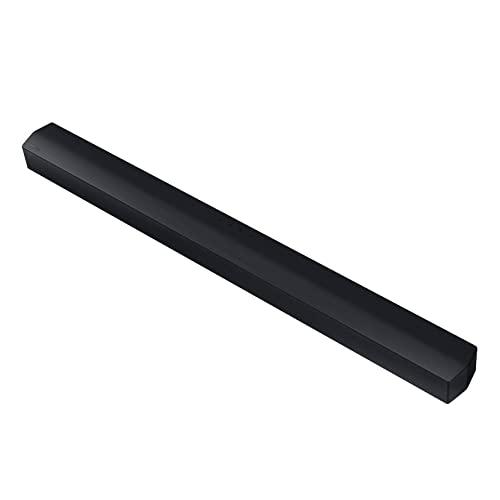
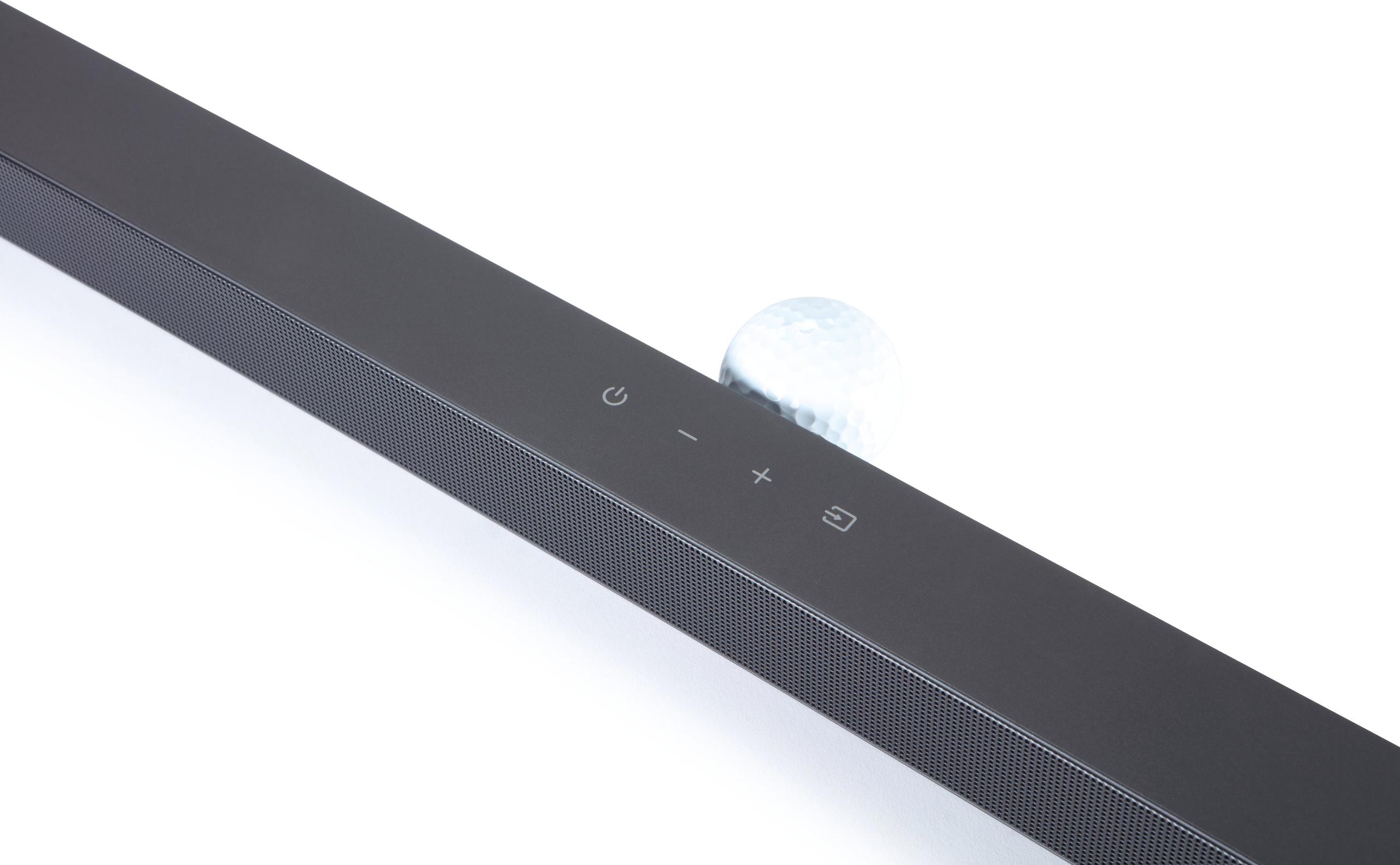
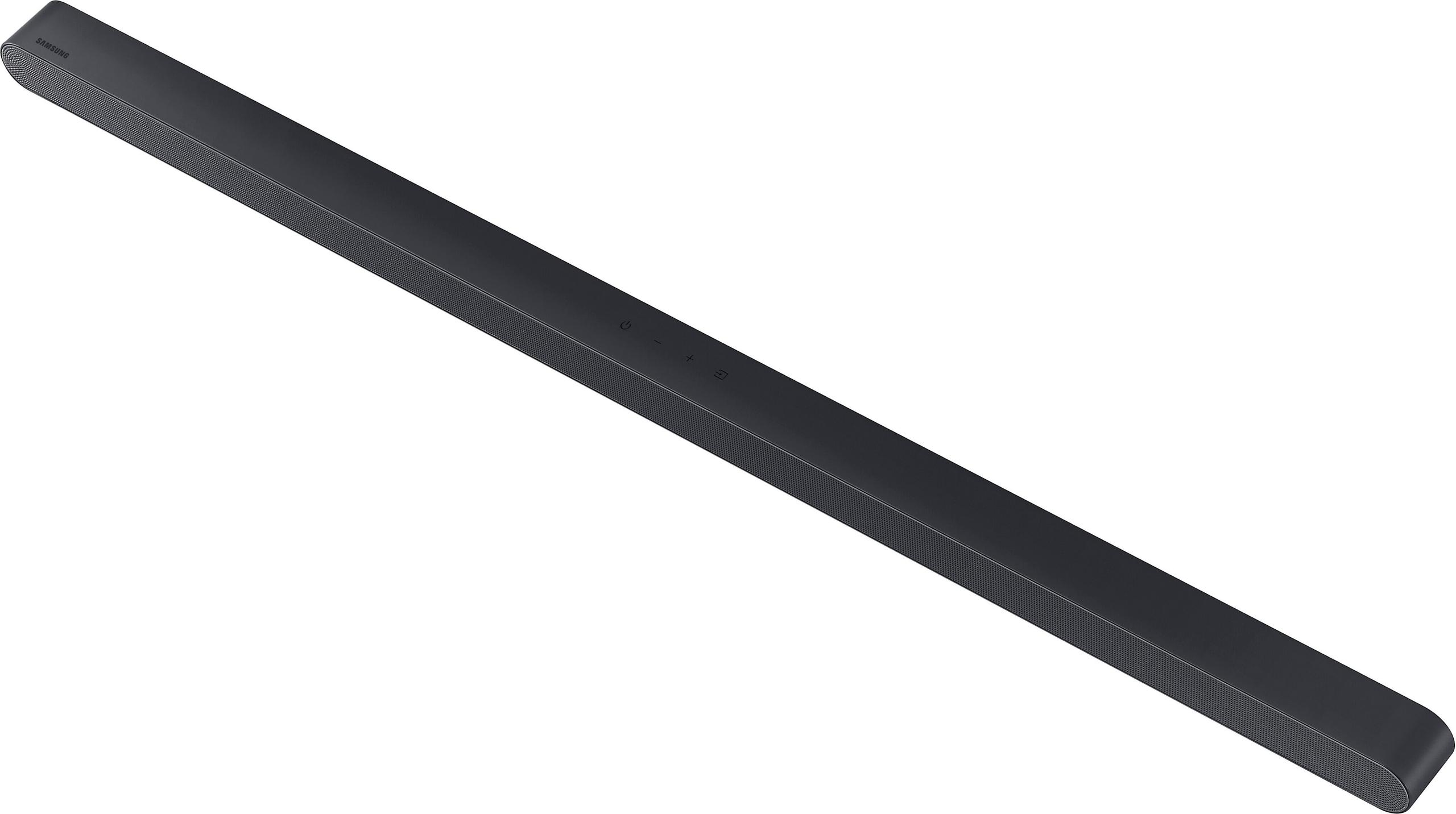
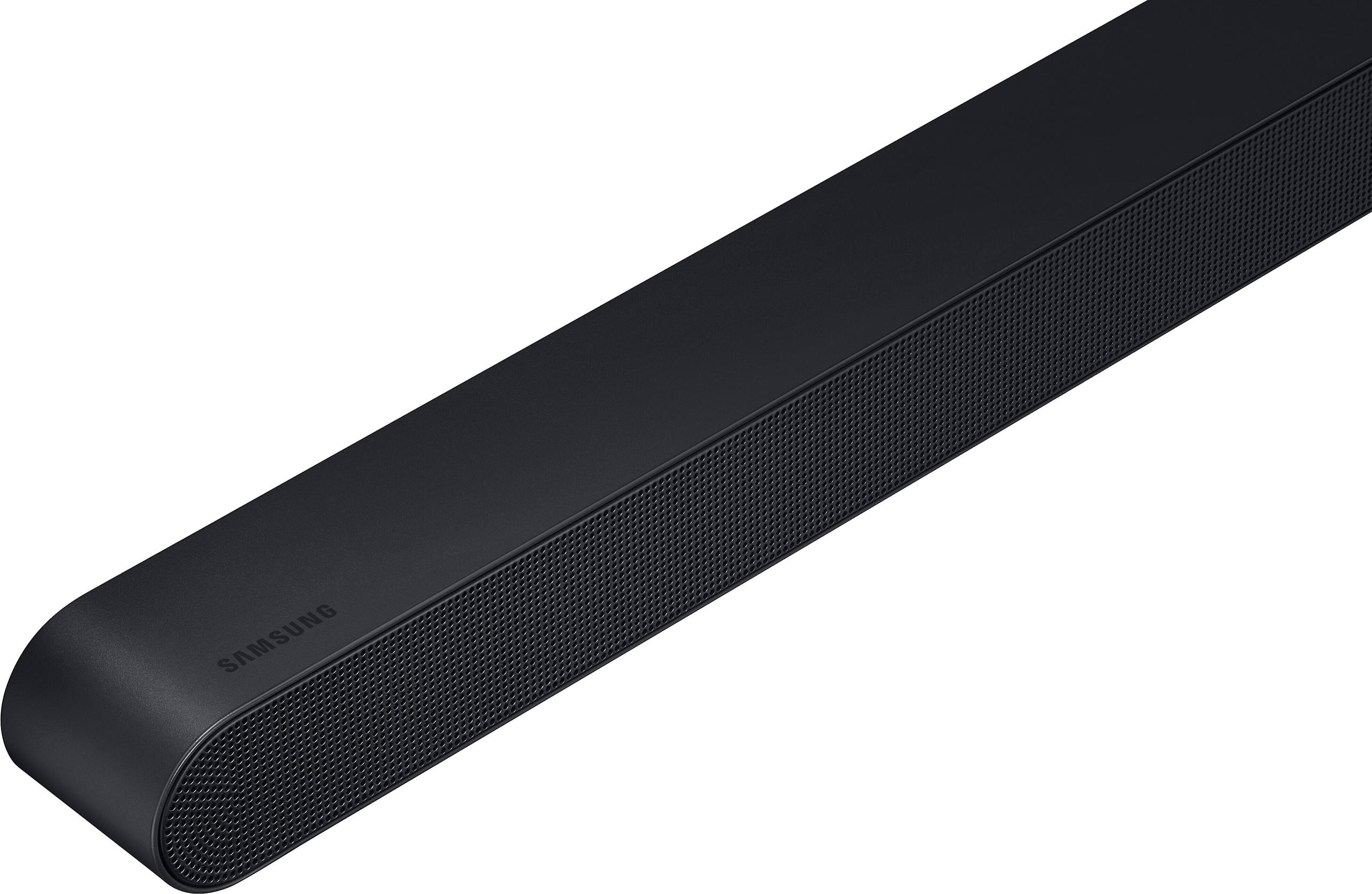
The HW-S700D's ultra-slim profile addresses this directly, measuring just 2.3 inches tall compared to the HW-C450's more conventional 5.9-inch height. When wall-mounted, the HW-S700D practically disappears, maintaining the clean aesthetic of modern entertainment centers.
The HW-C450's larger profile isn't necessarily problematic—it can actually look more substantial and purposeful in traditional entertainment centers. The choice depends on your specific setup and aesthetic preferences.
Both models include wireless subwoofers that pair automatically, eliminating the need for long speaker cables. However, the HW-S700D includes more sophisticated installation features, including automatic room calibration and orientation detection.
The orientation detection is particularly clever—the soundbar can determine whether it's wall-mounted or sitting on a surface, then adjusts its audio output accordingly. Wall-mounted speakers often need different tuning to account for boundary interactions with the wall, and automatic adjustment eliminates guesswork.
For typical TV viewing, both soundbars deliver substantial improvements over built-in TV speakers. However, the experience differs significantly. The HW-C450 provides clearer dialogue and more impactful bass, making action movies more exciting and dramas easier to follow. It's a solid, straightforward upgrade that most users find satisfying.
The HW-S700D transforms the viewing experience more dramatically. Dolby Atmos content becomes genuinely immersive, with sounds moving around and above you. Even standard content benefits from the superior dialogue clarity and more sophisticated processing. The difference is most apparent with streaming services that offer high-quality audio, where the HW-S700D can showcase its advanced capabilities.
Music reproduction reveals another performance gap. The HW-C450 handles music adequately for casual listening, but the soundstage remains relatively narrow, and detail resolution is limited. It's fine for background music or casual listening sessions.
The HW-S700D creates a more engaging musical experience with wider stereo imaging and better instrument separation. It won't replace a dedicated stereo system, but it makes music listening genuinely enjoyable rather than just acceptable.
Modern games increasingly use sophisticated audio design to provide competitive advantages and enhance immersion. The HW-S700D's Game Mode Pro automatically optimizes settings when it detects gaming consoles connected to compatible Samsung TVs, enhancing directional audio cues that can be crucial in competitive gaming.
The HW-C450 includes basic gaming modes, but without the advanced processing and TV integration, the benefits are less pronounced. For casual gaming, either soundbar improves the experience, but serious gamers will appreciate the HW-S700D's more sophisticated approach.
At the time of writing, the HW-S700D typically costs about 2.5 times as much as the HW-C450. That's a substantial price difference that demands justification. The question becomes whether the additional features and performance improvements warrant the extra cost.
For buyers focused purely on basic audio improvement, the HW-C450 delivers excellent value. It solves the fundamental problem of poor TV audio with minimal complexity and reasonable cost. The wireless subwoofer adds genuine bass impact, and the overall system sounds significantly better than any TV's built-in speakers.
The HW-S700D's premium reflects its advanced features, superior audio processing, and premium design integration. If you value the latest audio technologies, seamless TV integration, and future-proof connectivity, the additional cost becomes more justifiable.
Technology evolution makes this calculation more complex. The HW-C450's simpler connectivity might limit its compatibility with future TV and streaming developments. Optical connections work fine today, but as streaming services continue adopting advanced audio formats, HDMI connectivity becomes increasingly valuable.
The HW-S700D's advanced features and HDMI connectivity provide better future-proofing. As more content supports Dolby Atmos and TVs become more sophisticated, this soundbar can grow with your entertainment system rather than becoming a limiting factor.
If you're building a dedicated home theater space, both soundbars can serve as stepping stones toward more elaborate audio systems. The HW-S700D offers expandability options, including compatibility with Samsung's wireless rear speaker kits, allowing you to create a more complete surround system without running additional cables.
For serious home theater enthusiasts, neither soundbar represents the ultimate solution—dedicated multi-channel systems with separate components will always offer superior performance. However, both provide substantial improvements over TV audio while maintaining the simplicity that makes soundbars appealing.
The HW-S700D's Dolby Atmos support makes it more suitable for home theater applications where immersive audio is a priority. The HW-C450 works well for more casual home theater setups where convenience and basic improvement matter more than cutting-edge audio technology.
Your primary goal is improving TV audio without spending premium money or dealing with complexity. This soundbar excels in smaller rooms where its straightforward approach and decent bass response create satisfying improvements. It's perfect for apartments, bedrooms, or secondary TV locations where good-enough audio makes more sense than audiophile-grade performance.
The HW-C450 also makes sense if you're not invested in the Samsung TV ecosystem and don't need advanced integration features. Its simplicity becomes an advantage when you want something that just works without requiring extensive setup or configuration.
You want the best audio experience that a soundbar can reasonably provide, and you're willing to invest in advanced features that enhance daily use. The superior dialogue clarity alone justifies the premium for many users, especially those who frequently watch dialogue-heavy content or struggle with hearing.
The HW-S700D is particularly compelling if you own a Samsung TV and can take advantage of Q-Symphony and other integration features. The seamless operation and advanced audio processing create a premium entertainment experience that justifies the higher cost.
This soundbar also makes sense if you're planning to keep it for many years, as its advanced connectivity and processing capabilities provide better future-proofing as streaming services and TV technology continue evolving.
Both soundbars succeed in their intended markets, but they serve different needs and expectations. The HW-C450 proves that significant audio improvements don't require premium investment, while the HW-S700D demonstrates how advanced technology and thoughtful design can transform your entire entertainment experience. Your choice depends on your priorities, budget, and how important audio quality is to your viewing enjoyment.
| Samsung HW-C450 2.1ch Soundbar | Samsung HW-S700D 3.1 Channel Slim Soundbar |
|---|---|
| Channel Configuration - Determines dialogue clarity and sound separation | |
| 2.1 channels (left, right, subwoofer) | 3.1 channels (left, right, center, subwoofer) |
| Total Power Output - Affects maximum volume and dynamic range | |
| 300W (higher number, but less refined amplification) | 250W (lower number, but higher quality drivers and processing) |
| Surround Sound Technology - Creates immersive audio experience | |
| DTS Virtual:X (simulated surround using processing tricks) | Dolby Atmos (object-based 3D audio with height effects) |
| Primary Connectivity - Determines audio quality and TV integration | |
| Optical digital input (good quality, separate remote needed) | HDMI eARC (highest quality, single remote control) |
| Design Profile - Important for modern thin TV aesthetics | |
| Standard height (5.9" tall, may obstruct thin TV screens) | Ultra-slim (2.3" tall, virtually invisible when wall-mounted) |
| Smart TV Integration - Enhances convenience and audio performance | |
| Basic Bluetooth connection only | Q-Symphony (Samsung TVs work with soundbar speakers together) |
| Voice Assistant Support - Adds smart home functionality | |
| None | Alexa, Google Assistant, AirPlay, Chromecast built-in |
| Room Calibration - Automatically optimizes sound for your space | |
| Manual adjustment only | SpaceFit Sound Pro (uses built-in microphone to analyze room) |
| Wireless Subwoofer - Adds impactful bass without cable runs | |
| Yes, 6" driver with bass-reflex design | Yes, 6" driver with more refined tuning and integration |
| Expandability - Option to add rear speakers later | |
| Not compatible with wireless rear speakers | Compatible with Samsung SWA-9200S wireless rear speakers |
| Target User - Best suited for different needs and budgets | |
| Budget-conscious users wanting basic TV audio improvement | Premium users prioritizing dialogue clarity and advanced features |
The key difference is channel configuration and audio technology. The Samsung HW-C450 is a 2.1-channel system with DTS Virtual:X processing, while the Samsung HW-S700D features 3.1 channels with a dedicated center speaker and Dolby Atmos support. This means the HW-S700D delivers significantly clearer dialogue and more immersive surround sound effects.
The Samsung HW-S700D is superior for dialogue clarity due to its dedicated center channel speaker that's specifically tuned for human voice frequencies. The Samsung HW-C450 relies on virtual processing to enhance speech, which works but isn't as effective as having a physical center speaker dedicated to dialogue reproduction.
Yes, both the Samsung HW-C450 and Samsung HW-S700D include wireless subwoofers that pair automatically with the main soundbar. This eliminates the need for long speaker cables while adding impactful bass to movies and music. The HW-S700D's subwoofer offers more refined tuning and better integration with the main speakers.
The Samsung HW-S700D offers superior Samsung TV integration with features like Q-Symphony, which allows the TV speakers and soundbar to work together for wider sound coverage. It also supports HDMI eARC for single-cable connection and unified remote control. The Samsung HW-C450 provides basic compatibility but lacks these advanced integration features.
Yes, both models can be wall-mounted, but the Samsung HW-S700D is specifically designed for this with its ultra-slim 2.3-inch profile that won't obstruct modern thin TVs. The Samsung HW-C450 is mountable but its 5.9-inch height may block part of your TV screen or look bulky beneath ultra-thin displays.
The Samsung HW-S700D offers superior gaming performance with Game Mode Pro that automatically optimizes audio when gaming consoles are connected to compatible Samsung TVs. It provides better directional audio cues crucial for competitive gaming. The Samsung HW-C450 includes basic gaming modes but lacks the advanced processing and TV integration features.
Only the Samsung HW-S700D supports Dolby Atmos, which creates genuine 3D audio with height effects and object-based sound positioning. The Samsung HW-C450 uses DTS Virtual:X processing to simulate surround effects, which is less sophisticated than true Dolby Atmos but still provides an improvement over basic stereo sound.
The Samsung HW-C450 has a higher power rating at 300W compared to the Samsung HW-S700D's 250W. However, power ratings don't tell the whole story – the HW-S700D delivers more controlled and precise audio despite lower peak wattage, thanks to superior drivers and amplification quality.
Only the Samsung HW-S700D is compatible with Samsung's wireless rear speaker systems, allowing you to expand to true surround sound later. The Samsung HW-C450 doesn't support wireless rear speaker expansion, limiting your upgrade options if you want to enhance your home theater setup in the future.
The Samsung HW-C450 works well in smaller spaces like bedrooms or apartments where its straightforward setup and modest footprint won't overwhelm the room. However, the Samsung HW-S700D's room calibration features actually make it adapt better to any space size, automatically optimizing sound based on your room's acoustics.
The Samsung HW-C450 offers optical digital input, USB, and Bluetooth connectivity – sufficient for basic use but limited in audio format support. The Samsung HW-S700D includes HDMI eARC, multiple streaming options (AirPlay, Chromecast), voice assistant support, and SmartThings integration, providing much more comprehensive connectivity and smart features.
The Samsung HW-C450 provides excellent value for budget-conscious buyers who want significant audio improvement without premium features. The Samsung HW-S700D costs significantly more but offers substantially better audio quality, advanced features, and future-proof connectivity that justify the premium for users prioritizing superior performance and integration capabilities.
We've done our best to create useful and informative comparisons to help you decide what product to buy. Our research uses advanced automated methods to create this comparison and perfection is not possible - please contact us for corrections or questions. These are the sites we've researched in the creation of this article: e-catalog.com - alibaba.com - smart.dhgate.com - greentoe.com - requiremints.com - versus.com - bhphotovideo.com - rtings.com - soundmachine.com.mt - samsung.com - samsung.com - youtube.com - bhphotovideo.com - newegg.com - images.samsung.com - bestbuy.com - samsung.com - youtube.com - jsappliance.com - gadgetsleo.com - youtube.com - saraappliance.com - walmart.com - crutchfield.com - samsung.com - bestbuy.com - avsforum.com - walts.com - samsung.com - samsung.com - videoandaudiocenter.com - samsung.com - samsung.com - samsung.com - pcrichard.com

Privacy Policy
Terms and Conditions - Affiliate Policy
Home Security
© Copyright 2008-2026.
11816 Inwood Rd #1211, Dallas, TX 75244