




Finding the right soundbar can feel overwhelming with so many options promising to transform your TV experience. Today we're diving deep into two popular choices that take distinctly different approaches: the Bose Smart Soundbar 1100 and the Samsung HW-S700D. Both launched in 2024, but they represent very different philosophies about what makes great TV audio.
Before jumping into specifics, let's talk about what actually makes a soundbar worth your money. The biggest game-changer is dialogue clarity – how well you can understand what actors are saying without constantly reaching for the remote. Next comes spatial audio, which creates the illusion that sounds are coming from around and above you, not just from a bar sitting below your TV.
Bass response is equally crucial. Most TV speakers produce virtually no low-end frequencies, so a good soundbar needs to handle everything from subtle background music to explosion rumbles. Smart features have become increasingly important too, especially voice control and seamless streaming from your phone or tablet.
The physical design matters more than you might think. A soundbar that blocks your TV's sensor or looks awkward in your space becomes a daily annoyance. Finally, there's the question of expandability – whether you can add components later to build a more complete surround sound system.
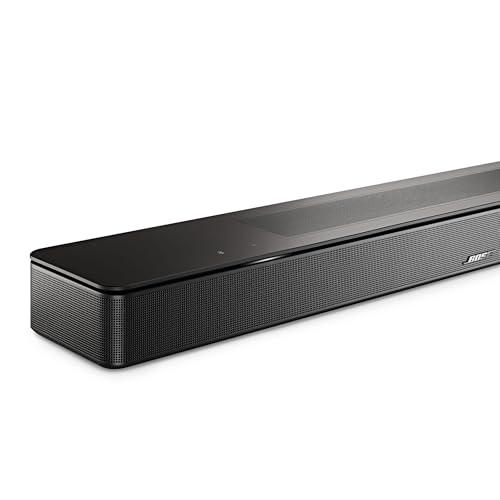
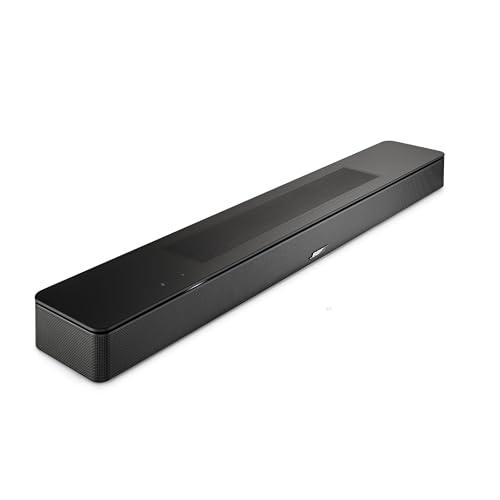
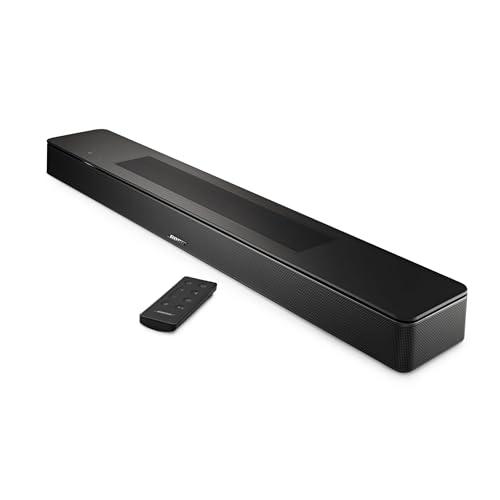
The Bose Smart Soundbar 1100 represents Bose's "intelligent audio" approach. Released in 2024, it packs sophisticated processing technologies into a remarkably compact package. At roughly 27 inches wide and just over 2 inches tall, it's designed to disappear visually while delivering outsized audio performance through clever engineering.
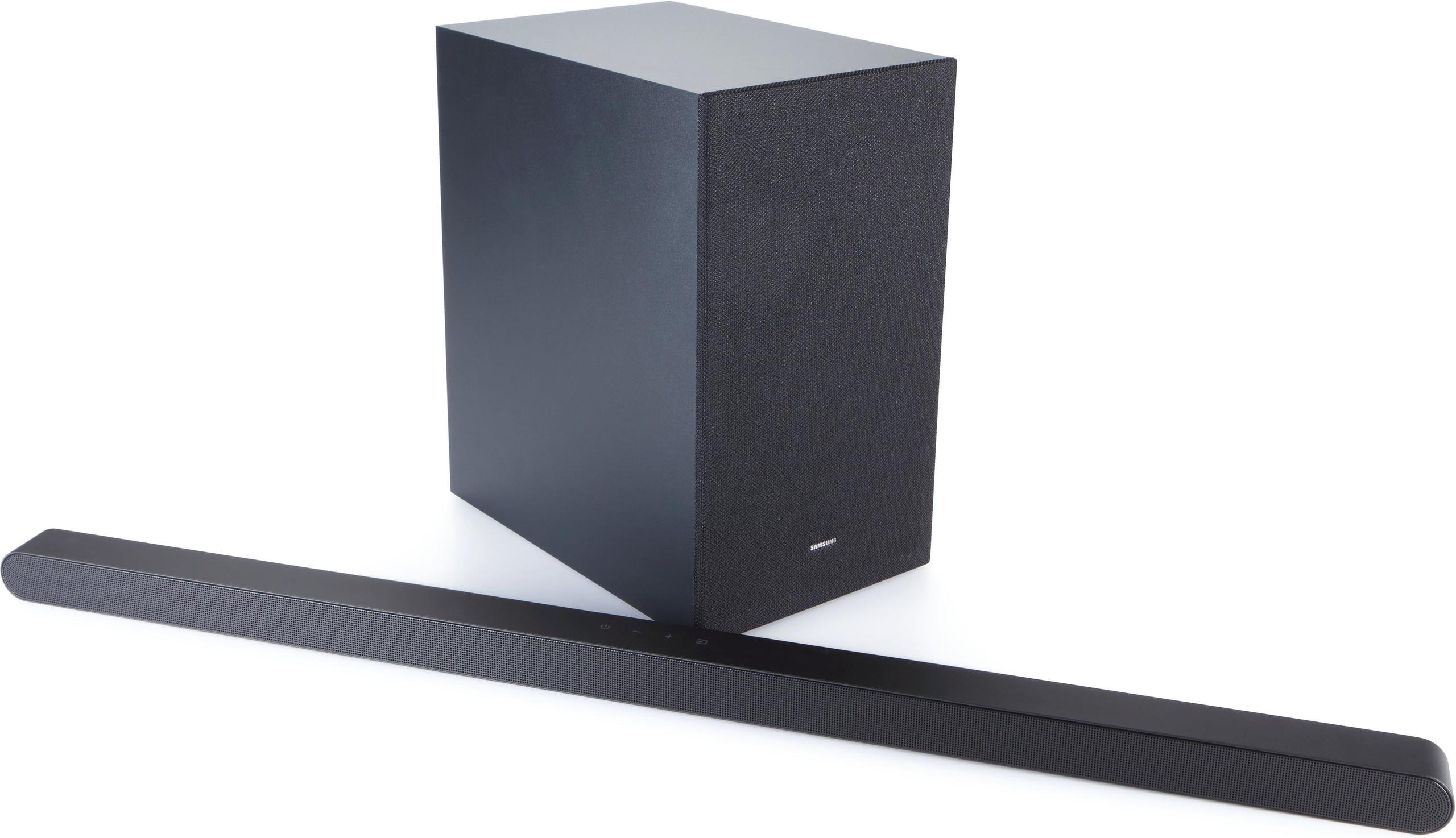
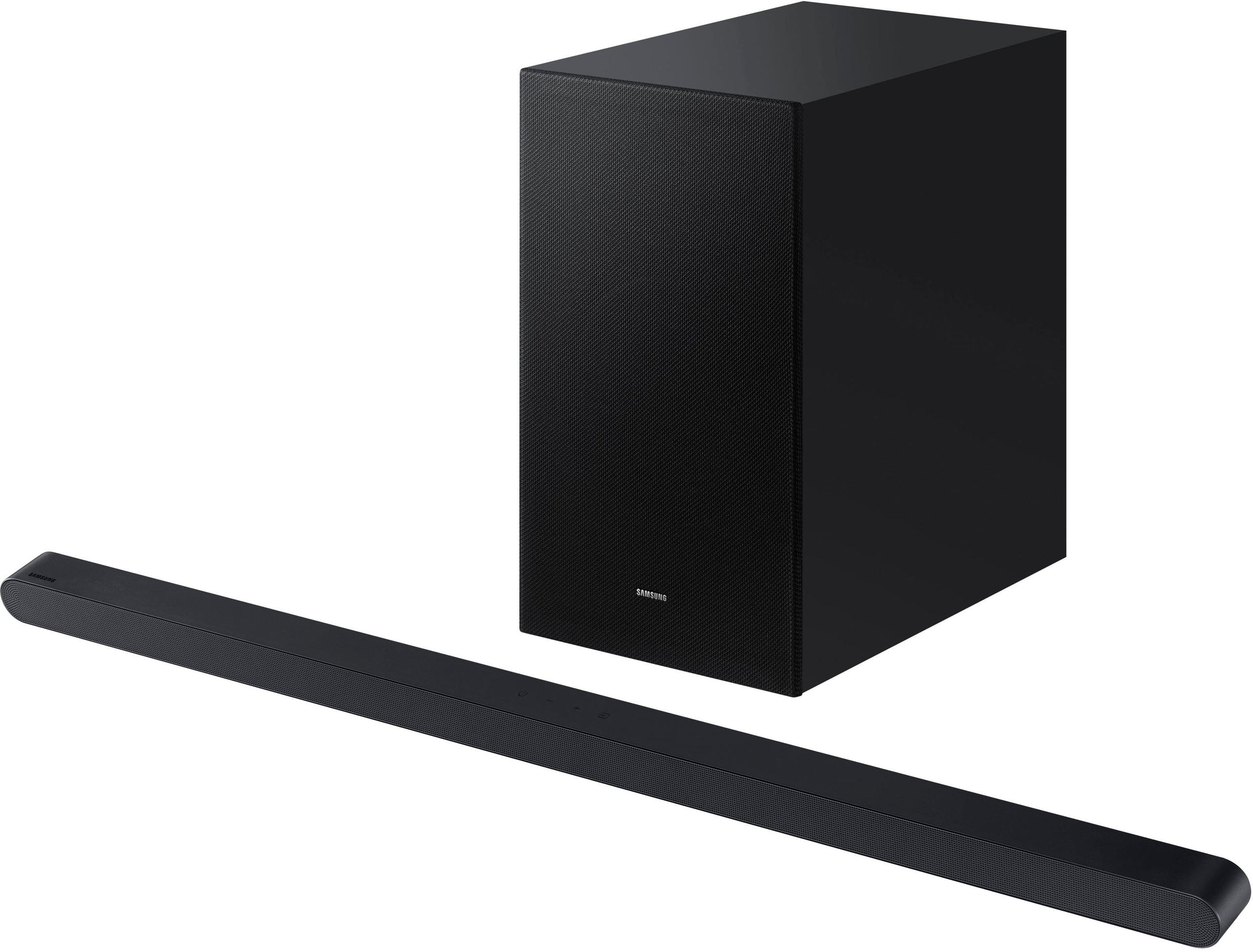
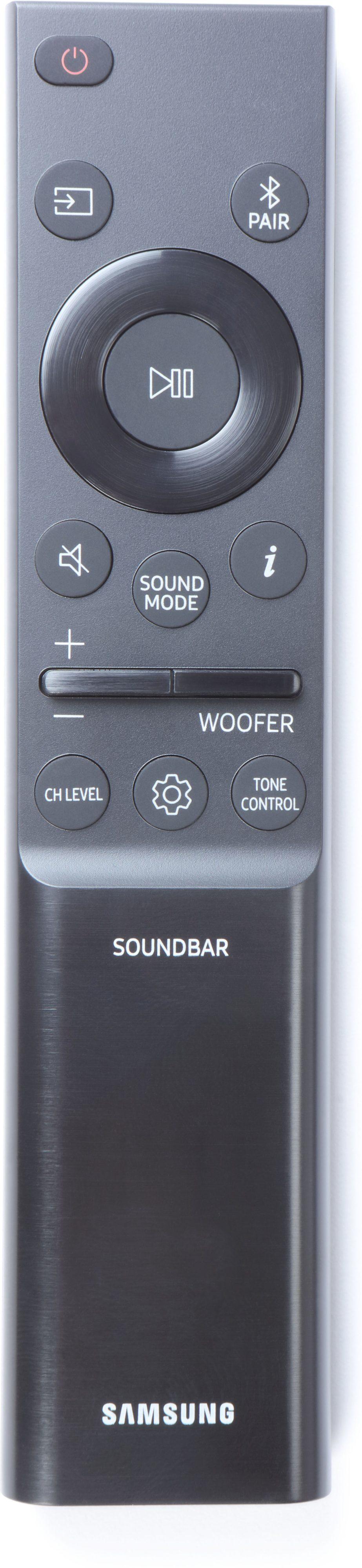
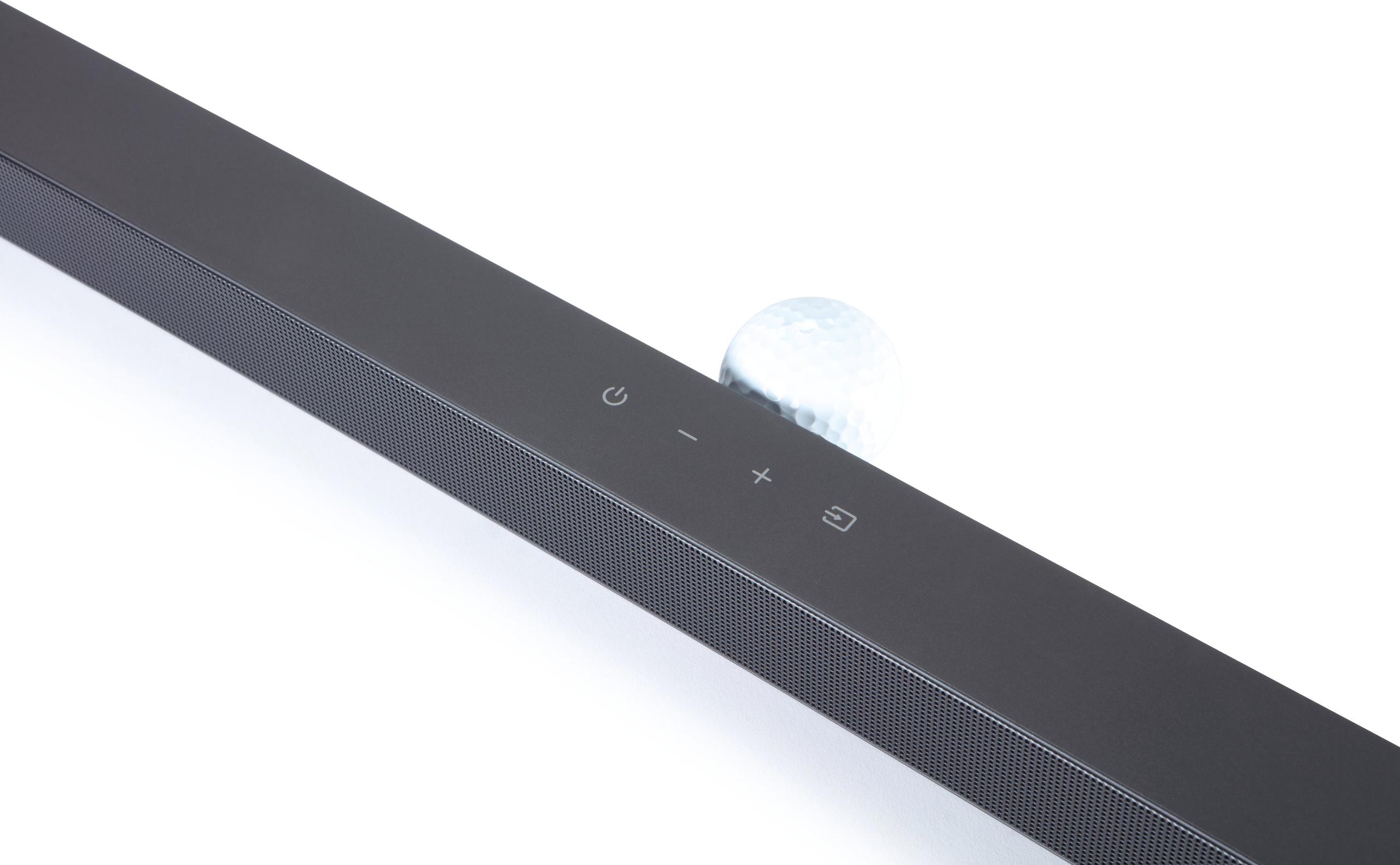
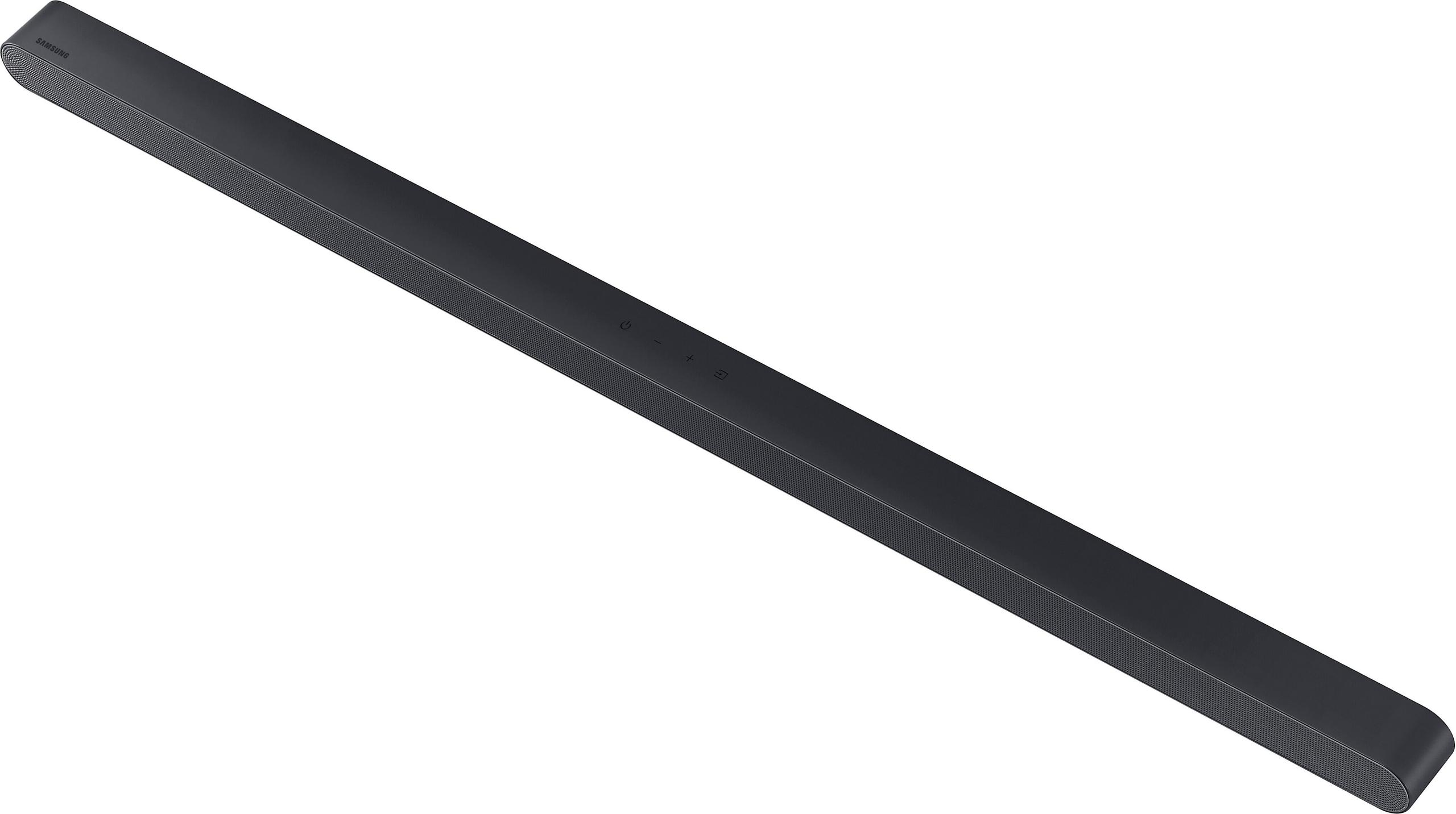
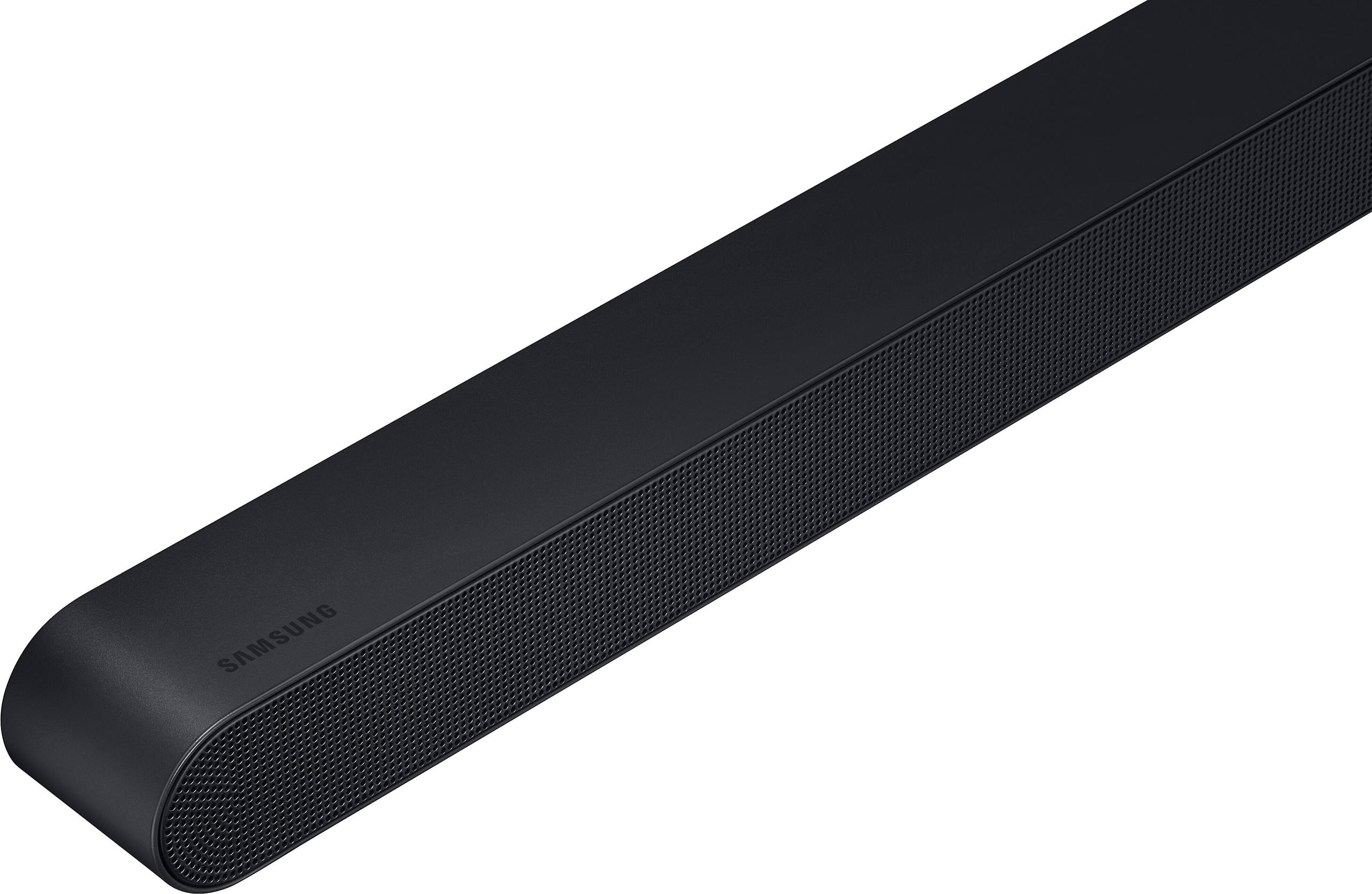
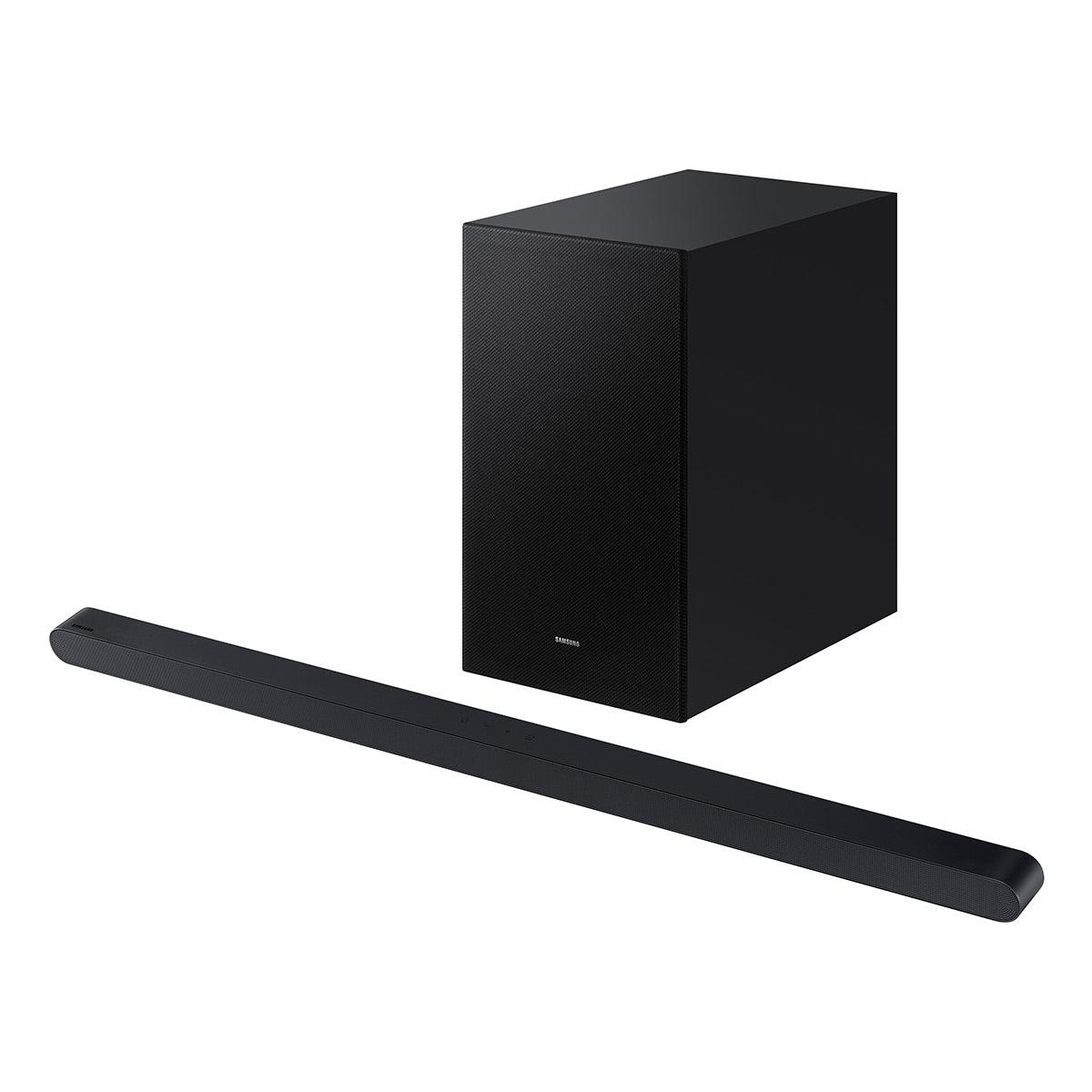
The Samsung HW-S700D takes a more traditional "complete system" approach. Also from 2024, Samsung includes a wireless subwoofer right in the box and focuses heavily on integration with Samsung TVs and smart home ecosystems. It's slightly larger but still maintains a slim profile that works with most setups.
These different philosophies create interesting trade-offs that matter depending on your priorities and room setup.
Nothing ruins a movie night like constantly asking "what did they say?" The Bose Smart Soundbar 1100 attacks this problem with AI Dialogue Mode, which automatically detects when characters are speaking and adjusts the audio mix in real-time. This isn't just a simple voice boost – it's intelligent processing that maintains the overall audio balance while making dialogue cut through more clearly.
The system uses something called PhaseGuide technology, which directs sound beams throughout your room using precisely positioned transducers (tiny speakers). Think of it like having multiple invisible speakers placed around your space, each handling different parts of the audio spectrum. The center tweeter – a small, specialized speaker designed for high frequencies – ensures voices stay crisp and detailed.
The Samsung HW-S700D takes a more conventional but equally effective approach with its dedicated center channel. This is a separate speaker specifically designed to handle dialogue, plus Active Voice Amplifier (AVA) technology that analyzes each scene and emphasizes voices when needed. Having that dedicated center channel means voices get their own dedicated audio pathway, which often translates to clearer speech.
Based on user feedback and expert reviews, both systems excel at dialogue clarity, but in different ways. The Bose system feels more intelligent and automatic, while the Samsung provides that classic center-channel separation that home theater enthusiasts appreciate.
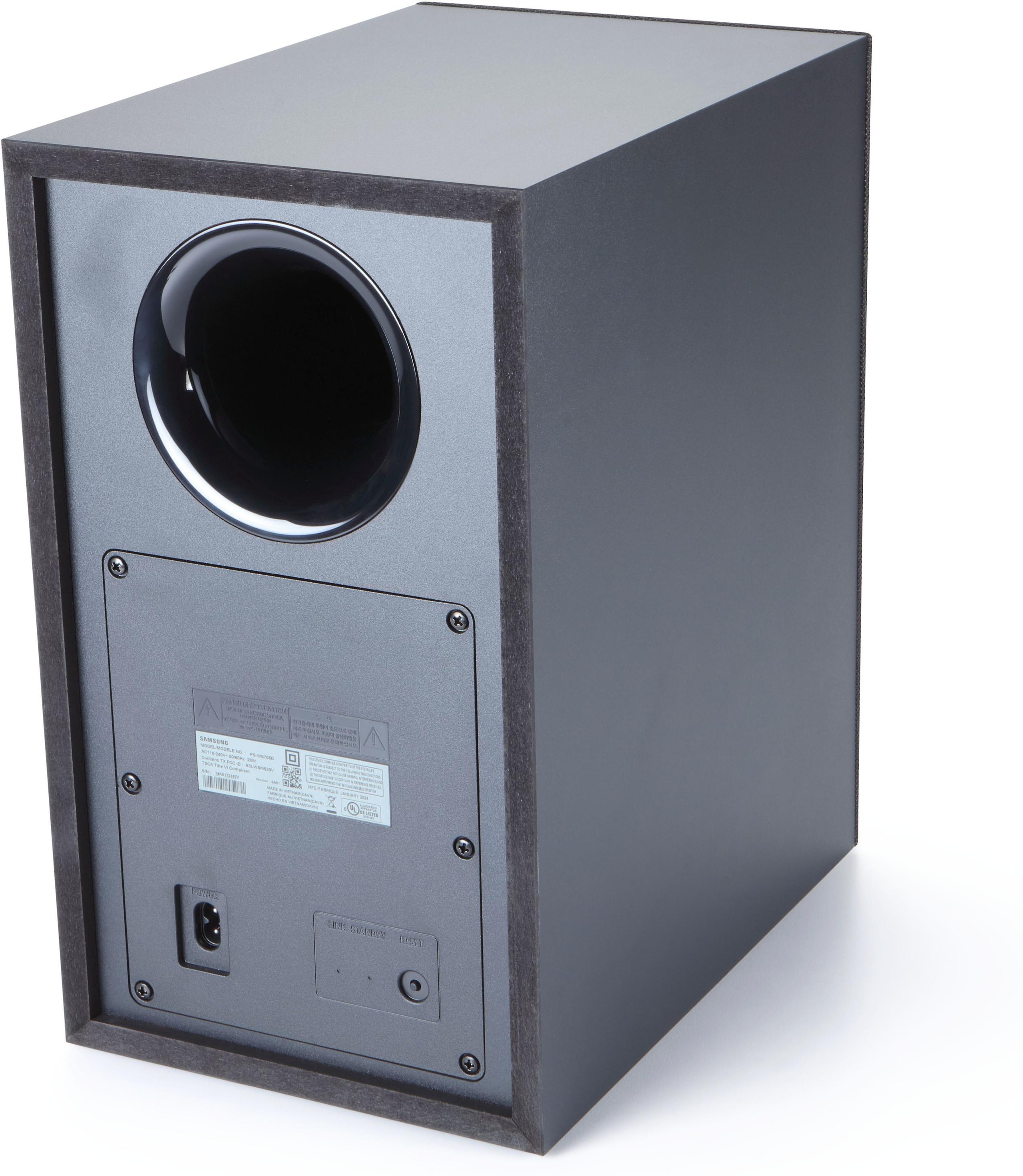
Here's where these soundbars diverge significantly. The Samsung HW-S700D includes a 6-inch wireless subwoofer that connects automatically to the main bar. This dedicated bass speaker can reproduce those deep, room-shaking frequencies that make action movies exciting and music feel full-bodied. The subwoofer uses a bass reflex design (also called ported), which uses a carefully tuned opening to enhance low-frequency output.
The Bose Smart Soundbar 1100 relies on internal drivers and QuietPort technology – a proprietary design that reduces air turbulence in the ports to minimize distortion. While this produces impressive bass for such a compact unit, it simply cannot match the deep extension of a dedicated subwoofer. Bose addresses this by offering optional Bass Modules as separate purchases, but that's additional cost and complexity.
For most content – TV shows, news, casual music listening – the Bose handles bass adequately. But if you watch a lot of action movies or listen to bass-heavy music, the Samsung's included subwoofer provides a noticeably more complete audio experience right out of the box.
Both soundbars support Dolby Atmos, the spatial audio format that places sounds in three-dimensional space around you. However, they achieve this differently, and the results vary.
The Bose Smart Soundbar 1100 uses two up-firing drivers that bounce sound off your ceiling to create height effects, plus TrueSpace processing that analyzes non-Atmos content and creates spatial effects from regular stereo or surround soundtracks. This processing is quite sophisticated – it can take a stereo music track and create a sense of width and height that wasn't originally there.
The Samsung HW-S700D offers Wireless Dolby Atmos, particularly when paired with Samsung TVs. The real magic happens with Q-Symphony technology, which synchronizes your Samsung TV's built-in speakers with the soundbar to create a larger, more enveloping soundstage. Instead of turning off your TV speakers (like most soundbars require), Q-Symphony uses them as additional audio channels.
The spatial audio experience depends heavily on your room layout and ceiling height. Based on consensus reviews, the Samsung system tends to create a wider, more expansive soundstage, especially with Q-Symphony engaged. The Bose system provides more precise sound placement but within a smaller overall envelope.
The Bose Smart Soundbar 1100 includes built-in Amazon Alexa with Voice4Video capability. This is significant – Voice4Video extends Alexa's control beyond the soundbar to your TV and cable box, so you can say "Alexa, turn on Netflix" and have it actually work. The soundbar includes noise-rejecting microphones that can hear you even when audio is playing loudly.
For streaming, the Bose supports virtually everything: Apple AirPlay 2, Google Chromecast, Spotify Connect, plus direct integration with services like Amazon Music, Pandora, and SiriusXM. The Bose Music app ties everything together with multi-room audio capabilities, letting you group the soundbar with other Bose speakers throughout your home.
The Samsung HW-S700D integrates deeply with Samsung's SmartThings ecosystem, which can be incredibly powerful if you're already invested in Samsung devices. It supports Alexa and Google Assistant (though not built-in like the Bose), plus AirPlay and Chromecast for streaming.
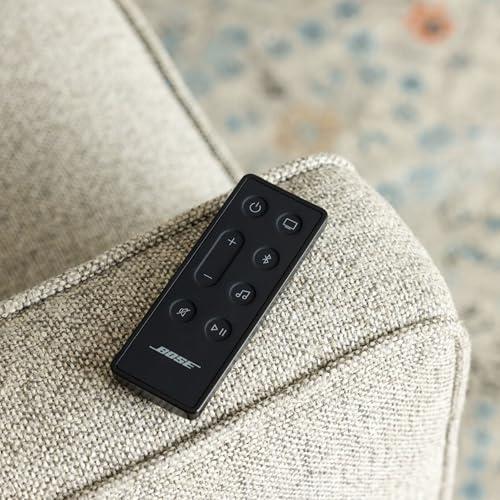
Where Samsung really shines is the One Remote functionality – if you have a Samsung TV, you can control the soundbar with your existing TV remote without any additional setup. The SmartThings app provides sophisticated control over audio settings, including a 7-band equalizer for fine-tuning the sound signature.
The Samsung HW-S700D includes Game Mode Pro, which optimizes audio processing for gaming with lower latency and enhanced directional audio cues. This can genuinely improve your gaming experience by making footsteps and environmental sounds more distinct and localized.
The Bose Smart Soundbar 1100 doesn't have a dedicated gaming mode, but its general audio processing tends to handle gaming well thanks to the PhaseGuide technology's precise sound placement.
Modern soundbars need to work well in different rooms, from small apartments to large living rooms. The Samsung HW-S700D includes SpaceFit Sound Pro, which uses built-in microphones to analyze your room's acoustics and automatically adjust the audio processing. This room correction happens automatically and can compensate for challenging acoustics like hard surfaces or unusual room shapes.
The Bose Smart Soundbar 1100 uses TrueSpace processing to adapt audio for your space, but it's less automated than Samsung's approach. There's a Wall EQ setting that adjusts the sound when the bar is wall-mounted, but it lacks the active room analysis that Samsung provides.
Based on user reports, Samsung's room adaptation tends to produce more noticeable improvements in challenging acoustic environments.
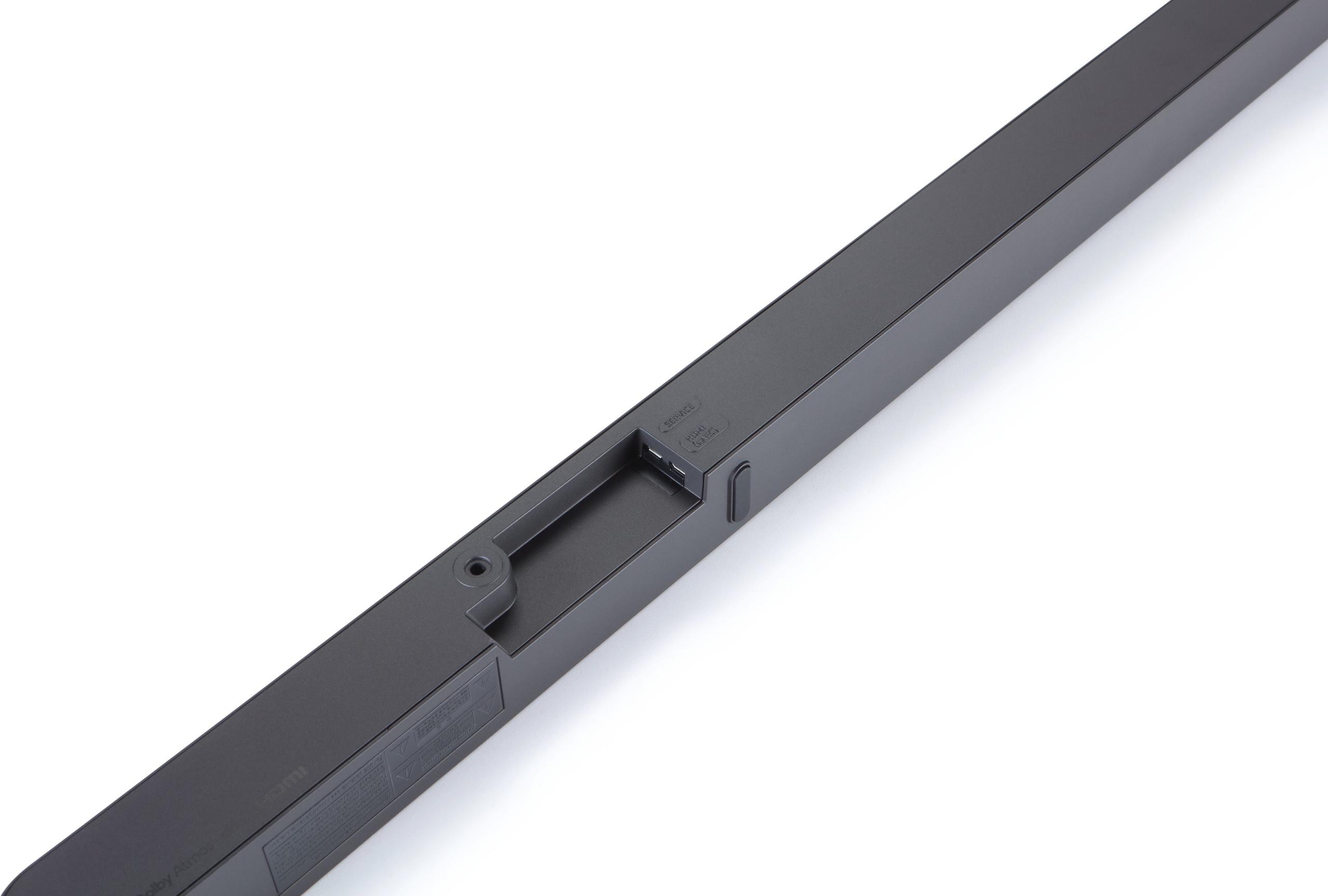
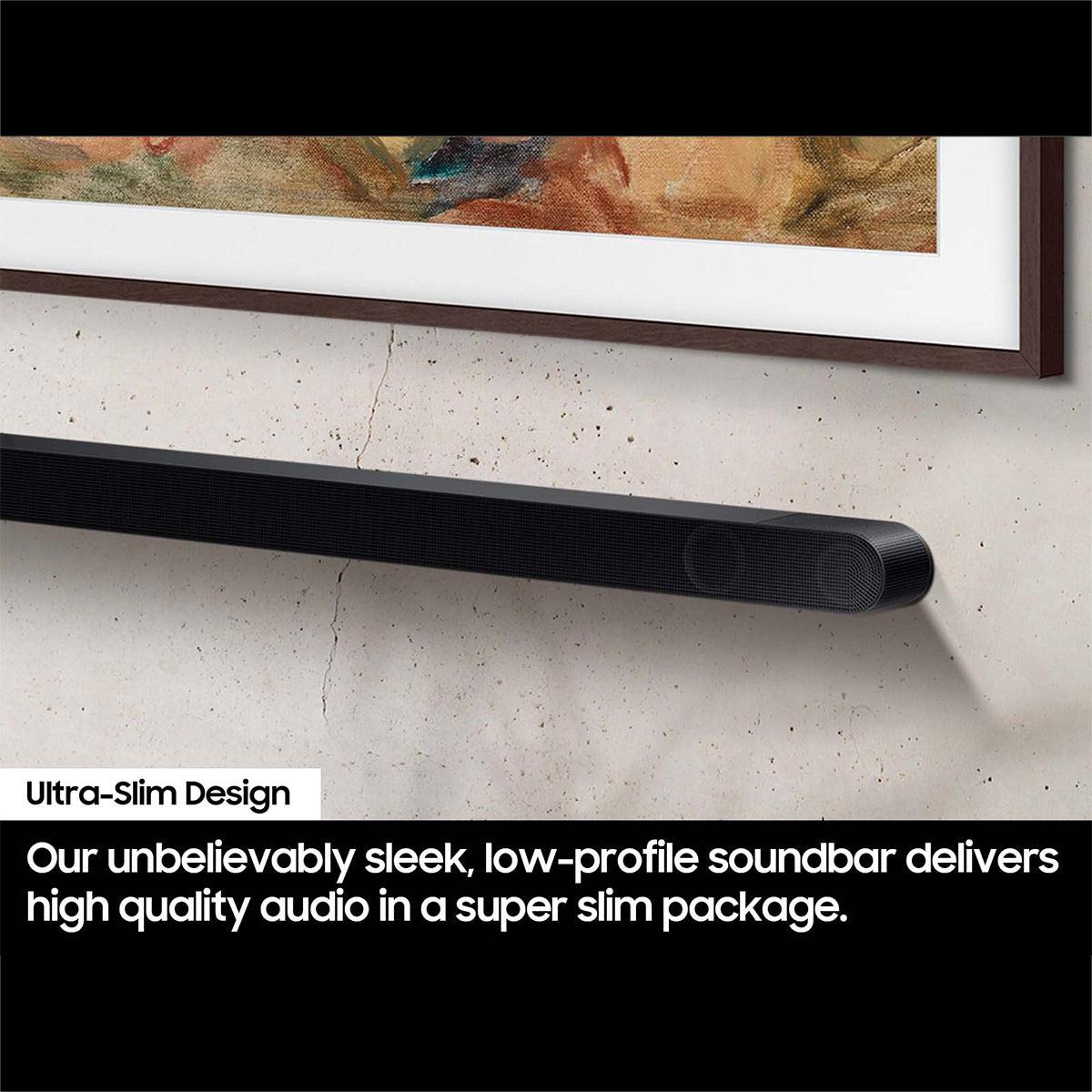
The Bose Smart Soundbar 1100 prioritizes discreteness with its ultra-compact footprint. At just over 2 inches tall, it fits under virtually any TV without blocking sensors or looking disproportionate. The build quality feels premium with metal construction and a matte black finish that resists fingerprints.
The Samsung HW-S700D is slightly larger but includes a wall-mounting kit and maintains clean lines that complement modern TVs. The wireless subwoofer gives you flexibility in placement – you can tuck it beside furniture or in a corner where it won't be visually intrusive.
Both systems handle cable management well, though the Samsung requires positioning for the subwoofer, which some people find challenging in smaller spaces.
At the time of writing, these soundbars sit in different price tiers, with the Samsung HW-S700D positioned as the more affordable option while the Bose Smart Soundbar 1100 commands a premium price.
The Samsung's value proposition is straightforward: you get a complete 3.1-channel system with wireless subwoofer, comprehensive smart features, and excellent Samsung TV integration. For many buyers, this represents better immediate value since you're getting full-range audio without additional purchases.
The Bose asks you to pay more upfront for superior dialogue processing, premium build quality, and sophisticated audio technologies. However, to match the Samsung's bass response, you'd need to add a Bose Bass Module, which significantly increases the total investment.
The expandability paths differ too. Samsung offers wireless rear speakers as optional additions, creating an affordable route to true surround sound. Bose's expansion options are more premium-focused, with high-quality but expensive Bass Modules and surround speakers that can create an exceptional but costly system.
For dedicated home theater use, these soundbars reveal their different strengths. The Samsung HW-S700D's included subwoofer provides the foundation that action movies demand. The Q-Symphony technology, when paired with a compatible Samsung TV, creates genuinely impressive spatial audio that can rival more expensive systems.
The Bose Smart Soundbar 1100 excels with dialogue-heavy content like dramas and documentaries, where its AI processing really shines. However, for blockbuster movie nights, the lack of deep bass becomes more apparent unless you add a subwoofer.
Both systems handle the technical aspects of home theater well, with HDMI eARC support for high-quality audio passthrough from your TV. The Samsung's broader format support (including DTS) gives it an edge for certain content.
The Samsung HW-S700D makes the most sense if you want complete, satisfying audio right out of the box. It's particularly compelling for Samsung TV owners who can take advantage of Q-Symphony and One Remote integration. The included subwoofer means you won't feel like you're missing something fundamental, and the room calibration helps it perform well in various spaces.
The Bose Smart Soundbar 1100 justifies its premium if you prioritize dialogue clarity and sophisticated audio processing. It's ideal for people who watch a lot of dialogue-heavy content, appreciate premium build quality, and don't mind potentially adding components later. The compact size also makes it perfect for smaller spaces or minimalist setups.
For apartment dwellers or smaller rooms, the Bose's compact design and intelligent processing often provide better results than the Samsung's larger system. For larger spaces or dedicated home theater rooms, the Samsung's complete system with subwoofer typically delivers more satisfying results.
Both the Bose Smart Soundbar 1100 and Samsung HW-S700D represent solid choices that will dramatically improve your TV audio experience. The Samsung offers better immediate value and more complete audio, while the Bose provides superior processing sophistication and premium build quality.
Consider the Samsung if you want full-range audio immediately, own Samsung devices, or prioritize value. Choose the Bose if dialogue clarity is paramount, you prefer compact design, or you're willing to invest in premium audio processing.
Either choice will serve you well – the key is understanding which approach better matches your priorities, room, and viewing habits.
| Bose Smart Soundbar 1100 | Samsung HW-S700D 3.1 Channel Slim Soundbar |
|---|---|
| Channel Configuration - Determines audio separation and clarity | |
| 3.0.2 channels (no dedicated subwoofer) | 3.1 channels with wireless subwoofer included |
| Dolby Atmos Support - Creates overhead sound effects for immersion | |
| True Dolby Atmos with up-firing drivers | Wireless Dolby Atmos (optimized for Samsung TVs) |
| Bass Response - Critical for action movies and music | |
| Internal drivers with QuietPort technology (subwoofer sold separately) | 6-inch wireless subwoofer included in box |
| Dialogue Enhancement - Most important feature for TV watching | |
| AI Dialogue Mode with automatic scene detection | Active Voice Amplifier (AVA) with dedicated center channel |
| Smart Features - Voice control and streaming capabilities | |
| Built-in Alexa with Voice4Video, AirPlay 2, Chromecast | SmartThings integration, Alexa/Google compatible, AirPlay, Chromecast |
| Room Calibration - Adapts sound to your specific space | |
| TrueSpace processing with basic Wall EQ | SpaceFit Sound Pro with automatic microphone-based analysis |
| TV Integration - Seamless control and audio sync | |
| Universal TV compatibility with HDMI eARC | Q-Symphony technology and One Remote (Samsung TVs only) |
| Physical Design - Important for fitting under your TV | |
| Ultra-compact: 27.3" W x 2.2" H x 4.6" D | Slim profile with wall mount kit included |
| Expandability - Options for building a larger system | |
| Optional Bose Bass Modules and Surround Speakers (premium pricing) | Compatible with Samsung wireless rear speakers (affordable expansion) |
| Gaming Features - Enhanced audio for console gaming | |
| General audio processing suitable for gaming | Dedicated Game Mode Pro with optimized directional audio |
| Audio Format Support - Compatibility with different content types | |
| Dolby formats only (no DTS support) | Dolby Atmos, Dolby Digital, DTS Digital Surround |
| Build Quality - Durability and premium feel | |
| Premium metal construction with matte finish | Solid plastic construction with clean aesthetic |
The Bose Smart Soundbar 1100 excels at dialogue clarity with its AI Dialogue Mode that automatically detects speech and adjusts audio balance in real-time. The Samsung HW-S700D uses a dedicated center channel speaker specifically for dialogue, which provides excellent vocal separation. Both offer superior dialogue performance compared to TV speakers, but the Bose system feels more intelligent and automatic in its processing.
Yes, the Samsung HW-S700D includes a wireless 6-inch subwoofer in the box, providing deep bass for movies and music. The Bose Smart Soundbar 1100 relies on internal drivers and requires a separate Bass Module purchase to match the Samsung's low-frequency performance.
The Samsung HW-S700D is specifically optimized for Samsung TVs with Q-Symphony technology that combines TV speakers with the soundbar for enhanced spatial audio. It also supports One Remote functionality for seamless control. The Bose Smart Soundbar 1100 works well with Samsung TVs but doesn't offer these specialized integration features.
Both soundbars support Dolby Atmos but use different approaches. The Bose Smart Soundbar 1100 uses up-firing drivers to bounce sound off the ceiling and TrueSpace technology to enhance non-Atmos content. The Samsung HW-S700D offers Wireless Dolby Atmos and works especially well with Samsung TVs through Q-Symphony for a wider soundstage.
The Bose Smart Soundbar 1100 is more compact at just 2.2 inches tall and 27.3 inches wide, making it ideal for smaller spaces. The Samsung HW-S700D is slightly larger but still maintains a slim profile and includes a wall-mounting kit for flexible placement.
The Bose Smart Soundbar 1100 has built-in Amazon Alexa with Voice4Video capability for controlling your TV and streaming services. The Samsung HW-S700D is compatible with both Alexa and Google Assistant but requires external devices for voice control functionality.
The Samsung HW-S700D typically offers better immediate value by including a wireless subwoofer and complete 3.1 channel system at a lower price point. The Bose Smart Soundbar 1100 commands a premium but provides superior audio processing and build quality, though you'll need to purchase additional components for comparable bass response.
Both soundbars are expandable but in different ways. The Samsung HW-S700D can add wireless rear speakers at an affordable price point for true surround sound. The Bose Smart Soundbar 1100 offers optional Bass Modules and Surround Speakers, but these premium components require a higher investment.
The Samsung HW-S700D includes Game Mode Pro that optimizes audio processing for gaming with enhanced directional audio cues and lower latency. The Bose Smart Soundbar 1100 doesn't have a dedicated gaming mode but provides good general audio performance for gaming through its precise sound placement technology.
The Samsung HW-S700D features SpaceFit Sound Pro that uses built-in microphones to automatically analyze and adjust for your room's acoustics. The Bose Smart Soundbar 1100 uses TrueSpace processing to adapt audio but relies more on intelligent processing than active room measurement.
The Samsung HW-S700D supports a broader range of audio formats including Dolby Atmos, Dolby Digital, and DTS Digital Surround. The Bose Smart Soundbar 1100 focuses on Dolby formats but doesn't support DTS or DTS:X, which may limit compatibility with some content.
Both the Bose Smart Soundbar 1100 and Samsung HW-S700D support major streaming platforms through AirPlay, Chromecast, and Bluetooth connectivity. The Bose also includes direct integration with services like Amazon Music, Spotify Connect, and Pandora, while the Samsung integrates well with Samsung's SmartThings ecosystem for comprehensive smart home control.
We've done our best to create useful and informative comparisons to help you decide what product to buy. Our research uses advanced automated methods to create this comparison and perfection is not possible - please contact us for corrections or questions. These are the sites we've researched in the creation of this article: bestbuy.com - rtings.com - rtings.com - youtube.com - staples.com - youtube.com - soundguys.com - businessinsider.com - youtube.com - rtings.com - crutchfield.com - youtube.com - youtube.com - smart.dhgate.com - dolby.com - bose.com - assets.bose.com - bose.com - connection.com - bestbuy.com - cdw.com - dell.com - device.report - crutchfield.com - samsung.com - bestbuy.com - avsforum.com - walts.com - samsung.com - samsung.com - videoandaudiocenter.com - samsung.com - samsung.com - samsung.com - pcrichard.com

Privacy Policy
Terms and Conditions - Affiliate Policy
Home Security
© Copyright 2008-2026.
11816 Inwood Rd #1211, Dallas, TX 75244