



If you've been suffering through your TV's built-in speakers, you already know the problem: dialogue that gets lost in action scenes, explosions that sound like someone dropping a book, and music that feels flat and lifeless. Both the Ultimea Aura A40 U2601 and Samsung HW-S700D promise to fix these issues, but they take radically different approaches to get there.
The choice between these two soundbars isn't just about comparing features—it's about deciding what kind of person you are. Do you want the most immersive audio experience possible, even if it means running cables around your room? Or do you prioritize a clean, minimalist setup that won't clash with your carefully curated living space?
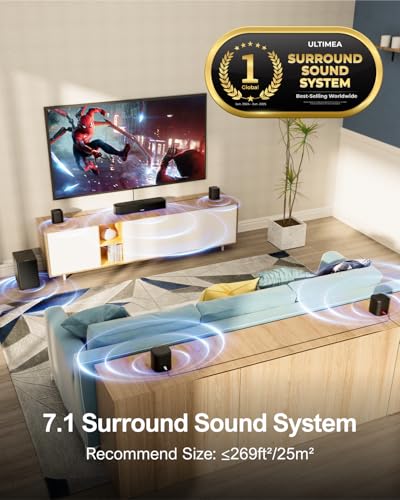
Before diving into these specific models, it's worth understanding what we're really talking about when we discuss soundbar performance. The most important factor is channel separation—this refers to how many distinct audio channels the system can reproduce simultaneously. A 3.1 system like the Samsung HW-S700D has three main channels (left, center, right) plus a subwoofer (the ".1"), while the Ultimea Aura A40 creates a 7.1 virtual surround experience with seven main channels plus bass.
Frequency response tells us how well a soundbar handles different pitches, from deep bass rumbles around 20 Hz to the highest treble notes at 20,000 Hz. Most people can't hear much below 65 Hz or above 18 kHz, which is why the Ultimea's spec of 65 Hz to 18 kHz covers what actually matters for most listeners.
The other crucial concept is psychoacoustic processing—essentially, tricks that fool your brain into hearing surround sound even when it's coming from fewer speakers. The Samsung HW-S700D relies heavily on this through its Dolby Atmos processing, while the Ultimea achieves surround effects primarily through physical speaker placement.
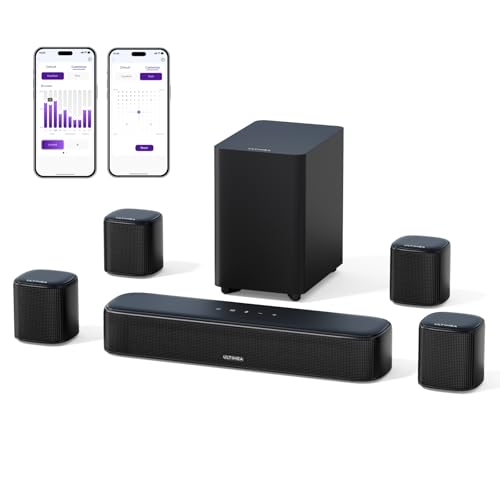
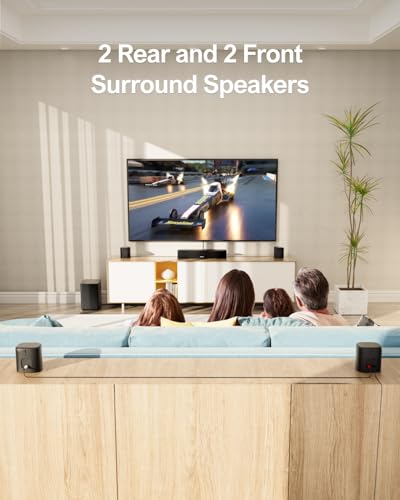
Released in 2023, the Ultimea Aura A40 represents what I'd call the "maximalist" approach to soundbar design. Instead of trying to simulate surround sound through clever processing, Ultimea decided to include actual surround speakers—four of them, to be exact. Two sit near your TV for front left and right channels, while two more go behind your listening position for true rear channel effects.
This isn't just marketing speak. When a helicopter flies across the screen in a movie, the Ultimea system can actually move that sound from the front speakers to the rear ones, creating the sensation that it's passing over your head. The difference is immediately noticeable if you've only experienced traditional soundbars before.
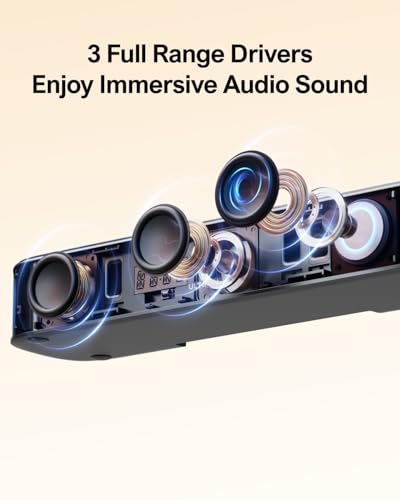
The system includes eight total drivers: three in the main soundbar, four in the surround speakers (two per speaker), and one 4-inch driver in the subwoofer. That's significantly more audio hardware than most competing systems provide. The BassMX technology is Ultimea's proprietary bass enhancement system that prevents the low-frequency drivers from distorting even at high volumes—a common problem with smaller subwoofers trying to produce deep bass.
What sets the Ultimea apart technically is its SurroundX processing, which works differently from typical virtual surround systems. Instead of trying to trick your ears with phase manipulation, SurroundX analyzes the audio signal and intelligently routes specific sounds to the appropriate physical speakers. Explosions might emphasize the rear speakers while dialogue stays focused on the center channel.
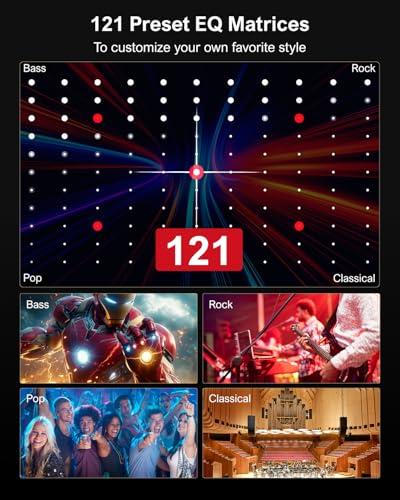
The ULTIMEA Smart App deserves special mention because it provides an unusual level of customization. The 121 preset EQ matrices aren't just different names for the same settings—they're actually distinct tuning profiles for specific music genres, movie types, and listening preferences. The 10-band equalizer lets you fine-tune frequencies from 60 Hz up to 16 kHz, which covers the range where most audio content lives.
Based on our research into user experiences and professional reviews, the Ultimea Aura A40 consistently delivers on its core promise of immersive surround sound. Users frequently mention being startled by sounds coming from behind them during movies, which indicates the rear speakers are properly integrated into the soundstage.
Dialogue clarity appears to be a particular strength. Multiple reviews highlight being able to follow conversations even during loud action sequences—something that's surprisingly rare even among more expensive soundbars. This likely results from having a dedicated center channel that can be independently adjusted through the app.
The bass response gets mixed reactions, which makes sense given the 4-inch subwoofer. It's adequate for most content and doesn't distort, but users coming from larger subwoofers might find it lacking for bass-heavy music genres. However, the BassMX processing does help maximize what the smaller driver can produce.
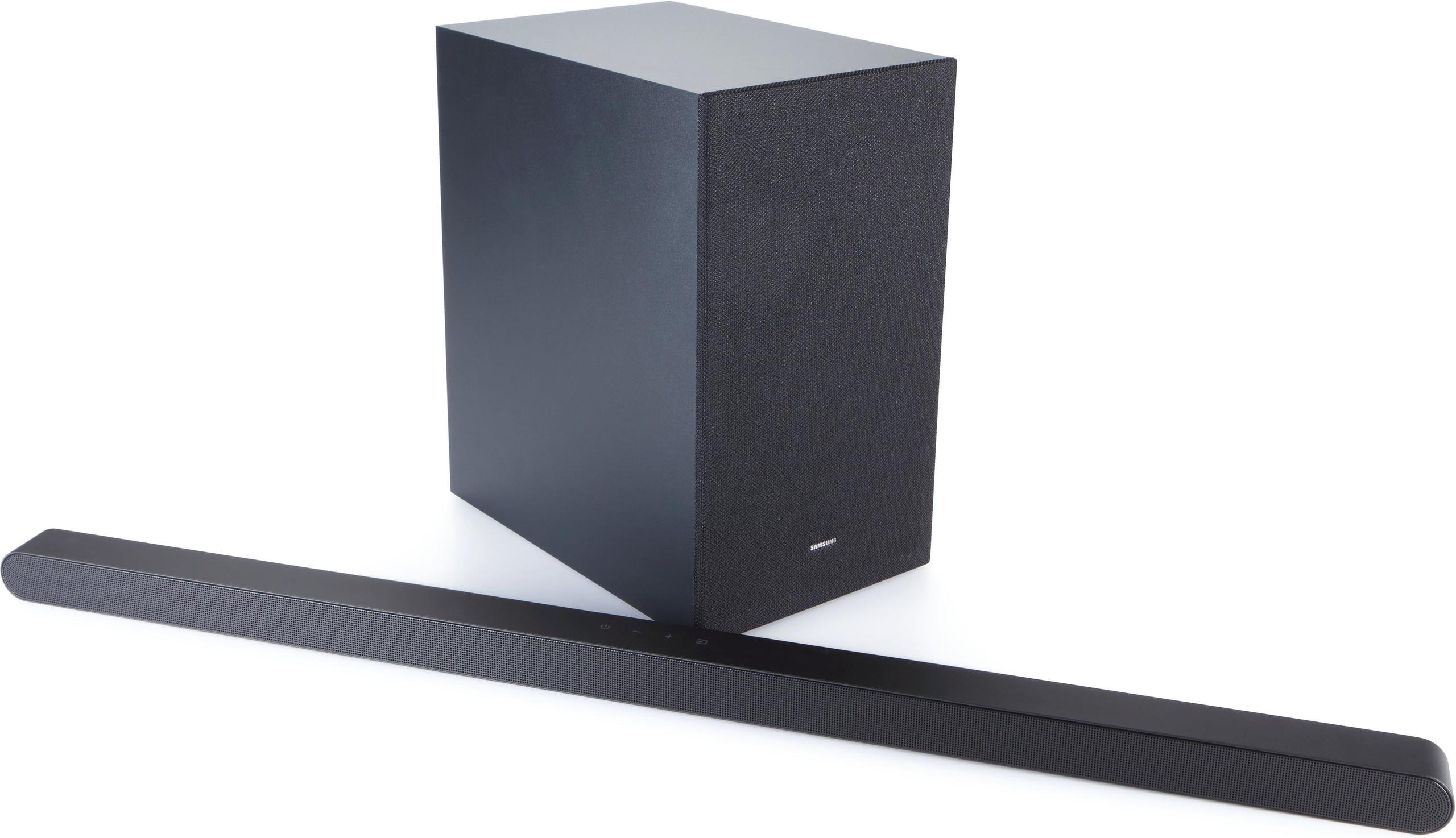
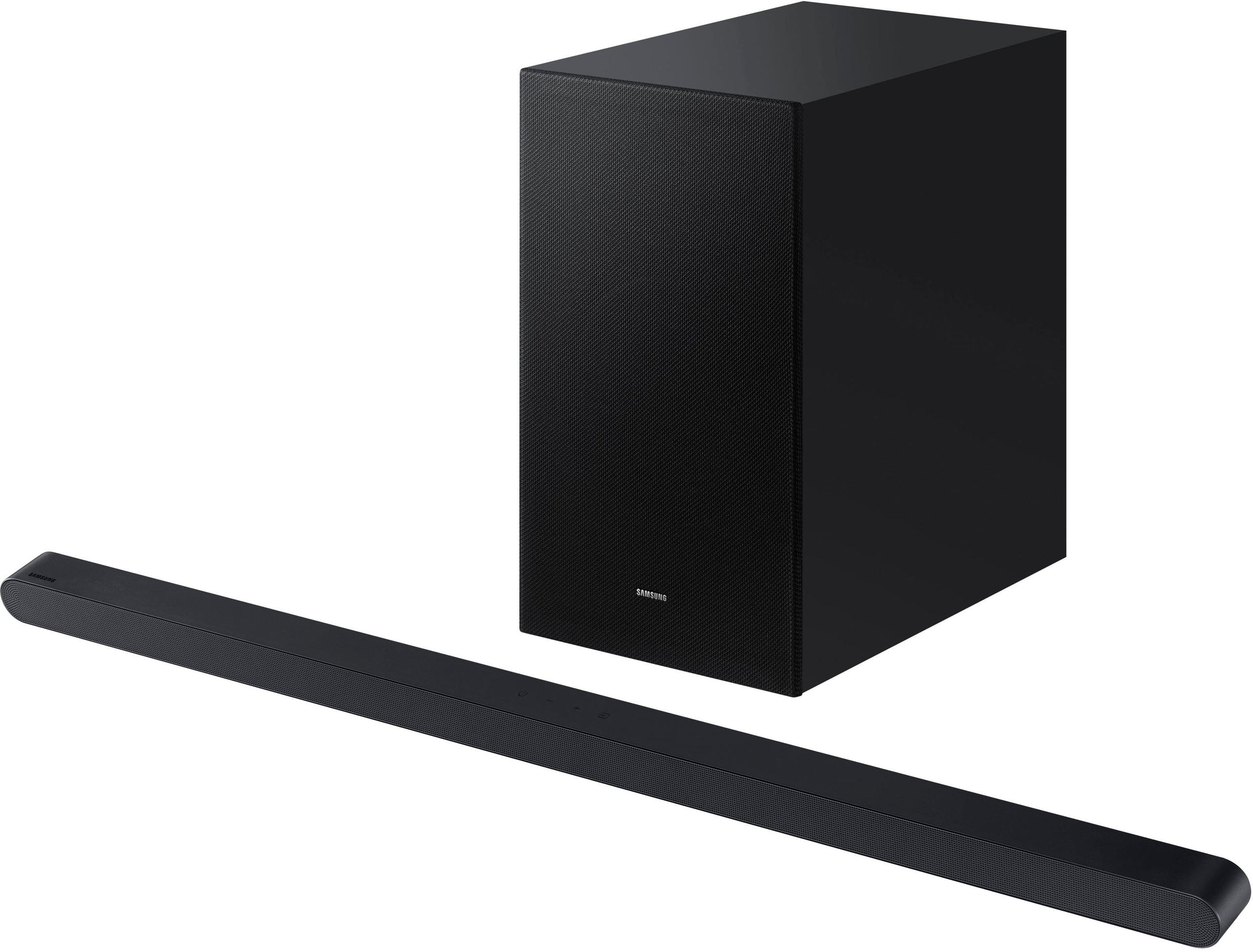
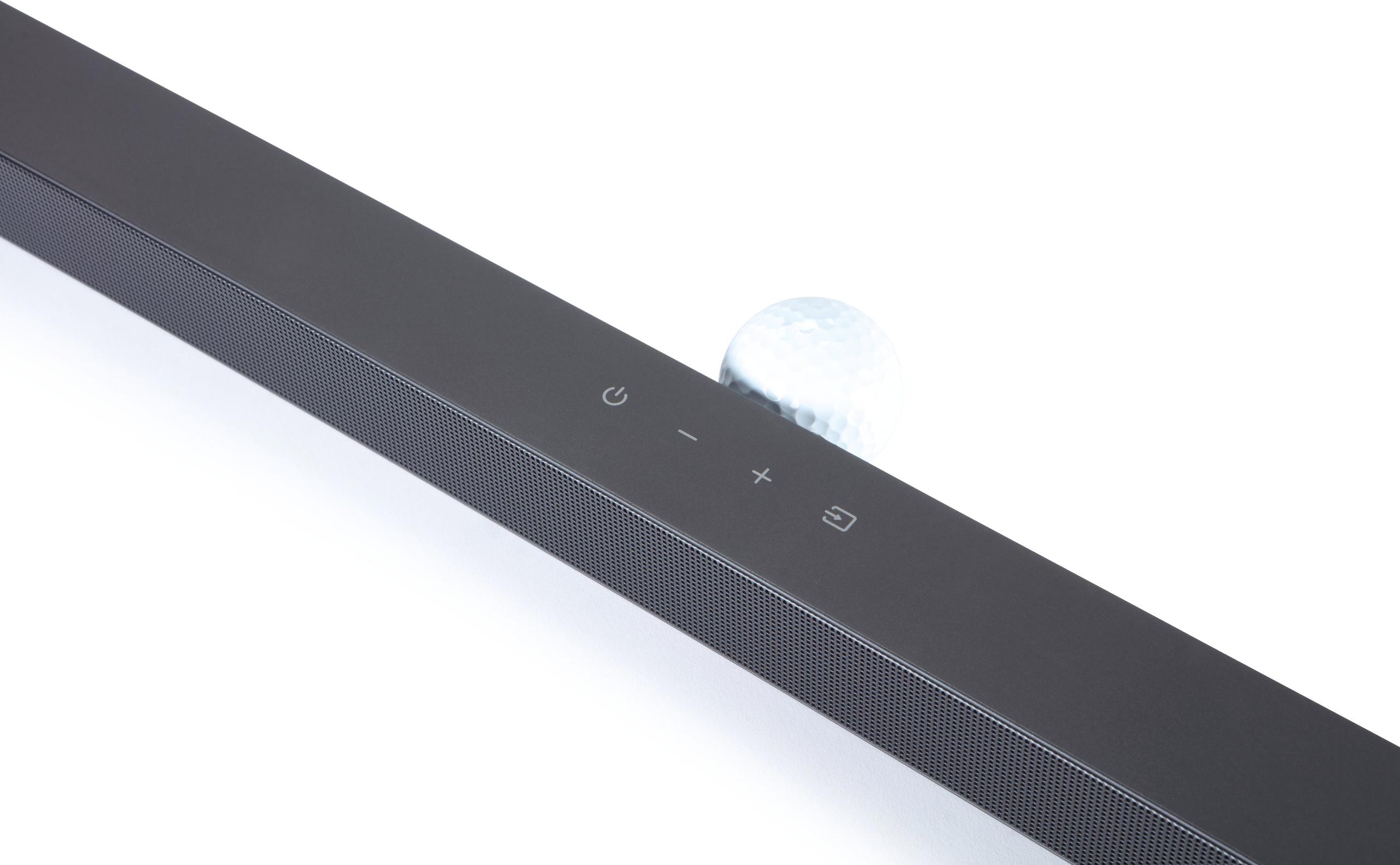
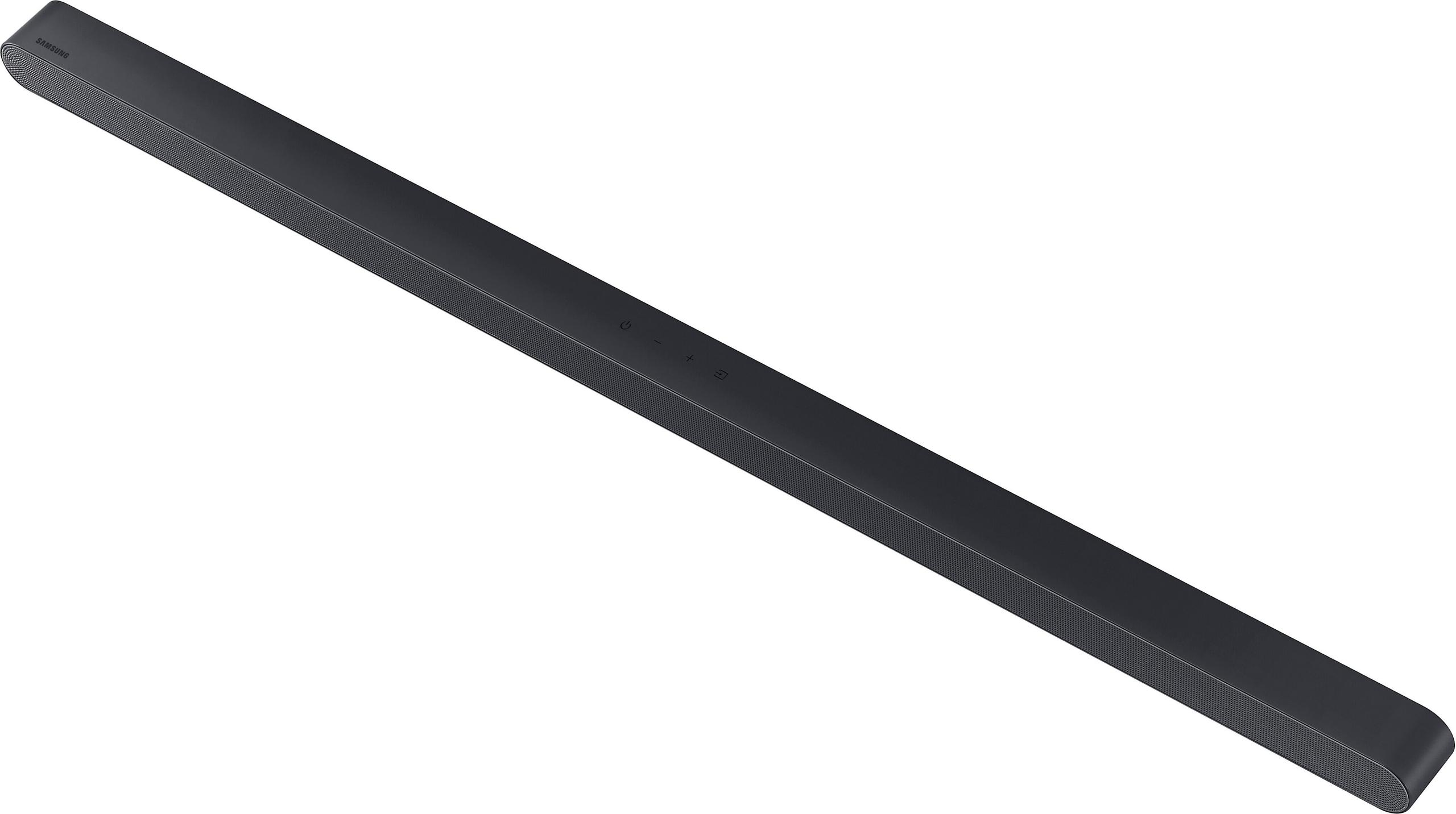
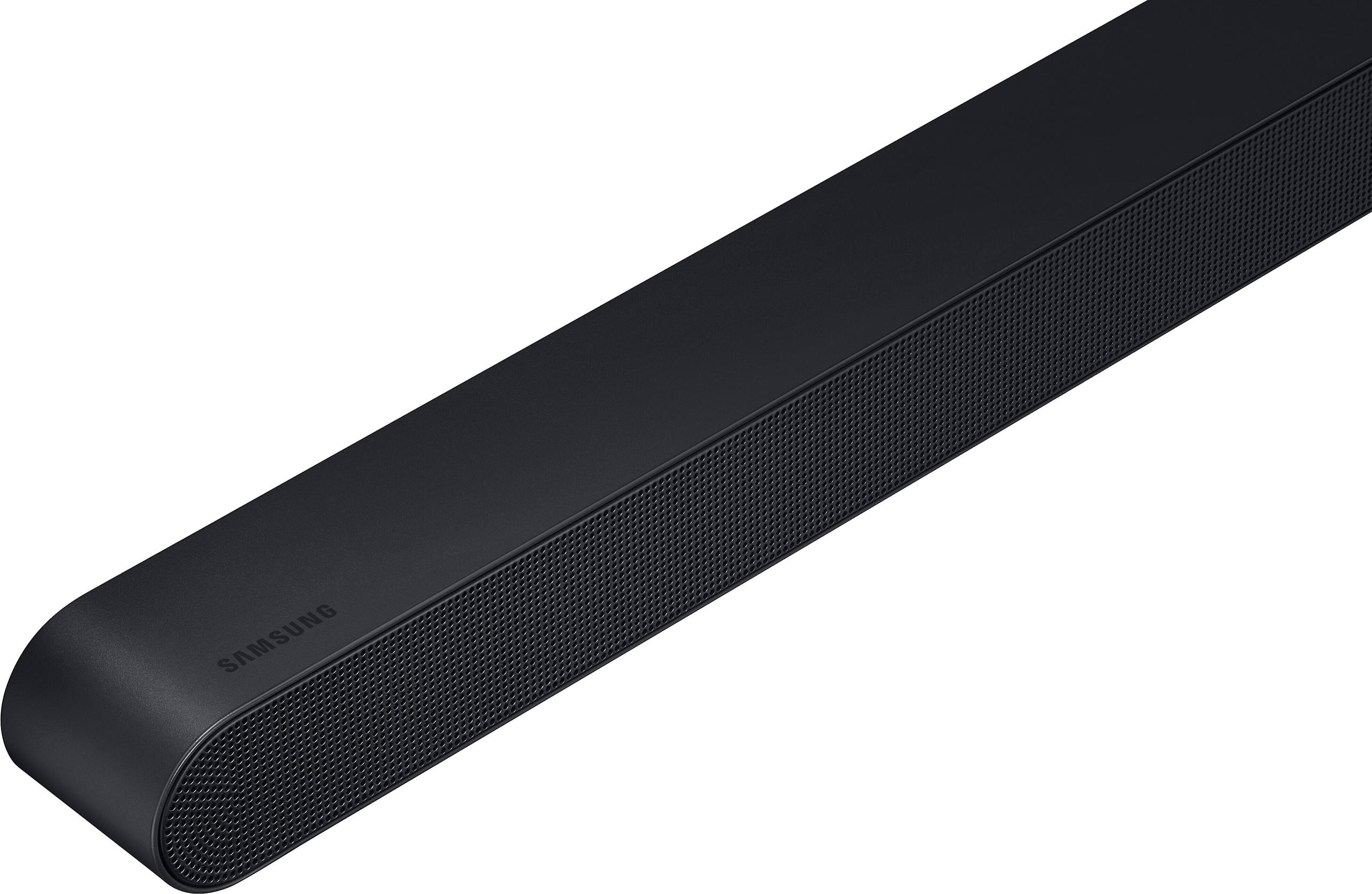
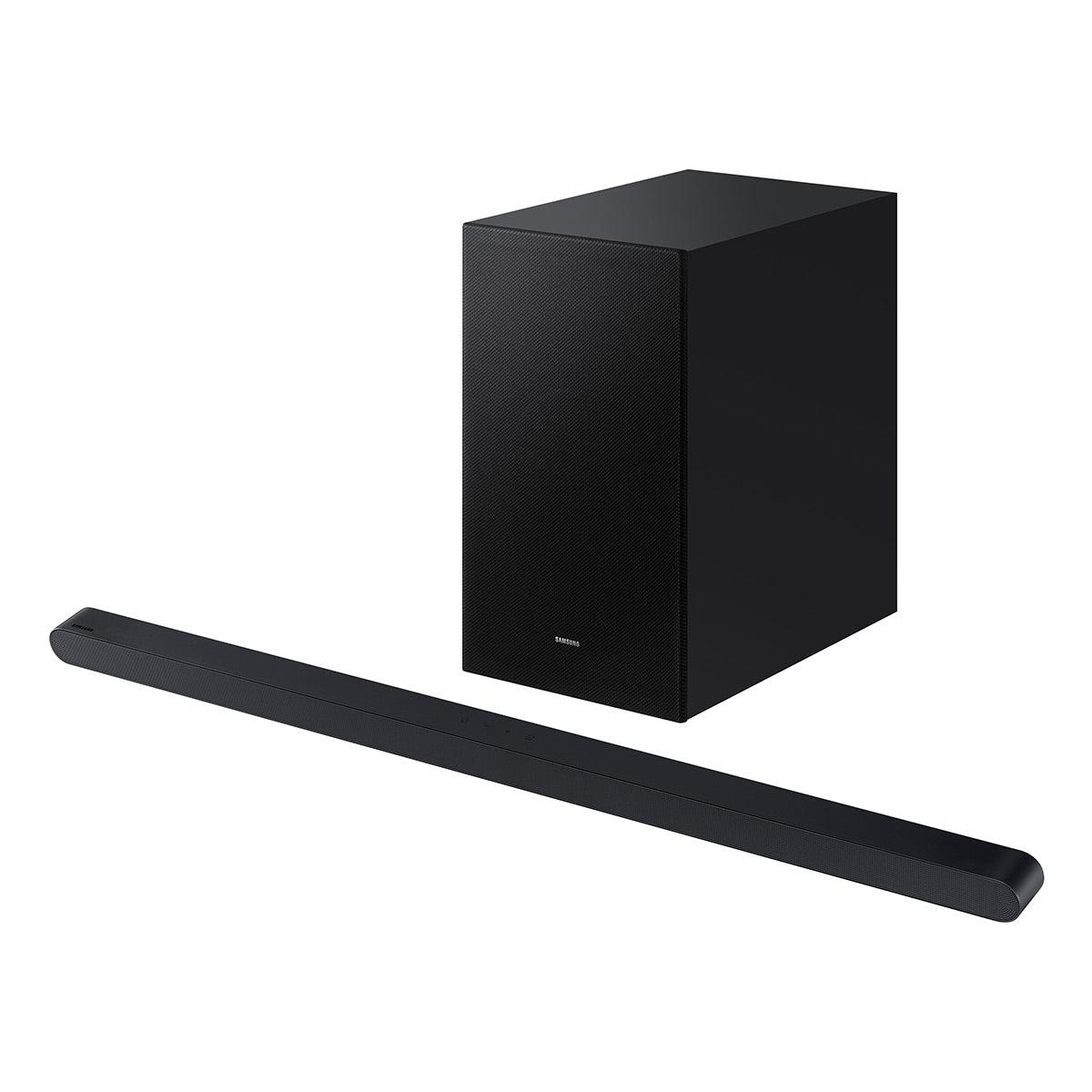
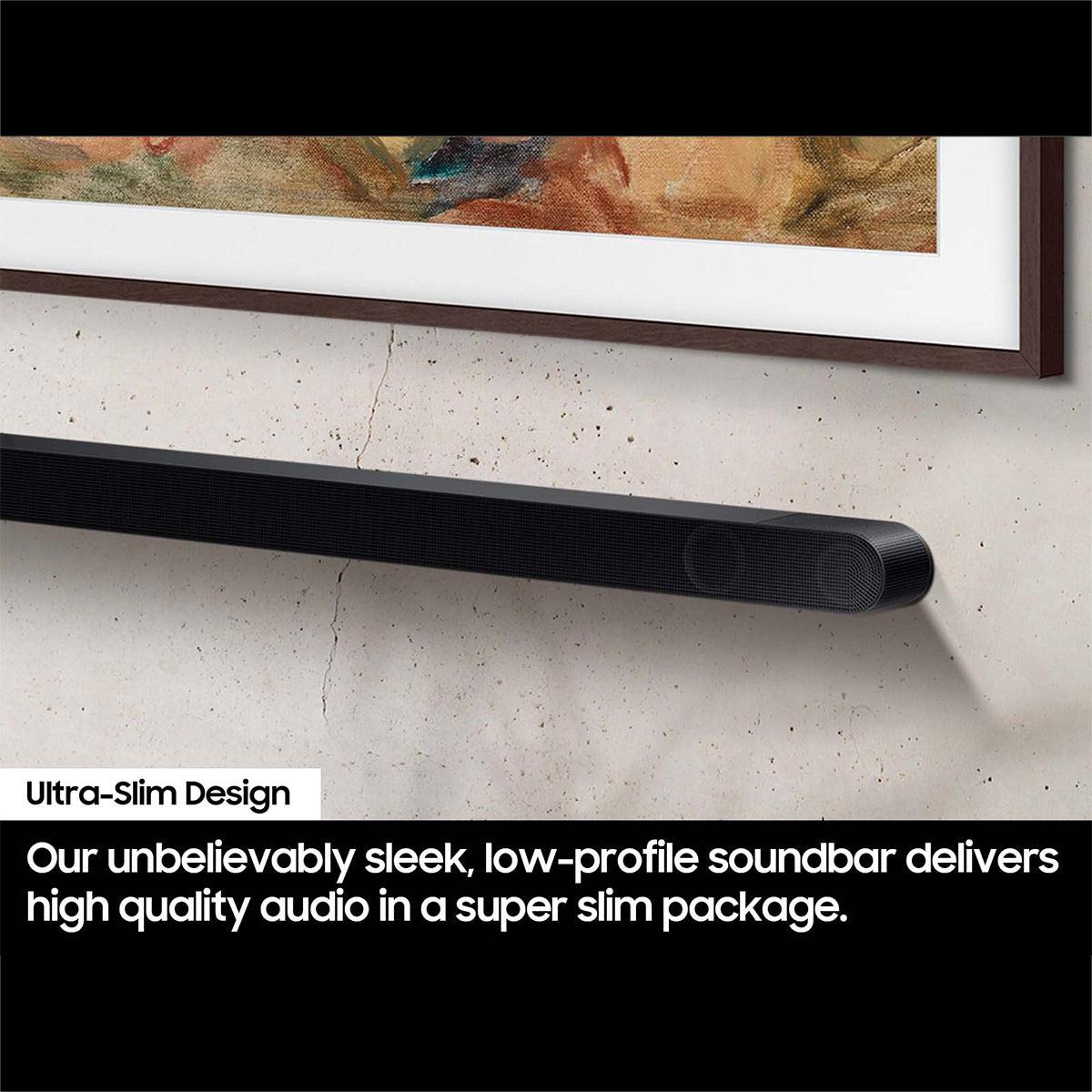
The Samsung HW-S700D, released in 2024, represents the complete opposite philosophy. Rather than adding more speakers, Samsung focused on making better use of fewer components while maintaining an ultra-slim profile that virtually disappears beneath your TV.
The "ultra-slim" marketing isn't hyperbole—at just 1-7/16 inches tall, this soundbar is genuinely unobtrusive in a way that most competitors simply aren't. If you've ever had a soundbar that partially blocked your TV screen or looked awkward on your entertainment center, you'll appreciate how the Samsung seems to vanish despite producing room-filling sound.
The technical innovation here lies in Samsung's Wireless Dolby Atmos implementation, which became more sophisticated in 2024 models. Traditional Dolby Atmos requires specific speaker configurations, but Samsung's processing can create convincing height effects from a single soundbar. The system analyzes incoming audio signals and uses psychoacoustic processing to bounce sound off your ceiling and walls, creating the impression of sounds coming from above and around you.
Q-Symphony is perhaps Samsung's most significant innovation, though it only works with compatible Samsung TVs from 2020 onward. Instead of disabling your TV's speakers when you connect a soundbar (the normal behavior), Q-Symphony keeps them active and coordinates their output with the soundbar's channels. This effectively gives you more speakers to work with, creating a wider soundstage and better room coverage.
The SpaceFit Sound feature uses the soundbar's built-in microphone to analyze your room's acoustic properties, then adjusts the audio processing accordingly. Rooms with hard surfaces that create echoes get different processing than carpeted spaces that absorb sound. It's automatic room correction, a feature typically found only in much more expensive systems.
Professional reviews consistently praise the Samsung HW-S700D for delivering surprisingly full sound from its minimal footprint. The 6-inch wireless subwoofer provides solid bass extension, and the Active Voice Amplifier does an excellent job keeping dialogue intelligible across different volume levels.
However, the physics limitations are real. No amount of processing can completely replicate the immersive experience of having actual surround speakers behind you. The Samsung creates convincing ambient effects and does expand the soundstage beyond what the TV provides, but it's fundamentally different from discrete channel separation.
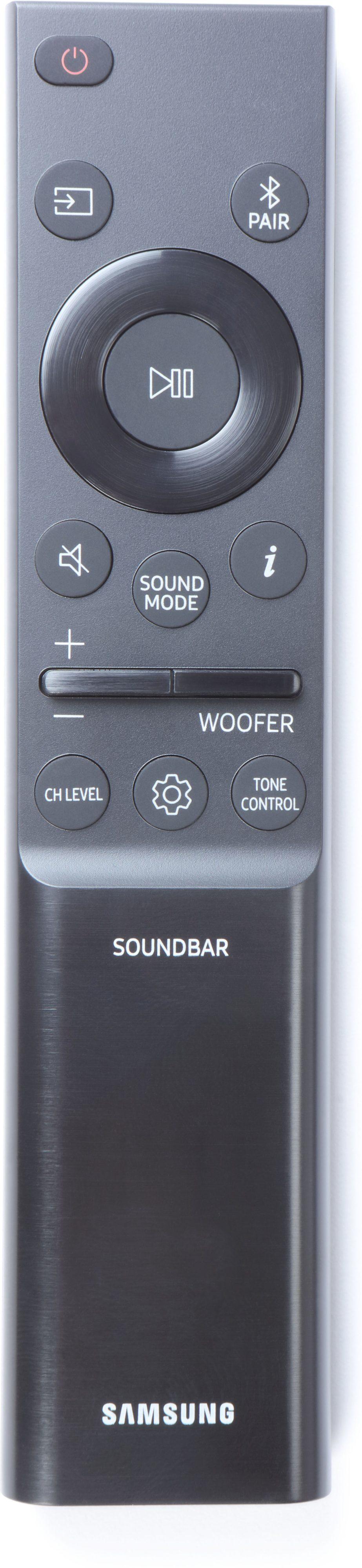
Where the Samsung truly shines is in daily usability. The Adaptive Sound feature automatically adjusts the audio profile based on what you're watching, so you don't need to constantly switch between movie and music modes. The integration with Samsung's ecosystem means if you own a Samsung TV, the setup is essentially plug-and-play.
This is where the fundamental difference between these systems becomes most apparent. The Ultimea Aura A40 creates what audio engineers call "discrete channel separation"—each surround channel is handled by a dedicated speaker positioned around your listening area. When a sound effect is supposed to come from behind and to your left, it actually does.
The Samsung HW-S700D uses object-based audio processing to simulate this effect. It's remarkably convincing, especially for ambient sounds like rain or crowd noise, but it can't match the precision of actual rear speakers for specific directional effects.
For home theater use specifically, this difference is significant. Action movies, horror films, and immersive gaming benefit enormously from true surround positioning. The sensation of bullets whizzing past or monsters creeping up behind you simply works better with physical speakers in those locations.
Both systems approach bass differently, reflecting their overall design philosophies. The Ultimea's smaller 4-inch wired subwoofer focuses on tight, controlled bass that doesn't overwhelm smaller rooms. The BassMX processing helps prevent distortion, but there's only so much a 4-inch driver can accomplish in terms of deep bass extension.
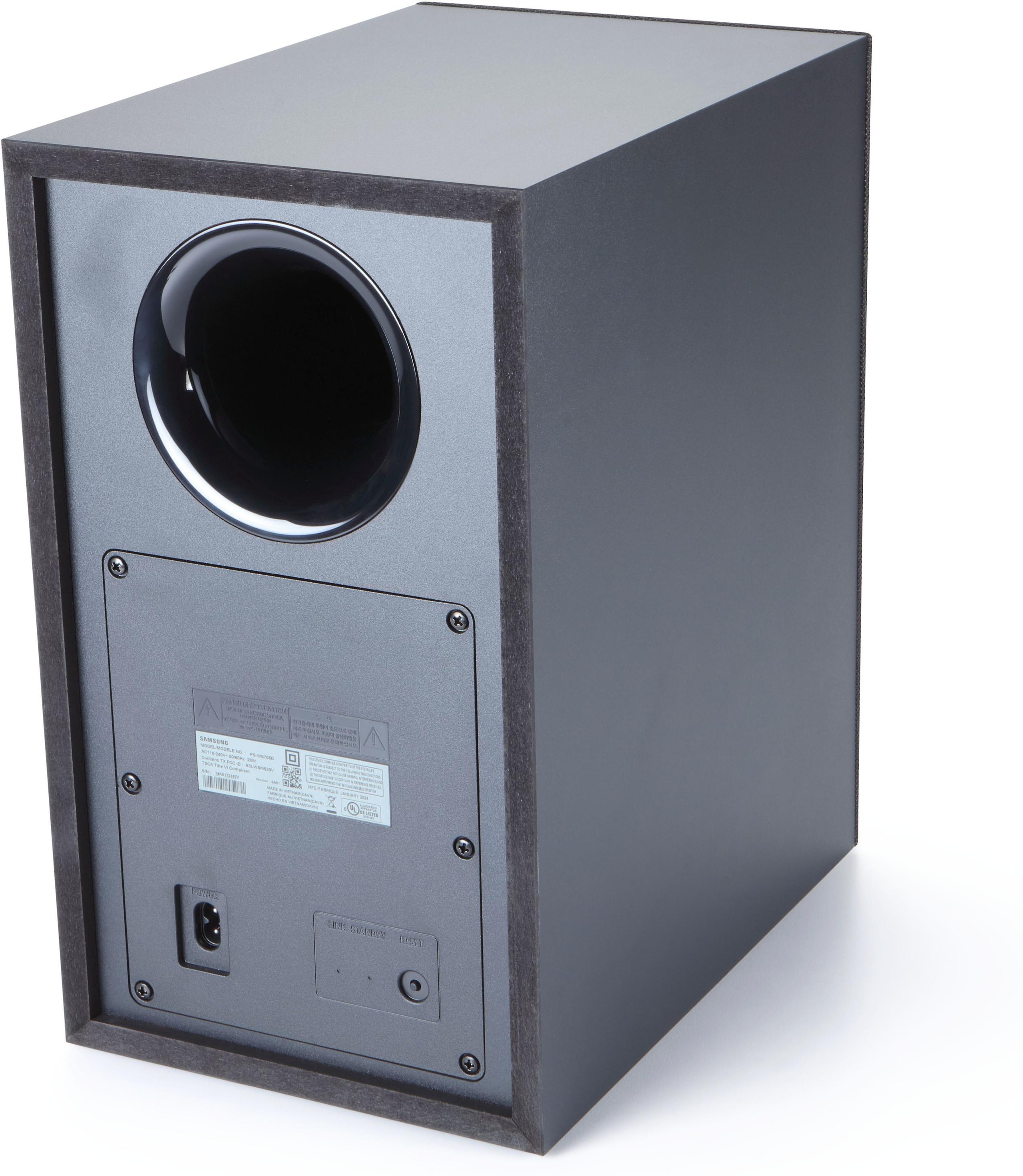
The Samsung's 6-inch wireless subwoofer has more physical capability for moving air and producing deeper frequencies. The larger driver size typically translates to better performance in the crucial 40-80 Hz range where most movie sound effects and music fundamentals live.
However, peak power specifications can be misleading. The Ultimea's 330-watt peak rating likely refers to instantaneous power across all channels combined, while the Samsung's 250-watt specification appears to be a more conservative RMS (continuous) rating. In practical terms, both systems provide adequate volume for most living rooms.
Poor dialogue intelligibility is the number one complaint about TV audio, so both soundbars prioritize voice reproduction. The Ultimea uses a dedicated center channel with independent volume control, allowing you to boost dialogue without affecting music or sound effects levels. This is particularly valuable for users with hearing difficulties or for late-night viewing when you want clear speech without loud explosions.
The Samsung takes a more automated approach with its Active Voice Amplifier, which continuously analyzes the audio stream and emphasizes voice frequencies in real-time. Combined with the Adaptive Sound feature, it adjusts dialogue clarity based on what type of content you're watching.
Both approaches work well, but they serve different user preferences. The Ultimea gives you manual control, while the Samsung handles optimization automatically.
Let's be honest about what you're signing up for with the Ultimea Aura A40. This system requires running speaker cables to four different locations around your room. The included cables are generous—6 meters for the rear speakers should reach most seating arrangements—but you'll need to plan cable routing carefully.
The front surround speakers typically sit on either side of your TV, which is straightforward. The rear speakers need to be positioned behind your main seating area, ideally at ear level or slightly above. Wall mounting brackets are included, but many users end up placing them on side tables or shelves.
The payoff for this installation complexity is immediately apparent when you first experience true surround sound in your living room. It's the difference between watching a movie and feeling like you're inside it.
The Samsung HW-S700D delivers on its promise of simplicity. The ultra-slim soundbar either sits in front of your TV without blocking the screen or mounts directly to the wall beneath it. The wireless subwoofer connects automatically and can be placed anywhere within reasonable range—under a side table, in a corner, or even in an adjacent room if needed.
For users who prioritize aesthetic integration, this approach is genuinely appealing. Your living room doesn't look like an audio showroom, but you still get dramatically better sound than TV speakers provide.
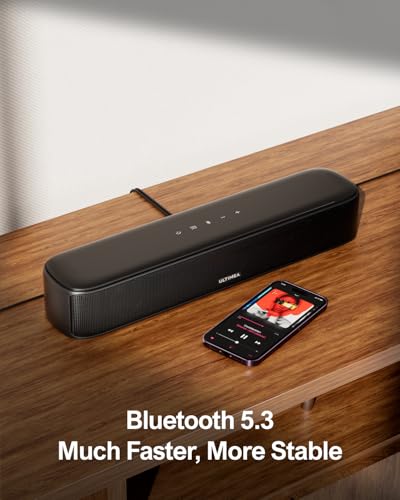
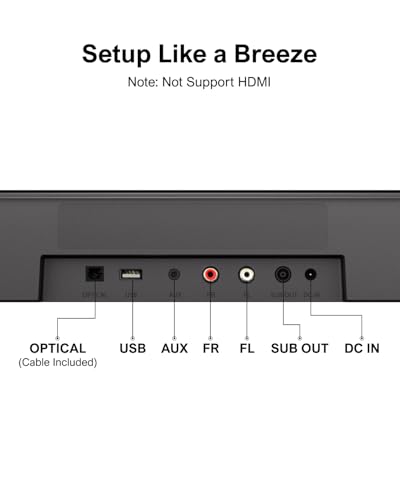
The connectivity differences between these systems reveal their target audiences. The Ultimea provides multiple input options—optical, AUX, USB, and Bluetooth 5.3—making it compatible with virtually any TV or audio source manufactured in the last 15 years. This flexibility is particularly valuable if you're using an older TV, a projector, or multiple gaming consoles.
However, the lack of HDMI input is a notable limitation. Many modern streaming devices and gaming consoles output their best audio through HDMI, and optical connections can't carry some advanced audio formats.
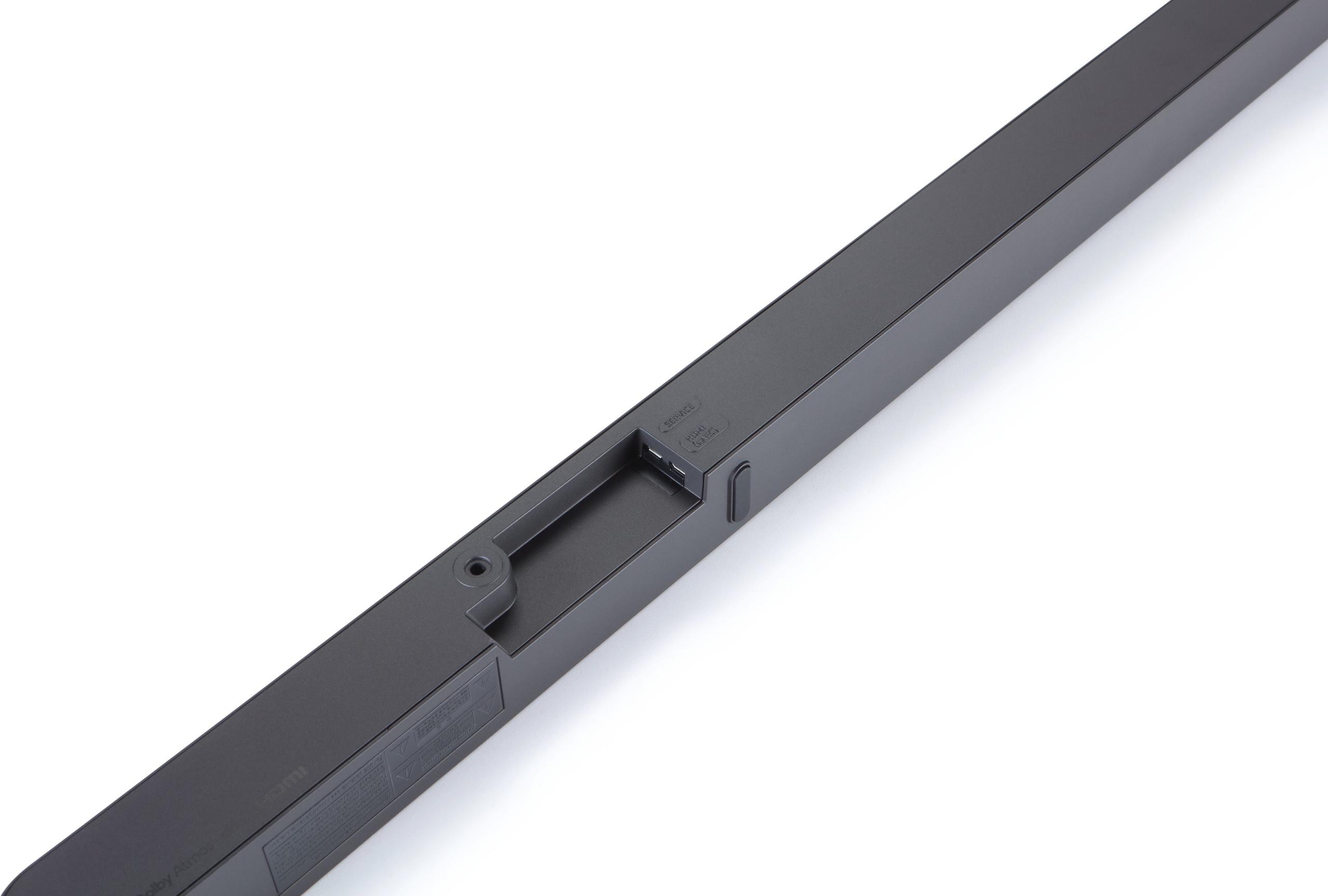
The Samsung takes the opposite approach, focusing primarily on HDMI ARC/eARC connectivity. This provides the highest audio quality and supports advanced formats like Dolby Atmos, but it assumes you have a relatively modern TV with HDMI ARC capability.
At the time of writing, these soundbars occupy different price segments, which affects how we should evaluate their value. The Ultimea Aura A40 typically costs significantly less than the Samsung HW-S700D, making the choice partly about budget prioritization.
From a pure hardware perspective, the Ultimea provides more speakers, more drivers, and more customization options for less money. If you measure value strictly by audio channels and features per dollar, it's clearly superior.
The Samsung commands a premium for Samsung's brand reputation, wireless convenience, and sophisticated processing algorithms. You're paying for engineering refinement and ecosystem integration rather than raw speaker count.
After researching both systems extensively, I'm convinced that your personality and living situation matter more than specifications in making this choice.
Choose the Ultimea Aura A40 if you're the type of person who enjoys optimizing your entertainment setup, doesn't mind visible cables in service of better performance, and wants the most immersive audio experience possible. It's ideal for dedicated home theater rooms, gaming setups, or situations where surround sound immersion is the primary goal. The extensive customization options through the app make it perfect for audio enthusiasts who like to tinker with settings.
The Samsung HW-S700D is better suited for users who want significant audio improvement without changing their room's aesthetic or dealing with installation complexity. If you own a Samsung TV, the Q-Symphony integration makes it an even more compelling choice. It's the right pick for minimalist living spaces, wall-mounted TV setups, or anyone who values convenience over maximum channel separation.
Neither system is objectively better than the other—they're optimized for completely different priorities. The Ultimea maximizes audio performance per dollar, while the Samsung maximizes convenience and integration. Understanding which of these matters more to you personally will point you toward the right choice.
Both represent significant upgrades over TV speakers and will transform your viewing experience. The question is whether you want that transformation to come through more speakers or smarter processing.
| Ultimea Aura A40 U2601 | Samsung HW-S700D |
|---|---|
| Channel Configuration - Determines surround sound immersion level | |
| 7.1 Virtual Surround with 4 physical surround speakers | 3.1 Channel with virtual surround processing |
| Total Speaker Count - More drivers typically means better sound distribution | |
| 8 speakers (4 surround + 3 soundbar + 1 subwoofer) | 7 speakers (6 soundbar + 1 subwoofer) |
| Power Output - Affects maximum volume and dynamic range | |
| 330W peak power across all channels | 250W RMS (more conservative rating) |
| Subwoofer Type - Wireless eliminates cables but wired can be more reliable | |
| Wired 4-inch subwoofer with BassMX technology | Wireless 6-inch subwoofer with bass reflex |
| Primary Connectivity - Determines TV compatibility and audio quality | |
| Optical, AUX, USB, Bluetooth 5.3 (no HDMI) | HDMI ARC/eARC primary, Bluetooth, Wi-Fi |
| Audio Format Support - Advanced formats provide better movie experience | |
| Standard audio formats via multiple inputs | Dolby Atmos, DTS Virtual:X, Dolby TrueHD |
| Installation Complexity - Consider your tolerance for setup and cables | |
| 4 surround speakers require cable routing (2m + 6m cables included) | Ultra-slim soundbar + wireless subwoofer, minimal setup |
| Smart Features - Affects daily usability and control options | |
| ULTIMEA Smart App with 121 EQ presets, 10-band equalizer | Built-in Alexa, Q-Symphony (Samsung TVs), SpaceFit Sound |
| Customization Options - Important for fine-tuning audio to your preferences | |
| Extensive: 6 listening modes, adjustable surround levels, OTA updates | Automated: Adaptive Sound, Game Mode Pro, 7-band EQ |
| Design Philosophy - Choose based on your room aesthetic priorities | |
| Multiple speakers for maximum immersion, visible components | Ultra-slim (1.4" height) minimalist design, wireless convenience |
| Warranty Coverage - Protection for your investment | |
| 2 years parts and labor | 1 year parts and labor |
| Best Use Cases - Consider your primary usage scenarios | |
| Home theaters, gaming setups, rooms where surround placement is feasible | Living rooms, wall-mounted TV setups, Samsung TV owners, minimalist spaces |
The Ultimea Aura A40 provides superior surround sound immersion with its 7.1 virtual system and four physical surround speakers positioned around your room. The Samsung HW-S700D uses 3.1 channels with Dolby Atmos processing to simulate surround effects, which works well but can't match the directional precision of actual rear speakers.
The main difference is approach: the Ultimea Aura A40 uses multiple physical speakers (8 total) including four surround speakers for true channel separation, while the Samsung HW-S700D focuses on an ultra-slim design with sophisticated audio processing to create virtual surround from fewer components.
The Samsung HW-S700D is significantly easier to install with its ultra-slim design and wireless subwoofer requiring minimal setup. The Ultimea Aura A40 requires running cables to four surround speakers positioned around your room, making installation more complex but delivering better surround immersion.
The Ultimea Aura A40 offers better compatibility with older TVs through its optical, AUX, and USB inputs. The Samsung HW-S700D primarily relies on HDMI ARC/eARC connections, which may not be available on TVs older than 2015-2017.
Both deliver solid bass but differently. The Samsung HW-S700D has a larger 6-inch wireless subwoofer that can produce deeper bass, while the Ultimea Aura A40 uses a smaller 4-inch wired subwoofer with BassMX technology for tight, controlled bass without distortion.
The Ultimea Aura A40 offers extensive customization through its smart app with 121 EQ presets, 10-band equalizer, and adjustable surround levels. The Samsung HW-S700D focuses more on automatic optimization with features like Adaptive Sound and SpaceFit Sound that adjust settings automatically.
For dedicated home theater setups, the Ultimea Aura A40 is superior due to its true surround speaker placement creating genuine 360-degree sound effects. The Samsung HW-S700D works well for casual movie watching but can't match the immersive experience of physical surround speakers.
The Samsung HW-S700D supports wireless Dolby Atmos with compatible Samsung TVs and processes height effects through its advanced algorithms. The Ultimea Aura A40 doesn't support Dolby Atmos but creates immersive surround through its physical speaker arrangement and SurroundX technology.
The Ultimea Aura A40 typically offers better value by providing more speakers, channels, and customization features at a lower price point. The Samsung HW-S700D costs more but provides premium convenience, wireless setup, and Samsung ecosystem integration.
Yes, both support wireless connectivity. The Ultimea Aura A40 uses Bluetooth 5.3 for music streaming, while the Samsung HW-S700D offers Bluetooth plus Wi-Fi connectivity with support for AirPlay, Chromecast, and built-in voice assistants.
The Samsung HW-S700D is ideal for small spaces with its ultra-slim profile and wireless subwoofer that can be hidden away. The Ultimea Aura A40 requires space for four surround speakers, making it less suitable for cramped apartments or minimalist setups.
The Ultimea Aura A40 includes a 2-year warranty covering parts and labor, providing longer protection for your investment. The Samsung HW-S700D comes with Samsung's standard 1-year warranty, though you benefit from Samsung's established customer support network and brand reputation.
We've done our best to create useful and informative comparisons to help you decide what product to buy. Our research uses advanced automated methods to create this comparison and perfection is not possible - please contact us for corrections or questions. These are the sites we've researched in the creation of this article: walmart.com - newegg.com - youtube.com - ultimea.com - youtube.com - device.report - ultimea.co - manuals.plus - homestudiobasics.com - youtube.com - bestbuy.com - community.ultimea.com - manuals.plus - eu.ultimea.com - navesapeugeot.com.br - bestbuy.com - images.thdstatic.com - provantage.com - ultimea.com - bestbuy.com - crutchfield.com - samsung.com - bestbuy.com - avsforum.com - walts.com - samsung.com - samsung.com - videoandaudiocenter.com - samsung.com - samsung.com - samsung.com - pcrichard.com

Privacy Policy
Terms and Conditions - Affiliate Policy
Home Security
© Copyright 2008-2026.
11816 Inwood Rd #1211, Dallas, TX 75244