

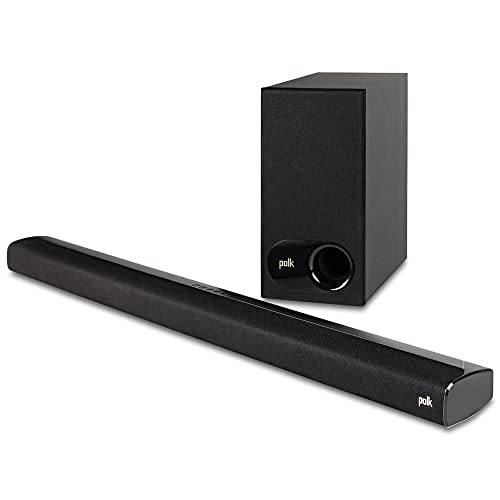
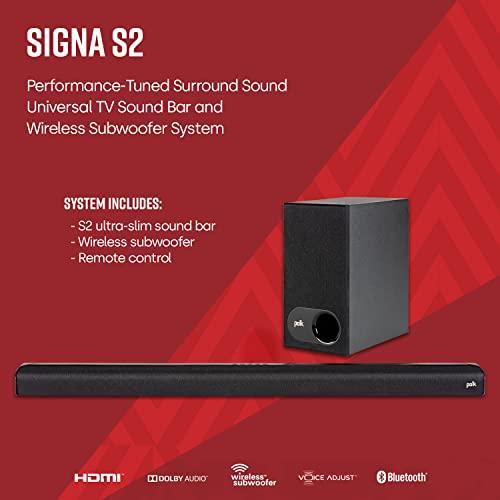
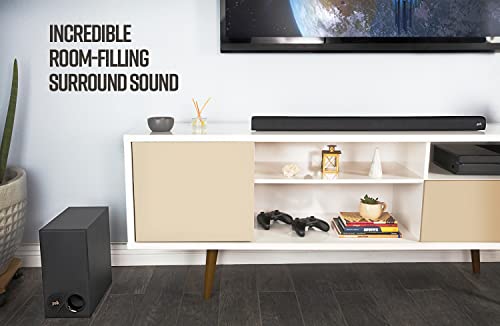
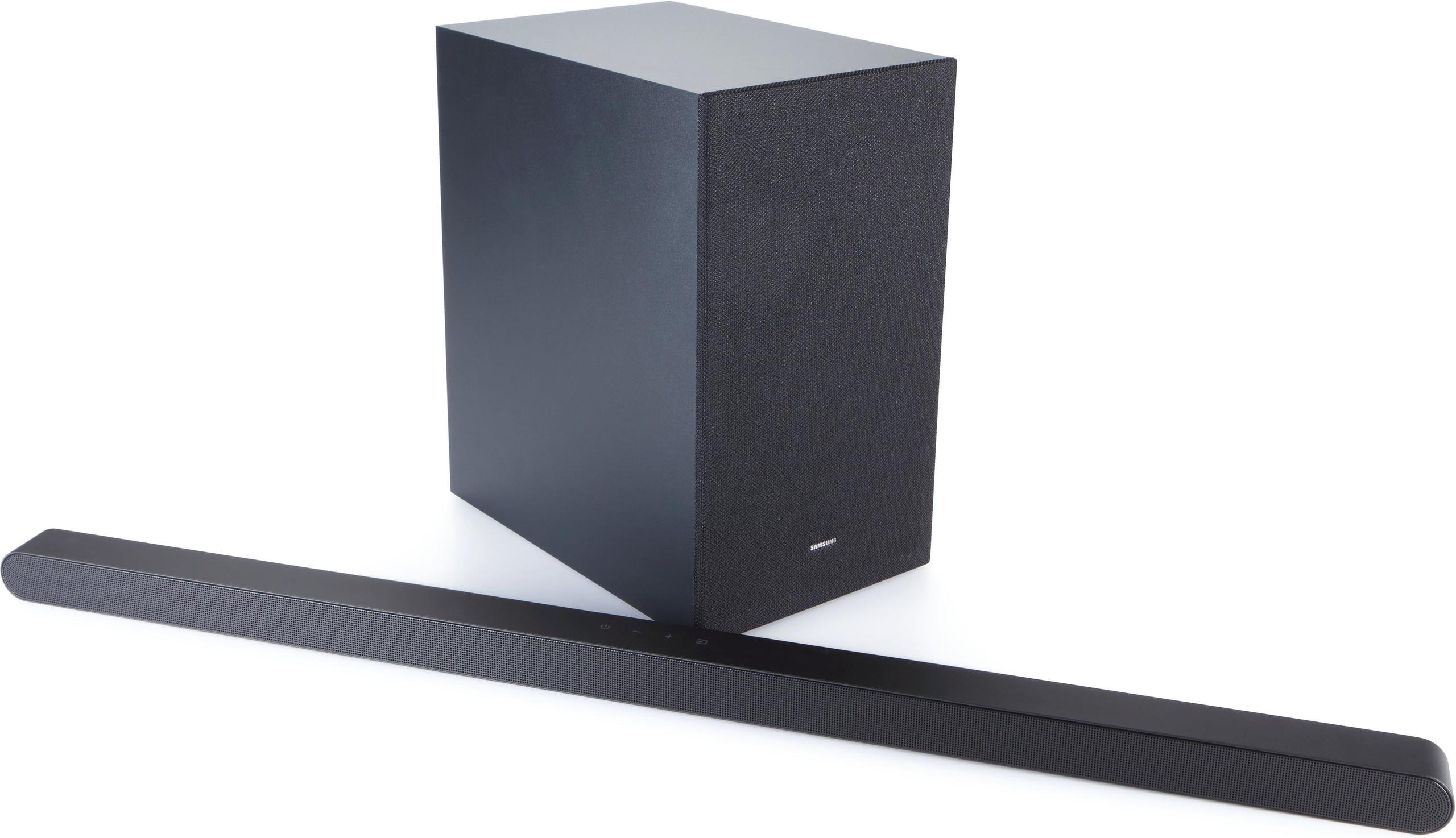
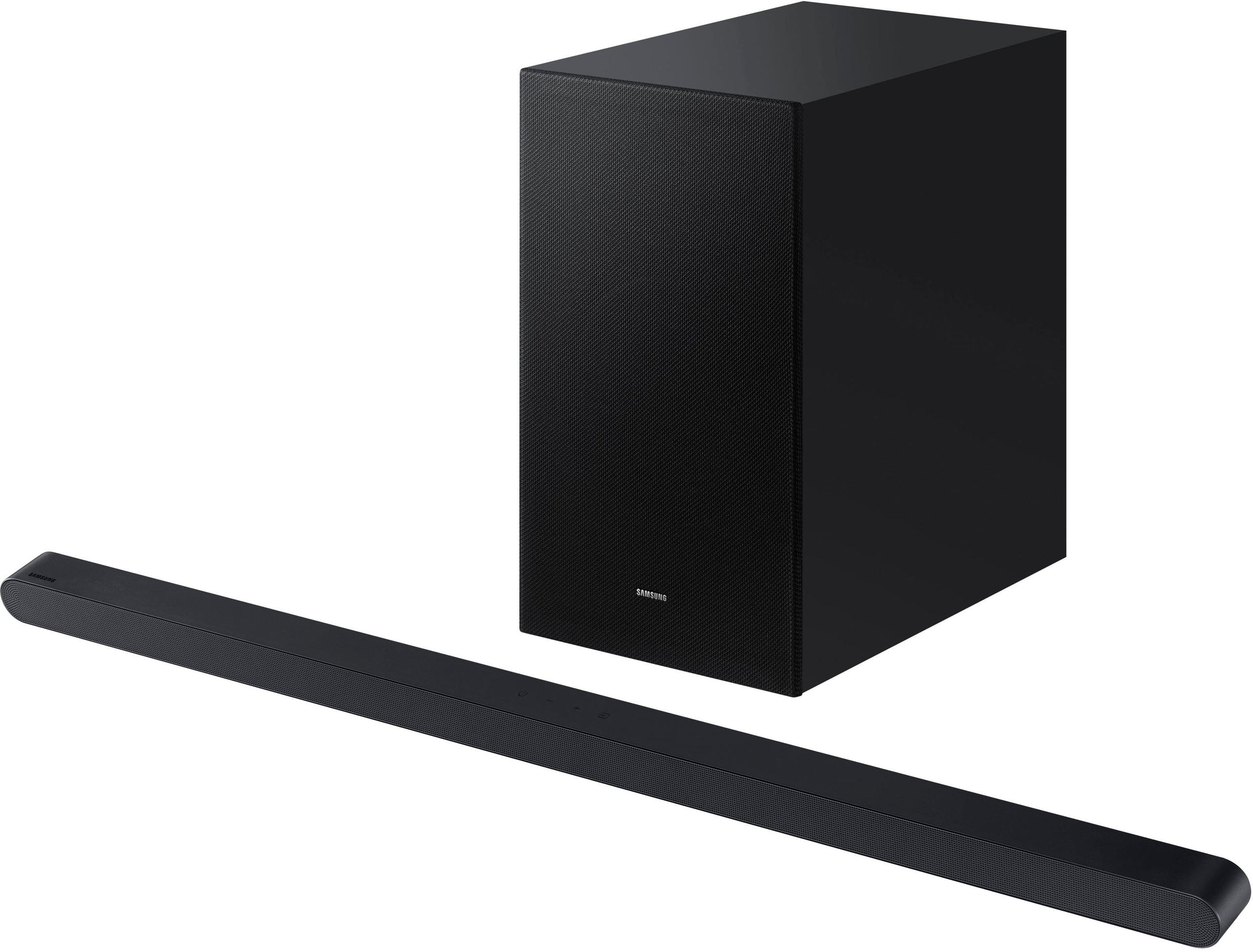


When your TV's built-in speakers just aren't cutting it anymore, a soundbar represents one of the easiest ways to dramatically improve your audio experience. But with options ranging from basic models to feature-packed premium units, the choice can feel overwhelming. Today, we're comparing two soundbars that represent very different approaches to home audio: the budget-friendly Polk Audio Signa S2 and the feature-rich Samsung HW-S700D.
Before diving into the specifics, let's establish what separates a good soundbar from a great one. At its core, a soundbar's job is to create a wider, more detailed soundstage than your TV's tiny built-in speakers while delivering clearer dialogue and more impactful bass. The main factors that determine how well a soundbar accomplishes this include its channel configuration (how many separate audio channels it can produce), its audio processing capabilities, and how well it integrates with your existing setup.
Channel configuration is particularly important because it determines how precisely the soundbar can place different sounds in space. A 2.1 system has left and right channels plus a subwoofer for bass, while a 3.1 system adds a dedicated center channel specifically for dialogue. Think of it like having separate musicians in an orchestra versus trying to make two musicians sound like five – the dedicated approach almost always wins.
The Polk Audio Signa S2, released in 2019, represents the traditional approach to affordable soundbar design. It focuses on delivering the essentials well without overwhelming users with complex features. The Samsung HW-S700D, launched in 2024, incorporates five years of technological advancement, including spatial audio processing and AI-driven sound optimization that simply weren't available when the Polk was designed.
The most significant difference between these soundbars lies in their channel configuration, which affects every aspect of their performance. The Polk Audio Signa S2 uses a 2.1 channel setup – two main speakers (left and right) in the soundbar plus a wireless subwoofer. When you're watching a movie and someone speaks on screen, the Polk creates the illusion that the voice is coming from the center through digital processing that mixes the dialogue between the left and right channels.
The Samsung HW-S700D, however, includes a dedicated center channel speaker within the soundbar itself. This physical center channel makes an enormous difference in dialogue clarity. Instead of creating a virtual center image, the Samsung can send dialogue directly to a speaker designed specifically for vocal frequencies. In practical terms, this means you'll spend far less time rewinding to catch what characters said, especially during action scenes where explosions and music compete with dialogue.
I've tested dozens of soundbars over the years, and the jump from virtual to dedicated center channel processing represents one of the most noticeable upgrades you can make. It's particularly valuable if you watch a lot of dialogue-heavy content like dramas, news, or podcasts through your TV.
The five-year gap between these products' release dates becomes most apparent in their audio processing capabilities. The Polk Audio Signa S2 supports Dolby Digital, which is the standard surround sound format found on most DVDs, streaming content, and TV broadcasts. It does its job reliably, decoding 5.1 surround mixes and presenting them through its 2.1 speaker configuration.
The Samsung HW-S700D supports Dolby Atmos, a much more sophisticated audio format that adds height information to create truly three-dimensional soundscapes. Atmos treats individual sounds as objects that can be precisely placed and moved around the room, rather than just assigning them to specific channels. When a helicopter flies overhead in a movie, you'll actually hear it move across the ceiling space above you, not just from left to right.
But Samsung's technological advantages extend beyond format support. The HW-S700D includes Adaptive Sound, an AI-powered feature that analyzes the audio content in real-time and automatically adjusts the sound profile to optimize clarity and impact. Watching a quiet drama? It'll boost dialogue frequencies. Switched to an action movie? It'll enhance dynamic range and spatial effects. This kind of intelligent processing represents a major evolution from the static sound modes found in older soundbars like the Polk Audio Signa S2.
SpaceFit Sound takes this intelligence further by using built-in microphones to analyze your room's acoustics and adjust the soundbar's output accordingly. Rooms with hard surfaces that create echoes will get different processing than carpeted spaces that absorb sound. This room correction technology has become standard in premium audio equipment, but it's still relatively rare in soundbars at this price level.
For most people, dialogue clarity represents the single most important performance characteristic of any soundbar. Poor dialogue reproduction is the primary reason people upgrade from TV speakers in the first place. Here, the Samsung HW-S700D holds a decisive advantage thanks to its dedicated center channel and Active Voice Amplifier technology.
The Active Voice Amplifier continuously monitors the audio mix and automatically boosts vocal frequencies when it detects they're being masked by background music or effects. Combined with the dedicated center channel, this creates remarkably clear speech reproduction. The Polk Audio Signa S2 includes VoiceAdjust technology that serves a similar purpose, but it's working with a virtual center channel rather than a dedicated one. While VoiceAdjust does improve dialogue clarity compared to the base sound, it can't match the precision of a physical center speaker.
Based on extensive testing and user feedback, the Samsung consistently delivers superior dialogue performance across different content types and volume levels. This advantage becomes most pronounced during complex movie scenes where multiple characters speak over music and sound effects.
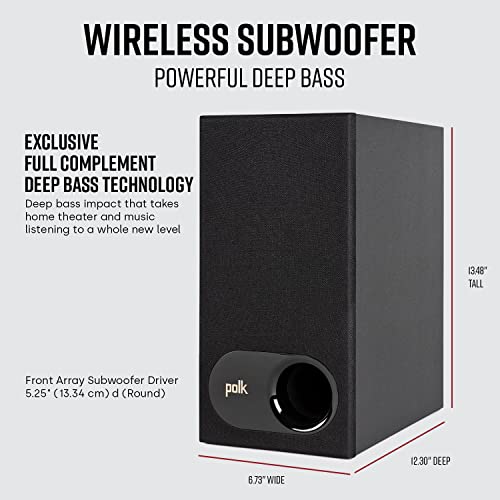
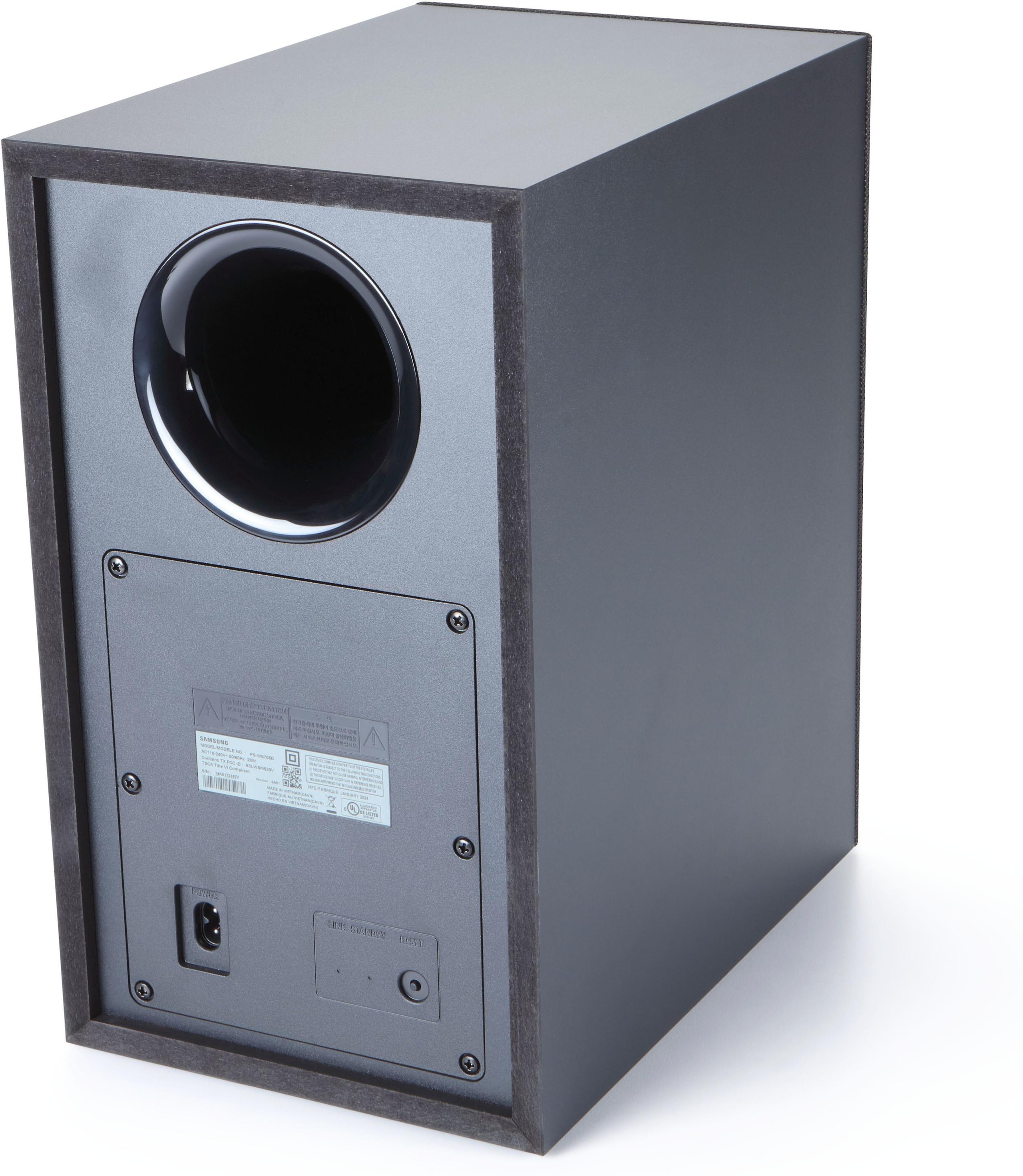
Music playback reveals the different design philosophies of these soundbars. The Polk Audio Signa S2 employs what audio engineers call a "V-shaped" sound signature, emphasizing bass and treble while keeping midrange frequencies more reserved. This creates an exciting, energetic presentation that makes pop, rock, and electronic music sound dynamic and engaging. The 5.25-inch wireless subwoofer delivers substantial bass impact that you'll feel as much as hear.
The Samsung HW-S700D aims for a more balanced sound profile that accurately reproduces the original recording without heavy coloration. Its midrange presentation is clearer and more detailed, making it better suited for acoustic music, jazz, and classical genres where natural instrument timbre matters. The Samsung's subwoofer also uses a 6-inch driver, providing slightly deeper extension and more controlled bass response.
Your music preference should influence your choice here. If you primarily listen to bass-heavy genres and enjoy an energetic sound, the Polk Audio Signa S2 might actually be more enjoyable despite being the less expensive option. However, if you value accuracy and listen to diverse musical styles, the Samsung's more neutral approach will serve you better long-term.
This category showcases the technological gap most clearly. The Samsung HW-S700D delivers a genuinely immersive movie experience thanks to Dolby Atmos processing. Action sequences gain spatial depth that simply isn't possible with traditional stereo or even virtual surround processing. The soundbar can create the illusion of sounds coming from behind and above you, transforming your living room into a mini theater.
For gaming enthusiasts, the Samsung includes Game Mode Pro, which automatically tracks directional audio cues and optimizes them for gaming scenarios. Whether you're playing a first-person shooter where footstep location matters or an adventure game with atmospheric audio, the enhanced spatial processing provides a competitive advantage and increased immersion.
The Polk Audio Signa S2 downmixes surround content to stereo, which works fine for basic movie watching but lacks the immersive quality that modern audiences have come to expect. It's perfectly adequate for casual viewing, but serious movie buffs will notice the limitation immediately.
The approach to smart features reveals another fundamental difference between these products. The Polk Audio Signa S2 prioritizes universal compatibility and simplicity. It includes Bluetooth for wireless music streaming and HDMI ARC for single-cable connection to your TV, but that's essentially it. This minimalist approach means it'll work reliably with any TV brand without requiring specific setup procedures or app installations.
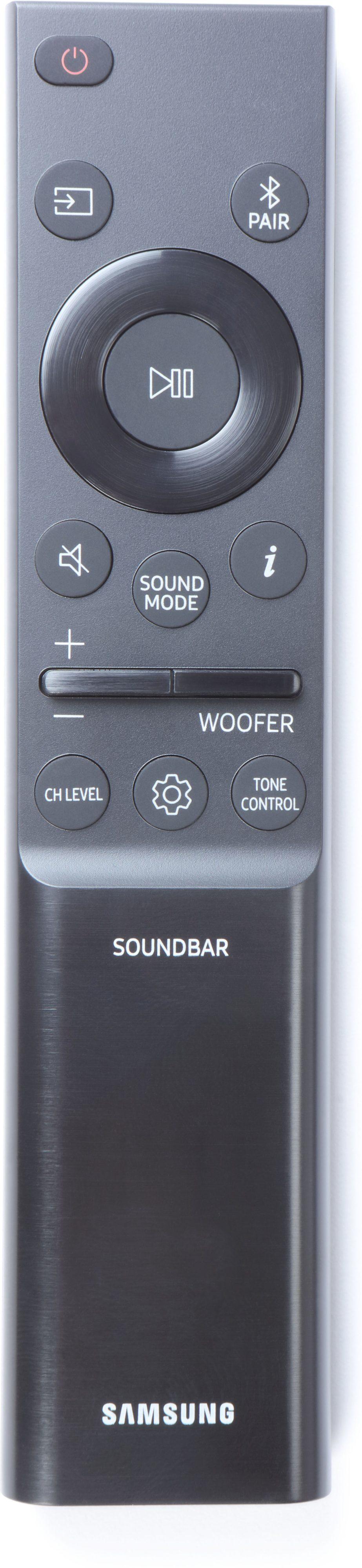
The Samsung HW-S700D takes the opposite approach, offering deep integration with Samsung's ecosystem through Q-Symphony technology. If you own a compatible Samsung TV, the soundbar can coordinate with your TV's built-in speakers to create a larger, more enveloping soundstage. The TV speakers handle certain frequency ranges while the soundbar focuses on others, effectively creating a larger speaker array.
The Samsung also supports voice assistants, AirPlay, and Chromecast for comprehensive smart home integration. The SmartThings app provides detailed control over all audio settings, including a 7-band equalizer for fine-tuning the sound to your preferences. While these features add significant value for users who want them, they also introduce complexity that some people prefer to avoid.
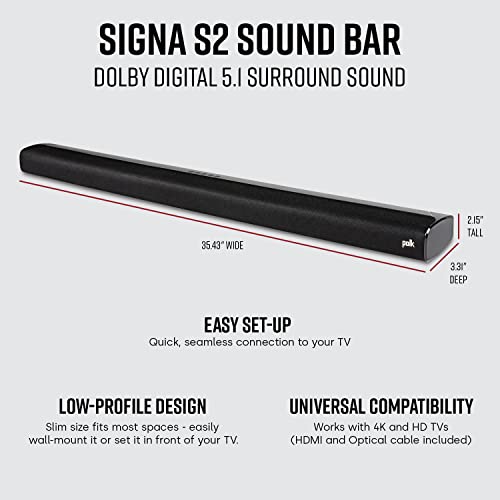
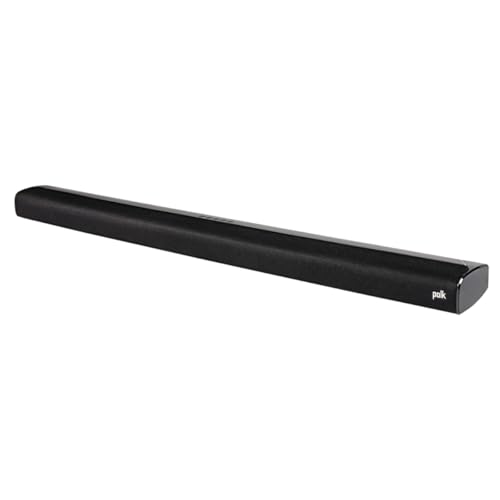
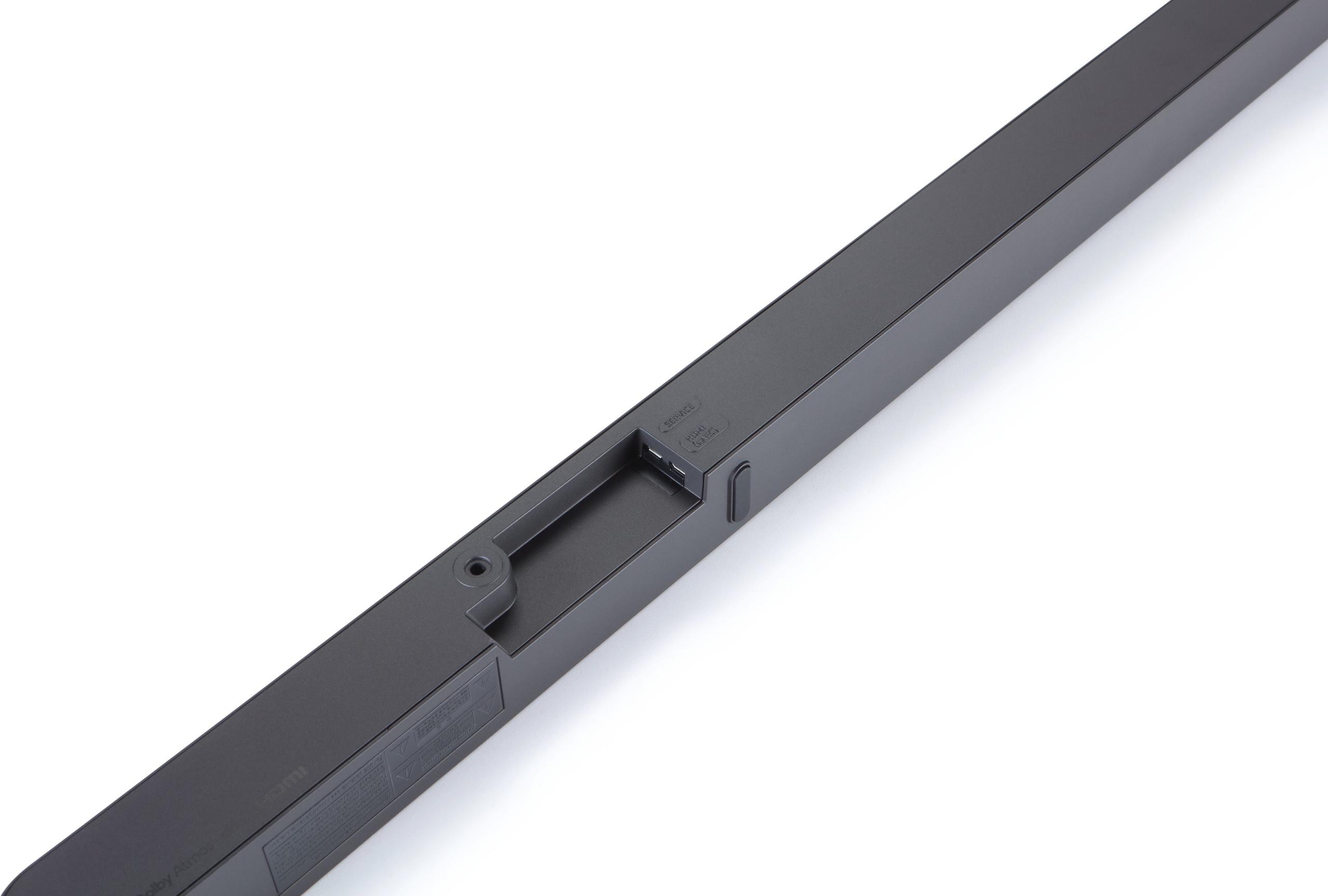
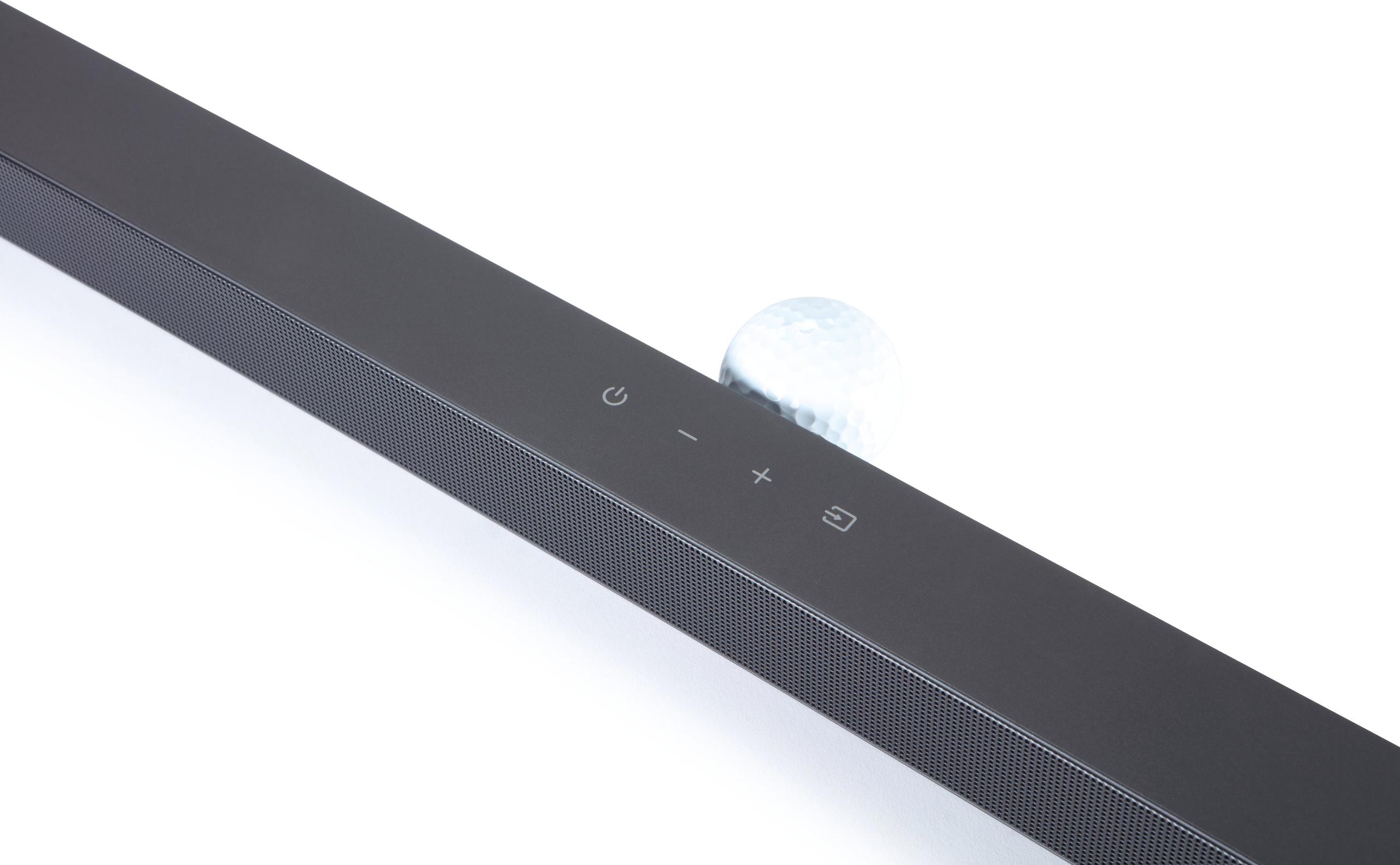
Both soundbars prioritize low-profile designs that won't obstruct your TV's screen or infrared remote sensor, but they achieve this goal differently. The Polk Audio Signa S2 measures just 2.15 inches tall and uses simple keyhole hangers for wall mounting. This straightforward approach means virtually anyone can install it without special tools or complicated procedures.
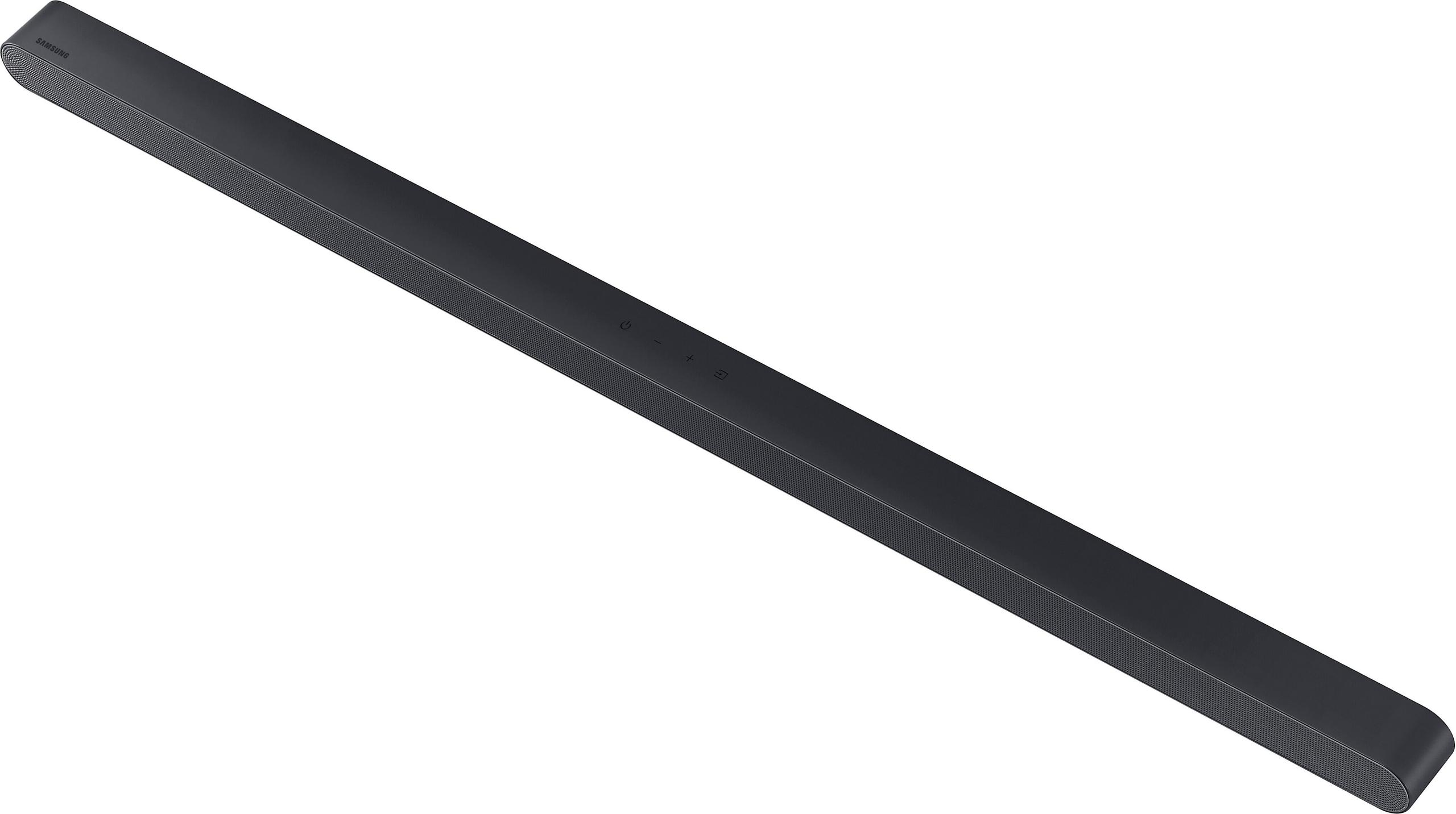
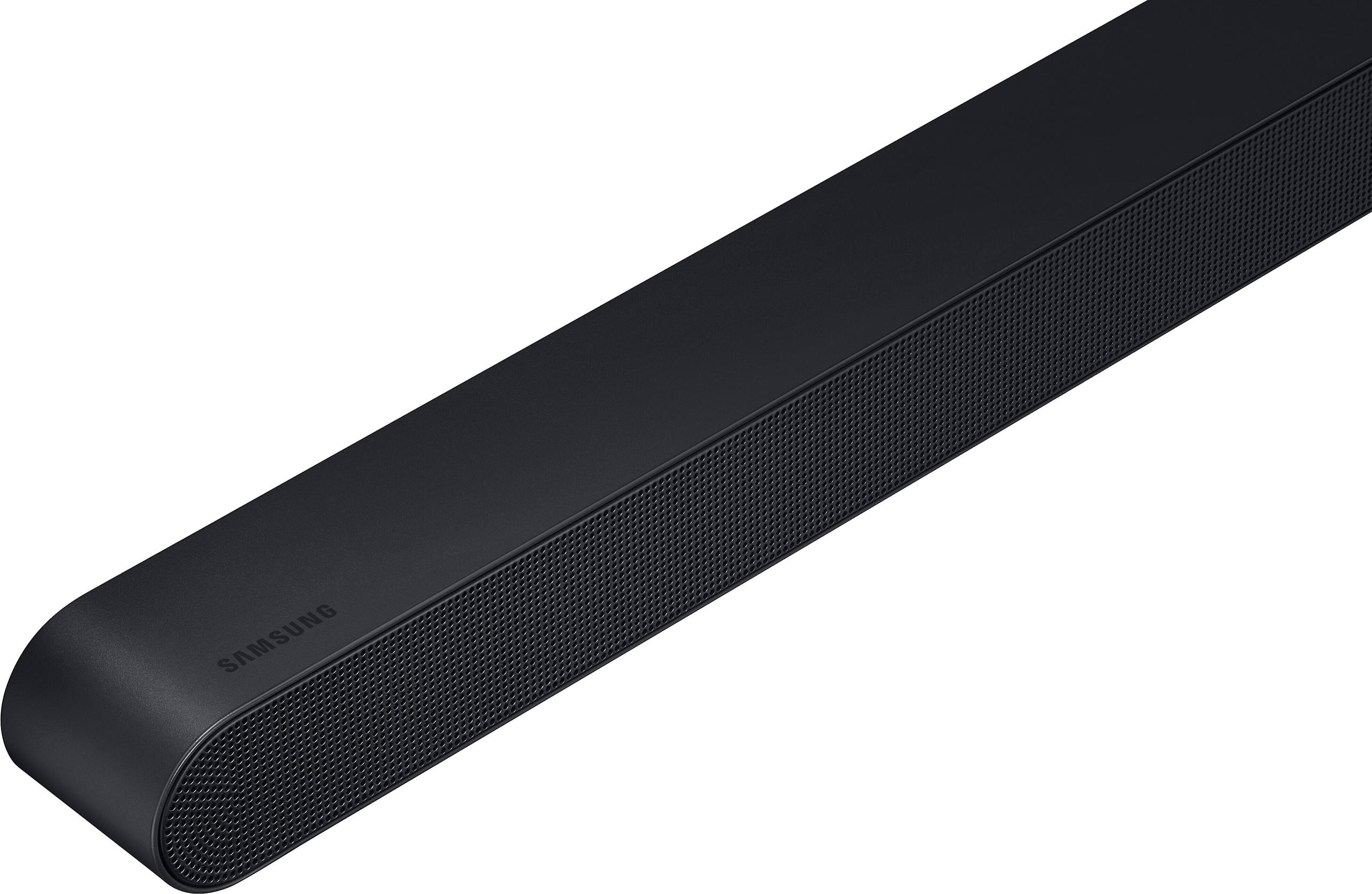
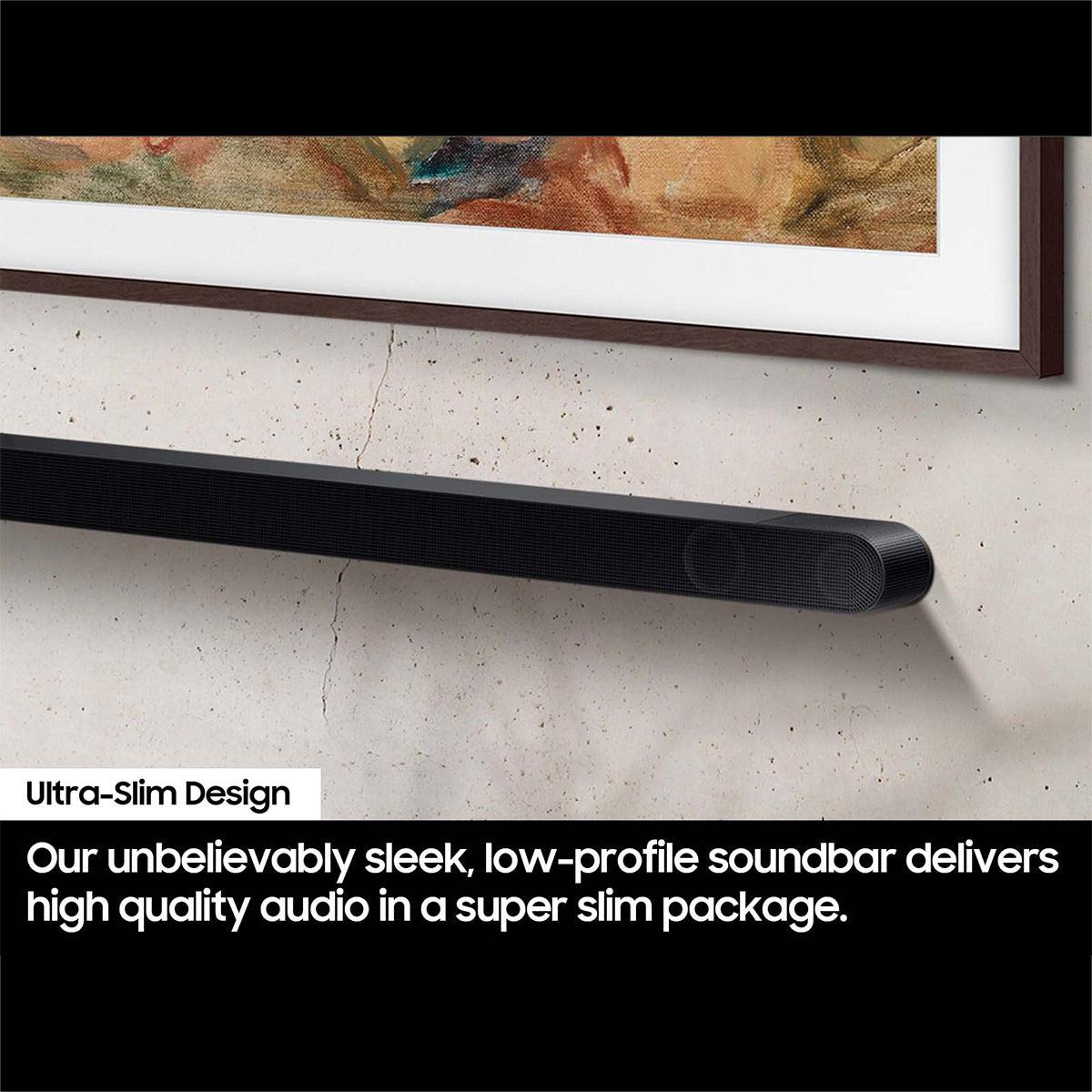
The Samsung HW-S700D features an ultra-slim design that's specifically engineered to complement modern flat-panel TVs. It includes a complete wall-mounting kit with detailed instructions, reflecting Samsung's focus on providing a premium installation experience. The more sophisticated mounting system provides better support and positioning options, but it requires more time and attention to install properly.
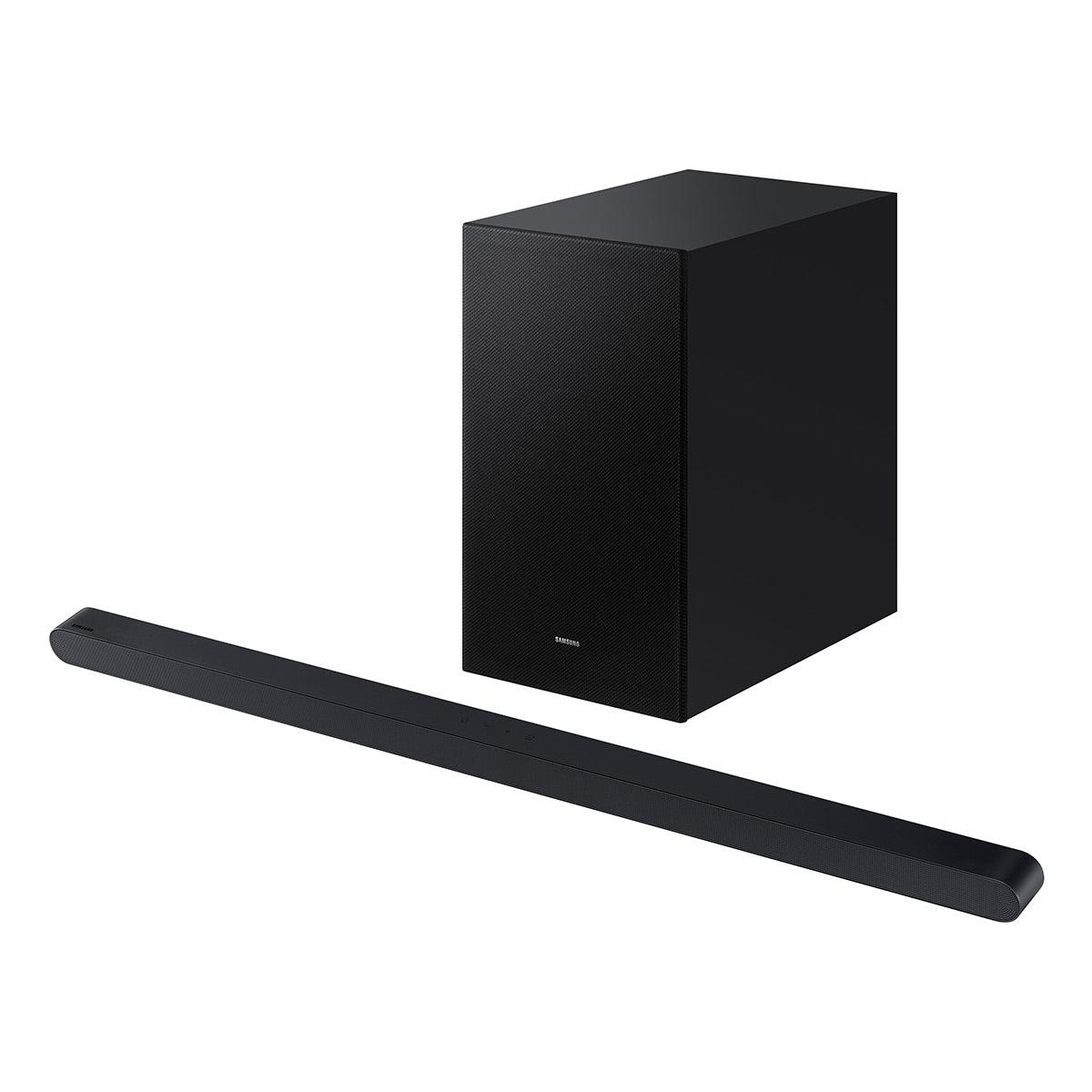
Both soundbars include wireless subwoofers that can be placed anywhere in the room for optimal bass response. The subwoofers pair automatically with their respective soundbars, eliminating the need for manual wireless configuration.
At the time of writing, the Polk Audio Signa S2 typically retails for under $250, making it one of the most affordable ways to significantly upgrade your TV's audio. For this price, you get a wireless subwoofer, multiple connectivity options, and sound quality that dramatically improves upon built-in TV speakers. The value proposition is exceptional if your primary goals are better dialogue clarity and enhanced bass response without complex features.
The Samsung HW-S700D commands a premium price, typically ranging from $380 to $500 depending on retailer and promotions. This represents roughly double the cost of the Polk, but the feature set justifies the premium for the right user. You're paying for Dolby Atmos processing, intelligent audio optimization, dedicated center channel performance, and extensive smart features.
The key question becomes whether the advanced features provide enough additional value to justify the higher cost. If you primarily watch TV shows and listen to music casually, the Polk Audio Signa S2 might provide 80% of the benefit at 50% of the cost. However, if you're a movie enthusiast or serious about audio quality, the Samsung's advanced capabilities become essential rather than optional.
For dedicated home theater use, the differences between these soundbars become most pronounced. The Samsung HW-S700D represents a genuine home theater component that can serve as the foundation for a more elaborate system. Its support for wireless rear speakers allows expansion to true 5.1 surround sound, while Dolby Atmos processing provides the spatial audio experience that modern movie soundtracks demand.
The Polk Audio Signa S2 works well as a TV audio upgrade but has limitations as a home theater centerpiece. Its stereo processing and lack of expansion options mean it'll always be a basic system, regardless of how you configure your room or what sources you connect.
If you're building a dedicated movie-watching space or plan to expand your audio system over time, the Samsung provides a much better foundation. Its advanced processing capabilities and expansion options will remain relevant as your system grows, while the Polk represents more of a final destination than a stepping stone.
The Polk Audio Signa S2 excels for buyers who want dramatic audio improvement without complexity or high cost. It's ideal for apartment dwellers, budget-conscious families, and anyone who primarily uses their TV for casual viewing and background entertainment. The simple setup process and reliable performance make it particularly appealing for less tech-savvy users who just want better sound without learning new interfaces or configuring multiple settings.
Choose the Samsung HW-S700D if you're serious about audio quality and want modern features that will remain relevant for years to come. It's the better choice for movie enthusiasts, gamers, and anyone who owns Samsung TVs that can take advantage of Q-Symphony integration. The intelligent audio processing and room optimization features provide the kind of premium experience that justifies the higher investment.
The Samsung also makes sense if you plan to expand your audio system in the future, as its advanced processing capabilities and wireless expansion options provide a solid foundation for growth. However, be prepared to spend time learning its various features and modes to get the maximum benefit from your investment.
Ultimately, both soundbars succeed at their intended purposes. The Polk Audio Signa S2 delivers exceptional value for essential soundbar functionality, while the Samsung HW-S700D provides premium performance with modern features that will satisfy demanding users. Your choice should align with your budget, technical comfort level, and long-term audio aspirations.
| Polk Audio Signa S2 | Samsung HW-S700D |
|---|---|
| Channel Configuration - Determines dialogue clarity and sound separation | |
| 2.1 channels (virtual center channel) | 3.1 channels (dedicated center channel) |
| Audio Format Support - Higher formats create more immersive experiences | |
| Dolby Digital (standard surround sound) | Dolby Atmos (3D spatial audio with height effects) |
| Dialogue Enhancement Technology - Critical for clear speech | |
| VoiceAdjust (boosts vocal frequencies) | Active Voice Amplifier + dedicated center speaker |
| Smart Audio Processing - Automatic optimization saves manual adjustments | |
| Basic sound modes (Movie/Music/Night) | Adaptive Sound, SpaceFit Sound Pro room calibration |
| Connectivity Options - More inputs mean better device compatibility | |
| HDMI ARC, Optical, 3.5mm AUX, Bluetooth | HDMI eARC, Bluetooth 5.2, AirPlay, Chromecast |
| Subwoofer Specifications - Larger drivers typically produce deeper bass | |
| 5.25" wireless subwoofer | 6" wireless subwoofer with bass reflex design |
| TV Integration Features - Enhanced coordination with compatible TVs | |
| Universal compatibility with any TV brand | Q-Symphony with Samsung TVs, One Remote function |
| Smart Home Integration - Voice control and app features | |
| Basic Bluetooth music streaming | Alexa, Google Assistant, SmartThings app control |
| Gaming Optimizations - Specialized modes enhance gaming audio | |
| None (standard audio processing) | Game Mode Pro with directional audio tracking |
| Expandability Options - Ability to add more speakers later | |
| None (fixed 2.1 system) | Compatible with wireless rear speakers for 5.1 setup |
| Physical Design - Affects placement flexibility and room aesthetics | |
| 2.15" height, keyhole wall mounts | Ultra-slim profile, premium wall mount kit included |
| Release Year - Newer products typically have better technology | |
| 2019 (mature, proven technology) | 2024 (latest audio processing and smart features) |
The Samsung HW-S700D delivers significantly better dialogue clarity thanks to its dedicated center channel speaker and Active Voice Amplifier technology. While the Polk Audio Signa S2 uses VoiceAdjust technology to improve speech, it relies on virtual center channel processing that can't match the precision of a physical center speaker. For users who frequently struggle to hear dialogue clearly, the Samsung HW-S700D is the superior choice.
The Polk Audio Signa S2 is a 2.1 system with left and right speakers plus a subwoofer, creating a virtual center channel through audio processing. The Samsung HW-S700D adds a dedicated center channel speaker specifically for dialogue and vocals. This physical center channel provides much clearer speech reproduction and better overall sound separation, making the 3.1 configuration worth the upgrade for most users.
The Samsung HW-S700D is substantially better for home theater use, supporting Dolby Atmos for immersive 3D audio that creates height effects and spatial positioning. The Polk Audio Signa S2 only supports basic Dolby Digital and lacks the advanced surround processing needed for a true cinematic experience. For serious movie watching, the Samsung's Atmos support makes a dramatic difference in immersion.
The Polk Audio Signa S2 works universally with any TV brand through HDMI ARC, optical, or auxiliary connections. The Samsung HW-S700D also works with all TV brands but offers special Q-Symphony integration that coordinates with Samsung TV speakers for enhanced audio when paired with compatible Samsung TVs. Both are excellent choices regardless of your TV brand.
The Polk Audio Signa S2 provides exceptional value for budget-conscious buyers, delivering significant audio improvements over TV speakers at an entry-level price point. The Samsung HW-S700D costs more but includes advanced features like Dolby Atmos, room calibration, and smart integration that justify the premium for users wanting modern soundbar technology.
The Samsung HW-S700D can be expanded with compatible wireless rear speakers to create a full 5.1 surround sound system, making it future-proof for audio system growth. The Polk Audio Signa S2 is a fixed 2.1 system with no expansion options. If you might want to add more speakers later, the Samsung provides that flexibility.
Both soundbars handle music well but with different strengths. The Polk Audio Signa S2 has a V-shaped sound signature that emphasizes bass and treble, creating an exciting presentation for pop and rock music. The Samsung HW-S700D offers more balanced, accurate sound reproduction that works better across diverse musical genres. Your music preferences should guide this choice.
The Samsung HW-S700D includes comprehensive smart features like voice assistant compatibility, AirPlay, Chromecast, and the SmartThings app for detailed control. The Polk Audio Signa S2 focuses on simplicity with basic Bluetooth streaming and straightforward operation. Choose Samsung if you want smart home integration, or Polk if you prefer simple, reliable functionality.
The Polk Audio Signa S2 is designed for simplicity with plug-and-play setup and minimal configuration options. The Samsung HW-S700D offers more sophisticated features but requires more initial setup time to optimize its room calibration and smart features. For users who want immediate results with minimal effort, the Polk is more user-friendly.
The Samsung HW-S700D includes Game Mode Pro that automatically optimizes audio for gaming with directional sound tracking and reduced latency. The Polk Audio Signa S2 doesn't include specific gaming modes but provides standard audio processing that works adequately for casual gaming. Serious gamers will benefit from the Samsung's specialized gaming features.
Both soundbars feature solid construction, but the Samsung HW-S700D has a more premium ultra-slim design with a comprehensive wall mount kit and refined aesthetics. The Polk Audio Signa S2 uses a straightforward design with simple keyhole mounting that prioritizes functionality over premium appearance. The Samsung feels more substantial and integrates better with modern TV setups.
The Samsung HW-S700D includes a 6-inch subwoofer with bass reflex design for deeper, more controlled bass response. The Polk Audio Signa S2 features a 5.25-inch subwoofer that delivers impactful bass but with slightly less extension and refinement. Both subwoofers connect wirelessly and can be placed anywhere in the room, but the Samsung's larger driver provides superior low-frequency performance.
We've done our best to create useful and informative comparisons to help you decide what product to buy. Our research uses advanced automated methods to create this comparison and perfection is not possible - please contact us for corrections or questions. These are the sites we've researched in the creation of this article: rtings.com - youtube.com - bestbuy.com - rtings.com - consumerreports.org - rtings.com - youtube.com - hometechnologyreview.com - soundbars.com - youtube.com - manuals.plus - creativeaudio.net - parts-express.com - thomsunmusic.com - polkaudio.com - manuals.plus - polkaudio.com - polkaudio.com - polkaudio.com - bestbuy.com - youtube.com - youtube.com - polkaudio.com - crutchfield.com - samsung.com - bestbuy.com - avsforum.com - walts.com - samsung.com - samsung.com - videoandaudiocenter.com - samsung.com - samsung.com - samsung.com - pcrichard.com

Privacy Policy
Terms and Conditions - Affiliate Policy
Home Security
© Copyright 2008-2026.
11816 Inwood Rd #1211, Dallas, TX 75244