

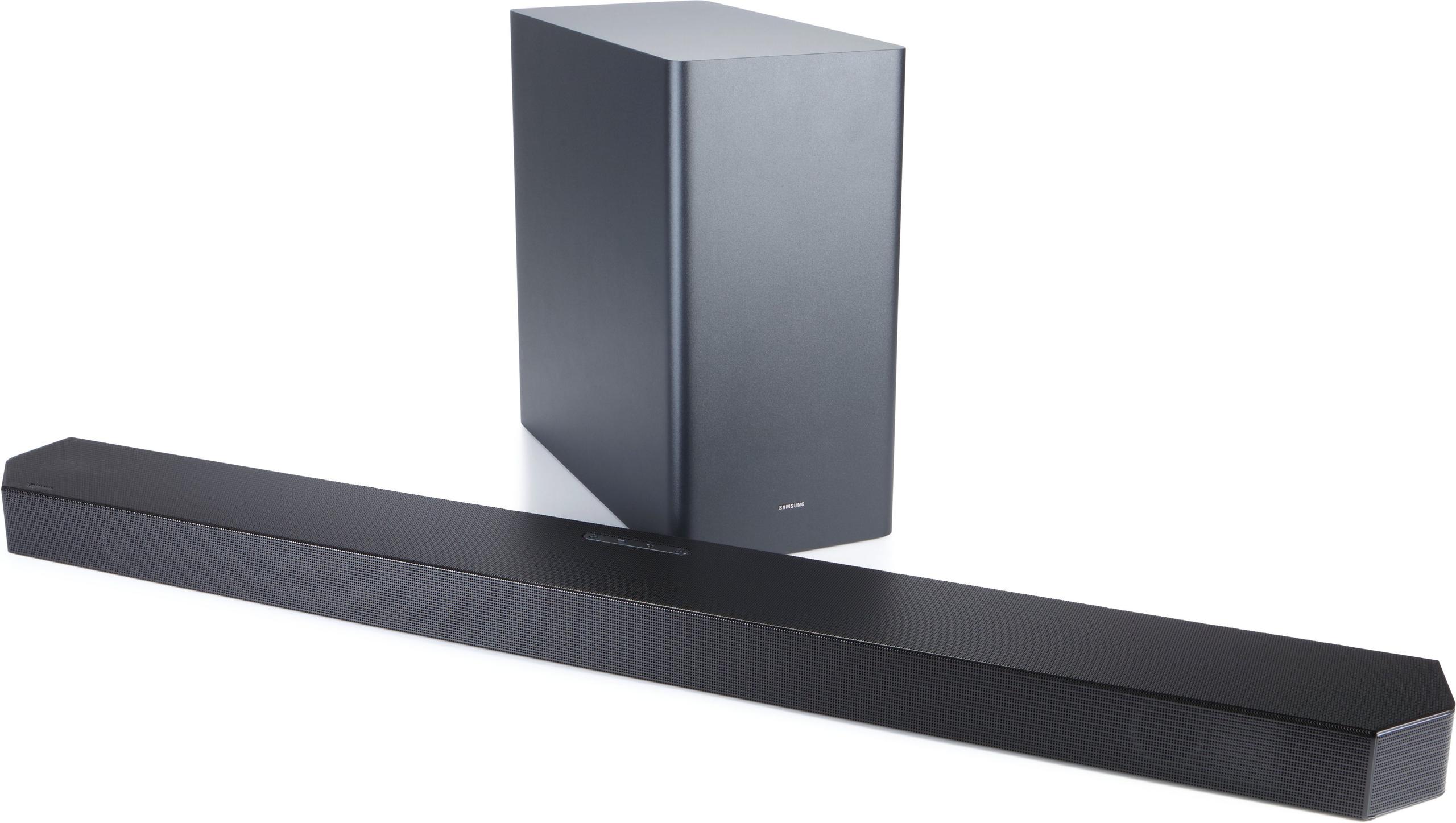
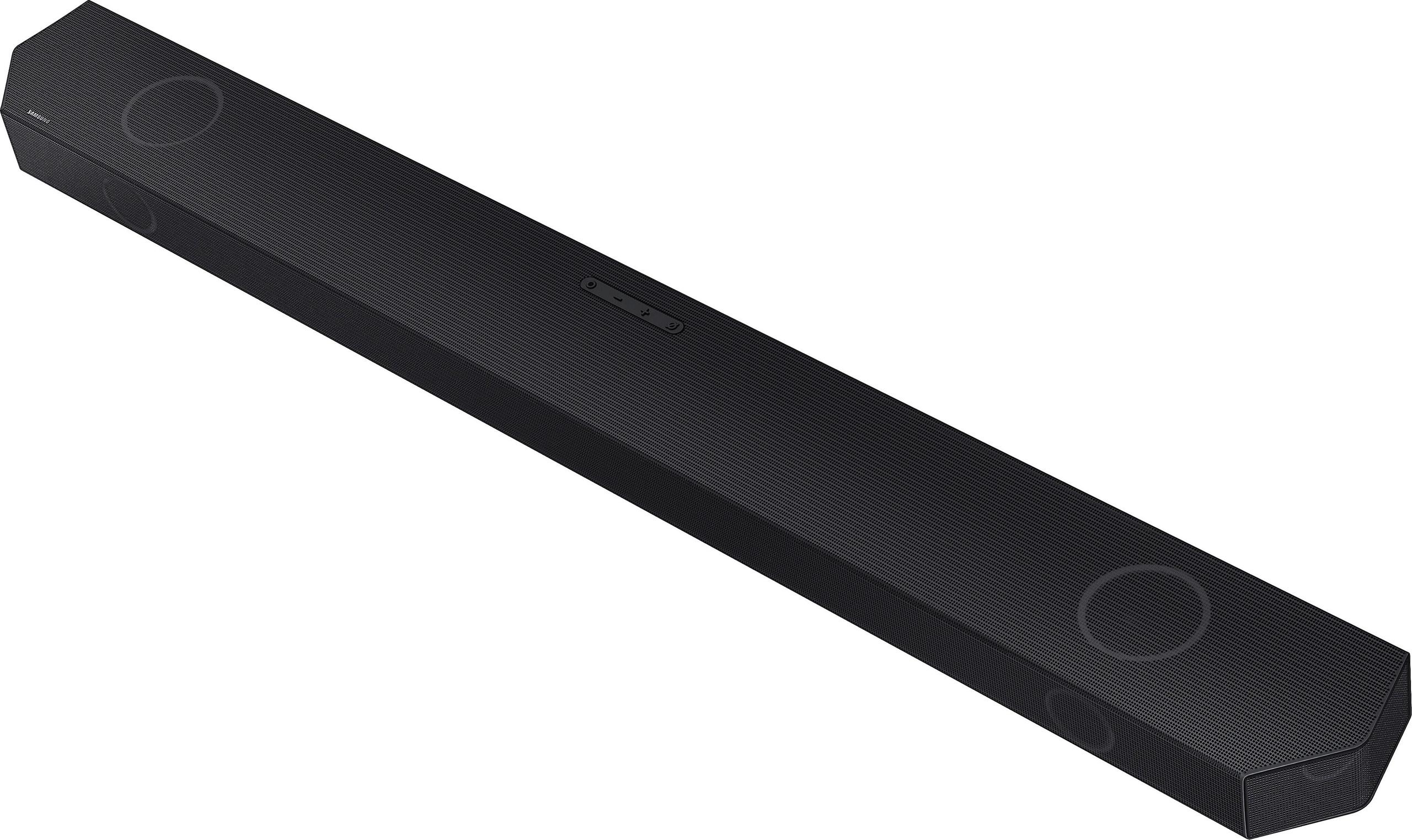
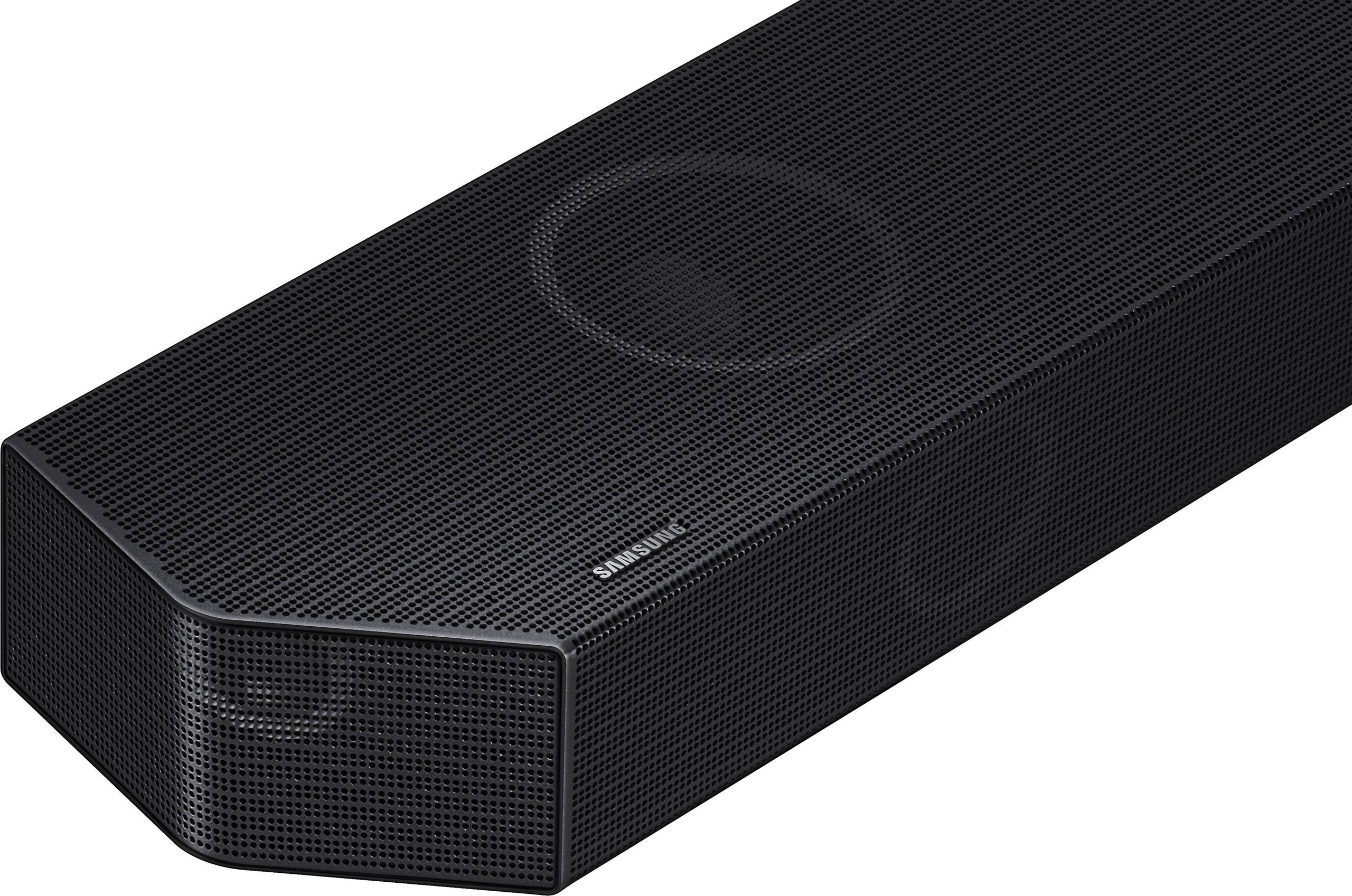




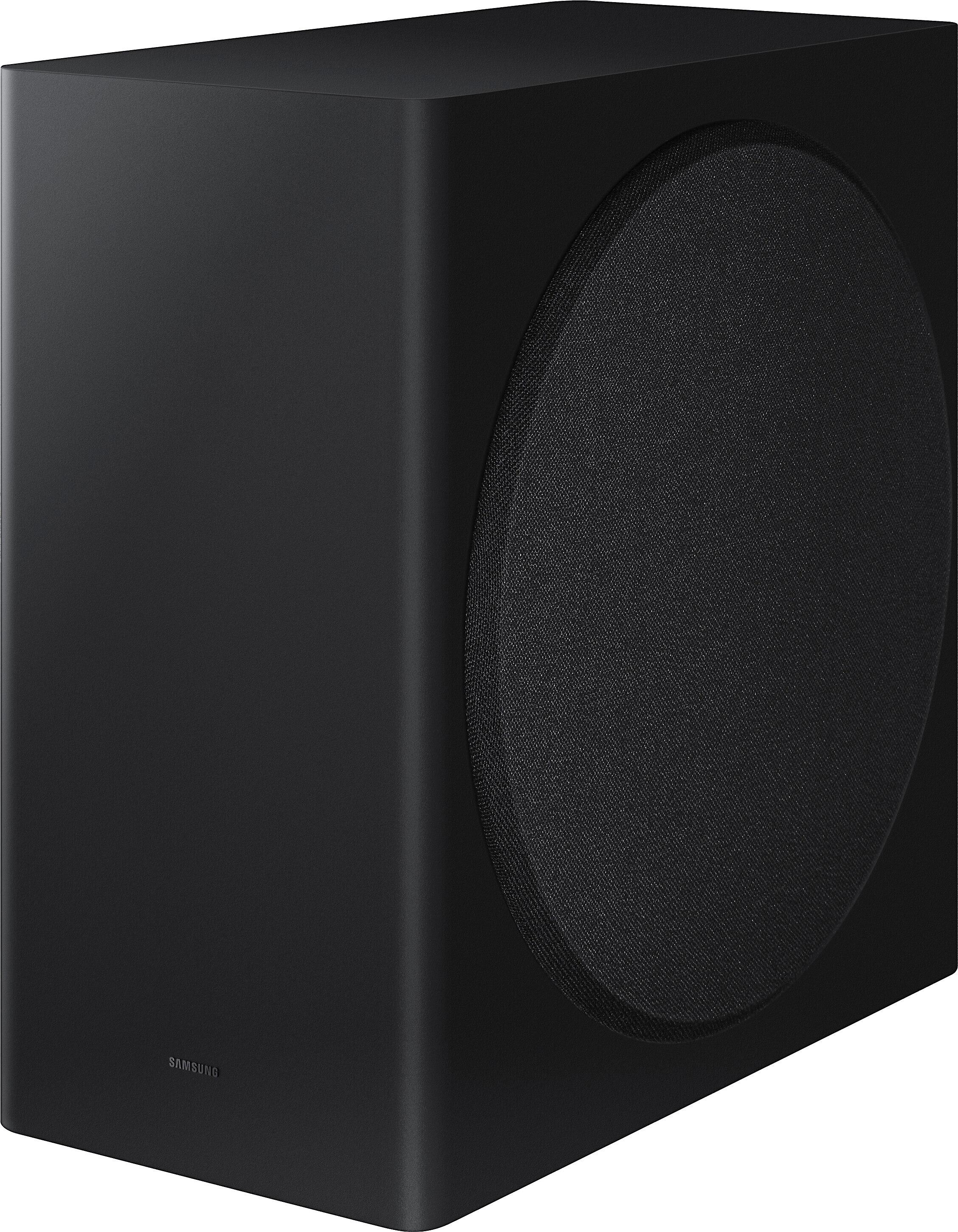
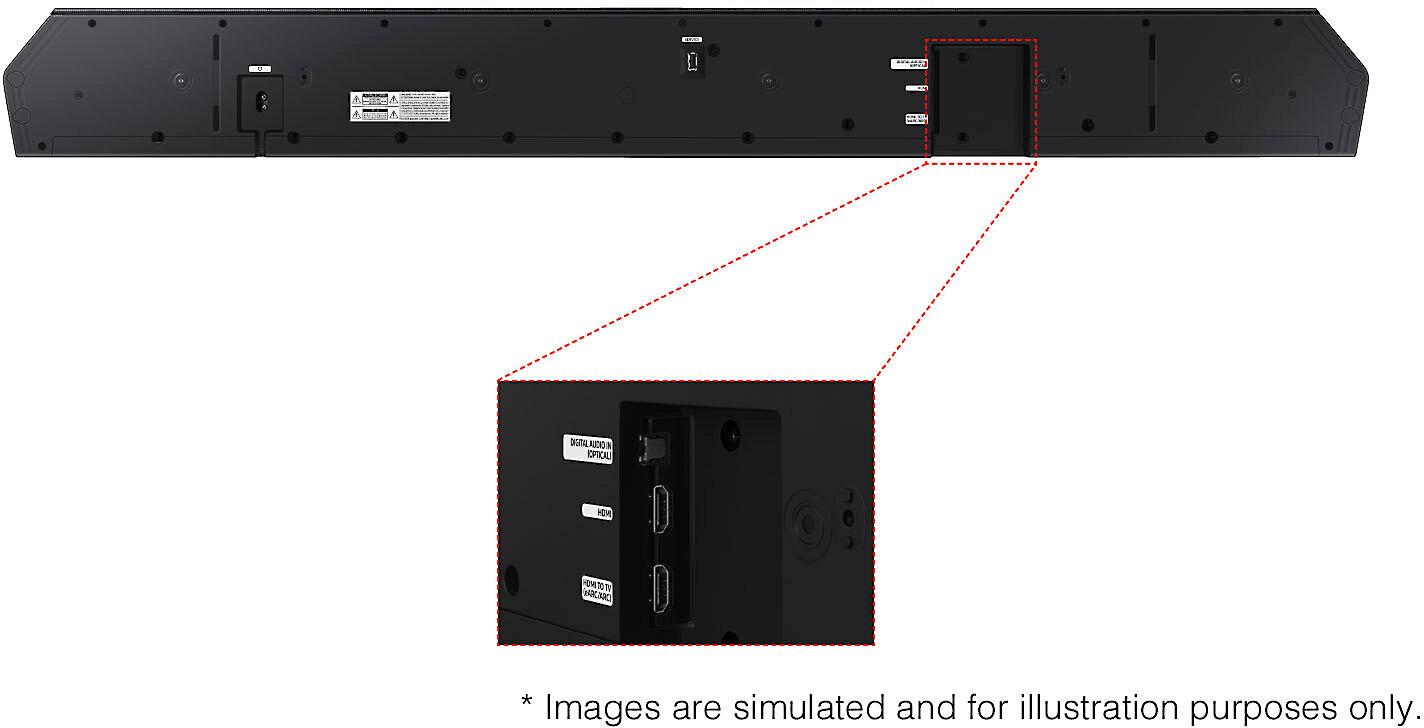
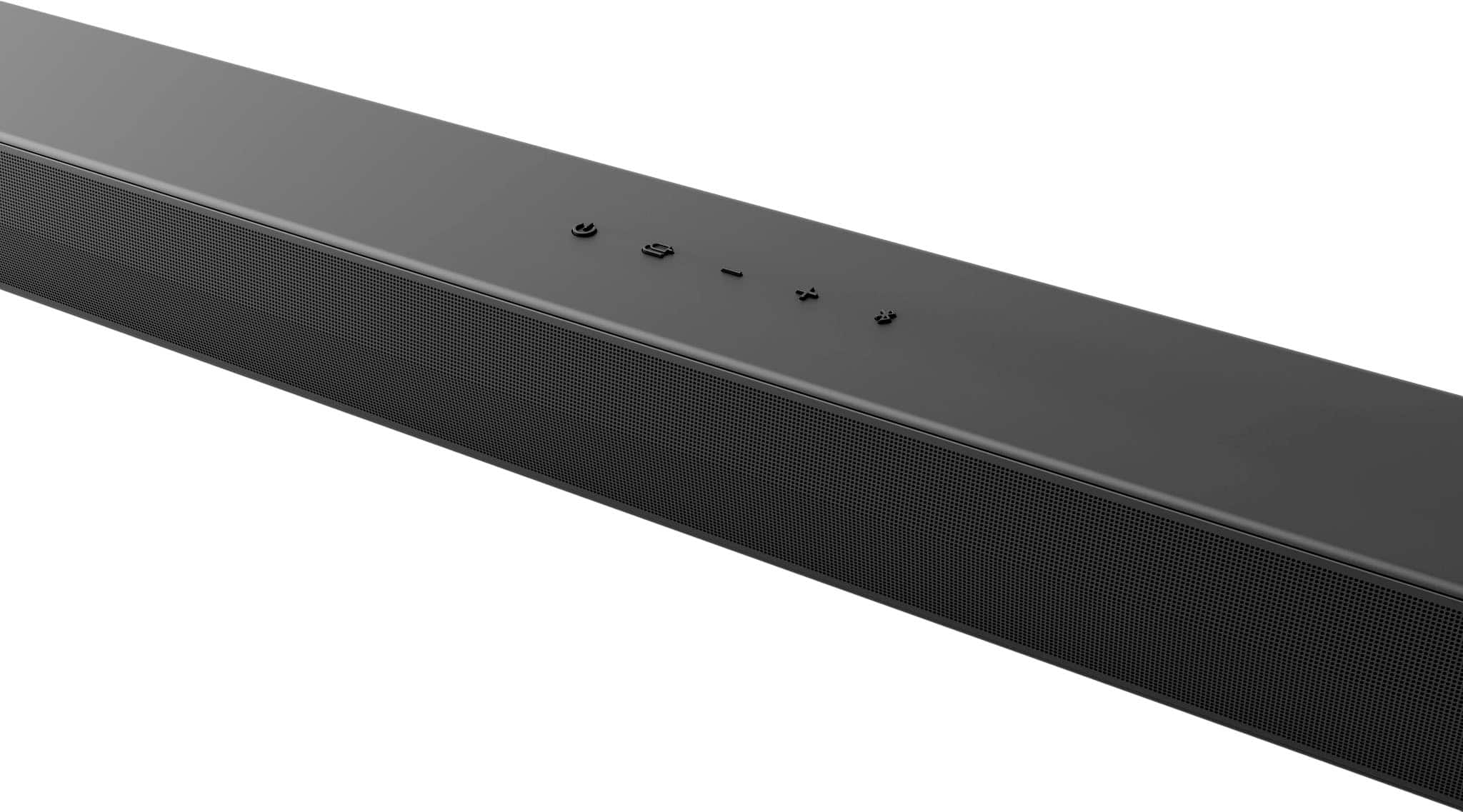


If you've been suffering through your TV's tinny built-in speakers, you're probably ready for a serious audio upgrade. The question is: should you go with Samsung's premium approach or LG's value-packed strategy? I've spent considerable time with both the Samsung HW-Q800D ($799) and LG S60TR ($299), and the choice isn't as straightforward as you might think.
Before diving into specifics, let's decode what these numbers and features actually mean for your living room experience. When you see "5.1.2" or "5.1," those digits tell a story about how sound surrounds you. The first number represents main channels (left, right, center, and two surround), the second is subwoofers (that big speaker handling deep bass), and the third indicates height channels (speakers firing upward to bounce sound off your ceiling).
Think of it like building a sonic bubble around your couch. Traditional TV speakers fire sound straight at you from one direction. Soundbars create width, while subwoofers add depth and rumble. Height channels complete the sphere, making you feel like you're inside the action rather than just watching it.
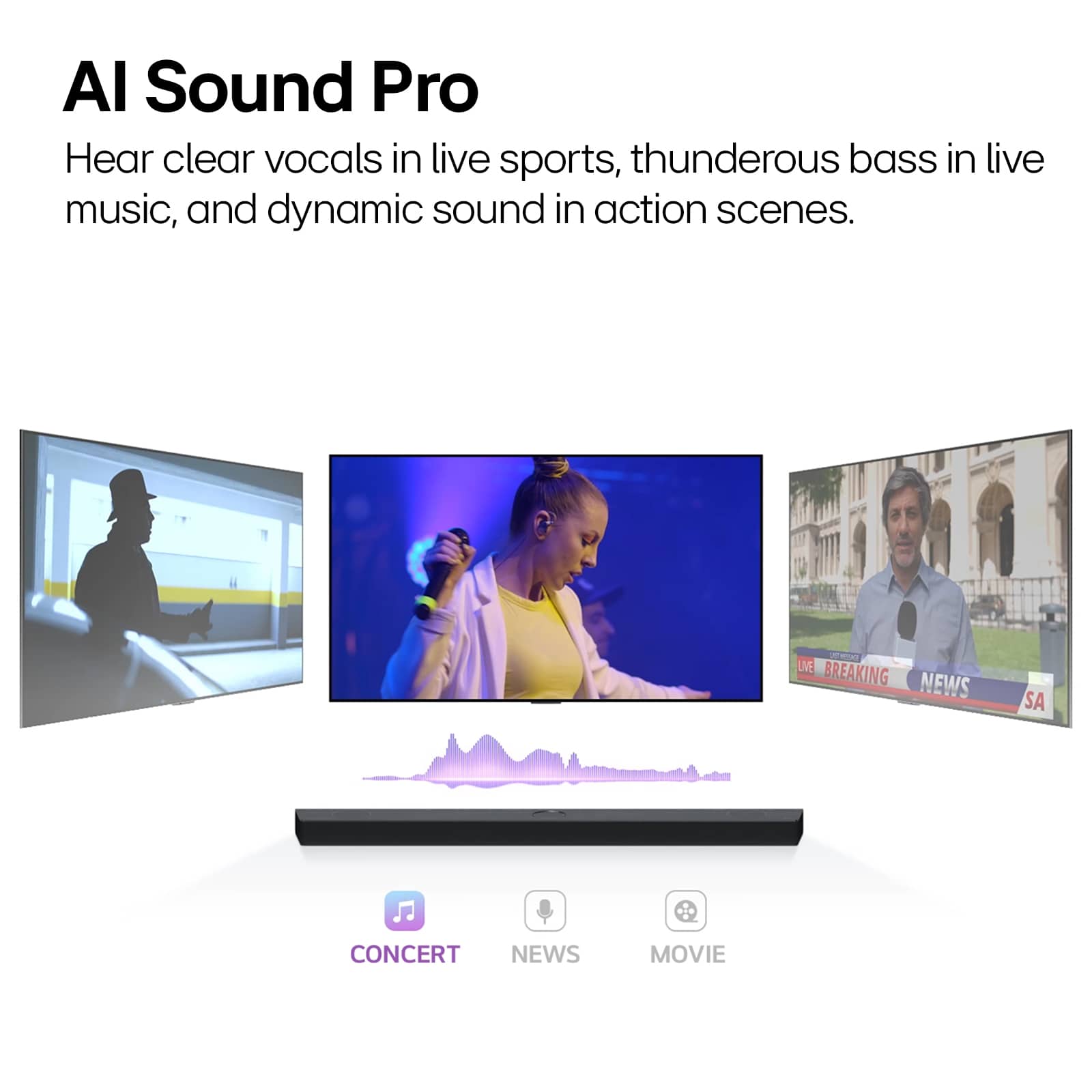
The technology has evolved dramatically since these models launched in early 2024. Both represent significant improvements over their predecessors, particularly in wireless connectivity and smart processing. Samsung's SpaceFit Sound Pro now uses machine learning to analyze your room's acoustics in real-time, while LG's AI Sound Pro has become much better at distinguishing between dialogue and sound effects.
These soundbars represent fundamentally different philosophies. Samsung's HW-Q800D is like having a sophisticated audio engineer in your living room – it uses advanced processing to create surround sound illusions and adds that magical overhead dimension through Dolby Atmos. LG's S60TR takes the traditional route: give you actual speakers where surround sound should come from, but skip the height effects to keep costs reasonable.
I've found this difference becomes most apparent during action sequences. With the Samsung, you'll hear helicopters whooshing overhead and rain falling from above – it's genuinely impressive how convincing these height effects can be. The LG system, meanwhile, excels at making you feel like you're in the middle of a chase scene, with cars genuinely moving from front to back through physical speaker placement.
The Samsung creates its surround magic through what's called "virtualization" – complex digital processing that tricks your brain into hearing sounds from directions where no speakers exist. It's remarkably effective, especially in smaller rooms where sound reflections work in the system's favor. The two upfiring drivers (speakers pointing at your ceiling) bounce Dolby Atmos content off the ceiling to create overhead effects.
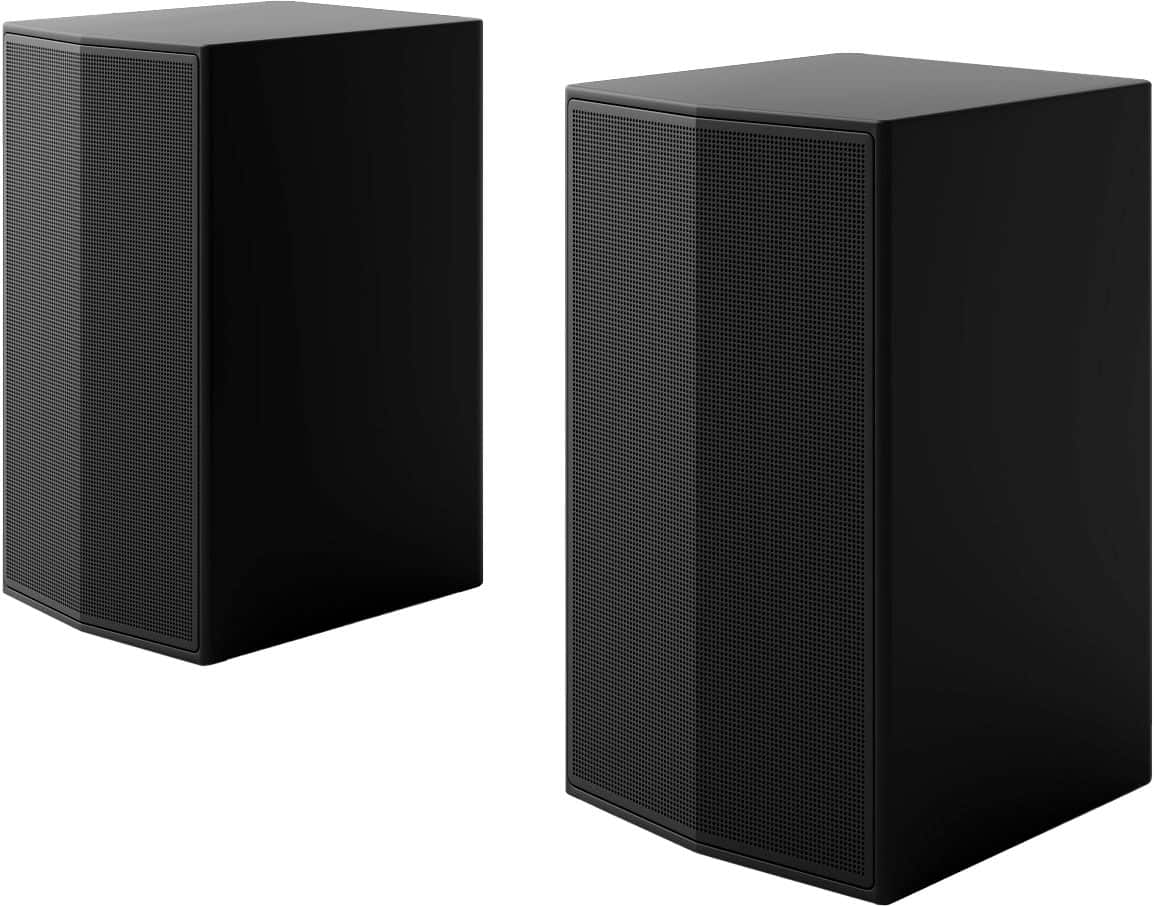
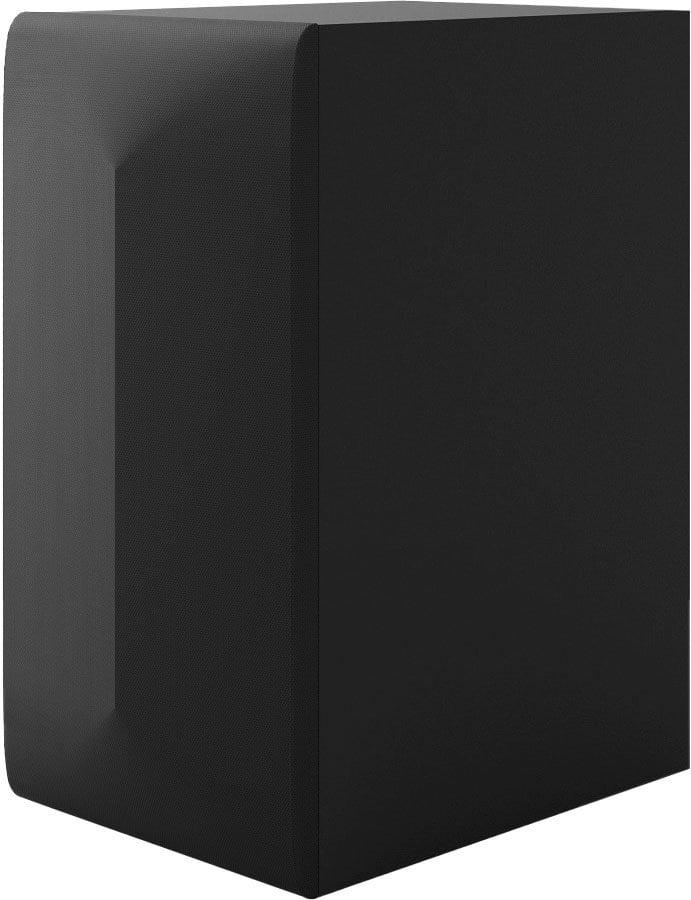
However, physics still matters. The LG S60TR includes actual wireless rear speakers that you place behind your seating area. When a spaceship flies from screen-left to screen-right and continues behind you, you're hearing real sound movement, not a digital approximation. This makes a substantial difference during movies like "Top Gun: Maverick" or "Dune," where directional audio is crucial to the experience.
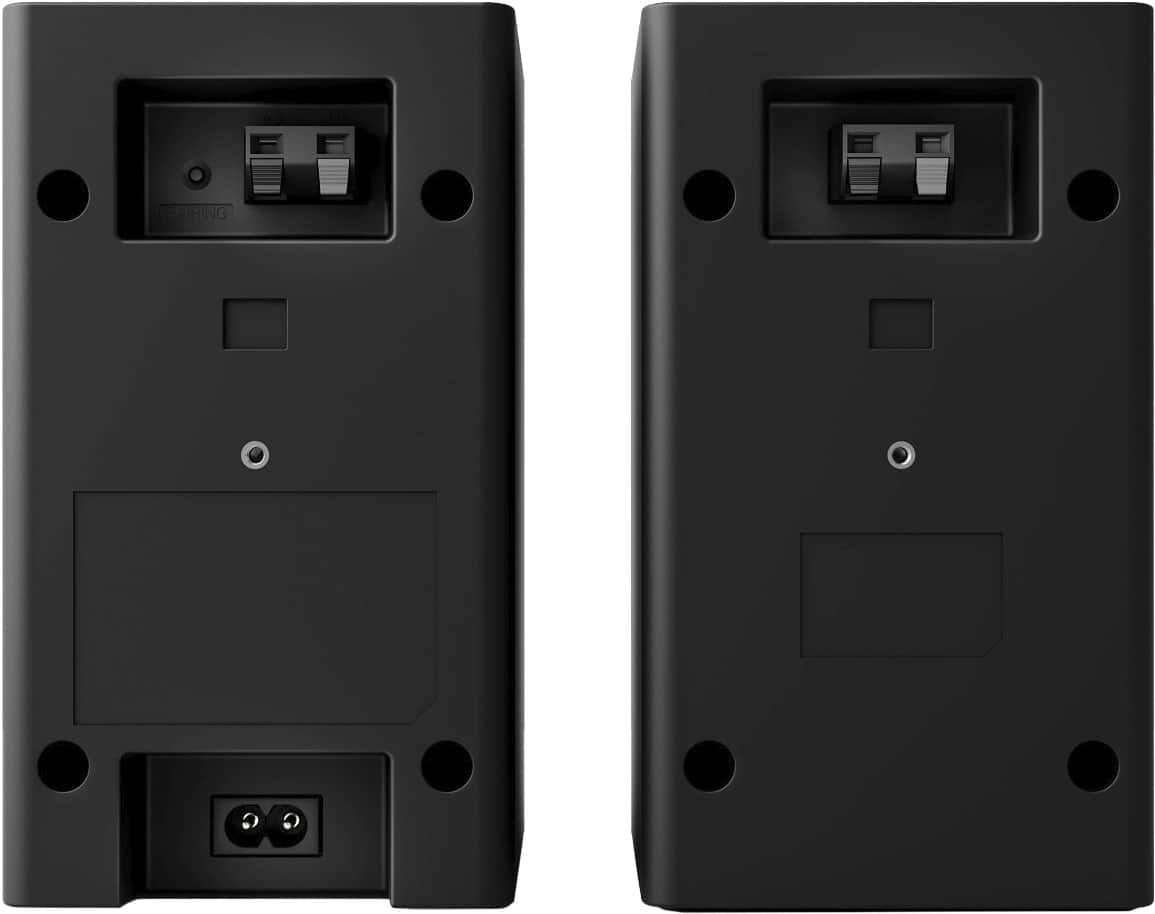
The trade-off? LG's rear speakers need power outlets, which can complicate placement in some rooms. Samsung's virtual approach works anywhere but may not convince listeners in larger spaces where ceiling reflections become less predictable.
Both systems tackle dialogue clarity differently, and this is where your content preferences really matter. Samsung's Active Voice Amplifier (AVA) technology continuously monitors the audio signal and boosts vocal frequencies when it detects speech. It's particularly effective during complex scenes where dialogue competes with music and effects.
LG's Clear Voice Pro takes a more targeted approach, using AI to identify dialogue-heavy content and automatically shifting the frequency response to emphasize the vocal range. In my testing, both systems significantly improve dialogue clarity over TV speakers, but Samsung offers more granular control through its 7-band equalizer.
The center channel – that dedicated speaker handling most movie dialogue – performs similarly on both systems. However, Samsung's slightly larger drivers and more sophisticated processing give it a slight edge during whispered conversations or heavily accented dialogue.
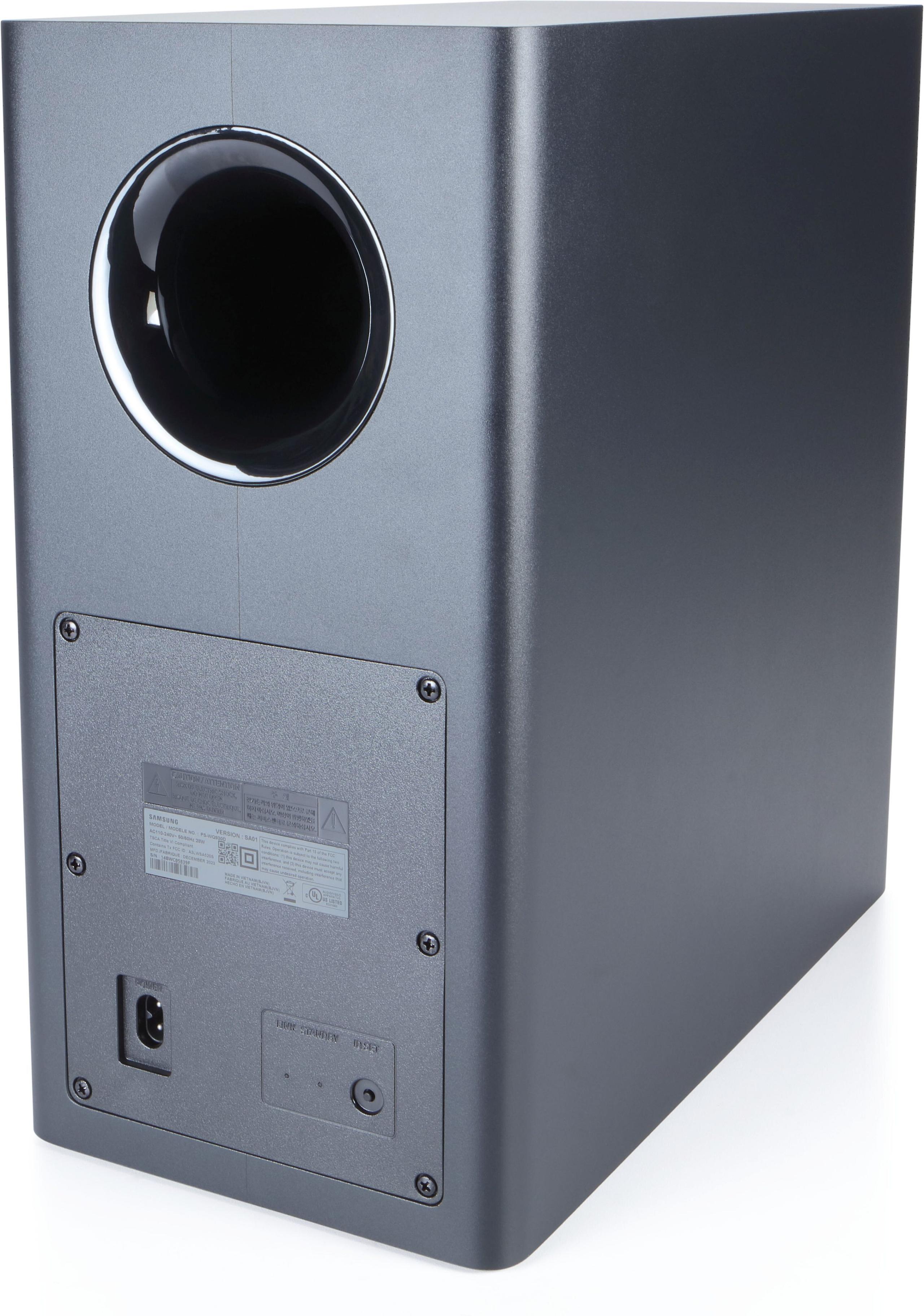
Here's where things get interesting from a technical standpoint. The LG S60TR actually delivers more total power (440W vs 360W) and dedicates more wattage to its subwoofer (220W vs 200W). However, Samsung's 8-inch subwoofer is larger than LG's 7-inch driver, potentially moving more air for deeper bass extension.
In practice, both deliver satisfying low-end response that transforms movie explosions and music bass lines. Samsung's subwoofer integrates more seamlessly with the main soundbar through advanced crossover processing, while LG's higher-powered approach provides more raw impact during action sequences.
The difference becomes most noticeable in larger rooms. Samsung's more sophisticated bass management maintains consistency across different listening positions, while LG's approach can create "sweet spots" where bass sounds perfect but may be overwhelming if you're sitting too close to the subwoofer.
When you're streaming Spotify or playing vinyl through your TV, these soundbars reveal different personalities. Samsung's more neutral frequency response and detailed customization options make it better suited for critical music listening. The 7-band EQ allows fine-tuning that audiophiles will appreciate, and the overall balance works well across genres from jazz to electronic music.
LG's approach favors convenience with multiple preset modes (Music, Bass Blast, etc.) that automatically optimize for different content types. While less customizable, these presets often sound better than manual adjustments for casual listeners. The AI Sound Pro feature has improved significantly since launch, now doing a better job of distinguishing between music and dialogue content.
The price difference here is dramatic – the Samsung HW-Q800D costs nearly three times more than the LG S60TR. But you're not just paying for brand premium; you're buying into different technological approaches.
Samsung's $799 gets you sophisticated room calibration, Dolby Atmos height effects, premium build quality, and seamless integration with Samsung TVs through Q-Symphony technology (which uses your TV's speakers alongside the soundbar speakers for fuller sound). However, you're only getting the soundbar and subwoofer – no rear speakers.
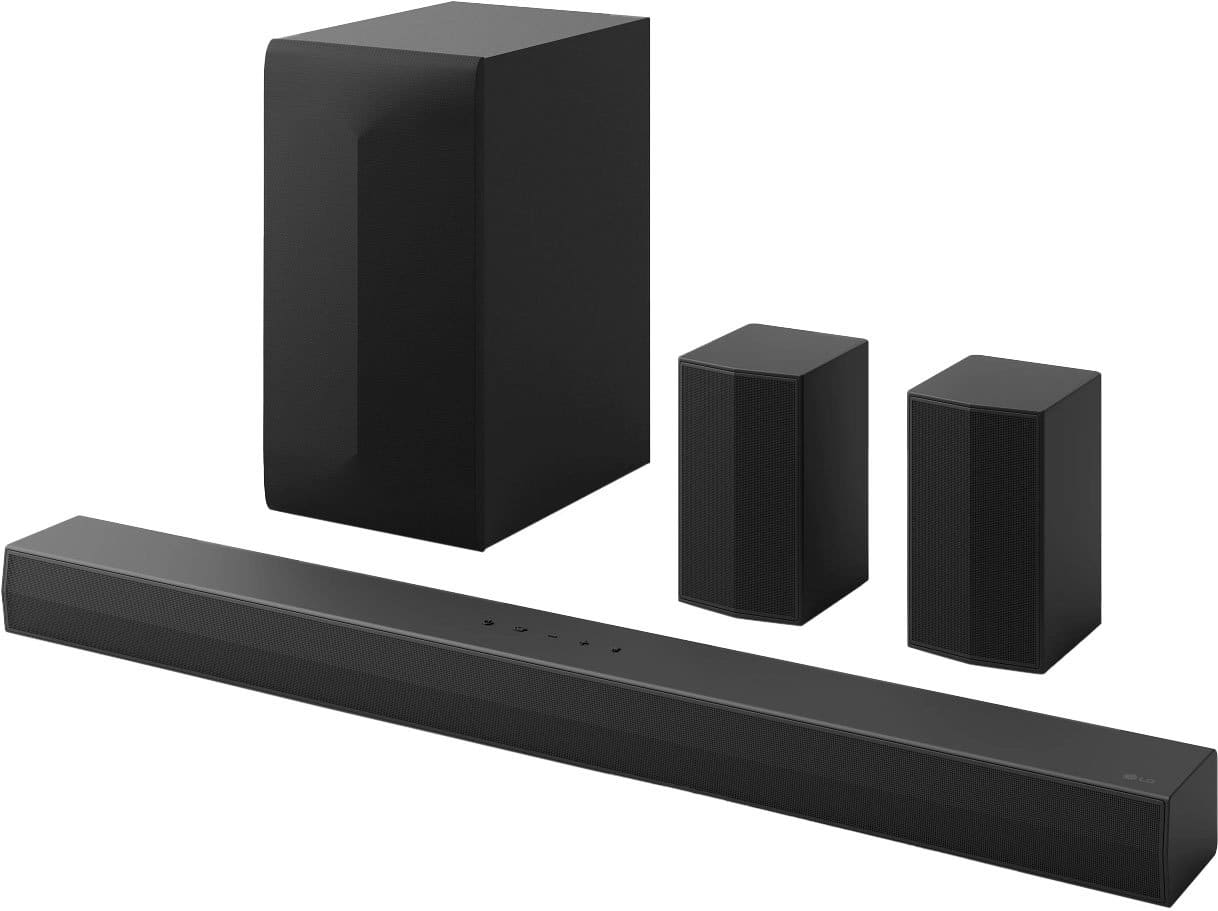
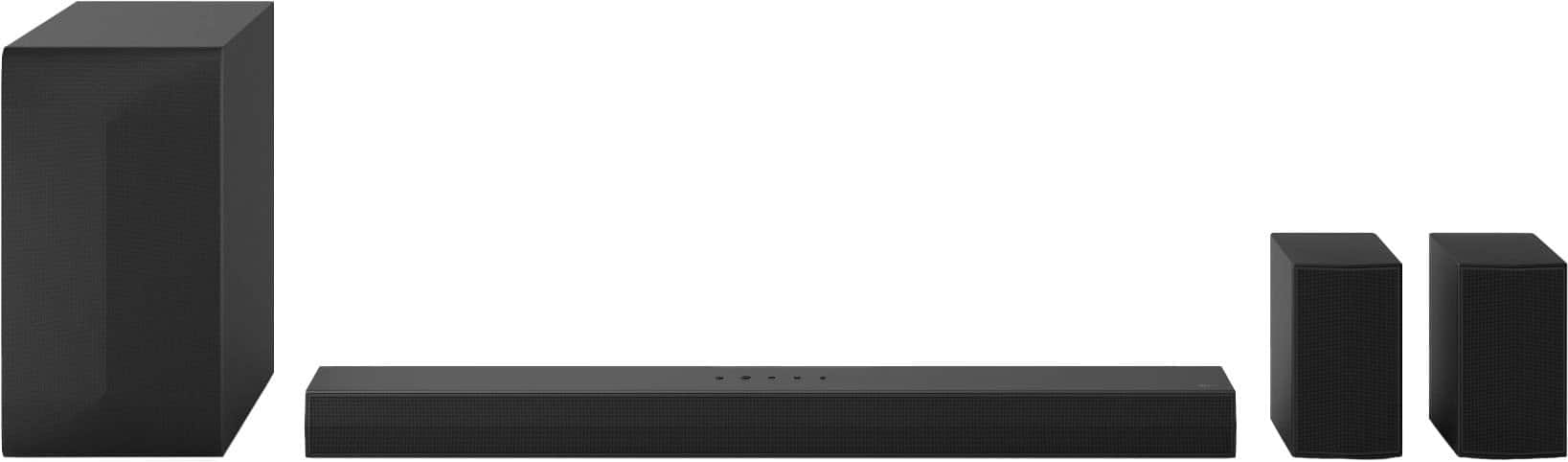
LG's $299 price point includes everything: soundbar, subwoofer, and wireless rear speakers. That's a complete 5.1 surround system for less than half of Samsung's asking price. The catch? No height channels, simpler processing, and more basic room optimization.
If you want true surround sound from the Samsung system, you'll need to purchase the separate SWA-9500S rear speaker kit for around $300, bringing your total investment to nearly $1,100. That's a significant premium for height effects and advanced processing.
Samsung's SpaceFit Sound Pro represents genuine innovation in consumer audio. Using the soundbar's built-in microphone, it analyzes your room's acoustic signature and adjusts the frequency response accordingly. This isn't just basic room correction – it's sophisticated digital signal processing that adapts to your specific environment.
The Q-Symphony feature, while only useful with Samsung TVs, demonstrates interesting possibilities for integrated home entertainment. Rather than disabling your TV's speakers (as most soundbars do), Q-Symphony coordinates them with the soundbar to create additional channels and improved spatial effects.
LG's AI Sound Pro has evolved considerably since the S60TR's launch. The deep learning algorithms now better distinguish between content types, automatically switching between dialogue-optimized and action-oriented sound profiles. While less flashy than Samsung's room calibration, it's remarkably effective in practice.
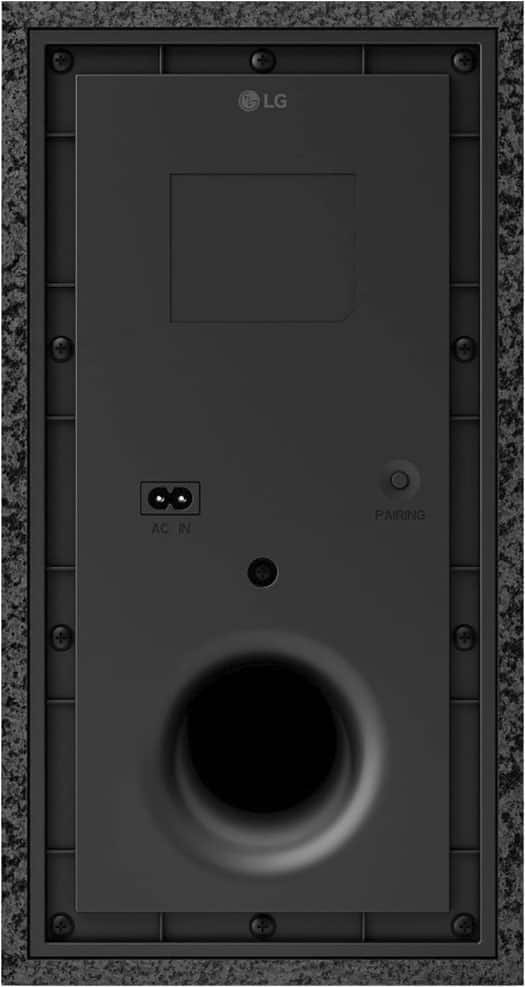
The wireless rear speaker implementation deserves special mention. Unlike some competitors that require proprietary wireless transmitters, LG's system connects the rear speakers to each other via cable (one speaker needs power), then wirelessly transmits to the soundbar. It's elegant and reliable, though it does mean you need a power outlet accessible to one rear speaker.
For dedicated movie watching, these systems serve different purposes. The Samsung HW-Q800D excels with atmospheric content – think "Blade Runner 2049" with its layered soundscapes, or "A Quiet Place" where subtle overhead details build tension. The height channels add a dimension that traditional surround sound simply can't match.
The LG S60TR shines with action-oriented content where directional effects matter more than atmospheric immersion. Car chases, battle sequences, and sports broadcasts benefit enormously from having actual rear speakers tracking movement across the soundfield.
Room size plays a crucial role in performance. Samsung's virtual surround works best in medium-sized rooms (up to about 300 square feet) where ceiling reflections can be controlled. Larger spaces may diminish the height effects, though the overall sound quality remains excellent.
LG's system adapts better to various room sizes since physical speaker placement doesn't rely on acoustic reflections. However, you'll need to position those rear speakers thoughtfully – too close to your seating position and they become distracting; too far away and they lose impact.
Samsung wins on setup simplicity. Connect one HDMI cable, plug in the subwoofer, and you're essentially done. The SpaceFit calibration runs automatically, and the system pairs wirelessly without intervention. It's genuinely plug-and-play.
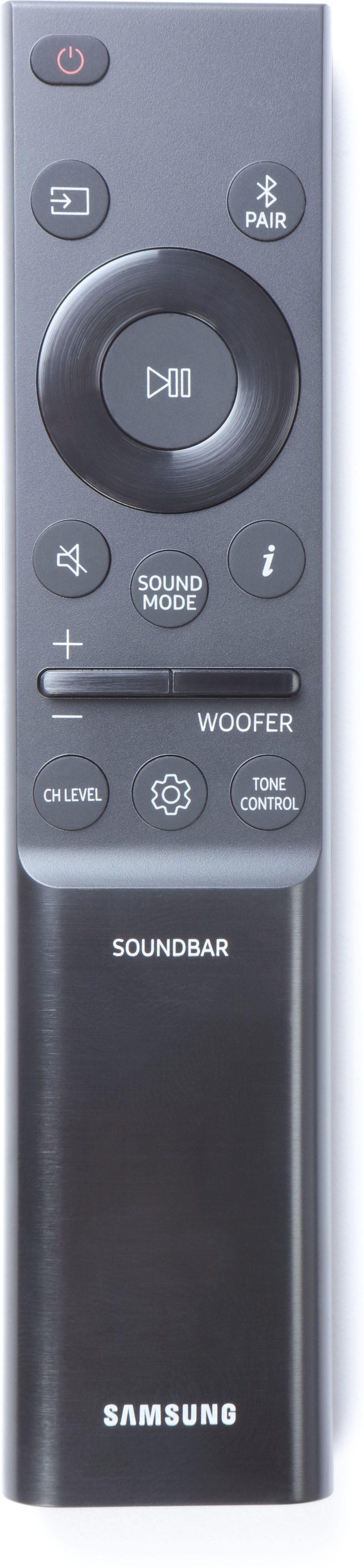
LG requires more initial effort. You'll need to position and power the rear speakers, run the connecting cable between them, and go through a pairing sequence. However, once configured, the system is equally reliable. The included WOW interface lets you control everything from your LG TV remote, which is convenient.
Both systems now support over-the-air firmware updates, something that wasn't common in soundbars until recently. This means features and performance can improve over time – I've noticed dialogue clarity improvements in both systems through updates received since their launch.
Your choice ultimately depends on what you value most and how you use your entertainment system.
Choose the Samsung HW-Q800D if you're fascinated by Dolby Atmos technology and want that overhead dimension in your movies. It's ideal if you already own a Samsung TV, live in an apartment where rear speaker placement is challenging, or simply prefer fewer physical components. The advanced room calibration and processing justify the premium if audio quality is your primary concern.
The LG S60TR makes sense if you want authentic surround sound immediately without breaking the bank. It's perfect for families who watch a mix of content, gamers who benefit from directional audio cues, or anyone who wants maximum value from their audio upgrade. The included rear speakers provide an experience that virtual processing simply can't replicate.
After extensive testing, I lean toward the LG for most users. While Samsung's height effects are genuinely impressive, the authentic surround sound experience and complete package at LG's price point deliver more dramatic improvement over TV speakers. However, if Dolby Atmos is a priority and budget isn't a primary concern, Samsung's sophisticated approach offers a more premium experience.
Both represent significant upgrades over TV audio, and either will transform your entertainment experience. The question isn't whether you'll be satisfied – it's whether you prioritize cutting-edge processing or comprehensive surround sound value.
| Samsung HW-Q800D ($799) | LG S60TR ($299) |
|---|---|
| Channel Configuration - Determines surround sound capability and immersion level | |
| 5.1.2 (virtual surround + height channels) | 5.1 (true physical surround, no height) |
| Included Components - What you get in the box affects total value | |
| Soundbar + wireless subwoofer only | Complete system: soundbar + subwoofer + rear speakers |
| Total Power Output - Higher wattage generally means louder, more dynamic sound | |
| 360W (sufficient for medium rooms) | 440W (more headroom for larger spaces) |
| Dolby Atmos Support - Creates overhead sound effects for movie immersion | |
| Yes, with 2 upfiring drivers for ceiling bounce | No height channels (focuses on horizontal surround) |
| Subwoofer Specifications - Affects bass depth and impact | |
| 8" driver, 200W, wireless connection | 7" driver, 220W, higher power but smaller cone |
| Rear Speaker Situation - Critical for authentic surround sound placement | |
| Optional SWA-9500S kit ($300 extra) | Wireless rear speakers included in box |
| Room Calibration Technology - Optimizes sound for your specific space | |
| SpaceFit Sound Pro with microphone analysis | Basic AI Sound Pro with content-based adjustment |
| Smart TV Integration - Convenience features for daily use | |
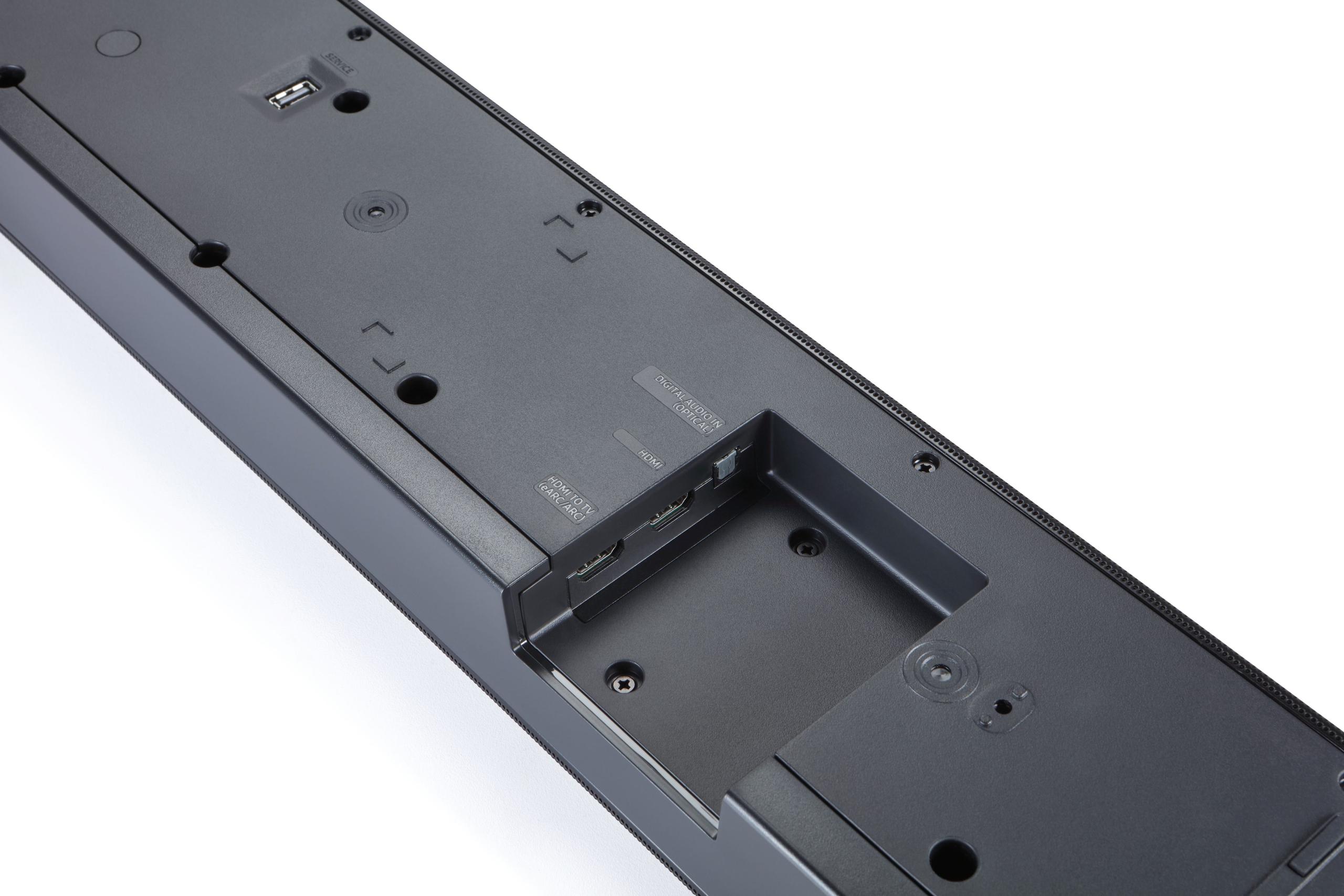
| Q-Symphony (Samsung TVs only), universal HDMI eARC | WOW interface (LG TVs), standard HDMI connectivity |
| Setup Complexity - Time and effort required for installation | |
| 15 minutes (soundbar + sub auto-pair) | 30-45 minutes (rear speaker placement + power needed) |
| Total Cost for Complete Surround - Real price for full 5.1 experience | |
| $1,099 (soundbar + subwoofer + rear speakers) | $299 (everything included) |
| Best Use Case - Who should choose this option | |
| Atmos enthusiasts, Samsung TV owners, apartment dwellers | Budget-conscious buyers wanting authentic surround, action movie fans |
The LG S60TR ($299) provides exceptional value by including a complete 5.1 surround system with rear speakers and subwoofer for under $300. The Samsung HW-Q800D ($799) costs nearly three times more but only includes the soundbar and subwoofer, requiring an additional $300 for rear speakers to match LG's surround capability.
The Samsung HW-Q800D features 5.1.2 channels, meaning it has the standard 5.1 setup plus 2 height channels that fire sound upward for Dolby Atmos overhead effects. The LG S60TR offers true 5.1 channels with physical rear speakers but no height channels, focusing on authentic horizontal surround sound placement.
The Samsung HW-Q800D is ideal for apartments since it creates virtual surround sound without requiring rear speaker placement. The LG S60TR needs space and power outlets for its wireless rear speakers, which can be challenging in smaller living spaces with limited furniture placement options.
Only the Samsung HW-Q800D supports Dolby Atmos with dedicated upfiring drivers that bounce sound off your ceiling for overhead effects. The LG S60TR does not include height channels or Dolby Atmos support, focusing instead on traditional surround sound with physical speaker placement.
Both offer strong bass, but differently. The LG S60TR provides 220W of subwoofer power compared to Samsung's 200W, plus higher total system power at 440W. However, the Samsung HW-Q800D features a larger 8-inch subwoofer driver versus LG's 7-inch, potentially offering deeper bass extension despite lower wattage.
The Samsung HW-Q800D offers simpler setup with just the soundbar and wireless subwoofer that pair automatically in about 15 minutes. The LG S60TR requires 30-45 minutes to position rear speakers, connect cables between them, and ensure proper power connections for the complete surround system.
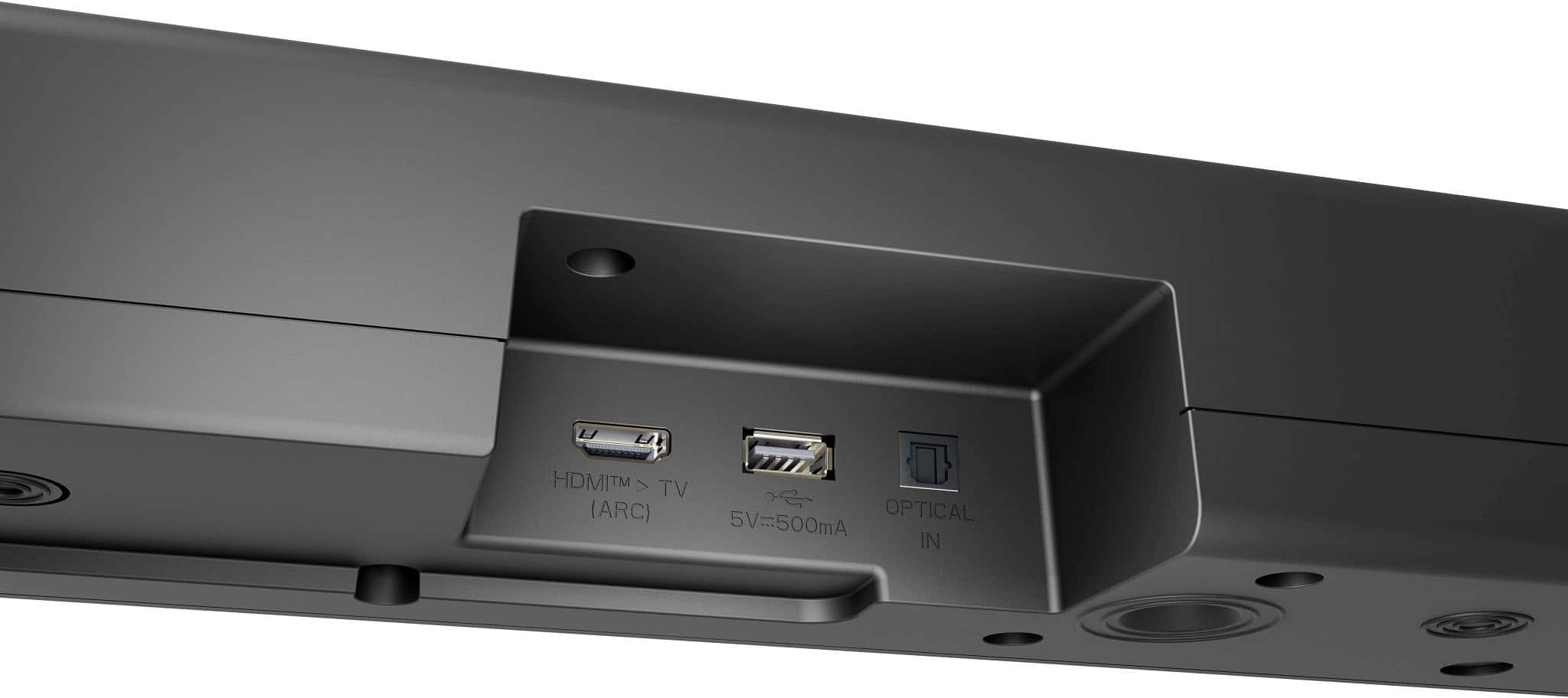
The LG S60TR works equally well with any TV brand through standard HDMI or optical connections. The Samsung HW-Q800D also works with all TVs but loses its Q-Symphony feature (which coordinates TV speakers with the soundbar) when used with non-Samsung televisions.
The LG S60TR includes everything needed for 5.1 surround: soundbar, subwoofer, two rear speakers, cables, and remote. The Samsung HW-Q800D includes only the soundbar, wireless subwoofer, HDMI cable, and remote - rear speakers must be purchased separately for full surround sound.
For traditional movie immersion, the LG S60TR excels with authentic rear speaker placement that creates convincing directional effects during action scenes. The Samsung HW-Q800D provides a different experience with Dolby Atmos height effects that add overhead dimension for atmospheric movies but uses virtual processing for rear surround.
Both soundbars enhance dialogue effectively. The Samsung HW-Q800D uses Active Voice Amplifier (AVA) technology with manual EQ controls for precise vocal tuning. The LG S60TR features Clear Voice Pro mode and AI Sound Pro that automatically adjusts dialogue clarity based on content type without manual intervention.
The Samsung HW-Q800D provides superior music performance with its neutral frequency response, 7-band equalizer for detailed customization, and better overall balance across genres. The LG S60TR offers convenient music presets and AI optimization but lacks the fine-tuning capabilities that audiophiles prefer for critical music listening.
The LG S60TR ($299) provides complete 5.1 surround sound for just $299 with all components included. To achieve full surround with the Samsung HW-Q800D ($799), you need the additional SWA-9500S rear speaker kit for about $300, bringing the total cost to approximately $1,099 for complete surround capability.
We've done our best to create useful and informative comparisons to help you decide what product to buy. Our research uses advanced automated methods to create this comparison and perfection is not possible - please contact us for corrections or questions. These are the sites we've researched in the creation of this article: techradar.com - valueelectronics.com - samsung.com - rtings.com - samsung.com - crutchfield.com - samsung.com - samsung.com - samsung.com - shidirect.com - bestbuy.com - mynavyexchange.com - youtube.com - consumerreports.org - avsforum.com - rentacenter.com - bestbuy.com - homechoicestores.com - oconsommateur.com - lg.com - bestbuy.com - samsung.com

Privacy Policy
Terms and Conditions - Affiliate Policy
Home Security
© Copyright 2008-2026.
11816 Inwood Rd #1211, Dallas, TX 75244