





If you've ever tried watching an action movie on your TV's built-in speakers, you know the struggle. Explosions sound like firecrackers, dialogue gets lost in the mix, and forget about feeling immersed in the experience. That's where soundbars come in—they're designed to transform your living room into something closer to a real theater experience without the complexity of a full surround sound system.
Today we're comparing two popular approaches to better TV audio: the Amazon Fire TV Soundbar Plus, which focuses on delivering a complete surround sound experience at a budget-friendly price, and the Samsung HW-Q800D, which emphasizes premium features and true overhead audio effects. Both launched in recent years—the Amazon system in 2023 and the Samsung in 2024—representing the latest thinking in affordable home theater audio.
Before diving into specifics, it's worth understanding what separates a great soundbar from a mediocre one. The most important consideration is channel configuration—this refers to how many separate audio streams the system can handle. A 5.1 system has five main speakers (front left, center, front right, rear left, rear right) plus one subwoofer (the ".1" part) for deep bass. A 5.1.2 system adds two height channels that fire sound upward to bounce off your ceiling, creating overhead effects.
Dolby Atmos is the current gold standard for immersive audio. Unlike traditional surround sound that moves audio around you horizontally, Atmos adds a vertical dimension—imagine hearing a helicopter fly overhead in a movie, and actually feeling like it's above you rather than just in front of you. However, there are different ways to achieve this effect, and not all are created equal.
HDMI eARC (enhanced Audio Return Channel) is a connection type that allows high-quality audio to flow from your TV back to your soundbar, while also letting you control the soundbar with your TV remote. It's become essential for getting the best audio quality from streaming apps and modern gaming consoles.
The key performance metrics we'll focus on are dialogue clarity (can you understand what actors are saying?), bass impact (do explosions feel powerful?), soundstage width (does audio feel like it's coming from beyond the physical speakers?), and surround immersion (do you feel surrounded by sound?).
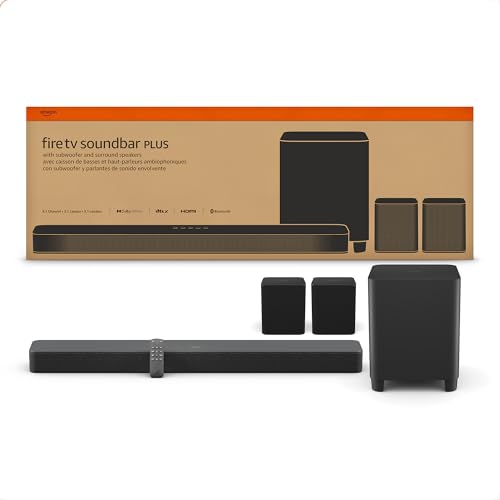
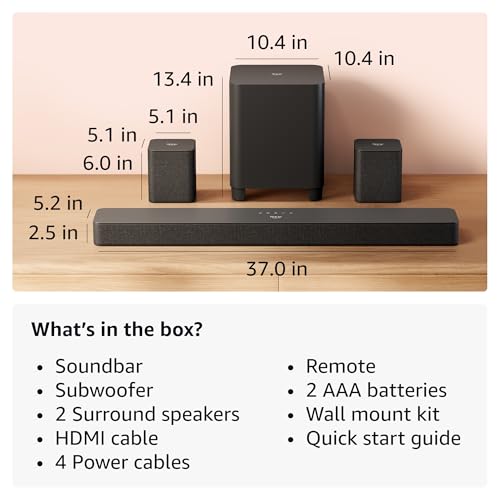
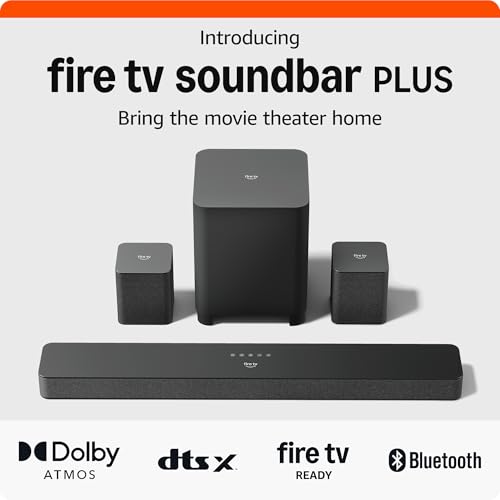
The Amazon Fire TV Soundbar Plus takes what I'd call the "honest" approach to surround sound. Instead of trying to trick your ears with fancy processing, it gives you actual physical speakers where surround sound should come from—behind you. The complete system includes a main soundbar, a wireless subwoofer, and two rear satellite speakers that you place on stands or mount on your back wall.
This matters more than you might think. When a movie has a scene where someone walks behind the main character, you'll hear their footsteps actually coming from behind you, not from the front soundbar trying to simulate that effect. It's the difference between watching a magic trick and experiencing the real thing.
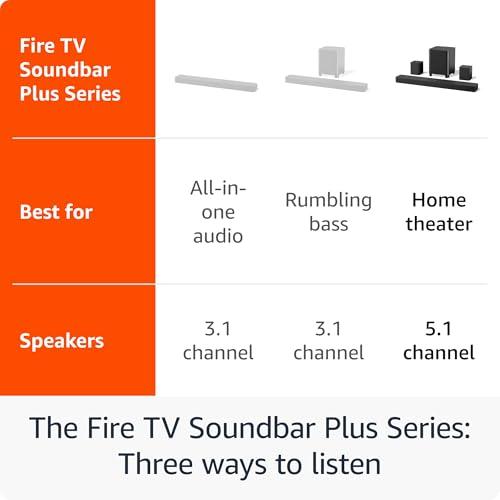
The Fire TV Soundbar Plus uses a 5.1 channel configuration with three front-facing speakers in the main bar (left, center, right), two rear satellites, and one subwoofer. The center channel is crucial for dialogue—it's specifically designed to make voices clear and intelligible, which is why dedicated center channels almost always outperform systems that try to create a "phantom" center from left and right speakers.
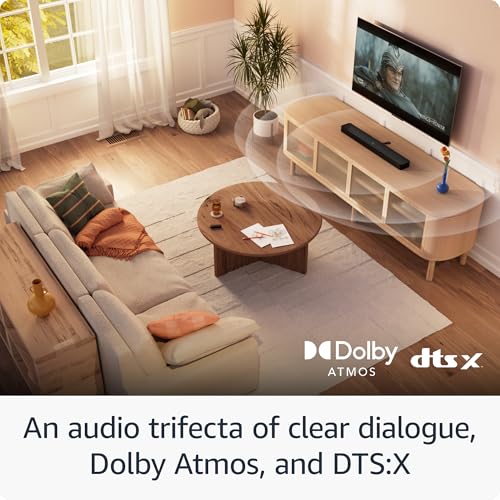
Where this system makes compromises is in its Dolby Atmos implementation. Rather than using physical upward-firing speakers, it relies on virtualization—digital processing that tries to trick your brain into thinking sound is coming from above. Based on our research into user experiences, this works reasonably well for some content, but you won't get the same "wow factor" as systems with dedicated height speakers.
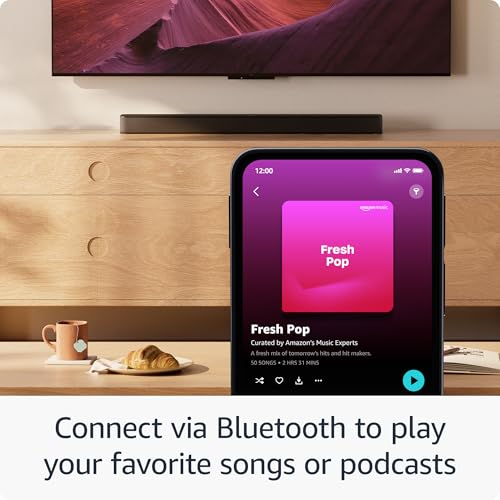
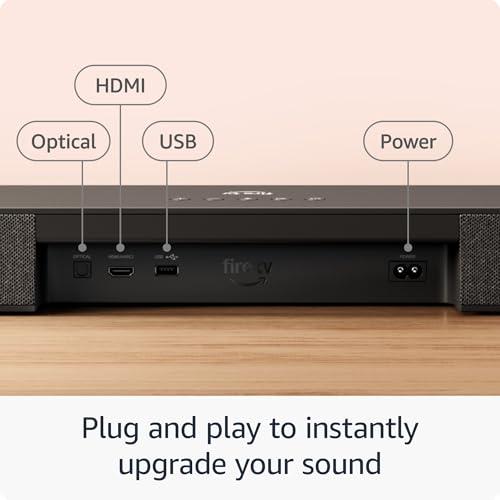
The connectivity is straightforward but limited. You get HDMI eARC for connecting to your TV, optical digital input for older TVs, and Bluetooth for streaming music from your phone. What you don't get is HDMI passthrough, meaning you can't plug your gaming console or streaming device directly into the soundbar—everything has to connect to your TV first. For most people this isn't a problem, but gamers who want the lowest possible latency might prefer direct connections.
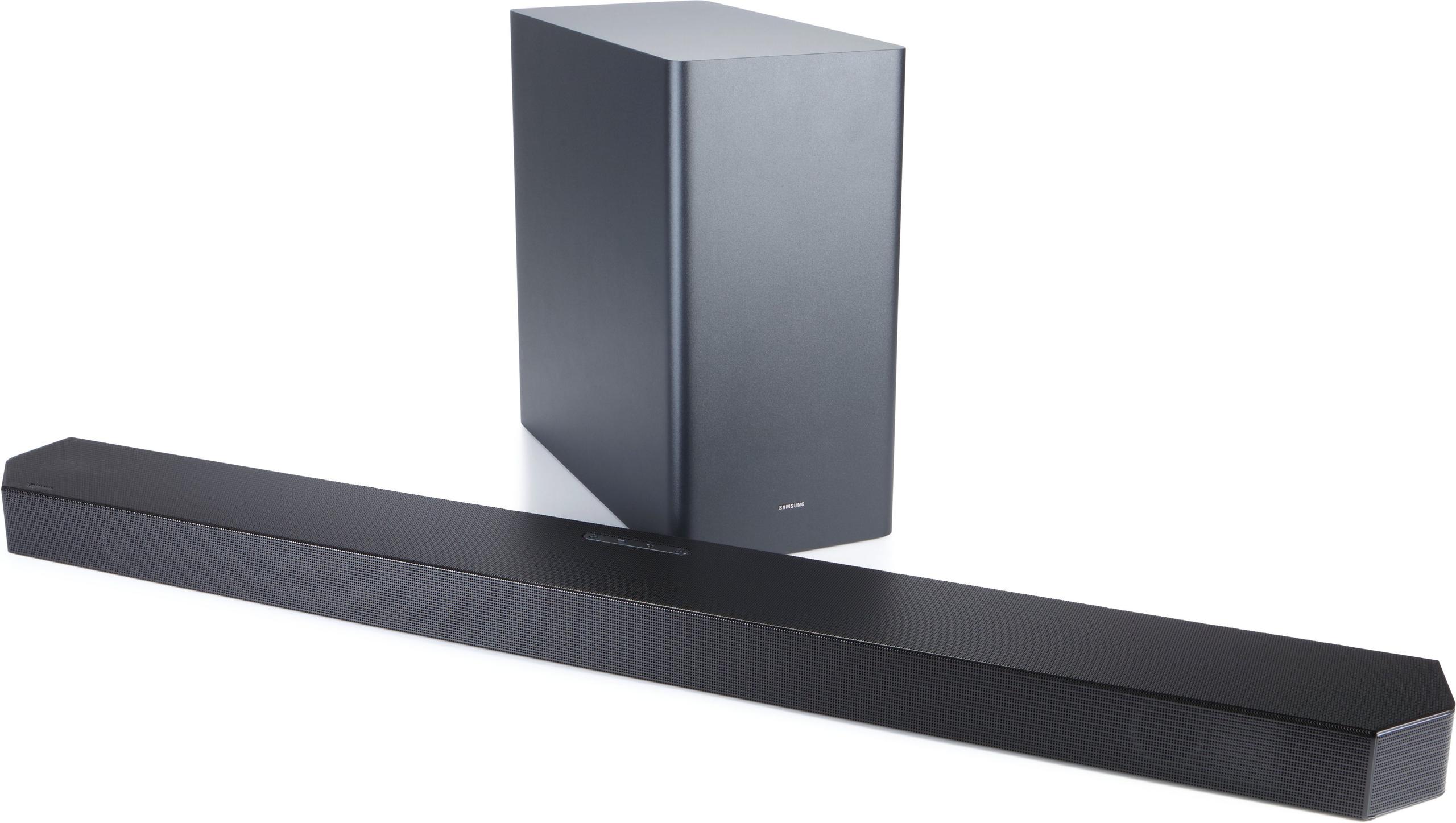
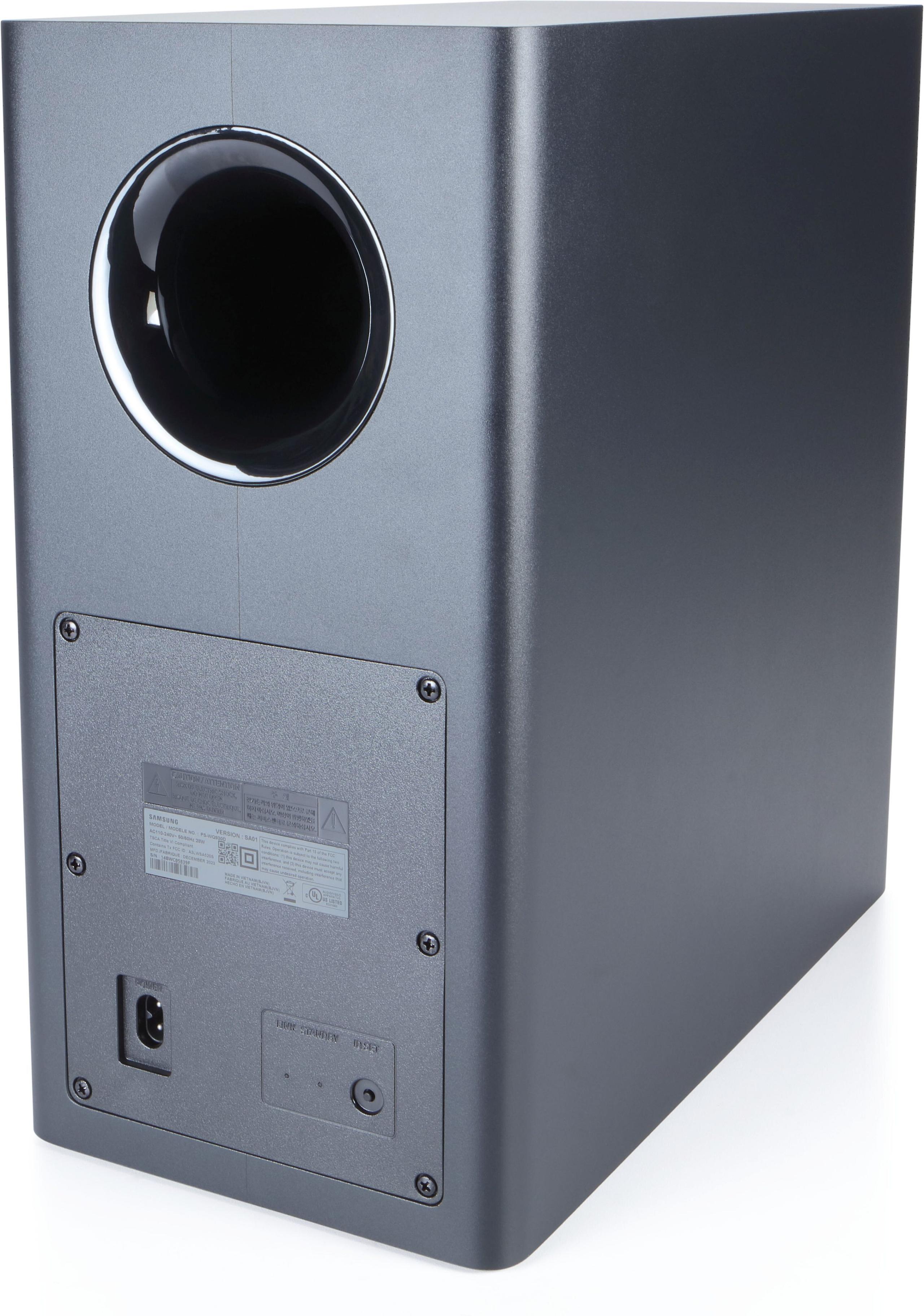
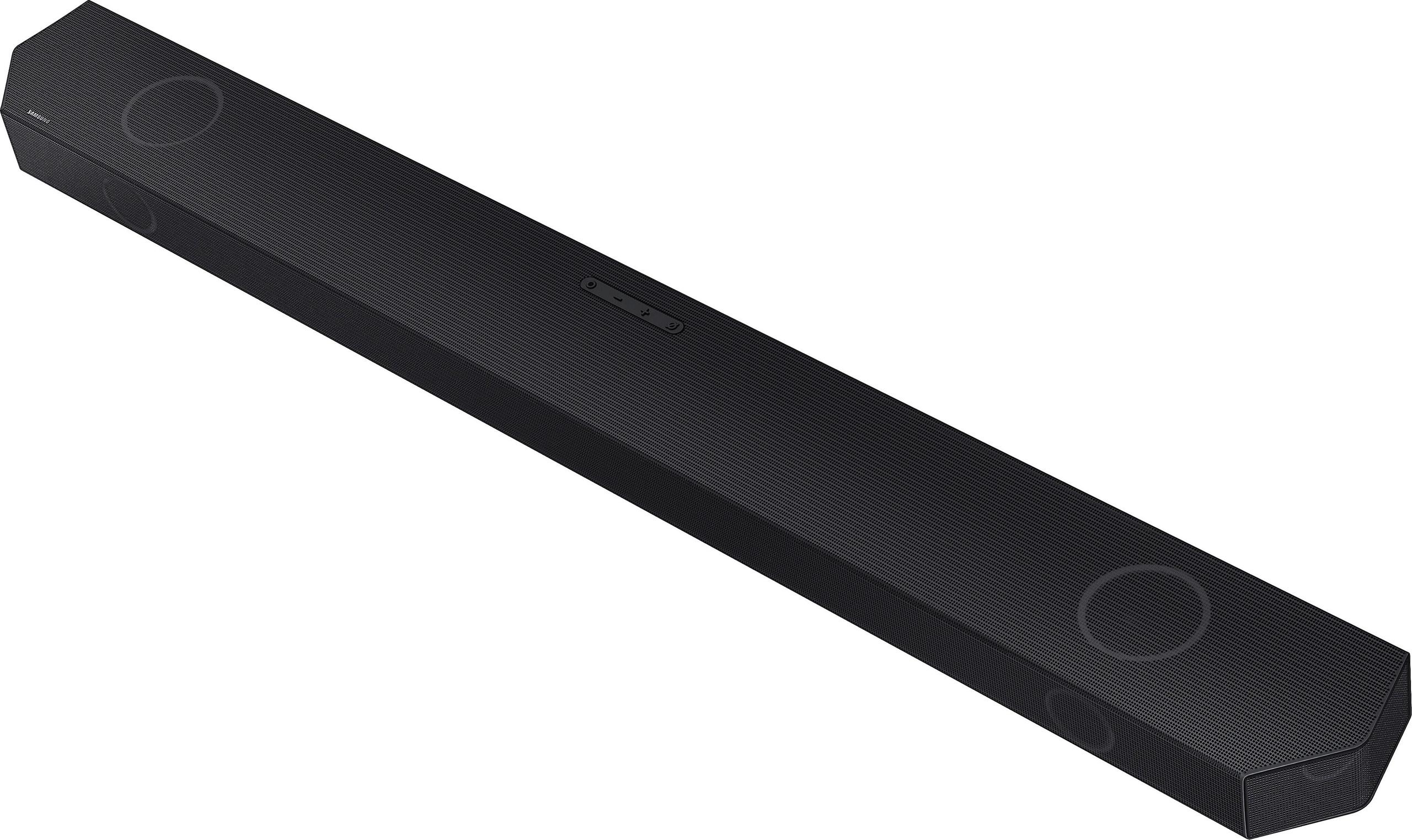
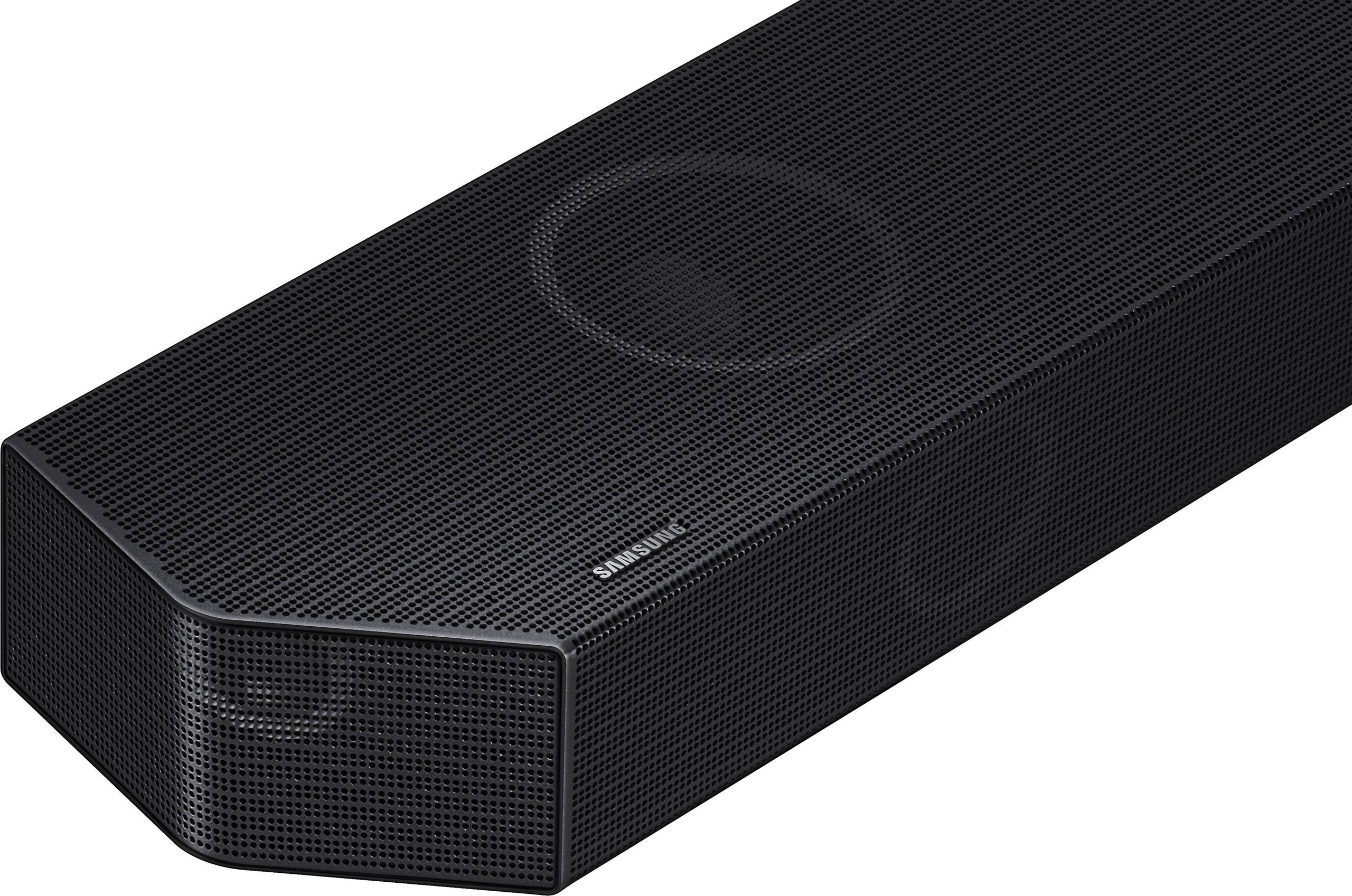
The Samsung HW-Q800D represents a more sophisticated approach to soundbar design. It's a 5.1.2 system, meaning it has the same five main channels as the Amazon system, but adds two dedicated upward-firing speakers built into the main soundbar. These speakers literally fire sound up at your ceiling, which then reflects back down to create genuine overhead effects.
This makes a real difference with Dolby Atmos content. When a scene has rain falling, jets flying overhead, or debris falling from above, you'll actually perceive these sounds as coming from above your head rather than just from the front of the room. It's one of those features that sounds gimmicky until you experience it properly—then it becomes hard to go back to traditional surround sound.
The Samsung soundbar also includes several advanced features that set it apart. Q-Symphony is particularly clever—if you have a compatible Samsung TV, it can actually use your TV's speakers working in harmony with the soundbar speakers, essentially giving you more audio drivers working together. SpaceFit Sound Pro uses built-in microphones to analyze your room's acoustics and automatically adjust the sound to work better in your specific space.
However, there's a significant catch with the HW-Q800D: it doesn't include rear speakers. You get the sophisticated front soundbar with height effects and a powerful wireless subwoofer, but for true surround sound, you'll need to buy Samsung's separate rear speaker kit. This is a common approach in the mid-to-premium soundbar market, but it does mean the total system cost is higher than the sticker price suggests.
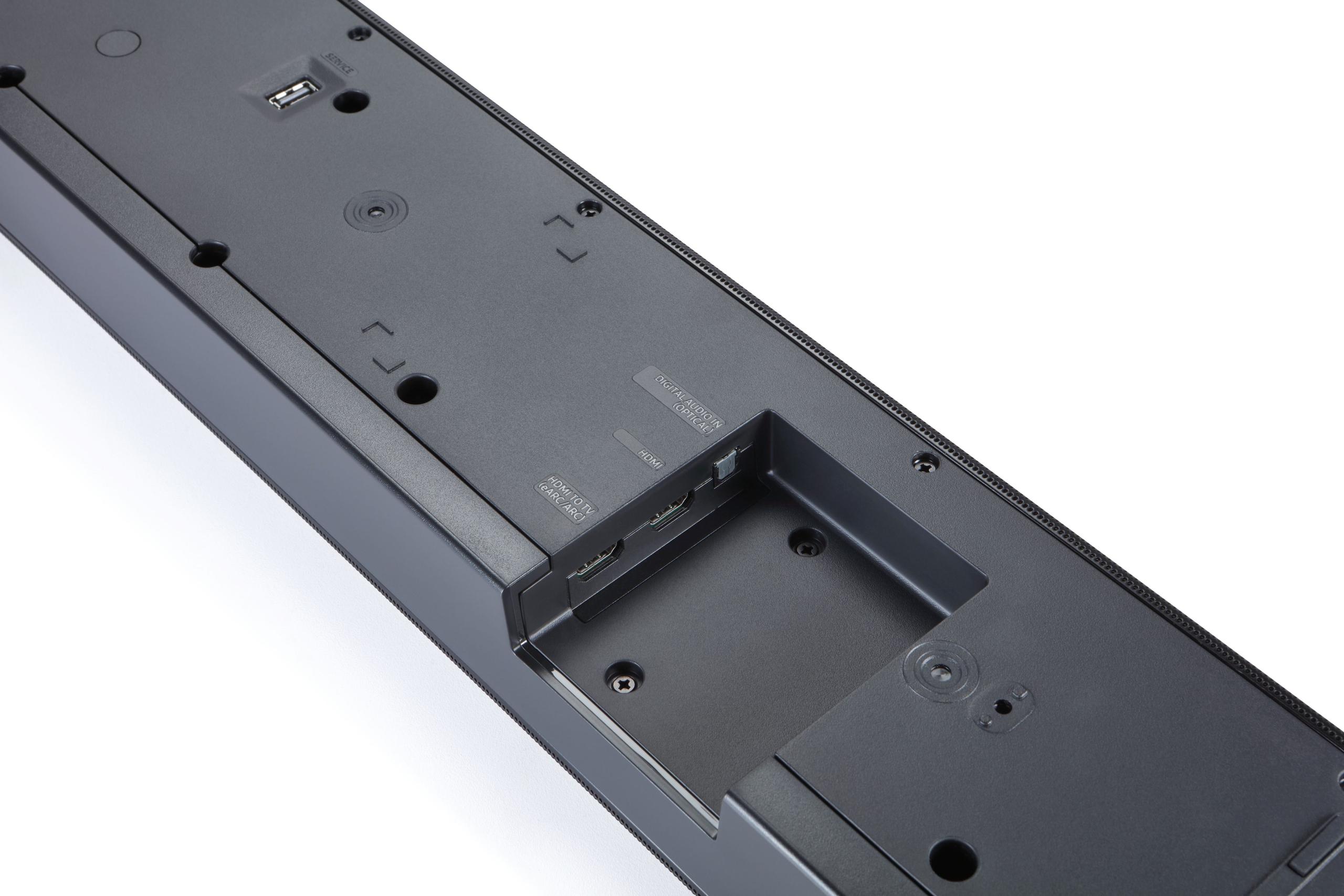
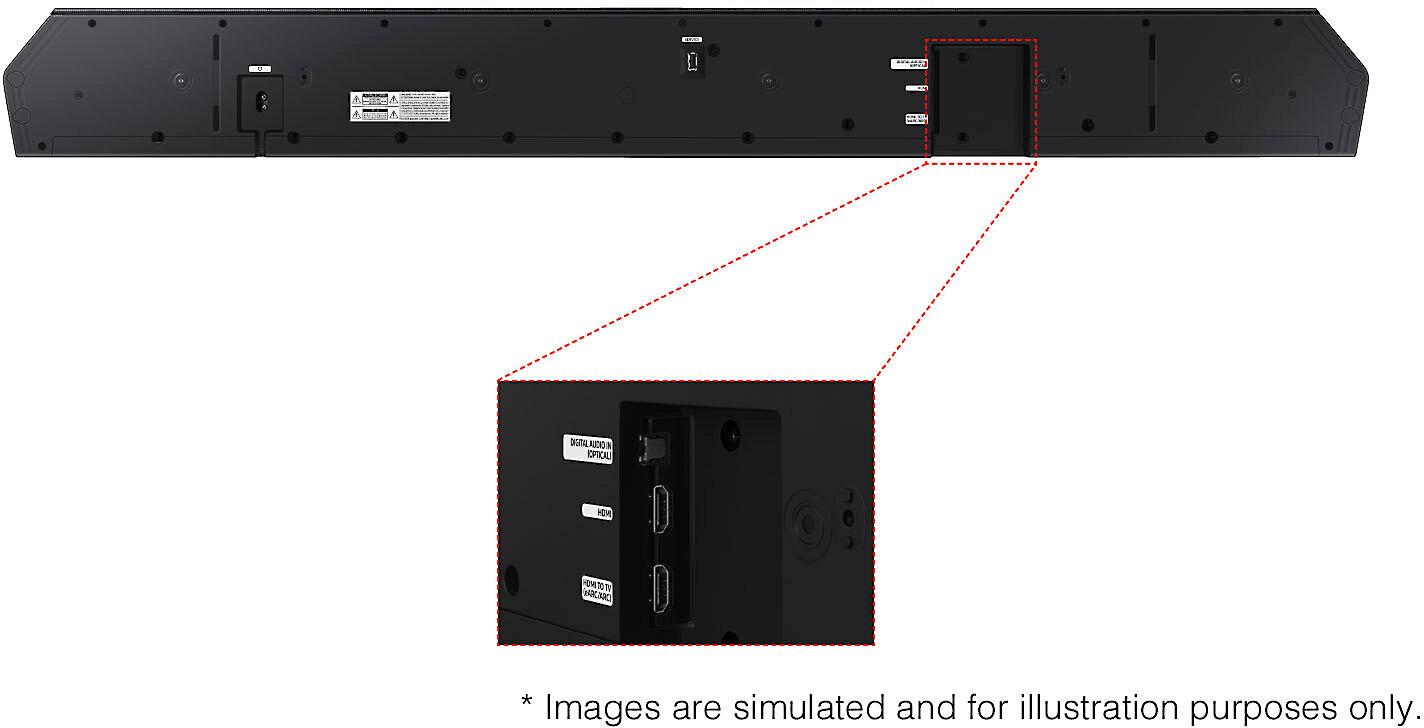
The connectivity story is much stronger here. You get HDMI input and output with 4K video passthrough, meaning you can connect devices directly to the soundbar and it will handle both audio and video. This is particularly useful for gaming consoles or streaming devices, as it can reduce the number of cables running to your TV and potentially improve performance.
Both systems prioritize dialogue clarity, but they achieve it differently. The Fire TV Soundbar Plus uses a straightforward approach with a dedicated center channel that's tuned specifically for voice reproduction. User reports consistently praise its ability to make dialogue intelligible even at lower volumes, though some note that very deep male voices can sound somewhat thin.
The Samsung HW-Q800D takes a more sophisticated approach with its Active Voice Amplifier technology, which analyzes each scene and automatically adjusts vocal levels to ensure speech cuts through background music and sound effects. This dynamic approach tends to work better across different types of content, though it requires more processing power and occasionally makes subtle adjustments that some users find distracting.
Winner: Samsung for versatility, Amazon for consistency
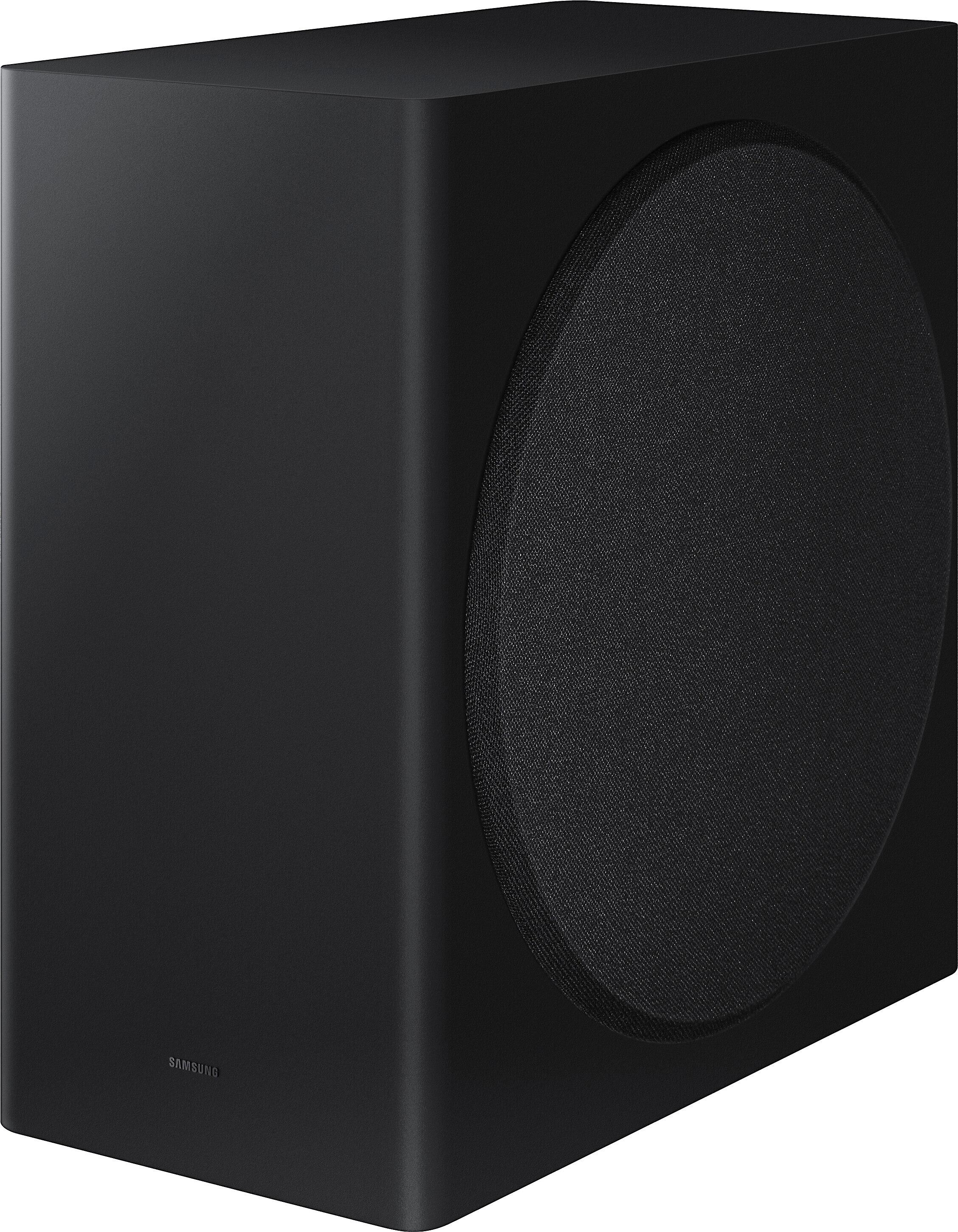
The subwoofer makes or breaks the action movie experience, and both systems approach this differently. The Amazon system includes a 6.5-inch subwoofer that delivers solid, punchy bass that's impressive for its price point. However, some users report that it can sound somewhat "one-note"—great for explosions and music with prominent bass lines, but not as nuanced with complex low-frequency content.
The Samsung HW-Q800D includes a larger 8-inch subwoofer with more sophisticated tuning. It provides deeper extension and more controlled bass response, meaning it can handle everything from the subtle low-frequency rumble of a distant thunderstorm to the earth-shaking impact of superhero movie action sequences. The larger driver and more powerful amplification make a noticeable difference in larger rooms.
Winner: Samsung for depth and control, Amazon for value
This is where the fundamental philosophical differences between these systems become most apparent. The Fire TV Soundbar Plus with its physical rear speakers creates genuine surround sound from day one. When you hear a car chase scene, you'll actually hear the vehicles moving from front to back in your room. The rear speakers are small but effective, and the wireless connection means you don't need to run cables across your room.
The Samsung soundbar without rear speakers relies on side-firing drivers and sophisticated processing to create surround effects. This works surprisingly well—the side-firing speakers can create convincing left-to-right movement and a sense of spaciousness. However, without physical rear speakers, you miss the full wraparound effect that makes surround sound special.
If you add Samsung's rear speaker kit to the HW-Q800D, the comparison shifts dramatically. You then get both physical surround speakers and the overhead height effects, creating a more complete and immersive experience than either system alone.
Winner: Amazon for included surround, Samsung with rear speakers for ultimate immersion
This is the Samsung HW-Q800D's strongest advantage. The dedicated upward-firing speakers create genuine overhead audio effects that the Amazon system simply cannot match through virtualization. When watching Atmos-enabled content, the difference is immediately apparent—sounds actually seem to move through three-dimensional space rather than just around the perimeter of your room.
The Fire TV Soundbar Plus does support Dolby Atmos, but it's processed through the main soundbar speakers using psychoacoustic tricks. This creates a wider soundstage and some sense of height, but it's more like a good stereo recording of a live performance versus actually being there.
Winner: Samsung decisively
The Amazon Fire TV Soundbar Plus keeps things simple with basic but effective smart features. If you have a Fire TV device, the integration is seamless—you can control the soundbar through your Fire TV remote and adjust settings through the TV's interface. It's the kind of "it just works" experience that Amazon does well.
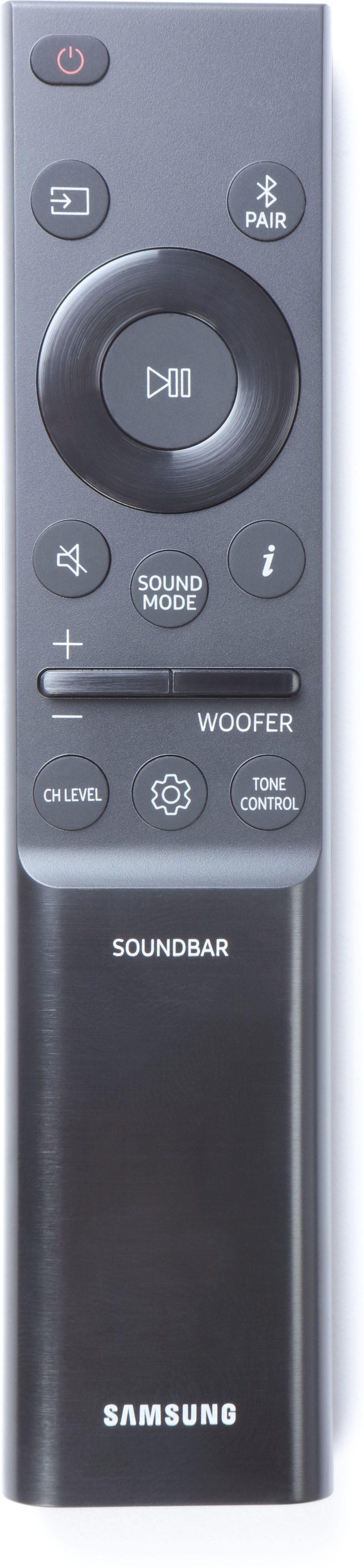
The Samsung HW-Q800D offers much more comprehensive smart features. The SmartThings app provides detailed control over every aspect of the soundbar's performance, including a 7-band equalizer that lets you fine-tune the sound to your preferences. Alexa built-in means you can control the soundbar with voice commands, and the various adaptive modes automatically adjust performance based on what you're watching.
For most users, the Amazon approach is probably more practical—simple, reliable, and focused on the core experience. The Samsung features are impressive but require more engagement to get the full benefit.
At the time of writing, the Amazon Fire TV Soundbar Plus represents exceptional value in the budget soundbar category. You get a complete surround sound system with physical rear speakers and a subwoofer at a price that many competitors charge for just a basic soundbar. The performance easily surpasses most TV speakers and many single-bar solutions.
The Samsung HW-Q800D costs significantly more—roughly two to three times the Amazon system's price for the soundbar and subwoofer alone. Add the rear speakers, and you're looking at an even larger investment. However, you're getting premium features, better build quality, true Dolby Atmos, and more sophisticated processing.
The value equation depends entirely on your priorities and budget. If you want the biggest improvement over TV speakers for the least money, and you don't care about height effects, the Amazon system is hard to beat. If you want a more refined, feature-rich experience and true Atmos effects matter to you, the Samsung justifies its premium pricing.
For dedicated home theater use, both systems have their place. The Fire TV Soundbar Plus is perfect for smaller home theaters or family rooms where you want good surround sound without complexity or high cost. It's particularly well-suited to rooms where you primarily watch TV shows and movies, rather than trying to recreate a cinema experience.
The Samsung HW-Q800D is better suited to more serious home theater applications. The height effects make a real difference with properly mastered Atmos content, and the room optimization features help it work well in different acoustic environments. If you're building a dedicated media room or upgrading from a basic system, the Samsung offers room to grow and more sophisticated performance.
Choose the Amazon Fire TV Soundbar Plus if you want the biggest improvement in sound quality for the least money, you have a smaller room, you primarily use Fire TV devices, and you value simplicity over advanced features. It's the smart choice for most people who just want their TV to sound dramatically better without complexity or high cost.
Choose the Samsung HW-Q800D if you have a larger budget and room, you want true Dolby Atmos height effects, you need HDMI passthrough for gaming or multiple devices, and you don't mind paying extra for rear speakers to get complete surround sound. It's the better choice for serious movie watchers and those who want a more premium, feature-rich experience.
Both systems will transform your TV watching experience compared to built-in TV speakers. Your choice should depend on your budget, room size, and how much you value features like true overhead audio effects versus having complete surround sound included from day one.
| Amazon Fire TV Soundbar Plus 5.1 Channel System | Samsung HW-Q800D 5.1.2 Channel Soundbar |
|---|---|
| Channel Configuration - Determines surround sound capabilities | |
| True 5.1 with physical rear speakers included | 5.1.2 with height channels, rear speakers sold separately |
| Dolby Atmos Implementation - Critical for overhead audio effects | |
| Virtualized through main soundbar (simulated height) | Dedicated up-firing speakers (true overhead audio) |
| What's Included - Affects total system cost | |
| Complete system: soundbar, subwoofer, 2 rear speakers | Soundbar and subwoofer only (rear speakers ~$199 extra) |
| HDMI Connectivity - Important for device management | |
| HDMI eARC only (no passthrough for devices) | HDMI In/Out with 4K passthrough (acts as hub) |
| Subwoofer Size - Impacts bass depth and room filling | |
| 6.5-inch wireless subwoofer | 8-inch wireless subwoofer |
| Total Power Output - Determines maximum volume and room size | |
| Not specified (optimized for small-medium rooms) | 360W (suitable for larger rooms) |
| Smart Features - Convenience and customization options | |
| Basic Fire TV integration, simple EQ controls | Alexa built-in, SmartThings app, room optimization |
| Room Optimization - Adapts sound to your space | |
| Manual bass/treble adjustment only | SpaceFit Sound Pro auto-calibration |
| Voice Enhancement - Improves dialogue clarity | |
| Static dialogue enhancement setting | Active Voice Amplifier (scene-adaptive) |
| Build Quality and Design - Durability and aesthetics | |
| Budget-focused materials, basic remote | Premium build, comprehensive app control |
| Best Use Case - Who should buy each system | |
| Budget buyers wanting complete 5.1 surround now | Premium buyers prioritizing Atmos and expandability |
The Amazon Fire TV Soundbar Plus 5.1 Channel System provides exceptional value by including a complete surround sound setup with rear speakers and subwoofer at a budget-friendly price. The Samsung HW-Q800D 5.1.2 Channel Soundbar costs significantly more but offers premium features like true Dolby Atmos height effects and advanced room optimization. For most users, the Amazon Fire TV Soundbar Plus delivers the biggest improvement over TV speakers for the lowest cost.
The Amazon Fire TV Soundbar Plus 5.1 Channel System includes two wireless rear speakers in the box, giving you true 5.1 surround sound immediately. The Samsung HW-Q800D does not include rear speakers - you'll need to purchase Samsung's separate rear speaker kit for additional cost to achieve full surround sound capabilities.
The Samsung HW-Q800D 5.1.2 Channel Soundbar delivers superior Dolby Atmos with dedicated up-firing speakers that create genuine overhead audio effects. The Amazon Fire TV Soundbar Plus supports Dolby Atmos but uses virtualization through the main soundbar, which provides a wider soundstage but lacks true height dimensionality that makes Atmos special.
The Samsung HW-Q800D offers more versatile connectivity with HDMI input/output and 4K passthrough, allowing it to act as a hub for multiple devices. The Amazon Fire TV Soundbar Plus 5.1 Channel System provides HDMI eARC and optical inputs but lacks HDMI passthrough, requiring all devices to connect directly to your TV.
The Amazon Fire TV Soundbar Plus wins for simplicity with all components pre-paired and plug-and-play operation. The Samsung HW-Q800D 5.1.2 Channel Soundbar offers more setup complexity but includes advanced features like automatic room calibration and comprehensive app-based controls for users who want to customize their experience.
The Samsung HW-Q800D includes a larger 8-inch subwoofer that provides deeper bass extension and more controlled low-frequency response. The Amazon Fire TV Soundbar Plus 5.1 Channel System features a 6.5-inch subwoofer that delivers solid bass impact for its price range, though it may sound less refined with complex audio content.
The Samsung HW-Q800D 5.1.2 Channel Soundbar is better suited for gaming due to its HDMI passthrough capabilities and Game Pro mode that enhances directional audio cues. The Amazon Fire TV Soundbar Plus can handle gaming audio well but lacks direct device connectivity and gaming-specific optimizations.
The Samsung HW-Q800D includes built-in Alexa voice control and works with SmartThings for comprehensive smart home integration. The Amazon Fire TV Soundbar Plus 5.1 Channel System doesn't have built-in voice assistants but integrates seamlessly with Fire TV devices for unified remote control.
The Samsung HW-Q800D 5.1.2 Channel Soundbar handles larger spaces better with its 360W power output and room optimization technology. The Amazon Fire TV Soundbar Plus is optimized for small to medium-sized rooms and may struggle to fill very large spaces with adequate volume and presence.
The Samsung HW-Q800D offers more expansion options, allowing you to add rear speakers, and it works with Samsung's Q-Symphony technology if you have a compatible TV. The Amazon Fire TV Soundbar Plus 5.1 Channel System comes complete as designed with limited expansion possibilities beyond the included components.
Both systems excel at dialogue, but they take different approaches. The Amazon Fire TV Soundbar Plus uses a straightforward dedicated center channel that consistently delivers clear speech. The Samsung HW-Q800D 5.1.2 Channel Soundbar features Active Voice Amplifier technology that dynamically adjusts dialogue levels based on scene content for potentially better results across varied content.
Choose the Amazon Fire TV Soundbar Plus 5.1 Channel System if you want the biggest improvement over TV speakers at the lowest cost with true surround sound included. Select the Samsung HW-Q800D if you have a higher budget, want premium features like true Dolby Atmos height effects, and don't mind purchasing rear speakers separately to complete the surround experience.
We've done our best to create useful and informative comparisons to help you decide what product to buy. Our research uses advanced automated methods to create this comparison and perfection is not possible - please contact us for corrections or questions. These are the sites we've researched in the creation of this article: rtings.com - cordbusters.co.uk - techradar.com - developer.amazon.com - t3.com - hometechnologyreview.com - youtube.com - hometechnologyreview.com - whathifi.com - hometechnologyreview.com - hometechnologyreview.com - youm.design - hometechnologyreview.com - dolby.com - techradar.com - valueelectronics.com - samsung.com - rtings.com - samsung.com - crutchfield.com - samsung.com - samsung.com - samsung.com - shidirect.com

Privacy Policy
Terms and Conditions - Affiliate Policy
Home Security
© Copyright 2008-2026.
11816 Inwood Rd #1211, Dallas, TX 75244