

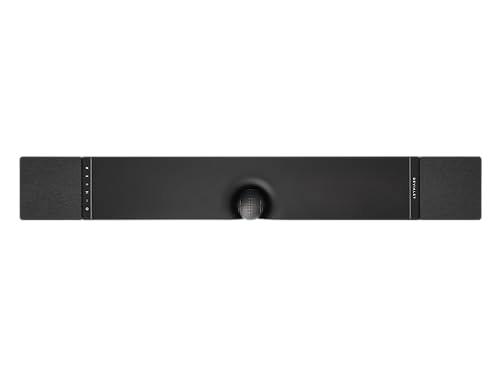
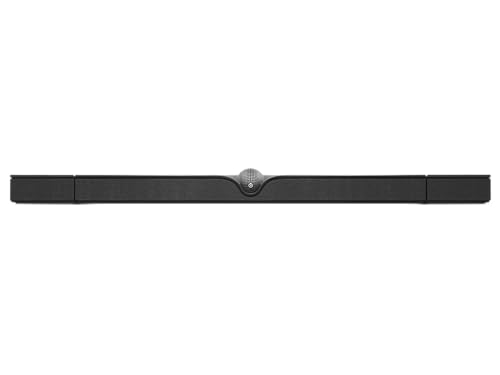
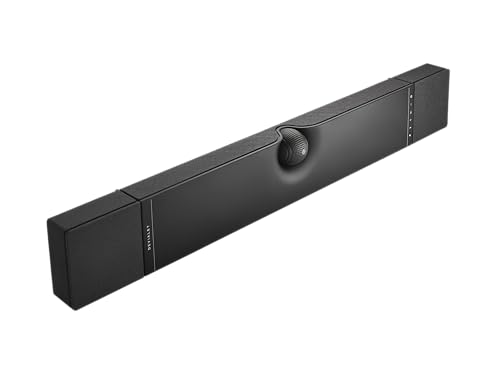




Shopping for a soundbar can feel overwhelming when you're comparing products at vastly different price points. The Devialet Dione and Samsung HW-Q800D represent two fundamentally different approaches to home audio: luxury audiophile engineering versus mainstream performance optimization. At the time of writing, the Devialet Dione commands a premium price that's roughly four to five times higher than the Samsung HW-Q800D, which raises an obvious question—is the difference in performance worth such a significant price gap?
Before diving into specifics, it's helpful to understand what makes today's soundbars tick. Modern soundbars have evolved far beyond simple stereo speakers mounted in a long box. The best models now incorporate sophisticated processing systems that can create convincing surround sound effects using psychoacoustic principles—basically, they trick your brain into perceiving sounds coming from directions where there aren't actually speakers.
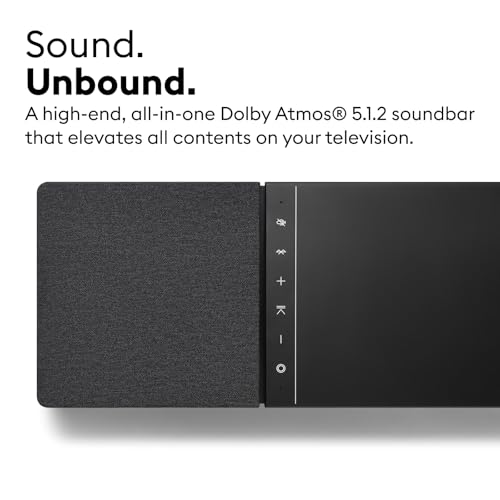
The key specifications to focus on include channel configuration (like 5.1.2, which means five main channels, one subwoofer channel, and two height channels), driver quality and quantity, amplification power, and perhaps most importantly, the digital signal processing (DSP) that orchestrates everything together. Both soundbars we're examining support Dolby Atmos, which adds overhead audio channels to create a more three-dimensional sound experience.
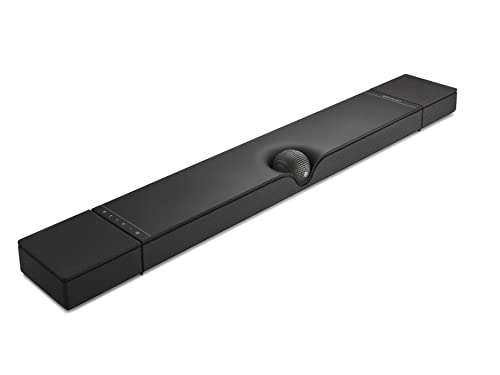
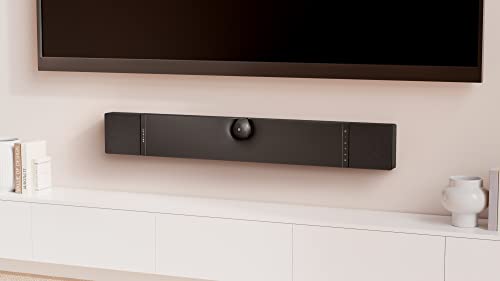
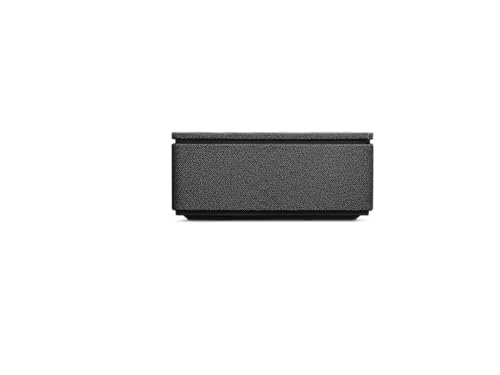
The Devialet Dione, released in 2023, represents a radically different approach to soundbar design. Rather than relying on a separate subwoofer like most premium soundbars, it incorporates 17 drivers directly into its aluminum chassis—including eight dedicated subwoofers arranged in what Devialet calls a "push-push" configuration. This means opposing drivers counteract each other's vibrations, reducing cabinet resonance and maintaining clarity even at high volumes.
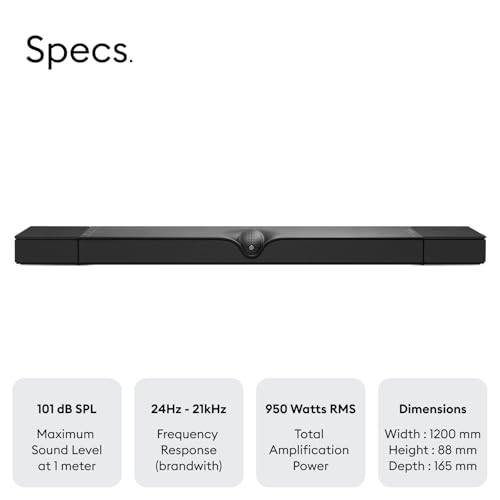
What makes this particularly impressive is the Devialet Dione's ability to extend bass response down to 24Hz—that's approaching the limits of human hearing—without requiring any external components. For context, most soundbars with separate subwoofers struggle to reach below 30Hz with authority.
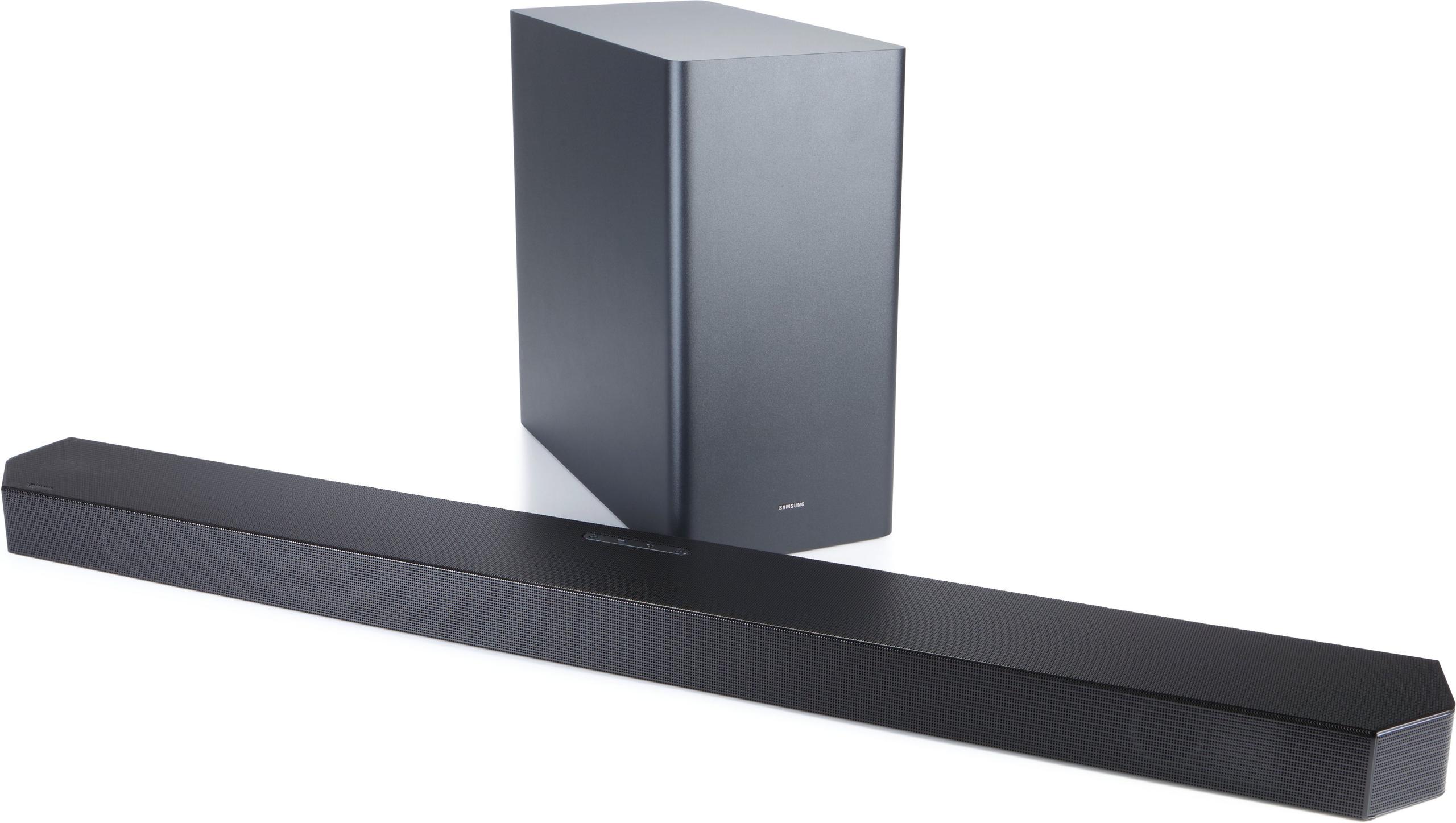
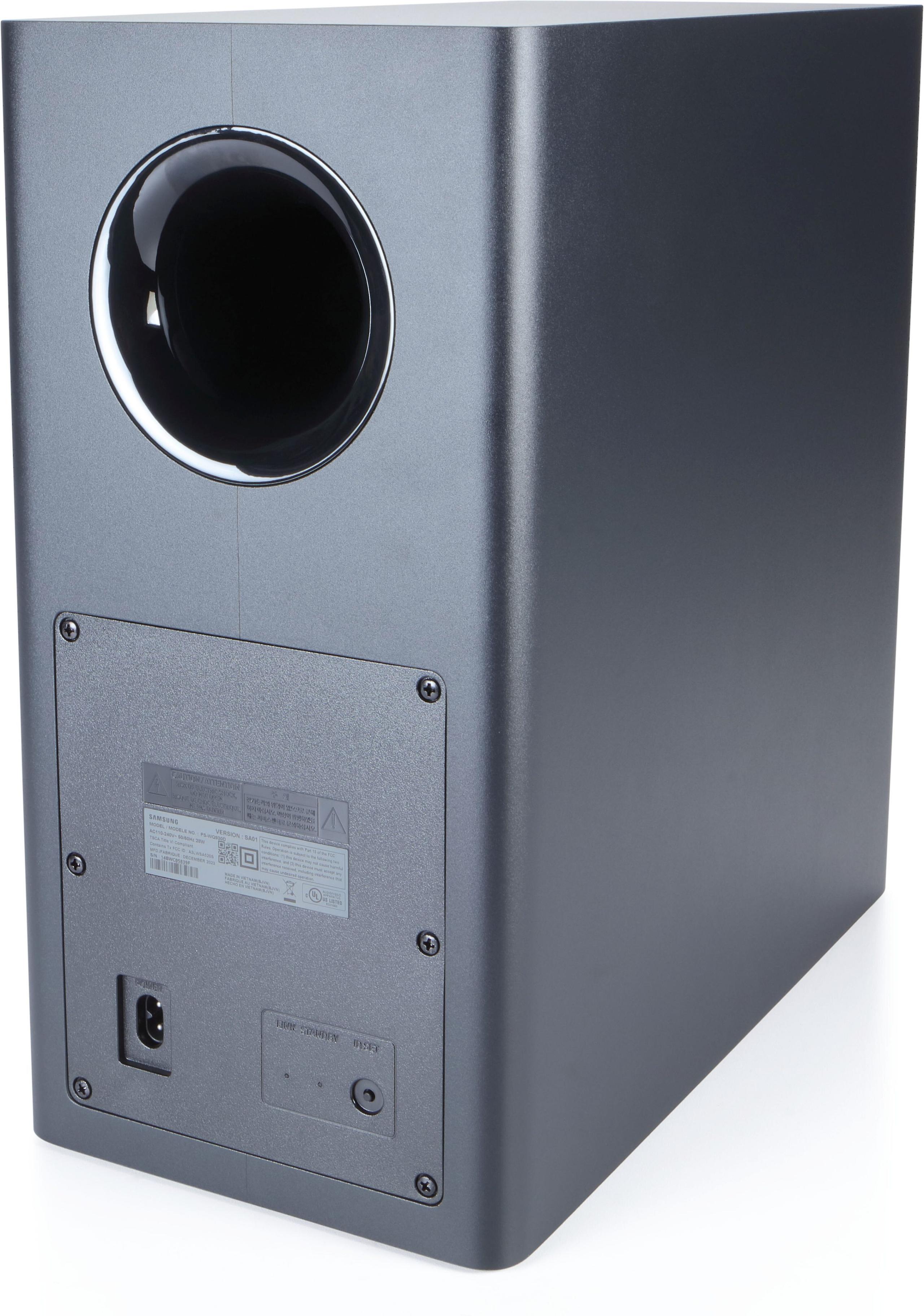
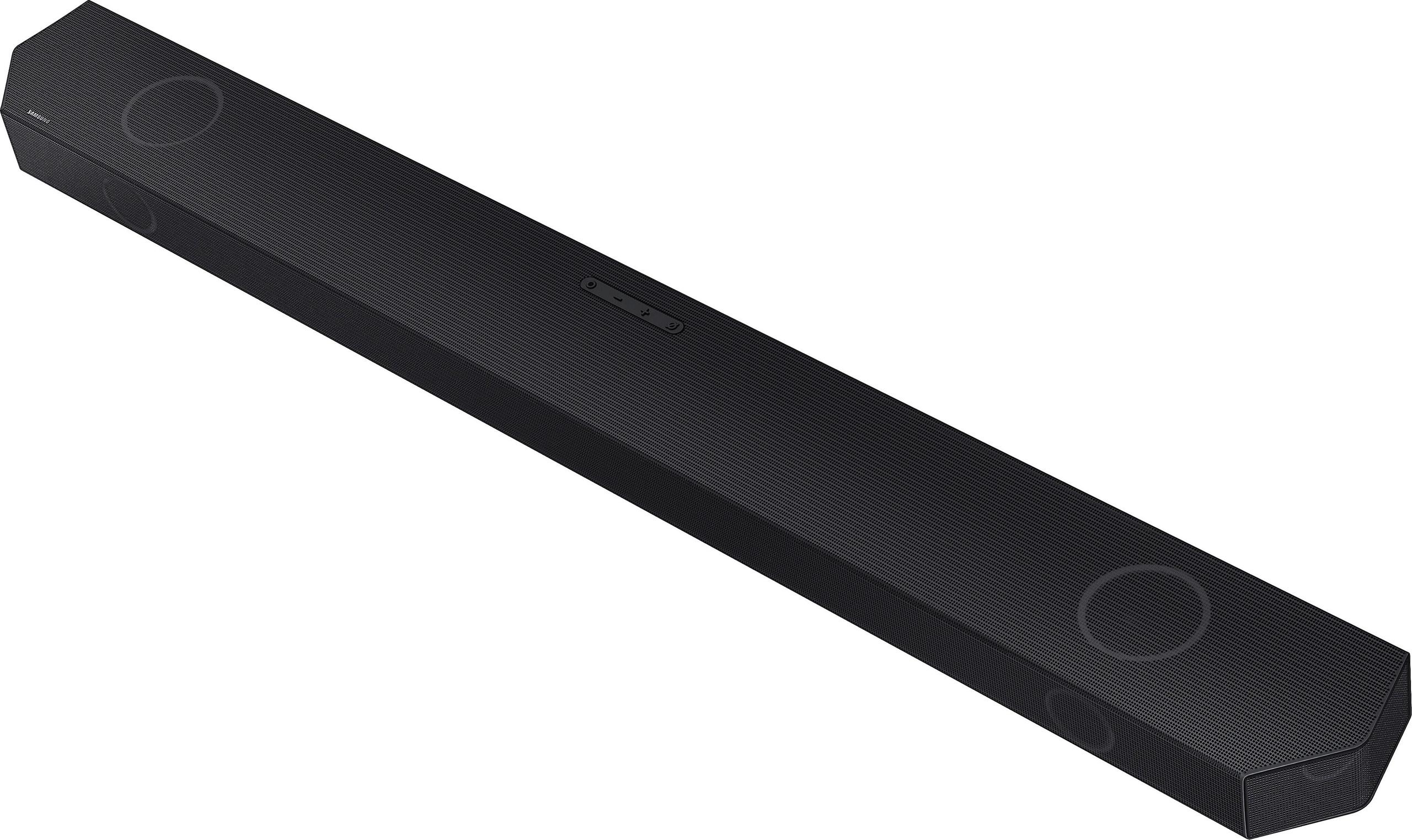
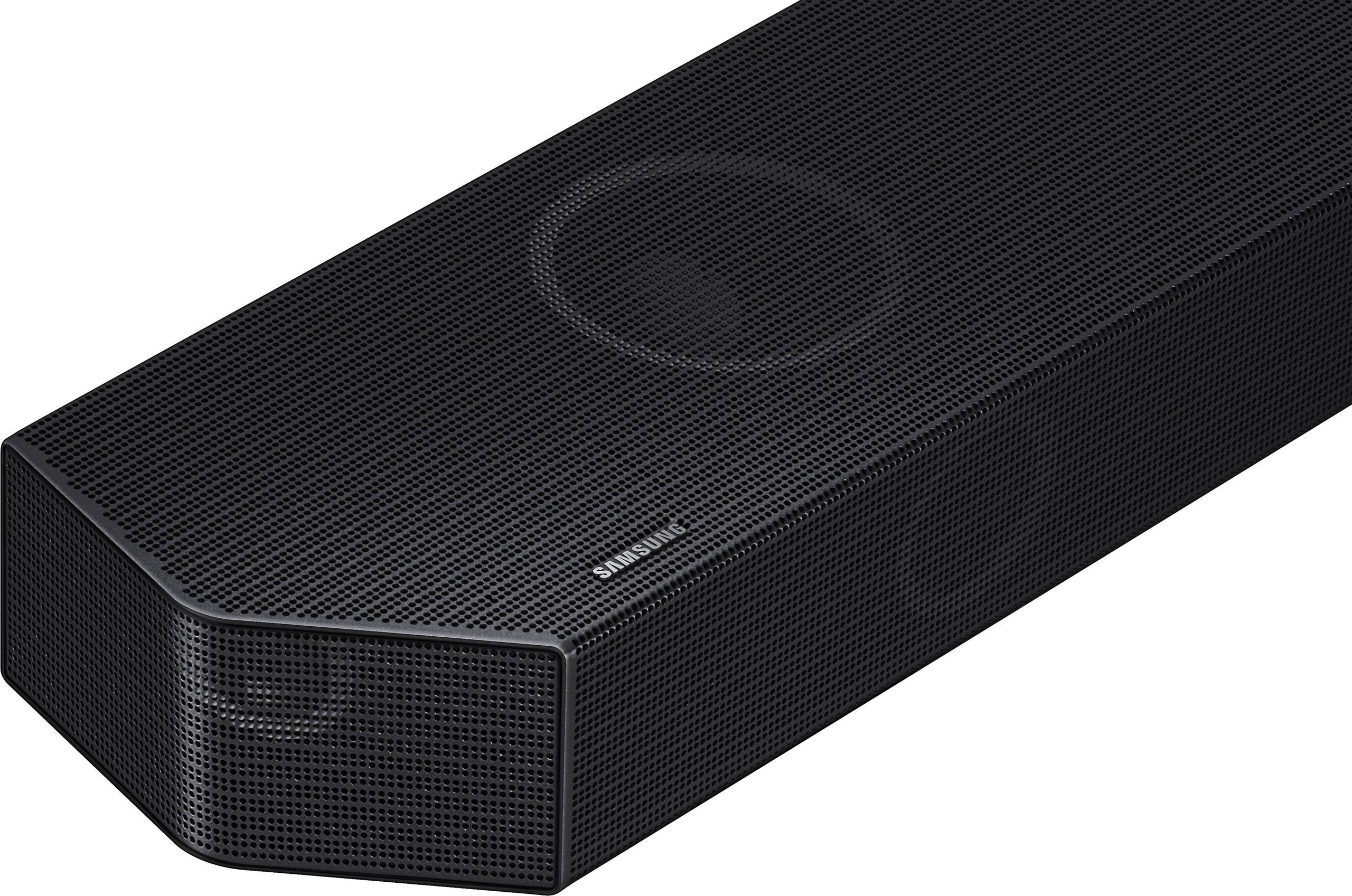
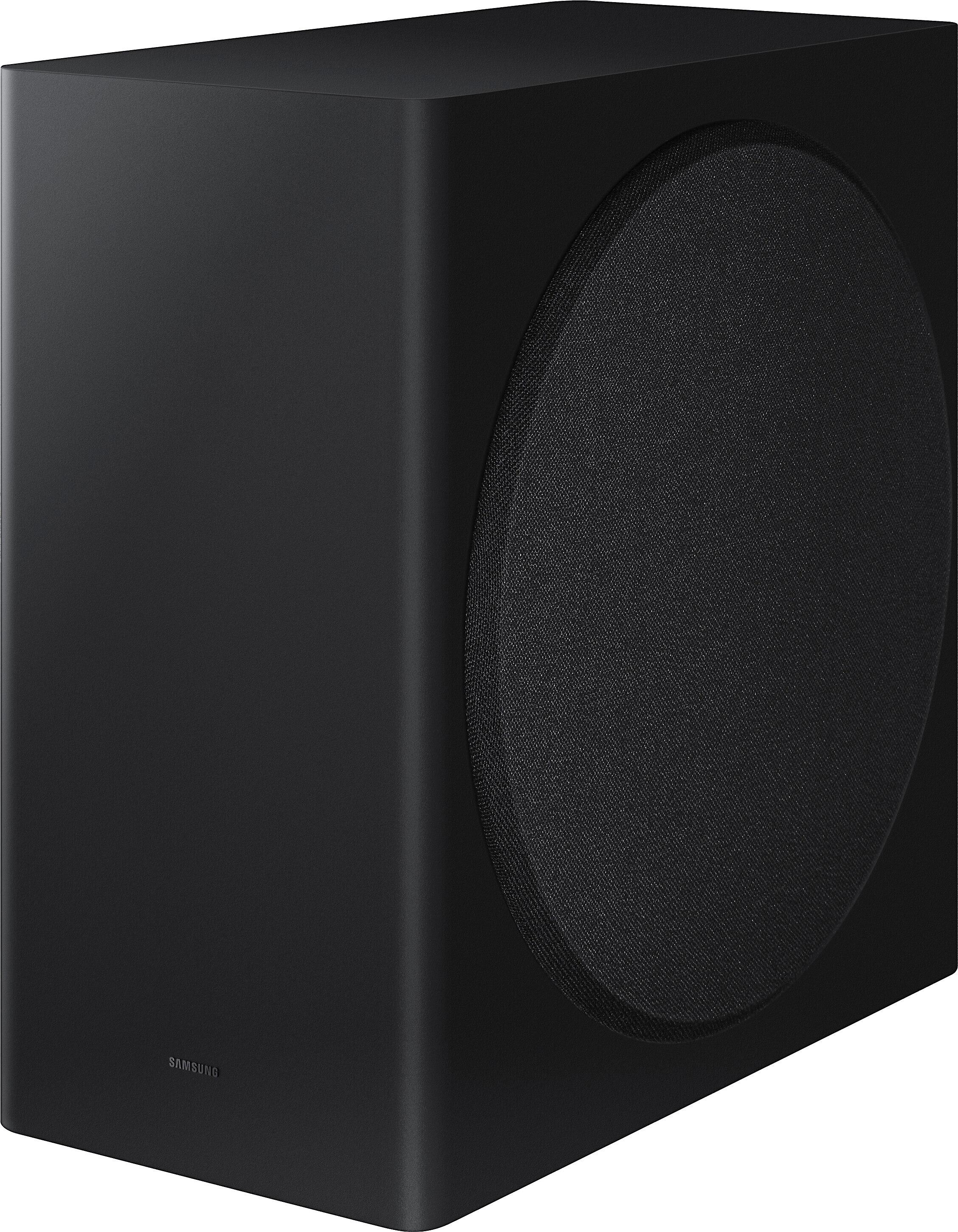
The Samsung HW-Q800D, launched as a 2024 refresh of Samsung's popular Q800 series, takes the more conventional approach with an 11-speaker soundbar paired with a wireless subwoofer featuring an 8-inch side-firing driver. This modular design offers practical advantages: you can position the subwoofer wherever it sounds best in your room, and the separate enclosure allows for a larger driver and more internal volume for deeper bass response.
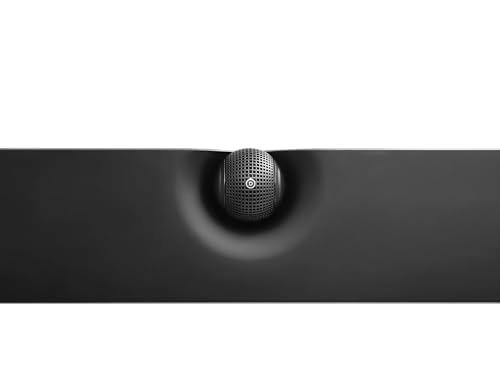
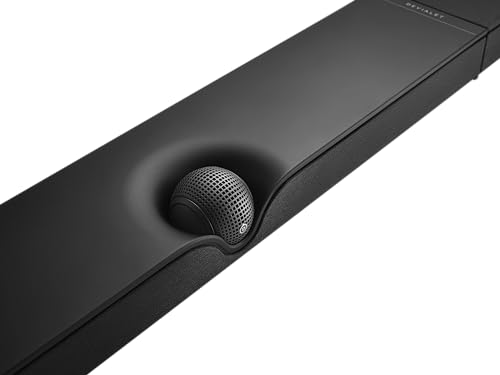
Perhaps the Devialet Dione's most distinctive feature is its ORB®—a spherical center channel that can rotate mechanically to maintain proper dialogue positioning whether the soundbar is placed on furniture or wall-mounted. This might seem like a gimmick, but center channel positioning is crucial for dialogue clarity, and most soundbars compromise this when moved between different installations.
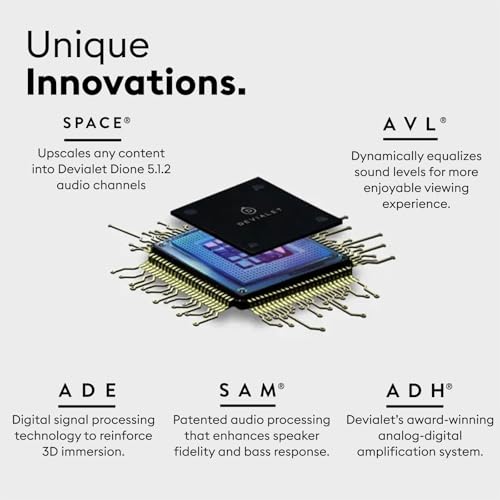
Here's where things get technically interesting. The Devialet Dione employs what the company calls ADH® (Analog Digital Hybrid) amplification, which combines the sonic purity of Class A amplification with the efficiency and power of Class D in a single circuit. Class A amplifiers are prized for their linear response and low distortion, but they're notoriously inefficient and generate significant heat. Class D amplifiers are much more efficient but can introduce switching artifacts. Devialet's hybrid approach theoretically captures the benefits of both.
This amplification system is integrated into what Devialet calls the Intelligence Processor—a custom system-on-chip that handles digital-to-analog conversion, signal processing, and amplification control. The Devialet Dione delivers 950 watts RMS across its 17 drivers, with each driver receiving individual amplification for precise control.
The Samsung HW-Q800D uses more conventional amplification technology, delivering 360 watts total power. While this might seem modest compared to the Devialet Dione, it's important to remember that power specifications can be misleading—what matters more is how that power is distributed and controlled.
Samsung's processing focuses on practical room adaptation through SpaceFit Sound Pro, which analyzes your listening environment and adjusts the sound accordingly. This is particularly valuable since most people don't have acoustically treated rooms, and soundbars need to work well in typical living spaces with varying ceiling heights, furniture placement, and wall materials.
Bass performance often makes or breaks the home theater experience. Explosions, musical foundations, and even dialogue intelligibility all depend on solid low-frequency reproduction. This is where the philosophical differences between these soundbars become most apparent.
The Devialet Dione's eight internal subwoofers create what the company calls a "force-canceling" system. Because the drivers are arranged in opposing pairs, the mechanical forces they generate cancel each other out, allowing the soundbar to produce substantial bass without vibrating itself apart or rattling nearby objects. In practice, this means you can achieve room-shaking bass levels without the soundbar walking across your TV stand.
Our research into user and professional reviews consistently highlights the Devialet Dione's exceptional bass integration. Unlike many soundbars where you can clearly identify where the bass is coming from, the Dione's internal subwoofers create a cohesive soundfield where low frequencies seem to emerge naturally from the entire system.
The Samsung HW-Q800D's approach offers different advantages. Its separate subwoofer can be positioned for optimal room interaction—perhaps in a corner where boundary reinforcement boosts output, or away from walls if your room tends to be boomy. The side-firing 8-inch driver can move more air than smaller drivers, and the dedicated enclosure allows for proper bass reflex tuning.
Professional measurements suggest the Samsung HW-Q800D reaches down to around 32Hz with meaningful output, which is quite respectable and handles most movie content effectively. However, the Devialet Dione's extension to 24Hz provides more complete reproduction of the deepest movie effects and musical content.
For home theater use, both systems deliver satisfying bass, but the Devialet Dione offers more seamless integration while the Samsung HW-Q800D provides more flexibility in room placement and potentially more raw output capability.
Nothing ruins a movie night faster than constantly adjusting volume to catch whispered dialogue, only to be blasted by the next action sequence. Center channel performance is crucial since roughly 80% of movie dialogue comes through this channel.
The Devialet Dione's rotating ORB® represents genuine innovation in this area. When wall-mounted, the sphere rotates to direct the center channel toward the listening position rather than firing parallel to the wall. This mechanical solution addresses a real acoustic problem that most soundbars solve less elegantly through digital processing.
The ORB® houses a dedicated full-range driver plus passive radiators, creating what reviewers consistently describe as exceptionally clear and well-positioned dialogue. The spherical enclosure also minimizes diffraction—unwanted sound reflections from cabinet edges that can muddy vocal clarity.
The Samsung HW-Q800D takes a more conventional approach with a discrete center channel driver and Samsung's Active Voice Amplifier (AVA) technology, which uses digital processing to enhance dialogue clarity dynamically based on content analysis. Professional reviews generally praise the Samsung's dialogue reproduction, noting that voices remain intelligible even at moderate volume levels.
Both systems handle dialogue well, but the Devialet Dione's mechanical optimization provides a more consistent experience across different installation scenarios.
Creating convincing surround sound from a single soundbar is one of audio engineering's most challenging tasks. Both systems rely on psychoacoustic processing—digital manipulation that exploits how our brains process directional audio cues—but they implement these techniques differently.
The Devialet Dione uses what the company calls Advanced Dimensional Experience (ADE®) technology, which combines driver placement with sophisticated beamforming. Beamforming directs sound waves in specific directions by controlling the timing and phase relationships between multiple drivers. The system models how sound reflects off room surfaces and adjusts its output to create convincing phantom imaging—the perception of sounds coming from locations where there aren't physical speakers.
Professional reviews suggest the Devialet Dione creates an impressively wide soundstage with good height effects from its upfiring drivers. However, like all soundbar virtual surround systems, it can't match the precision and envelopment of a true multi-speaker surround setup.
The Samsung HW-Q800D employs its own spatial processing, including what Samsung calls Adaptive Sound mode, which analyzes content in real-time and applies appropriate surround enhancement. The separate subwoofer helps create more convincing room presence, particularly for action movies where low-frequency effects contribute significantly to the sense of immersion.
Expert consensus suggests both systems provide effective virtual surround, with the Samsung HW-Q800D perhaps offering slightly more convincing rear-channel effects thanks to its subwoofer's ability to excite room boundaries. The Devialet Dione counters with superior height channel performance and more sophisticated beamforming algorithms.
This is where the Devialet Dione really distances itself from the competition. While the Samsung HW-Q800D handles music adequately, it's clearly optimized for home theater use. The Devialet Dione, conversely, brings genuine audiophile credentials to soundbar design.
Devialet's SAM® (Speaker Active Matching) technology creates a detailed mathematical model of each driver's behavior and compensates for non-linearities in real-time. This results in exceptionally low distortion—measurements suggest around 0.001% total harmonic distortion under normal listening conditions. For comparison, most soundbars measure between 1-3% distortion, which is still acceptable but clearly audible to trained ears.
The Devialet Dione includes a dedicated Music Mode that disables spatial processing to preserve stereo imaging, effectively turning it into a high-end stereo speaker system. Professional reviews consistently praise its ability to reveal subtle details in recordings, from the texture of acoustic instruments to the spatial cues in well-recorded jazz albums.
The Samsung HW-Q800D provides pleasant music reproduction with what reviewers describe as a "fun" sound signature that emphasizes bass and presence. It's certainly enjoyable for casual listening, but it lacks the resolution and neutrality that audiophiles demand.
If you're someone who values music reproduction equally with home theater performance, the Devialet Dione justifies much of its premium pricing through its exceptional fidelity and musical engagement.
Modern soundbars need to integrate seamlessly with various sources and smart home ecosystems. Both systems support the essential formats—Dolby Atmos, Dolby Digital Plus, and PCM—but they differ in their broader connectivity approaches.
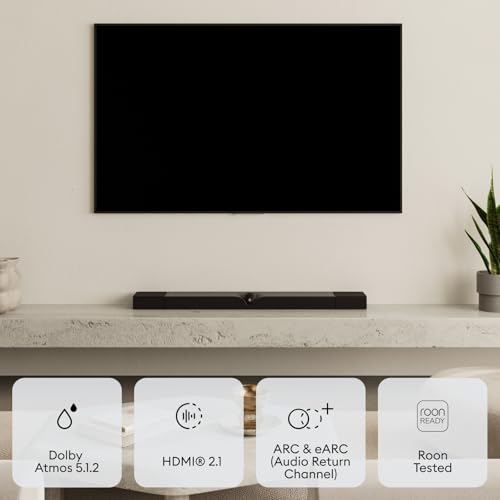
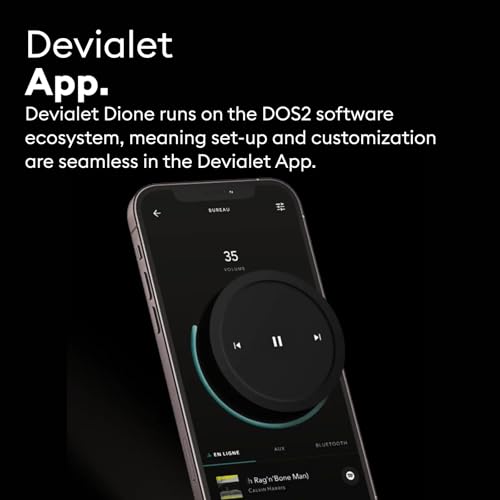
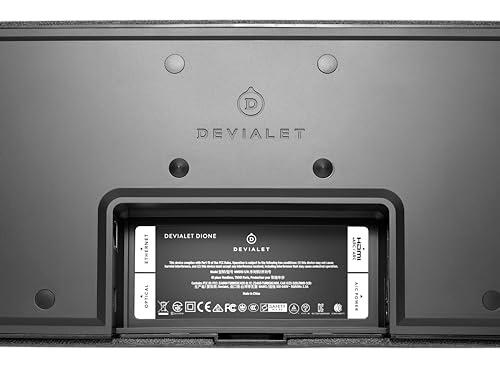
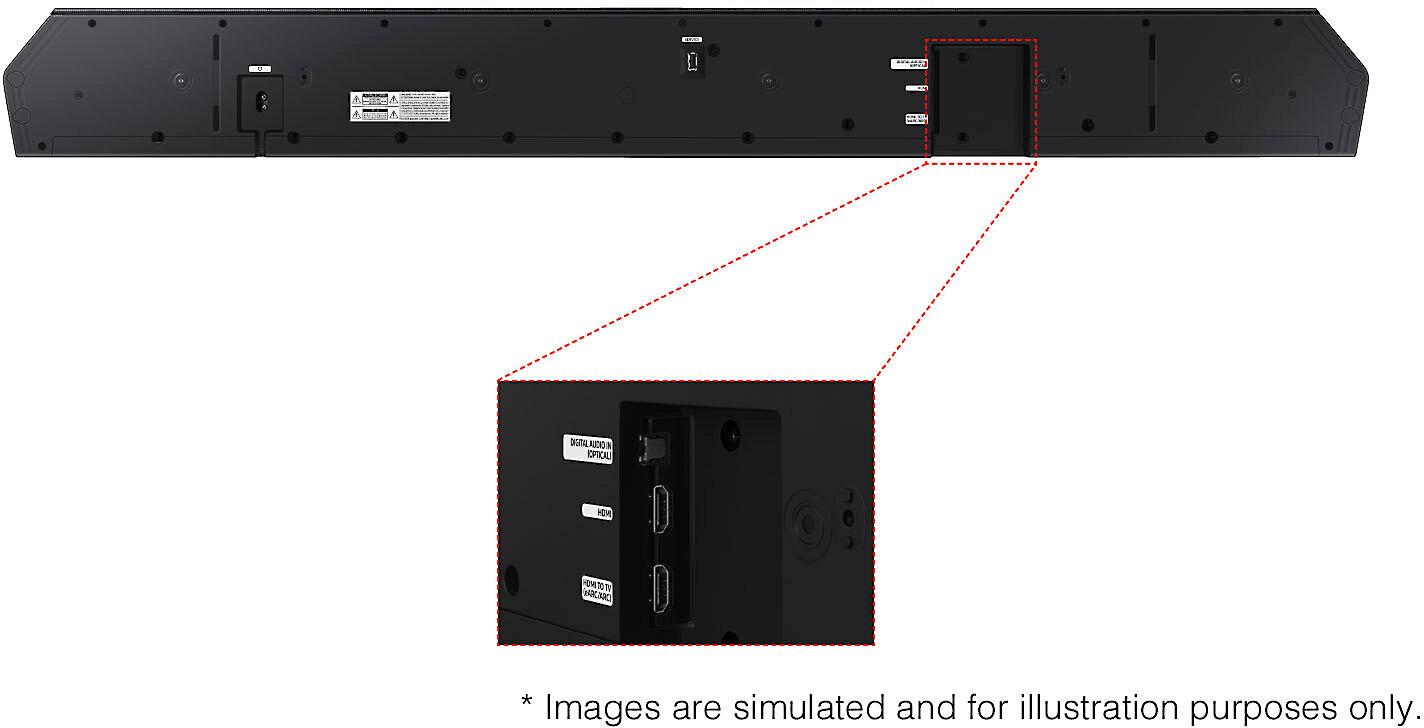
The Devialet Dione includes HDMI 2.1 with eARC (enhanced Audio Return Channel), which supports high-bandwidth audio formats like uncompressed Dolby TrueHD. It also features comprehensive wireless connectivity including Wi-Fi, Bluetooth 5.0, AirPlay 2, and Spotify Connect. However, some users note that the Devialet app is somewhat basic compared to more feature-rich control applications.
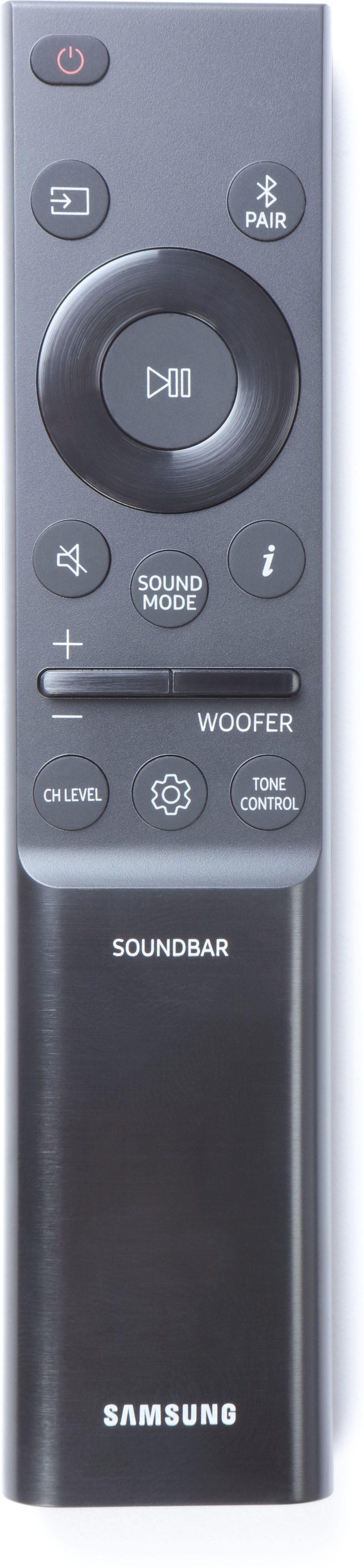
The Samsung HW-Q800D offers similar core connectivity but integrates more deeply with Samsung's ecosystem through SmartThings. If you own Samsung TVs and appliances, the Q800D can participate in synchronized smart home scenarios. The Samsung also provides more granular user controls, including a 7-band equalizer and individual channel level adjustment—features that some users find essential for room optimization.
One notable limitation of the Samsung HW-Q800D is its lack of 4K 120Hz HDMI passthrough, which could be problematic for next-generation gaming console users who want to take advantage of high refresh rate capabilities.
At the time of writing, the price differential between these products represents one of the starkest value propositions in consumer electronics. The Samsung HW-Q800D delivers perhaps 80% of the Devialet Dione's performance at roughly 20% of the cost.
For most users, the Samsung HW-Q800D represents exceptional value. It provides legitimate home theater enhancement with effective surround sound processing, solid build quality, and comprehensive smart features. Professional reviews consistently rank it among the best mid-range options available.
The Devialet Dione's premium is harder to justify purely on performance grounds, but it offers intangible benefits that matter to certain users: stunning industrial design, innovative engineering solutions, exceptional music reproduction, and the satisfaction of owning a genuine luxury product. It's similar to comparing a well-equipped Toyota to a BMW—both will get you where you're going reliably, but they offer fundamentally different ownership experiences.
From a long-term perspective, the Devialet Dione's all-in-one design eliminates the component management and potential wireless connectivity issues that can affect systems with separate subwoofers. Its premium drivers and amplification should maintain performance over many years of use.
Choose the Samsung HW-Q800D if you want excellent home theater performance without breaking the bank. It's particularly compelling for users with Samsung TVs who can take advantage of Q-Symphony technology, which synchronizes the TV's speakers with the soundbar for enhanced presence. The separate subwoofer offers placement flexibility that can be crucial in challenging room layouts.
The Samsung HW-Q800D also makes sense for gaming enthusiasts, thanks to its Game Pro mode and relatively low latency. If you prioritize maximum features and customization options over absolute sound quality, Samsung's comprehensive app control and smart home integration provide more flexibility than the Devialet Dione.
Choose the Devialet Dione if you're seeking a luxury audio component that happens to be a soundbar rather than simply a TV audio upgrade. It's compelling for users who value both exceptional movie sound and audiophile-grade music reproduction. The all-in-one design appeals to minimalists who prefer elegant integration over component flexibility.
The Devialet Dione also makes sense if you frequently switch between furniture placement and wall-mounting, thanks to its adaptive ORB® technology. For users who prioritize innovative engineering and distinctive design aesthetics, the Dione offers a unique ownership experience that no other soundbar matches.
Both products excel in their respective segments, but they serve fundamentally different needs and budgets. The Samsung HW-Q800D proves that exceptional home theater sound doesn't require extreme investment, delivering performance that will satisfy the vast majority of users. The Devialet Dione represents the pinnacle of soundbar engineering for those who demand the absolute best and have the budget to match.
Unless you're specifically seeking luxury aesthetics and audiophile-grade performance, the Samsung HW-Q800D offers better practical value for most home theater applications. However, for the small percentage of users who prioritize ultimate sound quality and innovative design over cost considerations, the Devialet Dione delivers an uncompromising experience that justifies its premium positioning.
The choice ultimately depends on your priorities, budget, and how you weight the importance of incremental performance improvements versus practical value. Both represent excellent examples of their respective market segments, making the decision more about matching your specific needs and preferences than identifying a clear winner.
| Devialet Dione | Samsung HW-Q800D |
|---|---|
| Channel Configuration - Determines surround sound capability | |
| 5.1.2 with 17 internal drivers, no separate subwoofer needed | 5.1.2 with 11 speakers plus separate wireless subwoofer |
| Total Power Output - Affects maximum volume and dynamic range | |
| 950W RMS (significantly higher headroom for demanding content) | 360W total (adequate for most rooms and listening levels) |
| Bass Extension - Critical for movie impact and music fullness | |
| 24Hz (extends deeper into sub-bass territory) | 32Hz (covers most movie content effectively) |
| Amplification Technology - Impacts sound quality and efficiency | |
| ADH® (Analog Digital Hybrid) with individual driver control | Conventional digital amplification with shared channels |
| Unique Features - Special technologies that differentiate the products | |
| ORB® rotating center channel adapts to wall/table placement | SpaceFit Sound Pro room calibration and Q-Symphony TV integration |
| Build Quality and Design - Affects durability and aesthetics | |
| Premium aluminum construction with distinctive spherical center | Conventional materials with clean, understated design |
| Music Performance - Important if you value high-fidelity audio | |
| Audiophile-grade with dedicated Music Mode and 0.001% THD | Good for casual listening, optimized primarily for movies |
| Setup Complexity - Ease of installation and configuration | |
| Single unit placement with automatic orientation detection | Requires subwoofer positioning and wireless pairing |
| Smart Features and Control - App functionality and customization | |
| Basic app with limited EQ options | Comprehensive SmartThings integration with 7-band EQ |
| Gaming Suitability - Latency and gaming-specific features | |
| Higher latency, less ideal for competitive gaming | Game Pro mode with optimized directional audio |
| Value Proposition - Performance per dollar spent | |
| Premium luxury product with incremental quality improvements | Exceptional performance-to-price ratio for mainstream users |
The Samsung HW-Q800D is better for most people due to its excellent performance-to-price ratio. It delivers impressive home theater sound with effective Dolby Atmos, clear dialogue, and powerful bass through its wireless subwoofer. The Devialet Dione offers superior sound quality but at a much higher price that's difficult to justify unless you're an audiophile seeking the absolute best.
The Devialet Dione doesn't need a separate subwoofer because it has 8 built-in subwoofers that extend bass down to 24Hz. The Samsung HW-Q800D comes with a wireless subwoofer that's essential for its performance - you shouldn't use it without the sub as the main bar alone lacks deep bass.
The Devialet Dione is significantly better for music, offering audiophile-grade sound quality with exceptional detail and a dedicated Music Mode that preserves stereo imaging. The Samsung HW-Q800D handles music adequately but is primarily optimized for movies and TV shows rather than critical music listening.
Both soundbars excel at dialogue clarity, but through different approaches. The Devialet Dione features a unique rotating ORB center channel that mechanically adjusts for optimal dialogue positioning. The Samsung HW-Q800D uses Active Voice Amplifier technology to digitally enhance speech clarity, and both deliver clear, intelligible dialogue.
The Samsung HW-Q800D is better for gaming thanks to its Game Pro mode with optimized directional audio and lower latency. The Devialet Dione has higher latency that can cause noticeable delays between on-screen action and audio, making it less suitable for competitive gaming.
Yes, both the Devialet Dione and Samsung HW-Q800D can be wall-mounted. The Devialet Dione has a unique advantage with its rotating ORB center channel that automatically adjusts when wall-mounted to maintain proper dialogue positioning. Both include mounting hardware.
The Devialet Dione produces deeper bass extending to 24Hz through its 8 internal subwoofers, while the Samsung HW-Q800D reaches 32Hz with its separate 8-inch wireless subwoofer. Both deliver satisfying bass for movies, but the Devialet Dione offers more seamless integration and the Samsung HW-Q800D provides more placement flexibility.
The Samsung HW-Q800D offers more comprehensive smart features including SmartThings integration, 7-band EQ, and Q-Symphony technology that works with Samsung TVs. The Devialet Dione has good connectivity options but a more basic app with limited customization compared to the Samsung HW-Q800D.
Both the Devialet Dione and Samsung HW-Q800D support Dolby Atmos through their 5.1.2 channel configurations with upfiring speakers. The Devialet Dione uses advanced beamforming technology while the Samsung HW-Q800D relies on effective but more conventional processing. Both create convincing overhead effects.
The Samsung HW-Q800D requires positioning both the main bar and wireless subwoofer, plus initial pairing between components. The Devialet Dione is simpler as a single unit with automatic room calibration and orientation detection, making it more plug-and-play despite its advanced technology.
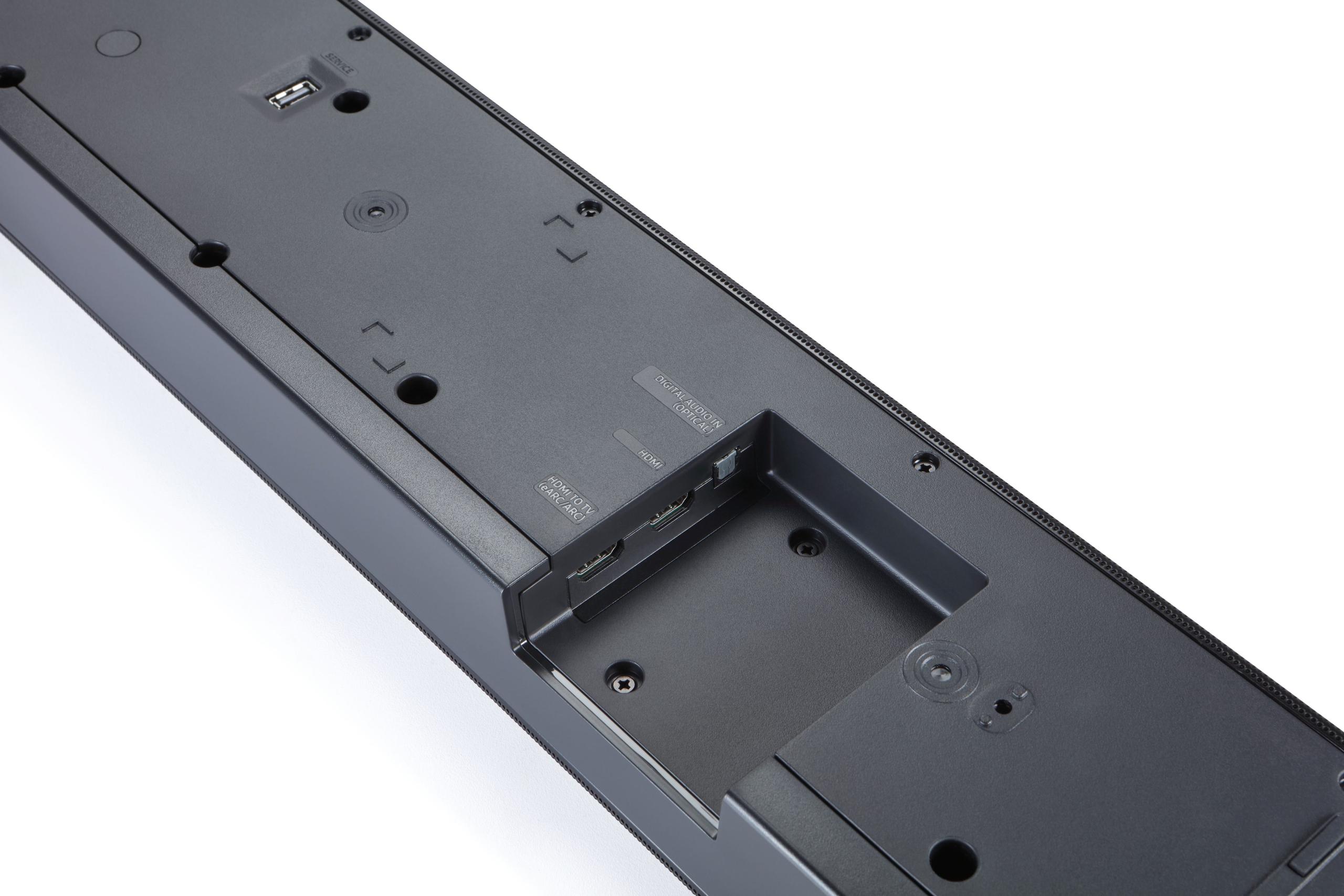
Yes, both the Devialet Dione and Samsung HW-Q800D work with any TV brand through HDMI eARC or optical connections. However, the Samsung HW-Q800D offers additional features like Q-Symphony when paired with compatible Samsung TVs, while the Devialet Dione performs consistently across all TV brands.
For most users, the Samsung HW-Q800D offers better long-term value with excellent performance, comprehensive features, and proven reliability at a reasonable price. The Devialet Dione represents luxury value for audiophiles who prioritize ultimate sound quality and innovative design over cost considerations.
We've done our best to create useful and informative comparisons to help you decide what product to buy. Our research uses advanced automated methods to create this comparison and perfection is not possible - please contact us for corrections or questions. These are the sites we've researched in the creation of this article: rtings.com - crutchfield.com - devialet.com - ooberpad.com - bhphotovideo.com - kjwestone.co.uk - whathifi.com - devialet.com - devialet.com - sound-advice.online - kjwestone.co.uk - device.report - tmraudio.com - devialet.com - devialetchat.com - projectorscreen.com - soundandvision.com - bestbuy.com - youtube.com - av.com - audiofi.ca - devialet.com - blog.son-video.com - audioconnection.com.au - baybloorradio.com - cdn.abicart.com - smarthomesounds.co.uk - e-piphany.co.za - cloneyaudio.com - devialet.com - catalog.asbis.ee - av.com - soundandvision.com - youtube.com - comparisontabl.es - techradar.com - valueelectronics.com - samsung.com - rtings.com - samsung.com - crutchfield.com - samsung.com - samsung.com - samsung.com - shidirect.com

Privacy Policy
Terms and Conditions - Affiliate Policy
Home Security
© Copyright 2008-2026.
11816 Inwood Rd #1211, Dallas, TX 75244