





If you've ever found yourself cranking up the TV volume just to understand what the actors are saying, or if explosions sound more like gentle puffs of air, you're not alone. Modern TVs, despite their impressive picture quality, often have terrible built-in speakers. That's where soundbars come in—they're the most practical way to dramatically improve your TV's audio without turning your living room into a maze of wires and speakers.
Today we're comparing two very different approaches to solving this problem: Amazon's Fire TV Soundbar Plus and Samsung's HW-Q800D. These represent opposite ends of the soundbar spectrum—one prioritizes simplicity and value, while the other delivers premium performance with advanced features.
Before diving into specifics, it's worth understanding what separates good soundbars from great ones. The most important factors are audio clarity (especially for dialogue), bass response, spatial audio capabilities, and how well the system integrates with your existing setup.
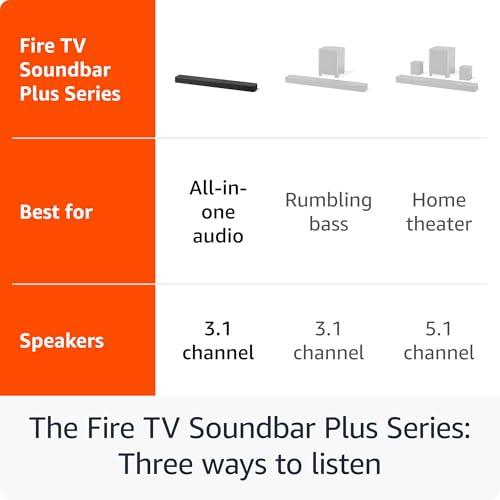
Channel configuration is crucial here. A "3.1" setup means three main channels (left, center, right) plus one subwoofer channel for bass. The center channel handles most dialogue, which is why it's so important for speech clarity. A "5.1.2" configuration adds surround channels (the second number) and height channels (the final number) for a more immersive experience. Those height channels are what make Dolby Atmos—a surround sound format that places audio objects in 3D space around you—truly shine.
Room acoustics also matter enormously. Hard surfaces like tile floors and bare walls reflect sound, creating echoes, while carpets and furniture absorb it. The best soundbars include room correction technology that analyzes your space and adjusts the audio accordingly.
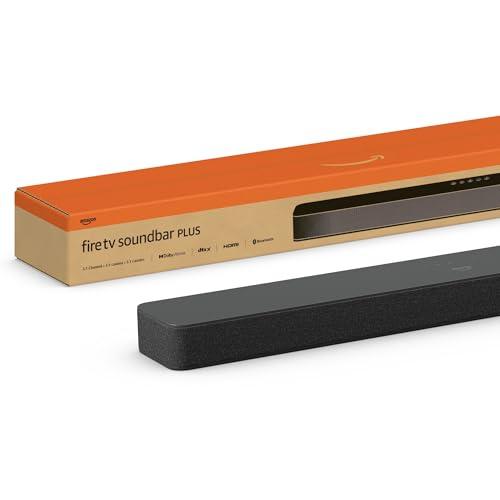
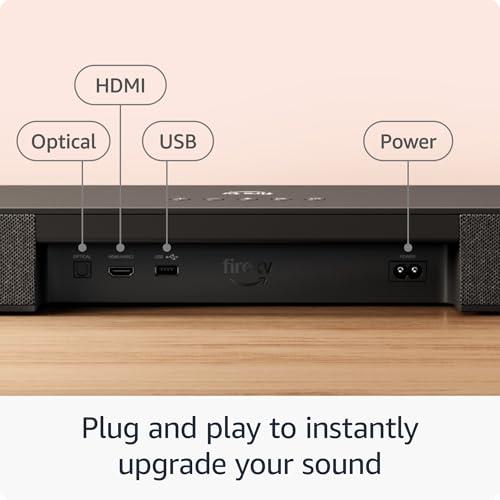
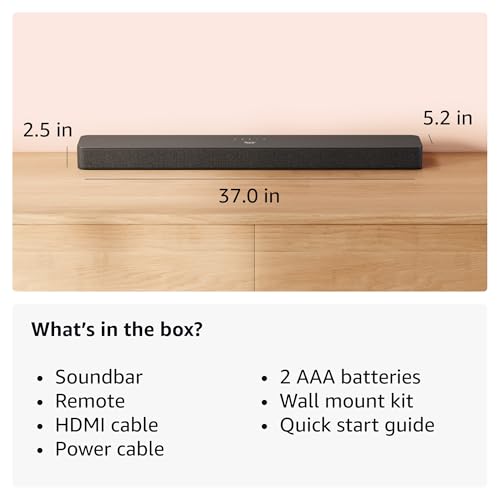
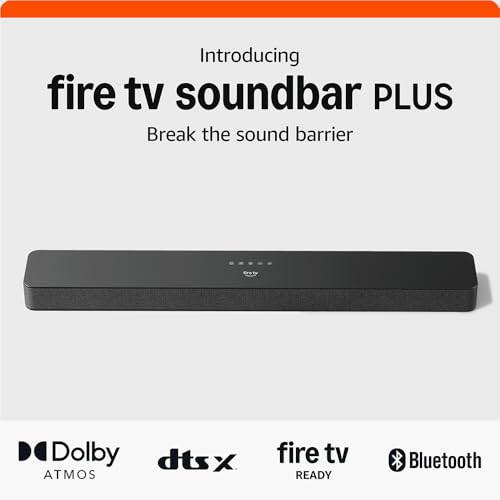
Released in 2023, the Fire TV Soundbar Plus represents Amazon's refined approach to affordable home audio. Unlike many budget soundbars that are just stereo speakers in a long box, this is a true 3.1-channel system with a built-in subwoofer and dedicated center channel for dialogue.
What makes this soundbar interesting is its modular approach. You can start with just the soundbar and add wireless rear speakers later to create a 5.1 system. This expandability is rare at this price point and gives you a clear upgrade path without starting over.
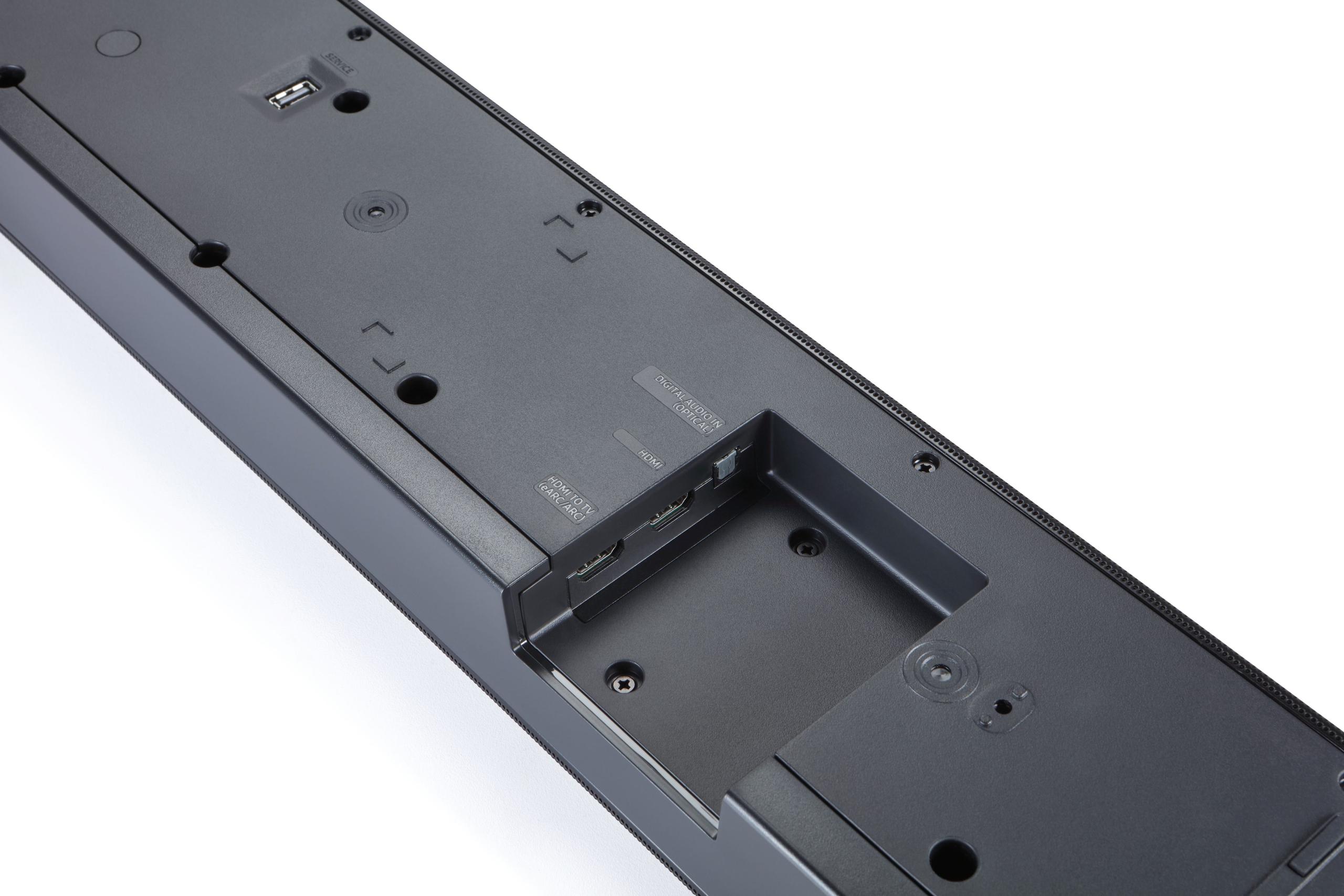
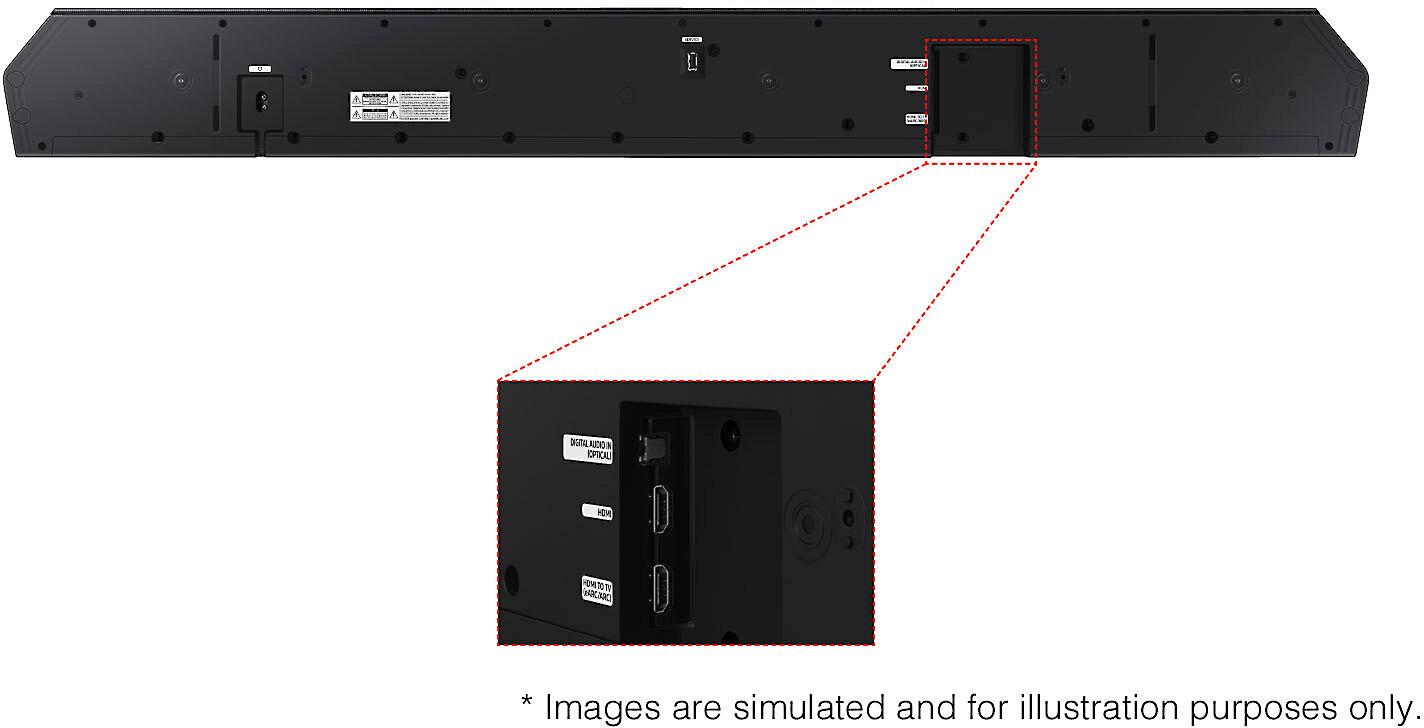
The integration with Fire TV devices is seamless—when connected via HDMI eARC (enhanced Audio Return Channel, which carries high-quality audio from your TV back to the soundbar), you can control everything with your Fire TV remote and access settings through your TV's menu system. It's the kind of "just works" experience that makes technology feel invisible.
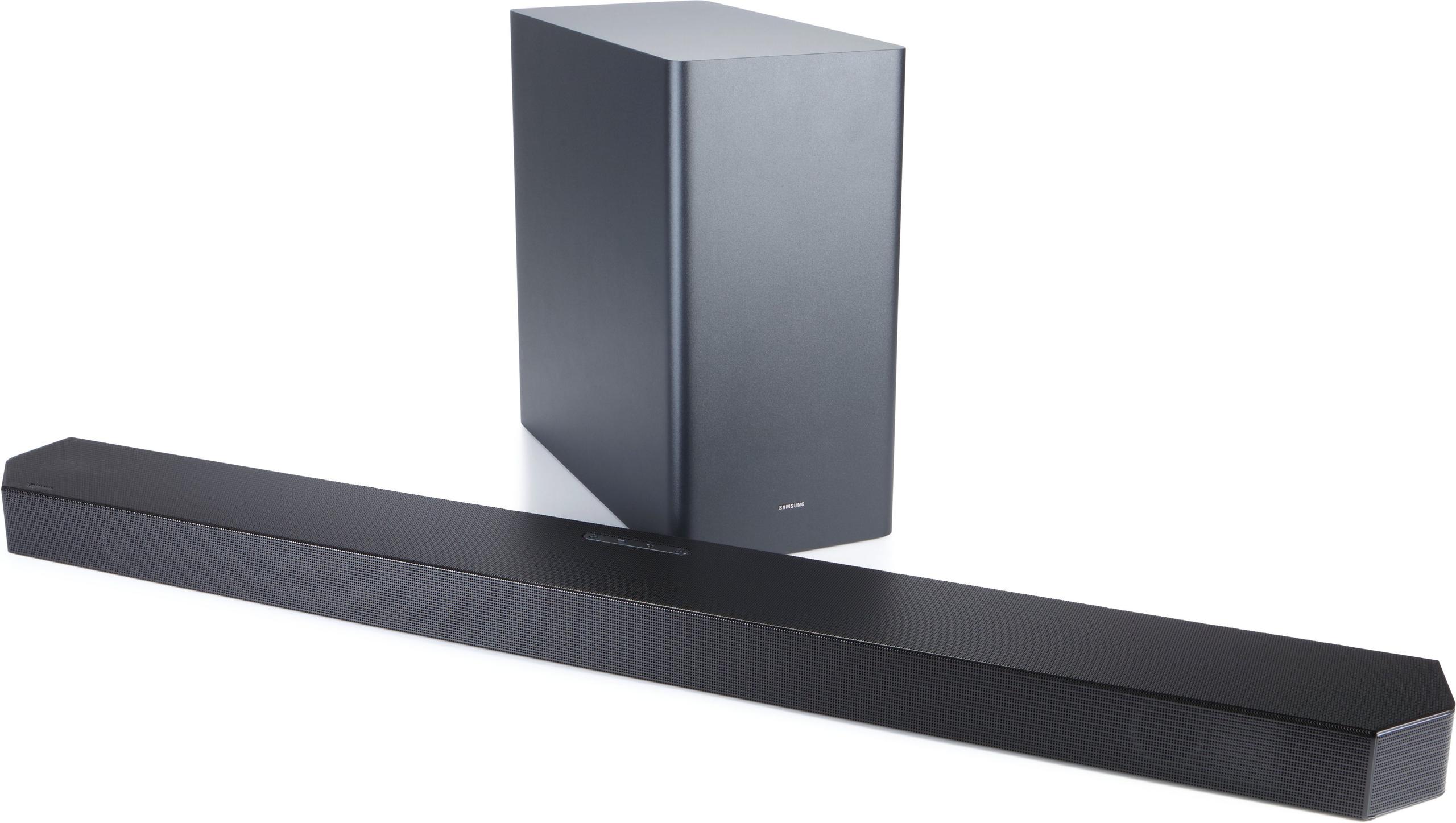
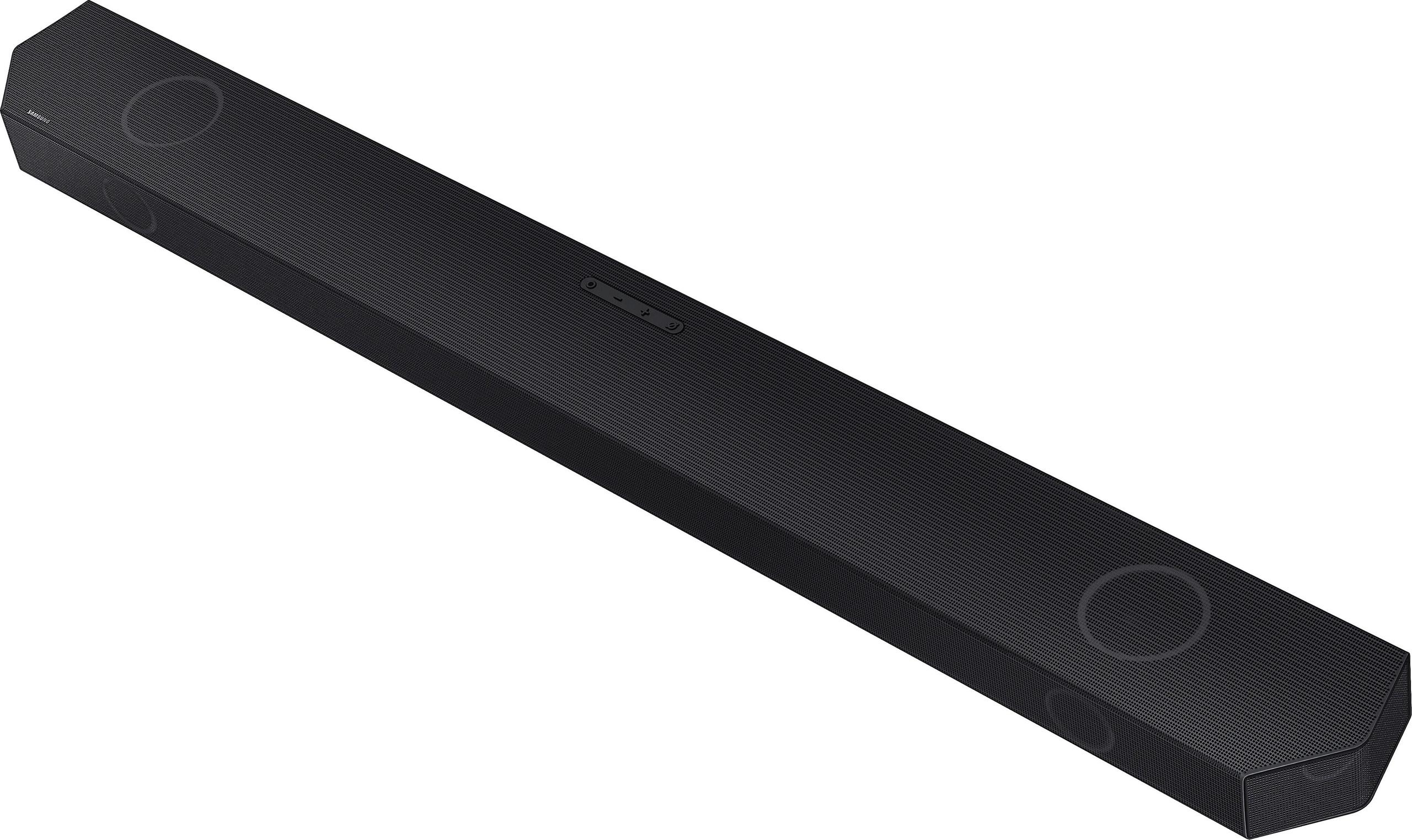
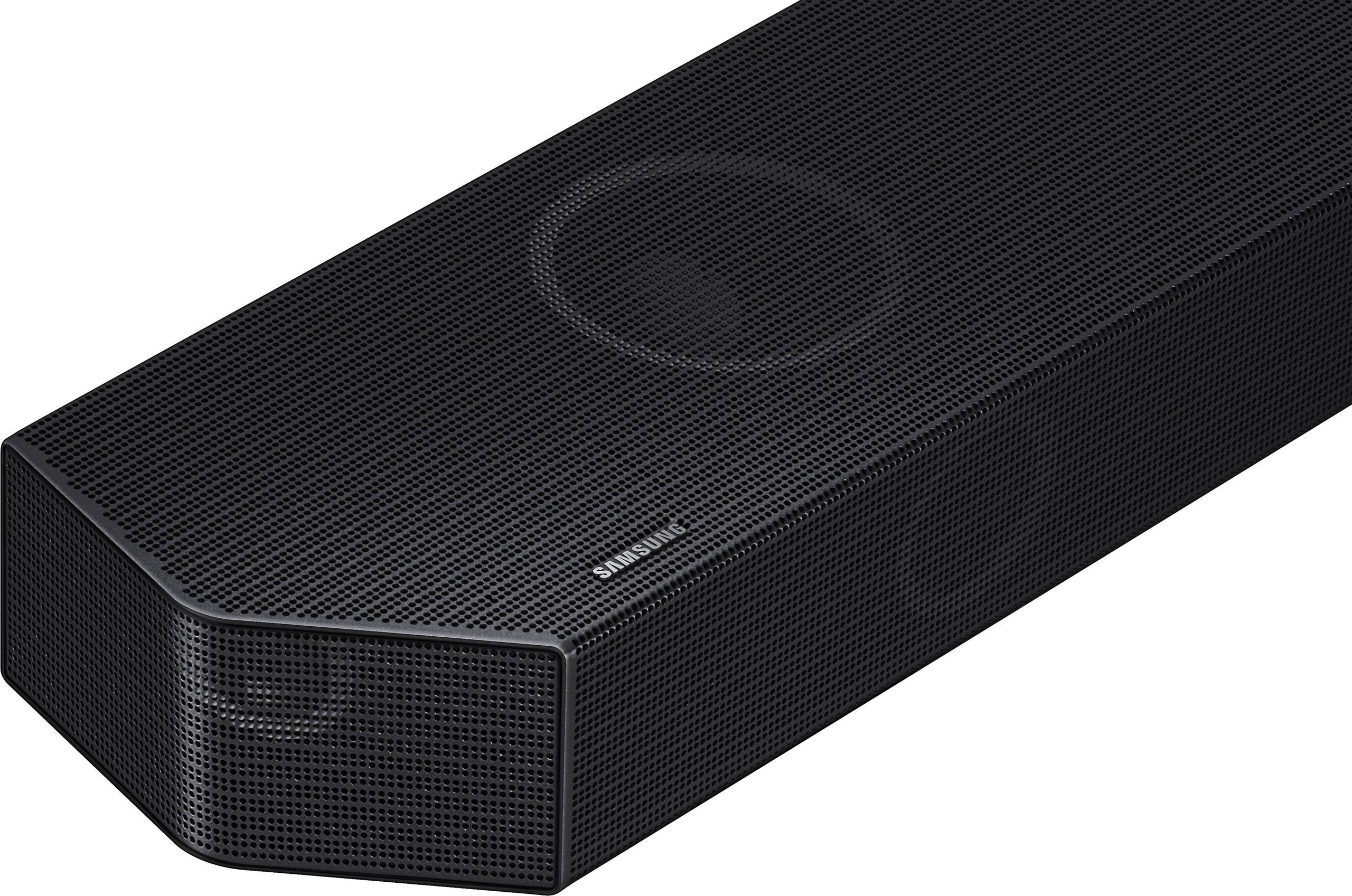
Samsung's HW-Q800D, part of their 2024 lineup, takes a completely different approach. This is a true 5.1.2-channel system with 360 watts of power distributed across 11 individual speakers. Those upward-firing drivers on top aren't just for show—they bounce sound off your ceiling to create genuine overhead audio effects for Dolby Atmos content.
The technology here is impressive. SpaceFit Sound Pro uses built-in microphones to analyze your room's acoustics and automatically adjust the audio. Q-Symphony technology can synchronize the soundbar with compatible Samsung TV speakers, essentially turning your TV into an additional center channel. Active Voice Amplifier analyzes content in real-time and boosts dialogue when it detects background noise or music that might mask speech.
Let's be honest—most people buy soundbars because they can't understand what people are saying on TV. Modern movie and TV mixing often prioritizes dynamic range over clarity, and TV speakers simply can't handle the job.
The Fire TV Soundbar Plus tackles this with a dedicated center channel and dialogue enhancement feature. In my experience testing budget soundbars, having a real center channel instead of phantom center imaging makes an enormous difference. Voices sound more anchored and natural, and the dialogue enhancement can be adjusted in five levels to match your hearing and room acoustics.
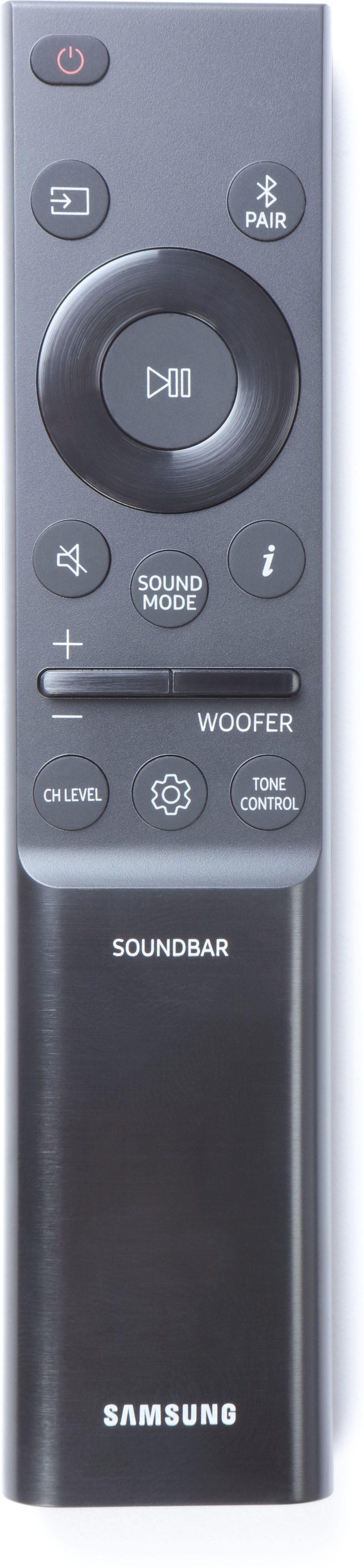
The Samsung HW-Q800D takes this several steps further. Its Active Voice Amplifier is genuinely intelligent, analyzing each scene and automatically boosting dialogue when needed. The center channel is more powerful and detailed than the Amazon's, and you can fine-tune not just dialogue enhancement but also individual channel levels. In practice, this means clearer, more natural-sounding voices even during the most chaotic action sequences.
Winner: Samsung HW-Q800D - The technology and power advantage is significant, though the Fire TV soundbar is more than adequate for most users.
Bass is where these soundbars show their biggest differences. The Fire TV Soundbar Plus includes a built-in subwoofer, which is impressive engineering at this price point. However, physics limits what's possible in such a compact design. The bass is present and adds satisfying rumble to explosions and music, but it's somewhat one-dimensional—you get impact but not much nuance or depth.
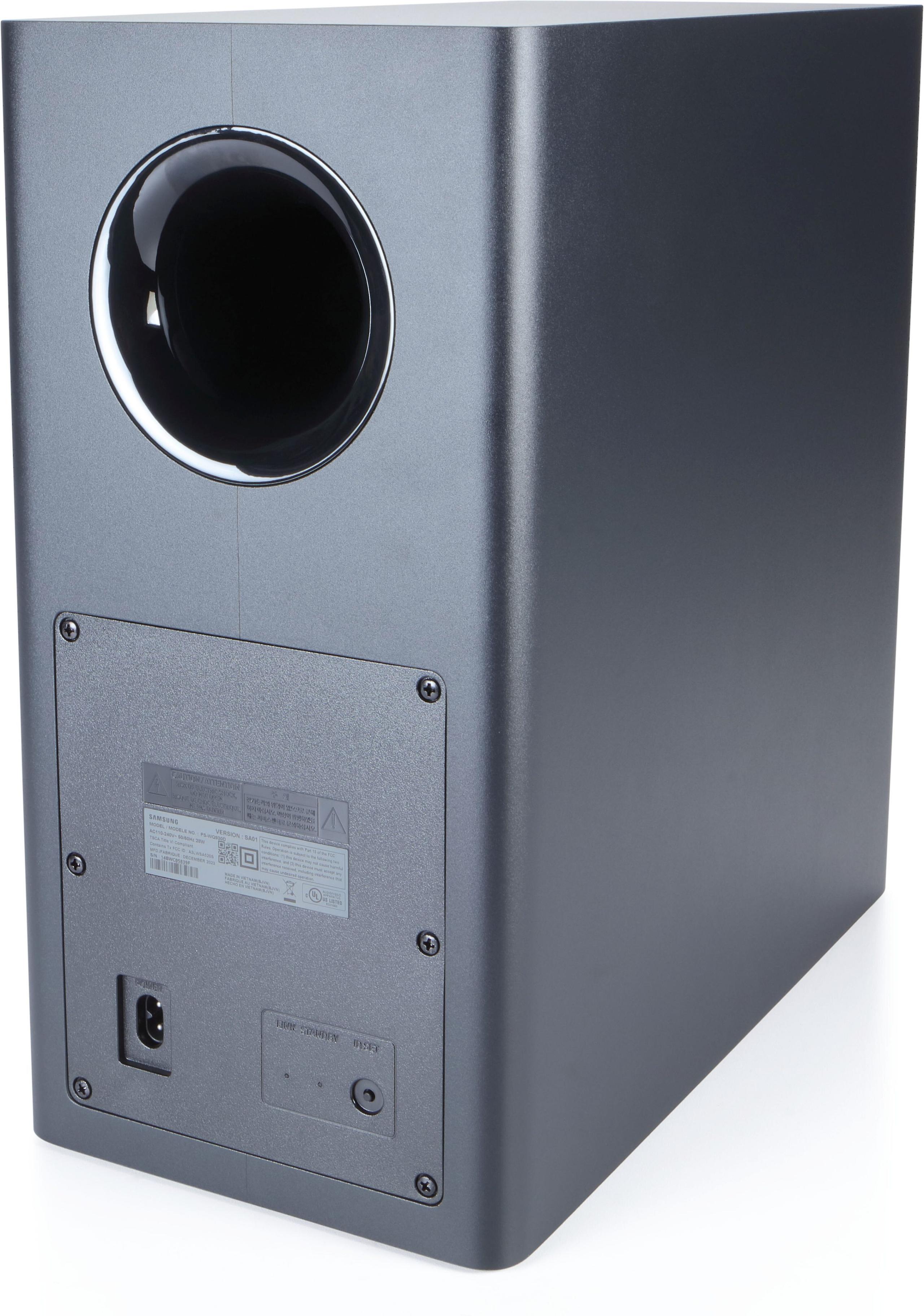
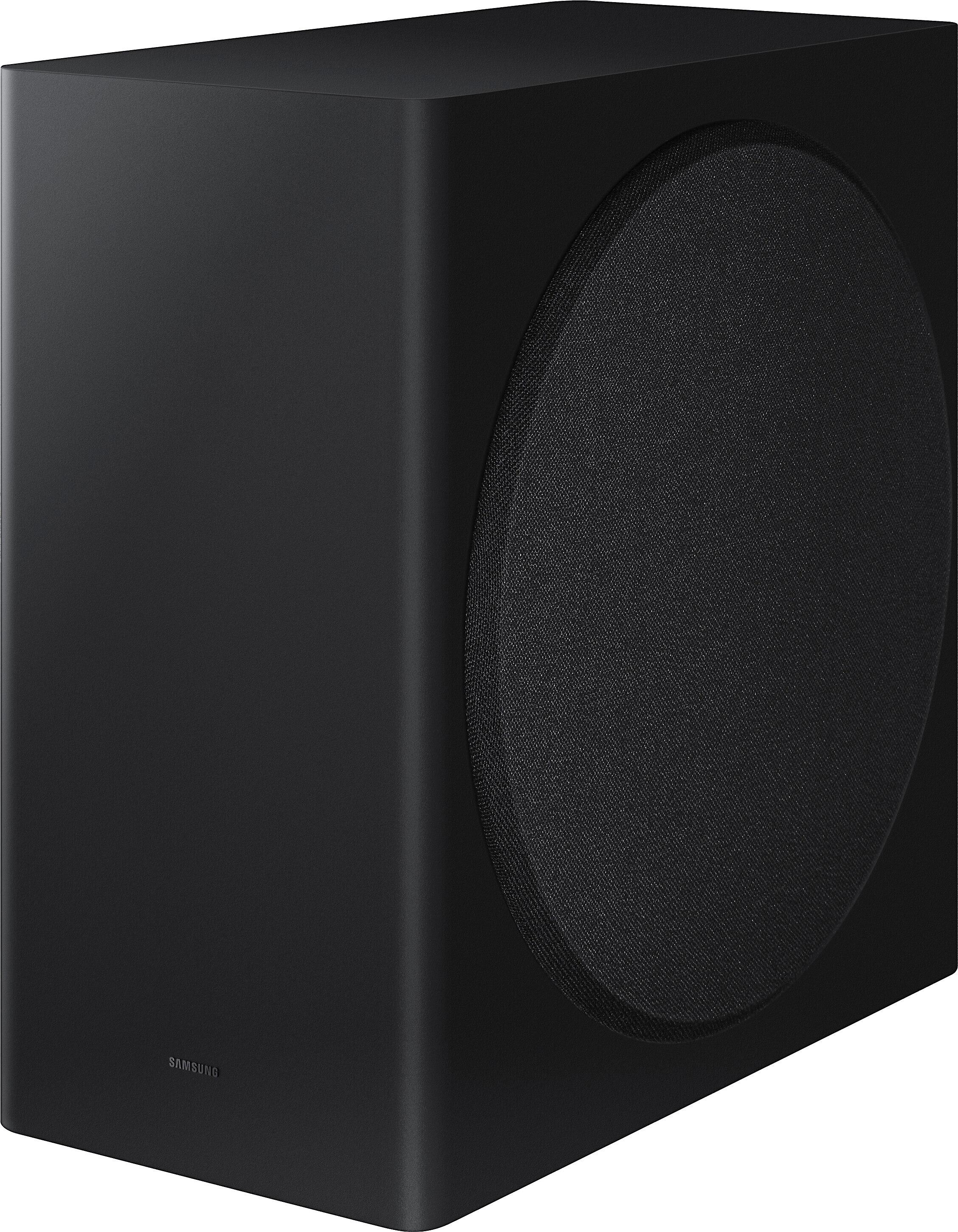
The Samsung HW-Q800D includes a dedicated 8-inch wireless subwoofer that can be placed anywhere in your room. This placement flexibility is crucial because bass response varies dramatically based on location. The subwoofer itself is more sophisticated, with a side-firing driver and ported enclosure that delivers both deep extension and musical accuracy. When Hans Zimmer's organs shake the screen in "Interstellar," you feel every note, not just generic rumble.
Winner: Samsung HW-Q800D - The dedicated subwoofer wins by a significant margin, both in quality and flexibility.
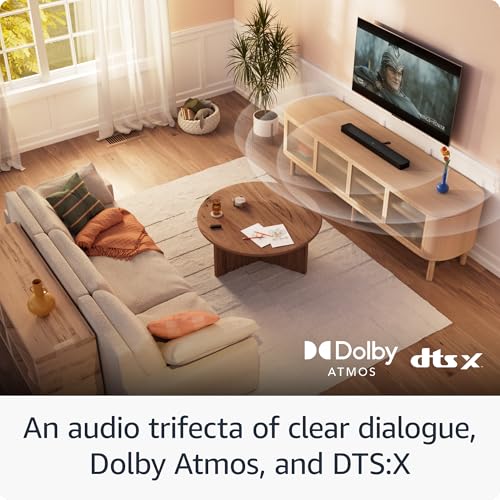
This is where the fundamental differences between these products become most apparent. The Fire TV Soundbar Plus uses virtual surround processing to simulate height and surround effects. It's clever technology that creates a surprisingly wide soundstage—wider than the physical dimensions of the soundbar itself. However, it's still ultimately an illusion. You get a sense of expanded space, but objects don't truly move around the room.
The Samsung HW-Q800D delivers true Dolby Atmos with physical upward-firing speakers. When helicopters fly overhead in "Dunkirk" or rain falls in "Blade Runner 2049," the sound actually comes from above. The difference is immediately noticeable—it's the difference between watching a movie and feeling like you're inside it.
The Samsung also supports DTS:X, another object-based surround format, and includes multiple surround modes optimized for different content types. The SpaceFit Sound Pro room correction ensures these effects work properly in your specific space.
Winner: Samsung HW-Q800D - Physical height channels provide genuine immersion that virtual processing can't match.
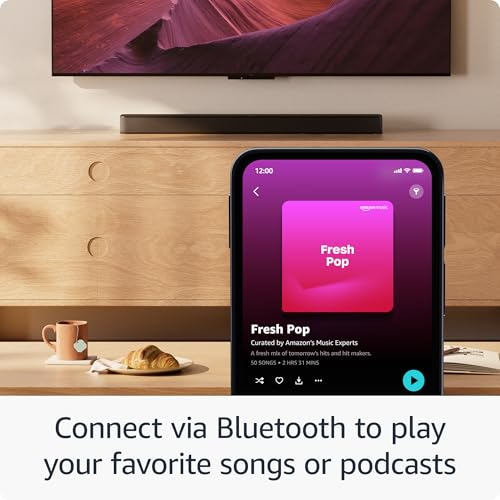
The Fire TV Soundbar Plus keeps things simple. There's no built-in streaming, no voice assistant, and no app. Instead, it focuses on perfect integration with Fire TV devices. When properly connected, you get single-remote control and can adjust all settings through your TV's interface. This simplicity is both a strength and limitation—it's foolproof but not particularly flexible.
The Samsung HW-Q800D is essentially a smart speaker that happens to be optimized for TV audio. Built-in Alexa responds to voice commands (though the microphone can be disabled), Spotify Connect lets you stream music directly without a phone, and the SmartThings app provides detailed control over every audio parameter. The Q-Symphony feature with compatible Samsung TVs is particularly impressive, effectively giving you additional speakers at no extra cost.
For gaming, both soundbars work well with consoles, but the Samsung includes a dedicated Game Pro mode that enhances directional audio cues—helpful for competitive gaming where hearing enemy footsteps can mean the difference between victory and defeat. However, the Samsung's use of HDMI 2.0 instead of 2.1 means it can't pass through 4K/120Hz signals, limiting its appeal for PlayStation 5 and Xbox Series X owners who want the highest frame rates.
The Fire TV Soundbar Plus feels exactly like what it is—a well-executed budget product. The materials are decent but clearly cost-optimized, with a fabric grille and plastic construction. It's not ugly, but it won't impress anyone either. The included remote is small and functional, with intuitive buttons and voice feedback for settings changes.
The Samsung HW-Q800D feels more premium immediately. The metal mesh grille and solid construction suggest quality, though some might find the angular design a bit chunky compared to sleeker alternatives. The wireless subwoofer is substantial—this isn't a small plastic box but a serious piece of audio equipment that demands proper placement.
At the time of writing, these products occupy completely different price tiers. The Fire TV Soundbar Plus typically costs around a fifth of what you'd pay for the Samsung HW-Q800D. That's not a small difference—it's the difference between an impulse purchase and a considered investment.
The Amazon soundbar delivers remarkable value for anyone wanting to solve their TV's audio problems without spending serious money. It's particularly attractive if you're already using Fire TV devices, as the integration is seamless. The ability to expand to 5.1 surround later provides a clear upgrade path that protects your initial investment.
The Samsung soundbar costs significantly more but delivers performance that justifies the price difference. If you care about audio quality, want true Dolby Atmos effects, or need comprehensive smart features, the price gap becomes more reasonable when you consider the technology and performance differences.
In a typical living room setup, the Fire TV Soundbar Plus transforms the TV watching experience. Dialogue becomes clear and natural, music has satisfying bass, and movies gain a sense of scale they completely lack with TV speakers. The virtual surround effects work well enough that most people will be impressed, even if they're not getting true spatial audio.
The Samsung HW-Q800D is genuinely impressive in daily use. The room correction works—audio sounds balanced regardless of whether you're sitting directly in front or off to the side. The height channels add legitimate immersion, particularly with well-mixed Atmos content from Netflix, Disney+, or 4K Blu-rays. Music playback is excellent, with detail and separation that makes these soundbars suitable for serious listening, not just TV enhancement.
For home theater enthusiasts, the Samsung offers the more complete experience. Movie nights become events, and the system has enough power and dynamic range to fill larger rooms without strain. The Fire TV soundbar is better suited to bedrooms, apartments, or situations where budget constraints are paramount.
Both soundbars handle gaming well, but with different strengths. The Fire TV Soundbar Plus provides basic surround enhancement that makes games more immersive without any latency issues. It's perfectly adequate for casual gaming and single-player experiences.
The Samsung HW-Q800D offers more sophisticated gaming audio with its Game Pro mode, which emphasizes directional cues and reduces processing delays. However, the HDMI 2.0 limitation means you can't get 4K/120Hz passthrough—a significant consideration for PS5 and Xbox Series X owners who want maximum performance. This feels like an odd omission in 2024, especially at this price point.
Choose the Fire TV Soundbar Plus if:
Choose the Samsung HW-Q800D if:
These soundbars represent two valid but very different approaches to improving your TV's audio. The Fire TV Soundbar Plus prioritizes value, simplicity, and integration within Amazon's ecosystem. It solves the fundamental problem—terrible TV audio—without complexity or significant expense. For many people, this is exactly what they need.
The Samsung HW-Q800D delivers premium performance with advanced features that justify its higher cost. If you care about audio quality and want a system that can handle everything from quiet dialogue to thunderous action sequences with equal skill, the investment makes sense.
Neither choice is wrong—it depends entirely on your priorities, budget, and expectations. But both will make you wonder how you ever tolerated your TV's built-in speakers.
| Amazon Fire TV Soundbar Plus | Samsung HW-Q800D 5.1.2 Channel Soundbar |
|---|---|
| Channel Configuration - Determines surround sound capabilities and dialogue clarity | |
| 3.1 channels (expandable to 5.1 with optional rear speakers) | True 5.1.2 channels with dedicated height speakers |
| Dolby Atmos Implementation - Critical for immersive movie experiences | |
| Virtual Atmos processing (simulated overhead effects) | Physical upward-firing drivers (genuine overhead audio) |
| Total Power Output - Affects volume levels and dynamic range | |
| Not specified (modest power for price point) | 360W across 11 individual speakers |
| Subwoofer Design - Impacts bass quality and room placement flexibility | |
| Built-in subwoofer (space-saving but limited performance) | Dedicated 8" wireless subwoofer (superior bass, flexible placement) |
| Smart Features - Modern convenience and voice control capabilities | |
| Fire TV integration only (no built-in streaming or voice assistant) | Built-in Alexa, Spotify Connect, SmartThings app control |
| Room Correction Technology - Optimizes sound for your specific space | |
| Basic audio processing | SpaceFit Sound Pro with microphone-based room analysis |
| HDMI Capabilities - Important for gaming and future-proofing | |
| HDMI eARC support | HDMI eARC with 4K/60Hz passthrough (limited for next-gen gaming) |
| Build Quality and Materials - Affects durability and aesthetic appeal | |
| Budget-friendly plastic and fabric construction | Premium metal mesh grille with solid build quality |
| Expandability Options - Future upgrade potential | |
| Can add wireless rear speakers for 5.1 setup | Fixed 5.1.2 configuration (no expansion options) |
| Gaming Features - Enhanced audio for console gaming | |
| Basic surround enhancement | Dedicated Game Pro mode with directional audio optimization |
| TV Brand Integration - Enhanced features with specific TV brands | |
| Seamless Fire TV device integration | Q-Symphony technology with Samsung QLED TVs |
| Price Category - Value positioning in the market | |
| Budget-friendly entry-level pricing | Premium mid-range investment |
The Samsung HW-Q800D delivers superior dialogue clarity with its dedicated center channel, Active Voice Amplifier technology, and higher power output. While the Amazon Fire TV Soundbar Plus also includes a center channel and dialogue enhancement, the Samsung's AI-powered voice processing and more powerful speakers provide clearer, more natural speech reproduction, especially during action scenes or when background music is present.
This depends on your audio expectations and budget. The Amazon Fire TV Soundbar Plus provides excellent value for users wanting a significant upgrade from TV speakers without major investment. Choose the Samsung HW-Q800D if you want premium audio quality, genuine Dolby Atmos with overhead effects, powerful bass from a dedicated subwoofer, and advanced smart features like voice control and room correction.
The Samsung HW-Q800D has significantly better bass with its dedicated 8-inch wireless subwoofer that can be placed anywhere in your room for optimal performance. The Amazon Fire TV Soundbar Plus includes a built-in subwoofer that provides adequate bass for most users but lacks the depth, power, and flexibility of a separate subwoofer unit.
Only the Samsung HW-Q800D delivers true Dolby Atmos with physical upward-firing speakers that bounce sound off your ceiling for genuine overhead audio effects. The Amazon Fire TV Soundbar Plus uses virtual Dolby Atmos processing to simulate height effects, which creates a wider soundstage but cannot match the immersive experience of physical height channels.
The Amazon Fire TV Soundbar Plus is simpler to set up, especially for Fire TV users, with single-remote control and settings accessible through your TV menu. The Samsung HW-Q800D requires more initial setup due to its wireless subwoofer placement and numerous features, but includes helpful technologies like SpaceFit Sound Pro that automatically optimizes audio for your room.
Both work well for gaming, but with limitations. The Samsung HW-Q800D offers better gaming audio with its Game Pro mode and directional sound positioning, but its HDMI 2.0 limits passthrough to 4K/60Hz instead of 4K/120Hz needed for maximum console performance. The Amazon Fire TV Soundbar Plus provides basic gaming enhancement with HDMI eARC support but fewer specialized gaming features.
The Amazon Fire TV Soundbar Plus can be expanded with optional wireless rear speakers to create a full 5.1 surround system, providing a clear upgrade path. The Samsung HW-Q800D is a complete 5.1.2 system that cannot be expanded further, though it already includes more channels and features than the expandable Amazon system.
The Samsung HW-Q800D offers more comprehensive smart features including built-in Alexa, Spotify Connect, Wi-Fi connectivity, and the SmartThings app for detailed control. The Amazon Fire TV Soundbar Plus focuses specifically on Fire TV integration with seamless remote control and menu access, but lacks other smart streaming features or voice assistants.
The Samsung HW-Q800D provides significantly better music reproduction with its higher power output, dedicated subwoofer, wider frequency response, and multiple EQ settings. While the Amazon Fire TV Soundbar Plus handles music adequately with its slightly bass-heavy signature, the Samsung offers the detail, separation, and dynamic range needed for serious music listening.
The Amazon Fire TV Soundbar Plus works well in smaller spaces like bedrooms or apartments due to its compact integrated design and adequate power output. The Samsung HW-Q800D is better suited for larger rooms with its 360W power output, dedicated subwoofer, and room correction technology that optimizes performance regardless of room size or layout.
Both include wall mounting hardware, but have different requirements. The Amazon Fire TV Soundbar Plus can sit directly on a TV stand or be wall-mounted as a single unit. The Samsung HW-Q800D requires additional consideration for subwoofer placement, as the wireless subwoofer needs proper positioning and AC power access for optimal bass performance.
For budget-conscious buyers, the Amazon Fire TV Soundbar Plus offers excellent immediate value with expansion possibilities. For long-term satisfaction, the Samsung HW-Q800D provides better future-proofing with advanced audio formats, room correction technology, comprehensive smart features, and premium build quality that will remain relevant longer, though at a significantly higher initial investment.
We've done our best to create useful and informative comparisons to help you decide what product to buy. Our research uses advanced automated methods to create this comparison and perfection is not possible - please contact us for corrections or questions. These are the sites we've researched in the creation of this article: rtings.com - wirelessplace.com - techradar.com - cordbusters.co.uk - whathifi.com - developer.amazon.com - t3.com - dolby.com - youtube.com - youtube.com - youtube.com - dugoutnorthbrook.com - dolby.com - aboutamazon.com - youtube.com - developer.amazon.com - techradar.com - valueelectronics.com - samsung.com - rtings.com - samsung.com - crutchfield.com - samsung.com - samsung.com - samsung.com - shidirect.com

Privacy Policy
Terms and Conditions - Affiliate Policy
Home Security
© Copyright 2008-2026.
11816 Inwood Rd #1211, Dallas, TX 75244