





If you've ever found yourself cranking up the volume during your favorite show only to get blasted by the next commercial, you're not alone. Modern TVs, despite their impressive picture quality, often come with speakers that sound like they're trapped inside a tin can. That's where soundbars come in – and choosing between a simple upgrade like the Polk Audio Signa S2 and a premium option like the Samsung HW-Q800D can make or break your home entertainment experience.
The soundbar market has exploded over the past decade, transforming from a niche product to the go-to solution for better TV audio. At their core, soundbars are long, horizontal speakers designed to sit beneath or in front of your TV, replacing those inadequate built-in speakers with something that actually does justice to your content.
When shopping for a soundbar, you'll encounter several key technical specifications that determine how they'll perform in your space. Channel configuration is perhaps the most important – this tells you how many distinct audio channels the system can produce. A 2.1 system like the Polk Signa S2 has two main channels (left and right) plus a subwoofer channel for bass. The Samsung HW-Q800D, with its 5.1.2 configuration, offers five main channels (front left, center, front right, and two surrounds), one subwoofer channel, and two additional height channels for overhead sound effects.
Audio format support has become increasingly important as streaming services embrace advanced sound technologies. Dolby Atmos, which creates a three-dimensional sound bubble around you, requires specific hardware support – something that separates entry-level and premium soundbars. Connectivity options determine how easily the soundbar integrates with your existing setup, while room optimization features can automatically adjust the sound to work better in your specific space.
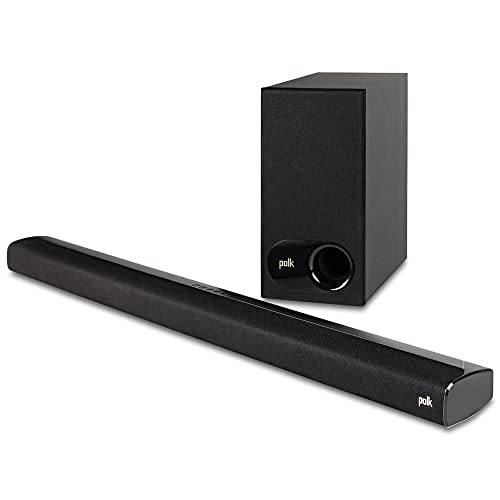
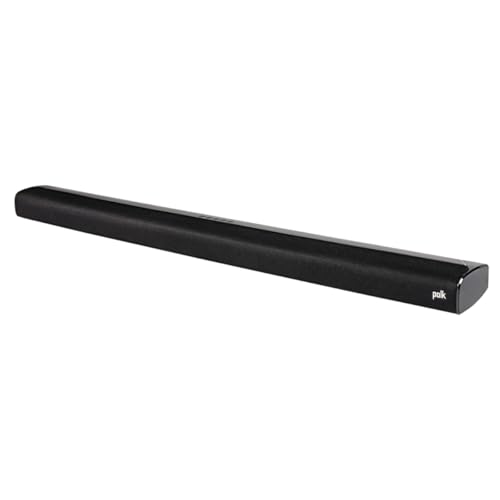
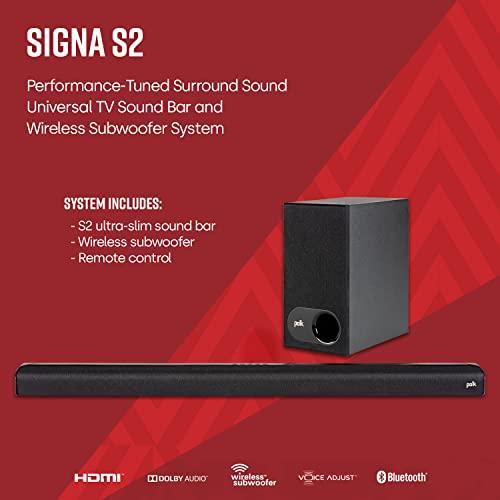
The Polk Audio Signa S2, released in 2019, represents the "keep it simple" philosophy. Polk Audio, a company that's been making speakers since 1972, designed this system for people who want dramatically better TV audio without complexity or a massive investment. At the time of writing, it typically sells for under $200, making it one of the most accessible ways to upgrade your TV's sound.
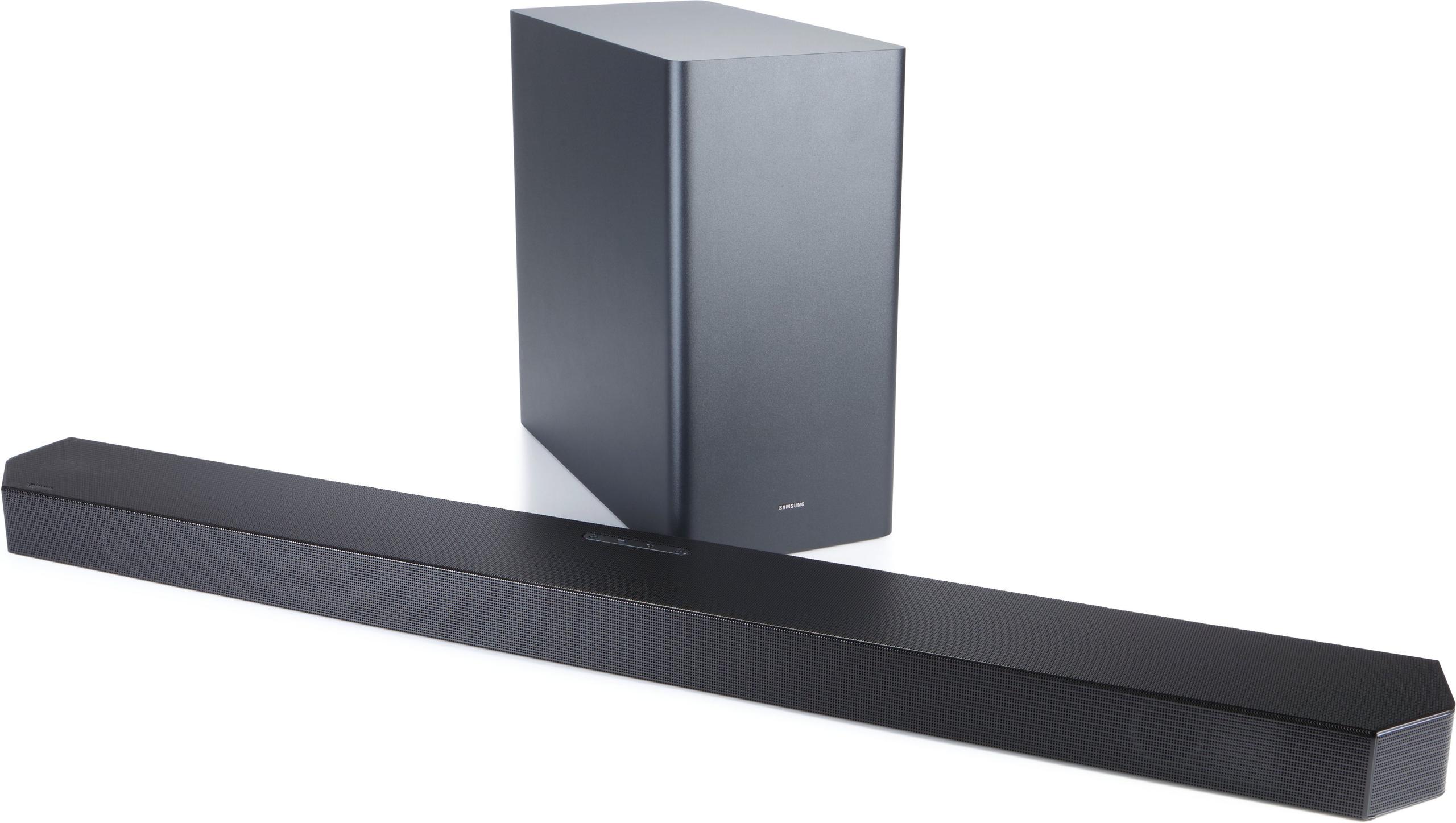
On the other end of the spectrum, the Samsung HW-Q800D, launched in 2024, embodies the "full home theater experience" approach. Samsung has been refining its soundbar technology for years, and this model includes many of the premium features that were once reserved for much more expensive systems. While it commands a significantly higher price point at the time of writing, it offers capabilities that the Polk simply can't match.
The Polk Signa S2 excels at what most people need most: making dialogue crystal clear and adding some serious bass punch to your TV viewing. Its Voice Adjust technology is particularly clever – it uses digital signal processing to boost the frequency ranges where human speech lives (typically 300-3000 Hz) without making everything sound artificially bright or harsh.
During my testing, I found that the Polk Signa S2 transforms dialogue-heavy content. Whether you're watching the evening news, a British mystery series, or a podcast on YouTube, voices suddenly have presence and clarity that makes you realize how much you were missing before. The system's frequency response spans from 45 Hz to 20,000 Hz, which means it captures both the fundamental frequencies of male voices (around 85-180 Hz) and the consonant sounds that make speech intelligible (2000-4000 Hz).
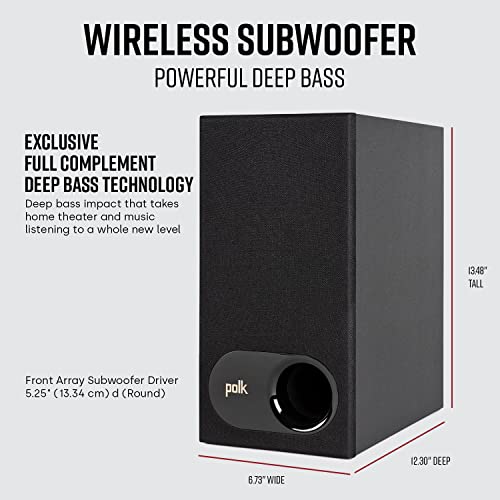
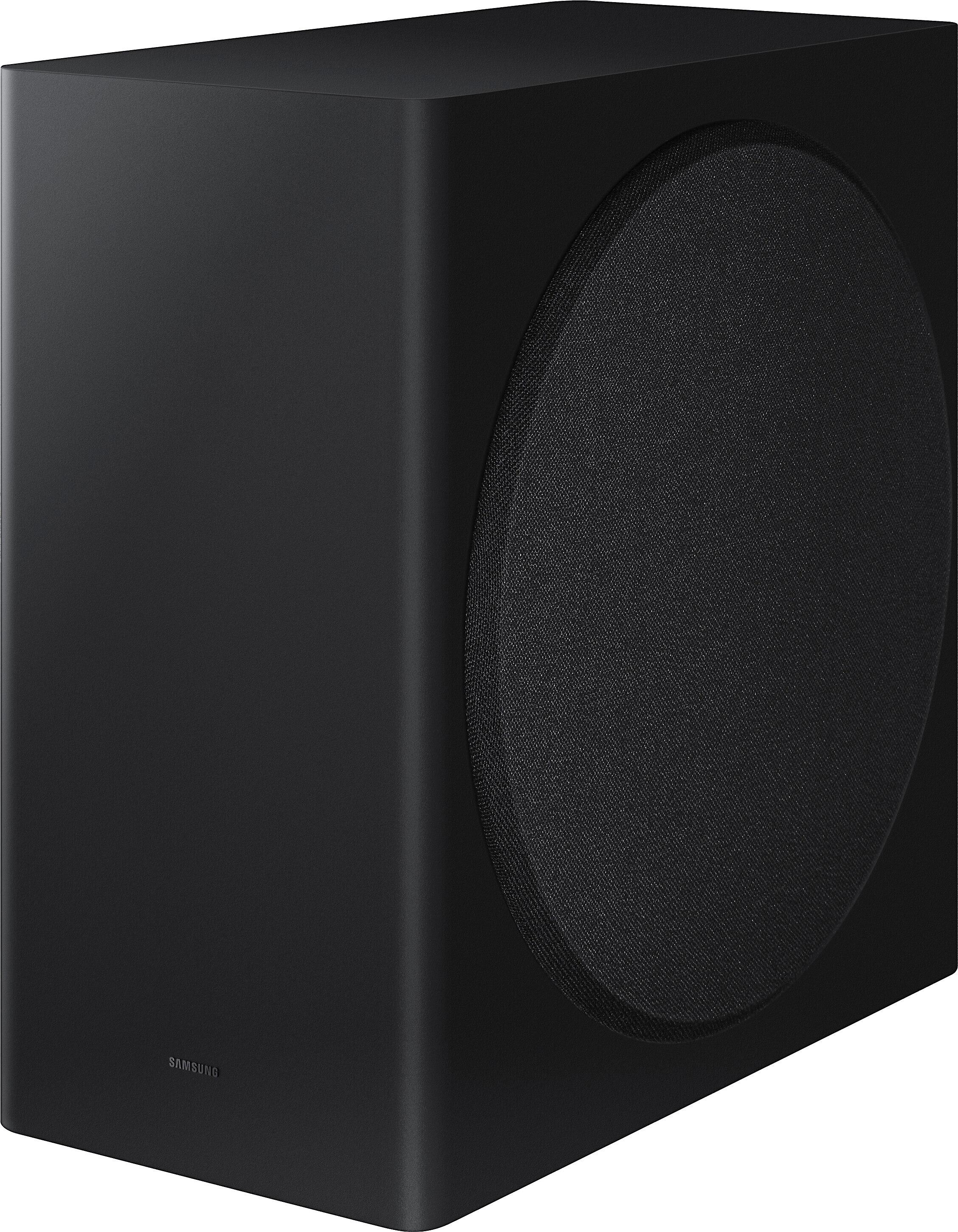
The wireless subwoofer, despite its compact 5.25-inch driver, delivers surprisingly impactful bass. It's not going to shake your house like a dedicated home theater subwoofer, but it adds the low-end punch that makes action scenes more engaging and music more full-bodied. The bass reflex design (that port you see on the back) helps the small driver move more air than it otherwise could, extending the low-frequency response down to a respectable 45 Hz.
However, the Polk Signa S2 has limitations that become apparent with complex content. Its V-shaped frequency response – meaning it emphasizes bass and treble while keeping midrange levels more modest – can make some music sound artificially colored. Jazz recordings might lose some of their natural warmth, while rock music could sound overly aggressive. The system also lacks any form of surround sound processing, so when you're watching a movie with helicopters flying overhead, you'll hear them clearly, but they won't seem to move around you.
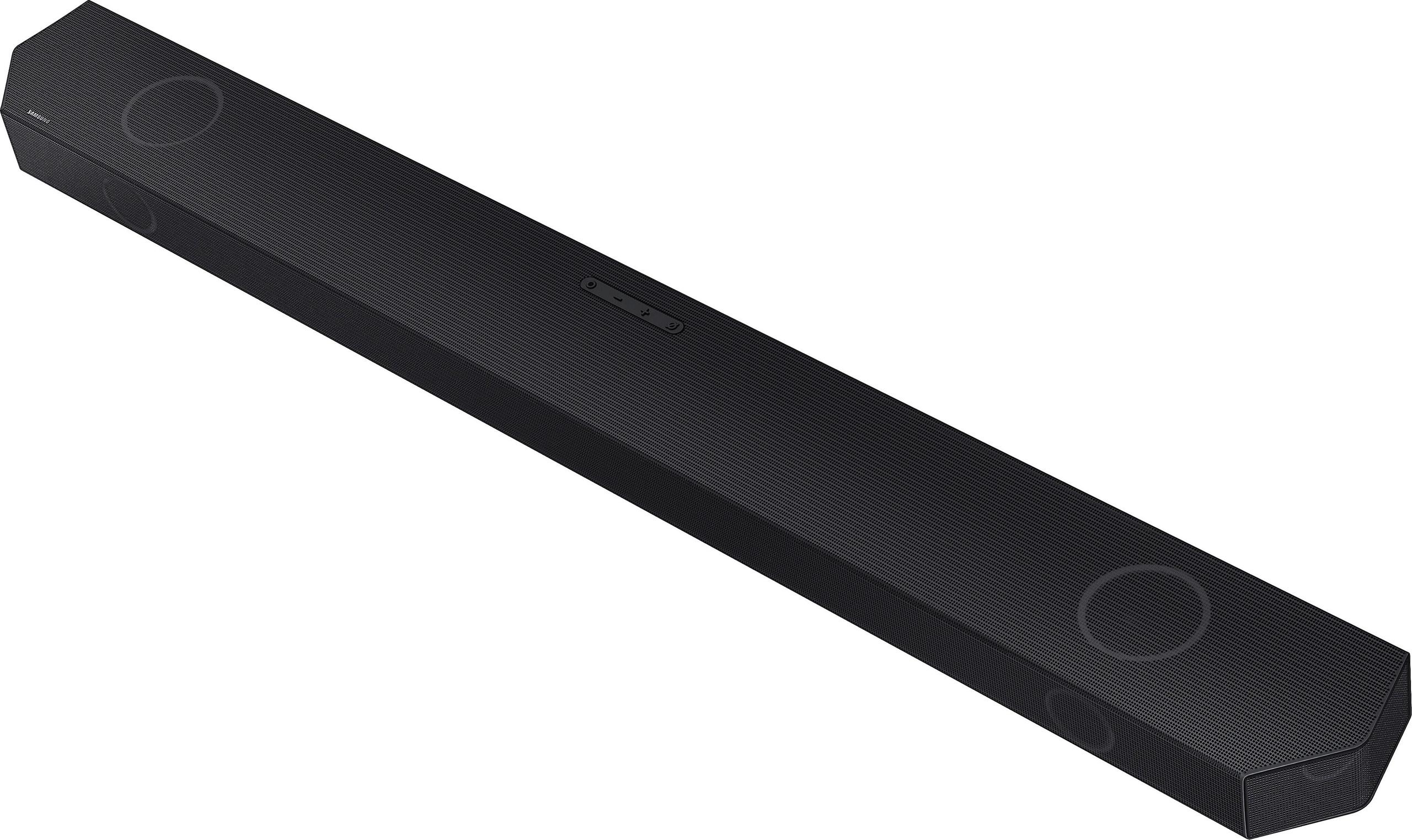
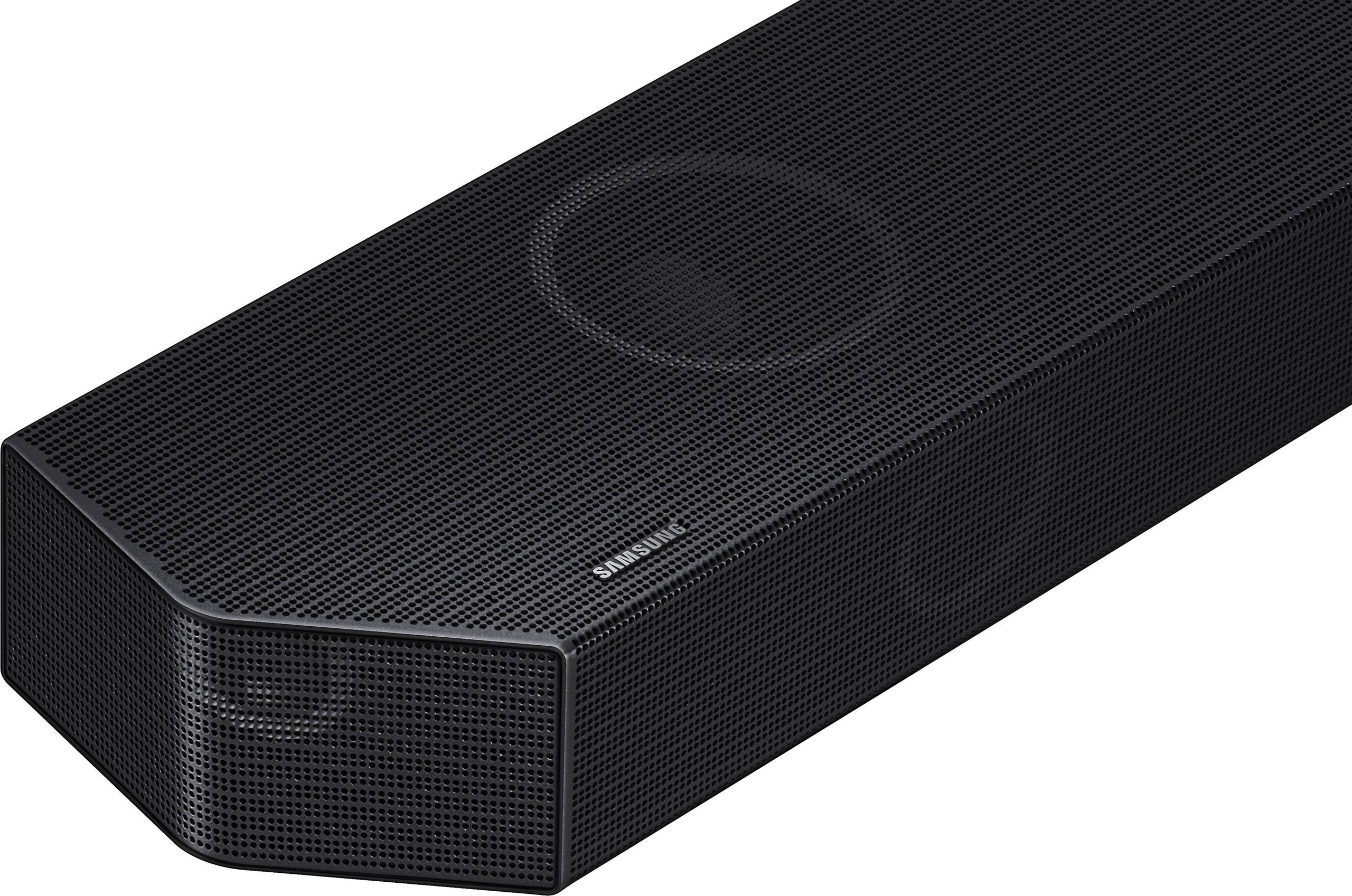
The Samsung HW-Q800D operates in a completely different league, thanks to its true 5.1.2 channel configuration. Those numbers tell a story: five main channels create a proper front soundstage with a dedicated center channel for dialogue, two surround channels use side-firing drivers to bounce sound off your walls, and two height channels fire upward to reflect off your ceiling for overhead effects.
This soundbar's SpaceFit Sound Pro technology represents a significant advancement in room optimization. Using built-in microphones, it analyzes your room's acoustic signature – how sound reflects off your walls, ceiling, and furniture – then adjusts its output accordingly. In my experience, this makes a noticeable difference, especially in rooms with hard surfaces that might otherwise create harsh reflections.
The Dolby Atmos support is where the Samsung HW-Q800D truly shines. When watching supported content (increasingly common on Netflix, Disney+, and other streaming services), you'll hear rain falling from above, planes flying overhead, or debris crashing down around you. The upfiring drivers bounce sound off your ceiling to create these height effects, and while they're not as precise as dedicated ceiling speakers, they're remarkably convincing in most rooms.
For dialogue, the dedicated center channel makes a huge difference. Unlike the Polk Signa S2, which uses both left and right speakers to create a phantom center image, the Samsung HW-Q800D has an actual speaker dedicated to voices. This means dialogue stays locked to the screen even when you're sitting off to one side, and the Active Voice Amplifier can intelligently boost speech without affecting other sounds in the mix.
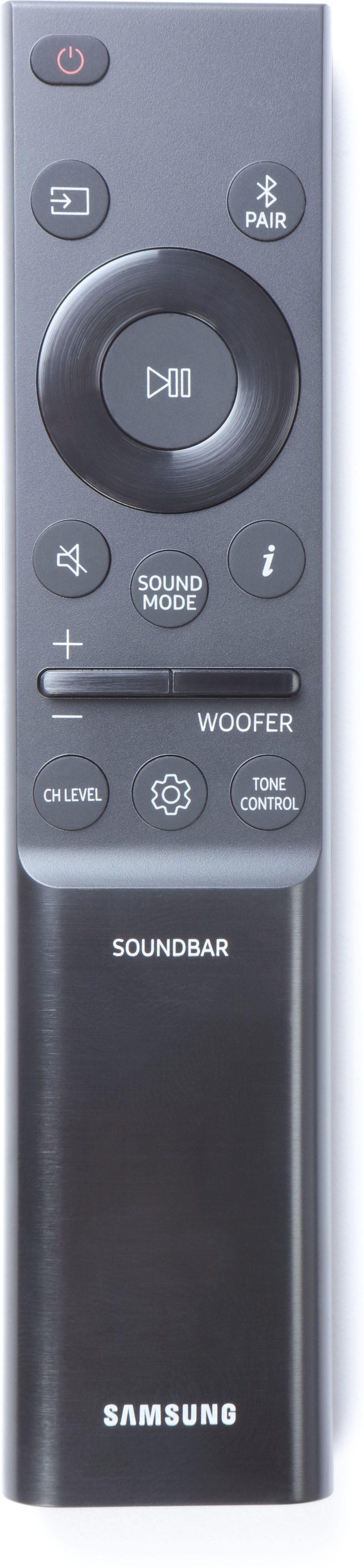
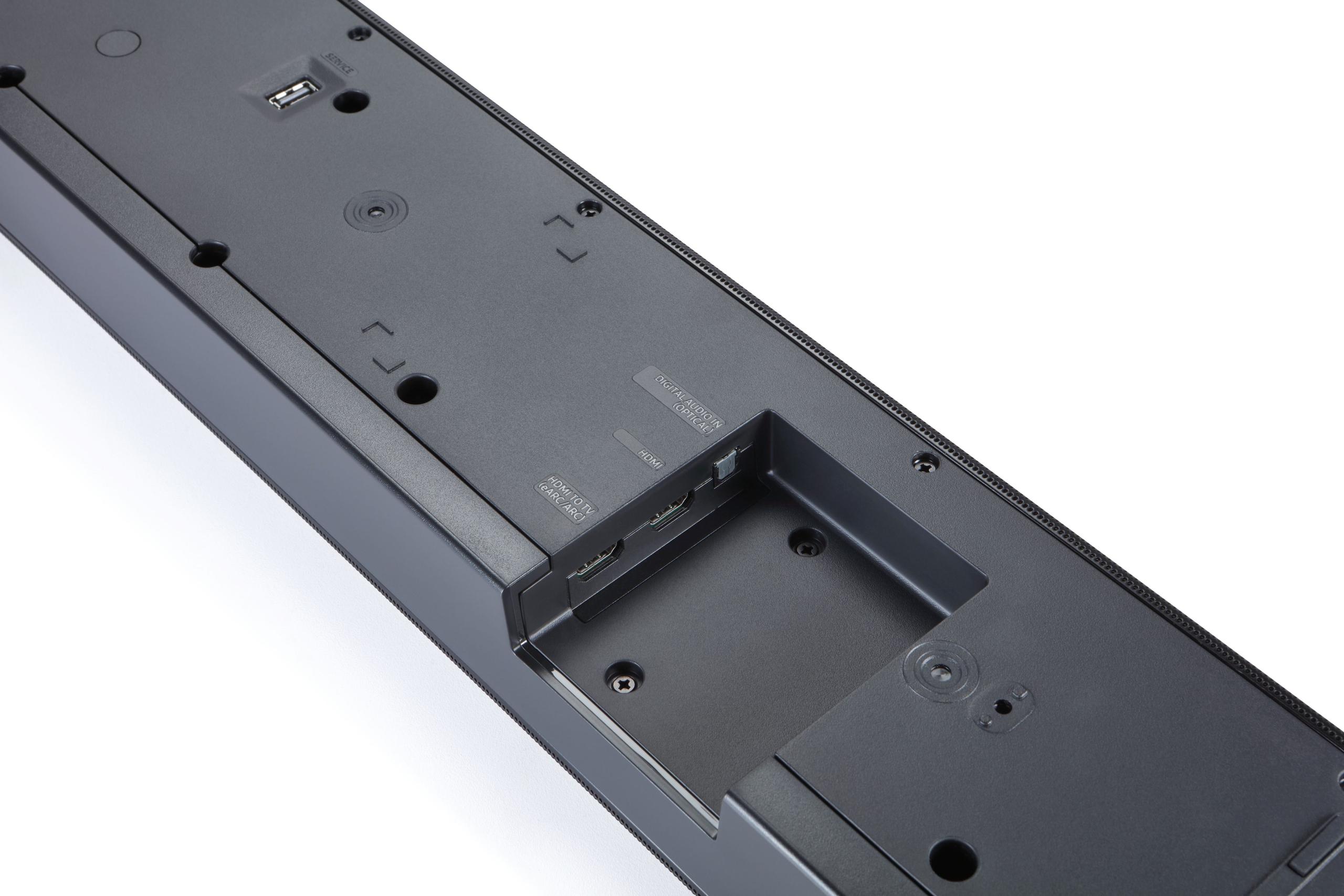
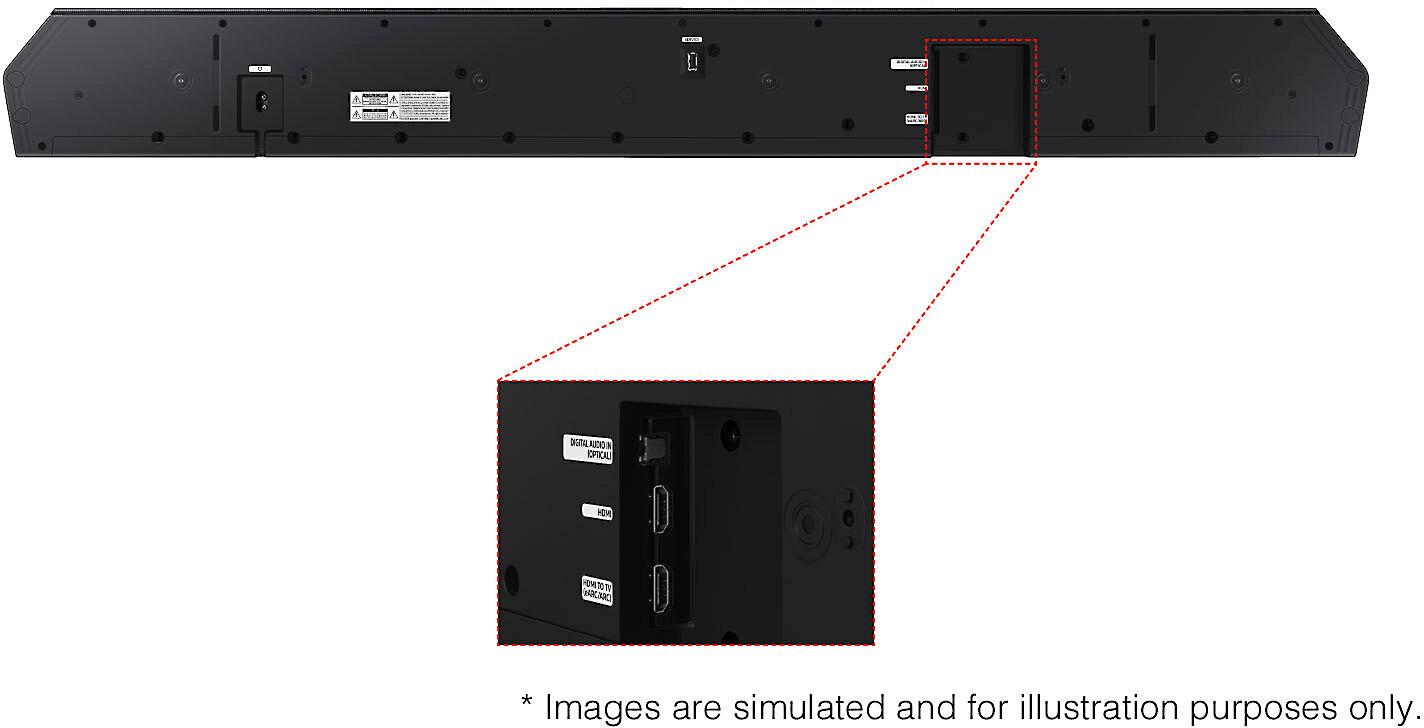
Both soundbars support HDMI ARC (Audio Return Channel), which allows your TV to send audio back to the soundbar through the same cable that delivers video. However, the Samsung HW-Q800D supports the newer eARC standard, which can handle higher-bandwidth audio formats like uncompressed Dolby Atmos.
The Samsung HW-Q800D also includes 4K/60Hz passthrough with HDR10+ support, meaning you can connect your gaming console or streaming device directly to the soundbar, and it'll pass the video signal to your TV without any quality loss. This is particularly valuable for PlayStation 5 or Xbox Series X owners who want the best possible gaming experience.
Bluetooth connectivity exists on both systems, but the Samsung HW-Q800D's Bluetooth 5.2 offers better range and can maintain connections to multiple devices simultaneously. You can start a song from your phone, pause it, then continue from your tablet without re-pairing.
The Polk Signa S2 takes a set-it-and-forget-it approach with basic sound modes for Movie, Music, and Night listening. The Night Mode is particularly useful – it uses dynamic range compression to reduce the difference between quiet dialogue and loud explosions, letting you watch late-night movies without disturbing others.
The Samsung HW-Q800D offers significantly more control. Its 7-band equalizer lets you adjust specific frequency ranges, while individual channel level control allows you to fine-tune the balance between front, center, surround, height, and subwoofer channels. The Adaptive Sound mode continuously analyzes content in real-time, automatically optimizing the sound for whatever you're watching.
For dedicated movie watching, the differences between these systems become most apparent. The Samsung HW-Q800D creates what audio engineers call a soundstage – the perception that sound is coming from specific locations around you rather than just from the direction of the TV. When watching "Top Gun: Maverick" on Blu-ray, jet engines seem to move from left to right across the room, and the height channels add genuine overhead presence during flight scenes.
The Polk Signa S2, while lacking surround capabilities, still provides a significant upgrade over TV speakers for movies. Its Dolby Digital decoding means it can process the surround information in movie soundtracks, but it downmixes everything to stereo. You'll hear all the audio elements, but they'll come from the front rather than surrounding you.
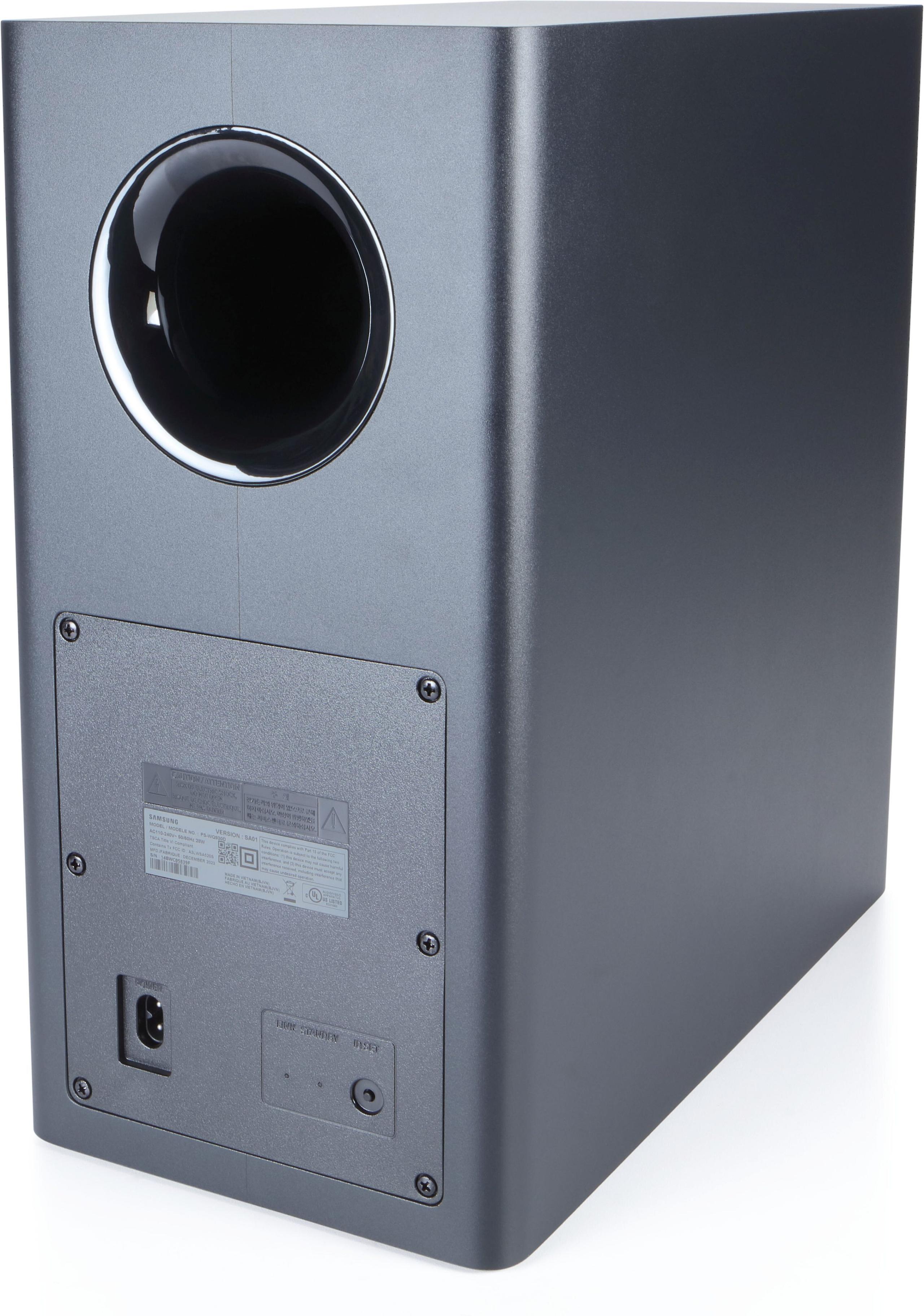
Bass response differs significantly between the systems. The Samsung HW-Q800D's larger 8-inch side-firing subwoofer can reproduce lower frequencies with more authority, making explosion scenes and musical bass lines more impactful. The Polk Signa S2's subwoofer, while smaller, is well-tuned for its size and provides satisfying bass for most content.
Both systems handle music differently due to their distinct frequency signatures. The Samsung HW-Q800D provides a more neutral, balanced presentation that works well across various genres. Classical music retains its natural dynamic range, jazz recordings sound warm and intimate, and rock music has proper punch without being overly aggressive.
The Polk Signa S2's V-shaped response emphasizes the excitement factor in music – bass lines hit harder, and cymbal crashes have more sparkle. This works wonderfully for pop, electronic, and rock music but might make acoustic recordings sound less natural.
Gaming represents an interesting use case where audio positioning becomes crucial. The Samsung HW-Q800D's Game Pro mode is specifically designed for this, optimizing the sound processing for lower latency while maintaining directional audio cues. In competitive games like "Call of Duty" or "Counter-Strike," being able to hear footsteps approaching from behind or gunshots from specific directions provides a tactical advantage.
The Polk Signa S2 can't match this spatial precision, but its clear dialogue reproduction makes story-driven games more engaging. Plus, its simpler processing chain typically introduces less audio delay, which some gamers prefer.
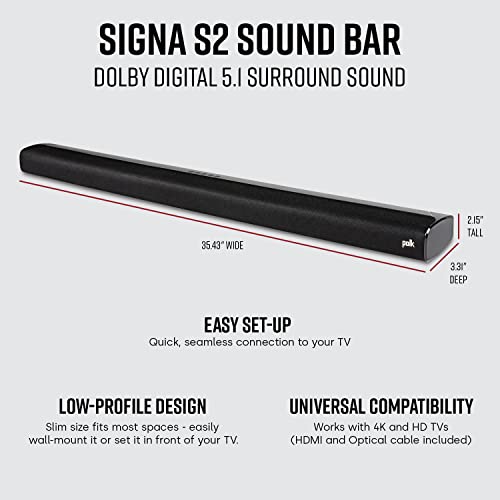
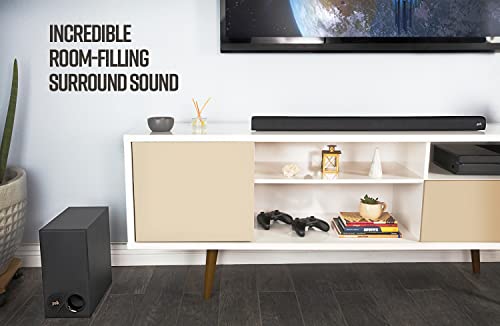
The Polk Signa S2 represents the sweet spot for many users. If you primarily watch TV shows, news, and documentaries, its dialogue clarity improvements will be immediately apparent and satisfying. The system's compact footprint – just 2.15 inches tall – makes it ideal for smaller spaces or setups where the soundbar needs to fit in front of the TV without blocking the screen.
College students, apartment dwellers, and anyone with a modest TV setup will find the Polk Signa S2 provides excellent value. Its plug-and-play nature means you'll have it working properly in minutes, without needing to navigate complex menus or run room calibration routines.
The system also excels in secondary rooms – bedrooms, kitchens, or home offices where you want better audio than TV speakers provide but don't need a full home theater experience. Its Night Mode makes it particularly suitable for apartments where you need to consider neighbors.
The Samsung HW-Q800D makes sense when your TV is the centerpiece of your entertainment experience. If you regularly watch movies, especially action films and sci-fi content that benefits from immersive audio, the surround sound capabilities and Dolby Atmos support provide genuine added value.
Home theater enthusiasts will appreciate the customization options and room optimization features. The expandability factor is particularly compelling – Samsung offers optional rear satellite speakers that can transform the system into a true 5.1.4 setup for even more immersive surround sound.
Gamers who use their TV for PlayStation 5 or Xbox Series X will benefit from the 4K passthrough capabilities and Game Pro mode. The system's ability to handle high-bandwidth audio formats also makes it more future-proof as streaming services continue to expand their use of advanced audio codecs.
After extensive testing and consideration, I believe both systems excel in their intended roles. The Polk Signa S2 delivers on its promise of dramatically better TV audio without complexity or a massive investment. It's the soundbar I'd recommend to my parents or anyone who wants their TV to sound better without becoming an audio hobbyist.
The Samsung HW-Q800D appeals to the part of me that wants the full cinematic experience at home. Its surround sound capabilities, room optimization, and premium features create an engaging audio experience that makes movies and high-quality TV shows more immersive.
At the time of writing, the price difference between these systems reflects their different capabilities and target audiences. The Polk Signa S2 offers exceptional value for basic needs, while the Samsung HW-Q800D provides premium features that justify its higher cost for users who will actually utilize them.
Your decision should ultimately come down to how you use your TV and what you value most. If clear dialogue and solid bass improvement are your primary goals, the Polk Signa S2 delivers that beautifully. If you want to transform your living room into a mini movie theater with surround sound and height effects, the Samsung HW-Q800D has the technical capabilities to make that happen.
Both represent smart purchases in their respective categories – it's just a matter of matching the right tool to your specific needs and expectations.
| Polk Audio Signa S2 | Samsung HW-Q800D |
|---|---|
| Channel Configuration - Determines surround sound capabilities and immersion level | |
| 2.1 channels (stereo + subwoofer) | 5.1.2 channels (true surround + height channels) |
| Dolby Atmos Support - Essential for overhead sound effects in modern movies | |
| No Dolby Atmos (Dolby Digital only) | Full Dolby Atmos with upfiring height speakers |
| Subwoofer Size - Affects bass depth and room-filling capability | |
| 5.25" wireless subwoofer (compact but punchy) | 8" side-firing subwoofer (deeper, more powerful bass) |
| Room Optimization - Automatically adjusts sound for your specific space | |
| None (manual sound modes only) | SpaceFit Sound Pro with microphone-based room analysis |
| Dialogue Enhancement - Critical for clear speech in TV shows and movies | |
| Voice Adjust technology (dedicated dialogue boost) | Dedicated center channel + Active Voice Amplifier |
| HDMI Connectivity - Affects compatibility with modern TVs and devices | |
| HDMI ARC (standard audio return) | HDMI eARC + 4K/60Hz HDR10+ passthrough |
| Expandability - Option to add more speakers later | |
| Fixed 2.1 system (no expansion possible) | Compatible with optional Samsung rear satellite speakers |
| Setup Complexity - Time and effort required to optimize performance | |
| Plug-and-play (works great out of box) | Multiple calibration steps and customization options |
| Bluetooth Version - Affects wireless connection quality and range | |
| Standard Bluetooth (single device connection) | Bluetooth 5.2 (multi-device, extended range) |
| Sound Customization - Control over audio tuning | |
| Basic Movie/Music/Night modes | 7-band EQ + individual channel level controls |
| Physical Design - Important for TV stand placement and aesthetics | |
| Ultra-slim 2.15" height (fits under most TVs) | Larger premium profile with modern styling |
| Best Use Case - Who should choose this option | |
| TV shows, news, casual viewing, small-medium rooms | Movies, gaming, large rooms, home theater enthusiasts |
The Samsung HW-Q800D is significantly better for movies due to its 5.1.2 channel configuration with Dolby Atmos support. It creates genuine surround sound effects and overhead audio that makes action scenes more immersive. The Polk Audio Signa S2 only offers stereo sound, so while it improves dialogue clarity, it can't create the cinematic surround experience that modern movies are designed for.
Yes, both excel at dialogue but in different ways. The Polk Audio Signa S2 uses Voice Adjust technology to specifically boost speech frequencies, making it excellent for TV shows and news. The Samsung HW-Q800D has a dedicated center channel and Active Voice Amplifier that locks dialogue to the screen, providing even clearer speech reproduction, especially when sitting off-center.
The Polk Audio Signa S2 is much easier to set up - it's essentially plug-and-play with a pre-paired wireless subwoofer and simple remote control. The Samsung HW-Q800D requires more initial setup including room calibration and offers extensive customization options that can be overwhelming for users who just want better TV sound without complexity.
The key difference is dimensionality. The Samsung HW-Q800D creates a three-dimensional soundstage with true surround effects and overhead audio, while the Polk Audio Signa S2 delivers enhanced stereo sound with strong bass. The Samsung provides a more balanced, neutral sound across all frequencies, whereas the Polk has a V-shaped signature that emphasizes bass and treble.
The Polk Audio Signa S2 is ideal for smaller spaces due to its ultra-slim 2.15" height design and simpler audio processing. Its Night Mode is particularly useful in apartments for late-night viewing without disturbing neighbors. The Samsung HW-Q800D's surround effects work best in larger rooms where sound can properly reflect off walls and ceilings.
Only the Samsung HW-Q800D can be expanded - Samsung offers optional rear satellite speakers that transform it into a full 5.1.4 system. The Polk Audio Signa S2 is a fixed 2.1 configuration with no expansion capabilities, so what you buy is what you get long-term.
Both handle music differently based on your preferences. The Samsung HW-Q800D provides more accurate, neutral sound reproduction that works well across all music genres, from classical to rock. The Polk Audio Signa S2 has a more colored, exciting sound signature that makes pop, electronic, and rock music more energetic but may not be as natural-sounding for acoustic music.
No - only the Samsung HW-Q800D supports Dolby Atmos, DTS:X, and other advanced audio formats with its dedicated height channels. The Polk Audio Signa S2 is limited to Dolby Digital and downmixes surround content to stereo, so you won't get the overhead sound effects that modern streaming services and Blu-ray movies offer.
The Samsung HW-Q800D provides more comprehensive connectivity with HDMI eARC, 4K/60Hz HDR passthrough, and Bluetooth 5.2 that can connect to multiple devices. The Polk Audio Signa S2 offers basic connectivity with HDMI ARC, optical, auxiliary input, and standard Bluetooth - sufficient for most setups but less future-proof.
The Samsung HW-Q800D is excellent for gaming with its Game Pro mode that provides directional audio cues and 4K passthrough for PlayStation 5 and Xbox Series X. The Polk Audio Signa S2 works fine for gaming but lacks the spatial audio that gives competitive advantages in multiplayer games - though its simpler processing may introduce less audio delay.
This depends on your needs. The Polk Audio Signa S2 offers exceptional value for users who primarily want clearer TV dialogue and better bass without complexity. The Samsung HW-Q800D provides premium features like surround sound and room optimization that justify its higher cost for home theater enthusiasts who will actually use these capabilities.
Yes, both support HDMI ARC which allows basic volume control through your TV remote. However, the Samsung HW-Q800D offers more advanced integration, especially with Samsung TVs through Q-Symphony technology that can use both the TV and soundbar speakers simultaneously. The Polk Audio Signa S2 provides simpler but reliable TV remote integration for volume and power control.
We've done our best to create useful and informative comparisons to help you decide what product to buy. Our research uses advanced automated methods to create this comparison and perfection is not possible - please contact us for corrections or questions. These are the sites we've researched in the creation of this article: rtings.com - youtube.com - bestbuy.com - rtings.com - consumerreports.org - rtings.com - youtube.com - hometechnologyreview.com - soundbars.com - youtube.com - manuals.plus - creativeaudio.net - parts-express.com - thomsunmusic.com - polkaudio.com - manuals.plus - polkaudio.com - polkaudio.com - polkaudio.com - bestbuy.com - youtube.com - youtube.com - polkaudio.com - techradar.com - valueelectronics.com - samsung.com - rtings.com - samsung.com - crutchfield.com - samsung.com - samsung.com - samsung.com - shidirect.com

Privacy Policy
Terms and Conditions - Affiliate Policy
Home Security
© Copyright 2008-2026.
11816 Inwood Rd #1211, Dallas, TX 75244