

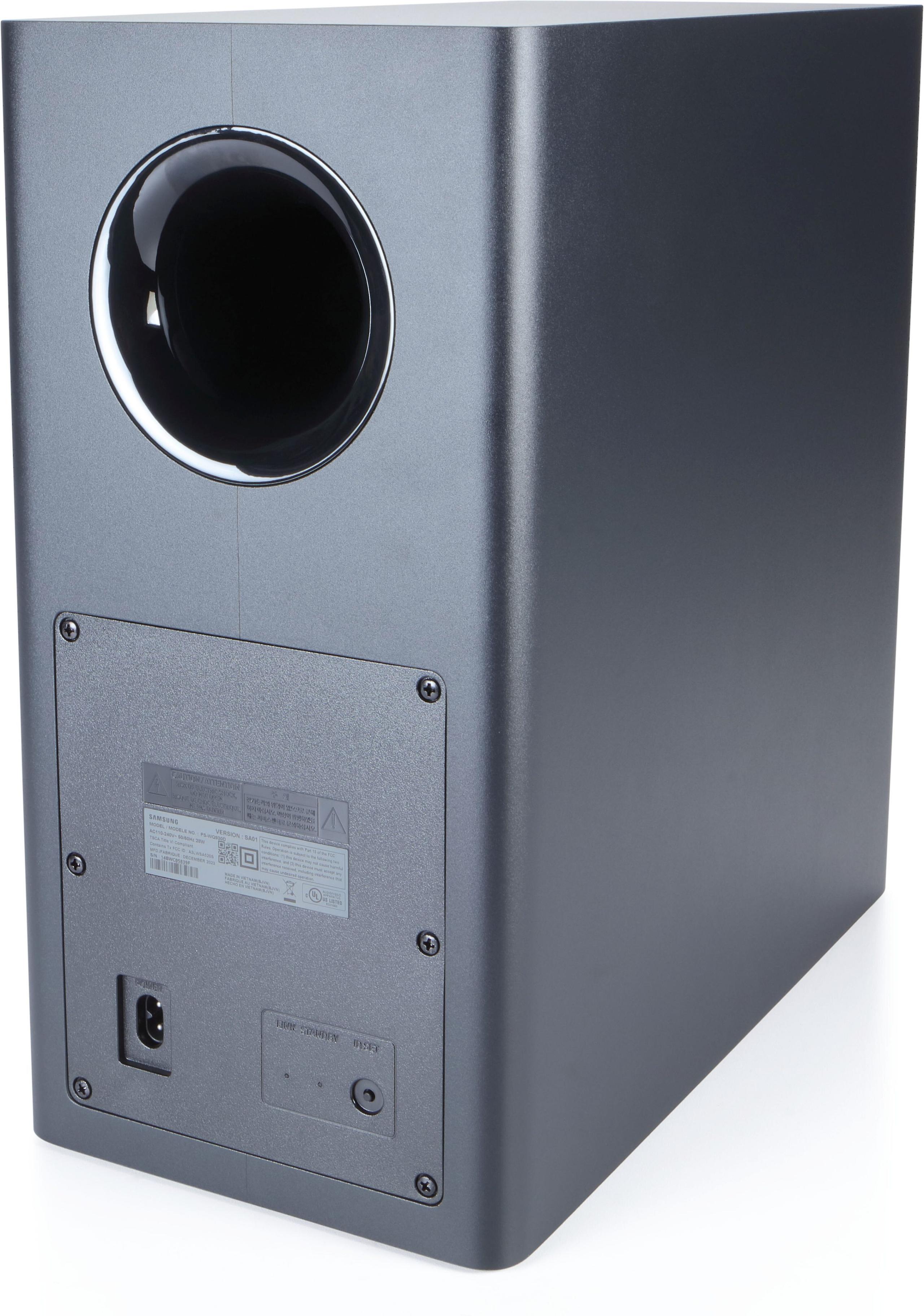
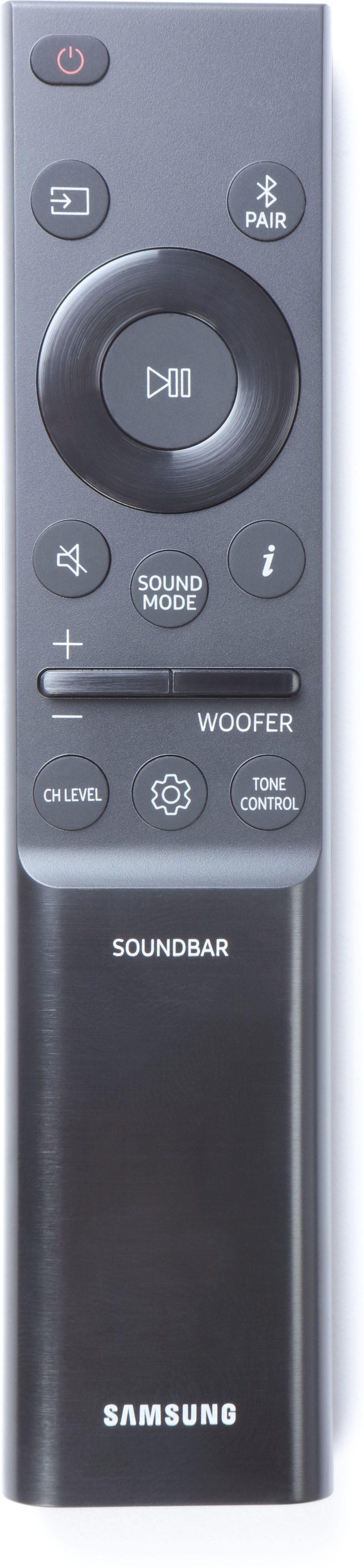
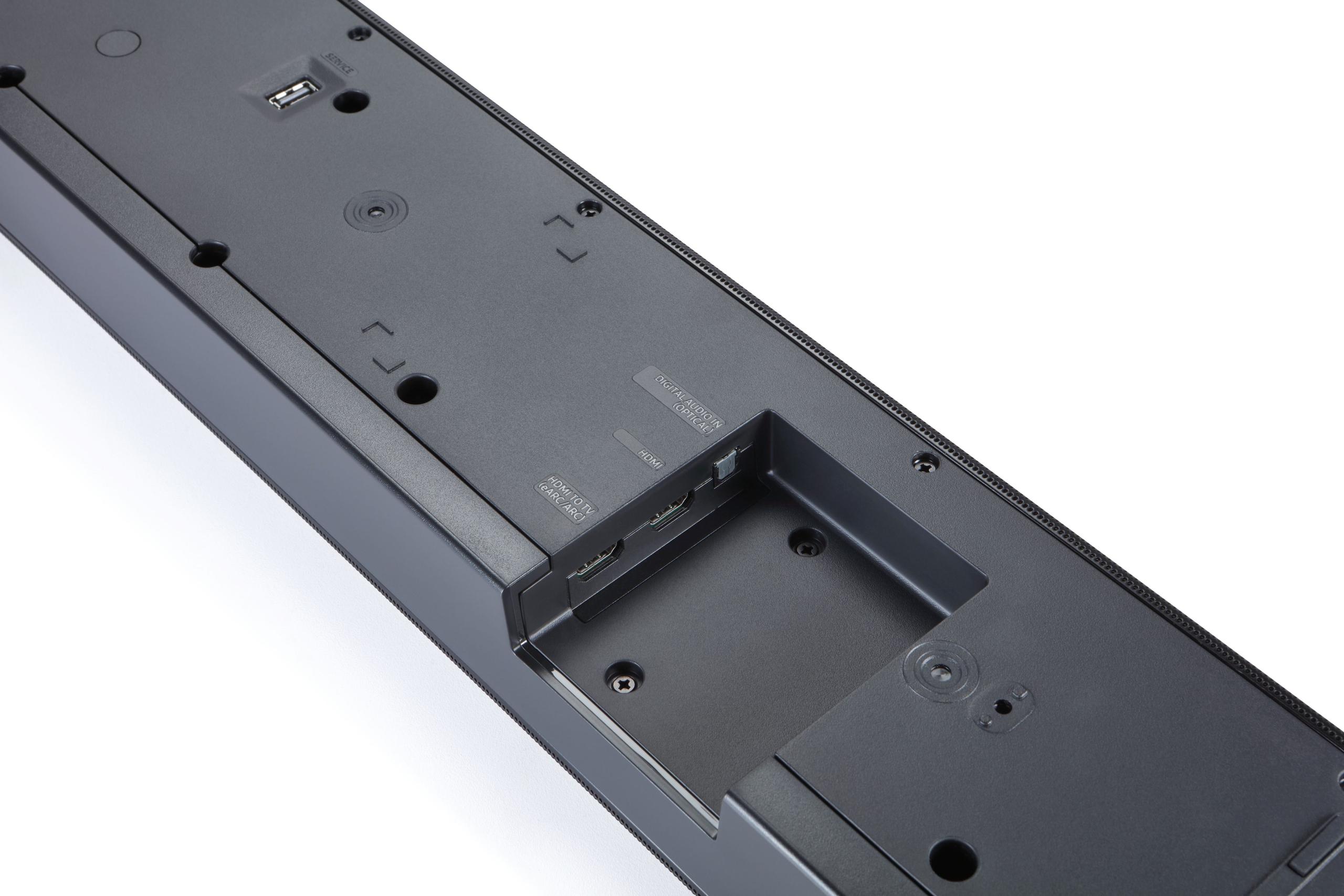
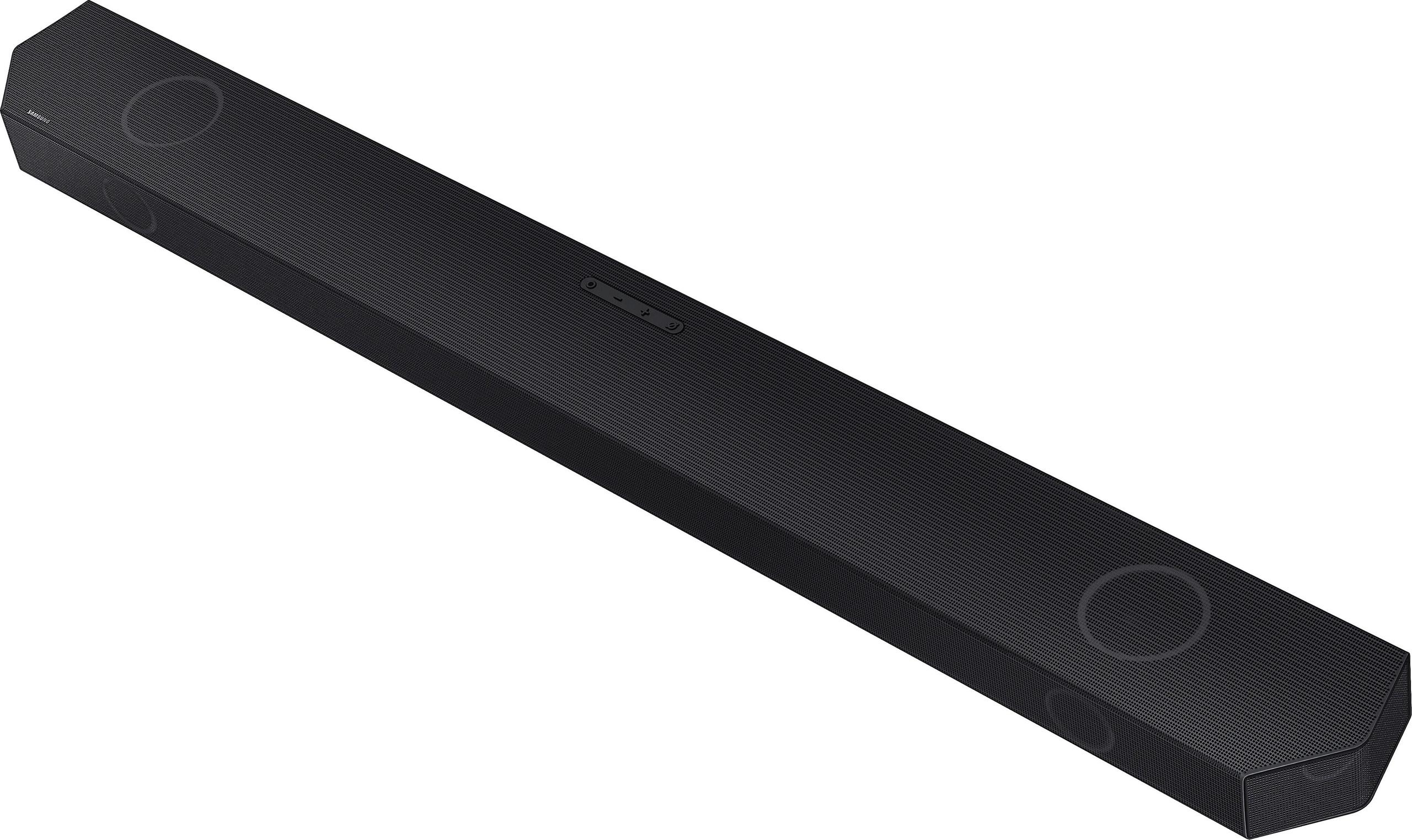
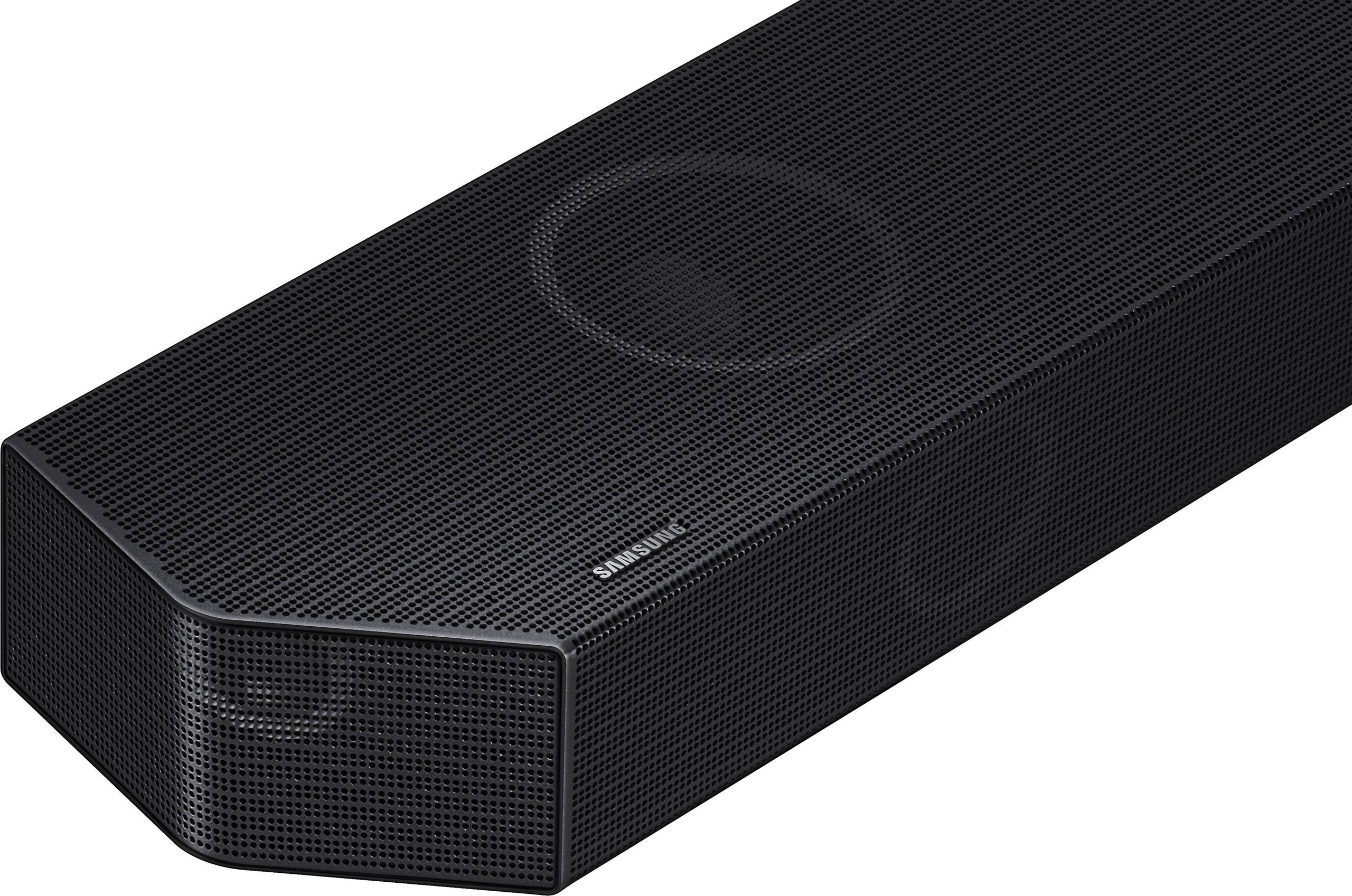




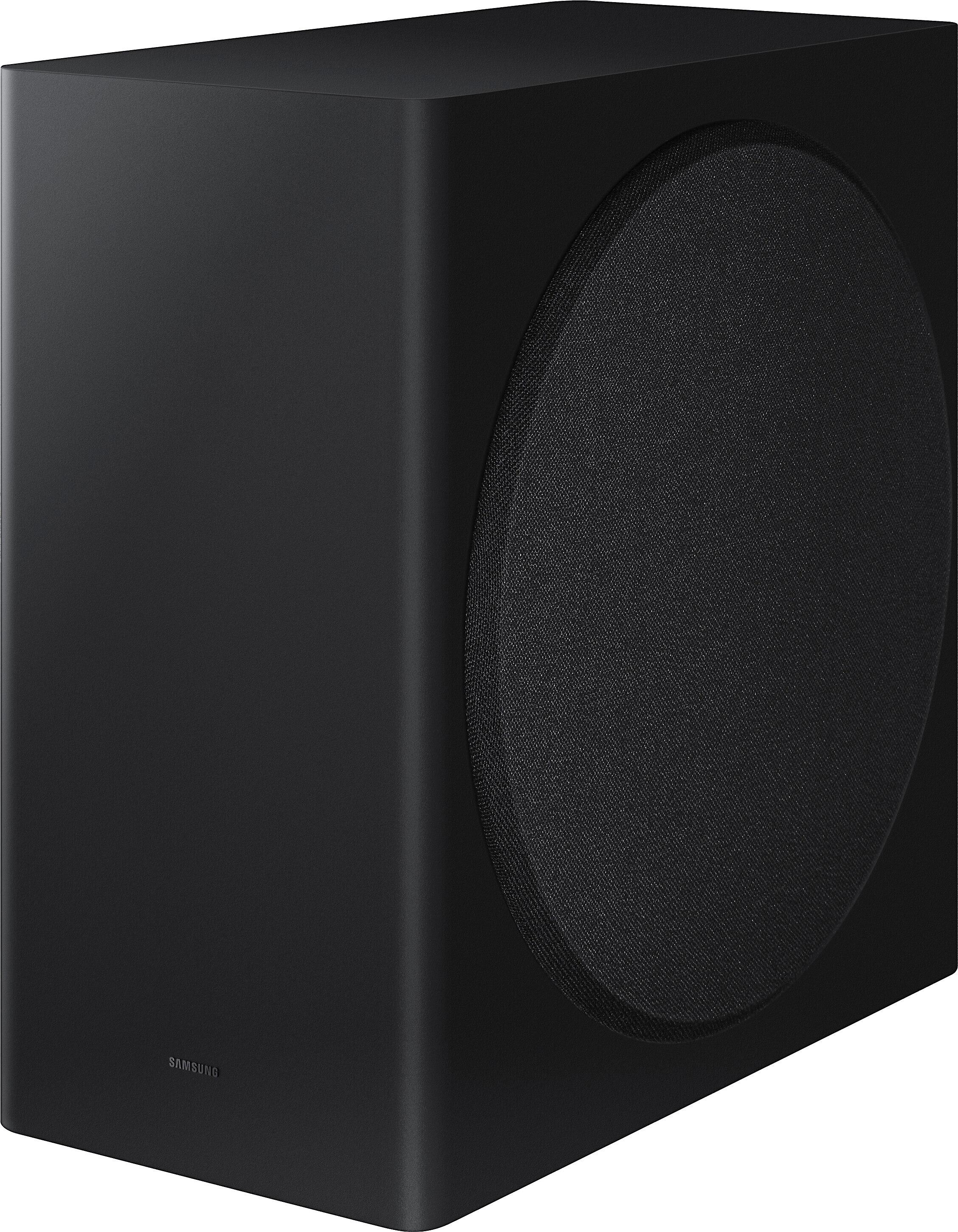
When you're tired of constantly asking "what did they just say?" during your favorite shows, it's time to upgrade from your TV's built-in speakers. The soundbar market has exploded with options, but two products represent distinctly different approaches to solving your audio problems: the Ultimea Aura A40 U2601 and the Samsung HW-Q800D.
Released in 2023 and 2024 respectively, these soundbars showcase how the industry has evolved in recent years. The Ultimea Aura A40 takes the bold approach of including four physical surround speakers – something typically reserved for much more expensive systems. Meanwhile, the Samsung HW-Q800D represents the premium processing route, packing sophisticated audio algorithms and modern connectivity into a sleek package.
Before diving into specifics, let's clarify what we're dealing with. A soundbar is essentially a long speaker that sits under or near your TV, designed to create a wider, more immersive sound field than tiny TV speakers can manage. The numbers you see – like 5.1 or 7.1 – refer to channel configuration. The first number indicates main speakers (front left, center, front right, plus surrounds), while the number after the decimal represents subwoofers (.1) or height channels for overhead effects (.2).
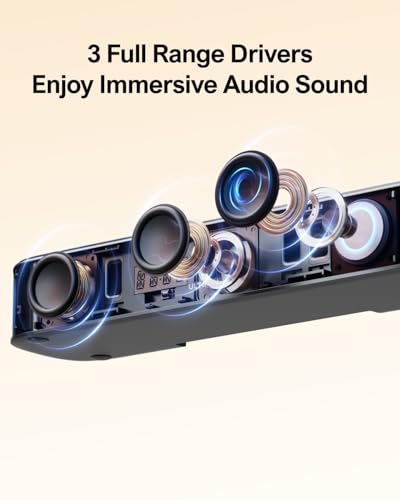
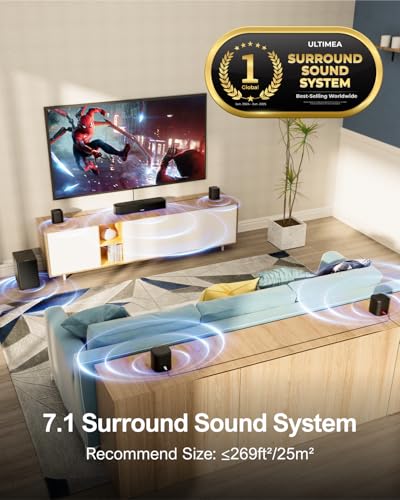
The Ultimea Aura A40 claims 7.1 virtual surround, meaning it processes audio to simulate seven speakers plus a subwoofer using fewer physical drivers. The Samsung HW-Q800D offers true 5.1.2, with dedicated physical channels including two height speakers for Dolby Atmos effects – that's audio that moves overhead, like a helicopter flying by.
What matters most when choosing between soundbars? Connectivity tops the list, followed by spatial audio capabilities, audio quality, and ease of setup. Your specific room layout and entertainment devices heavily influence which features matter most for your situation.
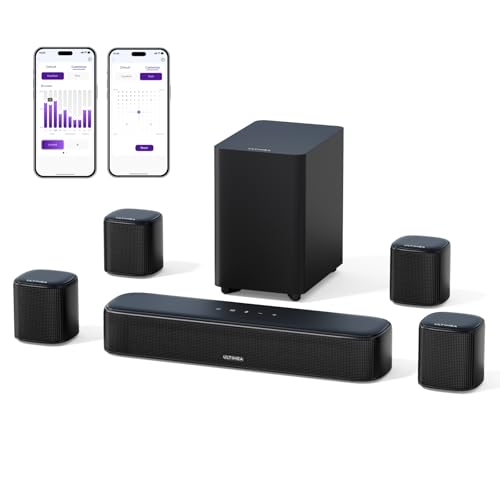
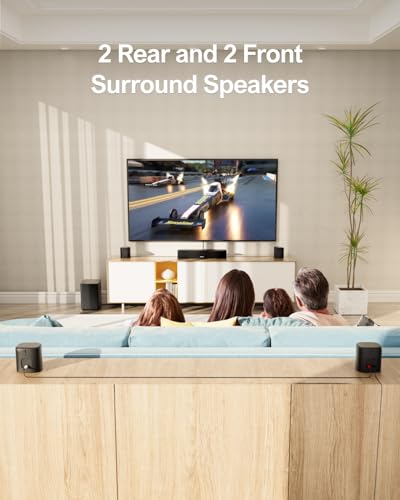
The fundamental difference between these products lies in their approach to creating immersive audio. The Ultimea Aura A40 ships with four separate surround speakers that you position around your room – two in front, two behind your seating area. This creates genuine 360-degree sound placement, where effects literally move around the room through different physical speakers.
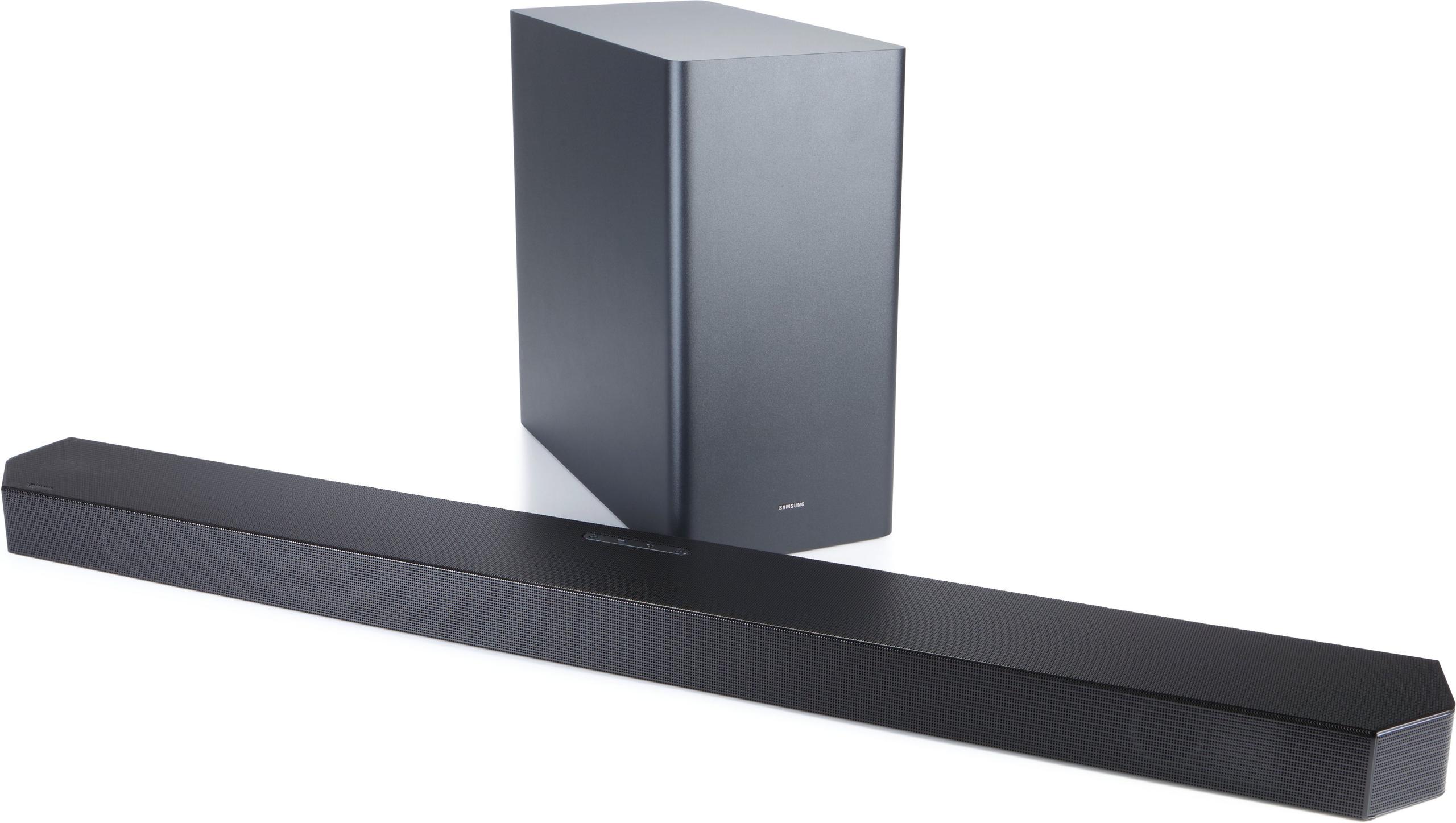
In contrast, the Samsung HW-Q800D uses a single soundbar with ten internal drivers plus a wireless subwoofer. It creates surround effects through sophisticated processing and up-firing speakers that bounce sound off your ceiling. This approach, called Dolby Atmos, adds a vertical dimension to audio – explosions can seem to happen above you, rain can fall from overhead.
The physical surround approach of the Ultimea excels at horizontal movement. When a car drives across the screen, you hear it travel from your front-left speaker to your rear-right speaker. Gaming becomes particularly immersive – footsteps in Call of Duty or Fortnite come from their actual direction, giving you a competitive advantage. However, you're trading convenience for this immersion. Four speakers need power connections and strategic placement around your room.
The Samsung's approach prioritizes convenience while still delivering impressive spatial effects. The Dolby Atmos processing analyzes incoming audio and steers different sound elements to appropriate speakers within the bar. Height effects work surprisingly well – when properly calibrated, you genuinely perceive sounds coming from above. The trade-off? Less convincing side-to-side movement compared to dedicated surround speakers.
Both systems deliver substantial improvements over TV speakers, but with different strengths. The Ultimea Aura A40 produces surprisingly clear dialogue through its dedicated center channel processing. Even during explosive action sequences, voices remain intelligible – a common problem with lesser soundbars. The included 4-inch subwoofer delivers punchy bass without the muddy distortion that plagues cheaper systems.
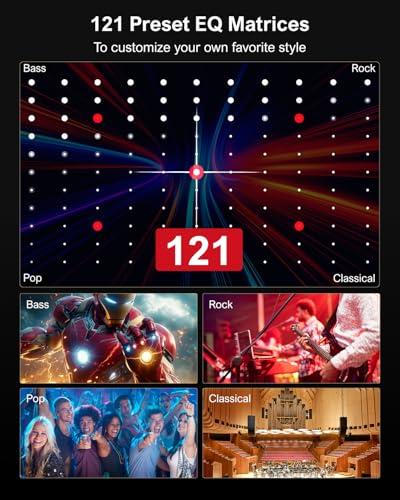
What sets the Ultimea apart is customization depth. The companion smartphone app provides 121 preset EQ curves – pre-configured sound profiles for different music genres, movie types, and listening preferences. Beyond presets, a 10-band equalizer lets you adjust specific frequency ranges. Don't like how dialogue sounds? Boost the 1-3kHz range. Want more bass impact? Increase the 80-200Hz bands. This level of control typically costs significantly more.
The Samsung HW-Q800D takes a more refined approach. Its 200-watt amplifier drives ten carefully tuned drivers, creating balanced frequency response across all ranges. Dialogue clarity comes from dedicated center channel drivers and Active Voice Amplifier technology – a feature that automatically boosts speech frequencies when background noise increases.
Where Samsung excels is dynamic range handling – the difference between quiet whispers and thunderous explosions. The system maintains clarity at high volumes without compressing peaks, something cheaper soundbars struggle with. Music playback sounds particularly impressive, with smooth transitions between frequency ranges and accurate stereo imaging.
This category highlights each system's core philosophy. The Ultimea Aura A40's four physical surround speakers create genuinely convincing directional effects. Helicopter scenes in war movies place the aircraft precisely in space as it moves around the room. Gaming becomes transformative – enemy positions in first-person shooters are clearly locatable through audio cues alone.
The system's SurroundX technology processes stereo and surround content to maximize the spatial effect from those four speakers. Even basic stereo music gains width and depth, though results vary by recording quality. The adjustable surround levels let you dial in the effect strength for your room size and personal preference.
The Samsung HW-Q800D approaches spatial audio through Dolby Atmos and DTS:X processing. These formats include metadata that tells the soundbar exactly where each sound should appear in three-dimensional space. When content includes this information – increasingly common on streaming services and Blu-ray discs – the results can be breathtaking. Rain genuinely seems to fall from above, aircraft fly overhead convincingly, and ambient sounds create realistic environments.
Samsung's SpaceFit Sound Pro technology uses the soundbar's built-in microphone to analyze your room's acoustic properties, then adjusts output accordingly. This automatic calibration accounts for ceiling height, wall reflections, and furniture placement without manual intervention.
For gaming enthusiasts, these systems offer different advantages. The Ultimea Aura A40 provides superior directional accuracy for competitive gaming. The physical speaker separation creates precise positional audio – crucial for multiplayer shooters where hearing enemy movements provides tactical advantages.
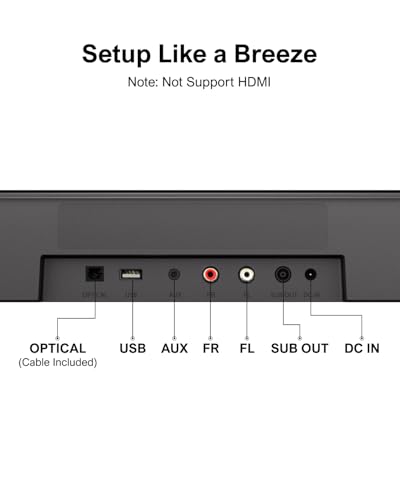
However, the Ultimea lacks HDMI connectivity entirely. This limitation means connecting modern gaming consoles requires your TV's optical output, potentially limiting audio format support and adding another device to your input switching routine.
The Samsung HW-Q800D connects directly to gaming consoles via HDMI, supporting advanced audio formats and reducing latency. The dedicated Game Pro mode optimizes audio processing for gaming content, enhancing dialogue clarity and directional cues while reducing processing delay. For console gamers, this connectivity advantage often outweighs the spatial accuracy benefits of physical surround speakers.
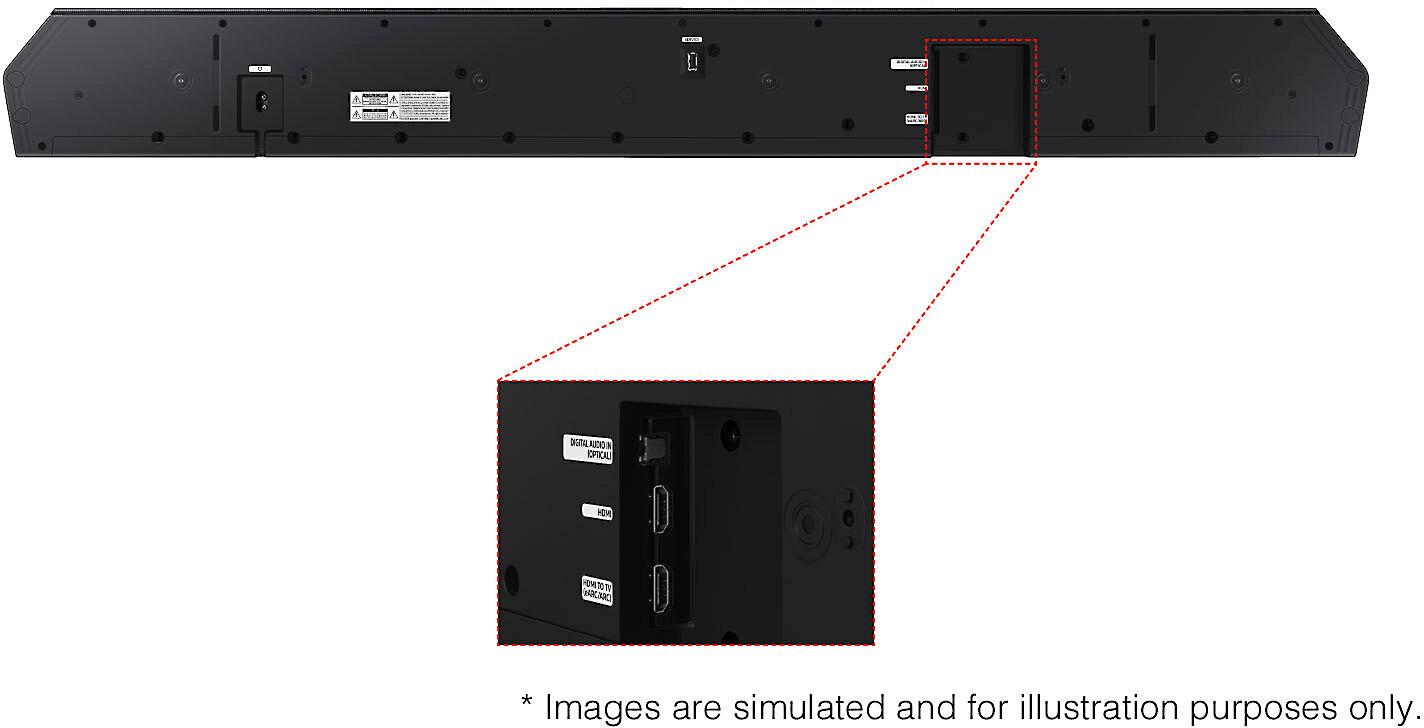
Here's where these products diverge most dramatically. The Samsung HW-Q800D includes full HDMI 2.1 connectivity with eARC support – essentially a high-bandwidth connection that can handle the latest audio formats from streaming devices, gaming consoles, and Blu-ray players. This connection also enables CEC control, letting you manage the soundbar with your TV remote.
The system supports 4K video passthrough at 60Hz with HDR, meaning you can connect devices directly to the soundbar without losing video quality. Additional connectivity includes Bluetooth 5.2, Wi-Fi for streaming services, and voice control through built-in Alexa with optional Google Assistant support.
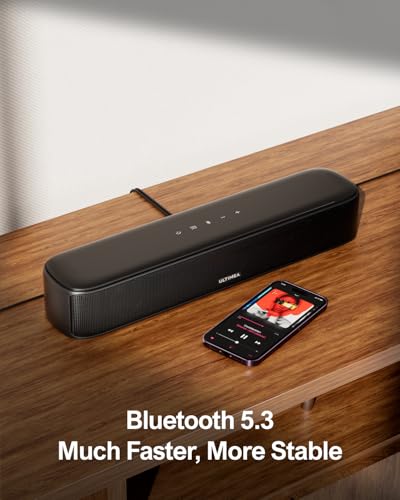
The Ultimea Aura A40 takes a minimalist approach to connectivity – perhaps too minimalist for modern setups. Without any HDMI inputs, you're limited to optical digital, 3.5mm auxiliary, USB, and Bluetooth 5.3 connections. This works fine if your TV has optical output and you don't mind managing multiple remotes, but creates complications with modern entertainment systems.
For example, connecting a PlayStation 5 or Xbox Series X requires using your TV's optical output, limiting you to basic surround sound instead of the advanced audio formats these consoles support. Streaming device audio also routes through your TV first, potentially introducing quality loss or sync issues.
The Samsung HW-Q800D integrates seamlessly into modern smart home ecosystems. Voice commands let you adjust volume, change inputs, or control music playback without finding the remote. The SmartThings app provides full control over audio settings, including the 7-band equalizer and various sound modes optimized for different content types.
Samsung's Q-Symphony technology deserves special mention for owners of compatible Samsung TVs. This feature synchronizes the TV's speakers with the soundbar, creating a larger sound field without additional hardware. The effect varies by TV model, but can significantly enhance the listening experience.
The Ultimea focuses entirely on audio customization through its smartphone app. While lacking smart home integration, the app provides unprecedented control over sound characteristics. Six preset modes (Movie, Music, Voice, Sport, Game, Night) offer starting points, while those 121 EQ matrices provide genre-specific tuning for everything from classical music to heavy metal.
The night mode proves particularly useful, compressing dynamic range so you can enjoy late-night viewing without disturbing neighbors or family members. Adjustable surround levels let you fine-tune the spatial effect as you break in the system or rearrange furniture.
At the time of writing, these soundbars occupy different market segments despite similar performance goals. The Ultimea Aura A40 positions itself as a premium experience at a more accessible price point, offering features typically found in systems costing significantly more. Four physical surround speakers and extensive customization options provide genuine value for audio enthusiasts willing to handle the additional setup complexity.
The Samsung HW-Q800D commands a premium price reflecting its brand reputation, build quality, and advanced connectivity. For that investment, you receive professional-grade audio processing, modern device compatibility, and the convenience factor that many users prioritize.
Both systems include comprehensive warranties and accessories. The Ultimea provides a 2-year warranty – notably longer than most competitors – plus all necessary cables and mounting hardware. Samsung includes a standard 1-year warranty with their typically excellent customer support.
The Ultimea Aura A40 works best in dedicated spaces where you can optimize speaker placement. The system recommendations of 108-270 square feet align with medium-sized living rooms or home theater spaces. Smaller rooms might feel overwhelmed by four surround speakers, while larger spaces might not achieve optimal coverage.
Installation requires running speaker cables to front and rear positions – not difficult, but definitely more involved than a traditional soundbar setup. The included 6-meter rear speaker cable handles most room layouts, though some users might need additional cable management solutions.
The Samsung HW-Q800D adapts to virtually any space. The wireless subwoofer connects automatically and can be placed anywhere within reasonable range. The soundbar itself mounts easily under TVs or sits on entertainment centers without demanding specific positioning for optimal performance.
After extensive research into user experiences and expert evaluations, clear usage scenarios emerge for each system. The Ultimea Aura A40 excels in dedicated home theater environments where audio immersion takes priority over convenience. Gaming enthusiasts particularly benefit from the precise directional audio, despite the connectivity limitations.
If you're building a home theater room, enjoy tweaking audio settings, and primarily use your TV's built-in streaming apps or don't mind routing everything through the TV, the Ultimea delivers exceptional spatial audio performance. The extensive customization options let you dial in the perfect sound for your space and preferences.
The Samsung HW-Q800D serves users who want premium performance without complexity. If you have modern gaming consoles, multiple streaming devices, or prefer everything "just work" without manual adjustments, Samsung's approach makes more sense. The automatic room calibration and smart features provide sophisticated performance with minimal effort.
For most users, the Samsung represents the better long-term investment. Modern connectivity ensures compatibility with future devices, while the premium processing and build quality justify the higher initial cost. However, if you prioritize maximum immersion and enjoy audio tweaking, the Ultimea offers unique benefits difficult to find elsewhere at any price.
Both systems dramatically improve the TV audio experience, but through fundamentally different approaches. Your choice depends on whether you value convenience and connectivity or prioritize immersive spatial audio and customization control. Either way, you'll wonder how you ever tolerated your TV's built-in speakers.
| Ultimea Aura A40 U2601 Soundbar System | Samsung HW-Q800D 5.1.2 Channel Soundbar |
|---|---|
| Channel Configuration - Determines spatial audio capabilities | |
| 7.1 Virtual Surround with 4 physical surround speakers | True 5.1.2 with Dolby Atmos height channels |
| Total Power Output - Affects volume and dynamic range | |
| 330W peak power across 8 speakers | 200W built-in amplifier with 10 drivers |
| HDMI Connectivity - Essential for modern gaming consoles and streaming devices | |
| No HDMI support (optical, AUX, USB, Bluetooth only) | HDMI 2.1 with eARC, 4K/60Hz passthrough |
| Subwoofer Type - Impacts bass performance and placement flexibility | |
| 4-inch wired subwoofer (requires power outlet) | 8-inch wireless subwoofer (connects automatically) |
| Audio Format Support - Compatibility with premium streaming content | |
| Virtual surround processing only | Native Dolby Atmos, DTS:X support |
| Customization Options - Ability to fine-tune sound for your space | |
| 121 EQ presets, 10-band equalizer, 6 adjustable surround levels | 7-band EQ, automatic room calibration (SpaceFit Sound Pro) |
| Physical Setup Requirements - Space and installation complexity | |
| 4 surround speakers need room placement and wiring | Soundbar + wireless subwoofer only |
| Smart Home Integration - Voice control and app features | |
| Audio-focused mobile app, no voice control | Built-in Alexa, Google Assistant, SmartThings app |
| Bluetooth Version - Wireless streaming quality and stability | |
| Bluetooth 5.3 | Bluetooth 5.2 plus Wi-Fi, AirPlay 2 |
| Warranty Coverage - Protection for your investment | |
| 2 years parts and labor | 1 year standard Samsung warranty |
| Recommended Room Size - Optimal performance space | |
| 108-270 square feet (dedicated home theater ideal) | Flexible for various room sizes |
| Unique Technologies - Proprietary features that differentiate each system | |
| SurroundX and BassMX processing, extensive EQ matrices | Q-Symphony (Samsung TV integration), Active Voice Amplifier |
The Samsung HW-Q800D is better for gaming due to its HDMI 2.1 connectivity, which allows direct connection to PlayStation 5 and Xbox Series X consoles. It also features a dedicated Game Pro mode that optimizes audio processing for gaming content. While the Ultimea Aura A40 offers superior directional audio with its physical surround speakers, the lack of HDMI connectivity limits its compatibility with modern gaming consoles.
HDMI is highly recommended for modern setups. The Samsung HW-Q800D includes HDMI 2.1 with eARC support, enabling high-quality audio from streaming devices and gaming consoles. The Ultimea Aura A40 lacks HDMI entirely, relying on optical, AUX, and Bluetooth connections, which may limit audio format support from newer devices.
Both excel in different ways. The Ultimea Aura A40 provides more convincing horizontal surround effects with its four physical surround speakers placed around your room. The Samsung HW-Q800D offers superior overhead effects through Dolby Atmos processing and up-firing speakers. For true 360-degree immersion, choose the Ultimea; for overhead effects and content compatibility, choose the Samsung.
The Samsung HW-Q800D requires minimal space with just a soundbar and wireless subwoofer placement. The Ultimea Aura A40 needs significantly more room planning, as you must position four surround speakers around your seating area. The Ultimea is recommended for rooms between 108-270 square feet, while the Samsung adapts to various room sizes.
The Samsung HW-Q800D offers much easier setup with plug-and-play operation and automatic room calibration through SpaceFit Sound Pro technology. The Ultimea Aura A40 requires more effort, as you need to position and wire four surround speakers around your room, though setup typically takes only 30 minutes.
The Samsung HW-Q800D fully integrates with smart home ecosystems, featuring built-in Alexa, Google Assistant compatibility, and SmartThings app control. The Ultimea Aura A40 focuses purely on audio performance with its mobile app for sound customization but lacks voice control and smart home integration features.
Both deliver solid bass but through different approaches. The Ultimea Aura A40 includes a 4-inch wired subwoofer with BassMX technology for punchy, controlled low-end response. The Samsung HW-Q800D features an 8-inch wireless subwoofer that typically provides deeper bass extension. The Samsung generally offers more powerful bass output, while the Ultimea provides more customizable bass control.
Only the Samsung HW-Q800D supports native Dolby Atmos and DTS:X formats with dedicated height channels for overhead effects. The Ultimea Aura A40 uses virtual surround processing instead of supporting object-based audio formats like Dolby Atmos, though it creates immersive effects through its physical surround speakers.
The Samsung HW-Q800D is ideal for small apartments due to its compact footprint and wireless subwoofer that can be placed anywhere. The Ultimea Aura A40 may be overwhelming in small spaces, as it requires room for four surround speakers and multiple power connections, making it better suited for dedicated home theater rooms.
The Ultimea Aura A40 offers exceptional customization with 121 EQ presets, a 10-band equalizer, and adjustable surround levels through its mobile app. The Samsung HW-Q800D provides standard customization with a 7-band EQ and various sound modes, plus automatic room optimization. Choose the Ultimea if you enjoy tweaking audio settings, or the Samsung for automated optimization.
The Ultimea Aura A40 works well with older TVs that have optical digital output, as it doesn't require HDMI connectivity. The Samsung HW-Q800D also supports optical connections but is designed primarily for modern HDMI setups. Both Ultimea and Samsung models include optical cables and support this legacy connection method.
The Ultimea Aura A40 includes a 2-year parts and labor warranty, which is notably longer than most competitors in this category. The Samsung HW-Q800D comes with Samsung's standard 1-year warranty but benefits from the company's established customer support network. The Ultimea offers longer coverage, while the Samsung provides more accessible service options.
We've done our best to create useful and informative comparisons to help you decide what product to buy. Our research uses advanced automated methods to create this comparison and perfection is not possible - please contact us for corrections or questions. These are the sites we've researched in the creation of this article: walmart.com - newegg.com - youtube.com - ultimea.com - youtube.com - device.report - ultimea.co - manuals.plus - homestudiobasics.com - youtube.com - bestbuy.com - community.ultimea.com - manuals.plus - eu.ultimea.com - navesapeugeot.com.br - bestbuy.com - images.thdstatic.com - provantage.com - ultimea.com - bestbuy.com - techradar.com - valueelectronics.com - samsung.com - rtings.com - samsung.com - crutchfield.com - samsung.com - samsung.com - samsung.com - shidirect.com

Privacy Policy
Terms and Conditions - Affiliate Policy
Home Security
© Copyright 2008-2026.
11816 Inwood Rd #1211, Dallas, TX 75244