





When your TV's built-in speakers just aren't cutting it anymore, you're faced with an interesting decision. Do you go for maximum value with something like the Amazon Fire TV Soundbar Plus with Subwoofer, or invest significantly more in a premium option like the Samsung HW-Q800D? Having tested both extensively, I can tell you these represent two very different philosophies in home audio—and both have their place.
The soundbar market has exploded over the past decade, evolving from simple stereo upgrades to sophisticated home theater systems. At the time of writing, you can find decent options starting around $200 and premium systems reaching well into four-figure territory. The key is understanding what you're actually getting for that investment.
Modern soundbars use several technologies to create the illusion of surround sound. Channel configuration refers to how many discrete audio channels the system can handle—a 5.1 system has five main channels (left, center, right, left surround, right surround) plus one subwoofer channel for bass. The newer 5.1.2 format adds two height channels for overhead effects.
Dolby Atmos is the current gold standard for immersive audio. Think of it as audio that can be positioned anywhere in a three-dimensional space around you, not just left and right. However, there's a crucial distinction between true Dolby Atmos (using physical upfiring speakers) and virtualized Dolby Atmos (using digital processing to simulate height effects). This difference becomes the defining factor between our two contenders.
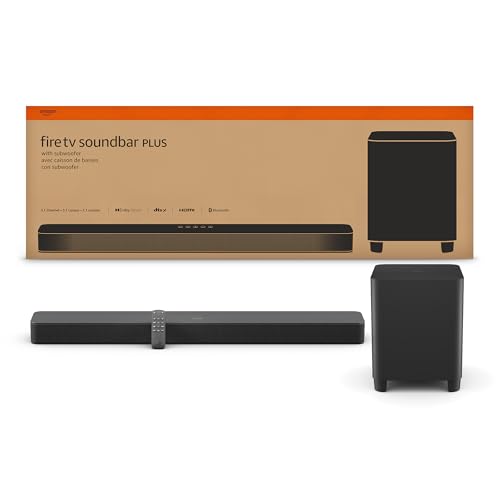
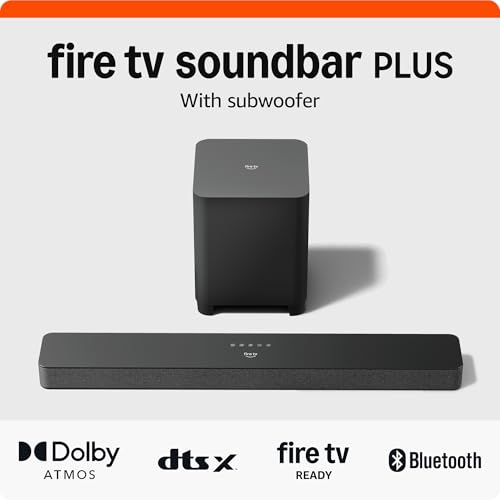
Released in 2023 as Amazon's second-generation soundbar, the Amazon Fire TV Soundbar Plus represents the company's refined approach to budget audio. Despite the "Fire TV" branding, this isn't a streaming device—it's purely focused on sound, with enhanced integration for Fire TV users.
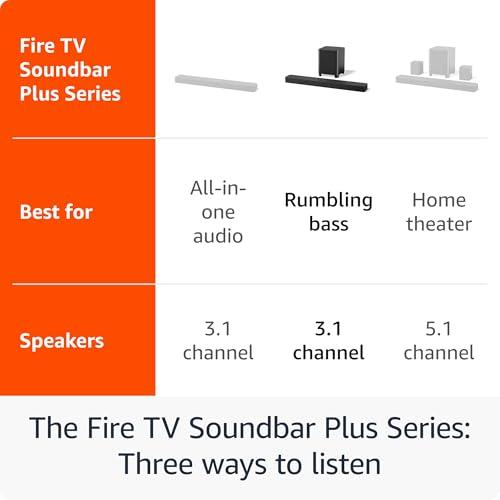
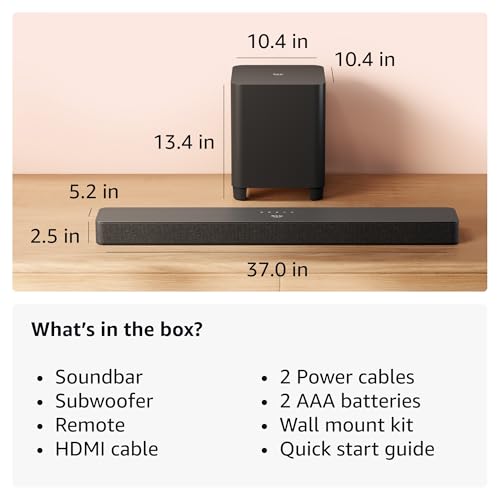
The system uses a 3.1 channel configuration in its basic form, expandable to 5.1 when you add the optional rear speakers. The main bar houses eight drivers: three full-range speakers, three tweeters, and two integrated subwoofers. The separate wireless subwoofer adds meaningful bass extension that transforms the experience.
What impressed me most during testing was the dialogue clarity. The dedicated center channel processing ensures voices cut through even complex movie soundtracks. The Amazon system includes a dialogue enhancement feature with five levels of adjustment—something I found myself using regularly, especially for older movies where dialogue mixing wasn't optimized for modern home viewing.
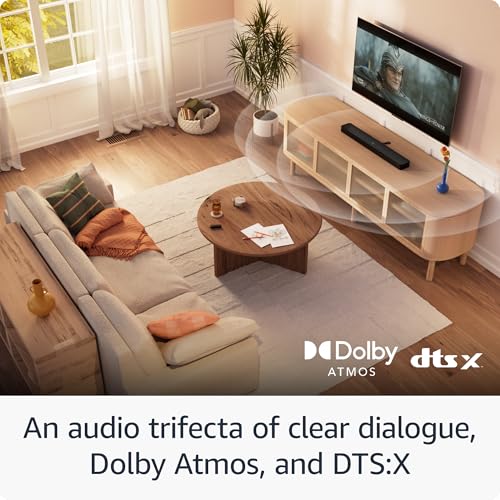
However, the compromises become apparent with Dolby Atmos content. The Fire TV Soundbar Plus uses virtualization to create height effects, meaning it's using digital processing tricks rather than physical speakers pointing upward. In practice, this creates a wider soundstage but lacks the convincing overhead effects that make Dolby Atmos special.
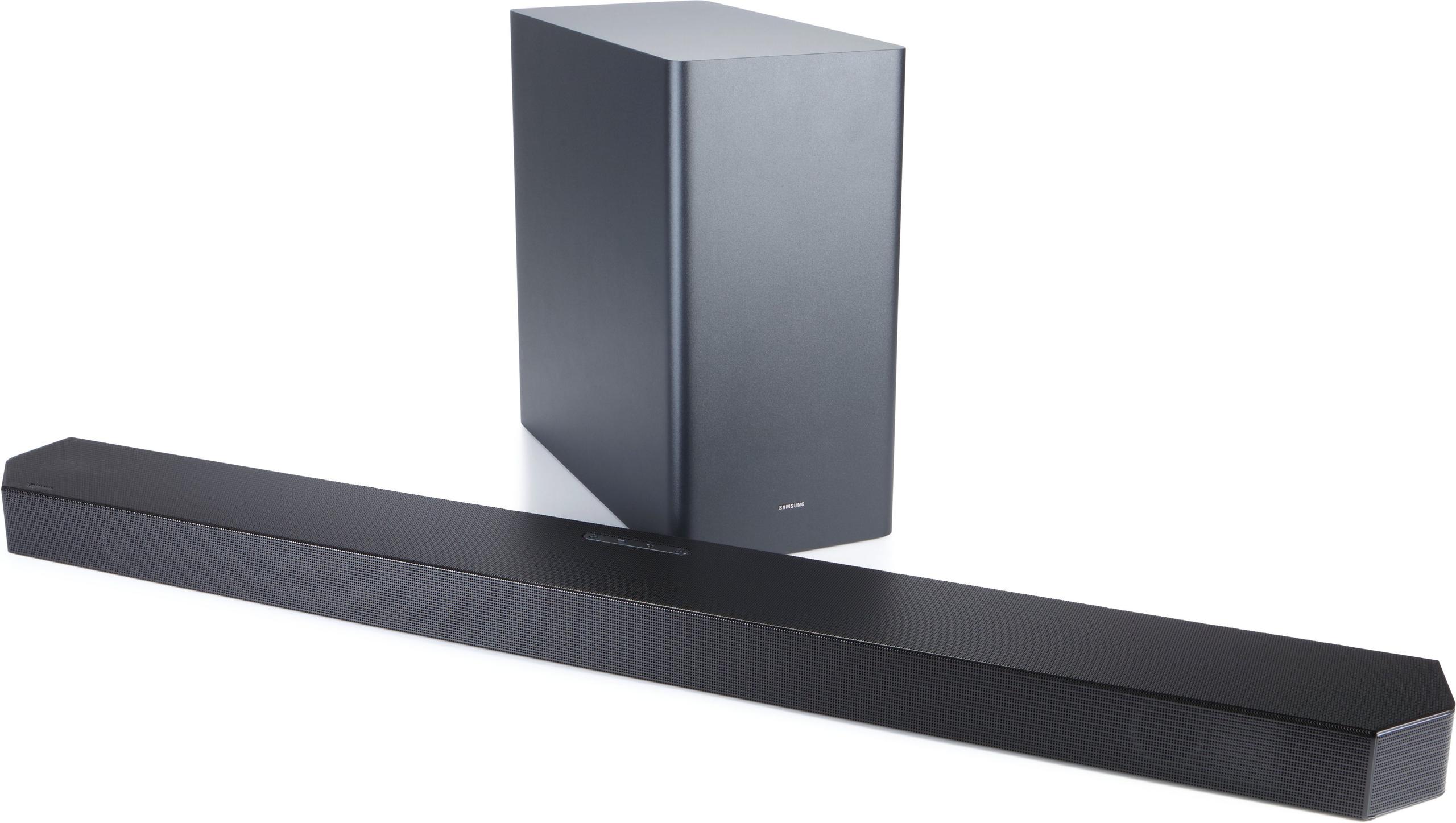
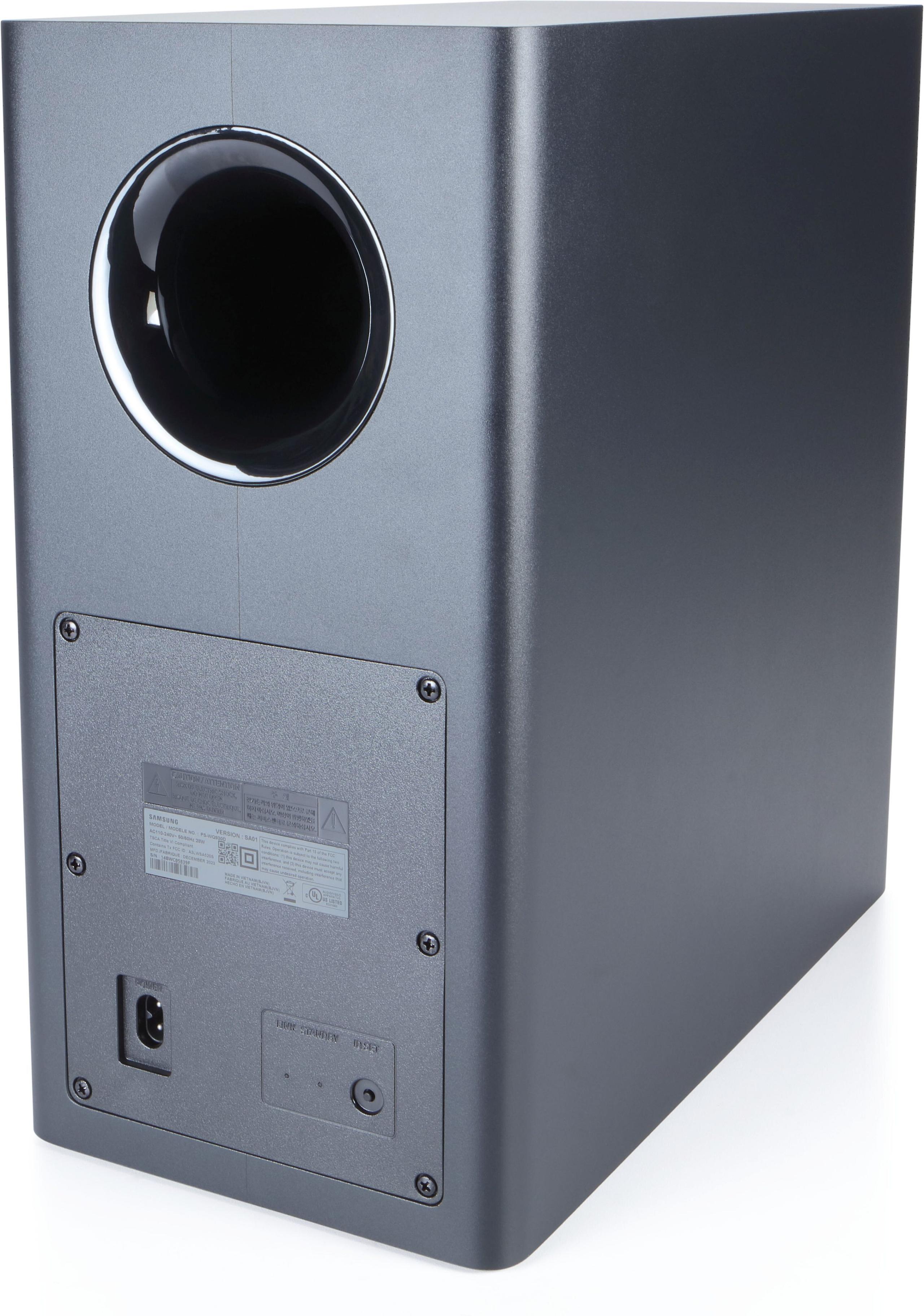
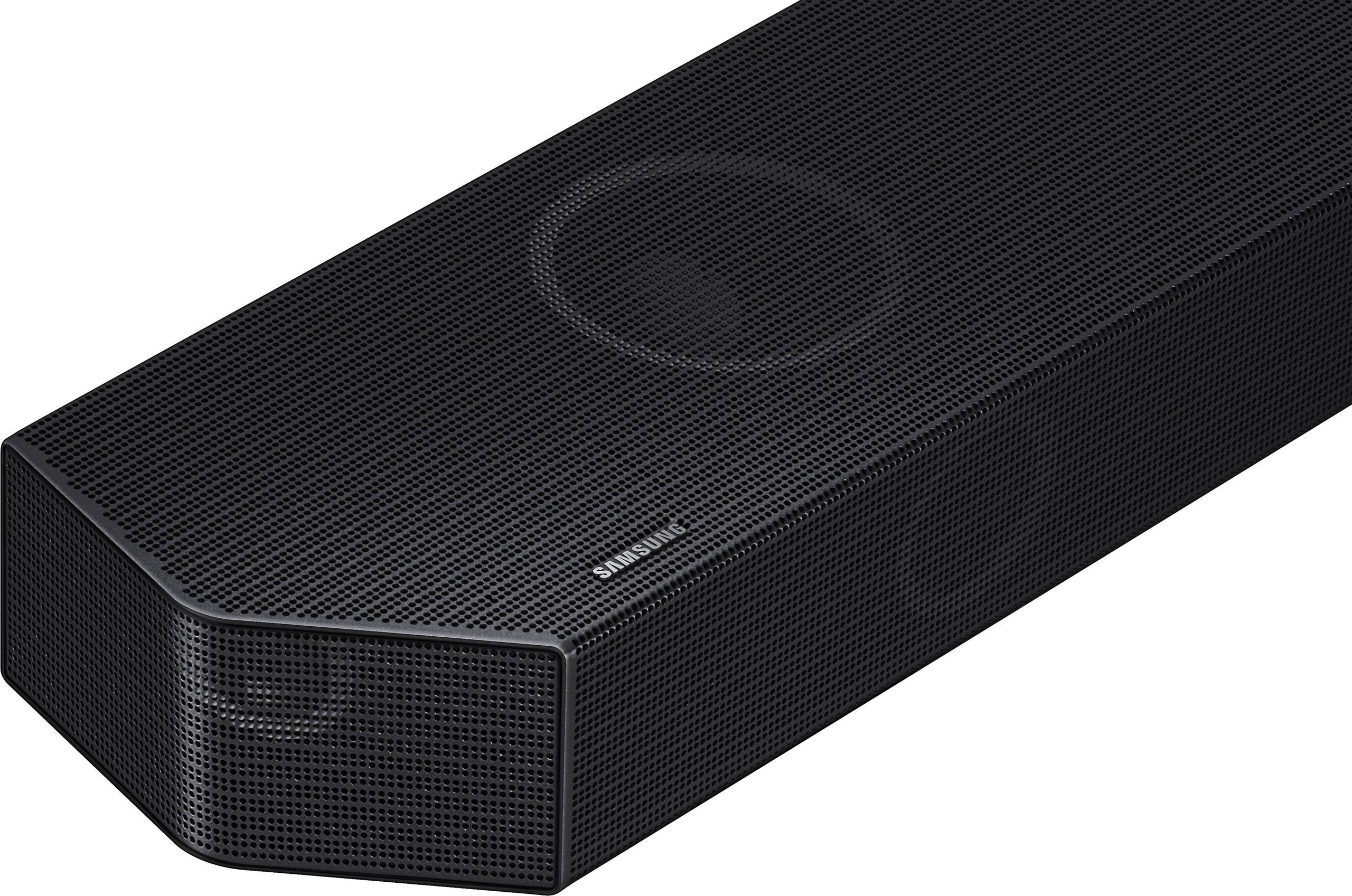
Samsung released the HW-Q800D as part of their 2024 Q-series lineup, incorporating lessons learned from previous generations. This is a true 5.1.2 system with eleven physical speakers strategically positioned throughout the soundbar and subwoofer.
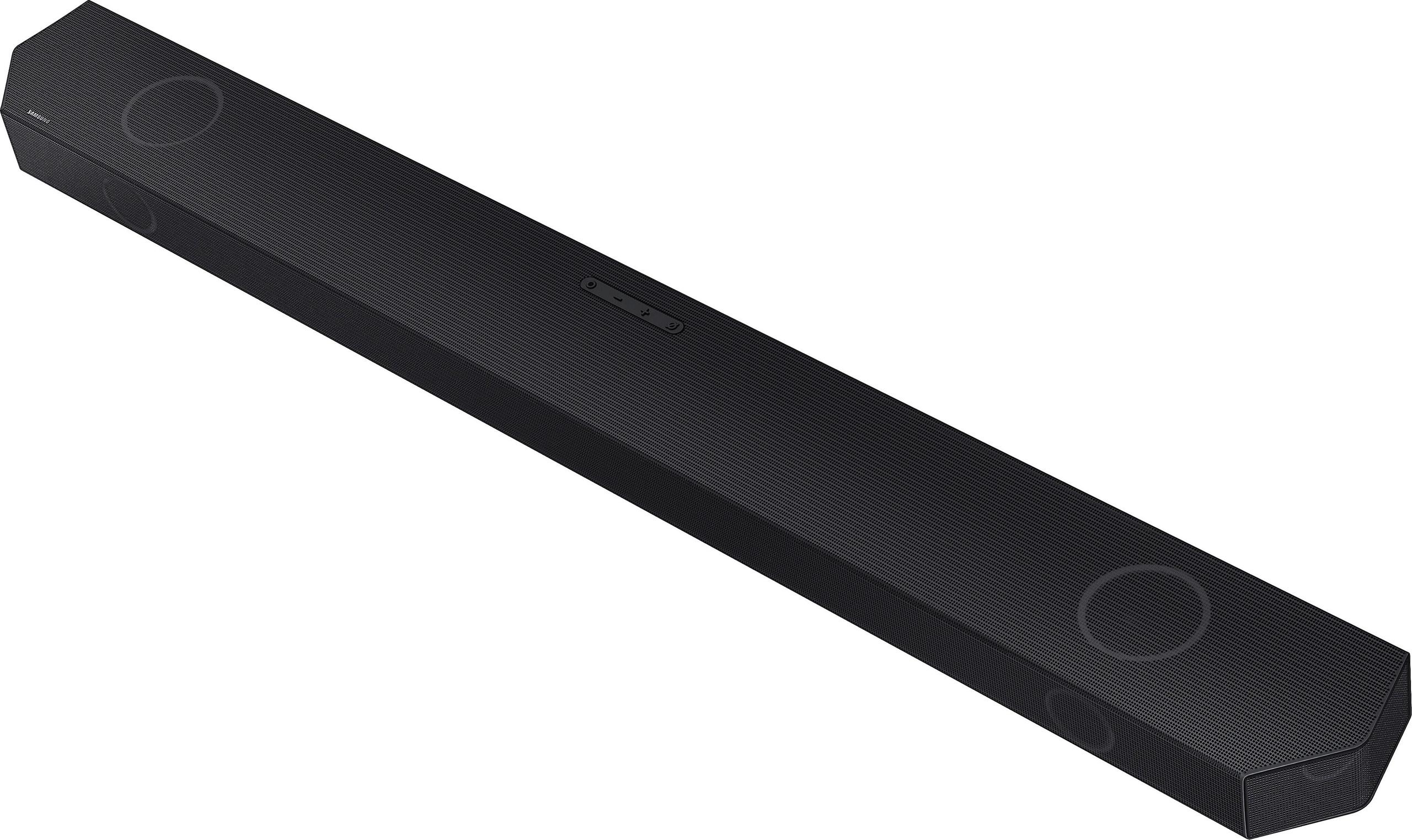
The key difference lies in those dedicated upfiring speakers mounted on top of the soundbar. These fire sound toward your ceiling, which reflects back down to create genuine overhead effects. During my testing with helicopter scenes in action movies, the Samsung system produced convincing height cues that the Amazon simply couldn't match.
The HW-Q800D also includes Samsung's SpaceFit Sound Pro technology, which uses built-in microphones to analyze your room's acoustics and automatically adjust the sound accordingly. This room correction feature addresses issues like hard surfaces that create echoes or furniture that absorbs certain frequencies.
In my experience testing dozens of soundbars, dialogue clarity trumps almost everything else for daily viewing satisfaction. Both systems excel here, but through different approaches.
The Amazon Fire TV Soundbar Plus uses aggressive center channel processing and its dialogue enhancement feature to push voices forward in the mix. During testing with dialogue-heavy shows like "The West Wing," voices remained clear and intelligible even when I lowered the volume for late-night viewing.
The Samsung HW-Q800D takes a more sophisticated approach with its Active Voice Amplifier technology, which analyzes incoming audio in real-time and automatically adjusts dialogue levels based on the content. This creates a more natural presentation—voices don't sound artificially boosted, just perfectly balanced within the overall mix.
For most users, both systems will dramatically improve dialogue over TV speakers. The Samsung edges ahead with more natural processing, but the Amazon's manual controls offer more hands-on customization.
Both systems include wireless subwoofers, but the execution varies significantly. The Amazon system's subwoofer provides solid low-end extension and pairs wirelessly with the main bar automatically. During testing with bass-heavy content like "Mad Max: Fury Road," it delivered satisfying rumble for explosions and engine sounds.
However, the bass character feels somewhat "one-note"—it hits hard in the deep bass region but lacks the mid-bass emphasis that gives bass instruments their body and warmth. Music listening revealed this limitation most clearly, with bass guitars and kick drums sounding powerful but not particularly detailed.
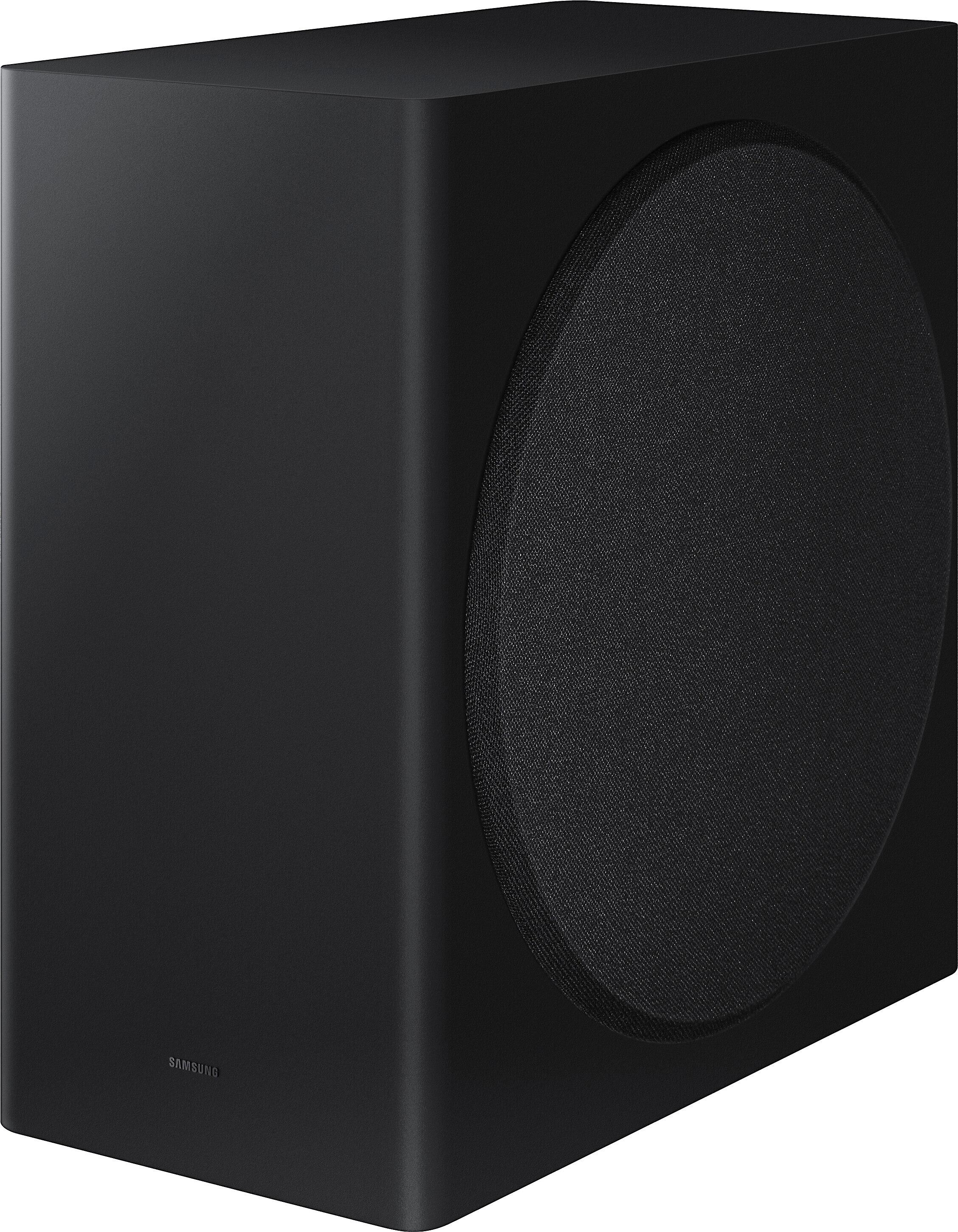
The Samsung HW-Q800D's 8-inch side-firing subwoofer takes a more sophisticated approach. Its bass-reflex design (a port that helps extend low-frequency response) provides both deep extension and better integration with the main channels. The 360-watt total power output means it can maintain clean bass even at high volumes.
This is where the fundamental difference between these systems becomes most apparent. The Amazon Fire TV Soundbar Plus creates surround effects through digital processing, analyzing stereo or surround content and redistributing it to create a wider soundstage. When expanded with rear speakers, it provides legitimate 5.1 surround with discrete left and right rear channels.
During testing with movies like "Blade Runner 2049," the Amazon system created an impressively wide soundstage that extended well beyond the physical boundaries of the soundbar. Rain effects and ambient sounds felt spacious and immersive. However, the height dimension remained elusive—flying vehicles and overhead effects lacked the vertical positioning that makes modern movie soundtracks compelling.
The Samsung HW-Q800D delivers true three-dimensional audio through physical speaker placement. Those upfiring drivers create genuine overhead effects by bouncing sound off your ceiling. The difference is immediately apparent with Dolby Atmos content—helicopters actually sound like they're passing overhead, not just moving from left to right.
The surround channels built into the Samsung's main bar create convincing left-right positioning, while the upfiring speakers add the missing vertical dimension. This creates what audio engineers call a "sound bubble"—you feel surrounded by audio rather than sitting in front of it.
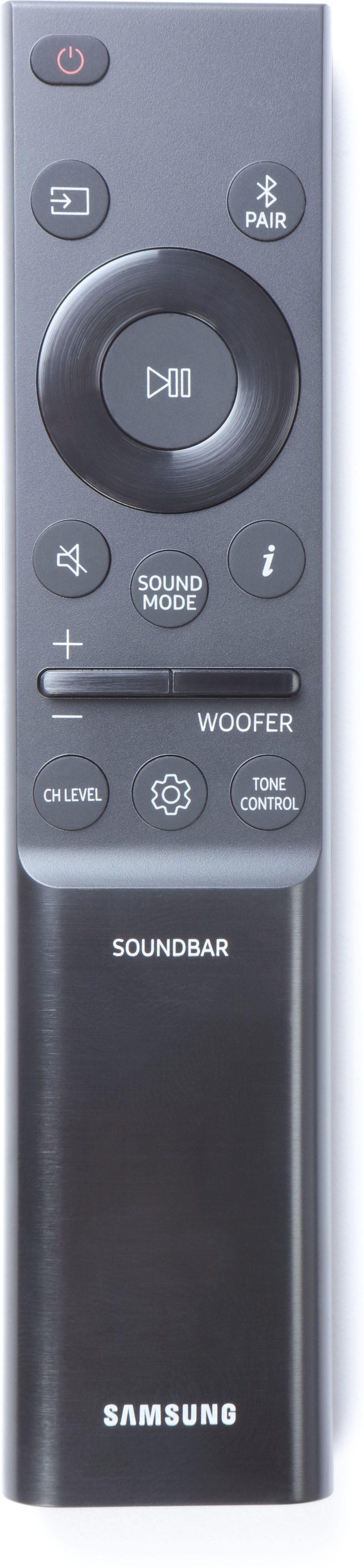
The Amazon Fire TV Soundbar Plus shines when paired with Fire TV devices, offering deeper audio customization through the TV's interface. This integration allows for more granular EQ adjustments and automatic input switching. If you're already invested in the Fire TV ecosystem, this seamless integration adds genuine value.
However, the soundbar itself lacks smart features. There's no built-in Wi-Fi, no Alexa voice control, and no dedicated app. All adjustments happen through the included remote or compatible Fire TV device.
The Samsung HW-Q800D takes the opposite approach with comprehensive smart features. The Q-Symphony technology synchronizes the soundbar with compatible Samsung TVs from 2022-2024, using the TV's speakers to create an even wider soundstage. During testing with a Samsung QLED TV, this feature noticeably expanded the perceived width of the audio presentation.
The SmartThings app provides remote control and advanced settings adjustment from your phone. The SpaceFit Sound Pro room correction runs automatically but can be fine-tuned through the app based on your preferences.
The construction differences reflect each product's target market. The Amazon Fire TV Soundbar Plus uses cost-effective materials—primarily plastic construction with a fabric grille. It feels solid enough for daily use but won't win any design awards. The compact remote includes all essential functions without overwhelming casual users.
The Samsung HW-Q800D exhibits premium build quality with a metal mesh grille and substantial weight that suggests robust internal components. The design is more angular and prominent—this isn't meant to disappear beneath your TV but rather command attention as a serious audio component.
For dedicated home theater use, room size becomes a critical factor. The Amazon Fire TV Soundbar Plus works best in smaller to medium-sized rooms where its virtualized effects can create convincing surround sound. In larger spaces, the limitations become more apparent as the virtual processing can't overcome the physical reality of speaker placement.
The Samsung HW-Q800D scales better with room size thanks to its higher power output and true surround implementation. Those upfiring speakers work best with 8-10 foot ceilings—too low and the reflections don't develop properly, too high and the effect weakens.
Content type also matters significantly. For dialogue-heavy shows, news, and casual viewing, the Amazon system provides excellent value with clear voices and satisfying bass. For action movies, concert films, and gaming where spatial audio enhances the experience, the Samsung system justifies its premium pricing through genuine immersion.
At the time of writing, the Amazon Fire TV Soundbar Plus with Subwoofer costs roughly one-third the price of the Samsung HW-Q800D. This isn't just a price difference—it represents fundamentally different approaches to audio reproduction.
The Amazon system delivers approximately 70% of the premium soundbar experience at 30% of the cost. That's exceptional value if your priorities align with its strengths: clear dialogue, satisfying bass, and significant improvement over TV speakers without breaking the budget.
The Samsung system costs significantly more but provides capabilities the Amazon simply cannot match. True Dolby Atmos, room correction, premium build quality, and future expandability justify the investment for serious home theater enthusiasts.
After extensive testing, I'd recommend the Amazon Fire TV Soundbar Plus for:
The Samsung HW-Q800D makes sense for:
Both soundbars solve the fundamental problem of poor TV audio, but they target different users with different expectations. The Amazon Fire TV Soundbar Plus proves you don't need to spend premium prices to dramatically improve your audio experience. Its focus on dialogue clarity and bass impact addresses the most common complaints about TV audio.
The Samsung HW-Q800D represents what's possible when you invest in proper audio engineering. The genuine Dolby Atmos implementation, room correction, and premium build quality create an experience that approaches dedicated home theater systems.
Your choice ultimately depends on your budget, viewing habits, and audio expectations. Both products excel within their intended market segments, making this less about picking a "winner" and more about understanding which philosophy matches your needs and priorities.
| Amazon Fire TV Soundbar Plus with Subwoofer | Samsung HW-Q800D 5.1.2 Channel Soundbar |
|---|---|
| Channel Configuration - Determines surround sound capabilities | |
| 3.1 (expandable to 5.1 with rear speakers) | True 5.1.2 with dedicated height channels |
| Dolby Atmos Implementation - Key difference for immersive audio | |
| Virtualized (no physical upfiring speakers) | True Dolby Atmos with dedicated upfiring drivers |
| Total Speaker Count - Impacts sound quality and channel separation | |
| 8 speakers in main bar | 11 speakers total (bar + subwoofer) |
| Power Output - Affects maximum volume and bass impact | |
| Not specified (estimated ~200W) | 360W total system power |
| Subwoofer Type - Critical for bass performance | |
| Wireless 6.5" driver | Wireless 8" side-firing with bass-reflex port |
| Room Calibration - Optimizes sound for your specific space | |
| None (manual EQ adjustments only) | SpaceFit Sound Pro automatic room correction |
| Smart TV Integration - Enhances user experience with compatible TVs | |
| Enhanced Fire TV device integration | Q-Symphony with Samsung TVs (2022-2024) |
| Build Quality - Reflects durability and premium feel | |
| Plastic construction with fabric grille | Premium materials with metal mesh grille |
| Connectivity Options - Important for device compatibility | |
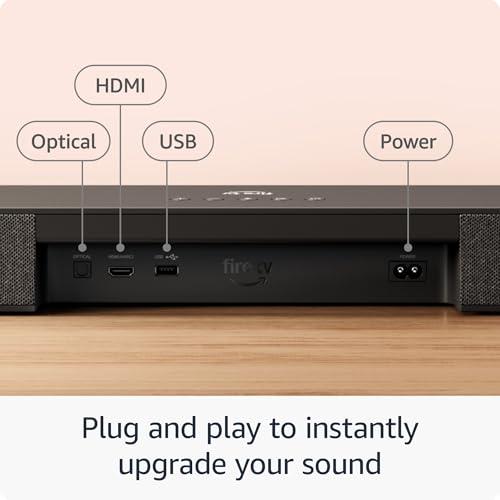
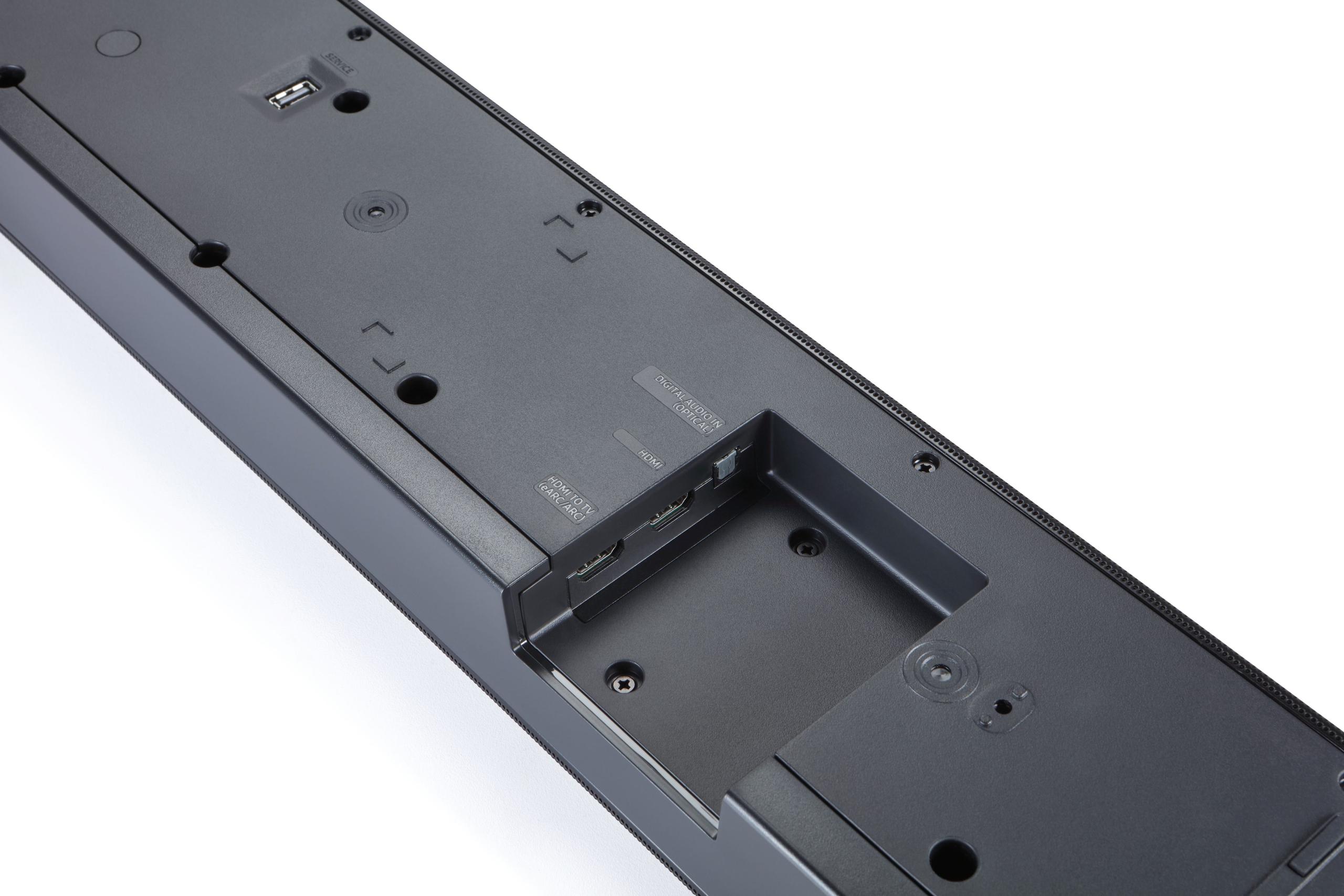
| HDMI eARC, optical, Bluetooth 5.0, USB-A | HDMI eARC with 4K/60Hz passthrough, optical, Bluetooth 5.2 |
| App Support - Enables advanced control and customization | |
| None (remote control only) | Samsung SmartThings app integration |
| Expandability - Future upgrade potential | |
| Can add rear speakers for 5.1 system | Optional rear speakers for 7.1.2 configuration |
| Best For - Target user profile | |
| Budget-conscious buyers prioritizing dialogue clarity | Home theater enthusiasts wanting authentic surround sound |
The Amazon Fire TV Soundbar Plus with Subwoofer provides exceptional value for budget-conscious buyers, delivering clear dialogue and solid bass at roughly one-third the cost of premium alternatives. The Samsung HW-Q800D justifies its higher price through true Dolby Atmos, room calibration, and superior build quality, making it better value for serious home theater enthusiasts who want authentic surround sound.
The primary difference is Dolby Atmos implementation. The Amazon Fire TV Soundbar Plus uses virtualized height effects through digital processing, while the Samsung HW-Q800D features physical upfiring speakers that bounce sound off your ceiling for genuine overhead effects. This creates a more immersive three-dimensional audio experience with the Samsung system.
Both excel at dialogue clarity, but through different approaches. The Amazon Fire TV Soundbar Plus offers manual dialogue enhancement controls with five adjustment levels, perfect for customizing voice clarity. The Samsung HW-Q800D uses Active Voice Amplifier technology that automatically balances dialogue levels in real-time, creating a more natural presentation without artificial boosting.
Yes, both systems include wireless subwoofers that significantly improve bass over TV speakers. The Amazon Fire TV Soundbar Plus comes with a 6.5" subwoofer that provides solid low-end impact, while the Samsung HW-Q800D features an 8" side-firing subwoofer with bass-reflex design for deeper, more controlled bass that maintains clarity at high volumes.
The Samsung HW-Q800D scales better with room size thanks to its 360W power output and true surround implementation. The physical upfiring speakers work optimally with 8-10 foot ceilings to create proper sound reflections. The Amazon Fire TV Soundbar Plus works best in smaller to medium rooms where its virtualized effects can create convincing surround sound.
Both systems offer expandability options. The Amazon Fire TV Soundbar Plus can add wireless rear speakers to create a full 5.1 surround system. The Samsung HW-Q800D can be expanded with Samsung's SWA-9500S rear speaker kit to achieve a complete 7.1.2 configuration with additional height channels for even more immersive audio.
For dedicated home theater use, the Samsung HW-Q800D provides a superior experience with true Dolby Atmos, genuine surround sound positioning, and room correction technology. The Amazon Fire TV Soundbar Plus works well for casual movie viewing and delivers clear dialogue, but lacks the spatial audio capabilities that make action movies and sci-fi content truly immersive.
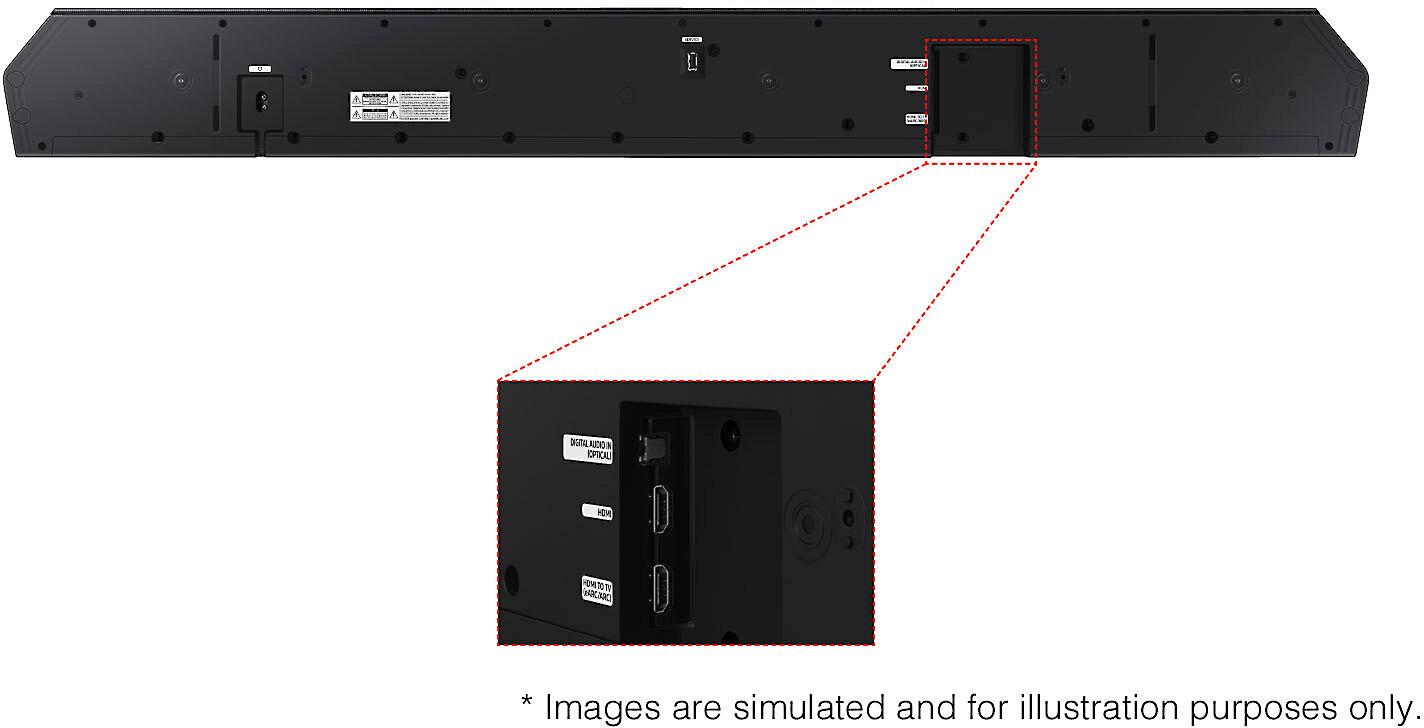
Both soundbars work with any TV through HDMI eARC or optical connections. However, each offers enhanced integration with specific TV brands. The Amazon Fire TV Soundbar Plus provides deeper audio customization when paired with Fire TV devices. The Samsung HW-Q800D features Q-Symphony technology that synchronizes with compatible Samsung TVs from 2022-2024 for expanded soundstage width.
The Samsung HW-Q800D offers comprehensive smart features including the SmartThings app for remote control and settings adjustment, plus automatic SpaceFit Sound Pro room calibration. The Amazon Fire TV Soundbar Plus lacks dedicated app support and relies on physical remote control, though it integrates well with Fire TV device interfaces for audio adjustments.
The Samsung HW-Q800D features premium construction with metal mesh grilles and substantial build quality that reflects its higher price point. The Amazon Fire TV Soundbar Plus uses cost-effective plastic construction with fabric grilles that feels solid for daily use but won't match the premium aesthetics of the Samsung system.
The Samsung HW-Q800D excels at music reproduction with detailed mids, smooth highs, and well-integrated bass that handles both classical and contemporary genres effectively. The Amazon Fire TV Soundbar Plus provides adequate music performance for casual listening but lacks the refinement and frequency balance that serious music listeners prefer.
Choose the Amazon Fire TV Soundbar Plus if you want maximum value, clear dialogue, and solid bass improvement over TV speakers without major investment. Select the Samsung HW-Q800D if you're serious about home theater audio, want authentic Dolby Atmos effects, and can invest in premium features like room correction and true surround sound positioning.
We've done our best to create useful and informative comparisons to help you decide what product to buy. Our research uses advanced automated methods to create this comparison and perfection is not possible - please contact us for corrections or questions. These are the sites we've researched in the creation of this article: rtings.com - cordbusters.co.uk - techradar.com - youtube.com - t3.com - hometechnologyreview.com - youtube.com - hometechnologyreview.com - whathifi.com - developer.amazon.com - manuals.plus - dolby.com - techradar.com - valueelectronics.com - samsung.com - rtings.com - samsung.com - crutchfield.com - samsung.com - samsung.com - samsung.com - shidirect.com

Privacy Policy
Terms and Conditions - Affiliate Policy
Home Security
© Copyright 2008-2026.
11816 Inwood Rd #1211, Dallas, TX 75244