




If you're looking to upgrade from your TV's built-in speakers, you've probably discovered that the soundbar market can be surprisingly complex. What started as simple audio bars have evolved into sophisticated home theater systems that promise to replace traditional surround sound setups—but they take very different approaches to get there.
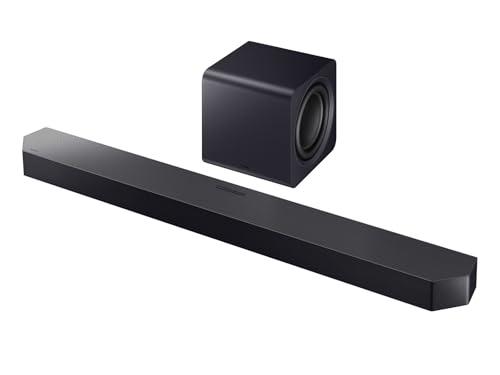
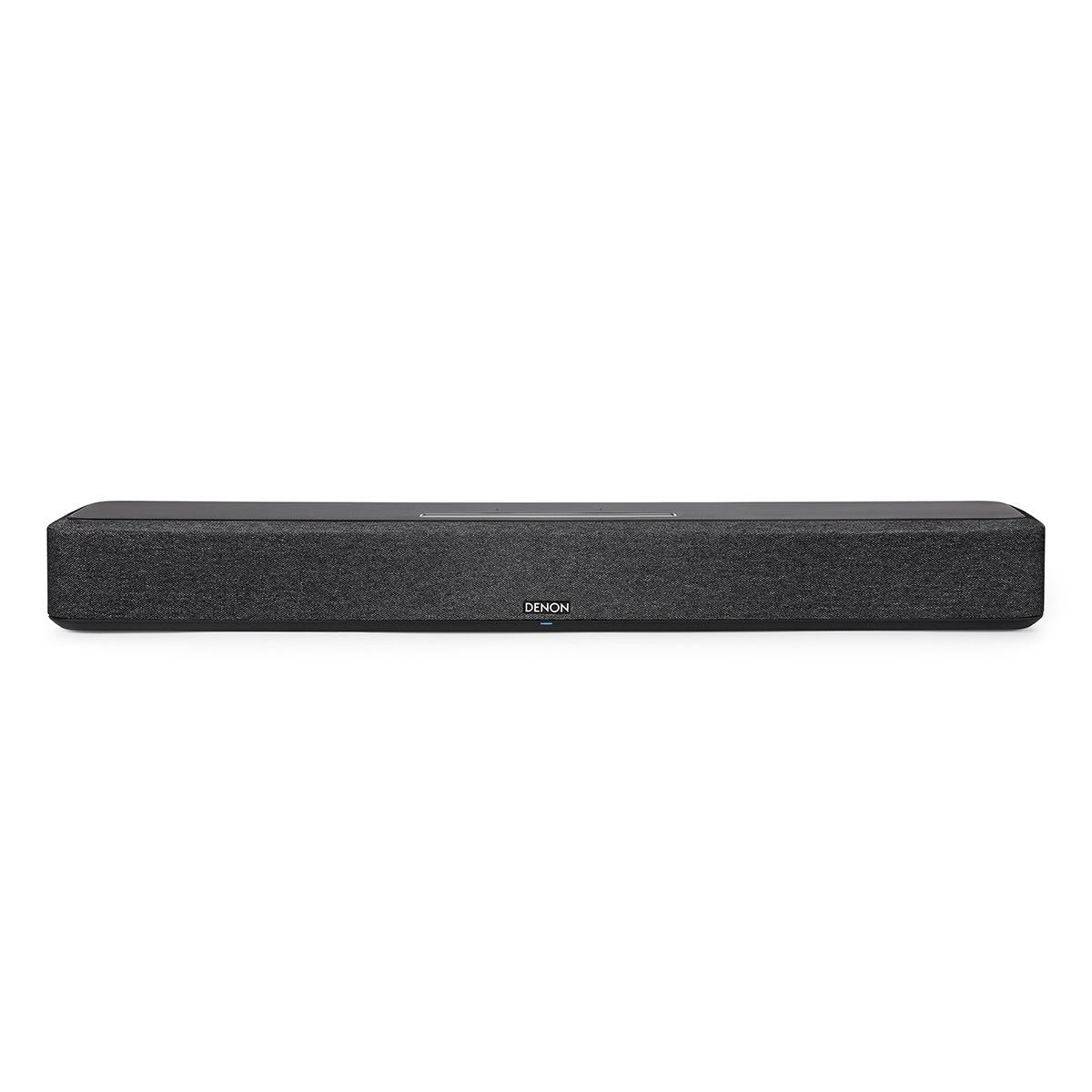
The Samsung HW-Q990F and Denon Home Sound Bar 550 represent two distinct philosophies in soundbar design. Samsung goes all-in with a complete surround system that includes physical rear speakers, while Denon focuses on virtual processing and music quality in a compact package. At the time of writing, these products sit in different price brackets but compete for similar use cases, making the choice between them particularly interesting.
Today's soundbars fall into two main camps: complete surround systems and virtual surround processors. The difference matters more than you might think.
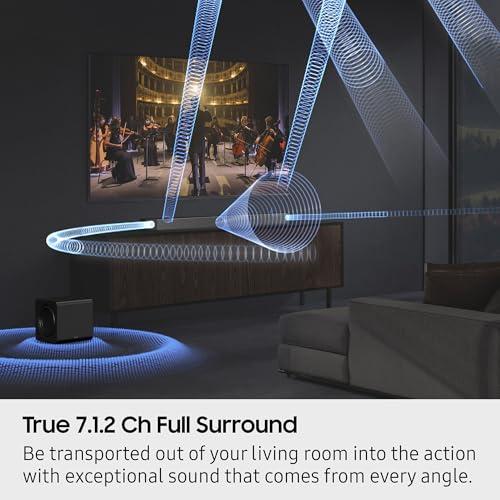
Complete surround systems like the Samsung HW-Q990F use multiple physical speakers placed around your room to create authentic surround sound. When a helicopter flies overhead in a movie, you hear it move from front speakers, pass directly over your head through upward-firing drivers, and continue behind you through rear speakers. This approach mirrors how movie theaters and traditional home theater systems work.
Virtual surround systems like the Denon Home Sound Bar 550 use sophisticated audio processing to trick your brain into hearing sounds from positions where no speakers exist. Through techniques like phase manipulation and frequency filtering, these systems can create surprisingly convincing surround effects—but all the sound still originates from the front of your room.
Both approaches have merit, but they excel in different situations and room types.
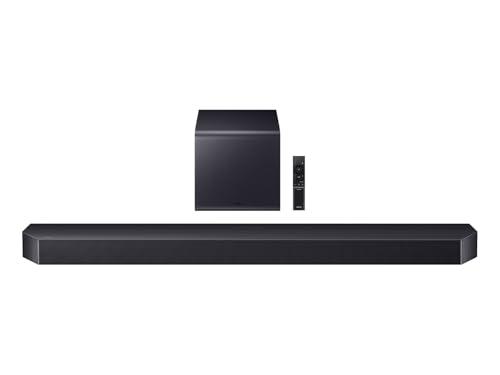
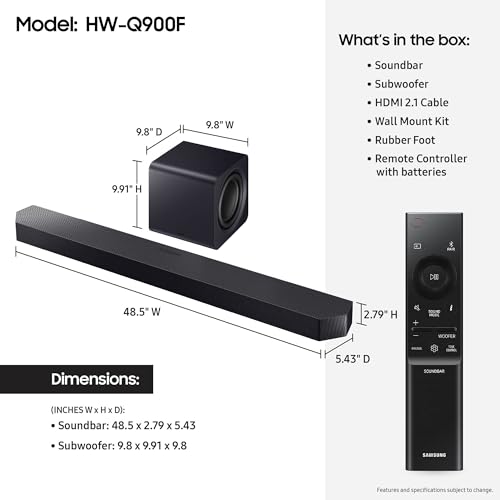
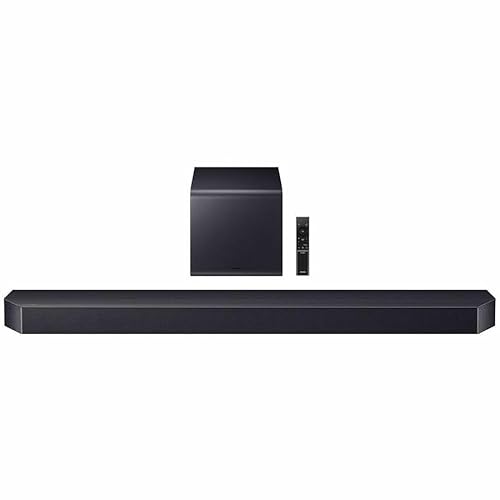
Released in 2025, the Samsung HW-Q990F represents Samsung's flagship approach to home theater audio. This system includes four separate components: the main soundbar, a wireless subwoofer, and two wireless rear speakers, creating an authentic 11.1.4-channel surround experience.
The "11.1.4" specification tells you exactly what you're getting: 11 main channels handling surround sound placement, 1 dedicated subwoofer channel for deep bass, and 4 height channels creating overhead effects through physically upward-firing speakers. This isn't marketing fluff—you're getting 22 individual drivers working together across four units.
What makes this system special is how it handles object-based audio formats like Dolby Atmos and DTS:X. These newer audio formats don't just send sounds to specific speakers; they place audio "objects" anywhere in 3D space around you. When properly implemented with physical speakers like the Samsung HW-Q990F, you experience genuine surround immersion where sounds move seamlessly around and above your listening position.
The rear speakers deserve particular attention. Each contains three drivers: one facing forward, one firing to the side, and one angled upward. This configuration ensures that surround and height effects flow continuously around your room without gaps as sounds transition between speakers. During action sequences, you'll hear debris falling behind you, explosions rumbling beneath you, and aircraft passing overhead with startling realism.
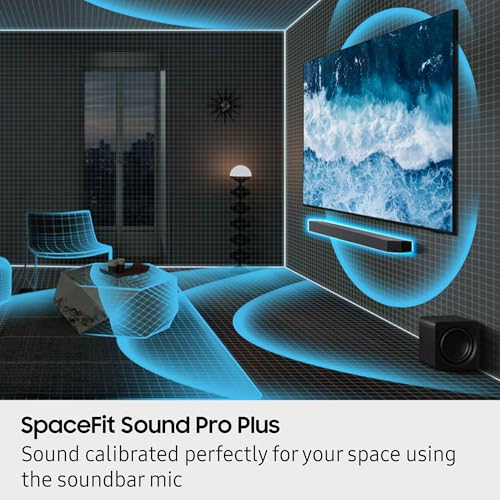
Samsung's SpaceFit Sound Pro technology uses built-in microphones to analyze your room's acoustics and automatically adjust the sound output. Unlike older room correction systems that required you to walk around with a microphone playing test tones, SpaceFit works continuously in the background, adapting to changes throughout the day as furniture moves or doors open and close.
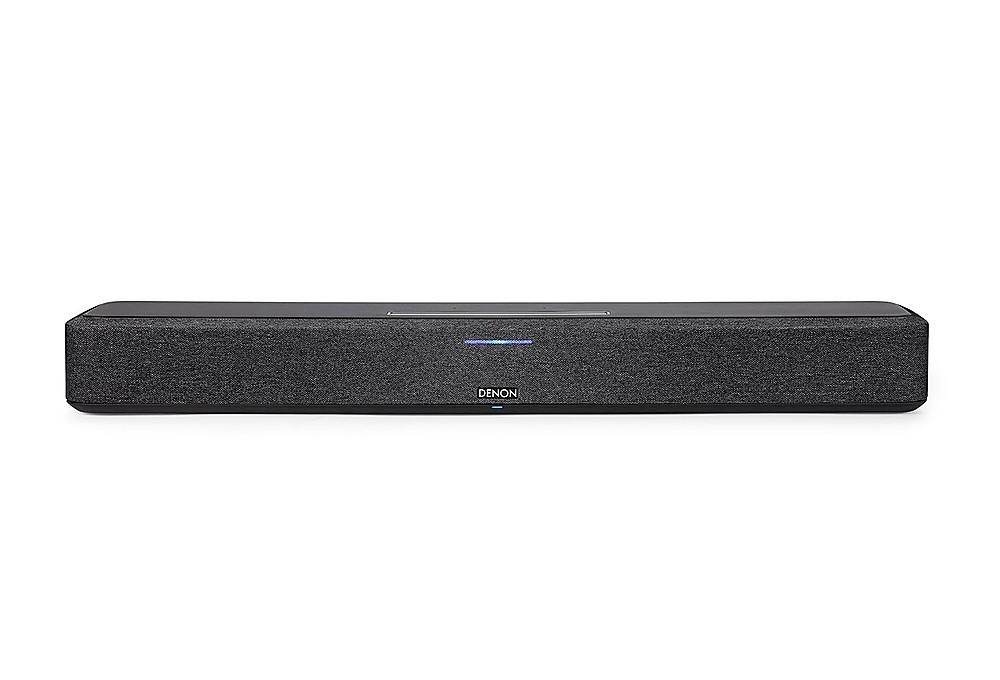
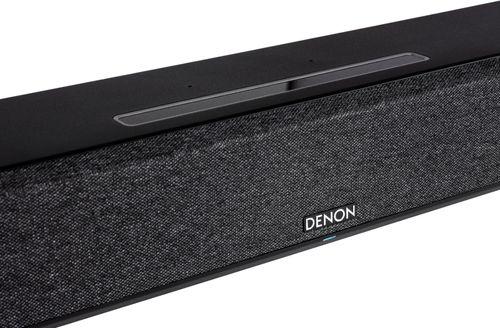
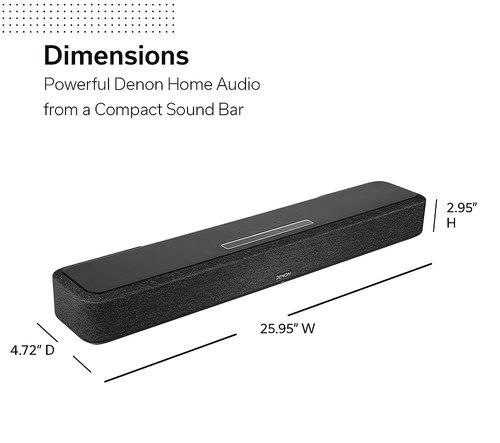
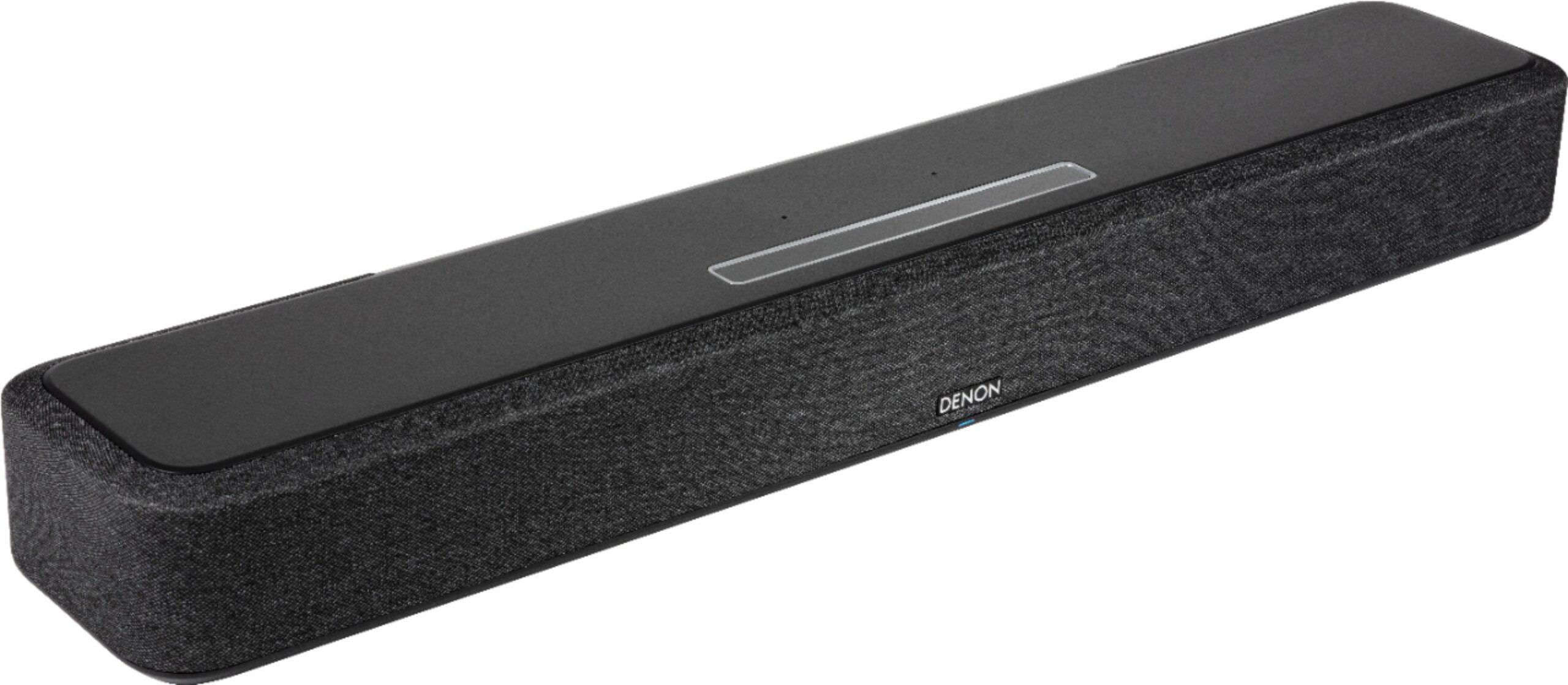
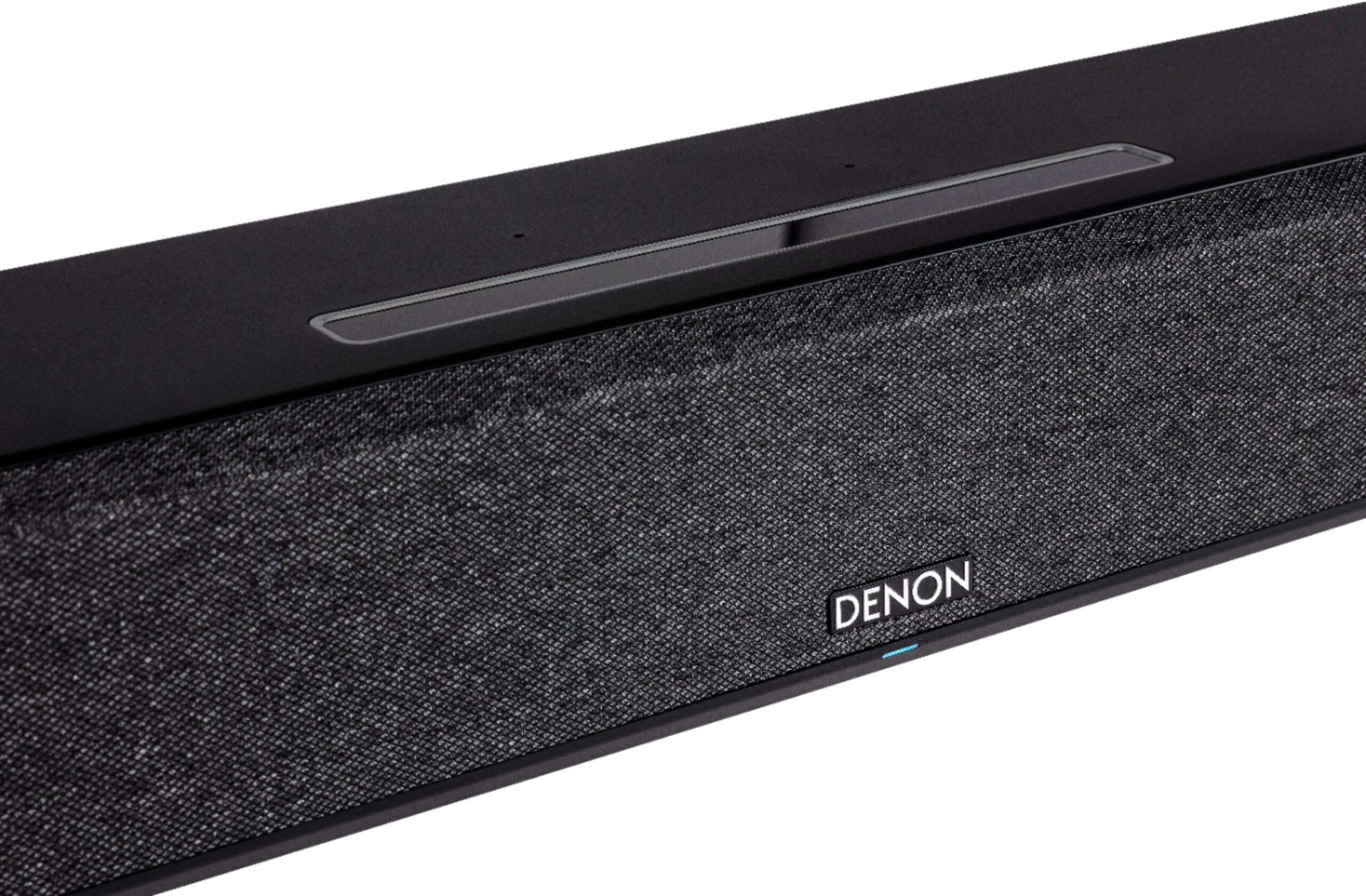
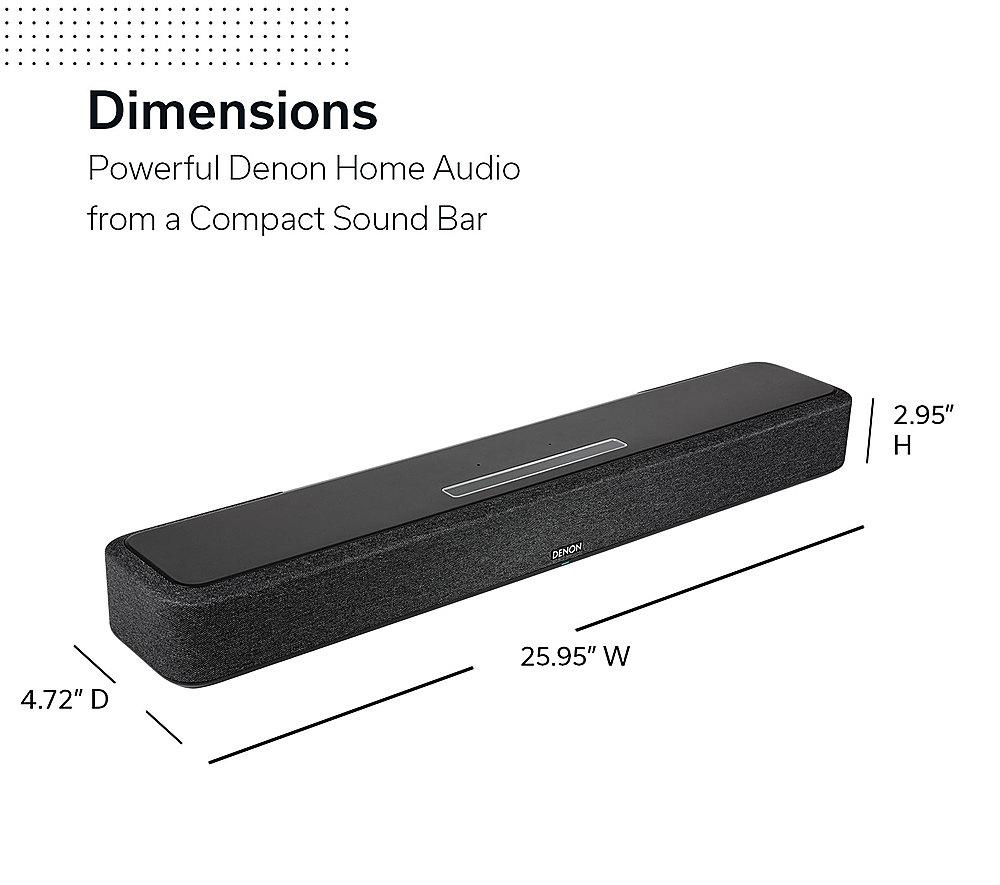
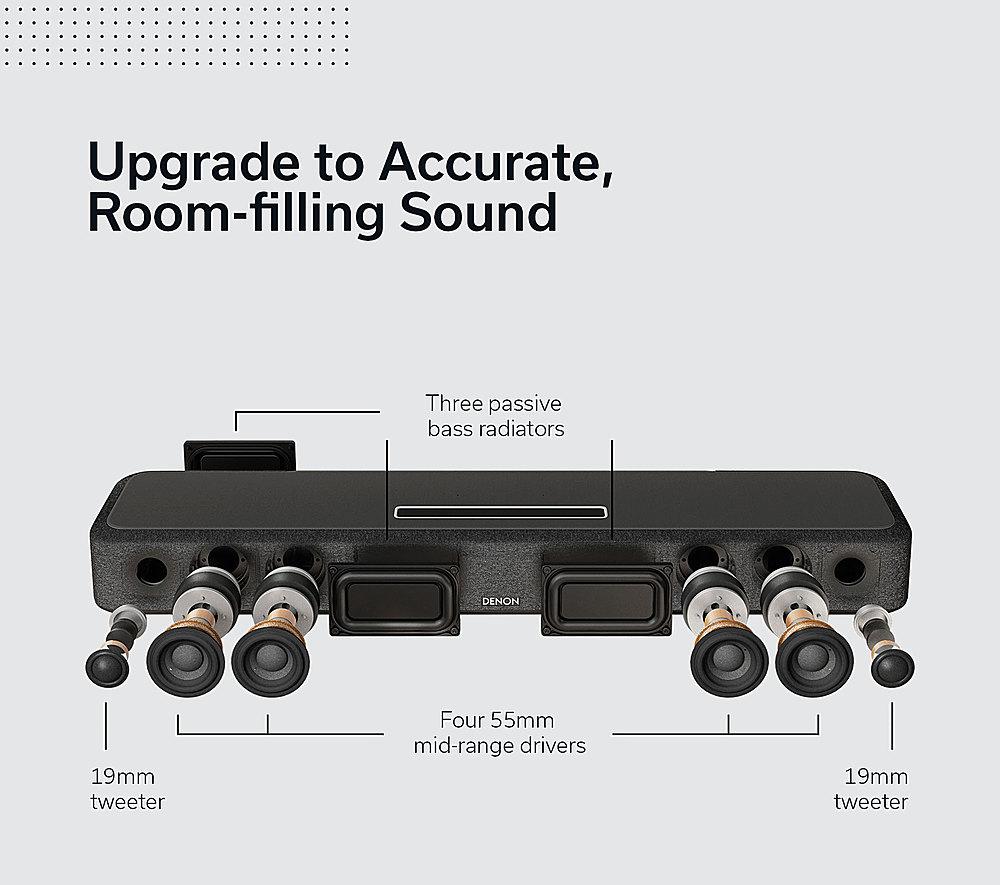
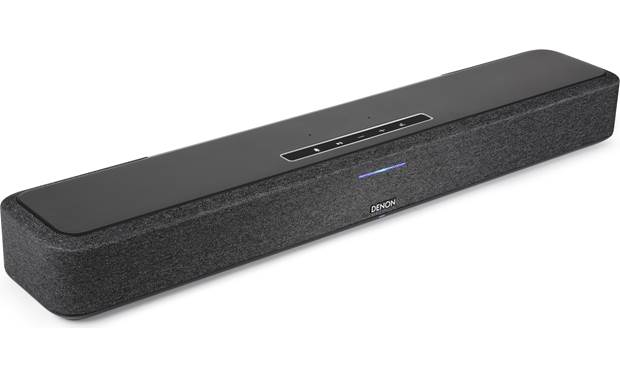
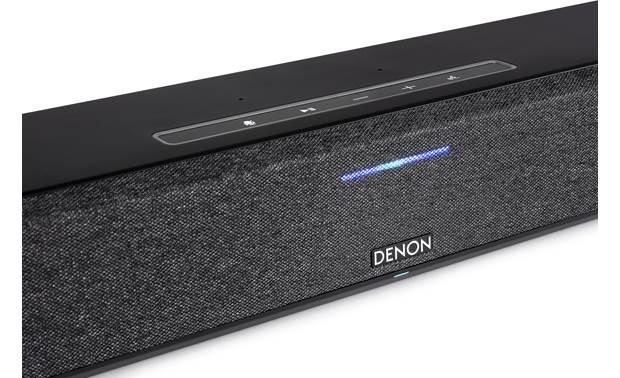
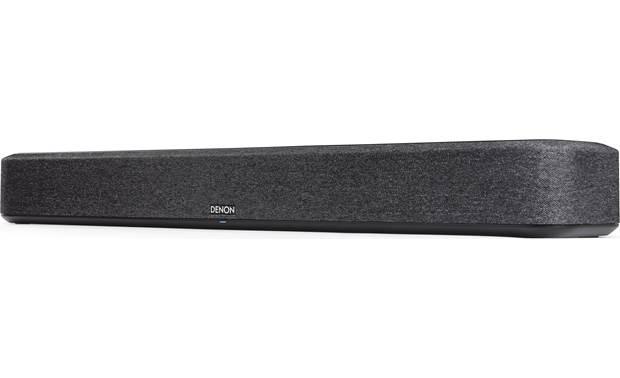
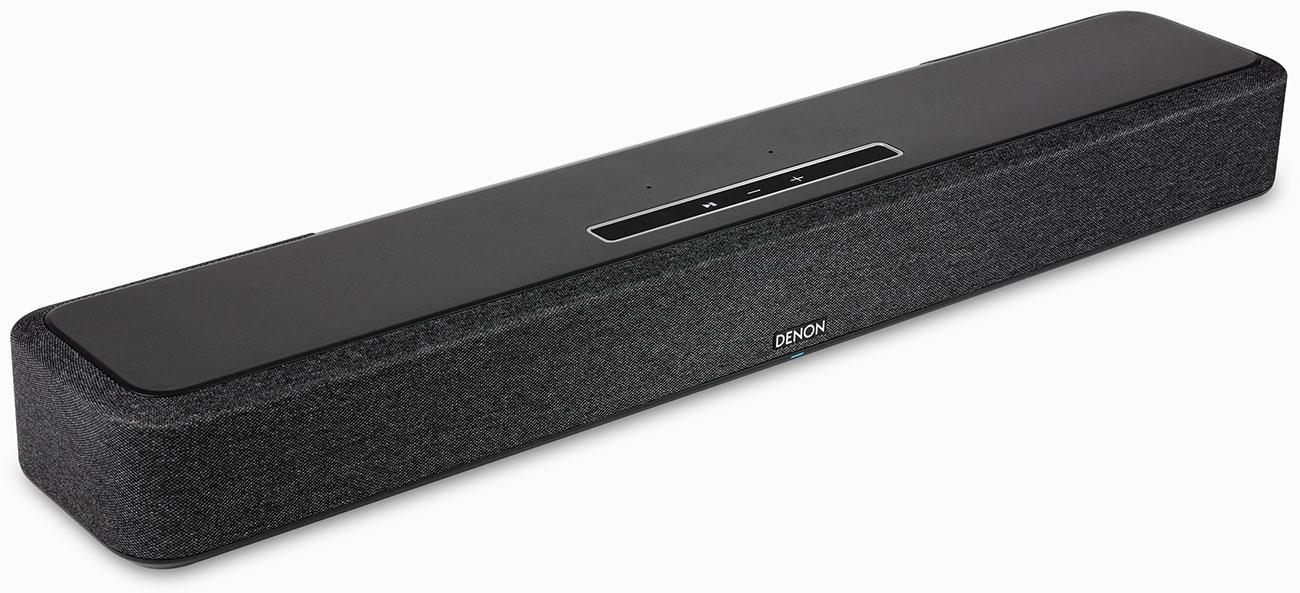
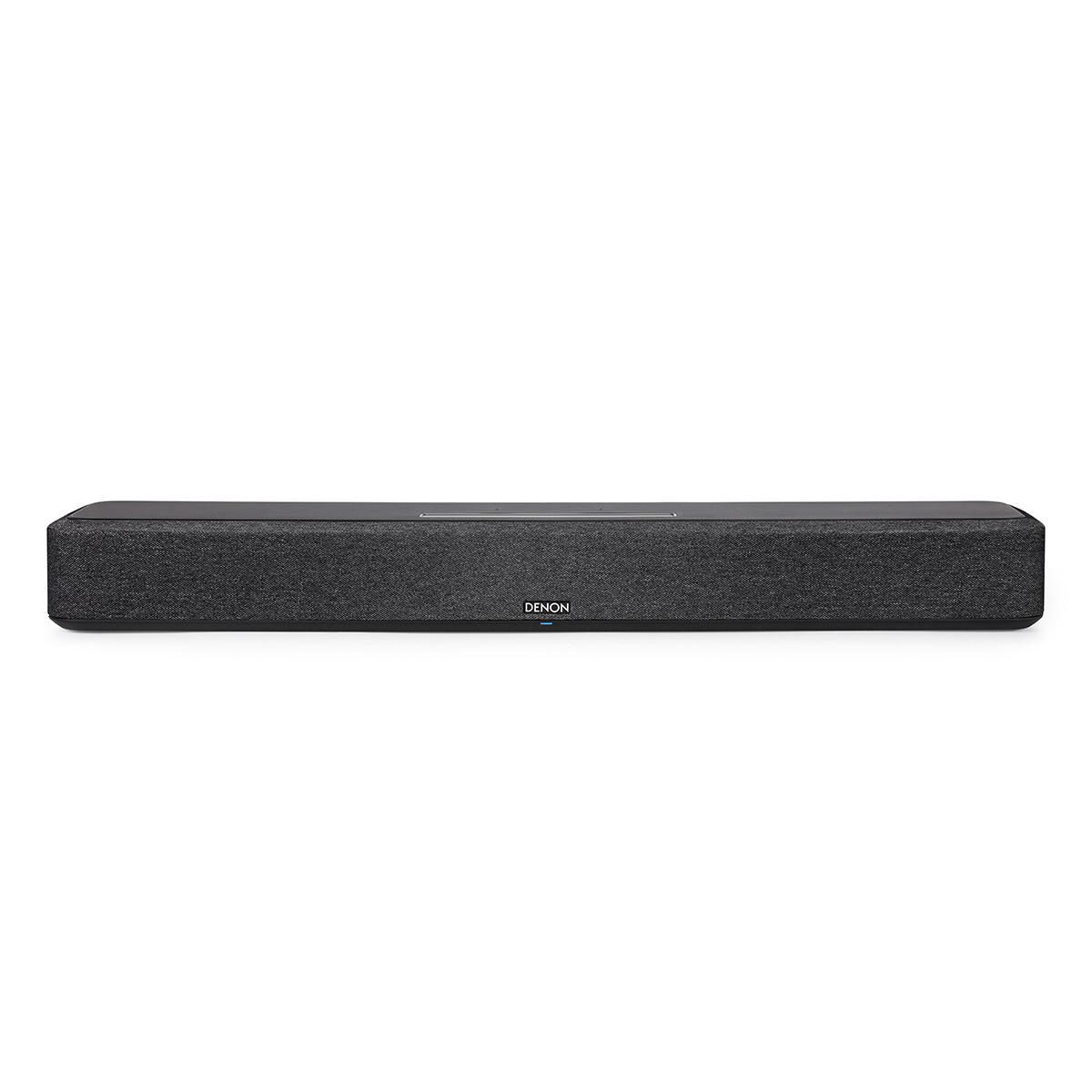
The Denon Home Sound Bar 550, part of Denon's HEOS ecosystem, takes a fundamentally different approach. This compact 25.6-inch soundbar contains six carefully positioned drivers: two premium soft-dome tweeters, four full-range drivers, and passive radiators for bass enhancement. Despite its modest physical footprint, it uses advanced Dolby Height Virtualization and DTS Virtual:X processing to create impressive surround effects.
Virtual surround processing works by manipulating how sounds reach your ears. By precisely controlling timing, phase relationships, and frequency response, the Denon Home Sound Bar 550 can make your brain perceive sounds coming from positions where no speakers exist. The effectiveness depends heavily on your room size, seating position, and the acoustic properties of your space.
What sets Denon apart is their focus on music reproduction. While many soundbars prioritize explosive movie effects, the Denon Home Sound Bar 550 is tuned for natural, accurate sound reproduction. Vocals sound clear and present, instruments maintain proper separation, and the overall tonal balance remains neutral rather than artificially boosted for impact.
The HEOS platform integration adds significant value for music lovers. You can stream high-resolution audio files up to 192kHz/24-bit, group the soundbar with other HEOS speakers throughout your home for synchronized playback, or play different music in different rooms. This multi-room capability extends the soundbar's usefulness beyond your main TV viewing area.
The Samsung HW-Q990F delivers unmatched surround immersion through its physical speaker placement. During movie scenes, sounds genuinely originate from their intended positions. A car chase sequence will have engines roaring from the front soundbar, tire screeches moving through the side-firing drivers, and helicopters circling overhead through the height channels before disappearing behind you through the rear speakers.
This physical approach creates what audio engineers call "localization"—your ability to pinpoint exactly where sounds originate. When gaming, this proves invaluable for competitive advantage. Footsteps approaching from behind sound genuinely behind you, not like processed audio trying to simulate that effect.
The Denon Home Sound Bar 550 achieves surprisingly convincing virtual surround, especially in smaller rooms. The processing works by creating subtle timing and phase differences that trick your auditory system into perceiving expanded soundstage width and height. However, careful listening reveals that all audio still originates from the front of the room. In larger spaces or with off-axis seating positions, the virtual processing becomes less effective.
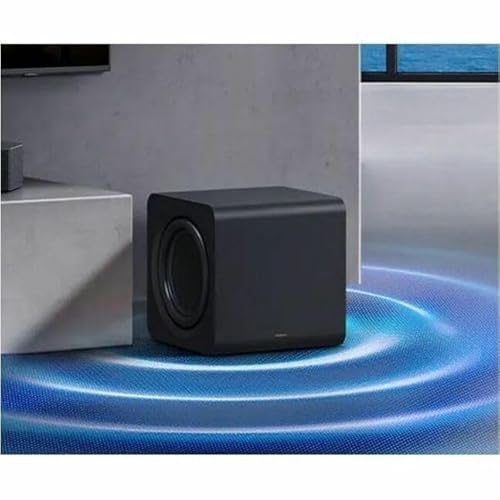
Bass performance reveals interesting contrasts between these systems. The Samsung HW-Q990F includes a redesigned subwoofer with dual 8-inch force-canceling woofers. This new design, introduced in 2024, moved away from the previous generation's taller ported enclosure to a more compact sealed design that Samsung claims delivers more linear bass response.
Our research into user experiences reveals both strengths and weaknesses in Samsung's new subwoofer design. The sealed enclosure does provide tighter, more controlled bass that integrates well with the main speakers. However, several users report cabinet creaking and rattling when pushed to high volumes—particularly at reference levels around 90-95dB. This represents a notable step backward from the previous generation's ported design, which handled high volumes more gracefully despite also reaching its limits at similar output levels.
The Denon Home Sound Bar 550 relies on passive radiators (drivers without voice coils that move in response to air pressure from active drivers) to enhance bass response in its standalone configuration. This provides adequate low-end extension for dialogue-heavy content and music at moderate volumes, but falls short for action movies that demand deep, impactful bass.
Adding Denon's optional wireless subwoofer becomes essentially mandatory for serious home theater use. At the time of writing, this increases the total system cost significantly but provides clean, distortion-free bass performance that surpasses the Samsung's troubled high-volume behavior.
Here, the Denon Home Sound Bar 550 demonstrates clear superiority. Denon tuned this system with audiophile sensibilities, prioritizing natural sound reproduction over cinematic impact. Vocals sound clear and present without artificial enhancement, instruments maintain proper timbral characteristics, and the frequency response remains relatively neutral.
The Samsung HW-Q990F applies a more aggressive tuning designed for cinematic content. The system boosts bass and treble frequencies to create excitement and impact, which works well for action movies but can make music sound artificially enhanced. Samsung's Active Voice Amplifier technology proves effective for dialogue clarity but sometimes creates an unnatural, processed quality that becomes noticeable during music playback.
For listeners who primarily consume music through their soundbar, the Denon Home Sound Bar 550 provides a more satisfying, long-term listening experience. The HEOS platform's support for high-resolution audio formats further enhances its appeal for music enthusiasts.
The Samsung HW-Q990F excels for gaming applications through several key advantages. Its Game Mode Pro automatically optimizes audio processing for different game types, reducing latency and enhancing directional cues. The system includes two HDMI 2.1 inputs that support modern gaming features like 4K/120Hz refresh rates, Variable Refresh Rate (VRR), and Auto Low Latency Mode (ALLM).
Most importantly for competitive gaming, the physical rear speakers provide unambiguous directional information. When opponents approach from behind in first-person shooters, you hear them from behind—not from front speakers creating a processed simulation of that positioning.
The Denon Home Sound Bar 550 offers limited gaming advantages. Its single HDMI eARC connection requires routing all devices through your TV, potentially introducing additional input lag. The virtual surround processing, while impressive for movies, lacks the precision needed for competitive gaming where split-second audio positioning can determine outcomes.
Room size dramatically affects performance for both systems, but in different ways.
The Samsung HW-Q990F performs best in medium to large rooms (roughly 15 feet or more in length) where you can properly position the wireless subwoofer and rear speakers. The system needs acoustic space to create its surround bubble without interference. In smaller rooms, multiple speakers can create confusing reflections that muddy the sound rather than enhance it.
Conversely, the Denon Home Sound Bar 550 excels in smaller spaces where its virtual processing has less acoustic distance to overcome. Apartments, bedrooms, and compact living rooms benefit from its space-efficient design and convincing surround simulation. As room size increases, the virtual processing struggles to maintain the illusion of expanded soundstage, and listeners become increasingly aware that all sound originates from the front wall.
Both systems offer modern connectivity but emphasize different capabilities. The Samsung HW-Q990F functions as a smart home hub with built-in Amazon Alexa, Google Assistant, and Samsung's Bixby voice assistants. It supports casting from multiple platforms including AirPlay 2 and Chromecast, making it versatile for different device ecosystems.
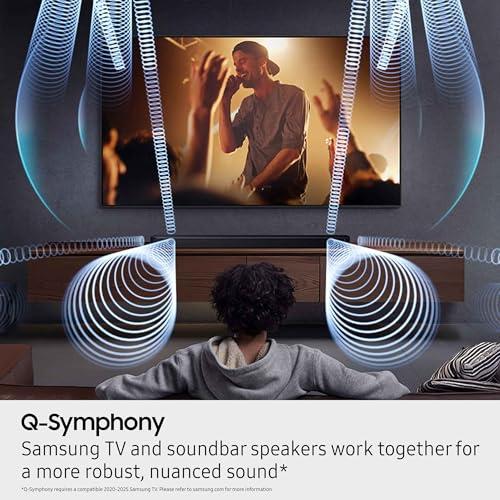
Samsung's Q-Symphony feature deserves special mention for Samsung TV owners. This technology allows the soundbar to work in tandem with compatible Samsung TV speakers, using both systems simultaneously to create an expanded front soundstage. Rather than replacing your TV's audio entirely, Q-Symphony combines the soundbar and TV speakers for enhanced dialog clarity and front channel width.
The Denon Home Sound Bar 550 takes a more focused approach through the HEOS platform. Rather than trying to serve as a general smart home device, HEOS excels specifically at music streaming and multi-room audio. You can group the soundbar with other HEOS-enabled speakers throughout your home, stream different music to different rooms, or synchronize the same music everywhere with perfect timing.
This multi-room capability extends the soundbar's utility beyond your main viewing area. During parties or daily routines, you can stream music from the soundbar to speakers in the kitchen, bedroom, and patio simultaneously, all controlled through the HEOS mobile app.
Pricing comparisons require careful consideration of total system costs. At the time of writing, the Samsung HW-Q990F commands a premium price but includes everything needed for complete surround sound functionality. You receive the main soundbar, wireless subwoofer, and two wireless rear speakers in a single purchase.
The Denon Home Sound Bar 550 appears significantly more affordable initially, but this pricing reflects only the soundbar itself. For serious home theater use, adding the optional subwoofer becomes essentially mandatory, significantly increasing the total investment. Even with the subwoofer addition, the Denon system still lacks rear speakers for true surround sound positioning.
When evaluating long-term value, consider your primary use cases. The Samsung HW-Q990F provides exceptional value for movie enthusiasts and gamers who want maximum immersion without the complexity of traditional surround sound systems. The Denon Home Sound Bar 550 offers better value for music-focused users who prioritize sound quality and multi-room capabilities over cinematic effects.
The Denon Home Sound Bar 550 wins decisively for setup simplicity. Connect the soundbar to your TV via HDMI, plug it into power, and you're operational within minutes. The single-unit design eliminates positioning concerns and cable management complexity.
The Samsung HW-Q990F requires more initial effort but remains accessible to non-technical users. You need to position the wireless subwoofer somewhere in your room and place the rear speakers behind or beside your seating area. While these components connect wirelessly to the main soundbar, they still require AC power outlets. Setup takes longer but typically completes within 30 minutes.
Both systems offer mobile apps for advanced control, but Samsung's SmartThings integration provides more comprehensive smart home functionality, while Denon's HEOS app excels specifically for music management and multi-room control.
After extensive research into user experiences, expert reviews, and technical capabilities, clear recommendations emerge based on use cases and priorities.
Choose the Samsung HW-Q990F if you prioritize immersive movie and gaming experiences. This system delivers unmatched surround sound authenticity that virtual processing cannot match. Gamers benefit from precise directional audio and advanced HDMI 2.1 features, while movie enthusiasts enjoy genuine overhead effects and seamless surround panning. The system works best in medium to large rooms where you can properly position all components.
The Samsung makes sense for users who want a complete home theater solution without the complexity of traditional surround sound systems. Despite its premium pricing, it provides excellent value when compared to separate receiver and speaker combinations with similar capabilities.
Choose the Denon Home Sound Bar 550 if music reproduction quality matters most to you. This system delivers natural, accurate sound that favors long-term listening satisfaction over short-term impact. The HEOS multi-room platform adds significant value for users building whole-home audio systems.
The Denon excels in smaller spaces where its compact design and virtual processing work most effectively. It's ideal for apartments, bedrooms, or secondary viewing areas where a full surround system would prove impractical. Music lovers will appreciate its neutral tuning and high-resolution streaming capabilities.
However, be realistic about the total investment required. Adding the necessary subwoofer brings the Denon's cost much closer to the Samsung's while still lacking physical rear speakers. For pure home theater applications in larger rooms, the Samsung provides better overall value and performance.
Both systems represent solid choices within their intended use cases. The decision ultimately comes down to whether you value authentic surround immersion and gaming capabilities over music quality and space efficiency. Consider your room size, primary content types, and long-term audio goals when making your choice.
| Samsung HW-Q990F | Denon Home Sound Bar 550 |
|---|---|
| Channel Configuration - Determines surround sound authenticity | |
| 11.1.4 channels with physical rear speakers | 4.0 channels with virtual surround processing |
| Total Drivers - More drivers enable better sound separation | |
| 22 drivers across 4 separate units | 6 drivers in single soundbar unit |
| Subwoofer Inclusion - Essential for movie bass impact | |
| Wireless subwoofer included | Optional wireless subwoofer (additional purchase) |
| Rear Speakers - Critical for authentic surround positioning | |
| Two wireless rear speakers included | No rear speakers (virtual processing only) |
| Dolby Atmos Implementation - Height effects quality | |
| Physical upward-firing drivers in multiple locations | Virtual height processing from front-firing drivers |
| Room Size Suitability - Performance varies dramatically by space | |
| Best in medium-large rooms (15+ feet) | Optimized for small-medium rooms |
| Gaming Features - Important for console gamers | |
| Game Mode Pro, HDMI 2.1, low latency optimization | Basic connectivity, no gaming-specific features |
| HDMI Connectivity - Affects device connection flexibility | |
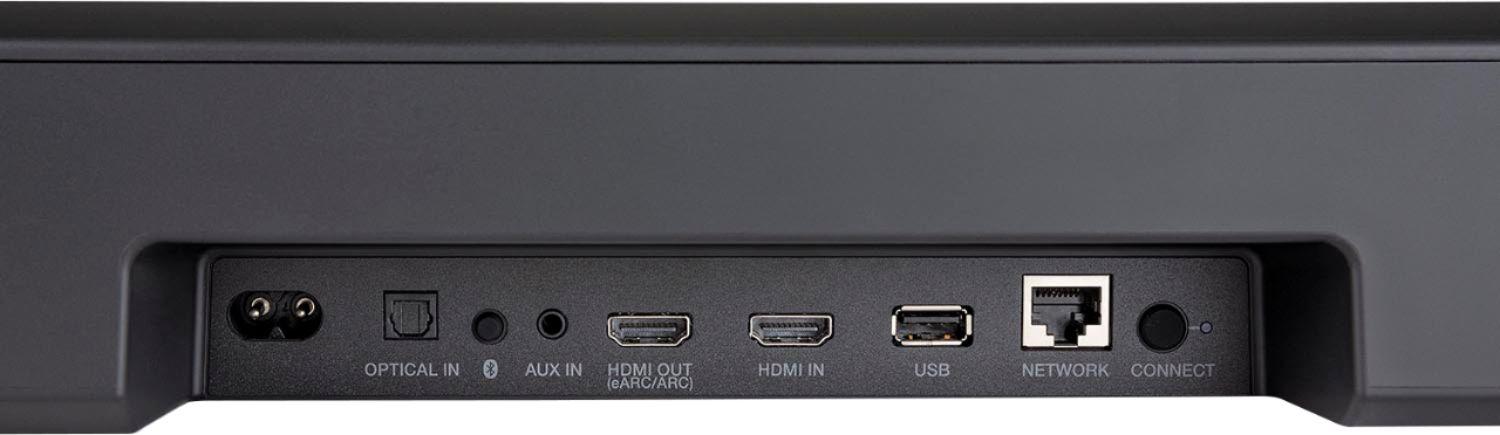
| 2 HDMI 2.1 inputs + 1 eARC output | 1 HDMI eARC input only |
| Music Streaming Quality - Audiophile considerations | |
| Standard resolution, cinematic tuning | High-resolution support (192kHz/24-bit), neutral tuning |
| Multi-Room Audio - Whole-home integration | |
| Limited to Samsung ecosystem | Full HEOS multi-room platform |
| Voice Control - Smart home integration | |
| Built-in Alexa, Google Assistant, Bixby | No built-in assistants |
| Setup Complexity - Time and effort required | |
| Moderate (4 components to position) | Minimal (single soundbar connection) |
| Complete System Cost - Total investment for full functionality | |
| Premium price for complete system | Lower base price but requires subwoofer addition |
The Samsung HW-Q990F is significantly better for movies due to its true 11.1.4-channel surround sound with physical rear speakers and dedicated height channels. This creates authentic overhead effects and surround positioning that the Denon Home Sound Bar 550 cannot match with its virtual processing. For home theater enthusiasts, the Samsung HW-Q990F delivers a more immersive cinematic experience.
The Samsung HW-Q990F comes complete with everything needed - the main soundbar, wireless subwoofer, and two rear speakers. The Denon Home Sound Bar 550 requires an optional subwoofer purchase for adequate bass performance in home theater applications, making the complete system cost much higher than the initial soundbar price.
The Denon Home Sound Bar 550 excels in small rooms and apartments due to its compact 25.6-inch design and virtual processing that works best in confined spaces. The Samsung HW-Q990F can overwhelm smaller rooms with its multiple speakers and performs best in medium to large spaces where you can properly position all four components.
The Denon Home Sound Bar 550 offers superior music reproduction with natural, accurate sound and support for high-resolution audio up to 192kHz/24-bit. The Samsung HW-Q990F is tuned for cinematic impact with boosted bass and treble that can make music sound artificially enhanced, though it still performs well for most listeners.
The Samsung HW-Q990F is far superior for gaming with Game Mode Pro optimization, two HDMI 2.1 inputs supporting 4K/120Hz, and physical rear speakers for precise directional audio. The Denon Home Sound Bar 550 lacks gaming-specific features and relies on virtual processing that's less accurate for competitive gaming positioning.
The Denon Home Sound Bar 550 offers the simplest setup - just connect one soundbar to your TV via HDMI and you're done in minutes. The Samsung HW-Q990F requires positioning four separate components (soundbar, subwoofer, and two rear speakers) around your room, though all connections are wireless except for AC power.
The Denon Home Sound Bar 550 integrates fully with the HEOS multi-room platform, allowing you to group it with other HEOS speakers throughout your home for synchronized music playback. The Samsung HW-Q990F focuses on single-room performance with limited multi-room capabilities within Samsung's ecosystem.
Both soundbars support Dolby Atmos, but implement it differently. The Samsung HW-Q990F uses physical upward-firing drivers in multiple locations for authentic overhead effects, while the Denon Home Sound Bar 550 relies on Dolby Height Virtualization to simulate overhead audio from front-firing drivers.
Value depends on your needs. The Samsung HW-Q990F provides better value for home theater enthusiasts wanting complete surround sound in one purchase. The Denon Home Sound Bar 550 offers better value for music listeners and small spaces, though adding the necessary subwoofer significantly increases the total cost.
The Samsung HW-Q990F includes built-in Amazon Alexa, Google Assistant, and Samsung Bixby for comprehensive voice control. The Denon Home Sound Bar 550 doesn't include built-in voice assistants but can be controlled through external smart home devices.
The Samsung HW-Q990F performs much better in large rooms due to its physical speaker placement that maintains surround effectiveness regardless of room size. The Denon Home Sound Bar 550's virtual processing becomes less convincing in larger spaces where all sound clearly originates from the front wall.
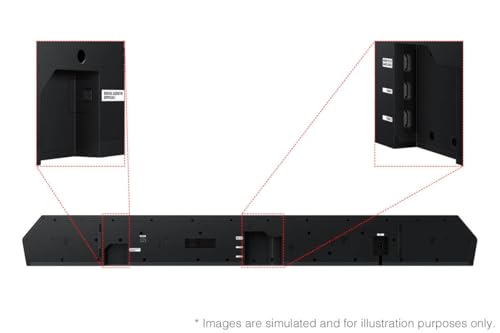
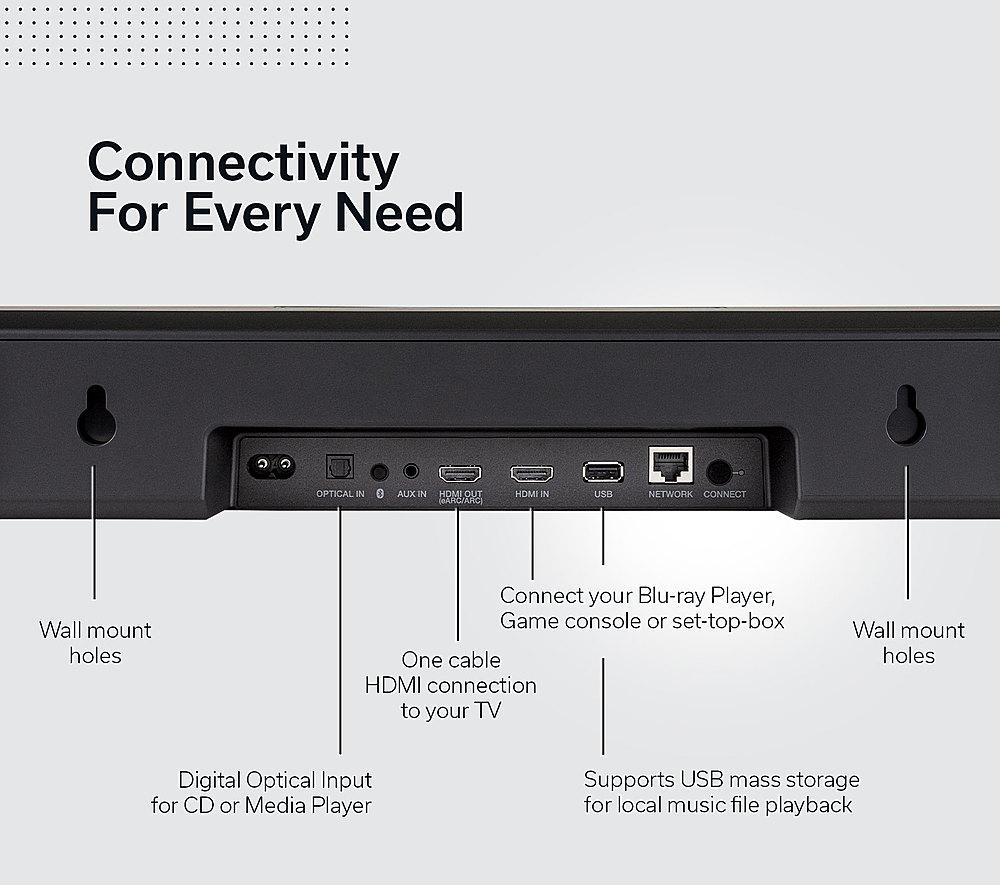
The Samsung HW-Q990F offers more connectivity with two HDMI 2.1 inputs plus eARC output, optical input, and modern wireless standards. The Denon Home Sound Bar 550 provides basic connectivity with one HDMI eARC port, optical input, and 3.5mm analog input, requiring all devices to connect through your TV.
We've done our best to create useful and informative comparisons to help you decide what product to buy. Our research uses advanced automated methods to create this comparison and perfection is not possible - please contact us for corrections or questions. These are the sites we've researched in the creation of this article: rtings.com - crutchfield.com - sound-advice.online - samsung.com - soundandvision.com - samsung.com - whathifi.com - youtube.com - youtube.com - bestbuy.com - avsforum.com - content.syndigo.com - samsung.com - businessinsider.com - dolby.com - youtube.com - abcwarehouse.com - consumerreports.org - soundandvision.com - crutchfield.com - rtings.com - crutchfield.com - gzhls.at - denon.com - walmart.com - youtube.com - whathifi.com - bestbuy.com

Privacy Policy
Terms and Conditions - Affiliate Policy
Home Security
© Copyright 2008-2026.
11816 Inwood Rd #1211, Dallas, TX 75244