


Choosing the right soundbar can transform your living room into a home theater, but with so many options available, it's easy to get overwhelmed by technical specs and marketing claims. Today, we're comparing two very different approaches to surround sound: Samsung's flagship HW-Q990F and LG's budget-friendly S70TR. These soundbars represent opposite ends of the market spectrum, and understanding their differences will help you make the right choice for your space and budget.
Before diving into these specific models, it's worth understanding what makes today's soundbars so compelling. Traditional home theater systems required multiple speakers placed around your room, connected by long speaker wires to a central receiver. Modern soundbars consolidate this experience into sleek packages that sit beneath your TV, using clever speaker placement and digital processing to create immersive surround sound.
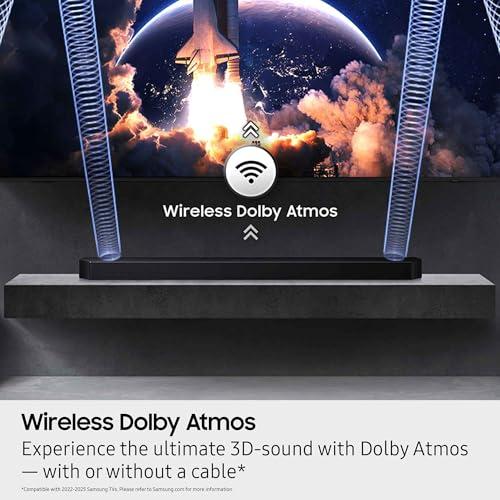
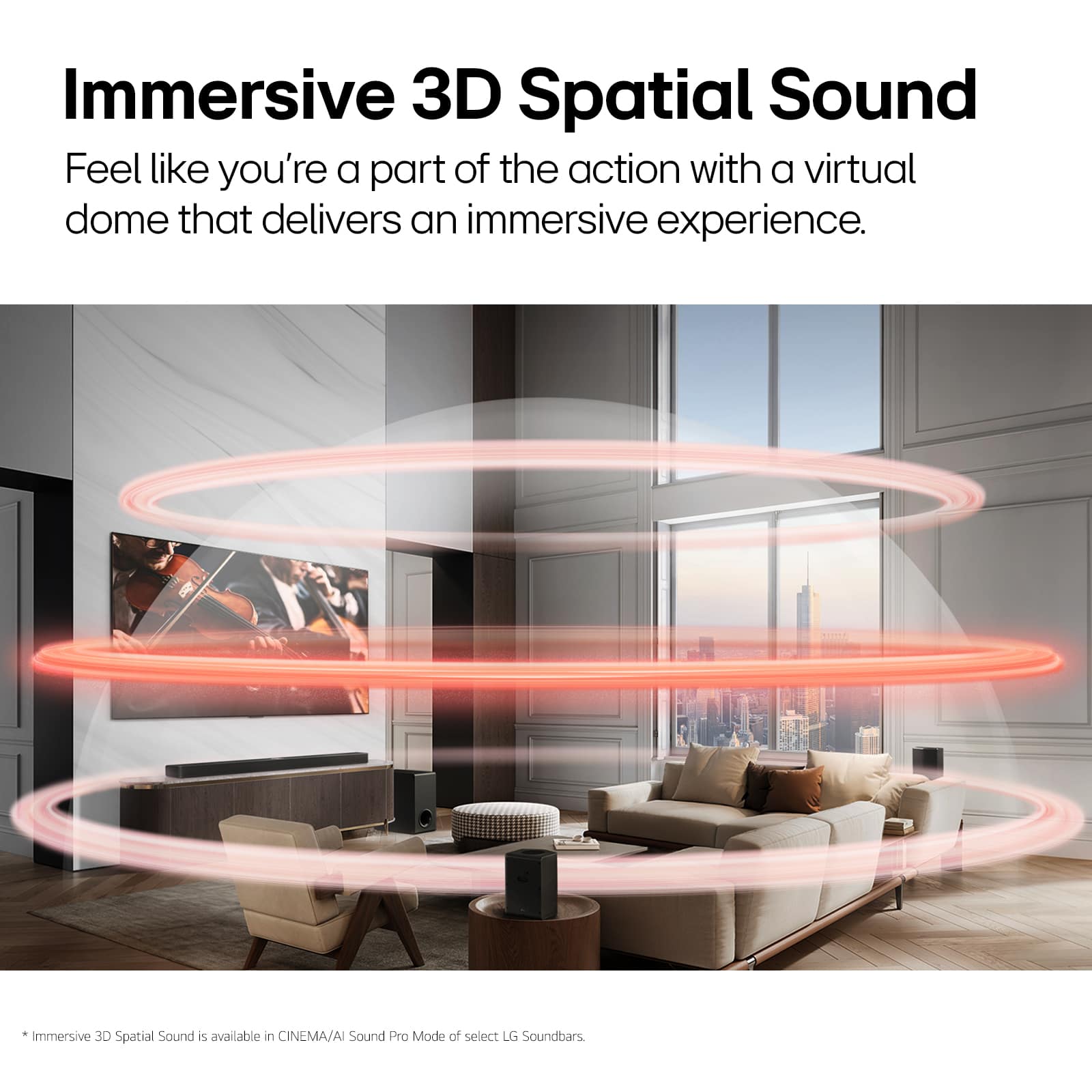
The real game-changer has been Dolby Atmos, a technology that adds overhead sound effects to create a "dome" of audio around you. Instead of just hearing sounds from your left, right, and behind you, Dolby Atmos makes helicopters fly overhead, rain fall from above, and explosions rumble all around you. This is achieved through up-firing speakers that bounce sound off your ceiling, creating the illusion of speakers mounted above your head.
When evaluating soundbars, the most important considerations are channel configuration (how many speakers and where they're placed), connectivity options for your devices, room size compatibility, and of course, how much you're willing to spend. The Samsung HW-Q990F and LG S70TR take dramatically different approaches to each of these factors.
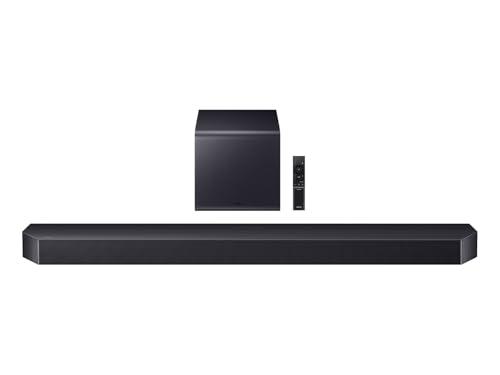
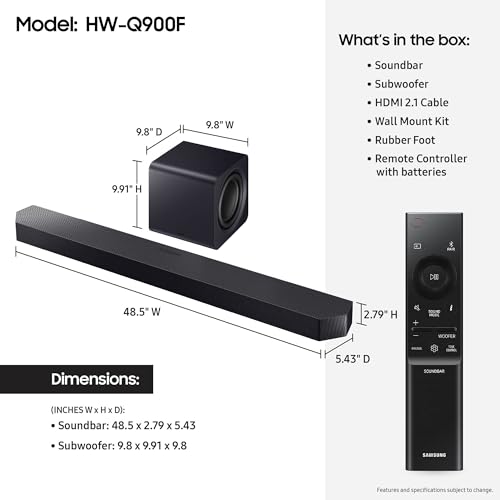
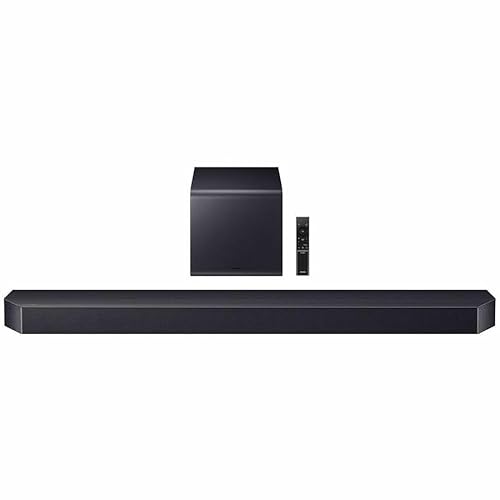
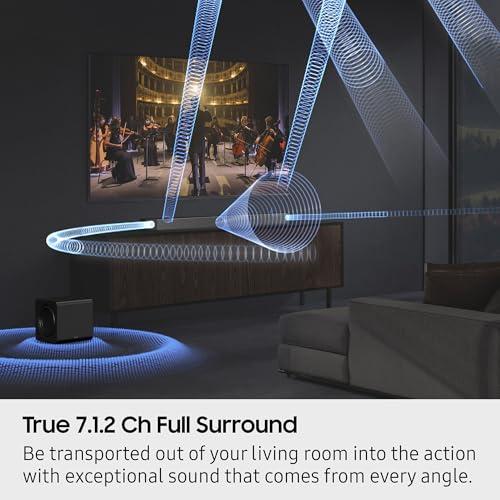
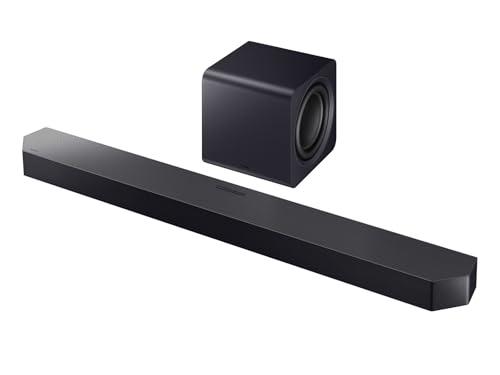
The fundamental difference between these soundbars becomes clear the moment you look at their specifications. The Samsung HW-Q990F, released in 2024, represents Samsung's flagship effort with an 11.1.4 channel configuration. This means 11 main speakers, 1 dedicated subwoofer channel, and 4 height channels specifically for overhead effects. With 22 individual speakers distributed across the main soundbar, a wireless subwoofer, and two wireless rear speakers, it's essentially a full surround sound system disguised as a soundbar setup.
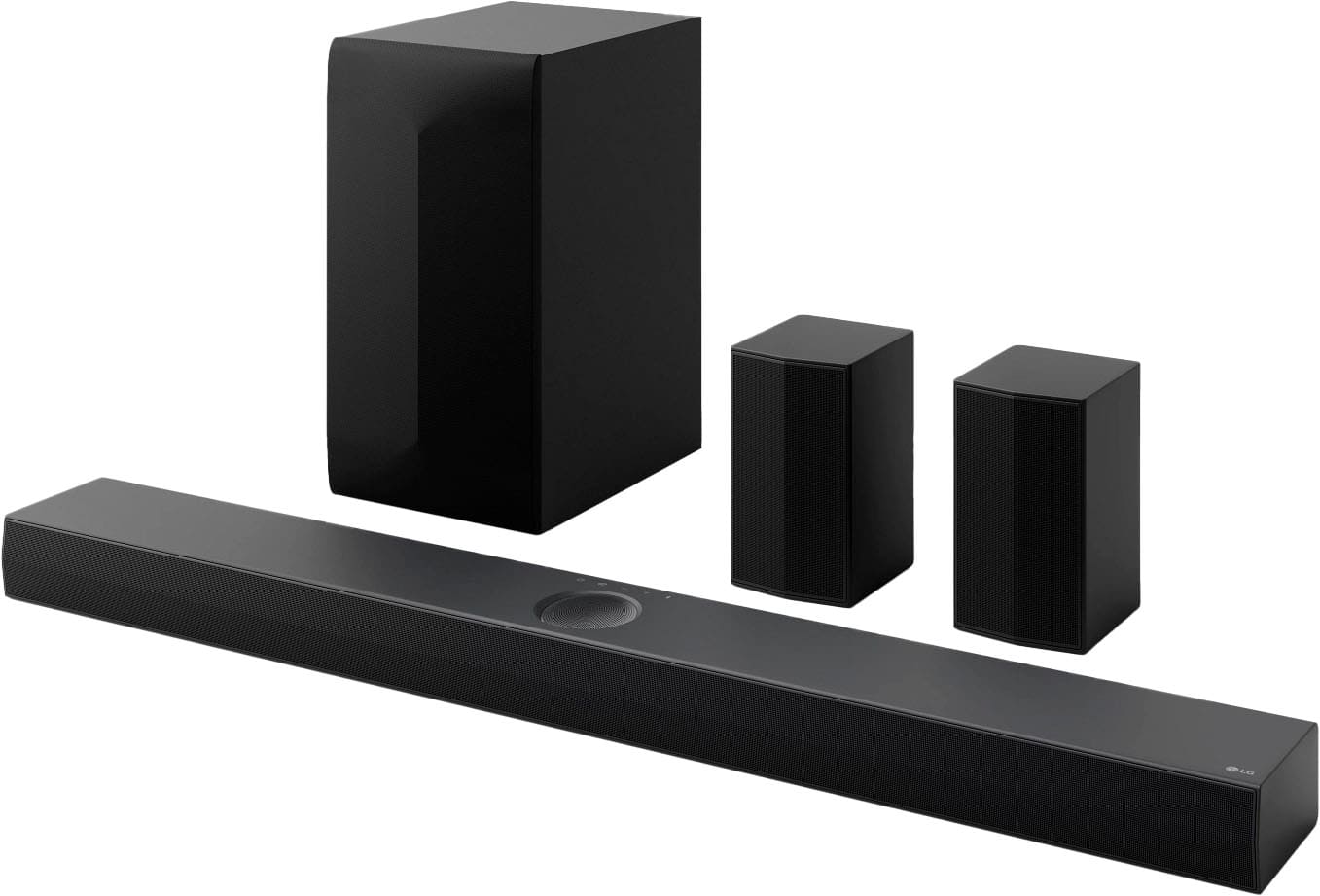
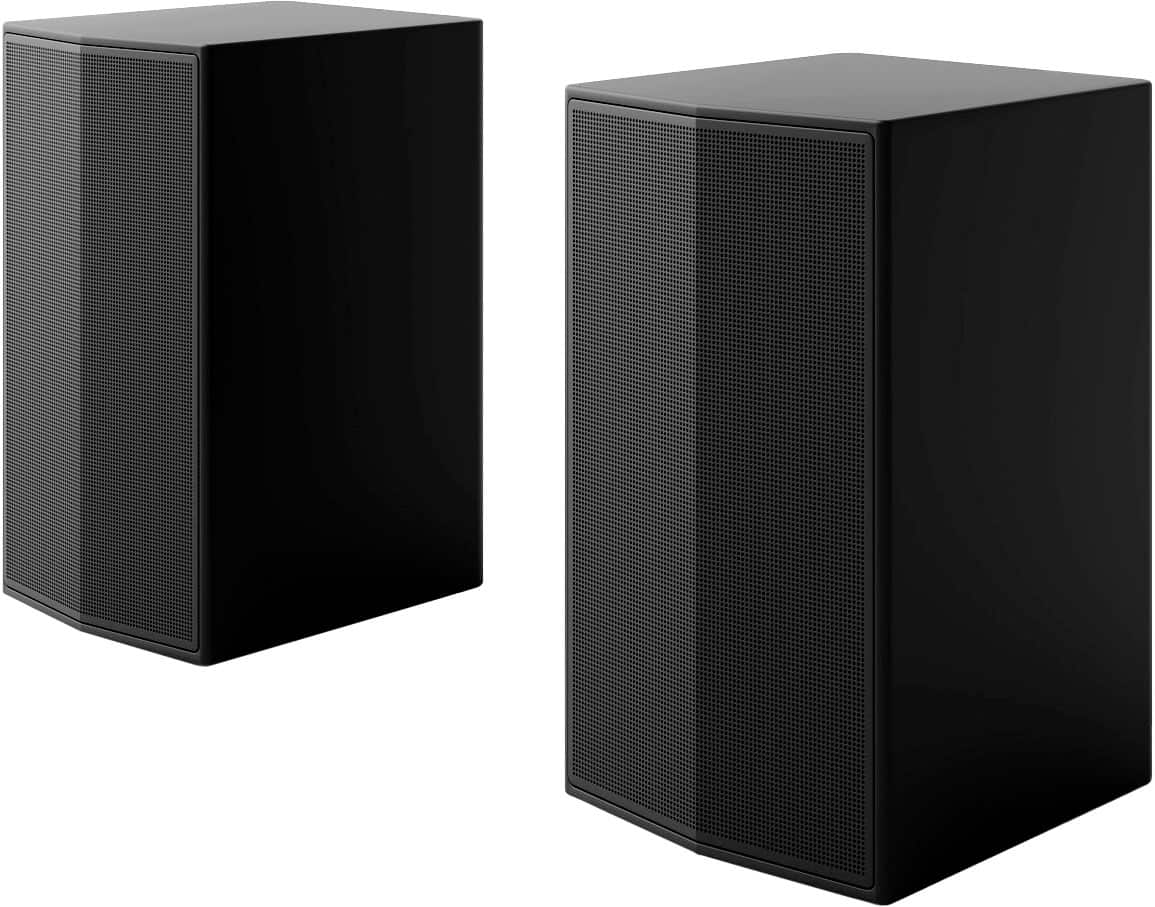
The LG S70TR, also released in 2024, takes a more modest approach with a 5.1.1 channel setup. This includes 5 main channels (front left, center, front right, and two surrounds), 1 subwoofer channel, and 1 height channel for Dolby Atmos effects. While still capable of impressive surround sound, it uses fewer speakers in a three-piece system that's much more affordable.
At the time of writing, the price difference between these systems is substantial—the Samsung costs nearly four times as much as the LG. This raises an important question: is the premium performance worth the significant price jump?
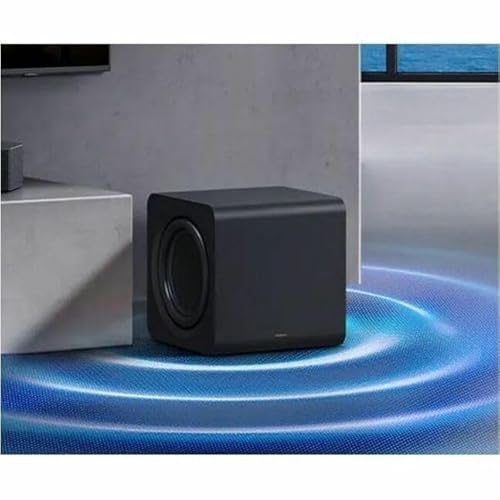
The most noticeable difference between these soundbars becomes apparent when you play your favorite music. The Samsung HW-Q990F delivers what our research consistently shows to be superior audio quality across all content types. Its sound signature is balanced and natural, with excellent separation between instruments and vocals. The redesigned subwoofer, featuring dual 8-inch force-canceling woofers, provides deep bass that remains tight and controlled even at high volumes.
What's particularly impressive about the Samsung is its musicality—a term audiophiles use to describe how naturally and engagingly a system reproduces music. Whether you're listening to acoustic folk, electronic dance music, or jazz, the soundbar maintains clarity and balance. The seven-band graphic equalizer lets you fine-tune the sound to your preferences, while multiple sound modes automatically optimize settings for different content types.
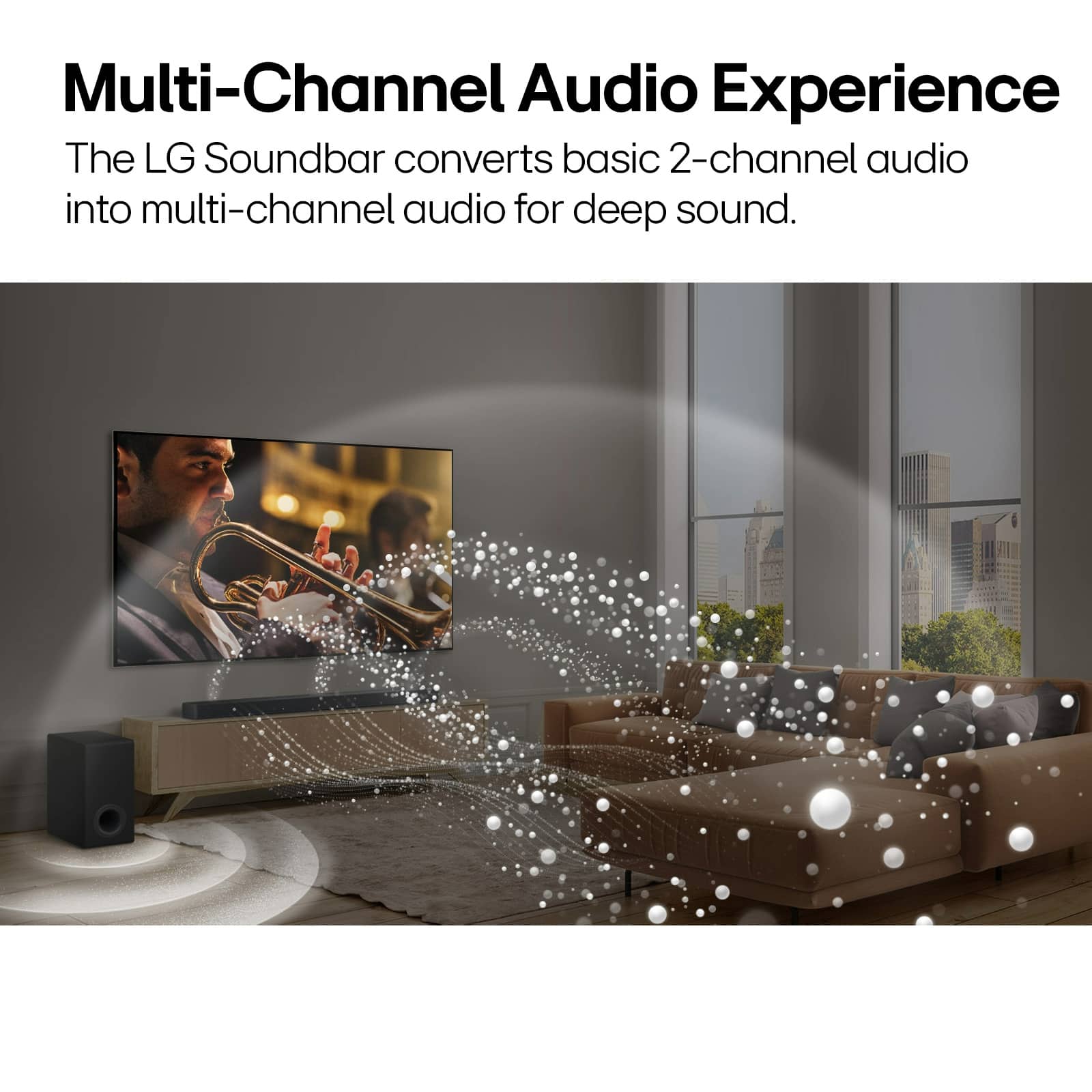
The LG S70TR, while competent, shows its budget origins more clearly with music playback. Its AI Sound Pro mode, which automatically analyzes and adjusts the sound, tends to over-process stereo music, creating an artificial spatial effect that can make vocals sound hollow or echo-like. Even in standard mode, the bass can feel bloated, and the overall presentation lacks the refinement you'll find in premium systems.
However, it's important to note that the LG performs much better with movies and TV shows, where its shortcomings are less noticeable and its strengths—particularly dialogue clarity through Clear Voice Plus processing—shine through.
Here's where the channel count difference really matters. The Samsung HW-Q990F uses four dedicated height channels to create overhead effects, while the LG S70TR relies on a single height channel. In practice, this means the Samsung can place sounds more precisely in three-dimensional space.
When watching a movie like "Top Gun: Maverick," the Samsung creates convincing overhead jet flyovers where you can actually track the aircraft's movement across the ceiling. The four height channels work together to create what experts describe as a "hemisphere of sound"—you're truly surrounded by audio from all directions, including above.
The LG still provides Dolby Atmos effects, but they're less precise and immersive. While you'll notice overhead sounds, they don't have the pinpoint accuracy or seamless movement of the Samsung's implementation. For most casual viewers, this difference might not be deal-breaking, but it's noticeable when comparing the systems side by side.
Nothing ruins a movie night like having to constantly adjust the volume because you can't understand what the characters are saying. Both soundbars address this common frustration, but in different ways.
The Samsung HW-Q990F uses a dedicated center channel with advanced processing to ensure dialogue cuts through even the most complex soundtracks. Its Active Voice Amplifier Pro analyzes background noise and automatically boosts speech frequencies when needed. User reviews consistently praise the Samsung's crystal-clear dialogue reproduction.
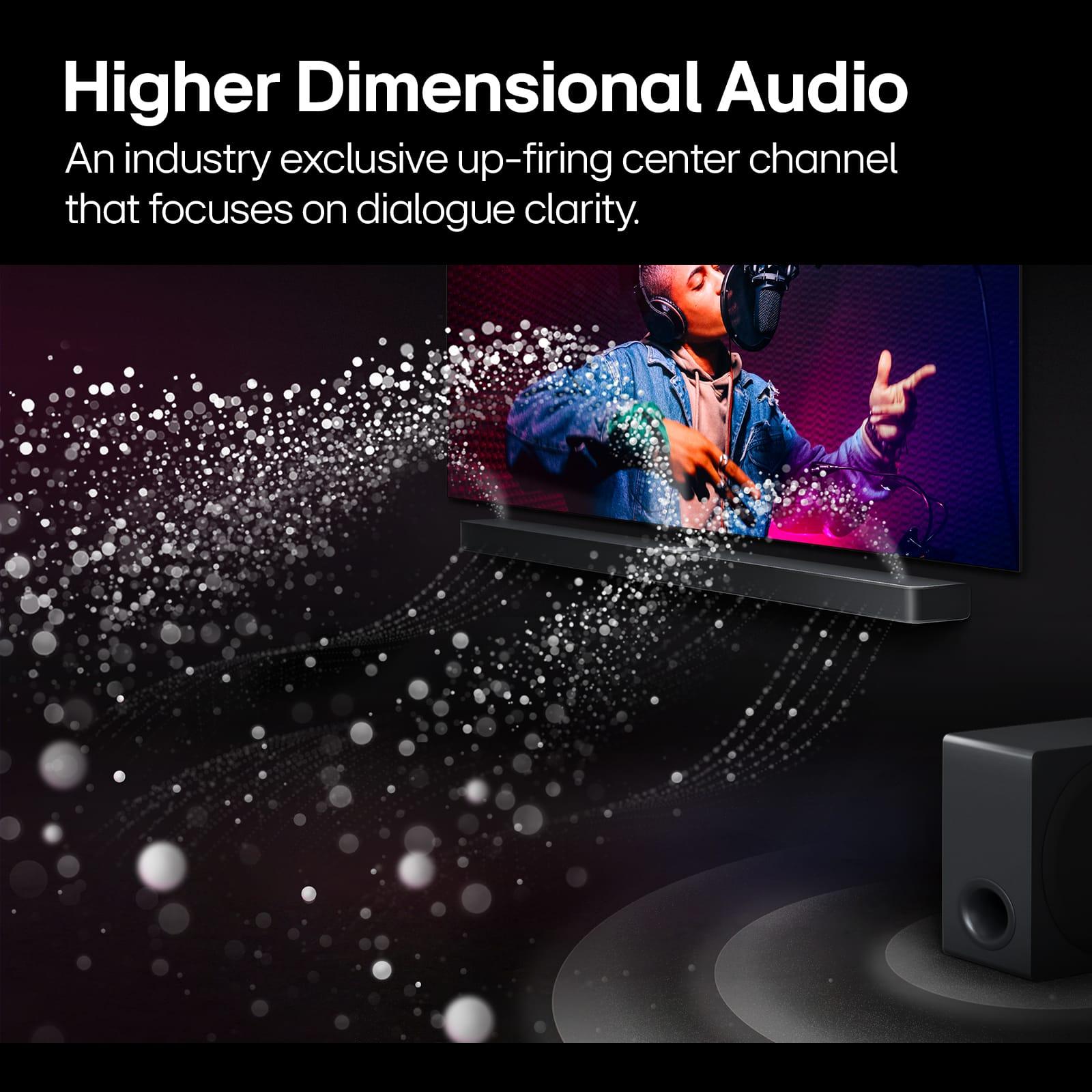
The LG S70TR employs Clear Voice Plus technology, which analyzes audio output to enhance voice clarity through the center speakers. While effective for the price point, it doesn't match the sophistication of Samsung's implementation. However, for most TV watching, it provides adequate dialogue clarity that represents a significant upgrade over built-in TV speakers.
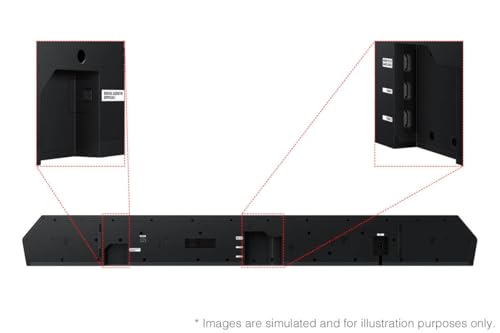
The Samsung HW-Q990F treats connectivity as seriously as audio quality. It includes three HDMI 2.1 ports (two inputs, one output) that support 4K video at 120Hz, making it perfect for the latest gaming consoles like PlayStation 5 and Xbox Series X. The eARC (enhanced Audio Return Channel) connection allows for high-quality audio formats like Dolby TrueHD and DTS-HD Master Audio to pass through from your TV.
Beyond HDMI, the Samsung offers extensive wireless connectivity. Apple AirPlay 2 lets iPhone and Mac users stream high-quality audio directly to the soundbar, while Google Cast provides similar functionality for Android devices. The system is even Roon Ready, meaning it integrates with the high-end Roon music management software that serious audiophiles use.
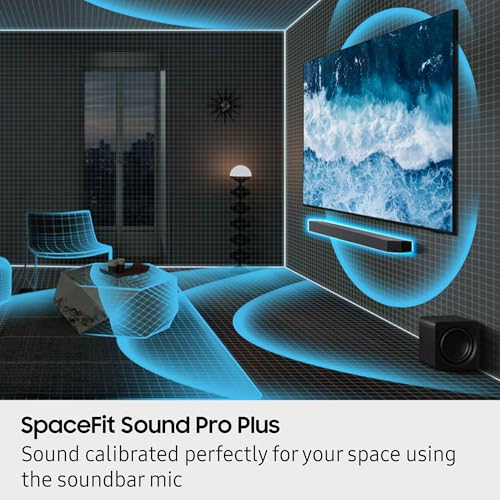
Smart home integration is another strength, with built-in Amazon Alexa and compatibility with Samsung's SmartThings ecosystem. The auto room calibration feature, called SpaceFit Sound Pro Plus, uses built-in microphones to analyze your room's acoustics and automatically adjust the sound output for optimal performance.
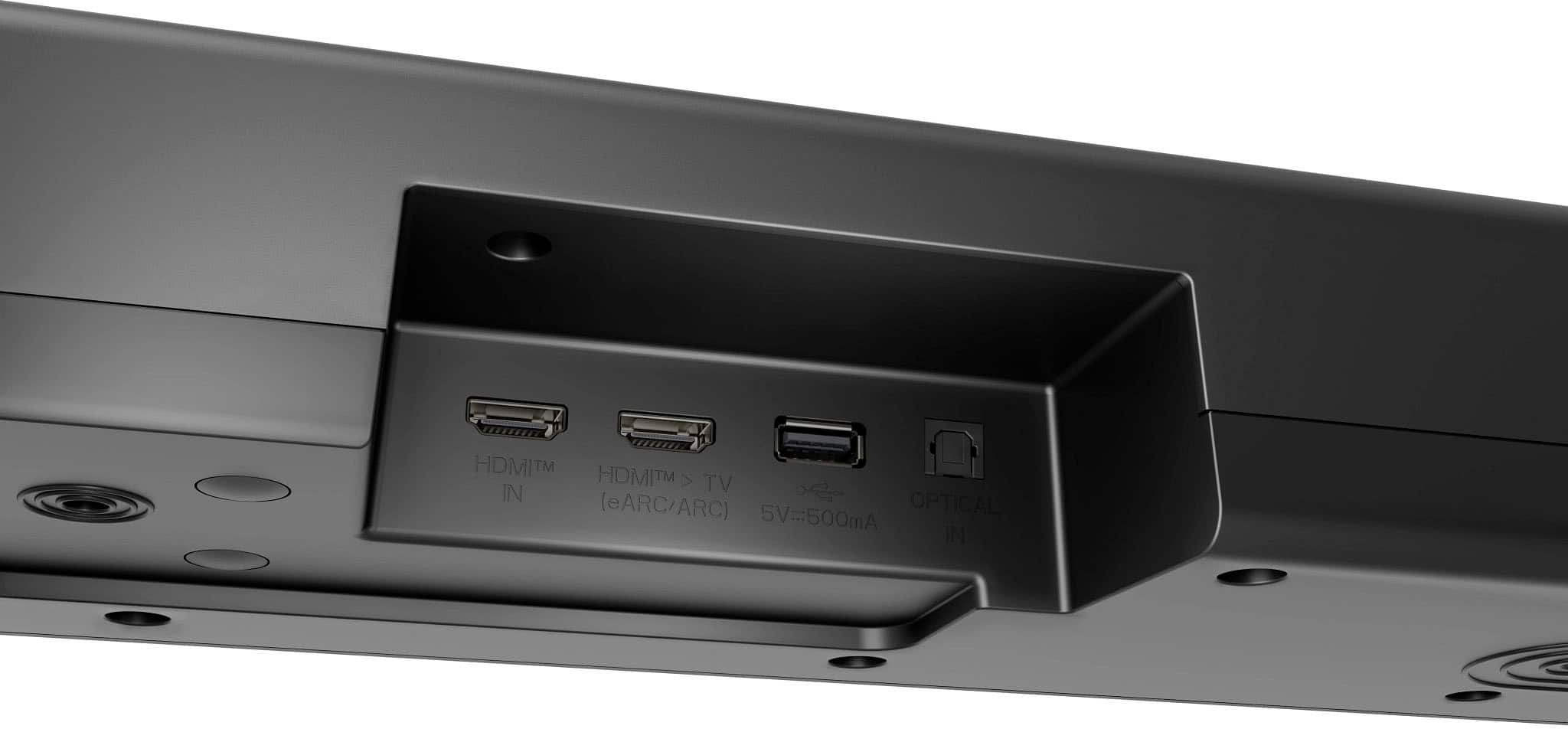
The LG S70TR takes a more streamlined approach to connectivity. It includes HDMI eARC and supports 4K passthrough with the latest HDCP 2.3 copy protection standard. For gamers, it offers Variable Refresh Rate (VRR) and Auto Low Latency Mode (ALLM) up to 120Hz, ensuring smooth, lag-free gaming experiences.
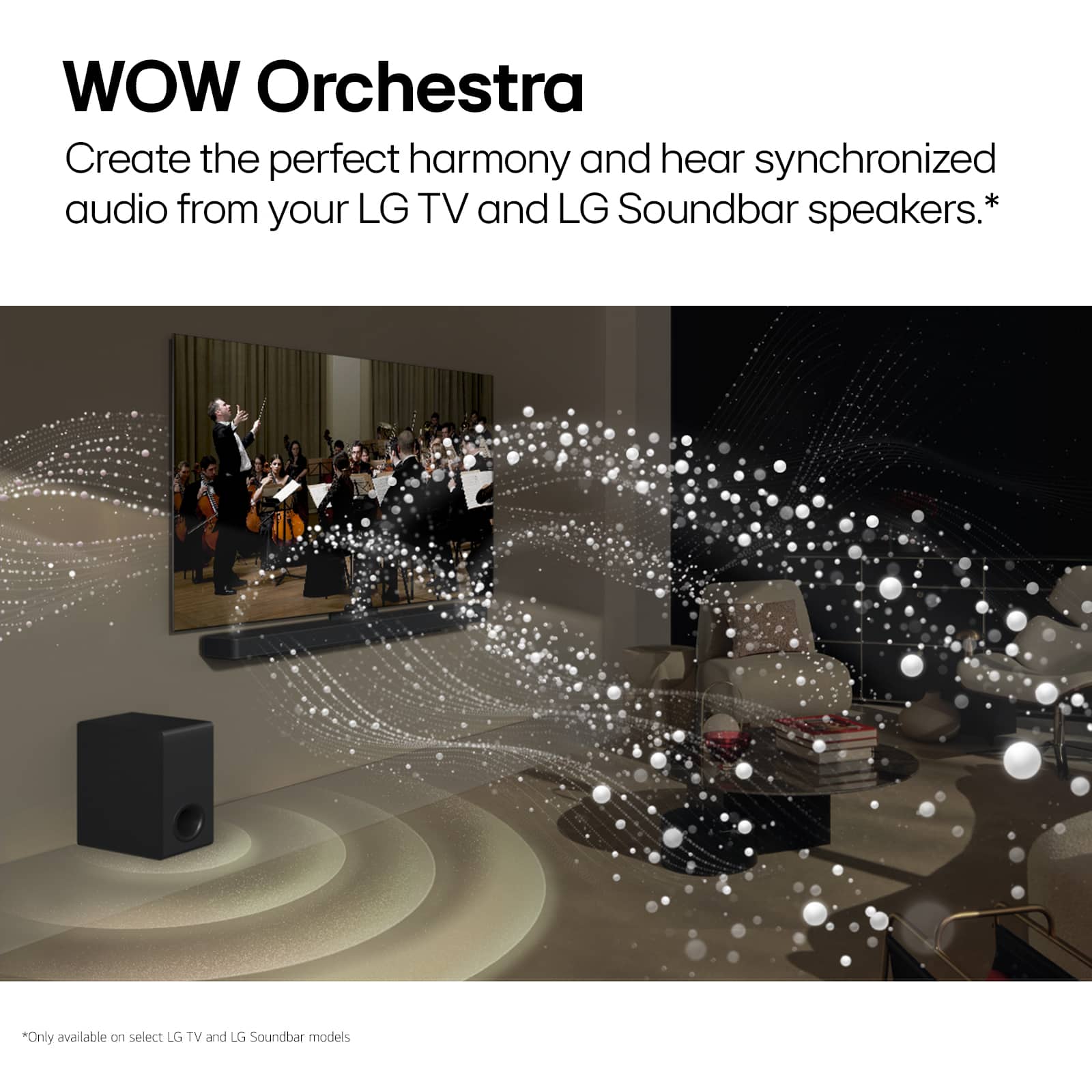
Where the LG truly differentiates itself is with WOW Orchestra, a feature that works exclusively with LG TVs. Instead of disabling your TV's built-in speakers when you connect the soundbar, WOW Orchestra uses both the TV's speakers and the soundbar simultaneously. This creates a wider, more enveloping soundstage that's particularly effective for movies and sports.
The system also supports single-remote operation with compatible LG TVs, meaning you can control both the TV and soundbar with one remote. While this ecosystem approach limits flexibility compared to the Samsung's universal compatibility, it provides seamless integration for LG TV owners.
The Samsung HW-Q990F is designed with larger rooms in mind. Its 756-watt total power output and extensive speaker array work best in spaces of 15×20 feet or larger, where all those speakers can create proper immersion without overwhelming the listener. The four-piece system requires thoughtful placement—you'll need to position the rear speakers behind your seating area and find a good spot for the subwoofer that doesn't vibrate your neighbors' walls.
Setup complexity is higher with the Samsung, but the payoff is worth it in appropriately sized rooms. The wireless connectivity between components eliminates the need for long speaker cables, though you'll still need power outlets for each piece.
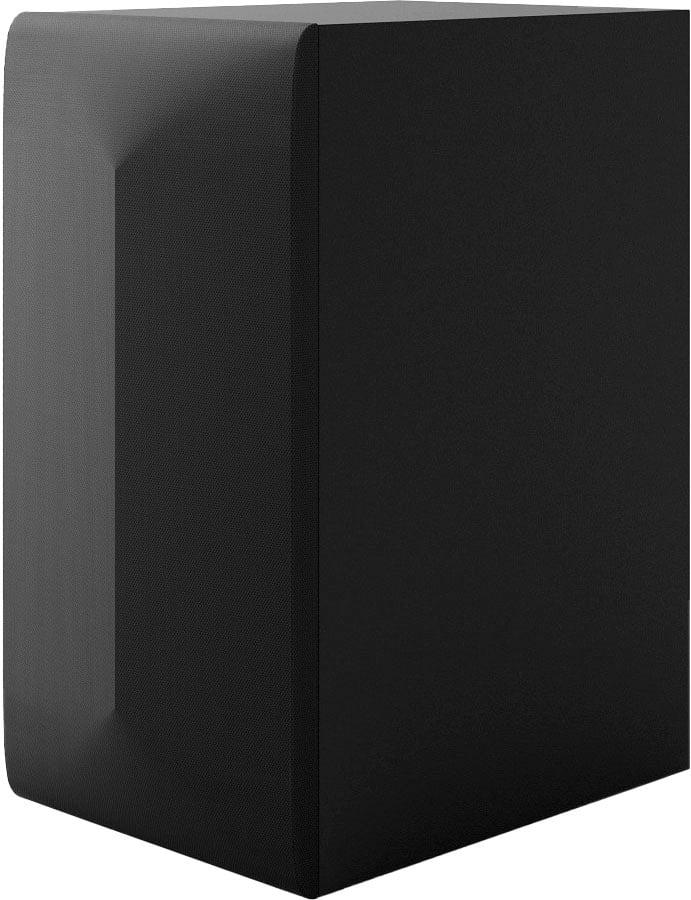
The LG S70TR is optimized for typical living rooms and apartments. Its more modest power output and controlled bass response make it less likely to disturb neighbors while still providing immersive surround sound. The three-piece system (soundbar, subwoofer, and rear speakers) is easier to integrate into most living spaces.
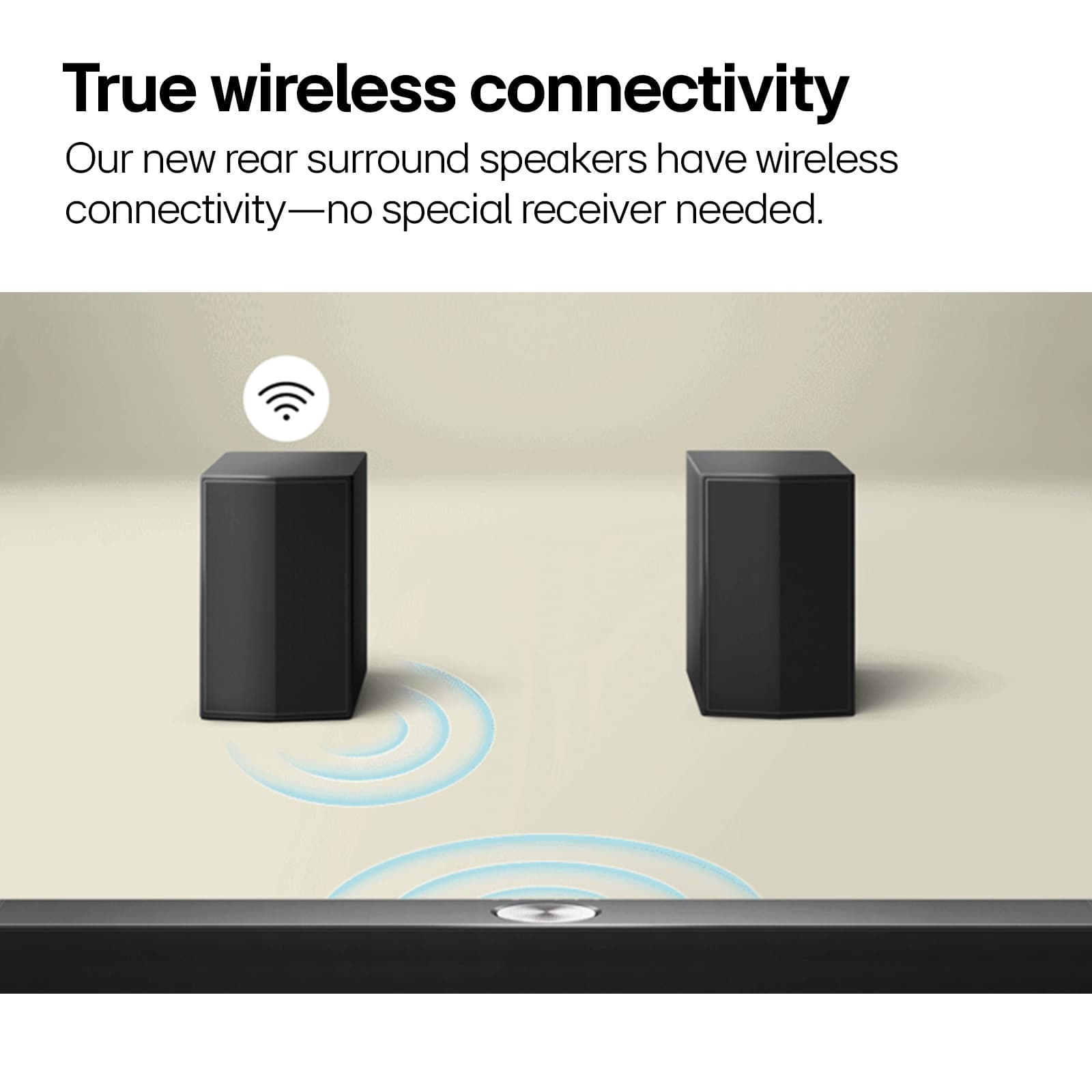
Interestingly, despite being marketed as having "wireless" rear speakers, the LG rear speakers still require power connections—they're wireless for audio signal but not for power. This is a common limitation in budget systems but worth noting for setup planning.
Both soundbars cater to modern gaming, but with different strengths. The Samsung HW-Q990F offers superior audio quality for story-driven games where music and sound effects matter most. Its multiple HDMI 2.1 inputs let you connect multiple gaming consoles while maintaining 4K/120Hz support.
The LG S70TR focuses on competitive gaming features. Its VRR and ALLM support ensure minimal input lag, while the Game mode optimizes audio for directional cues in first-person shooters. The lower price point makes it attractive for younger gamers or those building their first serious gaming setup.
At the time of writing, the price difference between these soundbars is dramatic—the Samsung costs nearly four times as much as the LG. This raises the question of diminishing returns: does the Samsung provide four times the performance?
The answer depends on your priorities and listening habits. The LG S70TR delivers approximately 80% of the Samsung's performance at 25% of the price, making it exceptional value for budget-conscious buyers. It provides genuine surround sound with Dolby Atmos support, wireless rear speakers, and solid build quality—features that were premium luxuries just a few years ago.
The Samsung HW-Q990F represents the current pinnacle of soundbar technology, with audio quality that rivals traditional multi-component surround sound systems costing significantly more. For serious home theater enthusiasts who want the best possible experience, the premium is justified.
Both soundbars benefit from recent technological advances. The 2024 release year means they support the latest HDMI specifications, ensuring compatibility with current and future gaming consoles and streaming devices. However, the Samsung is better positioned for future developments in audio technology, with more processing power and upgrade potential through firmware updates.
The trend toward larger, more immersive channel configurations favors the Samsung's approach. As content creators increasingly use Dolby Atmos and DTS:X object-based audio formats, having more speakers and channels provides better compatibility with these advanced soundtracks.
After extensive research into user reviews, professional evaluations, and technical specifications, clear recommendations emerge for different types of users.
Choose the Samsung HW-Q990F if you:
The Samsung represents the best current soundbar technology can offer. Its superior audio quality, extensive features, and future-proof connectivity make it ideal for serious home theater enthusiasts who want maximum immersion and aren't constrained by budget.
Choose the LG S70TR if you:
The LG provides remarkable bang for your buck, delivering genuine surround sound with Dolby Atmos at an accessible price point. While it makes compromises in audio refinement and features, it represents the sweet spot for most buyers seeking significant upgrade over TV speakers without breaking the bank.
Both soundbars serve their intended markets well, but they're targeting fundamentally different users. The Samsung HW-Q990F delivers flagship performance that justifies its premium pricing for those who want the best possible home theater experience. The LG S70TR provides exceptional value for users seeking quality surround sound at an affordable price.
Your choice ultimately depends on room size, budget, TV brand, and how seriously you take home theater audio. Either way, you'll be getting a significant upgrade over built-in TV speakers and a taste of what modern surround sound can bring to your favorite movies and shows.
| Samsung Q-Series HW-Q990F Soundbar | LG S70TR 5.1.1 Channel Soundbar |
|---|---|
| Channel Configuration - Determines immersion level and spatial audio precision | |
| 11.1.4 channels with 22 speakers across 4 components | 5.1.1 channels with fewer speakers in 3-piece system |
| Dolby Atmos Implementation - Critical for overhead sound effects | |
| 4 dedicated height channels for precise 3D positioning | 1 height channel for basic overhead effects |
| Total System Power - Affects room filling capability and dynamic range | |
| 756W RMS across all components | 420W total system power |
| Subwoofer Design - Determines bass depth and impact | |
| Dual 8" force-canceling woofers, wireless | Single 7" front-firing driver with rear port, wireless |
| HDMI Connectivity - Essential for 4K gaming and eARC audio | |
| 3 HDMI 2.1 ports (2 in, 1 eARC out), 4K/120Hz support | 1 HDMI eARC port, 4K passthrough with HDCP 2.3 |
| Wireless Streaming - Determines music playback flexibility | |
| Apple AirPlay 2, Google Cast, Spotify Connect, TIDAL Connect, Roon Ready | Basic Bluetooth connectivity |
| Smart Features - Voice control and automation capabilities | |
| Built-in Alexa, SmartThings integration, auto room calibration | Basic app control, no voice assistants |
| TV Integration - Special features for specific TV brands | |
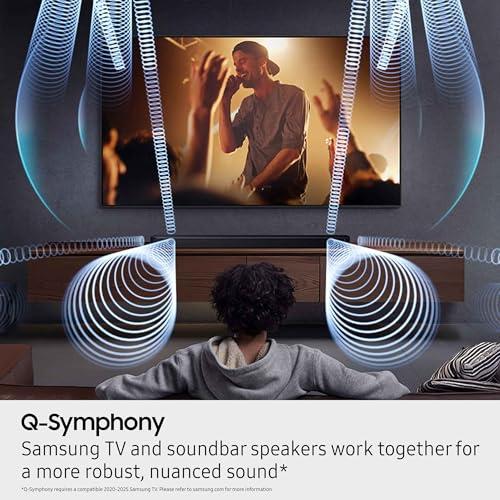
| Universal compatibility with Q-Symphony for Samsung TVs | WOW Orchestra exclusively with LG TVs for combined speaker output |
| Rear Speakers - Affects surround sound immersion | |
| True wireless rear speakers with multi-directional drivers | Wireless audio signal but require power connections |
| Room Size Optimization - Determines best performance space | |
| Large rooms 15×20+ feet with powerful output | Medium rooms 12×15 feet, apartment-friendly bass levels |
| Music Playback Quality - Important for non-movie content | |
| Balanced, audiophile-grade sound with 7-band EQ | Adequate for movies, struggles with music upmixing |
| Gaming Features - Latency and refresh rate support | |
| Multiple HDMI 2.1 inputs, superior audio quality | VRR and ALLM up to 120Hz, optimized for competitive gaming |
| Setup Complexity - Installation and configuration difficulty | |
| 4-component system requires strategic placement | 3-piece system with simpler room integration |
The biggest difference is channel configuration and performance level. The Samsung HW-Q990F is a flagship 11.1.4 channel system with 22 speakers across four components, while the LG S70TR is a budget-friendly 5.1.1 channel system with fewer speakers in three pieces. The Samsung delivers premium audio quality and extensive features, while the LG focuses on value and essential surround sound capabilities.
The Samsung HW-Q990F is designed for large rooms 15×20 feet or bigger, with 756W of power to fill substantial spaces. The LG S70TR works best in medium-sized rooms around 12×15 feet and is optimized for apartments where controlled bass levels won't disturb neighbors.
Yes, both the Samsung HW-Q990F and LG S70TR support Dolby Atmos, but with different capabilities. The Samsung uses four dedicated height channels for precise overhead effects, while the LG has one height channel that provides basic Dolby Atmos functionality.
The LG S70TR offers exceptional value, delivering about 80% of premium performance at roughly 25% of the cost. The Samsung HW-Q990F provides flagship performance that justifies its premium pricing for serious home theater enthusiasts who want the absolute best audio quality.
The Samsung HW-Q990F has completely wireless rear speakers that only need power connections. The LG S70TR rear speakers are wireless for audio signal transmission but still require power cables, so they're not completely wire-free.
The Samsung HW-Q990F excels at music playback with balanced, audiophile-grade sound quality and a 7-band equalizer for customization. The LG S70TR struggles with music, particularly when its AI Sound Pro mode over-processes stereo content, though it performs adequately for movies and TV shows.
The Samsung HW-Q990F offers universal compatibility with any TV brand while providing special Q-Symphony features with Samsung TVs. The LG S70TR works with any TV but unlocks its unique WOW Orchestra feature only with LG TVs, which combines the TV's speakers with the soundbar for enhanced audio.
Both soundbars support modern gaming features. The Samsung HW-Q990F offers multiple HDMI 2.1 inputs and superior audio quality for immersive single-player games. The LG S70TR focuses on competitive gaming with VRR and ALLM support up to 120Hz for minimal input lag.
The Samsung HW-Q990F includes 22 individual speakers distributed across the main soundbar, wireless subwoofer, and two rear speakers. The LG S70TR has fewer speakers total, with the main bar, a 7-inch subwoofer, and wireless rear speakers in a simpler three-piece configuration.
The Samsung HW-Q990F offers extensive connectivity including three HDMI 2.1 ports, Apple AirPlay 2, Google Cast, Spotify Connect, and built-in Alexa. The LG S70TR provides essential connectivity with HDMI eARC, 4K passthrough, and basic Bluetooth streaming capabilities.
The LG S70TR is easier to set up with its three-piece system and simpler room integration requirements. The Samsung HW-Q990F requires more strategic placement planning for its four components but includes auto room calibration to optimize performance once positioned correctly.
Choose the Samsung HW-Q990F if you have a large room, prioritize premium audio quality, and want extensive features for a flagship home theater experience. Select the LG S70TR if you want genuine surround sound on a budget, have a medium-sized room, or own an LG TV for seamless integration with WOW Orchestra.
We've done our best to create useful and informative comparisons to help you decide what product to buy. Our research uses advanced automated methods to create this comparison and perfection is not possible - please contact us for corrections or questions. These are the sites we've researched in the creation of this article: rtings.com - crutchfield.com - sound-advice.online - samsung.com - soundandvision.com - samsung.com - whathifi.com - youtube.com - youtube.com - bestbuy.com - avsforum.com - content.syndigo.com - samsung.com - businessinsider.com - dolby.com - youtube.com - abcwarehouse.com - bestbuy.com - mynavyexchange.com - rixaudiovideoappliance.com - rtings.com - youtube.com - bestbuy.com - howards.siteontimedev.com - bestbuy.com - appliancestogousa.us

Privacy Policy
Terms and Conditions - Affiliate Policy
Home Security
© Copyright 2008-2026.
11816 Inwood Rd #1211, Dallas, TX 75244