

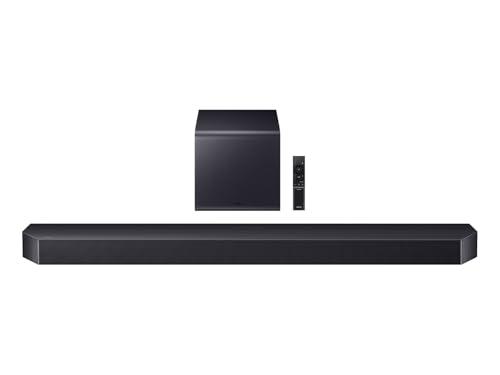
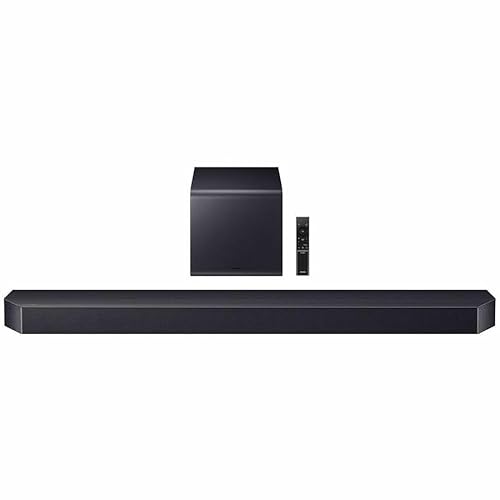


If you've been suffering through your TV's built-in speakers, you're not alone. Most flat-screen TVs sound terrible because their ultra-thin designs leave no room for proper speakers. That's where soundbars come in—they're designed to dramatically improve your TV's audio without the complexity of a full surround sound system with speakers scattered around your room.
The soundbar market has exploded over the past decade, ranging from basic stereo models that cost less than a nice dinner to premium systems that rival dedicated home theaters. Today we're comparing two soundbars from opposite ends of this spectrum: Samsung's flagship HW-Q990F and Amazon's budget-friendly Fire TV Soundbar Plus.
Before diving into these specific models, it's worth understanding what separates a great soundbar from a mediocre one. The most important factor is the channel configuration—essentially how many separate audio channels the soundbar can produce.
A basic stereo soundbar has two channels (left and right), while a 3.1 system adds a dedicated center channel for dialogue and a subwoofer channel for bass (that's what the ".1" represents). Premium systems like 5.1 add rear surround channels, while the latest Dolby Atmos soundbars feature additional height channels—those numbers after the second decimal point, like 5.1.4, represent overhead speakers that bounce sound off your ceiling.
The other crucial consideration is whether the soundbar uses physical speakers or virtual processing. Physical speakers actually placed around your room will always sound more convincing than software that tries to trick your ears into thinking sounds are coming from places they aren't.
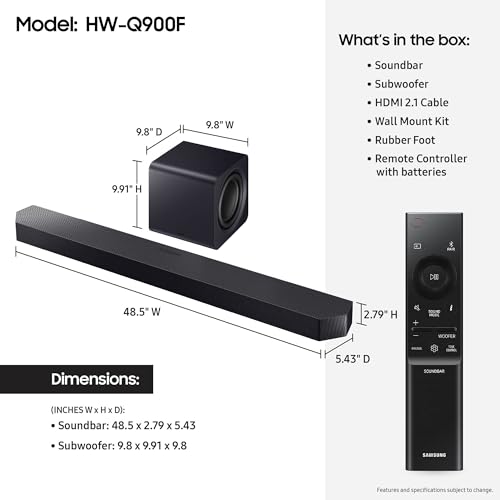
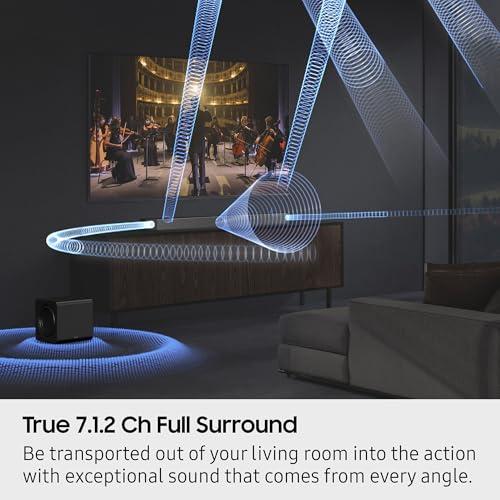
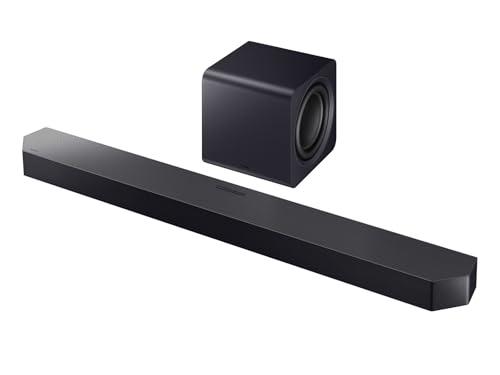
The Samsung HW-Q990F, released in 2025, represents the current pinnacle of soundbar technology. It's an 11.1.4-channel system—meaning 11 main channels, one subwoofer channel, and four height channels—with an impressive 23 individual speakers spread across the main bar, wireless subwoofer, and rear satellites.
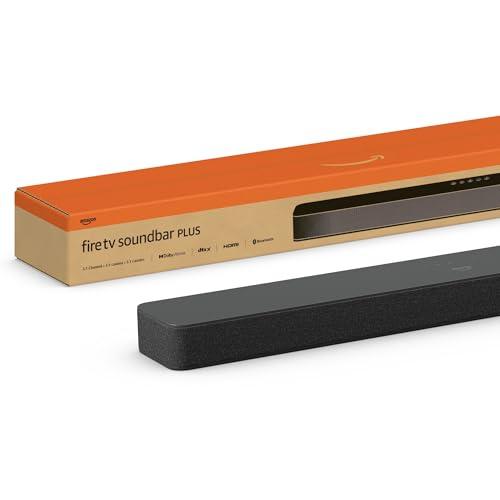
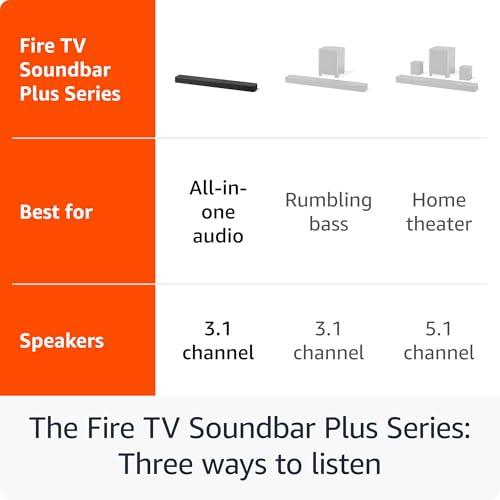
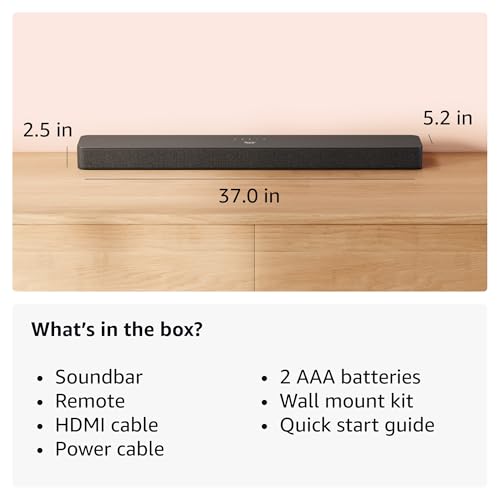
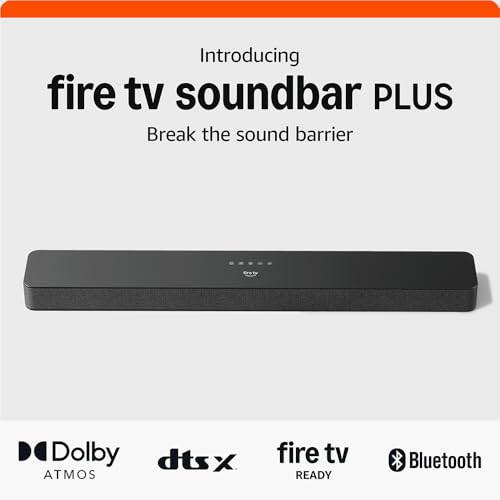
On the other side, Amazon's Fire TV Soundbar Plus takes a much simpler approach. This 3.1-channel system focuses on delivering the essentials: clearer dialogue, better bass than your TV, and basic surround sound processing, all at a fraction of the cost.
At the time of writing, the Samsung costs roughly five times more than the Amazon, which immediately tells you these products serve very different audiences and expectations.
The most dramatic difference between these soundbars lies in their approach to surround sound. The Samsung HW-Q990F creates what reviewers consistently describe as a "dome of sound" that genuinely envelops listeners. This happens because Samsung uses actual physical speakers: the main bar contains 15 speakers firing in multiple directions (forward, sideways, and upward), while the wireless rear speakers each contain three drivers pointing in different directions.
This physical approach means when a helicopter flies overhead in a movie, you hear it moving across your ceiling because sound is actually bouncing off that surface. When someone walks around you in a scene, the effect transitions seamlessly from the front speakers to the side-firing drivers to the rear satellites.
The Amazon Fire TV Soundbar Plus, by contrast, uses virtual surround processing. All the speakers are in the front bar, and software algorithms attempt to create the illusion of surround sound through clever audio processing and psychoacoustics—basically tricks that fool your brain into thinking sounds are coming from places they aren't.
This virtual approach has improved dramatically over the years, and the Amazon does create a noticeably wider soundstage than your TV speakers. However, our research into user and expert reviews makes it clear that virtual surround simply can't match the immersion of physical speakers placed around your room.
Interestingly, both soundbars excel at dialogue clarity—the most important upgrade most people notice when switching from TV speakers. Both feature dedicated center channels, which is crucial because most dialogue in movies and shows comes through the center channel in the audio mix.
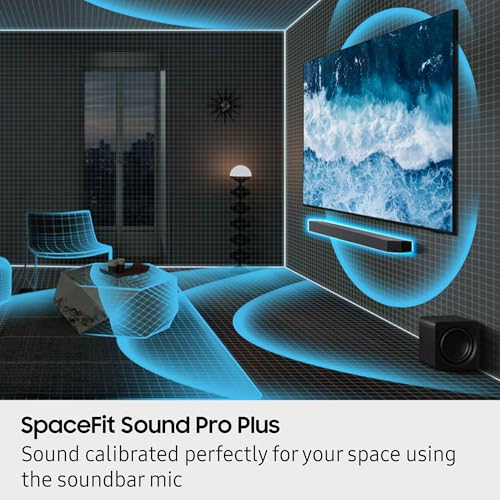
The Samsung HW-Q990F takes dialogue enhancement further with features like Active Voice Amplifier Pro, which uses AI to analyze the audio mix and automatically boost dialogue frequencies when it detects background noise or music that might mask speech. The system also includes SpaceFit Sound Pro Plus—a room calibration feature that uses built-in microphones to measure your room's acoustics and adjust the sound accordingly.
The Amazon Fire TV Soundbar Plus keeps dialogue enhancement simpler but effective, with adjustable dialogue levels and a dedicated center channel that keeps voices clear and prominent. While it lacks the sophisticated AI processing of the Samsung, our research suggests most users find its dialogue clarity perfectly adequate for daily TV watching.
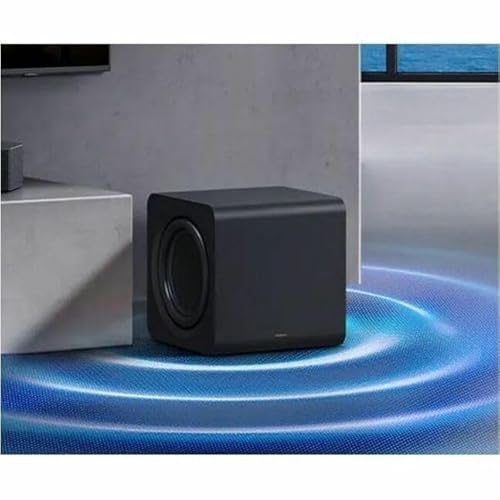
Bass performance reveals another significant difference in philosophy between these soundbars. The Samsung HW-Q990F features a redesigned subwoofer with dual 8-inch drivers in a sealed enclosure. This design change from previous models reduces the rattling and booming that can plague powerful subwoofers, while AI-powered Dynamic Bass Control continuously adjusts to prevent distortion.
The result, according to professional reviews, is bass that's both powerful and controlled. The sealed design means slightly less raw output compared to ported subwoofers, but the trade-off is cleaner, more accurate bass reproduction that doesn't overwhelm dialogue or other frequencies.
The Amazon Fire TV Soundbar Plus includes a built-in subwoofer within the main bar, which is impressive for a budget soundbar but inherently limited by size constraints. Reviews describe the bass as adequate for its price point, though it lacks the depth and nuance of dedicated subwoofers. Amazon does offer an optional wireless subwoofer that can expand the system to fuller, more impactful bass, though this obviously increases the total cost.
One crucial factor often overlooked is how these soundbars perform in different room sizes. The Samsung HW-Q990F, with its 756-watt total power output and physical rear speakers, excels in larger spaces. The rear satellites ensure that surround effects reach listeners even in wide or open-concept rooms where sound from the front bar might dissipate.
The Amazon Fire TV Soundbar Plus, designed primarily as a 3.1 system, works best in smaller to medium-sized rooms. Its power output and single-bar design mean it can struggle to fill larger spaces with convincing surround sound, though it's perfectly adequate for typical living room setups.
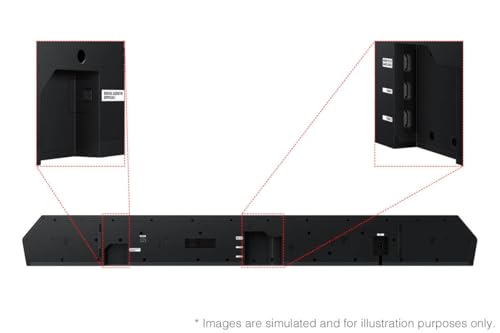
The connectivity story tells us a lot about each product's target audience. The Samsung HW-Q990F functions as a complete entertainment hub with built-in Alexa, Google Cast support, Apple AirPlay 2, and direct streaming from services like Spotify and Tidal. It includes three HDMI 2.1 ports, allowing it to serve as a switching hub between your TV and devices like gaming consoles, with support for advanced features like 4K video at 120Hz refresh rates.
This extensive connectivity makes the Samsung particularly appealing to enthusiasts who want their soundbar to serve multiple roles beyond just improving TV audio. The Wi-Fi connectivity means you can stream music directly without needing another device, while the multiple HDMI inputs help reduce cable clutter.
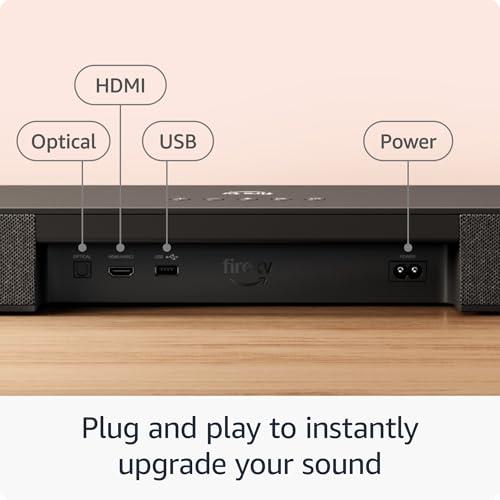
The Amazon Fire TV Soundbar Plus takes a much more focused approach. It's designed primarily to improve TV audio, with basic Bluetooth connectivity for music streaming from your phone and HDMI eARC for high-quality audio from your TV. The "Fire TV" branding is somewhat misleading—this soundbar doesn't include built-in Fire TV streaming capabilities, though it does integrate well with Fire TV devices for unified remote control.
This simpler approach has advantages: easier setup, fewer things to go wrong, and more straightforward daily use. If you primarily want better TV sound without the complexity of a smart hub, the Amazon delivers exactly that.
The setup experience reveals another fundamental difference in philosophy. The Samsung HW-Q990F arrives as multiple components that need to be positioned around your room. While the wireless connectivity between components simplifies installation compared to wired systems, you're still dealing with optimal placement for the rear speakers, running power cables, and working through the extensive customization options.
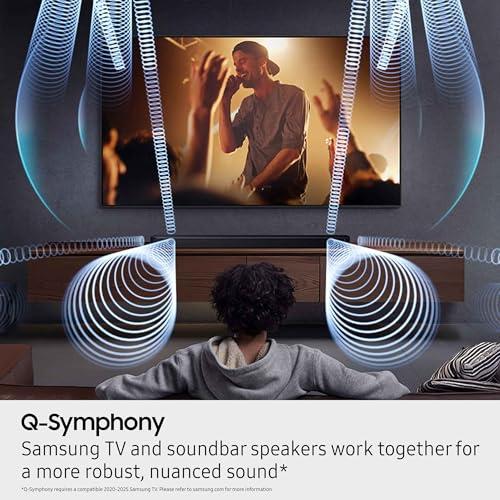
The payoff for this complexity is remarkable flexibility. The system includes a seven-band graphic equalizer, independent level adjustments for each speaker group, multiple listening modes optimized for different content types, and advanced features like Q-Symphony, which can sync the soundbar with compatible Samsung TVs to use both the TV's speakers and the soundbar simultaneously.
The Amazon Fire TV Soundbar Plus prioritizes simplicity. Everything comes pre-paired, setup typically takes minutes rather than hours, and the included remote provides access to all essential functions without overwhelming complexity. This approach means fewer options for fine-tuning, but also means most users can get excellent results without any tweaking.
Determining value requires considering what you're actually getting for your investment. The Samsung HW-Q990F, at its premium price point, delivers flagship performance that genuinely rivals traditional home theater systems costing significantly more. For home theater enthusiasts who prioritize immersive surround sound, the per-feature cost actually represents reasonable value within the high-end audio market.
However, that value equation only works if you'll actually use and appreciate those premium features. The sophisticated Dolby Atmos processing, AI-powered room correction, and extensive connectivity options are wasted if you primarily watch TV shows in a small apartment.
The Amazon Fire TV Soundbar Plus, conversely, delivers exceptional value for users seeking a straightforward TV audio upgrade. At its budget price point, you get clear dialogue improvement, noticeable bass enhancement, and basic surround processing—addressing the most important shortcomings of TV speakers without unnecessary complexity.
The expandability factor adds another dimension to the value equation. The Amazon can grow into a 5.1 system with optional components, potentially spreading the cost over time. The Samsung arrives as a complete, flagship system with no further expansion needed or possible.
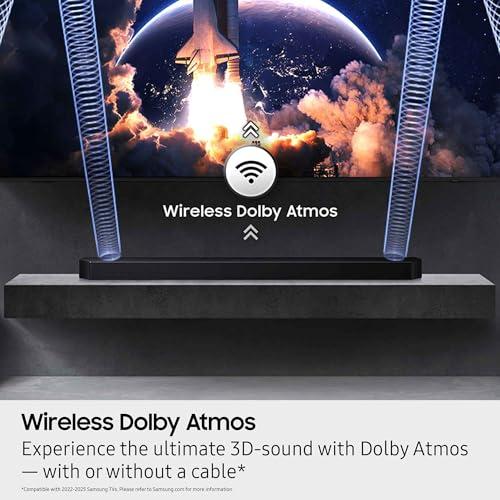
For dedicated home theater use, the choice becomes clearer. The Samsung HW-Q990F delivers genuinely cinematic surround sound that can transform movie watching. The physical height channels create convincing overhead effects—helicopters, rain, and atmospheric sounds that truly seem to come from above and around you.
The system's power handling and room-filling capabilities mean it works well even in larger home theater rooms, while features like Night Mode provide compressed audio for late-night viewing without disturbing others.
The Amazon Fire TV Soundbar Plus can certainly improve the home theater experience compared to TV speakers, but it's more about clarity and basic immersion rather than the transformative experience that proper surround sound provides.
The decision ultimately comes down to matching your expectations, room size, and budget to the right product philosophy.
Choose the Samsung HW-Q990F if you're serious about home theater audio, have a larger room that can benefit from its power and rear speakers, and appreciate having the latest audio technology. This soundbar excels when you want the best possible sound quality and don't mind paying for premium features. It's particularly compelling for Samsung TV owners who can take advantage of Q-Symphony integration.
The Amazon Fire TV Soundbar Plus makes more sense for users who want a significant but straightforward improvement over TV speakers. It's ideal for smaller rooms, apartment living where massive bass might be problematic, and situations where simplicity trumps ultimate performance. The expandability means you can start simple and add components later if your needs or budget change.
Both soundbars succeed at their intended purposes—the key is honestly assessing which purpose matches your actual needs and listening environment. The Samsung represents the pinnacle of soundbar technology, while the Amazon demonstrates that dramatic audio improvements don't necessarily require premium pricing or complexity.
In my experience evaluating audio products, the biggest mistake buyers make is either over-buying features they'll never use or under-buying and missing out on transformative improvements they didn't know were possible. Understanding your room, content preferences, and quality expectations will guide you to the right choice between these two very different but successful approaches to better TV audio.
| Samsung HW-Q990F | Amazon Fire TV Soundbar Plus |
|---|---|
| Channel Configuration - Determines surround sound quality and immersion | |
| 11.1.4 channels with 23 speakers (true Dolby Atmos) | 3.1 channels with built-in subwoofer (virtual surround) |
| Physical Speaker Setup - Real speakers vs software processing | |
| Main bar + wireless subwoofer + wireless rear speakers | Single soundbar only (expandable with optional components) |
| Dolby Atmos Support - Overhead sound effects for movies | |
| True Dolby Atmos with up-firing drivers and height channels | Virtual Dolby Atmos processing (no physical height speakers) |
| Room Size Compatibility - How well it fills different spaces | |
| Large rooms (756W total power, physical rear coverage) | Small to medium rooms (adequate power, front-only audio) |
| Bass Performance - Low-end impact and music quality | |
| Dual 8" wireless subwoofer with AI distortion control | Built-in subwoofer (optional wireless sub available separately) |
| Smart Features - Streaming and voice control capabilities | |
| Built-in Alexa, Wi-Fi streaming, Google Cast, AirPlay 2 | Fire TV integration only, Bluetooth streaming, no voice control |
| Connectivity Options - How you connect devices and content | |
| 3x HDMI 2.1, optical, 4K/120Hz passthrough, gaming ready | HDMI eARC, optical, USB-A, basic connectivity |
| Setup Complexity - Installation difficulty and time required | |
| Multi-component setup, extensive customization options | Plug-and-play simplicity, minimal configuration needed |
| Audio Customization - Fine-tuning controls available | |
| 7-band EQ, room calibration, multiple sound modes, channel levels | Basic bass/treble adjustment, 4 sound modes, dialogue enhancement |
| Expandability - Future upgrade potential | |
| Complete system (no expansion needed or possible) | Can add wireless subwoofer and rear speakers over time |
| Best Use Case - Who should choose this option | |
| Home theater enthusiasts, large rooms, Samsung TV owners | Budget upgraders, apartments, simple TV audio improvement |
The Samsung HW-Q990F is significantly better for home theater use. It features true 11.1.4-channel Dolby Atmos with physical rear speakers and up-firing drivers that create genuine overhead sound effects. The Amazon Fire TV Soundbar Plus only offers virtual surround sound processing, which can't match the immersive experience of actual speakers positioned around your room.
The primary difference is complexity and performance level. The Samsung HW-Q990F is a premium flagship system with 23 speakers across multiple components, while the Amazon Fire TV Soundbar Plus is a budget-friendly 3.1-channel system focused on basic TV audio improvement. The Samsung offers true surround sound, while the Amazon relies on virtual processing.
The Amazon Fire TV Soundbar Plus is much easier to set up. It's essentially plug-and-play with pre-paired components and minimal configuration needed. The Samsung HW-Q990F requires positioning multiple wireless components around your room and offers extensive customization options that can be overwhelming for some users.
Yes, but in very different ways. The Samsung HW-Q990F supports true Dolby Atmos with dedicated up-firing speakers that bounce sound off your ceiling for authentic overhead effects. The Amazon Fire TV Soundbar Plus supports Dolby Atmos through virtual processing, which simulates height effects but cannot match the realism of physical height channels.
The Amazon Fire TV Soundbar Plus is better suited for small apartments. It provides significant audio improvement without overwhelming bass that might disturb neighbors, and its simpler setup works well in compact spaces. The Samsung HW-Q990F is designed for larger rooms and might be overkill for apartment living.
The Amazon Fire TV Soundbar Plus can be expanded with optional wireless subwoofer and rear speakers to create a 5.1 system. The Samsung HW-Q990F comes as a complete system with all components included and cannot be expanded further, though it doesn't need to be since it's already a full surround setup.
The Samsung HW-Q990F has significantly better bass with its dedicated wireless subwoofer featuring dual 8-inch drivers and AI-powered distortion control. The Amazon Fire TV Soundbar Plus has a built-in subwoofer that's adequate for its price range, though an optional wireless subwoofer can be added for improved bass performance.
The Samsung HW-Q990F excels at music with its wide soundstage, detailed separation, and support for high-resolution audio streaming services. The Amazon Fire TV Soundbar Plus is decent for music but is primarily optimized for TV and movie dialogue rather than critical music listening.
The Samsung HW-Q990F offers comprehensive smart features including built-in Alexa, Wi-Fi streaming, Google Cast, Apple AirPlay 2, and direct access to services like Spotify and Tidal. The Amazon Fire TV Soundbar Plus has basic Fire TV integration and Bluetooth connectivity but lacks built-in voice assistants or advanced streaming capabilities.
Both soundbars excel at dialogue clarity with dedicated center channels. The Samsung HW-Q990F includes advanced features like Active Voice Amplifier Pro and room calibration for optimal speech reproduction. The Amazon Fire TV Soundbar Plus offers adjustable dialogue enhancement and clear speech reproduction that's perfectly adequate for most TV viewing.
This depends on your needs and budget. The Amazon Fire TV Soundbar Plus offers exceptional value for basic TV audio improvement and simple surround effects. The Samsung HW-Q990F provides premium value for serious home theater enthusiasts who want flagship performance and are willing to pay for cutting-edge audio technology.
The Samsung HW-Q990F is excellent for gaming with HDMI 2.1 support, 4K/120Hz passthrough, and Game Pro mode for enhanced directional audio cues. The Amazon Fire TV Soundbar Plus can connect via HDMI eARC and provides basic audio improvement for gaming, though it lacks the advanced gaming-specific features of the Samsung model.
We've done our best to create useful and informative comparisons to help you decide what product to buy. Our research uses advanced automated methods to create this comparison and perfection is not possible - please contact us for corrections or questions. These are the sites we've researched in the creation of this article: rtings.com - crutchfield.com - sound-advice.online - samsung.com - soundandvision.com - samsung.com - whathifi.com - youtube.com - youtube.com - bestbuy.com - avsforum.com - content.syndigo.com - samsung.com - businessinsider.com - dolby.com - youtube.com - abcwarehouse.com - rtings.com - wirelessplace.com - techradar.com - cordbusters.co.uk - whathifi.com - developer.amazon.com - t3.com - dolby.com - youtube.com - youtube.com - youtube.com - dugoutnorthbrook.com - dolby.com - aboutamazon.com - youtube.com - developer.amazon.com

Privacy Policy
Terms and Conditions - Affiliate Policy
Home Security
© Copyright 2008-2026.
11816 Inwood Rd #1211, Dallas, TX 75244