

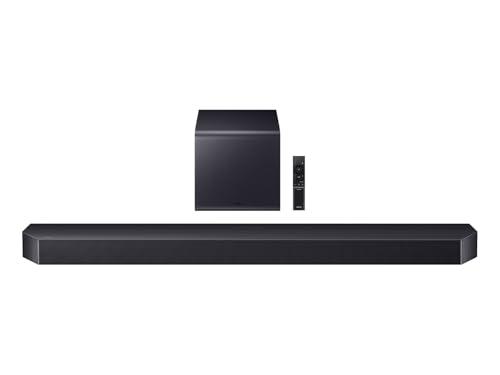
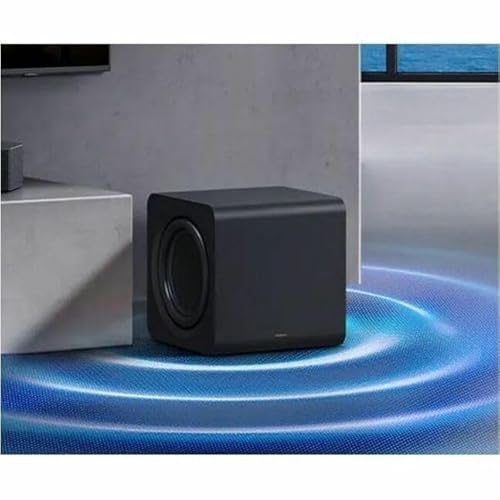
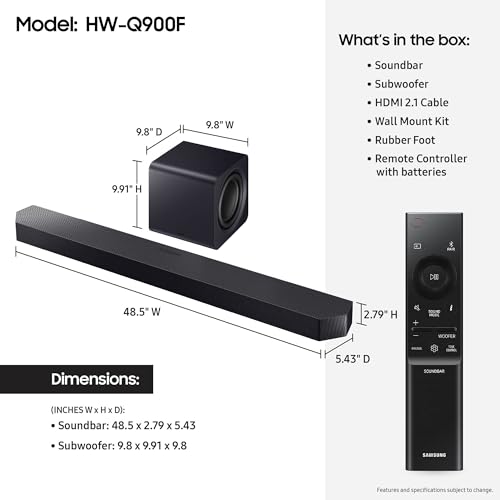
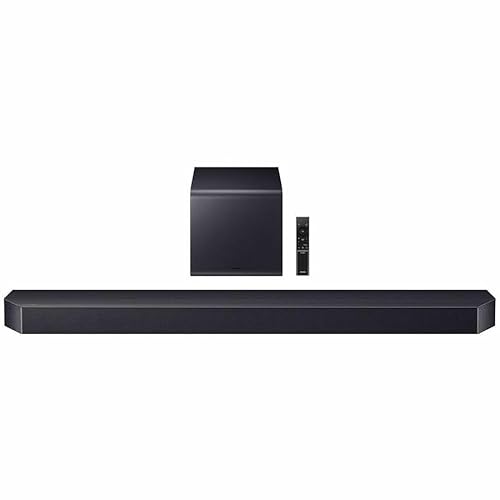



If you've ever struggled to hear dialogue in movies or felt like your TV's built-in speakers sound thin and lifeless, you're not alone. Modern flat-screen TVs prioritize sleek designs over audio quality, leaving viewers with speakers that barely qualify as functional. This is where soundbars come in—they're the most popular solution for dramatically improving your TV's audio without the complexity of a full surround sound system.
But here's where things get complicated: soundbars range from basic dialogue enhancers to premium home theater replacements that cost as much as a decent used car. Today we're comparing two Samsung soundbars that represent opposite ends of this spectrum—the budget-friendly HW-B550D and the flagship HW-Q990F. Understanding their differences will help you decide whether you need basic audio improvement or a complete home theater transformation.
Soundbars solve a fundamental problem: TV speakers have gotten progressively worse as screens have gotten thinner. There's simply no room for decent drivers inside a modern TV. A soundbar restores audio quality by housing multiple speakers in a dedicated enclosure, often paired with a separate subwoofer for bass.
The most important specification to understand is channel configuration, expressed in numbers like "3.1" or "11.1.4." The first number represents main audio channels (left, center, right, plus surround channels), the second is subwoofer channels, and the third (when present) indicates height channels for overhead effects. More channels generally mean more immersive audio, but they also increase complexity and cost significantly.
Audio format support is equally crucial. Basic soundbars handle standard Dolby Digital and DTS—compressed formats that have been around for decades. Premium models support Dolby Atmos and DTS:X, which create three-dimensional soundscapes with effects that move around and above you. It's the difference between hearing a helicopter in a movie versus feeling like it's actually flying overhead.
Room size compatibility often gets overlooked, but it's critical. A powerful soundbar in a small room becomes overwhelming, while a basic system in a large space sounds weak and gets drowned out. The sweet spot varies by model, but generally, entry-level bars work best in rooms under 200 square feet, while flagship systems shine in larger spaces.
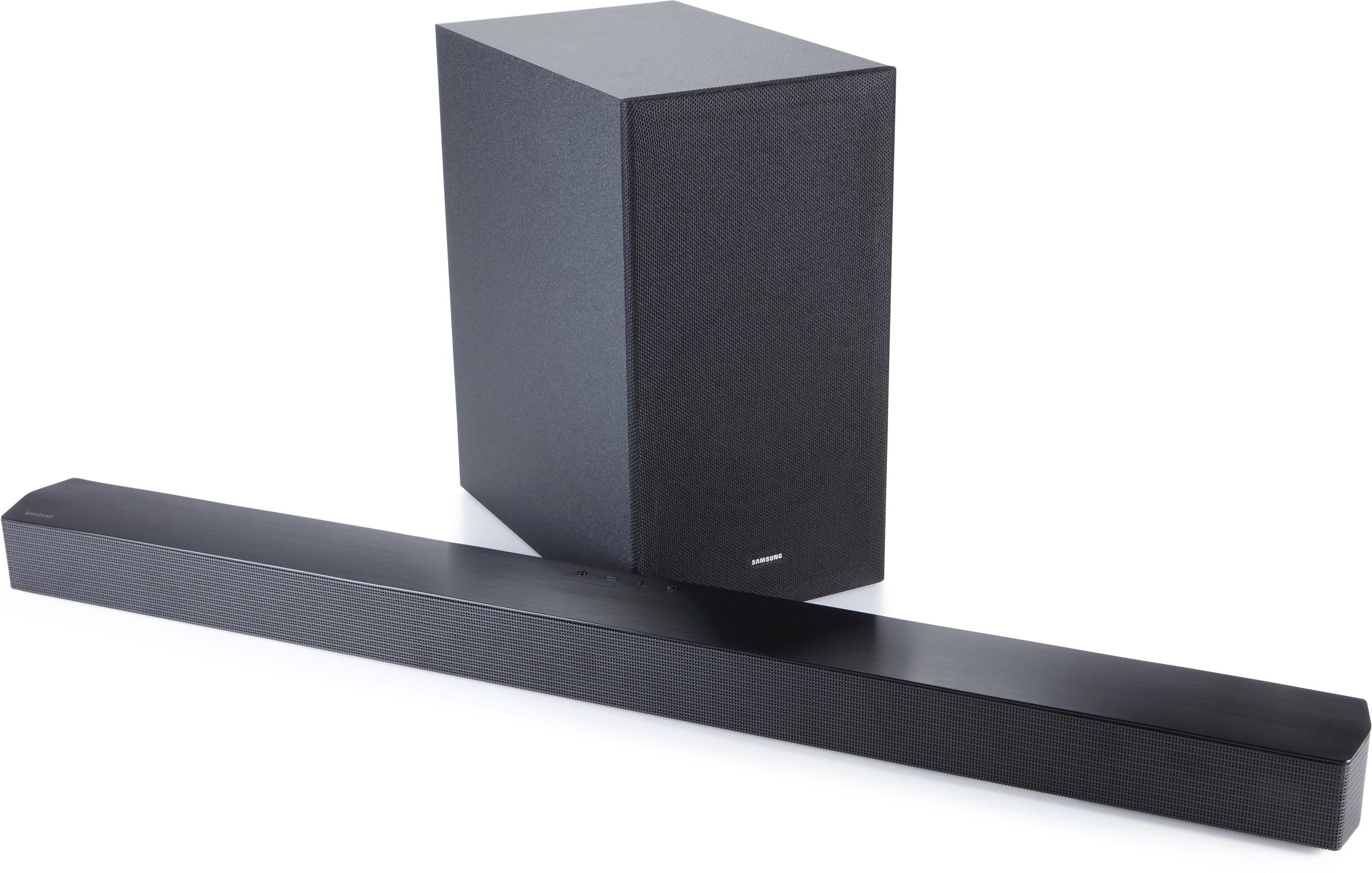
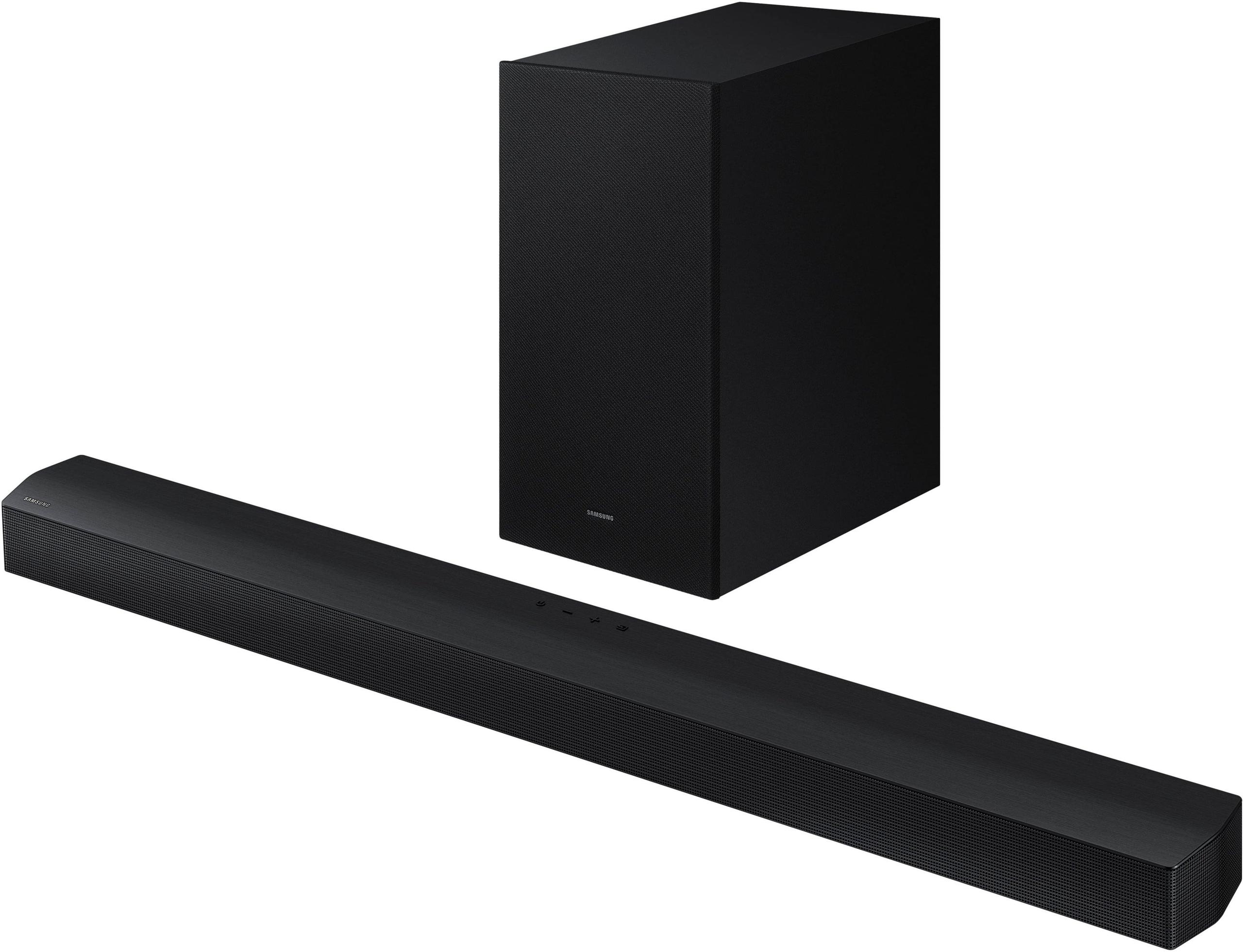
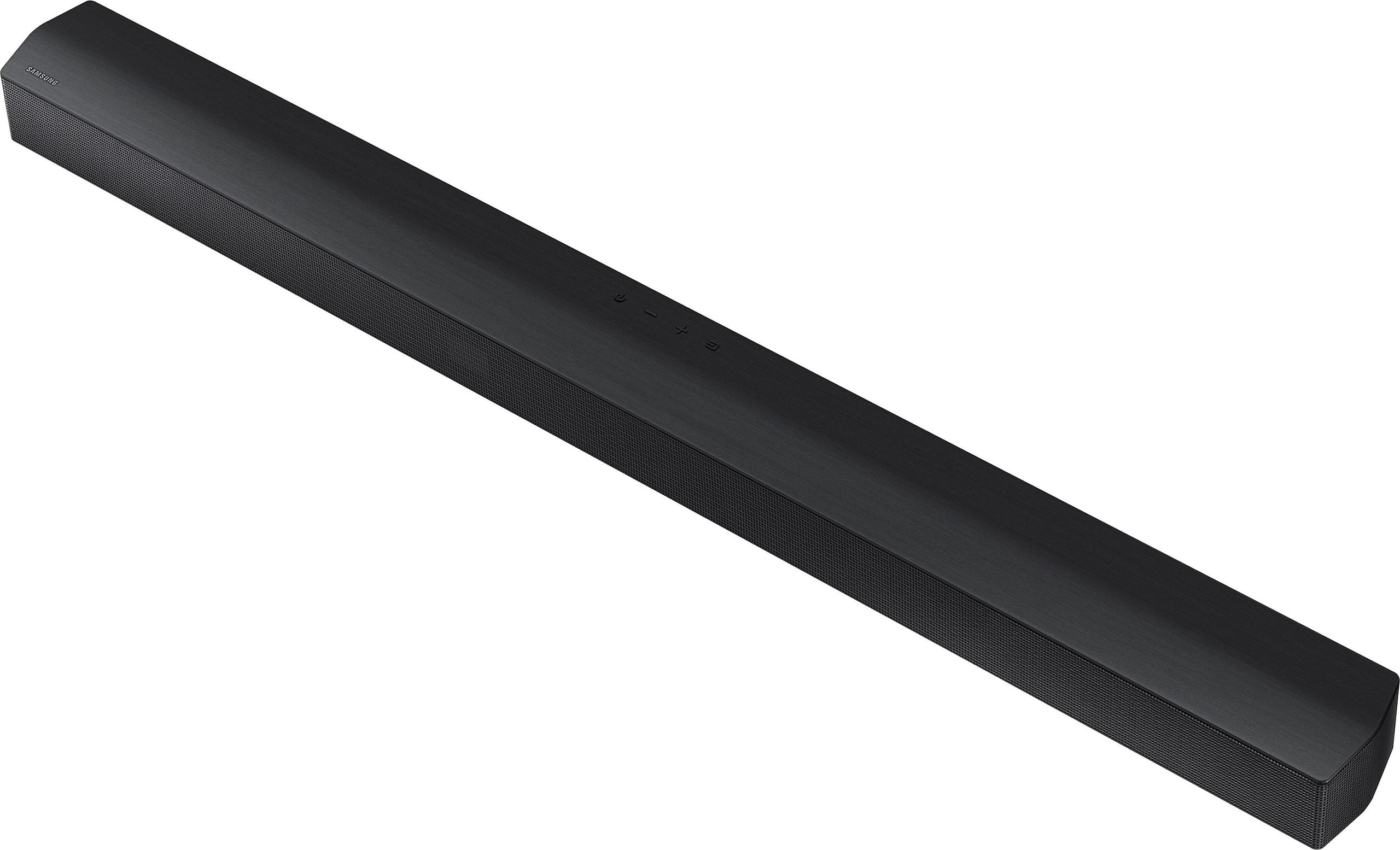
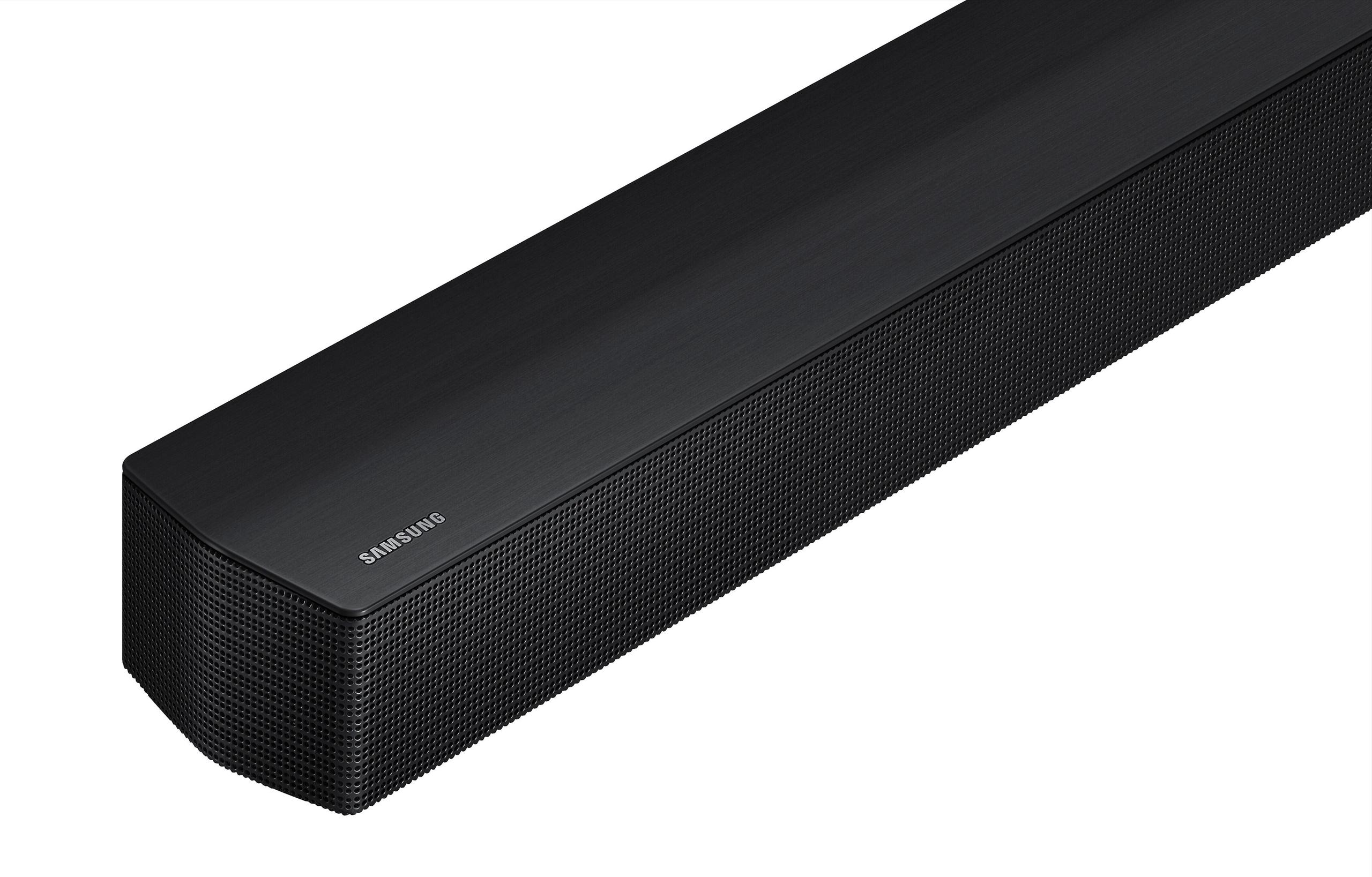
The Samsung HW-B550D launched in 2022 as an entry-level solution designed to solve the most common TV audio complaint: unclear dialogue. At the time of writing, it typically costs around $180, making it accessible to most budgets. It's a 3.1-channel system, meaning it has left, center, and right speakers in the main bar, plus a wireless subwoofer.
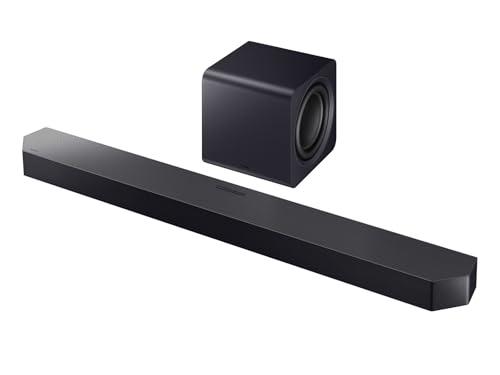
The Samsung HW-Q990F, released in 2025, represents Samsung's current flagship approach to soundbar design. Priced around $1,300 at launch, it costs roughly seven times more than the B550D but delivers exponentially more capability. It's an 11.1.4-channel system with 23 total speakers spread across the main soundbar, a wireless subwoofer, and wireless rear speakers.
These aren't just different models—they're fundamentally different product categories that happen to share the "soundbar" name.
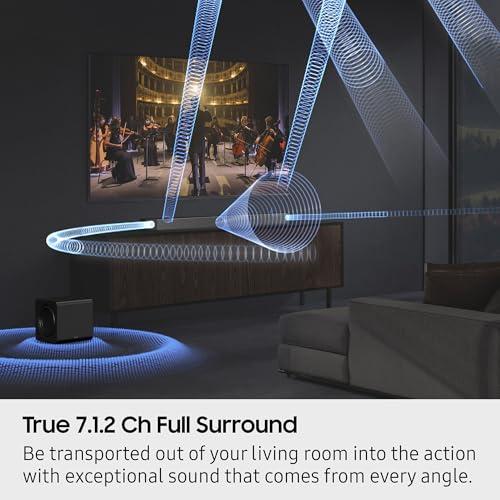
The performance gap between these systems becomes immediately apparent when you consider their approach to surround sound. The HW-Q990F delivers true surround audio through physical speakers positioned around your seating area. Its rear speakers each contain three drivers—one firing forward, one to the side, and one angled upward. Combined with the soundbar's own up-firing drivers, this creates genuine overhead effects where sounds actually come from above and behind you.
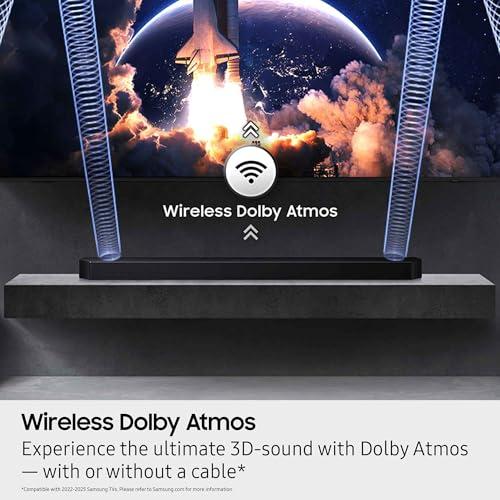
This is proper Dolby Atmos, where a helicopter scene places the rotor noise precisely above your head while dialogue remains anchored to the screen. The sound moves organically through three-dimensional space, creating what audio enthusiasts call a "bubble of immersion." It's genuinely transformative for action movies, where explosions rumble from specific directions and debris seems to fly around the room.
The HW-B550D takes a completely different approach with DTS Virtual:X—a clever processing technique that uses the soundbar's front-facing speakers to simulate surround effects. Think of it like audio optical illusion. The processor manipulates timing, phase, and frequency to trick your brain into perceiving sounds coming from beside and behind you, even though all the speakers face forward.
Virtual surround works surprisingly well for dialogue placement and basic stereo expansion, but it can't replicate the precision and impact of physical rear speakers. You'll get a wider soundstage than your TV speakers, and some sense of depth, but action sequences won't envelope you the way they do with true surround systems.
Interestingly, both soundbars excel at dialogue reproduction, though through different approaches. Clear speech is often the primary reason people buy their first soundbar, and both systems address this effectively.
The HW-B550D includes a dedicated center channel—the speaker specifically responsible for dialogue in movies and TV shows. This is uncommon in entry-level soundbars, where manufacturers often compromise by using left and right speakers to handle center channel duties. Having a true center channel means voices stay anchored to the screen rather than wandering left and right, creating more natural dialogue placement.
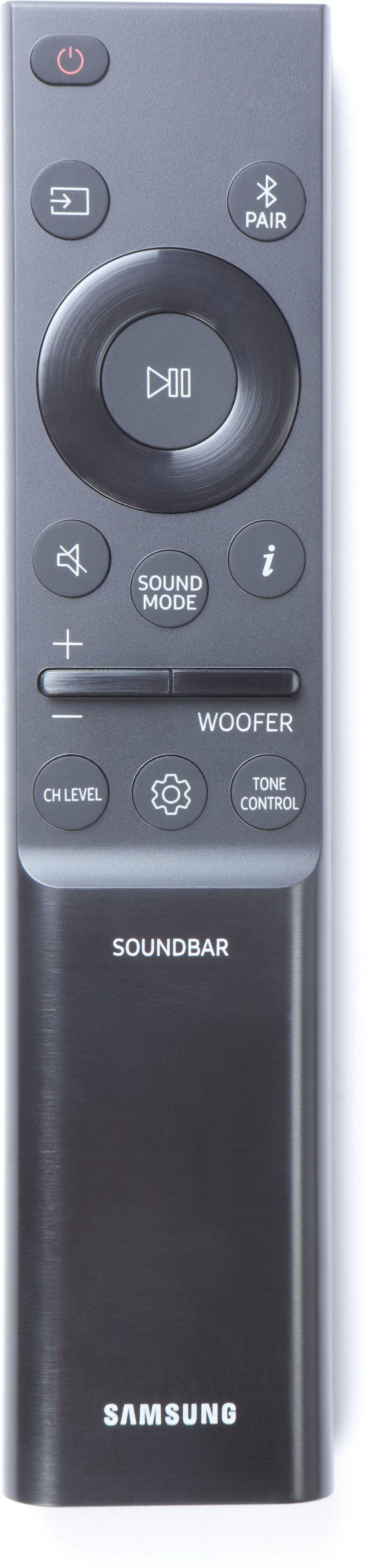
Samsung's Voice Enhancement mode on the B550D boosts dialogue frequencies while slightly reducing background music and effects. It's simple but effective, especially for TV shows with inconsistent audio mixing. The Adaptive Sound Lite feature automatically adjusts the audio profile based on content type—it recognizes whether you're watching a drama, action movie, or sports and optimizes accordingly.
The HW-Q990F takes dialogue clarity to another level with Active Voice Amplifier Pro. This AI-powered system continuously monitors ambient room noise and dynamically adjusts dialogue frequencies to maintain clarity. If your air conditioner kicks on or someone starts making noise in the kitchen, the soundbar automatically boosts voice frequencies to compensate. It's remarkably effective and operates transparently—you simply notice that dialogue stays clear regardless of what's happening around you.
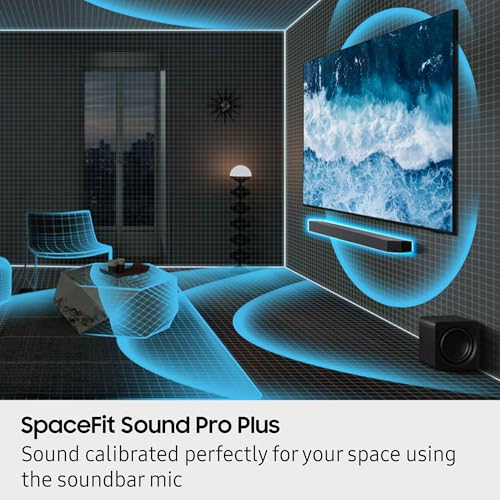
The Q990F also benefits from proper room calibration through SpaceFit Sound Pro, which analyzes your room's acoustics and optimizes dialogue placement for your specific seating position. This automated calibration can dramatically improve voice clarity in challenging rooms with hard surfaces or unusual layouts.
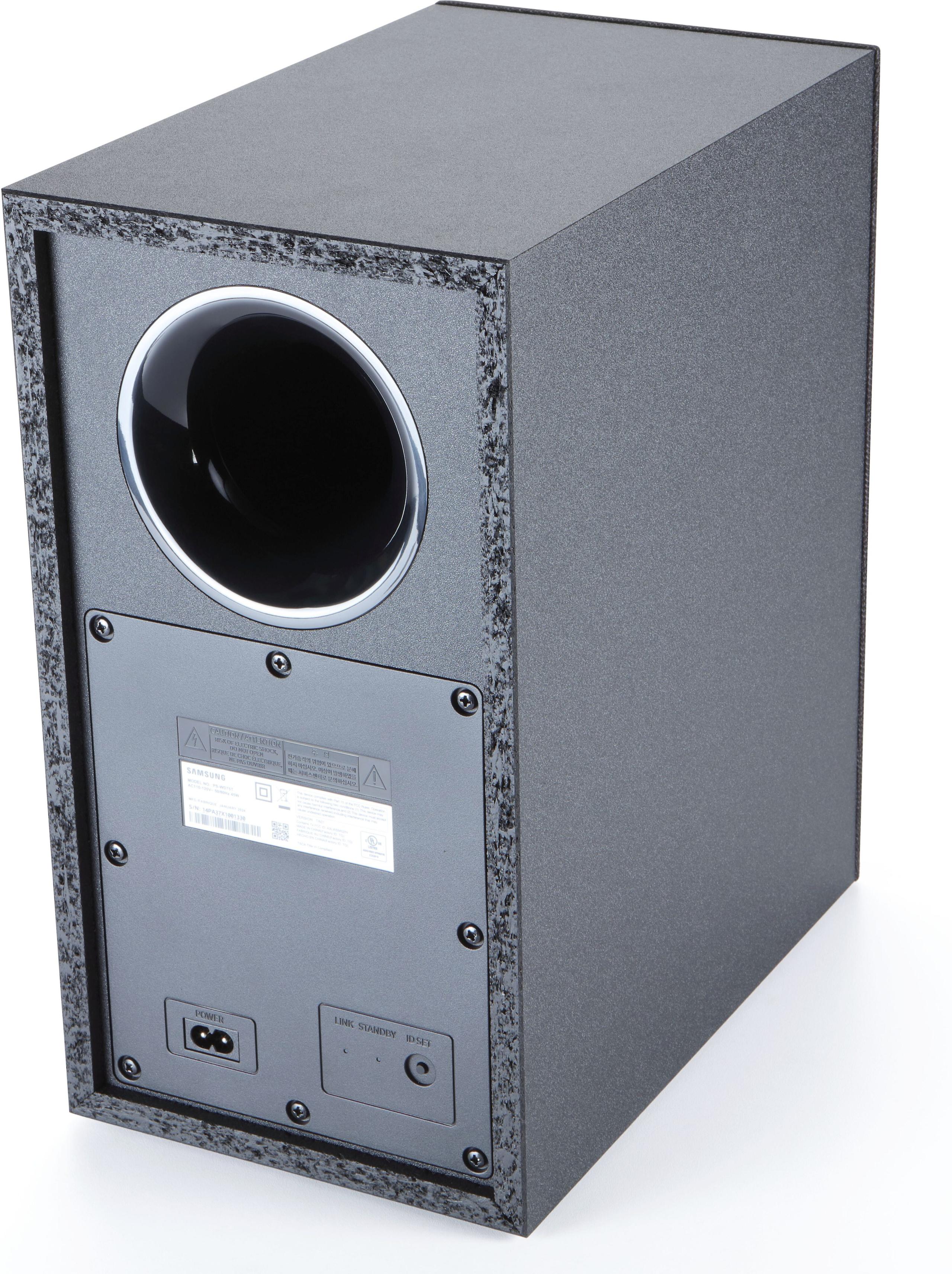
Bass reproduction reveals perhaps the starkest difference between these systems. The HW-Q990F employs dual 8-inch woofers in a sealed enclosure design, while the HW-B550D uses a single 5-inch driver in a ported cabinet.
The Q990F's sealed subwoofer represents a significant engineering improvement over Samsung's previous ported designs. Sealed enclosures trade maximum output for accuracy and control. The dual opposing woofers cancel each other's vibrations, virtually eliminating cabinet rattling that plagued earlier Samsung subwoofers. The result is bass that stays clean and controlled even at high volumes, with better integration with the soundbar's other speakers.
More importantly, the larger drivers move more air, creating deeper bass extension. The Q990F reaches down to around 32Hz—low enough to reproduce the deep rumbles in action movies and the fundamental frequencies in bass-heavy music. When a T-Rex stomps across the screen, you feel the impact in your chest.
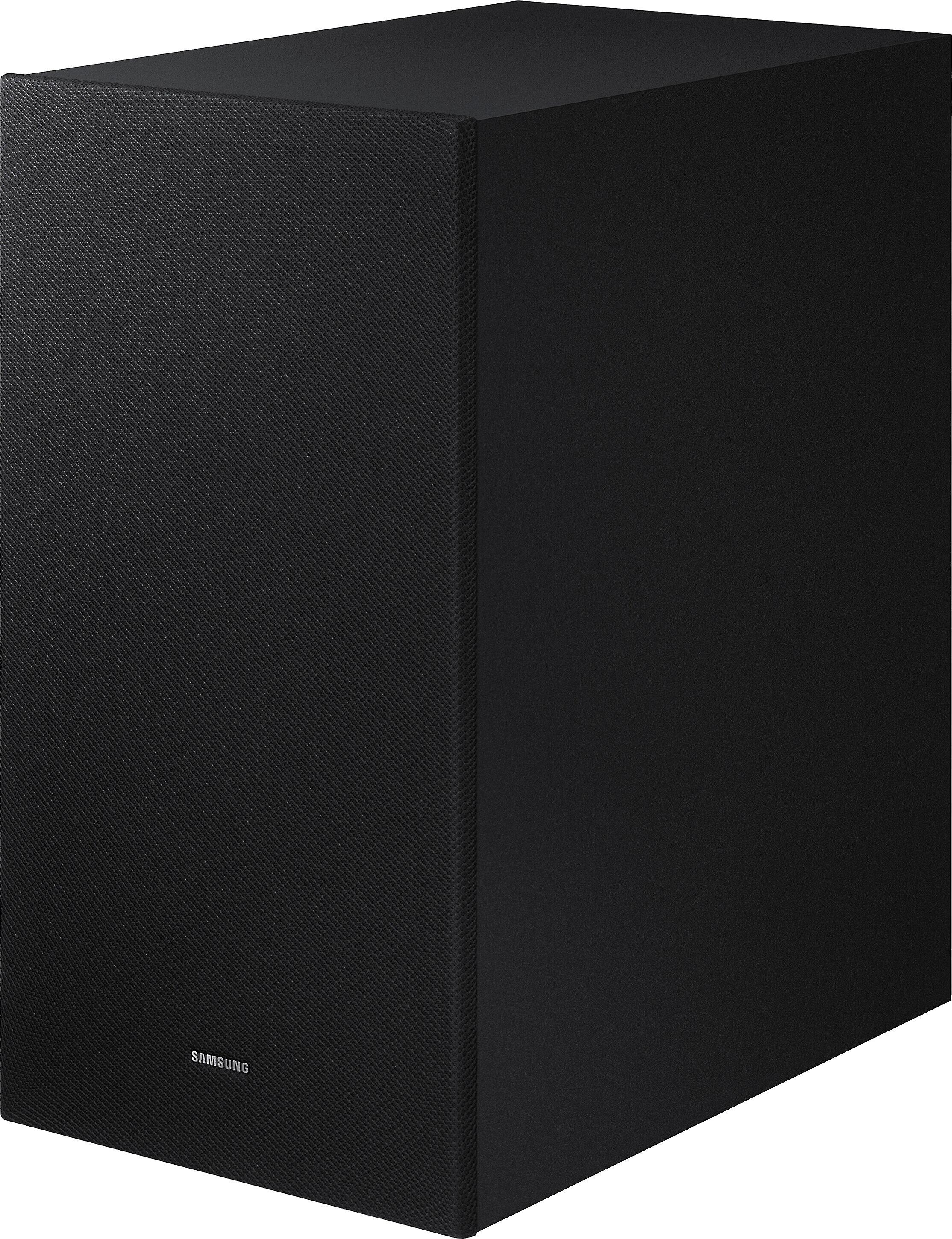
The HW-B550D's 5-inch subwoofer can't match this depth or impact, but its ported design maximizes efficiency from the smaller driver. Bass-reflex enclosures use a tuned port to boost output at specific frequencies, helping the compact subwoofer punch above its weight class. The Bass Boost mode further enhances low-end impact, making action scenes more engaging than TV speakers alone.
For typical TV watching and casual movie viewing, the B550D's bass is perfectly adequate. It adds warmth and impact without overwhelming smaller rooms. But serious home theater enthusiasts will find it limiting—action sequences lack the visceral impact that makes scenes truly immersive.
Gaming performance highlights another crucial difference between these systems. The HW-Q990F supports 4K video passthrough at 120Hz with HDR10+, making it fully compatible with PlayStation 5 and Xbox Series X consoles. You can connect your gaming system directly to the soundbar, which processes the audio and passes uncompressed 4K video to your TV.
This matters more than you might think. Modern games increasingly use sophisticated audio design with precise directional cues. In competitive multiplayer games, hearing footsteps behind you or gunfire from a specific direction provides tactical advantages. The Q990F's Game Pro mode optimizes these directional cues while reducing distracting ambient noise.
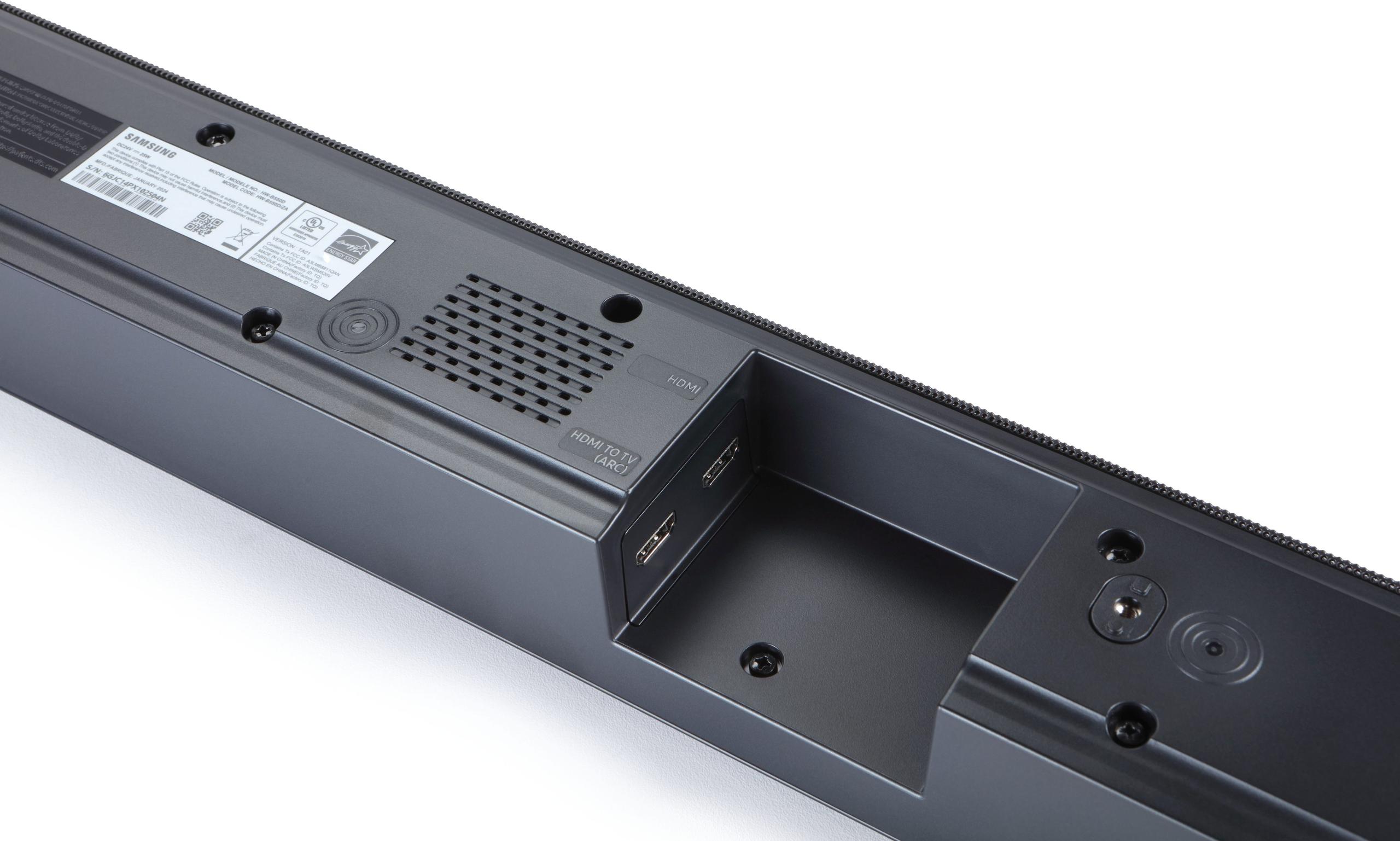
The HW-B550D supports only HDMI 1.4, limiting video passthrough to 1080p resolution. With current-generation consoles, this means connecting your gaming system directly to your TV and using the audio return channel to send sound to the soundbar. You'll still get audio enhancement, but you lose the convenience of centralized switching and may introduce audio delay that requires manual adjustment.
For retro gaming or older consoles, this limitation doesn't matter. But if you own or plan to buy modern gaming systems, the B550D's video limitations make it feel outdated before you've finished setting it up.
Music performance often reveals a soundbar's true character, and these systems approach music reproduction very differently. The HW-Q990F was clearly designed with serious music listening in mind. Its wide stereo imaging creates an expansive soundstage where individual instruments occupy distinct positions. Vocals remain centered and natural, while the soundbar's multiple drivers provide detailed instrument separation.
The Q990F supports high-resolution audio formats including FLAC, WAV, and ALAC, and it's even Roon Ready—a certification that audiophile-focused music servers recognize. Streaming options include Spotify Connect, TIDAL Connect, and Apple AirPlay 2, allowing direct playback from music services without Bluetooth compression.
Perhaps most importantly, the Q990F includes a 7-band graphic equalizer with independent channel level controls. You can fine-tune the center, rear, height, and subwoofer levels independently, plus adjust frequency response to match your room acoustics and personal preferences. This level of customization is unusual in soundbars and approaches what you'd find in dedicated audio equipment.
The HW-B550D handles music competently for casual listening, but its limitations become apparent with complex recordings. The stereo imaging is pleasant but narrow, and fine details get lost in busy mixes. Bluetooth connectivity works well for streaming from phones, but the older Bluetooth 4.2 standard doesn't support the highest quality codecs found in newer devices.
Room acoustics dramatically affect soundbar performance, and these systems handle optimization very differently. The HW-Q990F includes SpaceFit Sound Pro, which uses built-in microphones to analyze your room's acoustic signature. It measures reverberation times, identifies reflective surfaces, and adjusts frequency response to optimize clarity and immersion.
This automated calibration can transform performance in challenging rooms. Hard surfaces like tile floors and glass windows create echo and harshness, while soft furnishings and carpeting absorb high frequencies. SpaceFit Sound Pro compensates for these room characteristics automatically, often improving dialogue clarity and overall balance significantly.
The HW-B550D offers no room calibration whatsoever. Performance depends entirely on placement and your room's natural acoustics. This isn't necessarily problematic in smaller, well-furnished rooms, but performance varies dramatically between different environments. What sounds great in one room might sound boomy or harsh in another.
At the time of writing, the price difference between these systems is substantial—the HW-Q990F costs roughly seven times more than the HW-B550D. This raises an obvious question: is the flagship system actually seven times better?
The answer depends entirely on your priorities and usage patterns. The HW-B550D solves the primary problem most people have with TV audio: unclear dialogue and weak bass. It transforms the viewing experience for TV shows, news, and casual movie watching. The dedicated center channel ensures voices remain clear and anchored to the screen, while the wireless subwoofer adds warmth and impact that TV speakers simply cannot provide.
For many users, this level of improvement represents outstanding value. The B550D delivers 80% of the benefit most people seek from a soundbar upgrade at a fraction of the cost of premium systems. It's particularly excellent for apartments, bedrooms, and secondary viewing areas where space constraints make complex systems impractical.
The HW-Q990F is an entirely different value proposition. It's not just better than TV speakers—it's a legitimate home theater system that happens to come in soundbar form. The true surround sound, room calibration, high-resolution audio support, and gaming features justify the premium for serious home theater enthusiasts.
But here's the key insight: the performance gap matches the price gap. This isn't a situation where you're paying extra for marginal improvements. The Q990F delivers fundamentally different capabilities that transform how you experience movies, music, and games.
Day-to-day living with these soundbars reveals practical differences beyond raw performance. The HW-B550D is genuinely plug-and-play. The soundbar and subwoofer pair automatically, setup takes minutes, and the compact size fits easily into most entertainment centers. It's the kind of upgrade you can complete during a commercial break.
The HW-Q990F requires more planning and commitment. You need space for rear speakers, either on stands or mounted to walls. The wireless speakers need AC power, so outlet placement becomes a consideration. The full system occupies significantly more space and requires more thoughtful integration into your room's layout.
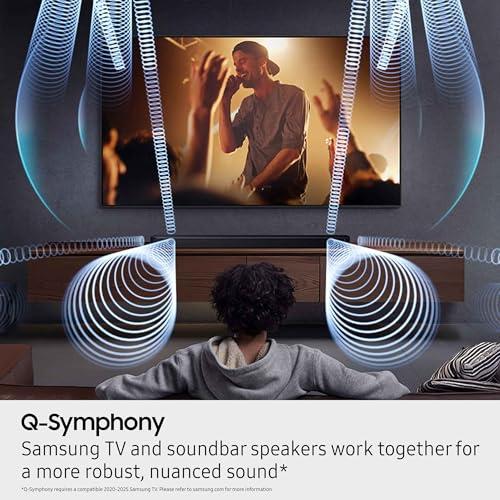
Once installed, the Q990F's complexity pays dividends. The SmartThings app provides comprehensive control over all settings, and the system learns your preferences over time. Q-Symphony technology synchronizes the soundbar with compatible Samsung TVs, using both the TV's speakers and soundbar simultaneously for an even fuller sound.
The decision between these systems ultimately comes down to your room size, content consumption habits, and audio priorities.
Choose the Samsung HW-B550D if you primarily watch TV shows and casual movies in a room smaller than 200 square feet. It's ideal for apartments, bedrooms, and situations where you want better audio without complexity or high cost. The B550D is also perfect for secondary viewing areas where you don't need reference-quality audio but want clear dialogue and decent bass.
The B550D makes particular sense if your TV viewing consists mainly of streaming content, news, and dramas where dialogue clarity matters more than immersive effects. It's also the smart choice if you rent your living space or move frequently—the simple setup and compact size make it easy to relocate.
Choose the Samsung HW-Q990F if you're serious about home theater and have a dedicated viewing room larger than 200 square feet. This system justifies its cost for movie enthusiasts who watch action films, sci-fi, and other content that benefits from immersive audio. It's also essential if you're a gamer with current-generation consoles that require 4K/120Hz support.
The Q990F makes sense if you listen to music seriously and want the convenience of a soundbar with the performance approaching traditional component systems. It's the right choice if you plan to keep the system for many years and want future-proof connectivity and format support.
These Samsung soundbars succeed brilliantly at their intended purposes, but they're solving very different problems. The HW-B550D democratizes better TV audio, making meaningful improvements accessible to nearly any budget. The HW-Q990F elevates home theater to reference-quality levels while maintaining soundbar convenience.
Your choice should align with your room, content, and expectations. If you're happy with basic audio improvement and clear dialogue, the B550D will exceed your expectations while leaving money for other priorities. If you want transformative home theater performance that rivals dedicated component systems, the Q990F delivers flagship capability that justifies its premium pricing.
The key is being honest about your actual usage patterns and room constraints. Many people convince themselves they need flagship performance when entry-level systems would satisfy their actual needs perfectly. Conversely, true home theater enthusiasts will find entry-level systems limiting and ultimately unsatisfying.
Both systems represent excellent value within their respective categories. The question isn't which is better—it's which better matches your specific situation and audio goals.
| Samsung Q-Series HW-Q990F Soundbar | Samsung HW-B550D 3.1 Channel Sound Bar |
|---|---|
| Channel Configuration - Determines surround sound capability and immersion level | |
| 11.1.4 channels with 23 total speakers (true surround sound) | 3.1 channels with 4 total speakers (enhanced stereo with center) |
| Audio Format Support - Critical for modern movie and streaming content | |
| Dolby Atmos, DTS:X, Dolby TrueHD (full 3D immersive audio) | Dolby Digital, DTS Virtual:X (simulated surround effects) |
| Speaker Configuration - What's included in the complete package | |
| Soundbar + wireless subwoofer + wireless rear speakers | Soundbar + wireless subwoofer only |
| Subwoofer Design - Affects bass depth and room-filling capability | |
| Dual 8" sealed woofers (deep, controlled bass to 32Hz) | Single 5" ported woofer (adequate bass for smaller rooms) |
| Gaming Support - Essential for PlayStation 5 and Xbox Series X compatibility | |
| 4K/120Hz passthrough with HDR10+ (full next-gen console support) | 1080p maximum passthrough (requires direct TV connection for 4K gaming) |
| Room Calibration - Automatically optimizes sound for your specific space | |
| SpaceFit Sound Pro with microphone-based acoustic analysis | No room calibration (manual placement and adjustment required) |
| Smart Features - Streaming and voice control capabilities | |
| Wi-Fi, Spotify Connect, AirPlay 2, built-in Alexa, SmartThings integration | Bluetooth 4.2 only, basic Samsung TV remote integration |
| Music Streaming Quality - Important for serious music listening | |
| High-res audio support (FLAC, WAV), Roon Ready certification | Standard audio formats, Bluetooth streaming only |
| Customization Options - Fine-tuning capabilities for different content | |
| 7-band EQ, independent channel levels, multiple listening modes | Basic bass/treble adjustment, preset sound modes |
| Ideal Room Size - Space requirements for optimal performance | |
| Medium to large rooms (200+ sq ft) with rear speaker placement | Small to medium rooms (under 200 sq ft), compact spaces |
| Target User - Who gets the most value from each system | |
| Home theater enthusiasts, gamers, audiophiles wanting convenience | Budget-conscious buyers seeking clear dialogue and basic bass enhancement |
The Samsung Q-Series HW-Q990F Soundbar is a flagship 11.1.4-channel system with true surround sound, while the Samsung HW-B550D 3.1 Channel Sound Bar is an entry-level system focused on dialogue enhancement. The Q990F includes wireless rear speakers and supports Dolby Atmos, whereas the B550D uses virtual surround processing from front-facing speakers only.
The Samsung HW-B550D 3.1 Channel Sound Bar is ideal for small rooms under 200 square feet. Its compact design and appropriate power output won't overwhelm smaller spaces. The Samsung Q-Series HW-Q990F Soundbar is designed for larger rooms and may be too powerful for intimate viewing areas.
Only the Samsung Q-Series HW-Q990F Soundbar supports true Dolby Atmos with dedicated height channels and physical rear speakers. The Samsung HW-B550D 3.1 Channel Sound Bar uses DTS Virtual:X to simulate overhead effects but doesn't have actual height speakers for genuine Atmos experience.
The Samsung Q-Series HW-Q990F Soundbar is significantly better for gaming, especially with PlayStation 5 or Xbox Series X. It supports 4K/120Hz video passthrough and has a dedicated Game Pro mode for directional audio. The Samsung HW-B550D 3.1 Channel Sound Bar only supports 1080p passthrough, limiting its compatibility with modern gaming consoles.
The Samsung Q-Series HW-Q990F Soundbar includes the main soundbar, wireless subwoofer, wireless rear speakers, and wall mount kit. The Samsung HW-B550D 3.1 Channel Sound Bar comes with the soundbar, wireless subwoofer, remote, and wall mount kit—no rear speakers are included.
The Samsung Q-Series HW-Q990F Soundbar has superior bass performance with dual 8-inch woofers in a sealed enclosure, providing deeper extension and cleaner sound. The Samsung HW-B550D 3.1 Channel Sound Bar uses a single 5-inch ported subwoofer that's adequate for casual listening but can't match the depth and impact of the premium system.
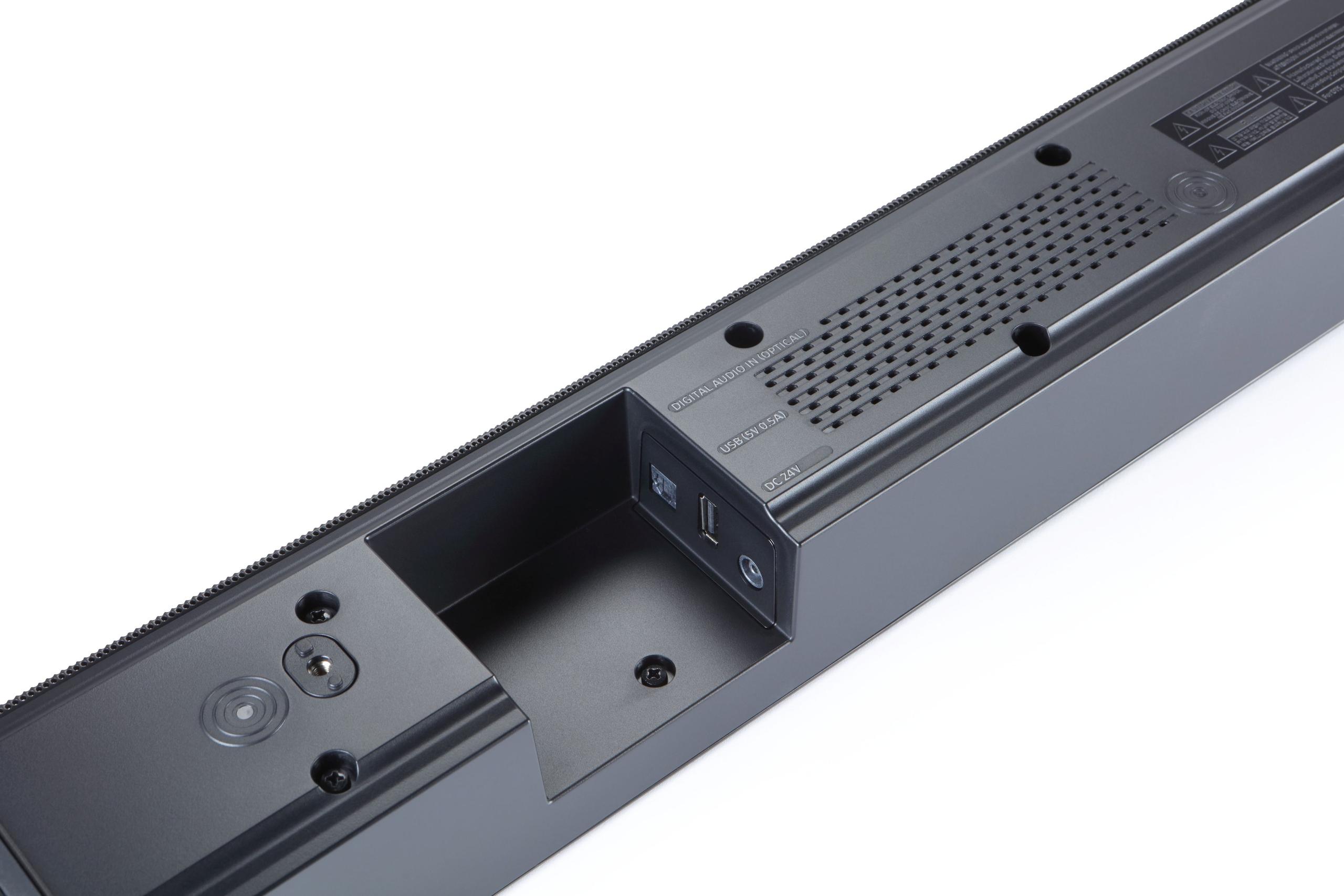
Yes, both the Samsung Q-Series HW-Q990F Soundbar and Samsung HW-B550D 3.1 Channel Sound Bar work with any TV that has HDMI ARC or optical output. However, Samsung TV owners get additional features like Q-Symphony and One Remote Control functionality that enhance the integration experience.
Both soundbars excel at dialogue clarity with dedicated center channels. The Samsung Q-Series HW-Q990F Soundbar has more advanced voice enhancement with Active Voice Amplifier Pro that adapts to room noise. The Samsung HW-B550D 3.1 Channel Sound Bar provides excellent dialogue improvement over TV speakers with its Voice Enhancement mode, making it a great budget solution for this common problem.
The Samsung HW-B550D 3.1 Channel Sound Bar is truly plug-and-play with automatic wireless pairing and simple setup. The Samsung Q-Series HW-Q990F Soundbar requires more planning for rear speaker placement and may benefit from professional installation to optimize the surround sound experience, though it can be set up by most users.
Value depends on your needs and budget. The Samsung HW-B550D 3.1 Channel Sound Bar offers outstanding value for basic audio improvement, delivering clear dialogue and decent bass at an accessible price point. The Samsung Q-Series HW-Q990F Soundbar provides excellent value within the premium soundbar category, offering home theater performance that rivals much more expensive component systems.
The Samsung Q-Series HW-Q990F Soundbar offers comprehensive streaming options including Wi-Fi connectivity, Spotify Connect, Apple AirPlay 2, and support for high-resolution audio formats. The Samsung HW-B550D 3.1 Channel Sound Bar is limited to Bluetooth 4.2 connectivity for music streaming from phones and tablets.
For serious home theater applications, the Samsung Q-Series HW-Q990F Soundbar is the clear choice with its true 11.1.4 surround sound, Dolby Atmos support, and room calibration features. The Samsung HW-B550D 3.1 Channel Sound Bar is better suited for casual TV watching and smaller spaces where immersive surround sound isn't the primary goal.
We've done our best to create useful and informative comparisons to help you decide what product to buy. Our research uses advanced automated methods to create this comparison and perfection is not possible - please contact us for corrections or questions. These are the sites we've researched in the creation of this article: rtings.com - crutchfield.com - sound-advice.online - samsung.com - soundandvision.com - samsung.com - whathifi.com - youtube.com - youtube.com - bestbuy.com - avsforum.com - content.syndigo.com - samsung.com - businessinsider.com - dolby.com - youtube.com - abcwarehouse.com - bestbuy.com - crutchfield.com - avsforum.com - consumerreports.org - abt.com - pcrichard.com - samsung.com - samsung.com - rtings.com - samsung.com - jeffsappliance.com

Privacy Policy
Terms and Conditions - Affiliate Policy
Home Security
© Copyright 2008-2026.
11816 Inwood Rd #1211, Dallas, TX 75244