



When your TV's built-in speakers make dialogue sound like it's coming through a tin can, it's time for a soundbar upgrade. But the jump from "TV sounds terrible" to "which soundbar should I buy" opens up a world of confusing specs, marketing jargon, and price ranges that span from a couple hundred dollars to well over a thousand.
Today we're comparing two Samsung soundbars that represent completely different philosophies: the Samsung HW-B630F B-Series 3.1ch Soundbar System and the Samsung Q-Series HW-Q990F Soundbar. These aren't just different products—they're different approaches to solving the same fundamental problem of bad TV audio.
Before diving into specifics, let's establish what we're actually talking about when we discuss soundbar performance. A soundbar isn't just a long speaker that makes things louder—it's a complete audio system designed to replace or dramatically enhance your TV's sound.
The most important concept to understand is channels. When you see numbers like "3.1" or "11.1.4," these describe how many separate audio streams the system can handle simultaneously. The first number represents main speakers (left, center, right), the second is subwoofers (the ".1" part), and any third number indicates height channels for overhead effects. More channels generally mean more realistic, immersive sound, but they also mean more complexity and cost.
Another crucial consideration is virtual versus physical surround sound. Virtual surround uses digital processing tricks to make a few speakers sound like many more, while physical surround actually places speakers around your room. Both have their place, but they deliver very different experiences.
The Samsung HW-B630F, released in 2022, represents Samsung's "smart value" approach—delivering genuine improvements over TV audio without overwhelming users with complexity. The Samsung Q-Series HW-Q990F, also from 2022, takes the opposite approach, cramming flagship-level technology into a soundbar system that competes with traditional surround sound setups.
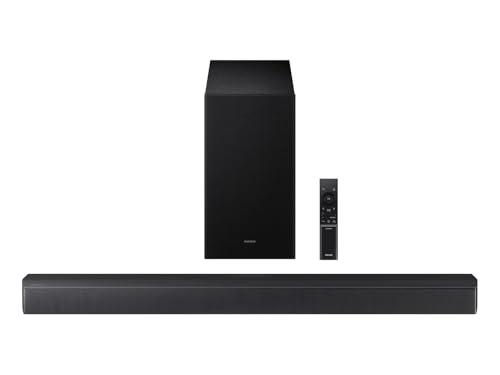
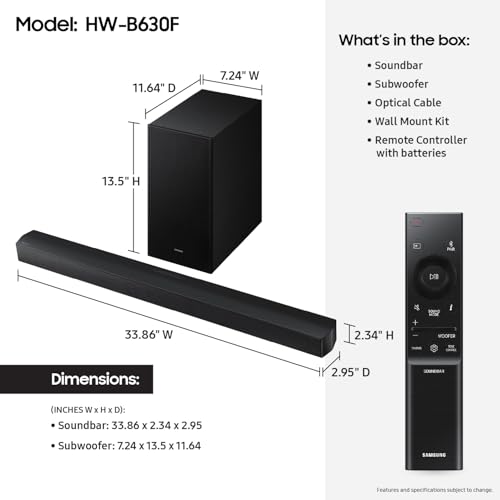
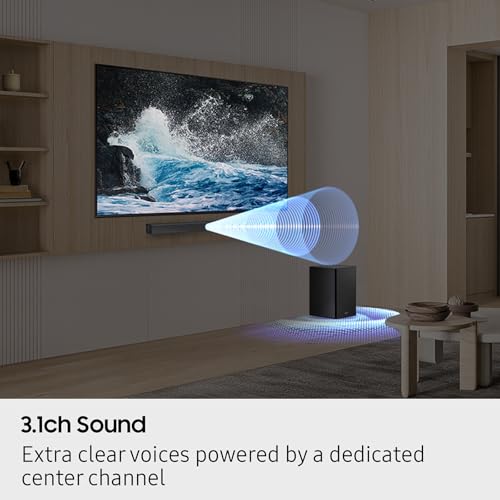
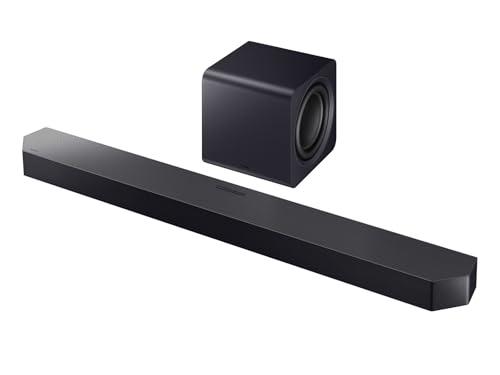
The HW-B630F might look like a simple black bar, but there's thoughtful engineering behind its straightforward exterior. This is a 3.1-channel system, meaning it has three main speakers (left, center, right) built into the soundbar itself, plus a separate wireless subwoofer for bass. That dedicated center channel is crucial—it's specifically tuned to handle dialogue, which is why voices suddenly become clearer and more intelligible when you upgrade from TV speakers.
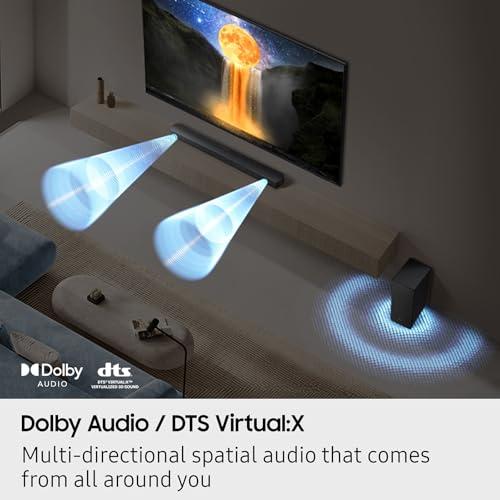
What makes the B630F particularly interesting is Samsung's implementation of DTS Virtual:X processing. This is sophisticated digital wizardry that takes regular stereo or 5.1 surround sound and tricks your brain into hearing sounds coming from places where there aren't actually any speakers. It analyzes the audio signal and uses precise timing delays and frequency adjustments to create the illusion that sound is coming from beside and even above you.
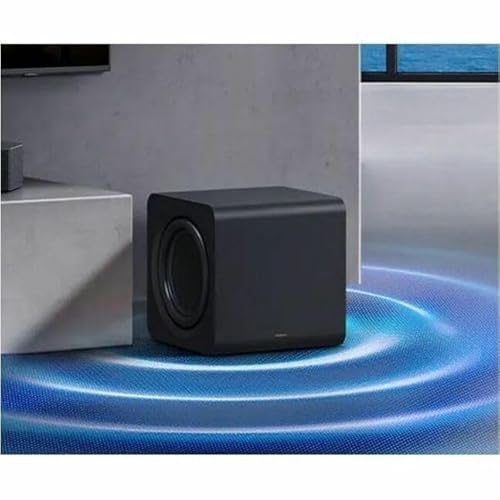
The wireless subwoofer deserves special attention because it's often the component that makes or breaks a soundbar system's effectiveness. The B630F's sub uses a 6-inch driver in a bass-reflex enclosure—essentially a box with a precisely tuned port that helps extend low-frequency response. While 6 inches might sound small compared to dedicated home theater subwoofers, it's actually well-suited for most living rooms and provides genuine impact for explosions, music, and that rumbling bass that makes action movies feel more engaging.
One of the B630F's strongest features is its suite of Adaptive Sound processing. This system continuously analyzes whatever you're watching and automatically adjusts the sound profile. Watching a quiet drama? It emphasizes dialogue clarity and lifts subtle details. Action movie? It enhances dynamic range and spatial effects. Sports broadcast? It brings crowd noise and commentary into better balance. This kind of smart processing means you spend less time fiddling with settings and more time actually enjoying your content.
For gaming, the B630F includes a dedicated Game Mode that reduces audio delay (latency) and enhances directional audio cues. If you're playing competitive shooters where hearing footsteps from the right direction can mean the difference between winning and losing, these optimizations actually matter in practical gameplay.
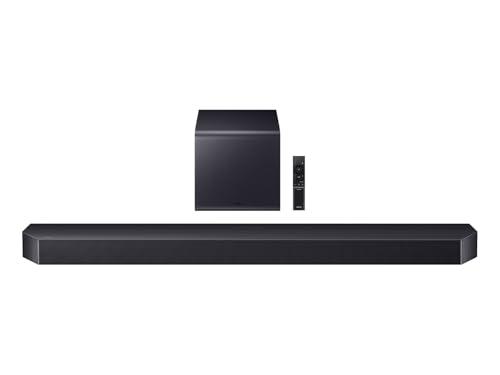
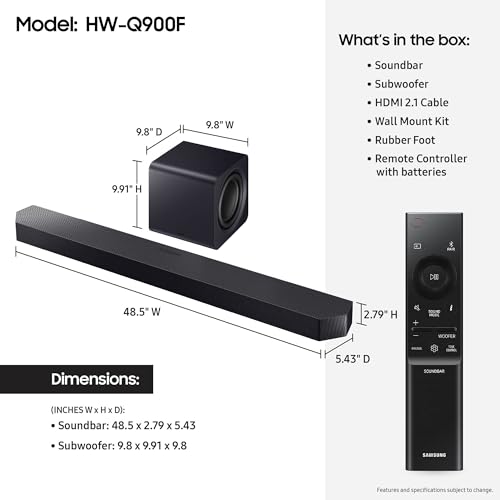
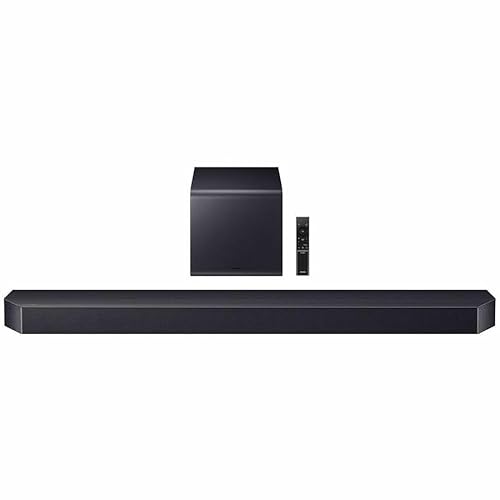
The HW-Q990F operates in a completely different league. This is an 11.1.4-channel system with 23 individual speakers spread across the main soundbar, a substantially larger subwoofer, and dedicated wireless rear speakers. When we say 11.1.4, we're talking about eleven main channels, one subwoofer channel, and four height channels specifically for overhead effects.
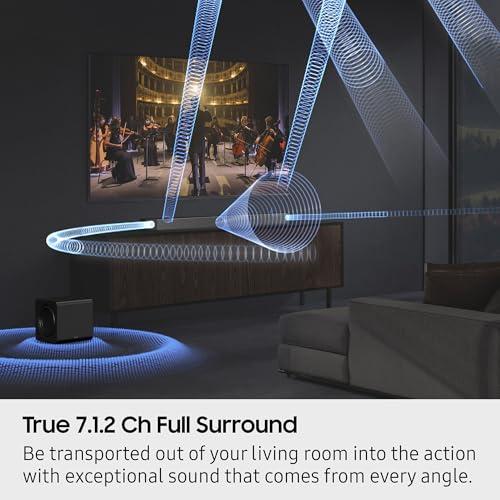
The magic here is Dolby Atmos and DTS:X support—these are object-based audio formats that don't just pan sounds left and right, but can precisely place them anywhere in three-dimensional space around you. Instead of traditional channel-based audio where sounds are assigned to specific speakers, object-based audio treats sounds as entities that can move freely through space. A helicopter in a movie doesn't just move from left speaker to right speaker—it can travel overhead, circle around behind you, and create the illusion of actual three-dimensional movement.
The Q990F's subwoofer is a different animal entirely. It uses dual 8-inch force-canceling woofers in a configuration where the two drivers work in opposition to each other. This cancels out cabinet vibrations that can muddy the bass response, resulting in cleaner, more accurate low frequencies. The difference isn't just volume—it's clarity and precision in how bass integrates with the rest of the audio spectrum.
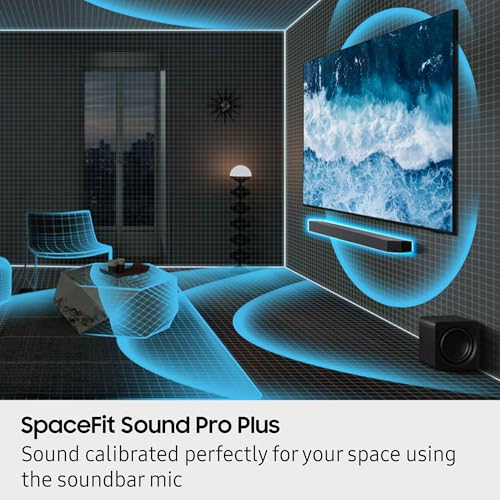
Perhaps most impressive is the SpaceFit Sound Pro Plus room calibration system. Built-in microphones analyze your room's acoustic properties—how sound bounces off walls, ceiling height, furniture placement—and automatically adjusts the system's output to compensate for your specific environment. This is technology borrowed from high-end AV receivers, adapted for soundbar convenience.
The rear speakers in the Q990F system each contain three drivers: one facing forward, one facing to the side, and one angled upward. This tri-directional approach means surround effects don't just come from behind you—they can seem to emanate from beside you and above, creating that "bubble of sound" that true surround systems are known for.
Both systems dramatically improve dialogue clarity over TV speakers, but they achieve this differently. The B630F uses its dedicated center channel and Voice Enhance mode to lift speech frequencies and reduce masking from background noise. It's effective and straightforward—voices become more present and easier to understand, even at lower volumes.
The Q990F takes dialogue enhancement to another level with Active Voice Amplifier Pro, which uses machine learning algorithms to analyze the incoming audio and dynamically adjust not just frequency response, but also spatial positioning and dynamic range compression to keep dialogue intelligible even in the most complex soundtracks. The difference is particularly noticeable in content with heavy sound design, where lesser systems might bury dialogue under effects and music.
This is where the fundamental difference between these systems becomes most apparent. The B630F provides a significantly wider and more engaging soundstage than TV speakers, with convincing virtual surround effects and solid bass impact. For most people watching most content, it's a substantial upgrade that makes movies more immersive and engaging.
The Q990F creates an entirely different experience. With true Dolby Atmos processing and physical speakers positioned around and above the listening area, it can render effects with startling precision. Rain seems to fall from above, helicopters circle overhead with convincing three-dimensional movement, and ambient effects extend far beyond the physical boundaries of the TV screen. The difference isn't subtle—it's transformative.
The B630F handles music competently, with decent stereo imaging and adequate bass response. It's perfectly suitable for background music, streaming services, and casual listening. The Bluetooth connectivity supports standard audio codecs, and the system's EQ can be adjusted for different music genres.
The Q990F approaches music reproduction with audiophile sensibilities. The seven-band graphic equalizer allows precise tonal shaping, while support for high-resolution audio formats (FLAC, ALAC, WAV up to 192kHz/24-bit) means it can handle lossless music files with full fidelity. The wide soundstage created by the multiple drivers provides excellent instrument separation and spatial imaging that reveals details in familiar recordings you might not have noticed before.
Gaming audio requirements have evolved dramatically in recent years, especially for competitive titles where audio positioning can provide tactical advantages. The B630F addresses this with its Game Mode, which reduces latency and enhances directional cues through processing optimizations.
The Q990F offers Game Pro Mode with true surround positioning that can provide genuine competitive advantages. In games like Call of Duty or Fortnite, being able to accurately locate enemy positions through audio cues can significantly impact performance. The system's HDMI 2.1 connectivity also supports the latest gaming consoles at 4K/120Hz, ensuring no compromises in video quality.
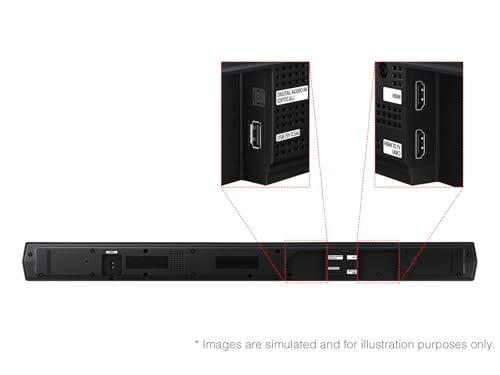
The B630F covers the essentials with HDMI ARC (Audio Return Channel), optical input, and Bluetooth connectivity. HDMI ARC allows the soundbar to receive audio from your TV through the same cable that carries video, simplifying setup and reducing cable clutter. However, its HDMI 1.4 implementation means it's limited to 1080p video pass-through—fine for most users, but potentially limiting for those with multiple 4K sources.
The Q990F includes HDMI eARC (enhanced Audio Return Channel), which supports higher bandwidth audio formats and better device communication. Its HDMI 2.1 ports support 4K video pass-through at 120Hz with HDR10+, making it fully compatible with the latest gaming consoles and 4K Blu-ray players. The comprehensive streaming support includes AirPlay 2, Spotify Connect, TIDAL Connect, and Google Cast, essentially turning the soundbar into a high-end music streaming hub.
Since these systems were released in 2022, the soundbar landscape has evolved primarily in three areas: improved AI processing algorithms, better wireless connectivity, and enhanced room correction capabilities. Samsung has continued refining their Adaptive Sound and SpaceFit technologies through firmware updates, meaning both systems have become more sophisticated over time.
The most significant industry trend has been the push toward Dolby Atmos Music and spatial audio for music streaming, which the Q990F is well-positioned to take advantage of, while the B630F relies on virtual processing to create similar effects.
In a typical living room setup with a 55-65 inch TV, both systems integrate well physically and aesthetically. The B630F is compact enough to sit in front of most TVs without blocking the screen or IR sensors, while its wireless subwoofer can be placed flexibly around the room.
The Q990F requires more consideration for optimal placement, particularly for the rear speakers, which need AC power outlets and clear lines of sight to the main bar. However, when properly positioned, it transforms the entire room into a convincing surround sound environment.
For apartment dwellers or those conscious of disturbing neighbors, both systems include Night Mode features that compress dynamic range, keeping explosions and loud effects from spiking while maintaining dialogue clarity. The Q990F takes this further with more sophisticated processing that maintains spatial effects even at reduced volumes.
At the time of writing, the B630F typically costs approximately one-third the price of the Q990F, making the value equation quite different for each system. The B630F represents excellent value for users primarily focused on improving TV dialogue and adding bass impact without complexity or high cost.
The Q990F operates in the premium segment where the question becomes whether flagship-level features justify the substantial price premium. For home theater enthusiasts who prioritize immersive audio experiences and plan to keep their system for many years, the advanced features and superior performance can justify the investment.
Choose the Samsung HW-B630F if you:
Choose the Samsung Q-Series HW-Q990F if you:
The fundamental decision comes down to whether you want a solid TV audio upgrade or a comprehensive home theater transformation. Both systems excel in their respective categories, but they serve distinctly different needs and expectations. The B630F makes every TV watching experience better, while the Q990F makes some experiences transcendent—and the price difference reflects that distinction.
| Samsung HW-B630F B-Series 3.1ch Soundbar System | Samsung Q-Series HW-Q990F Soundbar |
|---|---|
| Audio Configuration - Core difference that affects immersion and sound quality | |
| 3.1 channels (3 speakers in bar + wireless subwoofer) | 11.1.4 channels (23 total speakers across bar, sub, and rear speakers) |
| Dolby Atmos & Object-Based Audio - Essential for modern movie soundtracks | |
| No Dolby Atmos (uses DTS Virtual:X for simulated overhead effects) | Full Dolby Atmos & DTS:X with physical height channels |
| Included Components - What you get in the box affects total value | |
| Soundbar + wireless subwoofer | Complete system: soundbar + wireless subwoofer + wireless rear speakers |
| Subwoofer Power - Determines bass impact for movies and music | |
| Single 6" driver, bass-reflex design | Dual 8" force-canceling woofers with AI bass control |
| HDMI Connectivity - Critical for 4K gaming and high-quality audio | |
| HDMI 1.4 with ARC (1080p pass-through only) | HDMI 2.1 with eARC (4K/120Hz HDR10+ pass-through) |
| Wireless Streaming - Important for music and smart home integration | |
| Bluetooth 4.2 only | Wi-Fi + Bluetooth 5.3 + AirPlay 2 + Spotify Connect + Google Cast |
| Room Calibration - Automatically optimizes sound for your space | |
| Manual EQ adjustments only | SpaceFit Sound Pro Plus with automatic room analysis |
| Voice Assistants - Hands-free control and smart home integration | |
| None built-in (TV remote control only) | Built-in Bixby + Amazon Alexa + Google Assistant compatibility |
| Expandability - Future upgrade options without replacing entire system | |
| Optional wireless rear speaker kit (sold separately) | Complete system included, no further expansion needed |
| Ideal Room Size - Performance scales with space | |
| Small to medium rooms (under 300 sq ft) | Medium to large rooms (300+ sq ft for full surround benefit) |
| Primary Use Case - Where each system excels most | |
| TV dialogue enhancement + casual movie watching | Premium home theater + audiophile music + competitive gaming |
The Samsung HW-B630F is a 3.1-channel system with a soundbar and wireless subwoofer, while the Samsung Q-Series HW-Q990F is an 11.1.4-channel system that includes wireless rear speakers for true surround sound. The HW-Q990F offers genuine Dolby Atmos with overhead effects, whereas the HW-B630F uses virtual surround processing to simulate these effects.
Both soundbars excel at dialogue clarity with dedicated center channels, but the Samsung Q-Series HW-Q990F has a slight edge with its Active Voice Amplifier Pro technology that uses AI to dynamically enhance speech. The Samsung HW-B630F still provides excellent dialogue improvement over TV speakers with its Voice Enhance mode and is perfectly adequate for most viewers.
It depends on your room size and expectations. The Samsung HW-B630F works great in small to medium rooms and provides substantial improvement over TV audio for most content. You only need the Samsung Q-Series HW-Q990F if you have a larger room, want true surround sound with overhead effects, or are a serious home theater enthusiast who prioritizes immersive audio experiences.
The Samsung Q-Series HW-Q990F is superior for gaming, especially competitive gaming, thanks to its Game Pro Mode and true surround positioning that helps locate enemies through audio cues. It also supports HDMI 2.1 for 4K/120Hz gaming. The Samsung HW-B630F includes a decent Game Mode but relies on virtual processing rather than physical speaker placement.
Both soundbars connect to your TV via HDMI or optical cable, but only the Samsung Q-Series HW-Q990F supports wireless Dolby Atmos transmission from compatible Samsung TVs. The HW-B630F requires a wired connection to your TV, though its subwoofer connects wirelessly to the main soundbar.
The Samsung Q-Series HW-Q990F has significantly better bass with dual 8-inch force-canceling woofers and AI-powered bass control that minimizes distortion. The Samsung HW-B630F has a single 6-inch subwoofer that's adequate for most rooms but can't match the depth and power of the flagship model's dual-woofer design.
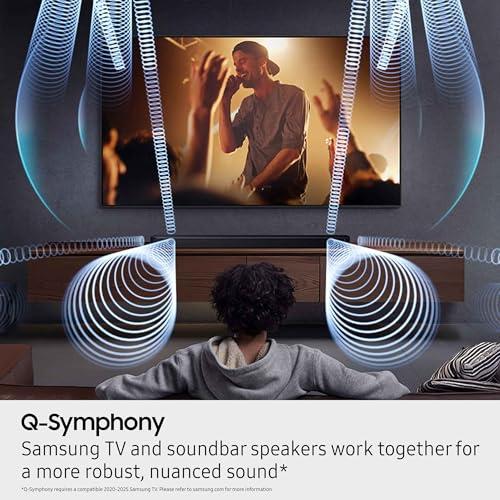
Yes, both the Samsung HW-B630F and Samsung Q-Series HW-Q990F work with any TV brand through HDMI ARC/eARC or optical connections. However, you'll get additional features like Q-Symphony and seamless remote control integration when paired with compatible Samsung TVs.
The Samsung HW-B630F is significantly easier to set up with just a soundbar and wireless subwoofer that automatically pairs. The Samsung Q-Series HW-Q990F requires positioning rear speakers around your room and running power cables to them, making installation more complex but offering superior performance once properly configured.
The Samsung HW-B630F only supports Bluetooth music streaming. The Samsung Q-Series HW-Q990F offers comprehensive streaming options including Wi-Fi, Bluetooth 5.3, Apple AirPlay 2, Spotify Connect, TIDAL Connect, and Google Cast, making it much better for music enthusiasts who want high-quality wireless streaming.
The Samsung HW-B630F is ideal for small apartments because it provides substantial audio improvement without overwhelming the space or disturbing neighbors. Its Night Mode compresses loud effects while maintaining dialogue clarity. The Samsung Q-Series HW-Q990F may be overkill for small spaces and could be too powerful for thin-walled apartments.
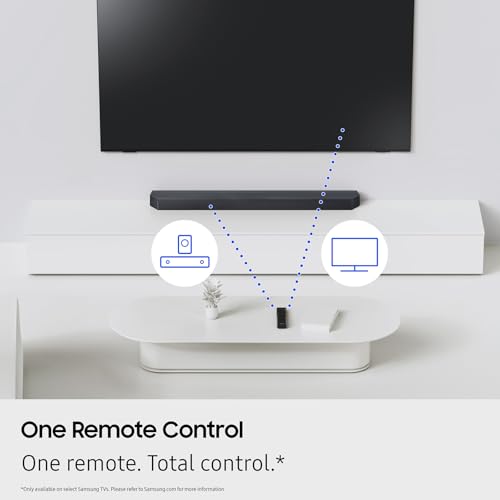
The Samsung HW-B630F doesn't have built-in voice assistants but works with Samsung's One Remote system. The Samsung Q-Series HW-Q990F includes built-in Bixby and Amazon Alexa, plus compatibility with Google Assistant devices, offering hands-free control and smart home integration.
Both soundbars receive firmware updates, but the Samsung Q-Series HW-Q990F is more future-proof with HDMI 2.1, eARC support, and comprehensive streaming capabilities that support emerging formats. The Samsung HW-B630F covers current needs well but may become limited as 4K gaming and lossless audio streaming become more prevalent.
We've done our best to create useful and informative comparisons to help you decide what product to buy. Our research uses advanced automated methods to create this comparison and perfection is not possible - please contact us for corrections or questions. These are the sites we've researched in the creation of this article: samsung.com - bhphotovideo.com - crutchfield.com - youtube.com - bestproducts.com - videoandaudiocenter.com - pcrichard.com - bhphotovideo.com - samsung.com - youtube.com - requiremints.com - karlsonline.com - crutchfield.com - youtube.com - donstv.com - samsung.com - bhphotovideo.com - youtube.com - youtube.com - crutchfield.com - costco.ca - rtings.com - crutchfield.com - accio.com - bhphotovideo.com - manuals.plus - samsung.com - saraappliance.com - rtings.com - crutchfield.com - sound-advice.online - samsung.com - soundandvision.com - samsung.com - whathifi.com - youtube.com - youtube.com - bestbuy.com - avsforum.com - content.syndigo.com - samsung.com - businessinsider.com - dolby.com - youtube.com - abcwarehouse.com

Privacy Policy
Terms and Conditions - Affiliate Policy
Home Security
© Copyright 2008-2026.
11816 Inwood Rd #1211, Dallas, TX 75244