




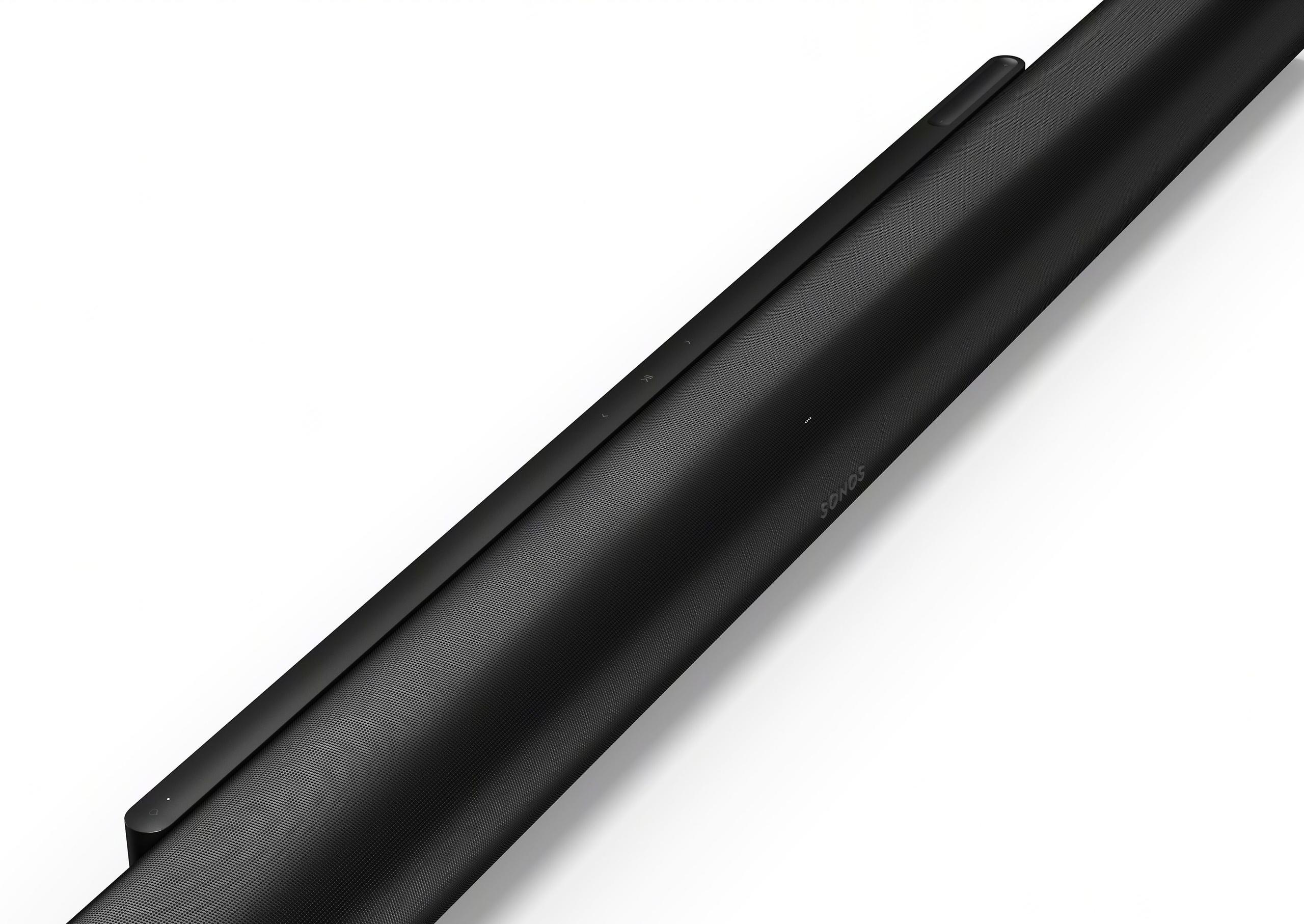
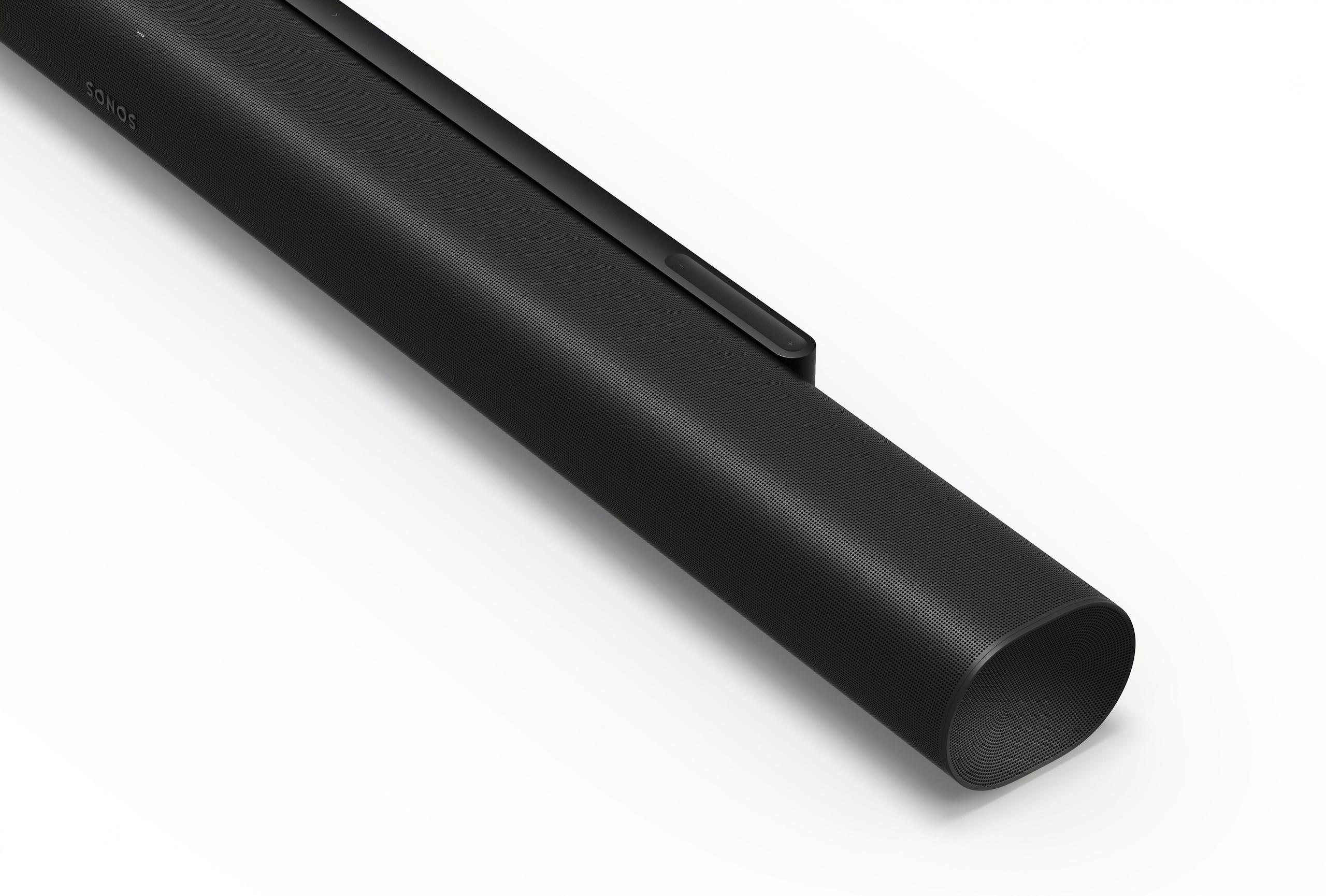
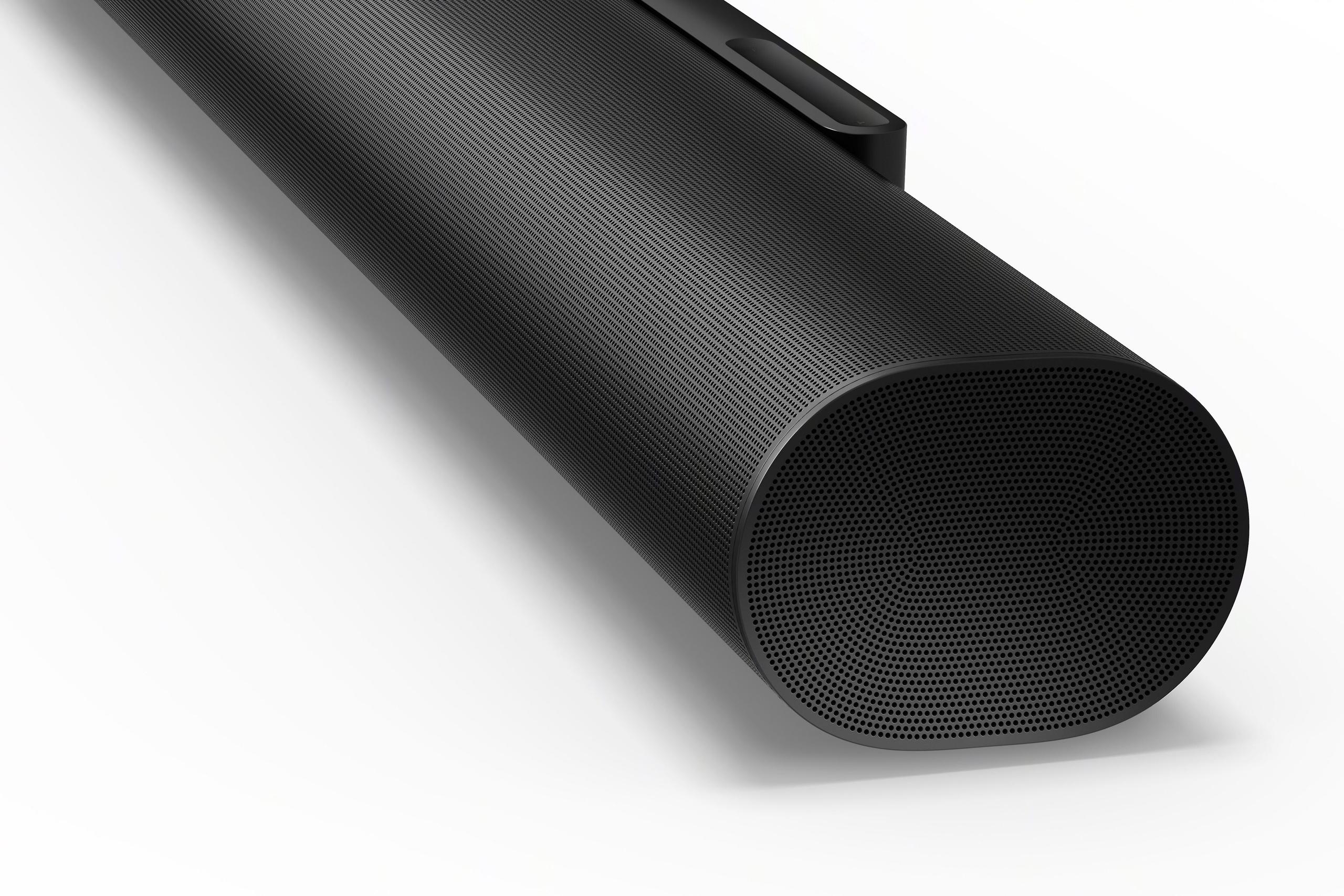
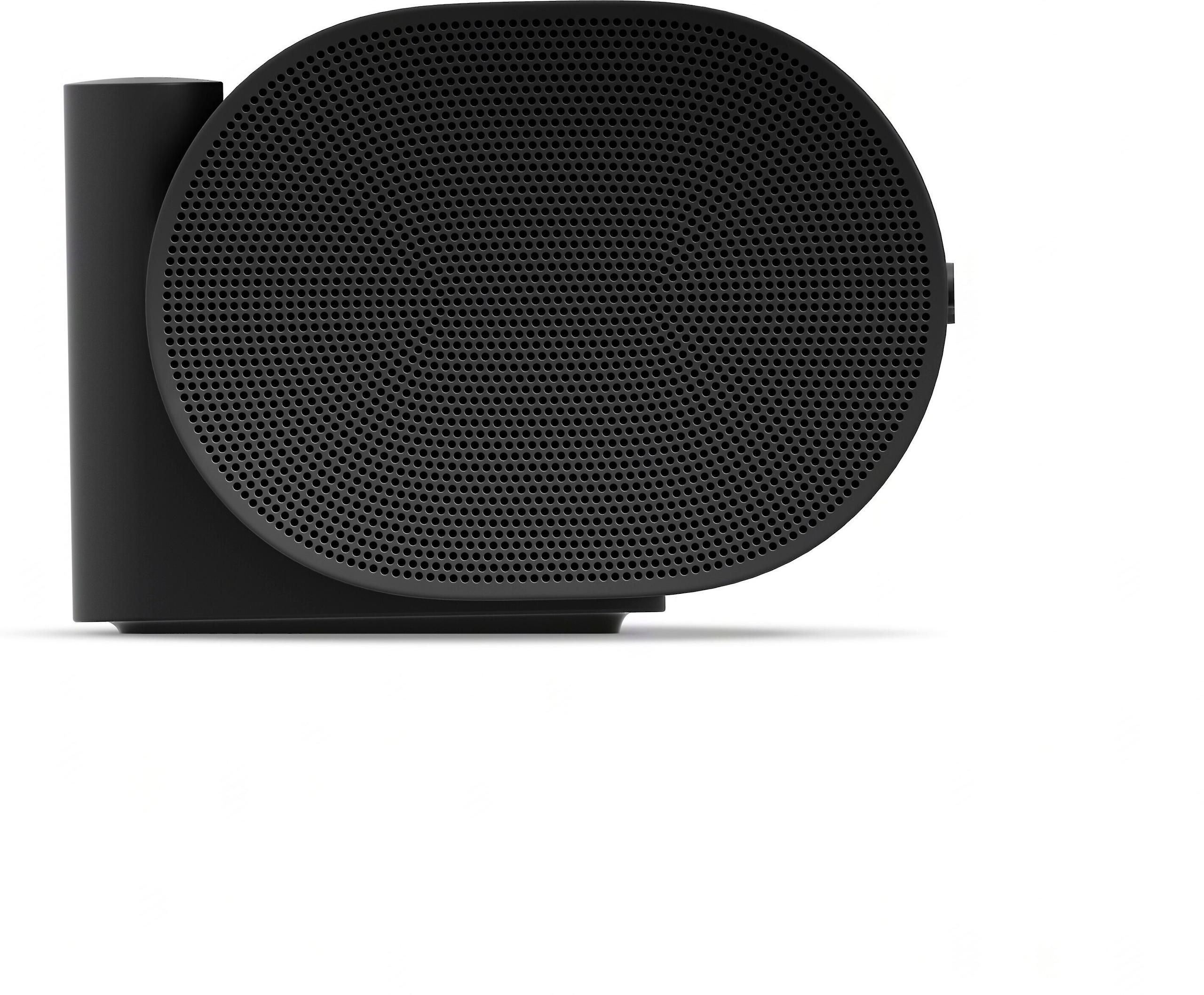
Shopping for a premium soundbar in 2024 can feel overwhelming, especially when you're looking at two fundamentally different approaches to home theater audio. The Samsung HW-Q990F and Sonos Arc Ultra represent opposite philosophies in soundbar design, and understanding these differences is crucial for making the right choice for your setup.
Before diving into specifics, it's important to understand what separates premium soundbars from budget options. Premium soundbars typically offer Dolby Atmos support (a technology that places sounds in three-dimensional space around you), multiple drivers for better frequency response, room calibration features, and high-quality amplification. However, they split into two distinct camps.
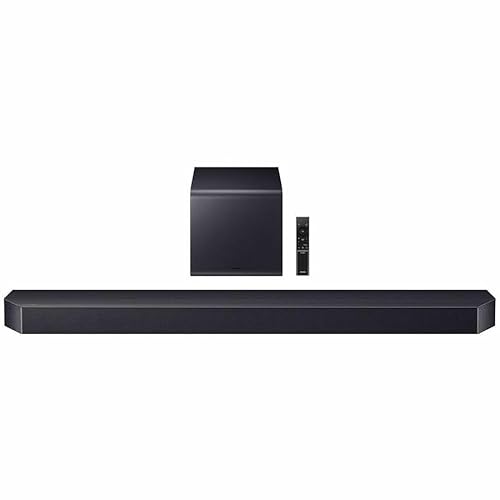
Complete surround systems like the Samsung HW-Q990F bundle everything you need for true surround sound: a main soundbar, wireless subwoofer, and rear speakers. These systems create genuine 360-degree audio by physically placing speakers around your room. Standalone virtualized units like the Sonos Arc Ultra use advanced processing and carefully positioned drivers to simulate surround effects from a single bar.
Both approaches have merit, but they serve different needs and room configurations. The key considerations include how much space you have, whether you want discrete rear speakers, your connectivity requirements, and whether you prioritize maximum immersion or elegant simplicity.
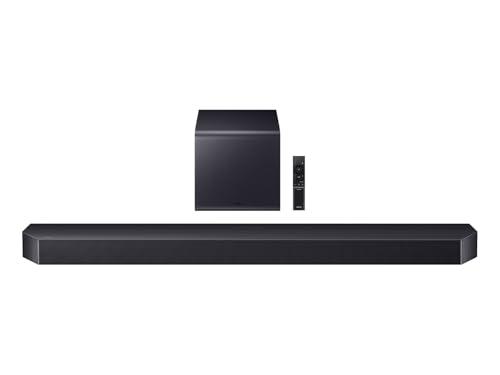
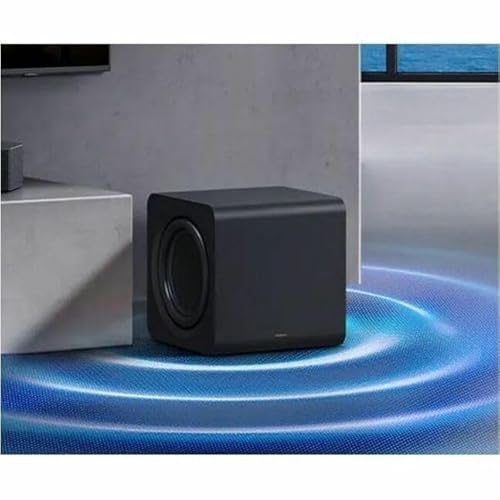
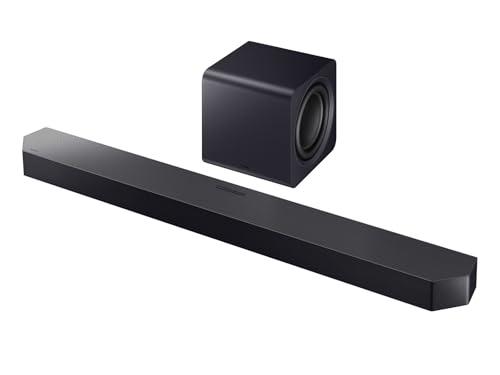
The Samsung HW-Q990F, released in 2024, represents Samsung's flagship soundbar offering and includes significant improvements over previous generations. Most notably, Samsung redesigned the subwoofer with dual opposing 8-inch drivers in a compact cube design, replacing the tall rectangular units from earlier models. This change reduces vibration and improves bass control while making placement more flexible.
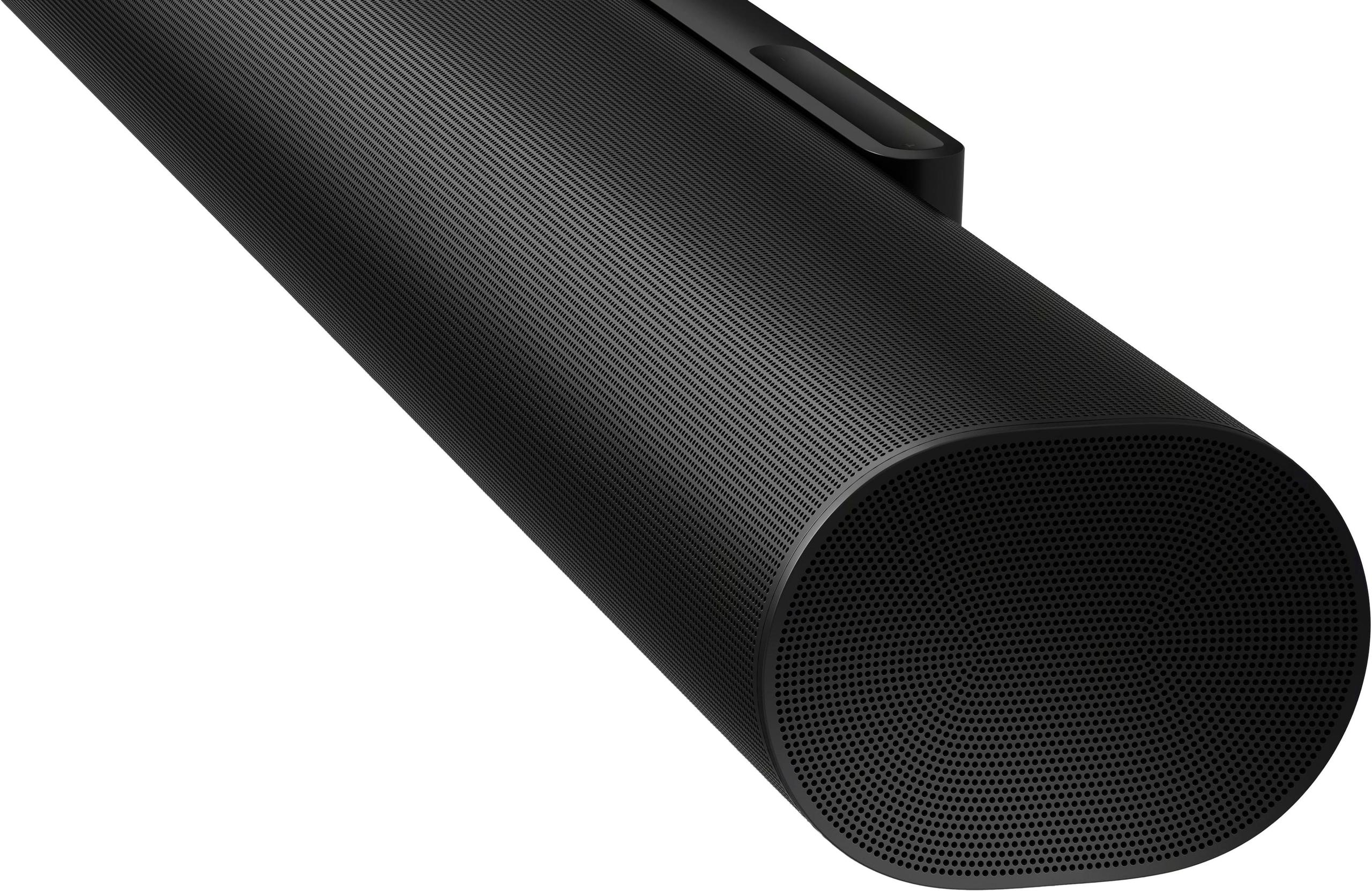
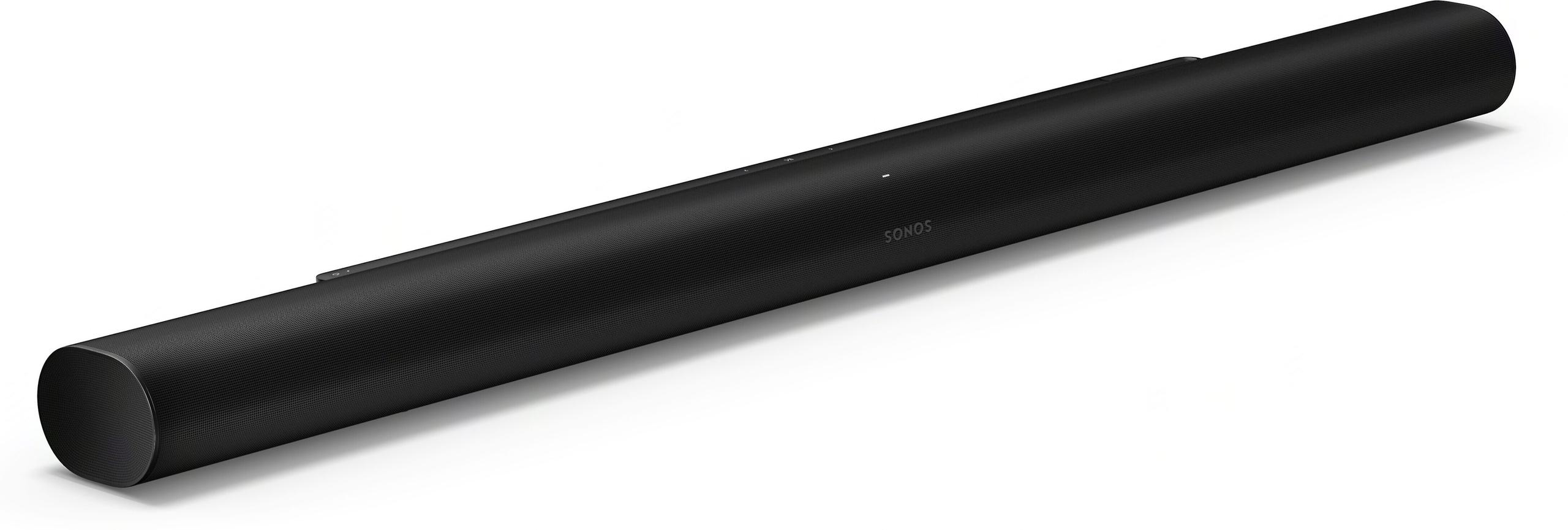
The Sonos Arc Ultra, also launched in 2024, introduces revolutionary Sound Motion technology—a breakthrough that replaces traditional single-motor woofers with four lightweight motors. This innovation allows Sonos to pack more bass performance into a sleeker form factor while maintaining their signature build quality and ecosystem integration.
Both products benefit from years of acoustic research and software refinement, representing mature approaches to their respective design philosophies.
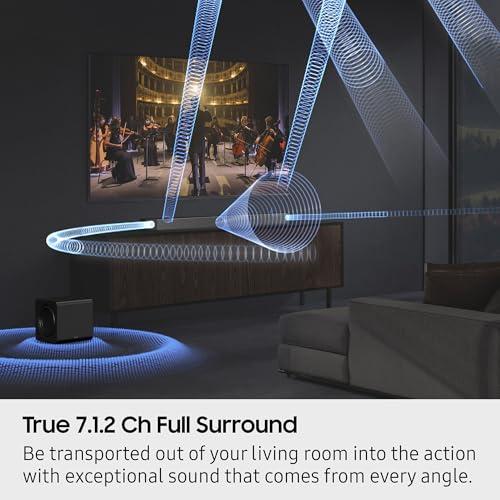
The most fundamental difference between these soundbars is what you get in the box. The Samsung HW-Q990F delivers an 11.1.4-channel configuration as a complete package. This means 11 main channels, 1 subwoofer channel, and 4 height channels, spread across 23 total drivers. The main soundbar houses multiple driver types: elliptical midrange units for vocal clarity, forward-firing tweeters for crisp highs, side-firing speakers for width, and up-firing drivers that bounce sound off your ceiling for overhead effects.
The wireless rear speakers each contain three drivers—forward-firing, side-firing, and up-firing—creating a seamless sound bubble around your listening position. When a helicopter flies overhead in a movie, you'll hear it travel from the main bar, through the rear speakers, and across the ceiling using discrete audio channels.
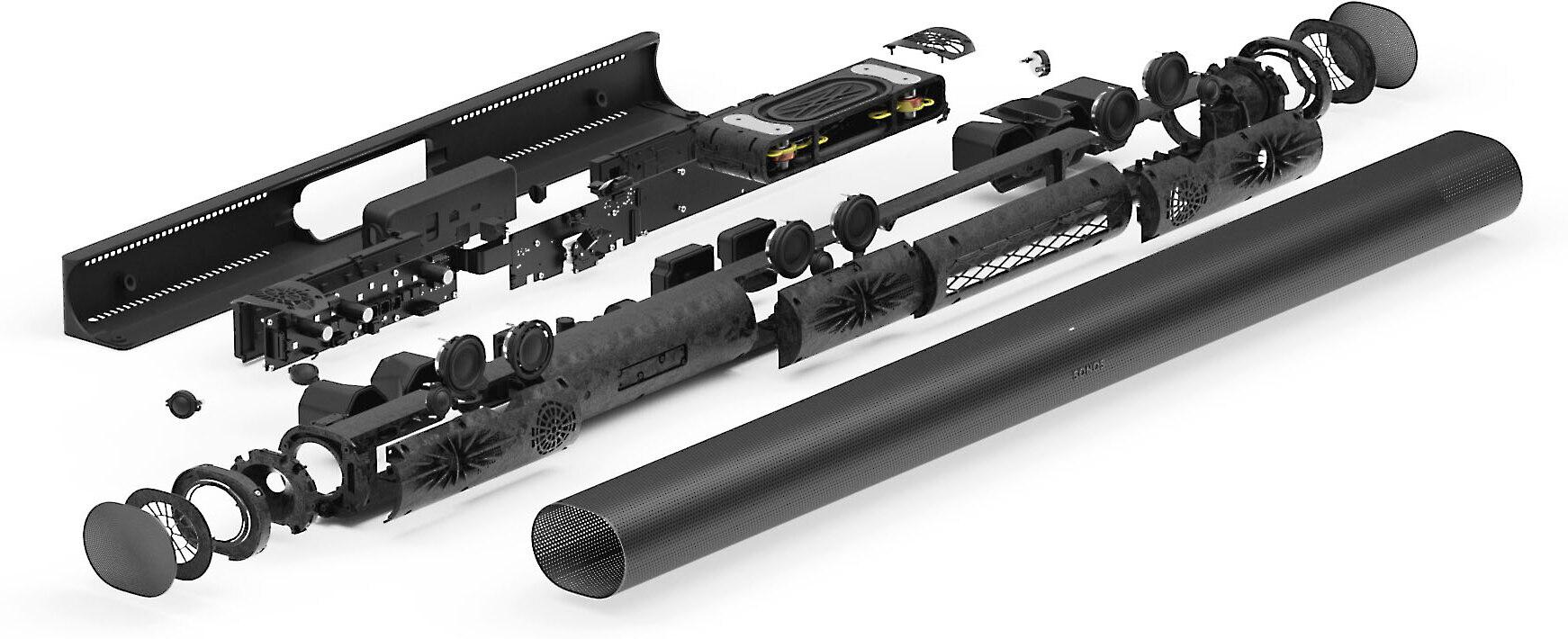
In contrast, the Sonos Arc Ultra achieves a 9.1.4-channel experience through virtualization—using 14 precisely positioned drivers and sophisticated processing to trick your ears into perceiving surround effects. Seven tweeters handle high frequencies, six midwoofers manage vocals and mid-range content, and the Sound Motion woofer delivers bass. Advanced algorithms analyze incoming audio and distribute it across these drivers to create the illusion of speakers throughout your room.
Both approaches work, but they feel different in practice. The Samsung creates a more convincing sense of being surrounded by sound, especially for movie content where effects clearly come from behind you. The Sonos excels at creating a wide, enveloping soundstage from the front while maintaining excellent stereo imaging for music.
When evaluating surround sound performance, the Samsung HW-Q990F holds a clear advantage for true spatial audio. Having physical speakers behind your listening position eliminates the guesswork involved in audio processing. When watching action movies, explosions genuinely occur around you rather than being simulated through psychoacoustic tricks.
The rear speakers in Samsung's system deserve special attention. Each contains forward, side, and up-firing drivers, meaning they don't just handle simple surround effects—they create their own localized sound fields. During complex scenes with multiple audio elements, this discrete approach maintains better channel separation and positioning accuracy.
However, the Sonos Arc Ultra shouldn't be dismissed. Sound Motion technology represents a genuine breakthrough in driver design. Traditional woofers use a single heavy motor to move the cone, but Sonos employs four lightweight motors working in coordination. This approach provides better control over cone movement, reducing distortion and allowing for deeper, more precise bass from a compact driver.
The Arc Ultra's virtualized surround processing has also improved significantly. Using advanced room modeling and psychoacoustic processing, it creates convincing overhead effects and lateral positioning that many users find satisfying, even if not quite as precise as discrete speakers.
Bass performance reveals another key difference between these approaches. The Samsung HW-Q990F includes a dedicated wireless subwoofer with dual opposing 8-inch drivers. This configuration cancels out cabinet vibration while delivering room-filling low-frequency energy. For action movies, this translates to visceral impact during explosions, deep rumble during dramatic moments, and clear bass lines in music.
The subwoofer's wireless nature allows optimal placement—you can position it where it sounds best in your room rather than being constrained by cable length. Bass response extends down to 32Hz, which covers most movie content effectively, though the deepest organ notes and special effects might benefit from even lower extension.
The Sonos Arc Ultra takes a different approach with its integrated Sound Motion woofer. While it can't match a dedicated subwoofer's raw output, the technology delivers surprisingly deep and controlled bass for a single-unit design. The four-motor system provides excellent articulation—bass notes start and stop precisely without lingering resonance or muddiness.
This controlled approach works particularly well for music, where bass should complement rather than overwhelm other frequencies. However, action movie enthusiasts might find it lacking the visceral punch that makes explosions feel threatening. Sonos addresses this limitation by offering the Sub 4 as an optional addition, though this significantly increases the total system cost.
Clear dialogue reproduction represents one of the most important aspects of any home theater system. Both soundbars address this through different methods, and both excel in their own ways.
The Samsung HW-Q990F employs a discrete center channel with dedicated drivers specifically tuned for vocal frequencies. This traditional approach ensures dialogue always comes from the screen center, maintaining proper lip-sync and character positioning even during complex scenes. Samsung's Active Voice Amplifier Pro uses AI processing to analyze ambient noise and boost dialogue frequencies accordingly, ensuring speech remains clear even when background music or effects compete for attention.
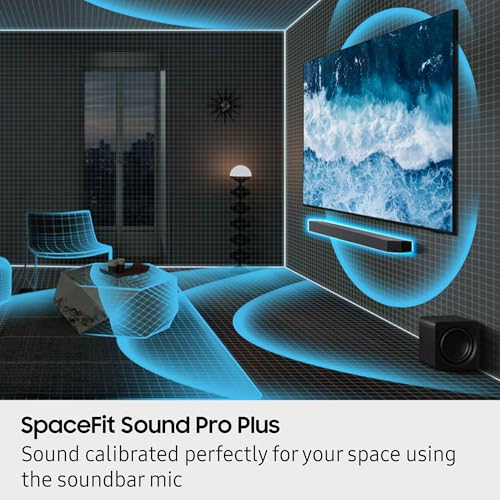
The system's room calibration technology, called SpaceFit Pro, continuously analyzes your room's acoustics and adjusts output to maintain dialogue clarity regardless of your seating position or room characteristics. This proves especially valuable in challenging acoustic environments with hard surfaces or unusual layouts.
The Sonos Arc Ultra achieves excellent dialogue clarity through precise driver positioning and advanced signal processing. Seven tweeters ensure high-frequency consonants cut through clearly, while dedicated midrange drivers handle vocal fundamentals. Sonos's Speech Enhancement feature offers three levels of adjustment, allowing you to boost dialogue without making voices sound artificial or processed.
Trueplay room calibration, now available for both iOS and Android users, automatically adjusts the soundbar's output based on your room's acoustic signature. This feature proves particularly effective at maintaining dialogue intelligibility across different seating positions.
Music performance often separates good soundbars from great ones, and both products excel here for different reasons.
The Samsung HW-Q990F creates an expansive soundstage through its multiple speaker positions. Stereo music benefits from the width provided by side-firing drivers in the main bar, while the rear speakers can add ambient information for specially mixed content. The system handles dynamic range well, with powerful amplification that maintains composure during demanding passages.
However, the Samsung's tuning leans slightly toward excitement rather than absolute neutrality. This works well for pop and rock music where energy and impact matter, but classical and acoustic music might benefit from EQ adjustment using the seven-band graphic equalizer.
The Sonos Arc Ultra takes a more audiophile-focused approach. Sound Motion technology delivers exceptionally controlled and accurate bass reproduction, allowing subtle musical details to shine through without being masked by loose or boomy low frequencies. The overall frequency response leans toward neutrality, making it an excellent choice for diverse musical genres.
Sonos's heritage as a music-focused company shows in the Arc Ultra's streaming capabilities. Native integration with major music services, support for high-resolution audio formats, and seamless multi-room functionality make it particularly appealing for households where music listening equals or exceeds movie watching.
At the time of writing, the Samsung HW-Q990F typically costs several hundred dollars more than the Sonos Arc Ultra as a standalone unit. However, this comparison isn't entirely fair since you're getting a complete surround system with the Samsung versus just a soundbar with the Sonos.
To match the Samsung's discrete surround capability, you'd need to add Sonos Era 300 rear speakers and a Sub 4 to the Arc Ultra, potentially more than doubling the total investment. This makes the Samsung an exceptional value for users wanting complete surround sound immediately.
However, the Sonos approach offers modularity. You can start with just the Arc Ultra and add components over time as budget allows or needs change. This flexibility appeals to users who prefer gradual system building or aren't certain about committing to a full surround setup initially.
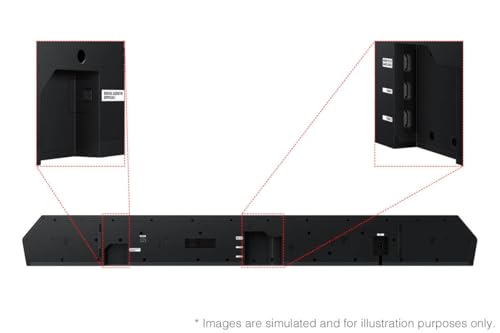
Real-world connectivity often determines user satisfaction more than pure audio performance. The Samsung HW-Q990F provides two HDMI 2.1 inputs plus an eARC output, supporting 4K/120Hz passthrough for gaming consoles. This proves invaluable for users with multiple HDMI sources who want to avoid switching cables or dealing with TV input limitations.
Gaming performance particularly benefits from this connectivity. The Samsung supports variable refresh rate (VRR) and auto low latency mode (ALLM), ensuring smooth gameplay with minimal audio delay. The system also supports both Dolby Atmos and DTS:X audio formats, providing compatibility with all current content sources.
The Sonos Arc Ultra streamlines connectivity to a single HDMI eARC port, which may frustrate users juggling multiple devices. However, this simplicity appeals to users who primarily stream content through their TV's built-in apps. The Arc Ultra compensates with excellent wireless connectivity, supporting Bluetooth, AirPlay 2, and robust Wi-Fi streaming with native integration for major music services.
Multi-room audio represents a significant Sonos advantage. If you already own other Sonos speakers or plan to build a whole-home audio system, the Arc Ultra integrates seamlessly with existing components. This ecosystem approach provides long-term value that extends beyond just home theater usage.
The Samsung HW-Q990F requires careful consideration of room layout and speaker placement. The wireless rear speakers need appropriate positioning behind the listening area with clear line-of-sight to the main bar for optimal wireless connectivity. The subwoofer, while wireless, still requires a power outlet and placement that doesn't interfere with room traffic flow.
This multi-component approach works best in dedicated home theater spaces or living rooms where furniture arrangement can accommodate proper speaker positioning. Rooms with open floor plans or unusual layouts might present challenges for optimal rear speaker placement.
The Sonos Arc Ultra offers maximum installation flexibility with its single-unit design. Wall mounting proves straightforward with included hardware, and the soundbar's compact profile (shorter than the Samsung) fits under most TVs without obstruction. This simplicity particularly appeals to renters or users who frequently rearrange their living spaces.
However, single-unit performance depends heavily on room acoustics and positioning. The Arc Ultra works best in rooms with some reflective surfaces to support its virtualization algorithms, though Trueplay calibration helps optimize performance in challenging acoustic environments.
You want the most convincing surround sound experience possible from a soundbar system. The discrete rear speakers create genuine 360-degree audio that virtualized systems simply cannot match. This makes the Samsung HW-Q990F ideal for serious movie enthusiasts who prioritize maximum immersion above all else.
The system also suits users with multiple HDMI sources, particularly gamers who own multiple consoles or users with dedicated streaming devices alongside their smart TV. The comprehensive format support ensures compatibility with all current and future content.
Budget-conscious buyers seeking complete surround sound will find excellent value here, especially considering frequent sales that significantly reduce the price gap with competitors.
You prioritize elegant simplicity and exceptional music performance alongside capable movie audio. The Sonos Arc Ultra excels in living spaces where aesthetics matter as much as audio quality. Its single-unit design eliminates cable management concerns and provides maximum flexibility for future room rearrangements.
The Arc Ultra particularly suits users already invested in the Sonos ecosystem or those planning to build multi-room audio systems over time. Music enthusiasts will appreciate the controlled, accurate sound signature that works well across all genres.
Consider the Sonos if your room layout doesn't accommodate rear speakers well, or if you rent and need maximum installation flexibility.
Both soundbars represent excellent choices within their respective approaches, but they serve different priorities. The Samsung HW-Q990F delivers maximum home theater immersion and excellent value as a complete system. Its discrete surround speakers create a convincing bubble of sound that virtualized systems struggle to match, making it the clear choice for movie enthusiasts with appropriate room layouts.
The Sonos Arc Ultra offers a more refined, flexible approach that excels for mixed music and movie usage. Its exceptional build quality, ecosystem integration, and elegant simplicity make it ideal for users who prioritize aesthetics and long-term flexibility alongside strong audio performance.
Consider your room, usage patterns, and future expansion plans carefully. If you want maximum movie impact and have space for multiple components, the Samsung delivers exceptional value. If you prefer controlled performance, elegant design, and ecosystem flexibility, the Sonos represents a more sophisticated long-term investment.
| Samsung Q-Series HW-Q990F Soundbar | Sonos Arc Ultra Dolby Atmos Soundbar |
|---|---|
| System Configuration - Determines surround sound authenticity | |
| Complete 11.1.4 system with wireless subwoofer and rear speakers included | Single soundbar with 9.1.4 virtualized surround (rear speakers sold separately) |
| Total Drivers - More drivers generally mean better sound separation | |
| 23 drivers across all components (15 in main bar, 6 in rears, 2 in sub) | 14 drivers in soundbar (7 tweeters, 6 midwoofers, 1 Sound Motion woofer) |
| Bass Performance - Critical for action movies and music impact | |
| Dedicated wireless subwoofer with dual 8" opposing drivers, 32Hz extension | Integrated Sound Motion woofer with 4-motor design (Sub 4 available separately) |
| HDMI Connectivity - Essential for gaming and multiple devices | |
| 2 HDMI 2.1 inputs + 1 eARC output, 4K/120Hz gaming support | 1 HDMI eARC port only (may require HDMI switcher for multiple sources) |
| Audio Format Support - Affects compatibility with movies and streaming | |
| Dolby Atmos, DTS:X, Dolby TrueHD, DTS-HD Master Audio | Dolby Atmos, Dolby Digital formats (no DTS:X support) |
| Room Calibration - Optimizes sound for your specific space | |
| SpaceFit Sound Pro Plus with continuous acoustic analysis | Trueplay tuning (now available for both iOS and Android) |
| Multi-Room Audio - Important for whole-home music systems | |
| Basic wireless streaming, works with Samsung TVs | Full Sonos ecosystem integration with seamless multi-room capabilities |
| Physical Footprint - Consider your available space | |
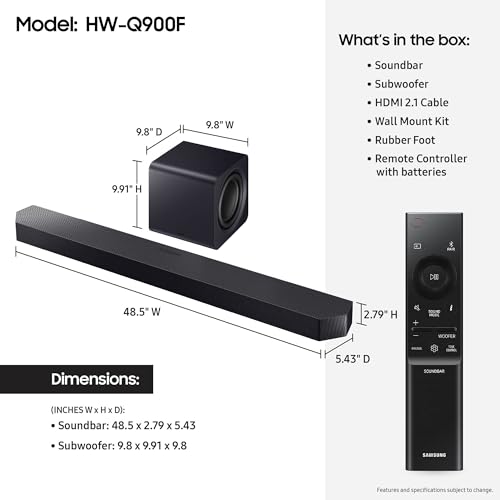
| 48.5" main bar + separate subwoofer + rear speakers requiring placement | 46.2" single unit, no additional components cluttering room |
| Voice Control - Convenience for hands-free operation | |
| Built-in Bixby and Alexa, Google Assistant compatible | Alexa built-in, Google Assistant via separate device |
| Streaming Services - Direct music access without TV | |
| Spotify Connect, TIDAL Connect, Apple AirPlay 2, Google Cast, Roon Ready | Native Sonos app with 100+ services, Apple AirPlay 2, Spotify Connect |
| Setup Complexity - Time and effort required for installation | |
| Multiple wireless components need positioning and pairing | Single HDMI connection, app-guided setup process |
The Samsung HW-Q990F is better for dedicated home theater use because it includes physical rear speakers and a subwoofer, creating true 360-degree surround sound. The Sonos Arc Ultra uses virtualized surround effects from a single bar, which works well but can't match the immersion of discrete speakers positioned around your room.
The Samsung HW-Q990F includes everything you need - the main soundbar, wireless subwoofer, and rear speakers come in one package. The Sonos Arc Ultra is just the soundbar, so you'd need to purchase the Sub 4 and Era 300 speakers separately to match Samsung's surround sound capability.
The Samsung HW-Q990F has stronger bass due to its dedicated wireless subwoofer with dual 8-inch drivers. The Sonos Arc Ultra uses an innovative Sound Motion woofer that's impressive for a single unit but can't match the deep, room-filling bass of Samsung's separate subwoofer.
The Samsung HW-Q990F offers more connectivity with 2 HDMI inputs plus 1 eARC output, making it ideal for gaming consoles and multiple devices. The Sonos Arc Ultra has only 1 HDMI eARC port, which may require an HDMI switcher if you have multiple sources.
The Sonos Arc Ultra is much easier to install - it's a single unit with one HDMI cable and app-guided setup. The Samsung HW-Q990F requires positioning and connecting multiple wireless components (main bar, subwoofer, and rear speakers), making setup more complex but ultimately more rewarding for surround sound.
Yes, both the Samsung HW-Q990F and Sonos Arc Ultra support Dolby Atmos for overhead sound effects. However, the Samsung also supports DTS:X format, while the Sonos only supports Dolby audio formats, which may limit compatibility with some content.
The Sonos Arc Ultra excels at music with its precise Sound Motion technology and neutral tuning that works well across all genres. It also integrates seamlessly with Sonos's multi-room ecosystem. The Samsung HW-Q990F creates a wider soundstage through multiple speakers but has a slightly more excited tuning better suited for movies.
The Sonos Arc Ultra needs minimal space - just the 46-inch soundbar under your TV. The Samsung HW-Q990F requires more room planning since you need to position the wireless subwoofer and rear speakers appropriately around your seating area for optimal surround sound.
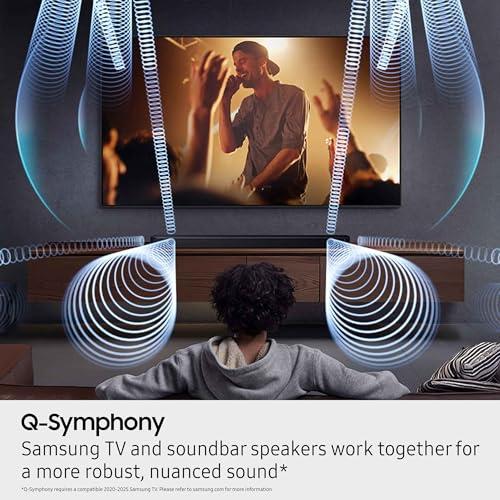
The Samsung HW-Q990F offers deeper integration with Samsung TVs through Q-Symphony technology, which combines the TV and soundbar speakers for enhanced audio. Both the Samsung and Sonos Arc Ultra work with any TV brand, but Samsung provides additional features when paired with their own TVs.
The Samsung HW-Q990F is a complete system that can't be expanded further. The Sonos Arc Ultra offers modular expansion - you can start with just the soundbar and add the Sub 4, rear speakers, or other Sonos speakers throughout your home over time.
The Samsung HW-Q990F is superior for gaming due to its multiple HDMI 2.1 inputs supporting 4K/120Hz, VRR, and ALLM for next-gen consoles. The discrete surround speakers also provide better directional audio cues. The Sonos Arc Ultra works for gaming but lacks multiple HDMI inputs and may require additional equipment.
The Samsung HW-Q990F provides better immediate value since it includes a complete surround system in one purchase. To match its capabilities, you'd need to buy the Sonos Arc Ultra plus additional speakers and subwoofer separately, significantly increasing the total cost. However, Sonos offers modular flexibility if you prefer to build your system gradually.
We've done our best to create useful and informative comparisons to help you decide what product to buy. Our research uses advanced automated methods to create this comparison and perfection is not possible - please contact us for corrections or questions. These are the sites we've researched in the creation of this article: rtings.com - crutchfield.com - sound-advice.online - samsung.com - soundandvision.com - samsung.com - whathifi.com - youtube.com - youtube.com - bestbuy.com - avsforum.com - content.syndigo.com - samsung.com - businessinsider.com - dolby.com - youtube.com - abcwarehouse.com - bestbuy.com - shopjetson.com - youtube.com - ign.com - crutchfield.com - dowtechnologies.com - sonos.com - appleinsider.com - pcrichard.com - clefdesol.com - sonos.com - businessinsider.com - audioadvice.com - en.community.sonos.com

Privacy Policy
Terms and Conditions - Affiliate Policy
Home Security
© Copyright 2008-2026.
11816 Inwood Rd #1211, Dallas, TX 75244