

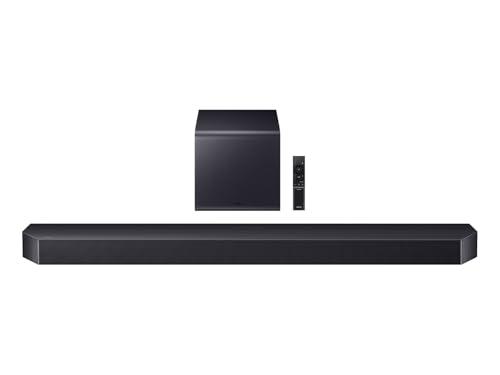
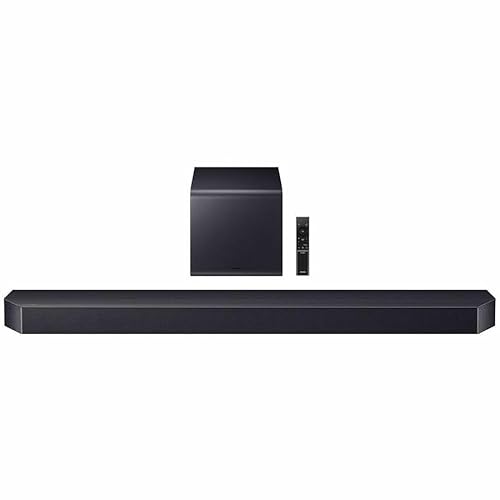






When you're tired of straining to hear dialogue or cranking up the volume just to catch what characters are saying, a soundbar can transform your TV watching experience. But choosing between a premium home theater system like the Samsung HW-Q990F and a smart compact option like the Sonos Beam Gen 2 involves understanding two completely different approaches to solving the same problem.
At the time of writing, these soundbars sit in vastly different price categories – the Samsung HW-Q990F costs roughly four times more than the Sonos Beam Gen 2. That price gap isn't just about brand positioning; it reflects fundamentally different philosophies about how to create better TV audio.
The soundbar category has exploded over the past decade as TVs became thinner and their built-in speakers got worse. Modern flat-panel TVs often have speakers that fire downward or backward, creating muffled, unclear audio that struggles with dialogue and completely lacks bass impact.
Channel configuration is the most important spec to understand when comparing soundbars. When you see numbers like "11.1.4" or "5.0," these describe how many separate audio channels the system can reproduce. The first number represents main channels (front left, center, right, surround speakers), the second is dedicated subwoofer channels, and the third indicates height channels for overhead effects.
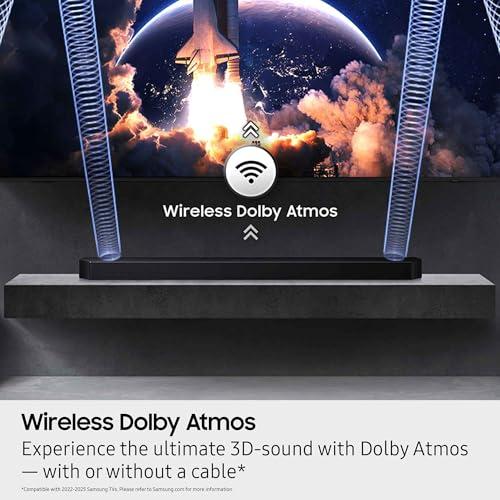
Dolby Atmos represents the latest evolution in surround sound technology. Unlike traditional surround sound that creates a circle of audio around you, Atmos adds a height dimension by bouncing sound off your ceiling or using upward-firing speakers. This creates the sensation of helicopters flying overhead or rain falling around you.
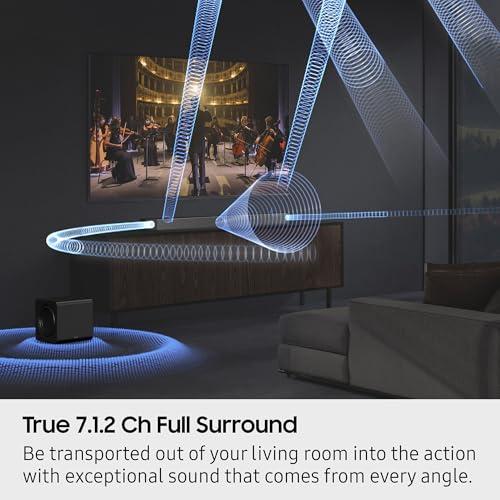
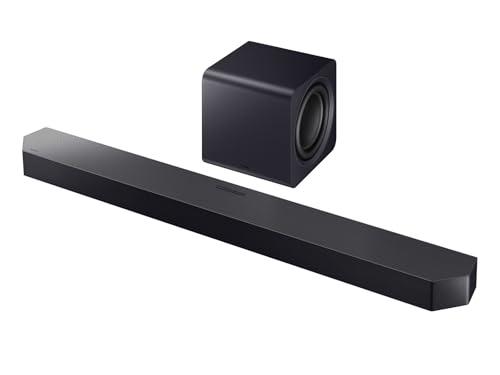
The Samsung HW-Q990F, released in 2024, takes a comprehensive approach with its 11.1.4-channel setup. You get the main soundbar, a wireless subwoofer for deep bass, and separate wireless rear speakers that physically surround your seating area. Each rear speaker contains three drivers: one pointing forward, one to the side, and one angled upward to create those overhead Atmos effects.
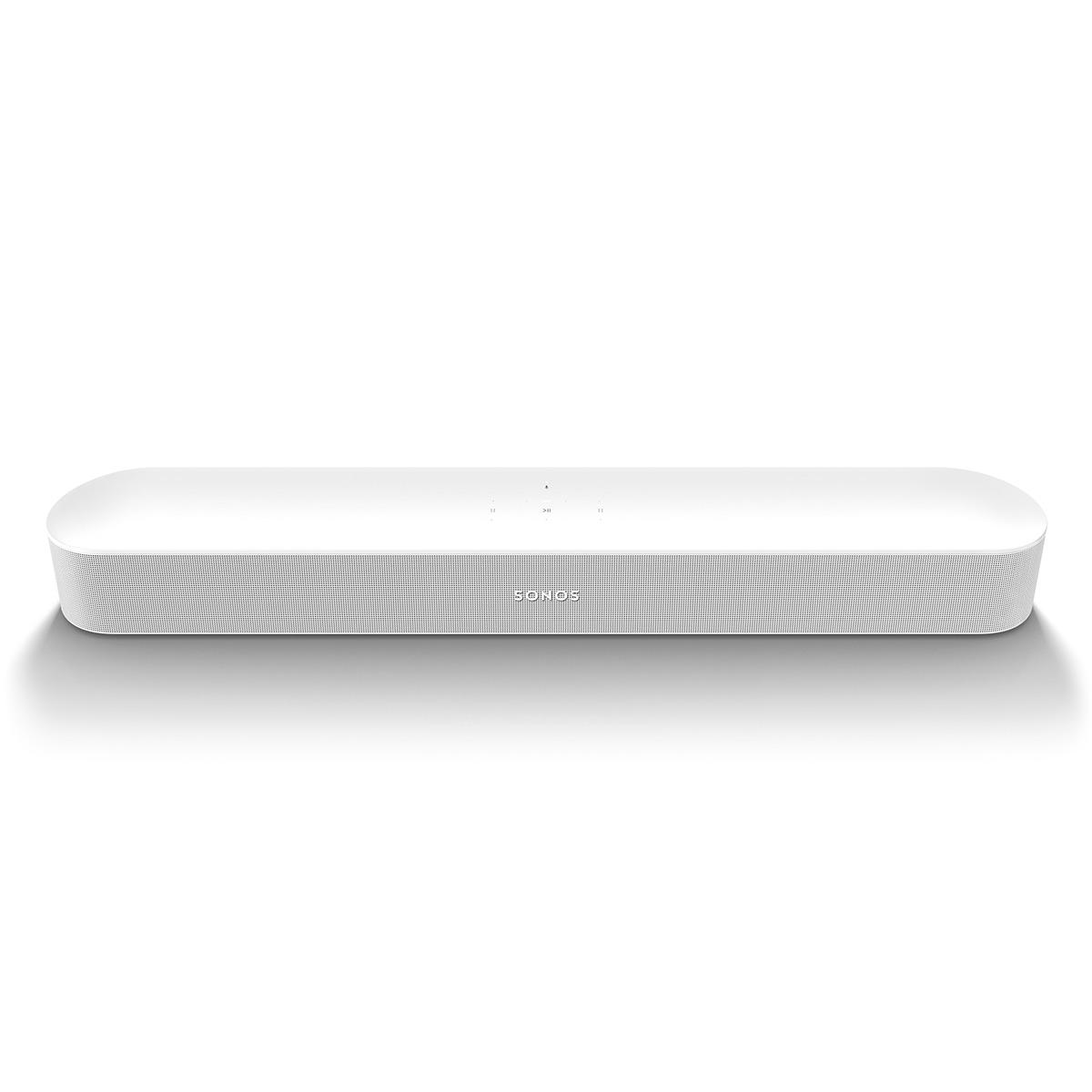
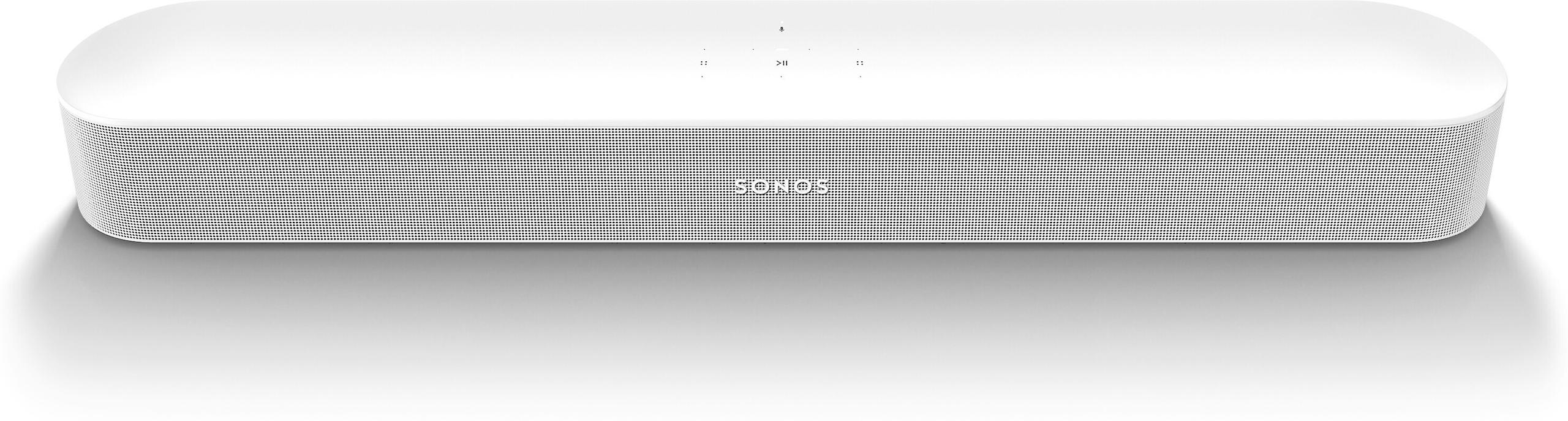
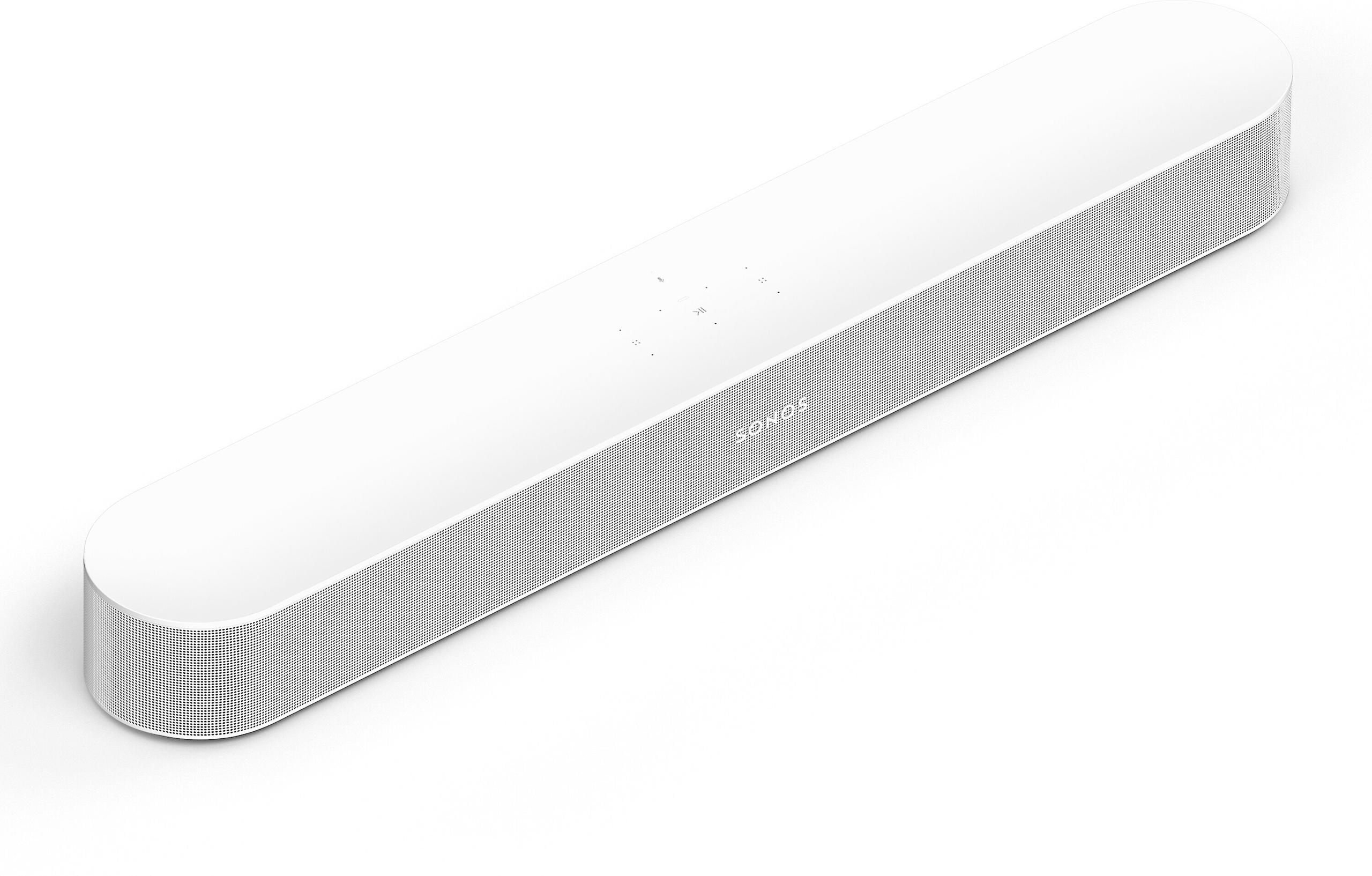
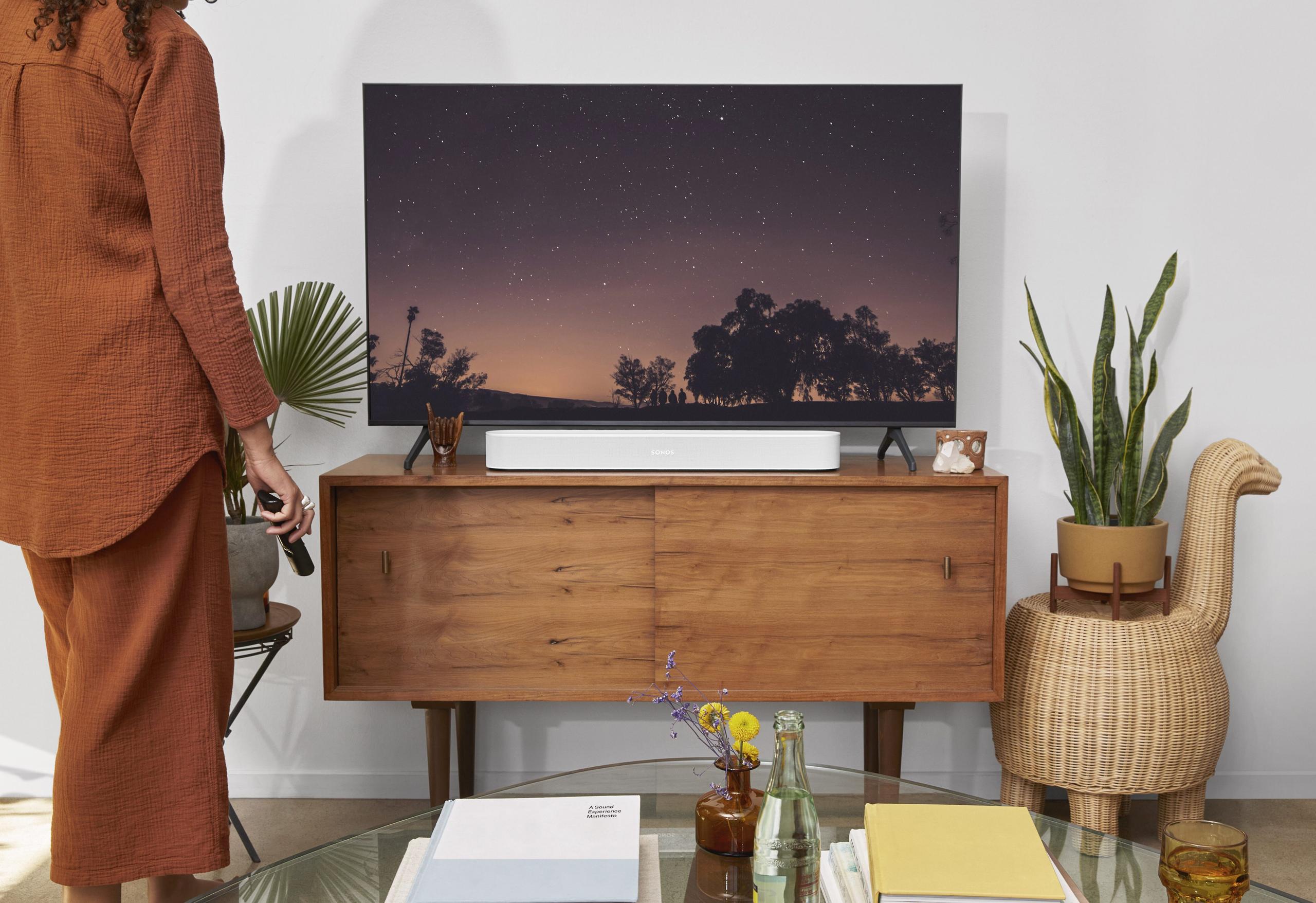
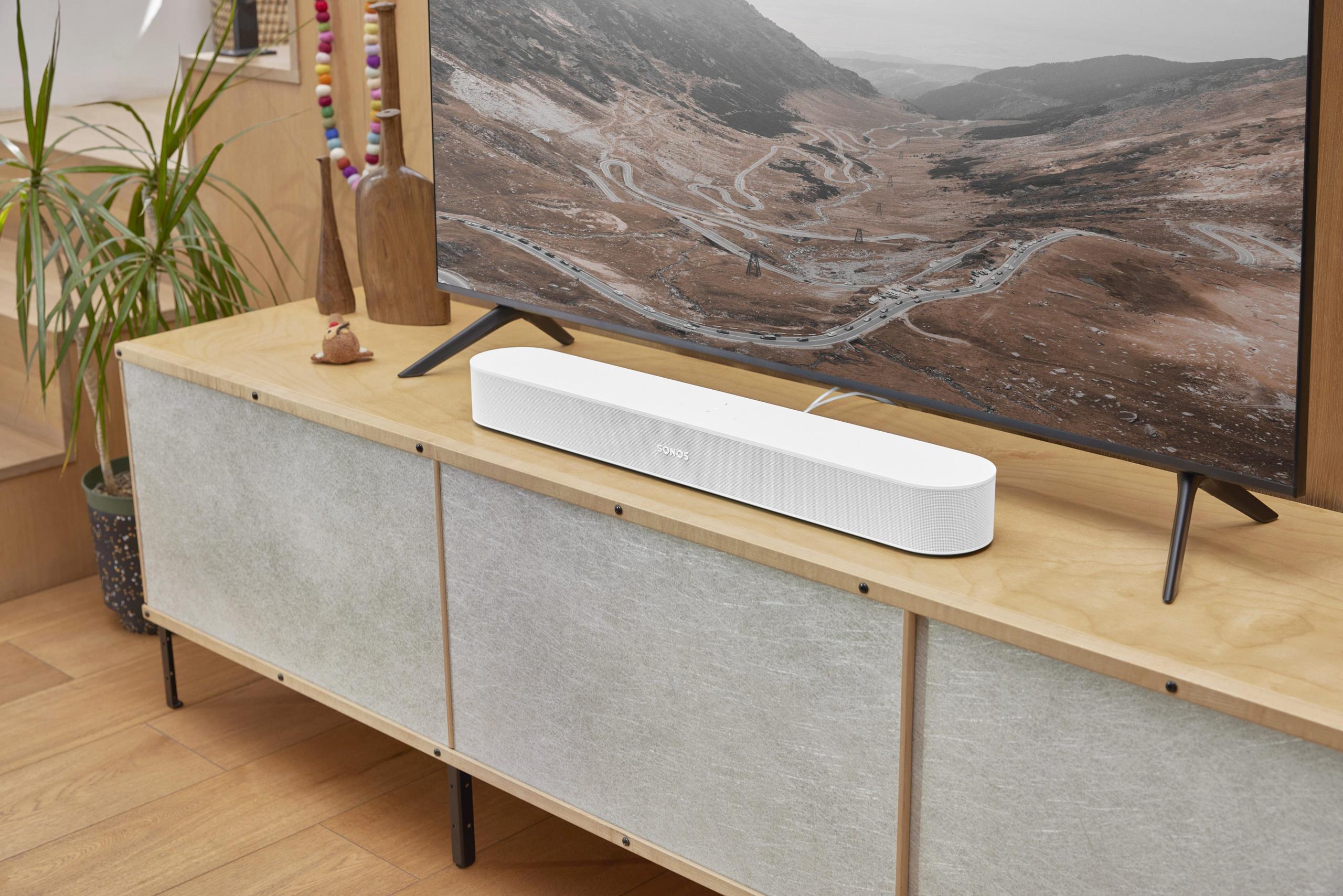
The Sonos Beam Gen 2, launched in 2021, represents the opposite philosophy. This compact 25.6-inch soundbar contains everything in a single unit, using sophisticated digital processing to simulate surround and height effects that the Samsung system creates with physical speakers positioned around your room.
The most dramatic difference between these systems lies in how they create that enveloping surround sound experience. The Samsung HW-Q990F uses what audiophiles call "discrete speakers" – individual drivers physically positioned where sound should come from. When a car races from left to right in a movie, you literally hear it move from the left speaker to the center, then to the right, and finally to the rear speakers behind you.
This physical approach delivers what reviews consistently describe as a "bubble of sound" that completely surrounds your seating position. The dedicated up-firing speakers in both the main bar and rear speakers bounce audio off your ceiling to create authentic overhead effects. When a helicopter passes over in Top Gun: Maverick, you genuinely hear it start in front, travel overhead, and disappear behind you.
The Sonos Beam Gen 2 accomplishes something remarkable through pure digital wizardry. Using psychoacoustic processing – essentially tricking your brain into perceiving sounds that aren't physically there – it creates what experts call "intelligent stereo." The soundbar analyzes incoming Dolby Atmos signals and uses phase manipulation and timing delays to make your brain believe sounds are coming from locations where no speakers exist.
Our research into professional reviews reveals that the Sonos approach works surprisingly well in smaller spaces. In rooms under 300 square feet, the virtual processing creates a convincing soundstage that extends well beyond the physical width of the soundbar. However, this digital simulation can't match the physical reality of actual surround speakers, especially in larger rooms where the effect becomes less convincing.
Here's where the Sonos Beam Gen 2 truly shines and justifies its reputation. Sonos engineers specifically tuned this soundbar for vocal intelligibility, with every component optimized for making speech clear and natural. The improved center tweeter – a specialized speaker designed to handle the frequency range where human voices live – produces what reviewers consistently describe as "industry-leading" dialogue clarity.
Speech Enhancement technology analyzes incoming audio in real-time, identifying and boosting dialogue frequencies while reducing competing background noise. Even at low volumes, conversations cut through background music and sound effects with remarkable clarity. Multiple professional reviews note that subtitles become virtually unnecessary with the Beam Gen 2, even during challenging scenes with accents or overlapping conversations.
The Samsung HW-Q990F includes Active Voice Amplifier (AVA) technology that automatically detects quiet dialogue passages and boosts them relative to other sounds. While effective, our analysis of expert reviews suggests it doesn't match the Sonos system's natural vocal presentation. The Samsung's strength lies more in creating dramatic dynamic contrast – making explosive action sequences feel powerful while keeping dialogue scenes intimate and clear.
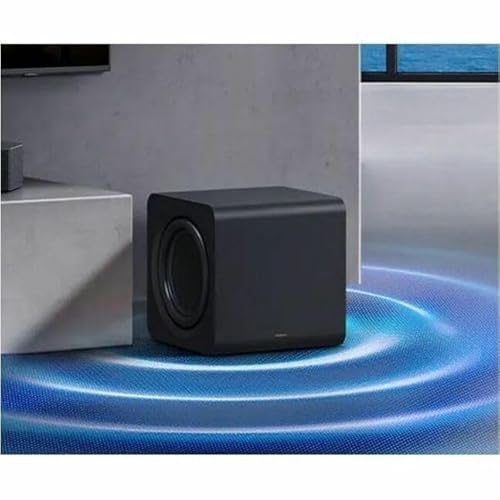
This comparison starkly illustrates how speaker size and physics still matter in audio reproduction. The Samsung HW-Q990F includes a dedicated wireless subwoofer featuring dual 8-inch drivers in an opposing configuration. This design places two woofers facing each other, which cancels out cabinet vibration while delivering clean, distortion-free bass down to 32Hz – low enough to reproduce the deepest movie sound effects and music fundamentals.
The 300W amplifier powering this subwoofer can create genuinely visceral bass that you feel as much as hear. During action sequences, explosions have physical impact that enhances the emotional connection to what's happening on screen. The opposing driver design represents a significant engineering improvement over previous Samsung models, virtually eliminating the cabinet rattling that plagued earlier generations.
The Sonos Beam Gen 2 faces the fundamental physics limitation of trying to reproduce low frequencies from a compact enclosure. Its four built-in mid-woofers and three passive radiators – essentially speaker cones without magnets that move in response to internal air pressure – do an admirable job creating bass reinforcement. However, the laws of physics prevent a 25.6-inch soundbar from moving enough air to reproduce truly deep bass frequencies.
Reviews consistently describe the Beam Gen 2's bass as "well-integrated and adequate for TV content" but lacking the depth needed for bass-heavy movies or music. The system can be expanded later with a separate Sonos Sub, though this addition significantly increases the total investment and still doesn't match the power of the Samsung's included subwoofer.
Modern gaming demands low-latency audio processing and the ability to pinpoint directional sound cues. The Samsung HW-Q990F includes two HDMI 2.1 inputs supporting 4K/120Hz passthrough – essential for getting maximum performance from PlayStation 5 and Xbox Series X consoles. The dedicated Game Pro mode optimizes audio processing for enhanced directional cues, reducing the delay between on-screen action and corresponding audio.
Multiple HDMI inputs solve a practical problem many gamers face: the ability to connect multiple consoles without constantly swapping cables. You can simultaneously connect a PlayStation 5, Xbox Series X, and Apple TV 4K while maintaining full 4K HDR compatibility.
The Sonos Beam Gen 2 provides basic gaming audio through its single HDMI eARC connection, but lacks gaming-specific features or multiple inputs. For casual gaming, it performs adequately, but serious gamers will miss the directional accuracy and source flexibility that the Samsung system provides.
The Sonos Beam Gen 2 represents the gold standard for smart soundbar integration. Built-in Amazon Alexa and Google Assistant respond naturally to voice commands, while AirPlay 2 enables seamless streaming from Apple devices. The soundbar supports virtually every major streaming service directly, including Spotify Connect and TIDAL Connect for high-resolution music streaming.
Trueplay calibration uses your iPhone or iPad's microphones to analyze your room's acoustics and automatically adjust the soundbar's output for optimal performance. This room correction technology ensures the Beam Gen 2 sounds excellent regardless of furniture placement or room shape.
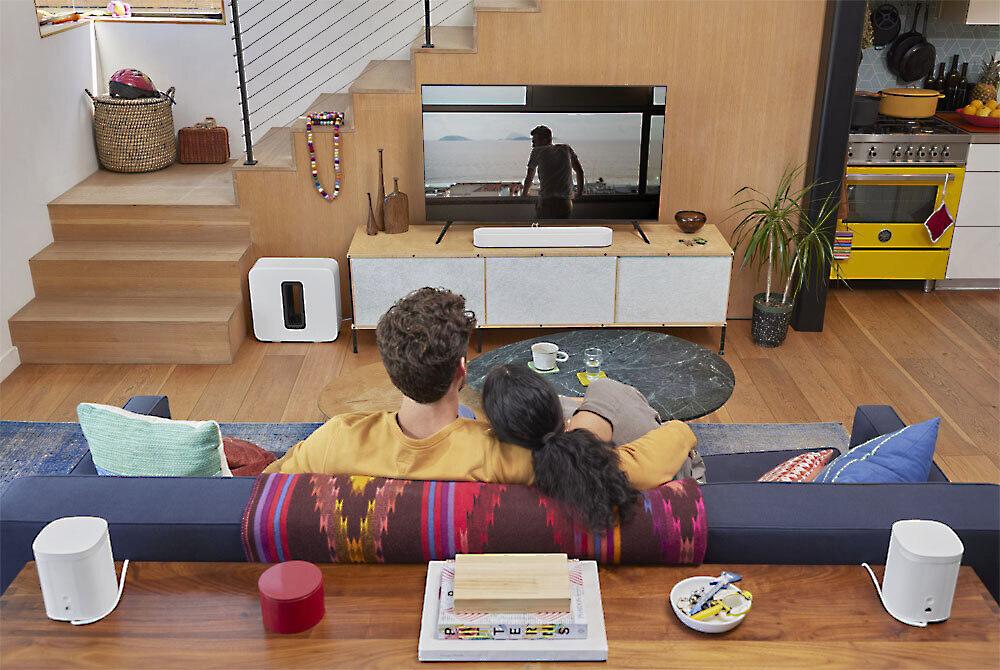
The real advantage lies in the Sonos ecosystem integration. If you have other Sonos speakers throughout your home, the Beam Gen 2 seamlessly integrates into a multi-room audio system. You can start a song in the living room and have it follow you to the kitchen, bedroom, or anywhere else you have Sonos speakers.
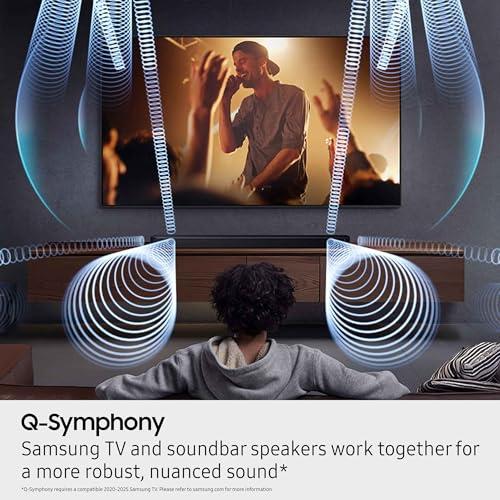
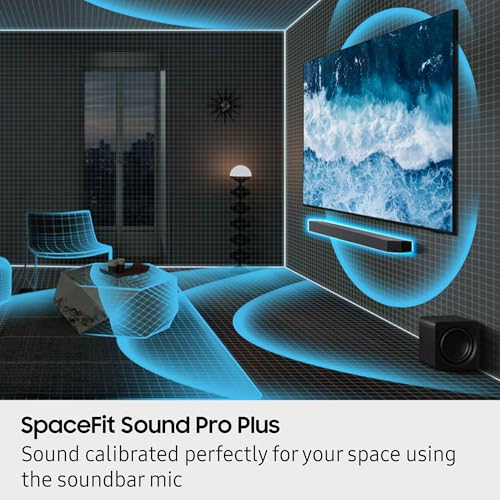
The Samsung HW-Q990F includes SpaceFit Sound Pro Plus room calibration that continuously analyzes and adjusts audio output based on room acoustics. Built-in Bixby provides voice control, though it's not as comprehensive as the Sonos implementation. Q-Symphony technology synchronizes the soundbar with compatible Samsung TVs, using both the TV's speakers and soundbar simultaneously for an even fuller sound.
However, Samsung's smart features feel more focused on home theater enhancement rather than whole-home audio integration. If you want a soundbar that doubles as a smart speaker and music streaming hub, the Sonos approach proves more versatile.
Your room dimensions significantly impact which system will perform better. The Samsung HW-Q990F truly excels in medium to large rooms where there's adequate space for the surround speakers to create proper separation and staging. In a dedicated home theater room or large living room, the physical speaker array creates an authentic surround bubble that envelops multiple seating positions.
The system requires thoughtful placement planning. The wireless rear speakers need power outlets and strategic positioning behind or to the sides of your main seating area. The subwoofer performs best when placed away from walls to avoid boomy bass buildup, though the dual-driver design is more forgiving of placement than traditional subwoofers.
The Sonos Beam Gen 2 proves ideal for apartments, bedrooms, or smaller living rooms where space constraints make a full surround system impractical. Its virtual processing works most convincingly in intimate spaces where reflected sound from walls can enhance the surround effect. In rooms under 300 square feet, the difference between virtual and physical surround becomes much less noticeable.
Installation simplicity strongly favors the Sonos system. A single HDMI cable and power connection get you running immediately, while the Samsung system requires positioning and powering multiple components throughout your room.
Both systems handle music reproduction differently, reflecting their design priorities. The Samsung HW-Q990F provides extensive customization through its 7-band graphic equalizer and independent channel level adjustments. You can fine-tune bass, treble, and individual speaker levels to match your preferences or room acoustics. Multiple listening modes adapt the sound signature for different music genres or playback scenarios.
The multi-driver array creates impressive stereo imaging and instrument separation, particularly beneficial for complex orchestral pieces or live recordings where you want to hear individual instruments in distinct positions across the soundstage.
The Sonos Beam Gen 2 takes a more purist approach with natural, uncolored sound reproduction. Sonos engineers prioritized accuracy over customization, creating a sound signature that works well across various music genres without extensive tweaking. The system excels at vocal reproduction, making it particularly suitable for singer-songwriter content, podcasts, and dialogue-heavy audio content.
The Sonos ecosystem advantage becomes apparent when listening to music throughout your home. The Beam Gen 2 can participate in synchronized multi-room playback, creating a seamless audio experience as you move between rooms.
At the time of writing, these soundbars serve completely different market segments, and their pricing reflects those distinct purposes. The Samsung HW-Q990F commands premium pricing as a complete home theater system replacement. You're paying for authentic surround sound, powerful bass, and comprehensive connectivity in a single purchase.
This upfront investment delivers immediate gratification for home theater enthusiasts. There's no need to make future upgrade decisions or worry about component compatibility – everything works together perfectly from day one. The extensive format support, including DTS:X and various Dolby formats, ensures compatibility with virtually any content source.
The Sonos Beam Gen 2 represents exceptional value in the compact soundbar category. The lower entry price makes quality audio enhancement accessible to more buyers, while the expandable ecosystem allows gradual investment over time. Starting with just the soundbar and later adding a Sub and rear speakers lets you spread costs while building a system tailored to your evolving needs.
However, achieving comparable bass performance to the Samsung system requires purchasing the separate Sonos Sub, which significantly increases the total investment. Even then, you won't match the Samsung's authentic surround sound experience without also adding Sonos rear speakers.
The Samsung HW-Q990F makes sense for dedicated home theater enthusiasts with appropriate spaces and the desire for uncompromising audio performance. If you have a medium to large room, multiple source devices (gaming consoles, streaming players, Blu-ray players), and want authentic Dolby Atmos without the complexity of a traditional AV receiver setup, this system delivers exceptional value despite its premium price.
The gaming capabilities alone justify the investment for serious gamers who want proper surround sound for competitive gaming and cinematic single-player experiences. The multiple HDMI 2.1 inputs eliminate source switching hassles while maintaining full 4K/120Hz compatibility.
The Sonos Beam Gen 2 excels for anyone prioritizing dialogue clarity, smart home integration, and gradual system building. If you live in an apartment, have a small to medium room, or struggle with understanding TV dialogue, this soundbar provides immediate improvement with expansion potential.
The superior smart features make it ideal for users who want their soundbar to double as a music streaming hub and voice-controlled smart speaker. The Sonos ecosystem integration proves valuable for anyone planning whole-home audio coverage.
Consider your primary use cases carefully. If you mainly watch dialogue-heavy content like dramas, documentaries, or news, the Sonos system's vocal clarity provides more day-to-day benefit than the Samsung's surround sound spectacle. However, if you're building a dedicated home theater for movies and gaming, the Samsung HW-Q990F delivers an experience that justifies its premium positioning.
The fundamental question isn't which soundbar sounds better in absolute terms – they excel in different ways. Instead, consider which approach better matches your space, content preferences, and long-term audio goals. Both represent excellent values within their respective categories, offering dramatically improved TV audio compared to built-in speakers while serving distinct audiences with different priorities and expectations.
| Samsung Q-Series HW-Q990F Soundbar | Sonos Beam Gen 2 Soundbar |
|---|---|
| Channel Configuration - Determines surround sound authenticity | |
| 11.1.4 channels with physical surround speakers | 5.0 channels with virtual surround processing |
| Physical Components - What's included in the box | |
| Main soundbar + wireless subwoofer + wireless rear speakers | Single compact soundbar only |
| Dimensions - Space requirements for your room | |
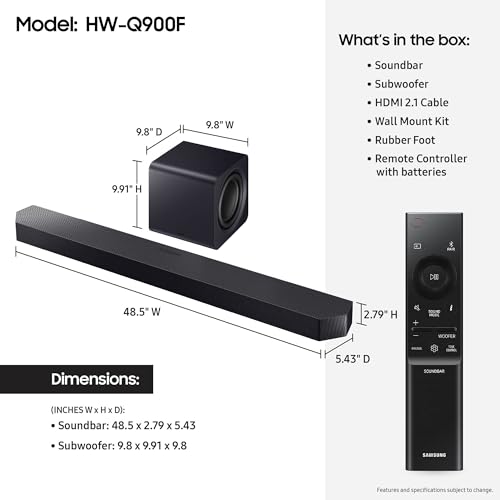
| Main bar: 48.5" wide, plus separate sub and rears | 25.6" wide single unit |
| Dolby Atmos Implementation - How overhead effects are created | |
| Physical up-firing drivers in main bar and rear speakers | Virtual processing using psychoacoustic techniques |
| Bass Performance - Deep low-frequency reproduction | |
| Dedicated dual 8" subwoofer (32Hz extension) | Built-in drivers with passive radiators (limited depth) |
| HDMI Connectivity - Source device flexibility | |
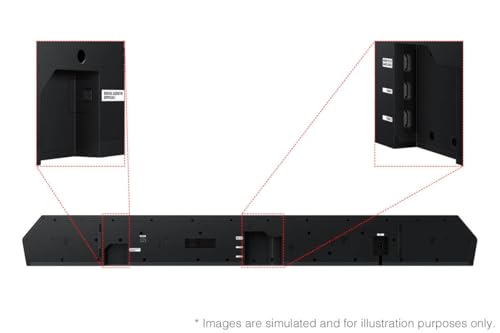
| 2x HDMI 2.1 inputs + 1 eARC output (4K/120Hz support) | 1x HDMI eARC only |
| Gaming Features - Console compatibility and performance | |
| Game Pro mode, multiple HDMI inputs, low latency | Basic audio, single connection, no gaming modes |
| Smart Home Integration - Voice assistants and streaming | |
| Bixby built-in, Alexa compatible, basic streaming | Alexa and Google built-in, comprehensive streaming ecosystem |
| Room Calibration - Automatic sound optimization | |
| SpaceFit Sound Pro Plus (continuous adjustment) | Trueplay (iOS device required for setup) |
| Expandability - Future upgrade options | |
| Complete system with no meaningful expansion | Modular Sonos ecosystem (Sub, rears, multi-room) |
| Dialogue Clarity - Speech intelligibility performance | |
| Active Voice Amplifier with discrete center channel | Industry-leading vocal tuning with Speech Enhancement |
| Ideal Room Size - Where each system performs best | |
| Medium to large rooms (400+ sq ft) | Small to medium rooms (under 300 sq ft) |
| Setup Complexity - Installation requirements | |
| Multiple components, strategic placement, several power outlets | Single HDMI cable and power connection |
The Sonos Beam Gen 2 is specifically designed for small to medium rooms under 300 square feet. Its compact 25.6-inch design and virtual surround processing work best in intimate spaces where wall reflections enhance the surround effect. The Samsung Q-Series HW-Q990F requires more space for its wireless rear speakers and subwoofer to create proper separation and staging.
The Samsung Q-Series HW-Q990F is a complete 11.1.4-channel home theater system with physical surround speakers and a dedicated subwoofer, while the Sonos Beam Gen 2 is a compact single-bar solution that uses virtual processing to simulate surround sound. This fundamental difference affects everything from setup complexity to audio performance.
The Sonos Beam Gen 2 excels at dialogue clarity with industry-leading vocal tuning and Speech Enhancement technology. Reviews consistently praise its natural speech reproduction, often making subtitles unnecessary. While the Samsung Q-Series HW-Q990F includes Active Voice Amplifier technology, it doesn't match the Sonos system's specialized dialogue optimization.
The Samsung Q-Series HW-Q990F includes a powerful wireless subwoofer with dual 8-inch drivers, providing deep bass down to 32Hz. The Sonos Beam Gen 2 relies on built-in drivers and passive radiators, which are adequate for TV content but limited by physics. You can add a separate Sonos Sub later, but this significantly increases the total cost.
The Samsung Q-Series HW-Q990F is superior for gaming with two HDMI 2.1 inputs supporting 4K/120Hz, dedicated Game Pro mode, and the ability to connect multiple consoles simultaneously. The Sonos Beam Gen 2 has only one HDMI eARC connection and lacks gaming-specific features, making it suitable only for casual gaming.
The Samsung Q-Series HW-Q990F creates authentic Dolby Atmos using physical up-firing speakers in both the main bar and rear speakers that bounce sound off your ceiling. The Sonos Beam Gen 2 uses virtual Dolby Atmos processing to simulate height effects through psychoacoustic techniques, which works well in smaller rooms but can't match the physical reality of dedicated height speakers.
The Sonos Beam Gen 2 leads in smart features with built-in Amazon Alexa and Google Assistant, comprehensive streaming service support, and seamless integration into the Sonos multi-room ecosystem. The Samsung Q-Series HW-Q990F includes built-in Bixby and Alexa compatibility but focuses more on home theater features than smart home integration.
The Sonos Beam Gen 2 offers simple setup with just one HDMI cable and power connection, making it ideal for renters or anyone wanting minimal complexity. The Samsung Q-Series HW-Q990F requires positioning and powering the wireless subwoofer and rear speakers throughout your room, demanding more planning and permanent placement decisions.
The Sonos Beam Gen 2 is part of a modular ecosystem where you can gradually add a Sonos Sub, rear speakers, and other Sonos speakers for multi-room audio. The Samsung Q-Series HW-Q990F comes as a complete system with no meaningful expansion options beyond what's included in the box.
Both soundbars handle music well but differently. The Samsung Q-Series HW-Q990F offers extensive customization with a 7-band EQ and multiple listening modes, plus impressive stereo imaging from its multi-driver array. The Sonos Beam Gen 2 prioritizes natural, accurate sound reproduction and excels at vocal content, plus it can participate in synchronized multi-room music playback throughout your home.
The Sonos Beam Gen 2 is ideal for apartments with its compact single-unit design, simple installation requiring no permanent modifications, and excellent dialogue clarity that works well at lower volumes. The Samsung Q-Series HW-Q990F requires more space, strategic speaker placement, and multiple power outlets, making it less practical for typical apartment living situations.
Consider your room size, content preferences, and setup requirements. Choose the Samsung Q-Series HW-Q990F if you have a larger space, want authentic surround sound, need multiple HDMI inputs for gaming, and prefer a complete system. Select the Sonos Beam Gen 2 if you have a smaller room, prioritize dialogue clarity and smart features, want simple setup, or plan to build a multi-room audio system over time.
We've done our best to create useful and informative comparisons to help you decide what product to buy. Our research uses advanced automated methods to create this comparison and perfection is not possible - please contact us for corrections or questions. These are the sites we've researched in the creation of this article: rtings.com - crutchfield.com - sound-advice.online - samsung.com - soundandvision.com - samsung.com - whathifi.com - youtube.com - youtube.com - bestbuy.com - avsforum.com - content.syndigo.com - samsung.com - businessinsider.com - dolby.com - youtube.com - abcwarehouse.com - whathifi.com - en.community.sonos.com - techradar.com - youtube.com - consumerreports.org - bestbuy.com - youtube.com - sonos.com - wave-electronics.com - en.community.sonos.com - epicsystems.tech - tomsguide.com - bestbuy.com

Privacy Policy
Terms and Conditions - Affiliate Policy
Home Security
© Copyright 2008-2026.
11816 Inwood Rd #1211, Dallas, TX 75244